International Journal of Emerging Technology and Advanced Engineering
Website: www.ijetae.com (ISSN 2250-2459, Volume 2, Issue 5, May 2012)250
Identification of Face Age range Group using Neural
Network
Sneha Thakur
1, Ligendra Verma
2 1M.Tech scholar, CSE, RITEE Raipur2 Reader, MCA dept, RITEE Raipur
1[email protected] 2
Abstract— This paper concern with providing a methodology to estimate Age groups using Face Features. The
proposed method is based on the supervised Neural Network with backpropagation algorithm. Recognition of the most facial variations, such as identity, expression and gender, have been extensively studied. Automatic age estimation has rarely been explored. Other research topics include predicting feature faces, classifying gender, and expressions from facial images, and so on. However, very few studies have been done on age classification or age estimation. In this research, we try to prove that computer can estimate/classify human age according to features extracted from human facial image using Artificial Neural Network (ANN or NN). In this work we develop a robust age classification within certain ranges. This ranges are classified into four categories that are child, young, adult, old. Our proposed approach has been developed, tested and trained using the database FG-NET. The algorithm classifies subjects into four different age categories in 4 four key stages: Pre-processing, facial feature extraction wrinkle analysis and age group classification. The obtained results were significant.
Keywords—Age range identification, Artificial Neural Network, Feature Extraction, Wrinkle Analysis
I. INTRODUCTION
Face recognition includes one of the biometric systems. Some examples of biometric features of humans are: Signature- studies the pattern, speed, acceleration and pressure of the pen when writing ones signature. Fingerprint- studies the pattern of ridges and furrows on the surface of the fingertip. Voice- studies way humans generate sound from vocal tracts, mouth, nasal cavities and lips. Iris- studies the annular region of the eye bounded by the pupil and the sclera. Retina- studies the pattern formed by veins beneath the retinal surface in an eye. Hand Geometry- measures the measurements of the human hand. Ear Geometry- measures the measurements of the human ear. Facial thermo gram- concerns the heat that passes through facial tissue.
Among them face is the most natural and well known biometric. Age prediction is concerned with the use of a training set to train a model that can estimate the age of the facial images. Among the first to research age prediction were, Kwon and Vitoria Lobo who proposed a method to classify input face images into one of the following three age groups: babies, young adults and senior adults [6]. Their study was based on geometric ratios and skin wrinkle analysis. Their method was tested on a database of only 47 high resolution face images containing babies, young and middle aged adults.
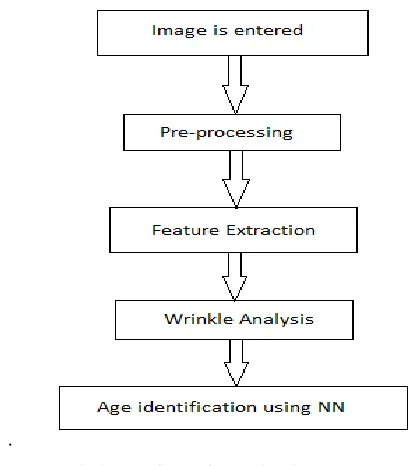
[image:1.612.328.574.427.471.2]The two key phases is shown in the fig1.
Fig. 1 Block diagram of age estimation approach
International Journal of Emerging Technology and Advanced Engineering
Website: www.ijetae.com (ISSN 2250-2459, Volume 2, Issue 5, May 2012)251
The algorithm is based on statistical face models. Lanitis claims that introduction of the hairline has a negative effect on the results [9].His study was limited to subject ranging from 0 to 35 years old, and contained 330 images, of which only 80 were used for testing purposes. Evidently, faces with more wrinkles weren’t used, leaving in doubt his ability to estimate the age of subjects older than 35 years. Some researchers have focused on particular age groups only, while others use an extremely wide classification range. Primarily, due to the lack of a good database, a global age prediction function, covering an extensive range of ages has yet to be developed. J . R . Scolar and P. Navarreto [3] proposed an face recognition algorithm based on Eigen space. J.Yang and et al.[4] introduced the a new approach to appearance-based face representation and recognition. Most of the research in this area is very limited by the size and quality of the database used.
In recent years, a new dimension has been added to the problem of face recognition. Age as an attribute related to human faces is being increasingly studied and there has been a growing interest in problems such as face recognition across ages, automatic age estimation from face images, appearance prediction across aging etc. The research initiatives pertaining to this problem have reached a critical stage and it is essential to streamline future research on this topic in order to make a significant impact on the many day-to-day applications that benefit from solving this problem. In this paper, we attempt to provide a thorough analysis on problems related to facial aging and further offer a complete account on the many research initiatives pertaining to this problem.
A. Motivation Characterizing the progressive, but subtle variations in facial appearances as humans age has many significant implications. For instance,
Homeland security : Face-based authentication systems that typically compare age-separated face images, are bound to benefit from facial aging models and from methods that extract age-invariant signatures from faces. Further, in the absence of such systems, such authentication systems face the cumbersome task of periodically updating large face databases with more recent face images.
Multimedia : With growing needs to regulate the content viewed by minors on the internet, age-specific human computer interaction systems have found greater relevance in recent years.
Hence, methods that perform age estimation are very critical to develop such applications. Further, age-based image retrieval and video retrieval systems are certain to benefit from automatic age estimation systems.
Missing individuals : Applications that can reliably predict one’s appearance across ages have direct relevance in finding missing individuals.
II. RELATED WORK
Age Estimation Approach fall with two mainstreams. According to the first stream the problem is treated as a standard classification problem, solved using standard classifiers where age estimation is performed by assigning a set of facial features to an age group. Within this context facial features used may be associated with the general appearance of a face or may be associated to age-related features (e.g. wrinkles). As an alternative age estimation approaches that rely on the modeling of the aging process have been developed. In this section typical approaches described in the literature are briefly presented. The aim of this review is not to present an exhaustive literature review of the topic but rather to highlight the evolution of the topic. A more detailed presentation of the related literature is presented by Ramanathan et al. (Ramanathan 2009) and Fu et al. (Fu 2010).
One of the first attempts to develop facial age estimation algorithms was reported by Kwon and Lobo (Kwon 1999) , [12]. Kwon and Lobo use two main types of features: Geometrical ratios calculated based on the distance and the size of certain facial characteristics and an estimation of the amount of wrinkles detected by deformable contours (snakes) in facial areas where wrinkles are usually encountered. Based on these features Kwon and Lobo (Kwon 1999) classify faces into babies, adults and seniors based on a computational theory for visual age classification from facial images. First, primary features of the face, namely the eyes, nose, mouth, chin, and virtual top of the head, are found.
The research in age-estimation started in 1990s and up to now, many approaches have been proposed. They typically consist of two main steps: image representation and age prediction. For the image representation, the most common models are
International Journal of Emerging Technology and Advanced Engineering
Website: www.ijetae.com (ISSN 2250-2459, Volume 2, Issue 5, May 2012)252
The final step for age estimation is either the multiclass classification problem or the regression problem. In 1999, Kwon [8] measured the changes of face in shapes, e.g. six geometric ratios of key features, to classify faces into appropriate age groups. Drawing inspiration from this work, Ramanathan [9], Dehshibi [10], later used the geometric ratios of facial features and added information of texture, e.g. wrinkles, in their approaches. Although these approaches achieved low Mean Absolute Errors (MAEs), they can only deal with young ages when the shapes of faces vary largely. Moreover, because of the sensitivity to head pose in the steps of computing geometric ratios in 2D face images, only frontal faces can be used. Adopting the Active Appearance Models (AAMs) [11] approach, Lanitis et al. [12], Khoa Luu et al. [5] used AAM features, which combine both shape and texture information in their ageestimation studies. In 2009, using AAM features extracted from image with 161 landmarks, Ricanek et al. [11] developed a multiethnic age-estimation system that can deal with the race problem. Recently, based on the arguments that age information is often encoded by local information, such as wrinkles around the eye corners, other approaches are to divide face images into many sub-regions, extract features from these sub-regions, and then combine them together. Yan et al. [7] proposed to use Spatially Flexible Patch (SFP) and Gaussian Mixture Model (GMM). B. Ni et al. [2] developed a technique to extend the human aging image dataset by mining the web resource and then used SFP for representing face images. Suo et al. [11] designed a multiresolution hierarchical graphical face model for age estimation. LBP features and Gabor features are also exploited in the work of Günay [5], and Gao [16]. Guo et al. [10], in 2009, investigated the biologically inspired feature (BIF) derived from a feedforward model of the primate visual object recognition pathway – HMAX model. The advantages are that small translations.
The proposed approach to identify the age range algorithm that is free from previous disadvantages. The proposed method classifies face images into one of four well-ordered age groups range, which contains four key steps, pre-processing, facial feature extraction, wrinkle analysis, age range identification.
III. PROPOSED METHOD
Due to the difficulty of estimating the exact age, the proposed system is implemented to classify the age to be within certain ranges.
Face region is extracted from a real image. To train and test our system, we used the datasets organized in FG-NET. The proposed system is mainly using a supervised neural networks with backpropagation algorithm. the image is entered to the system, features are extracted, the image is classified in one of the four main age classes. This process is shown in Figure 2
[image:3.612.331.536.217.450.2].
Fig. 2 Flow Chart of age estimation approach
A. Pre-processing
The first step of preprocessing is the extraction. Face region extraction means that image is extracted from entered input image by using cropping tool. The input color image is converted to gray image and stored in database for processing . The cropped face region and converted gray image are shown in figure 3.
B. Feature Extraction & Wrinkle Analysis
The parameters used from the face images that are center of eye, nose tip, tope of forehead, chin, side of face. The distance between these points are calculated.
International Journal of Emerging Technology and Advanced Engineering
Website: www.ijetae.com (ISSN 2250-2459, Volume 2, Issue 5, May 2012)253
between the nose and lip. Therefore, this information could help identifying that a person belongs to age group.
The distance between these parameters has been calculated.
Three primary wrinkle areas are analyzed that are two cheeks and forehead.
[image:4.612.66.264.218.418.2]
Fig. 3 Face Region Extraction
C. Age Range Identification using Neural Network
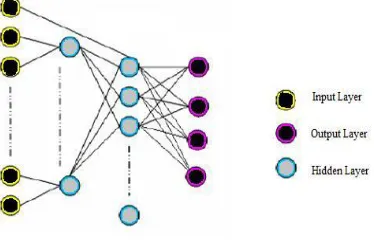
To achieve the target, we have constructed NNs. The neural network has 7 inputs representing the face features parameters in addition to the wrinkles on the face.
Fig. 4. Neural Network Structure
The Neural Network structure i.e. used in the proposed method is shown in the figure 4. There are 7 neurons used for the input.
Two hidden layers are used. Six inputs that are given in the NN are the distance between the face parameters and the seventh input is obtained from the wrinkle analysis.
IV. EXPERIMENTAL RESULT
To prove efficiency and accuracy of the proposed feature extraction and age group classification algorithms, experiments are carried out on the FGNET. This dataset has 1002 images of different age range. From this dataset 260 images are taken for training & 79 images for training the Neural Network.
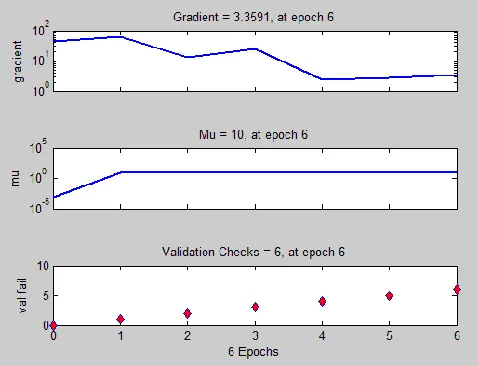
The performance and training of the Neural Network is shown in the 5 and 7 respectively.
[image:4.612.325.564.313.501.2]
Fig. 5 Performance of ANN
Fig. 6 Learning progress of Neural Network
[image:4.612.66.253.521.642.2] [image:4.612.332.574.554.644.2]International Journal of Emerging Technology and Advanced Engineering
Website: www.ijetae.com (ISSN 2250-2459, Volume 2, Issue 5, May 2012)254
[image:5.612.59.298.181.364.2]The learning progress of Artificial Neural Network is shown in the figure 6 with the ANN parameters.
Fig. 7 Training States of Neural Network
The future directions of this work includes capturing real human face image and estimate its age using our proposed system also optimizing the number of face landmark points.
REFERENCES
[1] Fukai, H., Nishie, Y., Abiko , K., Mitsukura, Y., Fukumi, M. and Tanaka, M. "An Age Estimation System on the AIBO", International Conference On Control, Automation And Systems, pp.2551-2554, 2008.
[2] Geng, X., Zhou, Z. and Smith-Miles, K. "Automatic Age Estimation Based on Facial Aging Patterns", IEEE Transaction On Pattern Analysis And Machine Intelligence, Vol. 29, No. 12, pp.2234-2240, December 2007.
[3] Geng, X., Smith-Miles, K. and Zhou, Z. "Facial Age Estimation by
Nonlinear Aging Pattern Subspace", Proceedings Of The 16
th
ACM International Conference on Multimedia , pp. 721-724, 2008.
[4] Horng, W., Lee, C. and Chen, C. "Classification of Age Groups Based on Facial Features", Journal of Science and Engineering, Vol. 4, No. 3, pp. 183-192, 2001
[5] Cootes , F., C. J. Taylor, D. H. Copper, and J. Graham, "Active Shape Models – Their training and Application", Computer Vision Graphics And Image Understanding, Vol. 61, No 1, pp. 38–59, 1995.
[6] Cootes ,F. , Gareth J. Edwards , Christopher J. Taylor, "Active Appearance Models", Proceedings of the 5th European Conference on Computer Vision-Volume II, p.484-498, June 02-06, 1998.
[7] http://www.fgnet.rsunit.com
[8] Luu, K., Ricanek Jr., K. and Y. Suen, C. "Age Estimation using Active Appearance Models and Support Vector Machine Regression", Proceedings Of The IEEE International Conference On Biometrics :Theory Applications And System , pp.314-318 ,2009.
[9] Ricanek Jr., K and Tesafaye, T., ― MORPH: A Longitudinal Image Database of Normal Adult Age-Progression", Proceedings of the 7th International Conference on Automatic Face and Gesture
Recognition, p.341-345, April 10-12, 2006.
[10]http://personalpages.manchester.ac.uk/staff/timothy. f.cootes/data/xm2vts/xm2vts_markup.html
[11]http://www.scholarpedia.org/article/Facial_Age_Estimation
[12]Y. H. Kwon and N. da Vitoria Lobo (1999). ‘Age Classification from Facial Images’, Computer Vision and Image Understanding Journal 74(1), pp. 1–21.N
[13] Ramanathan, R. Chellappa, Face verification across age Progression, in: Proceedings of IEEE Conference on Computer Vision and Pattern Recognition, vol. 2, 2005, pp. 462–469.