High Performance Green Concrete
Raijiwala D.B.
*,
Patil H. S., Sankalp
Department of Applied Mechanics, S V National Institute of Technology, Surat, 395007. Gujarat, India *Corresponding Author: [email protected]
Copyright © 2013 Horizon Research Publishing All rights reserved.
Abstract
This paper aims at making and studying the different properties of Geopolymer concrete using this fly ash and the other ingredients which is available locally. Potassium Hydroxide and sodium Hydroxide solution were used as alkali activators in different mix proportions. The actual compressive strength of the concrete depends on various parameters such as the ratio of the activator solution to fly ash, molarity of the alkaline solution, ratio of the activator chemicals, curing temperature etc. The amount of the carbon dioxide released during the manufacture of OPC due to the calcinations of limestone and combustion of fossil fuel is in the order of one ton for every ton of OPC produced. In addition, the extent of energy required to produce OPC is only next to steel and aluminum. Attempts to reduce the use of Portland cement in concrete are receiving much attention due to environment-related. Fly ash-based Geopolymer concrete is a ‘new’ material that does not need the presence of Portland cement as a binder. The role of Portland cement is replaced by low calcium fly ash. Geopolymer is an inorganic alumino-Hydroxide polymer synthesized from predominantly silicon (Si) and aluminum (Al) materials of geological origin or byproduct materials such as fly ash. The term Geopolymer was introduced to represent the mineral polymers resulting from geochemistry. The process involves a chemical reaction under highly alkaline conditions on Si-Al minerals, yielding polymeric Si-O-Al-O bonds in amorphous form.Keywords
Geopolymer, concrete, fly ash, alkaline solution, compressive strength1. Introduction
The production of one ton of cement emits approximately one ton of carbon dioxide to the atmosphere which leads to global warming conditions. A need of present status is, should we build additional cement manufacturing plants or find alternative binder systems to make concrete? On the other scenario huge quantity of fly ash are generated around the globe from thermal power plants and generally used as a filler material in low level areas. Alternative binder system
with fly ash to produce concrete eliminating cement is called “Geopolymer Concrete”.
Geopolymer is a type of amorphous alumino-Hydroxide product that exhibits the ideal properties of rock-forming elements, i.e., hardness, chemical stability and longevity. Geopolymer binders are used together with aggregates to produce geopolymer concretes which are ideal for building and repairing infrastructures and for pre casting units, because they have very high early strength, their setting times can be controlled and they remain intact for very long time without any need for repair. The properties of geopolymer include high early strength, low shrinkage, freeze-thaw resistance, sulphate resistance and corrosion resistance. These high-alkali binders do not generate any alkali-aggregate reaction.
2. Experimental Program
In this work, low-calcium (ASTM Class F) fly ash-based geopolymer is used as the binder, instead of Portland or other hydraulic cement paste, to produce concrete. The fly ash-based geopolymer paste binds the loose coarse aggregates, fine aggregates and other un-reacted materials together to form the geopolymer concrete, with the presence of admixtures. The silicon and the aluminum in the low-calcium fly ash react with an alkaline liquid that is a combination of sodium Hydroxide and Potassium Hydroxide solutions to form the geopolymer paste that binds the aggregates and other un-reacted materials.
2.1. Materials
Geopolymer concrete can be manufactured by using the low-calcium (ASTM Class F) fly ash obtained from coal-burning power stations. Most of the fly ash available globally is low-calcium fly ash formed as a by-product of burning anthracite or bituminous coal.
Commercial grade Potassium Hydroxide in pallets form (97% -100% purity) and sodium Hydroxide solution (Na2O=18.2%, SiO2=36.7%, Water= 45.1%) were used as
mass of water is the major component in both the alkaline solutions. For improving the workability of the concrete superplasticiser was used.
Table 1. Mixing proportion
Ingredients Unit NaOH(50%)+ KOH(50%) M25 Mix
Temperature 0C 60, 80, 100 Room
Temp.
Fly ash kg/m3 400 400
(Cement) Fine
Aggregates kg/m3 505 563
Coarse Aggregates
10Dn kg/m3 442 493
20 Dn kg/m3 663 740
Alkaline solution/FA - 0.5 0.5 W/C ratio
Hydroxides/Sodium silicate - 0.85 -
Sodium
Hydroxide(NaOH)/Potassium
Hydroxide (KOH) - 1 -
Sodium Hydroxide solution kg/m3 46 -
Potassium hydroxide solution kg/m3 46 - Sodium silicate solution kg/m3 108 -
Extra water kg/m3 - 200
Plasticizer kg/m3 8 8
2.2. Mixture Proportions
The different mixture proportions used to make the trial geopolymer concrete specimens in this study are given in Table 1.
2.3. Mixing and Curing
Mixing of all the materials were done manually in the laboratory at room temperature. The fly-ash and aggregates were first mixed homogeneously as shown in fig. 1 and then the alkaline solutions which were made one day before and superplasticiser were added to the mixture of fly ash and aggregates. The Potassium Hydroxide and the sodium Hydroxide solutions were first mixed with each other and stirred to obtain a homogeneous mixture of the solutions before adding them to the solids. The mixing of total mass was continued until the binding paste covered all the aggregates and mixture become homogeneous and uniform in colour A Pan Type concrete mixer that offers mechanical sharing action can be used for obtaining uniform mixture with less effort. Fig. 1 shows a typical dry mixture of solids that was used to make the cube (150x150x150mm) specimens. The fresh geopolymer concrete was used to cast cubes of size 150x150x150mm to determine its compressive strength. The specimens were prepared according to the method followed by Hardjitoet. al.[2]. Each cube specimen was cast in three layers by compacting manually as well as by using vibrating table as shown in fig.3. Each layer received 25 strokes of compaction by standard compaction rod for concrete, followed by further compaction on the vibrating table. The specimens were wrapped by plastic sheet to prevent loss of moisture and placed in an oven. Since the process of geopolymerisation needs curing at high temperature, the specimens were cured at two different temperature 250C and 600C for 24 hours in the oven, as
shown in fig. 4They were temperature cured for 24 hours then left to open air (room temperature 250C ) in the
[image:2.595.57.555.510.673.2]laboratory until testing.
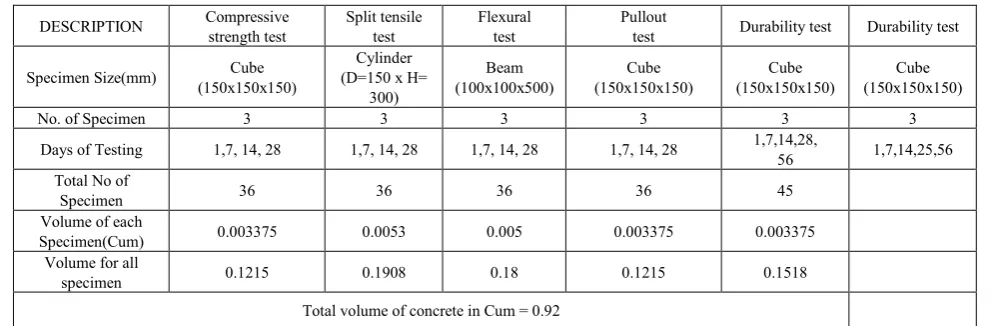
Table 2. Quantity estimation and planning of experiment
DESCRIPTION Compressive strength test Split tensile test Flexural test Pullout test Durability test Durability test
Specimen Size(mm) (150x150x150) Cube (D=150 x H= Cylinder 300)
Beam
(100x100x500) (150x150x150) Cube (150x150x150) Cube (150x150x150) Cube
No. of Specimen 3 3 3 3 3 3
Days of Testing 1,7, 14, 28 1,7, 14, 28 1,7, 14, 28 1,7, 14, 28 1,7,14,28, 56 1,7,14,25,56 Total No of
Specimen 36 36 36 36 45
Volume of each
Specimen(Cum) 0.003375 0.0053 0.005 0.003375 0.003375
Volume for all
specimen 0.1215 0.1908 0.18 0.1215 0.1518
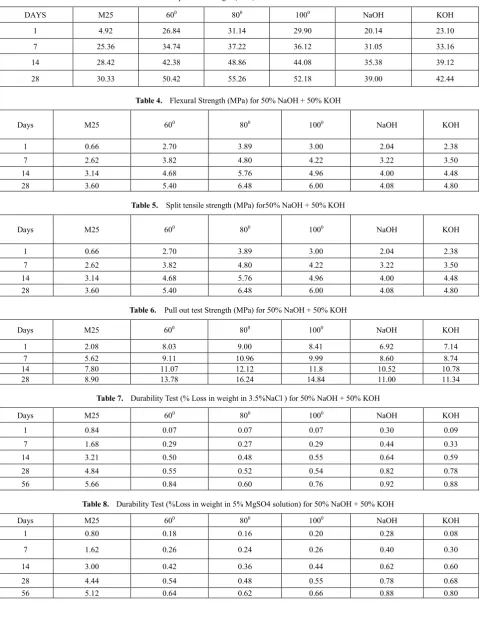
Table 3. Compressive strength (MPa) for 50% NaOH + 50% KOH
Table 4. Flexural Strength (MPa) for 50% NaOH + 50% KOH
Days M25 600 800 1000 NaOH KOH
1 0.66 2.70 3.89 3.00 2.04 2.38
7 2.62 3.82 4.80 4.22 3.22 3.50
14 3.14 4.68 5.76 4.96 4.00 4.48
28 3.60 5.40 6.48 6.00 4.08 4.80
Table 5. Split tensile strength (MPa) for50% NaOH + 50% KOH
Days M25 600 800 1000 NaOH KOH
1 0.66 2.70 3.89 3.00 2.04 2.38
7 2.62 3.82 4.80 4.22 3.22 3.50
14 3.14 4.68 5.76 4.96 4.00 4.48
28 3.60 5.40 6.48 6.00 4.08 4.80
Table 6. Pull out test Strength (MPa) for 50% NaOH + 50% KOH
Days M25 600 800 1000 NaOH KOH
1 2.08 8.03 9.00 8.41 6.92 7.14
7 5.62 9.11 10.96 9.99 8.60 8.74
14 7.80 11.07 12.12 11.8 10.52 10.78
28 8.90 13.78 16.24 14.84 11.00 11.34
Table 7. Durability Test (% Loss in weight in 3.5%NaCl ) for 50% NaOH + 50% KOH
Days M25 600 800 1000 NaOH KOH
1 0.84 0.07 0.07 0.07 0.30 0.09
7 1.68 0.29 0.27 0.29 0.44 0.33
14 3.21 0.50 0.48 0.55 0.64 0.59
28 4.84 0.55 0.52 0.54 0.82 0.78
56 5.66 0.84 0.60 0.76 0.92 0.88
Table 8. Durability Test (%Loss in weight in 5% MgSO4 solution) for 50% NaOH + 50% KOH
Days M25 600 800 1000 NaOH KOH
1 0.80 0.18 0.16 0.20 0.28 0.08
7 1.62 0.26 0.24 0.26 0.40 0.30
14 3.00 0.42 0.36 0.44 0.62 0.60
28 4.44 0.54 0.48 0.55 0.78 0.68
56 5.12 0.64 0.62 0.66 0.88 0.80
DAYS M25 600 800 1000 NaOH KOH
1 4.92 26.84 31.14 29.90 20.14 23.10
7 25.36 34.74 37.22 36.12 31.05 33.16
14 28.42 42.38 48.86 44.08 35.38 39.12
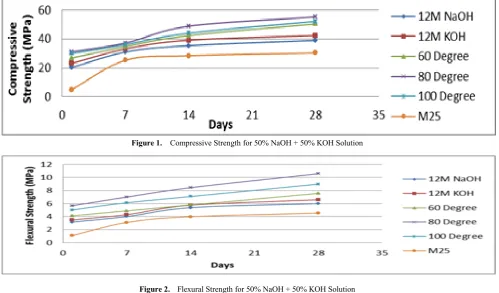
Figure 1. Compressive Strength for 50% NaOH + 50% KOH Solution
[image:4.595.57.557.87.380.2]Figure 2. Flexural Strength for 50% NaOH + 50% KOH Solution
Figure 3. Split tensile strength for 50% NaOH + 50% KOH Solution
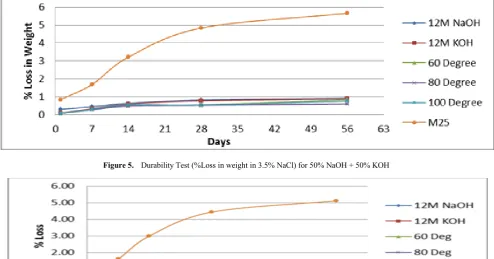
[image:4.595.59.558.527.686.2]Figure 5. Durability Test (%Loss in weight in 3.5% NaCl) for 50% NaOH + 50% KOH
Figure 6. Durability Test (%Loss in weight in 5% MgSO4) for 50% NaOH + 50% KOH Solution
3. Observation and Test Results
In the present work, the effects of various salient parameters on the compressive strength of low-calcium fly ash-based geopolymer concrete are discussed by considering ratio of alkaline solution to fly ash (by mass) 0.35 constant . The parameters considered are as follows:
1. Concentration of Potassium Hydroxide (KOH) solution, in Molar
2. Ratio of sodium Hydroxide solution-to-Potassium Hydroxide solution, by mass
3. Curing temperature 4. Effect of Wet-Mixing Time
5. Influence of handling time on compressive strength 6. Effect of super plasticizer on compressive strength 7. Effect of super plasticizer on slump of concrete
8. Effect of water-to-geopolymer solids ratio by mason compressive strength
9. Stress-strain relation of geopolymer concrete in compression
Compressive strength of concrete cubes were tested at the age of 1, 3, 7, and 28 days.Fig.5 shows the testing of cubes cured at 600C at compressive testing machine to determine
its compressive strength. After testing, there was equal cracking of all four exposed faces with little or no damage to the faces (top and bottom) in contact with the platens. Cracking was in vertical zigzag pattern.
4. Conclusions
Compressive strength of GPC increases over controlled concrete by 46% higher. (M-25 achieves M-45).Split Tensile Strength of GPC increases over controlled concrete by 45% high. Flexural Strength of GPC increases over controlled concrete by 62% higher. In Pull Out test, GPC increases over controlled concrete by 51% higher. In Durability test, there is decrease in weight loss by 10 times (At 56 days % loss in weight has reduced from 5.66% to 0.60%).It has been observed that at 12 molarities of KOH, the gain in strength remains very moderate and the reason is at an ambient temperature of 60°C for 24 hours the polycondensation process has already completed and particle interface is also achieved. Further good structural properties can be achieved with increase in polymerization temperature along with prolonged curing period in oven. At 12% molarities of KOH the cost per cu.M of GPC reduces by 12% over the controlled concrete.
REFERENCES
[2] Hardjito D., and Rangan B. V., “Development and Properties of Low Calcium fly ash- based Geopolymer Concrete”, Research Report GC 1, Faculty of Engineering, Curtin University of Technology, Perth, Australia, 2009
[3] Hardjito D., and Rangan B. V., “Development and Properties of Low Calcium fly ash- based Geopolymer Concrete”, Research Report GC 2, Faculty of Engineering, Curtin University of Technology, Perth, Australia, 2009
[4] Thokchom S., Ghosh P. and Ghosh S., “Performance of Fly ash Based Geopolymer Mortars in Sulphate Solution”, Journal of Engineering Science and Technology Review 3 (1) (2010) 36-40, 24 February 2010.
[5] Thokchom Suresh, Dr. Ghosh Partha and Dr. Ghosh Somnath, “Acid Resistance of Fly ash based Geopolymer mortars”, International Journal of Recent Trends in Engineering, Vol. 1, No. 6, May 2009.
[6] Thokchom Suresh, Dr. Ghosh Partha and Dr. Ghosh Somnath, ‘Resistance of Fly Ash based Geopolmer Mortars in Sulfuric Acid”, ARPN Journal of Engineering and Applied Sciences , VOL. 4, NO. 1, FEBRUARY 2009. [7] Rangan Vijaya B., “Studies on Fly Ash-Based Geopolymer
Concrete”, Malaysian Construction Research Journal, Vol-3, No.-2, 2008
[8] František Škvára, Josef Doležal, Pavel Svoboda, Lubomír Kopecký, Simona Pawlasová, Martin Lucuk, Kamil Dvořáček, Martin Beksa, Lenka Myšková, Rostislav Šulc, “Concrete based on fly ash geopolymers”
[9] Balaguru P., Stephen Kurtz, and Jon Rudolph, “Geopolymer for Repair and Rehabilitation of Reinforced Concrete Beam”, Geopolymer Institute 1997.
[10] Thokchom Suresh, Ghosh Partha and Ghosh Somnath, “Effect of Na2O Content on Durability of Geopolymer Mortars in Sulphuric Acid”, International Journal of Chemical and Biomolecular Engineering 2:1 2009
[11] Alonso, S. and A. Palomo, “Alkaline Activation of Metakaolin and Calcium Hydroxide Mixtures: Influence of Temperature”, Activator Concentration and Solids Ratio. Material Letters, 2010. 47(1-2): p. 55-62.
[12] Cheng, T.W. and J.P. Chiu, “Fire-resistant Geopolymer Produced by Granulated Blast Furnace Slag”. Minerals Engineering, 2008. 16(3): p. 205-210.
[13] Davidovits, J. “Properties of Geopolymer Cements. in First International Conference on Alkaline Cements and Concretes”. 2005. Kiev, Ukraine, 2009: SRIBM, Kiev State Technical University.
[14] Greer, W.L., Johnson, M. D., Morton, E.L., Raught, E.C., Steuch, H.E. and Trusty Jr., C.B., “Portland Cement, in Air Pollution Engineering”,2008.
[15] Hardjito, D., et al., On “The Development of Fly Ash-Based Geopolymer Concrete”. ACI Materials Journal, 2008. 101(6).
[16] Malhotra, V.M., “Making Concrete "Greener" With Fly Ash”. ACI Concrete International, 2000. 21(5): p. 61-66. [17] Malhotra, V.M., Introduction: “Sustainable Development
and Concrete Technology”. ACI Concrete International, 2005. 24(7): p. 22.