Technology Used at Home
for
Children with Complex Needs
The Identification of the Types of Technology used by Children with
Complex Needs at Home.
Dr Honor Nicholl
School of Nursing and Midwifery University of Dublin
Acknowledgements
Sincere thanks to The Irish Hospice Foundation for funding this study.
Special appreciation is given to Jack and Jill Children’s Foundation, in particular to Jonathan Irwin and staff for facilitating this study and also for their unfailing
support. This appreciation and gratitude is extended in particular to the families who took part in the study.
Thanks also to the research team:
Carmel Doyle [Lecturer, School of Nursing & Midwifery]
Mary Jo Guilfoyle, Sinead Moran and their nursing colleagues Yvonne Leckey [Research assistant]
Executive Summary
This exploratory mixed method study was undertaken to identify the types of technology used in the care of young children with complex needs at home.
A number of major factors underpinned the need for this study. Internationally and nationally there is an increasing emphasis on providing children’s palliative care services and on sustaining their excellence and quality(European Association of Palliative Care (EAPC) (2009) & Department of Health and Children (DoH&C) (2010)).Children’s palliative care includes providing care for children with complex needs and life limiting illnesses in which technological care giving forms part of mother’s caring roles (Nicholl 2008). However the exact nature of this technology and its use in the family home is under researched.
The aim of the study was:
to identify the types of technology used by children with complex needs receiving their care from their parents at home.
The study’s objectives were:
to identify the equipment used at home in the children’s care.
to identify parents’ concerns regarding equipment used in the home.
The study was conducted in two phases. Data was collected from nurses and parents caring for their children at home. In Phase 1 registered children’s nurses (RCNs) were invited to participate in a focus group interview and in Phase 2 parents were invited to complete a questionnaire.
One hundred and seventy seven (177) families and (178) children took part in Phase 2 of the study. One hundred and seventy-seven families completed the questionnaire either by face to face or telephone interview.
The questionnaire results identified a large number and range of technology that are used and managed for the children’s activities of living. Results show that on average (22) pieces of equipment are used in the daily care of each child with additional equipment being used in physiotherapy and occupational therapy. Additional significant findings relate to parents difficulties in accessing and procuring the required equipment along with issues relating to the assessment, sanctioning, funding and delivery processes of equipment and the management of the equipment and its impact on the family home.
Recommendations
A strategic review should be undertaken into the: needs of children receiving care at home technology used in their care
Abstract
The aim of this mixed method exploratory study was to identify the types of technology used for children with complex needs receiving care at home. The objectives were to identify the range of technology used and the issues
encountered by parents in using this technology.
The study was conducted in two phases:
In Phase 1 data were collected from a focus group interview with Registered Children’s nurses (RCNs). The data collected informed the development of the study’s questionnaire.
In Phase 2 the questionnaire was administered to families either by
telephone or during visits with them. One hundred and seventy seven (177) families completed the questionnaire.
The study’s results indicate that children with complex needs require the use of high levels of technology to maintain their health and well-being. On average, families identified (22) pieces of equipment used by them in the care of their child. In relation to equipment to assist with activities of living the equipment most
frequently identified is that used to maintain mobility. The study also shows a substantial number (95%) of children used nappies and pads, this is particularly interesting considering (33%) of children were aged (5) years or over. Figures further indicate that of the (33%) aged (5) years or over, (92%) of them wore nappies.
In relation to medication equipment a high proportion of parents (69%) used
Perhaps some of the study’s most significant findings are the parental reports of their difficulties in accessing and procuring equipment. This includes issues relating to the assessment, sanctioning, funding, delivery processes and thetraining
required for managing the equipment and its impact on the family home.
The study recommendationsare that a strategic review into the needs of children receiving care at home, the technology used in the children’s care and the
Contents
Acknowledgements ... i
Executive Summary ... ii
Abstract ... iv
Contents ... vi
Glossary of Terms ... xi
Chapter One: Background ... 1
1.1 Introduction ... 1
1.2 The purpose of this study ... 2
1.3 The aim of the study ... 2
1.3.1 Objectives ... 2
1.4 The literature ... 2
1.4.1 Technology dependence ... 2
1.4.2 Life-limited, complex needs and palliative care ... 3
1.4.3 The impact of caring at home ... 4
1.4.4 The Irish Perspective ... 5
1.4.5 Irish Policy Directives ... 5
1.5 Conclusion ... 5
Chapter Two: Methodology ... 7
2.1 Introduction ... 7
2.2 The aim of the study ... 7
2.2.1 Objectives ... 7
2.3.1 Phase 1 Focus Group Interview ... 7
2.3.2 Phase 2 Questionnaire ... 8
2.4 Recruitment of the Sample ... 8
2.4.1 Expert Nurses ... 8
2.4.2 Parents ... 8
2.5 Inclusion and Exclusion Criteria ... 9
2.5.1 Inclusion Criteria ... 9
2.5.2 Exclusion Criteria ... 9
2.6 The Questionnaire ... 9
2.6.1 Questionnaire Structure ... 10
2.6.2 Questionnaire Administration ... 11
2.7 Ethical Approval ... 11
Chapter Three: The Findings... 13
3.1 Introduction ... 13
3.2 Phase 1 Focus Group Interview ... 13
3.3 Phase 2 Questionnaire Respondents ... 14
3.3.1 Questionnaire Analysis... 14
3.3.2 Biographical Data ... 15
3.3.3 Age of the Children ... 15
3.3.4 Active Cases and Closed List ... 15
3.3.5 The Diagnoses of the Children ... 16
3. 4 Equipment Used ... 17
3.4.1 Activities of Living Equipment ... 17
3.4.1.2 Communication Equipment ... 20
3.4.1.3 Mobilising Equipment ... 21
3.4.1.4 Elimination Technology ... 22
3.4.1.5 Eating and Drinking Equipment ... 23
3.4.1.6 Breathing Equipment ... 24
3.5 Additional Equipment ... 25
3.6 Physiotherapy and Occupational Therapy Equipment ... 26
3. 7 Medication ... 27
3.7.1 Categories of Medications ... 28
3.8 Qualitative Findings... 29
3.8.1 Key Themes ... 29
3.8.1.1 The Procurement Process ... 29
3.8.1.2 Managing Equipment ... 30
3.8.1.3 Impact on the Home ... 31
3. 9 Data Collectors ... 31
Chapter Four: Discussion, Conclusion and Recommendations... 33
4.1 Introduction ... 33
4.2 Discussion ... 33
4.2.1 Phase 2 ... 33
4.2.1.1 Parental Findings ... 34
4.2.1.2 Data Collectors ... 37
4.3 Conclusion ... 37
4.4 Limitations ... 38
4.4.2 Survey Method ... 39
4.4.3 The Questionnaire ... 39
4.4.4 The Findings ... 39
4. 5 Recommendations ... 39
4.5.1 Strategic planners ... 39
4.5.2 Service Providers ... 40
4.5.3 Practitioners ... 40
4.5.4 Research ... 40
4.5.5 Education Providers ... 40
Table of Figures
Figure.3.1: Geographical profile of families by province ... 15
Figure 3.2: Diagnostic category of the children in the study ... 17
Figure 3.3: Total number of equipment identified in each of the seven categories.17 Figure 3.4. Physiotherapy and Occupational therapy equipment ... 27
Figure 3.5 Number of medications taken by children daily ... 28
Figure 3.6 Breakdown of daily medication by category ... 29
Figure 3.7 Level and type of care required ... 32
Table of Tables
Table 3.1: Ages of children categorised according to active/closed cases ... 16Table 3.2: Most commonly identified pieces of technology in each individual category ... 19
Table 3.3: Use of Sleeping Equipment ... 20
Table 3.4: Use of Hearing / vision /communication equipment ... 21
Table 3.5: Use of mobilising equipment ... 22
Table 3.6: Elimination technology ... 23
Table 3.7: Use of Eating and drinking equipment ... 24
Table 3.8: Use of breathing equipment ... 25
Table 3.9 Additional equipment ... 26
Glossary of Terms
For the purpose of this report terms used are defined as:
(1) Technology and Equipment
The terms equipment and technology are used interchangeably.
Technology and equipment is any piece of equipment used by parents in the day-to day care of their child. These range from complex life-saving resuscitation equipment to less technical equipment such as equipment for feeding and communication.
(2) The Jack and Jill Children’s Foundation
The Jack and Jill Children’s Foundation (J&JCF) established in 1997 by Jonathan Irwin and his wife Mary Ann O’Brien “helps young children” in Ireland who are born with or develop brain damage and who suffer as a result severe intellectual and physical developmental delay.
J&JCF provides financial funding for the provision of direct care services and home supports which includes assistance with various services, including respite
services and the provision of information and emotional support. Services are provided to children up to age four years who are identified by a service provider as requiring early intervention home respite. Children receiving J&JCF services are termed “active cases”. These services are normally terminated when a child
reaches four years however very occasionally services for specific reasons can be continued. Children no longer in receipt of services are termed “closed list”.
(3) Complex needs and Life-limiting
Professional terminology used for the children can include ‘life-limited’ (ACT & RCPCH 2003 Categories), life-threatened and complex needs. These terms are used interchangeably throughout this study.The diagnoses of the children as reported by participants in the study are in Appendix 1.
(4) Children Requiring Palliative Care
In this study Children Requiring Palliative Care refers to those children perceived to need end of life care.
(5) Nurses
Refers to Registered Children’s Nurses (RCNs).
(6) Parents
Chapter One: Background
1.1 Introduction
Internationally and nationally there is an increasing emphasis on providing children’s palliative care services and on sustaining their excellence and quality (European Association of Palliative Care (EAPC), 2009); Department of Health and Children (DoH&C) (2010). Children’s palliative care includes services for children with complex needs and life limiting condition. Technological care giving forms part of care giving for children with these children (Nicholl, 2008), however the exact nature of the technology, and its dependency, is under researched.
Children who are technology dependent vary according to their disease, its cause, the age of onset, the duration of the dependency, the incidence of associated disability and other factors including the frequency in the use of this technology (Glendinning et al 2001). Anecdotally, it is reported by health professionals that the specific equipment used by children and families at home is becoming increasingly extensive as the children live longer and their needs become more complex.
In Ireland no literature exists to identify the equipment used in the care, support and development of children with complex needs at home and on the demands the use of this technology places on parents and families.
1.2 The purpose of this study
The purpose of this study was to identify the technology used by children with complex needs at home; to contribute towards a picture of contemporary home life for parents caring for children with complex needs at home; to provide a baseline for further investigation and to contribute towards the development of future services.
1.3 The aim of the study
The aim of this study was to identify the types of technology used by children with complex needs cared for by their parents at home.
1.3.1 Objectives
The principal objective:
to identify the equipment in use within the home in the care of children with complex needs.
The secondary objective
to identify medications children receive.
1.4 The literature
A brief synopsis of the literature on children’s palliative care which includes children with complex needs and life limiting illnesses is provided.
1.4.1 Technology dependence
Survival has resulted in many children living longer and becoming dependent on technological devices which “… sustain life or optimize health and [where children] have the need for substantial and complex care for substantial parts of the day or night” (Glendinning, 1999:35). There is no Irish literature to support the equipment used in the care of the children at home and the demands placed on families.
Dependence on technology can involve a myriad of equipment including mechanical ventilation, oxygen therapy, enteral and parenteral nutrition
(Glendinning et al, 2001; Heaton et al, 2003; Teare, 2008). Heaton et al (2005) developed this definition to include the technical skills involved in the use
technological care. Definitions however can also change over time as children’s diagnoses become clearer, and they are also influenced by the complexity of the child’s condition which can change during the child’s lifetime. There is no
acceptable internationally recognised definition for technology dependence. Nicholl (2007) in an Irish study also acknowledges the vagueness of the definitions used in caring for children with complex needs and the multiple perspectives that are adopted and their impact on service provision.
1.4.2 Life-limited, complex needs and palliative care
Internationally and nationally there is an increasing emphasis on providing
is recognised as requiring specialised nursing and health care supports (Teare, 2008).
1.4.3 The impact of caring at home
Historically children with complex needs and life-limiting illnesses remained long term in hospital. It is now recognised that care at home improves children’s physical health (Jardine, 1999) and that long term hospital care is not beneficial psychologically, socially and educationally to their wellbeing (Boosfield & O’ Toole, 2000).
While current policy directs the preferred option towards care of the child at home, (EAPC 2009), there is however available evidence on the impact of this transfer of care onto parents, family and on the general home environment. Training in the use of equipment and its impact on parental roles has been explored and Kirk and Glendinning (1998) suggest there is a blurring of the boundary between lay/parents (non- professional) and professional care.
As technical care-givers as well as being parents, gives rise to challenges and conflicts between the caring, mothering and parenting role within a highly medicalised home environment (Kirk 2001, Kirk et al, 2004). Moore et al (2010) also acknowledge the intrusive role of living with technology in the home, for example where portable medical devices are used and operated by trained parents.
1.4.4 The Irish Perspective
In Ireland technical care-giving has been identified as one of the four components of care-giving of children with complex needs at home (Nicholl, 2008). The burden experienced by parents caring for their technological dependent children in relation to social, emotional and financial pressures is reported by Redmond et al (2000) and Richardson (2001). Families suffer financial losses from home caring and lack opportunity to gain employment while undertaking full time carer roles as (Normand & Revill, 2010) identified the enormous strain placed on families of children with life-limiting illnesses. However the care provided by parents to their children at home and the issues they face remains under-investigated.
1.4.5 Irish Policy Directives
In response to international service developments, Irish policy makers are
responding to the needs of children with life-limiting illness and complex needs by developing community care services and specific training for professionals involved in the delivery of the care of the children and their families (DoH&C 2005, 2010).
The recent national policy for the delivery of palliative care for children with life limiting conditions (DoH&C 2010) identified key principles for service direction. Key principles and developments include the construction of a children’s hospice and funding for specialists and education. This funding has been released to appoint eight community specialist children's clinical nurses “outreach nurses” and a children’s palliative care consultant. Educational training programmes to support excellence in practice in the principles and practices have been developed. There is further requirement for a third level specialist educational programme in
children’s palliative care.
1.5 Conclusion
The numbers of children with complex needs and life limiting illnesses are
the technological care for children at home is extensive and as the children live longer their needs for supportive equipment can become increasingly more
Chapter Two: Methodology
2.1 Introduction
This chapter outlines the research design of this mixed method exploratory study and includes the aim, objectives, methods of data collection, the sample, the inclusion and exclusion criteria and ethical approval.
2.2 The aim of the study
The aim of this study was to identify the types of technology used by children with complex needs cared by their parents at home.
2.2.1 Objectives
The principal objective:
to identify the equipment in use within the home in the care of children with complex needs.
The secondary objective:
to identify medications children receive.
2.3 Data Collection
Data for the study was collected by two methods and in two phases. In phase (1)a focus group interview with expert nurses was undertaken. In Phase (2)a survey using a specifically designed questionnaire was administered to parents.
2.3.1 Phase 1 Focus Group Interview
2.3.2 Phase 2 Questionnaire
A structured questionnaire was developed from the focus group findings and was administered either by telephone interview or by personal contact with parents.
2.4 Recruitment of the Sample
Two groups of participants were recruited. One group contributed to Phase (1)and the other group to Phase (2).
2.4.1 Expert Nurses
Expert registered children’s nurses (RCNs) were recruited and all had at least (5) years career experiences with J&JCF. This involved providing home respite services to families with children aged up to four years who have severe
developmental delay and required extended care at home. These nurses provided a purposive sample in that they had expert knowledge of the topic under
investigation.
The nurses were informed about the study at their monthly meeting. An information pack which contained an information leaflet, an invitation to contribute to the focus group and a consent form was distributed to all.
2.4.2 Parents
Parents on the J&JCF database were informed of the study by a notice placed on its website by the nurse manager. The nurse manager acted as a gate keeper to protect families’ personal data and distributed the study information pack by post to families. One follow up reminder was sent to those who did not respond to the first information pack. The information pack contained a letter of invitation, an
2.5 Inclusion and Exclusion Criteria
2.5.1 Inclusion Criteria
Nurses:
J&JCF expert RCNs currently involved in service provision. Parents:
Parents on the J&JCF “active cases” family database that is, those in receipt of services,
Or those on the J&JCF “closed list” family database, (that is those no longer in receipt of service but who had received services) and whose current circumstances were known to the nurse manager and to the other nurses.
Parents having (1) or more children with complex needs. 2.5.2 Exclusion Criteria
Nurses:
Not signing the consent form. Parents:
Any invited parent who did not wish to take part in the study. Any invited parent who did not wish to respond at the time of the questionnaire interview.
A parent on J&JCF “closed list” data base whose current circumstances were not known to the nurse manager and to the other nurses. [Their contact details may have been inaccurate and their child’s current circumstances unknown.]
2.6 The Questionnaire
experienced RCNs to ensure its relevance, consistency and the validity of the questions. In order to reduce to error and bias written instructions for data collectors were also developed. These were similarly reviewed. Minor changes were made to both documents based on feedback from three reviewers. Before the administration of the questionnaire discussion took place with all data collectors and their queries were answered.
2.6.1 Questionnaire Structure
The questionnaire comprised of 8 sections. In each section the respondent was provided with a forced choice pre-coded “Yes/No/Not” applicable response. Section (1)elicited basic demographic and biographical data including the date of birth and gender of the child and the county in which they lived. The seven
subsequent sections focused on the technology used for a range of seven activities of living - sleeping, hearing/vision and communication, mobilising, elimination, eating and drinking and breathing. For each section the “Yes” response indicated the parent had technology in the home and after every question the parent was given the opportunity to include additional relevant information on the item.
Data in each category included ‘simple’ technology (glasses, adapted cutlery or nappies) to more complex equipment (intravenous feeding tubes, powered mobility devices and ventilation assistive technology).
Information on additional technology, medication technology and medication was also gathered as was information on general equipment provided by
physiotherapists or occupational therapists. In the final part parents were asked to identify three key issues related to managing the technology and were also given the opportunity to add any additional comments or questions.
level of need for care by the data collector. This included the assessment on the complexity of child’s needs and perceived need for ‘palliative care’ or ‘end of life’ care at the time of data collection.
2.6.2 Questionnaire Administration
The expert RCNs who agreed to take part in the focus group interview were also invited to collect data during a routine home visit; otherwise the data were collected by the research assistant. The research assistant did not have a nursing
background and parents were informed of this.
The questionnaire was completed with each parent in one of two ways: During a routine home visit with the J&JCF nurse
Via a telephone interview
Telephone interviews or home interviews were arranged at mutually agreed times. The home interview generally took place when a family visit was due. Before the start of each interview the aim and objectives of the study and the format of the questionnaire was explained and consent was again confirmed. The data collector checked the respondent had time to complete the questionnaire. Respondents were given the opportunity to clarify any issues during the interview and to ask for explanations if necessary. The questions were asked in a structured, informal manner so that the interview appeared more like a discussion or conversation (Mathers et al, 1998). Each respondent was thanked for their contribution.
2.7 Ethical Approval
Ethical approval was obtained from the Faculty of Health Sciences Ethics Committee, Trinity College Dublin.
protect respondents’ rights to information and confidentiality. The use of codes and the removal of potential identifiers were used to protect the respondent /
participants’ identities. No individual respondent / participant or their family is identified in the report. Data were stored on a password protected computer and paper records were stored securely and access to raw data was restricted to the research team. Data protection legislation within the university was adhered to and original data will be destroyed as required by this legislation.
In Phase (1) each nurse was provided with an information pack about the study which included a consent form, details of voluntary participation and withdrawal from the study. Two of the research team members met with the nurses at their monthly meeting and provided information about the study. These nurses signed and completed consent forms prior to participation in the focus group interview and completion of the questionnaire.
In Phase (2) J&JCF nurse manager acted as gate keeper and each family on the J&JCF “active cases” family data base was sent by post an information pack containing a letter of information and two consent forms. Before recruitment of families on J&JCF “closed list” data base, families were reviewed by the nurse manager and those whose current circumstances were known to her and to the other nurses were invited to participate but those whose current situation was unknown were excluded as their contact details may have been inaccurate and their child’s current circumstances was unknown.
Chapter Three: The Findings
3.1 Introduction
This mixed method exploratory study was conducted in two phases. In Phase (1) data were collected from a focus group interview with Registered Children’s nurses (RCNs). This data informed the development of the study’s questionnaire.
In Phase (2) the questionnaire was administered either by telephone interview or during direct home contact with families.
3.2 Phase 1 Focus Group Interview
The themes which emerged from the focus group interview served towards the development of the questionnaire, medication and the identification of equipment in home use.
The group identified the use of eighty-seven (87) pieces of technology and these were divided for use by six (6) categories of activities of living:
1. Sleeping;
1. Hearing/vision/communication; 2. Mobilising;
3. Elimination;
4. Eating and drinking; 5. Breathing;
6. Additional equipment.
The use of additional equipment and equipment for physiotherapy and
3.3 Phase 2 Questionnaire Respondents
One hundred and eighty (180) families agreed to participate in the study. Of these, data were collected from one hundred and seventy-seven (177) and one hundred and seventy-eight (178) children because in one family two (2) children had complex needs.
Of the one hundred and eighty (180) families who agreed to participate (1) family was excluded as their child had sadly died during the study and (1) parent was unable to complete the questionnaire due to his/her child’s ill health. One (1) further parent who consented to participate had two children with
neuro-behavioural and psychological development disorders (Asperger Syndrome and self-harming Attention Deficit Hyperactive Disorder) and was therefore not considered eligible for the study.
Of the one hundred and seventy-eight (178) children, (63.5%) were on J&JCF ‘active cases” with the remaining (36.5%) on the “closed list” databases.
Data were collected over a three month period. Questionnaires were completed with families either by telephone interview or in the family home. Interviews lasted between twenty minutes and one hour. Ninety percent (90%) of the data were obtained from mothers and ten percent (10%) from fathers. Parents from all regions of the country took part in the study.
3.3.1 Questionnaire Analysis
3.3.2 Biographical Data
The greatest proportion of families who took part in the study live in Dublin (n=47), followed by families in Cork (n=20) and Galway (n=13).Figure 3.1 illustrates the general geographical profile by province.
Figure.3.1: Geographical profile of families by province
3.3.3 Age of the Children
Children’s ages ranged from four (4) months to (10) years with a mean age of just over (4) years. Sixty-six percent (66%) of children were aged (4) years and under with (34%) of children aged (5) years and over. Fifty-seven percent (n=102) were boys and forty-three percent (n=76) were girls (Table 3.1).
3.3.4 Active Cases and Closed List
J&JCF services are provided to children and families up four years of age. Children receiving services are termed “active cases”. Normally the services are
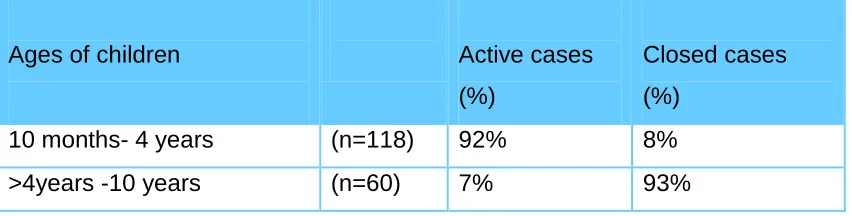
Sixty-six (66) “active cases” children and thirty-four (34) “closed list” children were represented by their parents in the study (Table 3.1).
Table 3.1: Ages of children categorised according to active/closed cases
3.3.5 The Diagnoses of the Children
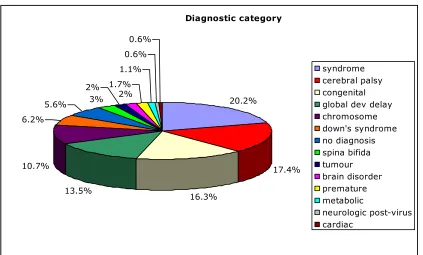
Many of the children in the study had multiple diagnoses and co-morbidities. There was a significant range of diagnoses and these were grouped according to broader diagnostic categories (Appendix 1).
The main diagnostic groupings identified were syndromes(19%) cerebral palsy (17%) and congenital abnormalities (16%). Six percent (6%) of parents reported having not received a formal diagnosis for their child. The reminding children (42%) had a range of medical diagnoses. The diagnostic categories of all one hundred and seventy-eight (178) children are represented in Figure 3.2.
Ages of children Active cases
(%)
Closed cases (%)
10 months- 4 years (n=118) 92% 8%
Figure 3.2: Diagnostic category of the children in the study
3. 4 Equipment Used
This section identified equipment used to assist children and their families in six identified activities of living. Information on additional equipment [including
medication administration] and equipment used in physiotherapy and occupational therapy was also included.
3.4.1 Activities of Living Equipment
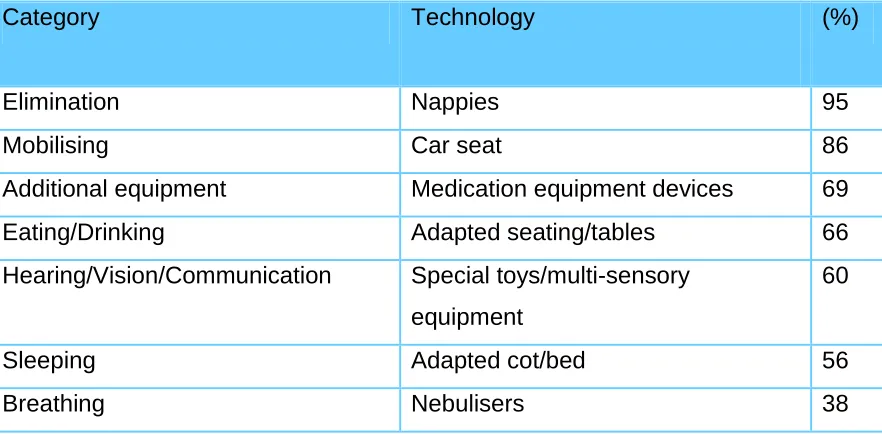
Of all identified equipment used in the six activities of living, mobilisation equipment was the most commonly reported one thousand and forty-two (1042) pieces of equipment were identified. Eighty-six (86 %) of parents reported using a car seat for mobility. The total number of pieces of equipment identified in each of the six activities and those in additional equipment is presented in Figure 3.3.
On average families identified twenty-two (22) pieces of equipment with the least number relating to equipment used in hearing/vision/communication. Elimination equipment including nappies/pads was used by (95%) of children. In addition (69%) of parents reported that medication equipment devices, such as syringes, tablet crusher and soother, were used.
Table 3.2: Most commonly identified pieces of technology in each individual
category
Category Technology (%)
Elimination Nappies 95
Mobilising Car seat 86
Additional equipment Medication equipment devices 69
Eating/Drinking Adapted seating/tables 66
Hearing/Vision/Communication Special toys/multi-sensory equipment
60
Sleeping Adapted cot/bed 56
Breathing Nebulisers 38
Thefollowing provides an overview of the equipment identified in each of the six categories.
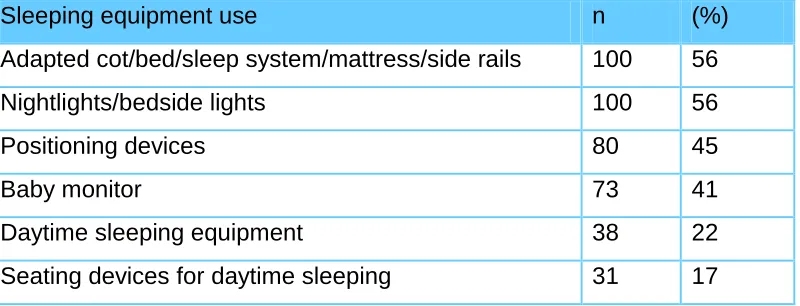
3.4.1.1 Sleeping Equipment
Table 3.3: Use of Sleeping Equipment
Sleeping equipment use n (%)
Adapted cot/bed/sleep system/mattress/side rails 100 56
Nightlights/bedside lights 100 56
Positioning devices 80 45
Baby monitor 73 41
Daytime sleeping equipment 38 22
Seating devices for daytime sleeping 31 17
Additional pieces of equipment identified by parents to assist their child with sleeping included oxygen and its associated equipment such as BiPap systems and music including IPod and compact discs.
3.4.1.2 Communication Equipment
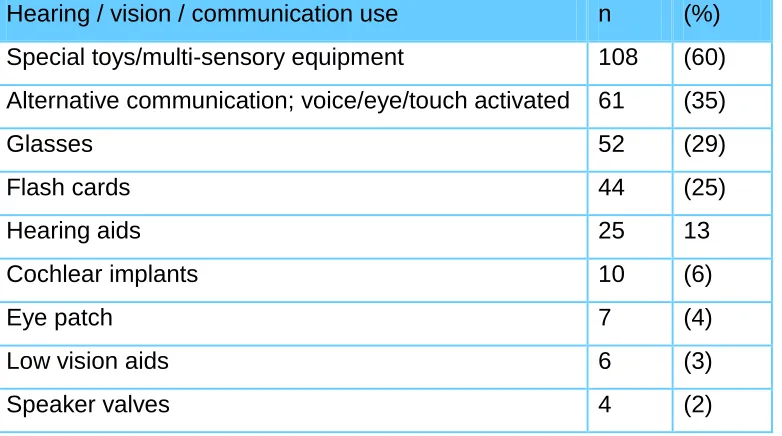
A significant proportion of children (60%) used multi-sensory equipment/special toys. Just over a third (35%) of parents reported using some form of alternative communication such as voice, eye or touch activated equipment. Thirteen percent (13%) of children used the Big Mac switch. Other communication devices identified included Picture exchange communication systems (PECS) and laptops. A quarter (25%) of parents used flash cards to communicate with their child. Twenty-nine percent of children wore glasses and fourteen percent (14%) of children used hearing aids. Six percent (6%) of parents reported their child had had a cochlear implant. For observational purposes fourteen percent (14%) of parents used video monitoring such as a Teddy Cam (Table 3.4).
Forty-one percent (41%) of parents also reported using a baby monitor (Table 3.3).
Table 3.4: Use of Hearing / vision /communication equipment
Hearing / vision / communication use n (%)
Special toys/multi-sensory equipment 108 (60) Alternative communication; voice/eye/touch activated 61 (35)
Glasses 52 (29)
Flash cards 44 (25)
Hearing aids 25 13
Cochlear implants 10 (6)
Eye patch 7 (4)
Low vision aids 6 (3)
Speaker valves 4 (2)
3.4.1.3 Mobilising Equipment
Of all equipment used, mobilising equipment use was the most frequently identified by all parents. This included both standard shop purchased and specialised equipment. Analysis of this findingindicates that a high proportion (73%) of children used buggies and (86%) used car seats. Of the (73%) of children using buggies, almost one-fifth (19%) of them were aged 5 years or more.
Play mats or gyms were used by (63%) of all children. Half of the children used a standing frame/bar with just over a fifth (23%) using a walker/rollator.
Thirty percent (30%) of children used a wheelchair and thirty-six percent (36%) of those used positioning devices, the majority of which were posture supporting chairs such as Heathfield/Jenx/Leckey/Squiggles. Splints were used by (35%) of children and over half (53%) used some kind of shoe adaptations such as
Over half of the respondents (53%) had made bathing/shower adaptations in their homes. Fourteen percent (14%) had had a hoist fitted in their bathroom. One fifth (20%) had installed lift/ramps and a further (16%) hand installed ramps in their cars to cater for wheelchairs (Table 3.5).
Table 3.5: Use of mobilising equipment
Mobilising equipment. n (%)
Car seat 153 (86)
Buggy 129 (73)
Play mats/gym/floor mattress 112 (63)
Shoe adaptations – orthotics/boots 95 (53)
Bathing shower adaptations 95 (53)
Standing frame/bars 88 (50)
Positioning devices 64 (36)
Splints 63 (35)
Wheelchair 54 (30)
Walker/Rollator 40 (23)
Hip brace/spica/casts/body brace/second skin 38 (21)
Lift/ramps 37 (21)
Car ramps 29 (16)
Hoist 25 (14)
Adapted bicycle 19 (11)
Crutches 1 (1)
3.4.1.4 Elimination Technology
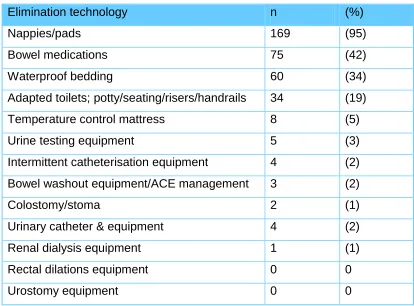
Nappies and pads were used by a substantial proportion (95%) of children. This percentage is particularly significant considering (33%) of children were aged (5) years or over. Forty-two percent (42%) of children required the need of
over a third (34%) of children use waterproof bedding and (19%) of parents had toilets adapted (potty, seating, risers) for their children’s use (Table 3.6).
Table 3.6: Elimination technology
Elimination technology n (%)
Nappies/pads 169 (95)
Bowel medications 75 (42)
Waterproof bedding 60 (34)
Adapted toilets; potty/seating/risers/handrails 34 (19)
Temperature control mattress 8 (5)
Urine testing equipment 5 (3)
Intermittent catheterisation equipment 4 (2) Bowel washout equipment/ACE management 3 (2)
Colostomy/stoma 2 (1)
Urinary catheter & equipment 4 (2)
Renal dialysis equipment 1 (1)
Rectal dilations equipment 0 0
Urostomy equipment 0 0
3.4.1.5 Eating and Drinking Equipment
Sixty-six percent (66%) of parents have adapted seating or tables for their children use. Thirty-one percent (31%) of children used adapted
cups/bottles/feeders, (23%) used adapted cutlery/plates/non-slip mats and (44 %) used some type of protective clothing at mealtimes.
Thirty-seven per cent (37%) of children used percutaneous endoscopic
meal times. Almost half of the children (47%) consumed thickened feeds/special diet such as Nutrini. No child received total parenteral nutrition (Table 3.7).
Table 3.7: Use of Eating and drinking equipment
Eating & drinking equipment use n (%)
Adapted seating/tables 117 (66)
Thickened feeds/special diets 83 (47)
Protective clothing 79 (44)
Feeding pump 70 (40)
PEG feeding equipment 65 (37)
Liquidiser 56 (32)
Adapted cups/bottles/feeders 55 (31)
Adapted cutlery/plates/non-slip mats 41 (23)
Sterilising equipment 32 (18)
Suction at feeding time 25 (14)
Nasogastric/ nasojejeunal feeding equipment 12 (7)
Weighing scales for food 6 (3)
Total parenteral nutrition equipment 0 0
3.4.1.6 Breathing Equipment
devices for administering Salbutamol (Ventolin) or Beclomethasone (Becotide)
(Table 3.8).
Table 3.8: Use of breathing equipment
Breathing equipment use n (%)
Nebuliser and equipment 68 (38)
Batteries/extension cables/extra plugs 56 (32)
Inhaler devices 46 (26)
Suction machine/catheters/tubing 46 (26)
O2 cylinders/valves 37 (21)
O2 mask/prongs/airway/tubing 35 (20)
Video monitor 25 (14)
O2 saturation monitor 24 (14)
Apnoea monitor 19 (11)
Humidifier and equipment 12 (7)
Emergency resuscitation equipment 10 (6)
Ventilation support equipment/overnight ventilation.
9 (5)
Tracheostomy and related equipment 7 (4)
3.5 Additional Equipment
In addition to the equipment used in the six activities of living, the use of additional equipment was also reported. Sixty-seven percent (67%) of parents used
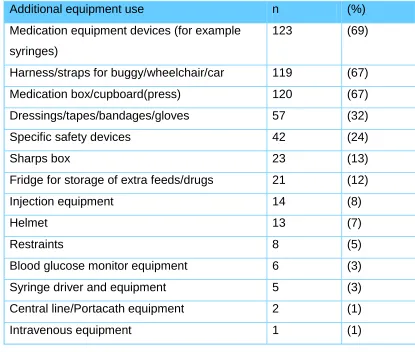
A high proportion of parents (69%) used medication equipment devices such as syringes and tablet crushers; (67%) had a medication box or storage cupboard and thirteen percent (13%) had a sharps box for the disposal of sharps and needles. Thirty-two percent (32%) regularly used gloves, dressings, tapes or bandages.
(Table 3.9).
Table 3.9 Additional equipment
Additional equipment use n (%)
Medication equipment devices (for example syringes)
123 (69)
Harness/straps for buggy/wheelchair/car 119 (67)
Medication box/cupboard(press) 120 (67)
Dressings/tapes/bandages/gloves 57 (32)
Specific safety devices 42 (24)
Sharps box 23 (13)
Fridge for storage of extra feeds/drugs 21 (12)
Injection equipment 14 (8)
Helmet 13 (7)
Restraints 8 (5)
Blood glucose monitor equipment 6 (3)
Syringe driver and equipment 5 (3)
Central line/Portacath equipment 2 (1)
Intravenous equipment 1 (1)
3.6 Physiotherapy and Occupational Therapy Equipment
physiotherapy equipment and (60%) having occupational therapy equipment
(Figure 3.4).
Figure 3.4. Physiotherapy and Occupational therapy equipment
Physiotherapy Occupational therapy
3. 7 Medication
Figure 3.5 Number of medications taken by children daily
3.7.1 Categories of Medications
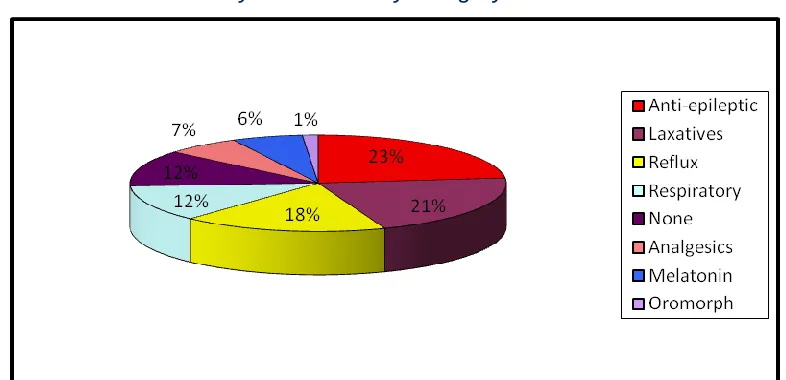
Medications identified were for the management of epilepsy, (23%) of children were taking anti-epileptic medication. Respiratory disorders and respiratory medication accounted for (12%) of all daily medications, (18%) accounted for gastro oesophageal reflux and gastro-reflux medication. In relation to bowel management (21%) of children were taking laxatives as illustrated in Figure 3.6.
Other medications included analgesics, extended release pain medications ‘Oromorph’ and medication to promote sleep as well as antibiotics and nutritional supplements.
Figure 3.6 Breakdown of daily medication by category
3.8 Qualitative Findings
The questionnaire allowed parents to express their views. The data gathered was analysed using simple thematic analysis. Three key themes were identified. 3.8.1 Key Themes
The significant issues reported by parents were related to difficulties in accessing and procuring of equipment for their child which included concerns in relation to the assessment, sanctioning, funding and delivery processes and also about managing equipment and its impact on the family home.
3.8.1.1 The Procurement Process
set up the equipment. Although most parents relied on health care professionals to procure equipment, some parents dealt directly with suppliers this proved to be inconvenient and time-consuming. For many having to ensure adequate stock supplies at all times caused undue stress and worry.
The acquisition of equipment was reported by many parents as a lengthy process, compounded by lack of funding and delivery delays. They reported on how the current adverse economic climate is impacting, most notably for
physiotherapy and occupational therapy equipment.
3.8.1.2 Managing Equipment
For parents the second issue of concern was the management of equipment and the increasing number of complex tasks they have taken on. They expressed worries regarding the correct use of equipment and the constant need to adjust it to ensure both comfort and safety for their child. Many devices required resizing in accordance with the developmental stage of the child and some needed two people to manage the equipment and the child.
3.8.1.3 Impact on the Home
For parents the physical impact of equipment in the home environment was of great concern. They reported that equipment and supplies needed to be stored as unobtrusively as possible so that the home environment did not resemble a hospital setting. As a result with inadequate storage space and the intrusion of medical devices, some parents had renovated or extended their homes, or were planning to do so. The noise made by equipment was also problematic as was the lack of portability and mobility of larger devices.
Transportation of equipment such as respiratory devices or special buggies was particularly challenging due to their bulky or cumbersome nature. Some reported having upgraded to a larger car in order to transport bulky equipment and
supplies. Furthermore, parents also admitted to limiting unnecessary
travelling/journeys and family activities on account of the equipment. Another parent restricted visiting children playing in the home on account of the safety risks posed by certain devices.
3. 9 Data Collectors
In addition to information gathered from parents. The data collectors were also invited to give their views on the levels of support each family required in the home. These views were gathered using three indicators. These indicators were:
The child’s needs are:
Complex requiring moderate level of support. Managed by mother. Complex requiring moderate levels of support.
Highly complex requiring high levels of support.
percent (24%) were considered highly complex requiring high levels of support (Table 3.10).
Table 3.10: Child’s needs according to levels of support
Support levels n (%)
Complex requiring moderate levels of support. Managed by mother
71 (40)
Complex requiring moderate levels of support 65 (36) Highly complex requiring high levels of support 42 (24)
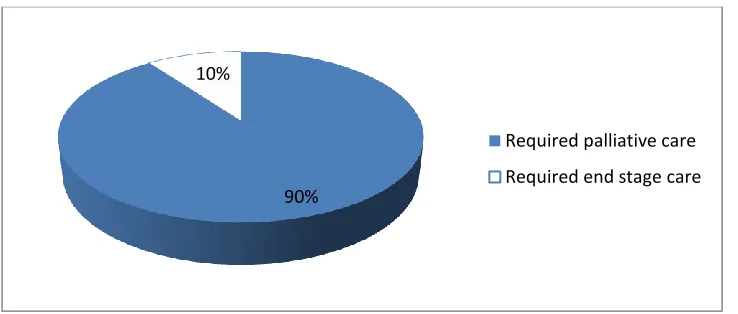
While the majority of care identified in the study and supported by Liben Papadatou and Wolfe (2008) was to improve the quality of life of children with complex needs or life threatening illnesses however data collectors also viewed that approximately (10%) of children required end stage palliative care.
Figure 3.7 Level and type of care required
While the information gathered in this section reflects the views of the data collectors only it is considered valuable as it provides additional insights into the level and type of care children required.
90% 10%
Required palliative care
[image:45.612.84.453.408.565.2]Chapter Four: Discussion, Conclusion and
Recommendations
4.1 Introduction
The aim of this study was to identify the types of technology used by young children with complex needs receiving care at home. The study’s objectives were to identify the range of technology used and parents’ views in relation to using these technologies. Data for the study was collected in two phases. Phase (1) involved a focus group interview with nine expert RCNs the purpose of which was to gather data towards the development of the study’s questionnaire. Phase (2) involved the development and the administration of the questionnaire.
4.2 Discussion
This discussion focuses on the Phase (2) of the study’s findings because of Phase (1) purpose was gather data from the focus group interview to assist in the
construction of Phase (2) questionnaire. 4.2.1 Phase 2
4.2.1.1 Parental Findings
Findings indicate that technology plays a significant role for parents in caring for their children at home. As does the reliance on a large range and number of technology used in relation to their children’s activities of living needs and other needs. The technology identified includes both low and high-tech equipment. This reliance is supported by Lowson et al (2007).
The technology identified to assist children with their activities of living included technology to assist with sleeping, mobilising, elimination, eating and drinking and breathing. The findings are in accordance with the expected needs, and complex and degenerative nature of some of the children’s illnesses, reported by Nicholl (2008) and others.
The use of mobilisation equipment was identified as the highest level use of all equipment and included the use of orthotics, splints and mobilising aids.
Technology required for feeding was also identified as high level use. This included feeding pumps and nutritional supplements with (37%) of equipment required for PEG feeding reflecting the complexity of the children’s conditions and the care-giving required. In relation to technology used to assist with communication (29%) of children wore glasses and (6%) had had cochlear implants.
While the study set out to identify the type and range of technology used another interesting finding emerged. This finding relates to the number and types of medications administered to the children as was also found by Rehm and Bradley (2005). Forty-two (42%) of children were identified as taking bowel medication, this included medication such as enemas and suppositories. Forty-seven percent (47%) of children were receiving nutritional supplements. The study also identified that parents are assuming an increasing level of
administration. These findings provide further data on the complexity of equipment and care management required in the home and adds to Nicholl (2008) findings on the need for parents to deliver technical care-giving including medication management in the home and are further supported by those of Kirk and Glendinning (1999) who identified that highly technical procedures are performed by parents at home and Kirk and Glendinning (2004) indicated that parents assumed responsibility which would previously only have been
undertaken by professionals.
Thematic analysis identified parental concerns on issues related to sourcing and managing equipment within the home. Three (3) key issues emerged, these were the management of equipment; the impact of the equipment on the family home and the accessing and procuring of the equipment.
Kirk and Glendinning (1999) suggest that the impact on carers should not be underestimated particularly given the technological advances which are allowing children a greater life-span. Himelstein et al (2004) also report on the complex medical tasks and round the clock caring that parents are involved in when providing palliative care for their children and from which they have little relief. The potential long-term consequences of caring for a child with complex needs at home identified in the literature includes psychological and emotional stress, social isolation, curtailment of family activities and financial strain (Farasat & Hewitt-Taylor 2007). Redmond and Richardson (2003:206) support this but also indicate that mothers are required to take on a “quasi nursing” role to meet their child’s specific medical needs at home. The volume of equipment identified in this study adds to the understanding of the impact of care giving on the carer and family home.
Parents additionally raised their concerns about their roles and responsibilities in procurement, use and maintenance of equipment and also identified sourcing as part of their role. Nicholl (2008) reported that paperwork and administration related to equipment were key aspects in this phenomenon. Concerns related to the accessibility and management of equipment for parents concurs with similar research by Kirk and Glendinning (1999) who indicated that procurement
difficulties are problematic for parents. This study’s findings concur as parents reported responsibility for accessing, procuring and managing equipment and this responsibility for some also serves to cause them unease and anxiety.
as increased transportation, fuel and electricity costs. In addition parents reported the need to undertake home renovations including adaptations for bathrooms and storage facilities. Over the course of their child’s lifetime, such costs may represent a considerable financial burden for families which warrants further economic investigation. Financial issues are recognised as stressors for parents caring for sick children in the home and the added costs for families are numerous.
4.2.1.2 Data Collectors
In addition to data gathered from parents, data collectors were also asked using three indicators to provide their views on the levels of support each child
required in the home. Results show that forty percent (40%) of children’s care was complex but managed by the mother, (36%) of the children’s needs were complex needing moderate levels of support and (24%) were considered as highly complex requiring high levels of support. Further results indicate that data collectors viewed that approximately (10%) of children required end stage
palliative care at the time of data collection indicating the complexity of the children’s illness trajectories that may be interspersed with periods of wellness. In addition the study also identifies the reported diagnoses of (178) children in Ireland who are, or who have, received care from the Jack and Jill Children’s Foundation. In the absence of a data base for children with rare disorders this in itself is an important finding.
4.3 Conclusion
The study also serves to identify the type of care activities parents undertake and the responsibility they assume when care-giving for their children at home. It further identifies the practical impact on parents on the use and management of sophisticated equipment for which many reported feeling ill-equipped to handle. In addition the study provides evidence on the financial implications and the delays experienced in the acquisition of required equipment. It also provides insight into the types of medication children are taking and the resultant increasing number of complex tasks required in the administration of these medications.
In addition the subjective assessment data included also suggested that (40%) of the children had care that was complex but managed by mothers alone. Twenty four (24%) however, were viewed as needing highly complex care requiring high levels of support which suggests the complexity of the children’s needs at the time of the study.
This study also identifies the need to develop appropriate supporting mechanisms to effectively meet the needs of parents and children with complex needs in their home. It is significant in identifying equipment currently in use in the home and highlights associated issues concerning the use and management of this
equipment for families. It provides a baseline for future research and the urgent need to address the gaps in funding for equipment in the home.
4.4 Limitations
4.4.1 The Sample
4.4.2 Survey Method
Questionnaire data collection was by parents’ self report. This carries with it the risk that the respondent may respond in a socially desirable manner or may not include certain information.
Data collectors, other than the one research assistant, were RCNs known to the parents which could influence responses.
4.4.3 The Questionnaire
The questionnaire designed specifically for this study needs to be tested in other populations. While it was reviewed for content and face validity its reliability and validity warrant further testing.
4.4.4 The Findings
No account was made for additional equipment used outside the home. Some parents, for example, had duplicate sets of equipment for home and school and therefore the number of devices used could be potentially greater than was reported.
The study’s findings are a record of identified technology but may not reflect the level of care involved, or the frequency, currency and appropriateness of the technology is used.
4. 5 Recommendations
The study’s recommendations are directed to:
4.5.1 Strategic planners
Review the personal, financial and practical implications on the high levels of equipment used, on parents and the family.
4.5.2 Service Providers
Provide a collaborative approach in discharge planning between hospital and community services to ensure that equipment required at home is resourced, restocked, resupplied and replaced on a planned needs basis. Provide parental training programmes implementing a flexible, responsive and needs focused programmes.
4.5.3 Practitioners
Ensure specific and focused discharge planning occurs to ensure that, adequate resources are in place at home before the child is discharged. Participate as required in the parental needs focused training
programmes. 4.5.4 Research
Confirm and extend findings to other groups of children with complex needs.
Explore patterns of long-term technology use and the emotional and psychological impact on families in technological care-giving at home. Measure the financial costs of equipment use to families.
4.5.5 Education Providers
Improve professionals understanding of the implications of providing care for children with complex needs at home by developing appropriate curriculum content.
References
ACT&RCPCH (2003) A Guide for the Development of Palliative Care Services. Association (ACT), Bristol, UK.
Audit Commission (2003) Services for Disabled Children. A Review of services for disabled children and their families. London, HMSO.
Boosfield B. & O’Toole M. (2000) Technology dependent children: from hospital to home. Paediatric Nursing 12 (6), 20-22.
Department of Health and Children (2005) A Palliative Care Needs Assessment for Children. The Stationary Office, Dublin.
Department of Health and Children (2010) Palliative care for children with life limiting conditions in Ireland - A National Policy. The Stationery Office, Dublin. European Association of Palliative Care (EAPC) (2009) Palliative care for Infants, Children and Young People. The Facts. EAPC Taskforce for Palliative care for children supported by Fondazione Maruzza Lefebvre D’Ovido Onus, Italy. Farasat H. & Hewitt-Taylor J. (2007) Learning to Support Children with Complex and Continuing Health Needs and Their Families. Journal of Specialists in Pediatric Nursing 12 (2), 72-83.
Glendinning C. (1999) The Community-based care of Technology Dependent Children in the UK. National Primary Care Research and Development Centre, Manchester.
Heaton J., Noyes J., Sloper P. & Shah R. (2003) Technology Dependent Children and Family Life. Research Works. Social Policy Research Unit, University of York, York, United Kingdom.
Heaton J., Noyes J., Sloper P. & Shah R. (2005) Families’ Experiences of Caring for Technology-Dependent Children and Young People: A Temporal Perspective.
Health and Social Care in the Community 13 (5), 441-450.
Hewitt-Taylor J. (2005) Children with complex needs: educating staff. Primary Health Care 15 (3), 36-41.
Hewitt-Taylor J. (2010) Supporting children with complex needs. Nursing Standard 19 (24), 50-56.
International Council of Nurses (2006) The ICN Code of Ethics for Nurses.ICN Geneva,Switzerland.
Jardine E. (1999) Current status of long term assisted ventilation in the United Kingdom: a questionnaire survey. British Medical Journal 318 (7179), 295-299. Kirk S. & Glendinning C. (1998). Trends in community care and patient
participation: implications for the roles of informal carers and community nurses in the United Kingdom. Journal of Advanced Nursing 28 (2), 370-81.
Kirk S. & Glendinning C. (1999) Supporting parents caring for a technology dependent child. NPCRDC, Manchester.
Kirk S. & Glendinning C. (2004) Developing services to support parents caring for a technology-dependent child at home. Child: Care, Health and Development 30 (3), 209-218.
International Journal of Nursing Studies 39 (6), 625-635.
Kirk S. (2001) Negotiating lay and professional roles in the care of children with complex health care needs. Journal of Advanced Nursing 34 (5), 593-602. Kirk S., Glendinning C. & Callery P. (2004) Parent or nurse? The experience of being the parent of a technology-dependent child. Journal of Advanced Nursing 51 (5), 456-464.
Libens Papdatou D. & Wolfe J. (2008) Paediatric palliative care: challenges and emerging ideas. Lancet 371, 852-864.
Lowson K., Lowson P. & Duffy S. (2007) Independent Review of Palliative Care Services for Children and Young People: economic study. York Health Economic Consortium, University of York, York.
Mathers N., Fox N. & Hunn A. (1998) Trent Focus for Research and Development in Primary Health Care: Using Interviews in a Research Project. Trent Focus. Mitchell W. & Sloper P. (2001) Quality in services for disabled children and their families: developing a model of good practice. Health and Socail care in the Community 10 (2), 74-81.
Moore A.J., Anderson C., Carter B. & Coad J. (2010) Appropriated landscapes: the intrusion of technology and equipment into the homes and lives of families with a child with complex needs. Journal of Child Health Care 14 (3), 3-5.
issues. Nurse Education in Practice doi 10.1016/j.nepr.2011.10.011.
Normand C. & Revill P. (2010) A Cost and Outcomes Analysis of Alternative Models of Care for Young Children with Severe Disabilities in Ireland. Centre for Health Policy and Management, University of Dublin, Trinity College, Dublin. Plauche Johnson C., Kastner TA. & and the Committee/Section on Children With Disabilities (2005) Helping Families Raise Children With Special Health Care Needs at Home. American Academy of Pediatrics 115 (2), 507-511.
Redmond B., Bowen A. & Richardson V. (2000) The Needs of Carers of Fragile Babies and Young Children with Severe Developmental Disability. The Centre for the Study of Developmental Disabilities and Department of Social Policy and Social work, University College Dublin, Dublin.
Redmond B. & Richardson V. (2003) Just Getting on with it: Exploring the Service Needs of Mothers Who Care for Young Children with Severe/Profound and Life Threatening Intellectual Disability. Journal of Applied Research in Intellectual Disabilities 16, 205-218.
Reeves E., Timmons S. & Dampier S. (2006) Parents’ experiences of negotiating care for their technology-dependent child. Journal of Child Health Care 10 (3), 228-239.
Rehm R.S. & Bradley J.F. (2005) Normalization in families a child who is medically fragile/technology dependent and developmentally delayed. Qualitative Health Research 15 (6), 807-820.
Richardson V.K.F. (2001) Stress and Coping – The Implications for Mothers caring for a Child with a Profound Learning Disability. Unpublished Master’s Thesis, University College Dublin, Dublin.
Appendix 1 The Study’s Reported Diagnoses
Syndromes
Allan Herndon Dudley Syndrome Angelmann Syndrome (3 children)
Bardet-Biedel Syndrome Charge Syndrome (2 children)
Di George Syndrome Down's Syndrome (2children)
[Acute Lymph Leukemia &] Down's Syndrome Down's Syndrome with cardiac problems
Down's Syndrome, Congenital Heart Defect, Imperforate anus Down's Syndrome, Laryngomalacia, Interventricularhaemorrhage, epilepsy Down's Syndrome, Epilepsy, Severe Developmental Delay, cardiac complications,
bowel surgery x 2
Down's syndrome (with metabolic problems, GI problems, PEG tube in-situ) Down's Syndrome, complex cardiac condition, moderate/severe developmental
delay
Down's Syndrome with complex cardiac condition [Brochiolitis Obliterans&] Down's Syndrome
Hypomyelination Syndrome Masa Syndrome & Hydrocephalus
Microdeletion of 12P Chromosome Syndrome Miller-Dieker Syndrome (2 children)
Ohdo Syndrome [2]
Pallister Killian Syndrome [2]
Patau Syndrome Prader Willi Syndrome [2]
Retts Syndrome Rubenstein Taybi Syndrome Short Bowel Syndrome
22q11 Deletion Syndrome with cortical dysplasia Treacher Collins Syndrome; Grade 2 brain haemorrhage
Velo-Cardio-Facial Syndrome (VCFS) West Syndrome with Developmental Delay Wolf-Hirschhorn Syndrome
Cerebral Palsy
Cerebral Palsy [14]
Cerebral Palsy & Deaf Cerebral Palsy Quadriplegic
Cerebral Palsy Spastic Quadriplegic & Hydrocephalus Quadriplegic Cerebral Palsy
Severe to profound Cerebral Palsy
Cerebral Palsy, Epilepsy & Severe Developmental Delay Cerebral Palsy, Visual Impairment, Epilepsy
Cerebral Palsy, Microcephaly & Epilepsy Cerebral Palsy Quadriplegic [Acquired Brain Injury &] Cerebral Palsy Disconnect Cerebral Palsy
Mild Cerebral Palsy, autistic with moderate intellectual disability [Microcephaly &] Cerebral Palsy
Cerebral Palsy Spastic Quadriplegic
[Microcephaly &] Cerebral Palsy [Quadriplegic] [Microcephaly &] Cerebral Palsy [ & Epilepsy]
Chromososomal Abnormalities
Chromosome Ring 18 Chromosome 10
Depletion of Short Arm of Chromosome 17 & Developmental Delay 3 way chromosome disorder
Inverted Duplication of Chromosome 15 Chromosome 7p deletion Chromosome Mosaic Partial Trisomy 8 Unbalanced Translocation of Chromosome 14 & 21 [T1421]
Unbalanced translocation - genetic Trisomy 9
Tetrasomy 18p Trisomy 17p Trisomy 21, Cho-anal Atresia
Trisomy 21 & Complex Cardiac Disorder Trisomy 22
Chromosomal Abnormality, Trisomy 9 & Monosomy 10q Chromosome Ring 18
Undiagnosed
Chromosome 2 possibly but not confirmed Undiagnosed [2]
Undiagnosed Spinal Muscular Atrophy [SMA Type II] Ventilation - no diagnosis
Undiagnosed Global Developmental Delay Undiagnosed - Global Developmental Delay
Suspected mitochondrial defect but not confirmed [2] Undiagnosed Severe Developmental Delay with Epilepsy Undiagnosed but mental and visual disorders
Developmental Delay
Developmental Delay
Global Developmental Delay associated with hypotonia and bulbar palsy Developmental Delay, airway obstruction leading to Tracheostomy and 24 Nippy
Global Developmental Delay [5]
Severe Developmental Delay plus hypotonia& epilepsy Global Developmental Delay & Seizures Severe Global Developmental Delay with Epilepsy
Global Developmental Delay, Ataxia & Arachnoid Cyst in the Internal Fossa Global Developmental Delay & Cerebral Palsy & Epilepsy
Global Developmental Delay & Epilepsy[2] Global Developmental Delay with seizures
Severe to Profound Developmental Delay plus Migrating Epileptic Seizures Globally medically developmentally delayed
Laryngomalacia, Global Developmental Delay &Stiklo Type Collagen Disorder Severe Global Developmental Delay
Severe Developmental Delay, Mitochondrial Disorder, Visual Impairment & Epilepsy
Global Developmental Delay assoc. with Epilepsy, Autism,
Congenital Disorders
Congenital Hydrocephalus CongenitalHypotonia
Congenital Cytomegalovirus [4]
Congenital heart disease & Interrupted aortic Type B
Tumours
Brain & Spine tumour - unusual neurological tumour Brain tumour
Chorid Plexus tumour on third ventricle
Others
Achondroplasia, chronic obstructive sleep apnoea AdenylosuccinateLyase Deficiency ASDL Agensis of the Corpus Collosum
Arthrogryposis with Severe Developmental Delay
Bilateral Schizencephaly, severe developmental delay, epilepsy, visual impairment Cardiomyopathy plus feeding difficulties, Erbs palsy and stunted brain
development
Chronic lung disease plus heart condition
Chronic Lung Disease, Congenital Heart, Pulmonary Hypertension, Tracheostomy Congenital Heart Defect, severe intracerebral damage, secondary to cardiac
surgery, Severe Developmental Delay, Epilepsy
Lissencephaly [2]
Lissencephaly, Severe Developmental Delay & Epilepsy Microcephaly
Microcephaly &Spina Bifida
Mitochondrial Disorder 3 & 4 Macrothrombocytopenia, Mitochondrion
Mitochondrial Disorder (HOCM) Neuronal Migration Disorder Osteogenesis Imperfecta Type 3 Polymicrogyria Arthrogryposis
Polystic kidneys & learning difficulties Premature [2]
Premature Post-viral encephalitis Rudimentary RH & AFC in left ventricle
Septo-optic Dysplasia, Diabetes Insipidus & Epilepsy Severe Intellectual Disability
Spastic Quadriplegic & visually impaired & PEG tube Spina Bifida
Spina Bifida & Hydrocephalus [4]
Spinal Muscular Atrophy Type 2
SSADH (succinic semialdehyde dehydrogenase deficiency) Tracheo Oesophageal Fistula Atresia