ORIGINAL RESEARCH ARTICLE
SEGMENTAL STABILIZATION AND AUSSIE CURRENT IN WOMEN WITH NONSPECIFIC
CHRONIC LOWER BACK PAIN
*,1
João Cambuí Silva Neto,
1Leonardo Silva Lima,
1Lucas Freitas Santos,
1Lázaro Silva Sousa,
1Alberto Silva
Lima Bittencourt,
1Nara Lourdes Moreno Rodrigues,
1Rejane de Oliveira Leite,
1Carlos Machado Ataíde
Evangelista,
1Ramon de Oliveira Almeida,
2Lucas Silveira Sampaio and
2Kleyton Trindade Santos
1Graduate in Physiotherapy by the Northeast Independent College –Fainor
2Master in Health Sciences by the Southeast State University of Bahia
ARTICLE INFO ABSTRACT
Introduction: Lower back pain impacts almost 80% of the population. A lower back’s is taken as non-specific when there is not a closed clinical diagnosis. This paper compared the outcomes with the segmental stabilization and the Aussie current’s usage in an isolated and joint form for the treatment of lower back pain. Materials and Methods: This is an analytical clynical trial, with a control group which was a subproject of the research named "Physiotherapeutic performance in orthopedic and sports dysfunctions" endorsed by the opinion of number 2,418,872. The sample was comprised by 24 assessed subjects, before and after interventions, through the Visual Analogue Scale and the Start Back and Rolland Morris questionnaire. Afterwards, they were shared among the treatments’s protocol with (1) isolated segmental stabilization, (2) Aussie isolated current, (3) segmental stabilization + Aussie current, and (4) control group. The data analysis was done by the Statistical Package for the Social Sciences program 22.0 version with the paired t-Student test, Wilcoxon and Kruskal Wallis. The level of confidence was 95% (p<0,05). Results: It was noticed that the Aussie current, in an isolated way (p = 0.027) and / or incorporated with the segmental stabilization (p = 0.047) led to greater outcomes. Conclusion: It was settled that the Aussie current was seen as the a better option to decrease pain.
Copyright © 2018,João Cambuí Silva Neto et al. This is an open access article distributed under the Creative Commons Attribution License, which permits unrestricted use, distribution, and reproduction in any medium, provided the original work is properly cited.
INTRODUCTION
Lower back pain is one of the main causes of disability being encountered in approximately 80% of the population
(FURTADO et al., 2014). In line with to Benvenutti (2016)
who point that the female population is inclined to the develop nonspecific lower back pain. Such fact is clarified because women are submitted to a gradual process of loss of muscle mass during their life, being predisposed to painful symptoms
in the lower back region.In spite of these numbers, a specific
diagnosis regarding the possible causes of lower back pain is
not decisive between 90-95% of the cases, once this pain
displays a multifactorial character (O’SULLIVAN, 2010). A
lower back pain complain is taken as nonspecific when there is not a closed clinical diagnosis, it may be categorized because of the discomfort and muscle fatigue framework from the last
costal ribs to thegluteal fold(KNOX, 2018).
*Corresponding author: João Cambuí Silva Neto,
Graduate in Physiotherapy by the Northeast Independent College –Fainor.
The health professionals looks for detecting the several
etiological factors that provide the emergence of the symptoms
of the nonspecific lower back pain that can be identified in
numerous manners like muscular, bone, joint and neural pain. The symptoms labelling helps to select the best treatment
option. Among the therapeutic proposals displayed in the
literature, we particularly emphasize the segmental
stabilizations and electrotherapy (GHORBANPOUR et al.,
2018; JUNIOR, 2005). Among some techniques applied to
decrease the pain of the lower back segment, the segmental
stabilization exercises promote the activation of the intrinsic lower back multifidus, Transverse Abdomen, and pelvic floor
muscles through isometric contraction. The isometric exercises
are valuable because they act as a reeducation in the deep muscles (YUNG, 2018). Another technique frequently used as
a feature to decrease lower back pain is electrotherapy, which
the usage of electric currents such as Aussie favors the pains’
decrease. The current Aussie or Australian current is a
physiotherapy technique inside the package of various currents
ISSN: 2230-9926
International Journal of Development Research
Vol. 08, Issue, 12, pp.24787-24791, December, 2018
Article History:
Received 02nd September, 2018
Received in revised form 14th October, 2018
Accepted 06th November, 2018
Published online 31st December, 2018
Key Words:
Segmental Stabilization, Electrotherapy,
Nonspecific Lower back pain.
Citation: João Cambuí Silva Neto, Leonardo Silva Lima, Lucas Freitas Santos et al., 2018. “The effect of dm control behavior on patient blood sugar levels in anutapura general hospitalpalu”, International Journal of Development Research, 8, (11), 24787-24791.
that the electrotherapy offersto deliver the sensory and motor
stimulation. This current is able to conduct a stimulus with
minimal discomfort because it is a medium frequency current (4000Hz or 4kHz) and because it uses the Burst modulation in a short period, becoming this way even more comfortable (4ms) (CAMARGO, 2011). In light of the foregoing and noticing the negative repercussion for pain and functionality in women with nonspecific lower back pain, it is of central importance to know the most successful methods for subjects’ recovery. This way, this research seeks to compare the outcomes gotten from the segmental stabilization and the use of the Aussie current in isolation and a combined usage of these techniques.
MATERIALS AND METHODS
The current study addresses a controlled and randomized
clinical trial, which is a subproject of the study named
"Physiotherapeutic performance in orthopedic and sports
dysfunctions", presented and endorsed by FAINOR Research
Ethics Committee (CEP / FAINOR) through the approval number: 2,418,872. The study was held in the Human Performance Laboratory of a private college in the city of Vitória da Conquista-BA, situated in the southwest region of Bahia. The subjects who comprised the sample were recruited through spontaneous demand, and had to adopt the respective inclusion criteria: Women aged 18 to 30 years who reported having nonspecific lower back pain which persisted for a period of three months in a back region between the lower ribs
and the gluteal fold (KOVACS et al., 2003). There were
removed participants who accomplished other analgesia
activities and the ones who were in the gestational term, in
extended drugs usage and with a history of lower spine fracture. After the criteria’s adoption, the final sample was composed by 24 women, who replied a structured questionnaire and scientifically validated forms, which were respectively the Start Back Screening Tool (SBST) (PILZ, 2014) to examine the patients’ prognosis and the Roland Morris Disability Questionnaire (RMDQ) and to measure functional incapacity (MONTEIRO, 2010),besides answering the Visual Analogue Scale (VAS) that in a subjective way
allows us to check the pains’ intensity (MARTINEZ et al.,
2011). The VAS encompasses scores from zero (0) to ten (10), in which are determined the cutoff point in the subsequent sequence: it is rated from zero (0) to two (2) as mild pain; between three (3) and seven (7) as moderate pain; and between eight (8) and ten (10) as severe pain. The RMDQ is fast and easy to be applied, with the average answering time of five minutes. The score is got by the items total sum, which vary from zero (no inability) to 24 (severe inability). Values above 14 points to physical disability. The SBST questionnaire is comprised by nine items, four concern referred pain, dysfunction, and five items constitutes the psychosocial subscale (items 5 to 9) regarding discomfort, catastrophization,
fear, anxiety and depression. For the questionnaires’ raking
and classification, the patient had as options "I agree" and "I
Disagree" in the first eight items, with the first option graded
with one point, and the second option graded zero.The ninth
item presented five options: "Nothing, Little, Moderate, A lot,
Extremely", with the first three options being graded with zero,
and the last two with one point each. If the total score is
between 0-3 points,the patient is categorized with lower risk.
For higher values above 3 in the total score we consider then
the psychosocial subscale ratescomprised by questions 5-9.If
the scoring of this subscale is ≤3 points, the patient is
categorized with medium risk and, if it is> 3 points, they fit in the high-risk group. After it, the volunteers were split randomly in four (4) intervention groups with six (6) participants in each group, them being: one (1), Aussie current (AC), two (2), segmental stabilization (SS), three (3) segmental stabilization + Aussie current (SS + AC), and four (4), control group (CG). The SS group volunteers carried only the isometric strengthening exercises protocol combined with diaphragmatic breathing, while the AC participants just had
the pain control therapy by the Aussie current, on the other
hand the SS + AC volunteers performed both SS and AC. The
CG were the subjects that did not go through any treatment. The SS volunteers’ group treatment was implemented with two session per week with duration of 40 minutes each session in a four week period, being conducted with group of six patients with the therapist giving auditory and tactile stimuli for the appropriate execution of the exercises, the second group with
six AC volunteers,the third group with six volunteers with SS
+ AC, and the fourth group with six volunteers as the CG.
The SS Group one (1), was enlisted at the start of the
pre-established protocol. In the first week, there was the first
contact with the volunteers that was done during the first
session, primarily the body awareness-raising,formed by three
phases: one (1), diaphragmatic respiration, in which the subject was firstly instructed to inhale through the nose and exhale through the mouth, just with abdominal movement during the
respiratory cycles; two (2), expiration with the transverse
muscle abdomen contraction; and three (3), diaphragmatic respiration with the transverse abdomen contraction as well as
the pelvic floor . In the second session, after the corporal
awareness raising on the first session we directed to the first
protocol’s exercise that being the bridge exercise, with the
subject in supine position with flexed knees and elevation of
the pelvis, this was done in eight times of 40 seconds.After
this, the second exercise started that was the bridge with leg elevation it was completed alternately, the participant positioned in supine position in the stretcher, with knees flexed, elevation of the pelvis and elevation of one leg at a time, this was done four times of 40 seconds in each member. In the second week, occurred the fourth and fifth sessions where the volunteers with good body awareness and execution
got during the first week carried the bridge exercise,with the
volunteer in bench press with her knees flexed and elevation of
the pelvis during eight times of 40 seconds. The second
exercise was the lateral bridge done on both sides, with supine position on a stretcher with the flexed elbow at 90 degrees and elevation of the pelvis, being executed four times of 40 seconds on each side.
In the third week, the fifth and sixth sessions happened with the advance of exercise execution and body awareness in the
first and second weeks. The pre-established protocol was
followed with the bridge exercise the subject in supine position, with the knees flexed and the pelvis elevated, during
eight times of 40 seconds. After it, the second exercise was the
Swiss ball bridge conducted with the subject in supine position on a stretcher, with knees extended, feet supported on Swiss ball and pelvis elevated, it was done eight times with 40 seconds. In the fourth week, the seventh and eighth sessions happened after gradual upgrading of the previous three weeks,
at the last week the bridge exercise was done with the
individual on supine position with knees flexed and pelvic
elevation, for eight times of 40 seconds.As a result, the second
elevation and Swiss ball slip this exercise was carried bilaterally, the subjects positioned on the stretcher, with the knees bent, with the feet supported by the Swiss ball, with pelvis and one leg elevated and with the contralateral leg
descending the ball in a cranial direction,and keeping for 40
seconds four times in each limb.
Group 2 (2) of AC was recruited to begin the pre-established protocol. The volunteers were guided on the goal of the electric current, which feeling would be experienced according
to the rise in intensity. The Aussie current was applied with
analgesic purpose and there were used the respective parameters: Carrier frequency: 4 KHz; Burst duration: 4 ms; modulated frequency: 50 us; stimulation mode: continuous; Treatment time: 30 min * and intensity related to the patient's
perception of gradual growth (CAMARGO, 2011). After the
parameters setting, two channels with four electrodes that were positioned in a crosswise way in the low back region, with first circuit being filled with an electrode of five centimeters next to the transverse process of the first right vertebra and another electrode of five centimeters placed to the left of the gluteal
fold, conversely the second circuit was completed with an
electrode of five centimeters on the side of transverse process of the first left vertebra and another electrode five centimeters on the right of the gluteal fold. It was highlighted that before the electrodes positioning the patient's cutaneous sensitivity was assessed with using the Esthesiometer that is Semis-Weinsten instrument ®.
Group three (3) of SS + AC was enrolled to begin the pre-established protocol. That comprised combined therapy of SS associated to AC respectively, obeying the time and form of application of the group one and two techniques in group.
Group four (4), constituting the CG group, the volunteers were
assisted for the same period of the groups before mentioned,
nevertheless these participants were the ones who did pass through any treatment. The interventions happened with all groups twice a week for four weeks, resulting in eight sessions. At the end of the final intervention, the individual were requested to return after two days so that the assessments instruments of pain and functionality, originally used were reapplied and the reassessment performed with the participants. For the data analysis, we employed descriptive statistics with absolute, mean and standard deviation distributions and in the Statistical Package for the Social
Sciences software 22.0 version. For the effects comparation
before and after intervention, it was performed the paired t-Student test, the Wilcoxon test and the Kruskal Wallis test to detect the risk categories and the best evolutions in line with
the technique. For all assessments, the reliability level was
95% (p <0.05).
RESULTS
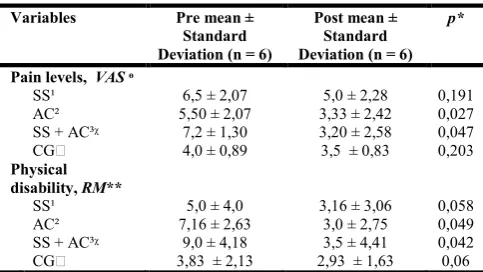
Table 1 shows the outcomes of the mean regarding the pain
score level which was assessed by the VAS,and the functional
incapacity, assessed by the Rolland Moris questionnaire,
before and after intervention.Concerning the pains’ level, it is
possible to check that both variables had a decrease in the
scores in all groups, nevertheless it is perceived that these
reductions were significant just for the groups that used the Aussie current, (p = 0.027) and / or he integrated with the segmental stabilization (p = 0.047). When examining the functional incapacity, similar discoveries were observed
regarding the pain’s level, with reduction for all groups, but
with significance only for the groups that used the Aussie current in isolation or combined with segmental stabilization (p = 0.049 and 0.042, respectively). It is noted that when checking the techniques’ efficiency in the study’s variables, the group of segmental stabilization protocol combined to the Aussie current displayed a higher evolution percentage. The variations for both VAS and physical incapacity are different for the groups (p = 0.017 and p = 0.048, respectively). When assessing the STarT Back, it was found a risk improvement regarding the poor prognosis, of which cases of medium risk for SS and AC were abolished and the ones of high risk for the
SS + AC group.There was not displayed any alteration in the
control group. The categorical variance was not shown in a
[image:3.595.312.554.265.401.2]considerable way,as displayed in Table 3.
Table 1. Samples’ Assessement and reassessment. Vitória da Conquista - BA. 2018
Variables Pre mean ±
Standard Deviation (n = 6)
Post mean ± Standard Deviation (n = 6)
p*
Pain levels, VAS ᶱ
SS¹ 6,5 ± 2,07 5,0 ± 2,28 0,191
AC² 5,50 ± 2,07 3,33 ± 2,42 0,027
SS + AC³ᵡ 7,2 ± 1,30 3,20 ± 2,58 0,047
CG 4,0 ± 0,89 3,5 ± 0,83 0,203
Physical disability, RM**
SS¹ 5,0 ± 4,0 3,16 ± 3,06 0,058
AC² 7,16 ± 2,63 3,0 ± 2,75 0,049
[image:3.595.304.562.472.579.2]SS + AC³ᵡ 9,0 ± 4,18 3,5 ± 4,41 0,042 CG 3,83 ± 2,13 2,93 ± 1,63 0,06 *paired t-Student Test;ᶱ Visual Analogue Scale ; ** Rollande Morris;¹ Segmental Stabilization ; ² Aussie current; ³ Segmental Stabilization + Aussie Current; Control; ᵡ n = 5; Source: Research data.
Table 2. Evolution of the pain’s level and physical incapacity of the sample. Vitória da Conquista - BA, 2018
Variables Average difference % in gains
Pain levels’, VASᶱ
SS¹ 1,5 23
AC² 2,17 39,4
SS + AC³ᵡ 4 55,5
CG 0,5 12,5
Physical Incapacity, RM**
SS¹ 1,84 36,8
AC² 4,16 58,1
SS + AS³ᵡ 5,5 61,1
CG 0,9 23,4
[image:3.595.306.561.647.772.2]*Kruskal Wallis non parametric test; ᶱ Visual Analogue Scale; ** Rollande Morris; ¹ Segmental Stabilization; ² Aussie Current; ³ Segmental Stabilization + Aussie Current; Control; ᵡ n = 5; Source: Research data.
Table 3. Evolution of the risk of poor prognosis. Vitória da Conquista - BA, 2018
SBST** Assessment (n = 6) Reassessment (n = 6) p*
SS¹
Low 5 (83,3) 6 (100,0) 0,317
Average 1 (16,7) −
AC²
Low 5 (83,3) 6 (100,0) 0,317
High 1 (16,7) −
SS + AC³ᵡ
Low 2 (40,0) 4 (80,0) 0,18
Average 2 (40,0) 1 (20,0)
High 1 (20,0) −
CG
Low 6 (100,0) 6 (100,0) 1
DISCUSSION
The present paper compared the outcomes of lower back segment stabilization and Aussie current exercises in decreasing the pain’s framework and functional inability in women with chronic nonspecific lower back pain. It was noticed that the segmental stabilization linked to the AC displayed better outcomes to analgesia and functional incapacity than the isolated application of the Aussie. That way, the study bears the idea that segmental stabilization was a
way of maximizing the effects of AC once segmental
stabilization in an isolated way did not show benefits. Chronic pain control by means of the Aussie current happens by the release of endogenous opioids through the activation of the ABeta nerve fibers and the ADelta and C fibers, just as the discharge of neurotransmitters in the central nervous system in
a longer way (MELZACK, WALL and PANTALEÃO et al.,
2011). It is reinforced that few studies show the physiological processes produced during the decreasing effects of the pain
framework that AC promotes, neverthelessit is supposed that
just as the transcutaneous electrical stimulation (TES), this process happens by adjustment that strengthens the analgesic effect. The author used the pains barriers by pain’s pressure
and temporal sum, showing that the AC applied with a 4KHz
frequency has a straight impact on the pain’s mechanism, an
outcome that substantiates other studies (WARD et al., 2002;
WARD; OLIVER, 2007; WARD et al., 2009). Agripino
(2017)emphasizes that there is a lack of randomized studies to
evidence such effect, because in his study the author noticed
from the outcomes of the temporal sum that these hypoalgesia mechanisms come from the central sensitization and the
central nervous system excitability(CNS) answering to to the
stimulus, this way the AC may display analgesic properties regarding the possible inhibitory action of nociception in the CNS. In accordance to Corrêa et al. (2016), in controlled study
within a period of four weeks had as goalto check the impacts
of an isolated medium-frequency current for analgesic ends
using two different guidelines, presented beneficial effects in
the pain’s treatment, which settles the outcomes encountered
in the current study, supporting the idea and substantiating the results that the electroanalgesia of medium frequency exhibit important results in hyalalgesia. It was detected in the current paper that the physical incapacity measured by Rolland Morris, had better outcomes for the segmental stabilization
groupcombined to the Aussie current.
The SS entails the contraction of the deep upper body muscle, transverse abdomen, multifidus, pelvic floor linked to abdominal breathing like an essential therapeutic agent to
decrease pain and physical incapacity (LEITE et al., 2008;
FERREIRA, PEREIRA, 2010). In Perreira et al. research (2010), which was conducted with 12 women with nonspecific lower back pain, with the mean age of 20.66 + 3.74 years, it was done 12 sessions of a protocol using SS twice a week, in which was assessed the the functional capacity using the Rolland Morris questionnaire before and after the intervention it was seen improvement of women’s functional capacity (p <0.0001) after the intervention period. These evidences lead to the comprehension that SS is an efficient therapeutic
mechanismfor the functional incapacity, although the majority
of the investigations display SS in an isolated way (Bottamedi
et al., 2011; Souza et al., 2010).Nevertheless, in the current
paper the SS group was not likely to reveal the physical
incapacity enhancement, therefore being able to predict that the decrease of the physical incapacity arose from the pains’
reduction provided by AC. This understanding carries an idea of SS chronicity effects of which the current study with four weeks a protocol using the same technique did not demonstrate success and that earlier way the SS just amplified the analgesic effects of the Aussie current. At the Start Back Screening Tool assessment, it was displayed that the participants’ prognosis is good. This outcome was already hoped in face of pain’s reduction and enhancement of the partcipants functional capacity as stated previously. The SS is described by different studies as useful for pain and functional incapacity in studies
with longer protocols (CARVALHO et al., 2011; SOUZA et
al., 2010). Nevertheless, with the outcome here obtained with
a shorter protocol which was different from the other studies, because SS was the factor that stayed in the second plan powering this way the AC impacts for the pain’s early treatment. The current paper reported some shortcomings such as withdrawals or deletion of some participants since they did not comply properly with the scheduled procedures, but it did not negatively affects the outcomes. In spite of the important
indications found here to pains’ reduction through AC, more
studies are required to comprehend its mechanism, once in the current study the purpose was not to assess the possible activated analgesic route, so it was not possible to assert which
would be the mechanism for that effect. Further scientific
studies with the same methodology and bigger samples are needed to expand the subjects’ understanding and to get the possible mean that resulted in better outcomes of the AC against SS in the pain’s treatment.
Conclusion
The present paper is of innovative nature for linking SS with
AC that is not explored enough by the researchers andit comes
to extend to the scientific community just as to bring additional
proposals for the clinical practice. It may be settled that SS
combined with AC was taken as the main method for the
treatment of nonspecific chronic lower back pain,
accompanied by the isolated AC, so it is suggested the usage of the AC combined with SS in the clinical practice for
physiotherapists who are treating nonspecific chronic lower
back pain. However, it is imperative to highlight that there was a struggle to encounter studies in the scientific literature to supplement the discussion on account of the innovative study’s
nature aside from promoting new studies development.
REFERENCES
Agripino, M. E. D. J. 2017. Efeito hipoalgésico da corrente alternada de média frequência em quilohertz (Aussie) em indivíduos saudáveis: ensaio clínico randomizado.
Benvenutti A; Junior AAP. 2016. Dor lombar em mulheres sedentárias e praticantes de musculação Low back pain in
sedentary women and active. Cinergis, Santa Cruz do Sul,
18(1):54-58.
Bottamedi, X., Ramos, J. D. S., Arins, M. R., Murara, N., Woellner, S. S. and Soares, A. V. 2016. Programa de tratamento para dor lombar crônica baseado nos princípios
da Estabilização Segmentar e na Escola de Coluna. Rev.
bras. med. trab, 14(3), 206-213.
Camargo JDS. 2011. Eletrofisiologia da corrente aussie no tratamento das disfunções estéticas musculares. Programa
de Pós Graduação em Estética - FACULDADE
REDENTOR INSTITUTO ITESA, São Paulo.
controle postural de atletas de base de basquetebol. Ter
Man, 9(42), 126-131.
Corrêa, J. B., Costa, L. O. P., Oliveira, N. T. B., Lima, W. P., Sluka, K. A. and Liebano, R. E. 2016. Effects of the carrier frequency of interferential current on pain modulation and central hypersensitivity in people with chronic nonspecific
low back pain: A randomized placebo‐controlled trial.
European Journal of Pain, 20(10), 1653-1666.
Furtado, R. N. V., Ribeiro, L. H., de Arruda Abdo, B., Descio, F. J., Junior, C. E. M. and Serruya, D. C. 2014. Dor lombar inespecífica em adultos jovens: fatores de risco associados.
Revista Brasileira de Reumatologia, 54(5), 371-377.
Ghorbanpour, A., Azghani, M. R., Taghipour, M., Salahzadeh, Z., Ghaderi, F. and Oskouei, A. E. 2018. Effects of McGill stabilization exercises and conventional physiotherapy on pain, functional disability and active back range of motion in patients with chronic non-specific low back pain.
Journal of physical therapy science, 30(4), 481-485.
Knox, M. F., Chipchase, L. S., Schabrun, S. M., Romero, R. J. and Marshall, P. W. 2018. Anticipatory and compensatory postural adjustments in people with low back pain: a
systematic review and meta-analysis. The Spine Journal.
Kovacs, F. M., Gestoso, M., del Real, M. T. G., López, J., Mufraggi, N. and Méndez, J. I. 2003. Risk factors for non-specific low back pain in schoolchildren and their parents:
a population based study. Pain, 103(3), 259-268.
Leite, M. R. R., Oliveira, T. H. D., Melo, R. M., Valadas, M., Nascimento, M. R. D., Freitas, A. E. D. and Venturini, C. 2008. Efetividade dos exercícios de estabilização lombo-pélvico no tratamento da dor lombar crônica
não-específica. Rev. Ter. Man, 6(27), 270-275.
Macedo, L. G., Maher, C. G., Latimer, J. and McAuley, J. H. 2009. Motor control exercise for persistent, nonspecific
low back pain: a systematic review. Physical therapy,
89(1), 9-25.
Martinez, J. E., Grassi, D. C. and Marques, L. G. 2011. Análise da aplicabilidade de três instrumentos de avaliação de dor em distintas unidades de atendimento: ambulatório,
enfermaria e urgência. Rev Bras Reumatol, 51(4), 299-308.
Melzack, R. and Wall, P. D. 1965. Pain mechanisms: a new
theory. Science, 150(3699), 971-979.
Monteiro, J., Faísca, L., Nunes, O. and Hipólito, J. 2010. Questionário de incapacidade de Roland Morris: adaptação
e validação para a população portuguesa com lombalgia.
Acta Médica Portuguesa, 23, 761-766.
Moseley, L. 2002. Combined physiotherapy and education is
efficacious for chronic low back pain. Australian journal of
physiotherapy, 48(4), 297-302.
O’Sullivan, P. 2010. Diagnosis and classification of chronic low back pain disorders: maladaptive movement and motor
control impairments as underlying mechanism. Manual
therapy, 10(4), 242-255.
Pereira, N. T., Ferreira, L. A. and Pereira, W. M. 2010. Efetividade de exercícios de estabilização segmentar sobre
a dor lombar crônica mecânico-postural. Fisioter Mov,
23(4), 605-14.
Pilz, B., Vasconcelos, R. A., Marcondes, F. B., Lodovichi, S. S., Mello, W. and Grossi, D. B. 2014. The Brazilian version of STarT Back Screening Tool-translation,
cross-cultural adaptation and reliability. Brazilian journal of
physical therapy, 18(5), 453-461.
Shaughnessy, M. and Caulfield, B. 2004. A pilot study to investigate the effect of lumbar stabilisation exercise training on functional ability and quality of life in patients
with chronic low back pain. International journal of
rehabilitation research, 27(4), 297-301.
Silva B C, et al. 2018. Corrente Aussie em estudantes com
cervicalgia crônica: um ensaio clínico randomizado. BrJP,
1(3), 202-206.
De Souza, N. S., da Rosa, G. M., Gaban, G. A., Bastos, V. H., Machado, D., Miana, L. C. and Martins, A. C. G. 2010. A influência da estabilização segmentar vertebral no tratamento da lombalgia por disfunção postural em flexão.
Editor Científico, 180.
Ward, A. R. and Shkuratova, N. 2002. Russian electrical
stimulation: the early experiments. Physical therapy,
82(10), 1019-1030.
Ward, A. R. and Oliver, W. G. 2007. Comparison of the hypoalgesic efficacy of low-frequency and burst-modulated
kilohertz frequency currents. Physical therapy, 87(8),
1056-1063.
Ward, A. R. and Chuen, W. L. H. 2009. Lowering of sensory, motor, and pain-tolerance thresholds with burst duration using kilohertz-frequency alternating current electric
stimulation: part II. Archives of physical medicine and
rehabilitation, 90(9), 1619-1627.