Counseling and Psychological Services
Dissertations Department of Counseling and Psychological Services
1-10-2014
A Social Cognitive Model of Bystander Behavior and the
A Social Cognitive Model of Bystander Behavior and the
Mediating Role of Self-Efficacy on Bullying Victimization
Mediating Role of Self-Efficacy on Bullying Victimization
Samuel Yi Kim
Georgia State University
Follow this and additional works at: https://scholarworks.gsu.edu/cps_diss
Recommended Citation Recommended Citation
Kim, Samuel Yi, "A Social Cognitive Model of Bystander Behavior and the Mediating Role of Self-Efficacy on Bullying Victimization." Dissertation, Georgia State University, 2014.
https://scholarworks.gsu.edu/cps_diss/98
This dissertation, A SOCIAL COGNITIVE MODEL OF BYSTANDER BEHAVIOR AND THE MEDIATING ROLE OF SELF-EFFICACY ON BULLYING
VICTIMIZATION, by SAMUEL YI KIM, was prepared under the direction of the candidate’s Dissertation Advisory Committee. It is accepted by the committee members in partial fulfillment of the requirements for the degree of Doctor of Philosophy in the College of Education, Georgia State University.
The Dissertation Advisory Committee and the student’s Department Chair, as
representatives of the faculty, certify that this dissertation has met all the standards of excellence and scholarship as determined by the faculty. The Dean of the College concurs.
_________________________ _________________________
Kris Varjas, Psy.D. Joel Meyers, Ph.D.
Committee Co-Chair Committee Co-Chair
_________________________ _________________________
Christopher Henrich, Ph.D. Don Davis, Ph.D.
Committee Member Committee Member
_________________________ Date
_________________________ Brian Dew, Ph.D.
Chair, Department of Counseling and Psychological Services
_________________________ Paul A. Alberto, Ph.D.
Interim Dean
By presenting this dissertation as a partial fulfillment of the requirements for the
advanced degree from Georgia State University, I agree that the library of Georgia State University shall make it available for inspection and circulation in accordance with its regulations governing materials of this type. I agree that permission to quote, to copy from, or to publish this dissertation may be granted by the professor under whose direction it was written, by the College of Education’s director of graduate studies and research, or by me. Such quoting, coping, and publishing must be solely for scholarly purposes and will not involve potential financial gain. It is understood that any copying from or publication of this dissertation which involved potential financial gain will not be allowed without my written permission.
All dissertations deposited in the Georgia State University library must be used in
accordance with the stipulations prescribed by the author in the preceding statement. The author of this dissertation is:
Samuel Yi Kim 8022 Splendor Way Columbus, GA 31904 The directors of this dissertation are:
Dr. Kris Varjas
Department of Counseling and Psychological Services College of Education
Georgia State University Atlanta, GA 30303-3083
Dr. Joel Meyers
Department of Counseling and Psychological Services College of Education
Samuel Yi Kim
ADDRESS: 8022 Splendor Way
Columbus, GA 31904 EDUCATION:
Ph.D. 2013 Georgia State University School Psychology Ed.S. 2011 Georgia State University
School Psychology M.Ed. 2009 Georgia State University
School Psychology
B.A. 2006 Emory University
Psychology PROFESSIONAL EXPERIENCE:
2013-Present Post-Doctoral Teaching Fellow
Central Michigan University, Mt. Pleasant, MI 2012-2013 School Psychology Predoctoral Intern
Cypress-Fairbanks Independent School District, Cypress, TX
2011-2012 Site Coordinator
Center for Research on School Safety, School Climate, and Classroom Management
Georgia State University, Atlanta, GA 2010-2011 Data Manager
Center for Research on School Safety, School Climate, and Classroom Management
Georgia State University, Atlanta, GA 2011 Primary Instructor for CPS 2500: Career
Development and Life Planning
Georgia State University, Atlanta, GA
2011-2012 Teaching Assistant for Advanced Graduate Courses in School Psychology
Georgia State University, Atlanta, GA 2009-2012 Contract Psychometrist
The Levin Center, Atlanta, GA 2008-2009 School Psychology Intern
Coweta County School District, Newnan, GA 2007-2008 School Psychology Practicum Student
Coweta County Schools, Coweta, GA 2006-2010 Graduate Research Assistant
2006-Present 2006-Present 2006-2013
PRESENTATIONS AND PUBLICATIONS:
Meyers, J., Truscott, S., Meyers, A., Varjas, K., & Kim, S. (in press). Qualitative and mixed methods designs in consultation research. In Erchul, P., & Sheridan, S. (Eds.),
York: Erlbaum. Kim, S., Varjas, K., Hen
self-efficacy in bullying situations. In S. Swearer, S. Hymel, & P. Gillette (Eds.), Bullying at School and Online,2nd edition.
Education.com. Retrieved from
Varjas, K., Meyers, J., Meyers, B., Kim, S., Henrich, C. C., & Tenebaum, L. (2009). Positive psychology and the prevention of school
victimization. In R. Gilman, E. S. Huebner, & M. J. Furlong (Eds.), Handbook of Positive Psychology in the Schoo
Varjas, K., Meyers, J., Henrich, C., Wynne, L., Cadenhead, C., Kiperman, S., Gibbons, C., Kim, S., Le
Stefanyshyn, M., Smith, J., Woods, A., Brisk Davison, C., & Bolling, H. (2012).
Curriculum
Climate, and Classroom Management, Georgia State University. Kim, S., Varjas, K., Henrich, C., & Meyers, J. (2013,
mediator between bullying victimization and mental health outcomes. Paper presentation at the National Association of School Psychologists 2013 Annual Convention, Seattle, WA.
Parris, L., Kim, S., & Harper, C. (2012, February) Safety: The Role of Coping Effectiveness.
National Association of School Psychologists 2012 Annual Convention, Philadelphia, PA.
Kim, S., Varjas, K., Henrich, C., & Meyers, J. (2010, March). self-efficacy scale: A validation study.
Association of School Psychologists 2010 Annual Convention, Chicago, IL.
SCALE:
Kim, S., Varjas, K., Meyers, J., & Henrich, C. C. (2010). Efficacy Scale.
Climate, and Classroom
Present National Association of School Psychologists Present American Psychological Association
2013 Student Affiliate in School Psychology Georgia State University, Atlanta, GA PRESENTATIONS AND PUBLICATIONS:
, J., Truscott, S., Meyers, A., Varjas, K., & Kim, S. (in press). Qualitative and mixed methods designs in consultation research. In Erchul, P., & Sheridan, S. (Eds.), Handbook of Research in School Consultation. York: Erlbaum.
Kim, S., Varjas, K., Henrich, C., & Meyers, J. (2010, April). Measuring students’ efficacy in bullying situations. In S. Swearer, S. Hymel, & P. Gillette
Bullying at School and Online,2nd edition. A special issue of Education.com. Retrieved from http://www.education.com.
Varjas, K., Meyers, J., Meyers, B., Kim, S., Henrich, C. C., & Tenebaum, L. (2009). Positive psychology and the prevention of
school-victimization. In R. Gilman, E. S. Huebner, & M. J. Furlong (Eds.), Handbook of Positive Psychology in the Schools. Routledge Publishers. Varjas, K., Meyers, J., Henrich, C., Wynne, L., Cadenhead, C., Parris, L.,
Kiperman, S., Gibbons, C., Kim, S., Lewis, B., Brown, F., Strong, M., anyshyn, M., Smith, J., Woods, A., Briskin, J., Finan, J., Vanegas, G., Davison, C., & Bolling, H. (2012). Group Bullying Intervention
Curriculum. Atlanta, GA: Center for Research on School Safety Climate, and Classroom Management, Georgia State University. Kim, S., Varjas, K., Henrich, C., & Meyers, J. (2013, February). Self
mediator between bullying victimization and mental health outcomes. Paper presentation at the National Association of School Psychologists 2013 Annual Convention, Seattle, WA.
Parris, L., Kim, S., & Harper, C. (2012, February). Peer-Victimization and School Safety: The Role of Coping Effectiveness. Paper presentation at the
National Association of School Psychologists 2012 Annual Convention, Philadelphia, PA.
Kim, S., Varjas, K., Henrich, C., & Meyers, J. (2010, March). The kim
efficacy scale: A validation study. Poster presentation at the National Association of School Psychologists 2010 Annual Convention, Chicago,
Kim, S., Varjas, K., Meyers, J., & Henrich, C. C. (2010). Bullying Victim
Efficacy Scale. Atlanta, GA: Center for Research on School Safety, School Climate, and Classroom Management, Georgia State University.
iation of School Psychologists American Psychological Association
Student Affiliate in School Psychology Georgia State University, Atlanta, GA
, J., Truscott, S., Meyers, A., Varjas, K., & Kim, S. (in press). Qualitative and mixed methods designs in consultation research. In Erchul, P., &
Handbook of Research in School Consultation. New
rich, C., & Meyers, J. (2010, April). Measuring students’ efficacy in bullying situations. In S. Swearer, S. Hymel, & P. Gillette
A special issue of
com.
Varjas, K., Meyers, J., Meyers, B., Kim, S., Henrich, C. C., & Tenebaum, L. -based victimization. In R. Gilman, E. S. Huebner, & M. J. Furlong (Eds.),
Routledge Publishers. Parris, L., wis, B., Brown, F., Strong, M.,
in, J., Finan, J., Vanegas, G., Bullying Intervention
Atlanta, GA: Center for Research on School Safety, School Climate, and Classroom Management, Georgia State University.
Self-Efficacy as a mediator between bullying victimization and mental health outcomes. Paper presentation at the National Association of School Psychologists
Victimization and School Paper presentation at the
National Association of School Psychologists 2012 Annual Convention,
The kim bullying Poster presentation at the National Association of School Psychologists 2010 Annual Convention, Chicago,
Bullying Victim Self-Atlanta, GA: Center for Research on School Safety, School
OF SELF-EFFICACY ON BULLYING VICTIMIZATION
by Samuel Yi Kim
This dissertation introduces a social cognitive model of bystander behavior and examines the mediating role of self-efficacy on the relationship between bullying victimization and negative outcomes. Based on Bandura’s (1986; 2001) social cognitive theory, this model utilizes two frameworks for understanding bystander behavior in bullying: group process framework (Salmivalli, 2010) and the bystander motivation framework (Thornberg et al., 2012). A research agenda is presented based on the key elements of the proposed model, including bystander agency, bystander self-efficacy, bystander moral disengagement, and bystander collective efficacy. The research study investigated self-efficacy for coping with bullying victimization and its mediating role on the relationship between bullying victimization and the outcomes of depression, anxiety, and perceptions of school safety. The Bullying Victimization Self-Efficacy Scale
(BVSES; Kim et al., 2010), the Student Survey of Bullying Behaviors – Revised 2 (SSBB-R2; Varjas et al., 2008) and the Behavior Assessment System for Children, 2nd Edition (BASC-2; Kamphaus & Reynolds, 2004) were administered to 551 elementary and middle school students in a southeastern urban school district. Using structural equation modeling, a measurement model was used to confirm the factor structure of the latent variables used in the study (i.e., victimization, the BVSES scales, depression, anxiety, and school safety). Then, the hypothesized structure model was used to determine the mediating role of self-efficacy on the relationships of bullying
between victimization and the BVSES scales as a comparison for the hypothesized model. The measurement model yielded a good model fit, deeming it acceptable for the structure model analysis. The hypothesized and alternative models yielded a good model fit, and significant mediation effects were found in both models. However, the low magnitude suggests that self-efficacy had a relatively weak mediation effect, which may be due to the strength of the relationship between victimization and the outcome
by Samuel Yi Kim
A Dissertation
Presented in Partial Fulfillment of Requirements for the Degree of
Doctor of Philosophy in
School Psychology in
the Department of Counseling and Psychological Services in
the College of Education Georgia State University
Copyright by Samuel Yi Kim
ii
iii
Page
List of Tables...iv
List of Figures...v
List of Abbreviations...vi
CHAPTER 1:ASOCIAL COGNITIVE MODEL OF BYSTANDER BEHAVIOR...1
Bullying Overview...2
Bystander Typologies...5
Conceptual Frameworks for Understanding Bystander Behavior...8
Social Cognitive Model of Bystander Behavior in Bullying...11
Research Agenda...28
Conclusion...38
References...40
CHAPTER 2: THE MEDIATING ROLE OF SELF-EFFICACY ON BULLYING VICTIMIZATION...49
Self-Efficacy...53
Rationale for Study...57
Method...60
Results...70
Discussion...78
Limitations and Future Research...83
iv
Table Page
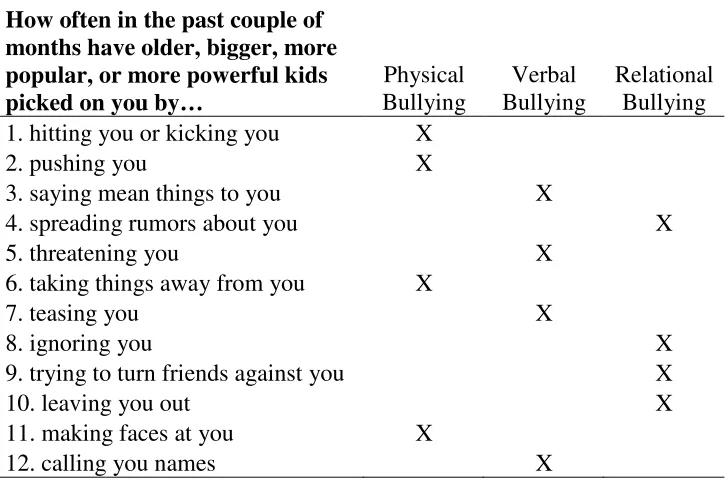
1 Victimization subscale of the SSBB-2 with bullying types...62
2 School safety subscale of the SSBB-R2...62
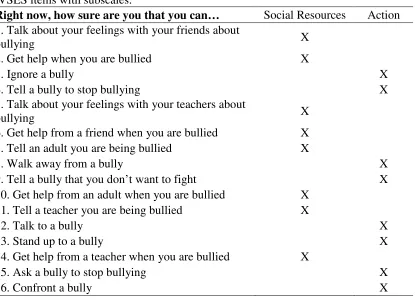
3 BVSES items with subscales...64
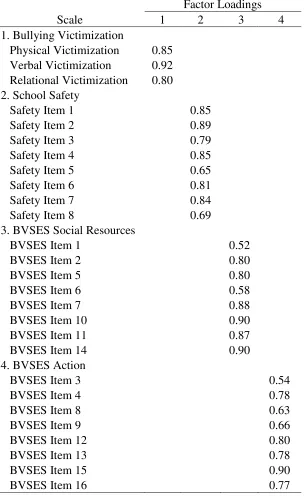
4 Standardized Factor Loadings of Items...71
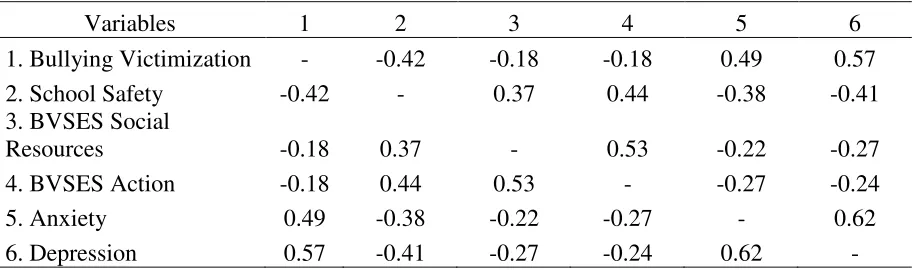
5 Correlation Matrix of Latent Variables...72
v
Figure Page
1 Diagram of bystander reciprocal determinism adapted from Bandura’s (1986, 1997)
Model………..……12
2 Sources of Bystander Self-Efficacy adapted from Bandura’s (1986, 1997) model……18
3 Mechanisms of Bystander Moral Disengagement adapted from Bandura (1999)……..22
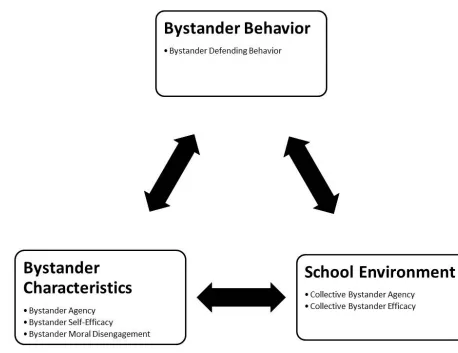
4 Social Cognitive Model of Bystander Behavior……….27
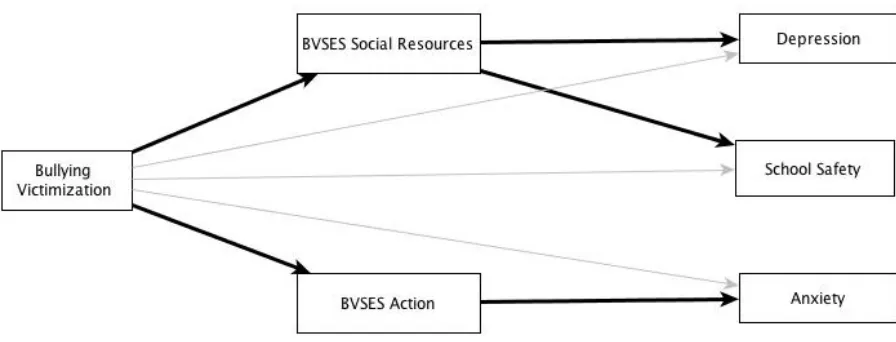
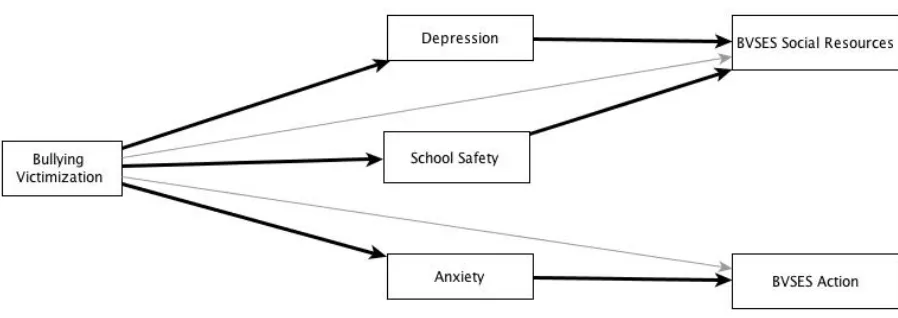
5 Hypothesized model for the BVSES subscales mediating the relationship between bullying victimization and mental health and school outcomes……….60
6 Hypothesized alternative equivalent model………69
7 Measurement model with standardized residual variances and correlations…………..73
8 Hypothesized model with standardized direct effects and correlations………..75
9 Alternative hypothesized equivalent model with standardized direct effects and
vi
AIC Akakie Information Criterion BIC Bayesian Information Criterion
BASC-2 Behavior Assessment System for Children, 2nd Edition BVSES Bullying Victimization Self-Efficacy Scale
CFI Comparative Fit Index
IRB Institutional Review Board
RMSEA Root Mean Square Error of Approximation SCMBB Social Cognitive Model of Bystander Behavior SRMR Standardized Root Mean Square Residual
CHAPTER1
ASOCIALCOGNITIVEMODELOFBYSTANDERBEHAVIOR
Bullying is a public health concern that is continually given attention by the media’s efforts to illustrate its unfortunate consequences. For example in 2012, 12-year old Joel Lewis of New York and 15-year old Lennon Baldwin of New Jersey committed suicide after being bullied by peers. Though these are extreme examples, bullying does occur frequently, and researchers are seeking to understand the phenomenon to enhance efforts to intervene, to reduce its prevalence and to prevent many of the negative effects. The definition of bullying includes three components: an intention to harm another person, an imbalance of power, and repetition over a period of time (Jordan & Austin, 2012; Jose, Kljakovic, Scheib, & Notter, 2011; Olweus, 1994; Stassen Berger, 2007). Researchers have identified four categories of bullying: physical, verbal, relational, and cyberbullying (Stassen Berger, 2007; Wang, Iannotti, & Nansel, 2009). Physical bullying refers to a direct physical attack on a victim through actions such as hitting, kicking, or biting (Jordan & Austin, 2012; Stassen Berger, 2007; Wang et al., 2009). Verbal bullying is the use of language to inflict harm through humiliation and verbal abuse (Jordan & Austin, 2012; Stassen Berger, 2007; Wang et al., 2009). Relational bullying involves purposely ignoring or excluding the victim from a group (Jordan & Austin, 2012; Stassen Berger, 2007; Wang et al., 2009). Cyberbullying involves aggression through the use of
Elfstrom, Vanderzee, Sink, & Birchmeier, 2009). Bystanders can reduce the effect of negative outcomes of bullying on a victim (Salmivalli, 2010), and can contribute to the reduction in the number of bullying incidences in an entire school (Frey, Hirschstein, Edstrom, & Snell, 2009). A model for understanding bystander behavior that incorporates elements of the environment, behavior, and bystander characteristics could facilitate research about bullying as well as the creation of effective interventions designed to reduce bullying in schools. The purpose of this paper is to present a social cognitive model of bystander behavior to enhance understanding of bystanders and to propose a research agenda, that can eventually lead to intervention targeting bystanders and the prevention of bullying. First, an overview of bullying will be presented to provide context to the current research on bullying. Second, research on bystanders and the current
methods of categorizing groups of bystanders will be delineated, followed by a discussion of two frameworks for understanding bystander behavior. Third, a
comprehensive model of bystander behavior will be proposed based on Social Cognitive Theory (Bandura, 1986; 2001) and the two frameworks of bystander behavior referred to above (i.e., Salmivalli, 2010; Thornberg et al., 2012). Finally, a research agenda will be presented based on the social cognitive model of bystander behavior.
Bullying Overview
2012; Menesini, Modena, & Tani, 2009; O’Brennan, Bradshaw, & Sawyer, 2008; Undheim & Sund, 2010). Bullies comprise 4.6% - 9.0% of school-aged children (Cunningham, 2007; Nation et al., 2008; Peskin et al., 2006; Solberg, Olweus, &
Endresen, 2007; Unheim & Sund, 2010). In a Norwegian study (Undheim & Sund, 2010), bullies were found to have a lower sense of self-worth, greater depressive symptoms, and greater social problems than students who were not involved in bullying. They also reported lower levels of school safety and belongingness than their uninvolved peers (O’Brennan et al., 2008). However, in some research, adolescent bullies were found to feel powerful, respected, and popular (Jordan & Austin, 2012; Stassen Berger, 2007).
Prevalence of victims of bullying was reported to be between 7.0% and 19.0% of school-aged students (Cunningham, 2007; Nation et al., 2008; Peskin et al., 2006; Solberg et al., 2007; Unheim & Sund, 2010). A range of difficulties has been reported by student victims of bullying. These difficulties included social problems (i.e., perception of meaninglessness in society and low number of friends) and a lower sense of self-worth when compared with uninvolved students (Delfabbro et al., 2006; Unheim & Sund, 2010). Victims of bullying also reported greater depressive symptoms (Perren,
Gutzwiller-Helfenfinger, Malti, & Hymel, 2012; Undheim & Sund, 2010) and were more likely to engage in behaviors of self-harm than students who were uninvolved in bullying (Fisher et al., 2012). Victims of bullying also were likely to report lower feelings of safety and belongingness in their school environments than uninvolved students (O’Brennan et al., 2008).
school-aged students (Cunningham, 2007; Nation et al., 2008; Peskin et al., 2006; Solberg et al., 2007; Unheim & Sund, 2010). Bully-victims reported greater levels of internalizing (e.g., depression and anxiety) as well as externalizing problems (e.g., rule-breaking,
aggression) than their uninvolved peers (Menesini, Modena, & Tani, 2009). In addition to these problems, bully-victims reported a lower sense of school safety and belongingness in school than students not involved in bullying (O’Brennan et al., 2008).
Bystander behavior also has been found to affect how other students perceive victims of bullying. In one investigation, elementary and middle school students were presented with two bullying scenarios, one where a bystander intervened and another where the bully was being reinforced (Gini, Pozzoli, Borghi, & Franzoni, 2008). In the story with the bystander intervention, students reported liking the victim. In contrast, for the story where bystanders reinforced the bully, students did not report liking the victim. Further support for bystanders being able to affect other students can be found in studies that examine the role of social support in students who are victimized by bullying. For example, victims who have strong peer social support were more likely to report better quality of life than those who did not have strong peer social support (Flaspohler et al., 2009). This finding was further sustained by a large-scale study where victims of bullying were more likely to have poorer academic performance than those who were not
victimized, but victims who had high levels of social support from friends were likely to perform better academically than victims who did not have social support (Rothon, Head, Klineberg, & Stansfield, 2011).
Bystander Typologies
Bystanders of bullying do not all behave in a similar fashion as some bystanders can have positive effects on other students in the school environment, while other
these groups may also lead to interventions to modify the behaviors of bystanders who do not aid victims of bullying. Two major typologies will be discussed in the following sections. The first is the Participant Roles typology (Salmivalli et al., 1996), which identifies the various roles students can play in a bullying situation, and the second is based on Bandura’s (1999) conception of Moral Disengagement, and groups bystanders based on their moral beliefs about bullying and feelings of guilt (Obermann, 2011).
Participant Roles Typology of Bystanders
The Participant Roles typology derives from the influence children may have on a bullying incident and identifies the various roles bystanders can take to influence bullying (Salmivalli et al., 1996). In order to understand the behaviors of bystanders, researchers must understand the various roles students may take and what characteristics students within these roles possess. The researchers identified three types of bystander roles: reinforcer of the bully (a bystander who encourages the actions of the bully), assistant of the bully (a bystander who helps a bully), and defender of the victim (a bystander who intervenes on behalf of the victim).
Defenders of the victim (i.e., defenders) are students who intervene in bullying incidences to help the victim (Salmivalli et al., 1996). Researchers have found defending behavior is likely to decrease the instances of bullying in a classroom environment (Salmivalli et al., 2011). In another study of 6,397 elementary school students, those who reported to be defenders were likely to have greater self-efficacy for defending and believed it was important to decrease bullying in their schools (Pöyhönen et al., 2012). Defenders also reported having empathy for the victim of bullying and a significantly higher level of social self-efficacy than students who were uninvolved in bullying (Gini et al., 2008).
Moral Disengagement Typology of Bystanders
Moral disengagement is the mechanism used to selectively disengage one’s moral standards when taking part in inhumane conduct (Bandura, 1999). Obermann (2011) proposed a typology of bystanders using Bandura’s (1999) conception of moral disengagement. This typology suggests bystanders intentionally make decisions to intervene, reinforce, or be passive in a bullying incident based on their decision to morally engage or disengage from a situation. Using a combination of the Moral
Bystanders are not a singular group of students who have the same
characteristics or behaviors (Obermann, 2011; Salmivalli et al., 1996). Instead, they represent diverse groups of students who react differently to bullying incidences. Due to the diversity of bystanders, the typologies provide a method to begin the investigation of bystander characteristics and behaviors. A commonality among these diverse typologies is that they all distinguish between those who take action to aid a victim of bullying and those who do not aid the victim. These typologies provide guidance for future research seeking to understand the characteristics of the different types of bystanders. However, an important research goal that extends beyond distinguishing between types of bystanders is to learn about the motivations for students’ decisions about whether to intervene when they witness bullying. For systematic research in this area, a conceptual framework for understanding students’ motivations and behaviors in bullying situations is needed.
Conceptual Frameworks for Understanding Bystander Behavior
The previous section provided a method distinguishing the different types of bystanders, and the following section will discuss frameworks that address the
Group Process Framework
Salmivalli (2010) conducted a review of bullying literature and concluded that there are several factors that determine how a bystander reacts in a bullying situation based on the group’s processes. For example, one of the group processes is the
“bystander effect” where bystanders are less likely to intervene in larger groups because of a diffusion of responsibility (Darley & Latane, 1968). Bystanders are also affected by observing the reactions of other students and may develop a negative bias towards victims of bullying (Gini et al., 2008). Other group processes include a desire to avoid upsetting the bully who may be perceived as popular and powerful as well as a desire to feel accepted by a group (Garandeau & Cillessen, 2006).
These group processes are influenced by three levels: individual, peer cluster, and classroom. The individual level includes characteristics of individual bystanders such as self-efficacy for defending (Pöyhönen et al., 2012), empathy and social self-efficacy (Gini et al., 2008). The peer cluster level refers to the characteristics of the social groups with whom the students associate, such as friends and cliques. The classroom level is similar to peer clusters, but this is a specific type of clustering that is involuntary as students are assigned to classrooms by school administration. Characteristics of the classrooms can affect the group processes and bullying as well. For example, classrooms where defending behaviors are likely to occur have reduced risk of bullying vulnerable students (Kärnä et al., 2010).
Bystander Motivation Framework
developed a framework of bystander behavior by analyzing student responses to an open-ended semi-structured interview. Five components of bystander motivation were
identified including interpretation of harm, emotional reaction, social evaluating, moral evaluating, and intervention self-efficacy. Interpretation of harm is the bystander’s perception of harm experienced by a victim of bullying. Emotional reaction to bullying includes a bystander’s empathy towards another student, fear of becoming a victim, and positive reaction to the excitement of the crowd that may encourage bullying behavior. Some students reported wanting to intervene depending on the relationship the bystander had with the victim, which was labeled as social evaluating. Social evaluating can include a determination about whether the bystander was friends with the victim, liked the victim, or the level of popularity and respect of the victim. An important facet of bystander motivation includes moral evaluating to determine whether or not the act of bullying is wrong. Finally, intervention self-efficacy is a bystander’s appraisal of the potential success of their intervention.
In summary, several aspects of bystanders and their behaviors in bullying have been discussed. The range of possible bystander behaviors has resulted in typologies of bystanders rather than conceptualizing all bystanders as a single group (Obermann, 2011; Salmivalli, 1996). Conceptual frameworks have increased knowledge about the
for future inquiry and intervention while enhancing understanding bullying. A social cognitive model of bystander behaviors, based upon Bandura’s (1986) social cognitive theory, can encompass these individual and social factors providing a coherent model to explain bystander behavior.
Social Cognitive Model of Bystander Behavior in Bullying
Social Cognitive Theory (Bandura, 1986) proposed that humans were as much a product of the environment as they were influencers of it. Humans can change the
Figure 1. Diagram of bystander reciprocal determinism adapted from Bandura’s (1986,
1997) model.
actions when witnessing bullying is referred to as bystander agency. Though similar to Bandura’s (1986, 2001) conception of human agency, bystander agency is specific to bystanders who witness bullying. Bystander agency is the result of the reciprocal determinism of the school environment, bystander characteristics, and bystander behavior. The following section will discuss the school environment, bystander
characteristics, and bystander behavior and describe how these components interact with one another, followed by a discussion of bystander agency, bystander self-efficacy, bystander moral disengagement, and collective bystander agency.
School Environment
For bystanders of school-based bullying, the environment includes the
bystanders. Frey and colleagues (2009) investigated the efficacy of a school wide anti-bullying intervention program that focused on creating supports through the adults in the school as well as changing student attitudes towards bullying and teaching skills
necessary to counter bullying. Through this intervention program, the students reported an increase in their ability to respond assertively to bullying (e.g., calmly telling a
bullying a to stop bullying), and it was concluded that this led to a reduction of bullying.
Bystander Characteristics
The individual characteristics of bystanders have been the focus of several studies such as those that gave rise to the bystander typologies (e.g., Barhight et al., 2013; Obermann, 2011; Salmivalli et al., 1996). A study with 294 Italian students, between the ages of 12-14 years, administered surveys to students about bystander behavior, empathy, and social self-efficacy, which is a person’s perceived competence in social situations, such as making new friends and expressing opinions in a group (Gini, Albiero, Benelli, & Altoè, 2008). It was found that empathy was related to both passive bystander behaviors and active defending behaviors; however, social self-efficacy predicted defending behavior and had a negative relationship with passive bystander behaviors. This study suggested that bystanders who display high levels of empathy and have high levels of social self-efficacy are likely to intervene and defend victims of bullying (Gini et al., 2008).
Bystander Behavior
conducted two studies investigating students’ reactions to bullying scenarios and their perceived sense of safety at school. The first study used a sample of 217 middle school students who were presented with a bullying scenario. The students reported that they would behave like defending bystanders but not like those who assist bullies or stand-by and watch. These students also reported a greater sense of safety in the scenarios where a bystander defended the victim. The second study expanded the design to include primary and middle school students as well as including scenarios that involved direct (i.e., threatening, insulting, and stealing) and indirect (i.e., spreading rumors and excluding a peer) bullying. Comparable to Study 1, the results of Study 2 indicated that the students reported they would behave like a defender. Another example of bystander behavior influencing the environment was demonstrated by findings from a survey of 6,764 students between the ages of 9-11 years that found the level of bullying affected by bystander behaviors in classroom settings (Salmivalli et al., 2011). The frequency of bullying was found to be negatively associated with frequency of defending behaviors, while higher frequency of bystanders assisting bullies was positively associated with greater incidences of bullying in the classroom. Another study examined 6,980 students in grades 3-5 through self-report questionnaires asking about bullying, victimization, bystander behavior, and measures of risk factors (i.e., social anxiety and peer rejection) (Kärnä et al., 2010). In classrooms where bystanders typically defended victims, students at risk for victimization were less likely to have social anxiety and peer rejection.
A social cognitive model of bystander behavior was proposed which is comprised of bystander characteristics, school environment, and bystander behaviors. Though these three components are crucial for understanding bystanders, it is also important to understand how these components interact with one another since these components do not have an exclusively linear relationship. An important result of the reciprocal determinism of these components is bystander agency. The implication of bystander agency is that bystanders are not merely products of the environment, but they can affect the environment and choose how to behave.
Bystander Agency
Reciprocal determinism results in a dynamic relationship between the school environment, bystander characteristics, and their intervention behaviors in response to bullying. In this context, bystanders may be viewed as agents of their actions and can intentionally affect their lives and the environment (Bandura, 1986, 2001). Similar to Bandura’s (2001) conception of human agency, bystander agency is comprised of four major components discussed below: intentional behavior, ability to plan for the future, self-regulation, and self-reflection.
behaviors with their goals. They may develop personal or moral standards of how they wish to behave and distinguish between what is right and wrong. A bystander may have a future goal of helping a friend who is being bullied but feels the need to be uninvolved and safe. Here, the mechanism of self-regulation may cause the student to consider a goal and match behavior to the goal. For example, a bystander might match defending
behavior with the goal of helping their friend. Finally, self-reflection allows a bystander to determine whether their actions are in line with their future goals. Becoming aware that a bystander’s action of standing and watching is not in line with their goal of helping those being victimized might help the bystander to change their behavior to be more in line with their goals.
Bystander Self-Efficacy
Within the proposed social cognitive model of bystander behavior is the concept of bystander self-efficacy. Bystander self-efficacy is based on Bandura’s (1997)
sources of self-efficacy that can increase or decrease self-efficacy beliefs: mastery experiences, vicarious experiences, verbal persuasion, and physiological and affective states (see Figure 2).
[image:33.612.121.565.329.604.2]Mastery Experiences. Mastery experiences may be the most powerful source of self-efficacy (Bandura, 1997), and these include previous opportunities to use a behavior that were successfully executed. In bystander self-efficacy, a bystander may successfully defend a victim in a bullying incident, thus increasing perceptions of bystander self-efficacy for defending in a future situation. However, it is unnecessary to create an actual
Figure 2. Sources of Bystander Self-Efficacy adapted from Bandura’s (1986, 1997)
bullying event, or wait for a student to experience a bullying situation, for a student to have a mastery experience of successfully defending. The meta-analysis by Polanin and colleagues (2012) examined studies using intervention programs to increase bystanders’ defending behavior. These programs utilized techniques to simulate a bullying
experience, such as classroom role-plays, rather than creating a real bullying experience. An increase in bystander defending behavior was observed after students were exposed to these types of simulations. Simulations provide a mastery experience, which can cause an increase in bystander self-efficacy which can, in turn, lead to increases in defending behavior by bystanders.
Vicarious Experiences. Vicarious experience occurs when a student witnesses or hears about another student who intervened successfully in a bullying incident. Having students observe other students, similar to them, defending victims of bullying can
increase bystander self-efficacy for intervention and increase the likelihood of defending behavior (Polanin et al., 2012). This source of self-efficacy also may explain why
classrooms known to have defenders are likely to have less bullying than classrooms that are not perceived as having defenders (Kärnä et al., 2010; Salmivalli et al., 2011). In classrooms with known defenders, bystanders will observe other bystanders who are in their class defend a victim of bullying successfully. This may increase the bystander self-efficacy of other bystanders in the classroom, thus increasing the likelihood they may intervene when witnessing bullying.
Verbal Persuasion. Another source of bystander self-efficacy is verbal
included verbal persuasion through adults coaching students to defend when they see bullying occur, which may have contributed to increasing the likelihood of students intervening in bullying situations. These statements need to come from those whom the student trusts. It could be adults or teachers, but it could also be peers or friends.
Physiological and Affective States. The final source of bystander self-efficacy is physiological and affective states. When a bystander witnesses a bullying incident, they may experience a physical and emotional reaction to it. In particular, bystanders may feel fear and have a somatic reaction to the fear that may cause them to believe they are unable to intervene or act in a bullying situation. Further investigation is needed regarding this source of bystander self-efficacy to determine what physiological and affective states can influence self-efficacy beliefs and behavior and to what degree these states increase or decrease the self-efficacy beliefs.
Bystander Moral Disengagement
Social Cognitive Theory can explain a large part of bystander behavior through bystander agency and bystander self-efficacy. Since bullying is typically considered an undesirable act, an additional construct, moral disengagement, may help to explain bystander behavior. Bystanders’ beliefs about bullying and morality can inform how a bystander would self-regulate (a component of bystander agency) their behavior when faced with bullying; however, bystanders may not act in a manner that matches their beliefs. The discord between their actions and beliefs may be explained through a mechanism Bandura (1999) called moral disengagement.
regarding bullying behavior and moral disengagement (Pozzoli, Gini, & Vieno, 2012). These researchers developed a moral disengagement scale and found four factors of moral disengagement: “cognitive restructuring” (i.e., moral justification), “minimizing one’s agentive role” (i.e., displacement or diffusion of responsibility), “distorting consequences,” and “blaming/dehumanizing the victim.” Moral disengagement,
specifically cognitive restructuring, was found to be positively related with a bystander’s decision to assist or reinforce the bully. Gini (2006) administered surveys to determine a student’s role in bullying (i.e., bully, assistant, reinforcer, defender, outsider, and victim) as well their level of moral disengagement. In a set of bullying scenarios, defenders were less likely to demonstrate moral disengagement than students who self-identified in other bullying roles. Aggressive children were likely to endorse greater levels of moral
disengagement. Oberman’s (2011) study of 660 students found unconcerned bystanders and outsiders had elevated levels of moral disengagement.
Figure 3. Mechanisms of Bystander Moral Disengagement adapted from Bandura (1999).
reprehensible conduct, detrimental effects, and the victim. In order to apply these categories to bystanders in bullying situations and moral disengagement, the definitions of these three categories have been modified, and a fourth category is added to this model to emphasize responsibility within bullying. Therefore, the four categories of bystander moral disengagement include: act of bullying, bystander responsibility, bullying
consequences, and the victim of bullying (see Figure 3).
These methods include moral justification, palliative (or advantageous) comparison, and euphemistic labeling (Bandura, 1999) (see Figure 3). Moral justification refers to
portraying an act of bullying as being beneficial to society or moral based on the purpose of the act. For example, a bystander, who uses moral justification for an act of bullying, may believe the school would be better off if the victim was no longer in the school instead of considering the moral issues of bullying. Palliative comparison is the juxtaposition of an immoral act (i.e., bullying) in comparison to an act of greater
immorality. For example, a bystander may compare a victim being verbally bullied with a victim who was physically bullied and believe the former does not need intervention because it is not a serious problem like physical bullying. The third method for act of bullying is euphemistic labeling which refers to language that is used to make the immoral act or victim seem less immoral. For example, a bystander may view a bully as playing around with the victim rather than as bullying.
Bystander Responsibility. A second set of moral disengagement mechanisms is related to bystander responsibility, much like Thornberg and colleagues’ (2012)
conception of bystander irresponsibility. Two mechanisms are identified under the category of bystander responsibility, displacement of responsibility and diffusion of responsibility (Bandura, 1999) (see Figure 3). Displacement involves moving the
bystander’s responsibility for intervention to another person of greater authority or influence explaining the lack of personal responsibility for the immoral action. For example, a bystander may believe an adult should stop a bullying incident rather than a student bystander. From the perspective of a bystander using displacement of
not harming the victim directly because only the bully is making the decisions. Diffusion of responsibility refers to spreading the bystander’s obligation to intervene during
bullying across many individuals. As a result, the bystander might not feel a sense of responsibility or obligation to intervene (Bandura, 1999). In a bullying situation, a large group of students may witness bullying. Though the bystanders may believe they have responsibility to take some action in defense of the victim, this sense of responsibility may be diffused across the entire group so that bystanders do not feel enough
responsibility to take action. As a result, the collective action of the bystanders would be to watch the bullying occur.
Bullying Consequences. Bullying consequences is the third part of bystander moral disengagement, which refers to the perceptions of the results of bullying. The moral disengagement mechanism within this category is to disregard or distort the consequences, where the results of a person’s immoral actions are ignored or
misconstrued (see Figure 3). For a bystander, this may occur when the bystander simply walks away immediately after the bully has harmed a victim. The bystander then
choosing to do nothing about witnessing the incident would then be ignoring the harm that has befallen the victim from the bullying.
Victim of Bullying. The fourth category of bystander moral disengagement is related to bystanders’ perceptions of the victim of bullying. The two types of moral disengagement mechanisms within this category include dehumanization and attribution of blame (Bandura, 1999) (see Figure 3). Dehumanization occurs when viewing a person
These negative terms detach the victim from their human characteristics and can provide justification for not intervening. Attribution of blame, much like Thornberg and
colleagues’ (2012) conception of blaming the victim, refers to moving the blame for the immoral act to another entity, for example the victim of bullying may be seen as causing the bullying due to her/his actions in class or their appearance.
Collective Bystander Agency
Thus far in the current paper, the discussion of a social cognitive perspective of bystander behavior has largely been about the individual bystander. However, some researchers (e.g., Kärnä et al., 2010; Salmivalli, 2010; Salmivalli et al., 2011) have provided evidence of a collective process in bullying. Based on Bandura’s (1997; 2001) conception of collective agency, collective bystander agency is proposed under the social cognitive model of bystander behavior, which is a group’s ability to intentionally act to affect their lives and the school environment regarding bullying. A group can be defined as a social set of students such as friends, cliques, classroom, or school. Bandura (1997; 2001) discussed collective agency as a dynamic interplay of individuals utilizing their abilities and resources to progress towards a group goal. Hence, collective bystander efficacy cannot be defined simply as the sum of individual self-efficacies. Individuals who are confident in their abilities to perform a task individually, may have a low
collective efficacy due to their inability to function together as a group. Hence, collective bystander efficacy is the group’s perceived ability to reduce bullying through
2002). For example, a study of individual efficacies for managing one’s life and
contributing to societal change found that both of these individual efficacies (β = .11, β = .57) contributed to a collective efficacy for changing society (Fernandez-Ballesteros et al., 2002). In a longitudinal study on bullying, 1,285 students, between grades 7-10, were surveyed, and those who endorsed a higher collective efficacy to stop peer aggression reported a greater frequency of defending behaviors than those who reported a lower level of collective efficacy (Barchia & Bussey, 2011).
Figure 4. Social Cognitive Model of Bystander Behavior.
suggests the presence of a collective bystander agency and collective bystander self-efficacy.
Research Agenda
The Social Cognitive Model of Bystander Behavior (see Figure 4) proposed in this paper has implications for future research. The following section describes a research agenda that is based on the three key components of the above-mentioned model:
bystander characteristics, school environment, and bystander behaviors. A hallmark of the proposed model is the reciprocal determinism among the components, thus a method for investigating the interactions will be presented. The research agenda will conclude with ideas for intervention and prevention based on the Social Cognitive Model of Bystander Behavior.
Bystander Characteristics
which is the belief of a bystander to act in a bullying incident, and bystander moral disengagement, which is a method of a bystander to not act in a bullying incident.
Bystander Self-Efficacy. An important area of bystander characteristics to investigate is bystander self-efficacy, because it indicates bystanders’ perception of their ability to act in a bullying incident. Bystander self-efficacy provides insight into
bystander agency, because in order to believe a bystander is able to intervene, the
bystander needs to have intended to intervene, considered the future consequences of the behavior, considered their values of what should be in done, and self-reflected on their ability. These are all components of bystander agency, thus making bystander self-efficacy a potential method to measure bystander agency. Two initial areas of research are a) investigating the extent to which bystander self-efficacy increases bystander intervention behaviors and b) identifying the sources of bystander self-efficacy. The first research area is needed to determine if bystander self-efficacy contributes to bystanders’ decisions about whether to intervene when witnessing bullying. Establishing the
Another important area of research is the sources of bystander self-efficacy (i.e., mastery experiences, verbal persuasion, vicarious experience, and physiological and affective states). Understanding the sources of bystander self-efficacy will provide insight into the influences of bystander self-efficacy. The sources are proposed as potentially responsible for fostering or diminishing bystander self-efficacy. They also can determine which influences affect bystander self-efficacy. For example, if vicarious experiences were found to be strongly related to increased bystander self-efficacy, it is likely that bystanders are strongly influenced to intervene or not intervene based on the experiences of other bystanders similar to themselves.
Future research about the sources of bystander self-efficacy is needed to
determine the strength that each source has to increase or decrease self-efficacy as well as the direction of these relationships. The strength of the sources can be determined
through instruments designed to measure each of these sources. For example, a potential measure of mastery experiences can be constructed by asking bystanders to report the number of previous experiences of defending a victim of bullying. Based upon the current model, it is predicted that each of the sources will increase bystander self-efficacy, but the relationship may not be linear or may involve a multilevel approach where multiple sources work together to affect bystander self-efficacy.
Bystander Moral Disengagement. Another bystander characteristic within the social cognitive model of bystander behavior is moral disengagement. Future research in bystander moral disengagement is needed to extend knowledge about the eight
mechanisms of moral disengagement that were grouped into the following four
bullying. Research about bystander moral disengagement can investigate whether bystanders tend to use some categories more than frequently than others, when various categories are most likely to be used, and how bystander moral disengagement is related to bystander behavior. It may be possible that bystanders can use more than one
mechanism of bystander moral disengagement simultaneously, and using multiple mechanisms may increase bystander moral disengagement. Research on these aspects moral disengagement would provide information that might be used to design
interventions to strengthen bystanders’ efforts to defend or support victims. For example, if a group of bystanders were known to morally disengage by dehumanizing the victim, an intervention program might be developed and tested in an effort to humanize victims (e.g., enhancing the perception that victims are human beings who can be hurt). Also, considering that bystanders may use more than one mechanism of bystander moral disengagement, research is needed to determine whether intervention efforts may need to be prepared to address multiple mechanisms simultaneously.
bullying, as specificity of moral disengagement questions has allowed for a more sensitive measure (Pozzoli et al., 2012).
School Environment
For bystanders of bullying, the environment typically involves the school and those within that setting. Researchers are emphasizing the influence of groups within the school environment on bystander behavior with the emerging evidence of the influence of the environment on bystander behavior (e.g., Kärnä et al., 2010; Polanin et al., 2012; Salmivalli et al., 2011). Thus, an initial area of research under the proposed model should be to investigate collective bystander efficacy. Future research of collective bystander efficacy should focus on both individual and group bystander behaviors. It expected that collective bystander efficacy would increase bystander defending behaviors in both individuals and groups as bystander behavior is a group phenomenon that emphasizes the influence of groups (e.g., Salmivalli et al., 2011). In addition, methods of increasing collective bystander efficacy should be investigated as well.
students, or even the entire school. It is possible that the various levels have varying degree of influence on bystanders of bullying. The advantage of qualitative techniques will be important in regards to the different levels as researchers can determine what groups the bystanders perceive in the school environment as well as their effectiveness in affecting bullying. Further inquiry can ask specific group levels that emerge, and this may lead to quantitative measures that will have questions regarding more than one level of collective efficacy.
Once exploratory information has been collected, this information can be converted into a survey measure for quantitative data collection to determine trends of collective bystander efficacy beliefs (e.g., Hitchcock et al., 2005). The exploratory data would contain information about specific behaviors groups tend to use and items can be developed from those behaviors. For instance, if it is found that groups of friends walking together prevents bullying, a collective bystander efficacy item can be worded as, how sure are you that you and your friends can walk together at school? A collective bystander efficacy measure can be used to determine relationships with bystander behaviors. The measure can also be used to determine relationships in more complex models, such as how collective bystander efficacy affects bystander self-efficacy, which may ultimately affect victimization.
Bystander Behavior
such as blocking a bully, telling an adult, talking to a bully, aiding the victim, or diverting attention. In addition to researching what types of behaviors bystanders use, there are two further questions to explore, how often are the various types of behaviors used, and how effective the behaviors are in defending victims of bullying.
Methods to begin exploring these questions can start with qualitative techniques, such as interviews (Bogdan & Biklen, 2007). These interviews can be conducted with students or adults in the school, such as administrators or teachers, regarding the types of behaviors used by bystanders and how often they are used. With the collection of
qualitative data, this information can be converted into a scale (e.g., Hitchcock et al., 2005) that can be administered to multiple students at once and provide trends of frequency of bystander behaviors and perceptions of effectiveness. Data collected from this scale could then be used to determine the effect of certain behaviors on the
environment (e.g., collective bystander efficacy) and bystander characteristics (e.g., bystander self-efficacy and bystander moral disengagement).
Interactions of the Model Components: Reciprocal Determinism
One advantage of this model is its focus on the interaction of the three primary components (i.e., bystander characteristics, school environment, and bystander behavior), thus a major area of inquiry would be to determine how the components affect one another. As extensions of the questions posed in the earlier sections, the following research questions should be considered within the model, how do the bystander characteristics of bystander self-efficacy and bystander moral disengagement affect environmental factors such as collective bystander efficacy, how do bystander
how do bystander defending behaviors in turn influence bystander characteristics and collective bystander efficacy? It is expected that each of the components will have a positive relationship with each other, with the exception of bystander moral
disengagement, which would have a negative relationship with defending behaviors. Since the question of bystander characteristics and collective bystander efficacy
influencing bystander behavior will be examined through the questions mentioned in the previous sections, an important first step in researching reciprocal determinism will be to examine the effect of behaviors on bystander characteristics and collective bystander efficacy.
There has been evidence of bystander characteristics affecting bystander behavior, for example Polanin and colleagues (2012) found students who received an intervention treatment were more likely to intervene in bullying incidences, which suggests that the characteristics of the bystander have changed due to the changes in behavior. However, further investigation would be needed to determine what
characteristics have been changed. One potential area is bystander self-efficacy, because having successfully experienced a successful intervention is the source of bystander self-efficacy. Another potential characteristic to be affected by behavior is bystander moral disengagement. In turn, these characteristics may likely affect future bystander behaviors as well as the behaviors and characteristics of other bystanders in the surrounding
Prevention and Intervention
Increasing bystander defending behaviors has been suggested as a means to prevent bullying within a school environment (e.g., Barhight et al., 2013; Flashpohler et al., 2009; Gini et al., 2008; Rock & Baird, 2012; Thornberg & Jungert, 2013). Salmivalli (2010) argued intervention with bystanders may be more effective than attempting to intervene with bullies, due to the likelihood that bystanders will be more likely to believe bullying is wrong when compared to bullies. A recent meta-analysis of bystander
intervention programs found that the programs were effective in increasing bystander defending behavior (Polanin et al., 2012). According to the proposed model, the social cognitive model of bystander behavior, providing an intervention has the ability to
change all three components of the model due to reciprocal determinism. For instance, an intervention for an individual to increase bystander self-efficacy for defending behavior, would increase bystander defending behavior. Increase in defending behavior would then influence those in the environment, which would then positively influence the
characteristics of the individual. Bystander intervention programs are a promising direction for reducing and preventing bullying, and research in this area should continue developing these programs. Based on upon the social cognitive model of bystander behavior, an intervention that combines both bystander characteristics and collective bystander efficacy to affect behavior will be discussed.
Interventions designed to increase bystander defending behavior can begin with the increasing of bystander self-efficacy, which can be increased with activities based on the sources of bystander self-efficacy. As mentioned previously, ascertaining the
design of an intervention program. For example, if mastery and vicarious experiences for defending behaviors were found to be the effective in increasing bystander self-efficacy, then potential activities may involve role-play and discussion of bystander experiences with bullying where successful defending of the victim occurred. In addition, if moral disengagement was found to be negatively correlated with defending behavior, a bystander intervention can also include activities designed to ascertain the beliefs of bystanders and change beliefs. For example, if bystanders were found likely to use moral justification, then activities should be designed to emphasize the harm of bullying and long term effects and consequences of taking no action. In a previously proposed research question, it was considered if an increase in bystander self-efficacy and a decrease in bystander moral disengagement would lead to greater defending behaviors in bystanders. If this hypothesis were to be confirmed, then this intervention focused on bystander self-efficacy and moral disengagement can potentially increase defending behavior, which may in turn increase the bystander characteristics that are related to greater defending behavior. This means, after an intervention is successfully conducted with bystanders, they may continue to become more likely to defend as every instance of defense would increase their characteristics.
group seeks to defend victims of bullying, which could in turn increase defending behaviors and characteristics in individual bystanders. Group level interventions can be conducted with a small number of students to an entire classroom in order to increase collective bystander efficacy. The increase in collective bystander efficacy would then lead to an increase in bystander self-efficacy, as the group feels more efficacious to defend victims of bullying, so would then an individual feel efficacious as well. With greater self-efficacy and collective bystander efficacy, there is a greater likelihood of defending behaviors from bystanders. Successful defending behaviors would in turn increase the efficacies in both the individual and group.
Conclusion
The purpose of this paper was to propose a Social Cognitive Model of Bystander Behavior that combines aspects of bystander typologies and frameworks including the Participant Roles typology, Moral Disengagement typology, Group Process framework, and Bystander Motivation framework. The proposed model integrates the characteristics of individual bystander and the influence of the bystander’s environment as well as account for the interaction between the bystander and the environment. Through this, the Social Cognitive Model of Bystander Behaviors provides several new constructs, adapted from Bandura’s (1986) Social Cognitive Model, in order to capture the complex nature of bystander behavior into a single cohesive model. One of these new constructs is
References
Almeida, A., Correia, I., & Marinho, S. (2010). Moral disengagement, normative beliefs of peer group, and attitudes regarding roles in bullying. Journal of School
Violence, 9(1), 23-36. doi: 10.1080/15388220903185639
Bandura, A. (1977). Self-efficacy: Toward a unifying theory of behavioral change. Psychological Review, 84(2), 191-215. doi: 10.1037/0033-295x.84.2.191
Bandura, A. (1986). Social foundations of thought and action: A social cognitive theory. Englewood Cliffs, NJ US: Prentice-Hall, Inc.
Bandura, A. (1997). Self-efficacy: The exercise of control. New York, NY US: W H Freeman/Times Books/ Henry Holt & Co.
Bandura, A. (1999). Moral disengagement in the perpetration of inhumanities. Personality & Social Psychology Review, 3(3), 193.
Bandura, A. (2001). Social cognitive theory: An agentic perspective. Annual Review of Psychology, 52(1), 1.
Bandura, A., Barbaranelli, C., Caprara, G. V., & Pastorelli, C. (1996). Mechanisms of moral disengagement in the exercise of moral agency. Journal of Personality and Social Psychology, 71(2), 364-374. doi: 10.1037/0022-3514.71.2.364
Barhight, L. R., Hubbard, J. A., & Hyde, C. T. (2013). Children’s physiological and emotional reactions to witnessing bullying predict bystander intervention. Child Development, 84(1), 375-390. doi: 10.1111/j.1467-8624.2012.01839.x
Beran, T. L. (2005). Cyber-harassment: A study of a new method for an old behavior. Journal of Educational Computing Research, 32(3), 265-277.
Biebl, S. J. W., DiLalla, L. F., Davis, E. K., Lynch, K. A., & Shinn, S. O. (2011). Longitudinal associations among peer victimization and physical and mental health problems. Journal of Pediatric Psychology, 36(8), 868-877. doi: 10.1093/jpepsy/jsr025
Boardley, I. D., & Kavussanu, M. (2008). The moral disengagement in sport scale-short. Journal of Sports Sciences, 26(14), 1507-1517.
Bogdan, R., & Biklen, S. (2007). Qualitative Research for Education: An Introduction to Theories and Methods. Boston, MA US: Allyn and Bacon.
Cole, J. C. M., Cornell, D. G., & Sheras, P. (2006). Identification of school bullies by survey methods. Professional School Counseling, 9(4), 305-313.
Cunningham, N. J. (2007). Level of bonding to school and perception of the school environment by bullies, victims, and bully victims. The Journal of Early Adolescence, 27(4), 457-478. doi: 10.1177/0272431607302940
Delfabbro, P., Winefield, T., Trainor, S., Dollard, M., Anderson, S., Metzer, J., & Hammarstrom, A. (2006). Peer and teacher bullying/victimization of South Australian secondary school students: Prevalence and psychosocial profiles. British Journal of Educational Psychology, 76(1), 71-90. doi:
10.1348/000709904x24645
efficacy. Applied Psychology: An International Review, 51(1), 107-125. doi: 10.1111/1464-0597.00081
Fisher, H. L., Moffitt, T. E., Houts, R. M., Belsky, D. W., Arseneault, L., & Caspi, A. (2012). Bullying victimisation and risk of self harm in early adolescence: Longitudinal cohort study. British Medical Journal, 344(7855), 1-9.
Flaspohler, P. D., Elfstrom, J. L., Vanderzee, K. L., Sink, H. E., & Birchmeier, Z. (2009). Stand by me: The effects of peer and teacher support in mitigating the impact of bullying on quality of life. Psychology in the Schools, 46(7), 636-649.
Frey, K. S., Hirschstein, M. K., Edstrom, L. V., & Snell, J. L. (2009). Observed
reductions in school bullying, nonbullying aggression, and destructive bystander behavior: A longitudinal evaluation. Journal of Educational Psychology, 101(2), 466-481. doi: 10.1037/a0013839
Garandeau, C., & Cillessen, A. (2006). From indirect aggression to invisible aggression: A conceptual view on bullying and peer group manipulation. Aggresssion and Violent Behavior, 11, 641-654.
Gini, G. (2006). Social cognition and moral cognition in bullying: What’s wrong? Aggressive Behavior, 32, 528-539. doi: 10.1002/ab.20153.
Gini, G., Albiero, P., Benelli, B., & Altoè, G. (2008). Determinants of adolescents' active defending and passive bystanding behavior in bullying. Journal of Adolescence, 31(1), 93-105. doi: 10.1016/j.adolescence.2007.05.002
Hitchcock, J. H., Nastasi, B. K., Dai, D. Y., Newman, J., Jayasena, A., Bernstein-Moore, R., . . . Varjas, K. (2005). Illustrating a mixed-method approach for validating culturally specific constructs. Journal of School Psychology, 43(3), 259-278. doi:http://dx.doi.org/10.1016/j.jsp.2005.04.007
Hymel, S., Rocke-Henderson, N., & Bonnano, R. A. (2005). Moral disengagement: A framework for understanding bullying among adolescents. Journal of Social Sciences, 8, 1–11.
Jordan, K., & Austin, J. (2012). A review of the literature on bullying in U.S. schools and how a parent–educator partnership can be an effective way to handle bullying. Journal of Aggression, Maltreatment & Trauma, 21(4), 440-458. doi:
10.1080/10926771.2012.675420
Jose, P. E., Kljakovic, M., Scheib, E., & Notter, O. (2012). The joint development of traditional bullying and victimization with cyber bullying and victimization in adolescence. Journal of Research on Adolescence, 22(2), 301-309. doi:
10.1111/j.1532-7795.2011.00764.x
Kärnä, A., Voeten, M., Poskiparta, E., & Salmivalli, C. (2010). Vulnerable children in varying classroom contexts: Bystanders’ behaviors moderate the effects of risk factors on victimization. Merrill-Palmer Quarterly, 56(3), 261-282. doi:
10.1353/mpq.0.0052
Menesini, E. M. F. (2009). Bullying and Victimization in Adolescence: Concurrent and Stable Roles and Psychological Health Symptoms. Journal of Genetic
Multon, K., Brown, S., & Lent, R. (1991). Relation of self-efficacy beliefs to academic outcomes: A meta-analytic investigation. Journal of Counseling Psychology, 38, 30-38. doi:10.1037//0022-0167.38.1.30
Nation, M., Vieno, A., Perkins, D. D., & Santinello, M. (2008). Bullying in school and adolescent sense of empowerment: An analysis of relationships with parents, friends, and teachers. Journal of Community & Applied Social Psychology, 18(3), 211-232. doi: 10.1002/casp.921
O'Brennan, L. M. B., Catherine P.; Sawyer, A. L. (2009). Examining developmental differences in the social-emotional problems among frequent bullies, victims, and bully/victims. Psychology in the Schools, 46(2), 100-115.
Obermann, M.-L. (2011). Moral disengagement among bystanders to school bullying. Journal of School Violence, 10(3), 239-257. doi: 10.1080/15388220.2011.578276 Olweus, D. (1994). Annotation: Bullying at school: Basic facts and effects of a school
based intervention program. Journal of Child Psychology and Psychiatry, 35(7), 1171-1190. doi: 10.1111/j.1469-7610.1994.tb01229.x
Olweus, D. (1996). The revised Olweus Bully/Victim Questionnaire. Bergen, Norway: Research Center for Health Promotion (HEMIL Center), University of Bergen. Pajares, F., & Schunk, D. H. (2001). Self-beliefs and school success: Self-efficacy,
self-concept, and school achievement. In R. Riding & S. Rayner (Eds.), Self-perception (pp. 239-266). London, UK: Ablex Publishing