Nursing Dissertations (PhD) School of Nursing
Summer 8-18-2010
Understanding the Health Beliefs of First Time
Mothers who Request an Elective Cesarean versus
Mothers who Request a Vaginal Delivery
Deborah T. MacMillan Georgia State University
Follow this and additional works at:https://scholarworks.gsu.edu/nursing_diss Part of theNursing Commons
This Dissertation is brought to you for free and open access by the School of Nursing at ScholarWorks @ Georgia State University. It has been accepted for inclusion in Nursing Dissertations (PhD) by an authorized administrator of ScholarWorks @ Georgia State University. For more information, please [email protected].
Recommended Citation
MacMillan, Deborah T., "Understanding the Health Beliefs of First Time Mothers who Request an Elective Cesarean versus Mothers who Request a Vaginal Delivery." Dissertation, Georgia State University, 2010.
ii
Library and Archives, and for reproduction and distribution to the scholarly and lay community by University Microfilms International.
Cecelia Gatson Grindel, PhD, RN, FAAN Associate Director for Graduate Nursing
Barbara C. Woodring, EdD, RN, CPN Professor & Director
iv
All dissertations deposited in the Georgia State University Library must be used in accordance with the stipulations prescribed by the author in the preceding statement.
The author of this dissertation is: Deborah MacMillan
325 Woods Road Juliette, GA 31046
The director of this dissertation is:
Dr. Cecelia Gatson Grindel
Associate Director for Academic Affairs College of Health and Human Sciences Georgia State University
P.O. Box 3995
Atlanta, GA 30302-4019
Users of this dissertation not regularly enrolled as students at Georgia State University are required to attest acceptance of the preceding stipulations by signing below. Libraries borrowing this dissertation for the use of their patrons are required to see that each user records here the information requested.
NAME OF USER ADDRESS DATE TYPE OF USE
v
Deborah Thompson MacMillan
ADDRESS: 325 Woods Road Juliette, Georgia 31046
EDUCATION:
Ph.D. 2010 Georgia State University
Atlanta, Georgia
M.S.N. 2000 Emory University
Atlanta, Georgia
B.S.N. 1997 Georgia College & State University
Milledgeville, Georgia
A.S.N. 1981 Macon State College
Macon, Georgia
PROFESSIONAL EXPERIENCE:
2009 Summer Research Associate - Johns Hopkins Medical Institute
2005 - Present Midwife - Felicia Kitchens M.D. PC
2004 – Present Assistant Professor, Georgia College & State University
2004 – 2005 Staff Nurse - Coliseum Medical Center
2000 – 2004 Midwife - Joyce A Rawls M.D. PC
1995 – 2000 Nurse Manager - Coliseum Medical Center
1981 – 1995 Staff Nurse - Coliseum Medical Center
1975 – 1995 Instructor - Childbirth Education Association
PROFESSIONAL ORGANIZATIONS AND CERTIFICATIONS:
2009 - Present Georgia Nursing Association
2006 - Present Southern Nursing Research Society
2004 - Present Association of Standard Patient Educators
2004 - Present Theta Tau Chapter Georgia College & State University
2001 - Present Association of Nurse Practitioners in Georgia
2000 - Present Sigma Theta Tau International
2000 - Present ACNM Certification
1998 - Present American College of Nurse Midwives (ACNM)
1990 - Present Counselor - Resolve Through Sharing
vi
Neonatal Nursing
1985 - Present Instructor - AWHONN Fetal Heart Rate
1983 - Present Provider - Neonatal Resuscitation
1981 - Present Provider - American Heart Association
vii
UNDERSTANDING THE HEALTH BELIEFS OF FIRST TIME MOTHERS WHO
REQUEST ELECTIVE CESAREAN VERSUS FIRST TIME MOTHERS WHO
REQUEST A VAGINAL DELIVERY
by
DEBORAH THOMPSON MACMILLAN
Little is known about how the decision for elective cesarean section comes about
in the clinical environment. A prospective longitudinal study based on the Health Belief
Model was conducted about first time mothers’ decision making processes and their
health beliefs which led to their satisfaction with their decision about their mode of
delivery.
A convenience sample of 144 nulliparous women with singleton pregnancies and
no medical indications requiring a cesarean delivery were recruited using internet based
informational notices and with flyers. Women (n = 127) planning a vaginal delivery
(VDMR) represented 88.2% of the sample and women (n = 17) requesting a cesarean
delivery (CDMR) represented 11.8% of the sample. Data were collected during the third
trimester and six weeks after the delivery using an internet-based questionnaire.
Data were analyzed using t-tests and multiple linear regression to predict the
effect of maternal health beliefs, maternal childbirth self efficacy, partner support,
acceptance of the maternal role, and request group (VDMR vs. CDMR) on the dependent
variables of maternal perception of the delivery and maternal satisfaction with her
decision for the mode of delivery. Compared to women with VDMR, women with
viii
regression model did not significantly predict maternal perception of the delivery. The
model accounted for a significant amount (15.1 %) of the variance in maternal
satisfaction with the decision for mode of delivery. Acceptance of the maternal role and
maternal request group significantly contributed to the model indicating that women with
higher acceptance of the maternal role and women with CDMR had poorer satisfaction
with their decision for the mode of delivery.
The findings showed that factors influencing maternal perceptions of the delivery
and satisfaction with the mode of delivery are different. Health beliefs had less relevance
for perception of the delivery. It is possible that experiences that occur within the context
of the delivery are more salient for maternal perception. Women with higher acceptance
of the maternal role and who request a cesarean delivery are at risk for less satisfaction
with their delivery decision and more decisional conflict and thus may need more support
during decision-making processes and after delivery. Future research should examine the
ix
UNDERSTANDING THE HEALTH BELIEFS OF FIRST TIME MOTHERS
WHO REQUEST ELECTIVE CESAREAN VERSUS FIRST TIME MOTHERS
WHO REQUEST A VAGINAL DELIVERY
by
DEBORAH THOMPSON MACMILLAN
A DISSERTATION
Presented in Partial Fulfillment of Requirements for the Degree of Doctor of
Philosophy in Nursing in the Byrdine F. Lewis School of Nursing in the College
of Health Sciences Georgia State University
Atlanta, Georgia
x Copyright by
Deborah Thompson MacMillan
xi
ACKNOWLEDGEMENTS
“Birth is not only about making babies. Birth is about making mothers: strong,
competent, capable mothers who trust themselves and know their inner strength.”
…Barbara Katz Rothman (1986)
I would like to thank Dr. Cecelia Grindel for being willing to take on the
responsibility of chairing my committee in midstream. Your flexibility and support have
been invaluable. I would like to also thank Dr. Sandra Howell for serving on my
committee and for being a smiling face of reassurance whenever I saw you. You were the
first person I met at Georgia State during my interview and you have stuck with me for
the journey.
I must acknowledge several mentors who have contributed greatly to this project.
I would like to first acknowledge Dr. Cheryl Kish, who has been a constant influence in
my life since I first entered nursing school. You have always supported and encouraged
me to do more than I ever would have dreamed of doing. Whenever I felt I had reached
the top of my capabilities, you seemed to be there whispering in my ear and challenging
me to move forward one more step. I will never forget the day you called me to your
office and told me that you thought I should apply to the doctoral program at Georgia
State University. I applied without any anxiety or fear of my abilities to accomplish this
challenge, because I knew I would never be accepted. Much to my surprise, I was
accepted and found that your confidence in me helped to give me confidence as well.
Thank you, Cheryl for being able to somehow look into my heart and know when I
lacked the confidence to move ahead and for always giving me that gentle nudge that I
xii
I would like to also thank Dr. Victoria Handa who took the time to read an email
from a doctoral student from Georgia and to not only respond to me, but also to allow
me to be a part of your research team for the last three years. You have provided me
opportunities to work not only with you, but with your research team at Johns Hopkins.
What a wonderful gift you have given me. Thank you, Vicky, for your willingness to take
me on as a student and to help me become a fledgling scientist. Your help and guidance
have been invaluable to me.
Dr. Laura Kimble deserves special thanks for her incredible guidance and support
over the last four years. I can truly say without hesitation that I could not have done this
without you. I simply can find no words to thank you for the hours you have spent
providing me feedback and patiently guiding me through every step of the way. You,
more than anyone else, have cared for me like a midwife as I have labored over this
dissertation. You have stayed with me, long after your watch was over, to be here for the
birth. If I can provide for my students even a small portion of what you have given to me,
then perhaps I will in some way have thanked you.
I would like to thank Dr. Pat Clark for her willingness to go above and beyond to
“get me ready” to make a presentation for Dr. Handa’s research team. I will never forget
the changes you made to my PowerPoint presentation as I flew to Baltimore. Your
supportive email and encouragement made all the difference to me on that day. I really
felt that you were there that day smiling in the back of the room and giving me thumbs
up. Your help was so appreciated.
This study would not have been possible without the mothers who agreed to
xiii
gave of themselves to help us better understand what is important to women as they plan
for their first baby. I hope that my research will help to make a difference for women and
that the mothers in my study will know that they have been a tremendous part of that.
Your willingness to be a part of this research is greatly appreciated.
I would like to thank my family who has stood by my side for these last four years
while I accomplished this goal. Each of you has done so much to encourage and support
me. The last person and to me the most important one I would like to acknowledge is my
husband, Doug. You have surrounded me with your love and even when I was far from
home, I have felt your unfailing support and confidence in me. No one could have asked
for a better friend and husband. You never questioned my journey; you only offered your
xiv
TABLE OF CONTENTS
Page
LIST OF FIGURES ... xix
LIST OF ABBREVIATIONS ... xx
CHAPTER I ... 1
Introduction ... 1
Significance of the Problem ... 2
Significance of the Study for Nursing ... 4
Conceptual Framework... 7
Theoretical Definitions ... 10
Conclusion ... 13
CHAPTER II ... 15
Review of the Literature ... 15
Statistical Overview ... 15
Societal Prospective ... 18
Feminist Perspective ... 19
Clinical indications for cesarean delivery ... 21
Maternal Risks and Benefits of Planned... 24
Cesarean Delivery versus Planned Vaginal Delivery ... 24
Maternal Mortality ... 28
Postpartum Maternal Outcomes ... 31
Variables Associated with Elective Primary Cesarean Delivery ... 39
xv
Conclusion ... 47
CHAPTER III ... 49
Methodology ... 49
Study Design... 49
Instruments ... 51
Variables and Instruments ... 51
Protection of Human Subjects ... 59
Data Collection Procedures ... 62
Quality Control ... 65
Internal Validity ... 65
Data Analysis ... 66
CHAPTER IV ... 72
Results ... 72
Summary ... 88
CHAPTER V ... 90
Discussion ... 90
Implication for Theory Development ... 108
References ... 113
APPENDICES ... 134
A. Prticipant Consent Form ... 134
B. Recruitment Flyer ... 137
C. Maternal Health Beliefs Eligibility Questionnaire ... 139
xvi
E. Questionnaire Measuring Attitudes About Labor and Delivery Experience —
Vaginal Delivery... 144
F . Modified Questionnaire Measuring Attitudes about Labor and Delivery Experience — Cesarean Delivery ... 148
G. Decisional Conflict Scale ... 151
H. Maternal Health Belief Questionnaire Pregnancy ... 153
I. Labor Agentry Scale... 163
J. Maternal Health Belief Postpartum Questionnaire: Planned Vaginal Birth ... 166
K. Maternal Health Beliefs Postpartum Questionnaire: Planned Cesarean Birth ... 171
L. Medical Center of Central Georgia Letter of Exemption ... 175
M. Web Page Directions to Participants ... 177
N. Letter of Introduction to Participants ... 179
O. Power Analysis ... 181
P. Paternal Reason for Planning Cesarean Delivery ... 184
Q. Maternal Reason for Planning Vaginal Delivery ... 186
R. Goal Categories with Selected Examples ... 188
S. Goals Reported by Women Planning Cesarean or Vaginal Birth ... 191
T. Correlation Tables for Study Variables ... 193
U. Correlation Tables for Study Variables ... 195
xvii
LIST OF TABLES
Table Page
1. Milliman Clinical Indicators for Cesarean Section Delivery, Primary … ….... …..22
2. Milliman Clinical Indicators for Cesarean Delivery, Repeat/Planned … … ….. ….23
3. Indications for Primary Elective Cesarean (Gregory et al., 2002) … … … …. …... …24
4. Areas Lacking Sufficient Research Regarding Optimal Delivery Route …...27
5. Research Evidence Favoring Planned Cesarean Delivery … … … ….. … … …... …..27
6. Research Evidence Favoring Planned Vaginal Delivery … … … …. …... …..28
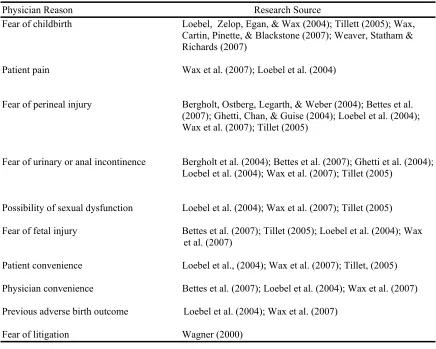
7. Physician Reasons for Performing Elective Cesarean Delivery … … … …. … …. …....40
8. Maternal Reasons for Choosing Elective Cesarean Delivery … … … ….. … …. … … ….42
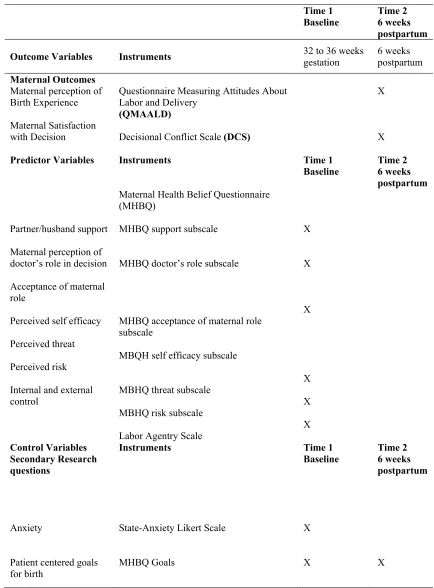
9. Overview of the Timeline for Data Collection … … … …. …...64
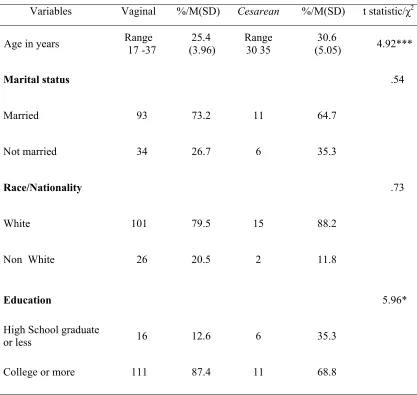
10. Comparison of Maternal Request Groups on Demographic Characteristics. …..74
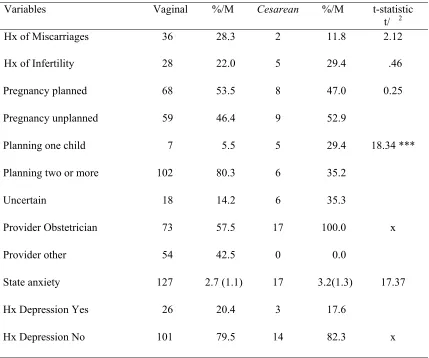
11. Comparison of Maternal Request Groups on Obstetrical Characteristics. …. …...75
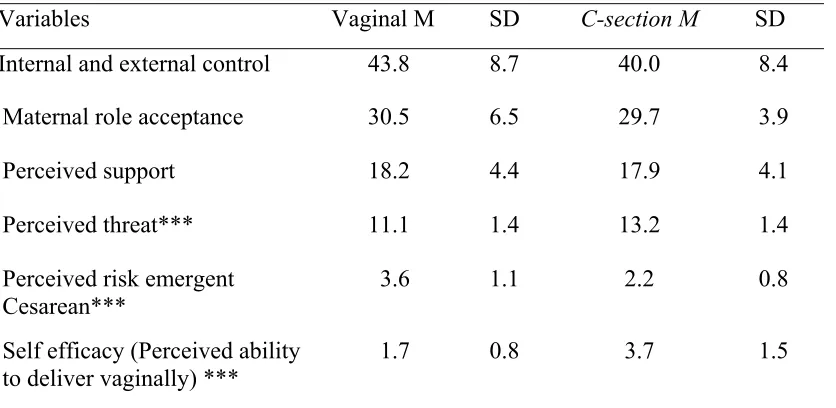
12. Comparison of Maternal Request Groups on Perception of Maternal
Health Belief Variables … … … ….. … …77
13. Comparison of Maternal Request Groups on Maternal Satisfaction
with Birth Experience and Satisfaction with Decision
Regarding Mode of Delivery … … … ….. … … … …. …80
14. Summary of Multiple Linear Regression Analysis for Health Belief
Variables Predicting Maternal perception of the Birth Experience … …...84
15. Hierarchical Multiple Linear Regression for Health Belief Variables
Predicting Maternal Perception of Birth Experience and Moderating
xviii
Table Page
16. Summary of Multiple Linear Regression Analysis for Health
Belief Variables Predicting Maternal Satisfaction with the
Decision Regarding Mode of Delivery … … … ….. … … … ….. …..87
17. Hierarchical Multiple Linear Regression for Health Belief
Variables Predicting Satisfaction with the Delivery Decision
xix
LIST OF FIGURES
Figure Page
1. Adapted Model to Explain Health Belief of First Time Mothers
xx
LIST OF ABBREVIATIONS
ACOG American College of Obstetricians and Gynecologists
ACNM American College of Nurse Midwives
AWHONN Association of Women’s Health and Neonatal Nurses
AMA Advanced Maternal Age
CDC Centers for Disease Control
CDMR Cesarean Delivery Maternal Request
DCS Decisional Conflict Scale
DHHS Department of Health and Human Services
EPDS Edinburgh Postpartum Depression Screening Instrument
FICO International Federation of Gynecology and Obstetrics
HBM Health Belief Model
IP Internet Protocol
IRB Institutional Review Board
JACHO Joint Commission of the Accreditation of Healthcare Organization
LAS Labor Agentry Scale
MADRES Maternal Attitudes, Desires, Requests, and Expectations Study
MHBQ Maternal Health Belief Questionnaire
MQMAALD Modified Questionnaire Measuring Attitudes about Labor and Delivery
MRVB Maternal Requested Vaginal Birth
NIH National Institutes of Health
NCQA National Committee for Quality Assurance
xxi
SPSS Statistical Package for the Social Sciences
1 CHAPTER I
Introduction
The basic physiology of birth remains unchanged despite advances in maternity
care. What has changed is the increased use of technology and interventions in the
birthing process. Advancements in women’s reproductive technology in the last few
decades have resulted in women facing more decisions about the use of technological
interventions in their pregnancies, such as whether to have amniocentesis, chorionic
villus sampling, maternal serum screening or ultrasound screening. For some women,
planning an elective cesarean may be another intervention to consider. Studies report that
approximately 4% of planned primary cesarean deliveries in the United States are for no
clear medical or obstetrical indication (Gregory, Korst, Gornbein, & Platt, 2002). It has
been suggested that maternal request of elective cesarean may partly explain this number
(Zwelling, 2008). Childbirth is a natural, normal, and healthy process for the majority of
women, yet increasing numbers of women are expressing fear for themselves or their
babies as one factor in their reasons for requesting elective cesarean deliveries. These
same women are also expressing the belief that cesarean delivery is the safest method of
delivery for the baby (Weaver, Statham, & Richards, 2007).
There appears to be an evolving attitude shift among healthcare providers and
childbearing women in the United States that has resulted in the perception that women
cannot or should not do what their bodies were made to do (Zwelling, 2008). This change
interventions performed solely for convenience (e.g. elective induction of labor, early
artificial rupture of membranes), which lack evidence that they provide clear benefits for
the mother or infant (Simpson & Thorman, 2005). Women’s source of knowledge about
childbirth may have shifted from family and friends to reality television shows about
childbirth, which creates a culture of heightened fear and anxiety around birth (Reiger &
Dempsey, 2006). This view of childbirth is perhaps most surprising, because it exists in a
country where severe maternal morbidity and maternal mortality with vaginal births are
rare and equally positive are neonatal outcomes.
The issue of maternal request for elective cesarean is complex. It appears to have
interrelated factors that are not easily explained. A lack of evidence about the risks and
benefits of elective cesarean versus vaginal delivery has been identified. Limited
information is available about how the decision for elective cesarean section comes about
in the clinical environment.It is important to view the phenomenon of maternal request
from both the healthcare provider and the maternal vantage point. Pregnancy and birth
are significant life events for first time mothers and their partners. Maternal outcomes
depend not simply on the woman, the psychosocial environment, the healthcare provider,
the birth attendant or hospital policies; rather it is in the weaving together of these
complex interrelationships that creates the tapestry of each woman’s birth experience
including her decision to seek a cesarean versus a vaginal delivery.
Significance of the Problem
With over 4 million births in the U.S. each year, the public health impact of
elective cesarean delivery is potentially enormous (Declercq, Barger, Cabral, Evans,
additional cesarean births. Compared with elective cesarean delivery, vaginal delivery
costs 7.1% ($853 per delivery) less in direct cost than elective cesarean delivery
(Caughey, 2003). This does not take into consideration the indirect cost incurred from
potential complications and future costs that may be incurred in later pregnancies if
repeat cesareans are necessary.
The issue of cost must also be considered in the broader context of burden to the
already stressed healthcare system and the impact on finite resources. Cesarean delivery
is associated with longer length of stay, higher occupancy rates, and maternal
readmissions for post operative complications (Declercq et al., 2007; Druzin & El-Sayed,
2006). It is important to understand that the acceptance of maternal request cesarean as a
possible standard of care could deplete finite health care dollars; especially when in 2010,
4.9 million Americans did not even have access to basic health insurance (Druzin &
El-Sayed, 2006; Garett, Buettgens, Headen, & Hulahan, 2010). This represents 19.2% of the
non elderly population in the United States.
No studies are available that compare the maternal risks and benefits of cesarean
delivery by maternal request (CDMR) to maternal requested vaginal birth (MRVB)
(MacDorman, Declercq, Menacker, & Malloy, 2006; Miesnik & Reale, 2007; National
Institute of Health, 2006). Given that a primary cesarean virtually insures that all future
births will also be cesarean, health outcomes and the economic impact of elective
cesarean delivery should be considered. However, studies comparing medically indicated
cesarean delivery to vaginal birth must be applied with caution when comparing CDMR
to vaginal birth. Theoretically, maternal outcomes of fever, infection, pneumonia, and
delivery and would also be present in instances of CDMR (Declercq et al., 2007;
Koroukian, 2004; Lydon- Rochell, Holt, Martin, & Easterling, 2000; Liu & Yang, 2003).
Similarly, evidence for worse neonatal outcomes such as iatrogenic prematurity,
increased length of stay, respiratory morbidity, and infection are associated with
medically indicated cesareans, but limited research has compared CDMR to MRVB
(MacDorman, et al., 2006; National Institute of Health, 2006).
Risks to the family unit in terms of negative perceptions of the birth experience,
delayed bonding, and ineffective breastfeeding have been strongly associated with
cesarean delivery (Declercq et al., 2007; Gamble & Creedy, 2005; Nerum, Halvorsen,
Sorlie, & Oian, 2005; Saisto & Halmesmaki, 2003;Waldenstrom, Hildingsson, Ryding,
2006). However, it is unclear the proportion of women in these studies who had
medically necessary cesarean versus maternal requested cesarean deliveries.
Consequently, in many obstetrical settings, fulfilling the maternal request for cesarean
delivery is viewed as a key component to a positive birth experience despite nonexistent
data to support this conclusion.
Significance of the Study for Nursing
To date, we know very little about how the decision for elective cesarean section
comes about in the clinical environment. A study by Childbirth Connection suggested
that physician preference may be a factor in elective cesarean delivery more so than a
mother’s request. This study indicated that 9% of women reported experiencing pressure
from a healthcare professional to undergo cesarean delivery. It is also not understood
what effects media, pressure from family, partner or peers may play in this phenomenon.
asked nulliparous women directly about the decision to proceed with an elective cesarean
delivery, as compared to women who choose vaginal delivery. This research study
involved asking women directly about the decision making process and their health
beliefs which led to their decision about their delivery request. The prospective study
obtained data prior to the delivery, to reduce the risk that the events of delivery might
bias mothers’ answers. The aim was to describe the maternal health beliefs and maternal
perceptions of the decision making process regarding mode of delivery among first time
mothers planning a vaginal birth versus women planning an elective cesarean delivery.
The specific aims and associated hypotheses or research questions for the study were as
follows:
Specific Aim I. Compare first time mothers who request cesarean delivery and
first time mothers who request vaginal delivery, to investigate differences in health
beliefs, maternal outcomes, and goals for the birth experience.
QI.1 Do women who request cesarean delivery and women who request vaginal
delivery differ on maternal characteristics, perceived self efficacy, perceived threat,
perceived risk, perception of the birth experience and satisfaction with delivery decision?
QI.2 Do women who request vaginal delivery and women who request cesarean
delivery differ in maternal goals for the birth experience?
Specific Aim II. Examine the effects of selected health beliefs, assessed in the
third trimester, on maternal perceptions of the birth experience and maternal satisfaction
with the delivery decision, both assessed after delivery among first time mothers.
H II.1 Antenatal maternal characteristics (control, acceptance of motherhood
(husband/partner support, perception of provider opinion), and maternal request group
will account for a significant amount of the variance inpostpartum maternal perception
of the birth experience controlling for selected maternal demographic and obstetrical
history variables.
HII.2 Antenatal maternal characteristics (control, acceptance of motherhood
role), perceived self efficacy, perceived threat, perceived risk, cues to action
(husband/partner support, perception of provider opinion) and maternal request group
will account for a significant amount of the variance inpostpartum maternal satisfaction
with the delivery decision, controlling for selected maternal demographic and obstetrical
history variables.
Specific Aim III. Examine maternal request group as a moderator of the
relationship between perceived threat and maternal outcomes of perception of the birth
experience and satisfaction with the delivery decision.
H III.1 Maternal request group will moderate the relationship between perceived
threat and perception of the birth experience, controlling for selected maternal
demographic and obstetrical history variables.
H III.2 Maternal request will moderate the relationship between perceived threat
and maternal satisfaction with the delivery decision, controlling for selected maternal
demographic and obstetrical history variables.
These specific aims listed above were consistent with the priorities of research that
have been identified during the 2006 NIH State of the Science Panel on “Cesarean Delivery
on Maternal Request” as needed to address the limitation of current knowledge about
outcomes after CDMR versus other modes of birth. This study represents an initial step in a
program of research with the long term goals of developing and testing potential nursing
interventions aimed at reducing maternal fear and anxiety of childbirth, promoting health
maternal decision making and increasing maternal satisfaction with birth experience.
Conceptual Framework
The conceptual framework selected to examine the phenomenon of CDMR was a
modification of the Health Belief Model. Giving birth is an important life event for
women. During childbirth, there is always the potential for psychological benefits or
damage (Simpkin, 2006). Identifying a conceptual framework that would provide sound
theoretical basis for understanding women’s decision making about childbirth was vitally
important.
The Health Belief Model (HBM) developed in the 1950’s (Maiman & Becker,
1974) is an example of a rational choice model of decision making based on a
value-expectancy theory (Janz, Champion, & Strecher, 2002). The HBM was developed to
explain decisions around individuals’ participation in preventative health care. It was
later used to explain people’s responses to symptoms and diagnosed illnesses. The HBM
hypothesizes that individuals’ perceptions about their susceptibility to a condition and the
perceived seriousness of the effects of the condition along with the perceived benefits and
barriers associated with the action or treatment available will influence whether they will
participate in preventative health care activities (Maiman & Becker). The combined
levels of susceptibility and threat provide the energy or force to act and the perception of
benefits (less barriers) provides a preferred path of action. The stimulus necessary to
media, interpersonal interactions, and communications with healthcare providers)
(Rosenstock, 1974). Unfortunately, few HBM studies have attempted to assess the
contribution of cues to predicting health actions, and no studies have studied this variable
in the context of the model (Janz & Becker, 1984; Janz et al., 2002). The HBM assumes
that demographic, socio-psychological, and structural variables might affect the
individual’s perception and indirectly influence health-related behavior (Janz & Becker).
Applied to the maternal request for elective cesarean decision making process, the
perceived susceptibility to the condition corresponds to the risk of having an emergent
cesarean after the onset of labor. Perceived threat is conceptualized as the maternal
perception of seriousness or risks associated with planning a vaginal delivery vs.
planning a cesarean delivery. Perceived self efficacy corresponds to the maternal belief
that she will be able to accomplish a vaginal delivery. The Maternal Health Belief Model
Figure 1. Maternal Health Belief Model
Adapted Model to Explain Health Beliefs of First Time Mother Who Request Cesarean Delivery
Perceived risk (susceptibility) of an emergent cesarean after the onset of labor
Perceived threat about seriousness of vaginal vs. cesarean
Maternal Characteristics
Perceived self efficacy to delivery vaginally
Maternal Request
cesarean delivery vs. vaginal delivery
Cues to action
Husband/partner support
Maternal perception of physician’s role and opinion about her decision
Maternal Outcomes Perception of the birth experience Satisfaction with the delivery decision Maternal Perceptions Age Education Ethnicity
Obstetrical History (infertility)
Personality (anxiety)
Desire for Internal & External control
Acceptance of motherhood role
Theoretical Definitions
The following are the theoretical definitions for the Health Belief Model applied
to the situation of maternal request.
Perceived Risk
Perceived risk is conceptualized as the maternal perception of the risk of an
emergent cesarean after the onset of labor. Maternal evaluations of risk speak to feelings
of personal vulnerability of requiring a cesarean delivery.
Perceived Threat Regarding Risk of Vaginal Delivery vs. Cesarean Delivery
Perceived threat is conceptualized as the maternal perception of seriousness or
risks associated with planning a vaginal delivery vs. planning a cesarean delivery.
Maternal evaluations of threat include both medical and clinical consequences (e.g.
perineal damage, neonatal meconium aspiration, severe fear of vaginal birth, fear of
vaginal exams and pain) and possible social consequences (e.g. lack of a support person
in labor, concern for behavior in response to pain or fear).
Perceived Self Efficacy for Vaginal Delivery
Perceived self efficacy is conceptualized as the maternal perception of her ability
to delivery vaginally if she is in labor. Maternal evaluation of self efficacy related to her
physical ability to accomplish the task of dilation of the cervix and delivery of the infant.
Cues to Action Regarding Vaginal Delivery vs. Cesarean Delivery
The concept of cues to action in this study is conceptualized as a trigger
mechanism to the action of making a request for mode of delivery. Maternal perception
of the healthcare provider’s opinion will be defined as the mother’s understanding of the
delivery most appropriate for her situation. Media publicity or modeling of behavior (e.g.
knowing someone or being aware of someone who chooses an elective cesarean) could
potentiate the readiness to request a cesarean delivery by increasing the maternal
perception of cesarean delivery as an acceptable method of delivery. Partner support and
family support have been identified as important factors in maternal decision making.
The role of partner or family in cues to action is as of yet unknown. For hypothesis
testing, the cues to action of healthcare provider and the support of husband/partner will
be the focus as these address gaps in the literature.
Maternal Characteristics
Diverse demographic, social, psychological, and structural variables may affect
the mother’s perceptions and ultimately indirectly influence health-related behavior and
decision making. For the purposes of hypothesis testing and to contribute to gaps in the
literature, the variables of control and acceptance of the motherhood role are included in
the model. Data will be collected on sociodemographic factors, particularly educational
attainment and maternal age to serve as potential control variables as they are theorized to
influence perceptions of susceptibility and threat. Additionally pregnancy anxiety, severe
fear of childbirth, and prolonged history of infertility will also be included as potential
control variables that could influence health beliefs.
Desire for Internal and External Locus of Control
Control is conceptually defined as being in control of the birth process and the
woman feeling she is an active participant in birth rather than a passive object of care.
Control of the birth process will be further defined as internal locus of control (control of
of the environment, of staff and procedures). By being in control women may feel
themselves competent to overcome perceived barriers to choosing vaginal birth. Sense of
control is defined as one’s perception of the need to or ability to control the overall
process of giving birth. Sense of control additionally reflects at the concepts of giving
birth on one’s own terms and self determined closure of pregnancy (Kitzinger, 2006).
Maternal Perception of the Birth Experience
The perception of the childbirth experience is highly personalized, and maternal
views may vary about what factors are important in a positive and satisfying experience.
Satisfaction is a construct that is complex and multidimensional. Hodnett (2002) stated
that satisfaction is a positive affective response to an experience and a cognitive
evaluation of the emotional response. It is possible to be satisfied with aspects of the
experience and dissatisfied with others (Waldenstron, 2004). Research has indicated that
60% of women make the same assessment of their birth experience at 1 year after
delivery as they did at 2 months, but that 24% become more negative over time and 16%
will become more positive (Waldenstrom). Reasons for this change where considered
when making decisions about timing data collection. Measurements taken immediately
following delivery can be affected by the euphoric reactions that labor is over and the
birth resulted in a healthy baby. Retrospective analysis of the birth experience by the
mother may be affected by complex psychosocial events that are hard for the researcher
to anticipate and control. Consequently, a prospective longitudinal design was used for
this study with maternal health belief data assessed 4 to 8 weeks prior to delivery and
maternal perceptions of the birth experience and satisfaction with the delivery decision
Maternal Satisfaction with the Delivery Decision
Individuals seek different roles regarding their level of involvement (e.g., active
versus passive) in decisions about their care, and conflict and satisfaction with this
process is likely to reflect the ability to provide their preferred level of involvement
(Sampietro-Colom, Phillips, & Hutchinson, 2004). Research conducted with women
making decisions about prenatal and genetic screening has provided some insight about
decision making during pregnancy. Lawson and Pierson (2007) reported the importance
of partner support and physician communication in the satisfaction with the decision, and
that women often expressed dissatisfaction when they felt pushed into making the
decision alone. Women making a decision about prenatal testing may feel pressure from
their physicians or significant others to make certain decisions. Women who feel
supported in the decision making process; report greater self-efficacy, decreased conflict
and more satisfaction with the decision (Marteau, Plenicar, & Kidd, 1993).
Conclusion
An absence of research is noted using a conceptual model to specify how the
process of maternal decision making and maternal choice of delivery method may
interact with maternal outcomes. A review of current literature provided consistent
evidence about the maternal characteristics and the perceptions of women who reported
requesting an elective cesarean delivery in the United States. Women requesting cesarean
delivery are older, married, well educated, primarily Caucasian. They also expressed fear
of childbirth, a desire for their partner to be supportive, and a desire for childbirth to be a
pleasant and satisfying experience (Bryanton, Gagnon, Johnson, & Hatem, 2008;
Soet, Brack, & Diloria, 2003; Suplee, Dawley, & Block, 2007; Weaver, Statham,
Richards, 2007; Wiklund, 2007). Women planning a cesarean have consistently
expressed the belief that a cesarean delivery was safe or safer for themselves and their
baby than a vaginal delivery (Bryanton et al.2008; McCourt et al., 2007; Miesnik &
Reale, 2007; Soet et al., 2003; Weaver et al.; Suplee et al., 2007; Wiklund, 2007). No
studies have examined the complex relationships among individual, interpersonal, and
societal factors which may be contributing to the phenomenon of maternal request. The
effects of changing societal norms, provider influence and partner and family
involvement in the decision process need to be examined. Asking women to identify the
barriers they perceive to planning a vaginal delivery is an important factor in the
development of nursing interventions that can shape hospital policies and support women
15 CHAPTER II
Review of the Literature
Statistical Overview
This review discusses the current literature regarding cesarean delivery; clinical
indications for cesarean delivery, maternal and infant outcomes, and ethical viewpoints
related to performing a cesarean without specific medical indications. Maternal
characteristics and variables (psychological, social, or clinical) associated with maternal
request of elective primary cesarean delivery in past studies will be identified. Rationales
for the selection of those variables identified as salient in studying maternal request will
be discussed. The importance of maternal satisfaction with her delivery and her decision
to request a specific mode of delivery will also be discussed.
The United States cesarean section rate was 4.5%, when it was first measured in
1965 (Taffel, Placek, & Liss, 1987). The National Center for Health Statistics reported
the United States cesarean delivery rate for 2006 was 31.1% (U.S. National Center for
Health Statistics). An increase in the cesarean delivery rates has been observed in all
industrialized countries (National Institute of Health [NIH], 2006). These rates vary
widely by country, health care facilities, and delivering physicians. The variance in rates
is partly explained by differing perceptions of healthcare providers and women regarding
the benefits and risks of cesarean delivery (McCourt et al., 2007; Suplee et al., 2007;
of cesarean delivery, as a reasonable elective option for childbirth, may be attributed to
the relative safety of cesarean delivery combined with a change in perceptions regarding
the risks and benefits of vaginal delivery (American Journal of Obstetricians and
Gynecologists [AJOG], 2003; Hannah, 2004; MacDorman et al, 2006; McCourt et al.,
2007; Weaver et al., 2007; Women's Health Care Physicians, 2000).
Historically, cesarean deliveries were primarily emergent and took place directly
because of, or in association with obstetrical complications or maternal illness (Terhaar,
2003). Today it is estimated that 4% to 18% of all cesarean deliveries are elective
primary cesareans deliveries with no clear medical or obstetrical indication (National
Institute of Health, 2006). Any decision for an elective primary cesarean delivery is best
viewed in the context of the maternal and infant health outcomes that can be expected. To
date, insufficient evidence is available to evaluate the short and long term risks and
benefits of maternal planned primary cesarean delivery compared with planned vaginal
deliveries (Liu & Yang, 2007; Miesnik & Reale, 2007; National Institute of Health).
The current debate surrounding cesarean delivery rates arises from a wide variety
of national organizations that monitor healthcare quality including the following:
National Institutes of Health (NIH), Department of Health and Human Services (DHHS),
National Committee for Quality Assurance (NCQA), American College of Obstetricians
and Gynecologists (ACOG), Joint Commission of the Accreditation of Healthcare
Organization (JACHO), American College of Nurse Midwives (ACNM), and Association
of Women’s Health and Neonatal Nurses (AWHONN). These organizations, policy
makers, and health care advocates have expressed concern over the wide variation in
Gornbein, & Platt, 2002). Part of this discussion is related to the evaluation of cesarean
rates by third-party payers, health system accrediting bodies such as NCQA and JCAHO,
and national organizations as a measure of hospital performance and maternal health care
quality (Gregory et al.). This concern has stimulated discussion and research regarding
the appropriate clinical indicators for emergent, preplanned elective and repeat cesarean
delivery.
A number of national organizations have offered position statements regarding the
endorsement or rejection of maternal choice as an appropriate indicator and ethically
justified. In 2003, the American College of Obstetrics and Gynecology (ACOG)
recommended acceptance of medically elective cesarean delivery based on the principles
of patient autonomy and informed consent, if the physician believes it will promote the
overall health and welfare of the woman and her fetus (ACOG, 2003). The International
Federation of Gynecology and Obstetrics (FIGO) guidelines state that because hard
evidence of net benefit does not exist, performing cesarean delivery for nonmedical
reason is not ethically justified (International Federation, 2004). The American College
of Nurse Midwives (ACNM) identified vaginal birth as the optimal mode of delivery for
women without a medical indication for cesarean delivery (ACNM, 2004). The
Association of Women’s Health, Obstetric, and Neonatal Nurses (AWHONN) opinion
statement strongly encourages dissuading women from having medically elective
cesareans delivery prior to 39 weeks and supports further research into the issue
Societal Prospective
“Birth is everywhere socially marked and shaped” (Jordan, [1978] 1993, 1). The
expectation of a perfect outcome is fueled by the myth, subscribed to by both physicians
and patients, that technology can predict and solve all problems (Rosen & Thomas,
1989). Women feel tremendous social pressure to produce the perfect child, while
remaining sexually attractive, and performing the task of childbirth in a timely manner
that avoids inconveniencing others (Reiger & Dempsey, 2006). Physicians are also under
pressure to provide perfect outcomes in a world where childbirth has to fit around
financial productivity, limited healthcare resources, fear of litigation and rising cost of
malpractice insurance (Bergeron, 2007). Research about internal sense of control based
on perceptions of gender has indicated that white middle class women worry about being
nice, polite, kind, and selfless in their interactions during labor and childbirth (Martin,
2003). Worries about interactions during childbirth for minority women are largely
unknown. The climate in which birth takes place in the United States today has been
described as a culture of fear for both women and their healthcare providers (Reiger &
Dempsey).
As women have climbed the corporate ladder, the pressures to not let childbirth
interrupt the corporate schedule have increased. The financial and social pressure to
remain employed in today’s culture is strong (Martin, 2003). Women move frequently,
often far away from extended family and close friends so that the traditional social
support for women during pregnancy and childbirth is disappearing. All of these factors
may combine to create a social environment where women perceive they have no support
comments from strangers, acquaintances, co-workers, family members and healthcare
providers about the best way to make decisions about their delivery. The idea that
childbirth should be managed and controlled for the least inconvenience of the most
people has perhaps limited women’s perceived choice to options that she perceives as
most appropriate or convenient for others and not the choices which she may perceive as
being more appropriate or convenient for her personally. For example she may feel that
waiting for the onset of labor rather than scheduling the date and time for delivery may be
more convenient for her family and co-workers.
Feminist Perspective
No single voice was found that represents the feminist viewpoint regarding
maternal choice of an elective cesarean. A feminist perspective would certainly support
the autonomy of a woman’s choice to be in control of her body and to what happens to
her body during childbirth (Beckett, 2005). Support is found in feminist scholarship that
gives women a privileged position in decisions about their health care and in the ethical
analysis of these decisions (Bergeron, 2007). Feminist critique of maternal choice has
argued however, that this new option in childbirth merely masquerades as increased
autonomy while supporting interests unrelated to women’s health and welfare (Bergeron,
2007). This criticism is based on the viewpoint that gender-based oppression in general
society and the medical model of childbirth, which is based on pathology, inhibits the
viewpoint of childbirth from a woman’s perspective with her priorities in mind (Arney,
1982). The feminist viewpoint argues that since childbirth no longer belongs to women,
the range of autonomous choices they have is only what is given to them by those in
options that are presented to women about their childbirth choices which effectively
restricts women’s autonomy in regards to making decisions about childbirth (Bergeron,
2007).
It has also been argued that the emphasis on autonomy, with the exclusion of
other ethical principles (e.g., beneficence) is misleading. Meaningful consent assumes
that women receive information to make decisions and that the information available to
them is adequate and will address not only this pregnancy but also future pregnancies. At
this time comprehensive beneficence based judgments using both suggested and
documented benefits of planned cesarean delivery versus planned vaginal delivery
present powerful arguments for not embracing planned cesarean delivery until further
research is available (Minkoff, Powderly, Chervenak, & McCullough, 2004).
The application of the ethical principal of justice generally requires both a fair
process of allocating benefits and burdens and assurance that the process will distribute
this fairly (Minkoff et al., 2004). A feminist’s viewpoint would argue that when current
data indicate it would require large numbers of elective cesareans to prevent each
instance of morbidity thought to be related to vaginal delivery (e.g. urinary incontinence,
Erb’s palsy, cerebral palsy) it offends justice to impose iatrogenic burdens on so many
patients to produce benefits for so few (Williams, 2008). It can also be argued that the
application of resources to do cesareans that are not medically indicated distracts from
the greater challenges of obstetrical care that would distribute more fairly the benefits
(Christilaw, 2006). Some feminists will find fault with this argument, and emphasize that
individual freedoms for reproductive decisions have been too difficult to obtain to risk
satisfied with the decisions they are making about their delivery regarding cesarean
delivery and if they feel that they are fully informed and supported in their decisions.
Clinical indications for cesarean delivery
There is at this time, no consensus regarding absolute clinical indications for
cesarean delivery or an accepted benchmark rate for cesarean delivery (NIH, 2006).
Healthy People 2010 from DHHS focused on reducing the national rate of first time
cesarean, low-risk patients (low-risk equals a low likelihood of requiring cesarean
delivery; full-term, singleton, vertex position) to 15.5%. These goals were revised from
Health People 2000 proposed benchmark for an overall cesarean rate of 15%, which
received criticism from some experts claiming this benchmark inadequately addressed
patient case mix or patient safety factors (Health Grades, 2003).
The Milliman Care Guidelines are evidence-based clinical indicators for
emergent, preplanned primary, and repeat cesarean delivery which are updated annually
and are used by nine of the eleven largest managed care organizations in America. The
American College of Obstetricians Position Statements are frequently cited in the
Milliman Guidelines. These guidelines can be found in Table 1 and Table 2. Maternal
choice as a clinical indicator is only discussed in connection with repeat cesarean
delivery. It is stated that the documentation of the mother to forego a trial of labor, is
Table 1
Milliman Clinical Indicators for Cesarean Section, Primary
Failed trial of labor, non-reassuring fetal status, or other obstetric indication
Dystocia1, protraction disorder or arrest disorder, with adequate contractions
Fetal malposition (E.g., breech2, brow, transverse lie)
Multiple intrauterine pregnancy (i.e., Twins, Triplets, Quads)
Non-reassuring fetal status, fetal distress3 (e.g., fetal acidosis)
Cord prolapse, placenta previa, or placenta abruption
Previous myomectomy or uterine reconstruction, which is full thickness or enters the uterine cavity
Previous intra-uterine fetal surgery
HIV, active herpes
Medical or obstetrical complications precluding vaginal delivery
Suspected macrosomia by sonographic estimated fetal weight greater than 4250 grams in diabetic individuals
1See ACOG Technical Bulletin # 218 definition of dystocia. 2See ACOG Committee Opinion # 202 Breech
Table 2
Milliman Clinical Indicators for Cesarean Section, Repeat/ Planned
Clinical indication listed above for primary cesarean section would apply to repeat or planned cesarean section.
Previous low vertical uterine incision or classical C-section1
Previous T-shaped extension of lower transverse uterine incision
Unknown type of uterine scar (i.e., cannot be determined)
Documented choice of patient to forgo a trial of labor in favor of a scheduled repeat C-section
Abnormal lie with failure or refusal of version
Contraindication to vaginal birth: clinically inadequate pelvis, previous rupture,
placenta previa, limited emergency facilities (physician, anesthesia, personnel, facility)
1There are few absolute contraindications to a trial of labor and few reliable predictors of
success or failure of a trial of labor.
Gregory et al. (2002) undertook a large population based retrospective study to
develop a standardized methodology to identify indications for elective primary cesarean
and describe appropriate rates using routinely available administrative data from medical
records. Women in the study population that had experienced a previous cesarean were
excluded. Findings suggested that in this study population elective primary cesarean
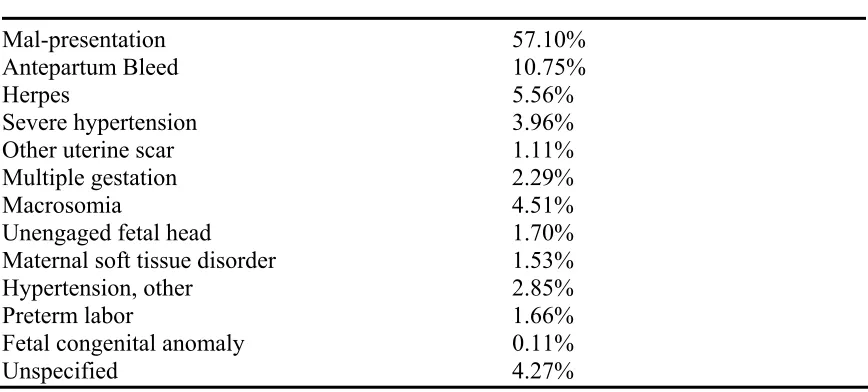
delivery accounted for approximately 4% of all births. For 92.9% of these births, 12
specific clinical indications could be assigned. The remaining 7.1% were unspecified and
can be possibly attributed to maternal choice cesarean or inadequate coding (Gregory et
al., 2002). Statistical analysis using this algorithm identified 12 conditions that accounted
for 92.9% of elective primary cesarean deliveries for this study. The clinical conditions
Table 3
Indications for Primary Elective Cesarean (Gregory et al., 2002)
Clinical Condition % Patients Undergoing Elective Primary Cesarean
Mal-presentation 57.10%
Antepartum Bleed 10.75%
Herpes 5.56%
Severe hypertension 3.96%
Other uterine scar 1.11%
Multiple gestation 2.29%
Macrosomia 4.51%
Unengaged fetal head 1.70%
Maternal soft tissue disorder 1.53%
Hypertension, other 2.85%
Preterm labor 1.66%
Fetal congenital anomaly 0.11%
Unspecified 4.27%
Maternal Risks and Benefits of Planned
Cesarean Delivery versus Planned Vaginal Delivery
The elements for evidence based decision making about the most appropriate
method of delivery are lacking. Evidence continues to be limited about the actual number
of planned primary cesarean deliveries that are not associated with a medical indication.
The National Institutes of Health (NIH) convened a State-of-the-Science Conference in
March of 2006 to assess the available scientific evidence relevant to cesarean delivery on
maternal request. The broad aim of the study was based on the consensus that cesarean
delivery by maternal request should be guided by the best possible information regarding
potential health outcomes for both the mother and the baby. The following questions
were addressed at the conference. 1. What is the trend and incidence of cesarean delivery
year) and long-term benefits and harms to mother and baby associated with cesarean
delivery by request versus attempted vaginal delivery? 3. What factors influence benefits
and harms? 4. What future directions need to be considered to get evidence for making
appropriate decisions regarding cesarean delivery on request or attempted vaginal
delivery? The framework of the evidence analysis adopted was to assess the state of the
science regarding outcome differences in women who elect planned cesarean delivery
versus planned vaginal delivery. The panel utilized the following evidence quality
grading scale: Level I – strong, Level II – moderate, Level III – weak, Level IV – absent.
For the evidence to be rated as strong it had to meet the following criteria. The evidence
is from studies of strong design; results are both clinically important and consistent with
minor exceptions at most; results are free from serious doubts about generalizability, bias,
or flaws in research design. Studies with negative results have sufficiently large samples
to have adequate statistical power. Moderate quality evidence was defined as evidence
from studies of strong design, but some uncertainty because of inconsistencies or concern
about generalizability, bias, research design flaws, or adequate sample size. Moderate
quality evidence was also defined as consistent evidence, but derived from studies with
weaker designs. Weak quality evidence was defined as evidence from a limited number
of studies of weaker design or studies with strong design with results that are
inconclusive. If no evidence or no published literature was found the quality assigned was
absent.
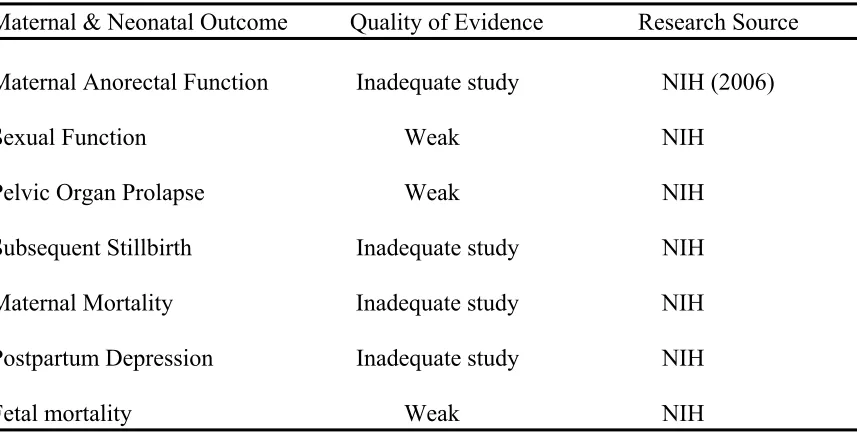
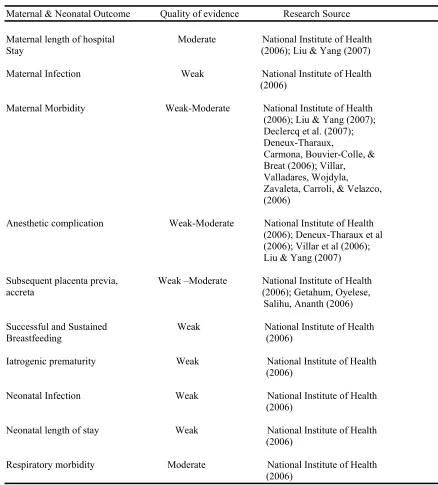
For the maternal and neonatal outcomes listed in Tables 4, Table 5, and Table 6;
no Level I evidence was found. Three outcomes had Level II evidence, and the remaining
risks and benefits of planned primary cesarean delivery versus planned vaginal delivery
were identified. The relevant data that are available are from retrospective studies that
have attempted to create comparison groups using proxy definitions for maternal planned
primary cesarean (e.g. breech presentation, repeat cesarean,) or have compared maternal
and fetal outcomes from emergent cesarean delivery and planned cesarean delivery with
vaginal births populations. Limited studies are available regarding maternal
psychological outcomes which compared women who planned a primary cesarean when
no medical indications were present with women who planned a vaginal birth (Saisto,
Salmela, Nurmi, Kononen, & Halmesmaki, 2001). Existing studies comparing medically
indicated cesarean delivery or proxy planned cesarean to vaginal birth should be viewed
with caution, since differences in these groups may exist. A summary of that research can
Table 4
Areas Lacking Sufficient Research Regarding Optimal Delivery Route
Maternal & Neonatal Outcome Quality of Evidence Research Source
Maternal Anorectal Function Inadequate study NIH (2006)
Sexual Function Weak NIH
Pelvic Organ Prolapse Weak NIH
Subsequent Stillbirth Inadequate study NIH
Maternal Mortality Inadequate study NIH
Postpartum Depression Inadequate study NIH
Fetal mortality Weak NIH
Table 5
Research Evidence Favoring Planned Cesarean Delivery
Maternal & Neonatal Outcome Quality of evidence Research Source
Postpartum Hemorrhage Moderate NIH (2006)
Urinary incontinence Weak NIH
Surgical and traumatic
complications Weak NIH
Neonatal hemorrhage,
asphyxia, & encephalopathy Weak NIH
[image:49.612.111.543.411.599.2]Table 6
Research Evidence Favoring Planned Vaginal Delivery
Maternal & Neonatal Outcome Quality of evidence Research Source
Maternal length of hospital Moderate National Institute of Health Stay (2006); Liu & Yang (2007)
Maternal Infection Weak National Institute of Health
(2006)
Maternal Morbidity Weak-Moderate National Institute of Health (2006); Liu & Yang (2007); Declercq et al. (2007); Deneux-Tharaux,
Carmona, Bouvier-Colle, & Breat (2006); Villar, Valladares, Wojdyla, Zavaleta, Carroli, & Velazco, (2006)
Anesthetic complication Weak-Moderate National Institute of Health (2006); Deneux-Tharaux et al
(2006); Villar et al (2006); Liu & Yang (2007)
Subsequent placenta previa, Weak –Moderate National Institute of Health accreta (2006); Getahum, Oyelese,
Salihu, Ananth (2006)
Successful and Sustained Weak National Institute of Health Breastfeeding (2006)
Iatrogenic prematurity Weak National Institute of Health (2006)
Neonatal Infection Weak National Institute of Health (2006)
Neonatal length of stay Weak National Institute of Health (2006)
Respiratory morbidity Moderate National Institute of Health (2006)
Maternal Mortality
The NIH (2006) state-of-the-science conference on cesarean delivery on maternal
evaluate maternal mortality. Maternal mortality is considered a basic health indicator that
reflects the adequacy of health care for a nation (Panting-Kemp, Geller, & Nguyen,
2000). In 2003, the maternal mortality rate was 12.1 deaths per 100,000 live births in the
United States (Hoyert, 2007). This rate is increased from the previous time period from
1996 to 2002 where the rate fluctuated from 8.0 to 9.9 and is probably reflective of
enhanced surveillance efforts by the CDC and the addition of a separate question on
death certificates regarding recent pregnancy history in a growing number of states. This
change is thought to capture more accurately late maternal deaths which are defined as
the deaths of a woman from direct or indirect causes more than 42 days, but less than one
year after delivery (Hoyert).
Embolism, hemorrhage, and pregnancy-induced hypertension complications were
the leading cause of pregnancy-related deaths between 1996 and 2003 (Hoyert, 2007). An
increase in the percentage of maternal deaths attributable to cardiomyopathy and other
medical conditions has been observed and may be related to the inclusion of a separate
question regarding pregnancy within the last year on death certificates in a number of
states (Hoyert). The maternal morbidities that are frequently associated with maternal
death, need to be examined closely in regards to elective primary cesarean delivery and
vaginal birth so that women can be given appropriate information about the risks and
benefits of both modes of delivery.
The increasing number of deaths attributed to other medical conditions may be
associated with the increased age distribution of women giving birth in the United States.
The prevalence of chronic illness has been shown to increase with age (Hoyert, 2007).
for pregnancy related death and adverse reproductive health outcomes (Hoyert). Risk
ratios for pregnancy-related mortalities are reported as 3 to 4 times higher for black
women than for white women, and this increases for black women who are 35 years of
age or older (Hoyert). Research has indicated that women planning elective primary
cesareans in the United States are more likely to be older (Suplee et al., 2007). This
knowledge should be considered when comparing the outcomes of maternal mortality
between women planning elective primary cesarean delivery versus vaginal birth.
Since the NIH (2006) conference, two studies have been published with large
enough sample sizes to be adequately powered to study maternal mortality.
Deneux-Tharaux, Carmona, Bouvier-Colle, & Breat (2006) conducted a large population-based
case-control study that showed higher rates of severe maternal morbidity and increased
risk for maternal death from anesthesia complications, infection, and venous
thromboembolism with cesarean delivery. Villar et al. (2006) used the WHO 2005 global
survey containing data about 100,000 deliveries from Latin America to compare maternal
outcomes between cesarean and vaginal deliveries. Results showed higher rates of severe
maternal morbidity and mortality for cesarean delivery when compared to vaginal
deliveries. Despite the fact that both studies controlled for risks, it is important to note
that the studies were not conducted in the United States and generalizability to the U.S.
population must be made with caution. It would be important to conduct similar research
in this country, before conclusions about risks and benefits are possible. The National
Institute of Health (2006) reported weak quality evidence favoring planned vaginal
delivery over planned cesarean delivery when anesthetic complications were examined.
seen in the U.S. practice today, and this would be an important confounding variable. In
light of these recent studies, additional research is indicated.
Postpartum Maternal Outcomes
The postpartum period has been defined as beginning 1 hour after delivery of the
placenta and lasting for 6 weeks, at which time the uterus will have completed the
process of involution and regained its pre-pregnant size (Cunningham et al., 2001). It is
important to look beyond this time frame to adequately determine how method of
delivery may affect the psychosocial and physical health of women, their infants, and the
interaction between them during this important period. Variables associated with
prolonged maternal recovery during the postpartum period, both physically and
emotionally, have been extensively researched. However, an absence of research is noted
using a conceptual model to specify how the process of maternal decision making and
maternal choice of delivery method may interact to influence maternal outcomes.
Findings in the literature consistently support that women with spontaneous
vaginal deliveries report more positive birth experiences and increased maternal
adaptation than either women with operative vaginal deliveries or emergency cesarean
deliveries (Bryanton et al., 2008). Stressful labor and delivery, emergency cesarean birth,
and psychosocial stress or pain related to delivery have been associated with delayed
lactogenesis, ineffective breastfeeding, post-traumatic stress disorder, and postpartum
depression (Beck, 2004a; Beck & Watson, 2008; Bailham & Joseph, 2003; Soet,et al.,
2003). A meta-analysis found that women who had cesarean (both planned and
unplanned) had significantly decreased rates of breastfeeding than women who had