T3035S
^o i 2
m
Library;
BrlBSh tfcrary of Poffcca;Technology Diffusion in Health Care:
A Microeconometric Analysis of the NHS
Victoria Serra-Sastre
London School of Economics and Political Science
Department of Social Policy
Thesis submitted to the London School of Economics and Political Science for the degree of Doctor of Philosophy
UMI Number: U615942
All rights reserved
INFORMATION TO ALL USERS
The quality of this reproduction is dependent upon the quality of the copy submitted.
In the unlikely event that the author did not send a complete manuscript
and there are missing pages, these will be noted. Also, if material had to be removed, a note will indicate the deletion.
Dissertation Publishing
UMI U615942
Published by ProQuest LLC 2014. Copyright in the Dissertation held by the Author. Microform Edition © ProQuest LLC.
All rights reserved. This work is protected against unauthorized copying under Title 17, United States Code.
ProQuest LLC
789 East Eisenhower Parkway P.O. Box 1346
Abstract
Table of Contents
ABSTRACT...1
LIST OF TABLES...5
LIST OF FIGURES... 6
PRESENTATIONS AND PUBLICATIONS... 7
ACKNOWLEDGEMENTS... 8
INTRODUCTION...9
CHAPTER 1. TECHNOLOGICAL CHANGE AND EXPENDITURE, TECHNOLOGY DIFFUSION IN HEALTH CARE AND CONCEPTUAL ASPECTS... 20
1.1 Me d ic a l Te c h n o l o g ya n d Ex p e n d it u r e... 21
1.2 As p e c t so f Te c h n o l o g y Dif f u s io n... 29
1.2.1 Definition of diffusion and technology classification...29
1.2.2 The health care market and technology diffusion...31
1.3 In t r a-level Dif f u s io n... 34
1.3.1 A representation of the intra-level diffusion analysis...35
1.3.2 Origins and development of the intra-firm diffusion analysis...38
1.3.3 The intra-level approach in the present analysis...41
1.4 Health Ca r e Te c h n o l o g ie s... 42
1.4.1 The case of two product innovations...44
1.4.2 Market definition in the pharmaceutical sector...47
1.5 Re se a r c h Qu e s t io n s... 48
1.6 Co n c l u d in g Re m a r k s... 51
CHAPTER 2. TECHNOLOGY DIFFUSION: EVIDENCE FROM THE LITERATURE AND IMPLICATIONS FOR THE HEALTH CARE SECTOR... 52
2.1. Th e o r e tic a l Lite r a tu r eon Te c h n o lo g ic a l Dif f u s io n...53
2.1.1 Approaches to the analysis of diffusion...53
2.1.2 Policy implications of the economic diffusion analysis...61
2.2. No n-Healthe m pir ic a ll it e r a t u r e... 62
2.3. Th e o r e tic a l An alysiso f Health Te c h n o l o g y Dif f u s io n...66
2.3.1 General approaches...67
2.3.2 Pharmaceutical diffusion...69
2.4. Ev id e n c e o n Medical Te c h n o l o g y Dif f u s io n... 71
2.4.2 Evidence on new pharmaceuticals diffusion ...75
2.4.3 Perspectives on diffusion of surgical procedures...78
2.5C o n c lu d in g R e m a rk s ... 80
CHAPTER 3. THE DETERMINANTS OF DIFFUSION OF NEW PRESCRIPTION DRUGS: EVIDENCE FROM THE UK PRIMARY CARE SECTOR... 83
3.1 In t r o d u c t io n... 83
3.2 Dr u g Dif f u s io n: Uptakea san In f o r m a t io n Seek in g Pr o c e s s... 85
3.2.1 The physician as the decision-maker...87
3.2.2Information channels behind diffusion...89
3.3 Ov e r v ie wo ft h e Ma r k e tfo r St a t in s, PPIsa n d S S R Is ... 95
3.3.1 Statins...95
3.3.2 PPIs...98
3.3.3 SSR Is...100
3.4 Mo d e l Sp e c if ic a t io n... 102
3.5 Da t a...103
3.6 Ec o n o m e t r ic Sp e c if ic a t io n... 105
3.7 Pa n e l Da ta Me t h o d s... 113
3.8 Re s u l t s...124
3.9 Co n c l u d in g Re m a r k s...136
CHAPTER 4. DIFFUSION OF NEW PHARMACEUTICALS IN A COMPETITIVE CONTEXT: IMPLICATIONS FOR MARKET DOMINANCE... 140
4.1 In t r o d u c t io n... 140
4.2 Dif f u s io na n d Fir s t-Mo v e r Ad v a n t a g e...143
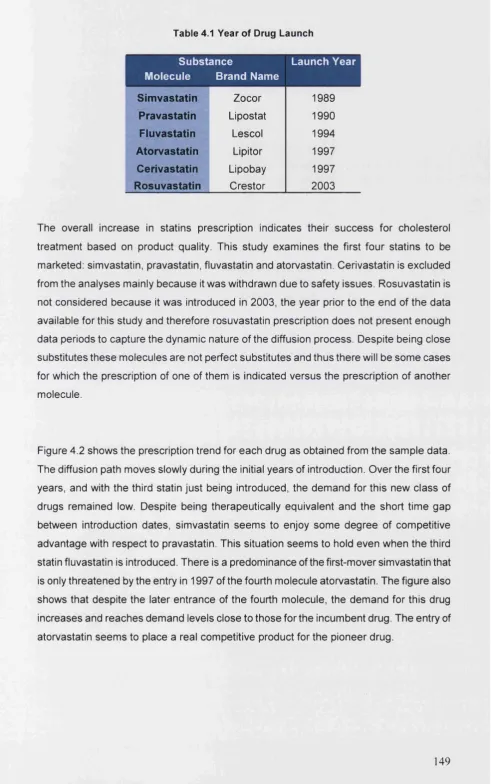
4.3 The Ma r k e tfo r St a t in s... 148
4.4 The Dif f u s io n Pr o c e s su n d e ra Co m p e t it iv e Se t t in g...150
4.5 Da t a...153
4.6 Em p ir ic a l Sp e c if ic a t io n... 154
4.7 Ec o n o m e t r ic Is s u e s... 160
4.8 Re s u l t s...161
4.9 Co n c l u d in g Re m a r k s... 177
CHAPTER 5. DIFFUSION AND COMPETITION IN THE HOSPITAL SECTOR: MAIN DRIVERS AND IMPACT ON QUALITY OF CARE... 181
5.1 In t r o d u c t io n... 181
5.2 Te c h n o l o g y Diffu s io na n d Qu a lityo f Car ew it h int h e Ho s p it a l Ma r k e t...183
5.2.2 Diffusion and Productivity: the Volume-Outcome Relationship Revisited...188
5.3 Pr o d u c t In n o v a t io n s: Ca r o t id En d a r t e r e c t o m ya n d Kn e e Ar t h r o s c o p y...192
5.4 Ec o n o m e t r ic Sp e c if ic a t io n... 197
5.4.1 Diffusion Equations...198
5.4.2 Volume-Outcome Relationship...203
5.5 Da t a...206
5.5.1 Data for Analysis of Carotid Endarterectomy Diffusion and Volume Equations 209 5.5.2 Panel Data for Knee Arthroscopy Diffusion Analysis...211
5.6 Ec o n o m e t r ic Me t h o d s... 212
5.7 Em p ir ic a l Re s u l t s...220
5 .7 .1 Diffusion Equations Results...221
5.7.2 Estimates of the Volume-Outcome Equations...228
5.8 Co n c l u d in g Re m a r k s...235
C H A P T E R 6. C O N C L U S IO N S A N D P O LIC Y IM P L IC A T IO N S ... 239
6.1 In t r o d u c t io n... 239
6.2 In d iv id u a l Co n c l u s io n sfr o mt h e Em p ir ic a l Ch a p t e r s... 240
6.3 Te c h n o l o g y Diffu s io n in Health Ca r e: Co n c l u s io n s o nt h e Mec h a n is m s Dr iv in gt h e Pr o c e s s... 242
6.4 Po l ic y Im p l ic a t io n s... 246
6.5 Lim it a t io n sa n d Fu t u r e Re s e a r c h... 249
A P P E N D IX C H A P T E R 2 ... 253
A P P E N D IX C H A P T E R 3 ... 262
A P P E N D IX C H A P T E R 4 ... 284
A P P E N D IX C H A P T E R 5 ... 292
List of Tables
Table 1.1 Per Capita Total Health Care Expenditure Growth... 22
Table 1.2 Per Capita GDP Growth...23
Table 1.3 Total Health Care Expenditure as percentage of G D P ...23
Table 1.4 Pharmaceutical Expenditure Annual Growth... 25
Table 1.5 Pharmaceutical Price Index Annual Growth...26
Table 1.6 Pharmaceutical Expenditure over Total Health Expenditure...45
Table 1.7 Public In-patient Care Expenditure over Public Health Expenditure... 46
Table 3.1 GP Count per Practice... 107
Table 3.2 Demand Equations: Statins... 126
Table 3.3 Demand Equations: P P Is ...127
Table 3.4 Demand Equations: SSRIs... 128
Table 3.5 Specification with Employment Marketing Variables... 130
Table 3.6 Diffusion Equations with Prices...132
Table 3.7 Diminishing Returns to Marketing... 134
Table 4.1 Year of Drug Launch... 149
Table 4.2 Dynamic Equations: Quality Proxied by Side-effect of Competing D rug... 164
Table 4.3 Demand Equations with A g e ... 167
Table 4.4 Demand Equations with Prices...169
Table 4.5 Marketing of the Competing D ru g... 170
Table 4.6 Marketing Behaviour of the Dominant Drug...173
Table 4.7 Marketing Behaviour according to Relative Marketing Measures... 176
Table 5.1 Percentage of Adverse Outcome Occurrence after Operation... 208
Table 5.2 CEA and KA Diffusion Equations: Adverse Outcomes (t-1)...223
Table 5.3 CEA Diffusion Equations: the Effect of Competition... 226
Table 5.4 KA Diffusion Equations: the Effect of Competition... 227
Table 5.5 Probability of Adverse Outcome Occurrence... 229
Table 5.6 Cox-Proportional Hazard M odel... 231
Table 5.7 Failure Time and Event Timing... 232
Table 5.8 Adverse Outcome within Four W eeks after Discharge...233
List of Figures
Figure 1.1 Changes in Isocostand Isoquant Curves Introduced by New Technology... 29
Figure 1.2 S-shaped Diffusion C u rve... 36
Figure 1.3 Demand of New Pharmaceutical Products over Total Demand... 46
Figure 3.1 Agents in Place as a New Drug Enters the Market... 85
Figure 3.2 Persons Prescribed Statins... 97
Figure 3.3 Total Number of Statins Prescriptions Dispensed in the Community... 98
Figure 3.4 Total Number of PPIs Prescriptions Dispensed in the Community...100
Figure 3.5 Persons Prescribed SSR Is... 101
Figure 3.6 Total Number of Prescriptions Dispensed in the Community S S R Is... 102
Figure 4.1 Statins Market Share... 141
Figure 4.2 Drug Diffusion P aths... 150
Figure 5.1 Carotid Endarterectomy Procedure Rate per thousands... 193
Figure 5.2 Post-surgery Length of Stay... 194
Figure 5.3 Knee Arthroscopy Procedure Rate per thousands... 196
Presentations and Publications
Different chapters of the thesis have been presented in the following conferences:
• July 2006. 6th European Conference on Health Economics, Budapest, “Diffusion of Medical Innovation: Evidence from the UK NHS primary care sector”.
• July 2006. 69th Health Economists’ Study Group meeting, University of York, “Diffusion of New Prescription Drugs: Evidence from the UK NHS primary care sector”.
• March 2007. Seminari Xarxa de Referenda en Economia i Polltiques Publiques, Universitat de Barcelona, Spain, “Diffusion of Medical Innovations: Evidence from the UK NHS”.
• June 2007. XXVII Jornadas de Economia de la Salud, A Coruna, Spain, “Diffusion of Medical Technology: the case of Statins in the UK”. Poster Presentation.
• July 2007. 6th World Congress International Health Economics Association, Copenhagen, “The Role of Information in the Diffusion of New Pharmaceuticals: the case of Statins”.
• September 2007. 71st Health Economists’ Study Group meeting, Brunei University, “Diffusion of New Pharmaceuticals: Is there a First-Mover advantage?”.
• October 2007. Geneva Symposium on Technology, Innovation and Change in Health and Health Care, Brocher Foundation and The Geneva Association, “Diffusion of Health Technologies: Evidence from the Pharmaceutical Sector”.
• M ay 2 0 0 8 . X X V III Jornadas de Econom ia de la Salud, S alam an ca, Spain,
“Technological change in health care: diffusion of surgical procedures in England”. Poster Presentation.
• June 2008. 2nd Biennial Conference of the American Society of Health Economists, Duke University, North Carolina, “Technological change in health care: diffusion of surgical procedures in England”.
• July 2008. 7th European Conference on Health Economics, University of Rome “Tor Vergata”, Rome, “Technological change in health care: diffusion of surgical procedures in England”.
Acknowledgements
I am enormously indebted to my supervisor Prof. Alistair McGuire. His guidance and support have played a crucial role during the period of my thesis. His supervision has been vitalising and intellectually stimulating. I am very grateful for the professional and moral support I have received during these years making the PhD an easier experience.
I would like to thank the Merck Trust and the London School of Economics and Political Science for their financial support. I am very grateful to IMS Health and Dr. Fosters Intelligence for data provision.
I would like to dedicate this thesis to my family. This thesis would not have been possible without their understanding and support. To my parents, Ramon and Pilar, for showing me the value of constant and dedicated work. For their patience and love in difficult moments. Their encouragement throughout my life has made any challenge easier. To my sister Pili, for her joyful touch. To my brother Tato, for his relaxed and spontaneous approach. To my grandmothers, Margarita and Victoria, for their constant smile and because they have given me everything and more than what one could think.
Introduction
This thesis examines the diffusion of technologies within the health care sector. The increase in health care expenditure and the identification of technological change as the main determinant of the medical spending growth have boosted the interest for the analysis of medical innovation diffusion. Some studies have estimated that the association between technological change and medical expenditure represents half of the increase in expenditure (Newhouse, 1992; Cutler, 1995). The recognition of technological change as being responsible for spending growth raises the question of the mechanisms at work which allow new medical innovations to penetrate the health care market and how these innovations become part of common practice. Technological change involves different steps, from the development of the technology to the placement of the technology in the market. New technologies contribute to economic growth because of their superior competitive advantage generating more efficient production processes. Consequently, it is only through the adoption and diffusion of these technologies that benefits for the consumers will be materialised. The present research is focused on the analysis of the diffusion stage of technological change in the health care sector.
The empirical analysis here is of two distinct case studies. The first empirical analysis corresponds to the diffusion of new prescription drugs and the second type of technology analysed is surgical innovation. These two technologies represent examples of medical innovations that are different in their nature, in the stakeholders involved in their development and market introduction and finally in the sub-sectors in which diffusion occurs. Initially, there are differences in the characteristics of these two types of product innovations that are expected to determine the diffusion process in different ways. In addition, within each type of technology different groups of drugs and surgical procedures are examined in order to delineate any similarities and specificities of their diffusion process that could be extracted from their analysis. The general context in which diffusion is explored is the NHS; however, for each type of technology the uptake occurs in different health care sectors. As such, the first empirical analysis considers new drugs diffusion framed within the context of the primary health care, while the second empirical analysis is concerned with diffusion of surgical procedures within the secondary health care sector. Differences between these two sectors lie in their structure and the set of reforms they experienced, thus the diffusion process across sectors is also expected to follow different acceptance paths.
The thesis is set out as follows. Chapter 1 outlines the general motivation for the diffusion analysis in health care and brings together some of the evidence supporting the relationship between technological change and medical expenditure growth. The two components of expenditure, prices and quantities, are examined to detect which of these factors is most important in determining the growth in expenditure. As supported by empirical evidence, quantities are identified as the main driver of expenditure growth (Cutler and McClellan, 1998; Cutler et al., 1998). This motivates the approach taken throughout the thesis to examine diffusion as acceptance measured by increasing volume. Conceptual aspects of diffusion are considered in this chapter and a detailed presentation of the differences between the inter-firm and intra-firm diffusion analysis are also discussed. The interest in this aspect of diffusion, in conjunction with the recognition of volume as responsible for expenditure increases, serves as the basis to set the intra firm context outlined above as the framework for the empirical analysis of health technology diffusion.
The first chapter starts with definitional aspects of diffusion as they are presented in economics. It also describes the two types of technologies that may be considered for the diffusion analysis. Process innovations refer to any development that introduces changes in equipment, input bundle or organisational structure that involves lower production costs; product innovations are new products in themselves (Stoneman, 2002). These concepts are then translated into the health care market context to highlight the differences and the aspects that make the health care sector an interesting sector for examination. The relevance of the two types of technologies examined in this thesis and the sectors in which they are placed are described to emphasize the significance for the examination of these innovations. After giving the basis for the empirical analysis of the diffusion of medical innovations in health care, the chapter ends with the particular aspects of diffusion that are examined throughout the thesis and specifically sets the research questions pursued.
process. In these models diffusion was approached as the increase in technology users and the mechanism of diffusion was the dissemination of information through the contact of users with non-users. In modelling this process the logistic function, which can be characterised by an S-shaped curve, was observed to best represent the diffusion path followed by different technologies. These models were criticised for their simplicity and the lack of specification of the aspects leading to the adoption process. From that point onwards the development of several streams of analysis departed from the epidemic models based on the differential aspects that were held to explain why the diffusion process occurs. The uncertainty embedded in new technology is an important aspect of technology diffusion that generally motivates much of the literature.
Following the review of the theoretical research, empirical contributions to the diffusion literature are examined. The evidence comes from a variety of industries such as banking, food and the energy industry. The main common elements throughout this empirical analysis highlight the relevance of the Schumpeterian hypothesis of the role of the firm size and competition in the diffusion process. Both conceptual models and empirical findings have been largely devoted to the analysis of the inter-firm diffusion of process innovations. More recently, some models of intra-firm diffusion have been developed; nevertheless, the modelling and empirical aspects of this level of diffusion are still not very well documented. In an attempt to identify similarities and differences with the general economic literature, applications to the health care sector are then reviewed. The modelling of the diffusion process in the health care sector is very limited. Part of this work is focused on the interaction between insurance and technology choice. The analysis of the individual decision to adopt and to incorporate the technology as part of standard practice has been largely ignored. Nevertheless, there are a number of contributions modelling new drug diffusion as a physician learning process using a Bayesian approach.
consistency and generalisation of the results obtained. After a close examination of the diffusion literature, contributions from the intra-firm diffusion level of analysis are found to be limited. Both non-health and health contributions are mainly constrained to the inter-firm level. This literature is thus mainly country and technology-specific. Therefore one of the objectives of this thesis is to contribute to the analysis of diffusion with the empirical examination at the intra-firm level of product innovations in an environment in which health services are mostly publicly provided. The technologies examined here also differ to the technologies generally studied in the literature.
After reviewing the relevant literature, the following chapters present the empirical analysis of diffusion in the UK health care sector. Chapter 3 is the first of the empirical chapters analysing the diffusion of new prescription drugs. This chapter deals with the diffusion of three therapeutical classes of drugs (statins, proton pump inhibitors (PPIs) and selective serotonin reuptake inhibitors (SSRIs)) within the primary care sector. Statins are a type of cholesterol-lowering drugs, PPIs are among the group of ulcer-healing drugs and SSRIs are a class of drugs to treat depression. Each of these drug groups represent good examples for diffusion analysis given that they account for a large share of the pharmaceutical bill and also because they are used to treat common conditions among the population. The case of drug diffusion is of special interest given the interactions among the stakeholders involved in the process of development and market introduction. This follows from the number of external forces affecting the individual decision to gradually accept the prescription of a new drug. For instance, the manufacturer has strong incentives to promote the product.
responsiveness of demand to prices and marketing. At the individual physician level, prices might not be of relevance in prescription choice as shown in Chapters 3 and 4.
It is generally accepted that new technology presents a competitive advantage with respect to the existing technology. However, especially during early periods of diffusion there is an intrinsic element of uncertainty with respect to the technology. The uncertainty and the newness of the product characterise diffusion as a dynamic learning process in which information plays a central role as a mechanism to overcome the uncertainty associated with innovations. There are four informational factors identified as driving the process. The first one is the personal experience. Drugs are defined as experience goods, that is, goods whose quality can be learnt after consumption. Only through repetitive prescription doctors will be able to assess the benefit for the patient of the prescription of the new drug. Secondly, observed external acceptance of the drug by the physician may modify his own acceptance and this mechanism may correct any deviation in his prescription from standard practice. This effect is labelled as consumption externality and may be analysed at two levels: market externality derived from the overall market acceptance and practice externality originated from the acceptance by physicians practising in the same practice.
A third informational mechanism is the publication in scientific journals of the clinical evidence derived from randomised control trials. Finally, the last informative channel included is the marketing effort by the manufacturer. Advertising is used by the manufacturer as a tool to maximise the returns to the investment in R&D. The informative role of marketing is subject to discussion in the literature with some researchers arguing that marketing is aimed at prescription habit generation. As discussed below the informative-persistency dichotomy in the role of marketing will be empirically tested in the following chapter. All these four mechanisms have been individually examined in earlier research but they have not been accounted for simultaneously to examine their confounding controlled effect. The individual analysis of these mechanisms may introduce some bias in the results as a consequence of omitted variables in the specifications. Consequently, this chapter gives a complete picture of the informative mechanisms that physicians may have access to.
there are a number of organisational factors examined to verify whether the incentives provided by the health care system have an effect on diffusion. Chapter 3 deals with diffusion at the therapeutical group level. As a drug class these technologies are all treated as having aggregate competitive advantage that overall brings higher benefit to patients. The fact that the analysis is undertaken at the therapeutical level introduces some limitations to the analysis, for example in the examination of the role of marketing. Over time as the therapeutic group progressively becomes established, marketing efforts may decrease as the therapeutic group’s acceptance increases for instance. It becomes a matter of interest to examine the existence of diminishing returns to marketing.
Generally, empirical research has approached diffusion using logistic analysis, binary dependent variable techniques or duration methods. However, new econometric methods in the analysis of dynamic behaviours using longitudinal data allow the use of efficient and more sophisticated methods. Dynamic panel data methods of the type depicted in Arellano and Bond (1991) and Blundell and Bond (1998) are used. These are recent developments in panel data econometric analysis that allow introducing a dynamic element in the diffusion modelling. The advances in dynamic panels allow dealing with endogeneity problems using the additional moment conditions available by having observations for the same cross-section for a number of periods. As such the thesis provides empirical evidence on technology diffusion mechanisms in the health care sector using newly developed econometric techniques. The data used was provided by IMS Health from one of their databases IMS Disease-Analyzer. It consists of prescription data collected from a number of GP practices taken as a representative sample throughout the UK during the period 1991-2004. This is supplemented with additional data from a variety of other sources. In general, and noting some of the data constraints imposed, the results obtained show the importance of the physicians experience as the main driver of diffusion. Clinical evidence and consumption externalities only have an effect on the diffusion of statins and PPIs. Increasing returns to marketing are observed and marketing behaviour points towards an informative role of marketing in early stages of diffusion. On the contrary, organisational variables do not appear to have any significant effect on the demand for new drugs.
composition they can be considered as close substitutes. The competition faced by similar compounds within the same therapeutical class opens the analysis of the mechanisms that explain different diffusion rates for new compounds. There are observed differences in the prescription of each individual drug showing some degree of within-class competition that merits further research. There is observed first-mover advantage that seems to prevail until the fourth drug enters the market. At this point this entrant gains a fast dominance of the market share and reaches similar prescription levels to those of the first entrant. Thus, Chapter 4 builds upon the framework outlined in Chapter 3 to model diffusion against a background of prescription competition, specifically first-mover advantage and market dominance.
Chapter 4 thus analyses diffusion process to identify the factors that consolidate the different observed prescription patterns. The main question to arise is whether the informational channels discussed in Chapter 3 present at the therapeutical level also hold at the individual drug level. Because the level of analysis is at the individual drug level, product characteristics and product competition now become a matter of interest. Together with informational channels there are a number of quality characteristics that may justify the dominance of specific drug. The main goal in this chapter is to find evidence that explains whether the distribution of the market share is the result of the establishment of an asset based on prescription persistence and/or product quality. The empirical specification presents pair-wise comparisons of the dominant drugs with respect to the competing drugs. Dominant drugs are defined as those drugs with the highest market share. Prescription data from IMS Disease-Analyzer is again analysed for the period 1991-2004. Dynamic panel data is used to capture the underlying dynamics of diffusion. Overall, the findings support the results in Chapter 3 in that the diffusion process is largely drive by the physician’s own experience. First-mover advantage seems to arise because of product familiarity and the fourth entrant captures part of the market mainly because of product superiority. In accordance with what is anticipated in the previous chapter, the marketing evidence for the first-mover points towards an informative role of marketing. In response to the threat introduced by competitors, overtime the objectives of the manufacturer change and advertising follows the consolidation of persistence in prescription.
looks at two types of surgeries: carotid endarterectomy and knee arthroscopy. Carotid endarterectomy is a type of procedure that removes fatty clots from the carotid artery. Knee arthroscopy is a minimally invasive procedure to diagnose and treat problems in the knee joint. The interest in these two technologies lies in the different characteristics that define them. Carotid endarterectomy is a surgical procedure that entails a certain degree of risk to the patient as it is performed to prevent development of different forms of severe cerebrovascular disease. Conversely, knee arthroscopy is a day-case procedure and a commonly performed type of surgery with little risk for the patient. The risk that each type of surgery entails and the frequency of the cases that require these types of treatments may shape different diffusion paths. This chapter consists of two parts. The first one examines the diffusion of surgical innovations. The second part consists of the analysis of the impact on health outcomes of the diffusion of the new surgery.
Surgical innovations are introduced as part of the provision of hospital services. In looking at surgical innovations the set of incentives to develop and introduce this type of technology into practice are entirely different to the case of new drugs. Yet being a new technology means that there remains uncertainty regarding the characteristics of the technology and thus there is an intrinsic learning process whereby surgeons learn about the technology. The specification of the diffusion equations shares with the empirical specifications in Chapters 3 and 4 experience acquisition as an informative source. However, in this chapter the unit of analysis is the provider/hospital level based on the interest discussed below in examining competitive issues. As surgical innovations have different risk associated, if any adverse outcome is detected there may be an expectation generation process based on the outcome observed in previous periods. This is an indication of the product quality and a realisation of the potential advantage of the new technology.
one relates to the number of providers competing to provide services to the same buyer (PCT). The second set of competition variables concerns competitors in the provision of services defined by the geographical area. These different variables are defined to test whether the proximity of the competitor is an element that may modify the diffusion process. In line with the analysis of the organisational factors outlined in previous chapters, Chapter 5 also considers the potential influence of organisational factors in the uptake of surgical innovations.
The second part of Chapter 5 concerns the effect of the diffusion of new surgeries on patient’s health outcomes. The analysis is based on hospital admission data and allows for patient follow-up to the end of the study period. This part of the analysis is restricted to carotid endarterectomy procedures. Information on readmission and mortality rates are used as proxies for improved health outcomes. The extension of this analysis to the knee arthroscopy case was not considered appropriate because the nature of the procedure means that any health improvements would not be reflected in readmission or mortality rates. This aspect of the research is interested in whether the intra-firm diffusion (volume) of procedures will have a positive impact on the patient health outcome. In this context the volume of surgeries accounts for the experience gained through the increasing number of surgeries performed. Case-mix variables and provider characteristics are also accounted for.
outcomes reveals that the effects are materialised only in the long-term through a decrease in readmission rates.
Chapter 1
Technological Change and Expenditure, Technology
Diffusion in Health Care and Conceptual Aspects
“In health care, Invention is hard, but dissem ination is even h arder”
(Berwick, 2 0 0 3 )
Diffusion of new technologies in the general economic context has been extensively analysed and there is comprehensive empirical evidence from various sectors in the economy. The introduction of new technologies in the economy is generally assumed to provide competitive advantages to the adopters under the assumption that these innovations are superior to the existing ones. Technological change in the health care market over the past decades has been rapid, broadening the capacity of patient treatment. One manifestation of this technological change is the actual number of drugs, surgical procedures and medical devises that are introduced every year in the global health care market. However, the introduction of such innovations does not necessarily lead to instantaneous widespread diffusion and there is usually a lapse between an innovation introduction and its extensive use. The analysis of the diffusion process of medical innovations in the health care market remains preliminary and the understanding of the mechanisms underlying this process are still unclear.
will be useful to set down the conceptual underpinnings of how the diffusion affects the health production function. Given the limited research in this topic, this will set the framework of diffusion analysis in health care as examined in this thesis into the context of the economic diffusion theory.
The chapter is structured as follows. The first section discusses the motivation for diffusion of new technologies based on the relevance of the technological change as the leading factor in the increase of medical expenditure. This section also discusses the mechanisms responsible for driving up medical spending based on the expenditure decomposition. Section 1.2 defines diffusion and the two different approaches that can be used to examine diffusion. This section also distinguishes between types of innovations and it also describes the specificities of the health care market. Section 1.3 extends the definition of the intra-firm diffusion level and gives a brief description of its representation. Section 1.4 refers specifically to the definition of technology in health care. In this section there is also a brief description of the innovations examined in this thesis as well as the market in which they are developed. Section 1.5 finally sets the research questions being under scrutiny throughout the thesis. The final section presents some concluding remarks.
1.1 Medical Technology and Expenditure
The expansion of health care costs led to the developm ent and introduction of new forms
of third-party reimbursement payment systems aim ed at the cost-containment of medical
spending (Weisbrod, 1991). In identifying technology advances as responsible for the bulk
of medical cost growth these new types of reim bursem ent schemes, mainly an evolution
from retrospective to prospective payment systems, are likely to modify the incentives in
the adoption of new technologies given that they will be costlier than existing
technologies. Changes in payment systems through the implementation of
cost-containment policies will also have implications in terms of the signal given to the several
stakeholders in the market. For instance, from the supply-side the change in
reimbursement policies may suggest to manufacturers a portfolio of investment in
research and development oriented to innovation that is likely to be quickly and easily
adopted. Although the diffusion process is concerned with the spread of an innovation
over time, ultimately this may have influences on the health insurance market and
subsequently the developm ent of new technologies them selves (Weisbrod, 1991).
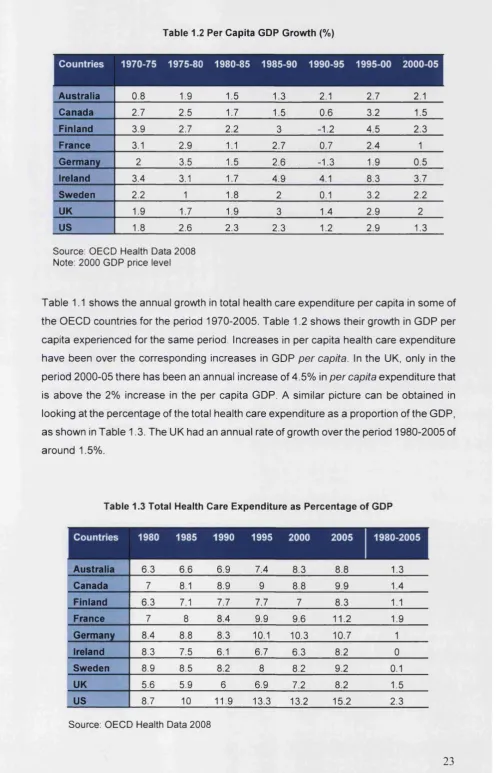
Table 1.1 Per Capita Total Health Care Expenditure G row th (%)
Australia 6.3 1.1 2.6 2.3 3.5 5 3.3
Canada 2.9 2.7 4.7 3.3 0.9 2.7 3.8
Finland 6.2 3.1 4.6 4.7 -1.4 2.6 5.8
France 6.7 5 3.7 3.6 4.1 1.8 4
Germ any 9 3.6 2.4 1.4 2.7 2.3 1.2
Ireland 11.3 5.7 -0.2 0.5 6.2 7 9.3
Sweden 4.3 4.6 0.9 1.4 -0.6 3.9 4.5
UK 5.9 2.4 2.7 3.5 4.4 3.8 4.5
US 4.1 4.9 5.1 5.8 3.4 2.9 4.2
Source: OECD Health Data 2008
[image:26.595.30.519.38.811.2]Table 1.2 Per Capita GDP Growth (%)
A ustralia 0.8 1.9 1.5 1.3 2.1 2.7 2.1
Canada 2.7 2.5 1.7 1.5 0.6 3.2 1.5
Finland 3.9 2.7 2.2 3 -1.2 4.5 2.3
France 3.1 2.9 1.1 2.7 0.7 2.4 1
G erm any 2 3.5 1.5 2.6 -1.3 1.9 0.5
Ireland 3.4 3.1 1.7 4.9 4.1 8.3 3.7
Sweden 2.2 1 1.8 2 0.1 3.2 2.2
UK 1.9 1.7 1.9 3 1.4 2.9 2
US 1.8 2.6 2.3 2.3 1.2 2.9 1.3
Source: OECD Health Data 2008 Note: 2000 GDP price level
Table 1.1 shows the annual growth in total health care expenditure per capita in some of
the O E C D countries for the period 1970-20 05. Table 1.2 shows their growth in G D P per
capita experienced for the sam e period. Increases in per capita health care expenditure
have been over the corresponding increases in G D P p e r capita. In the UK, only in the
period 2 0 0 0 -0 5 there has been an annual increase of 4 .5 % in p e r capita expenditure that
is above the 2% increase in the per capita G D P. A similar picture can be obtained in
looking at the percentage of the total health care expenditure as a proportion of the G D P,
as shown in Table 1.3. The UK had an annual rate of growth over the period 1980-2005 of
around 1.5%.
Table 1.3 Total Health Care Expenditure as Percentage of GDP
Australia 6.3 6.6 6.9 7.4 8.3 8.8 1.3
Canada 7 8.1 8.9 9 8.8 9.9 1.4
Finland 6.3 7.1 7.7 7.7 7 8.3 1.1
France 7 8 8.4 9.9 9.6 11.2 1.9
Germ any 8.4 8.8 8.3 10.1 10.3 10.7 1
Ireland 8.3 7.5 6.1 6.7 6.3 8.2 0
Sweden 8.9 8.5 8.2 8 8.2 9.2 0.1
UK 5.6 5.9 6 6.9 7.2 8.2 1.5
US 8.7 10 11.9 13.3 13.2 15.2 2.3
[image:27.595.25.522.36.810.2]Given the recognized importance of medical technology in health care expenditure growth, the question arising concerns the contribution of technology to this increase. Some empirical studies have quantified this relationship using one of the following two approaches. The first one is the residual approach1 and measures the technology impact on the average annual growth rate as the residual of the following expression
G = ' £ e l g l + R i=1
Where si is the expenditure elasticity of factor i assumed to be a determinant of health
care expenditure growth, g t is the average annual growth rate of factor i and R is the residual growth rate attributable to technology. Among some of the elements that have been considered to affect the annual growth rate are the population ageing, income or changes in insurance demand. An alternative method is the so called direct approach and quantifies the relationship between expenditure and the factors considered to determine expenditure using proxies to quantify the technological change factor2. Recently, a report by Productivity Commission in the Australian Government (2005) attempted to link the contribution of technology to expenditure not only at the aggregated level but also the individual contribution of particular technologies on expenditure. This report included a review of the existing empirical evidence. Some of the studies using the residual approach report that technology accounts for more than 50% of the health care expenditure. Studies reviewed included Newhouse (1992), Oxley and MacFarlan (1994) and Cutler (1995)3. In using the direct approach similar conclusions are drawn. Okunade and Murthy (2002) use R&D as a proxy for technological change finding a long-term relationship between expenditure and innovation.
In the UK the Wanless (2001) report estimated that in the future the contribution of medical technology into health care expenditure growth would be between two and three percentage points. This seems to contrast with the evidence of the impact of technology on expenditure growth observed in other countries. However, international comparisons
1 Fuchs (1972) already pointed out the role of the “technology imperative" in the increased demand for health care services using the residual approach to explain demand growth.
2 A description of the two methods can be found in the Productivity Research Report by the Australian Government (2005). The advantages of each method are discussed in the report. The report also offers a summary of the empirical evidence found in studies using these methods.
may not be appropriate as the UK appears not to have a leading position with respect to
technology uptake. Evidence from the Technological Change in Health C are (T E C H )
research network shows differences across countries in how fast they are in adoption and
diffusion speed (T E C H , 2001). The UK is am ong a group of countries (together with
Finland and Norway) that not only has delays in adoption of new technologies but also
shows a slow uptake.
The components of medical expenditure are two: price and quantity. The increase in
expenditure is the result of either increases in the price of health care services or an
increase in the quantity of services provided or the combination of both. However, prices
have been growing well below the increase in expenditure. The case of pharmaceuticals
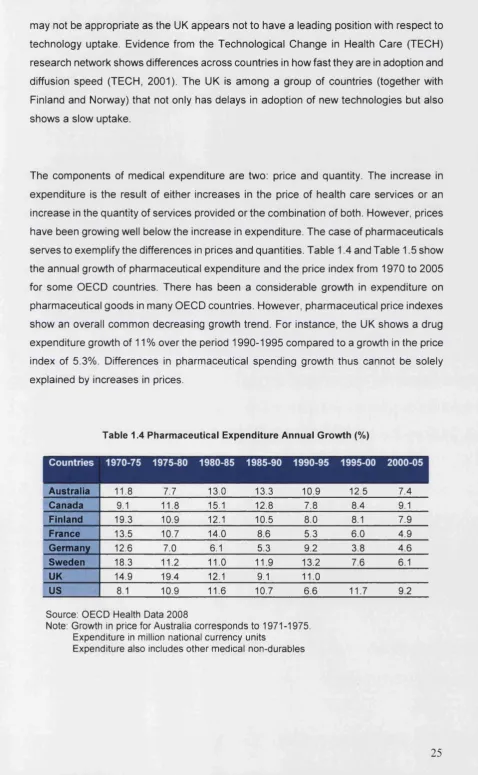
serves to exemplify the differences in prices and quantities. Table 1.4 and Table 1.5 show
the annual growth of pharmaceutical expenditure and the price index from 1970 to 200 5
for some O E C D countries. There has been a considerable growth in expenditure on
pharmaceutical goods in many O E C D countries. However, pharmaceutical price indexes
show an overall common decreasing growth trend. For instance, the UK shows a drug
expenditure growth of 11% over the period 1 9 9 0 -1 9 9 5 compared to a growth in the price
index of 5.3% . Differences in pharmaceutical spending growth thus cannot be solely
explained by increases in prices.
T able 1.4 Pharm aceutical E xpenditure Annual G row th (%)
A ustralia 11.8 7.7 13.0 13.3 10.9 12.5 7.4
Canada 9.1 11.8 15.1 12.8 7.8 8.4 9.1
Finland 19.3 10.9 12.1 10.5 8.0 8.1 7.9
France 13.5 10.7 14.0 8.6 5.3 6.0 4.9
G erm any 12.6 7.0 6.1 5.3 9.2 3.8 4.6
Sweden 18.3 11.2 11.0 11.9 13.2 7.6 6.1
UK 14.9 19.4 12.1 9.1 11.0
US 8.1 10.9 11.6 10.7 6.6 11.7 9.2
Source: OECD Health Data 2008
Note: Growth in price for Australia corresponds to 1971-1975. Expenditure in million national currency units
[image:29.595.37.516.44.820.2]Table 1.5 Pharmaceutical Price Index Annual Growth
A ustralia 11.0 9.1 7.8 6.5 2.2 0.6 1.1
C anada 2.2 6.9 11.2 7.5 2.2 1.4 1.1
Finland 11.3 6.7 9.1 7.7 6.7 1.7 2.7
France 2.6 6.1 5.0 0.3 0.6 0.04 -1.0
G erm any 4.4 3.2 6.7 3.1 4.9 2.5
Ireland 6.1 15.6 12.5 3.7 2.9 2.5 3.5
Sw eden 8.9 13.0 3.4 2.2 2.7 1.2
UK 9.2 15.1 8.4 8.2 5.3 2.2
US 2.8 7.2 8.8 7.3 4.6 3.1 3.0
Source: OECD Health Data 2008
Note: Growth in price for Australia corresponds to 1971-1975. Price index (2000=100)
Changes in quantity may arise through two different mechanisms. Because advances in
medical care open new treatment possibilities for existing and new patients there are two
possible mechanisms at work, the substitution and expansion effect (Cutler and Huckman,
20 0 3 ). On one hand, there might be a substitution effect in that patients using the
incumbent technology will switch to the new treatment, particularly if lower unit costs
characterise this new technology. Taking as an exam ple the pharmaceutical market,
drugs tend to be introduced at higher prices (unit costs), as a profit incentive to maintain
R & D within the sector. Therefore, it is likely that new pharmaceuticals will increase
expenditure in the short-term reflecting this higher unit cost. Note that such substitution is
not based on the classical reduction of resource inputs used in the production function but
in the substitution of one type of input by a new and innovative input in the production
process. However, in the long-run this may turn into cost savings derived from improved
health outcomes due to the high effectiveness of the innovation in reducing disease
morbidity and mortality. On the other hand, there could be an expansion effect whereby
the new technology is used by a new group of patients. This is driven by the opening of
treatm ent possibility to patients that w ere not previously eligible. This effect brings an
overall increase in total costs.
T h e opposite trends between prices and expenditure observed in Tables 1.4 and 1.5
could thus be capturing increases in quantities, mainly through the combination of the
expansion and substitution effect, as the channel through which new technologies affect
expenditure in the first instance. Note that this does not rule out the impact of other factors
[image:30.595.26.520.36.698.2]or aging of the population. It simply recalls the minor effect on the increased quantity of non-technological factors. The combination of the substitution and expansion effects obviously pulls the demand for the new technology giving rise to an overall increase in absolute terms of the quantity of services demanded. Nevertheless, the final balance will be determined by the magnitude of each of these effects.
Although the extent of price changes cannot be responsible for the increase in expenditure this does not preclude this variable to contribute to the raising growth rates. In combination with the quantity impact, input price will also contribute to the expenditure increase. Generally new technologies have a higher cost and the overall contribution of technology quantity as a driver of medical spending growth will also be through the higher technology price, with the magnitude of this effect on expenditure depending on the price elasticity. Cutler and McClellan (1998) and Cutler et al. (1998) (cited by McClellan and Kessler (2002a)) find that the vast majority of the growth in expenditure in the treatment for heart attack is derived from the use of new technologies or increasing quantity of existing technologies. In fact, they show that prices are fairly stable for some of the treatments.
Whereas the examination of the impact of prices and quantities on expenditure has been at the centre of the attention, the welfare implications to patients have not generally been considered. Assessing only diffusion as it relates to the dissemination of technology does not give the entire picture of the process and leaves an important component of the diffusion analysis unexplored: the actual impact of technological change on quality of care. Cutler and McClellan (2001) assess the treatment and expansion effect of technology for heart attack. They show that spending increases are mainly explained by increases in the number of patients receiving treatment rather than by price changes. However, they confirm that “clearly technological change in heart attack care is worth the cost. [...] Technology increases spending, but the health benefits more than justify the added costs” (Cutler and McClellan, 2001, pp. 18). New drugs have also been shown to bring health improvements in other disease areas (Lichtenberg, 2001).
production-cost relationship. McGuire and Serra-Sastre (forthcoming) analyse the effect of a new technology on the composition of the input bundle quantities and the potential changes in prices. Consider the case of the simple model in production theory with the output being the result of the combination of two input factors y - f ( x x, x 2) and the
corresponding cost function is c = wxxx + w2x2 , where wx and w2 are the prices of inputs xx and x2, respectively. If technology is understood as a new input in the production of health care services, the relationship between input and output is not expected to suffer any fundamental change and the production function to remain fairly similar to the pre technology introduction stage. This type of technical change is called disembodied technical change and will be discussed in more detail in Section 1.4.
This relationship is depicted in Figure 1. Following the example in McGuire and Serra-Sastre (forthcoming), assume that the production of health care is the result of the combination of two input factors, medical management (MM) as represented in the y-axis and surgery (S) as depicted in the x-axis. It is further assumed that there is a new surgery that requires less recovery time in such a way that the post-surgical medical management is reduced. The new surgery will have cost implications through a reduction in costs due to shorter length of stay. Before the introduction of new surgery, the tangency point between the isocost and isoquant give the equilibrium point xx. With the new technology there is a change in the relative price of new surgery that changes the slope of the isocost curve and shifts the isocost to a new equilibrium point in tx. This movement represents the substitution effect.
production function. If the marginal cost decreases (increases) this induces higher (lower)
output. The example depicted in Figure 1 shows the case of a fall in the marginal cost.
The decrease in marginal cost induces the isocost to shift outwards and the new
equilibrium moves from x 2 to x 2.
MM
Figure 1.1 C hanges in Isocost and Isoquant Curves Introduced by New Technology
Despite the price and quantity effect involved in the figure discussed above there is a
dynamic effect on the growth of uptake of the new technology. The present representation
of technological change does not capture this growth over time. Given the recognition of
technology being the major motor of the health expenditure this thesis is not aimed at the
quantification of the association between spending and technological change but to the
examination of the drivers that induce higher quantities of technology utilisation.
1.2 Aspects of Technology Diffusion
1.2.1 Definition of diffusion and technology classification
Diffusion of new technologies has been extensively studied in neoclassic economics. It is
defined as the spread of the use of the technology across the relevant market in which
prospective users (firms) operate. As pointed by Stoneman (2002, p.9) “diffusion concerns
[image:33.595.34.520.35.716.2]Uncertainty is inherent. Change is the main topic. Imperfect markets abound. All such characteristics mean that the analysis of diffusion stands apart from much of the economic textbooks where perfect competition, full information, static models tend to hold sway”. By definition diffusion is hence inherently dynamic not only in terms of the time path but also in terms of likely modifications to the technology and changes in the market/industry. In order to understand the nature of diffusion in itself it is important to define first the concept of diffusion.
Following the definition given by Stoneman (1983) diffusion is the process by which the new technology is converging towards a threshold. Let x* be the post-diffusion technology level and xt represents the technology usage in period t, thus diffusion is the
process and elements that drive this process whereby xt tends to x * . If xt = x * for any period t the diffusion is instantaneous. Diffusion can be approached as the accumulation of goods or as the population that owns the technology. If diffusion refers to goods, y * is the convergence stock of technology and diffusion considers the process by which the stock of technology products y t moves towards the convergence level. If diffusion is seen as the rate at which individuals purchase the new technology, n * is the maximum number of individuals in the pool of potential adopters and nt is the number of individuals owning
the technology at period t, the diffusion is the process by which nt converges to n * .
This definition of diffusion serves as the basis to differentiate between the diffusion at the market level and diffusion at the individual level. In other words, it differentiates between diffusion as the number of potential adopters that purchase the technology and diffusion as the degree to which the new technology is being used over time by each individual. The first case can be considered as the number of firms adopting the technology in a given market, that is, it represents the first contact of the user with the technology. This defines the inter-firm diffusion. The second case refers to the intra-firm diffusion and it measures the intensity of technology use. Using the terminology above the inter-firm level captures the proportion of firms or individuals that have adopted the technology over the total pool of adopters, nt I n* . Intra-firm diffusion refers to the rates at which different firms
produce goods using the new technology, y t / y * A.
Apart from the definition of diffusion according to the level of analysis adopted it is also important to define the types of technologies. Technologies are differentiated according to the nature of the innovation and whether the production function is modified. An innovation is classified as process innovation if the technology introduces a change in the production process. Stoneman (2002) refers to process innovation as any change in equipment, factory structure, inputs used or management methods. It generally involves lower costs. A product innovation is a technology that is a new product in itself. When discussing about health technologies in Section 1.4 they will be also classified as product and process innovations. As it will be noted in Chapter 2, whereas most of the work on diffusion relates to inter-firm diffusion of process innovations, there is a limited amount of evidence on intra-firm diffusion.
Empirical observations of diffusion patterns in several industries have shown that diffusion is generally S-shaped. There is an initial time span where diffusion happens at a slow rate and only a reduced number of early adopters use the technology. The next stage is characterised by quick general adoption with the number of adopters increasing gradually and a final levelling phase. The seminal work by Griliches (1957) on the diffusion of hybrid corn in the US and the research by Mansfield (1961, 1968) on the diffusion of several industrial technologies first noted the S-shaped diffusion pattern. Griliches (1957) and Mansfield (1961) highlight the significant impact that economic incentives and innovation profitability have in technology adoption; however, over time other factors, such as the role of marketing, barriers and regulatory constraints have been incorporated.
1.2.2 The health care market and technology diffusion
New health technologies present a diffusion path initially presumed to follow the same S-shaped pattern. This will be illustrated in the following empirical chapters with the increasing path followed by the demand of the technologies examined in Chapters 3, 4 and 5. Despite the similarities between other industries and the health care market, there are differences between the health sector and other industries that reflect the particular characteristics of demand and supply side in this sector: in the first place, the decision unit; secondly, how the demand curve is specified; and finally the characteristics of the health care market in general.
represents an example of an agent whose decision choice may not be driven by purely economic motives (Scott, 2000)5. The time elapsed between the introduction and common use of the technology shows that even in cases of new products presenting obvious competitive advantages the adoption and diffusion are not instantaneous. After the technology has been introduced there might be a lack of robust evidence (and uncertainty) on the product that generates a slow process at early stages. As soon as the diffusion takes off there will be mechanisms that bring more evidence and decision makers may be able to acquire better information regarding the medical treatment. The profit maximising assumption embedded in economic diffusion models thus may not apply to the physician case and would not be a good predictor of the diffusion mechanisms. Furthermore, the presence of third-party reimbursement systems defines a different role of prices in this market because of the lack of price awareness and because the particularities of the health care bring to some extent factors as altruism or ethics involved in the production function.
Demand in the health care sector does not lie within the standard definition of demand for good and services whereby the demand curve represents a relationship between prices and quantities. Demand for medical services reflects the decision of physicians not the demand by the final consumer, the patient. Because of the asymmetry of information in the doctor-patient relationship the patient seeks physician’s advice on medical treatment. The information regarding treatment refers to issues of safety and tolerability as well as treatment issues relating to efficacy. Issues of service provision and quality are therefore affected by this asymmetry of information. The perfect information assumption in microeconomic theory does not hold in this context. Hence the medical services demanded by the patient are a reflection of the physician’s decision and will not reflect the standard quantity-price relationship depicted by the demand curve.
When a new technology is introduced there is an additional aspect of imperfect information originated from the uncertainty attached to the new medical innovation. Physicians will not have perfect information on the technology characteristics as a consequence of the uncertainty attached to the innovation. However, imperfect information is mainly restricted to early stages of innovation diffusion and as time is passing by imperfect information is diluted. The information asymmetry between physician and patient still holds. Demand from the patient side is constrained to technology in as much as the physician’s uptake of the innovation. Moreover, in general patients do not
bear the full cost of the service provided; instead there are third-party payers in charge of the reimbursement for the services. This may induce some degree of moral hazard not only from the patient-side but also from the supplier-side. As argued in Weisbrod (1991) this could be a mechanism through which technological change is generating expenditure growth. The implications for health insurance demand derived from the insurance coverage are not clear. Weisbrod (1991) argues that technological change may not modify demand for insurance as the changes derived from technological developments are illness specific and the overall demand for insurance will not be altered.
On the supply-side, there are clear differences across types of technologies in relation to their development, introduction and regulation. These differences will be discussed in more detail in section 1.4 but as an anticipation take the example of the pharmaceutical market. New medicines emerge from the R&D efforts of manufacturers and once in the market they are protected by patents that ensure a minimum return on the R&D investment. The market for pharmaceuticals is based on a strong patent system and characterised by restrictive regulatory policies regarding pre-marketing approval and reimbursement systems (Grabowsky, 1991). The vast majority of countries have regulatory bodies in charge of pharmaceutical pricing policies either directly through price controls or indirectly through profit controls. Moreover, new ethical drugs are required to go through a process to prove safety and efficacy before their approval and in many countries there is an increasing tendency to create independent bodies that set cost-effectiveness recommendations (i.e. NICE in the UK). It is only after this process is completed and the drug is placed in the market and made available to physicians that the diffusion process takes off and brings welfare gains derived from the superiority of the new technology.
angioplasty (PTCA) for heart attack treatment had some risks associated with outcome during early stages of diffusion. However, learning and complementary technology developments (such as stenting) allowed this procedure to improve its performance (Cutler and Huckman, 2003).
In the presence of uncertainty, information is a key player in the diffusion. The process of information acquisition involves time and simultaneously acts as a barrier for a fast diffusion. Since uncertainty involves risk, differences in attitudes and preferences of the individual doctors will define the demand for information through different mechanisms. Self-experience is one of these mechanisms. For instance, drugs and surgical innovations lie within the category of experience goods: the “quality” of the good or the service is not known ex-ante. Experience goods were first defined by Nelson (1970) as those goods for which only repeated demand for the product provides information to consumers regarding the attributes. Thus greater experience leads to information acquisition and lowers the degree of uncertainty. Additional information channels coexist with experience and all of them have in common the fact that information gathering is not free; there is a cost in the time and effort spent in collecting evidence on the drug’s functioning. Nonetheless, on the technology provider side there will be different costs and incentives to supply the correct information6. In a context of rapid technological change, the process described for a single technology interacts thus with the simultaneous introduction of other technologies within the health care market creating a relationship between uncertainty and information not confined to a particular technology but involving also other innovations.
1.3 Intra-level Diffusion
After giving a brief account of the concept of diffusion as defined in economics in Section 1.2 this section describes the diffusion framework that motivates the present research. From the differences derived in the definition of inter- and intra-firm diffusion, there are two different levels of analysis attached to each that bring separate research questions7. The inter-firm diffusion analysis looks at the number of potential users that adopt the technology. This is equivalent to measuring diffusion as first contact with the innovation by the pool of potential adopters. Nevertheless, adoption itself does not necessarily explain how usage evolves after adopters have purchased the new technology. In analysing inter-firm diffusion the speed of diffusion might not provide an accurate picture of the process
6 For instance, there might be economic incentives to the producer of new pharmaceuticals to promote the product and disseminate the exact information (Leffler, 1981). This will be further discussed in Chapter 3 and 4.
itself. Embedded in the definition of inter-firm is the notion of acceptance across the market. The economic literature is largely devoted to the analysis of inter-firm diffusion. Intra-firm diffusion however looks at the individual acceptance of the technology as the proportion of output produced with the new technology. The definition of intra-firm diffusion characterises the diffusion analysis as being a process undertaken by the firm and its individual acceptance.
The determinants of the market acceptance are likely to be different to the elements that determine individual process8. In both concepts the definition of diffusion is intrinsically linked to a time dimension; however, there are differences as to the point in the timeline where diffusion is located. The inter-firm concept is more related to the time elapsed between technology availability and tim