S T U D Y P R O T O C O L
Open Access
Veterans walk to beat back pain: study rationale,
design and protocol of a randomized trial of a
pedometer-based Internet mediated intervention
for patients with chronic low back pain
Sarah L Krein
1,2*, Tabitha Metreger
1, Reema Kadri
1, Maria Hughes
1, Eve A Kerr
1,2, John D Piette
1,2,
Hyungjin Myra Kim
1,3, Caroline R Richardson
1,4Abstract
Background:Chronic back pain is a significant problem worldwide and may be especially prevalent among patients receiving care in the U.S. Department of Veterans Affairs healthcare system. Back pain affects adults at all ages and is associated with disability, lost workplace productivity, functional limitations and social isolation. Exercise is one of the most effective strategies for managing chronic back pain. Yet, there are few clinical programs that use low cost approaches to help patients with chronic back pain initiate and maintain an exercise program. Methods/Design:We describe the design and rationale of a randomized controlled trial to assess the efficacy of a pedometer-based Internet mediated intervention for patients with chronic back pain. The intervention uses an enhanced pedometer, website and e-community to assist these patients with initiating and maintaining a regular walking program with the primary aim of reducing pain-related disability and functional interference. The study specific aims are: 1) To determine whether a pedometer-based Internet-mediated intervention reduces pain-related functional interference among patients with chronic back pain in the short term and over a 12-month timeframe. 2) To assess the effect of the intervention on walking (measured by step counts), quality of life, pain intensity, pain related fear and self-efficacy for exercise. 3) To identify factors associated with a sustained increase in walking over a 12-month timeframe among patients randomized to the intervention.
Discussion:Exercise is an integral part of managing chronic back pain but to be effective requires that patients actively participate in the management process. This intervention is designed to increase activity levels, improve functional status and make exercise programs more accessible for a broad range of patients with chronic back pain.
Trial Registration Number:NCT00694018
Background
Chronic pain, especially low back pain, is a significant problem worldwide, with one fourth of adults in the U.S. reporting low back pain in the past three months and about one-half reporting back pain during a given year [1-3]. Low back pain is generally considered chronic when it persists for longer than three months
[4], and the longer the pain persists the greater the risk for long-term disability [5]. Chronic back pain affects both younger and older adults with potentially signifi-cant consequences regardless of age. Among younger adults, chronic back pain is associated with disability, unemployment and lost productivity, whereas for older adults chronic back pain is associated with functional limitations, economic difficulty and social isolation [5-7]. Chronic pain-related conditions are among the major drivers of healthcare costs in the U.S. and chronic low * Correspondence: [email protected]
1
VA Ann Arbor Health Services Research and Development Center of Excellence, VA Ann Arbor Healthcare System, Ann Arbor, MI, USA Full list of author information is available at the end of the article
back pain is the single most costly condition in terms of work loss [8].
Pain affects many patients using the U.S. Department of Veterans Affairs (VA) health care system [9-12], and may be even more prevalent in VA than in the general population. Fifty to seventy percent of VA general medi-cine patients suffer from chronic pain, defined as pain persisting for six or more months [9,11], with back pain the most commonly reported type of pain [13]. Back pain is also one of the most prominent complaints among Veterans returning from the conflicts in Iraq and Afghanistan [14] and the number of VA users with a low back pain diagnosis appears to be rising [15].
Management of Chronic Back Pain
The high prevalence, high cost and negative conse-quences of chronic back pain underscore the significant need for effective and efficient approaches for managing this condition. Strategies for managing chronic back pain range from traditional medical management approaches (e.g., pharmacotherapy) and self-manage-ment programs to interventional pain manageself-manage-ment tech-niques and complementary and alternative medicine [16-22]. There is little, if any, sound evidence to support the use of surgery or other invasive interventions for most patients with chronic low back pain [4,23,24] and relatively strong evidence to support the effectiveness of exercise therapy, intensive multidisciplinary pain
pro-grams, and certain psychological interventions
[16,19,22,25].
Exercise and Chronic Back Pain
Staying active and exercise therapy can prevent recur-rence, reduce pain, improve functional status, and decrease disability for patients with chronic back pain [16,19,21,26-28]. A meta-analysis by Hayden and collea-gues [17] suggested that the most effective strategy for improving back pain consisted of an individually designed exercise program that included home-based supervision and a relatively intensive exercise regimen. Yet, the design, delivery and evaluation of an exercise
program that incorporates these “ideal” components
have yet to be accomplished.
Research also shows that a variety of exercise pro-grams including yoga as well as aerobic and strengthen-ing exercises result in both clinically and statistically significant improvements in outcomes for patients with chronic back pain [16,21,26-28]. However, most of the interventions studied have been short term, with out-comes measured within the first six months. While such studies may be appropriate for testing the efficacy of exercise among patients with chronic back pain under ideal circumstances, the intensity and required resources for these programs are likely to limit their sustainability
and potential reach in real-world practices [17,21,28,29]. Thus, we still lack efficient and effective strategies for promoting exercise therapy among patients with chronic back pain or ways to use exercise as part of a treatment program [13,30-32].
A recent review article found only low to moderate evidence supporting walking as an effective intervention for low back pain [33]. Yet, the article also highlights the paucity of research in this area, with only four stu-dies identified for the review and three of the four judged as being of poor methodological quality. The authors therefore conclude that further research on the role of walking as a primary intervention for managing chronic low back pain is needed.
Conceptual Framework
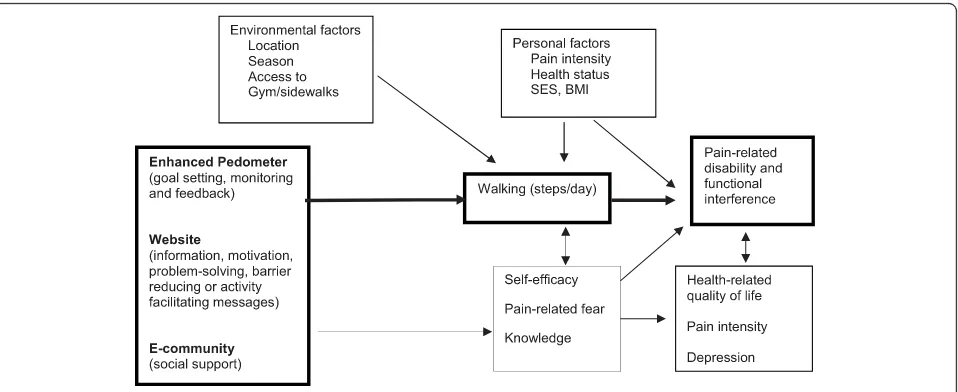
Given the challenges just described, we have developed an intervention that uses generally available tools and a relatively low cost approach to help patients with chronic back pain initiate and maintain an exercise pro-gram. The conceptual framework shown in Figure 1 summarizes the components of the intervention and how it is expected to influence pain-related disability or functional interference as well as other health outcomes. The intervention has three general components, each of which is described below along with the supporting rationale. First, the intervention uses an enhanced ped-ometer to promote walking directly through feedback, goal setting and monitoring. Walking is considered an ideal exercise since it is something that most anyone can do regardless of their health condition and does not involve the use of specialized equipment. Second, this intervention promotes walking through the use of a website that includestargeted content to enhance exer-cise self-efficacy. The website also contains materials to reinforce other important activities for managing chronic back pain, such as the use of strengthening and stretching exercises. The third component of the inter-vention is an e-community to provide social support, both peer and professional, that encourages patients to initiate and adhere to a walking program. We believe that more walking will contribute to improvements in function among patients with chronic back pain through multiple mechanisms, including improvements in mood, weight loss and by combating pain-related fear and self-protective behaviors, which can lead to reduced muscle tone, increased pain perceptions and functional disability.
Key Intervention Components Pedometers and walking programs
conditions [34-38]. Additionally, studies suggest that a majority of middle-aged and older adults prefer physical activity outside a formal setting [39], and that participa-tion rates and maintenance of physical activity are gen-erally better in supervised home-based programs [17,40]. The use of pedometers has become increasingly popular both as a way for individuals to monitor step counts and as an objective tool used by researchers to assess physical activity [41]. Pedometer-based walking pro-grams can increase walking, at least in the short term, across a range of patient populations, including those at high risk for cardiovascular disease [36] and patients with mental health conditions [42,43]. Few studies, how-ever, have examined the sustainability or effectiveness of a pedometer-based intervention on a longer-term basis
or assessed the use of “enhanced” pedometers [43].
Whereas a simple pedometer provides instant feedback in the form of daily step counts, an enhanced pedometer provides detailed tracking of walking duration, auto-mated step count logging and can be linked to a compu-ter-based system to assist with goal setting and feedback on goal attainment. Goal setting and self-monitoring are key components in the process of self-regulation [44,45]. Facilitating achievable performance accomplishments through goal setting and feedback, reinforcing successful self-care activities and providing positive feedback when someone makes an effort to change their behavior are also part of skill development and enhancing self-effi-cacy, which are both key constructs of Social Cognitive Theory [44,46].
Internet-mediated interventions
Internet based programs are an increasingly popular option for delivering behavior change interventions [18,47-49]. The Internet provides a flexible, low cost
communication vehicle that can play a key role in physi-cal activity interventions by facilitating the exchange of information and by delivering encouraging or motiva-tional messages to a large number of participants. A web-based platform can be used to deliver either tailored or static messages that target important social-cognitive processes such as fear avoidance or self-efficacy. Self-efficacy, which is the level of confidence in one’s own ability to perform a task or specific behavior [46], has been linked to the initiation and maintenance of physical activity [50-52] and a number of desired out-comes including better health-related quality of life or better physical functioning even when physical symp-toms may not significantly improve [53-55].
E-communities and social support
[image:3.595.60.539.88.284.2]One of the challenges of Internet-based behavior change programs is keeping participants interested and engaged for a sufficient duration, which can be important to ensure a therapeutic benefit [56]. An e-community is one potentially promising strategy for enhancing partici-pation rates and improving the effectiveness of the inter-vention [18,56]. An e-community is a way for participants to both send and receive messages and can be developed using e-mail, threaded forums (asynchro-nous messaging) or chat rooms (synchro(asynchro-nous, real-time messaging). The primary purpose of the e-community is to provide peer and/or professional support, which is strongly associated with physical activity and other health behaviors [51,52]. Receiving social support can have a positive effect on health and behavioral outcomes [57], self-efficacy [53], and physical activity [58]. Provid-ing support to others also can lead to improved health behaviors on the part of the helper [59] as well as improved health outcomes and function [60]. Although
the most commonly studied method of enhancing social support is through group programs, many patients face difficulties attending regular face-to-face meetings or group-based activities [45]. In a healthcare system in which resources are limited and patients face geographic and other barriers to accessing services, traditional group programs may also place a significant burden on patients and the health system. In contrast, e-commu-nities, can translate the underlying principles and bene-fits of social support into systems that are effective for large, diverse patient populations.
Methods/Design
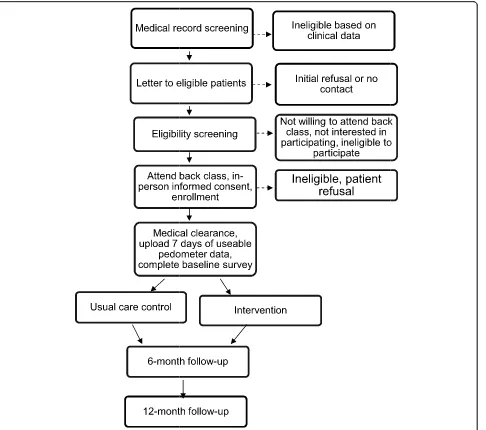
This randomized controlled trial includes outcomes measured at baseline, 6 and 12 months (Figure 2). The
goal is to investigate the efficacy of the intervention in assisting patients with chronic back pain with initiating and maintaining a regular walking program. The pri-mary outcome is pain-related disability and functional interference. The study specific aims are:
Aim 1To determine whether a pedometer-based Internet-mediated intervention reduces pain-related functional interference among patients with chronic back pain in the short term and over a 12-month timeframe.
[image:4.595.61.547.284.714.2]Aim 2 To assess the effect of the intervention on walking (measured by step counts), quality of life, pain intensity, pain related fear, and self-efficacy for exercise.
Aim 3To identify factors associated with a sustained increase in walking over a 12-month timeframe among patients randomized to the intervention.
Patients with chronic back pain receiving care at a VA health care system are being recruited to participate in the study and are randomized to either enhanced usual care (control) or the pedometer-based Internet-mediated intervention. All participants are required to attend a general educational program (“back class”) for indivi-duals with chronic back pain. This ensures that all parti-cipants have a basic understanding of back mechanics and general strategies for managing back pain. Ethical approval for this study has been granted by the VA Ann Arbor Healthcare System human studies sub-committee.
Eligibility Criteria and Identifying Eligible Patients
Potential participants are identified both through provider referral to back class and through data obtained from the VA electronic medical record system. Specifically, these data are used to identify patients who had two or more outpatient encounters in the prior 12 months with a diag-nosis of back pain with no neurologic findings (ICD-9-CM codes 724.2, 724.5, 846.0-846.9). To be eligible for the study participants must: 1) have back pain that has per-sisted for more than 3 months; 2) have a sedentary lifestyle (less than 150 minutes of physical activity per week); 3) have access to a computer on at least a weekly basis with an available USB port and Internet access; 4) be able to provide written informed consent; 5) be able to communi-cate in English; 6) be non-institutionalized; 7) be able to walk at least one block; and 8) report they are not preg-nant. Prior to participation, eligible patients must attend back class and obtain medical clearance from a physician, which may be their primary care provider, cardiologist, physical medicine and rehabilitation or pain management physician.
Back Class
During back class, a physical therapist provides general education about back problems and strategies for mana-ging back pain, with an emphasis on the importance of exercise (strengthening, stretching and aerobic) [materi-als available upon request]. During the class, patients practice strengthening and stretching exercises under the guidance of a physical therapist who adapts the exercises based on a patient’s medical conditions. Up to 20 patients are scheduled per class, and each class takes approximately two hours.
Patient Enrollment and Randomization
During the enrollment process, written informed con-sent is obtained and patients complete a six-minute walk test. All participants then receive an enhanced
pedometer and USB cable to allow them to upload their step counts to a secure study website. Participants receive general guidance about how to use the ped-ometer and specific instructions for uploading data. The pedometer used for this study is the Omron HJ-720ITC, which contains a dual axial accelerometer, an internal clock, enough memory to store 42 days of detailed time stamped step count data, and an embedded USB port. The Omron pedometer is accurate within 1 to 4% com-pared to directly observed step-counts [61]. Pedometers that use accelerometers to detect motion are more accu-rate than spring and magnet pedometers when used by obese participants [62] and can be worn in different places on the body (as a necklace, on the hip, in a shirt pocket, in a pants pocket). For each hour of the day, the pedometer records a time and date, total steps, bout steps (10 minutes or more of continuous movement), and an activity flag that indicates if the pedometer detected any movement at all during the hour. During enrollment, study participants are also provided with instructions (including a log-in name and password) for accessing the study website to complete surveys or report adverse events.
Following enrollment, participants are instructed to wear their pedometer for seven days with the read out on the pedometer covered. At the end of the seven days they are asked to upload their pedometer data for the first time so we can establish a baseline measurement. After completing a baseline survey, uploading seven days of useable pedometer data and receiving medical clearance the participant is flagged as active in the system, and the computer randomly assigns them to the intervention or control group. The participant then receives an e-mail message with their group assignment, instructions to upload on either a weekly (intervention) or monthly (control) basis, and is instructed to remove the sticker covering the pedometer face.
Enhanced Usual Care
Participants randomized to the control group, receive monthly e-mails asking them to upload their pedometer data. Those data are stored but not used for any further feedback to patients. Although the pedometer is an enhancement to what patients receive in standard prac-tice, past studies suggest that pedometers in isolation are unlikely to result in a sustained increase in walking among generally sedentary individuals [43]. While con-trol group participants are provided with log-on infor-mation for the study website, their access is limited to completing study surveys and reporting adverse events.
Pedometer-Based, Internet Mediated Intervention
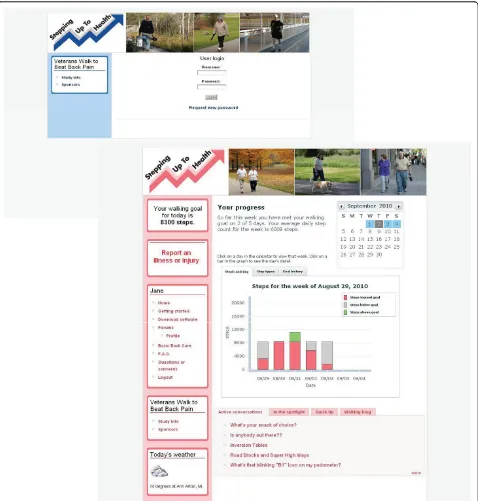
[63]. The intervention consists of three primary compo-nents (Figure 1). Active intervention participants receive weekly e-mail reminders to upload their pedometers, weekly individualized walking goals and full access to the study website. Specifically, each person in the inter-vention receives computer generated personal walking goals. The goals are sent to participants by e-mail on a weekly basis and are automatically adjusted to assist the individual with increasing his/her step count at a rea-sonable pace or help with countering negative thoughts and behaviors when a particular goal is not achieved. Besides receiving a new goal each week, participants receive graphical and written feedback about their pro-gress toward their goals when they log into the study website (Figure 3). The graph shows a breakdown of steps by day, week and month, while the text informs the participant about their average step count for the week and how many days his or her goal has been met up until that day. For example, it might read,“You have met your walking goal on 3 of 7 days. Your average daily step count for the week is 3568.”While the general intent is for the total step goals to increase over time and thus promote an increase in walking, because the
goals are established based on the participant’s own
activity level the goals can also be lower from one week to the next. Resetting a goal at a lower level can be ben-eficial when trying to counter the potential negative reaction and sense of failure for participants who may not be achieving the higher goals or for participants who might need to be reminded to start low and go slow after a relapse or health event that may have led to a decreased step count in the prior period. Participants who are not uploading data weekly receive step goals based on the last time they uploaded and will have the same goal until new activity takes place.
The participant website is tailored according to gender and includes information and messages (e.g., motivation, time constraints) to promote walking and a healthy life-style. New motivational or informational messages addressing potential barriers to physical activity (e.g., weather) or issues related to diet or other health condi-tions (e.g., cardiovascular disease, diabetes) appear every other day. Brief updates about topics in the news or new research findings related to back pain or physical activity are generally posted on a weekly basis so the website content does not get stagnant. The website also includes the materials and hand-outs that participants received at back class as well as a video demonstrating the proper technique for the strengthening and stretch-ing exercises taught durstretch-ing the class.
The e-community component of the intervention con-sists of a thread-based forum that allows participants to conduct asynchronous text-based discussions. Each par-ticipant selects a pseudonym in order to establish an
on-line identity while maintaining privacy. Following work by Lorig et al. [18], the e-community is used to provide both peer and professional social support. The e-community allows intervention participants to post messages, which can include asking questions, making suggestions or sharing success stories. The messages are monitored by research staff, including a physical thera-pist who does not provide individual medical advice but can respond to questions or back pain related issues with general information based on the VA low back pain guidelines. The forum also serves as a venue for generating competitions among the intervention partici-pants to encourage walking and meeting walking goals. An advantage of an electronic forum is that it can pre-vent e-mail overload and all postings can be monitored to prevent inappropriate messages or communication. Experience to date shows that inappropriate messages are rare.
Monitoring and Reporting of Adverse Events
The study includes several mechanisms for monitoring, troubleshooting and identifying the minority of patients for whom a relatively low intensity walking program is considered unsafe. Medical clearance is required and patients for whom walking is not a recommended activ-ity, due to for example balance problems or cognitive impairment, are not eligible to participate. However, since we are trying to use relatively few exclusion cri-teria it is possible that some patients will be eligible but later develop signs or symptoms that suggest walking may no longer be a safe activity. Both intervention and control participants are encouraged to report adverse events including any health problems they experience whether or not they are thought to be study related. Participants can report adverse events by using a link on the website, by e-mail and over the phone. All email messages contain a link to the adverse events reporting
form and the study’s toll-free number for reporting
adverse events. After completing four weeks of the study and every eight weeks thereafter, participants are prompted to complete a survey on the website that asks about specific adverse events and symptoms. This infor-mation is closely monitored by project staff so that any patients who appear to be experiencing a potentially serious health-related problem can be contacted for further assessment and follow-up.
Description of Measures and Data Collection Procedures
such as improvements in mood and quality of life, are also of significant interest. Data collection includes a computer-based survey completed at baseline, 6 months and 12 months, a six-minute walk test conducted at baseline and 12 months, and the step counts collected when participants upload their pedometer data. We are also collecting quantitative information about patients’
use of the system via computerized records that the sys-tem maintains of all contacts. Health services use is assessed by patient report and by data obtained from the VA computerized medical record system.
[image:7.595.60.538.88.589.2]The primary outcome for this study is pain-related disability and functional interference. Following the recommendations made through the Initiative on
Methods, Measurement, and Pain Assessment in Clini-cal Trials (IMMPACT) [64], we are using both a disease-specific measure, the Roland and Morris Back Pain Disability Questionnaire (RDQ) index, and a gen-eric measure of pain-related functioning from the medi-cal outcomes study [65]. We hypothesize that the intervention will decrease back pain-related disability and pain-related functional interference. The RDQ index is a 24-item scale that has been widely used in back pain studies as a measure of self-perceived disabil-ity. The scale has good internal consistency, discrimina-tive validity and is sensidiscrimina-tive to change [66-69]. The medical outcomes study (MOS) pain measurement instrument assesses the effect of pain on mood and behaviors as well as the severity of pain over the past 4 weeks [65]. There is limited information about how the MOS instrument compares with other pain assessments but it is easily understood by patients and produces scales that have relatively good internal consistency [65]. Secondary outcomes include average daily steps, func-tional status, general health-related quality of life and pain intensity. Walking, which is a key aspect of the intervention, is measured as the number of average daily steps using the Omron HJ-720ITC pedometer. Rather than having to rely on self-reported step counts, the Omron allows us to upload the objectively recorded pedometer data directly to a database through the use of an embedded USB port. All data are time stamped by the pedometer. As an objective measure of function and to help validate the step count data obtained using the study pedometers we are conducting a six minute walk test at baseline and 12 months [70,71]. Participants are instructed to walk as far as they can in six minutes without running or jogging, with the primary measure-ment being the distance covered during those six min-utes. Patients’general physical and mental functioning is being measured using the SF-12® Health Survey [72] and pain intensity is evaluated using a numeric rating scale
with standardized anchors (0 = “no pain” and 10 =
“worst pain imaginable”), as used in the VHA’s Pain as the Fifth Vital Sign initiative [73]. Patients use this scale to rate their current level of pain and their average level of pain during the past four weeks.
Other secondary outcomes and potential moderators include pain-related fear or kinesiophobia, which is being measured using a revised version of the Tampa Scale of Kinesiophobia (TSK-R) [74]; self-efficacy for exercise, which is being measured using the Exercise Regularly Scale [75]; the presence of depressive symp-toms, which is assessed using a ten-item version of the Center for Epidemiologic Studies Depression Scale (CES-D 10) [76]; and, socio-demographic characteristics, such as age, gender and education level, other health conditions (e.g., diabetes), body mass index, perceived
social support, health services utilization and employ-ment status. Finally, an administrative interface to the website and database allows the study staff to track par-ticipant progress as well as ascertain whether a partici-pant has been uploading step count data. This database will be used to assess participants’use of the different intervention components. For example, we will know how often the participant uploads step counts, how often they log on to the website, and whether they parti-cipate in the e-community.
Analysis Plan
The patient is the primary unit of analysis for this study. Our sample size calculation was based on the RDQ index as the primary endpoint with a minimally detect-able effect size determined as a difference of 0.4 stan-dard deviations (SD) based on published data [68,77,78]. To detect a difference of 0.4 SD with 80% power using a two-sided 0.05 level two-group t-test, we will enroll 130 subjects in each group, to allow for an attrition rate of 30% at one year and a sample with outcome data of 100 patients in each group.
To determine whether the intervention reduces pain-related functional interference we will compare the dif-ference in the RDQ index at 12 months between the two groups using a linear mixed-effects model. Similarly, mixed-effects models will be used to assess the effect of the intervention on step counts, quality of life, pain intensity, pain related fear and self-efficacy for exercise. Identifying factors associated with a sustained increase in walking over a 12-month timeframe is an exploratory analysis within the intervention group.
In addition, to understand features of successful versus less successful intervention experiences, we will analyze data collected through our monitoring of participant system use and semi-structured interviews conducted with a purposeful sample of intervention participants (choosing a sample of eight who expressed high satisfac-tion with the intervensatisfac-tion and/or improved walking and a sample of eight with poor satisfaction and/or out-comes). Using standard qualitative methods [79], we will identify central themes from these interviews associated with the success of the intervention.
influence on our primary outcome. If they do have any impact, the effect would be to reduce the likelihood of finding treatment differences between the control and intervention groups. Thus, the design for this study will provide rigorous evidence about the effectiveness of the proposed intervention, which is novel and has yet to be evaluated and determined to be effective in isolation, as well as information about possible implementation in other settings.
Discussion
Current evidence suggests that physical activity is one of the most effective strategies for managing chronic back pain and improving function [16,19,25]. Nonetheless, levels of physical activity are low among all segments of the U.S. population and especially individuals with chronic pain [80,81]. Despite the positive results of exer-cise observed in clinical trials little is known about how to effectively and efficiently assist patients with chronic conditions, and specifically those with unique challenges such as chronic back pain, with becoming more physi-cally active and continuing to remain active over time. Given the positive benefits of exercise in managing chronic back pain and the significant need for effective strategies for increasing physical activity, the primary objective of this study is to assess the efficacy of a novel Internet and pedometer-based intervention that is designed to increase walking among individuals with chronic back pain, and thereby reduce pain-related dis-ability and functional interference. Our hypothesis is that this intervention will increase activity levels, improve adherence to walking as needed to maintain the positive effects over time, and make exercise pro-grams more accessible to a broad range of patients with chronic back pain.
Acknowledgements
This project is funded through a grant from the Department of Veterans Affairs, Health Services Research and Development Service (IIR 07-177). The views expressed in this article are those of the authors and do not necessarily reflect the position or policy of the Department of Veterans Affairs. Dr. Piette is a VA Career Scientist and Dr. Richardson was supported in part by a career development award from NHLBI (K23HL075098) and a Physician Faculty Scholars Program award from the Robert Wood Johnson Foundation (57408). The authors would like to thank Robert Kerns, Jack Rosenberg and Robert Werner for their assistance during the design of this study as well as the Physical Therapy Service at the VA Ann Arbor Medical Center for their help during the conduct of the project.
Author details
1VA Ann Arbor Health Services Research and Development Center of
Excellence, VA Ann Arbor Healthcare System, Ann Arbor, MI, USA. 2Department of Internal Medicine, University of Michigan Medical School,
Ann Arbor, MI, USA.3Center for Statistical Consultation and Research, University of Michigan, Ann Arbor, MI, USA.4Department of Family Medicine, University of Michigan Medical School, Ann Arbor, MI, USA.
Authors’contributions
SLK, JDP, EAK, HMK and CRR were involved in the conception and design of the study. TM, RK and MH are involved in study data collection. All authors were involved in drafting the manuscript and revising it for critically important content. All authors have read and approved the final manuscript.
Competing interests
The authors declare that they have no competing interests.
Received: 7 September 2010 Accepted: 13 September 2010 Published: 13 September 2010
References
1. Deyo RA, Mirza SK, Martin BI:Back pain prevalence and visit rates: estimates from U.S. national surveys, 2002.Spine2006,31(23):2724-2727. 2. Brooks PM:The burden of musculoskeletal disease–a global perspective.
Clinical Rheumatology2006,25(6):778-781.
3. Lawrence RC, Helmick CG, Arnett FC, Deyo RA, Felson DT, Giannini EH, Heyse SP, Hirsch R, Hochberg MC, Hunder GG,et al:Estimates of the prevalence of arthritis and selected musculoskeletal disorders in the United States.Arthritis and Rheumatism1998,41(5):778-799.
4. Koes BW, van Tulder MW, Thomas S:Diagnosis and treatment of low back pain.BMJ2006,332(7555):1430-1434.
5. Andersson GB:Epidemiological features of chronic low-back pain.Lancet
1999,354(9178):581-585.
6. Weiner DK, Haggerty CL, Kritchevsky SB, Harris T, Simonsick EM, Nevitt M, Newman A:How does low back pain impact physical function in independent, well-functioning older adults? Evidence from the Health ABC Cohort and implications for the future.Pain Medicine2003, 4(4):311-320.
7. Jacobs JM, Hammerman-Rozenberg R, Cohen A, Stessman J:Chronic back pain among the elderly: prevalence, associations, and predictors.Spine
2006,31(7):E203-207.
8. Druss BG, Marcus SC, Olfson M, Pincus HA:The most expensive medical conditions in America.Health Affairs2002,21(4):105-111.
9. Clark JD:Chronic pain prevalence and analgesic prescribing in a general medical population.Journal of Pain and Symptom Management2002, 23(2):131-137.
10. Kerns RD, Otis J, Rosenberg R, Reid MC:Veterans’reports of pain and associations with ratings of health, health-risk behaviors, affective distress, and use of the healthcare system.Journal of Rehabilitation Research and Development2003,40(5):371-379.
11. Crosby FE, Colestro J, Ventura MR, Graham K:Survey of pain among veterans in Western New York.Pain Manag Nurs2006,7(1):12-22. 12. Krein SL, Heisler M, Piette JD, Butchart A, Kerr EA:Overcoming the
influence of chronic pain on older patients’difficulty with recommended self-management activities.The Gerontologist2007, 47(1):61-68.
13. Butchart A, Kerr EA, Heisler M, Piette JD, Krein SL:Experience and management of chronic pain among patients with other complex chronic conditions.The Clinical journal of pain2009,25(4):293-298. 14. Gironda RJ, Clark ME, Massengale JP, Walker RL:Pain among veterans of
Operations Enduring Freedom and Iraqi Freedom.Pain Medicine2006, 7(4):339-343.
15. Sinnott P, Wagner TH:Low Back Pain in VA Users.Archives of Internal Medicine2009,169(14):1338-1339.
16. Hayden JA, van Tulder MW, Malmivaara AV, Koes BW:Meta-analysis: exercise therapy for nonspecific low back pain.Annals of Internal Medicine
2005,142(9):765-775.
17. Hayden JA, van Tulder MW, Tomlinson G:Systematic review: strategies for using exercise therapy to improve outcomes in chronic low back pain.
Annals of Internal Medicine2005,142(9):776-785.
18. Lorig KR, Laurent DD, Deyo RA, Marnell ME, Minor MA, Ritter PL:Can a back pain E-mail discussion group improve health status and lower health care costs?: A randomized study.Archives of Internal Medicine2002, 162(7):792-796.
20. Turk DC:Clinical effectiveness and cost-effectiveness of treatments for patients with chronic pain.The Clinical Journal of Pain2002,18(6):355-365. 21. Sherman KJ, Cherkin DC, Erro J, Miglioretti DL, Deyo RA:Comparing yoga,
exercise, and a self-care book for chronic low back pain: a randomized, controlled trial.Annals of Internal Medicine2005,143(12):849-856. 22. Hoffman BM, Papas RK, Chatkoff DK, Kerns RD:Meta-analysis of
psychological interventions for chronic low back pain.Health Psychol
2007,26(1):1-9.
23. van Tulder MW, Koes B, Seitsalo S, Malmivaara A:Outcome of invasive treatment modalities on back pain and sciatica: an evidence-based review.Eur Spine J2006,15(Suppl 1):S82-92.
24. Weinstein JN, Lurie JD, Tosteson TD, Skinner JS, Hanscom B, Tosteson AN, Herkowitz H, Fischgrund J, Cammisa FP, Albert T,et al:Surgical vs nonoperative treatment for lumbar disk herniation: the Spine Patient Outcomes Research Trial (SPORT) observational cohort.JAMA2006, 296(20):2451-2459.
25. Chou R, Huffman LH:Nonpharmacologic therapies for acute and chronic low back pain: a review of the evidence for an American Pain Society/ American College of Physicians clinical practice guideline.Annals of Internal Medicine2007,147(7):492-504.
26. Von Korff M, Balderson BH, Saunders K, Miglioretti DL, Lin EH, Berry S, Moore JE, Turner JA:A trial of an activating intervention for chronic back pain in primary care and physical therapy settings.Pain2005, 113(3):323-330.
27. Smeets RJ, Vlaeyen JW, Hidding A, Kester AD, van der Heijden GJ, van Geel AC, Knottnerus JA:Active rehabilitation for chronic low back pain: Cognitive-behavioral, physical, or both? First direct post-treatment results from a randomized controlled trial [ISRCTN22714229].BMC Musculoskeletal disorders2006,7(1):5.
28. Mailloux J, Finno M, Rainville J:Long-term exercise adherence in the elderly with chronic low back pain.American Journal of Physical Medicine & rehabilitation/Association of Academic Physiatrists2006,85(2):120-126. 29. Friedrich M, Gittler G, Arendasy M, Friedrich KM:Long-term effect of a
combined exercise and motivational program on the level of disability of patients with chronic low back pain.Spine2005,30(9):995-1000. 30. Mitchinson AR, Kerr EA, Krein SL:Management of chronic noncancer pain
by VA primary care providers: when is pain control a priority?The American Journal of Managed Care2008,14(2):77-84.
31. Barry LC, Kerns RD, Guo Z, Duong BD, Iannone LP, Carrington Reid M: Identification of strategies used to cope with chronic pain in older persons receiving primary care from a Veterans Affairs Medical Center.
Journal of the American Geriatrics Society2004,52(6):950-956. 32. Barry LC, Gill TM, Kerns RD, Reid MC:Identification of pain-reduction
strategies used by community-dwelling older persons.The Journals of Gerontology2005,60(12):1569-1575.
33. Hendrick P, Te Wake AM, Tikkisetty AS, Wulff L, Yap C, Milosavljevic S:The effectiveness of walking as an intervention for low back pain: a systematic review.Eur Spine J2010.
34. Morey MC, Ekelund C, Pearson M, Crowley G, Peterson M, Sloane R, Pieper C, McConnell E, Bosworth H:Project LIFE: a partnership to increase physical activity in elders with multiple chronic illnesses.Journal of Aging and Physical Activity2006,14(3):324-343.
35. Goodrich DE, Larkin AR, Lowery JC, Holleman RG, Richardson CR:Adverse events among high-risk participants in a home-based walking study: a descriptive study.Int J Behav Nutr Phys Act2007,4(1):20.
36. Richardson CR, Brown BB, Foley S, Dial KS, Lowery JC:Feasibility of adding enhanced pedometer feedback to nutritional counseling for weight loss.
Journal of Medical Internet Research2005,7(5):e56.
37. Rhudy JL, Dubbert PM, Kirchner KA, Williams AE:Efficacy of a program to encourage walking in VA elderly primary care patients: The role of pain.
Psychology, Health & Medicine2007,12(3):289-298.
38. Dubbert PM, Cooper KM, Kirchner KA, Meydrech EF, Bilbrew D:Effects of nurse counseling on walking for exercise in elderly primary care patients.The Journals of Gerontology2002,57(11):M733-740.
39. Wilcox S, King AC, Brassington G, Ahn D:Physical activity preferences of middle-aged and older adults: a community analysis.J Aging Phys Activity
1999,7:386-399.
40. King AC, Haskell WL, Taylor CB, Kraemer HC, DeBusk RF:Group- vs home-based exercise training in healthy older men and women. A community-based clinical trial.JAMA1991,266(11):1535-1542.
41. Tudor-Locke C, Ham SA, Macera CA, Ainsworth BE, Kirtland KA, Reis JP, Kimsey CD Jr:Descriptive epidemiology of pedometer-determined physical activity.Medicine and Science in Sports and exercise2004, 36(9):1567-1573.
42. Richardson CR, Faulkner G, McDevitt J, Skrinar GS, Hutchinson DS, Piette JD: Integrating physical activity into mental health services for persons with serious mental illness.Psychiatric Services2005,56(3):324-331.
43. Bravata DM, Smith-Spangler C, Sundaram V, Gienger AL, Lin N, Lewis R, Stave CD, Olkin I, Sirard JR:Using pedometers to increase physical activity and improve health: a systematic review.JAMA2007,298(19):2296-2304. 44. Baranowski T, Cullen KW, Nicklas T, Thompson D, Baranowski J:Are current
health behavioral change models helpful in guiding prevention of weight gain efforts?Obesity Research2003,11(Suppl):23S-43S. 45. Brawley LR, Rejeski WJ, King AC:Promoting physical activity for older
adults: the challenges for changing behavior.American Journal of Preventive Medicine2003,25(3 Suppl 2):172-183.
46. Bandura A:Self-Efficacy: The Exercise of Control.New York, NY: W.H. Freeman and Company 1997.
47. Tate DF, Jackvony EH, Wing RR:A randomized trial comparing human e-mail counseling, computer-automated tailored counseling, and no counseling in an Internet weight loss program.Archives of Internal Medicine2006,166(15):1620-1625.
48. Lorig KR, Ritter PL, Laurent DD, Plant K:Internet-based chronic disease self-management: a randomized trial.Medical Care2006,44(11):964-971. 49. Napolitano MA, Fotheringham M, Tate D, Sciamanna C, Leslie E, Owen N,
Bauman A, Marcus B:Evaluation of an internet-based physical activity intervention: a preliminary investigation.Ann Behav Med2003, 25(2):92-99.
50. Stiggelbout M, Hopman-Rock M, Crone M, Lechner L, van Mechelen W: Predicting older adults’maintenance in exercise participation using an integrated social psychological model.Health Education Research2006, 21(1):1-14.
51. Dominick KL, Morey M:Adherence to Physical Activity.InPatient Treatment Adherence concepts, Interventions, and Measurement.Edited by: Bosworth HB, Oddone EZ, Weinberger M. Mahwah, NJ: Lawrence Erlbaum Associates, Inc; 2006:49-93.
52. Rejeski WJ, Brawley LR, Ambrosius WT, Brubaker PH, Focht BC, Foy CG, Fox LD:Older adults with chronic disease: benefits of group-mediated counseling in the promotion of physically active lifestyles.Health Psychol
2003,22(4):414-423.
53. Lorig KR, Sobel DS, Ritter PL, Laurent D, Hobbs M:Effect of a self-management program on patients with chronic disease.Eff Clin Pract
2001,4(6):256-262.
54. Von Korff M, Moore JE, Lorig K, Cherkin DC, Saunders K, Gonzalez VM, Laurent D, Rutter C, Comite F:A randomized trial of a lay person-led self-management group intervention for back pain patients in primary care.
Spine1998,23(23):2608-2615.
55. Denison E, Asenlof P, Lindberg P:Self-efficacy, fear avoidance, and pain intensity as predictors of disability in subacute and chronic musculoskeletal pain patients in primary health care.Pain2004, 111(3):245-252.
56. Tate DF, Jackvony EH, Wing RR:Effects of Internet behavioral counseling on weight loss in adults at risk for type 2 diabetes: a randomized trial.
JAMA2003,289(14):1833-1836.
57. House JS, Landis KR, Umberson D:Social relationships and health.Science
1988,241(4865):540-545.
58. Trost SG, Owen N, Bauman AE, Sallis JF, Brown W:Correlates of adults’ participation in physical activity: review and update.Medicine and Science in Sports and Exercise2002,34(12):1996-2001.
59. Schwartz CE, Sendor M:Helping others helps oneself: response shift effects in peer support.Social Science & Medicine (1982)1999, 48(11):1563-1575.
60. Arnstein P, Vidal M, Wells-Federman C, Morgan B, Caudill M:From chronic pain patient to peer: benefits and risks of volunteering.Pain Manag Nurs
2002,3(3):94-103.
61. Lee M, Kim M, Bascola M, Kalck K, Bendis K, Zhu W:Position invariance of Omron-BI pedometers: a preliminary study (abstract).Proceedings of the the Walking for Health: Measurement and Research Issues and Challenges
62. Crouter SE, Schneider PL, Bassett DR Jr:Spring-levered versus piezo-electric pedometer accuracy in overweight and obese adults.Medicine and Science in Sports and Exercise2005,37(10):1673-1679.
63. Richardson CR, Mehari KS, McIntyre LG, Janney AW, Fortlage LA, Sen A, Strecher VJ, Piette JD:A randomized trial comparing structures and lifestyle goals in an internet-mediated walking program for people with type 2 diabetes.Int J Behav Nutr Phys Act2007,4(1):59.
64. Dworkin RH, Turk DC, Farrar JT, Haythornthwaite JA, Jensen MP, Katz NP, Kerns RD, Stucki G, Allen RR, Bellamy N,et al:Core outcome measures for chronic pain clinical trials: IMMPACT recommendations.Pain2005, 113(1-2):9-19.
65. Ware JE Jr, Sherbourne CD:The MOS 36-item short-form health survey (SF-36). I. Conceptual framework and item selection.Medical Care1992, 30(6):473-483.
66. Roland M, Morris R:A study of the natural history of back pain. Part I: development of a reliable and sensitive measure of disability in low-back pain.Spine1983,8(2):141-144.
67. Roland M, Fairbank J:The Roland-Morris Disability Questionnaire and the Oswestry Disability Questionnaire.Spine2000,25(24):3115-3124. 68. Riddle DL, Stratford PW, Binkley JM:Sensitivity to change of the
Roland-Morris Back Pain Questionnaire: part 2.Physical Therapy1998, 78(11):1197-1207.
69. Hsieh CY, Phillips RB, Adams AH, Pope MH:Functional outcomes of low back pain: comparison of four treatment groups in a randomized controlled trial.Journal of Manipulative and Physiological Therapeutics1992, 15(1):4-9.
70. Enright PL:The six-minute walk test.Respiratory care2003,48(8):783-785. 71. Redelmeier DA, Bayoumi AM, Goldstein RS, Guyatt GH:Interpreting small differences in functional status: the Six Minute Walk test in chronic lung disease patients.American Journal of Respiratory and Critical Care Medicine
1997,155(4):1278-1282.
72. Ware J Jr, Kosinski M, Keller SD:A 12-Item Short-Form Health Survey: construction of scales and preliminary tests of reliability and validity.
Medical Care1996,34(3):220-233.
73. Mularski RA, White-Chu F, Overbay D, Miller L, Asch SM, Ganzini L: Measuring pain as the 5th vital sign does not improve quality of pain management.J Gen Intern Med2006,21(6):607-612.
74. Gironda RJ, Clark ME, Young RW:A confirmatory factor analysis of the Tampa Scale of Kinesiophobia- Revised.Poster session presented at 22nd Annual Meeting of the American Pain Society. Chicago, IL2003.
75. Lorig K, Stewart A, Ritter P, Gonzalez V, Laurent D, Lynch J:Outcome measures for health education and other health care interventions. Thousand Oaks, CA: Sage Publications 1996.
76. Andresen EM, Malmgren JA, Carter WB, Patrick DL:Screening for depression in well older adults: evaluation of a short form of the CES-D (Center for Epidemiologic Studies Depression Scale).American Journal of Preventive Medicine1994,10(2):77-84.
77. Patrick DL, Deyo RA, Atlas SJ, Singer DE, Chapin A, Keller RB:Assessing health-related quality of life in patients with sciatica.Spine1995, 20(17):1899-1908, discussion 1909.
78. Davidson M, Keating JL:A comparison of five low back disability questionnaires: reliability and responsiveness.Physical Therapy2002, 82(1):8-24.
79. Crabtree B, Miller W:Doing Qualitative Research.Thousand Oaks, CA: Sage Publications 1999.
80. Brown DR, Yore MM, Ham SA, Macera CA:Physical activity among adults >or = 50 yr with and without disabilities, BRFSS 2001.Medicine and Science in Sports and Exercise2005,37(4):620-629.
81. Elfving B, Andersson T, Grooten WJ:Low levels of physical activity in back pain patients are associated with high levels of fear-avoidance beliefs and pain catastrophizing.Physiother Res Int2007,12(1):14-24.
Pre-publication history
The pre-publication history for this paper can be accessed here: http://www.biomedcentral.com/1471-2474/11/205/prepub
doi:10.1186/1471-2474-11-205
Cite this article as:Kreinet al.:Veterans walk to beat back pain: study rationale, design and protocol of a randomized trial of a pedometer-based Internet mediated intervention for patients with chronic low back pain.BMC Musculoskeletal Disorders201011:205.
Submit your next manuscript to BioMed Central and take full advantage of:
• Convenient online submission
• Thorough peer review
• No space constraints or color figure charges
• Immediate publication on acceptance
• Inclusion in PubMed, CAS, Scopus and Google Scholar
• Research which is freely available for redistribution