IMPLICIT BIAS IN THE UK:
UPDATING THE IMPLICIT ASSOCIATION TEST
NICHOLAS HEARN
A thesis submitted in partial fulfilment of the requirements of the University of East London
for the degree of professional doctorate in Clinical Psychology
ii ABSTRACT
Background. Implicit biases are responses that are influenced by automatic or unconscious attitudes, prejudices and stereotypes. They have been implicated in discriminatory thoughts, feelings and behaviours towards other groups of people, which can differ from the individual's endorsed beliefs. Trainee Clinical Psychologists (TCPs) work with diverse populations and are increasingly encouraged to demonstrate leadership on service level issues. It should
therefore be considered whether biases outside of their awareness may impact their therapeutic work and other professional decisions.
Methods. A cross-sectional quantitative design was employed to compare the performance of 28 TCPs on the Implicit Association Test (IAT; a measure of implicit bias), to that of 171 members of the general population. New stimuli were created to address identified limitations in skin-tone, age, weight and sexuality categories, and a new category measuring transgender bias was developed.
Results. TCPs showed less bias overall than the general population, but these differences diminished once age and gender were accounted for. The highest level of bias in both groups was preference for light skin (D = -.42). Trainees self-reported less bias against marginalised groups, resulting in a greater discrepancy between self-reported and implicit bias amongst TCPs. Initial findings supported the validity of the Gender Identity IAT (η2 = .137, p < .005).
Conclusions. This study highlights the importance of rigorous IAT design and suggests ways in which measures can be improved and updated, as
iii
TABLE OF CONTENTS
ABSTRACT ... ii
LIST OF APPENDICES ... vii
LIST OF TABLES AND FIGURES ... viii
ACKNOWLEDGEMENTS ... x
1. INTRODUCTION ... 1
1.1. Chapter Overview ... 1
1.2. Definitions ... 1
1.2.1. What is Bias? ... 1
1.2.2. What makes it Implicit? ... 2
1.2.3. Other Definitions ... 3
1.3. The Societal Context ... 4
1.3.1. Inequality ... 4
1.3.2. Bias as a Cause of Inequality ... 5
1.3.3. The Role of Implicit Bias ... 5
1.4. Researching Implicit Bias: An Overview ... 7
1.4.1. Attention Research: Automatic and Controlled ... 7
1.4.2. Implicit Memory Research: Unconscious and Conscious ... 8
1.4.3. Implicit Social Cognition: A Key Influencer ... 9
1.5. The Implicit Association Test (IAT) ... 9
1.5.1. Reliability ... 10
1.5.1.1. Trait or State? ... 10
1.5.1.2. Occasion-related Processing Differences ... 11
1.5.2. Construct Validity ... 12
1.5.2.1. Group-level Validation Approaches ... 12
1.5.2.2. Relationship with Explicit Measures ... 13
1.5.2.3. Predictive Validity ... 14
1.5.3. Confounding Factors ... 16
1.5.3.1. Cognitive Abilities ... 16
1.5.3.2. Stimuli ... 17
1.5.3.3. ‘Extrapersonal Associations’ ... 18
1.5.4. Public Perception of the IAT ... 19
iv
1.6. Implicit Bias Amongst Healthcare Professionals ... 20
1.6.1. Implicit Bias amongst Psychologists ... 22
1.7. Bias Experienced by Transgender People ... 23
1.7.1. General Population ... 23
1.7.2. Healthcare Professionals ... 24
1.8. Psychologists’ Implicit Bias towards Trans People ... 26
1.8.1. Search Strategy ... 27
1.8.2. Narrative Summary ... 29
1.9. Study Rationale and Aims ... 32
2. METHODS ... 34
2.1. Epistemological Position ... 34
2.2. Design ... 35
2.3. Ethical Considerations ... 36
2.3.1. Ethical Approval ... 36
2.3.2. Consent ... 36
2.3.3. Confidentiality & Data Protection ... 36
2.3.4. Protection of Participants ... 37
2.4. Procedure ... 37
2.4.1. Website Procedure ... 37
2.4.2. Demographic Questions ... 38
2.4.3. Implicit Association Test ... 38
2.4.4. Self-ratings of Attitudes ... 41
2.5. Stimuli ... 41
2.5.1. Skin-tone ... 42
2.5.2. Age ... 42
2.5.3. Weight ... 42
2.5.4. Sexuality ... 43
2.5.5. Gender Identity ... 44
2.5.5.1. Consultation ... 44
2.5.5.2. Creation and Piloting ... 44
2.5.6. Target Attributes ... 45
2.6. Apparatus ... 45
v
2.7.1. IAT ... 46
2.7.2. Self-rated Attitudes ... 47
2.8. Participants ... 47
2.8.1. Inclusion and Exclusion Criteria ... 47
2.8.2. Sample Size ... 47
2.8.3. Recruitment ... 47
2.8.4. Sample Characteristics ... 48
2.8.4.1. Trainee Clinical Psychologists ... 48
2.8.4.2. General Population ... 49
3. RESULTS ... 51
3.1. Data Included in Analysis ... 51
3.2. Exploratory Data Analysis ... 51
3.3. IAT Scores ... 53
3.3.1. Overview ... 53
3.3.2. Gender ... 53
3.3.3. Sexuality ... 56
3.3.4. Education ... 57
3.3.5. Age ... 58
3.3.6. Between-IAT Correlations ... 59
3.3.7. Trainee Clinical Psychologists ... 60
3.4. Self-reported Attitudes ... 62
3.4.1. Overview ... 62
3.4.2. Gender ... 64
3.4.3. Sexuality ... 66
3.4.4. Education ... 67
3.4.5. Age ... 68
3.4.6. Correlations between Thermometer Scores ... 69
3.5. Between-Groups Comparisons ... 70
3.5.1. IAT Score ... 70
3.5.1.1. All participants ... 70
3.5.1.2. Females aged 35 and under ... 71
3.5.2. Self-rated Attitudes ... 72
vi
3.5.2.2. Females aged 35 and under ... 73
3.6. Between-Measure Comparisons ... 74
4. DISCUSSION ... 75
4.1. Summary of Results ... 75
4.2. Relationship with previous Research ... 75
4.2.1. Implicit Bias in the General Population ... 75
4.2.2. Gender Identity IAT ... 76
4.2.3. Implicit Bias amongst Trainee Clinical Psychologists ... 77
4.2.3.1. Skin-tone ... 77
4.2.3.2. Sexuality ... 78
4.2.3.3. Weight ... 79
4.2.3.4. Age ... 79
4.3. Implications ... 80
4.3.1. IAT Research ... 80
4.3.2. Training ... 80
4.3.3. Service Provision ... 81
4.4. Critical Evaluation ... 82
4.4.1. Strengths ... 82
4.4.2. Limitations ... 83
4.4.2.1. Sample ... 83
4.4.2.2. Language and Stimuli ... 84
4.4.2.3. Categorisation ... 85
4.4.2.4. Other methodological issues ... 85
4.5. Recommendations for Future Research ... 86
4.5.1. Samples ... 86
4.5.2. Mechanisms for Change ... 86
4.5.3. Stimuli ... 87
4.5.4. Predictive Validity ... 87
4.5.5. Non-binary Alternatives ... 87
4.6. Conclusion ... 88
vii
LIST OF APPENDICES
Appendix A: Application for Research Ethics Approval... 112
Appendix B: Ethics Review Decision Letter ... 121
Appendix C: Study Advertisement ... 124
Appendix D: Participant Information Sheet ... 125
Appendix E: Consent Form ... 128
Appendix F: Debrief Form ... 129
Appendix G: IAT Stimuli ... 131
Appendix H: Self-reported Attitudes ... 136
Appendix I: IAT Procedure ... 139
viii
LIST OF TABLES AND FIGURES
Table 1: Literature Search – Terms and Databases ... 28
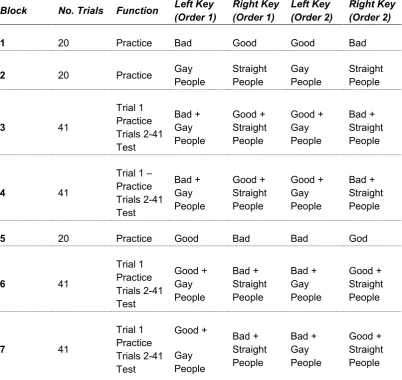
Table 2: Seven-block IAT structure ... 40
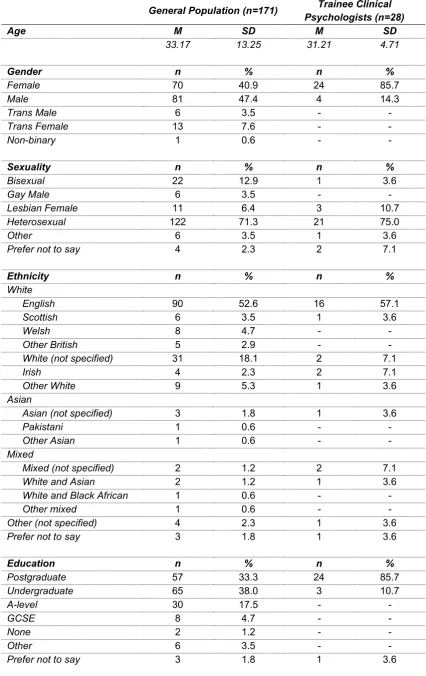
Table 3: General Population and Trainee Characteristics ... 50
Table 4: Participant Age ... 52
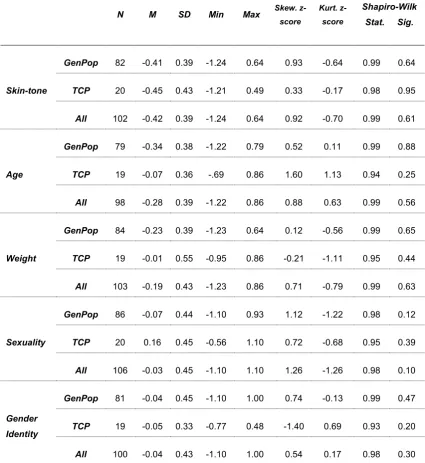
Table 5: IAT D-score Distribution and Normality Statistics ... 52
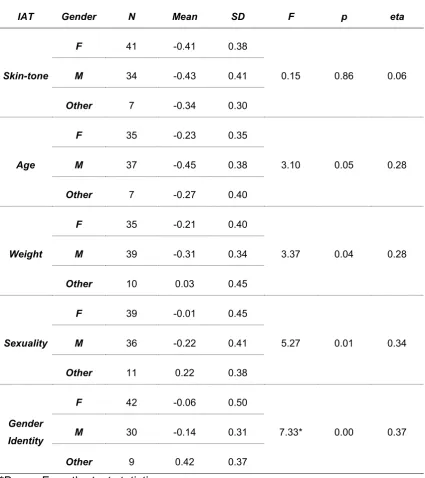
Table 6: Relationship between General Population Gender and IAT Scores .... 55
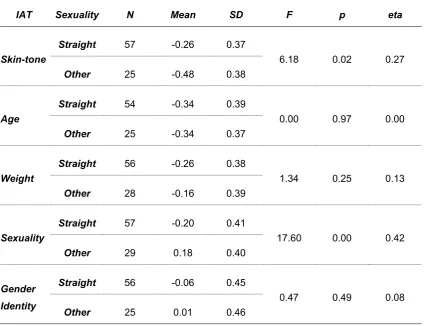
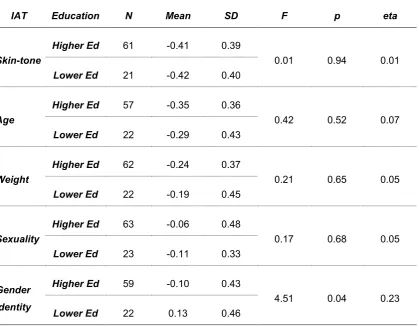
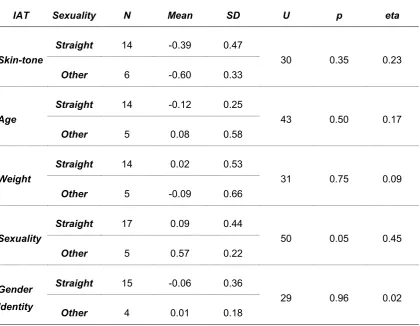
Table 7: Relationships between General Population Sexuality and IAT Scores56 Table 8: Relationships between General Population Education and IAT Scores .. ... 57
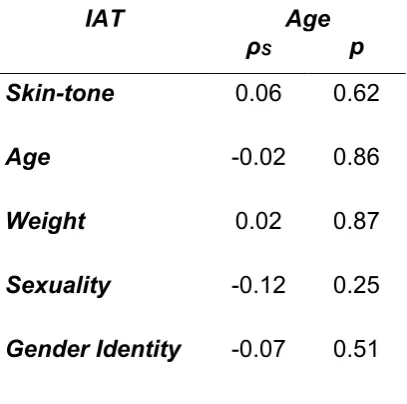
Table 9: Correlations between General Population Age and IAT Scores ... 58
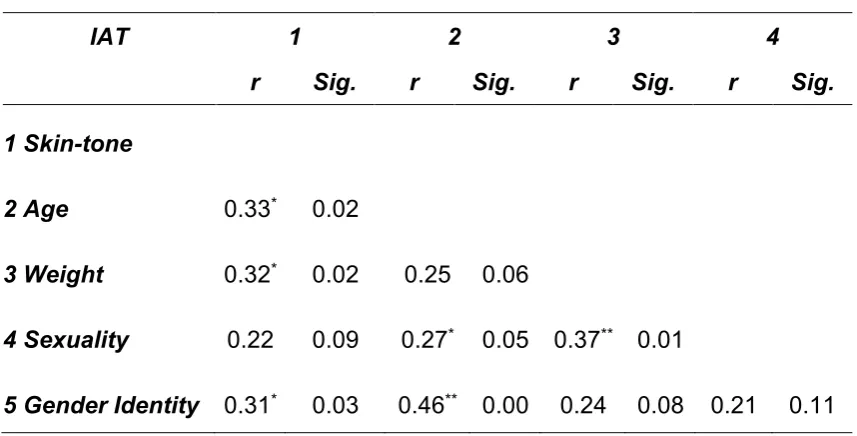
Table 10: Correlations between General Population IAT Scores ... 59
Table 11: Correlations between Trainee Clinical Psychologist Age and IAT Scores ... 61
Table 12: Relationships between Trainee Clinical Psychologists’ Sexuality and IAT Scores ... 61
Table 13: Thermometer score distribution and normality statistics ... 63
Table 14: Relationships between General Population Gender and Thermometer Scores ... 65
Table 15: Relationships between General Population Sexuality and Thermometer Scores ... 66
Table 16: Relationship between General Population Education and Thermometer Scores ... 67
Table 17: Correlation between General Population Age and Thermometer Scores ... 68
Table 18: Correlations between General Population Thermometer Scores ... 69
Table 19: Between-Group Comparisons of IAT Scores – All Participants ... 70
Table 20: Between Group Comparisons of IAT Scores – Females ≤ 35 ... 71
Table 21: Between Group Comparisons of Thermometer Scores – All Participants ... 72
Table 22: Between Group Comparisons of Thermometer Scores – Females ≤ 35... 73
ix
x
ACKNOWLEDGEMENTS
I am forever grateful to my supervisor, Matthew Jones Chesters. His
knowledgeable guidance, reassurance, and sense of humour throughout the ups and downs of the thesis process have helped me emerge with my sanity more or less intact.
No less am I indebted to Alison Blencowe, whom I cannot thank enough for all the help and support she has given me over the course of this project. I literally couldn’t have done this study without all the work she put in.
A big thank you to all my friends, family, acquaintances, colleagues, and benevolent strangers who helped with this study by taking the time to
participate, offer feedback and spread the word. Without their time, effort and patience, I would have been lost.
1
1. INTRODUCTION
1.1. Chapter Overview
This chapter places the literature on implicit bias in its historical and socio-political context. The definition of the concept and clarification of terminology lay the groundwork from which its evolution in the public and academic spheres can be explored. Methods of measuring implicit bias are outlined with a particular focus on the Implicit Association Test (IAT). The strengths and limitations of this measure, as well as the ongoing debates that surround it, provide a case for why further research in the area is warranted. A consideration of the relevance to clinical psychology contributes to the aims and rationale for updating
elements of the IAT.
1.2. Definitions
A number of terms have been used to characterise the construct at the heart of this thesis. Implicit bias has become a common descriptor in the psychological literature (Amodio & Devine, 2006), extending to other fields including law (Jolls & Sunstein, 2006) and organisational studies (Jost et al., 2009). Along with the term unconscious bias it has also gained increasing traction in public discourses (e.g., Yudkin & Van Bavel, 2016). The following sections will consider different aspects of the label.
1.2.1. What is Bias?
2
connoted one in which, for example, a tutor awards different marks to two students who perform identically but differ on another characteristic such as their gender or ethnicity. It is with this aspect of bias, in which the accuracy and fairness of judgements are compromised, that this study is primarily concerned.
Consequently, bias can be understood throughout this thesis as an umbrella term (De Houwer, 2006) which incorporates other related constructs of implicit social cognition, the term conventionally designated to this area of
psychological research (Hahn & Gawronski, 2018). These constituent mental phenomena include attitudes, prejudices and stereotypes (Rudman 2004) and are commonly conceptualised in terms of mental association (Greenwald et al., 2002). The construct of attitude can thus be thought of as the mental
association between an object and a positive or negative evaluation (e.g., flowers and good). Prejudice on the other hand refers to the mental association between a social group and a particular evaluation (e.g., fat people and bad). Stereotypes can be further distinguished as the mental association between a social group and an attribute (e.g., old people and slow). Stereotypes may be accurate on a group level, but do not apply to each individual in that group (Amodio & Devine, 2006). The term bias was chosen for the title of this thesis to capture this encompassing breadth of meaning, and to acknowledge that this study positions itself within the wider body of research ultimately concerned with real-world outcomes, in a way that a term such as cognition might not convey.
1.2.2. What makes it Implicit?
Researchers have generally differentiated implicit attributes from their explicit counterparts, in order to convey that the assessed attributes cannot be
consciously accessed or controlled by the individual (e.g., Fazio & Olson, 2003). However, the term implicit has also been used to describe the type of
instrument employed to measure this attribute itself (De Houwer, 2006). In an effort to clarify the nomenclature, De Houwer, Teige-Mocigemba, Spruyt, and Moors (2009) proposed a distinction in the words used to describe the
3
the impact of bias on an individual’s responses is automatic, unintentional, unconscious, or uncontrollable. Conversely, measured bias should be termed explicit when it influences the observed outcome in a controlled fashion, i.e., when the impact of bias on responses is intentional, conscious, or controllable (Hahn & Gawronski, 2018). The measurement instruments used to capture these constructs are termed direct when based on self-assessment and indirect when not (e.g., when based on the speed of response following presentation with a stimulus). Implicit biases can therefore be conceptualised as
discriminatory biases influenced by automatic or unconscious attitudes,
prejudices and stereotypes. They are especially intriguing as they may produce behaviour that diverges from an individual's endorsed beliefs (Greenwald & Krieger, 2006).
1.2.3. Other Definitions
This dissertation is concerned with bias toward individuals, groups and communities who can be conditionally considered marginalised (Whitehead, 2007). As the use of language can be argued to reinforce such marginalisation (Riggins, 1997), it requires thoughtful consideration. The term race is placed in inverted commas or italicised throughout1 to acknowledge its ill-defined nature
and limited use as a descriptor of biological human difference (Hocutt, 2002). Minority ethnic is used to refer to people who identify as part of cultural/ethnic group other than the majority group of that society. In the UK, this
predominantly refers to people of South Asian, African, and African Caribbean origin (Office of National Statistics [ONS], 2016). When the terms are used to refer to a person or a group of persons, the words Black and White will be capitalised in acknowledgement of the cultural associations they entail (Thompson, 2004).
For conciseness, the term gay will encompass gay men and lesbian women when referring to a gay/straight distinction. The term trans will be used synonymously with the term transgender to reflect current usage (Gender Identity Research & Education Society [GIRES], 2015). The terms cisgender and cis (i.e., non-trans) will be used in a corresponding manner. LGBT+ is used
4
to refer to the many sexual and gender identities which fall outside the majority identities of cisgender and heterosexuality (Erby, Henry, Lopez, Procter & Robinson, 2016).
1.3. The Societal Context
1.3.1. Inequality
Social inequalities remain pervasive in the UK. Despite numerous
developments in anti-discrimination law over the past decades (incorporated in the Equality Act, 2010), disparities in outcome between socially defined
categories of people (differentiated by, e.g., age, gender, ethnicity) are seen in many areas from education (Equality Challenge Unit [ECU], 2013) to health (Public Health England, 2017). The fact that these inequalities have been identified by government as a problem to address and legislate against, suggests a shift in societal values from a time in which wide disparities (and biases) were deemed acceptable. A historical view of the legislative
development reveals that an increasing number of categories have been incorporated over time to increase the protection and rights of minority groups. A pertinent example of this is transgender rights. From lacking official
recognition for much of the 20th century, trans people in the UK have gradually
been afforded greater rights since the 1990s. These rights have encompassed documentation and marriage, with the Equality Act 2010 officially adding
“gender reassignment” as a protected characteristic to prevent discrimination in education, employment, housing and services.
This observed shift has been broadly reflected in self-report studies such as the British Social Attitude survey (National Centre for Social Research [NatCen], 2017), in which a representative sample of over 3,000 people from across the UK are interviewed on a range of subjects. The survey, which has been conducted annually since 1983, is a valuable source of information on the
5
the reported views of same-sex relationships: The most recent survey in 2017 found that 64% of respondents considered same-sex relationships “not wrong at all” compared to only 17% when the survey was first conducted in 1983.2
1.3.2. Bias as a Cause of Inequality
It is an uncontroversial assertion that overt discrimination against certain groups contributes to observed inequality by denying members of those groups
opportunities available to others (Brown, 2004). Examples of this overt bias exist for much of UK’s history. They include the refusal of companies to employ minority ethnic workers (addressed by the Race Relations Act 1976) and the criminalisation of homosexuality under the Sexual Offences Act until 1967, which left many vulnerable to receiving a criminal record with further
exclusionary consequences. Pettigrew and Meertens (1995) argued that the observed decline in “blatant” and official discriminatory behaviours did not result in an elimination of bias, but rather that these have been supplanted by less overt, “subtle” forms of discrimination.3 These “modern” forms of prejudice
(Brief, Dietz, Cohen, Pugh, & Vaslow, 2000) supposedly operate with the knowledge of the social undesirability of voicing explicit biases. A large body of field experiments (review by Riach & Rich, 2002) supports the view that
discriminatory behaviour and unfavourable judgements (e.g., about housing and employment) thus continue to disadvantage members of certain groups. The main difference between this and more overt forms of bias is that individuals will give reasons for behaving a certain way which are not explicitly linked to group identifiers (e.g., “he seemed arrogant” as opposed to “because he was fat”; Byrd, 2011).
1.3.3. The Role of Implicit Bias
Developments in implicit social cognition research4 have more recently led to
greater public familiarity with the concept of implicit bias. This has added further subtlety to the different ways in which bias can be conceptualised. The two previously described blatant and subtle forms may be seen to depend on the
2 However, not all self-reported attitudes have seen the same level of change (e.g., “race”; Kelley, Khan, & Sharrock, 2017).
6
view that this bias is in line with one’s personal beliefs, even if social norms prevent public acknowledgment of these. However, the concept of implicit bias opens up the possibility of thinking and acting in a biased manner even when this is in opposition to one’s values and without being consciously aware of the process (Greenwald & Krieger, 2006).
Recent media attention in the UK has been preceded by greater public exposure in the US, starting around the mid-2000s. This coincided with a national debate around the impact of “racial” attitudes on the government’s response to Hurricane Katrina, as well as the ongoing issue of police shootings (Henkel, Dovidio, & Gaertner, 2006). The idea that “racial” bias could be
automatic and unconscious reached large audiences via popular science books (e.g., Gladwell, 2005), mainstream media (Vedantam, 2005) and television talk shows (e.g., The Oprah Winfrey Show; Winfrey, 2006). A decade later the subject received its widest coverage to date when implicit bias was mentioned as a factor in police killings by one of the candidates in a nationally televised presidential debate (Blake, 2016). Although the UK public has not received the same degree of exposure as their US counterparts, the topic has received increasing coverage in national media (e.g., Edmonds, 2017) as well as influencing the policies of charities and educational institutions (ECU, 2013).
Repeated findings of biased decision-making in recruitment processes (e.g., Moss-Racusin, Dovidio, Brescoll, Graham, & Handelsman, 2012; Reuben, Sapienza, & Zingales, 2014) have led to fundamental changes to hiring procedures in many organisations. These have typically aimed to keep to a minimum the amount of non-essential personal identifiers available at to recruiters so as to avoid activating held stereotypes. A further recent
development to have reached the UK from the US is “anti-bias training” (Clegg, 2017), which aims to reduce employees’ implicit biases by bringing them into conscious awareness.
7
et al. (2017) argue this offers an important addition to public debate which often focuses on either extreme forms of prejudice such as hate crimes, or more abstract impersonal concepts such as institutional bias. By considering the cumulative effect that individual implicit biases can have, proponents suggest that steps can be taken towards reducing the number of situations in which it can further contribute to the inequalities we observe (Greenwald, Banaji, & Nosek, 2015).
1.4. Researching Implicit Bias: An Overview
Following the preceding section’s overview of how bias and its impact on inequality have been perceived in the public arena, the following section will explore the conceptual origins and development of implicit social cognition in the research literature. The efforts to standardise the variety of terminology alluded to in 1.2.2. (e.g., the interchangeable use of automatic, unconscious and implicit; De Houwer et al., 2009) point to the two separate intellectual traditions from which study in this area arose (Payne & Gawronski, 2010). The first of these is found in the research on automatic processes in attention, while the second grew out of research on implicit memory.
1.4.1. Attention Research: Automatic and Controlled Processes
Building on the ideas of Schneider and Shiffrin (1977), a principle underpinning attention research is the distinction between automatic and controlled modes of information processing. Automatic processing was defined as being difficult to suppress, having unlimited capacity and needing little attention. Conversely, controlled processing was defined as being open to voluntary alteration, having limited capacity, and demanding attention (Payne & Gawronski, 2010).
Concerns over the distorting effects of social desirability on self-report
measures (Fazio & Olson, 2003) motivated researchers of cognitive processes to develop new methods of elucidating participants’ attention to, and evaluation of, stimuli. The use of sequential priming tasks (Fazio, Jackson, Dunton, & Williams, 1995) aimed to address this by activating participants’ attitudes
8
priming task, the participant is asked to, for example, classify the target as positive or negative (evaluative priming task) or classify the target in terms of a categorical property (semantic priming task). The principle underlying all
variants of the task is that the prime stimulus activates associations which, if conceptually congruent with the target, facilitate quick and accurate responses. Conversely, slow and error-prone responses are likely when prime and target are incongruent (Hahn & Gawronski, 2010). Sequential priming was to become an influential approach to indirect measurement in other areas of psychology and a core characteristic of implicit social cognition.
1.4.2. Implicit Memory Research: Unconscious and Conscious Processes The dichotomy between automatic and controlled processes were
complemented by the distinction between unconscious and conscious processes, thanks in part to Greenwald and Banaji’s (1995) seminal review which drew on research in implicit memory. Their impetus for developing new attitudinal measures was also driven by an acknowledgement of the
shortcomings of traditional self-report measures. Implicit memory is defined by Schacter (1987) as being revealed when the performance on a task is
influenced by previous experiences, without said task requiring conscious or intentional recollection of these experiences. It can broadly be thought of as any form of memory that can operate without the person’s awareness that they are accessing their memory (Radvansky, 2010). These conceptualisations owe much to the work of researchers such as Meyer and Schvaneveldt (1976), who found that presenting participants with a word (e.g., “butter”) facilitated access to conceptually related words (e.g., “bread”) which they were quicker to
9
1.4.3. Implicit Social Cognition: A Key Influencer
The development of sequential priming tasks and the IAT in particular led to a surge of further research using these and similar methods (Nosek, Hawkins, & Frazier, 2012). Payne and Gawronski (2010) even point to the challenge for researchers of keeping up with the latest developments in the field, such has the rate of output increased. The influence of the theories and methods of implicit social cognition have not only shaped “virtually every question in social psychology” (Payne & Gawronski, 2010; p.1), but expanded beyond into many applied areas such as health psychology (Wiers et al., 2010) and clinical
psychology (Van Bockstaele et al., 2011). As previously noted, its findings have also found their way into public debate, leading to greater outside interest in the area. Much of this popularity can be attributed to the field’s flagship tool, the IAT, which is frequently mentioned in the same breath as implicit bias and has seen more scrutiny and debate than any other implicit measure. The following section will take a closer look at the IAT and use it to highlight some of the prominent trends that have emerged in the study of implicit social cognition over the last two decades and continue to warrant further investigation.
1.5. The Implicit Association Test (IAT)
The IAT, a computerised indirect measure of implicit social cognition, was
introduced by Greenwald et al. in 1998. It has become the most commonly used implicit measure in psychology (Oswald, Mitchell, Blanton, Jaccard, & Tetlock, 2013) and as of April 2018, the original article had been cited 3579 times in PsycINFO and 9784 times in Google Scholar. The IAT immediately proved an attractive measure for researchers, in part due to its superior psychometric properties compared to its forerunners (Teige-Mocigemba, Klauer, & Sherman, 2010). Sequential priming tasks had been hampered by poor levels of reliability and were thus ill-suited to the assessment of implicit constructs at an individual level (Greenwald & Banaji, 1995). The IAT, in comparison, appeared to
demonstrate larger effect sizes and improved reliability at the level of internal consistency (Lane, Banaji, Nosek, & Greenwald, 2007).
10
attribute (e.g., good or bad) as quickly as they can. Which category they are required to pair with which type of attribute changes throughout the course of the test. The IAT aims to measure implicit attitudes based on the recorded reaction time (response latencies) between conditions.5 This difference in
reaction time between evaluatively compatible and evaluatively incompatible conditions is known as the IAT effect (Govan & Williams, 2004). As such, it employs a similar rationale to evaluative priming tasks and indeed much older measures such as the “Stroop Task” (Stroop, 1935), namely that it will take a participant longer to associate a concept (e.g., insect) to an attribute (e.g., pleasant) where there is a weaker mental association between the two.
1.5.1. Reliability
The enthusiastic adoption of the IAT can be partly attributed to its improved reliability in relation to other available tests in the field. With scores typically between .70 and .90, its internal consistency has proved satisfactory and places it at the top of its class in an across-measure comparison (Gawronski & De Houwer, 2014). Test-retest reliability has however been less laudable, with scores estimated around .50 (Lane et al., 2007). The IAT’s ability to capture temporally stable implicit constructs such as personality traits has been called into question due to this significant variance in scoring (e.g., Oswald, Mitchell, Blanton, Jaccard & Tetlock, 2015). The test’s developers (Greenwald et al., 2015) counter that the problem of limited test-retest reliability is maximal when the IAT is used for individual diagnostic use, but that this is not its intended application. Instead, Greenwald and colleagues (2015) advocate the use of large samples to diagnose system-level biases, thereby diminishing the impact of this attribute.
1.5.1.1. Trait or State?
Researchers have offered different theories as to why this discrepancy in reliability is observed, and it continues to be a topic of much debate. A key question has emerged out of this as to whether implicit measures should indeed be interpreted as reflecting stable representations in cognitive networks (traits; Fazio, 2007) or rather temporary constructions based on momentarily
11
accessible information (states; Schwarz, 2007). The variability observed in subsequent retakings of the test has been an impetus for a large body of
experiments concerned with systematically manipulating its various parameters to elucidate contributing factors to this phenomenon (Gawronski & Sritharan, 2010). These manipulations can include altering the context in which the targets are presented, for example Roefs et al.’s (2006) findings that high-fat foods are implicitly evaluated more positively when presented in a restaurant context than in the context of a health clinic. A wide range of other contextual manipulations have also produced significant effects, such as Dasgupta and Greenwald’s (2001) exposure of participants to counter-stereotype cues before taking the “Race” IAT, resulting in a weakening of implicit associations.
Following the representational trait account, the responses captured by indirect measures depend on how a target object is categorised. Contextual cues are understood as influencing the categorisation of a given object, thereby
influencing which category representation is activated in response to the object, and ultimately influencing the measured response (Hahn & Gawronski, 2018). A constructivist state account on the other hand conceptualises IAT responses as being dependent on momentarily accessible attributes rather than abstract representations of a category. Gawronski, Ye, Rydell, and De Houwer (2014) argue that either account can explain the observed effects, but that these have typically been applied post-hoc, without providing testable predictions about their boundary conditions. As such, further empirically supported theories are required to understand the relationship between the observed retest variance and construct variance.
1.5.1.2. Occasion-related Processing Differences
Investigating the potential impact of construct-unrelated variance is a second promising avenue for researchers wishing to explain the discrepancy in
12
learning effects, and conscious strategies (Teige-Mocigemba et al., 2010). Sherman et al. (2008) add that the above distinctions need not be seen as mutually exclusive: Pending further experimental evidence, the test-retest variance may reflect that the IAT measures states as well as traits, and that scores can additionally be influenced by elements of change in the test-taking process.
1.5.2. Construct Validity
Construct validation is a cumulative process of evidence-gathering by which conceptual and empirical justification for a construct can be gained (Nosek et al., 2012). Some of the approaches used to identify the implicit constructs the IAT aims to capture are explored below.
1.5.2.1. Group-level Validation Approaches
A priori assumptions have served as a starting point for experimentally
assessing the validity of the IAT. In their first published demonstration of the IAT effect, Greenwald et al. (1998) chose the target categories of insects and
flowers, as the latter has consistently been reported to be preferred to the former by a large part of the population.6 It was hypothesised that this
preference would be reflected in the IAT results, which indeed it was. When applying the IAT to a domain in which preferences are not expected to be universal (e.g., smoking, sexuality) researchers have used a known-group approach to validation (Teige-Mocigemba et al., 2010). This adopts the a priori assumption that certain groups will hold different preferences which will be borne out by the IAT results.
In some domains, such as attitudes toward sexuality (gay—straight; Banse, Seise, & Zerbes, 2001) and “racial” attitudes (Black—White; Nosek, Banaji, & Greenwald, 2002), discriminant IAT validity was demonstrated in line with the researchers’ predictions that groups would differ in their performance: In Banse et al.’s study of 101 participants (distributed evenly between gay men, lesbian women, straight men, and straight women), gay and lesbian sexuality were significant predictors of preference for the “homosexuality” category. Similarly,
13
Nosek et al.’s (2002) analysis of the scores of 160,000 participants who had taken the “Race” IAT online showed that while both White and Black
participants showed a preference for White faces, the strength of this preference was considerably weaker amongst Black participants overall.
Other domains, particularly those more related to health behaviours, have however failed to consistently differentiate between groups. An example of this is Swanson, Rudman & Greenwald’s (2001) comparison of implicit attitudes towards smoking between smokers (n=38) and non-smokers (n=46). IAT results did not show any significant difference between groups despite a marked
difference in explicit attitudes towards smoking. The authors hypothesise that this may suggest the difficulties of bolstering stigmatised behaviour on an implicit level, however not enough is known about the processes involved to account for the results.
1.5.2.2. Relationship with Explicit Measures
Validating implicit and explicit social cognitions necessitates evidence for both divergent and convergent validity, as one wants to assess that they are not measuring the same thing (divergent), yet that they are distinctly related
constructs (convergent; Nosek & Greenwald, 2009). Nosek’s (2007) analysis of IAT results and corresponding explicit measures from 56 domains (n=175-290 for each) yielded a moderate correlation of .48, varying widely from weakly positive (<.20, e.g., Asians—Whites) to strongly positive (>.75, e.g., pro-choice—pro-life).
14
Although self-presentation does appear to moderate the relationship between implicit and explicit bias, Hahn and Gawronski (2018) caution that it only accounts for part of the difference seen. Nosek et al. (2012) add that attitudes that are important to the individual and are thought about often tend to elicit stronger implicit-explicit correlations than ones that are infrequently thought about. Payne, Burkley, and Stokes (2008) highlight the caveat that the type of direct (explicit) measure used to compare with the IAT has the highest
correlational impact, and the more similar the task demands, the higher the correlation between the measures. Therefore, the observed relationships between the IAT and direct measures are at least as likely to reflect the structural fit of the measures as their underlying attitudinal constructs.
1.5.2.3. Predictive Validity
Of major interest in the study of implicit social cognitions is how they map on to real-world behaviour. The most recent and widely debated meta-analyses on this subject involving the IAT come from Greenwald, Poehlman, Uhlmann, and Banaji (2009) and Oswald et al. (2013). Greenwald et al. (2009) reviewed 122 research reports comprising almost 15,000 subjects, encompassing a variety of domains from intergroup attitudes to political and consumer preference. The authors found an average of r = .274 for prediction of behaviour measures by IAT measures. Corresponding direct measures averaged r = .361, higher than their implicit counterparts. However, the variability of effect size among self-report measures was much higher than that of the IAT and was strongly
associated with the domain of assessment. In socially sensitive domains (e.g., samples with criterion measures involving Black—White behaviour), the IAT outperformed direct measures in prediction of behaviour, whereas in areas such as political and consumer preference, direct measures proved a superior
predictor of behaviour.
15
Greenwald, Nosek, and Banaji (2015) responded to these claims, pointing to the use of different inclusion criteria as an explanation for the discrepant conclusions. Regardless of this inclusion policy, they argued, both
meta-analyses estimated large enough aggregate correlational effect sizes to explain discriminatory impact on a societal level. Both groups of authors concluded that in its current form, the IAT was unsuited as an individual diagnostic tool.
Based on theoretical developments, other researchers (e.g., Perugini, Richetin, & Zogmeister, 2010) have appealed for a more nuanced approach when
considering the nature of the behaviour being measured in the analysed studies. Similar to the way that direct and indirect measures differ in their
predictive merits depending on the domain in question (Greenwald et al., 2009), stronger and weaker measure-type associations can be found depending on whether the measured behaviour is spontaneous or deliberate (Hahn & Gawronski, 2010). Dual-process models of implicit social cognition
conceptualise direct and indirect measures as representing different underlying processes (e.g., Fazio, 2007). This model holds good explanatory power for findings which demonstrate stronger associations with IAT scores and
spontaneous/unplanned (e.g., nonverbal) behaviour and stronger associations between explicitly stated bias and deliberate (e.g., verbal) behaviour (Dovidio, Kawakami & Gaertner, 2002).
Although evidence for the described dissociative pattern between direct/indirect measure and deliberate/spontaneous behaviour exists, several studies do not demonstrate these patterns (Perugini et al., 2010). For instance, direct and indirect measures have been found to have an additive pattern, for example increasing the prediction of consumer choice when taken together rather than separately (Maison, Greenwald, & Bruin, 2004). Hahn and Gawronski (2018) point to the future challenges of identifying the boundary conditions between the identified predictive patterns as well as developing theories for why they occur in particular conditions.
16
& Schmitt, 2008). In studies of sexual interest behaviour and the consumption of tempting food, participant’s implicit attitudes toward the temptation had a
stronger influence on their actions if they scored lower in assessments of working memory capacity. Conversely, the behaviour of individuals who had higher working memory scores was predicted more accurately by self-report measures. Together, these findings suggest that caution should be exercised when grouping behaviours and participants together to conduct large-scale analyses, as they may be reflecting different constructs and attitude-unrelated individual differences.
1.5.3. Confounding Factors
As a comprehensive process model which can take account of the various elements of the IAT effect has not been forthcoming, the relative impact of construct-related and construct-unrelated influences cannot be controlled for statistically (Teige-Mocigemba et al., 2010). Whereas some factors (e.g., order in which conditions are presented) are inherent to the structural design of the test itself, others, such as cognitive ability (see below), differ between
individuals and will exert different levels of influence. Furthermore, elements of the test such as stimuli used may be presented in the same manner yet hold different construct-unrelated associations for participants, complicating attempts to capture the construct of interest. Some of the factors that have been shown to contaminate the IAT effect are outlined below.
1.5.3.1. Cognitive Abilities
In addition to the predictive effects of working memory on behaviour, the relationship between cognitive ability and task performance warrant
consideration. As overall response speed is associated with cognitive abilities, correlations found between response speed and the size of IAT effects suggest these differences in effect size are at least in part determined by participants’ cognitive skill (Cai, Sriram, Greenwald, & McFarland, 2004). Cognitive
processing speed generally declines with age, and given that larger IAT effects are seen with older individuals, there is a compelling case that cognitive
17
Further suggestions of a cognitive ability confound come from studies showing correlations between different IATs which aim to capture unrelated constructs and thus should not be intercorrelated (Teige-Mocigemba et al., 2010). Taken together, these findings indicate that some of the variance observed in IAT effects is attributable to factors that affect different IATs similarly. Cognitive ability, as a known confound in other psychological assessment (Meyer et al., 2001) is a likely contender. Different techniques to reduce the cognitive skill confound have been proposed (see Teige-Mocigemba et al., 2010), including the adoption of an adapted scoring method less vulnerable to such factors (see Methods; Greenwald, Nosek, & Banaji, 2003).
1.5.3.2. Stimuli
A number of studies have demonstrated that IAT effects are not only
determined by participants’ attitudes towards categories (e.g., Black—White; Nosek et al., 2002) but also by the stimuli used to represent these categories (e.g., a particular Black or White face). Mitchell, Nosek, & Banaji (2003), for example, found that IAT effects could be manipulated in a sample of US students (n=91) by selecting stimuli which confound the category distinction of interest with another category distinction. By using popular Black athletes and “disliked” White politicians as stimuli to represent the different “race” categories, the measured implicit bias weakened towards a neutral preference. It should however be noted that the observed difference in IAT effect may be attributable in part to other confounding variables known to contribute to bias, such as age, weight and attractiveness. Govan and Williams (2004) further demonstrated the importance of stimuli use by adapting the words and images used in the original Flower—Insect IAT, substituting, e.g., “poison ivy” for “rose” and “ladybird” for “wasp”. Eighty Australian undergraduate students showed a reversed IAT effect, suggesting a preference for insects, with this alternative version. These studies illustrate how incautious selection of stimuli can inadvertently affect results.
18
identified a number of areas that warrant consideration when attending to the stimuli of an IAT. They include the above caveat to avoid unbalanced valency of stimuli (positive or negative) between categories (Govan & Williams, 2004). Care should also be given to ensure as best possible that the stimuli cannot be misconstrued or regrouped under a different category (Teige-Mocigemba et al., 2010). Based on their findings, Steffens, Kirschbaum, and Glados (2008)
suggest including the categories themselves as word stimuli to avoid confounds resulting from ambiguity and mis-categorisation. Familiarity with the stimulus is a further important variable. Ottaway, Hayden, and Oakes (2001) demonstrated how the inclusion of low-familiarity words in the insect-flower and “Race” IAT had a significant impact on the IAT’s sensitivity. This consideration also applies to the familiarity of picture stimuli, which due to their previous associations may be evaluated differently, thus impacting the measure (Fiedler, Messner, & Bluemke, 2006).
1.5.3.3. ‘Extrapersonal Associations’
A further issue raised when interpreting the IAT effect is to what extent it might reflect culturally shared assumptions rather than those held by the individual. Extrapersonal associations are defined by Olson and Fazio (2004) as
“associations that do not contribute to one’s evaluation of an attitude object” (p. 653). Evidence in support of this potential confound firstly comes from studies in which groups with diverging personal and societal views took the IAT (Olson & Fazio, 2004), with subsequent IAT effects sometimes being in line with the societal view rather than the personal. Furthermore, De Houwer et al. (2009) note how the IAT’s poor predictive validity of health-related behaviour can be argued to reflect a societal preference for health-related concepts which may not hold true at the individual level.
Hahn and Gawronski (2018) argue that this issue can only be properly addressed by considering its philosophical implications alongside empirical findings. Differing concepts of the ‘true self’ can be found at least as far back as Platonic and Aristotelian philosophy. According to one, the self is
19
conceptualised as the rational moderator who keeps impulsive and uncivil passions in check (Payne & Gawronski, 2010). To meaningfully explore this question therefore necessitates clarification of what the ‘true self’, which the indirect measure aims to capture, should actually represent. Hahn and Gawronski (2018) assert that this aspect cannot be answered by empirical means. Indeed, researchers in the area (e.g., Nosek et al., 2012) have
increasingly raised doubts over the conceptual distinction between personal and extrapersonal IAT effects, given the wealth of literature that demonstrates the extent to which individuals’ associations are shaped by their environment (e.g., Olson & Fazio, 2006). This should be distinguished from the debate around the predictive validity of implicit biases (see above) and how much these can be moderated by explicit concerns in situations that allow conscious deliberation.
1.5.4. Public Perception of the IAT
In line with much of the academic community, the IAT was rapturously
embraced by the public as its profile rose in the 2000s. The test was often cited as the main source of evidence for the phenomenon of implicit bias, with its developers making appearances in the media to discuss the process and implications of the IAT. This culminated in the publication of “Blindspot: Hidden biases of good people” (Banaji & Greenwald, 2013), a book for lay audiences on the insights gained from the IAT toward our understanding of implicit bias. More recently, the debates around the IAT’s properties (especially test-retest reliability and predictive validity; Oswald et al., 2013) have spilled over into the public arena, leading to more critical media coverage (e.g., Singal, 2017; Lopez, 2017). Amidst the conflicting messages presented to the public about how best to interpret one’s individual score on the IAT, researchers have begun taking an interest in participants’ attitudes towards the test itself (e.g., Howell & Ratliff, 2017; Yen, Durrheim, & Tafarodi, 2018), suggesting a range of responses from defensiveness to acceptance and ownership of the results.
1.5.5. Summary
20
them to be. The outstanding questions that remain and continue to divide opinion attest to the complex nature of human thought and behaviour. As the continuing research into contextual factors as well as individual differences suggests, the IAT effect should not be seen solely as the static characteristic of an individual, nor as a pure reflection of a situation. Rather it is a “reflection of the person within a given situation” (Gawronski & Bodenhausen, 2017; p.271), which can help explain discriminatory impacts on a population level (Greenwald et al., 2015).
1.6. Implicit Bias Amongst Healthcare Professionals
Even when controlling for factors such as socioeconomic status,
educational attainment, and underlying health conditions, there is evidence that healthcare professionals (HCPs) do not provide an equivalent level of care to patients belonging to different social groups (Clarke, 2009; Byrne & Tanesini, 2015). Attributing part of this disparity to the actions of HCPs may not seem immediately intuitive, as many report to espouse explicitly egalitarian goals (e.g., Chapman, Kaatz, & Carnes, 2013; Drewniak, Krones, & Wild, 2017). However, an increasing body of research has explored whether HCPs’ implicitly held biases could be contributing to the observed inequalities.
21
white people’s skin”.7 In subsequent ratings of pain perception and treatment
recommendations across different scenarios, endorsement of false statements was correlated with lower ratings of Black pain severity and less accurate treatment recommendations. These findings suggest that cultural beliefs and stereotypes may be a contributing factor to the fact that Black patients are less likely to be prescribed pain medication and at lower doses than White patients. As only White medical professionals were investigated, further research on the interactions of White and Black patients’ beliefs and outcomes could prove illuminating.
Maina, Belton, Ginzberg, Singh, and Johnson (2017) conducted a review of 37 studies to date which had used “race”-based IATs amongst healthcare
professionals. Of these, 31 showed HCPs to have a pro-White (light skin) implicit bias. Correlations between IAT results and clinical outcomes were mixed; however all seven studies examining the impact of implicit provider bias on real-world patient-provider interaction found that stronger implicit bias
correlated with poorer patient-provider communication.
Studies on HCPs’ implicit associations towards other groups are much fewer and when done have not typically compared biases to associated outcomes. Other areas of inquiry have included implicit attitudes towards gay and lesbian people, exemplified by Burke et al.’s (2015) study of over 2000 medical
students, showing 81.5% exhibited an implicit preference for straight people. Weight bias has also been studied amongst dieticians (Edelstein, Silva, & Mancini, 2009), finding they exhibited a stronger pro-thin bias than the general population. Despite a number of UK-based studies also investigating the role HCP attitudes might play in the care of minority ethnic patients (Williams & Mohammed, 2009), lesbian, gay and bisexual patients (Hunt & Minsky, 2005), overweight patients (Swift, Hanlon, El‐Redy, Puhl & Glazebrook, 2013) and older patients (Clarke, 2009), the study of these domains has not seen the use of implicit measures such as the IAT. Therefore, insights in these areas must be
22
inferred predominantly from studies of US healthcare, despite its structural and demographic differences.
1.6.1. Implicit Bias amongst Psychologists
In a review of the literature, Blencowe (2017) summarised the research on implicit bias amongst applied psychologists. The number of studies totalled seven, which, with the addition of Blencowe’s own contribution, remains the same as of April 2018. All of these prior studies had been conducted in the US and used the “Race” IAT, with occasional inclusions of the Sexuality IAT (Boysen & Vogel, 2008) and the Weight IAT (Jackson, 2015). Taken together, their findings suggest that applied psychologists (a heterogenous group of trainee and qualified clinical and counselling psychologists, as well as other therapists) are implicitly biased against African American people, regardless of the indirect measure used. Sexuality and weight biases also exist, but would require replication on a larger scale. These studies do not allow confident conclusions to be drawn regarding explicit attitudes and their relationship to measured implicit bias, due to the idiosyncratic measures used in them.
Blencowe’s (2017) study looking at the biases of trainee and qualified clinical psychologists thus represents the first study in the area conducted in the UK to investigate a specific profession with validated indirect (IAT) and direct
(semantic differential) measures. A moderately sized sample of Clinical
Psychologists (n=81), Trainee Clinical Psychologists (n=138) and members of the general UK population (n=86) completed between one and five IATs and corresponding self-report measures. These were in the areas of weight, skin-tone, age, sexuality and gender-career. The results suggested that similar implicit biases are found in the clinical psychology profession as in the general population. Explicit biases towards non-dominant groups were neutral or
23
1.7. Bias Experienced by Transgender People
1.7.1. General Population
Trans people represent a significant and growing minority in the UK population, estimated at approximately 300,000 (Reed, Rhodes, Schofield, & Wylie, 2009). Despite an extensive psychological literature on the effects of prejudice towards those identifying or identified as gay and bisexual, in much of the research the trans population has tended to be subsumed under the umbrella term LGBT8
(e.g., Meyer, 2015). Though often including trans people in their analyses, trans-specific issues have until recently rarely been a focus of these studies, despite arguably being distinct from many of the issues faced by lesbian, gay and bisexual people (Ellis, Bailey, & McNeil, 2016).
Ellis et al. (2016) surveyed 660 people identifying as trans living in the UK to help ascertain the current prevalence and nature of transphobia (characterised by negative prejudice and hostility experienced by trans people) in the country. Most respondents reported having experienced open hostility from members of the public. Social hostility, which included being made fun of or called names for being trans, was experienced by the overwhelming majority, on more than one occasion. Physical and sexual abuse suffered due to their identity were reported by approximately one in five. Although the study probes potential areas of
discrimination comprehensively, it is possible that its length (89 pages, 1-2 hours) may have prevented some from participating. Importantly, participants were largely recruited through trans support groups, which may not reflect overall trans experiences.
The British Social Attitude survey (NatCen, 2017) added questions about transgender people for the first time in 2017, a further indication of the increasing visibility of this group. While 84% of respondents described themselves as “not prejudiced at all”, less than half agreed that a suitably qualified trans person should definitely be employed as a police officer or
24
primary school teacher. This suggests that there is a significant gap between the “theory” and “practice” of people’s attitudes.
1.7.2. Healthcare Professionals
Studies of attitudes towards trans people have explored the link between their experiences of victimisation and health outcomes. Boza and Nicholson Perry (2014) examined the health outcomes of 243 transgender Australians via an online survey, which revealed a very high prevalence of depressive symptoms (59%) and attempted suicide (44%), with 69% reporting at least one instance of victimisation. Bariola et al. (2015) incorporated these data in their analysis of trans Australians’ mental health outcomes, concluding that experience of victimisation was a predictor of poorer outcomes. The magnitude of the mental health difficulties faced by trans people elicits concern, and the above studies are consistent with initial findings on trans peoples’ mental distress in the UK, such as Davey, Bouman, Arcelus, and Meyer (2014), who analysed
questionnaires completed by patients (n=103) attending a gender identity clinic. It bears considering that the above studies were reliant on a self-selecting sample and as such might not fully reflect the experiences of trans people. Furthermore, other factors such as substance use or health status (e.g., HIV) which are known predictors of mental health outcome were not collected.
Considering the identified impact of social behaviour on trans people’s health, it would seem important to ensure HCPs do not compound these difficulties by their interactions with trans people. Beginning in 2013, the Twitter hashtag “#transdocfail” gained prominence across the social media platform, being used by trans people to share their accounts of how their healthcare had been
25
The development and use of validated direct measures of trans-related attitudes (e.g., the Attitudes Toward Transgendered Individuals Scale [ATTIS]; Walch, Ngamake, Francisco, Stitt, & Shingler, 2012; the Transgender Attitudes and Beliefs Scale [TABS]; Kanamori, Cornelius-White, Pegors, Daniel & Hulgus; 2017) is a nascent area of research which has only recently been applied to HCPs. Initial findings include Fisher et al.’s (2017) Italian study comparing 53 HCPs with members of the general population. In a survey of attitudes towards transgender people, HCPs generally reported more favourable attitudes,
however male gender and “religious fundamentalism” were predictors of anti-trans attitudes, also amongst HCPs. The authors speculated on the
generalisability of the results due to a potentially unique religious,
heteronormative, family-based culture. Ali, Fleisher, and Erickson’s (2016) comparison of 142 Canadian HCPs with undergraduate student norms also suggested that HCPs generally self-report more favourable attitudes towards trans people. As with other self-report studies, it cannot be ascertained to what extent social desirability may have influenced these results.
Brown, Kucharska, and Marczak (2017) conducted a systematic review of the literature on mental health practitioners’ attitudes towards transgender people. They identified 13 studies which had used a variety of direct attitudinal
measures, the majority of which were conducted in in US, with four in Australia and one in Canada. The results of these broadly echo the findings of other HCP-trans attitude studies in that practitioners’ attitudes scored more positively overall than control populations. However, a consistent finding has been that males (HCPs and general population) hold more negative views, making gender a greater predictor of attitude than profession. This pattern sits alongside
26
1.8. Psychologists’ Implicit Bias towards Trans People
As the reviewed literature indicates, there can often be discrepancies between HCPs’ self-reported levels of bias and those suggested by indirect measures. At a time when trans-related issues are increasingly part of the public discourse, there is a clear rationale for measuring implicit attitudes towards this group of people. Brown et al. (2017) highlight that this omission in the study of
transgender attitude does not allow a full appreciation of other facets of bias that might be affecting trans peoples’ experiences. Drawing on the findings of studies on psychologists’ implicit bias and those concerned with the biases that trans people face, a strong case can be made for expanding the research by synthesising these areas of inquiry.
Firstly, associations between measured levels of HCP implicit bias and
outcomes have consistently shown communication to be one of the main factors affected (Maina et al., 2017). Zestcott, Blair, and Stone (2016) propose that it is this impact on patients’ perception, trust and judgement of the HCP which may account for a larger proportion of observed disparities than, for instance,
differences in prescription, as these factors are known to influence engagement and adherence to treatment. The communication between therapist and client is a core skill of the psychological practitioner, with the quality of the therapeutic relationship strongly linked to therapeutic outcome (Sperry, Carlson, & Kjos, 2003). Therefore, the potential implications of implicit bias on behalf of the therapist are of significant relevance to psychological practice.
27
associated with a positive experience of therapy. These qualities map well onto those identified as correlating with lower levels of bias in studies comparing HCP implicit “racial” bias and patient self-reports. Thus, the apparent link
between implicit bias and factors intrinsic to the therapeutic relationship point to the potential value of developing tools to measure implicit bias towards
transgender people.
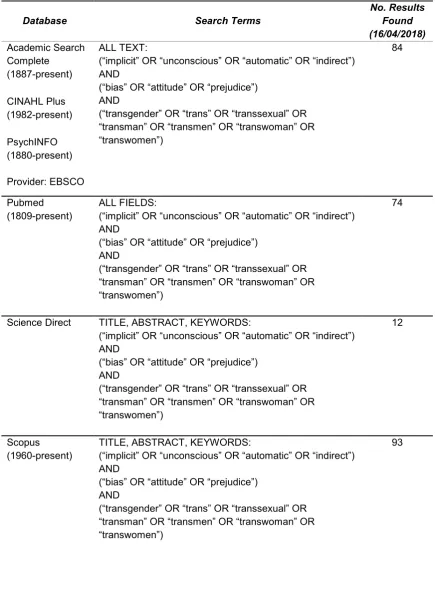
1.8.1. Search Strategy
The above considerations suggested a search of the literature focusing on implicit bias towards trans people, as this group’s absence was noted in the preceding review of studies on implicit bias. No specific exclusion criteria were applied, so as to increase the likelihood of locating relevant contributions in what was predicted to be an area of limited research. Thus, non-peer-reviewed contributions such as doctoral theses and dissertations were also included in the search to inform the understanding of the area. Relevant databases and search terms were identified based on the literature and consultation with the university’s psychology librarian. Databases searched were: Academic Search Complete, CINAHL Plus, PsycINFO, PubMed, ScienceDirect and SCOPUS. The variety of word options used (e.g., implicit/unconscious/indirect) reflects the variety of terminology in the field. Depending on the search options available, terms were searched within “title, abstract, and keywords” or “all fields”. All searches were conducted for articles published on or before 16th April 2018.
28
Table 1: Literature Search – Terms and Databases
Database Search Terms No. Results Found
(16/04/2018) Academic Search
Complete (1887-present)
ALL TEXT:
(“implicit” OR “unconscious” OR “automatic” OR “indirect”) AND
(“bias” OR “attitude” OR “prejudice”) AND
(“transgender” OR “trans” OR “transsexual” OR “transman” OR “transmen” OR “transwoman” OR “transwomen”) 84 CINAHL Plus (1982-present) PsychINFO (1880-present) Provider: EBSCO Pubmed
(1809-present) ALL FIELDS: (“implicit” OR “unconscious” OR “automatic” OR “indirect”) AND
(“bias” OR “attitude” OR “prejudice”) AND
(“transgender” OR “trans” OR “transsexual” OR “transman” OR “transmen” OR “transwoman” OR “transwomen”)
74
Science Direct TITLE, ABSTRACT, KEYWORDS:
(“implicit” OR “unconscious” OR “automatic” OR “indirect”) AND
(“bias” OR “attitude” OR “prejudice”) AND
(“transgender” OR “trans” OR “transsexual” OR “transman” OR “transmen” OR “transwoman” OR “transwomen”)
12
Scopus
(1960-present) TITLE, ABSTRACT, KEYWORDS: (“implicit” OR “unconscious” OR “automatic” OR “indirect”) AND
(“bias” OR “attitude” OR “prejudice”) AND
(“transgender” OR “trans” OR “transsexual” OR “transman” OR “transmen” OR “transwoman” OR “transwomen”)
29
A total of 263 articles were identified from the literature search. Titles and abstracts were scanned, with eight papers requiring further reading of their full-text versions to determine eligibility. A Google Scholar search with related words revealed two additional unpublished studies involving the development of a Gender Identity/Transgender IAT (Prunas, Bini, & Hartmann, 2015; Conway, Axt, & Westgate, 2018). The authors of the former were contacted and provided an abstract from a podium session on the study. Permission to cite Conway et al. was obtained, and their data was made available via the Open Science Framework.
Six studies concerned with measures of implicit bias and transgender were ultimately identified, which comprised four research studies and two
dissertations. Two of the studies had been published in academic journals while another could only be evaluated based on its abstract (see above). The fourth study (Conway et al., 2018) was still in the process of data collection and has not been subjected to peer review. Of the two doctoral dissertations, one (Wang-Jones, 2016) had been written up and published as the two
aforementioned articles, and as such is not considered separately in the review. The collated research is summarised in chronological order below.
1.8.2. Narrative Summary
Prunas et al. (2015) developed two versions of a “Gender Identity IAT” using words and pictures for target stimuli respectively. The aim of the study was to ascertain transgender people’s implicit associations with male and female genders and investigate the convergence with direct measures of gender
30
demographic option of transgender not being included. It represents the first (known) use of indirect measures in transgender research.
Gleason’s (2016) dissertation involved the creation of a measure of “implicit transphobia”, which was compared with relevant self-report measures among a sample of 57 US HCPs spanning a range of professions including clinical psychology, social work and psychiatry. The implicit transphobia measure was an affective priming task (Fazio, 2007; see 1.4.1.), in which the affective
responses following transgender- and cisgender-related primes were measured in order to capture the implicit valence assigned to each set of stimuli. The study used primes of transgender-related, cisgender-related and neutral images which were paired with positive or negative target images. Participants were asked to rate target images as positive, negative, or neutral. The transgender stimuli consisted of two photos next to each other, showing an individual before and after they had transitioned. The cisgender stimuli also showed an individual in both photos, differentiated by elements such as their clothing and position (but not their gender). The differences found between HCPs’ measured levels of explicit transphobia were not reflected in the indirect measure. Implicit
transphobia was also not correlated with HPCs’ treatment decisions based on clinical vignettes. Furthermore, the indirect measure was not related to HCP knowledge of transgender issues. As outlined in the study’s discussion, there are a variety of possible reasons this measure did not capture the intended construct. Apart from the small sample size, the trans- and cisgender primes were complex and might not have allowed for proper processing within a short amount of time (De Houwer et al., 2009).
Wang-Jones was the lead author on two studies: the first of these
31
individuals. The developed IATs comprised words synonymous with the transmen or transwomen label, using variants of “transsexual” and “men” or “women” paired together, contrasted with variants of “biological men” and “biological women”. Both measures correlated with scores on a direct measure (feeling thermometer) of attitude, with explicit, but not implicit, attitudes
correlating with social desirability. Wang-Jones et al. (2018) tested these new measures further, studying the performances of 265 cisgender participants identifying as straight, gay, or non-monosexual. An interaction was found between measurement type (direct/indirect) and sexuality, with gay participants reporting more positive attitudes towards trans people than straight participants, yet displaying similar implicit biases against transmen and -women.
Most recently, Conway, Axt, and Westgate (2018; unpublished) have developed and begun validating a different Transgender IAT. This IAT combines attitudes towards transwomen and -men into one target category, with a corresponding male and female cisgender category. Faces of trans and cis celebrities are used as picture stimuli which must be paired along with positive and negative words. They recruited a large sample of 996 US-Americans (male and female,
sexuality and transgender status not recorded) in a pilot study testing the measure’s validity. Performance on the IAT was compared to two self-report measures, assessing gender role beliefs and transphobia. Results showed less favourable implicit bias towards transgender celebrities to be predictors of greater gender role beliefs and greater self-reported transphobia. This measure shows promise, however the use of celebrity images does allow for potential confounds. These include varying levels of participants’ familiarity and greater association with, for example, a fictional character (in the case of actors) than the category they represent. Perceived attractiveness is a further possible contaminating factor.