Technologies for Alternative Energy
Climate Change Working Paper No. 7
Ainsley Jolley
Climate Change Project Working Paper Series
March 2006
Centre for Strategic Economic Studies Victoria University
PO Box 14428 Melbourne VIC 8001 AUSTRALIA Telephone +613 9919 1340
Fax +613 9919 1350
Technologies for Alternative Energy
1. Introduction
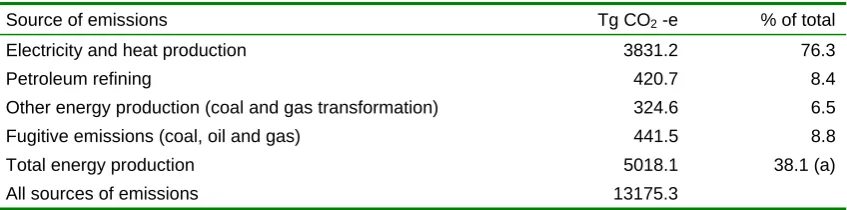
In Papers 5 and 6 technologies for the main sources of energy consumption were discussed. In Papers 7 and 8 the attention is focussed on technologies that impact on emissions from energy production. Table 1 provides data on the main sources of GHG emissions in the advanced economies for the year 2000.
Table 1. Sources of GHG Emissions in the Advanced Economies, 2000
Source of emissions Tg CO2 -e % of total
Electricity and heat production 3831.2 76.3
Petroleum refining 420.7 8.4
Other energy production (coal and gas transformation) 324.6 6.5 Fugitive emissions (coal, oil and gas) 441.5 8.8
Total energy production 5018.1 38.1 (a)
All sources of emissions 13175.3
Note: (a) energy production as % of all sources of emissions. Source: CSES (2004).
Papers 7 and 8 focus on emissions from the production of electricity and heat, which represent 76.3% of all emissions related to energy production. The other sources of emissions are not discussed in detail in this report. Coverage of the issues relating to these sources of emissions is given in CSES (2004). Incremental technological change is giving rise to modest improvements in energy efficiency in petroleum refining and the transformation of gas and coal. There are no apparent dramatic changes in technology in sight.
Fugitive emissions are associated with the mining/drilling for fossil fuels and their distribution. These emissions are in the form of methane and nitrous oxides. The rate of improvement in mining technologies is leading to a significant reduction in the emissions-intensity of resource extraction.
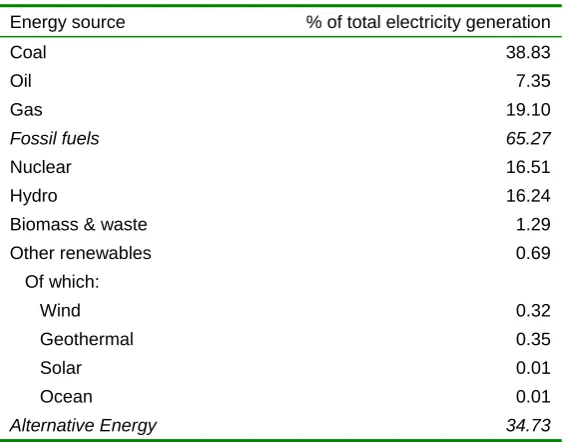
Table 2 outlines the current shares of particular sources of energy in world electricity generation in 2002.
This paper concentrates on technologies used in alternative sources of energy, which comprise 34.7% of total electricity generated. Paper 8 discusses emissions-saving technologies in relation to the use of fossil fuels in electricity generated.
long run. Hence the issues pertaining to the future development of hydrogen in the energy system are discussed in this paper.
Table 2. Shares of World Electricity Generation in 2002
Energy source % of total electricity generation
Coal 38.83
Oil 7.35
Gas 19.10
Fossil fuels 65.27
Nuclear 16.51 Hydro 16.24
Biomass & waste 1.29
Other renewables 0.69
Of which:
Wind 0.32
Geothermal 0.35
Solar 0.01
Ocean 0.01
Alternative Energy 34.73
Source: Derived from IEA (2004a, p. 432).
2. The Technologies
Nuclear Power
Current Prospects
Nuclear power was introduced in the 1950s and gained momentum after the oil shocks of the 1970s. Annual capacity additions averaged around 12 GW in the 1970s and 18 GW in the 1980s, but slowed to just 2.5GW per year in the 1990s, primarily because lower fossil-fuel prices and lower up-front capital requirements made generation from coal and gas more attractive. Increasing public concern about nuclear safety was also a factor, particularly after the Chernobyl accident in 1986.
IEA (2004a) makes the following projections for nuclear power out to 2030 in its BAU Scenario.
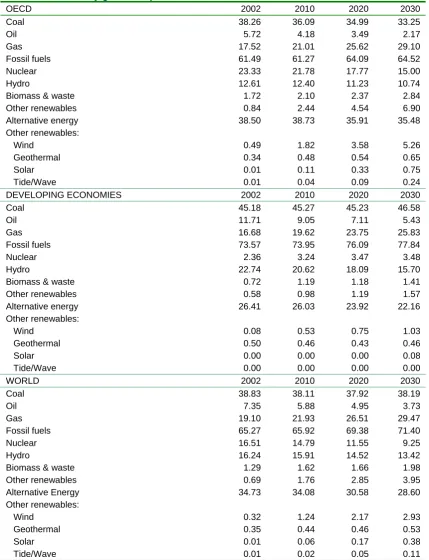
• Between 2002 and 2030, nuclear power generated is expected to increase by just 10% for the world as a whole.
• Over this same period, nuclear power generated in the OECD is projected to decline by 6% while increasing by 109% in the rest of the world.
• Nuclear power generated as a proportion of total electricity and heat generated is expected to decline from 18.4% in 2002 to 11.5% in 2030, and as a percentage of TPES to fall from 6.7% to 4.6%.
systems in the advanced economies will be constrained by three factors: (i) high capital costs compared to alternative technologies; (ii) political decisions in a large number of countries to phase out nuclear power;1 and (iii) community opposition to nuclear plants which can lead to construction delays that result in unattractive economics and perceived financial risk (The Economist 2001).
Some seventy-five per cent of existing nuclear capacity in OECD Europe is expected to be retired by 2030, with only France anticipating a large-scale replacement of its nuclear base before 2030. However, in June of this year TVO, a Finnish consortium, started work on the first new nuclear plant to be built on either side of the Atlantic in a decade (The Economist 2005b). No new plants have been built in the United States since the accident at Three Mile Island in March 1979. However, most existing power plants are expected still to be in operation in 2030. Many existing nuclear units will be able to increase their power capacity (IEA 2004a).
Since the IEA undertook its last energy projections in late 2004 the outlook for the nuclear power sector has changed somewhat. Climate change is helping a revival of the nuclear industry. In Asia the prospects are excellent. China already has nine nuclear reactors, and is planning to commission a further 30. New capacity is being considered in India, Japan and South Korea. Russia has several plants under construction (The Economist 2005b).
Technological Prospects
Relative to other energy sources, current nuclear power plant designs have very high capital costs per MW. Operating and maintenance costs are also higher. These costs are not fully offset by the relatively low fuel cost of nuclear power plants. No country has a complete concept of the facilities and operations that will be necessary for decommissioning and waste disposal, nor the costs of ensuring that nuclear materials do not end up in the hands of terrorists. As a consequence there is considerable uncertainty in any estimate of the social costs for future projects. The agenda for technological development is to address these important economic and social constraints on the growth of the nuclear power industry.
Specific goals of new plant designs are to reduce construction cost, construction time, operating and maintenance costs and fuel-cycle costs, while improving operating safety. Approaches to achieving these goals include:
• reducing the number of components in the primary and secondary system, to lower capital and operating costs;
• using factory assembly and modularisation, to reduce construction costs and schedules;
• reducing the reactor size to 300 MW or less, to reduce the cost of the generation unit and shorten the construction schedule; and
• simplifying and reducing the cost of all safety systems and processes, ranging from hardware systems to inspection and testing; and achieving waste management goals, such as using thorium as a major component of the reactor
1
fuel and reducing the specific volumes of low- and medium-level wastes (The Economist 2001).
In the longer run, reactor safety, and long-term secure and safe storage of spent fuel and irradiated material should become the main focus of nuclear research. New and safer reactor concepts should be explored; in particular reactors that produce less radioactive waste and that reduce the likelihood of catastrophic accidents. Sites and technologies for long-term disposal of waste should be studied. Existing methods of waste disposal remain totally inadequate. No country has yet built a ‘permanent’ waste-disposal site. Even state-of-the-art geological storage is not the final answer. Perhaps the Australian developed Synroc process might provide an answer to waste disposal.2 Finally, the issue of nuclear terrorism and the safety of nuclear materials needs to be addressed through appropriate security protocols. Significant governmental R&D support may be necessary to meet all of these safety-related objectives (IEA 2003a).
Fusion Technology
Nuclear fusion, in which energy is produced from the reaction between isotopes of hydrogen deuterium and tritium, may be a longer-term option. Fusion power has the potential to become an inexhaustible source of economical and safe baseload electrical power in the second half of this century.
Producing neither carbon dioxide nor long-lived radioactive substances, fusion power has numerous inherent safety features. Eventually, reactions involving deuterium only or deuterium and helium may be used. Deuterium is abundant, as it can be extracted from water. Tritium does not occur naturally but can be manufactured from lithium, which is plentiful in the earth’s crust. Extensive R&D by several countries has so far yielded disappointing results and the view of the International Energy Agency in 2001 was that fusion technology is unlikely to be commercialised until 2050 at the earliest (IEA 2001). Part of the reason why commercial fusion reactors have long remained 30 years away is that increasing the size of the reactors to something big enough to be a power plant proved harder than foreseen. But it may also be the case that delays in decision-making and inadequate funding levels have impeded progress.
Research expenditures on nuclear fusion peaked some twenty years ago, and have since declined significantly. However, efforts to exploit fusion power’s potential will shortly pass a significant milestone with the construction of the world’s first fusion experimental plant, producing some 500 MW of pulsed thermal power. The device will demonstrate all the major systems needed to show how the fusion process can produce thermal energy. The development of this testing facility is an international
2
project bringing together scientists and engineers from China, the European Union, Japan, Korea, Russia and the United States. The project is named ITER, and builds on many years of experimental and theoretical work, notably using the Tokamak3 devices first invented in Russia in the 1960s to contain and control the fusion process. Established under the auspices of the International Atomic Energy Authority, ITER assembles the world’s foremost body of scientific knowledge and know-how on fusion physics and technology. The project is now about to enter the construction phase before the start of the experimental program. The costs involved in conducting fusion research are enormous. The budget for ITER involves spending $US5 billion on construction, $5 billion on operating costs over 20 years and more than $1 billion on decommissioning (The Economist 2005a).
In Europe and Japan, further studies will focus on designs for DEMO, a power plant that will bridge the gap between ITER and the first generation of commercial power plants. In the United States, studies will focus on commercial power plant designs based on an alternative to the standard Tokamak concept that has potential for further improved economic performance (IEA 2005a).
Conclusions
Compared with the BAU scenario in which nuclear power is expected to decline to 4.6% of TPES by 2030, the SD Vision Scenario projects a revival in the nuclear industry which could increase to more than 15% by 2030 and an even higher proportion of total energy by 2050.
Renewable Energy
Overview
Between 1970 and 1990 the growth of renewables’ energy rose by an average 2.8% per annum and their share of TPES rose. However, during the 1990s renewables’ share of TPES fell and the growth rate declined to an average 1.2% per annum. The strong performance of renewables in the 1970s and 1980s stemmed largely from higher fossil fuel prices and from policy support for hydropower, geothermal and traditional forms of biomass (IEA 2005b). Growth in the major forms of renewables – hydro and geothermal in particular – slowed during the 1990s even though newer forms of energy such as wind were more effectively utilised.
The BAU Scenario of the IEA (2004a) provides projections for renewable energy from 2002 to 2030. If we take energy from biomass and waste out of the equation (the larger part of this energy is provided by traditional biomass burning in the developed countries) so that the focus is on such forms of renewable energy as hydro, wind, geothermal, solar and ocean, the following picture emerges.
• The global supply of renewable energy increases by 366% (or 5.6% per annum) between 2002 and 2030, with growth being faster in the advanced economies than the developing economies.
3
• However, as a proportion of TPES renewables increase from 0.5% to 1.6% over this period.
• Some five-sixth of renewables energy is used in electricity and heat generation, and its share of total electricity and heat generated is expected to rise from 1.2% in 2002 to 3.2% in 2030.4
• The share of renewables in TFEC is expected to increase from 0.1% to 0.4% over the same period.
The main constraint on the adoption of renewable energy is its cost when compared with conventional energy sources. The high cost of renewables occurs as a result of their high capital costs.
The capital costs of renewables are expected to decline over the coming decades, representing a continuation of earlier trends. The rate of decline will be directly correlated with the rate at which they are deployed (through the realisation of scale economies and learning economies) and inversely correlated with the maturity of the technology (and hence the scope for further technological breakthroughs). The fastest rate of decline should come in the capital cost of photovoltaics, which are currently the most capital-intensive renewable technology, but substantial decreases are also expected in the capital costs of offshore wind, solar thermal and tidal and wave technologies. The capital cost of hydro, the most mature technology, is expected to remain broadly unchanged. The cost of renewables for electricity generation depends on the capital cost of the technology and on the quality of the resource being tapped (such as wind strength and hours of clear sunlight). While the generating costs of most renewables will decline as a consequence of falling capital costs, some renewables will become more expensive in some areas because the best sites for them will already have been exploited (e.g. hydropower and onshore wind in many parts of Europe, IEA 2004a).
The success of current and planned R&D efforts will be among the key factors that determine whether advanced renewable-energy technologies capture a significantly higher share of global primary energy supply than our basic forecasts allow for in the longer term. The principal goals of these R&D efforts include reducing the cost of energy production from renewable resources, increasing the quality of energy delivered and the reliability of renewable-energy supplies, and improving the matching of energy supply with end-user demand so as to reduce costs and losses in energy transport and distribution. Energy storage technologies, considered in a later section of this paper, are also important to greater use of renewable-energy technologies.
Technological trends that contribute to a narrowing of the cost gap between renewable energy and conventional energy are likely to be complemented by regulator and policy trends that encourage the take-up of renewable energy.
4
Natural Cycles in Renewables
The integration of larger amounts of renewables will become an increasingly important issue for the management of electricity grids. A characteristic of many forms of renewables is their natural cycles of available energy. Renewables by their very nature vary their output with natural conditions, albeit, depending on the technology, on different timescales. These fluctuations of renewable electricity output can pose challenges in managing electricity grids. On the other hand, hydropower (pumped-storage) has been used for a long time to level out short- and medium-term fluctuations in electricity production and consumption. Hence the issue of unmatched demand and supply is not completely new.
The most prominent example in media and policy discussions of intermittency is in relation to wind power. However, natural cycles of different timing and amplitude also exist for other renewables, including hydropower, geothermal, biomass, solar photovoltaics and wave and tidal energy. Natural cycles can be of relatively short-term duration (intra-day or inter-day) as well as of long-short-term duration (seasonal changes). Timescales vary from minutes (solar, wind) to hours (solar, wind, wave/tidal), days (solar, wind, wave/tidal, hydro), seasonal (solar, wind, wave/tidal, hydro and biomass), yearly (solar, wind, hydro, biomass and geothermal) and finally generations (biomass and geothermal).
Since natural variations of resource availability do not correspond with the variable need of consumers, balancing supply and demand is a critical issue, potentially requiring backup by other means of energy supply. Hourly changes in output require balancing of short-term fluctuations by an operational reserve, while days with low output require balancing through capacity reserves. Conversely, exceptionally windy days or rainy seasons can produce a surplus of supply and there might be an issue of handling excess capacity where grids are not sufficiently interconnected. On the other hand, hydropower has played an important role as backup power and electricity storage for years. Together with other renewables such as biomass and geothermal it also has the potential to serve as backup power as shares of renewables in electricity supply increase.
Currently, natural cycles of renewables have become an issue to grid operations at a regional level because of fluctuations in hydropower and wind. Other renewables technologies have either not yet reached a level of penetration where their variations are of importance for balancing the electricity system (e.g. solar photovoltaics), or have been integrated relatively successfully (e.g. geothermal energy).
Norway’s electricity production, for example, is 99% based on hydropower. It has to be able to cope with years of below-average rainfall to maintain its electricity supply. The main avenue used to cope with these fluctuations is hydro-storage and interconnection with its neighbouring countries in Scandinavia and market reforms that allow for transparent signalling of supply shortages and overcapacities to induce market participants to adjust supply into and out of Norway when necessary.
relative drought with respect to hydro resources. Winds are often stronger in winter which is also a time of peak demand in colder climates.
However, renewable energy resources might not always be distributed equally. Some countries benefit from very windy regions while others have good biomass or hydro resources. While relying on one technology alone might be feasible if there is relative abundance or low penetration into the market, in the long run wider interconnection, and thereby utilisation of dispersed renewable energy sources on a wider geographic scale, is likely to become an important means of mitigating problems with availability due to the natural cycles.
A strategy to develop renewables needs to take account of the different natural cycles that influence their availability. The portfolio of renewable technologies needs to be fully utilised to reap its full potential. Renewable energy technologies stand to benefit from markets which are widely integrated and where a wide variety of options, including demand-side response, storage, distributed generation and flexible power plants compete to offer the various ancillary services. This is the way to enable renewable energy to become mainstream in its characteristics (IEA 2005c).
Hydro Power
Prospects
The World Economic Outlook projections made by the IEA in 2004 (IEA 2004a) showed the following situation for hydropower.
• Globally hydropower would contribute an increase in electricity generated of 63% between 2002 and 2030 although its share of total electricity generated would ease from 6.0% to 5.5%.5
• In the OECD hydropower’s energy contribution would increase by 24% and its share of total electricity generated decline from 5.0% to 4.6%.
• In the Rest of the World hydroelectricity generated would increase by 98%, but it share of total electricity generated would fall from 7.3% to 6.2%.
In the OECD the best sites for hydropower, taking into account their energy potential and environmental considerations, have already been developed, although there is some room for upgrading existing capacity and for new small hydro schemes. However, Canada, Turkey and Japan are expected to develop considerable new hydro resources. Developing countries will account for 80% of the projected increase in hydroelectricity between now and 2020, three-quarters of that being in China and Latin America. Competing uses, such as for water supply, irrigation and flood control, are likely to influence the decision for the development of new hydropower projects.
Hydro is a capital-intensive option for electricity generation, but the cost per unit of electricity generated is low in good sites. High initial investment is an important issue. Developing countries may find it difficult to raise the funds to finance new projects (IEA 2001).
5
Natural Cycles
The capacity of a hydro plant to produce electricity ultimately depends on the water cycle providing seasonal rain and runoff from the snow pack. Seasonal variations determine the water level in the river and thus the strength of the water flow and its implicit available energy. Dams are often built in mountainous regions where the natural topography can be used to create artificial lakes at low costs. Again, seasonal variability determines the availability of water and thus the total potential energy that can be stored in the artificial lakes.
Hydropower today is the main energy carrier to store electricity on a large scale. Besides the natural accumulation of water in reservoirs, pumped-storage facilities offer the opportunity to pump water and thus potential energy upstream and release it again when required. The typical round-trip efficiency of this method is around 80%.
Drought periods will impact adversely on the capacity of hydropower systems. They are a particular problem in warm climates when they coincide with annual peak demand on the energy system. But the variability of precipitation can present problems even in cool climates. Norway, which is 99% dependent on hydropower, is an interesting example. Annual electricity production from hydropower generally averages about 120,000 GWh. However, low annual rainfalls between 1995 and 1996 resulted in a drop in annual electricity production of about 17,000 GWh (IEA 2005c).
Environmental Issues
The environmental and social effects of large-dam construction are the subject of much controversy. Large-scale hydropower may disturb local ecosystems, reduce biological diversity or modify water quality. It may also cause socio-economic damage by displacing local populations. A number of projects in developing countries have been stalled or scaled down because of such problems. Although these ill effects can be managed and mitigated to some degree, they may affect the future of hydropower in general. Obtaining loans from international lending institutions and banks for major hydro projects has become more difficult. Mini- and micro-hydro systems have relatively modest and localised effects on the environment, but the kWh cost is generally higher in smaller systems.
Hydropower emits some greenhouse gases on a life-cycle basis, especially methane generated by decaying bioenergy in reservoirs, but emits far less than the burning of fossil fuels.
Technologies
Despite the longevity of hydro plants and the high availability and reliability of power output, hydropower faces challenges such as public acceptance and the high initial cost and long payback period. The IEA Hydro Implementing Agreement is developing a new program to meet these challenges. It will cover:
• integration of wind into hydropower systems (jointly with the Wind Energy Implementing Agreement);
• safety and security of hydropower facilities;
• hydropower innovations; and
• development of hydropower in the developing world (where the greatest hydropower potential exists).
Hydropower innovations that show promise are:
• advanced hydropower technologies that eliminate adverse environmental effects such as fish entrainment and the alteration of downstream water quality and quantity;
• irrigation channels that can be modified to provide a water conveyance system for hydropower without impeding the efficiency of overall water management; and
• microprocessor-based switching of the electrical load (which allows a stable system of operation), load management through priority load shedding, a reduced cost of civil engineering components through minimal surge and water hammer effects, and optimal efficiency of operation can bring benefits to micro hydro electric systems (IEA 2005a).
Biomass
Resources and Market Penetration
The traditional biomass resource base used extensively in the developed economies is based on fuelwood. In the advanced economies, the biomass resource base comprises crop residues (particularly rice husks and bagasse), animal wastes, woodland residues, food and fibre processing by-products and purpose grown energy crops (such as high-yielding vegetative grasses, short rotation forest crops and C4 crop plants like sugarcane). Municipal solid waste (MSW), and to a much lesser extent, municipal wastewater, are also utilised as energy resources in the advanced economies. Energy crops are the largest biomass resource in the advanced economies, followed by wood, with animal waste, crop residues and MSW of lesser present significance.
Table 3 provides data on biomass use in energy production and consumption. The cost of producing electricity from bioenergy depends on the technology, the fuel cost, and the quality of the fuel. Most bioenergy used for electricity production is in the solid state. Bioenergy plants tend to be small in size. A typical plant size is 20 MW or less. Bioenergy plants, therefore, have higher capital costs per unit of installed capacity and higher operating costs per unit of electricity produced than fossil-fuel plants.
Bioenergy fuel costs vary widely. The fuel cost can be zero in certain cases, especially if it is a by-product. The bioenergy fuel source must be abundant, reliable and low-cost. Factors that affect the cost of bioenergy supply are competition with other uses, variation in crops and seasonality, and distance from the source.
The cost of bioenergy is likely to be reduced in the future because of: (i) increased yields of biomass as a result of increased agricultural productivity and increased urban waste; (ii) the improved conversion efficiency of bioenergy combustion; and (iii) economies of scale associated with the increased use of biomass to generate both electricity and heat (IEA 2003b).
Table 3. Biomass and Energy, 2002 and 2030
(a) Data for 2002 in Mtoe
Energy use World OECD Developing economies Primary energy supply 1119 181 922 Electricity & heat 76 60 11 Final energy consumption 999 119 869 (b) % change 2002 to 2030
Energy use World OECD Developing economies Primary energy supply 43 98 32
Electricity & heat 240 145 836
Final energy consumption 29 77 22 (c) % shares
World 2002 2030
Primary energy supply 10.8 9.7
Electricity & heat 2.0 3.9
Final Energy consumption 14.1 11.5
OECD 2002 2030
Primary energy supply 3.4 5.2
Electricity & heat 2.8 5.2
Final energy consumption 3.2 4.2
Developing economies 2002 2030
Primary energy Supply 24.1 15.5
Electricity & heat 1.0 3.3
Final energy consumption 32.0 20.4
Source: IEA (2004a).
Natural Cycles
A second, albeit man-made, variability arises when biomass is used in combined-heat-and-power plants (CHP). For example, in the Scandinavian countries, CHP production is dominant for biomass. For industry residues this production is quite constant over the year but for district heating, this results in electricity production of biomass having seasonal variation (production high at winter with high heat load) as well as some daily variations, according to temperature/heat load.
In principle, a global market for biomass products can be envisaged taking advantage of different climates and types of vegetation around the world. The boundaries that seasonal cycles put on the maximum amount of energy derived from biomass can thus be extended. However, ultimately other land use interests and possibly competing uses of biomass itself will put a constraint on bioenergy developments. And global agricultural cycles associated with changing weather will also impact on energy economics if biomass usage increases substantially (IEA 2005c).
Environmental Issues
The use of bioenergy can have many environmental benefits over fossil fuels if the resource is used in a sustainable way. If the land from which bioenergy is produced is replanted, bioenergy is used sustainably and the carbon released will be recycled into the next generation of growing plants. Substituting fossil fuels with bioenergy means the carbon from the displaced fossil fuels remains in the ground and is not discharged into the atmosphere. The extent to which bioenergy can displace net emissions of CO2
will depend on the efficiency with which it can be produced and used. Biomass is not a zero-emissions technology because of the emissions associated with the production of crops to generate biomass (particularly related to emissions from soil disturbance). Hence, if we are aiming for ZET energy systems in the very long term, biomass should be seen as being more of a medium term source of energy.
Bioenergy plants have lower emissions of SOX than do coal and oil plants. They may
produce, however, more particulate matter than oil- and gas-fired plants. These emissions are in general controllable but they increase generating costs (IEA 2001).
Technology
Currently, most bioenergy applications use direct-fired technology. Solid bioenergy is burned in a process similar to burning coal but with lower efficiencies ranging from 15% to 30%. With cogeneration of heat and electricity, total efficiency is in the order of 60%.
Bioenergy in a gaseous state can be burned in gas turbines (open or combined cycle). Most of it is landfill gas, a low- to medium-calorific value gas that is produced from MSW. The utilisation of landfill gas requires the development of a recovery system with wells or trenches to collect the gas.
be burned with coal to about 10% to 15%. Solid bioenergy can be gasified and the gas co-fired with coal or with natural gas. If solid bioenergy is gasified prior to co-firing, the percentage that can be added is higher as compared to direct use of solids.
Advanced bioenergy technologies include gasification and pyrolysis. Bioenergy
gasification technology converts solid biomass into a combustible gas through a
partial oxidation process. The gas can be burned in a turbine or fuel cell. Gasification technology is already in an early stage of commercialisation, and accelerated technological progress would greatly enhance future commercial possibilities for the technology. Biomass resources are generally easier to gasify than coal at both the large and small scale (OECD 2004).
In pyrolysis, the fuel is heated in the absence of air to produce gas, oil and char. Varying techniques produce differing proportions of oil and char. The technology is moving from the R&D to the commercialisation phase (IEA 2001).
Improving feedstock and the fuel supply chain is a further means of improving the competitiveness of bioenergy, with the main prospects relating to the development of forestry residue systems and energy crops (IEA 2003b). The shift in agricultural and soil improvement techniques required may be equivalent of another ‘green revolution’ such as that in food production experienced over the past century, and perhaps including the application of bioengineering techniques to improve plant yields. Biomass production in the oceans may have to be considered, together with the potential environmental impacts of this production (IEA 2003a).
Under the SD Visions scenario of the IEA, biomass would increase its share of TPES from 10.8% in 2000 to 12.2% in 2030 and 15.7% in 2050 (IEA 2003a).
Wind
Overview
Wind technology converts the energy available in wind to electricity or mechanical power through the use of wind turbines.
The Reference projections undertaken by the IEA (2004a) make the following observations about wind energy.
• Wind energy generated in the OECD is expected to increase by 10.3% per annum over the period 2002 to 2030, rising from 0.5% of total electricity generated to 5.3% (between 1990 and 2002 wind energy generated increased by 23.4% per annum).
• Wind energy in the rest of the world is projected to rise from a mere 0.06% of electricity generated in 2002 to 1.03% in 2030.
• For the world as a whole, the share of wind energy in electricity generated is expected to increase from 0.32% in 2002 to 2.93% in 2030.
exploitation of favourable sites. The cost competitiveness of wind power is expected to continue to improve over the coming decades, although prime wind-generating sites on land will have been fully utilised in many countries well before the end of the projection period. Wind is an intermittent source of energy and therefore unsuitable for meeting peak demand. Where wind is available (coastal locations are usually better than inland locations) up to 10 to 20 per cent of a region’s electrical generation capacity can be supplied by wind without adverse economic or operational effects (IEA 2004a).
The Reference projections assume that land-based wind resources are fully exploited in the advanced economies by 2030. There would remain, however, considerable long-term potential for the exploitation of offshore wind power. Offshore production allows for locations with much higher wind speeds and avoids major visual impact if located sufficiently far from the coast. However, capital costs in terms of extra expenses for installation, electric cables and maintenance need to be offset by technological improvements before the potential of this resource can be fully exploited. A substantial contribution from offshore wind farms is expected by 2030 (IEA 2004a).
Nearly 90 per cent of the wind energy capacity is installed in OECD countries, with 69 per cent in OECD Europe (Germany, Denmark and Spain being most important), 19 per cent in OECD North America, and 8 per cent in South Asia. The largest increase in capacity in recent years has occurred in Germany.
In the United States, federal and state incentives encouraged the deployment of wind power in the early to mid-1980s. After an initial boom, the expiry of the incentives and a decline in fossil fuel prices slowed the trend. By the mid-1990s capacity was actually declining. However, since then, renewed interest in wind, supported by renewed tax incentives for the period 2005 to 2007, should result in significant capacity increases (Halperin 2005).
In Denmark, growth in wind power was strongly encouraged by government since 1976. Denmark subsequently developed a large wind-turbine-manufacturing industry. Danish companies hold a large share of the global wind turbine market and Denmark has the highest share of wind (some 12 per cent) in its electricity mix of any country in the world.
Germany’s spectacular increase in wind capacity in recent years can be almost entirely attributed to the supported grid purchase price. This support is now being very slowly phased down. In Spain, incentives to renewable-energy producers have also encouraged strong growth in wind capacity. The development of wind power in India has been encouraged by investment-related incentives.
Land Use
crops, forestry, tourism or urban uses, may limit the sites available for wind-farm development. At the same time it should be noted that the ‘footprint’ of a wind-tower is small so that other uses could be made of most of the wind farm area including grazing as in Denmark (IEA 2001).
Environmental Issues
Wind-power generation is free of pollutants but has a number of environmental effects that may limit its potential. The most important effects on the environment are:
1. Visual effects. This is perhaps the most important and most discussed issue. Wind turbines must be in exposed areas and are therefore highly visible. They are considered unsightly by some people.
2. Noise. Wind turbines produce two different types of noise – aerodynamic noise, from air passing over the blades; and mechanical noise, from the moving parts of the turbine, especially the gearbox. Better designs have reduced noise, and research on this issue continues.
3. Electromagnetic interference. Wind turbines may scatter electromagnetic signals causing interference to communication systems. Appropriate siting away from military zones and airports can minimise this impact.
4. Bird safety. Birds get killed when they collide with the rotating blades of a turbine. Migratory species are at higher risk than resident species. Siting the turbines away from migratory routes reduces the impact.
Technology
Wind turbines convert wind power into electrical energy. The amount of energy that can be produced is directly dependent on the wind speed, more precisely on the cube of the wind speed. Turbines will not commonly operate at times of low wind speeds, and need to be shut down to avoid damage of equipment at times of very high wind speed (IEA 2005c).
The resource base is not an inherent constraint to the development of wind power. The challenge lies in delivering this potential to the markets at competitive costs. The main factors that influence the cost of electricity from wind power are capital cost, the influence of wind conditions on economics, and the influence of technology on economics.
Locations with higher wind speeds and with winds available for longer periods produce more electricity. Wind speed increases higher above ground. Higher wind speeds can be obtained by building higher towers. Taller towers may increase capital costs, but they reduce generating costs.
The increase in turbine size has brought cost reductions per kW of installed capacity because of economies of scale. Large rotors have contributed to this trend (IEA 2001).
Despite reductions in its production costs, electricity from wind power still costs more than production from the cheapest conventional technologies in almost all circumstances. However, wind power technology is expected to go on improving and capital costs are likely to decline with larger volumes of turbines produced, and continuing gains from learning-by-using (particularly in relation to the siting of wind turbines)6. The trend towards building larger machines with larger rotors and taller towers is expected to continue, improving performance and reducing the unit cost of electricity. The difference between the electricity generating costs of wind and fossil fuels is expected to narrow. At the best sites, wind will become competitive with the cheapest fossil fuel resources by 2010. However, wind market growth will continue to be constrained by the technology’s intermittence and by site limitations. Since the best sites will tend to be developed first, later developments will have less favourable conditions, putting a brake on eventual growth.
The wide range of sites and projects pursued in offshore wind farms make it difficult at present to generalise about offshore capital costs but it is expected that capital costs will decline over time as has been the experience of onshore wind farm developments (IEA 2005d).
The production of wind turbines has tended to concentrate in Europe, particularly Denmark and Spain. However, the United States is poised to become a significant producer with General Electric, already one of the key suppliers of conventional generating plant to the global electricity industry, entering the wind turbine market (Halperin 2005).
Offshore Wind
In the period from 1995 to 2000 a series of small demonstration projects testing the potential of offshore wind power was constructed in sheltered shallow waters in Northern Europe. From 2000 to 2004 further demonstration projects were developed that had an increasingly commercial focus and were developed in what were technically more demanding conditions. By the end of this period some 15 projects had been developed, many of them being large-scale and commercial.
Denmark was the first country to develop commercial-scale offshore wind, but although undoubtedly lessons were learned through this experience, other countries have not sought to replicate the Danish experience. Rather, development has proceeded in parallel in a number of countries, with practices in each country reflecting largely its own context, and particular early experiences. Of particular interest is the installation of wind turbines on top of oil and gas platforms in the North
6
Sea, which reduces the cost of building a stable platform from scratch (The Economist
2005c).
The offshore wind industry is in a process of learning-by-doing. Consistent development of the industry is required to bring it to fully realise these learning economies. In addition, there remains a need for ongoing R&D to address the technical barriers which have come to light in the current generation of offshore wind projects and those which are anticipated in the future sites, specifically those in deeper water and requiring larger turbine sizes to generate economies of scale.
So far, the capital cost of the offshore wind farms currently developed has been at least 50% higher than onshore wind farms of comparable size. This cost differential has not been fully compensated for by an increased load factor. Moreover, offshore wind farms operate in a market regime which has developed around onshore wind. As a consequence of all this, recent offshore projects have been economically marginal in the absence of additional support mechanisms. Moreover, the delays which have been observed in the construction works for the most recent projects are unlikely to have been fully budgeted within the contract price by contractors. As a result, one could expect some upward pressure on contract prices in the near future. Moreover, operating costs are not well understood at present, particularly for projects with access difficulties. Many of the commercial risks in construction and operation that were anticipated (e.g. delays, serial turbine failures, cable failures) have materialised. The cost of insurance for construction and operation is high and rising with a significant claims history already established for offshore wind (IEA 2005d).
Grid Integration
Wind is an intermittent source of energy. Wind speeds vary on an hourly, daily, seasonal and annual basis. Wind is best suited for areas where there is a correlation between wind speed profiles and electricity demand profiles. For example, in Denmark and California wind patterns tend to match demand. But this is often not the case.
The value of wind-generated electricity to the local grid is closely tied to when it is available and how predictable this availability is. Electricity output from wind farms can increase or decrease rapidly, and such changes cannot generally be controlled by the producer. Thus, grid integration is likely to be a critical issue in the development of wind power. Intermittence and low overall capacity factors reduce wind’s value in meeting peak demand. Hence, equivalent conventional capacity or energy-storage capacity may be required, which entails extra costs.
may help to exploit wind power by shifting the intermittence issue directly to users, who are in the best position to deal with it by various market mechanisms (IEA 2001).
Interest in wind forecasting has been growing over recent years along with the recognition of technical implications of higher penetrations of wind power. For wind penetrations of below around 5%, wind forecasting is generally regarded as not being necessary because of small grid penetrations. At higher levels of penetration, the returns from improved weather forecasting become much greater. Research programs that focus on improving wind forecasting and modelling techniques are ongoing in Europe and the United States. Improved weather prediction can reduce the extra costs of wind power but it will only do if the technologies available in a given energy system are flexible.
Finally, wind turbines have very few unexpected outages when compared with traditional power plants and they also need less maintenance (IEA 2005c).
Options for Managing Intermittency
The impact of intermittency on the electricity grid can be mitigated by grid integration, geographic and technical distribution of generators, and improved weather forecasting techniques. Nevertheless, the residual unpredictability and the general variability – including periods when there is no wind available – have to be managed.
The principal tools for managing this residual intermittency are the operational and capacity reserve, responding to short- to medium-term and long-term variability respectively. Studies conducted in Germany and France indicate that the extension of wind power would not require the addition of new plants to provide operational reserve as it can be absorbed in the general fluctuation of the system.
For the future grid integration of wind power, the provision of flexible capacity reserve will become one of the key variables, reflecting the fact that even large wind capacity numbers will face climatic conditions where there is little or no wind. This is also one of the most important cost items when considering the long-term integration of wind power into electricity grids.
The six main options for managing intermittency currently discussed are:
1. Power plants providing operational and capacity reserve.
2. Electricity storage.
3. Interconnection with other grid systems.
4. Distributed generation.
5. Demand-side response.
6. Curtailment of intermittent technology.
1. Power plants providing operational and capacity reserve
times. Depending on national circumstances, these could be open-cycle gas turbines (OCGT) but also steam-fired power plants like coal and oil running at below full capacity. Overall, in terms of commercial availability, cost competitiveness and ease of system integration, power plants are the state of the art for providing the necessary ancillary services for intermittent wind generation in most countries.
2. Storage
Hydro storage facilities, whether in the form of pumped-hydro or hydro reservoirs, have played a key role in many countries in providing several grid balancing services. Their advantages are the potential for large-scale electricity storage, fast response times and relatively low operating costs.
Beyond hydro storage there has been very little commercially available storage technology that operates on today’s electricity grids. The main reasons are: (i) large-scale grid integration replaces to a certain extent the function of storage, and (ii) other storage technologies are as yet not cost competitive with reserve generator capacity. Future technological possibilities for energy storage are discussed in a later section of this paper.
3. Interconnection with other grids
One reason why the western Danish grid can handle a high proportion of wind power very well is that it has good interconnectors with the Swedish, Norwegian and German grid and thus, for example, access to Norwegian hydro power as reserve capacity. The Scandinavian ‘Nord Pool’ electricity market was established in 1996. The benefit for a country such as Denmark is that it can trade wind power on the spot market at times of excess supply, and if this cannot be used at the time of production elsewhere in the market it can be stored in hydropower storage facilities in Norway or Sweden. In turn, Danish operators can purchase extra electricity on the Nord Pool market at times of low wind generation.
However, the high concentration of wind power in the northern part of Germany and its proximity to the Danish part of the grid with a similarly high share of wind capacity on the system can pose threats to systems despite good interconnection to the neighbouring countries. This is due to the fact that transmission grids have not been originally developed to accommodate increasingly large amounts of wind energy and associated cross-border trade. This highlights the need for further transmission grid development, including strengthening and upgrading existing lines.
Furthermore, planning new grid capacity is a time-consuming process and building new transmissions comes with additional costs, both in terms of the original capital costs and regular ongoing costs associated with maintenance requirements. Nevertheless, interconnection of grids is seen as an important step in the development of energy systems in both Europe and North America. Major interconnection plans are currently being discussed, including the linking of the Netherlands and Norway through a sub-sea cable.
4. Distributed generation
distribution-level voltages’. DG can provide significant system benefits for local distribution companies by relieving congestion, reducing transmission losses and delivering ancillary services to the system. Thus, DG could provide fast and longer-term reserve requirements to the grid at a regional level as an alternative to large-scale power plants. One of the frequently cited DG options are combined heat and power plants (CHP), which produce heat much like a conventional boiler but also produce electricity at the same time. This is utilised in colder climates such as Scandinavia, for example, where electricity demand is higher in winter and load increases are typically greatest in the morning at the same time when the heat demand picks up.
However, there exist a number of barriers to a wider integration of DG into electricity grids. One important area is information exchange. Where networks are managed in a decentralised way, increased information flows are required to ensure smooth
operation of the system.
5. Demand side response (DSR)
The idea behind DSR is that electricity produced at different times of the day has different values, as can be witnessed by the price differential between base and peak load power on the wholesale market. If the marginal peak load price is higher than the value that the customer gets out of the services derived from the electricity delivered at peak times, the customer would be willing to modify demand if paid the peak price or slightly less instead. A grid operator is indifferent between paying a power producer to supply more output and paying the same amount to a customer to switch his/her electric appliances instead, as both provide the identical balancing service. In principle, market mechanisms can be devised to cope with peak demand and with intermittency. DSR makes the demand curve for electricity more elastic and thus sensitive to price changes which will reduce the need for reserves in an electricity market, other things being equal.
In practice, however, contributions from DSR in many countries have so far been relatively small, with some exceptions such as Norway. It is unclear whether this is due to electricity users’ marginal valuation of electricity being too high to stay on-line even at high prices, or whether there are transaction costs or informational barriers to access such a market.
6. Curtailment of wind farms
contractual arrangements are required to ensure that wind turbine owners benefit from the system savings they can provide with a flexible operation of their turbines.
Summary of options
The resultant mix of options is likely to be different between different national grids. For example, where hydropower is available for balancing services, this is likely to be the predominant choice since it has been proven as very flexible at low prices for these services. Grids with a high proportion of gas-fired plants might be more reliant on this technology for balancing services. Greater interconnection between grids would allow for a greater availability of least-cost options on a wider geographic scale while mitigating the impact of intermittency further. On the other hand, this will probably require increased long-distance transportation of electricity with associated transmission losses and investment requirements for grid upgrades.
In any case, when choosing between the different options the trade-offs have to be visible in the market for it to develop a least-cost solution. Without differential pricing at different times of the day, storage systems and demand side responses will not be economical. To upgrade grids and increase the interconnection between them, large-scale investments are often required but at current there is often no clear regulatory incentive for those who benefit from these investments to meet a share of the costs (IEA 2005c).
Geothermal
The Resource
The technology for extracting electricity for hydrothermal resources is mature, and its use is expanding in both industrialised and developing countries. Geothermal sources all originate from thermal energy trapped beneath and within the solid crust of the Earth. Theoretically, the total accessible resource base of geothermal energy to a depth of 5 km is over 1 million TWyr, but only an infinitesimal fraction of this total could ever be captured even with advanced technology.
There are four types of geothermal sources, including hydrothermal sources (hot water and steam), hot dry rock (HDR), magma (molten rock reservoirs either very deep or in the vicinity of volcanoes) and geo-pressurised sources (hot brine usually associated with methane in pressurised water aquifers). Such occurrences within layers of the crust easily accessible by current or foreseeable drilling technology are limited.
Geothermal energy for electricity generation is cheap where it is available, but that tends to be in places that are volcanically active. The United States, Italy, Japan, New Zealand and Iceland remain the most important locations for geothermal energy in the advanced economies, and the Philippines, Mexico and Indonesia among the developing economies.
• After increasing by only 1.2% per annum during the 1990 to 2002 period, geothermal energy generated in the OECD is expected to increase at 3.5% per annum from 2000 to 2030, its share of total electricity generated rising from 0.34% in 2002 to 0.65% in 2030.
• Geothermal energy generated in the rest of the world is expected to increase by 3.9% per annum from 2002 to 2030, taking its share of total electricity generated form 0.38% to 0.43%.
• For the world as a whole, the share of geothermal energy in electricity and heat generated is projected to increase from 0.35% in 2002 to 0.53% in 2030.
Limited growth for geothermal electricity is projected in the next decade because the paucity of suitable sites in the advanced economies limits potential development (IEA 2004b). The big potential for growth exists in the developing economies. In the longer run, tapping lower temperature sources of energy by pumping water into subterranean hot dry rocks may become a useful source of renewable energy with a wider range of sources than conventional geothermal energy (Day 2004). IEA (2005e) suggests that it is possible with the full exploitation of opportunities that geothermal energy could supply 5% of global electricity by 2020. Installed geothermal power has doubled between 2000 and 2005.
Development
The IEA Implementing Agreement for Cooperation in Geothermal Research and Technology (GIA) came into effect in 1997 with an initial operating period of five years. It has subsequently been extended to 2007. The objective of the GIA is to advance and support the use of geothermal energy on a worldwide scale by overcoming barrier to its development. The summaries of the GIA Annexes are given below.
1. Environmental impacts of geothermal energy development. The activities cover:
• investigation of the impacts of development on natural features;
• study of the problems associated with discharge and reinjection of geothermal fluids;
• Examination of methods of impact mitigation and production of an environmental manual; and
• Examine the potential of induced seismic events in conjunction with reservoir development or subsequent extraction of heat from underground.
2. Enhanced geothermal systems (EGS). The objective is to investigate new and improved technologies that can be used to artificially stimulate a geothermal resource to allow commercial heat extraction. Fieldwork is being undertaken in the European Project Soultz and the Australian Cooper Basin projects. The work is divided into four sub-tasks:
• to collect information necessary for decision making, design and the realisation of a commercial EGS energy production plant;
• to review and evaluate geochemical modelling techniques for determining reservoir characteristics; and
• to conduct field studies of EGS reservoir development and performance.
3. Deep geothermal resources. The objective is to address the issues associated with the commercial development of geothermal resources at depths greater than about 3000m. Deep geothermal wells have been drilled in Australia’s Cooper Basin, and Bad Urach in Germany. The activities have been divided into three sub-tasks:
• research on exploration technologies and reservoir engineering for deep, hot reservoirs;
• investigation into drilling and logging techniques; and
• exchange of information and establishment of a database on fluid chemistry, material properties and corrosion issues, together with field testing.
4. Geothermal power generation cycles. The objective is to develop scenarios as a basis for comparison of cycles, plant performance and availability, economics and environmental impact and mitigation. Work has yet to begin following the drafting of an action plan.
5. Advanced geothermal drilling techniques. The investigation is divided into three sub-tasks:
• the compilation of a database on geothermal well drilling cost and performance;
• production of a geothermal drilling best practices handbook; and
• monitoring and exchange of information on drilling technology development and new applications.
6. Direct use of geothermal energy. The emphasis is on improving implementation of the technology, reducing costs and enhancing use. Geothermal energy can be used directly for such applications as building heating, industrial process heating, and temperature control for farming, swimming and bathing, etc.
7. Geothermal market acceleration. Here are large untapped resources in many countries. This program aims to hasten geothermal development by identifying regions with unexploited potential, collating resource assessments on a few sites and discussing with key players the barriers to progress in their regions (IEA 2005e).
Geothermal Hot Dry Rock
Under certain conditions, subsurface granites can reach 2500C and higher to depths of 3 to 5 kilometres. These granites are hot for a number of reasons. They are relatively high in decaying radioactive elements, and heat is conducted from very hot resources below. In most cases (and preferably), the granites are buried beneath thick insulating sedimentary rocks. The aim of a hot dry rock program is to harness the energy in these granites by injecting water into a borehole and circulating it through a permeable reservoir created by hydraulically fracturing pre-existing, minute cracks in the rock. Success primarily depends on the presence of these natural fractures. The injected water is superheated as it passes through the hot rocks and returned to the surface via adjacent boreholes, where it is converted to carbon-free generated electricity using conventional steam turbine technology. Extending the reservoirs and adding more boreholes can increase power output.
HDR technology is at the experimental stage; there are no commercial schemes anywhere in the world. Nevertheless the resource has potential in the very long term. Given the scale of the engineering required, this technology is likely to be most appropriate for grid connected applications.
Although overseas HDR programs have not been successful to date, it is considered that geological and related conditions in Australia are infinitely more favourable than those encountered in HDR projects in the USA, Europe and Japan. A study funded by the Australian Government and completed in 1994 found that Australia has extensive HDR resources with the potential to generate electricity many times its current total annual electric power needs. A large area of the Cooper Basin in the south-west corner of Queensland and the north-east corner of South Australia has been identified as containing the largest and most promising HDR sites for creation of reservoirs that would make it possible to extract commercial quantities of energy (IEA 2005e).
Another possible site is in the Hunter Valley where the first tenement in Australia for the right to extract heat from hot dry rock was granted in 1999. Analysis of the initial research results suggested that a geothermal anomaly exists in the form of buried granite at a depth of at least 5km. The granite appears to represent a substantial source of energy, capable of providing base-load generation. This resource is well located to tap into the electricity grid for Eastern Australia. A new company, Geodynamics Pty Ltd was floated in 2002 to develop the geothermal resources in both the Hunter Valley and the Cooper Basin.
Solar Energy: Photovoltaics
Technology and Applications
PV cells connected together and sealed with an encapsulant form a PV module or panel. When greater amounts of electricity are required, a number of PV modules can be connected together to form an array. The components needed to transform the output of a PV module into useful electricity are called ‘balance of system’ (BOS). BOS elements can include inverters (which convert direct current to alternate current), batteries and battery charge controllers, direct electric current switchgear and array support structures depending on the use.
A PV cell converts only a portion of the sunlight it receives into electric energy. This fraction is the efficiency of the PV. Laboratory research has recently achieved efficiencies of 32%. In practice, efficiencies are lower.
Currently, photovoltaics have the highest level of costs of all commercially deployed renewable energy sources, reflecting high capital costs. The spread of costs between regions is also high given the substantial variation in insolation (the amount of sunshine). Most current photovoltaic power is decentralised in buildings and this is expected to remain its main use throughout the projection period. It is in attractive option in areas of abundant sunshine and high electricity prices, and may play a useful role in meeting peak consumption associated with the use of air conditioning systems. In remote areas it can also be a cost-effective option.
The applications of photovoltaic technology directly linked with electricity production are outlined below.
Stand-alone (off-grid) systems. Using stand-alone photovoltaic systems can be less expensive than extending power lines and more cost-effective than other types of independent generation. Most of currently profitable applications are remote telecommunications systems, where reliability and low maintenance are the principal requirements. PVs also have wide application in developing countries, serving the substantial rural populations who do not otherwise have access to basic energy services. PVs can be used to provide electricity for a variety of applications in households, community lighting, small enterprises, agriculture, healthcare and water supply.
Utility-scale systems. Large-scale photovoltaic power plants consisting of many PV arrays installed together can provide bulk electricity. Utilities can build PV plants faster than conventional power plants and can expand the size of the plant as demand increases. Only a small percentage of current PV capacity has been installed by utilities. It is unlikely that PV technology for utility-scale generation will become competitive over the next twenty years. Even if it did so, utilities are likely still to prefer to meet peak load with dispatchable devices with very low capital costs, such as gas turbines (IEA 2003b).
Current and Prospective Trends
Installed PV capacity has increased fivefold between 1992 and 1999. Nearly half the total PV capacity is used in off-grid application. This share is particularly high in Mexico, Australia and the United States. On-grid applications are mostly distributed (in buildings), while centralised PV production accounts for less than 7% of total PV capacity.
Japan has the highest PV capacity (452 MWp in 2001). This is a result of the ‘Residential PV System Dissemination Program’ which provides investment subsidies to individuals, real estate developers and local organisations involved in public housing projects. Japan has the ambitious objective of reaching 5000 MW of installed capacity by 2010, and increase by a factor of more than 10, requiring annual capacity additions of 436 MWp over the next ten years.
The United States had a PV capacity of 213 MWp in 2001. The most important initiative related to PV development is the Million Solar Roofs Program, which aims at installing solar energy systems on one million US buildings by 2010. This effort included two types of solar technology – photovoltaics that produce electricity from sunlight and solar thermal panels that produce heat for domestic hot water, space heating or swimming pools.
In Germany, there was 195 MWp of installed capacity in 2001. The 100,000 Roofs Solar Power Program provides low interest loans for 10 years. In addition to central government support, 10 of Germany’s 16 federal states support PV through various incentives. The aim of the 100,000 roofs program is to reach a total installed capacity of 300 MWp in 2003. The ‘Renewable Energy Promotion Law’ set an attractive buy-back tariff for PV-generated electricity.
The other main countries with significant installed PV capacity in 2001 were Australia (34MWp), the Netherlands (21), Italy (20), Switzerland (17), Spain (16) Mexico (14) and France (12) (IEA 2003b).
IEA (2004a) makes the following projections for total solar energy (photovoltaics and thermal)
• Solar energy will contribute 0.75% of electricity generated in the OECD in 2030 compared with a mere 0.01% in 2002.
• In the rest of the world, the contribution of solar energy to electricity generated would rise from less than 0.01% in 2002 to 0.07% in 2030
• For the world as a whole, solar energy’s contribution would rise from 0.01% to 0.38% in the period considered.
The longer run potential of solar energy in electricity generated could be very considerable. Energy required for buildings contributes 11% of greenhouse gas emissions in the advanced economies. If the potential of solar energy to meet the needs of buildings were fully harnessed in grid-connected systems, the figure of 6% could be a feasible target for solar energy in the very long run.
Natural Cycles
Photovoltaic cells convert sunlight directly into electric energy. The amount of energy that can be produced is directly dependent on the intensity of available sunshine and the angle at which solar PV cells are radiated. PV cells are still capable of producing electricity even in temperate winter conditions and even during cloudy weather, albeit at a reduced rate. Natural cycles in the context of PV cells thus have three dimensions:
• a seasonal variation in potential electricity production with a peak in summer (although in principle PV cells operating along the equator have an almost constant exploitable potential throughout the year);
• diurnal variation from dawn to dusk peaking at mid-day; and
• short-term fluctuation of weather conditions, including clouds and rainfall, impact on inter-hourly amounts of electricity that can be harvested.
Short-term fluctuations are reduced by geographically distributed PV production.
Technology
fuels, materials, chemicals and electricity directly from renewable sources such as water, carbon dioxide and nitrogen.
Better integration of PV technologies into building architecture would also assist the spread of solar energy in electricity and heat production. Innovations are occurring in such areas as modular rooftop PV systems, the development of a solar PV rooftop tile and solar PV wall panels.
Solar Thermal
Overview
The economics of solar thermal power can be expected to gradually improve over the projection period but is unlikely to be competitive on a significant scale by 2030 except in areas with high insolation. Solar thermal technologies are suitable for large-scale electricity generation (IEA 2004a).
Concentrated solar power, which provided a mere 0.02% of electricity operating capacity in the OECD in 2001, is targeted by the IEA Global Market Initiative for Concentrated Solar Power to reach 0.19% of global electricity operating capacity by 2020.
Electricity Production
Solar-thermal technologies concentrate solar radiation onto a receiver, where it is converted into thermal energy. This energy is then converted into electricity. There are a number of technology options available, although they are at different stages of deployment. The most important technologies are the parabolic trough, the central receiver and the parabolic dish. Parabolic trough is commercially available and is the least expensive solar-thermal technology. The other two technologies are at the demonstration stage. They have, however, the potential to achieve higher conversion efficiencies and lower capital costs than parabolic-trough technology (IEA 2003b).
Solar-thermal technologies can be combined with fossil-fuel or thermal-storage technologies to provide firm peaking to intermediate load power. They take up a lot of space, currently 20m2/kW. Their water requirements are similar to those of a fossil-fuel steam plant. Water availability could be an important issue in arid areas, which are otherwise best suited to solar thermal plants. Considerable interest is now developing in solar thermal electricity in a hybridised configuration, where use can be made of steam cycle equipment already in place, such as in existing thermal power stations. Hybridisation of up to 25 per cent in a coal-fired boiler facilitates reliability, enhanced conversion efficiency and increased capacity.
The Global Market Initiative for Concentrated Solar Power (CSP) is to help create the conditions conducive for new plants and to expedite the building of 5000 MW of CSP worldwide over the next ten years through international collaborative efforts.