University of South Carolina
Scholar Commons
Theses and Dissertations
2017
The Role of Oral Language in Kindergarten
Students Comprehension
Rebecca Kathleen Thompson
University of South Carolina
Follow this and additional works at:https://scholarcommons.sc.edu/etd
Part of theCurriculum and Instruction Commons
This Open Access Dissertation is brought to you by Scholar Commons. It has been accepted for inclusion in Theses and Dissertations by an authorized administrator of Scholar Commons. For more information, please [email protected].
Recommended Citation
Thompson, R. K.(2017).The Role of Oral Language in Kindergarten Students Comprehension.(Doctoral dissertation). Retrieved from
THE ROLE OF ORAL LANGUAGE IN KINDERGARTEN STUDENTS COMPREHENSION
by
Rebecca Kathleen Thompson Bachelor of Science The College of Saint Rose, 2009
Master of Science
The College of Saint Rose, 2010
Submitted in Partial Fulfillment of the Requirements For the Degree of Doctor of Education in
Curriculum and Instruction College of Education University of South Carolina
2017 Accepted by:
Kenneth Vogler, Major Professor Susan Schramm-Pate, Committee Member
Richard Lussier, Committee Member Suha Tamin, Committee Member
Dedication
To my parents, John and Helen Thompson, who made it possible for me to go back to school and complete this dissertation. Without your constant love, support, and assistance this would not have been achievable.
To my fiancé Christopher, I appreciate your patience and support in my journey to continue my education. Your belief in me and constant encouragement helped me to succeed.
To my teaching assistant Sarah Budetich, without you by my side in the
Acknowledgements
I would like to acknowledge the people who have supported and helped me
Abstract
The present quantitative action research study examined two classes of Southern kindergarten students in a Title I school and their oral language and comprehension abilities as measured by standardized tests. The identified problem of practice involved incoming kindergarteners’ lack of preparedness for reading. The research question that guided this quantitative study was: How does a kindergarten student’s oral language ability relate to his or her ability to comprehend a wordless picture book and a text read to them? Assessments of overall oral language, wordless picture book comprehension, and listening comprehension comprise the data set. Data were collected at the beginning of the school year. Pearson’s correlation coefficient was used to determine if a
relationship existed between oral language and listening comprehension as well as between oral language and wordless picture book (reading) comprehension. Findings include a strong, positive connection between oral language and reading comprehension for the participants in this study. The researcher reflected on the data with her colleagues to determine implications. An action plan was designed based on these findings to improve instruction for beginning of the year kindergarteners at the researcher’s school. The action plan includes using developmentally appropriate practices to provide
additional instruction in oral language and comprehension strategies as well as engaging in more research on this topic.
Table of Contents
Dedication... iii
Acknowledgments ... iv
Abstract...v
List of Tables ... viii
List of Abbreviations ... ix
Chapter 1: Introduction...1
Methodology...6
Dissertation Overview ...12
Conclusion ...13
Chapter 2: Literature Review...14
Introduction...14
Purpose of the Review ...20
Methodology...21
Theory...23
History ...27
Key Concepts...38
Conclusion ...40
Chapter 3: Methodology ...42
Conclusion ...51
Chapter 4: Findings and Interpretation of Results ...52
Introduction...52
Findings of the Study...56
Interpretation of Results of the Study ...66
Conclusion ...73
Chapter 5: Summary and Discussion...74
Introduction...74
Focus of the Study ...75
Overview of the Study ...76
Summary of the Study ...76
Discussion of the Major Points of the Study ...78
Action Plan: Implications of the Findings ...82
Suggestions for Future Research ...90
Conclusion ...91
References...93
Appendix A: Parent Consent Letter...101
Appendix B: Told P:4 Subtest Descriptions ...102
Appendix C: Listening Comprehension Assessment...105
Appendix D: NC Task Comprehension Questions and Rubric ...106
Appendix E: Wordless Picture Book Comprehension Assessment...109
List of Tables
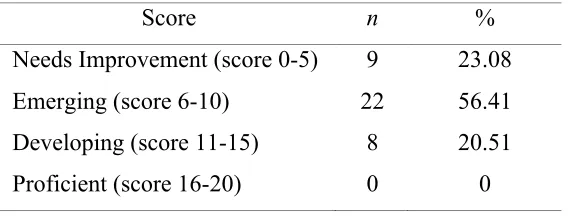
Table 4.1 Summary of Assessment Results...57
Table 4.2 Oral Language Achievement by Descriptor ...59
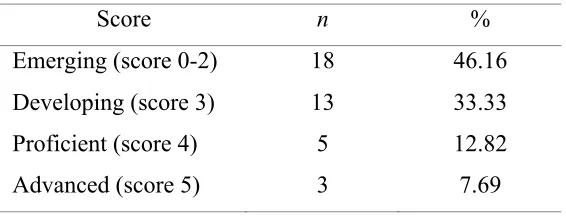
Table 4.3 Reading Comprehension Achievement ...59
Table 4.4 Listening Comprehension Acheivement...60
Table 4.5 Results of Pearson’s Correlation Coefficient (r) ...60
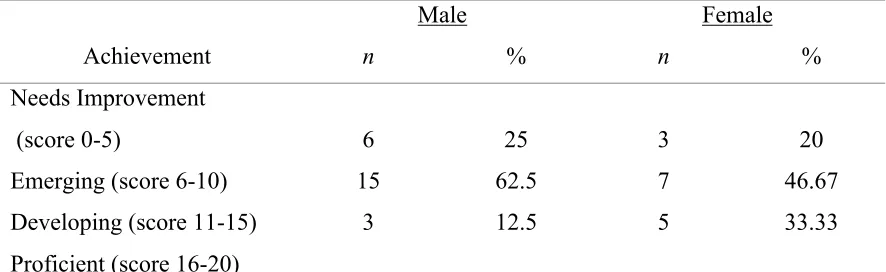
Table 4.6. Oral language achievement scores based on student gender ...61
Table 4.7. Reading comprehension achievement scores based on student gender ...62
Table 4.8. Listening comprehension scores based on student gender. ...62
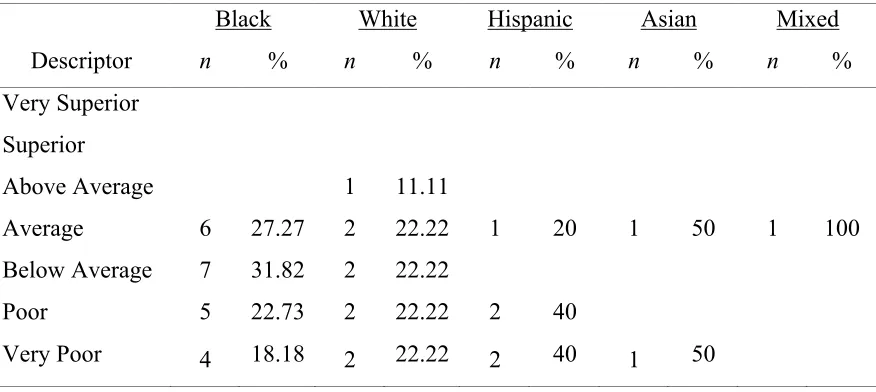
Table 4.9 Oral Language Achievement by Race ...63
Table 4.10 Reading Comprehension Achievement by Race ...64
Table 4.11 Listening Comprehension Achievement by Race...64
Table 4.12 Oral Language Achievement of Students with Prior Schooling...65
Table 4.13 Reading Comprehension Achievement of Students with Prior Schooling...65
List of Abbreviations
DAP...Developmentally Appropriate Practice
DIBELS ...Dynamic Indicators of Basic Early Literacy Skills
DiP ...Dissertation in Practice
DRA-2 ...Developmental Reading Assessment 2
MGES...Morning Glory Elementary School (pseudonym)
NC Task...Narrative Comprehension Task (Paris & Paris, 2003)
PoP...Problem of Practice
SES ...Socioeconomic Status
Chapter 1: Introduction
Topic
Kindergarten has changed from a place of play and discovery where students first become adjusted to school to a place focused on creating academics with high
expectations for the quality and quantity of reading and writing that the students are expected to attain. Recently, questions have been asked regarding what is
developmentally appropriate for kindergarten and what should be expected of early childhood classrooms is being questioned (Carlsson-Paige, McLaughlin, & Almon, 2015). What used to be expected from our first grade students is now an expectation for our kindergarten students. Kindergarten has become the new first grade (Miller & Almon, 2009). The latest standards presume students have already had experiences where language and early reading skills have been developed. However, in reality, in the researcher’s Title I school, the majority of kindergartener students enter school with no previous education and are likely not developmentally ready for the presented learning targets.
Problem of Practice
Education, 2011). With Morning Glory Elementary School being a high poverty, Title I school, our incoming kindergarteners often lack this necessary language development. Standards and curricula are created based upon the needs of white-middle class students, thus causing schools to operate as a deficit-model when their demographics do not meet that target. A lack of language is perceived based upon those norms, but regardless of the perceived need for language development, the high expectations required of
kindergarteners pushes our kindergarten team to immediately start reading instruction. Rather than filling in the gap some students have with oral language, we begin phonics instruction during the first week in order to implement reading groups several weeks into the school year.
Morning Glory Elementary School is a personalized learning school. This means that our vision is to provide instruction to students based on their individual needs. By filling gaps in learning rather than skipping over them, children should experience more success. Pushing students when they are not ready will only end in frustration and less overall academic success. Expectations derived from the state standards expect students to have a foundation in oral language and reading skills. Yet, the reality is that, “two-thirds of America’s kindergarten teachers believe most young children are academically unprepared for school when they enter kindergarten” (Preparing for Kindergarten, 2012, p. 28).
Statement of Purpose
of kindergarten is appropriate for her group of students, or if more developmentally appropriate practices, such as oral language instruction for those who need it at the start of the year, will help students meet the district’s reading goals.
Rationale
Teachers did not create the idea of developmentally appropriate practices for students—rather, the material stems from theories. Specifically, it is related to the ideas and theories of Lev Vygotsky and Jean Piaget. Both Vygotsky and Piaget believed that learning is routed in play for children (Mooney, 2000). During playtime in the
kindergarten classroom, students are able to develop oral language by working with peers on activities that may be described as play but incorporate cognitive skills.
Vygotsky’s theory of the Zone of Proximal Development demonstrates that it is important for teachers to “observe children carefully and plan curriculum that encourages children’s emerging abilities” (Mooney, 2000, p. 84). Therefore, we need to meet each student’s developmental needs and plan activities that will take him or her to the next level. For instance, we would not plan an algebra lesson for first graders unless there was proof they were ready for it (Crain, 2000). Teachers should not jump students’ learning up the ladder without the lower rungs in place.
Language learning is another area that is important for cognitive development. Vygostky believed that through working on a child’s language, one was, at the same time advancing his or her cognitive development (Mooney, 2000). In order to do this,
kindergarten classrooms need to place more emphasis on play and oral language development.
Unfortunately, these theorists represent how kindergarten should be, and not necessarily how it is. Early childhood education is going backwards rather than forwards in its progress toward meeting the needs of students. The difficulty lies within attempting to merge the developmentally appropriate practices outlined by these key theorists with 21st century requirements of rigorous curriculum and importance placed on testing and data.
Conceptual Framework
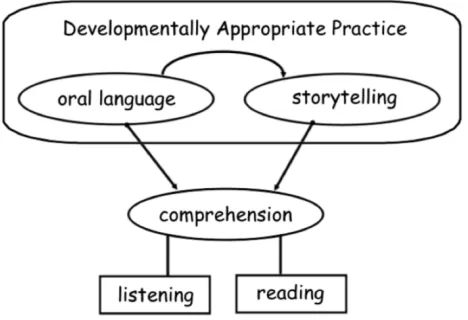
The key constructs that will be investigated in this study are developmentally appropriate practices for kindergarten, oral language, storytelling, and comprehension.
A conceptual framework for the aforementioned constructs in this study is represented in Figure 1.1. Developmentally appropriate practice (DAP) refers to the learning strategies and curriculum that should be introduced to kindergarteners. This decision is made based on where 4 to 6 year olds are developmentally and what they can handle emotionally and academically. According to Vygotsky, students in this age range need to be provided instructional support, or scaffolding, at their Zone of Proximal Development (ZPD) (Mooney, 2000). Thus, students need to be assessed individually and teachers must instruct them based on that assessment and not necessarily based on standards the school district has in place. Piaget and Vygotsky agreed that this type of learning is best done through play in which children are involved in cognitive and language development (Mooney, 2000).
In order for this learning to occur, oral language instruction needs to be provided in kindergarten. Practice and instruction in oral language, as well as having students engage in storytelling, are DAP for kindergarteners. Oral language concerns a child’s vocabulary as well as his or her ability to speak clearly and fluently and understand conversations with others (Preparing for Kindergarten, 2012). Not all students begin kindergarten with these skills in place. According to Burke (2010), “often overlooked in the race to teach young children to read is the development of their oral language
abilities” (p. 26).
Storytelling is a DAP that utilizes and strengthens a child’s oral language. Teachers are able to use play, as suggested by Piaget and Vygotsky, in order to have children engage in oral storytelling. Through being allowed to play with words in
understanding of stories and structure (Burke, 2010). These DAP’s of oral language and storytelling are able to work together to influence a child’s comprehension.
Comprehension can be defined as “a process in which readers construct meaning by interacting with text through the combination of prior knowledge and previous experience, information in the text, and the stance the reader takes in relationship to the text” (Pardo, 2004, p. 272). In this framework, comprehension refers to listening to and reading texts. In kindergarten, reading comprehension is related to both wordless picture books and emergent texts. Due to the timing of this study, it will focus on wordless picture books in regard to reading comprehension since the majority of kindergarten students cannot read emergent texts at the beginning of the school year.
Overall, this study will look at kindergarteners’ oral language skills. It will then examine the same students’ listening and reading comprehension. Reading
comprehension will be defined according to the ability to read the pictures of a wordless picture book due to students’ limited reading ability at the beginning of the school year. The researcher then examines whether there is a relationship between language and comprehension, as well as analyze overall achievement in each area, to determine if the aforementioned DAP’s should be utilized more at the beginning of the school year in order to increase comprehension later.
Methodology
Positionality Statement
involvement that her students encounter. It is because of this upbringing that she has worked hard to become a teacher and constantly seeks to better herself for the benefit of students and the school community. Growing up, the researcher’s parents always valued education. It is due to the values they instilled in the researcher that she is pursing her doctorate in education.
As a preschooler, watching her brother in elementary school and feeling jealous, the researcher had her mother create homework for her to complete each night. During elementary school, she constantly played school at home enrolling dolls, stuffed animals, and neighbors who were not always thrilled at the prospect of more work on weekends and in the summer. In middle and high school, free time was spent teaching and helping children. The researcher babysat, worked at a daycare that stressed academics, taught church school, and volunteered at Head Start and the local elementary school. Going into the field of education was not a choice: it was a calling from a young age.
The researcher currently works as a kindergarten teacher in a Title I school in coastal South Carolina. In addition to teaching, she has previously been the chair for her grade level, has sat on the school PBIS (Positive Behavior Interventions and Supports) committee, and has attended monthly kindergarten literacy cohort meetings. This
school district. Chapter 2 of this dissertation, which includes a review of the literature, will delve more into the researcher’s philosophy concerning leadership and research.
Action Research
Action research was utilized in order to answer the research question. It is a method used by a researcher who is invested in a situation and seeks a change that will benefit her or his teaching and the learning of students. This method of research is used in order to improve education in a planned way. It involves researcher taking on the role of a participant who investigates relevant questions (Mertler, 2014). However, action research does not usually provide a one-time answer. It is a cyclical method that requires constant reflection on the part of the researcher in order to test out ideas that may need to be changed and implemented again (Mertler, 2014). There are four specific stages of action research: the planning stage, the acting stage, the developing stage, and the
reflection stage (Mertler, 2014). While the reflecting stage is at the end, it is important to point out that reflection occurs through all stages just as it occurs consistently in good teaching. Upon reflection, the researcher may need to go through the process again in order to reach his or her goals (Mertler, 2014).
Action research was chosen rather than traditional research due to the need to be directly involved in the research process. Research took place in the researcher’s classroom among her students with the hope of finding a way to change the researcher’s teaching that will benefit student learning. In order to accomplish this aim the researcher needed to have an active role in instruction and assessment, which action research
Participant Selection
Participant selection was random due to not having any control over it. This study took place in the researcher’s kindergarten classroom and in the classroom of her teaching partner. The researcher elicited the permission of her teaching partners, and the researchers own, assigned kindergarten students’ parents. The letter of consent can be seen in Appendix A. Consent was obtained for 39 students to participate in this study.
Participants were 4 or 5 years old. Approximately 56% of students had prior schooling. The diversity of participants was based on random assignment from the school. In regard to gender, 24 students identified as male, and 15 female. Racially, 22 students identified as African-American, 9 identified as White, 5 identified as Hispanic, 2 identified as Asian, and 1 identified as mixed-race. Due to being at a Title I school, the majority of students came from low-income households; however, there was a possibility of having a few students from higher income households. The diversity, in regard to gender, race, and previous schooling, was considered when analyzing the results at the end of the study.
Research Site
Research took place in an elementary (grades CD through 4) school in coastal South Carolina. It is a public, Title I school in an urban area. According to the 2014 South Carolina State Report Card, the school is meeting, but not exceeding standards. A new overall rating will not be provided until spring 2018. The school serves
ethnicities: Asian, Hispanic, White, and Pacific Islander. Recently the English as a second language (ESOL) population has been on the rise. However, the entire school is not part of the study. The researcher’s focus is on two of the five kindergarten
classrooms in the school.
Even though the study concentrates on two kindergarten classrooms, the research will ultimately be applicable to the school as a whole. While kindergarten is not a tested grade, it does provide the basic building blocks that students will build on as they
progress through school. Through finding a valuable, developmentally appropriate way to teach reading comprehension this research can affect the scores of the tested grades once the researcher’s students reach those grades.
Research Questions
The research question that guided this quantitative study was as follows: How does kindergarten students’ oral language relate to his or her ability to comprehend a wordless picture book and a text read to them?
Sources of Data Collection
At the beginning of the school year, three assessments were administered to students: the Test of Language Development-Primary: Fourth Edition (TOLD-P:4), the Listening Comprehension Assessment from Scholastic’s Next Step Guided Reading Assessment, and a teacher-created wordless picture book comprehension task.
the researcher to determine a score for overall language ability. Descriptions of the subtests are located in Appendix B.
Listening comprehension was assessed using the Listening Comprehension Assessment from Scholastic’s Next Step Guided Reading Assessment. This assessment asks one question in each of the following areas: vocabulary, key detail, character
analysis/analyzing relationships, inferring, and main idea. The assessment provides each student a score out of five. A copy of the teacher directions for this assessment is located in Appendix C.
While the school’s mandated reading assessment is the Developmental Reading Assessment-2 (DRA-2) it will not be utilized as the reading comprehension measure because comprehension is not scored until level 4 texts. Since a level 4 text is the reading goal for the end of kindergarten (May) it is not appropriate to use this assessment as a measure of reading comprehension at the beginning of the year. Instead, a wordless picture book was used. Students were encouraged to read the pictures to the teacher. They were then asked a series of questions to measure their comprehension of the text. This assessment is teacher-created; however, it was modeled from the Narrative
Comprehension Task (NC Task) that Alison Paris and Scott Paris (2003) developed. The NC Task can be seen in Appendix D, and the teacher-created wordless picture book comprehension assessment is located in Appendix E. Appendix F contains the letters received by the researcher for permission to reprint pages from all three-assessment measures.
correlations. Chapter 3 of this dissertation will describe the research design and instruments in more detail.
Limitations
This study was only able to determine that a connection exists between oral language and reading comprehension. The study could not determine whether there was any causation between these variables or how, exactly, they relate. In addition, this study included participants from two classes: the researcher’s students and her co-teacher’s students. Due to testing occurring in the beginning of the kindergarten year, results of the assessments could be skewed due to the lack of a relationship between the researcher and the participants. The researcher knew her students for only two-weeks, and did not have much contact with her co-teacher’s students at that point. This lack of a relationship could have resulted in students not being as open with their talking and answers, which would greatly affect the results of this study. Completing the testing once trust and a relationship had been built may have affected the accuracy of the assessments.
Dissertation Overview
Chapter 1 of this DiP was a brief overview of the completed research. In Chapter 2, the researcher delves into prior research and literature related to the DiP’s problem of practice. Chapter 3 details the specifics of this study, such as the participants, the research setting, the research design and instruments, and data analysis strategies. Chapter 4 offers an overview of the findings in consideration of the research question. Thereafter, Chapter 5 includes a summary of results, an interpretation of their
Conclusion
The present research study looked at the achievements of two classes of
Chapter 2: Literature Review
Introduction
The United States, as well as the industrialized world, expect more and more of young students. In fact, kindergarten has become the new first grade (Miller & Almon, 2009). What used to be expected from our first grade students is now an expectation for our kindergarten students. The latest standards presume students already had experiences wherein language and early reading skills were developed. In reality, though, many kindergarteners are entering school with no previous schooling and are likely not developmentally ready for the presented learning targets. Students are entering kindergarten at four or five years of age and are being rushed into reading and writing instruction in order to meet the demands of society. Can we require students to read and write stories when they cannot orally tell or retell one? Recently, questions have been asked regarding what is developmentally appropriate for kindergarten and what should be expected of early childhood classrooms (Carlsson-Paige, McLaughlin, & Almon, 2015). It is important for teachers to meet their students’ developmental and academic needs in order to provide the best instruction to help them reach grade-level standards.
The identified ‘problem of practice’ for this DiP revolves around kindergarten in the United States and specifically the State of South Carolina where the participant
researcher is a teacher. The researcher is interested in the current phenomenon of reading curriculum and pedagogy in kindergarten and the pressures put on students in
contemporary public school classrooms in the United States.
Problem of Practice
Currently at Morning Glory Elementary School (MGES) [pseudonym], many students begin the school year without the necessary pre-requisites for reading. From the research, it is clear that a strong foundation in oral language helps a child learn to read (Department of Education, 2011). With Morning Glory Elementary School being a high poverty, Title I school, our incoming kindergarten students often lack this necessary language development. Standards and curricula are created based upon the needs of white-middle class students, thus causing schools to operate as a deficit-model when their demographics do not meet that target. A lack of language is perceived based upon those norms, but regardless of the perceived need for language development, the high
expectations required of kindergarteners pushes our kindergarten team to immediately start reading instruction. Rather than filling in the gap some students have with oral language, we begin phonics instruction during the first week in order to implement reading groups several weeks into the school year.
Expectations derived from the state standards expect students to have a foundation in oral language and reading skills. However, the reality is that, “two-thirds of America’s kindergarten teachers believe most young children are academically unprepared for school when they enter kindergarten” (Preparing for Kindergarten, 2012, p. 28).
Statement of Purpose
The purpose of this action research study is to examine the oral language skills of kindergarten students and the relationship of those skills with comprehension. It is the goal of the researcher to determine whether the academic push toward reading at the beginning of kindergarten is appropriate for her group of students, or if more
developmentally appropriate practices at the start of the year, such as oral language instruction for those who need it, will help students meet the districts reading goals.
Research Questions
The research question that guided this quantitative study was as follows: How does a kindergarten student’s oral language relate to his or her ability to comprehend a wordless picture book and a text read to them?
Philosophy
An effective leader values the opinions or and collaborative opportunities with others (Grogan & Shakeshaft, 2011/2013; Leithwood, Harris, & Strauss, 2010/2013; Robinson, 2011/2013; Sergiovanni, 1992/2013; Snyder, 2006/2013). Effective leaders accomplish their aims through using collective leadership, which is leadership that involves working together, soliciting diverse opinions, and sharing power (Grogan & Shakeshaft, 2011/2013). It includes members of the school faculty as well as parents and the entire school community. A leader who works hard to create meaningful community involvement creates a positive school culture that leads to increased student performance (Gordon & Louis, 2012/2013; Leithwood, Harris, & Strauss, 2010/2013). This is
important because, ultimately, the goal of being a school leader is to make decisions that best serve the needs of students. In order to make this happen, leaders need to “start viewing parents and community stakeholders as vital partners in the learning process” (Gordon & Louis, 2012/2013, p. 361).
In addition to collaborating, it is also important for a leader to set up a culture of respect and openness that is centered on important values such as creating life-long learners. Certain qualities of a healthy culture should be established and maintained including collegiality, trust, support, celebration, and communication (Barth, 2004/2013). Leaders should create an environment in which their employees feel comfortable coming to them for direction or guidance (Snyder, 2006/2013). Trust needs to be developed through respect, a show of concern, and the availability of an open door policy
Essentially, a good leader is one who promotes education, regardless of his or her exact job title. Currently, the researchers view of leadership involves a teacher who is the leader of her classroom and strives to be a leader among her colleagues. However, the values and ideas that make up this philosophy are ultimately transferable to any leadership position.
Leaders have the courage to do what is right. They must be equipped to make important decisions and embrace change when needed. Changes occur yearly; a change can pertain to curriculum, assessment, or pedagogy, and it can potentially separate people into categories of those who are eager for it, those who grudgingly accept it, and those who refuse to be a part of it. Leaders must work hard to bring people together when a change will have a positive outcome. They must also be brave enough to speak up if they feel a change could have a negative effect.
Educational leaders always have student learning in mind. Student’s education should prepare them for the world in which they exist and for the choices and challenges they will face. We should understand that to be a happy and productive member of society, certain emotional characteristics such as empathy, compassion, self esteem, and reason should be intermingled with learning to read, write and compute mathematic equations. The latter will help students function in the world and become independent while the former will help them be happy in the world and coexist with others. A good leader is one that will lead his or her students by setting this example.
all mistakes are learning opportunities and that together they will learn. While she does think that students should be corrected if they have not mastered a concept or skill, she seeks to do so in a manner that is not belittling and will leave them with a confidence in their abilities as well as with a new goal. The researcher believes in teaching and disciplining each student with dignity and respect.
Another goal for leaders is to help determine how each child will succeed in the classroom as well as outside of school. This may seem like a lofty and arduous task but if one child fails to learn then we need to work harder to get through to her or him. The researcher does not want to be the type of leader, who hinders learning by inducing fear. Rather, she seeks to foster an atmosphere of positive emotions and to instill a desire to be helpful to all students in the class. She believes in promoting a school environment where caring and compassion are just as important as academics. This encourages students to be more socially adept and empathetic to all individuals inside and outside of the classroom.
This philosophy of leadership demonstrates the researcher’s readiness for research and for taking on the leadership role that comes with it. The researcher recognizes, understands, and embodies the qualities needed to be a leader for the completion of this action research study. Through taking on a leadership role by researching the
relationship and achievement of oral language, storytelling, and comprehension of
Purpose of the Review
A literature review was conducted for this study through focusing on the areas of developmentally appropriate practice (DAP), comprehension, and oral language. In general, the purpose of completing a literature review is to provide a researcher with a deeper understanding of current and historical literature and research studies pertaining to their problem of practice. Conducting a review of literature enables a researcher to better formulate her research problem, to gain insight into different ideas, perspectives, and approaches, and to help the researcher understand the findings from her own study
(Leedy & Ormrod, 2005). According to Leedy and Ormrod (2005), ”The more you know about investigations and perspectives related to your topic, the more effectively you can tackle your own research problem” (p. 65). Thus, it is the job of the researcher to read as much as she can about her topic in order to become an expert in that area.
When beginning a study, reviewing research allows the researcher to delimit the research problem. It also helps the researcher to find gaps in what has been done in order to direct the current study. Additionally, reviewing related literature can aide in
uncovering an appropriate methodology and research design for the researcher’s
proposed study. It allows the researcher to discover what has been done before and what has worked as well as suggestions for how to try it differently. Finally, through
Without a review of literature, the researcher would ultimately be giving an opinion without a solid base. This review must occur in order to provide rationale for the researcher’s problem of practice and methodology and to substantiate any claims made due to the results from the study.
Methodology
Action Research
To develop a solution to this study’s problem of practice, action research was utilized. Action research is a method used by researchers who are invested in a situation and seek a change that will benefit them as teachers or the learning of their students. This method of research is used in order to improve education in a planned way, wherein the researcher is a participant and the questions are relevant to her (Mertler, 2014).
However, action research does not usually provide a one-time answer. It is a cyclical method that requires constant reflection on the part of the researcher in order to test ideas that may need to be change and undergo reimplementation (2014). There are four
specific stages of action research: the planning stage, the acting stage, the developing stage, and the reflection stage (2014). While the reflecting stage is at the end it is important to point out that reflection occurs through all the stages just as it occurs consistently as good teaching practice. Upon reflection, the researcher may need to go through the process again in order to reach her goals (2014).
account teachers’ points of view, the complexities of the teaching-learning process, or the practical challenges teachers must address in their classrooms on a daily basis” (p. 22). Action research allows teachers to have direct involvement in the research process to determine the best practices because they act as participant researchers and are using their own environments (e.g., schools and classrooms), to ensure relevance, to collectively reflect on data, and to share effective practices with their colleagues.
Based on the identified ‘problem of practice’ and in order to answer the aligned research question the researcher used a quantitative action research design. Quantitative action research is used to determine relationships among constructs when data can be quantified as numerals. This study looks at two main variables: (a) oral language and (b) comprehension. The variable of comprehension will be separated into two measures: reading comprehension and listening comprehension. These variables were measured in each student in order to determine achievement levels and if any relationships existed. Specifically, this study will examined the relationship between these variables to
determine if oral language has an effect on a kindergarten student’s ability to comprehend different types of text. Therefore, in regard to specific designs of quantitative action research studies, in order to determine if a relationship existed within her students’ beginning-of-the-year data, the researcher used a correlation design. Chapter 3 of this dissertation will describe the research design in detail.
Related Studies
Children’s Oral Language: Effects of Task”, applied repeated measures analysis of variance to determine the areas of oral language that were used for different tasks (Nurss & Hough, 1985). While this study included more variables than the present study, finding correlations proved effective to observe relationships between each oral language task. In addition, when looking at narrative comprehension, Paris and Paris (2003) also chose to use correlation to determine if a relationship existed between variables. Spira, Bracken, and Fischel (2005) also used correlation when looking at kindergarten measures and the extent to which scores changed each year.
Another oral language study examined the effectiveness of a specific literacy intervention using pre- and post-tests (MacDonald & Figueredo, 2010). This design may be incorporated into a later study. If a correlation is found between oral language and comprehension, then the next step may be to implement a change in instruction that would best be assessed using a pre-test, post-test design.
Theory
Developmentally Appropriate Practice
Joel Spring (2014) touched on the idea of developmentally appropriate practices in The American School: A Global Context. Concerning teaching methods, Spring (2014) discussed Johann Pestalozzi’s idea of methods of teaching being related to human
young children are not capable of reasoning and instead need to learn from experience and nature (Spring, 2014). Both Pestalozzi and Rousseau recognized there are different levels of human development and the need to alter methods of teaching depends on a student’s level.
Through the work of theorists John Dewey, Jean Piaget, and Lev Vygotsky the importance of developmentally appropriate practice has been further emphasized. According to Jean Piaget, kindergarten students are in the preoperational stage of development (Mooney, 2000). In this stage, children are forming their own knowledge based on their experiences (Mooney, 2000). Dewey stresses the importance for teachers to observe students to determine their interests and the experiences they are ready to have (Flinders & Thornton, 2013; Mooney, 2000). However, in contemporary kindergarten classrooms, there is too much that is mandated and only minimal time for students to have worthwhile experiences that may result in natural learning.
One study demonstrated how teachers recognize the need for DAP with
kindergarten students, but the pressure of academic requirements causes these teachers to stray from what they know is best (Parker & Neuharth-Pritchett, 2006). This is due to the pressure for kindergarten students to meet “inappropriate expectations including
Oral Language
Elliot W. Eisner (2001/2013) stated, “The function of schooling is not to enable students to do better in school. The function of schooling is to enable students to do better in life” (p. 281). The purpose of school is to help students positively contribute to and succeed in life- not simply to excel on tests. One way to use schools to prepare students for life rather than for tests is through helping students engage in challenging conversations (Eisner, 2011/2013). Teachers need to allow time to talk and work through problems using conversation. As Eisner (2011/2013) noted, “Perhaps we should be less concerned with whether they can answer our questions than with whether they can ask their own” (p. 283).
Language learning is an important component of cognitive development. Lev Vygotsky believed that through working on a child’s language, one was at the same time advancing the child’s cognitive development (Mooney, 2000). In order to do this, kindergarten classrooms need to place greater emphasis on play and oral language development. A strong foundation in oral language helps a child learn to read
(Department of Education, 2011). Thus, we need to rethink the stresses we are putting on kindergarten students to begin reading early in the school year. Instead we need to focus more on language development and developmentally appropriate practices of play and experience in order for students to be more successful in the long run.
Reading
together during the act of reading. Other reading theories include the top down theory and the bottom up theory. The top down theory emphasizes that meaning is the focus when trying to read text. The bottom up theory, on the other hand, asserts that phonics must be taught first; meaning occurs after accurate decoding (Department of Education, 2011).
As Lucy Calkins (2001), a member of the Teacher’s College Reading and Writing Project based at Columbia University, asked, “If we want to help our children think deeply about texts and live comfortably in the world of ideas, won’t we want to introduce them to this kind of thinking from the very start?” (p. 305). This ‘thinking deeply’ about texts is how young children engage in comprehension. According to Calkins (2001), even young children need to be taught about and engaged in comprehension.
Comprehension refers to the process in which readers create meaning with a text through their use of prior knowledge and experience, the information presented, and their
attitudes toward the text (Pardo, 2004). Marie Clay (1991) defined reading as “a message-getting, problem solving activity which increases in power and flexibility the more it is practiced” (p. 6). Thus, reading is not simply the process of decoding words but is instead the ability to make meaning or to comprehend.
converge” (p. 24). When related to Clay’s viewpoint, speech refers to discussions and
practical activity refers to the act of reading.
History
Origins of Kindergarten
The concept of kindergarten originated from Friedrich Froebel in Germany in 1840 and was adapted in the United States in the 1860s and 1870s (Spring, 2014). Until Froebel’s introduction of kindergarten, students under age 7 did not attend school (Brosterman, 1997). Froebel’s view of kindergarten was that it should be a place where children explore their interests and the teacher merely serves as a guide (“Friedrich Froebel,” 2000). Students engaged in building with blocks, singing, dancing, drawing, using clay to make models, paper-cutting, and observing nature (Brosterman, 1997). Kindergarten was intended to be a place of self-discovery. The work done in
kindergarten “would have been considered play outside of the schoolroom” (Brosterman, 1997, p. 12). Rather than being told what to learn, teachers simply guided students in order to meet individual needs.
Frobel’s kindergarten was designed to meet each child’s need for: physical activity, the development of sensory awareness and physical dexterity, creative expression, exploration of ideas and concepts, the pleasure of singing, the experience of living among others, and satisfaction of the soul. (“Friedrich Froebel,” 2000, p. 63)
problems learning the three Rs or anything else” (Brosterman, 1997, p. 39). Through play and discovery, Froebel prepared students for the academic work that lay ahead.
When the idea of kindergarten was adopted into the United States, it was based on Froebel’s ideas. Kindergarten was meant to provide socialization, protect children from negative influences, and prepare them for regular schooling (Spring, 2014). Ultimately, the purpose of kindergarten was more for socialization and the teaching of school norms than for the teaching of academic skills. Attitudes about this purpose changed drastically in the 1970s. Rather than worry about protecting children, the concern was now to prepare them for what was ahead (Spring, 2014). This change in society’s viewpoint of childhood caused a change in how kindergarten needed to function. Rather than using play as a method for learning and allowing children to cultivate their imaginations, children are now tested on literacy and math skills (Miller & Almon, 2009).
In 2002, The No Child Left Behind Act (NCLB) placed more stress on academics. About 56% of children were enrolled in full-day kindergarten in 1998, whereas in 2014 that number increased to 80% (Bassok, Claessens, & Engel, 2014). As Spring (2014) noted, “Preparation replaced protection and innocence as even children in kindergarten were educated to be global workers” (p. 353).
Standards and Curriculum
According to Sleeter and Stillman (2005/2013), “Across the United States, in an attempt to raise standards for student learning, states have developed curriculum
Standards (SCCCRS) for English Language Arts. Both sets of standards are highly similar at the kindergarten level. However, the new state standards address the need for developmentally appropriate practices in kindergarten.
In regard to both Inquiry-Based Literacy Standards, and Communication
Standards, the need for daily opportunities for play and exploration are addressed in the SCCCRS (South Carolina, 2015). While it is imperative that the importance of play and discovery is once again included in the standards, academic requirements for reading comprehension are still high. The SCCCRS for English Language Arts (2015) still require students to read emergent level texts with purpose and understanding and also require higher-level comprehension of texts read aloud.
While emergent level texts are thought to be simple, repetitive texts (a guided reading level of B), most districts in SC require kindergarteners to finish the year reading at a guided reading level C or D (or a DRA level of 4-6). Thus, kindergarten teachers need to find a way to take students who enter in the fall with a limited understanding of the alphabet, story structure, and often times language in general and find a
developmentally appropriate way to have them successfully exit in May. In particular, students need to be able to read as well as understand texts read both independently and aloud at levels often higher than developmentally appropriate.
In 2014, South Carolina passed The Read to Succeed Act aimed at increasing literacy across the state. Portions of the act look specifically at early childhood education, and early reading. For instance, Element 6 calls for expanding
pre-kindergarten may result in more students being ready to learn to read in kindergarten. In addition, Element 2 explains that the implementation of readiness assessments will be required for both pre-kindergarten and kindergarten students (South Carolina Department of Education, 2015). These assessments will ensure teachers are aware of student’s beginning literacy levels; however, they do not specifically address the issue of those students who are not developmentally ready for the academics involved in kindergarten.
The National Institute of Child Health and Human Development (NICHD) sponsored The Foorman Study, which resulted in a push for phonics instruction for beginning readers (Sleeter & Stillman, 2005/2013). Phonics instruction helps a child learn associations between letters and sounds and how to use them effectively to read words. However, it does not instruct students in regard to comprehending what he or she reads. Reading is considered the ability to both decode and read words but also to create meaning from text. The Reading First initiative’s goal is to have students reading at, or above, grade level by the time they reach third grade (“An Overview,” 2015). In order to accomplish this aim, the recommendation is to focus on five key areas in reading:
phonemic awareness, phonics, fluency, vocabulary, and comprehension (“An Overview,” 2015). In kindergarten, the focus is currently placed more on phonemic awareness and fluency than on the other three key components.
nonsense words (“AIMS web,” 2012). Essentially, this test measures how quickly students can say letter names, letter sounds, phonemes in orally presented words, and the sounds of visually shown non-real words. It does not assess the ability to read or
comprehend real texts.
The Developmental Reading Assessment (DRA) measures students’ instructional reading level in relation to their ability to decode words and understand text. This is required to be administered at the beginning, middle, and end of the year; however, the lower text levels do not include a comprehension assessment. If the goal of Reading First is to have students reading at or above grade level by third grade, then teachers need to worry more about reading as a whole (decoding and comprehension) in kindergarten rather than focusing on phonics instruction to learn to decode.
Comprehension is the process in which readers construct meaning by interacting with text through the combination or prior knowledge and previous experience, information in the text, and the stance the reader takes in relationship to the text. (Pardo, 2004, p. 272)
Comprehension is a process that needs to be modeled and taught. In kindergarten, teachers need to find a way through the use of texts read aloud and books at children’s instruction reading levels to teach the strategies needed in order to engage in true reading. While phonics instruction is a part of reading, it should not be the sole focus.
Oral Language
Oral language refers to spoken language- i.e., talking. Whether it is a
awareness activities, oracy groups, storytelling opportunities, and play centers that include elements such as blocks, a kitchen, and puppets. Of these listed methods, engaging children in phonemic awareness activities is the only method completed every day in the majority of the five kindergarten classrooms in the Title I school where research occurred. This portion of the literature review will look at oral language in regard to the functions of language and storytelling.
Functions of language. Eisner (2011/2013) commented that in order for students to do well in life, which is the true reason for schooling, they must be able to engage in intellectual conversations. In order for students to be able to develop their own questions and engage in intellectual conversations that further learning and the thinking process, they need to have been taught the basics of oral language. The term oral language
describes the ability to engage in conversations, use vocabulary and grammar correctly, ask and answer questions, listen and follow directions, and demonstrate phonemic awareness skills (i.e., identify, segment, blend, and change syllables and phonemes orally) (North Carolina State Dept., 2001). Oral language can be used for different purposes. The seven functions of oral language are as follows:
1. Instrumental (using language to get what one wants) 2. Informative (using language to tell what one knows) 3. Personal (using language to express one’s identity)
(North Carolina State Dept., 2001)
Each of these functions needs to be modeled and practiced. While this is often done in the home environment, many low-income students arrive at school without these
functions in place. Thus, it becomes the teacher’s duty to fill the gaps and strengthen that child’s oral language. This is important because “oral language is the foundation on which reading is built” (North Carolina State Department, 2001, p. 1).
Storytelling. Storytelling refers to the act of a child using her or his oral language to create or retell a story. Storytelling helps children to build story skills. Additionally, “telling a story is their way of showing understanding and interpreting what they know” (Burke, 2010, p. 40). Through incorporating storytelling into curriculum for young children, they can become readers and writers at a younger age than is typical
(Bhattacharyya, 2010). Storytelling helps build oral language, which in turn builds a stronger foundation for reading (Burke, 2010). It allows for a meaningful transition between a symbolic use of letters to genuine reading and writing (Bhattacharyya, 2010).
Comprehension
Reading skills, especially phonics and decoding, are being pushed starting at the beginning of kindergarten. However, according to the National Reading Panel’s (2000) report “Comprehension is critically important to the development of children’s reading skills and therefore the ability to obtain an education” (p. 13). Reading First, a federally funded program meant to increase the success rates of students from low-income
According to David Pearson, Reading First has resulted in less time for children to read for meaning as well as less time engaged in class conversations about texts (Allington & Pearson, 2011). In a discussion about DIBELS and early literacy, Richard Allington commented that the DIBELS assessment (focused on phonics and phonemic awareness) does not predict reading achievement and that using this as an assessment creates a society where “kids can read fast and accurately, but don’t comprehend a thing that they’re reading” (Allington & Pearson, 2011, p. 71). While children need to be taught to decode in order to read, it is not the ultimate goal of reading. The goal of reading is to comprehend a text’s meaning. Thus, comprehension of text is most important, and it is crucial that it is taught beginning in kindergarten (Pardo, 2004).
Comprehension can be linked to both oral comprehension and listening
comprehension. Oral refers to what is read, while listening is comprehension of a text read aloud to a student. Orally read comprehension in kindergarten can be assessed in terms of a student’s comprehension of pictures and/or printed words. According to the National Reading Panel (2000), “Comprehension is an active process that requires intentional and thoughtful interaction between the reader and the text” (p. 13). Deriving meaning from pictures relates to the cognitive process used when making meaning from printed words (Paris & Paris, 2003). At the beginning of kindergarten, most students cannot read printed words; thus, comprehension must be assessed in regard to the meaning derived from pictures.
Link Between Oral Language and Comprehension
success in beginning reading have long been linked” (p. 280). Combined with
experience, children use oral language when learning to read and write because it helps establish a connection between sound and print (North Carolina State Department of Public Instruction, 2001). Skill development and a foundation in oral language help students become literate learners; however, students often do not come to kindergarten with these necessities in place (MacDonald & Figueredo, 2010).
In their study concerning the role of early literacy in predicting improvement for students who had reading difficulties in first grade, Spira et al. (2005) found children who lack oral language skills and an understanding of the structure of language tended to be less able to decode and comprehend written text. Thus, children who did not have a strong base in language were less likely to make progress in reading. Spira et al. (2005) concluded that emergent literacy skills should be taken into consideration when
developing programs for both preschool and kindergarten. As they stated, “Emergent literacy curricula should be incorporated into existing early childhood programs to prepare children for formal reading experience by targeting language development” (Spira et al., 2005, p. 233).
Diversity in Language and Early Literacy
Most classroom environments are diverse. They include children of different genders and ethnicities, and from different backgrounds. Yet, the expectations set are generally the same for all students.
living in poverty most likely have parents who need to work more than one job, or need to take jobs at various hours. Thus, they become “latchkey” children who do not have support at home (Collins, Yeskel, & United for a Fair Economy and Class Action, 2013). This lack of parent involvement causes low-income students to lag behind peers when entering school. Hart and Risley (2003) found that “in four years, an average child in a professional family would accumulate experience with almost 45 million words, an average child in a working-class family 26 million words, and an average child in a welfare family 13 million words” (p. 9). Thus, children with lower Socio-Economic Status are entering school behind in language development; therefore, they are lacking in literacy.
This lack often corresponds with race, as well. The demographics and how schools are zoned result in institutional racism. As Tatum (1997/2013) noted, “There is still a great deal of segregation in our communities” (p. 65). As such, there is still segregation in our schools. At the predominantly African American Title I school where the study took place there is a connection between race and Socio-Economic Status. Due to the oppression against African Americans and the difficulties in securing adequate jobs and housing, they often fall into the lower-income bracket (Lipsitz, 1998/2013). Thus, the word gap that Hart and Risley (2003) referred to for lower-income students can be applied to African American students as well.
are feminine. These distinctions in gender, and what it means to be of one gender, are carried through to education. Boys tend to be seen as strong in math and science, while girls are thought to excel in areas of English Language Arts. According to Brozo (2006), “The notion that girls read better than boys do has become embedded in the popular consciousness” (p. 71). While the data are somewhat dated, national tests scores (around 2005) show that “girls have met or exceeded the reading performance of boys at all age levels” (Taylor, 2005, p.292). Taylor (2005) suggested for educators to incorporate more choices in reading: offering material of high interest to students could result in greater learning. Through recognizing the gender gap, “teachers can capitalize on the resources that boys already possess for becoming engaged and competent readers” (Brozo, 2006, p. 74).
Personalized Learning
In, The False Promise of the Paideia (1983/2013), Nel Noddings argued against the curricular ideas of Mortimer Adler. In Adler’s (1982/2013) The Paideia Proposal, he claimed that in order to achieve equal education, schools need to offer the same courses without any other choices (with the exception of which second language to learn). Noddings (1983/2013) challenged Adler and inquired about the students who would be subjected to the set curriculum. After all, one set curriculum cannot meet the needs of all learners.
Teachers need to find a way to give students a true equal chance at education while still ensuring the standards set forth by the state are met. How can teachers ensure each of their kindergarten students meets (or works toward) the reading standards set by the state, while taking into consideration what is developmentally appropriate for their age or for each individual learner?
According to “What Is Competency” (2015), “Competency-Based Education refers to an education system where students are placed in developmentally appropriate levels, and receive instruction on the competencies required to move to the next level.” Due to a Race to the Top Grant from the government, the district that this research is occured in is participating in this initiative, which we refer to as Personal Mastery, or Personalized Learning. Personal Mastery is defined as an approach to learning where students have ownership over their learning and teachers facilitate learning based on mastery of standards (“What is Competency,” 2015). The target school considers this to be showing 80% mastery of a standard in relation to its level of rigor. Thus, when beginning the school year, the researcher needed to consider what each child needs to know at that point, to assess each child, and to attempt to fill the gaps prior to teaching kindergarten standards. Without having the knowledge of oral language and storytelling to build on, students cannot be expect to master standards that assume they do.
Key Concepts
The key terms and definitions related to this study are as follows:
Cognitive Development: The process of acquiring intelligence, thought, and problem-solving abilities from infancy to adulthood (Dictionary.com).
Competency-Based Education: “Competency-Based Educationrefers to an education system where students are placed in developmentally appropriate levels, and receive instruction on the competencies required to move to the next level” (“What is Competency,” 2015).
Developmentally Appropriate Practice (DAP): The learning strategies that are deemed appropriate for a certain age-range based upon their levels of cognitive, social, and
emotional development.
DIBELS: Dynamic Indicators of Basic Early Literacy Skills. A standardized test designed to measure literacy skills including phonemic awareness, alphabetic principles and phonics, accurate and fluent reading, vocabulary, and comprehension (Dynamic Measurement Group, 2015).
DRA-2: Developmental Reading Assessment. A standardized test designed to measure the instructional reading level of the person being assessed.
Emergent Literacy: Literacy skills prior to conventional forms of reading and writing. The skills that help prepare a child to read and write printed words.
Functions of Language: The different purposes for which oral language is used (North Carolina State Dept., 2001).
Language Learning: The way in which a person acquires oral language.
Listening Comprehension: The ability to make meaning from words one has heard.
Literacy: The ability to read and write.
Oral Comprehension: The ability to make meaning from words one has read or narrative (pictures) one has seen.
Oral Language: Spoken language.
Personalized Learning: Refers to schools implementing a personal mastery approach to learning and an overall competency-based education outlook.
Personal Mastery: An approach to learning where students have ownership over their own learning and teachers facilitate learning based on the mastery of standards (“What is Competency,” 2015).
Phonemic Awareness: The ability to identify and manipulate specific sounds (phonemes) in spoken words.
Phonics: A method of teaching reading that relies on letters and letter sounds.
Pre-operational Stage of Development: According to Piaget, this is the cognitive stage of development in which children are egocentric, gather information from experience, can focus on one characteristic at a time, and tend to overgeneralize (Mooney, 2000).
Storytelling: The act of retelling, or creating, a story using spoken words.
Conclusion
Several conclusions can be drawn from this literature review. Kindergarten is becoming more driven by academics, and less by play and experience, due to increased demands on learning (Carlsson-Paige, et al., 2011; Miller & Almon, 2009; Parker & Neuharth-Pritchett, 2009). Though this is the case, research and experts in the field have still determined that kindergarten aged students learn best through conversation,
Chapter 3: Methodology
Introduction
The present Action Research study describes the role of kindergarten students’ oral language skills and their ability to create meaning from wordless picture books and texts read orally by a teacher. Chapter 3 of the dissertation in practice (DiP) delineates the methods applied and the research design used to address the identified problem of practice (PoP) that involves 39 kindergarten students at the researcher’s Title I school.
The review of literature in Chapter 2 of the DiP details the importance of developmentally appropriate practices (DAP’s) for young children’s learning to create meaning from texts. Parker and Neuharth-Pritchett (2006) argued over a decade ago for the need for DAP with kindergarten students. Today, the pressure for kindergarten students to meet “inappropriate expectations including academic standards that until recently were reserved for first grade” (Miller & Almon, 2009, p. 3) is high. The building blocks or what the researcher refers to as the “vital components” of reading are being ignored with the push toward academics in kindergarten. Children need to develop oral language, play and experiment with symbols and printed words because they are all important components of later reading (Carlsson-Paige et al., 2015). At the researcher’s Title I school, which is the focus of the present study, these vital components of reading are being skipped by the school district without the consideration of the negative
Problem of Practice
Expectations derived from the state standards expect students to have a foundation in oral language and reading skills. The systems upon which these standards are
developed are meant to target white-middle class students. Thus, students of poverty who are entering school with less experience with language are being looked at in regard to deficit-model, rather than focusing on how to bridge the gap. The reality is that, “two-thirds of America’s kindergarten teachers believe most young children are academically unprepared for school when they enter kindergarten” (Preparing for Kindergarten, 2012, p. 28).
Statement of Purpose
The purpose of this action research study is to examine the oral language skills of kindergarten students and the relationship of those skills and comprehension of
wordless picture books and a text read orally by a teacher. It is the goal of the researcher to determine whether the academic push toward reading at the start of kindergarten is appropriate for her group of students, or if more developmentally appropriate practices at the beginning of the year, such as oral language instruction for those who need it, will help students meet the district reading goals.
In order to help determine what is developmentally appropriate for kindergarten students and to identify how to best help them achieve the high expectations set out for them, the research question that guided this quantitative study was as follows: How does a kindergarten student’s oral language relate to his or her ability to comprehend a
wordless picture book and a text read to them?
Research Design
Using an action research model, this participant-researcher seeks to determine if there is a relationship between oral language and comprehension of wordless picture books and orally read texts in regard to her kindergarten students. Action research
inform instruction for the beginning of the year at this Title I school. A strong r-value through Pearson’s Correlation Coefficient demonstrates the need to change teaching to address more oral language instruction within the researcher’s school, while a weak value would demonstrate no strong need for a change.
Participants
Participants in this study will be based on random selection. The pool consists of students assigned to the researcher and her partner teacher’s kindergarten classes, and the actual participants will be based on parent’s permission for their child to be included in the study. A letter of consent will be sent home to explain the study and request parent approval for participation (Appendix A). After sending home this letter of consent, 39 parents gave permission for their children to participate in the study.
Participants were 4 and 5 years old at the start of the study. Approximately 56% of the students had prior schooling. The diversity of participants was based on the school’s random assignment of students to the kindergarten classes. In regard to gender, 24 students identify as male, and 15 identified as female. Racially, 22 students identify as African-American, 9 identified as White, 5 identified as Hispanic, 2 identified as Asian, and 1 identified as mixed-race. Due to being at a Title I school, the majority of students will came from low-income households; however, there was a possibility of having a few students from higher income households. The diversity, in regard to
Setting
Research will take place in an elementary (grades CD through 4) school in coastal South Carolina. It is a public, Title I school in an urban area. According to the 2014 South Carolina State Report Card, the school is meeting but not exceeding standards. The school serves approximately 760 students. As of 2014, 81% of students are eligible for free or reduced lunch; however, for the 2016-2017 school year, the school is 100% free lunch. The largest ethnic group is African American, which makes up more than half of the student population. In addition, the school is made up of the following ethnicities: Asian, Hispanic, White, and Pacific Islander. Recently, the English as a second language, ESOL, population has been on the rise. While the entire school is not part of the study, these demographics are reflected in individual classrooms. This study focuses on two out of five kindergarten classrooms in the school.
In regard to curriculum, the school allows flexibility. The adopted reading program is Houghton Mifflin Harcourt’s Journeys; however, the district expects for teachers to use readers and writers workshop, in addition to small groups and centers, to teach students. Therefore, flexibility and curriculum ownership is given to teachers to use the resources provided in order to plan for their students needs. In addition, the school is a personal mastery environment. This instructional ideology is outlined in Chapter 2 of this dissertation in practice.