Scholarship@Western
Scholarship@Western
Electronic Thesis and Dissertation Repository
11-28-2014 12:00 AM
Creativity as a Mental State: An EEG Study of Musical
Creativity as a Mental State: An EEG Study of Musical
Improvisation
Improvisation
Joel A. Lopata
The University of Western Ontario Supervisor
Dr. Elizabeth Nowicki
The University of Western Ontario
Graduate Program in Education
A thesis submitted in partial fulfillment of the requirements for the degree in Doctor of Philosophy
© Joel A. Lopata 2014
Follow this and additional works at: https://ir.lib.uwo.ca/etd Part of the Educational Psychology Commons
Recommended Citation Recommended Citation
Lopata, Joel A., "Creativity as a Mental State: An EEG Study of Musical Improvisation" (2014). Electronic Thesis and Dissertation Repository. 2552.
https://ir.lib.uwo.ca/etd/2552
This Dissertation/Thesis is brought to you for free and open access by Scholarship@Western. It has been accepted for inclusion in Electronic Thesis and Dissertation Repository by an authorized administrator of
(Thesis format: Monograph)
by
Joel Alan Lopata
Graduate Program in Educational Studies
A thesis submitted in partial fulfillment of the requirements for the degree of
Doctor of Philosophy
The School of Graduate and Postdoctoral Studies The University of Western Ontario
London, Ontario, Canada
ii
ABSTRACT
Researchers in cognitive neuroscience have used brain-imaging methods (e.g., EEG,
fMRI) to investigate the neural correlates of creative cognition and have found increased
activity in the alpha frequency band (Fink et al., 2009a, 2009b; Martindale, 1975), however
few studies have used neuroscientific measures to investigate artistic creativity. Such studies
are valuable because they share a characteristic of ecological validity. In this study I used
EEG, the Alternate Uses Test (Guilford, 1967), and the Consensual Assessment Technique
(Amabile, 1982) to substantiate a conceptualization of creativity as a mental state
characterized by a distinct pattern of neural activity. The participants were musicians with
and without previous formal institutional training in improvisation. Amongst those with
previous training, frontal upper alpha synchronization in the right hemisphere was greater
when musicians improvised than when they played back and listened to melodies.
Originality scores correlated with frontal upper alpha synchronization in the right hemisphere
during improvisation, and frontal upper alpha synchronization in the right hemisphere
correlated with expert ratings of created products. The relationship of frontal upper alpha
synchronization in the right hemisphere during improvisation and the quality of created
products was mediated by aptitude for originality. This suggests that training acts as a
pathway for the development of creative gifts into creative talents observable in the quality of
created products.
Keywords
iii
DEDICATION
This dissertation is dedicated to my mother Chava who provided immense support
and infused a love of teaching and learning, my father Abraham who shared his love and his
love of music, my brother Ron who elicited my love of the piano and who introduced me to
jazz music, Paul Farkas who shared his excitement for innovative thinking, and my nephew
iv
ACKNOWLEDGMENTS
I am very grateful to my supervisor Dr. Elizabeth Nowicki for her immense and
continued guidance, supervision, support, and confidence throughout the duration of this
project, to Dr. Marc Joanisse for his guidance and for welcoming me to conduct research in
his EEG lab, and to Dr. Carol Beynon for her assistance and suggestions at key points along
this journey. I also am appreciative of Dean Vicki Schwean, Dr. Jacqueline Specht, and Dr.
Stephen Bird for their support and enthusiasm for my progress and this research. Thank you
to my colleagues Adrienne Sauder for assistance in editing and formatting and Jo Ann
Iantosca for assistance with inter-rater reliability measures.
I thank all the wonderful musicians for contributing as participants and as
adjudicators. I also thank Miles Davis, Thelonious Monk, John Coltrane, Keith Jarrett, Duke
Ellington, and countless other legends of improvisation for their inspirational voices in
v
TABLE OF CONTENTS
ABSTRACT ... ii
DEDICATION... iii
ACKNOWLEDGMENTS ... iv
TABLE OF CONTENTS ... v
LIST OF TABLES ... vii
LIST OF FIGURES ... viii
LIST OF APPENDICES ... ix
CHAPTER 1: Introduction ... 1
Organization of the Study ... 4
Literature Review ... 5
Concepts of Creativity - Localizing the Construct ... 5
Hierarchy of Consciousness ... 10
Electroencephalography ... 14
Alpha Activity during Creative Cognition ... 15
Interpretations of Alpha Activity During Creative Cognition ... 20
Heritability of Creativity ... 22
Creativity as an Emergenic Phenomenon ... 24
Gagné’s Theory of Talent Development ... 27
Artists’ Experience of Creativity ... 29
Studies of Artistic Creativity ... 32
Assessment of Creativity... 35
Summary ... 42
Aims, Research Questions, and Hypotheses ... 45
vi
Recruitment ... 51
Participants ... 51
Measures ... 54
Procedure ... 55
EEG Procedures ... 59
CHAPTER 3: Results ... 63
Demographic Differences between Groups ... 64
Reliability of Measures ... 64
Electroencephalogram (EEG) ... 68
Alternate Uses Test (AUT) ... 76
Musical Improvisation Performance Questionnaire (MIPQ) ... 80
Partial Correlations ... 84
CHAPTER 4: Discussion ... 88
EEG ... 88
Alternate Uses Test ... 92
Musical Improvisation Performance Questionnaire ... 96
Partial Correlation ... 100
Implications of the Current Study ... 101
Limitations ... 107
CHAPTER 5: Summary and Conclusions ... 113
REFERENCES ... 117
vii
LIST OF TABLES
Table 1. Inter-rater Correlations of Mean Subscale Scores of the Music Improvisation Performance Questionnaire by Adjudicator……… 66
Table 2. Inter-rater Correlations of Mean Subscale Totals and Mean Measure Totals of the Music Improvisation Performance Questionnaire by Adjudicator….……….... 67
Table 3. Means and Standard Deviations for Frontal High Alpha Synchronization in Left and Right Hemispheres by Training Groups………..73
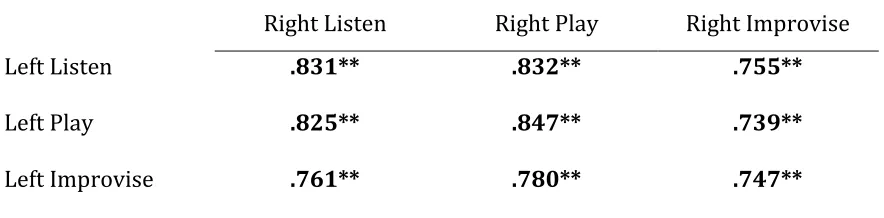
Table 4. Non-FITI Group (n=12) Correlations between Frontal High Alpha Synchronization in Left and Right Hemispheres, by Experimental Task………...75
Table 5. FITI Group (n=10) Correlations between Frontal High Alpha Synchronization in Left and Right Hemispheres, by Experimental Task………...75
Table 6. Non-FITI Group (n=12) Correlations of Frontal High Alpha Synchronization During Music Tasks with Age, Music Experience, and Improvisation Experience, by Cortical
Hemisphere………..77
Table 7. FITI Group (n=10) Correlations of Frontal High Alpha Synchronization During Music Tasks with Age, Music Experience, and Improvisation Experience, by Cortical Hemisphere………..77
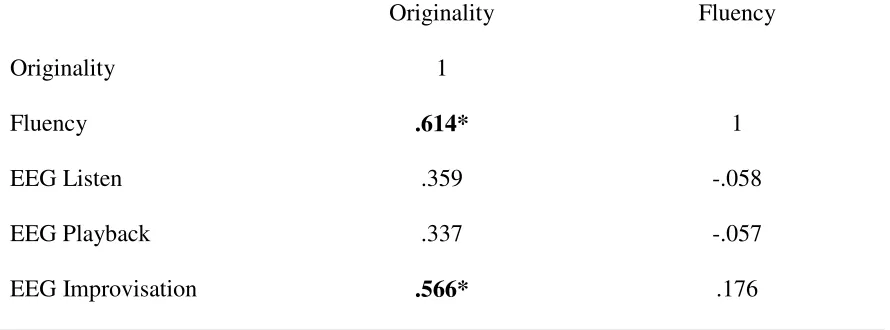
Table 8. Non-FITI Group (n = 12) Correlations between Alternate Uses Test Originality, Alternate Uses Test Fluency, and Frontal High Alpha Synchronization in the Right
Hemisphere during Listen, Playback, and Improvisation Tasks……….79
Table 9. FITI Group (n = 10) Correlations between Alternate Uses Test Originality, Alternate Uses Test Fluency, and Frontal High Alpha Synchronization in the Right Hemisphere during Listen, Playback, and Improvisation Tasks……….79
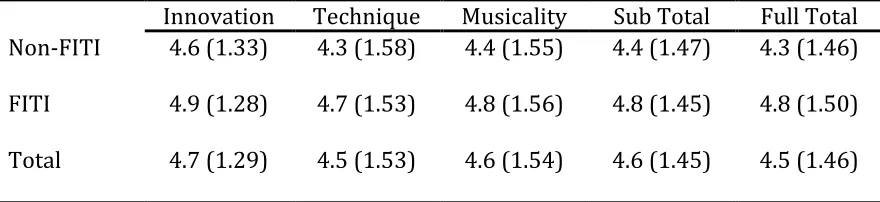
Table 10. Means and Standard deviations for Subscales, Subscale Total, and Full Total of the Musical Improvisation Performance Questionnaire………81
Table 11. Non-FITI Group (n = 12) Correlations between the Musical Improvisation Performance Questionnaire Subscales, Subscale Total, and Full Total and Frontal High Alpha Synchronization in the Right Hemisphere during Music Experiment Tasks……....83
Table 12. FITI Group (n = 10) Correlations between the Musical Improvisation Performance Questionnaire Subscales, Subscale Total, and Full Total and Frontal High Alpha
Synchronization in the Right Hemisphere during Music Experiment Tasks………...83
viii
LIST OF FIGURES
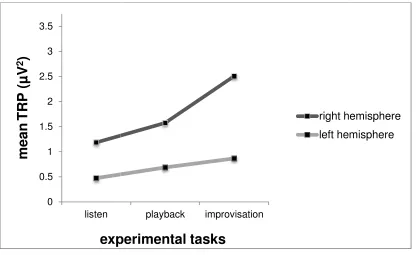
Figure 1. Frontal Upper Alpha Synchronization During Music Tasks in the Non-FITI Group………70
Figure 2. Frontal Upper Alpha Synchronization During Music Tasks in the FITI
ix
LIST OF APPENDICES
Appendix A: Ethics Approval Form………. 137
Appendix B: Recruitment Poster………... 138
Appendix C: Letter of Information………... 139
Appendix D: Musical Improvisation Performance Questionnaire (MIPQ). ... 141
Appendix E: Participant Information Questionnaire. ... 142
Appendix F: Alternate Uses Test item images. ... 144
Appendix G: Music Charts………... 148
CHAPTER 1: Introduction
Researchers in cognitive neuroscience have used brain-imaging methods (e.g.,
EEG, fMRI) to investigate the neural correlates of creative cognition and have found
increased activity in the alpha frequency band (Fink et al., 2009a, 2009b; Martindale,
1975; Martindale & Hasenfus, 1978). Dietrich (2004a) interpreted this pattern of neural
activity as evidence of a spontaneous processing mode occurring while people are
engaged in the intuitive processing of thoughts and ideas from the temporal, occipital,
and parietal lobes into the working memory buffer in the frontal brain area (i.e.,
prefrontal cortex). Although initially interpreted as cortical idling, recent research has
shown that increased frontal alpha activity is related to top-down processing, internal
focus of attention, and sensory inhibition (Buzsaki & Draguhn, 2004; Klimesch et al.,
2007; Ward, 2003). These processes are reminiscent of improvising artists’ descriptions
of the creative process (Berkowitz, 2007; Berliner, 1994; Nardone, 1997). Improvising
artists specifically have described a dissolution of self, an intuitive mental state, and a
fluctuation between intuitive and analytic mental states (Nelson & Rawlings, 2007).
Few studies have used neuroscientific measures to investigate studies of artistic
creativity. Such studies are valuable though because they share a characteristic of
ecological validity. Past research on artistic creativity has indicated that the frontal brain
areas may play a special role in creative cognition, however some researchers have found
increased alpha activity (Fink, Graif, & Neubauer, 2009) and some decreased alpha
activity (Petsche, 2002, 2005; Petsche et al., 1997). These opposing findings may be due
to the measurement of different types of creativity with some types relying on prefrontal
to delineate types of creativity and to measure frontal activity during tasks that facilitate
the cognitive processing modes specific to these individual subcreativities.
In the current study, I developed an experiential state-based conceptualization of
creativity that is hallmarked by the spontaneous processing of intuitive thoughts and the
expression of these through a medium in real time. In brief, I conceptualized creativity as
a distinct mental state involving improvisation. The skill of improvisation crosses
domain boundaries, and is necessary in any field that incorporates adaptation, problem
solving, and innovation (Limb & Braun, 2008). As a student and teacher, I have noticed a
lack of opportunity for learners to enter into creative mental states, as well as a lack of
support and guidance once engaged. It is my belief that the facilitation of such mental
states would lead to increased creativity and innovation, especially in learners with
aptitudes for creativity. However, it is first essential to investigate whether there is
neuroscientific evidence that such a creative mental state exists.
In this study I used EEG, the Alternate Uses Test (Guilford, 1967), and the
Consensual Assessment Technique (Amabile, 1982) to substantiate a conceptualization of
creativity as a mental state characterized by a distinct pattern of neural activity. Further
along in this dissertation, EEG is described in more detail in its own section and the
Alternate Uses Test and the Consensual Assessment Technique are described in detail in
a section on the assessment of creativity.
More specifically, the primary aim of this study was to use EEG to investigate
whether frontal brain wave changes occurring during spontaneous musical creativity are
different than during non-spontaneous (i.e., deliberate) musical creativity. Framing this
of creativity of different musical tasks? Differences in brain activity occurring during
time intervals of spontaneous musical creativity would support my experiential
conceptualization of creativity. This conceptualization is outlined in a later section on
conceptualizations of creativity. Further, I aimed to investigate the above differences in
neural activity (i.e., frontal alpha synchronization) in participants with training in
creativity and participants without training in creativity.
The second aim of this study was to use EEG and the Alternate Uses Test
(Guilford, 1967), a measure of divergent thinking, to investigate the relationship between
frontal alpha activity during music tasks of varying creativity demands (i.e.,
improvisation, deliberate playing, and listening) and aptitudes for divergent thinking and
originality. Framed as a research question, I asked: Do aptitudes for divergent thinking
and originality correlate with frontal alpha activity during tasks of varying creativity
demands?
The third aim of this study was to use EEG and the Consensual Assessment
Technique (Amabile, 1982) to investigate whether alpha activity during spontaneous
musical composition predicts the quality of an individual’s improvised musical
performances as rated by domain experts. Framed as a research question, I asked: Does
alpha band activity during spontaneous composition predict improvised performance
quality? I also aimed to investigate whether this predictive relationship would occur in
groups with and without formal institutional training in improvisation (FITI).
The fourth aim of this study was to investigate if aptitude for creativity mediates
the relationship between frontal alpha activity and improvised performance quality.
synchronization during musical improvisation and expert ratings of improvised musical
performances persists when controlling for aptitudes for creativity. Therefore, my fourth
research question was: Does aptitude for creativity mediate the relationship between
frontal alpha synchronization during improvisation and quality of improvised
performances as rated by domain experts?
To date, electroencephalogram (EEG) has not been used to measure the neural
correlates of spontaneous musical composition (i.e., improvisation) during ecologically
valid music tasks.
Organization of the Study
In the first chapter of this dissertation I will follow a line of reasoning that
underlies my theory that there is a distinct mental state that can be called creativity. I will
present (a) various conceptualizations of creativity including my own, (b) previous
research on brain-wave changes associated with creative cognition, (c) previous findings
on the heritability of creativity (d) Gagne’s (1997) theory of talent development (e)
artists’ descriptions of their experiences of the creative process, and (f) a background on
the assessment of creativity. In the second chapter I will discuss the methods and
procedure I employed, and in the third chapter I will present the results of the study. In
the fourth chapter I will discuss these results and my interpretations of them and will
suggest implications of my findings for education, make recommendations for future
research, and present the limitations of the study. Finally I will summarize the findings
and draw conclusions before sharing my hopes for the pragmatic application of this
Literature Review
Concepts of Creativity - Localizing the Construct
Early conceptions of creativity were mystical in orientation, with creativity often
equated to divinity and seldom differentiated from genius; however, over the past
half-century creativity has most commonly been referred to as divergent thinking or
originality (Albert & Runco, 1999). Over this period researchers have conceptualized
creativity in several ways, defining the construct as a cognitive ability, as a value
assigned to products, as novelty accepted within a social system, as a personality
dimension, and as a mode of being. In the coming sections I will outline these
conceptualizations.
The cognitive ability orientation. In a seminal address to the American
Psychological Association (APA), J. P. Guilford (1950) suggested that creativity is an
aptitude occurring in all humans that is psychometrically measurable and worthy of study
(as cited in Sternberg & Lubart, 1999). This suggestion has influenced decades of
research on the cognitive abilities underlying creative ideation.
Soon thereafter, Osborn (1953) defined creativity as ideation ability, whereby
creativity was quantified by measuring the number of possibilities an individual could
generate regarding the uses of a common object (as cited in Sternberg & Lubart, 1999).
A number of years later, Paul Torrance (1974) developed the Torrance Tests of Creative
Thinking (TTCT). These assessments involved both divergent thinking and problem
solving tasks, and was scored for (a) quantity of responses (i.e., fluency), (b) variety of
types of responses (i.e., flexibility), (c) rarity of responses (i.e., statistical originality), and
those involved in the Torrance Tests of Creative Thinking aimed at measuring individual
cognitive abilities, thereby assigning statistically reliable normative values about an
individual’s capacity to think in novel and original ways. Originality here is defined as
ideas that are substantially unique in comparison to the norm. As such, in the cognitive
ability conceptualization of creativity individuals can be labeled as being of low, average,
or high creativity. This psychometric perspective can therefore be said to conceptualize
“being creative” as a value laden label assigned to an individual based on that person’s
aptitude for divergent thinking and originality (i.e., inherent creativity). Under this
implicit understanding of the way the world is (i.e., ontology), creativity is
conceptualized as located within the individual’s mind, and as a product of objective,
normatively valued cognitive abilities.
The product orientation. Some researchers (Amabile, 1983; Sternberg, 1986)
objected to the reliance on psychometric measures of creativity in assessing creativity,
arguing that these are limited in nature. These researchers advocated for the adjudication
of samples of actual creative work by domain experts as essential to the determination of
creativity. In accord with these sentiments, MacKinnon (1978) and Runco (1989a)
suggested that analysis of the creative product is central to the measurement of creativity.
Whereas Guilford (1950), Torrance (1974), and their supporters defined creativity as the
sum of cognitive abilities residing within an individual, other researchers (Amabile,
1983; Mackinnon,1978; Runco, 1989a; Taylor, 1960; Treffinger & Poggio, 1972;
Wallach, 1976) broadened this definition to include artifacts (i.e., evidence of creativity).
This second wave of researchers located creativity as embedded in the creative product.
creativity differently, they are commensurable in that their concepts share the implicit
notion of creativity as an assigned social value.
The systems approach. Csikszentmihalyi’s (1988) systems approach to
creativity elaborated the product orientation to creativity by delineating the features
responsible for the acceptance or rejection of a creative idea or product within a bound
social system. He offered distinct definitions of terms such as the domain and the field
and in doing so explained the roles of culture and society as they affect creativity.
Csikszentmihalyi (1999) defined a field as the group of individuals that compose a
domain. These individuals collectively act as gatekeepers who decide upon whether a
new idea or product will be accepted in a specific area of study: a domain.
Csikszentmihalyi’s (1999) model is a tri-partite one. Along with the (a) cultural and (b)
societal, he also included (c) intra-personal factors (i.e., factors located within an
individual’s psychological make-up) in pre-disposing individuals towards having their
products or ideas accepted in a domain (Csikszentmihalyi, 1999).
Experiential orientations. The most well known experiential conceptualization
of creativity is Csikszentmihalyi’s (1996) concept of flow. My own personal definition of
creativity is also an experiential state-based one, as I conceptualize creativity as a unique
mental state characterized by a distinct cognitive processing mode (i.e., spontaneous
processing). Although there are some similarities between Csikszentmihalyi’s definition
and my own, there are also notable differences. Before comparing the two concepts, I
will describe the features of both.
Csikszentmihalyi’s flow theory. Csikszentmihalyi (1996) gave the name flow to
engaging in performing a task. He conceptualized creativity and flow as two separate
phenomena, defining creativity as the creation of novelty, and flow as the mental state
wherein individuals experience “an almost automatic, effortless, yet highly focused state
of consciousness” (Csikszentmihalyi, 1996, p. 110). According to his theory, any task
can be an opportunity for flow if the parameters for flow are followed or are present.
My experiential state-based concept of creativity. I conceptualize creativity as a
distinct mental state that includes (a) engagement in an activity, (b) spontaneous
processing of thoughts, and (c) the expression of these thoughts through a medium (e.g.,
voice, a writing tool, a musical instrument). For example, during jazz pianist Keith
Jarrett’s (1975) Koln concert, Jarrett was engaged in playing piano, spontaneously
composing music by channeling a stream of intuitive thoughts, and expressing these
thoughts through his piano in real time.
Although I do not wish to deny the validity of any of the previously mentioned
conceptualizations of creativity, I would like to use a different one in order to achieve
different ends through the current study: to identify the educationally relevant factors that
nurture aptitudes for spontaneous creativity. This shift in conceptualization minimizes
social value assignment (i.e., labeling) in the definition of creativity and endorses a
change in the linguistics of the words being and creative. In the cognitive ability and
product orientations, the word creative is an adjective assigned to an individual or
product by external sources (i.e., an assessment measure or an adjudicator) whereby an
individual or product is described (i.e., labeled) as creative or said to “be creative”.
Conversely, in my proposed state-based orientation being is used as a verb and creative
this sense, when a person is engaged in a creative activity that person is being creative, as
long as the above-mentioned parameters are involved. Based on the above explanation, it
can be stated that during the duration (i.e., time interval) of the Koln concert, Keith
Jarrett was being creative.
There are congruencies between Csikszentmihalyi’s (1999) concept of flow and
my own experiential concept of creativity. For example, both Csikszentmihalyi and I
refer to creativity as a distinct mental state. Also, there is evidence of distinct patterns of
neural activity occurring in frontal brain regions during both these states (Bengtsson,
Csikszentmihalyi, & Ullen, 2007; Dietrich, 2004b). However, there are notable
differences between our concepts. First, for Csikszentmihalyi, creativity is a value
assigned to a product or person by domain experts, whereas for me, it is a mental state
that is separate from the quality of the product being created. Next, Csikszentmihalyi
contends that any task can lead to the flow brain state, whereas I argue that tasks relying
heavily on logical reasoning and critical analysis are associated with a different mental
state (i.e., a deliberate processing mode).
Csikszentmihalyi (1999) and I also define flow differently. For Csikszentmihalyi,
flow is the sensation of effortlessness, ease, and focus that can occur when people are
engaged in a task, whereas for me, flow is the stream of intuitive thoughts and ideas that
emerge spontaneously during engagement in a task. Fundamentally, for
Csikszentmihalyi flow is sensation, whereas for me flow is unhindered intuitive cognitive
ideation occurring in real time. Our fingers may be pointed towards the same
conceptualizations of this state. I therefore do not approach this study as an investigation
of flow.
In the coming sections I will review research on the neural correlates of creativity,
and on the cognitive processes underlying creativity.
Hierarchy of Consciousness
Dietrich (2003) conceptualized the brain as being hierarchically ordered. In this
conceptualization, different brain areas have different functions, with some being more
basic, simple, and fundamental, and others being more complex. From an evolutionary
perspective, the brain can be viewed as having been formed from the inside out. It is
hypothesized that the innermost structures dealing with unconscious functions
fundamental to survival are the oldest and that the outer structures dealing with conscious
functions such as thinking, planning, sensing, and acting, have evolved more recently
(Passer, Smith, Atkinson, Mitchell, & Muir, 2003). Over time, random genetic mutations
gave rise to areas of the brain that increased the probability of survival and thriving.
These mutations were passed on becoming part of the species’ regular neuroanatomical
structure (Passer et al., 2003).
Anatomy of the brain and the prefrontal cortex. The human brain can be
deconstructed into three main areas: the forebrain, the midbrain, and the hindbrain. The
hind and midbrain, including structures such as the cerebellum, pons, and medulla
oblongata (as well as a variety of key bundles of neurons called nuclei), are key in
unconscious automatic functions related to survival (Carlson, 2007).
When conceptualizing a neuroanatomical hierarchy of consciousness, the
the hierarchy, whereas the increasingly integrative and complex functioning regions
reside further from the core of the brain, in the higher and more lateral regions (e.g.,
dorsolateral prefrontal cortex). The more complex of these regions are located in the
cerebral cortex, with the prefrontal cortex being the pinnacle higher-order region
(Dietrich, 2003).
The lower brain areas will not be discussed further in this dissertation because the
higher and more frontal areas have been implicated as being associated with divergent
thinking and with spontaneous artistic composition (Bhattacharya & Petsche, 2005; Fink,
Graif, & Neubauer, 2009; Limb & Braun, 2008). I will instead focus on the forebrain,
and particularly on the prefrontal cortex.
Anterior to the motor association cortex lies the prefrontal cortex. Comprising
nearly half of the frontal lobe, the prefrontal cortex is involved in integrating perceptual
information, formulating plans and strategies, and instructing the motor cortices to
execute actions (Dietrich, 2003). The sum of the processes occurring in the prefrontal
cortex is often referred to as executive functioning (Dietrich, 2003).
The prefrontal cortex is functionally divided into two regions: the ventromedial
and dorsolateral prefrontal cortices. The ventromedial prefrontal cortex has been
associated with social functioning and sense of self. Due to its complex interconnections
with the limbic cortex, Damasio (1994) theorized that the ventromedial prefrontal cortex
is involved in emotion related learning; he more incisively theorized that the
ventromedial prefrontal cortex is involved specifically in the assessment of personal
consequences to one's own behaviours. Dietrich (2004a) explained that the ventromedial
the delivery of emotional information from deep limbic structures into working memory.
Alternatively, the dorsolateral prefrontal cortex primarily receives innervation from other
regions of the cerebral cortex (i.e., temporal, occipital, parietal lobes) and its primary
output is towards the motor cortices. As such it is not related to emotion-based learning
as is the ventromedial prefrontal cortex, but rather is involved in cognitive functions such
as working memory, directed attention, and temporal integration (Fuster, 2000;
Goldman-Rakic, 1992; Knight & Grabowecky, 1999; Posner, 1994). Dietrich (2004a) explained
that the dorsolateral prefrontal cortex is involved in information processing whereby
thoughts emanating from the temporal, occipital, and parietal lobes are rendered into
conscious awareness in working memory. The functions of the dorsolateral prefrontal
cortex have been implicated in higher order cognitive abilities such as abstract thinking,
self-reflective consciousness, and cognitive flexibility. A number of cognitive
neuro-scientific theorists (Baddeley, 2000; Courtney, Petit, Haxby, & Ungerleider, 1998;
Dehaene & Naccache, 2001; Posner, 1994) have thus interpreted that the dorsolateral
prefrontal cortex is the site of “full fledged, self-reflective consciousness” (Dietrich,
2003, p. 233).
Deliberate and spontaneous processing modes and the prefrontal cortex.
Working memory has been conceptualized as the site of consciousness (Courtney et al.,
1998; Dehaene & Naccache, 2001; Dietrich, 2004a), however the manner in which
information manifests into working memory differs as a function of the cognitive
processing mode a person is in. Dietrich (2004a) delineated between two different
processing modes occurring during cognitive ideation—a deliberate mode and a
been referred to as analytical processing, whereas the spontaneous mode can be
compared to what has been referred to as intuitive processing (Shirley & Langan-Fox,
1996; Simonton, 1975). Instigated by circuits in the prefrontal cortex, deliberate
processing tends to yield thoughts that are rational, structured, and conforming to
internalized social norms, whereas spontaneous processing tends to yield an intuitive
stream of unfiltered, non-conforming thoughts manifested into working memory. In the
deliberate processing mode, attention guides the retrieval of information (i.e., semantic
memories) stored in long-term memory, whereas in the spontaneous processing mode
attention is less active, allowing for intuitive thoughts to surface into conscious
awareness. In deliberate processing, the dorsolateral prefrontal cortex is recruited in a
search engine-like process, actively retrieving specific information and rendering it in
working memory for a transient duration (Cabeza & Nyberg, 2000; Hasegawa, Hayashi,
& Miyashita, 1999). The prefrontal cortex instigates this information retrieval process in
a circuit wherein cognitive information is retrieved from the temporal, occipital, and
parietal lobes (Friedman & Förster, 2002). Conversely, in spontaneous processing the
attention system does not actively select the content of working memory but rather it
down-regulates. This allows for unguided thoughts to enter the working memory buffer
as an intuitive stream of ideas. In other words, during spontaneous processing, when the
dorsolateral prefrontal cortex is down-regulated, unpremeditated ideas surface into
working memory from the temporal, occipital, and parietal lobes (Dietrich, 2003). As
such, the quality of content rendered in working memory differs depending on whether
semantic information is retrieved by deliberate processing or whether intuitive thoughts
The prefrontal cortex has also been implicated in the function of inhibitory control
of inappropriate behaviours. Lhermitte (1983) and Lhermitte, Pilon, and Serdaru (1986)
found that frontal lobe patients were overly dependent on immediate environmental cues.
They lacked the ability to filter environmental triggers and to decide which ones were
appropriate to imitate or to act upon. The researchers interpreted that the ventromedial
prefrontal cortex is implicated in the filtering of environmental information, and in
censoring responses that may be inappropriate or maladaptive. This may be especially
relevant to creativity because during spontaneous composition it is important for artists to
be able to bypass internal censoring and to express their intuitive stream of thoughts (i.e.,
internal voice; Dietrich, 2004a).
The spontaneous processing mode can therefore be conceptualized as a distinct
mental state characterized by the manifestation of intuitive thoughts in working memory
and occurring when the frontal attentional network is disengaged from controlling the
content of the working memory buffer.
Electroencephalography
In 1929, Hans Berger discovered EEG when he measured alpha-band activity over
the human scalp (Sanei & Chambers, 2007). Since then, the scope and abilities of EEG
have been broadened to include the study of different spectral ranges as well as
synchrony of cortical and subcortical oscillations occurring at different sites over the
scalp. Even with the invention of other more spatially accurate imaging technologies
(e.g., fMRI), EEG has retained its usefulness due to its precise temporal accuracy.
The underlying assumption of EEG imaging for cognitive neuroscientific study is
recruitment of that specific region (Pfurtscheller & Aranibar, 1977). Post-synaptic
potentials in grey matter of the cerebral cortex vary continuously, and it is this variable
activity that is recorded at various sites across the scalp by EEG, and then described as
amplitude or power values in spectral frequency ranges (i.e., alpha, beta, delta, theta;
Rippon, 2006).
Most commonly, EEGs are described in terms of frequency. Spectral analysis is
used to identify brain-wave characteristics (i.e., amplitude) by frequency range. These
ranges have traditionally been labeled as delta waves (less than 4 Hz), theta waves (4-7
Hz), alpha waves (8-13 Hz), beta waves (14-30 Hz), and gamma waves (30-50 Hz).
More recently, frequency ranges have been delineated further with alpha frequencies
divided into low alpha (8-10 Hz) and high alpha (11-13 Hz), and beta frequencies into
beta 1 (13-16 Hz), beta 2 (16-20 Hz), and beta 3 (20-30 Hz). The alpha and beta ranges
are most commonly associated with conscious wakeful activity, with alpha activity
associated with relaxed states (i.e., altered states of consciousness, intuitive states), and
beta activity associated with logical reasoning (i.e., rational thought, critical analysis;
Carlson, 2007).
In the current study, I used EEG to determine if brain-wave changes occurred
during spontaneous music composition tasks in comparison to less creatively demanding
tasks. Further information on the procedure I used is provided in the method section of
this dissertation.
Alpha Activity during Creative Cognition
Alpha activity during divergent thinking. The quality of thoughts elicited from
yielding more rational and logical thoughts, and the spontaneous mode yielding more
intuitive ones. To study these modes empirically, researchers (e.g., Fink, Benedek,
Grabner, Staudt, & Neubauer, 2007; Jauk, Benedek, & Neubauer, 2012; Jausovec, 1997;
Krug, MÃėlle, Dodt, Fehm, & Born, 2003) have contrasted tasks involving divergent and
convergent thinking.
Divergent thinking tasks involve open-ended questions and stimuli that have
many possible answers, whereas convergent thinking tasks involve questions and stimuli
that have only a single correct response. An example of a divergent thinking task would
involve asking participants to come up with possible roles that a Canadian prime minister
can fulfill in a day, whereas an example of a convergent thinking task would be to ask the
name of the 15th Canadian prime minister. There are many acceptable responses to the
divergent thinking question, but only one correct response to the convergent thinking
question. Divergent thinking tasks offer a greater opportunity for spontaneous processing
and for creativity whereas divergent thinking tasks offer a greater opportunity for
deliberate processing. Therefore divergent thinking tasks have also been called tasks of
creative ideation (Fink & Benedek, 2013).
Those that score highly on tests of divergent thinking have been labeled as having
a creative cognitive style (Guilford, 1950; see also Eysenck, 1993). Although divergent
thinking tests show a high degree of convergent validity (Barron, 1968) and correlate to
other measures of creativity (Barron & Harrington, 1981), their content validity has been
challenged (Brown, 1989; Cattell, 1971; Wallach, 1971). As such, Hochevar and
Bachelor (1989) recommended using divergent thinking tests to measure subcomponents
thinking tests may be best used to determine divergent thinking ability or originality
(Penke, 2003).
A number of researchers have measured alpha activity in the brain during
divergent and convergent thinking tasks and found increased alpha during divergent
thinking (Fink et al., 2007; Jauk et al., 2012; Jausovec, 1997; Krug et al., 2003). For
example, in a study involving ill-defined (i.e., divergent) versus well-defined (i.e.,
convergent) problem solving tasks, Jausovec (1997) observed increased alpha activity
in posterior brain regions when participants solved ill-defined problems but not when
they solved well-defined ones. Also, in an EEG study on divergent versus convergent
thinking, Krug et al. (2003) found greater alpha power during divergent thinking tasks
compared to during convergent thinking tasks. Along the same lines, Fink et al. (2007)
found strong frontal alpha synchronization during creative ideation tasks. In that study a
number of creative ideation tasks elicited strong frontal alpha synchronization in the
upper alpha band, whereas a more intelligence-related task elicited substantially less
alpha synchronization. Fink et al. (2007) interpreted their findings to show that the degree
of creativity inherent in a task correlates with alpha synchronization occurring in frontal
brain regions. In accord with this interpretation, Jauk et al. (2012) found that divergent
thinking tasks were accompanied by frontal alpha synchronization whereas convergent
thinking tasks were accompanied by frontal alpha desynchronization.
Taken together, the above findings indicate that task-related alpha activity is
related to type of creative thinking (i.e., convergent or divergent thinking) with divergent
Alpha activity and originality of ideas. Researchers have rarely investigated
differences in brain activity occurring during the production of more or less original
ideas. Grabner, Fink, and Neubauer (2007) found that the production of more original
ideas elicited a different pattern of cortical activity than did the production of less original
ideas. Specifically, they found greater right-hemispheric alpha synchronization during
the production of more original ideas compared to less original ideas (Grabner et al.,
2007). Conversely, they found no differences in activity in the left hemisphere related to
more or less original ideas.
Alpha activity and creative aptitude. A number of researchers have found
differences in alpha activity related to individual differences in aptitude for creativity
(i.e., high vs. low creativity; Fink, Grabner, et al., 2009; Fink, Graif, & Neubauer, 2009;
Fink & Neubauer, 2008; Jausovec, 2000; Razumnikova, 2007). For example, Jausovec
(2000) found substantially greater alpha activity across the brain in both lower and upper
alpha bands during divergent thinking tasks in highly creative people compared to people
who are of average creativity with creativity here measured based on scores on the
Torrance Tests of Creative Thinking. Similarly, Fink and Neubauer (2008),
found greater alpha activity during divergent thinking tasks in people of high creativity
than in people of low creativity with creativity based on originality scores on the
Alternate Uses Test, and Razumnikova (2007) found that increased upper alpha power at
frontal and parietal sites was related to a person’s creativity as measured by originality
scores on Mednick’s (1962) Remote Associates Test. Fink, Grabner, et al. (2009) found
that creative idea generation was associated with strong frontal alpha activity in the upper
activity was stronger in the right than in the left hemisphere. Conversely, there were no
hemispheric differences in alpha activity for participants with less aptitude for creativity
(i.e., originality). In a separate study from the same lab, Fink, Graif, & Neubauer (2009)
found higher upper alpha band activity in a group of professional dancers than in a group
of novice dancers who were instructed to imagine a spontaneously composed dance.
Furthermore, they found that this increased alpha activity was evident during the
imagination of a spontaneously composed dance and not during the imagination of a
previously learned non-spontaneously composed dance (Fink & Benedek, 2013).
Alpha activity and interventions that enhance creativity. In a pair of studies
from the same research group, researchers (Fink, Grabner, Benedek, & Neubauer, 2006;
Fink, Schwab, & Papousek, 2011) have also found that training interventions have an
effect on alpha synchronization during creative ideation. For example, Fink et al.
(2006) observed greater originality of ideas and stronger frontal alpha activity in a group
of participants trained for two weeks on divergent thinking compared to a group that
didn’t receive training. Also, Fink et al. (2011) investigated alpha activity in response to
very brief creativity-related interventions such as being exposed to other people’s
creative ideas and being presented with the sounds of other people’s laughter.
They found that those that received training showed increased frontal alpha activity in the
right hemisphere during creative ideation tasks.
Summary of alpha during creative cognition. In summary, the above-mentioned
studies have shown that creative ideation is accompanied by increased alpha activity,
particularly over frontal cortical sites (Fink et al., 2007; Jauk et al., 2012; Jausovec, 1997;
individual’s aptitude for creativity (i.e., high vs low creativity; Fink & Neubauer, 2006;
Grabner et al., 2007), and that creativity training interventions lead to increased alpha
activity during subsequent divergent thinking testing (Fink et al., 2006; Fink et al.,
2011).
Interpretations of Alpha Activity During Creative Cognition
Increased alpha activity as cortical idling. Initially, increased frontal alpha
activity during creative ideation was assumed to signify reduced cortical
activity characterized by the transient suppression of executive functions and
logical-rational thought processes (Dietrich, 2003; Fink & Neubauer, 2006). This phenomenon
was theorized as cortical idling (Pfurtscheller, 1999; Pfurtscheller, Stancak, & Neuper,
1996). However, more recent research has shown that increased frontal alpha activity
may be indicative of sensory inhibition, internal focus of attention, and top down
processing (Buzsáki & Draguhn, 2004; Klimesch et al., 2007; Ward, 2003).
Increased alpha activity as internal processing. As mentioned above, research
has shown that increased alpha band activity may be related to top-down processing,
sensory inhibition, and internal processing demands (Cooper, Croft, Dominey, Burgess,
& Gruzelier, 2003; Sauseng et al., 2005). Sauseng et al. (2005) reported frontal alpha
activity during working memory processing. They interpreted that during tasks involving
working memory, a mechanism comes into effect preventing interference from
distracting new stimuli from the external environment (Sauseng et al., 2005). Along the
same lines, Cooper et al. (2003) found greater alpha activity during tasks involving
internally directed attention in comparison to tasks involving externally directed
Frontal alpha activity during creative cognition could therefore signify a mental
state characterized by high internal processing demands and internally oriented attention
(Knyazev, 2007). This claim is in accord with studies showing decreased alpha activity
during external processing tasks as compared to during internal processing tasks (Cooper,
Burgess, Croft, & Gruzelier, 2006; Cooper et al., 2003; Ray & Cole, 1985) and with
studies suggesting that increased alpha reflects the inhibition of stimulus-driven,
externally directed bottom-up processing (Von Stein & Sarnthein, 2000).
More recently, researchers have begun to investigate the role of internal
processing mechanisms as they relate to creative ideation (Benedek, Bergner, Könen,
Fink, & Neubauer, 2011; Fink, Grabner, et al., 2009. For example, Fink, Grabner, et al.
(2009) used both EEG and fMRI to investigate the role of internal processing
mechanisms as they relate specifically to creative ideation. In the EEG component of the
study they found frontal alpha synchronization during creative cognition tasks, and
during the fMRI component they found an increased BOLD response in frontal brain
regions (Fink et al., 2009a). Fink and Benadek (2013) interpreted these findings
to strongly suggest “that alpha synchronization during creative ideation reflects an active
cognitive process rather than cortical idling” (p. 7).
Probing more directly, Benedek et al. (2011) compared alpha activity during
divergent and convergent thinking tasks while controlling for top-down and bottom-up
processing. They found increased frontal alpha activity only during tasks with high
internal processing demands (i.e., top-down processing) compared to tasks involving
externally focused attention (i.e., bottom-up processing), however they notably found
al., 2011). Benedek et al. interpreted that increased frontal alpha activity reflects a state
of high internal processing demands regardless of whether a task involves divergent or
convergent thinking. These findings soundly refute the cortical idling hypothesis and
raise questions regarding whether alpha synchronization is related to creativity
specifically. However, I interpret these findings as revealing shortcomings in the
conceptualizations of creativity used in past studies in the domain. Benedek et al.’s
findings reveal a need for researchers to conduct investigations on creative cognition
measuring alpha synchronization as a function of a mental state characterized by internal
processing and top-down inhibition of external stimuli (i.e., studies on artistic
improvisation and spontaneous composition).
Summary of interpretations of alpha. In summary, the collective EEG findings
showing increased frontal alpha activity occurring during creative cognition are quite
consistent. These findings show that increased alpha activity during creative cognition
most likely signifies the occurrence of a distinct processing mode occurring during
spontaneous creativity that is characterized by internally oriented attention, suspension of
external bottom-up stimulation, and top-down processing.
Heritability of Creativity
Behavioural genetics studies on creativity have mostly focused on tests of
divergent thinking, with all such studies on creativity having been twin studies (Penke,
2003). Studies on twins using the behavioural genetic method show the degree to which
traits are explained by heritability (i.e., genetics), shared environmental influences, and
non-shared environmental influences, with different traits showing different percentages
dizygotic twins are compared on behavioural measures. Underlying this method is the
rationale that monozygotic (i.e., identical) twins share 100% of their genome, while
dizygotic (i.e., fraternal) twins share only 50% on average (Penke, 2003).
In a review of ten twin studies on divergent thinking, Nichols (1978) reported that
variance in ideational fluency was explained by 22% genetic influences, 39% shared
environmental influences, and 39% non-shared environmental influences. Reznikoff,
Domino, Bridges, and Honeyman (1973) administered ten creative ability tests to a
sample of monozygotic and dizygotic adolescent twin pairs and found that scores on five
Guilford tests (including the Alternate Uses Test) were explained by 25% genetic
influences, 38% shared environmental influences, and 37% non-shared environmental
and error variance. In a study of monozygotic and dizygotic Russian adolescent twin
pairs, Grigorenko, LaBude, and Carter (1992) found that scores on the verbal component
of the Torrance Test of Creative Thinking were explained by an estimated 44% genetic
influences, 42% shared environmental influences, and 14% non-shared environmental
and error variance influences.
In total, the heritability of originality as measured by performance on tests of
divergent thinking appears to be moderate. In his review of the literature, Penke (2003)
added results from Reznikoff et al. (1973) and the Grigorenko et al. (1992) studies to
those summarized by Nichols (1978) and found a total of roughly 25% genetic, 38%
shared environmental, and 37% non-shared environmental and error influences
determining scores on divergent thinking tests. According to these percentages,
heritability for divergent thinking tests appear to be lower than for personality traits in
environmental influences appear to be strong in relation to the norm for a cognitive
ability (Plomin, DeFries, McClearn, & Rutter, 1997). This suggests that the divergent
thinking style (i.e., originality) is a cognitive ability or personality dimension determined
by an interaction between genetics and environment, with environment being a
substantial influence (Penke, 2003).
Researchers have also investigated the heritability of creative achievement. In a
study of monozygotic and dizygotic pairs separated at birth and reunited in adulthood,
Waller, Bouchard, Lykken, Tellegen, and Blacker (1993) found that the monozygotic
twins showed a heritability of .54 whereas the dizygotic twins showed a heritability of
-.06. Considering these findings and the opposing evidence of low to moderate
heritability of divergent thinking, Waller et al. concluded that creativity is an emergenic
phenomenon.
Creativity as an Emergenic Phenomenon
Emergenesis (Lykken, 1982; Lykken, McGue, Tellegen, & Bouchard, 1992) is a
theory describing the heritability of complex higher-order traits as determined by an
interaction of multiple, fundamental, partly heritable and partly environmentally
attributable traits.
In a meta-analysis of 26 studies on the personality traits of creative people, Feist
(1998) concluded that “Creative people are more autonomous, introverted, open to new
experiences, norm-doubting, self-confident, self-accepting, driven, ambitious, dominant,
hostile, and impulsive” (p. 299). Specifically, he found the largest relationships of
creativity with openness to experiences, conscientiousness, self-acceptance, hostility, and
personality and creativity and found no evidence that creative achievement determined
subsequent personality traits. In sum, longitudinal studies suggest that the personality
characteristics of creative people remain stable over time (Feist, 1998; Feist & Barron,
2003) This suggests that creative personality characteristics predict creative achievement,
but that creative achievement does not predict creative personality characteristics (Penke,
2003).
In a comprehensive study comparing divergent thinking and personality, McCrae
(1987) used five of Guilford’s divergent thinking tests, as well as Gough’s (1979)
Creative Personality Scale and found that Openness to Experience was the only
personality measure that was significantly correlated with divergent thinking. While
McCrae’s (1987) findings were replicated by Rawlings, Twomey, Burns, and Morris
(1998), other findings have implicated Psychoticism as a trait more related to divergent
thinking and originality than Openness to Experience (Rawlings, 1985; Stayte, 1977;
Wallach & Kogan, 1965).
Overall, although a number of traits have been variably identified as correlating
and not correlating with creativity, studies on the personality traits of creative people
suggest Openness to Experience as a trait of more original people as measured by tests of
divergent thinking.
Research on the heritability of personality indicates that a number of traits
underlie the creative personality style. Eysenck (1993, 1995a, 1995b) theorized that the
genetic underpinnings of a disposition towards creativity are the same as those underlying
Psychoticism. However, in a series of later studies Peterson, Smith, and Carson (2002)
processes underlying divergent thinking with Openness to Experience and Extraversion
than with Psychoticism. These results suggest that the genetic underpinnings of a
disposition towards originality are the same as those underlying Openness to Experience
and Extraversion. These determinants have been shown to have moderate to substantial
heritabilities (Heath, Eaves, & Martin, 1989; Plomin et al., 1997), and as they have been
related to creativity (Goldberg, 1994; Johnson, 1994; Ostendorf & Angleitner, 1994) it
can be summarized that heritable personality traits play at least a moderate and possibly a
substantial role in the phenotypic expression of creativity as a trait (Penke, 2003).
In a study taking an emergenic approach, Penke (2003) investigated differences in
creativity, as measured by elaboration and originality scores on an image completion
task, between monozygotic and dizygotic twins while controlling for intelligence and
personality factors. He found creativity to be explained by 60% genetics and less than
40% non-shared environmental influences and error variance. He found a combination of
traits including Openness to Experience, General Intelligence, Extraversion, and low
Conscientiousness as synergistically combining to determine creativity. In support of this
notion, Openness to Experience has been found to be related to divergent thinking as
measured by ideational fluency (Hocevar, 1979a, 1979c). Also, Openness to Experience
is a trait that has been further deconstructed into component characteristics including
intellectual curiosity, active imagination, unconventional attitudes, and preference for
novelties and independence in opinion-formation (Angleitner & Ostendorf, 2003;
McCrae, 1994), all of which support and are related to divergent thinking (Penke, 2003).
Therefore it can be summarized that although evidence shows only moderate
perspective a substantial amount of creativity as a whole is determined by interactions of
heritable traits, with a number of necessary but not sufficient traits comprising to deliver
the phenotypic expression of the cognitive ability of creativity (Asendorpf, 1999). From
this perspective, a large amount of creativity may be explained by genetics, and
Creativity may be conceptualized as a personality trait, consisting of a divergent thinking
aptitude that can be called Originality.
Gagné’s Theory of Talent Development
In his differentiated model of giftedness and talent, Gagné (2005) discerned
between gifts and talents, defining gifts as natural abilities or aptitudes and talents as
systematically developed skills. In this model, Gagné (2005) provided a conceptual
framework to explain how aptitudes develop into systematically developed skills by
proposing four categories of factors influencing such development. These include
interpersonal catalysts, environmental catalysts, learning and practice, and chance. He
suggested that aptitudes develop into skills through informal and formal learning and
practicing, and that interpersonal catalysts, environmental catalysts, and chance act as
facilitators or inhibitors of such development (Gagné, 2005).
Gifts. Aptitudes have been categorized in numerous ways. For example, Carroll
(1993) described a three-level hierarchy of abilities, Gardner (1983) described a theory of
multiple intelligences, and Sternberg (1985) described a triarchic theory of intelligences.
In his differentiated model of giftedness and talent, Gagné (2005) proposed four aptitude
domains including intellectual, creative, socioaffective, and sensorimotor aptitudes.
Amongst creative aptitudes he included problem-solving ability, imagination, and
“natural abilities manifest themselves in all children to a variable degree” (p. 62). As
shown in the above section on the heritability of creativity as an emergenic personality
dimension, there is considerable evidence supporting the claim that aptitudes (i.e.,
originality) are stable, and are explained by an interaction of genetics and environmental
influences.
Talents. According to Gagné (1997), talents (i.e., systematically developed
skills) emerge through the development of aptitudes into trained skills in a particular
domain. Gagné (1997) pointed out that aptitudes variably develop into competencies
ranging from what is minimally acceptable in a domain to what is above average
compared to the norm, with the label of talented characterizing expertise and
achievement in the top 10% of a population in a domain. Although he conceptualized
talent as achievement in the top 10% on a given skill relative to the normal population,
the notion of talent as developed from aptitude applies to all levels of natural ability (i.e.,
average, low, high; Gagné, 1997). Aptitudes manifest in different ways and with varying
degree depending on the context in which they are applied. For example, a sensitive
palette and a finely attuned olfactory sense may predispose an individual towards high
talent as a chef. As related to the current study, an aptitude of high originality may
predispose an individual towards high skill as a musical improviser.
Learning and practice. According to Gagné (2005) aptitudes develop into skills
through learning and practice. In Gagné’s (2005) model, there are four forms of aptitude
development: (a) maturation, (b) informal learning, (c) formal non-institutional learning,
and (d) formal institutional learning. Maturation accounts for development determined
growth of human skeletal structures. Informal learning refers to semantic (i.e., facts) and
procedural (i.e., skills) knowledge gained through unstructured and not consciously
directed everyday activities and interactions. For example, social skills are learned by
children through everyday interactions with parents, siblings, and peers in
non-institutional environments during activities and interactions wherein learning is not
intentionally structured or planned (Bandura, 1977; Bronfenbrenner, 1989).
The final two forms of aptitude development are formal non-institutional learning,
and formal institutional learning. For both of these, the term formal refers to the presence
of purposeful by-design manners of systematically obtaining learning outcomes. By
Gagné’s (2005) definition, formal non-institutional learning refers to structured and
planned autodidactic (i.e., self-taught) learning, whereas formal institutional learning
refers to structured and planned learning that is institutionally based (e.g., going to
school, enrolling in a music conservatory, attending sports camp).
Gagné (2005) noted that each of these forms contributes to the development of
aptitudes in inverse proportion to its formality, whereas the opposite is true for
systematically developed skills. This means that maturation factors (i.e., genetics) play
the greatest role in the development of gifts, whereas formal institutional learning plays
the smallest role. Conversely, formal institutional learning has the greatest effect on the
development of talents (i.e., highly specialized skills), whereas maturation has the least
effect.
Artists’ Experience of Creativity
As outlined earlier in this dissertation, I conceptualize creativity as a distinct mental
musical instrument, drawing tool) in real time. Several researchers (Berkowitz, 2007;
Berliner, 1994; Nardone, 1997; Nelson & Rawlings, 2007) have asked improvising artists
to describe their experiences during spontaneous composition (i.e., improvisation), and a
number of common themes have emerged. Among these are the perceptions of (a)
dissolution of self and of time, (b) operating from an intuitive mental state, and (c)
moving between intuitive and analytic mental states (Nelson & Rawlings, 2007).
Dissolution of self. Creative individuals have described alternating between
heightened and diminished senses of self during the creative process. In an interview
with Aaron Berkowitz (2010), Malcom Bilson described witnessing his voice during
improvisation as arising without the sense of a conscious self making artistic choices.
Witnessing voice is a common description of improvisers’ experience wherein they report
feeling as though they are conduits for self-expression, whether it is spoken, written, or
musical. Along the same lines, Nardone (1997) described improvisation as a
dichotomous state wherein the artist experiences “yielding,” and “being present, and not
present” (pp. 127-128).
Nelson and Rawlings (2007) reported artists’ descriptions of the creative process.
Artists described the feeling of being a witness to a deeper intuitive artistic voice or
vision. These artists also described diminished feelings of self and of personal control
over the creative process. Nelson and Rawlings (2007) interpreted this perception of loss
of control to be a function of the temporary suspension of analytical and critical cognitive
processes. Since these processes function during everyday life, artists may associate
these with their sense of self and when suspended, they experience a foreign feeling that
“receiver” of ideas: again echoing the sense of being a sort of conduit for intuition
(Nelson & Rawlings, 2007).
Intuitive mental state. Improvisers from varied musical traditions have reported
their experiences of the creative process as a yielding to the subconscious, and also as a
suspension of conscious (rational) control during the creative process (Berkowitz, 2010).
Nelson and Rawlings (2007) described the intuitive mental state as “unmediated
expression of the artist's emotions and flow of ideas while involved in the artistic
activity” (p. 231).
American pianist and composer Robert Levin recounted a sense of being a
witness to the subconscious during improvisation: a sense of not being in control, but
rather of giving way to the subconscious voice (Berkowitz, 2010). Levin continued to
describe improvisation as being analogous to the feeling of “going down the bobsled”
(Berkowitz, 2010, p. 125). This can be interpreted to mean that when improvising one is
following momentum not one’s own. It feels as though one is the guider of a vehicle
controlled by forces other than one’s self. Along the same lines, Nardone (1997)
envisioned the improvisatory experience as a divided one, where the improviser has a
sense of self split into two: creator and witness. Nardone implied an unconscious voicing
self and an onlooker who watches and relaxes critical and rational mental processes.
Rather than relying on analysis or criticism, the creative individual relies on intuition and
on an internal sense of what feels right. Another way of framing this is that in the
creative space the individual suspends rationality and analytical thinking, and enters into
Fluctuation between intuitive and analytic mental states. Nelson and
Rawlings (2007) reported that artists experienced an alternating or “moving” between
intuitive and analytic modes of engagement when immersed in creative activity. In the
intuitive mode, artists felt a sense of deep connection (or melding) with the work,
whereas in the analytic mode they felt a sense of distance from it. As described above,
when in the intuitive mode, artists were process oriented: deeply absorbed in the work
and with an intuition-based sense of what direction or choice to make “in the moment.”
In the analytic mode, they were product oriented: concerned with external factors such as
audience reactions and rules of the domain/craft. Artists reported regaining
self-awareness (i.e., self-awareness of their physical bodies and of the passing of time) when they
withdrew from the intuitive mode (Nelson & Rawlings, 2007). These reports are in
accord with Dietrich’s (2004a) processing modes, outlined in the sections above, with the
analytic mode being analogous to deliberate processing and the intuitive mode being
analogous to spontaneous processing.
Therefore, it can be summarized that the experiences of improvising artists appear
to be commensurate with cognitive and neurocognitive evidence supporting the notion of
a spontaneous processing mode occurring during creative cognition.
Studies of Artistic Creativity
Relatively few studies have used neuroscientific measures to investigate creativity
in artistic domains (e.g., music, painting, dancing). In a review of the literature, Dietrich
and Kanso (2010) found seven EEG studies, all of which emanated from three research
studies was an emphasis on the ecological validity (i.e., authenticity) of the tasks
involved (Dietrich & Kanso, 2010).
EEG studies. In studies involving the mental imagery of artistic tasks,
Bhattacharya and Petsche (2002, 2005) and Petsche et al. (1997) found frontal alpha
desynchronization, whereas in a study involving the mental imagery of the spontaneous
composition of a free-form dance, Fink, Graif, and Neubauer (2009) found alpha
synchronization. Fink, Graif, and Neubauer’s (2009) results did not fit the trend of the
previous findings, however it can be argued that their task had greater ecological validity,
and that tasks involving visual arts recruit frontal brain regions for different or additional
processes compared to non-visual arts (Dietrich & Kanso, 2010).
In total, the EEG studies did not elicit conclusive evidence regarding hemispheric
specialization during artistic creativity. However, several of the studies showed
increased alpha power in the right hemisphere (Fink, Graif, & Neubauer, 2009;
Martindale, Hines, Mitchell, & Covello, 1984), and increased right hemispheric
synchrony in other frequency bands (Bhattacharya & Petsche, 2002, 2005; Petsche et al.,
1997).
Functional Magnetic Resonance Imaging studies. In five studies using
neuroimaging methods (i.e., fMRI) to investigate artistic creativity (Bengtsson et al.,
2007; Berkowitz & Ansari, 2008; Brown, Martinez, & Parsons, 2006; Kowatari et al.,
2009; Solso, 2001) researchers reported activation in various areas of the prefrontal
cortex. Conversely, Limb and Braun (2008) found deactivation in areas of the prefrontal
cortex. As EEG alpha-band activity has been interpreted as an inverse measure of overall