Advances in Difference Equations Volume 2011, Article ID 930297,14pages doi:10.1155/2011/930297
Research Article
Solutions to Time-Fractional Diffusion-Wave
Equation in Cylindrical Coordinates
Y. Z. Povstenko
1, 21Institute of Mathematics and Computer Science, Jan Długosz University, 42200 Cze¸stochowa, Poland 2Department of Computer Science, European University of Informatics and Economics (EWSIE),
03741 Warsaw, Poland
Correspondence should be addressed to Y. Z. Povstenko,[email protected]
Received 8 December 2010; Accepted 6 February 2011
Academic Editor: J. J. Trujillo
Copyrightq2011 Y. Z. Povstenko. This is an open access article distributed under the Creative Commons Attribution License, which permits unrestricted use, distribution, and reproduction in any medium, provided the original work is properly cited.
Nonaxisymmetric solutions to time-fractional diffusion-wave equation with a source term in cylindrical coordinates are obtained for an infinite medium. The solutions are found using the Laplace transform with respect to timet, the Hankel transform with respect to the radial coordinate r, the finite Fourier transform with respect to the angular coordinateϕ, and the exponential Fourier transform with respect to the spatial coordinatez. Numerical results are illustrated graphically.
1. Introduction
The time-fractional diffusion-wave equation
∂αu
∂tα aΔu 1.1
is a mathematical model of important physical phenomena ranging from amorphous, colloid, glassy, and porous materials through fractals, percolation clusters, random, and disordered media to comb structures, dielectrics and semiconductors, polymers, and biological systems see1–10and references therein.
α1.7 α1.5 α0.5
α1
2.5 2
1.5 1
0.5 0
r/ρ
−1.25
−1
−0.75
−0.5
−0.25 0 0.25 0.5 0.75 1 1.25
Gf
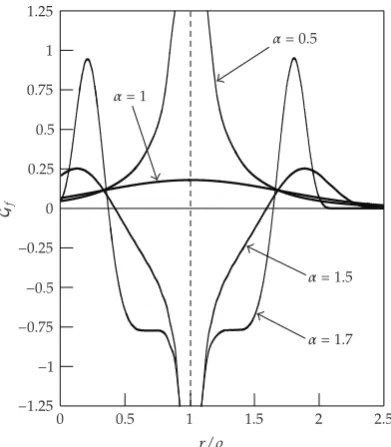
Figure 1:Dependence of nondimensional fundamental solutionGfr, ϕ, z, ρ, φ, ζ, ton the radial coordinate rforφ0,ζ0,z0,ϕ0, andκ0.5.
functions. Fujita 14 treated integrodifferential equation which interpolates the diffusion equation and the wave equation. Hanyga 15 studied Green functions and propagator functions in one, two, and three dimensions.
Previously, in studies concerning time-fractional diffusion-wave equation in cylindri-cal coordinates, only one or two spatial coordinates have been considered16–27. In this paper, we investigate solutions to1.1in an infinite medium in cylindrical coordinates in the case of three spatial coordinatesr,ϕ, andz.
2. Statement of the Problem
Consider the time-fractional diffusion-wave equation with a source term in cylindrical coordinates
∂αu ∂tα a
∂2u
∂r2 1
r ∂u ∂r
1
r2
∂2u
∂ϕ2
∂2u
∂z2
Qr, ϕ, z, t, 0≤r <∞,
0≤ϕ≤2π, −∞< z <∞, 0< t <∞, 0< α≤2.
2.1
The initial conditions are prescribed:
t0 :ufr, ϕ, z, 0< α≤2,
t0 : ∂u
∂t F
r, ϕ, z, 1< α≤2.
α1.7 α1.5 α0.5
α1
π π/2
0
−π/2
−π
ϕ
−1.25
−1
−0.75
−0.5
−0.25 0 0.25 0.5 0.75 1 1.25
Gf
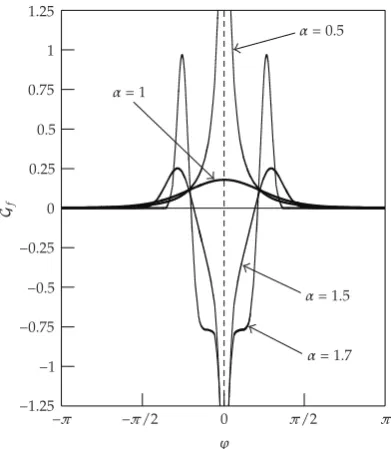
Figure 2: Dependence of nondimensional fundamental solution Gfr, ϕ, z, ρ, φ, ζ, t on the angular coordinateϕforφ0,ζ0,rρ,z0, andκ0.5.
In2.1, we use the Caputo fractional derivative28–30
dαut
dtα
⎧ ⎪ ⎪ ⎨ ⎪ ⎪ ⎩
1 Γn−α
t
0
t−τn−α−1d nuτ
dτn dτ, n−1< α < n,
dn
dtnut, αn,
2.3
where Γα is the gamma function. For its Laplace transform rule, the Caputo fractional derivative requires the knowledge of the initial values of the functionutand its integer derivatives of orderk1,2, . . . , n−1:
L
dαut
dtα
sαL{ut} − n−1
k0
uk0 sα−1−k, n−1< α < n, 2.4
α1.6 α1.5
α0.5 α0
α1
π π/2
0
−π/2
−π
ϕ
−0.5
−0.25 0 0.25 0.5
Gf
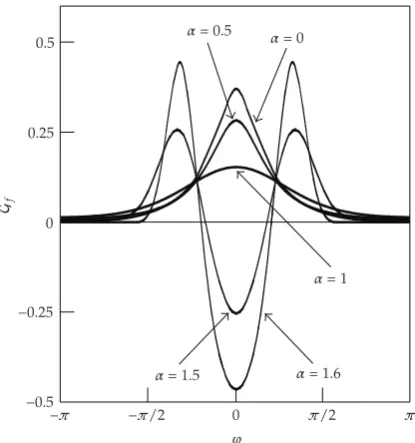
Figure 3: Dependence of nondimensional fundamental solution Gfr, ϕ, z, ρ, φ, ζ, t on the angular coordinateϕforφ0,ζ0,r0.6ρ,z0, andκ0.5.
The solution to the initial-value problem2.1-2.2can be written in the following form:
u
∞
−∞ 2π
0 ∞
0
fρ, φ, ζGf
r, ϕ, z, ρ, φ, ζ, tρdρdφdζ
∞
−∞ 2π
0 ∞
0
Fρ, φ, ζGF
r, ϕ, z, ρ, φ, ζ, tρdρdφdζ
t
0 ∞
−∞ 2π
0 ∞
0
Qρ, φ, ζ, τGQ
r, ϕ, z, ρ, φ, ζ, t−τρdρdφdζdτ.
2.5
Now, we investigate the fundamental solutions Gfr, ϕ, z, ρ, φ, ζ, t,GFr, ϕ, z, ρ, φ, ζ, t, and GQr, ϕ, z, ρ, φ, ζ, t.
3. Fundamental Solution to the First Cauchy Problem
α1.7
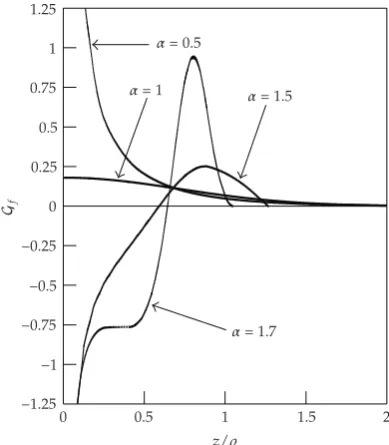
Figure 4:Dependence of nondimensional fundamental solutionGfr, ϕ, z, ρ, φ, ζ, ton the spatial coordi-natezforφ0,ζ0,rρ,ϕ0, andκ0.5.
The two-dimensional Dirac delta function δx δy after passing to the polar coordinates takes the form 1/2πrδ r, but for the sake of simplicity, we have omitted the multiplier 2πin the solution2.5as well as 1/2π in3.2. In the initial condition3.2, we have introduced the constant multiplier f0 to obtain the nondimensional quantity Gf see3.10.
The solution is found using the Laplace transform with respect to timet, the Hankel transform with respect to the radial coordinater, the finite Fourier transform with respect to the angular coordinateϕ, and the exponential Fourier transform with respect to the spatial coordinatez. In the transforms domain we get
α1.5
α1.85
2.5 2
1.5 1
0.5 0
r/ρ 0
0.5 1 1.5 2
GF
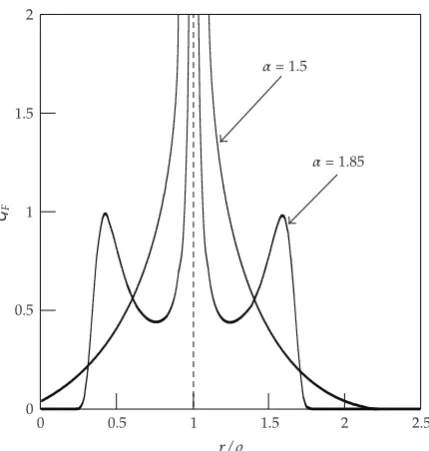
Figure 5:Dependence of nondimensional fundamental solutionGFr, ϕ, z, ρ, φ, ζ, ton the radial coordinate rforφ0,ζ0,z0,ϕ0, andκ0.5.
where Jnr is the Bessel function of the first kind of order n, the asterisk indicates the transforms, s is the Laplace transform variable, ξ is the Hankel transform variable, η is exponential Fourier transform variable, and the integernis finite Fourier transform variable.
Inversion of integral transforms gives
Gf
r, ϕ, z, ρ, φ, ζ, t 1
2π2 ∞
n0 ∞
−∞ ∞
0
Eα−aξ2 η2tα
×cosnϕ−φcosz−ζηJnρξJnrξξdξdη, 3.5
where the prime denotes that the term corresponding ton0 in the sum should be multiplied by 1/2. In3.5,Eαzis the Mittag-Leffler function28–31
Eαz ∞
n0
zn
Γαn 1, α >0, z∈C. 3.6
The essential role of the Mittag-Leffler function in fractional calculus results from the following formula for the inverse Laplace transform28–30:
L−1
sα−1
sα b
α1.5
α1.85
π π/2
0
−π/2
−π
ϕ 0
0.5 1 1.5 2
GF
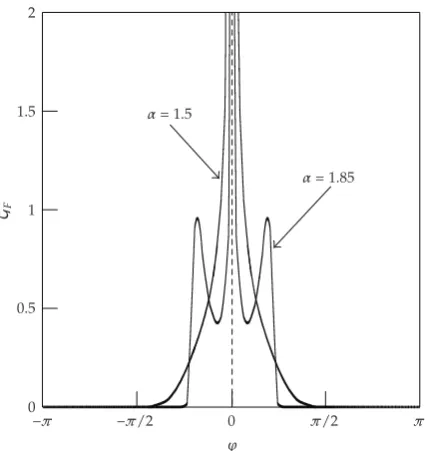
Figure 6: Dependence of nondimensional fundamental solution GFr, ϕ, z, ρ, φ, ζ, t on the angular coordinateϕforφ0,ζ0,rρ,z0, andκ0.5.
If the solution does not depend on the coordinatez, then
Gf
r, ϕ, ρ, φ, t 1 π
∞
n0 ∞
0
Eα−aξ2tαcosnϕ−φJnρξJnrξξdξ. 3.8
The fundamental solution3.8was considered in25for 0≤α≤1.
In the case when the solution does not also depend on the angular coordinateϕ, we get17
Gf
r, ρ, t
∞
0
Eα−aξ2tαJ0
ρξJ0rξξdξ. 3.9
Dependence of fundamental solution3.5on the coordinatesr,ϕ, andzis presented in Figures1,2,3, and4.
In calculations, we have introduced nondimensional quantities:
Gf ρ3
f0Gf
, κ
√ atα/2
α1.5
α1.85
π π/2
0
−π/2
−π
ϕ 0
0.25 0.5 0.75 1
GF
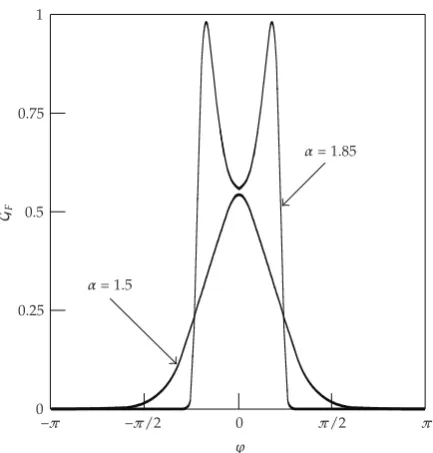
Figure 7: Dependence of nondimensional fundamental solution GFr, ϕ, z, ρ, φ, ζ, t on the angular coordinateϕforφ0,ζ0,r0.6ρ,z0, andκ0.5.
4. Fundamental Solution to the Second Cauchy Problem
In the case of the second Cauchy problem, the initial value of the time derivative of a sought-for function is prescribed, and sought-for the corresponding fundamental solution we have
∂αGF ∂tα a
∂2GF ∂r2
1
r ∂GF
∂r
1
r2
∂2GF ∂ϕ2
∂2GF ∂z2
, 0≤r <∞,
0≤ϕ≤2π, −∞< z <∞, 0< t <∞,
t0 : GF 0, 1< α≤2,
t0 : ∂GF
∂t F0
δr−ρ
r δ
ϕ−φδz−ζ, 1< α≤2.
4.1
In this instance, the fundamental solution is expressed as
GF
r, ϕ, z, ρ, φ, ζ, t 1
2π2 ∞
n0 ∞
−∞ ∞
0
tEα,2
−aξ2 η2tα
α1.5
α1.85
1 0.8
0.6 0.4
0.2 0
z/ρ 0
0.5 1 1.5 2
GF
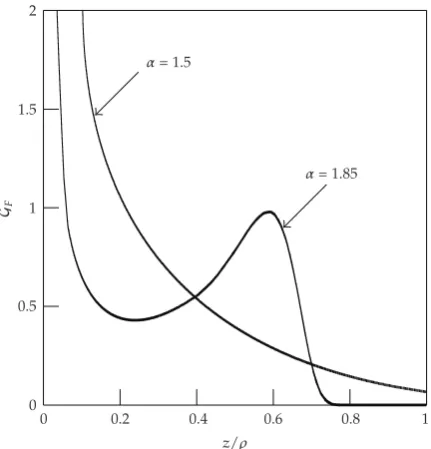
Figure 8: Dependence of nondimensional fundamental solution GFr, ϕ, z, ρ, φ, ζ, t on the spatial coordinatezforφ0,ζ0,rρ,ϕ0, andκ0.5.
whereEα,βzis the generalized Mittag-Leffler function in two parametersαandβ29–32:
Eα,βz ∞
n0
zn
Γαn β, α >0, β >0, z∈C. 4.3
We have used the following formula for the inverse Laplace transform29–31
L−1
sα−β sα b
tβ−1Eα,β−btα. 4.4
It is evident that3.7is the particular case of4.4corresponding toβ1. If the solution does not depend on the coordinatez, then
GF
r, ϕ, ρ, φ, t 1 π
∞
n0 ∞
0
tEα,2
−aξ2tαcosnϕ−φJnρξJnrξξdξ. 4.5
In the case of axial symmetry17,
GF
r, ρ, t
∞
0
tEα,2
−aξ2tαJ
0
α1.7
α1.5
α1
α0.5
2.5 2
1.5 1
0.5 0
r/ρ 0
0.1 0.2 0.3 0.4 0.5 0.6
GQ
Figure 9: Dependence of nondimensional fundamental solution GQr, ϕ, z, ρ, φ, ζ, t on the radial coordinaterforφ0,ζ0,z0,ϕ0, andκ0.5.
Figures5,6,7, and8show dependence of fundamental solution4.2on coordinates
r,ϕ, andz, where
GF ρ3
tF0GF
, 4.7
and the nondimensional quantityκis the same as in3.10.
5. Fundamental Solution to the Source Problem
Consider the time-fractional diffusion-wave equation with a source term under zero initial conditions:
∂αG Q ∂tα a
∂2G
Q ∂r2
1
r ∂GQ
∂r
1
r2
∂2G
Q ∂ϕ2
∂2G
Q ∂z2
Q0
δr−ρ
r δ
ϕ−φδz−ζδ t, 0≤r <∞,
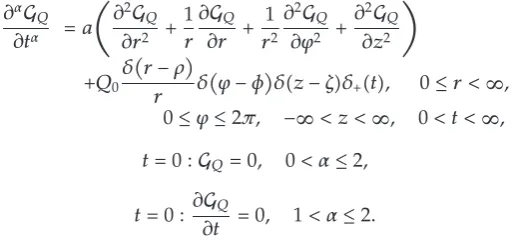
0≤ϕ≤2π, −∞< z <∞, 0< t <∞,
t0 :GQ0, 0< α≤2,
t0 : ∂GQ
∂t 0, 1< α≤2.
α1.7
α1.5
α1
α0.5
π π/2
0
−π/2
−π
ϕ 0
0.1 0.2 0.3 0.4 0.5 0.6
GQ
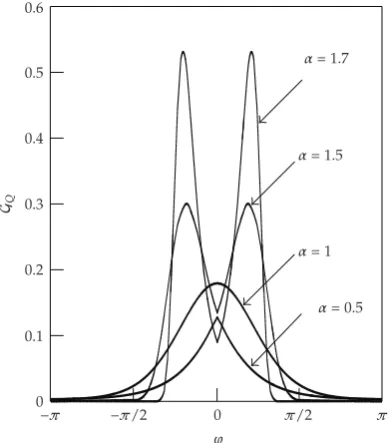
Figure 10:Dependence of nondimensional fundamental solutionGQr, ϕ, z, ρ, φ, ζ, ton the angular coor-dinateϕforφ0,ζ0,rρ,z0, andκ0.5.
The solution is obtained using the integral transform technique and reads
GQ
r, ϕ, z, ρ, φ, ζ, t 1
2π2 ∞
n0 ∞
−∞ ∞
0
tα−1Eα,α−aξ2 η2tα
×cosnϕ−φcosz−ζηJnρξJnrξξdξdη. 5.2
If dependence of solution on the coordinatezis not taken into account, then
GQ
r, ϕ, ρ, φ, t 1 π
∞
n0 ∞
0
tα−1Eα,α−aξ2tαcosnϕ−φJnρξJnrξξdξ. 5.3
In the case of axial symmetry17,
GQ
r, ρ, t
∞
0
tα−1Eα,α−aξ2tαJ0
ρξJ0rξξdξ. 5.4
Dependence of the solution5.2on the coordinatesr,ϕ, andzis depicted in Figures9,
10, and11with
GQ ρ3
tα−1Q 0
α1.7
α1.5
α1
α0.5
2 1.5
1 0.5
0
z/ρ 0
0.1 0.2 0.3 0.4 0.5 0.6
GQ
Figure 11: Dependence of nondimensional fundamental solution GQr, ϕ, z, ρ, φ, ζ, t on the spatial coordinatezforφ0,ζ0,rρ,ϕ0, andκ0.5.
6. Discussion
The solutions to the Cauchy and source problems for time-fractional diffusion-wave equation have been found in cylindrical coordinates. The considered equation in the case 0 < α < 1 interpolates the Helmholtz and diffusion equation. In the case 1 < α <2, the time-fractional diffusion-wave equation interpolates the standard diffusion equation and the classical wave equation.
For 1 < α < 2, the solutions to the fractional diffusion-wave equation feature propagating humps, underlining the proximity to the standard wave equation in contrast to the shape of curves describing the subdiffusion regime0< α <1.
For better understanding of behavior of solutions, it is worthwhile to compare the obtained results with those for delta pulse applied at the origin investigated in 32. The Mittag-Leffler functions arising in 3.5, 4.2, and 5.2 for large values of argument are represented as
Eα
−aξ2 η2tα∼ 1 Γ1−α
1
aξ2 η2tα,
Eα,2
−aξ2 η2tα∼ 1 Γ2−α
1
aξ2 η2tα,
Eα,α−aξ2 η2tα∼ − 1 Γ−α
1
aξ2 η2tα2.
6.1
source problem does not have singularity. Dependence of the solution on the angular coor-dinateϕat some distance from the point of the delta pulse applicationr 0.6ρin Figures3
and7features only humps with no singularity.
References
1 F. Mainardi, “Fractional calculus: some basic problems in continuum and statistical mechanics,” in
Fractals and Fractional Calculus in Continuum Mechanics (Udine, 1996), A. Carpinteri and F. Mainardi, Eds., vol. 378 ofCISM Courses and Lectures, pp. 291–348, Springer, Vienna, Austria, 1997.
2 A. Pe¸kalski and K. Sznajd-Weron, Eds., Anomalous Diffusion: From Basics to Applications, Springer, Berlin, Germany, 1999.
3 R. Metzler and J. Klafter, “The random walk’s guide to anomalous diffusion: a fractional dynamics approach,”Physics Reports, vol. 339, no. 1, pp. 1–77, 2000.
4 G. M. Zaslavsky, “Chaos, fractional kinetics, and anomalous transport,”Physics Reports, vol. 371, no. 6, pp. 461–580, 2002.
5 B. J. West, M. Bologna, and P. Grigolini,Physics of Fractal Operators, Institute for Nonlinear Science, Springer, New York, NY, USA, 2003.
6 R. Metzler and J. Klafter, “The restaurant at the end of the random walk: recent developments in the description of anomalous transport by fractional dynamics,”Journal of Physics A, vol. 37, no. 31, pp. R161–R208, 2004.
7 Y. Z. Povstenko, “Fractional heat conduction equation and associated thermal stress,” Journal of Thermal Stresses, vol. 28, no. 1, pp. 83–102, 2005.
8 R. L. Magin,Fractional Calculus in Bioengineering, Begell House Publishers, Connecticut, Mass, USA, 2006.
9 V. V. Gafiychuk and B. Yo. Datsko, “Pattern formation in a fractional reaction-diffusion system,”
Physica A, vol. 365, no. 2, pp. 300–306, 2006.
10 V. V. Uchaikin,Method of Fractional Derivatives, Artishock, Ulyanovsk, Russia, 2008.
11 F. Mainardi, “The fundamental solutions for the fractional diffusion-wave equation,” Applied Mathematics Letters, vol. 9, no. 6, pp. 23–28, 1996.
12 W. Wyss, “The fractional diffusion equation,”Journal of Mathematical Physics, vol. 27, no. 11, pp. 2782– 2785, 1986.
13 W. R. Schneider and W. Wyss, “Fractional diffusion and wave equations,”Journal of Mathematical Physics, vol. 30, no. 1, pp. 134–144, 1989.
14 Y. Fujita, “Integrodifferential equation which interpolates the heat equation and the wave equation,”
Osaka Journal of Mathematics, vol. 27, no. 2, pp. 309–321, 1990.
15 A. Hanyga, “Multidimensional solutions of time-fractional diffusion-wave equations,” The Royal Society of London. Proceedings. Series A, vol. 458, no. 2020, pp. 933–957, 2002.
16 Y. Z. Povstenko, “Stresses exerted by a source of diffusion in a case of a non-parabolic diffusion equation,”International Journal of Engineering Science, vol. 43, no. 11-12, pp. 977–991, 2005.
17 Y. Z. Povstenko, “Two-dimensional axisymmetric stresses exerted by instantaneous pulses and sources of diffusion in an infinite space in a case of time-fractional diffusion equation,”International Journal of Solids and Structures, vol. 44, no. 7-8, pp. 2324–2348, 2007.
18 B. N. N. Achar and J. W. Hanneken, “Fractional radial diffusion in a cylinder,”Journal of Molecular Liquids, vol. 114, no. 1-3, pp. 147–151, 2004.
19 Y. Z. Povstenko, “Fractional radial diffusion in a cylinder,”Journal of Molecular Liquids, vol. 137, no. 1-3, pp. 46–50, 2008.
20 N. ¨Ozdemir and D. Karadeniz, “Fractional diffusion-wave problem in cylindrical coordinates,”
Physics Letters A, vol. 372, no. 38, pp. 5968–5972, 2008.
21 N. ¨Ozdemir, O. P. Agrawal, D. Karadeniz, and B. B. Iskender, “Axis-symmetric fractional diff usion-wave problem: part I—analysis,” in Proceedings of the 6th Euromech Nonlinear Dynamics Conference (ENOC ’08), Saint Petrsburg, Russia, June-July 2008.
22 E. K. Lenzi, L. R. da Silva, A. T. Silva, L. R. Evangelista, and M. K. Lenzi, “Some results for a fractional diffusion equation with radial symmetry in a confined region,”Physica A, vol. 388, no. 6, pp. 806–810, 2009.
24 N. ¨Ozdemir, O. P. Agrawal, D. Karadeniz, and B. B. Iskender, “Fractional optimal control problem of an axis-symmetric diffusion-wave propagation,”Physica Scripta T, vol. 136, Article ID 014024, 5 pages, 2009.
25 X. Jiang and M. Xu, “The time fractional heat conduction equation in the general orthogonal curvilinear coordinate and the cylindrical coordinate systems,”Physica A, vol. 389, no. 17, pp. 3368– 3374, 2010.
26 E. K. Lenzi, R. Rossato, M. K. Lenzi, L. R. da Silva, and G. Gonc¸alves, “Fractional diffusion equation and external forces: solutions in a confined region,”Zeitschrift f ¨ur Naturforschung Section A, vol. 65, no. 5, pp. 423–430, 2010.
27 H. Qi and J. Liu, “Time-fractional radial diffusion in hollow geometries,”Meccanica, vol. 45, no. 4, pp. 577–583, 2010.
28 R. Gorenflo and F. Mainardi, “Fractional calculus: integral and differential equations of fractional order,” inFractals and Fractional Calculus in Continuum Mechanics (Udine, 1996), A. Carpinteri and F. Mainardi, Eds., vol. 378 ofCISM Courses and Lectures, pp. 223–276, Springer, Vienna, Austria, 1997.
29 A. A. Kilbas, H. M. Srivastava, and J. J. Trujillo, Theory and Applications of Fractional Differential Equations, vol. 204 of North-Holland Mathematics Studies, Elsevier Science B.V., Amsterdam, The Netherlands, 2006.
30 I. Podlubny, Fractional Differential Equations, vol. 198 of Mathematics in Science and Engineering, Academic Press, San Diego, Calif, USA, 1999.
31 A. Erd´elyi, W. Magnus, F. Oberhettinger, and F. G. Tricomi,Higher Transcendental Functions. Vol. III, McGraw-Hill, New York, NY, USA, 1955.