CLINICAL UPDATES
Giardiasis
Corrado Minetti
postdoctoral research assistant
1, Rachel M Chalmers
consultant clinical scientist
and head of unit
2, Nick J Beeching
senior lecturer in infectious diseases
3, Chris Probert
professor
of gastroenterology
4, Kenneth Lamden
general practitioner
51
Vector Biology Group, Liverpool School of Tropical Medicine, Liverpool, UK;
2Cryptosporidium Reference Unit, Public Health Wales Microbiology
ABM, Singleton Hospital, Swansea, UK;
3Clinical Sciences Group, Liverpool School of Tropical Medicine, Liverpool, UK;
4Institute of Translational
Medicine, University of Liverpool, Liverpool, UK;
5Wingate Medical Centre, Kirkby L33 6YJ, UK
Giardia
is a leading but treatable cause of infectious
gastroenteritis worldwide, with a reported prevalence of 2-7%
in high income countries and 2-30% in low income countries.
1Giardiasis is included in the World Health Organization
Neglected Diseases Initiative owing to its burden and association
with poverty.
2Its incidence in the United Kingdom is
underestimated because of the lack of diagnostic sensitivity of
traditional faecal microscopy
3and the mistaken belief that it is
mostly acquired abroad, so often only people reporting foreign
travel are tested. This update discusses the epidemiology, clinical
presentation, diagnosis, and management of giardiasis
specifically in high income countries.
What is
Giardia
?
Giardia lamblia
(synonyms
G duodenalis
and
G intestinalis
)
is a flagellated protozoan.
Giardia
is transmitted through the
ingestion of the infective cyst stage shed in human or animal
faeces and might be present in faecally contaminated water,
food, or fomites.
G lamblia
comprises eight genetic
“assemblages” (named A to H), of which only A and B cause
disease in humans but which can also infect pets, livestock, and
wild animals and show potential for zoonotic
transmission.
4Figure 1
⇓
depicts the life cycle and transmission
of
Giardia
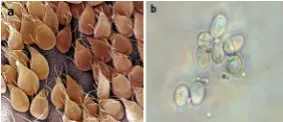
. The actively multiplying trophozoite form of the
organism hatches from the cyst and attaches to the small
intestine (fig 2a
⇓
),
5where it induces epithelial inflammation,
villous flattening, and diarrhoea due to malabsorption.
6-8In the
large intestine, the trophozoites differentiate forming new cysts
(fig 2b
⇓
), which are shed in the faeces and contaminate the
environment. Cysts present in faeces can remain viable in a
variety of environments, particularly water and at lower
temperatures: viability can range from 28 to 84 days in lake or
river water
9but is reduced in soil
10or cattle slurry.
11Who gets giardiasis?
Box 1 summarises the risk factors for acquisition of
Giardia
in
high income countries. Travel to low income settings is a
common risk factor, with the highest risk areas being South
Asia and South East Asia, North Africa, the Caribbean, and
South America.
25 26Giardia
is the most common intestinal
pathogen in travellers returning to countries such as the UK
with gastrointestinal disorders.
25-27However, a case-control study
in north west England in 2013 found that 75% of cases were
acquired in the UK.
12Between 3000 and 4000 cases are reported
annually in England and Wales.
28However, detection of cases
increased fourfold after the introduction of an enzyme linked
immunosorbent assay for the detection of parasite antigens in
stools,
3and another study estimated there were 50 000
community cases of giardiasis between April 2008 and August
2009.
29The highest incidence of giardiasis is in under 5s and
adults aged 25-44 years
3-30: most studies report giardiasis being
more common in males,
3-21and it is more often reported in late
summer and early autumn in temperate regions such as the UK
and United States.
13 30The source of many infections is unknown but is likely to be
person-to-person transmission through exposure to human
faeces, including sexual transmission.
22In a recent prevalence
survey in northwest England, 30% of households in which a
family member had a diagnosis of
Giardia
had a second person
with a stool sample positive for
Giardia
.
31Outbreaks have been
reported in daycare centres and custodial
institutions,
20 32favoured by overcrowding and poor hygienic
conditions.
When to consider
Giardia
?
Giardia
infections can be asymptomatic (estimated in 5-15%
of infected people),
33but typical symptoms include diarrhoea,
Correspondence to: K Lamden [email protected]
What you need to know
• The number of patients detected withGiardiawill increase as routine testing of stool samples using highly sensitive diagnostic tests becomes more widespread
• Most patients withGiardiain the UK acquire their infection in the UK and not from overseas travel
• Tinidazole and metronidazole are equally effective as first line treatments, although tinidazole has a simpler regimen and fewer side effects
• Second line agents used in cases of treatment failure are unlicensed for giardiasis in the UK but are routinely used in many countries • Asymptomatic carriage ofGiardiais common among household contacts, and testing of contacts is indicated in treatment failure and
in household clusters
Sources and selection criteria
We searched PubMed and Medline from 1980 to 2016 for authoritative reviews and research articles onGiardiaand giardiasis, which were added to clinical experience, national guidelines, and personal reference collections. We also searched the Cochrane database and reference lists in review articles. Searching was limited to publications in English.
Box 1: Risk factors for
Giardia
acquisition in high income countries
• Foreign travel, particularly in low income settings12-16• Toileting young children and changing nappies12-15
• Drinking contaminated water or swallowing contaminated water while using swimming pools or other recreational fresh waters12-19 • Attending childcare settings20
• Eating fresh products raw18 21 • Sexual transmission22
• Dog ownership (Giardiaassemblage A)12
• Some immunodeficiency disorders: X linked agammaglobulinaemia, common variable immunodeficiency23 24
flatulence, abdominal pain, and bloating.
33In the early stage of
disease, diarrhoea is often explosive, especially in the morning,
and the stool is difficult to flush away. Blood in the stool is
unusual
34and would suggest the presence of another pathogen.
Patients sometimes mention “eggy burps” of uncertain cause.
Later, the diarrhoea becomes more intermittent, with periods
of normal bowel function interspersed with the diarrhoea.
Weight loss due to malabsorption occurs in more than 80% of
patients, with a typical loss of 5 kg in adults over four or more
weeks
35; chronic infection in children might result in failure to
thrive.
36Intestinal lactase deficiency occurs in up to 40% of
patients with giardiasis and might persist for several weeks after
parasite eradication.
8This manifests as diarrhoea that is worse
after consumption of food or drugs containing lactose. Rarer
symptoms include vomiting and fever.
33Patients often present
with diarrhoea but without typical symptoms of giardiasis and
the condition is diagnosed unexpectedly by microbiological
examination of a stool specimen. Examination is usually
unremarkable apart from features of weight loss, but patients
with prolonged symptoms might have features of malabsorption,
including pallor due to anaemia. Diagnosis is often delayed,
sometimes for months, owing to the insidious onset and
relapsing clinical course.
Giardia and irritable bowel syndrome
The symptoms of giardiasis can resemble irritable bowel
syndrome (IBS).
37An Italian study of 137 patients investigated
in secondary care for IBS or dyspepsia found
Giardia
in 6.5%
of patients.
38However, this finding was not replicated in a larger
study
39and guidance from the UK National Institute for Health
and Care Excellence recommends that faecal testing for ova
and parasites is not routinely required to confirm the diagnosis
of IBS in people who meet the diagnostic criteria for IBS.
40 41Clinicians should be alert to the possibility of both diagnoses.
If there is any doubt, or where there is a relevant exposure
history for giardiasis (box 1) consider parasitological
examination of a stool sample.
How should suspected giardiasis be
investigated?
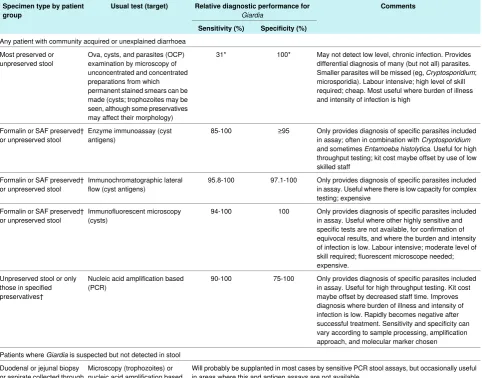
Giardiasis is usually diagnosed by laboratory analysis of stool
samples (table 1
⇓
), either by traditional microscopy (ova, cysts,
and parasites (OCP) examination) for visualisation of cysts (or
more rarely, trophozoites) or by stool antigen detection assays.
3-43The sensitivity of antigen detection assays is superior to
microscopy for the diagnosis of giardiasis, but sensitivity
between different formats varies (table 1
⇓
). Highly sensitive
molecular methods (polymerase chain reaction, PCR) that
contain parasitology panels are increasingly being used but are
not universally available in UK laboratories.
44 45Not all
laboratories routinely test stool samples for the microorganism,
so specifically request examination of samples for
Giardia
and
document travel or other risk factor history. Owing to variable
shedding, three stool specimens (ideally taken two or three days
apart) might need to be examined when traditional microscopy
is used. If the result is negative, three more specimens should
be submitted at weekly intervals,
51with a minimum of six
negative results required for microscopic exclusion of infection.
52There is evidence of improved detection of
Giardia
in single
stool samples using PCR over microscopy of several stool
samples or antigen detection assays.
46 47At present PCR is only
offered as a first line test in a few UK hospital laboratories, and
clinicians are advised to discover what tests are available in
their local laboratory. In secondary care when giardiasis is highly
suspected but stool results are negative, diagnosis can be made
through duodenal aspiration and biopsy, which have been shown
to detect infection in the absence of cysts on stool
microscopy.
39 48Serological tests for circulating IgG and IgM
What treatments are available for
giardiasis?
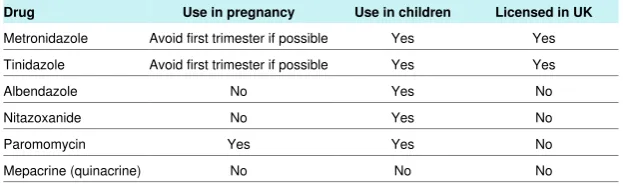
Unlike many causes of infectious gastroenteritis, giardiasis is
treatable (table 2
⇓
). Many drugs have been evaluated in reviews
and several meta-analyses,
53-59including a Cochrane Review in
2012 that examined 19 trials for the effectiveness of the four
agents most commonly used to treat giardiasis—metronidazole,
tinidazole, albendazole, and nitazoxanide.
54Trials included in
these reviews are of variable quality and heterogeneous in their
location and types and ages of patients included. Some trials
have been conducted in low income settings where there is a
high prevalence of
Giardia
infections, and where the resulting
partial immunity might alter the clinical picture and observed
response to treatment compared with that observed in
non-endemic countries or in non-immune people. In most
analyses, the 5 nitroimidazoles metronidazole and tinidazole
have similar efficacies, with parasitological cure rates and
symptom relief in more than 90% of patients.
Symptomatic patients
The British National Formulary
60currently recommends a five
day course of metronidazole as preferred treatment in the UK.
Most specialists prescribe a single dose of tinidazole, which is
licensed for this indication, has similar efficacy to a multiple
dose metronidazole regimen, and is better tolerated.
57Repeat
either course if unsuccessful, together with exclusion of
reinfection (from a household or sexual contact) or lactose
intolerance. Advise patients to avoid milk and milk products
for at least two weeks (some clinicians advise up to six weeks)
to evaluate whether persisting symptoms truly represent
treatment failure rather than temporary lactose intolerance.
Giardiasis is associated with prolonged symptoms that can have
a detrimental impact on quality of life.
61 62Second line agents
such as albendazole or nitazoxanide are routinely available in
some countries but are not licensed for the treatment of giardiasis
in the UK. Specialist advice is recommended if second line
agents are required. Albendazole has similar efficacy to
metronidazole and is better tolerated.
55 59Nitazoxanide is more
difficult to obtain and more expensive in the UK, and
paromomycin is the only second line agent that can be used in
pregnancy. Mepacrine (quinacrine) is effective but has numerous
side effects and is reserved for management of refractory cases
by specialists.
Confirmation of treatment failure is best provided by PCR,
which offers improved detection in single stool samples over
microscopy.
63 64Treatment success is indicated by complete
resolution of symptoms or lack of detection of
Giardia
DNA
by PCR one week after treatment.
Treatment failure might be due to host factors or to true drug
resistance, which is well recognised and increasingly common,
particularly in travellers returning from South Asia and South
East Asia.
16-65However, tinidazole or metronidazole should still
be used as first line treatment for travellers returning from these
areas despite cross resistance between these drugs.
65Patients
with treatment failure should be discussed with or referred to a
specialist, who should exclude underlying problems such as
coeliac disease, inherited disaccharidase deficiency, and
immunodeficiency disorders, particularly of total and IgA
antibody production.
23-61Combination treatment with the above
agents may be used under specialist care.
A variety of combination treatments are effective, although the
evidence is based on observational studies and individual
clinician preference.
56-69Combinations of albendazole and a 5
nitroimidazole, or nitazoxanide with a second agent, are the
usual next steps in the treatment ladder. Paromomycin and
mepacrine have specific niches, as already discussed.
Asymptomatic patients
Asymptomatic carriage of
Giardia
is common in contacts of
cases, and household clusters do occur. In a recent study in north
west England, routine testing of all household contacts of 91
primary
Giardia
cases found a contact positive for
Giardia
in
27 households (30%): of the 212 contacts, 41 (19%) were
positive, most of whom were asymptomatic.
31In the absence of
research as to whether treatment of asymptomatic carriage is
effective in curtailing transmission, management is based on
expert opinion.
53Asymptomatic carriage is generally not treated,
but treatment is rational in failed treatment of a case or in
household clusters. In these situations a pragmatic alternative
may be to offer blind treatment to all household contacts based
on their preference. Wider availability of sensitive PCR
diagnostic tests may allow a more targeted approach to contact
treatment in future.
Can
Giardia
infection be prevented?
Individual cases require investigation, usually by environmental
health officers, to prevent onward spread and identify likely
exposures. In many high income countries, including the UK,
surveillance is underpinned by statutory notification of
Giardia
diagnoses by hospital laboratories to the local public health
system.
70-72Prevention of secondary transmission is mainly
through antiparasitic treatment of cases and advice on the
prevention of person-to-person spread through stringent personal
hygiene (box 2). Exclusion on the basis of the absence of
diarrhoea for 48 hours applies to children in nurseries, food
handlers, and those caring for vulnerable adults.
73Microbiological evidence of stool clearance is not usually
required, but this might be considered in outbreak situations.
Giardia
cysts are more resistant to chlorine disinfection than
most bacteria, and outbreaks have been reported linked to
contaminated mains drinking water, swimming pools, and
paddling pools.
17 19Adherence to guidelines for swimming pool
management
74reduces the risk of giardiasis to a minimum.
Outbreaks due to drinking water are uncommon in the UK
75because of the full treatment of public water supplies (filtration
and disinfection), but they are a risk where treatment is
inadequate. Travellers should check that water disinfection
filters or systems they use are certified to remove
Giardia
.
We thank numerous clinical colleagues at the Liverpool School of
Tropical Medicine and the Hospital for Tropical Diseases, London, for
helpful discussions and comments. CM received PhD funding from
Public Health England (PHE). NJB receives partial support from the
National Institute of Health Research (NIHR) Health Protection Unit in
Gastrointestinal Infections, Farr Institute, University of Liverpool, in
partnership with PHE and the Universities of Oxford and of East Anglia.
NJB is affiliated with the University of Liverpool. The views expressed
are those of the authors and not necessarily those of the NHS, NIHR,
Department of Health, or PHE.
Contributors: All authors contributed equally to the preparation of this
manuscript. KL is the guarantor.
Competing interests: We have read and understood BMJ policy on
declaration of interests and declare the following: none.
Box 2: Advice on
Giardia
for patients and carers
General
• Wash your hands carefully with soap and hot water and dry them thoroughly each time you go to the toilet or before preparing food • Do not share towels
• Remain off work until free of diarrhoea for 48 hours if you work with food or in social care or healthcare and have direct contact with patients or clients
Young children with Giardia
• Ensure scrupulous hygiene when changing nappies • Supervise children’s hand washing
• Keep young children away from playgroups,childminders, or nursery until free of diarrhoea for 48 hours
Household contacts of a Giardia case
Testing is not advised unless the original patient remains unwell despite treatment or if someone else becomes unwell
How patients were involved in the creation of the article
No patients were involved in the creation of this review.Questions for ongoing and future research
• What behavioural or immunological factors could explain the excess of giardiasis in males? • What is the extent of zoonotic transmission risk forGiardia?
• Do differentGiardia lambliagenetic assemblages differ in transmission and clinical outcome of disease? • Is previous exposure toGiardiaprotective against successive infections in travellers?
• What is the relation betweenGiardiaand irritable bowel syndrome or other post-infectious gastrointestinal disorders? • Why are some infections refractory to treatment?
• How common is drug resistance and what is the molecular basis of resistance? • What is the most effective and safe treatment for refractory infections?
• Is treatment of asymptomatic excretors effective in curtailing transmission, and, if so, when should it be offered? • Is there a role for prebiotics or probiotics in prevention or management of infection?
Education into practice
Do you request specificGiardiatesting in patients presenting with relapsing diarrhoea, negative results on bacterial stool culture, and no history of overseas travel?
Additional educational resources
Information for healthcare professionals
• Public Health England (www.gov.uk/guidance/giardia)—for surveillance information and epidemiological trends of giardiasis • US Centers for Disease Control and Prevention (www.cdc.gov/parasites/giardia/audience-health-professionals.html)—for epidemiological
information and links to veterinary and environmental aspects ofGiardia
Information for patients
• US Centers for Disease Control and Prevention (www.cdc.gov/parasites/giardia/)—provides answers to frequently asked questions aboutGiardia
• New Zealand Ministry of Health (www.health.govt.nz/your-health/conditions-and-treatments/diseases-and-illnesses/food-and-water-borne-diseases/giardia)—has general information about giardiasis
• Patient website (http://patient.info/health/giardia)—has an information leaflet with preventive advice
• National Travel Health Network and Centre (NaTHNaC) (http://travelhealthpro.org.uk/travellers-diarrhoea/)—provides pre-travel advice, as well as links to country specific advice
• Fit for Travel (www.fitfortravel.nhs.uk/advice/disease-prevention-advice/travellers-diarrhoea.aspx)—provides similar pre-travel advice on hygiene and disease prevention
1 Fletcher SM, Stark D, Harkness J, Ellis J. Enteric protozoa in the developed world: a public health perspective.Clin Microbiol Rev2012;25:420-49. doi:10.1128/CMR.05038-11. pmid:22763633.
2 Savioli L, Smith H, Thompson A. Giardia and Cryptosporidium join the ‘Neglected Diseases Initiative’.Trends Parasitol2006;22:203-8. doi:10.1016/j.pt.2006.02.015. pmid:16545611. 3 Ellam H, Verlander NQ, Lamden K, Cheesbrough JS, Durband CA, James S. Surveillance of giardiasis in Northwest England 1996-2006: impact of an enzyme immunoassay test.
Euro Surveill2008;13:18977.pmid:18801316.
4 Ryan U, Cacciò SM. Zoonotic potential of Giardia.Int J Parasitol2013;43:943-56. doi:10. 1016/j.ijpara.2013.06.001. pmid:23856595.
5 Adam RD. Biology of Giardia lamblia.Clin Microbiol Rev2001;14:447-75. doi:10.1128/ CMR.14.3.447-475.2001. pmid:11432808.
6 Buret AG. Pathophysiology of enteric infections with Giardia duodenalius.Parasite
2008;15:261-5. doi:10.1051/parasite/2008153261. pmid:18814692.
7 Cotton JA, Beatty JK, Buret AG. Host parasite interactions and pathophysiology in Giardia infections.Int J Parasitol2011;41:925-33. doi:10.1016/j.ijpara.2011.05.002. pmid: 21683702.
8 Farthing MJ. Giardiasis.Gastroenterol Clin North Am1996;25:493-515. doi:10.1016/ S0889-8553(05)70260-0 pmid:8863037.
10 Olson M, Guselle N, McAllister TA, et al. Giardia cyst and Cryptosporidium oocyst survival in water, soil, and cattle feces.J Environ Qual1999;28:1991-6doi:10.2134/jeq1999. 00472425002800060040x.
11 Grit GH, Bénéré E, Ehsan A, et al. Giardia duodenalis cyst survival in cattle slurry.Vet Parasitol2012;184:330-4. doi:10.1016/j.vetpar.2011.08.021. pmid:21903330. 12 Minetti C, Lamden K, Durband C, et al. Case-control study of risk factors for sporadic
giardiasis and parasite assemblages in North West England.J Clin Microbiol
2015;53:3133-40. doi:10.1128/JCM.00715-15. pmid:26157151.
13 Gray SF, Gunnell DJ, Peters TJ. Risk factors for giardiasis: a case-control study in Avon and Somerset.Epidemiol Infect1994;113:95-102. doi:10.1017/S0950268800051505 pmid: 8062884.
14 Gagnon F, Duchesne JF, Lévesque B, Gingras S, Chartrand J. Risk of giardiasis associated with water supply in an endemic context.Int J Environ Health Res
2006;16:349-59. doi:10.1080/09603120600869265. pmid:16990176.
15 Hoque ME, Hope VT, Kjellström T, Scragg R, Lay-Yee R. Risk of giardiasis in Aucklanders: a case-control study.Int J Infect Dis2002;6:191-7. doi:10.1016/S1201-9712(02)90110-4 pmid:1271883doi:10.1016/S1201-9712(02)90110-4.
16 Barrett J, Brown M. Travellers’ diarrhoea.BMJ2016;353:i1937. doi:10.1136/bmj. i1937. pmid:27094342.
17 Baldursson S, Karanis P. Waterborne transmission of protozoan parasites: review of worldwide outbreaks - an update 2004-2010.Water Res2011;45:6603-14. doi:10.1016/ j.watres.2011.10.013. pmid:22048017.
18 Stuart JM, Orr HJ, Warburton FG, et al. Risk factors for sporadic giardiasis: a case-control study in southwestern England.Emerg Infect Dis2003;9:229-33. doi:10.3201/eid0902. 010488. pmid:12603995.
19 Karanis P, Kourenti C, Smith H. Waterborne transmission of protozoan parasites: a worldwide review of outbreaks and lessons learnt.J Water Health2007;5:1-38. doi:10. 2166/wh.2006.002. pmid:17402277.
20 Rauch AM, Van R, Bartlett AV, Pickering LK. Longitudinal study of Giardia lamblia infection in a day care center population.Pediatr Infect Dis J1990;9:186-9. doi:10.1097/00006454-199003000-00008 pmid:2336299.
21 Espelage W, an der Heiden M, Stark K, Alpers K. Characteristics and risk factors for symptomatic Giardia lamblia infections in Germany.BMC Public Health2010;10:41. doi: 10.1186/1471-2458-10-41. pmid:20105338.
22 Escobedo AA, Almirall P, Alfonso M, Cimerman S, Chacín-Bonilla L. Sexual transmission of giardiasis: a neglected route of spread?Acta Trop2014;132:106-11. doi:10.1016/j. actatropica.2013.12.025. pmid:24434784.
23 Hermaszewski RA, Webster AD. Primary hypogammaglobulinaemia: a survey of clinical manifestations and complications.Q J Med1993;86:31-42.pmid:8438047.
24 Agarwal S, Mayer L. Diagnosis and treatment of gastrointestinal disorders in patients with primary immunodeficiency.Clin Gastroenterol Hepatol2013;11:1050-63. doi:10.1016/j. cgh.2013.02.024. pmid:23501398.
25 Swaminathan A, Torresi J, Schlagenhauf P, et al. GeoSentinel Network. A global study of pathogens and host risk factors associated with infectious gastrointestinal disease in returned international travellers.J Infect2009;59:19-27. doi:10.1016/j.jinf.2009.05. 008. pmid:19552961.
26 Ross AGP, Olds GR, Cripps AW, Farrar JJ, McManus DP. Enteropathogens and chronic illness in returning travelers.N Engl J Med2013;368:1817-25. doi:10.1056/ NEJMra1207777. pmid:23656647.
27 McGregor AC, Whitty CJM, Wright SG. Geographic, symptomatic and laboratory predictors of parasitic and bacterial causes of diarrhoea in travellers.Trans R Soc Trop Med Hyg
2012;106:549-53. doi:10.1016/j.trstmh.2012.04.008. pmid:22818743.
28 Public Health England. Giardia: guidance and data. 2014. https://www.gov.uk/guidance/ giardia#epidemiology.
29 Tam CC, Rodrigues LC, Viviani L, et al. IID2 Study Executive Committee. Longitudinal study of infectious intestinal disease in the UK (IID2 study): incidence in the community and presenting to general practice.Gut2012;61:69-77. doi:10.1136/gut.2011.238386. pmid: 21708822.
30 Painter JE, Gargano JW, Collier SA, Yoder JS. Centers for Disease Control and Prevention. Giardiasis surveillance -- United States, 2011-2012.MMWR Suppl2015;64:15-25.pmid: 25928582.
31 Waldram A, Lamden K, Vivancos R. Asymptomatic giardia Infection: an important source of ongoing transmission within the household in Northwest England, Abst O-22. In:5 Nations Health Protection Conference. 2015. http://5nations.org.uk/?page_id=921 32 Naiman HL, Sekla L, Albritton WL. Giardiasis and other intestinal parasitic infections in
a Manitoba residential school for the mentally retarded.Can Med Assoc J
1980;122:185-8.pmid:7363211.
33 Hill DR. Giardia lamblia. In: Gillespie S, Pearson RD, eds.Principles and Practice of Clinical Parasitology.John Wiley & Sons Ltd, 2001:219-42doi:10.1002/0470842504.ch10. 34 Breathnach AS, McHugh TD, Butcher PD. Prevalence and clinical correlations of genetic subtypes of Giardia lamblia in an urban setting.Epidemiol Infect2010;138:1459-67. doi: 10.1017/S0950268810000208. pmid:20144251.
35 Nygård K, Schimmer B, Søbstad Ø, et al. A large community outbreak of waterborne giardiasis-delayed detection in a non-endemic urban area.BMC Public Health2006;6:141. doi:10.1186/1471-2458-6-141. pmid:16725025.
36 Ignatius R, Gahutu JB, Klotz C, et al. High prevalence of Giardia duodenalis Assemblage B infection and association with underweight in Rwandan children.PLoS Negl Trop Dis
2012;6:e1677. doi:10.1371/journal.pntd.0001677. pmid:22720102.
37 Stark D, van Hal S, Marriott D, Ellis J, Harkness J. Irritable bowel syndrome: a review on the role of intestinal protozoa and the importance of their detection and diagnosis.Int J Parasitol2007;37:11-20. doi:10.1016/j.ijpara.2006.09.009. pmid:17070814. 38 Grazioli B, Matera G, Laratta C, et al. Giardia lamblia infection in patients with irritable
bowel syndrome and dyspepsia: a prospective study.World J Gastroenterol
2006;12:1941-4. doi:10.3748/wjg.v12.i12.1941 pmid:16610003.
39 Chew TS, Hopper AD, Sanders DS. Is there a role for routine duodenal biopsy in diagnosing giardiasis in a European population?Scand J Gastroenterol2008;43:1219-23. doi:10.1080/00365520802101853. pmid:18609157.
40 National Institute for Health and Care Excellence. Irritable bowel syndrome in adults: diagnosis and management. Clinical guideline [CG61]. 2015. https://www.nice.org.uk/ guidance/cg61
41 Halland M, Saito YA. Irritable bowel syndrome: new and emerging treatments.BMJ
2015;350:h1622. doi:10.1136/bmj.h1622. pmid:26088265.
42 Public Health England. UK Standards for Microbiology Investigations B 31: Investigation of specimens other than blood for parasites. Public Health England 2014.https://www. gov.uk/government/uploads/system/uploads/attachment_data/file/343958/B_31i4.1.pdf.
43 McHardy IH, Wu M, Shimizu-Cohen R, Couturier MR, Humphries RM. Detection of intestinal protozoa in the clinical laboratory.J Clin Microbiol2014;52:712-20. doi:10.1128/ JCM.02877-13. pmid:24197877.
44 Verweij JJ, van Lieshout L. Intestinal parasitic infections in an industrialized country; a new focus on children with better DNA-based diagnostics.Parasitology2011;138:1492-8. doi:10.1017/S0031182011001211. pmid:21859503.
45 Heyworth MF. Diagnostic testing for Giardia infections.Trans R Soc Trop Med Hyg
2014;108:123-5. doi:10.1093/trstmh/tru005. pmid:24463773.
46 Llewellyn S, Inpankaew T, Nery SV, et al. Application of a Multiplex Quantitative PCR to Assess Prevalence and Intensity Of Intestinal Parasite Infections in a Controlled Clinical Trial.PLoS Negl Trop Dis2016;10:e0004380. doi:10.1371/journal.pntd.0004380. pmid: 26820626.
47 ten Hove RJ, van Esbroeck M, Vervoort T, van den Ende J, van Lieshout L, Verweij JJ. Molecular diagnostics of intestinal parasites in returning travellers.Eur J Clin Microbiol Infect Dis2009;28:1045-53. doi:10.1007/s10096-009-0745-1. pmid:19415354. 48 Rosenthal P, Liebman WM. Comparative study of stool examinations, duodenal aspiration,
and pediatric Entero-Test for giardiasis in children.J Pediatr1980;96:278-9. doi:10.1016/ S0022-3476(80)80826-2. pmid:7351595.
49 Soares R, Tasca T. Giardiasis: an update review on sensitivity and specificity of methods for laboratorial diagnosis.J Microbiol Methods2016;129:98-102. doi:10.1016/j.mimet. 2016.08.017. pmid:27546714.
50 Gotfred-Rasmussen H, Lund M, Enemark HL, Erlandsen M, Petersen E. Comparison of sensitivity and specificity of 4 methods for detection of Giardia duodenalis in feces: immunofluorescence and PCR are superior to microscopy of concentrated iodine-stained samples.Diagn Microbiol Infect Dis2016;84:187-90. doi:10.1016/j.diagmicrobio.2015.11. 005. pmid:26707069.
51 Roberts L, Zeibig EA. Specimen collection and processing. In:Clinical Parasitology - a practical approach.2nd ed. Elsevier, 2013: 14-40.
52 Public Health England. The PHE national parasitology reference laboratory user manual version 8.0. 2013. https://www.gov.uk/government/uploads/system/uploads/attachment_ data/file/342388/The_PHE_National_Parasitology_Reference_Laboratory_User_Manual_ v8.pdf
53 Gardner TB, Hill DR. Treatment of giardiasis.Clin Microbiol Rev2001;14:114-28. doi:10. 1128/CMR.14.1.114-128.2001. pmid:11148005.
54 Granados CE, Reveiz L, Uribe LG, Criollo CP. Drugs for treating giardiasis.Cochrane Database Syst Rev2012;12:CD007787. doi:10.1002/14651858.CD007787.pub2. pmid: 23235648.
55 Escobedo AA, Ballesteros J, González-Fraile E, Almirall P. A meta-analysis of the efficacy of albendazole compared with tinidazole as treatments for Giardia infections in children.
Acta Trop2016;153:120-7. doi:10.1016/j.actatropica.2015.09.023. pmid:26476393. 56 Escobedo AA, Hanevik K, Almirall P, Cimerman S, Alfonso M. Management of chronic
Giardia infection.Expert Rev Anti Infect Ther2014;12:1143-57. doi:10.1586/14787210. 2014.942283. pmid:25059638.
57 Pasupuleti V, Escobedo AA, Deshpande A, Thota P, Roman Y, Hernandez AV. Efficacy of 5-nitroimidazoles for the treatment of giardiasis: a systematic review of randomized controlled trials.PLoS Negl Trop Dis2014;8:e2733. doi:10.1371/journal.pntd. 0002733. pmid:24625554.
58 Escobedo AA, Lalle M, Hrastnik NI, et al. Combination therapy in the management of giardiasis: What laboratory and clinical studies tell us, so far.Acta Trop2016;162:196-205. doi:10.1016/j.actatropica.2016.06.026. pmid:27349189.
59 Solaymani-Mohammadi S, Genkinger JM, Loffredo CA, Singer SM. A meta-analysis of the effectiveness of albendazole compared with metronidazole as treatments for infections with Giardia duodenalis.PLoS Negl Trop Dis2010;4:e682. doi:10.1371/journal.pntd. 0000682. pmid:20485492.
60 Joint Formulary Committee. British National Formulary. 2016. BMJ Group and Pharmaceutical Press. https://www.evidence.nhs.uk/formulary/bnf/current.
61 Robertson LJ, Hanevik K, Escobedo AA, Mørch K, Langeland N. Giardiasis--why do the symptoms sometimes never stop?Trends Parasitol2010;26:75-82. doi:10.1016/j.pt.2009. 11.010. pmid:20056486.
62 Hanevik K, Wensaas K-A, Rortveit G, et al. Irritable bowel syndrome and chronic fatigue 6 years after giardia infection: a controlled prospective cohort study.Clin Infect Dis
2014;59:1394-400. doi:10.1093/cid/ciu629.
63 van den Bijllaardt W, Overdevest IT, Buiting AG, Verweij JJ. Rapid clearance of Giardia lamblia DNA from the gut after successful treatment.Clin Microbiol Infect2014;20:O972-4. doi:10.1111/1469-0691.12626. pmid:24655130.
64 Nabarro LEB, Lever RA, Armstrong M, Chiodini PL. Increased incidence of nitroimidazole-refractory giardiasis at the Hospital for Tropical Diseases, London: 2008-2013.Clin Microbiol Infect2015;21:791-6. doi:10.1016/j.cmi.2015.04.019. pmid: 25975511.
65 Leitsch D. Drug resistance in the microaerophilic parasite Giardia lamblia.Curr Trop Med Rep2015;2:128-35. doi:10.1007/s40475-015-0051-1. pmid:26258002.
66 Muñoz Gutiérrez J, Aldasoro E, Requena A, et al. Refractory giardiasis in Spanish travellers.Travel Med Infect Dis2013;11:126-9. doi:10.1016/j.tmaid.2012.10.004. pmid: 23218784.
67 Nash TE, Ohl CA, Thomas E, Subramanian G, Keiser P, Moore TA. Treatment of patients with refractory giardiasis.Clin Infect Dis2001;33:22-8. doi:10.1086/320886. pmid: 11389490.
68 Mørch K, Hanevik K, Robertson LJ, Strand EA, Langeland N. Treatment-ladder and genetic characterisation of parasites in refractory giardiasis after an outbreak in Norway.
J Infect2008;56:268-73. doi:10.1016/j.jinf.2008.01.013. pmid:18328567. 69 Meltzer E, Lachish T, Schwartz E. Treatment of giardiasis after nonresponse to
nitroimidazole.Emerg Infect Dis2014;20:1742-4. doi:10.3201/eid2010.140073. pmid: 25271363.
70 Department of Health. Health Protection Legislation (England) Guidance 2010. 2010. http://www.dh.gov.uk/en/Publicationsandstatistics/Publications/
PublicationsPolicyAndGuidance/DH_114510
71 Health Protection Scotland. Public Health etc. (Scotland) Act 2008 – Implementation of part 2: notifiable diseases, organisms and health risk states. 2015. http://patient.info/ doctor/notifiable-diseases
72 Public Health Wales. The Health Protection (Notification) (Wales) Regulations 2010. 2010. http://www.legislation.gov.uk/wsi/2010/1546/contents/made
74 World Health Organization. Guidelines for safe recreational water environments - Volume 2: Swimming pools and similar environments. Geneva. World Health Organization 2006. http://www.who.int/water_sanitation_health/bathing/bathing2/en/
75 Smith A, Reacher M, Smerdon W, Adak GK, Nichols G, Chalmers RM. Outbreaks of waterborne infectious intestinal disease in England and Wales, 1992-2003.Epidemiol Infect2006;134:1141-9. doi:10.1017/S0950268806006406. pmid:16690002.
Tables
Table 1| Comparison of diagnostic tests for Giardia42434445464748495051
Comments
Relative diagnostic performance for
Giardia
Usual test (target)
Specimen type by patient
group
Specificity (%)
Sensitivity (%)
Any patient with community acquired or unexplained diarrhoea
May not detect low level, chronic infection. Provides
differential diagnosis of many (but not all) parasites.
Smaller parasites will be missed (eg,
Cryptosporidium
;
microsporidia). Labour intensive; high level of skill
required; cheap. Most useful where burden of illness
and intensity of infection is high
100*
31*
Ova, cysts, and parasites (OCP)
examination by microscopy of
unconcentrated and concentrated
preparations from which
permanent stained smears can be
made (cysts; trophozoites may be
Most preserved or
unpreserved stool
seen, although some preservatives
may affect their morphology)
Only provides diagnosis of specific parasites included
in assay; often in combination with
Cryptosporidium
and sometimes
Entamoeba histolytica.
Useful for high
throughput testing; kit cost maybe offset by use of low
skilled staff
≥95
85-100
Enzyme immunoassay (cyst
antigens)
Formalin or SAF preserved†
or unpreserved stool
Only provides diagnosis of specific parasites included
in assay. Useful where there is low capacity for complex
testing; expensive
97.1-100
95.8-100
Immunochromatographic lateral
flow (cyst antigens)
Formalin or SAF preserved†
or unpreserved stool
Only provides diagnosis of specific parasites included
in assay. Useful where other highly sensitive and
specific tests are not available, for confirmation of
equivocal results, and where the burden and intensity
of infection is low. Labour intensive; moderate level of
skill required; fluorescent microscope needed;
expensive.
100
94-100
Immunofluorescent microscopy
(cysts)
Formalin or SAF preserved†
or unpreserved stool
Only provides diagnosis of specific parasites included
in assay. Useful for high throughput testing. Kit cost
maybe offset by decreased staff time. Improves
diagnosis where burden of illness and intensity of
infection is low. Rapidly becomes negative after
successful treatment. Sensitivity and specificity can
75-100
90-100
Nucleic acid amplification based
(PCR)
Unpreserved stool or only
those in specified
preservatives†
vary according to sample processing, amplification
approach, and molecular marker chosen
Patients where
Giardia
is suspected but not detected in stool
Will probably be supplanted in most cases by sensitive PCR stool assays, but occasionally useful
in areas where this and antigen assays are not available
Microscopy (trophozoites) or
nucleic acid amplification based
(DNA), flattening of villi (histology)
Duodenal or jejunal biopsy
or aspirate collected through
intubation or string test
(Entero-test)
SAF=sodium acetate-acetic acid formalin solution.
*Using PCR as reference test.
50Table 2| Current treatment options for Giardia in UK*
Licensed in UK
Use in children
Use in pregnancy
Drug
Yes
Yes
Avoid first trimester if possible
Metronidazole
Yes
Yes
Avoid first trimester if possible
Tinidazole
No
Yes
No
Albendazole
No
Yes
No
Nitazoxanide
No
Yes
Yes
Paromomycin
No
No
No
Mepacrine (quinacrine)
Figures
Fig 1
Life cycle and transmission of
Giardia