Performance Evaluation of Public Key-Based
Authentication in Future Mobile
Communication Systems
Georgios Kambourakis
Department of Information and Communication Systems Engineering, University of the Aegean, 83200 Karlovassi, Samos, Greece Email:[email protected]
Angelos Rouskas
Department of Information and Communication Systems Engineering, University of the Aegean, 83200 Karlovassi, Samos, Greece Email:[email protected]
Stefanos Gritzalis
Department of Information and Communication Systems Engineering, University of the Aegean, 83200 Karlovassi, Samos, Greece Email:[email protected]
Received 1 September 2003; Revised 12 February 2004; Recommended for Publication by Alfred Hanssen
While mobile hosts are evolving into full-IP enabled devices, there is a greater demand to provide a more flexible, reconfigurable, and scalable security mechanism in mobile communication systems beyond 3G (B3G). Work has already begun on such an “all-IP” end-to-end solution, commonly referred to as 4G systems. Fully fledged integration between heterogeneous networks, such as 2.5G, UMTS, WLAN, Bluetooth, and the Internet, demands fully compatible, time-tested, and reliable mechanisms to depend on. SSL protocol has proved its effectiveness in the wired Internet and it will probably be the most promising candidate for future wireless environments. In this paper, we discuss existing problems related to authentication and key agreement (AKA) procedures, such as compromised authentication vectors attacks, as they appear in current 2/2.5G/3G mobile communication systems, and propose how SSL, combined with public key infrastructure (PKI) elements, can be used to overcome these vulnerabilities. In this B3G environment, we perceive authentication as a service, which has to be performed at the higher protocol layers irrespective of the underlying network technology. Furthermore, we analyze the effectiveness of such a solution, based on measurements of a “prototype” implementation. Performance measurements indicate that SSL-based authentication can be possible in terms of service time in future wireless systems, while it can simultaneously provide both the necessary flexibility to network operators and a high level of confidence to end users.
Keywords and phrases:authentication and key agreement, SSL, PKI, mobile communications, performance evaluation.
1. INTRODUCTION
In the past few years, there has been an explosive growth in the mobile phones and generally small wireless handheld de-vices market. In the years to come, most people will use their handheld device to make wireless security-sensitive trans-actions like online banking, stock trading, and shopping. It is also anticipated that the wireless Internet will have much more communication partners than the wired. Estimations show that at the end of 2005 there will be 1.6 billion wire-less users, and more than 1 billion of them will be 3G mobile Internet users [1]. All of them will wish to use their devices, with the optimum radio interface available to the surround-ing environment, for example, home environment, car, of-fice, shopping, and so forth (Figure 1).
On the one hand, the underlying network infrastructure will remain heterogeneous with different wired and wireless technologies. On the other hand, the protocol architecture of the access networks will be based on Internet protocols; hence, integration into a homogeneous infrastructure on the IP layer will be possible. In this environment, it is obvious that the protection of personal and business data is very im-portant, while the ultimate goal is seamless interconnection of different wireless and fixed network technologies to pro-vide efficient, flexible, and secure communication based on the Internet protocol suite.
Laptop computer wireless modem card
Cell phone
802.11 Interface
Hot spot airport terminal
Wireless LAN
Wired
network Internet Bluetooth or
infrared
Radio tower Mobile operator network 2G/2.5G/3G
Internet PSTN
Figure1: 4G environment.
Unlike wired networks, to the best of our knowledge, no wireless data service today offers this protocol on a mo-bile device. Performance considerations in using SSL in a resource-constrained environment drove wireless designers to choose for their mobile clients a gateway oriented secu-rity protocol called wireless transport layer secusecu-rity (WTLS) [6,7]. Provided that it is possible to develop a usable, in terms of performance, implementation of SSL for a handheld de-vice as suggested in [8], we can view authentication between mobile users and network operators as a service which has to be performed at higher layers. By doing so, we can imple-ment a more secure, flexible, and reconfigurable authentica-tion and key agreement (AKA) procedure for next generaauthentica-tion mobile and wireless communication networks [9,10,11].
In this paper, we first discuss existing problems related to AKA procedures in 3G networks and then describe and eval-uate the performance of a new AKA scenario, which is based on the SSL protocol and takes advantage of public key infras-tructure (PKI). We show that SSL-based authentication can be possible in terms of service time in future mobile systems, while it can simultaneously provide both the necessary flexi-bility to network operators and a high level of confidence to end users.
Section 2provides an overview of the SSL protocol and discusses how SSL and PKI can be included in future mobile communications. In Section 3, we propose and analyze an AKA mechanism based on SSL, while inSection 4we eval-uate the performance of this solution. The paper is finally concluded inSection 5.
2. INTRODUCING SSL AND PKI IN MOBILE COMMUNICATIONS
SSL establishes a transport-level secure channel for en-crypted communications, between two parties. In fact, it is a new security protocol and layer between the application layer
and the transport layer in the Internet protocol suite [12]. Hence, SSL needs a reliable transport protocol like TCP. SSL is offering many advantages, like different applications sup-port, minimal changes at layers above and below, and is easy to develop in IP-enabled devices.
SSL provides communications privacy through symmet-ric encryption and integrity through message authentica-tion codes (MACs). Both the IETF’s transport-layer security (TLS) and the WAP forum’s WTLS protocol are direct de-scendants of SSL.
The successful use of the SSL protocol in the wired Inter-net has proved its usability and effectiveness. Likewise, SSL can be part of an all-IP mobile environment [8]. A mobile device that supports SSL protocol can be used for various applications, like HTTP, NNTP, and FTP. So it can actively secure electronic transactions via internet, including those which require the exchange of private information like pass-words, PINs, and credit or prepaid card numbers, ensuring their secure transport through the network, and providing the subscriber with the essential level of confidence and cer-tainty.
Applications and services CR/CRL repository
CA/RA/IA
OCSP responder
HLR/ HSS
IP Connection
2G mobile networks
Roaming gateway
IP networks CSCF
PSTN Firewall
PSTN gateway GGSN
SGSN Radio access
network Mobile
terminal
Firewall
Signaling and data transfer interface Signaling interface
New interface
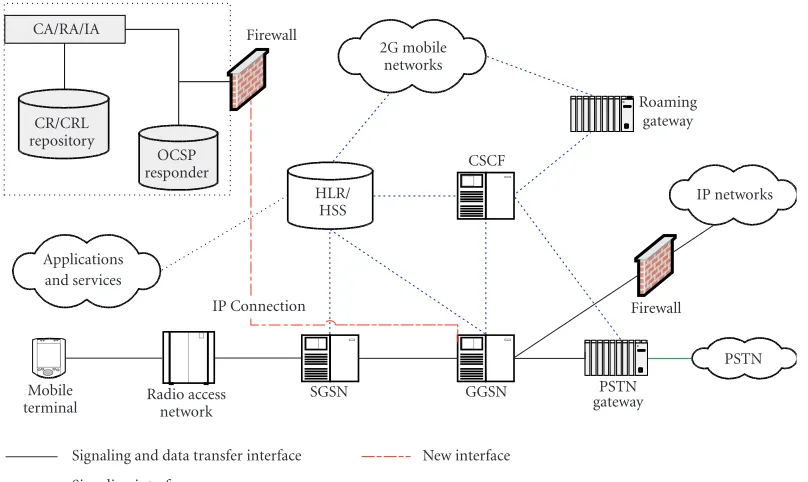
Figure2: 3G network architecture and PKI elements.
mobile telecommunications system (UMTS) applications can coexist on a single smart card [14]. A recent study has also shown the feasibility of SSL in handheld wireless devices [8], while a relevant work showed that SSL handshake proto-col time can be improved up to 5.7 times [15].
SSL supports different protocols for creating premaster keys (RSA, Diffie-Hellman, etc.), several different crypto-graphic algorithms, and different MAC algorithms. In the context of an AKA procedure, these properties can provide the appropriate flexibility in a continuously evolving envi-ronment, where the available means from a perspective of di-versity and computational power at the attackers side are in-creasing rapidly. The incorporation of the international mo-bile subscriber identity (IMSI) transmission and the packet-temporary mobile subscriber identity (P-TMSI) allocation in SSL-based AKA far enhances its reliability and offers fewer opportunities to potential attackers.
Certainly, to implement an AKA mechanism based on SSL, we need to utilize some sort of PKI, which is not nec-essarily part of the beyond-3G (B3G) network core [16] (Figure 2). PKI is gradually being introduced in the mar-ket. Projects like ASPeCT [14] and USECA [17], Third Gen-eration Partnership Project (3GPP) discussion documents [16,18] especially for UMTS release 6, as well as other recent works [19] anticipate that evolution. The eNorge 2005 strat-egy [20] calls for a shared PKI for Norway, while advanced standards such MexE, WAP, and i-mode from NTT Do-CoMo have moved forward to introduce public key methods. Successful wireless PKI implementations and solutions from companies like Sonera Smarttrust, Lucent Technologies, and Entrust, strengthens the assertion that PKI has become an acknowledged and promising component of standards.
Such an infrastructure is protocol independent and het-erogeneous, and can provide a wide range of security ser-vices, such as authorization and charging of mobile users for new services, authenticated and encrypted channels between network entities, as well as digital signatures and nonrepudi-ation services.
More specifically, in the context of an AKA implementa-tion based on SSL, we assume the following.
(i) There is some sort of certification authority (CA), which issues and revokes certificates. This can be pub-lic in the form of a common certification service provider (CSP) or private; one or more per operator. (ii) UMTS subscriber identity module (USIM)
tamper-resistant card is storing the user’s private and pub-lic keys, and certificate(s) along with the trusted CA certificates and IMSI. USIM card should be capa-ble of generating pseudorandom values and execut-ing public key operations. For instance, if RSA key ex-change is being used in MS key-exex-change message (see
Section 3.2), the USIM generates a 48 bytes premas-ter secret and encrypts it under the server’s RSA key found in server’s certificate. This means that mobile equipment (ME) has to pass server’s public RSA key to the USIM. Other operations required by the SSL protocol have to be supported by the ME. ME should also have a nonvolatile memory to store P-TMSI and SSL caching parameters in order to support session re-sumption discussed inSection 3.3.
can be provided by (serving GPRS support node) SGSNs, (session initiation protocol) SIP Servers or even Authentication Authorization and Accounting (AAA) servers. Moreover, these entities track and store possible CAs Cross reference certificates [13,16] to support inter operator(s) authentication and trust. (iv) There is one-at-least digital certificate repository,
which stores all the digital certificates and is being managed by the mobile operator’s CA.
3. AN AKA MECHANISM BASED ON SSL
3.1. Existing problems in 3G AKA
In UMTS, the AKA mechanism is somewhat similar to the authentication in GSM. The idea to use public keys in the process of authenticating the users was abandoned, mainly due to backwards compatibility and for performance consid-erations. The authentication in both systems is based on a symmetric secret key K, which is stored in the user’s U(SIM) card and in the corresponding Authentication Centre (AuC) in which he made his subscription. The procedure, as de-scribed in [21], is based on the challenge/response protocol.
Several known weaknesses in AKA GSM seem to be now fixed in UMTS, through further study and investigation. However, there are still some “gaps” which an attacker can possibly exploit. Below we briefly describe these weaknesses, while for a detailed breakdown of 3G-AKA shortcomings re-fer to [21,22,23,24].
(i) Passive or active attacks can compromise authentica-tion vectors either from SGSN or home subscriber server (HSS) which store a number of vectors or quin-tuplets for each user, or from the SGSN-HSS commu-nication link. The problem becomes more important in case the subscriber is roaming between two or more PLMNs, for example, in different countries, where the home network has always to send authentication vec-tors for use by the serving network. This means that the authentication vectors are very likely to become compromised or spoiled, traveling across different net-works which possibly have dissimilar security features [22]. In any case, the user will still need to trust each serving network operator and its security technology in the same way he does in GSM networks.
(ii) In some cases, the system allows the identification of a user by means of the permanent subscriber identity (IMSI) in clear text. The procedure should be invoked by the serving network when (a) the subscriber regis-ters for the first time in a serving network, or after a long time interval in which the mobile station (MS) has not been used and (b) when the network cannot retrieve IMSI from P-TMSI, due to SGSN’s database malfunctions or in handover cases when the (IMSI, P-TMSI) pair is transmitted from one SGSN to another and the IP address of the old SGSN cannot be resolved. The procedure is open to passive attacks, where the intruder is waiting for potential IMSI transmissions in clear text or active man-in-the-middle attacks [22].
The unprotected transmission of permanent identity is primarily a threat against user identity confidential-ity. But there is also a possibility that the user iden-tity could be tampered with. However, it is not obvi-ous how it could be exploited beyond creating general commotion in the system. Below, we shall examine a way in which the P-TMSI allocation procedure can be part of the SSL AKA mechanism.
(iii) The key sizes and the ciphering and deciphering al-gorithms are fixed. This makes the whole mechanism inflexible and less secure, whenever security vulnera-bilities are discovered in an existing algorithm, like in the case of GSM A5/1 algorithm [25]. Having a dy-namic security mechanism that is able to negotiate and load new encryption modules with different key lengths on demand allows greater flexibility.
(iv) One security enhancement in UMTS is the inclusion of integrity protection service. However, integrity is only guaranteed for signalling data between RNC and MS. The user data do not have an associated MAC, and are consequently vulnerable to manipulation.
(v) In addition to securing mobile communications, the security mechanisms in mobile devices should be able to provide security services for multimedia applica-tions and IP-based services. The challenge is even greater when mobile communication involves multi-ple domains in wireless, self-configuring, and hetero-geneous environments.
Last but not least, user application security, when needed, is provided by the WTLS protocol. It is well known that WTLS, at least until version 2.0, is using a WAP gateway, which is generally considered as insecure and certainly not “end-to-end.” Moreover, it allows the use of weak encryp-tion algorithms and features that make chosen-plaintext at-tacks and brute force atat-tacks easier to mount. At any case, WTLS authentication procedure is often anonymous, and if it is done, then it is performed only once (towards the WAP gateway) for the whole time the same WAP gateway is used.
3.2. AKA based on SSL protocol
As we already discussed, the AKA mechanism is based on the symmetric key K, which is used by the (common to AuC and USIM) one-way functions f1 through f5 to compute and to verify the authentication vectors respectively. Functions f1 and f2 are message authentication functions while f3, f4, and f5 are key generating functions. For a detailed explanation of f1 to f5 functions, refer to [21,24]. The USIM-network authentication process is mutual as an attempt to enhance GSM. Despite that, during the authentication process, there is always the chance for an intruder to use a compromised au-thentication vector that he has intercepted either from HSS or from the HSS-SGSN link. If that vector has not been used again, then the attacker can possibly achieve his goals, using a false base station (BS) (impersonating the network), or a false MS (impersonating the user).
Mobile station SGSN HSS Attach request
Hello message (protocol version, supported ciphers, compression, random
number, and session ID)
SGSN certificate verify
MS certificate MS key-exchange message (Premaster secret)SGSN public key
(IMSI)SGSN public key Certificate verify message Master key generation Change CipherSpec + finished
messages Public key operation
Data size=288 bits Key size=1024 bits Public key operation Data Size=384 bits +15 bits (IMSI) Key size=16 bits Public key operation Data size=1024 bits Key size=16 bits
Hello message
(protocol version, supported ciphers, compression, random number, and
session ID)
SGSN certificate SGSN key exchange MS certificate request + hello done
(Premaster key decrypt.)SGSN private key (IMSI decryption)SGSN private key
generate packet-TMSI MS certificate verify Master key generation
Change CipherSpec + finished messages
Update location
Insert subscriber data Insert subscriber
data ACK
Update location ACK
Attach accept + packet-TMSI Attach complete
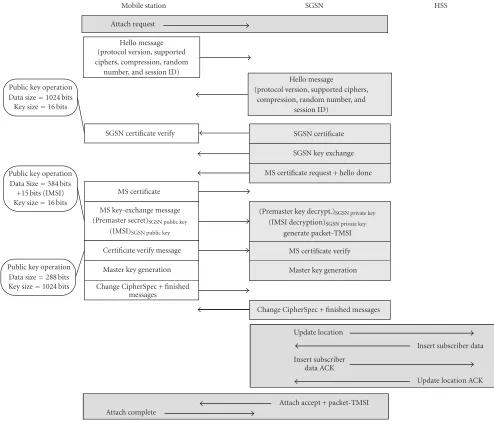
Figure3: AKA mechanism based on SSL (P-TMSI is unknown to SGSN).
(Figure 3). The proposed mechanism can be implemented in some future time or in AKA dual-mode devices. At this point, we also suppose that no P-TMSI is included in the MS’s at-tach request message to SGSN, which serves the routing area wherein the mobile is located. Later, we will show how the procedure is extended when P-TMSI is included in the MS’s attach request message to SGSN.
(i) MS initiates the SSL handshake sending an MS hello message to SGSN. This includes the MS security op-tions: the highest version of the SSL protocol that the MS can support, an ordered preference list of crypto-graphic and compression parameters that the MS can sustain, a 32-bit timestamp, a 28-bit random num-ber, and a session ID. This ID should be empty if no SSL session currently exists or if the client wishes to generate new security parameters.
(ii) SGSN replies with its hello message. If it supports some cryptographic and compression methods com-mon to MS, those are included in its message. Other-wise, the connection is terminated. In addition, SGSN sends its 32-bit and 28-bit numbers and a session ID. If the latter is equal to the MS session ID, it is implied that the parties are going to use security parameters agreed on in a previous session. Otherwise, SGSN gen-erates a fresh session ID number denoting a new con-nection.
(iii) SGSN sends its digital certificate to MS. This can be an X509v3 certificate or an X509v3 subset.
MS hello (session ID to resume)
Change CipherSpec + finished messages
Mobile station SGSN
SGSN hello with same session ID
Change CipherSpec + finished messages
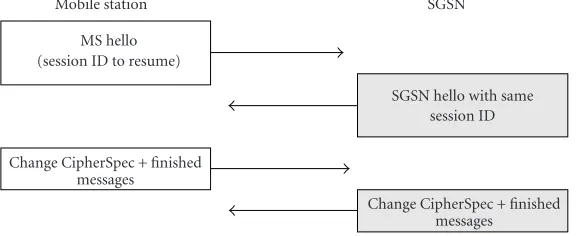
Figure4: Resuming an SSL session (abbreviated handshake).
(v) MS has to validate the SGSN’s certificate. First, it ver-ifies that the certificate is published by a CA that it can trust and that the certificate time-validity period has not expired. Given that changes on those lists are rare, a CAs list with their corresponding public keys can be prestored in the USIM card. It is important that the procedure uses the public key from its internal store to verify the certificate, rather than the public key from the CA certificate, that might be provided by the SGSN. Finally, it computes the certificate’s hash and compares it with that existing in the received certifi-cate. We also assume that there is no need for the MS to check if SGSN’s certificate has been revoked. This is true as SGSNs, or authentication servers in general, administered by the mobile service provider are rela-tively few and in the order of tenths according to the size of the network. Considering the provider’s mod-erately closed network and assuming that the private key of each SGSN is adequately protected, the follow-ing options are possible. (a) Each operator can peri-odically, for example, 12–18 months, refresh SGSN’s certificates by revoking the old ones. (b) Issued certifi-cates for SGSN can have a limited life of 12–18 months. After that, they must be replaced with the new ones. (c) The last option is to replace an SGSN’s certificate only when the machine operation is suspended or up-graded. This procedure will still happen quite infre-quently.
(vi) SGSN requests MS certificate and concludes its part of the negotiation with a hello done message.
(vii) MS/USIM generates a premaster secret value and crypts it using the SGSN’s public key. Similarly, it en-crypts its IMSI and sends both values back to SGSN. If a Diffie-Hellman key exchange is performed, the SGSN and the MS exchange their public parameters as part of the SGSN key exchange and MS key-exchange mes-sages.
(viii) MS has to prove that it possesses the private key that corresponds to the public key, which is included in the certificate it previously sent to SGSN. The mes-sage contains a digitally signed hash from the infor-mation, available to both parties (keys and messages). This hash will be checked by SGSN.
(ix) SGSN checks the validity of the MS’s certificate carry-ing all the above-mentioned tests.
(x) SGSN decrypts the premaster secret value and IMSI using its private key. It also generates P-TMSI. (xi) Both parties convert the premaster secret into master
secret. The converting procedures may include MD5 & SHA-1 hashes with the session IDs exchanged by both parties as input parameters. The master key will be used for ciphering and MAC calculations.
(xii) MS sends change CipherSpec and finished messages and SGSN replies accordingly. Note that the finished messages are cryptographically and integrity protected making use of the previously negotiated parameters. Finally, P-TMSI is included in the attach accept mes-sage send from SGSN to MS.
3.3. Resuming a previous session
To minimize the overhead of sophisticated cryptographic calculations and of a significant number of protocol mes-sages in both parties, SSL defines a mechanism by which two parties can reuse previously negotiated SSL parameters. As
Figure 4shows, resuming earlier sessions notably streamlines the SSL AKA negotiation. The two hello messages define if the session can be resumed or not. More specifically, if MS wishes to resume a previous session, then it includes its ses-sion ID in the MS hello message suggesting its value to SGSN. If SGSN agrees with that and has cached that session param-eters, it responds with the same session ID in its own hello message. Otherwise, it generates a fresh session ID value and then the full negotiation takes place [4,12].
Mobile station New SGSN Old SGSN HSS/HLR
Attach request including P-TMSI
SSL AKA (full or abbreviated)
Attach accept including new P-TMSI Attach complete
Identification request
Identification response including IMSI and probably cached SSL
session parameters
Update location
Insert subscriber data
Insert subscriber data ACK
Update location ACK
Cancel location ACK Cancel location
Figure5: MS’s attach procedure.
Although session resumption offers a great deal of conve-nience and efficiency to both parties involved, systems should exercise some care in employing it. When a single key is em-ployed, encryption inevitably becomes less secure, as more information is protected and the time passes. Potential at-tackers gain more data to analyze and more time to perform analysis. So the SGSN has to set thresholds on the number of resumptions allowed per session, as well as on the time elapsed between consecutive resumptions per session. If one of the constraints is not met, then the full negotiation should be mandatory.
3.4. AKA procedure in a serving network
In case the subscriber is using his mobile device in a for-eign network, SSL AKA procedure remains as is, with the assumption that the home network CA and the serving net-work CA, have pre-exchanged cross reference certificates. In that case, SGSN is bound to send to MS the corresponding cross-reference certificate too [16]. Of course, another op-tion is to have a common root CA, which is acting as a CSP and is entrusted by both the serving and home network CAs.
3.5. Additional requirements
Some further issues need to be resolved before the proposed SSL-based authentication is introduced. Currently it is not possible to implement a straight SSL AKA procedure
be-tween an MS and 2.5G-SGSN, because there is not a direct IP connectivity between MS and SGSN. However, 3G-SGSN will eventually communicate towards all directions (RNC, GGSN) using IP as specified by 3GPP and thus it is very likely that it will be finally integrated with GGSN, at a later time. More importantly, regardless which node will provide AKA functionality, we believe that it is more efficient to imple-ment the AKA procedure as a service, provided to the user, irrespective of the access network/domain he is connected to and the service he is requesting.
For instance, 3GPP AKA is used for authentication pur-poses at both the radio network and the IP multimedia sub-system (IM), introduced in UMTS release 5. Moreover, cur-rent 3GPP specifications for UMTS release 6 describe an in-terworking architecture between UMTS and WLAN where the home network is responsible for access control, while 3GPP authentication, authorization, and accounting (AAA) proxy, relays access control signalling to the home 3GPP AAA server. 3GPP seems to choose the extensible authentication protocol (EAP)-AKA protocol [26,27,28] to support such interworking scenarios.
Attach request
Transfer IMSI and cached SSL session parameters (if any)
Is session ID in MShello NULL?
Is possible/safe to resume? Can old SGSN
be contacted? Is P-TMSI
included?
Full SSL AKA with IMSI protection
Start SSL AKA without IMSI protection
Full SSL AKA without IMSI protection Abbreviated
SSL AKA Yes No
Yes No
MShello Yes
Yes
No No P-TMSI
If the P-TMSI included in the attach request message has been previously allocated by the new SGSN, then new SGSN=old SGSN
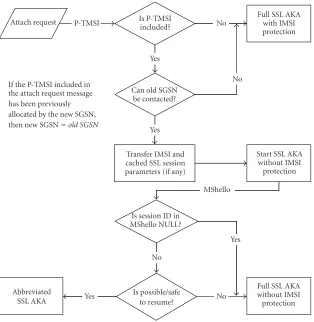
Figure6: Checking whether a session can be resumed.
Another issue is that SSL AKA protects effectively user’s data but leaves signalling communication between RNC and MS unprotected. In a similar way, as current UMTS specifica-tions provide ciphering and integrity protection to signalling traffic, the ciphering and integrity keys constructed during SSL handshake could be used for the protection of only sig-nalling messages at the lower layers. A mechanism similar to “the security mode command” message of the radio ac-cess network application protocol (RANAP) [21] is neces-sary to transfer these keys to RNC. Ciphering on signalling data could also be avoided as the critical issue is the integrity of this data. Additionally, the USIM card must support al-gorithms f8 and f9 for ciphering and integrity protection of signalling, respectively.
4. SSL AKA SERVICE TIME MEASUREMENTS
4.1. Testbed setup
In order to evaluate the performance of the SSL AKA mech-anism, we constructed an experimental hardware and soft-ware architecture. The objective was to take measurements of the AKA procedure and at the same time simulate the consumption of processing power and communication re-sources of a real full deployment. We excluded error process-ing and optional features from our study, because these in-crease development time without consuming significant ad-ditional resources.
The development and test model topology is illustrated inFigure 7. The presumed mobile device is an IBM ThinkPad 380 laptop computer that uses Windows 95B operating sys-tem. The “client” uses a Siemens ME45 mobile phone, in order to connect to the Internet over GPRS. The IBM 380 incorporates a 150 MHz Pentium CPU and has 16 MB of RAM available. Contemporary wireless devices are featur-ing advanced architectures with Strong-Arm processors up to 400 MHz, memory capacities of 64 MB RAM and 48 MB ROM, support for java applications and strong operating sys-tems. At the other end, the “server” machine has a Pentium III 733 MHz processor with 256 MB RAM, running the Win-dows 2000 Professional SP2 operating system. The server has also a WAN connection available. Comparable testbeds for GPRS and WAP performance evaluation can be found in the literature [29,30,31].
We wrote the applications in C++ and employed the well-known open-source Apache-style license OpenSSL toolkit in version 0.9.6g (http://www.openssl.org) [32] to make them SSL enabled. Lightweight SSL packages like Java 2 Micro Edi-tion (J2ME) kilobyte-SSL from Sun and RSA’s Bsafe SSL-C/SSL-J, offer certificate-based authentication from server’s side only. Moreover, it is argued that Java performance in crypto code is by far worse than C performance [4].
The experimental software architecture is depicted in
Laptop machine IBM ThinkPad 380
IR Siemens ME45
GPRS phone
GPRS 2.5 G Network
Internet
WAN connection
Router Hub
Windows 2000
SSL authentication server Local network 10 Mbps
Figure7: Hardware architecture.
Client-side SSL-enabled application process
Mobile client
TCP Connection
Authentication server
App. server process A1 Threads for SSL/TLS
authentication
Process A2 to stretch the server Two simple applications: a client
and a server in which the server simply echoes data from the client to the console.
Figure8: Software architecture.
listening socket and waits for transactions, and process A2, which locally generates a large number of SSL transactions and loads the local-host server. The interarrival times be-tween successive SSL authentication requests, generated by process A2, follow the negative exponential distribution. Ap-plication server process A1 is multithreaded. When it receives a message, it dispatches a thread to process and respond to the request.
We tried to minimize client’s application demand in pro-cessing power and memory capacity by removing dispens-able memory and power consuming calls to OpenSSL func-tions. Therefore, we left out functions that load libraries with error strings, and verify certificates paths and certifi-cates chain depths above four, and we enabled the client to support only SSL version 3 and TLS version 1. Moreover, we excluded from the client and the server, support for ciphers and MACs algorithms that are generally considered anony-mous or weak, for example, MD5.
The handshake and authentication procedures are mu-tual, meaning that both the client (MS) and the server
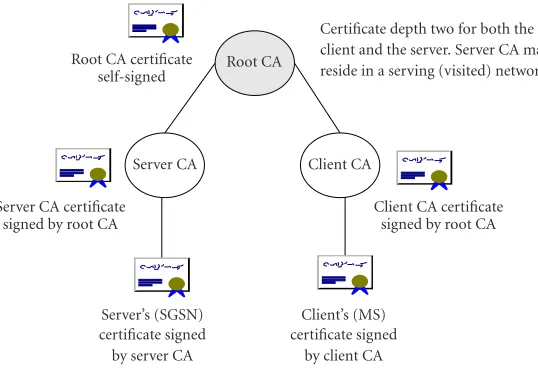
(SGSN) exchange their certificates, which are kept locally with the corresponding trusted CAs public keys list. We de-cided to evaluate a depth-two certificate chain schema in or-der to weigh up a serving network authentication by stretch-ing the client even more. As shown inFigure 9, our certifi-cate “tree” includes a root CA, a server CA, and a client CA. Different service providers may operate client CA and server CA accordingly. Root CA certificate is self-signed. Similarly, root CA signs server CA and client CA certificates. Client holds a certificate signed by client CA, whereas server CA signs server’s certificate.
Root CA
Server CA Client CA
Server’s (SGSN) certificate signed by server CA
Client’s (MS) certificate signed
by client CA
Client CA certificate signed by root CA Server CA certificate
signed by root CA
Root CA certificate self-signed
Certificate depth two for both the client and the server. Server CA may reside in a serving (visited) network.
Figure9: Certificate tree.
Both parties check certificates validity, against time expi-ration, issuing CA and IP address. An implementation must not only ensure that the certificate is valid, but must also make sure that it certifies the right party. Since a certificate binds a public key with a distinguished name, the “natural” option is to use a unique ID, like IMSI, in the common name field. Of course this will reveal the real identity of the user. In the following, we will present a way to avoid this.
It is well known that CSPs are capable and liable to is-sue “anonymous” X.509 certificates, which means that the common name field can contain any pseudonym. The map-ping of pseudonyms to IMSIs is known only to that particu-lar CSP and a potential eavesdropper cannot derive the real identity of the subscriber. Even if an attacker compromises both the subscriber certificate and TMSI, he still cannot be SSL AKA authenticated, as he will not be able to prove (to SGSN) that he holds the private key that corresponds to that certificate’s public key. This is true because it is infeasible to create the right certificate verify message (Figure 3and (viii) inSection 3.2).
No party checks certificates validity against any fresh re-vocation list. Only the authentication server is bound to do so by checking against MS’s IMSI. This will require an IMSI revocation list transferred from HSS to SGSNs. Having that an IMSI has a relatively long life, this list can be transferred once a day during nonpeak hours. In the meantime, if IMSI has been revoked but is not included in the last list received, the handshake will successfully start. However, when SGSN sends an update location message to HSS, it will receive an invalid IMSI response, denoting that the specific IMSI has been revoked.
All RSA keys are 1024 bits in length, premaster secret ex-change is based on ephemeral Diffie-Hellman key with RSA signatures, thus supporting forward secrecy and the result-ing symmetric SSL session key is 128 bits long. The complete cipher suite algorithms that our applications employed are EDH-RSA for key exchange with key size 512 or 1024 bits, DES-CBC3 for encryption, and HMAC-SHA-1 for integrity (EDH-RSA-DES-CBC3-SHA).
4.2. Measurement results
We run our experiments with various values of the request arrival rateλfor process A2, which adds virtual load to the server process A1, during different days and times. The gen-eral packet radio service (GPRS) coding scheme was CS1 (9.05 Kbps) and the time slots for GPRS were varying from 3 to 4, thus having wireless network speeds in the range from 27 to 36 Kbps. We tracked and measured the following times in the mobile’s client process.
(a) Network response time (NRT): time to complete a connection to the server socket. It includes network roundtrip plus client and server processing related to the acceptance of the connection.
(b) Request preparation time (RPT): elapsed time before the actual SSL handshake. This time is the NRT, plus the preparation time, for example, MS’s time to load the certificates.
(c) Total handshake time (THT): elapsed time from MS hello to finished message.
(d) Total SSL call setup time (TST): total elapsed time until both parties acquire the symmetric key and are ready to start the actual communication (it includes RPT and THT).
At the server side, we measured the following time.
(e) Time to serve client’s request (SCRT): elapsed time from server hello message until MS’s request has been ac-cepted and served.
During our experiments, we gathered 1000 measurements of the aforementioned times, from an equal number of trans-actions initiated by our client. We present the corresponding average values in milliseconds inTable 1and the probability density functions of these time durations in Figures10and
11.
Table1: Average service times in milliseconds.
Mobile station Authentication server
NRT RPT THT TST SCRT
803 833 6858 7684 6133
0.4 0.6 0.8 1 1.2 1.4 1.6 1.8
Figure10: Service times 1/2.
5.8 6.1 6.4 6.7 7.0 7.3 7.6 7.9 8.2 8.5 8.8 9.1 9.4 9.7 Service time (s)
Time to serve client’s request (server) Total handshake time
Total SSL call setup time 0
Figure11: Service times 2/2.
preparation process takes nearly constant time to complete and the total time before SSL handshake is mainly dependent on the distribution of NRT, that is, the network speed.
Similarly, inFigure 11 we present the relation between TST, THT, and SCRT. We notice that the THT plot is a right shift of about 0.7 second of the SCRT plot. This 0.7 second is actually the MS’s time to prepare, for example, the request and to load the certificates, plus half round trip time (0.4 sec-ond) from the initial MS hello. TST has nearly the same dis-tribution, as the NRT and RPT of the previous figure. This can be explained from the protocol’s 10 exchanged messages, in other words, approximately 5 NRTs. Therefore, 803 mil-liseconds average round trip time multiplied by 5 equals 4 second, plus other times for calculations, verifications, and hashing, we get the total average SSL setup time of 7.7 sec-onds. We note that all measurements gathered were highly immune to server’s workload as this was generated by pro-cess A2.
Finally,Table 2 shows the resources in kilobytes, which comprise indicative values for a mobile device to run our sce-nario.
4.3. Remarks on the measurements results
We believe that the average time of 7.7 seconds can be, under certain circumstances discussed hereunder, an ac-cepted authentication time duration for the user of a wire-less B3G device. Comparing our work with other works, we can mention the following. First, comparing TST with actual WTLS service times, we note that WTLS is in sev-eral cases even slower, while comparable results with kilo-byte SSL, 20 MHz Palm client CPU, and server side only certificate verification showed a time of approximately 10 seconds [8]. Second, to the best of our knowledge, two other works describe and measure public key-based authen-tication mechanisms for 3G mobile devices. The first one [33] discusses an alternant to SESAME architecture called Tiny SESAME. SESAME extends Kerberos by providing addi-tional services. Performance measurements using an HP Jor-nada 680 with a 133 MHz CPU running Windows CE 2.11 and a version of Tiny SESAME in PersonalJava, showed 10-to-16 second client authentication times depending on the call setup scheme. The other one [34] uses proxy assisted Kerberos protocol architecture between the client and the server. Measurements using a Vadem Clio C-1000 with a 100 MHz CPU running Windows CE and applications writ-ten in C++ showed 8-to-15 second client authentication times depending on the scenario architecture and network speed.
Regarding our results we can also mention the following. (i) We have to take into account that the network speeds for 3G will be 144 Kbps up to 348 Kbps for wide and up to 2 Mb/s for low coverage and mobility, which will substantially reduce round trip times. A rough calcula-tion assuming 144 Kbps network speed could diminish NRT to 200.8 ms showing an improvement of a factor of four.
(ii) A higher GPRS coding scheme, if offered by the operator and possible by the prevailing link con-ditions, could improve protocol’s handshake perfor-mance considerably [31].
(iii) We have also to subtract the extra network delay, de-rived from the fact that our server did not reside in-side the provider’s core network. Performing measure-ments with a ping tool we discovered that the average extra time spend in each roundtrip was about 200 mil-liseconds.
Table2: Memory recourses in kilobytes.
Item Kilobytes
RAM space for process A1 2662
Disk or EPROM space for OpenSSL .dll files 1064
Disk or EPROM space for MS’s application program 96.2
EPROM space in chipcard for client’s certificate (.pem file) 2.93 EPROM space in chipcard for one trusted CA-root certificate (.pem file) 1.89
Excluding hardware improvements, further optimiza-tions may come from either the protocol structure (messages exchange) or the network architecture. As we discussed in
Section 3.3, session resumption option provides a dramatic performance improvement. That is because resumed sessions use the master secret from a previous connection, thus re-ducing the computation load and the number of messages. Testing with 512-bit RSA keys shows a performance improve-ment of a factor of 20 only in the handshake. An even larger improvement can be observed with larger keys [4]. More portant, we would consequently expect corresponding im-provement in network throughput, as a significant number of sessions are resumed. Recent studies also showed that ses-sion reuse could be further improved, using an SSL sesses-sion aware dispatcher, when the operator is planning to install a cluster of SSL authentication servers [35], and as mentioned inSection 2, the SSL’s handshake protocol time can be im-proved up to 5.7 times [15].
Another important thing is that during the SSL hand-shake, the server must wait for a client message and vise versa. OpenSSL, for example, can buffer network output for in-creased performance. So, it is often computationally cheaper and network faster (considering round-trip times and sizes of messages exchanged) to generate a number of messages and transmit them all at once using a buffer at the transmit-ting side [4]. Regardless the buffer size, it is also possible that the data may be quite large and should be segmented in more than one TCP segments.
Finally, two recent works [36,37] on battery consump-tion of mobile devices with comparable testbeds and using the SSL protocol, show that energy utilization can be ade-quately controlled.
5. CONCLUSIONS AND FUTURE WORK
The AKA mechanism, as described by 3GPP, is based on GSM AKA and it was designed to correct known GSM’s prob-lems and weaknesses. As we already discussed, and until the providers improve their inter/intra-networks security, there are still some “weak points” which potential intruders can exploit. However, the greater drawback of the existing pro-cedure is that it cannot offer a dynamic and flexible AKA mechanism, acting rather statically, and facing the problem shortsightedly. On the contrary, more flexible, dynamic, and scalable security mechanisms are necessary in order to sup-port on-demand services and all-IP end-to-end solutions,
in-tegrated with Internet environment and heterogeneous wire-less and wired technologies. SSL AKA mechanism can be used to overcome these inefficiencies providing real end-to-end security and importing the benefits of PKI in future mo-bile communication systems.
In this paper, we perceive authentication as a service and propose an SSL-based authentication scenario for future mo-bile communication systems that takes advantage of PKI and protects user’s IMSI. We examined and evaluated its per-formance focusing on handshake protocol. We showed that SSL-based authentication can be possible, in terms of service time, while it can simultaneously deliver the appropriate flex-ibility and scalability to network operators and a high level of trust and assurance to end users.
Topics to be further investigated include roaming and authentication, cross-reference certificates to support inter-network authentication, and battery consumption.
ACKNOWLEDGMENTS
We would like to thank Mr. Dimitrios Geneiatakis, Mr. George Karopoulos, Mr. Anastassios Katsigiannis, and Mr. George Sarkos for providing us with the network measure-ments, and the reviewers for their valuable comments that helped us improve the quality and presentation of our work.
REFERENCES
[1] M. Frodigh, S. Parkvall, C. Roobol, P. Johansson, and P. Lars-son, “Future-generation wireless networks,” IEEE Personal Communications Magazine, vol. 8, no. 5, pp. 10–17, 2001. [2] A. Frier, P. Karlton, and P. Kocher,The SSL 3.0 Protocol Version
3.0,http://home.netscape.com/eng/ssl3.
[3] T. Dierks and C. Allen, The TLS Protocol: Version 1.0, IETF RFC 2246, January 1999.
[4] E. Rescorla, SSL and TLS Designing and Building Secure Sys-tems, Addison-Wesley, Boston, Mass, USA, 2001.
[5] R. Oppliger, Security Technologies for the World Wide Web, Artech House, Boston, Mass, USA, 2000.
[6] WAP forum WAP-217-WPKI, Wireless Application Proto-col Public Key Infrastructure Definition, www.wapforum.org/ what/technical.htm.
[7] R. Khare, “W∗ effect considered harmful,” IEEE Internet Computing, vol. 3, no. 4, pp. 89–92, 1999.
[8] V. Gupta and S. Gupta, “Experiments in wireless Internet se-curity,” inProc. of IEEE Wireless Communications and Net-working Conference (WCNC 2002), vol. 2, pp. 860–864, Or-lando, Fla, USA, 2002.
mobile networks,” inProc. of 4th International Workshop on Mobile and Wireless Communications Network (MWCN 2002), pp. 152–156, Stockholm, Sweden, 2002.
[10] S. Dixit and R. Prasad, Eds.,Wireless IP and Building the Mo-bile Internet, Artech House, Norwood, Mass, USA, 2003. [11] D. Wisely, P. Eardley, and L. Burness, IP for 3G: Networking
Technologies for Mobile Communications, John Wiley & Sons, New York, NY, USA, 2002.
[12] S. Thomas, SSL and TLS Essentials: Securing the Web, John Wiley & Sons, New York, NY, USA, 2000.
[13] A. Nash, B. Duane, D. Brink, and C. Joseph,PKI: Implement-ing and ManagImplement-ing E-Security, RSA Press, Berkeley, Calif, USA, 2001.
[14] ASPeCT Project, Securing the future of mobile communica-tions, 1999,http://www.esat.kuleuven.ac.be/cosic/aspect. [15] N. R. Potlapally, S. Ravi, A. Raghunathan, and G.
Lakshmi-narayana, “Optimizing public-key encryption for wireless clients,” inProc. IEEE International Conference on Commu-nications (ICC 2002), vol. 2, pp. 1050–1056, New York, NY, USA, April 2002.
[16] 3GPP TSG, “Using PKI to provide network domain secu-rity,” Discussion Document S3- 010622 SA WG3 Security – S3# 15bis, November 2000.
[17] USECA Project, “UMTS security architecture: Intermediate report on a PKI architecture for UMTS,” Public Report, July 1999.
[18] 3GPP TSG, “Architecture proposal to support subscriber certificates,” Discussion and Approval document, Tdoc S2-022854, October 2002.
[19] G. Kambourakis, A. Rouskas, and S. Gritzalis, “Introducing PKI to enhance security in future mobile networks,” inProc. of the IFIPSEC’2003 18th IFIP International Information Security Conference, P. Samarati and S. K. Katsikas, Eds., pp. 109–120, Kluwer Academic, Athens, Greece, May 2003.
[20] eNorge 2005,Naerings – og handelsdepartmentet, 2002. [21] 3GPP Technical Specification,Security Architecture, TS 33.102
v.5.1.0, December 2002.
[22] 3GPP Technical Specification,A guide to 3rd Generation Secu-rity, TR 33.900 v.1.2.0, January 2000.
[23] T. Aamodt, T. Friiso, G. Koien, and O. Eilertsen, Security in UMTS - Integrity, Telenor R&D, Norway, February 2001. [24] V. Niemi and K. Nyberg,UMTS Security, John Wiley & Sons,
New York, NY, USA, January 2004.
[25] A. Biryukov and A. Shamir,Retime Cryptanalysis of the al-leged A5/1 on a PC, Preliminary draft, December 1999. [26] 3GPP Technical Specification, 3GPP system to WLAN
inter-working, TS 24.234 v.0.2.0 Release 6, November 2003. [27] 3GPP Technical Specification, WLAN interworking security,
TS 33.cde v0.1.0, July 2002.
[28] J. Arkko and H. Haverinen, “EAP-AKA authentication,” draft-arkko-pppext-eap-aka-11.txt, October 2003.
[29] R. Chakravorty and I. Pratt, “Performance issues with general packet radio service (GPRS),”Journal of Communications and Networks (JCN), vol. 4, no. 2, pp. 266–281, 2002.
[30] R. Chakravorty, J. Cartwright, and I. Pratt, “Practical experi-ence with TCP over GPRS,” inProc. IEEE Global Communica-tions Conference (IEEE GLOBECOM 2002), vol. 2, pp. 1678– 1682, Taipei, Taiwan, November 2002.
[31] J. Korhonen, O. Aalto, A. Gurtov, and H. Lamanen, “Mea-sured performance of GSM HSCSD and GPRS,” inProc. IEEE International Conference on Communications (ICC 2001), vol. 5, pp. 1330–1334, Helsinki, June 2001.
[32] J. Viega, M. Messier, and P. Chandra, Network Security with OpenSSL, O’Reilly & Associates, 2002.
[33] J. Al-Muhtadi, D. Mickunas, and R. Campbell, “A lightweight reconfigurable security mechanism for 3G/4G mobile de-vices,”IEEE Wireless Communications, vol. 9, no. 2, pp. 60–65, 2002.
[34] A. Harbitter and D. Menasce, “The performance of pub-lic key-enabled kerberos authentication in mobile computing applications,” inProc. 8th ACM Conference on Computer and Communications Security (CCS-8 2001), pp. 78–85, Philadel-phia, Pa, USA, November 2001.
[35] G. Apostolopoulos, V. Peris, P. Pradhan, and D. Saha, “Secur-ing electronic commerce: reduc“Secur-ing the SSL overhead,” IEEE Network, vol. 14, no. 4, pp. 8–16, 2000.
[36] R. Karri and P. Mishra, “Minimizing energy consump-tion of secure wireless session with QoS constraints,” in Proc. IEEE International Conference on Communications (ICC 2002), vol. 4, pp. 2053–2057, New York, NY, USA, 2002. [37] R. Nachiketh, R. Srivaths, A. Raghunatan, and J. Niraj,
“Analysing the energy consumption of security protocols,” in Proc. ACM ISLPED 2003 Conference, pp. 30–35, Seoul, Korea, 2003.
Georgios Kambourakiswas born in Samos, Greece, in 1970. He received his diploma in applied informatics from the Athens Uni-versity of Economics and Business (AUEB) in 1993. Today he is a Ph.D. student in the department of Information and Communi-cations Systems Engineering of the Univer-sity of Aegean (UoA) and a postgraduate student in “Master in Education” program in the Department of Social Studies of the
Hellenic Open University. His research interests are in the fields of mobile and ad hoc networks security, security protocols, public key infrastructure, and mLearning. Since 2001 he has been a Visit-ing Lecturer in the Department of Information and Communica-tions Systems Engineering of the UoA. He is a Member of the Greek Computer Society.
Angelos Rouskas was born in Athens, Greece, in 1968. He received the five-year diploma in electrical engineering from the National Technical University of Athens (NTUA), the M.S. in communications and signal processing from Imperial College, London, and the Ph.D. in electrical and computer engineering from NTUA. He is an assistant professor in the Department of Information and Communication Systems
Stefanos Gritzalis was born in Greece in 1961. He holds a B.S. in physics, an M.S. in electronic automation, and a Ph.D. in dis-tributed systems security, all from the Uni-versity of Athens, Greece. Currently he is an Associate Professor at the Department of Information and Communication Sys-tems Engineering, University of the Aegean, Greece, and an Associate Director of the In-formation and Communication Systems