R E S E A R C H
Open Access
Predict the logistic risk: fuzzy
comprehensive measurement method or
particle swarm optimization algorithm?
Dafeng Xu
1,2, Leon Pretorius
2and Dongdong Jiang
2*Abstract
Risk analysis is an important fundamental basis of the decision-making process, and it has been applied in many fields. In order to improve the risk management of logistic, a new model based on particle swarm optimization (PSO) is proposed, which is a stochastic optimization method based on population. Through a comparison of performance with a Fuzzy Comprehensive Measurement Method (FCMM), the findings indicated that PSO can predict the logistic risk more accurately. The experimental results show that the model of logistic risk analysis and identification based on PSO algorithm is superior to FCMM model.
Keywords:Logistic risk, Particle swarm optimization, Fuzzy comprehensive measurement method
1 Introduction
With the promoting of the national logistic industry, the planning and establishing of logistic construction pro-jects have also incurred an upsurge in major cities of China [1]. Although logistic construction projects have many meanings to the development of logistic in cities or regions, due to the inherent characteristics of project construction: strategically, non-profit, high investment, and long-term return period, they have brought unpre-cedented test to the operation and management after the completion of construction [2]. Many of the com-pleted logistic construction projects have not been well managed and failed to achieve the expected results. Failure in the investment will not only cause huge waste on manpower, material, and financial resources, but also bring the negative effects on survival of enterprises. Therefore, in order to solve the problems in the logistic construction projects, we must be well prepared on pre-construction feasibility studies, conduct a compre-hensive survey of construction projects, and arrange technical and economic feasibility studies of various pos-sible scenarios for the project. The aim mentioned above is to analyze and evaluate the overall risk of the project
and provide the basis for taking decisions on investment and also for risk-prevention measurements.
Through the discussion on the importance of logistic risk assessment, we can see that logistic risk refers to numbers of enterprises with complementary resources and technologies. Due to the fact that logistic risk does not change the independent legal personality in each node of enterprise in the market, it does not eliminate the potential conflicts of interest. Therefore, logistic also brings some new risk issues to alliance enterprises [3]. Risk is the uncertainty of the loss, that is, the possible negative deviation is combined with the expectation of the people’s decisions about the future behavior and the uncertainty of the objective conditions. The risks in the logistic can be divided into two categories: one is from the external of the virtual logistic organization, including market risk, financial risk, political risk, and natural dis-aster risk; the other one is from the internal of the vir-tual logistic organizations, which includes capacity risk, collaboration risk, investment risk, and operational risk.
There are various risks being involved in the invest-ment and construction of logistic projects. It is an im-portant basis for the decision-making process to analyze the source and level of risk factors through the whole system and assessment. The development of logistic business needs to be based on a strong logistic system to reflect the advantages of low cost and high efficiency of
* Correspondence:[email protected]
2Department of Engineering and Technology Management, University of
Pretoria,South Africa, Pretoria, South Africa
Full list of author information is available at the end of the article
logistic services. The company’s logistic business needs to carry out large-scale logistic infrastructure construction and a lot of money on the basis of the original business and management experience, accompanied by a great risk in this process. Therefore, the scientific method of logistic risk comprehensive assessment may contribute to a better project development process by well prediction on the in-evitable risks of the enterprise’s own ability and the pro-ceeds of trade-offs. For a decision-maker, there is a very important reference value.
About Fuzzy Comprehensive Measurement Method (FCMM) method, it is a branch of fuzzy mathematics which is created by a well-known electronic engineer and cybernetics expert L.A. Zadeh and dealt with the fuzzy phenomenon within mathematical method. With the characteristics of human thinking, the fuzzy theory is an effective tool for its phenomenon treatment, while the evaluation is a general view that the nature of thinking de-termines its fuzziness. As a result, the fuzzy mathematics method has been widely used in the field of systematic evaluation including logistic risk analysis. Thus, to evalu-ate the advantage of particle swarm optimization (PSO) al-gorithm, we chose FCMM method as our comparable object. Based on some specific cases of logistics projects, the risk of logistics projects was evaluated on two levels, and the risk aversion measures when implementing the projects were proposed. In order to overcome the limita-tion of the existing research methods, the research proposed an identification model based on PSO—a population-based random optimization method. Through a comparison of performance with a FCMM, the findings indicated PSO can predict the logistic risk more accurately [4]. From the test results, it is shown that model of risk analysis and identification of logistic risk based on PSO al-gorithm is superior to FCMM model.
2 Literature review of logistic risk management
In recent years, the research of logistic risk management has focused on different areas [10]. Usually, logistic risk relationships are defined as “long-term relationships where participants generally cooperating, sharing the in-formation, and working together to plan and even modify their business practices to improve joint per-formance.” The theoretical research on logistic risk management is accompanied by the formation and de-velopment of the international engineering construction market. At present, due to the investment and construc-tion of logistic project, it is still a newborn thing in re-cent years, and a number of logistic construction projects have been successfully operated, but the geo-graphical distribution is limited. This is because a long period of time is required for a logistic investment pro-ject from preliminary preparation to post-operation. Therefore, it causes limited findings in research
literature regarding the quantitative analysis and evalu-ation of logistic construction projects [5]. The following is a summary of the collective risk researches related to logistic risk: Tranfield et al. [6] analyzed the main fea-tures and all kinds of risk factors existing in the con-struction of the logistic park. In the view of the actual situation of the construction of the logistic park, the re-search analyzed the obvious risks in the various stages of the construction of the logistic park and gave the corre-sponding risk management strategies and preventive measures. Fawcett et al. [7] considered the logistic rela-tionship between city and city and the role of logistic parks in the urban logistic system, and it put forward the conditions to be considered in the construction of city logistic parks. There are problems in the construc-tion of a logistic park, and it put forward corresponding countermeasures [7]. According to the characteristics of large-scale logistic projects such as large investment, high risk, and strong pertinence, Grawe evaluates the risks of logistic in the “Application of Risk Assessment in Logistic Projects” [8]. The first level considers the in-vestment of logistic projects construction and operation of the various risk factors in the project as a whole part to assess the level of risk. The second level needs to combine the project overall risk assessment results and the core ability of profit forecast on logistic project in-vestment and construction. The risk return method is used to analyze the economic risk of specific logistic project investment program and the range of project’s economic risk. In the document “Operation Manage-ment of Logistic Park Market,”Neuendorf [9] described the connotation of market operation risk in the logistic park; identified the market operation risk; divided the market operation risk into three categories: environmen-tal risk, process risk, and regulatory risk and the possible consequences of the risk; and put forward the risk man-agement measures. Cooper and Ellram analyzed the in-vestment risk of logistic industry from four aspects which are return on investment, logistic solution, finan-cial service, and product features in “Risk and Strategy of Logistic Investment” and put forward the investment risk response strategy in logistic industry [10]. Min et al. analyzed the fuzzy comprehensive evaluation method applied to the virtual logistic organization risk assess-ment in the middle [11]. Jin et al. analyzed all kinds of risk factors in the port logistic park, using fuzzy compre-hensive evaluation of the risk evaluation [12]. Chen et al. aimed on the current situation of the construction of lo-gistic parks in our country, analyzing the common sys-tem risks in the construction of logistic parks from the perspective of the government and makes quantitative research [13].
the risks of logistic projects at two levels and brings up some measures for risk evasion in implementing the project. In order to overcome the limitations of the existing research methods, the research proposed a new identification model based on particle swarm optimization (PSO), a population-based stochastic optimization. Through a comparison of performance with a Fuzzy Comprehensive Measurement Method (FCMM), the findings indicated PSO more accurately predicts the logistic risk. From the test results, it is shown that model of risk analysis and identification of logistic risk based on PSO algorithm is superior to FCMM model.
3 Risk identification by fuzzy comprehensive measurement method
During the practical works, an assessment (or evalu-ation) usually involves a number of factors or indicators, which are evaluated based on these factors, but this does not apply to individual case. This is comprehensive evaluation. Fuzzy comprehensive evaluation is a very ef-fective multivariate decision-making method for making a comprehensive assessment which is affected by many factors [14].
3.1 Basic model
First of all, we need to introduce the detail methods of Fuzzy Comprehensive Measurement Method (FCMM). Fuzzy comprehensive evaluation is a very effective multi-variate decision-making method for making comprehen-sive assessment affected by many factors [15].
AssumingU= {u1, u2, u3, … , un} havenfactors and
V= {v1,v2,…, vm} havemjudgments, their number of ele-ments and names can be subjectively defined by people ac-cording to practical problems. Due to the different status of various factors, so the role is not the same, and for sure, the weight and judgment are also different. People are not ab-solutely feeling positive or negative aboutmkinds of judg-ments, so the comprehensive judgment should be a fuzzy subset ofV, andB= {b1,b2,…,bm}∈Φ(V), wherebj(j= 1, 2, …,m) reflects the j’s position-vj in the comprehensive judgment(that is vj degree of membership of fuzzy sets:
B(vj) =bj). Comprehensive judgment B depends on the weight of each factor, and each weight is a fuzzy subsetA
= {aI,a1,…,an}∈Φ(U) onU, and
P I¼1
n
aI ¼1,aIdenotes the
weight of theIfactor. Therefore, once a weight is given, a comprehensive judgmentBcan be obtained accordingly.
According to the specific problems, we need to estab-lish a fuzzy transformationTfromUtoV. If we make a separate judgment f(ui) for each factor ui, this can be regarded as the fuzzy projection f from U to V, that is,
f:U→Φ(V) andui↦f(ui)∈Φ(V).
From f, we can derive a fuzzy transformationTffrom
UtoV, and we can regardTfas the mathematical model of comprehensive evaluationBobtained from weightA.
From the above analysis, we can see that the mathem-atical model of fuzzy comprehensive evaluation consists of three elements, the steps are divided into four: (1) factor set U= {u1, u2,u3,…,un}; (2) judgment setV= {v1,
We call R a single factor evaluation matrix, and the fuzzy transformationTffromU to Vcan be induced by the fuzzy relation R. U(U1, U2, …, Un) form a fuzzy comprehensive decision-making model, U1, U2,···, Un is the n elements of the model. (4) Comprehensive Evaluation: for the weight A= (a1 a2 a3 a4 a5 a6), ac-cording to fuzzy mathematical evaluation model formula
A * R=B, fuzzy comprehensive evaluation operation, where B= (b1 b2 b3 b4 b5 b6) is the total assessment results. In accordance with the principle of maximum membership, the highest value ofbjmaxinbj correspond-ing to the grade Vj is the result of comprehensive evaluation, as result, the risk level of the object being evaluated.
3.2 Specific examples
condition (U52); standardization of operation (U53); (6) environment risk (U6): National Macro-political Economics Environment (U61); policies and regulations (U62); and micro basic environment of investment sites (U63). The risk level is divided into five levels: low risk (V1), medium low risk (V2), general risk (V3), medium high risk (V4), and high risk (V5). The above five evalu-ation rank elements constitute the evaluevalu-ation level set.
V={V1,V2,V3,V4, (V5}. For the six weights of the evalu-ation indicators, we used the Delphi method to issue a consultation letter to 10 experts (including scholars, business leaders, and managers) and scored the weight of six sub-sets of evaluation indicators (Table1).
Apply mathematical modelAi*Ri=Bi.The fuzzy subset Bi= (bi1bi2bi3bi4bi5) (i= 1,2,3,4,5,6,bij∈[0,1]) is the first level of comprehensive evaluation results, indicating that each Ui(i= 1,2,3,4,5,6) (Table 1) within the scope of the logistic project, respectively, to the extent of the percent-age is in five levels:“low risk,” “medium low risk,” “ gen-eral risk,” “medium high risk,” and “high risk”. The calculated results: B= (0.283 0.336 0.271 0.039 0.012). The result shows that the maximum membership degree of matrix B is 0.4, and the overall risk level of the logistic project is low risk.
4 Particle swarm optimization (PSO) algorithm
Due to the restriction of many kinds of influencing fac-tors, the risk identification of the logistic enterprises is complex, fuzzy, and difficult to quantify completely. At the same time, the risk of the virtual logistic enterprises is transitive and accumulative [16]. It is difficult to estab-lish the analytical relationship among the indirect nat-ural logistic enterprise risk index. In order to overcome the limitations of the existing research methods such as FCMM we have mentioned above, in this part, we will propose a logistic alliance risk identification and analysis method which based on the particle swarm optimization (PSO) algorithm and also the penalty function method. These two methods are combined to analyze and calcu-late the optimization problem, which makes the result of virtual emergency logistic alliance risk identification more accurate and realistic.
4.1 Basic model
The Projection Pursuit Model of Virtual Emergency Lo-gistic Risk Identification Model (PPEM) is a complex nonlinear optimization problem with {a(j)|j= 1, 2,…,p} as an optimization variable, and the conventional optimization method is difficult to deal with. In the
paper, the particle swarm optimization algorithm is used to effectively solve the above problems. Assuming the population size of the particle isN,Slrepresents the pos-ition of the particle of l(l= 1,2,···N);vl represents the speed;flrepresents adapted value [17].
In each iteration after the initial position and velocity are randomly generated, the extremum of the particle tracking individual pbestlðtÞ (the best position of the
par-ticle in the flight process) and the global extremum
gbest(t) (the best position of the particle swarm in the flight process) are updated. When the two optimal values are found att+ 1, the position and velocity of the particles are updated according to formula (1). Then based on the particles, we could evaluate the risk.
V1ðtþ1Þ ¼wv1ð Þ þt c1b1ð Þt pbest1ð Þt −s1ð Þt þc2b2t gbestð Þt
−s1ð Þt s1ðtþ1Þ ¼s1ð Þt þv1ðtþ1Þ
ð1Þ
In this formula:wis inertial weight;c1 andc2 are par-ticle individuals and learning factors, respectively;
b1(t)、b2(t) are the random numbers uniformly distrib-uted between (0,1), respectively, describing the random-ness of particle individuals and groups in the speed update process.
Assuming fl(t+ 1) denotes the adaptation of particle l at time t+ 1; fðpbestlðtÞÞ represents the best fit for indi-vidual history of particlel;smax(t + 1) represents the par-ticle position corresponding to the largest fðpbestlðtÞÞ in
all particles at timet+ 1. Then the individual extremum and the global extremum of all particles for each ran-dom case of particle individuals and groups in the speed update process can be updated according to the follow-ing formula:
pbestlðtþ1Þ ¼ slðtþ1Þ flðtþ1Þ≥f pð bestð ÞtÞ pbestð Þt flðtþ1Þ<f pðbestð ÞtÞ n
ð2Þ
gbestðtþ1Þ ¼smaxðtþ1Þ
However, since the optimization of the problem contains some constraints, the penalty function method (sequence unconstrained optimization method (SUMT)) is used in the research to solve the constraint-strained optimization problem by changing the con-straint optimization problem to the unconstrained optimization problem.
For constraint optimization problem: , +
min f xð Þ
s:t: gið Þx ≤ 0 hið Þ ¼x 0
n
ð3Þ
Table 1Weight of evaluation index subset of logistic project
Evaluation index subset U1 U2 U3 U4 U5 U6
i¼1;2;⋯; m; j¼1;2;⋯; n
According to penalty function method, the constrained optimization problem is transformed into the minimization of augmented objective function. That is:
min
x∈Rn F xð ;rÞ ¼ minff xð Þ þrp xð Þg
p xð Þ ¼X n
i¼1
max gið Þx ;0 2
þX
m
i¼1 hjð Þx 2
ð4Þ
of whichris the penalty factor,f(x) is the objective func-tion without penalty, andr*p(x) is the penalty.
In p(x), for the point x that does not satisfy the con-straint condition, the penalty termr*p(x) > 0 is a penalty when the constraint condition is not satisfied, and when the constraint condition is satisfied, r*p(x) = 0. Then based on these theoretical models, we will use an ex-ample to apply these models to see what advantage these models have.
4.2 Results of PSO
According to the actual situation of the logistic project, with reference to domestic and foreign research results, we can set 23 indicators for the existence of six types of risk in the above-mentioned logistic project to evaluate the risk investment of the logistic project: (1) market risk (U1): service innovation (U11), customer demand level (U12), logistic services competitors (U13), logistic market growth (U14); (2) management risk (U2): entre-preneurial style (U21), management quality (U22), man-agement ability (U23), manman-agement moral hazard (U24), corporate culture (U25); (3) technical risk (U3), substi-tutability of technology (U31), advanced technology (U32), technical applicability (U33), technical reliability (U34); (4) financial risk (U4): changes in interest and ex-change rate (U41), ex-changes in the rate of return on in-vestment (U42), difficulties in property transactions
(U43); financial risk (U44); and (5) operational risk (U5): micro basic environment of investment sites (U63). The risk level is divided into five levels: low risk (V1), medium low risk (V2), general risk (V3), medium high risk (V4), and high risk (V5). The above five evaluation rank elements constitute the evaluation level set V={V1,
V2,V3,V4,V5}. For the six weights of the evaluation indi-cators, we used the Delphi method to issue a consult-ation letter to 10 experts (including scholars, business leaders, and managers) and scored the weight of six sub-sets of evaluation indicators.
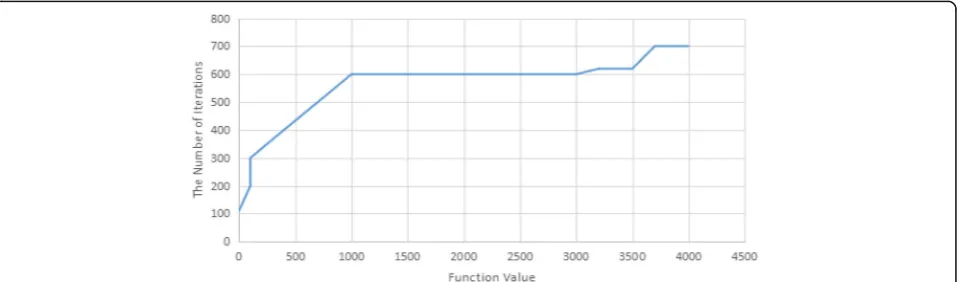
To apply the model we are inventing above, we will use Matlab software to make an example. According to the established index system of virtual logistic risk iden-tification and related data from reference, the first layer index includes external risk U1 and internal risk U2, among these the external risks include service innovation (U11), customer demand level (U12), logistic services competitors (U13), logistic market growth (U14), entrepreneurial style (U15), management quality (U16), management ability (U17), management moral hazard (U18), corporate culture (U19), technical risk (U110), substitutability of technology (U111), advanced technology (U112), technical applicability (U113), tech-nical reliability (U114), changes in interest and exchange rate (U115), changes in the rate of return on investment (U116), difficulties in property transactions (U117), financial risk (U118), internal risk U2 includes equip-ment condition (U21), operator condition (U22), standardization of operation (U23), national macro-pol-itical economics environment (U24), policies and regula-tions (U25). Using MATLAB simulation platform and referencing data, the parameters are set to population size N= 500, c1=c2= 3, inertia weight w= 0.8298, v= 0.5*rand(m,n), with maximum number of iterations
Gmax= 60. After 2000 iterative search calculation, the relationship between the projection template and the number of iterations could be achieved in Fig.1.
Get the best projection direction a* R1 (0.174, 0.185,
0.228, 0.136, 0.394) of external risk R1 (we choose the highest five) anda* R1 (0.288, 0.132, 0.148, 0.100, 0.494) of internal risk R2(we choose the highest five). Accord-ing to the best projection direction a* R1、a* R2, we can see that the influence degree of each index on the identification of virtual logistic risk is in descending order:U25>U23>U15>U13>U21>U24>U22>U12>
U11>U14. The results of error analysis of the results are shown in Table2.
5 Which one is better?
From the above analysis, we could get the following results:
(1) For Fuzzy model, when we apply mathematical model, we could get the calculated results: B= (0.283 0.336 0.271 0.039 0.012). The result shows that the max-imum membership degree of matrix B is 0.4, and the overall risk level of the logistic project is low risk.
(2) For PSO model, when we use the Matlab to run the model, we could get the results that the influence degree of each index on the identification of virtual lo-gistic risk is in descending order:U25>U23>U15>U13 >U21>U24>U22>U12>U11>U14.
Fuzzy comprehensive evaluation method is a compre-hensive evaluation method based on fuzzy mathematics. This comprehensive evaluation method converts qualita-tive evaluation into quantitaqualita-tive evaluation based on the membership theory of fuzzy mathematics which is using fuzzy mathematics to make an overall assessment on something or objects subjected to various factors. It has the characteristics of clear results and strong systematic-ness. It can solve the fuzzy and difficulties, also can quantify the problems, and is suitable for the solution of various non-deterministic problems [3].
Because of its simple algorithm, particle swarm optimization is easy to implement, and no gradient information is needed. The characteristics of small parameters are good for both continuous optimization problems and discrete optimization problems, especially because of their natural real-coded features are suitable for processing optimization [14]. In recent years, it has been became a hot topic in the field of intelligent optimization around the world. Particle swarm optimization (PSO) algo-rithm was first applied to the optimization of nonlinear continuous functions and neural network training and was newly used to solve constrained optimization problems, multi-objective optimization problems, and dynamic optimization problems [8].
For logistic risk analysis model, it is better to use the PSO algorithm [13]. The PSO algorithm is a kind of evo-lutionary algorithm that is similar to the simulated an-nealing algorithm; it also starts from the random solution and iteratively finds the optimal solution. It also evaluates the quality of the solution through fitness, but it is simpler than the genetic algorithm rules. It does not have the “crossover” and “mutation” operations of the genetic algorithm. It seeks the global optimum by fol-lowing the current searched optimal value. This kind of algorithm has attracted much attention from the aca-demic circles because of its advantages of easy imple-mentation, high precision, and fast convergence. It also shows its superiority in solving practical problems [14]. Particle swarm algorithm is a parallel algorithm. The search scope of the particle swarm is limited to the con-ditional constraint cluster, so it is optimized within the range of feasible solutions.
6 Conclusions
Based on the characteristics of the risk of logistic, the re-search applies the theory of risk analysis and manage-ment to the field of logistic, follows the complete risk procedures, and carries out risk identification and risk evaluation in turn. Based on these, the research also summarized and established the overall risk index sys-tem and evaluated the risk as a whole and also a single factor to understand the key risk factors, which affecting the project to help managers to implement effectively risk management measures for the logistic risk management. The logistic risk analysis and management improve the feasibility study content of logistics con-struction project and enhance the credibility of the re-search results. Based on the theory of particle swarm optimization and Fuzzy Comprehensive Measurement Method, we went through these two different models, and compared their differences and advantages. The re-sults indicate that the PSO algorithm not only can analyze and identify the risk of logistic comprehensively, but also analyze the main problems existing in each op-eration of logistic. According to the contribution rate of indicators, we can put forward countermeasures to solve the problems so as to provide scientific basis for the fur-ther development and improvement of logistic. There-fore, the research discovers that the new method based on the particle swarm optimization (PSO) based population-based stochastic optimization recognition model will be more effective in the research and more suitable for logistics project risk assessment.
Table 2Error analysis of calculation result
Range [0,0.05] [0,0.1] [0,0.15] [0,0.2] [0,0.25] [0,0.3] [0,0.35] [0,0.4]
Abbreviations
FCMM:Fuzzy Comprehensive Measurement Method; PPEM: Projection Pursuit Model of Virtual Emergency Logistic Risk Identification Model; PSO: Particle swarm optimization
Acknowledgements
The research presented in the research was supported by Ministry of University of Pretoria, South Africa.
Authors’contributions
XD is the main author of this article. The main idea of this thesis is to propose an identification model based on particle swarm optimization (PSO)—a population-based stochastic optimization method. Compared with the performance of the fuzzy comprehensive measurement method (FCMM), the results show that the PSO can predict more accurately on logistics risks. JD have verified and compared the two models of logistics risk identification. LP gave guidance on the comparative analysis of the logistics risk identifica-tion tracking optimizaidentifica-tion model. All authors have read and approved the final manuscript.
Competing interests
The authors declare that they have no competing interests.
Publisher’s Note
Springer Nature remains neutral with regard to jurisdictional claims in published maps and institutional affiliations.
Author details
1
Economics and Management, Shandong Jiaotong University, Jinan, China.
2Department of Engineering and Technology Management, University of
Pretoria,South Africa, Pretoria, South Africa.
Received: 22 February 2018 Accepted: 30 May 2018
References
1. C Bode, SM Wagner, KJ Petersen, LM Ellram, Understanding responses to supply chain disruptions: insights from information processing and resource dependence perspectives. Acad. Manag. J.54(4), 833–856 (2011) 2. M Christopher, C Mena, O Khan, O Yurt, Approaches to managing global
sourcing risk. Supply Chain Manage Int J16(2), 67–81 (2011) 3. C Ellegaard, Supply risk management in a small company perspective.
Supply Chain Manage Int J13(6), 425–434 (2008)
4. LC Giunipero, RA Eltantawy, Securing the upstream supply chain: a risk management approach. Int J Phys Distrib Logist Manage34(9), 698–713 (2004) 5. RB Briner, D Denyer, DM Rousseau, Evidence-based management: concept
cleanup time? Acad. Manag. Perspect.23(4), 19–32 (2009)
6. Tranfield et al., Towards a Methodology for Developing Evidence-Informed Management Knowledge by Means of Systematic Review. Br J Manag14, 207–222 (2003)
7. SE Fawcett, AM Fawcett, BJ Watson, GM Magnan, Peeking inside the black box: Toward an understanding of supply chain collaboration dynamics. J. Supply Chain Manag.48(1), 44–72 (2012)
8. SJ Grawe, Logistic innovation: a literature-based conceptual framework. Int J Logist Manage20(3), 360–377 (2009)
9. KA Neuendorf, The Content Analysis Guidebook. Lang Arts Discip. (2002) 10. MC Cooper, LM Ellram, Characteristics of supply chain management and the
implications for purchasing and logistic strategy. Int J Logist Manage4(2), 13–24 (1993)
11. S Min, AS Roath, PJ Daugherty, SE Genchev, H Chen, A Arndt, RG Richey, Supply chain collaboration: what’s happening? Int J Logist Manage16(2), 237–256 (2005) 12. H Jin, AM Fawcett, SE Fawcett, Awareness is not enough. Int J Phys Distrib
Logist Manage43(3), 205–230 (2013)
13. H Chen, Y Tian, AE Ellinger, PJ Daugherty, Managing logistic outsourcing relationships: an empirical investigation in China. J Bus Logist31(2), 279–299 (2010) 14. O Lavastre, A Gunasekaran, A Spalanzani, Supply chain risk management in
French companies. Decis. Support. Syst.52(4), 828–838 (2012)
15. IN Pujawan, LH Geraldin, House of risk: a model for proactive supply chain risk. Bus. Process. Manag. J.15(6), 953–967 (2009)
16. B Ritchie, C Brindley, Supply chain risk management and performance: a guiding framework for future development. Int J Oper Prod Manage27(3), 303–322 (2007)