Division V
Revaluation of Property Modification Factor
for Aging Effect of Lead Rubber Bearings
Junhee Park1, Young-Sun Choun2, Min Kyu Kim3
1 Senior Researcher, Integrated Safety Assessment Division, Korea Atomic Energy Research Institute,
Republic of Korea
2 Principal Researcher, Integrated Safety Assessment Division, Korea Atomic Energy Research Institute,
Republic of Korea
3 Principal Researcher, Integrated Safety Assessment Division, Korea Atomic Energy Research Institute,
Republic of Korea
INTRODUCTION
Nuclear power plants (NPPs) require a high seismic capacity. It is obvious that the construction costs will be increased with the designed earthquake load. Recently, research on a base isolation system has been performed to ensure the seismic safety of NPPs under a high earthquake load. In Korea, a study on the application of the base isolation system to a sodium fast reactor (SFR) and pressurized-water reactor (PWR) has been actively performed. The behavior of base isolated NPPs is generally influenced by the behavior of the base isolators. According to ASCE-4 (2013), it is necessary that the long-term behavior of the base isolators be evaluated because the safety of base isolated NPPs should be assured during the operation period. Although a rubber material is used in base isolators to ensure the restoring force, the material properties changes with time. The long-term behavior of rubber bearings such as lead rubber bearings (LRBs), natural rubber bearings (NRBs), and high damping rubber bearings (HDRBs) is affected by the material property of the rubber due to age-related degradation. The seismic isolation bearings can be designed considering the allowable variation of mechanical properties of seismically isolators that is mentioned in ASCE-4 (2013) and AASHTO (1999).
Rubber bearings installed in the base mat of NPPs expose to the atmosphere. Then the mechanical properties of rubber bearings are constantly changed by the oxidation and degradation of the rubber. The oxidation of rubber bearings occurs from the surface to the center. From the results of Itoh et al. (2006), it was presented that the long-term properties of base isolators is affected by the aging depth. Nevertheless, the research on the long-term behaviour of base isolators has been performed using small-scale bearings. However, the size of the base isolators of the NPPs can be higher than the size of the base isolators used in the conventional buildings and structures (residential buildings, bridge etc.). Therefore, the long-term behaviour of the base isolators should be quantitatively evaluated considering the size.
In this study, LRBs were selected as the bearings of seismically isolated nuclear power plants. An accelerated aging test was performed to evaluate the time dependent properties of the rubber material/LRBs and to identify the aging depth. Also the aging property modification factor of AASHTO (1999) and ASCE-4 (2013) was revaluated by calculating the variation of mechanical properties of seismically isolators due to aging.
TIME DEPENDENT PROPERTIES OF RUBBER MATERIAL
to defined strains increase. In other words, rubber material becomes harder and more brittle because the oxidation reaction of rubber material lead to chain scission or cross-linking action.
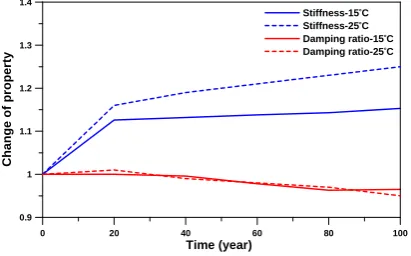
According to the result of Itoh et al. (2006), it was represented that the horizontal stiffness of HDRB increased with temperature while the damping ratio of isolator showed a little change with temperature as shown in figure 1.
0 20 40 60 80 100
Time (year) 0.9 1 1.1 1.2 1.3 1.4 Change o f p rope rty
Stiffness-15oC
Stiffness-25o
C Damping ratio-15o
C Damping ratio-25oC
Figure 1. Change of property for HDRB in different temperature
PROPERTY MODIFICATION FACTORS FOR SEISMICALLY ISOLATORS
In the USA, a study was conducted on the behavior of contemporary seismic isolators (elastomeric, LRB and sliding bearings) and dampers under seismic loadings. Constantinou et al. (2007) reported that the effects of temperature, loading history, wear, corrosion, contamination, lubrication, and aging are considered to enable reliable predictions of the seismic response of seismically protected structures. Because the mechanical properties of seismic isolators was affected by aging, the system property modification factors were proposed to consider the variations of seismic isolators due to aging in the design state. Based on the results of Thompson et al. (2000) and Morgan et al. (2001), the system property modification factors considering the aging are presented in the 1999 AASHTO Guide
Specifications for Seismic Isolation Design, as shown in table 1. Kd and Qd presented the post yield
stiffness and characteristic load of seismic isolators, respectively. According to the NUREG draft (2011), it was reported that the isolation system must account for effects such as aging, creep, operating temperature, exposure to moisture, or damaging substances, and any other deleterious substances present in the immediate vicinity of the isolators in the design stage. The mechanical properties of the isolation system (i.e., the force-displacement relationship) should not vary over the lifespan of the structure by more than ± 20% from the best-estimate values from those assumed for analysis and design. ASCE 4 (2013) also restricts the mechanical properties of seismic isolators over the lifespan of the NPPs by more than ±20%.
Table 1: System property modification factors (AASHTO (1999))
Seismic isolators λ
aging
Kd Qd
Low damping natural rubbers 1.1 1.1
High damping rubbers 1.2 1.2
LONG-TERM BEHAVIOUR EVALUATION OF LRBS
Material properties of rubber by accelerated aging test
In this study, LRBs were selected as an example model. The aging depth test and mechanical property test of the rubber material were conducted to develop the time dependent material properties of the LRBs. The aging test of the rubber material was conducted to discover the mechanical properties on the tensile, shear, and adhesive properties of rubber by aging. 126 dumbbell specimens were prepared for the aging test of the rubber material. The property test of the rubber material was conducted according to ISO-22767-1 (2010).
The rubber dumbbell specimens were heated under three temperature conditions (70℃, 85℃, 100℃) to
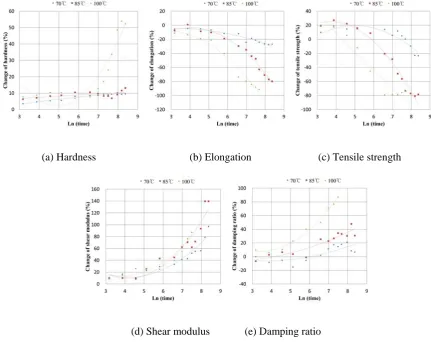
deduct the Arrhenius equation. The mechanical property test of the rubber material was then performed for each measurement time (initial time, and 1, 2, 4, 7, 14, 30, 45, 60, 75, 90, 120, 150, 180 days) as shown in figure 2. Table 2 shows the Arrhenius equation of the rubber material by the aging test. From the Arrhenius equation used in this test, the relationship between the real aging time and the accelerated aging time can be defined. The life time of rubber can be calculated by using the Arrhenius graph and a limited variation of properties. Because the life time of rubber mainly affected by hardness, the life time of rubber material was calculated based on the change of hardness.
(a) Hardness (b) Elongation (c) Tensile strength
(d) Shear modulus (e) Damping ratio
Table 2: Arrhenius equation of the rubber material by aging test
Properties Variation Arrhenius equation
Hardness 10% ln (t) = -17.706 + 9066/(273+T)
Elongation -25% ln (t) = -29.070 + 12679/(273+T)
Tensile strength -15% ln (t) = -33.156 + 14185/(273+T)
Shear modulus 25% ln (t) = -11.861 + 6237/(273+T)
Damping 25% ln (t) = -23.168 + 10295/(273+T)
From the results of Itoh et al. (2006), it was reported that the behavior of aged rubber material is mainly affected by the temperature and oxidation. The material properties between the surface and inside can be different by the oxidation of rubber. It was necessary to consider the aging depth of LRB for accurately evaluating the long-term behavior of an isolation bearing.
The aging depth of seismic bearings was affected by the type of cover material and environmental conditions. According to the results of Itoh et al. (2006), the aging depth of a high damping rubber bearing was from 6 to 11.5 mm.
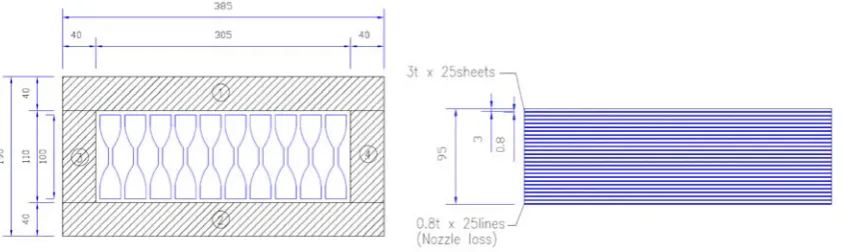
In this study, eleven rubber blocks of 385 mm x 190 mm x 95 mm were manufactured to perform the aging depth test, as shown in Figure 3. An accelerated aging test was performed under a temperature of
70℃. The experiment duration was set as 11 stages. When the aging test was finished, the edge of the
rubber block cut off and then the property change of rubber was only considered in the thickness direction, and the rubber blocks were sliced into pieces with an average thickness of 2 mm. Ten dumbbell specimens were produced in each layer.
Figure 3. Details of aging depth test specimens
A material properties of rubber generally changes over time. Therefore, the property tests of an aged rubber material were performed according to time. In this study, hardness and tensile tests were performed because hardness of rubber mainly affected the life time of rubber.
The hardness and elongation of the rubber material were plotted in Figure 4. The horizontal axis is the depth of rubber block, while the vertical axis is the mechanical properties (hardness and elongation). Figure 4 shows the mean value of ten specimens in each layer.
it was shown that the change in property of the rubber material due to the aging does not exist. From the test results, it was found that the critical depth was about 15 mm.
In this study, it was concluded that the property variation at the surface of the rubber block was
increased with time, while the critical aging depth was not affected by time.
(a) Hardness (b) Elongation
Figure 4. Mechanical properties of rubber material
Shear behaviour of LRB by accelerated aging test
The accelerated aging test of the LRB was conducted to verify the analysis model. A nonlinear hardening factor was calibrated to compare between the analysis model and the test model. The aging test of the LRB was conducted to identify the shear and compression behaviors. 18 specimens were prepared for the aging test of the LRB.
From the accelerated aging test of the LRB, it was shown that the tendency of the shear force at the same strain of the LRB was increased with time, as shown in Figure 5. Although the test results included the manufacturing variations of each LRB, the shear stiffness was increased with time. While the failure strain of the LRB was decreased with time because the LRB was hardened owing to the age-related degradation of the rubber material.
Shear behaviour of LRB by finite element analysis
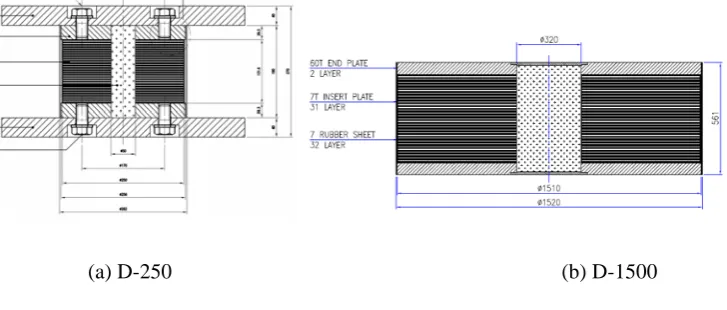
Figure 6 shows the 250ⅹ190ⅹ50 (D-250) LRB and 1500ⅹ360ⅹ320 (D-1500) LRB used in this
study. The LRBs are formed using vulcanized rubber layers and steel shims
The finite element code, ABAQUS Ver. 6.12-3 (1996), has been used for performing a nonlinear analysis of LRBs. LRBs are elastomeric isolators in a cylindrical shaped-core lead. The LRBs was fixed between the base mat and pedestal using an end plate of the steel material. For the LRBs, the loading conditions were the combined compression and shear. The boundary condition was fixed at the lower end plate and the horizontal translation to plate only permit at upper end plate.
(a) D-250 (b) D-1500
Figure 6. Detail of specimens
The LRBs undergo a large deformation of about 400% before failure. The rubber material does not behave linearly and exhibits a hyperelastic behavior, as shown in Figure 7 (b). A typical elastomer such as a rubber material has a nonlinear stress-strain curve. A hyperelastic material definition requires a function.
In particular, it requires a strain energy density function. In this study, Yeo’s (3rd) model was used as an
incompressible hyperelasticity of the rubber material. The test data of rubber material (uniaxial tension, biaxial tension) are used to determine the material constants.
Figure 7 shows the analysis model of LRBs, where the CAXA41 element was used to model the rubber and end plate. The analysis model consists of 2025 elements and 4256 nodes.
In this study, it was assumed that the aging depth was 15mm based on the aging depth test results, and the aging depth was applied equally for the D-250 and D-1500 models.
(a) Analysis model (b) Stress-strain curve of rubber
To verify the analysis model, the analysis results were compared with the results of the cyclic test results. Figure 8 shows the hysteresis curve of the LRBs. The analysis was performed for different shear strains of 50%, 150%, 200%, 250%, 300%, 350%, and 400%. From the figure 8, it was found that the analysis results were similar to those of the test results.
From the verification of the analysis model, it was decided that this model is appropriate to evaluate the long-term behavior of an LRBs.
(a) Initial (b) 30 years
Figure 8. Comparison between test model and analysis model
(a) D-250 (b) D-1500
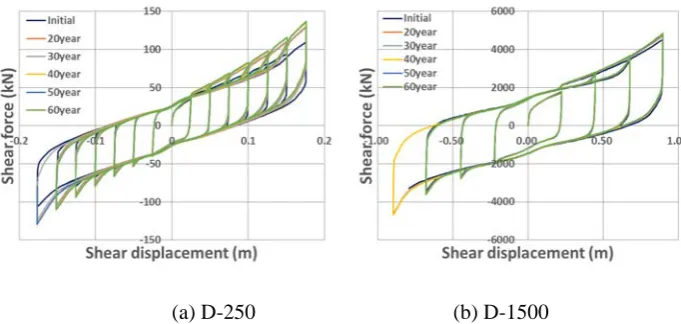
Figure 9. Shear behavior of LRB with time by analysis
ANALYSIS RESULTS BY THE SIZE OF LRB
The shear behavior of the LRB by size was shown in Figure 9. From the analysis results, it was shown that the aging has little influence on the shear behavior of LRBs under a 100% shear strain. The aging effect of the LRB increases with the shear strain.
D-1500 model was negligible in the design phase because the response change was lower than the variation of the LRB related to the manufacturing procedure, temperature, and input ground motion. From the results of Itoh et al. (2006), it was found that the bearings have a similar tendency of stiffness variation.
It was assumed that two LRB models were located under the same environmental conditions and thus the aged area of the LRB was decreased with an increase in the size of the LRB because the aging depth was irrelevant to the size of LRB. Therefore, the shear behavior of the LRB was different based on the size.
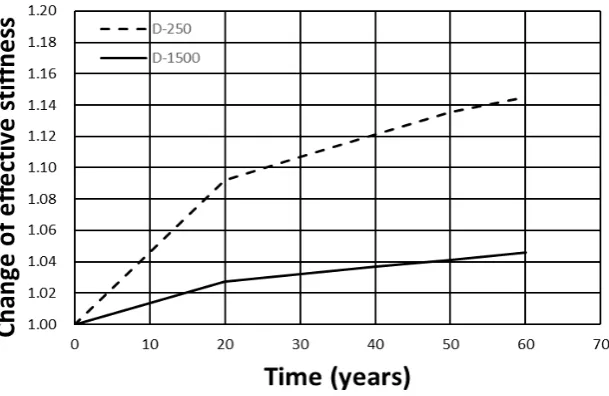
Figure 10 shows a variation of effective stiffness of the LRB as a function of aging time according to the size of bearings.
When the shear strain of the LRB was 100%, for the D-250 model, the effective stiffness was increased by 15% with time, and for D-1500, the effective stiffness was increased by 4.5% with time. When the shear strain of the LRB was 400%, for the D-250 model, the effective stiffness was increased by 22% with time, and for D-1500, the effective stiffness was increased by 9% with time.
Aging property modification factors of LRB at 60 years were presented in table 3. The properties of
LRB were calculated based on the 100% strain. Because K1 and Qd were mainly defined by the lead
material of LRB, K1 and Qd of aged LRB were similar to that of aged LRB. Therefore K1 and Qd in
property modification factor were to unity. While K2 and Keff highly were closely related to the aging of
rubber material. For D-250 model, K2 and Keff were increased to be 13% and 15% than initial model. For
D-1500 model, K2 and Keff were increased to be 5% than initial model. The property modification factors
in the previous codes and guidelines does not consider the size of seismically isolators.
Figure 10. Effective stiffness of LRB by the size
Table 3: Aging property modification factors by size of LRB (60 years)
Size of LRB K1 K2 Qd Keff
D-250 1.0 1.13 1.0 1.15
SUMMARY AND CONCLUSION
It is not easy to normalize the long-term behavior of the LRBs because the rubber material used in the LRBs was produced by using a different compounding ratio according to the manufacturer. Therefore, it is necessary to develop a method for considering the aging of seismic isolators in the design phase. The method proposed in this study will help researchers or manufacturers predict the aging behavior of rubber bearings with various sizes in a real environment.
Although a system property modification factor of elastomeric bearings was proposed by AASHTO (1999), the factor for the LRBs was unity. In other words, the LRBs did not consider the aging in the design phase. In addition, the existing factors were applied regardless the size of the rubber bearings. From the analysis results, it was found that the long-term behaviour of LRBs was significantly affected by the size. A variation of properties in small LRBs was higher than that of large LRBs. According to the results in this study, it was concluded that the present aging property modification factor presented by AASHTO (1999) should be modified by the size of LRBs. Also it is needed to identify the reasonableness of allowable variation of ASCE-4 (2013) because the value includes the variation of manufacture and creep as well as aging.
ACKNOWLEDGMENTS
This work was supported by the National Research Foundation of Korea (NRF) grant funded by the Korea government (MSIP) (No. 2017M2A8A4014829)
REFERENCES
AASHTO (1999), Guide specifications for seismic isolation design, American Association of State
Highway and Transportation Officials, Washington, D.C.
ASCE-4 (2013), Seismic Analysis of Safety-Related Nuclear Structures and Commentary, American
Society of Civil Engineers(Draft), Reston, Virginia, USA.
Itoh, Y, Gu, H., Satho, K. and Yamamoto, Y. (2006), “Long-term Deterioration of High Damping Rubber
Bridge Bearing,” Structural Eng. Earthquake Eng. JSCE, Vol. 23, No.2, pp. 215-227.
Hamaguchi, H., Samejima, Y. and Kani, N. (2009), “A Study of Aging Effect on Rubber Bearings After
About Twenty Years in Use,” Proc. 11th World Conference on Seismic Isolation, Energy
Dissipation and Active Vibration Control of Structures, Guangzhou, China, Nov. 17-21.
Constantinou, M. C., Whittaker, A. S., Kalpakidis, Y., Fenz, D. M. and Warn, G. P. (2007), Performance
of Seismic Isolation Hardware under Service and Seismic Loading, Technical Report MCEER-07-0012, June 30.
Thompson, A.C.T., Whittaker, A.S., Fenves, G.L. and Mahin S.A. (2000), “Property Modification Factors
for Elastomeric Seismic Isolation Bearings,” Proceedings, 12th World Congress in Earthquake
Engineering, New Zealand.
Morgan, T., Whittaker, A. S. and Thompson, A. (2001), “Cyclic Behavior of High-Damping Rubber
Bearings, Proceedings,” 5th World Congress on Joints, Bearings and Seismic Systems for Concrete
Structures, American Concrete Institute, Rome, Italy, October.
U.S. Nuclear Regulatory Commission (USNRC) (2011), Technical Considerations for Seismic Isolation
of Nuclear Facilities (draft), NUREG-draft.
ISO 22762-1 (2010), Elastomeric Seismic-Protection Isolators. Part 1: Test methods, International
Standard.