Western University Western University
Scholarship@Western
Scholarship@Western
Electronic Thesis and Dissertation Repository
1-11-2016 12:00 AM
On Coming and Going
On Coming and Going
Quintin Teszeri
The University of Western Ontario
Supervisor Christof Migone
The University of Western Ontario
Graduate Program in Visual Arts
A thesis submitted in partial fulfillment of the requirements for the degree in Master of Fine Arts © Quintin Teszeri 2016
Follow this and additional works at: https://ir.lib.uwo.ca/etd
Part of the Art Practice Commons
Recommended Citation Recommended Citation
Teszeri, Quintin, "On Coming and Going" (2016). Electronic Thesis and Dissertation Repository. 4379.
https://ir.lib.uwo.ca/etd/4379
This Dissertation/Thesis is brought to you for free and open access by Scholarship@Western. It has been accepted for inclusion in Electronic Thesis and Dissertation Repository by an authorized administrator of
Abstract
This dossier and the accompanying exhibition On Coming and Going (presented at the Artlab Gallery in January 2017) constitute my MFA in Visual Arts thesis. The first chapter of this dossier is a Comprehensive Artist Statement in which I reflect on how my art, thinking, and life engage different meanings of coming and going in different ways. The statement
approaches a deeply subjective and aggregate philosophy, or perhaps an attitude, or perhaps most appropriately if also most cliché, a way of being, in the face of relentless transience. The second chapter is a review of Michel de Broin’s 2016 Castles Made of Sand at the BMO Project Room in Toronto. The third chapter portrays selections of my artistic output from throughout my MFA. These parts and the associated exhibition represent multiple lines of inquiry that, together, comprise a study of the transience in and of life.
Keywords
Dedication
Acknowledgments
Thanks to my accidental patrons – the good people who gifted me their fried foods, beds, libations, Netflix passwords, and love.
I thank you, Christof, with a moment of silence. May the noise that will inevitably ruin it speak to the possibility that refuses to not become…
To those others, the people of casual glances, studio visits, staff room nods, form handoffs, and awkward bathroom hellos: You were my everyday people for so long. Thank you for your humanity.
Table of Contents
Title Page ... i
Abstract and Keywords ... ii
Dedication ... iii
Acknowledgments ... iv
Table of Contents ... v
List of Figures ... vi
Introduction ... 1
Comprehensive Artist Statement: The Relentless Poetry of Coming and Going ... 4
Comprehensive Artist Statement: Bibliography ... 15
Writing Component: Review of Castles Made of Sand ... 16
Writing Component: Bibliography ... 20
Practice Documentation ... 21
List of Figures
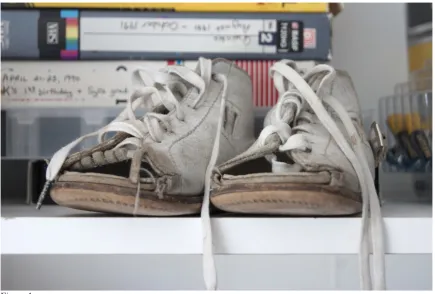
Figure 1: My first pair of corrective shoes ... 5
Figure 2: A still from security camera footage of Elijah Marsh ... 7
Figure 3: Cell death, suicide, and cannibalization ... 9
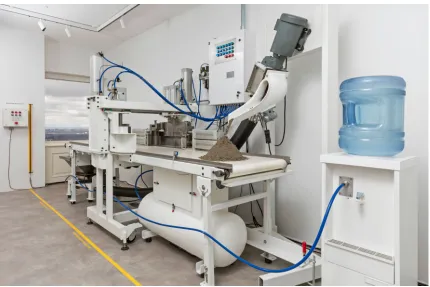
Figure 4: Castles Made of Sand by Michel de Broin ... 19
Figure 5: Untitled (Grass) ... 21
Figure 6: Untitled (Sail) ... 21
Figure 7: Detail of Untitled (Sail) ... 22
Figure 8: Untitled (Rock and Bandage) ... 23
Figure 9: Untitled (Brain Surgery) ... 24
Figure 10: Detail of Untitled (Brain Surgery) ... 25
Figure 11: Untitled (Poles) ... 26
Figure 12: Detail of Untitled (Poles) ... 27
Figure 13: All thirty-one editions of This Will Last Forever ... 28
Figure 14: Four editions of This Will Last Forever ... 28
Figure 15: Page 2/21 of Some Stuff ... 29
Figure 16: Page 4/21 of Some Stuff ... 29
Figure 17: Page 7/21 of Some Stuff ... 30
Figure 18: Page 12/21 of Some Stuff ... 30
Figure 19: Page 13/21 of Some Stuff ... 31
Figure 20: Page 16/21 of Some Stuff ... 31
Figure 21: The Weight of My Body in Ice ... 32
Figure 22: Detail of The Weight of My Body in Ice ... 32
Figure 23: A very small very meaningful very broken object very fixed with Staples Business Depot Invisible Tape ... 33
Figure 24: Detail of A very small very meaningful very broken object very fixed with Staples Business Depot Invisible Tape ... 33
Figure 25: Studio Mouse (Cremated) ... 34
Figure 26: Detail of Studio Mouse (Cremated) ashes ... 34
Introduction
I began my MFA in Visual Arts at Western University the day after I completed my MA in Art History at the same institution. The instantaneous transition of my enrollment at 12:00AM on September 1st, 2015 did not have an immediate effect on my artistic practice, so
I will begin earlier in the interest of providing context for the rest of this dossier.
I had planned to be on hiatus from making art during my MA. This did not happen. I made art that involved varying degrees of auto-destruction and viewer participation. I also began taking walks with my son and partner. The walks became sculpture hunts, and we started calling them this. These hunts – which were actually much more about considered and selective gathering than pursuit – allowed me to indulge my long-standing interest in found objects. I positioned, grouped, and arranged the objects I brought back to my studio, then usually displayed them floating on walls. These object paintings are what I focused on during the first semester of my MFA. They were very well received and I was encouraged to “push them further.” My second semester was full of contrived, false starts – unfocused attempts to illustrate progress that left me feeling unsatisfied. My third semester in the summer of 2016 was the hiatus I never took. I quit making art, and after some time, started writing this.
In order to begin anew, I chose to cohere the thesis writing and exhibition by working thematically. ‘The coming and going of life’ was a lovely and nonspecific phrase I had used throughout my MFA that seemed to resonate with others and myself for equally lovely and nonspecific reasons. I also had a more practical and very specific interest in coming and going. The object paintings I had been making necessitated meticulous logistical planning. Some of the found material was precariously fragile and some was too heavy to lift. Nevertheless, I needed to bring it to my studio and then to where it would be exhibited without ruining its valuable qualities, which were so often the qualities that inhibited its transportation. Reinforcing a small, frail object or dividing a large object with a bodily presence in any noticeable way was usually out of the question, so I had to commit a good deal of thought to how my art would come and go.
object of study. Thus, ‘On Coming and Going’ became the title and guiding language of my thesis.
Motion would be an obvious concern within this project, as would the fact that one’s perception of motion depends greatly on one’s relationship to it – an empirical correlation practice-based research is uniquely suited to address. In this form of research, there is not only space for inclusion of the researcher as an individual, but there is an expectation that the researcher’s individuality be present, that it affect the research. In its embrace of the observer effect, practice-based research also forgoes any claim of being definitive. The experience of the researcher is neither more nor less valid than the experience of the person reading the research, or even the experience of the research itself. Practice-based research is radically open to interpretation and without hierarchy. It is from this perspective that I discuss motion, and thus by and large, my perceptions of it and relationship to it.
The first chapter of this dossier is a Comprehensive Artist Statement in which I reflect on how my art, thinking, and life engage different meanings of coming and going in different ways. It is a linear and fluid collection of texts written by me for this specific statement and excerpted from other sources. The statement approaches a deeply subjective and aggregate philosophy, or perhaps an attitude, or perhaps most appropriately if also most cliché, a way of being, in light of the topic at hand.
Writing with my own words and those of others comes to me naturally, for lack of a better word. It certainly feels natural. It is how I think with words. I write some of my words, then I write some of someone else’s words because he or she wrote something I would like to write, but was not the first to write. I do not discriminate between authors. I prefer to perform my identity through process rather than ownership.
Rewriting without altering someone else’s words is a common academic practice. Much academic writing directly quotes other writing. However, I do this in much larger quantities at much more frequent intervals with little to no explicit acknowledgement within the text, which is to say, inside the content of the text. Changes in authorship are explicitly marked by changes in form to avoid confusion, because confusion and the related
Theoretically, the ownership of the excerpts remains confusing, or at least confused. They are not my voices, words, or thoughts, and yet I did speak in those voices, write those words, and think those thoughts. Who is to say voice, word, and thought do not belong to their speaker, writer, and thinker? I do not know. I do not have an answer to this question, nor is it within the purview of this thesis. What I do know is something much more fundamental, something I find reassuring in the face of such an unknown that could have implications on a reader’s perception of my sincerity. My artist statement is obviously performative, and thus, a very honest performance.
The second chapter – which I am much more clearly the sole author of – is a review of Michel de Broin’s 2016 Castles Made of Sand at the BMO Project Room in Toronto. In this chapter, I describe, contextualize, and analyze the machine that makes, unmakes, and
remakes sandcastles on the 68th floor of the country’s tallest office tower. Particular attention
is paid to the automation, poetry, and politics at play. In addition to contributing to the discourse that surrounds the piece in a way I believe it deserves, this was also a chance to test some of my thinking about coming and going before making the work that will be shown in my thesis exhibition at the Artlab Gallery in January 2016.
I have chosen to make all new work for this show. I have also chosen to approach the writing of this document as an opportunity to think about the new work before making it. The thinking that came from the title and will lead to the making is written herein. However, there is an unfortunate consequence to this approach. Little to none of the work depicted amongst the images in the third chapter, Practice Documentation, will be a part of my thesis exhibition. Rather than correlating directly to the artist statement and my thesis project at large, chapter three portrays selections of my artistic output from throughout my MFA. It demonstrates the development of my practice from object paintings to the
Comprehensive Artist Statement:
The Relentless Poetry of Coming and Going
I was born with the desire to run and, along with it, feet that curved in, shins that bowed out, and hips the doctor described as “basically backwards.” The hips would fix themselves first, or I would need a metal brace that stiffened my legs and joined them at the knees, effectively turning my lower body into an uppercase A of some steampunk typeface. The shins were to sort themselves out next. My feet, however, warranted corrective shoes. They looked like any other little leather shoes, save for the toes, which bent outward instead of inward. Sometimes people thought they were on backwards. I wore these 24-hours-a-day from the age of six months to one year. I grew out of three pairs in this time. My parents cut out the ends of each pair so that I could wear them for longer. They didn’t have insurance and the doctor said it was okay. At one-year-old, I was running around this doctor’s office when he told my mother I wasn’t supposed to be running in these shoes. She replied, “You tell him that.”
This reshaping of my person and my movement continued for four more years, but I didn’t have to wear the shoes while I slept anymore. When my hips, shins, and feet had all corrected at age five, my parents bought me a pair of high top Nikes that cost as much as the corrective shoes.
Figure 1
***
I’m one of those people who say they’re bad with names. It’s not that I don’t care about other people, what they’ve done, or my relationships with them. Rather, I care so much about these that titles, terms, tags, brands, labels, badges, appellations, and
designations seem extraneous and undeservedly reductive. I’m fated to leave so much of my experience of the present behind that its most arbitrary of characteristics is not what I strive to bring with me. I accept that I will forget, or perhaps better put, misremember a lot of everything I perceive. To me, missing and corrupt data are not impediments to the collection and recollection of experience, but defining qualities of each that ensure experience remains subjective, fleeting, and unique. I do not attempt a high-fidelity recall of all parts, or even a reduction towards what’s actually in front of me. I embrace the impossibility of either. Demonstration of this inability, this failure, can be found in the residual textures of
I care about this palpability – this touch and feeling it. I’ll remember if we touch, if we shake hands or high-five or hug, but I won’t remember what it felt like. What I will be able to recall almost perfectly is the most intimate extension of touch from you to me – the sound of your voice. If we speak, your voice will shake six of the smallest bones inside my body – the malleus, incus, and stapes in both ears. What you made in your throat will touch me inside my head.
***
They called and called: ELIJAH!
Hundreds of them, searching high and low, scanning homes and playgrounds, seeking especially those spots where a toddler may have been drawn: yards with swing sets out back, friendly refuges to a youngster’s eyes, the not-scary places.
They looked for tiny bootprints in the snow. But those were everywhere.
And Elijah Marsh was beyond hearing his rescuers by then.
That is the only mercy in a story with no happy ending — oblivion had descended. Elijah wasn’t cold any more or frightened.
It was David Elines who found the 3-year-old. On the ground behind a small wooden veranda, next to a garbage can and a parked car.
“He was there and he just looked peaceful,” Elines told the Star Friday. “I put my coat on him and yelled.”
Three hundred metres, in a straight line, from where the child had set out around 4:20 a.m. Thursday after pushing open the door of the foyer at his grandmother’s apartment building. Clad only in a diaper, a thin T-shirt and snow boots, outside in the dark and deep-freeze weather.
But Elijah hadn’t gone in a straight line.
The final images of the boy, captured by surveillance cameras, show him moving westward along a bendy section of Neptune Dr. He would have looped back, at some point, to wind up behind the house on Baycrest Ave. where his body, vital signs absent, was found at 10 a.m. Nearly six hours exposed to the bitter elements on one of the coldest nights in Toronto, with the wind chill plunging to –33 C.
I only have to hope that the little boy is in a better place.”1
***
He stands in the narrow entryway to his grandmother’s apartment between two doors – one leading inside and one leading outside. He’s wearing the t-shirt and diaper he went to bed in before waking up at that god-awful time children sometimes do. He put his boots on all by himself. He’s looking at the exterior door. (figure 2)
Figure 2
I carried this image around on my phone until I didn’t need to look at it to see it.
Source: The Huffington Post, http://i.huffpost.com/gen/2638708/images/o-MARSH-facebook.jpg.
My own son was five-years-old when this happened in 2015. In this tragically candid and quiet image, I see my own boy who wakes up in the middle of the night, crawls on top of me so that his face is touching mine, and once I’m awake, tells me he has to poop. Elijah became a surrogate for what meant everything to me, for what my world revolved around, for what the world was to me. His story became a synecdoche for the rest of the universe.
***
1 Rosie Dimanno and Marco Chown Oved, “The heartache of finding Elijah Marsh’s body,” The Toronto Star
I want to annihilate the whole earth. I am not a part of it. It’s mad from start to finish. The whole shooting match. It’s a huge piece of stale cheese with maggots festering inside it. Fuck it! Blow it to hell!
[…]
I grow light, light as a feather, and my pace becomes more steady, more calm, more even. What a beautiful night it is! The stars shining so brightly, so serenely, so remotely. Not mocking me precisely, but reminding me of the futility of it all. Who are you, young man, to be talking of the earth, of blowing things to smithereens? Young man, we have been hanging here for millions and billions of years. We have seen it all, everything, and still we shine peacefully every night, we light the way, we still the heart. Look around you, young man, see how still and beautiful everything is. Do you see, even the garbage lying in the gutter looks beautiful in this light. Pick up the little cabbage leaf, hold it gently in your hand. I bend down and pick up the cabbage leaf lying in the gutter. It looks absolutely new to me, a whole universe in itself. I break a little piece off and examine that. Still a universe. Still unspeakably beautiful and mysterious. I am almost ashamed to throw it back in the gutter. I bend down and deposit it gently with the other refuse.2
***
I specialize in that which is beyond myself, in saying what no individual could say alone, in doing what no one can do alone. This is why I work with found objects, materials, and texts. It’s also why I collaborate with viewers – initiating drawings, sculptures, and publications that can be made by as many hands as eyes that see them. Life, even when we’re alone and cold, even when we’re dead, is a collective project. And it doesn’t stop. It comes and goes. It keeps moving.
I don’t want to capture this movement permanently, only still it temporarily – distill the experience of it, concentrate it, before it rejoins the muddling fluidity from which it emerged. When the bus jerks to a stop like every bus always does and everyone on it apathetically sways forward and then back to equilibrium and the air breaks sigh – this everyday at every stop communal dance – I want to isolate and share it. I never want to sever material completely from where it came from or where it’s going, just slow it down enough to share, to share its story of utter insignificance and total uniqueness with people who are, like myself, just as insignificant and unique in the grand scheme of things.
If I’m to delineate a zone of artistic activity for myself, it would be the space in-between, the place of simultaneous beginning and ending – the typographical asterism and, when less elegantly done, the dinkus. The asterism (three asterisks in a triangle) and the dinkus (three asterisks in a row) distinguish sections of text from each other. They mark an end and a beginning, and through this simultaneity, also a continuation. They are never found at the very beginning or the very end of a text. Those places are too finite, too ontologically stable. The asterism and dinkus are liminal devices. They are twilight. They’re impure. They are always in-between, always on the move, much like our bodies.
Tens of billions of your cells will die today – deep inside you, in your bone marrow and your gut, among other places in and on your body. They are no longer necessary for maintaining the balance that is you, so they will kill themselves. This is apoptosis –
programmed cell death. It’s clean. Cells explode when they’re fatally injured but aren’t ready to die. By contrast, apoptotic cells communicate their impending suicide to those around them and gelatinously disassemble themselves for easy cannibalization. (figure 3)
Figure 3
(A) A cell in a petri dish that was killed. (B) A cell in a petri dish that killed itself. (C) A cell in a growing tissue eating a cell that killed itself.
Source: Alberts et al, https://www.ncbi.nlm.nih.gov/books/NBK26873/bin/ch17f37.jpg.
deaths a day, we don’t notice any of them, and we each remain the self we know. Our selves persist through many small deaths. These status quo selves that require apoptotic
maintenance wouldn’t have even had the chance to be, let alone become the status quo, without programmed cell death. As embryos, much of us was sculpted subtractively. Our immune and central nervous systems purposefully overgrew during this stage of
development. Apoptosis refined them. Our mittens of flesh only gained fingers when the cells between them committed suicide. We became as we died. As much as we are written, we are written out.
The space between each word I write is called a whitespace character. It is a punctuation mark written of negative space for which there is necessarily no typographical symbol to represent it. On this plane, on this page, in this language, it exists only in relief. This does not preclude it from being written. Whether “outscribed” by lifting a pen, typesetting an em quad, or tapping a spacebar, the whitespace character is still a character. There is no empty space, only characters that represent it. There is no way to write nothing. Everything is a character, a mark, a typographic glyph, the product of a gesture, a piece of meaning.
***
There is no boundary line any more. There never was a boundary line: it was I who made it. I walk slowly and blissfully through the streets. The beloved streets. Where everybody walks and everybody suffers without showing it. When I stand and lean against a lamppost to light my cigarette even the lamppost feels friendly. It is not a thing of iron–it is a creation of the human mind, shaped a certain way, twisted and formed by human hands, blown on with human breath, placed by human hands and feet. I turn round and rub my hand over the iron surface. It almost seems to speak to me. It is a human lamppost. It belongs, like the cabbage leaf, like the torn socks, like the mattress, like the kitchen sink. Everything stands in a certain way in a certain place, as our mind stands in relation to God. The world, in its visible, tangible
substance, is a map of our love. Not God but life is love. Love, love, love. And in the midmost midst of it walks this young man, myself, who is none other than Gottlieb Leberecht Müller.3
***
Henry Miller’s encounter with a lamp post was first published in 1938. With all the anthropomorphism, it’s tempting to read within an object-oriented framework where the lamp post has its own life and meaning that belong all to itself. This is especially the case if we understand the passage as lacking the nonhuman vocabulary that came into use with the advent of object-oriented discourse. If we read without making excuses though, it almost seems appropriate to apply the popular Kantian thinking that’s held a formidable place in western artistic tradition for the last 200 years. After all, anthropomorphism is a product of anthropocentrism. From this perspective, the life and meaning of the lamp post exist within the interior of the observer’s mind. However, Miller actually positions the life and meaning in question exteriorly to both the object and the observer’s mind: “It belongs, like the cabbage leaf, like the torn socks, like the mattress, like the kitchen sink. Everything stands in a certain way in a certain place…”4 Here, everything belongs perfectly as it is, surrounded by
everything else in an endless, non-hierarchical prairie of meaning. Each portion is a physical manifestation of life lived, a tangible accumulation of history occupying a distinct set of coordinates through space and time. Textures and forms speak to their one-of-a-kind experiences of this world. They are records of their own becoming, corporealized memories with no beginning or end.
***
This prairie in which we find ourselves, oh small infinity! we give back.
But love, this love has not ended,
and just as it had no birth
it has no death, it is like a long river, it only changes lands and lips.5
***
My materials, before I get to them, before they’re my materials, before I reconstitute and recombine and reprocess them, before I append a context of contemporary fine art to them, before they’re even materials with potentially exploitable possibilities, before they’re
4 Henry Miller, Tropic of Capricorn (New York: Ballantine Books, 1974), 227.
5 Pablo Neruda, “Sonnet XCII” in 100 Love Sonnets, trans. Gustavo Escobedo (Holstein, Ontario: Exile
tools, before any of that, they are just material, just physical matter – objects that are
complete in their own right at every moment. They don’t need me. But just as much as they don’t need me, they’re ready for me to intervene on them, as many forces have before. They are forever complete but always in progress. They only organize into something that’s identifiable as more art than not art. This doesn’t exempt my art from failure, from falling, from cracking, from dissipating, from undoing, from evolving, or devolving, whether I like it or not, into something that’s not art. I make with the knowledge that what I make will be unmade. My art will, as all art does, in good time, become something that is not art, be it from the Milky Way and the Andromeda colliding in four billion years or from accidentally dropping it tomorrow.
This shows in some places more than others. It’s particularly apparent in my work that solicits participation from viewers. Each piece is already complete upon approach, ready as is to be viewed, but it’s also ready to be reperformed, reinstalled, redrawn, resculpted, recurated, rewritten, remade, or possibly re-unmade. I’m not interested in the kinetic energy of the objects at play so much as their potential energy. I like objects that fall. Not planned obsolescence, but potential obsolescence – maybe, sometime, who knows when, not
mattering so much in the same way anymore. Objects that fall, as all objects fall, but objects that know they will. Art that accepts responsibility for its demise, that dies with dignity, that wilts like no flower ever painted. And maybe these objects can teach us how to die, how to leave, how to go, how to end. Teach us what being at peace is.
I don’t believe in the kind of touch that refuses to die, refuses peace, that looks to move beyond its own skin, the kind of touch that’s permanently unsatisfied, constantly trying to breach a divide it can’t feel beyond. I don’t believe in transcending.
All touch is tragic – all instances of connectedness, all bottlenecks, all places of organized matter. These collectively made moments, be they exhibitions, or conversations, or objects, or lives, are fated to undo as much as they are done. Just as surely as they have come, they will go.
I believe in a touch that realizes it’s great because it only goes so far and lasts so long. I believe in sensualism, in recognizing truth and beauty in the touch of a body born into an unfathomable set of circumstances it must navigate unto its end.
your panic cannot hurry me here and my panic and my falling shoulders
our shameless lives are the grains
scattered for an offering before the staggering heights of our love
and the other side of your anxiety is a hammock of sweat
and moaning
and generations of the butterfly mate and fall
as we undo the differences and time comes down like the smallest pet of G-d to lick our fingers
as we sleep in the tangle
of straps and bracelets
and Oh the sweetness of first nights and twenty-third nights
and nights
after death and bitterness sweetness of this very morning the bees slamming into
the broken hollyhocks and the impeccable order of the objects on the table the weightless irrelevance of all our old intentions as we undo
as we undo every difference6
***
The ultimate embodiment of simultaneous doing and undoing, of coming-going and not just coming and going, the ultimate asterism, is maternal death – the death of a mother caused by her motherhood.
Each female octopus can become pregnant only once. After mating, she finds a den in which to lay her fertilized eggs. She keeps vigil there during the months after – protecting
the eggs from predators and aerating them with tender passes of her tentacles. When the fully developed octopuses are ready to hatch, she blows water to help them break free from their eggs. Soon thereafter, she dies from starvation, having never left the den, even to feed herself.
In the story of every octopus mother, the proximity between the coming and the going is such that they are a part of the same gesture. Her final whisper of fluid is a deathbed utterance and a triumphal champagne christening. Only through the dissolution of herself can her offspring become. A single, sentient vantage point explodes into many, multiplying the number of witnesses, participants, and collaborators in this quotidian tragedy – one that costs, each time, the creator’s life.
Comprehensive Artist Statement: Bibliography
Alberts, Bruce et al. Molecular Biology of the Cell. 4th edition. New York: Garland Science, 2002.
https://www.ncbi.nlm.nih.gov/books/NBK26873/bin/ch17f37.jpg.
Cohen, Leonard. “The Mist of Pornography.” In Book of Longing, 98-99. Toronto: McClelland & Stewart, 2007.
Dimanno, Rosie, and Marco Chown Oved. “The heartache of finding Elijah Marsh’s body.”
The Toronto Star (Toronto, ON), Feb. 21, 2015.
https://www.thestar.com/news/gta/2015/ 02/21/the-heartache-of-finding-elijah-marshs-body-dimanno.html.
Miller, Henry. Tropic of Capricorn. New York: Ballantine Books, 1974.
Neruda, Pablo. “Sonnet XCII.” In 100 Love Sonnets, 191. Translated by Gustavo Escobedo. Holstein, Ontario: Exile Editions, 2007.
The Huffington Post. Accessed November 18, 2016.
Writing Component: Review of
Castles Made of Sand
Castles Made of Sand
Michel de Broin
BMO Project Room, Toronto
January – November 2016 by appointment Review by Quintin Teszeri
Inside 100 King Street West, Toronto, at the end of a long airy hallway covered in art from BMO Financial Group’s corporate collection, in a small white room without a door, sits the epically absurd machine that is Michel de Broin’s Castles Made of Sand (CMOS). A yellow line that tells you to “STAND BEHIND THE YELLOW LINE” bisects the
nondescript but very tidy room. On the other side, sandcastles are manufactured on demand at anytime by anyone with the requisite keys. But only one castle can exist at any given moment. Making a new castle first necessitates the destruction of its predecessor, and even if the recycling isn’t initiated by a keyholder, the standing castle will be disintegrated at the next hypothetical semi-diurnal lunar tide – whenever the room enters the axis of the moon, which is usually twice a day. In this way, it’s site-specific in a very de Broin kind of way – playfully, poetically, and hypothetically.
Unless you happen to walk into the axis of the moon at the same time that you walk into the BMO Project Room, you’ll enter to the unwavering drone of the building’s
ventilation and everything being very still, which isn’t necessarily what you would expect from a machine that occupies half a room, even if it isn’t industrially powder coated, but rather painted a more domestic, more gentle, matte white. After all, it does have an air compressor, a conveyor belt, an agitator, a press mould, and a network of zip tied blue tubes running between these parts and all the other ones I don’t know. CMOS has to be quiet though, even when operating, because the rest of the floor is dedicated to meeting rooms, boardrooms, and financial war rooms, which is also why you can only book an appointment to see it on Friday afternoons – most of the bankers have left by then.
parodies itself. Somewhere within the machine a sensor reads the moisture content of the sand so the appropriate amount of water can be glugged out of a connected water cooler and added during the next pass through. From a slide at the top right, sand tumbles ever so pleasantly into a radially symmetrical pile on the conveyor belt that would be as white as the rest of the machine if it weren’t stained with the dusty ghosts of prior castles. When finished, the conveyor belt begins to move. Slowly. It stops with the sand halfway to the end, where the trauma of reconstitution will occur. The press mould closes in from both sides of the production line. Actuators thrust from the front and back. A final push from above and then the mould retracts. The freshly squeezed sandcastle – not all quite there – emerges. Most of the battlement didn’t release from the mould. Fissures spider up and through the walls. The defensive architecture can barely defend against itself. It is born precarious and without the chance to ever fully be. It will be unstable so long as it is. Nevertheless, the castle is forced to advance by the force beneath. The death march without steps has begun. It’s smooth and automatic. At the left end of the conveyor belt is a large metal hole the castle is fated to slough into. Just beyond that is a window onto the metropolis below and all we’ve worked so hard to make for ourselves – a reminder that every castle ever built was built with sand. Before it reaches the end, it stops. And waits. Either for the next keyholder to foreclose and redevelop, or the moon. In the meantime, it desiccates. It dilapidates. The moisture of life is gradually evicted. The castle ages in front of the window – calmly, tragically, poised, not to jump, simply to fall.
The whole cycle takes only five minutes or so – about the same amount of time as Janet Cardiff’s and George Bures Miller’s The Killing Machine (2007). Both works operate efficiently, absurdly, and with clinically pneumatic hisses, but CMOS goes without the eclectic-disco-ball-pomp-and-circumstance. Its posture is deadpan, rather than sinisterly ridiculous, with humour more comparable to Wim Delvoye’s Cloaca (2000), less the transgression and derision. Instead of producing waste like Delvoye’s poop machine, de Broin chooses to recycle. His art makes and remakes a pointless point, or a point of
pointlessness – like watching Peter Fischli’s and David Weiss’s The Way Things Go (1987) on repeat. Both are Rube Goldbergian exhibitions unto themselves. However, Fischli’s and Weiss’s half-hour long documentation of a chain of causal events is really more of a
its version of the way all things go. But perhaps the best comparison is not robotic, or even kinetic, but poetic.
Ross Laycock died from AIDS-related complications on January 24th, 1991. In the
same year, Félix González-Torres memorialized his partner with 175 pounds – Laycock’s healthy weight – of candy in the corner of a gallery. Viewers were – and still are at every reinstallation – encouraged to eat one of the candies that are individually wrapped in brightly coloured cellophane. As per González-Torres’s instructions, the mound is to be continually replenished. Thus, Laycock remains forever on the downswing, but forever nonetheless.
“Untitled” (Portrait of Ross in L.A.) and CMOS employ poignant and conceptually straightforward mixtures of childish frivolity as medium and tragedy as process. Each is an allegory and enactment of inevitable collapse. González-Torres’s is a human collapse that never fully climaxes. De Broin’s is the repeated collapse of the structures and systems we humans make and live within. The illustration of such collapse requires a system that’s fairly elaborate itself, one that obviously requires maintenance – someone to sweep up fallen sand, someone to oil it, someone to refill the water, someone to clean the mould, someone to turn keys – an invisible hand. So it remains imperfect, or perhaps better put, impossible. As does the automation of our technofinancial society predicated on a belief in endless growth1 and
this endless growth being “a rising tide that floats all boats.” Because only 1% of us live on boats. The other 99% live in castles made of sand.
CMOS is a critique and a commentary – embodying the uncaring and seemingly inevitable cycle perpetuated by the institution that funded it. But it’s also more than just a statement. It is an absurdly dedicated attempt at the impossible. The endeavor to automate the making and unmaking out of crumbly organic material what’s usually made by the hands of children and unmade by the gravitational pull of the moon was never going to be a total success. The machine was never going to be capable of reincarnating a perfect product all the time all by itself. That’s not something BMO could commission. It was never going to be capable of the improvisation of children playing at the beach, or ever actually exploit the gravity that imposes sweet tragedy on their fantastical worlds. And perhaps in this way, it succeeds the most, as a powerful reminder of what will always belong to the individual, at least until you can mortgage a sandcastle.
1 It’s always struck me as resoundingly contradictory that Econ 101 definitions of ‘economics’ so often employ
Figure 4
Writing Component: Bibliography
Practice Documentation
Figure 5: Untitled (Grass), found grass, wall-mounted, 34 x 22 cm, 2015
Figure 13: All thirty-one editions of This Will Last Forever, handwritten acrylonitrile butadiene styrene (ABS), dimensions variable, 2016
Figure 15: Page 2/21 of Some Stuff, digital publication, 19.5 x 14.5 cm, 2016
Figure 17: Page 7/21 of Some Stuff, digital publication, 19.5 x 14.5 cm, 2016
Figure 19: Page 13/21 of Some Stuff, digital publication, 19.5 x 14.5 cm, 2016
Figure 21: The Weight of My Body in Ice, twenty 9 lb blocks of ice, dimensions variable, 2016
Figure 23: A very small very meaningful very broken object very fixed with Staples Business Depot Invisible Tape, found object and adhesive tape, wall-mounted, 90 x 90 cm, 2016
Figure 25: Studio Mouse (Cremated); reinforced plaster mould, clay residue, lighter fluid, methanol gel, ethanol gel, ash; dimensions variable; 2016
Curriculum Vitæ
Education
Master of Fine Arts in Visual Arts Western University, 2017
Master of Arts in Art History Western University, 2015
Specialized Honours Bachelor of Fine Arts York University, 2014
Art and Design Foundation Certificate George Brown College, 2011
Entrepreneurship at the Telfer Schoool of Management University of Ottawa, 2009 – 2010
Experience
Teaching Assistant Foundation of Visual Arts, Western University, Fall 2016
Co-Editor Young is Old, 2016
Teaching Assistant Foundation of Visual Arts, Western University, 2015 – 2016
Independent CuratorEuro Spa, 325 Weston Rd. Unit 4D, 2015
Teaching Assistant Sculpture, Installation, and Performance, Western University, 2014 – 2015
Curatorial Intern Art Gallery of York University, 2014
Designer and ResearcherLike An Open Book, 2014
Board Member Whippersnapper Gallery, 2013 – 2014
Director and Curator Samuel J. Zacks Gallery, 2013 – 2014
Sculpture Area Assistant York University, 2013
Commission to build exhibition supports Associate Dean Michael Longford, 2013
Print Media Digital Assistant York University, 2012 – 2014
Writing
Mother Octopus The Continuist, 2016
On the Colors of Writing The Senses and Society, 2016
Great Pile of Aging Flesh McIntosh Gallery, 2016
On Plastiglomerate Temporary Art Review, 2016
It will be, as if we are not Self-published, 2014
Centre for Incidental Activisms #2 Winner of the AGYU Writing Award for Art Criticism, 2014
Why Print Matters Contributor, compiled and published by Jp King, 2014
Usher the Fall of the House A conversation with Alex Millington, Artichoke Magazine, 2013
Curating
Euro Spa Artist and co-curator, 325 Weston Rd. Unit 4D, 2015
Drunk Curator, Samuel J. Zacks Gallery, 2014
Infect Curator, Samuel J. Zacks Gallery, 2014
Paramanu Curator, Samuel J. Zacks Gallery, 2014
Pretty Dead Curator, Samuel J. Zacks Gallery, 2014
Fully Disclothed Curator, Samuel J. Zacks Gallery, 2013
Everything Gives You Cancer Artistic director and curator, Samuel J. Zacks Gallery, 2013
Solo Exhibitions, Projects, Artist’s Books
On Coming and Going Artlab Gallery, 2017
Some Stuff Commissioned for EnviroCon at Western University, 2016
*Apologetic Self-published, 2016
Everyday Poetries Artlab Concourse Gallery, 2015
Circle, Walk, Tug Open Studio at Western University, 2015
CNN Self-published, 2014
Corrupt Self-published, 2013
A Love Story Self-published, 2013
Two-Person Exhibitions, Projects, Artists’ Books
Mud Participatory multiple initiated with Nicole Clouston, Blackwood Gallery, 2015
Group Exhibitions, Projects, Artists’ Books
I Know What You Did Last Summer Artlab Gallery, 2016
Young is Old Contributor and co-editor, Western University, 2016
Glacial Actions of a Memory Dundas Street Festival, 2016
Transformation: An Exhibition of Altered Books Collaboration with Nicole Clouston, Helson Gallery, 2016
Re: Turns Collaboration with Nicole Clouston, Ryerson School of Image Arts, 2016
Just Add Water Group boxed multiple, 2016
Closed System / Sustainable Growth Artlab Gallery, 2016
Euro Spa Artist and co-curator, 325 Weston Rd. Unit 4D, 2015
Dread Samuel J. Zacks Gallery, 2014
Like An Open Book Designer, researcher, and contributor, Self-published, 2014
Fovea Propeller Centre for the Visual Arts, 2014
Edition and Multiplication Gales Gallery, 2014
Landscape Special Projects Gallery, 2014
Transference Gales Gallery, 2013
Kite-Specific Japanese Paper Place, 2012
Scholarships, Prizes, Awards
Western Graduate Research Scholarship Western University, 2014, 2015, 2016
Chair’s Entrance Scholarship Western University, 2014
AGYU Writing Award for Art Criticism York University, 2014
Propeller Gallery Graduating Exhibition York University, 2014
Admission Scholarship University of Ottawa, 2009
Conferences and Presentations
On Being AboutGrimsby Public Art Gallery, 2016
Silence – Discourse – Art Disruptions, Canadian Association of Cultural Studies, 2016 No-Fly Zones and Molotov Cocktails, Western University, 2016