Volume 6, No. 5, May - June 2015
International Journal of Advanced Research in Computer Science
RESEARCH PAPERAvailable Online at www.ijarcs.info
Face Expression Recognition using Gabor Features and Probabilistic Neural Network
A.
Jeyanthi Suresh,
Associate Professor
Department of Computer Science and Engineering,
Misrimal Navajee Munoth Jain Engineering College, Chennai. India
Abstract: This paper describes an improved face emotion recognition (FER) system using Gabor Filter, Probabilistic Neural network (PNN) and Principal Component Analysis (PCA). For face part segmentation and localization, viola jones algorithm is applied. The facial features are extracted from face image by means of Gabor filters. The Probabilistic Neural network (PNN) is used as a classifier for classifying the expressions of supplied face into seven basic categories such as angry, happy, sad, surprise, disgust, fear and neutral. Experiments are conducted on JAFFE facial expression database and gives better performance in terms of 100% recognition rate for training set and 86.2% accuracy for test set. The experiments have highlighted the efficiency of the proposed method in enhancing the classification rate. At the end we have shown simulation results for the proposed technique and established that proposed technique is performing better than the existing work. The planned system is implemented in MATLAB version 8.1.604 R2013a.
Index Terms: Facial expression recognition, Gabor filters, Face regions, Feature extraction, Probabilistic Neural Network
I. INTRODUCTION
As pointed out by Mehrabian [1], While human communication, words conveys 7%, tone of voice conveys 38% and face emotion conveys 55%. Hence by Facial emotion recognition an important task in human computer interaction can be achieved. In this work, we investigate how to recognize facial expressions automatically.
Feature based Facial expression recognition uses three steps such as face detection, feature extraction and emotion recognition.
To recognize facial expressions a set of key parameters that best describe the particular set of facial expression needs to be extracted from the face image so that the parameters can be used to distinguish among expressions. This group of key parameters is called the feature vector of the image and the amount of information extracted from the image to the feature vector is the single most important factor of successful feature extraction technique. There are different kinds of methods to extract feature vector from facial images such as DCT[2], wavelet[2] ,LBP[3] PCA [4] and Gabor methods, amid Gabor features have been used widely after Lyons et al. [5]first projected that the Gabor representation shows a major degree of emotional plausibility. Due to this our work uses gabor filter for feature extraction from face image.
Artificial neural network (ANN) [6] is a influential tool of information processing. There are a variety of neural-network architectures [11] together with multilayer perceptron (MLP) neural network, radial basis function (RBF) neural network, self-organizing map (SOM) neural network, and probabilistic neural network (PNN). Because of easiness of training and a sound statistical basis in Bayesian estimation theory, PNN has become an efficient tool for solving numerous classification problems (e.g., [7]-[10]). Due to its strong ability of modeling linear and nonlinear relationship, it has been widely used in pattern
recognition .Our proposed work uses PNN for emotion classification from feature vector.
Our conclusion points to that it is achievable to build a improved automatic facial expression recognition system based on a Gabor wavelet code and PNN together with PCA.
The rest of the paper is ordered as follows: Section 2 describes allied work on the design of FER. In Section 3, we propose emotion classification using Gabor filter and PNN. Validation of the proposed algorithm for facial features extraction is expressed in Section 4.In addition to finally, conclusion is drawn in Section 5.
II. RELATED WORK
Many techniques have been used for FER since 1978 . Michael Lyons oret al[16] (1998) introduced Gabor filter in which facial expression images were coded using a multi-orientation, multi-resolution set of Gabor filters which are topographically ordered and aligned approximately with the face. They have proved possibility of constructing facial expression classifier with Gabor coding of the facial image.
M. Pantic et al. (2001)[17] used an expert system comprised of two main parts the Integrated System for Facial Expression Recognition (ISFER ISFER Workbench and HERCULES to perform recognition and emotional classification of human facial expression from a still face image which forms a framework for hybrid facial feature detection.
G.U.Kharat et al (2008) [19] used various feature extraction techniques such as Discrete Cosine Transform (DCT), Fast Fourier Transform (FFT), Singular Value Decomposition (SVD) to extract the valuable features and used Support Vector Machine (SVM) for emotion recognition. and the performance of various feature extraction technique is compared.
Ira Cohen et al. (2003) [20] proposed a new architecture of hidden Markov models (HMMs) for automatically segmenting and recognizing human facial expression from video sequences. They explored both person-dependent and person-independent recognition of expressions and compare different methods.
Jun Wang, Lijun Yin (2007) [21] used topographic analysis that treats the image as a 3D surface and labels each pixel by its terrain features. Topographic context (TC) captures the distribution of terrain labels in the expressive areas of a face. It characterizes the distinctive facial expression while conserving abundant expression information and disregarding most individual characteristics. Experiments conducted using two public databases (MMI and Cohn–Kanade database) proved that TC was a good feature representation for recognizing basic prototypic expressions and achieved the best correct rate at 82.61% for the person-independent facial expression recognition
Caifeng Shan et al. (2009)[22] formulated Boosted-LBP to extract the most discriminate Boosted-LBP features, and used Support Vector Machine for recognition and obtained the best recognition performance by using Support Vector Machine classifiers with Boosted-LBP features. They proved that LBP features perform stably and robustly over a useful range of low resolutions of face image of video sequences captured in real-world environments
Luiz S. OLiveira et al. (2011) [23] used 2 Dimension Principal Component Analysis for feature extraction and K-Nearest Neighbor for classification. They tried to solve some problems of the PCA which effect recognition problem. As PCA works on vector image while 2DPCA works on the whole image. But in 2DPCA coefficient are more so, we need to select feature for classification. The performance of the system was about 91%.
Jaimini Suthar(2014)[24] have surveyed various feature extraction methods, like Gabor Filter, Principal Component Analysis (PCA), Local binary patterns (LBP), Linear Discriminate Analysis (LDA), with different classifiers like Support Vector Machine (SVM), Artificial Neural Network (ANN), and fuzzy logic, which are used to recognize human expression in various conditions on different databases.
Happy, S.L et al, (2015) [25] proposed a novel framework for expression recognition by extracting few prominent facial patches which are active during emotion elicitation. These active patches are further processed to obtain the salient patches which contain discriminative features for classification of each pair of expressions. They have proved thel consistency of their work in different resolutions,
Reoruah, D et al (2015) [26] proposed a method to detect face regions automatically including mouth, eyebrow and eye where a nominal deformation of face muscle is observed. And facial features from the face regions which are based on relative displacement of face muscles are
[image:2.595.313.570.113.469.2]extracted. Then using Hidden Markov Model (HMM) for expression classification is done.
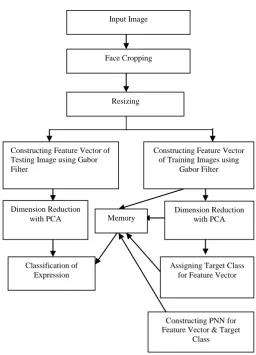
Figure.3.1 Block Diagram of Proposed System
III. PROPOSED SYSTEM DESIGN
Figure 3.1 shows the proposed system design. The procedure of the entire system consists of four parts
a. Image Preprocessing b. Feature Extraction c. Dimension Reduction d. Recognition with ANN
A. Preprocessing:
In preprocessing, the input image is cropped and resized.
a. Cropping: The input image is cropped to get the face image using viola jones algorithm [27] as in fig.3.2 & 3.3
Figure.3.2 Input image Fig.3.3.Cropped face image
b. Resizing: The face image is resized to a uniform size (256×256) after cropping the faces images to train easily.
Input Image
UT IMAGE Face Cropping
Resizing
Constructing Feature Vector of Training Images using
Gabor Filter
Dimension Reduction with PCA
Assigning Target Class for Feature Vector Memory
Constructing Feature Vector of Testing Image using Gabor Filter
Dimension Reduction with PCA
Constructing PNN for Feature Vector & Target
Class Classification of
B. Feature Extraction With Gabor Filter:
To extract features from the grayscale face image, Gabor filter [5][15] is applied to the grayscale face image with 8 orientation and 5 scales ( size of 40) in the following equation (1)
The parameters used in Eq. (1) are as follows. Wavelength (λ); is the wavelength of the cosine factor of the Gabor filter kernel, Orientation (θ); is the orientation of the normal to the parallel stripes of a Gabor function. Its value is represented in degrees. Valid values are real numbers between 0 and 360.The Phase offset (φ) in the argument of the cosine factor of the Gabor function is specified in degrees with real numbers as valid values between -180 and 180.The Aspect ratio (γ), specifies the ellipticity of the support of the Gabor function, and we can compute wavelength of Gabor filter using Bandwidth (b) in eq. 2.
Figure3.1 & 3.2 shows real and magnitude parts of gabor filter with 8 orientations and 5 scales. So each pixel is then represented by 40 Gabor features. A well designed Gabor filter bank can capture the relevant frequency spectrum in all directions
Figure.3.4.Real parts of gabor filter
Figure.3.5 Magnitude parts of gabor filter
The Gabor feature representation of a grayscale face image is obtained by convolution of the face image and a Gabor filter as in the following equation (3):
(3)
Where, × denotes the convolution operator and F(z) is the Gabor filter response of the image with orientation u and scale v. For a 256x256 image, the size of transformed image is 256x256x5x8.So the convolution output produce feature vector which has 16380 features for each image.
The real and magnitude part of Gabor feature vectors with eight orientations and five frequencies is given in Fig.3.3, 3.4.
C. Dimension Reduction with PCA:
As a consequence of Gabor filter, a high dimensional feature vector is obtained. Therefore, it is mandatory to reduce the dimensionality of the feature vector. Principal component analysis PCA
Figure.3.6.Real parts of gabor feature vector
Figure.3.7 Magnitude parts of gabor feature vector
[4] is a technique used to lesser the dimensionality of a feature space that takes a set of data points and constructs a lower dimensional linear subspace that best describes the variation of these data points from their mean.
In effect of this some principal components can be removed because they give details only a small amount of the data, whereas the largest amount of information is contained in the other principal components. Dimensionality reduction of PCA is as follows in equation (4):
(4)
D. Recognition With PNN:
[image:4.595.319.563.102.156.2]Probabilistic neural network is a kind of radial basis network suitable for classification problems. Probabilistic neural network (PNN) was developed by Specht [12]. It features a feed-forward architecture and supervised training algorithm similar to back propagation. However, a back-propagation neural network has to be trained for a long time to learn the relationship between input and output variables. furthermore, a sufficient dataset must be available to partition the data into a training set, a test set and a validation set to avoid over fitting[6].An alternative method is probabilistic neural network. Instead of adjusting the input layer weights using the generalized delta rule, each training input pattern is used as the connection weights to a new hidden unit. PNN offers several advantages over back-propagation network. Training is much quicker, usually a single pass. Moreover, PNN allows true incremental learning where new training data can be added at any time without requiring retraining of the entire network . The PNN also possesses some useful characteristics as the back-propagation algorithm such as generalization ability.
Figure. 3.8. Diagram of a three-layer probabilistic neural network
An example of a probabilistic neural network is shown in Fig.3.5. It has three layers [12]. The network contains an input layer, which has as many elements as there are separable parameters needed to describe the objects to be classified. It has a pattern layer, which organizes the training set such that an individual processing element represents each input vector. And finally, the network contains an output layer, called the summation layer, which has as many processing elements as there are classes to be recognized. Each element in this layer combines via processing elements within the pattern layer which relate to the same class and prepares that category for output. The transfer function is radial basis function for the first layer and is competitive function for the second layer. Only the first layer has biases. Training of the probabilistic neural network is much easier than with back-propagation. It can be simply finished by setting the weights of the network using the training set. Our work constructed PNN with 3200 input units and 7 hidden unit and 7 output units.
The results showed that the predictive ability of the probabilistic neural network is stronger than the others in this study.
IV. RESULTS AND DISCUSSION
Data required for experimentation is collected from JAFFE database [13] (Lyons et al., 1998; Zhang et al.) for neural network training and testing. JAFEE stands for The Japanese Female Facial Expression (JAFFE) Database. The
[image:4.595.40.278.310.429.2]database contains 213 images of 7 facial expressions (6 basic facial expressions + 1 neutral) posed by ten different Japanese female models. Fig.3.6. shows few samples of facial expressions of person KA.
Figure.4.1. Sample Facial expressions of KA from JAFEE data base
It was observed from the work of Shishi et al [14] that the images in the range 134–154 (all belong to the expresser UY) and 199–219 (all belong to expresser NA) were difficult to interpret and highly erratic. Hence expressers NA a UY were considered to be outliers. The problem apparently is in the expressers expressing the expressions. So Experiments were carried out by removing these two expressers from the data set.
By not including 42 images belong to two unreliable expressers from the data set, generalized recognition rate of 86.2% for test data and 100% for training data is achieved as shown in table 1.
Table 1 .Confusion Matrix For 7-Classes Of Facial Expressions
happy sad fear disgust surpri
se anger
Neutr al
Ang
er 90 0 0 0 5.2 0 0 Disgust 0 75 4.5 0 0 0 0 Fear 0 0 77 4.1 0 0 0 Happy 0 0 2.5 90 0 0 0
Sad 3.6 0 0 0 90 0 0
Surpris
e 0 0 0 0 0 91 0
Neutral 0 0 0 0 0 0 91
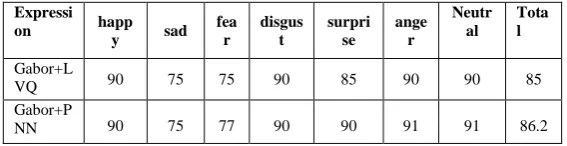
Table 2. Comparison of proposed algorithm
Expressi
on happ
y sad
fea r
disgus t
surpri se
ange r
Neutr al
Tota l
Gabor+L
VQ 90 75 75 90 85 90 90 85 Gabor+P
NN 90 75 77 90 90 91 91 86.2
In Table II the result of the study is compared with earlier work in which the experimental settings are comparable to ours where LVQ [14] is used instead of the PNN. It shows that the approach presented here is equally good in discriminating expressions. Compared with the previously reported work on 7-class facial expression recognition tasks our work reported an accuracy of 86.2%.
V. CONCLUSIONS AND FUTURE WORK
[image:4.595.296.580.498.571.2]and surprise, fear and disgust) that may arise in the human face.
VI. REFERENCES
[1]. A. Mehrabian, Communication without Words, Psychology Today 2 (4) (1968) 53–56
[2]. G.U.Kharat S.V.Dudul,‖ Human Emotion Recognition System Using Optimally Designed SVM With Different Facial Feature Extraction Techniques ―Wseas Transactions On Computers Issue 6, Volume 7, June 2008.
[3]. Ceifeng Shan, et al., ―Facial expression recognition based on Local Binary Patterns: A comprehensive Study‖, Elsevier Science Ltd Trans., 2009
[4]. Andrew J. Calder, et al., ―A Principal Component analysis of facial expressions‖, Elsevier Science Ltd Trans., 2001.
[5]. Michael Lyons and Shigeru Akamatsu,’Coding Facial Expressions with GaborWavelets’’ IEEE International Conference on Automatic Face and Gesture Recognition, April 14-16 1998, Nara Japan, IEEE Computer Society, pp. 200-205
[6]. Yichu Shan a, Ruihuan Zhaoa, Guowang Xua, H.M.
Liebich b, Yukui Zhang,,’’Application of probabilistic neural network in the clinical diagnosis of cancers based on clinical chemistry data’’ 2002 Elsevier Science.
[7]. P. De, B. Harrington, Anal. Chem. 65 (1993) 2167.
[8]. M.L. Thompson, M.A. Kramer, Process Syst. Eng. 40 (1994)1328.
[9]. D.E. Rum9lhart, G. Hinton, R. Williams, Nature 323 (1986) 533.
[10]. A. Mennon, K. Mehrotra, C.K. Mohan, S. Ranka, Neural Networks 9 (1996) 819.
[11]. Mao, K.Z.; Tan, K.-C.; Ser, W., "Probabilistic
neural-network structure determination for pattern
classification," Neural Networks, IEEE Transactions on , vol.11, no.4, pp.1009,1016, Jul2000doi: 10.1109/72.857781
[12]. D. F. Specht, ―Probabilistic neural networks,‖ Neural Networks, vol. 3,no. 1, pp. 109–118, 1990.
[13]. http://www.kasrl.org/jaffe_info.html
[14]. Shishir Bashyal, Ganesh K. Venayagamoorthy,
‖Recognition of Facial Expression using Gabor wavelets and learning vector quantization‖, Elsevier, EAAI 21, pp 1056-1064, 2009.
[15]. Rania Salah El-Sayed et al ,‖Robust Facial Expression Recognition via Sparse Representation and Multiple Gabor filters‖in (IJACSA) International Journal of Advanced Computer Science and Applications,2013.
[16]. Michael Lyons and Shigeru Akamatsu,‖ Coding Facial Expressions with GaborWavelets in Proceedings ", Third
IEEE International Conference on Automatic Face and Gesture Recognition, April 14-16 1998, Nara Japan, IEEE Computer Society, pp. 200-205.
[17]. M. Pantic, L.J.M. Rothkrantz ,‖Expert system for automatic analysis of facial expressions ―Image and Vision Computing 18 (2000) 881–905.
[18]. Maja Pantic, Member,and Leon J. M. ―Rothkrantz Facial Action Recognition for Facial Expression Analysis From Static Face Images‖IEEE Transactions On Systems, Man, And Cybernetics—Part B: Cybernetics, Vol. 34, No. 3, June 2004 1449.
[19]. G.U.Kharat , S.V.Dudul ,‖ Human Emotion Recognition System Using Optimally Designed Svm With Different
Facial Feature Extraction Techniques In Wseas
Transactions On Computers Issue 6, Volume 7, June 2008.
[20]. Ira Cohen,a, Nicu Sebe,b Ashutosh Garg,c Lawrence S. Chen and Thomas S. Huanga ,‖Facial expression recognition from video sequences: temporal and static modeling‖ Computer Vision and Image Understanding 91 (2003) 160–187.
[21]. Jun Wang, Lijun Yin ,"Static topographic modeling for facial expression recognition and analysis‖Computer Vision and Image Understanding (2007) .
[22]. Caifeng Shan a,, Shaogang Gong b, Peter W. McOwan, ‖Facial expression recognition based on Local Binary Patterns:A comprehensive study‖ Image and Vision Computing.
[23]. Luiz S. Oliveria, Alessandro L Koerich And Marcelo Mansano - 2d Principal Component Analysis For Face And Facial-Expression Recognition 2011 IEEE .
[24]. Jaimini Suthar, Narendra Limbad,‖ A Literature Survey On
Facial Expression Recognition Techniques Using
Appearance Based Features‖ International Journal Of Computer Trends And Technology (IJCTT) – Volume 17 Number 4.
[25]. Happy, S.L.; Routray, A., "Automatic Facial Expression
Recognition Using Features of Salient Facial
Patches," Affective Computing, IEEE Transactions on ,
vol.6, no.1, pp.1,12, Jan.-March 1 2015 doi:
10.1109/TAFFC.2014.2386334.
[26]. Boruah, D.; Sarma, K.K.; Talukdar, A.K., "Different face
regions detection based facial expression
recognition," Signal Processing and Integrated Networks (SPIN), 2015 2nd International Conference on , vol., no., pp.459,464, 19-20 Feb. 2015.