2733
Distinctive Probabilistic Supervised Joint Side and
Sentiment Model in One Go
1
pulluri Madhavi, 2k.Kishor Kumar
1
M.TechStudent,Department of CSE,KU College Of Engineering & Technology, Kakatiya University,Warangal, Telangana, India
2
Asst Professor of CSE, Kakatiya University, Warangal, Telangana, India.
Abstract: In This Project, We concentrate on modelling user-made reviews and also the total rating pairs, and plan to identify semantic aspects and aspect-level sentiments from this review information and also to predict total sentiments of reviews. We intend a novel which is probabilistic supervised joint aspect and a sentiment model (SJASM) to manage with the problems in a one go under a unified framework. SJASM will represent each and every review document in the form of opinion pairs, and it can also simultaneously model aspect terms and the corresponding opinion words of the review for an aspect which is hidden and sentiment detection. It leverage sentimental overall ratings, that are coming with these online reviews, as a supervised information, and can infer the semantic aspects and also the aspect-level sentiments that are not only has meaning sentiments but also it can be predictive of the total sentiment reviews.
Moreover, we develop the efficient inference method for the estimation of the parameter of SJASM based on this collapsed Gibbs sampling. We can also evaluate SJASM extensively on this real-world review information, and also the experimental results that will demonstrate the proposed model outperforms seven baseline methods which are well-established for the sentiment analysis tasks.
1. INTRODUCTION
Sentiment analysis is typically referred to as Opinion Mining or AI. It refers to the employment of linguistic communication process, text analysis to spot extract, amount and study affection states and subjective data. Sentiment analysis is widely applied to the voice of the client materials like reviews and survey responses, on-line and social media, and aided materials for the applications that vary from promoting to client service to clinical drugs. Sentimental analysis aims to see the perspective of the speaker, author and relation to a document, interaction or event. In client service and centre applications, sentiment analysis may be a valuable tool for watching the opinions and emotions among numerous client segments, like customers interacting with a definite cluster of representatives, throughout shifts, customers occupation relating to a selected issue, product or service lines, and alternative distinct teams.Sentiment analysis could also be totally machine-driven based, mostly entirely on human analysis, or some combination of the 2. Firms wholes and typically utilize sentiment analysis to watch brand name across social media platforms or across the online as an entire. User-generated reviews area unit of nice sensible use, because: 1) they need become AN inevitable a part of higher cognitive {process} process of shoppers on product purchases, building bookings,
etc. 2) They conjointly type inexpensive and economical feedback channel, that helps businesses to stay track of their reputations and to enhance the standard of their product and services. To support users in digesting the massive quantity of raw review information, several sentiment analysis techniques are developed for past years [1]. Sentiments and opinions will be analysed at completely different levels of graininess.It is conjointly referred to as the sentiment expressed in a very whole piece of text, e.g., review document or sentence, overall sentiment. The task of analysing overall sentiments of texts is often developed as a classification downside. Analysing aspect-level sentiment, wherever a {facet|a side} suggests that a novel linguistics facet of AN entity commented on in text documents, and is often diagrammatic as a high-level hidden cluster of semantically connected keywords. Aspect-based sentiment analysis typically consists of 2 major tasks, one is to observe hidden linguistics facet from a given texts, the another is to spot fine grained sentiments expressed towards these aspects.
2. RELATED WORK
2734 used a judgment detector to strain non-subjective
sentences of every review, so applied the classifier to ensuing judgment extracts for sentiment prediction. The same two-stage technique was conjointly projected in [4] for document-level sentiment analysis. a range of options (indicators) are evaluated for overall sentiment classification tasks. To analyse overall sentiments of web log (and review) documents, in [5] authors incorporated background/prior lexical information supported a pre-compiled sentiment lexicon into a supervised pooling text which is a multinomial classification model. In [6] authors combined the sentimental consistency and emotional contagion with this supervised learning for the sentiment classification in the small blogging. Unattended linguistic ways place confidence in developing grammar rules or dependency patterns to address the fine grained sentiment analysis drawback. In [7] authors projected a grammar parsing primarily based double propagation technique for feature-specific sentiment analysis. Supported dependency descriptive linguistics [8], the primary outlined eight grammar rules, and utilized the foundations to acknowledge pair-wise word dependency for every review sentence. Then, given opinion word seeds, they iteratively extracted a lot of opinion words and also the connected options, by counting on the known grammar dependency relations. They inferred the sentiment polarities on the options via a heuristic discourse proof primarily based technique throughout the unvaried extraction method.In [9] authors introduced a multi side sentiment model to analyse aspect-level sentiments from user generated reviews. The model assumption, i.e., individual aspect-related ratings square measure gift in reviews, might result in the restricted use truly, since an outsized range of on-line reviews aren't annotated with the linguistics aspects and aspect-specific opinion ratings by on-line users.
Figure1: Graphical view of results
3. EXISTING SYSTEM APPROACH
In the existing system, most majority of existing probabilistic joint topic-sentiment (or sentiment-topic) models square measure unattended or weakly/partially supervised, that means that they primarily model user-generated text content, and haven't thought of overall ratings or labels of the text documents in their frameworks [4]. As a result, although they will capture the hidden thematic structure of text information, the models cannot directly predict the general sentiments or ratings of text documents, instead, they solely deem document specific sentiment distribution to approximate the general sentiments of documents. Generally, sentiments and opinions is analysed at totally different levels of graininess. We tend to decision the sentiment expressed during a whole piece of text, e.g., review document or sentence, overall sentiment. The task of analysing overall sentiments of texts is usually developed as classification drawback, e.g., classifying a review document into positive or negative sentiment [5]. Then, a range of machine learning ways trained exploitation differing kinds of indicators (features) are used for overall sentiment analysis. Existing system
interest in analysing aspect-level sentiment, wherever aspectual means that a singular linguistics facet of Associate in Nursing entity commented on in text
of texts is usually developed as classification drawback.
4. METHODOLOGY
2735 probabilistic joint facet and sentiment framework to
model the matter bag-of opinion-pair knowledge. On-line user-generated reviews typically go along with overall ratings (sentiment labels), that provides U.S.A. with nice flexibility to develop supervised unification topic model. Then, on high of the made probabilistic framework, we have a tendency to introduce a brand new supervised learning layer via traditional linear model to together model the rating knowledge. Thus, we have a tendency to propose a unique supervised joint facet and sentiment model (SJASM), which may deal with the and facet based mostly sentiment analysis issues in one go below a unified framework.
5. SYSTEM ARCHITECTURE
The main aim of sentiment analysis is to seek out the opinion of the user. Therefore the sentiment analysis result's to seek out the review is positive or negative. The system design diagram Fig one is delineate as follows. The reviews, comments square measure taken type the diary, dataset. It's splitted into separate sentences and therefore the sentiment for every sentence is calculated and from that the opinions square measure extracted and it's keep within the opinion verb lexicon. By this method the reviews are often classified into positive or negative The 3 sentiment analysis tasks as follows.
• Linguistics side detection. This task aims at police investigation hidden linguistics aspects of Associate in Nursing self-opinionated entity from the given review documents, wherever every side would be described within the sort of a hidden linguistics cluster.
• Aspect-level sentiment identification. For this task, the aim is to spot fine-grained linguistics sentiment orientation, e.g., positive or negative, expressed towards every detected linguistics side.
• Overall rating/sentiment prediction. Given Associate in nursing untagged review, we'll type the prediction for
the sentimental rating by using a rigorously designed regression procedure over the inferred hidden aspects and aspect-level sentiments via the fitted model. User-generated reviews square measure totally different from normal text documents. as an example, once individuals scan a product review, they typically care concerning that specific aspects of the merchandise square measure
commented on, and what sentiment orientations(e.g., positive or negative) are expressed on the aspects. Rather than using bag-of-words illustration that is often
adopted for process usual text documents the review is described within the sort of opinion pairs. Wherever every opinion try consists of a facet term and connected
opinion word within the review. To propose a completely unique supervised joint side and sentiment
model (SJASM), which may address the and aspect-based sentiment analysis issues in one go underneath a
[image:3.612.325.530.155.501.2]unified framework.
Figure 2: architecture
6. EXPERIMENTAL RESULTS
[image:3.612.332.529.168.296.2]Figure 3.Home screen
[image:3.612.322.533.529.643.2]2736 Figure 5.Read and Pre-process Reviews
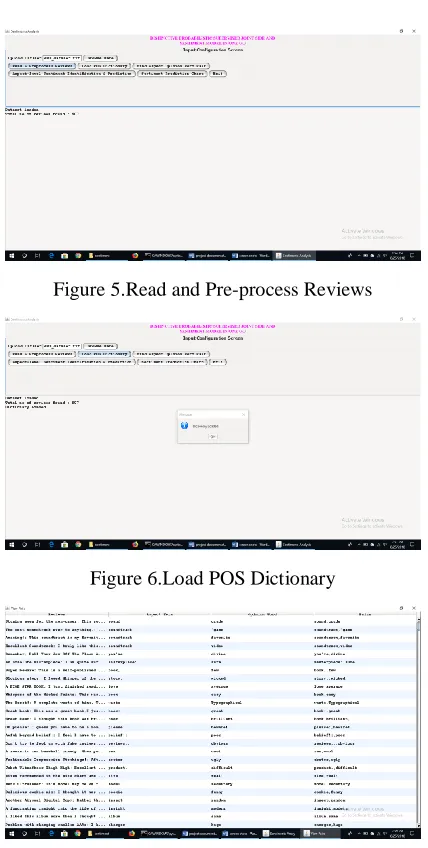
[image:4.612.319.531.101.226.2]Figure 6.Load POS Dictionary
Figure 7.Find Aspect opinion word pair
[image:4.612.81.290.103.227.2]Fig 6.Aspect level sentiment identification & prediction
Figure 8. Sentiment Prediction Chart
7. CONCLUSION
The Web has dramatically changed the implies that people have their own views and opinions. They will presently post reviews of product at bourgeois sites and categorical their views on nearly one thing in web forums, discussion groups, and blogs, that area unit together is referred to as the user-generated content. This on-line word of-mouth behaviour represents that a new and measurable sources of knowledge with many wise applications. we have a tendency to develop supervised joint side and the sentiment model (SJASM) to investigate overall and aspect-level sentiments for sentiments that aren't alone meaty however together vatic of overall sentiments of the review documents. we have a tendency to tend to conducted experiments exploitation publicly gettable real-world review information, and extensively compared SJASM with seven well-established representative baseline ways in which within which. For linguistics side detection and aspect-level sentiment identification problems we've an inclination to tend to conclude that in our system we've an inclination to tend to face live connecting social media and ecommerce electronic computer then advocate to user in line with their topic modelling. By matching topic name and merchandise name. Topic fetch by users attaching file or users post. Adman add post then advocate on e-commerce electronic computer. Sentiment analysis classified as positive, negative, all, trustworthy review. Count of review place along outlines.
REFERENCES:
[1]. B. Liu, Sentiment analysis and opinion mining, Synthesis Lectures on Human Language Technologies, vol. 5, no. 1, pp. 1167, May 2012.
[image:4.612.81.290.557.674.2]2737 Stroudsburg, PA, USA: Association for
Computational Linguistics, 2002, pp. 7986. [3]. V. Ng, S. Das gupta, and S. M. N. Arifin,
Examining the role of linguistic knowledge sources in the automatic identification and classification of reviews, in Proceedings of the COLING/ACL on Main Conference Poster Sessions, ser. COLING-ACL 06. Stroudsburg,PA, USA: Association for Computational Linguistics, 2006,pp. 611618 [4] J. Zhao, K. Liu, and G. Wang, “Adding redundant
features for crfs-based sentence sentiment classification,” in Proceedings of the Conference on Empirical Methods in Natural Language Processing, ser. EMNLP ’08. Stroudsburg, PA, USA: Association for Computational Linguistics, 2008, pp. 117–126.
[5] P. Melville, W. Gryc, and R. D. Lawrence, “Sentiment analysis of blogs by combining lexical knowledge with text classification,” in Proceedings of the 15th ACM SIGKDD International Conference on Knowledge Discovery and Data Mining, ser. KDD’09. New York, NY, USA: ACM, 2009, pp. 1275–1284.
[6] A. L. Maas, R. E. Daly, P. T. Pham, D. Huang, A. Y. Ng, and C. Potts, “Learning word vectors for sentiment analysis,” in Proceedings of the 49th Annual Meeting of the Association for Computational Linguistics: Human Language Technologies - Volume 1, ser. HLT’11. Stroudsburg, PA, USA: Association for Computational Linguistics, 2011, pp. 142–150. [7] P. Melville, W. Gryc, and R. D. Lawrence,
“Sentiment analysis of blogs by combining lexical knowledge with text classification, “in Proceedings of the 15th ACM SIGKDD International Conference on Knowledge Discovery and Data Mining, ser. KDD’09. New York,NY, USA: ACM, 2009, pp. 1275–1284.
[8] J. Zhao, K. Liu, and G. Wang, “Adding redundant features forcers-based sentence sentiment classification,” in Proceedings of the Conference on Empirical Methods in Natural Language Processing, ser.EMNLP ’08. Stroudsburg, PA, USA: Association for Computational Linguistics, 2008, pp. 117–126.
[9] V. Ng, S. Dasgupta, and S. M. N. Arifin, “Examining the role oflinguistic knowledge sources in the automatic identification andclassification of reviews,” in Proceedings of the COLING/ACL onMain Conference Poster Sessions, ser. COLING-ACL ’06. Stroudsburg,PA, USA: Association for Computational Linguistics, 2006,pp. 611–618.