GILL, VANDNA KAUR. Moral Identity and Engagement with Racial Issues Among Social Justice-Oriented Emerging Adults on Social Media: A Phenomenological Case Study. (Under the direction of Dr. Jessica T. DeCuir-Gunby).
Moral Identity and Engagement with Racial Issues Among Social Justice-Oriented Emerging Adults on Social Media: A Phenomenological Case Study
by
Vandna Kaur Gill
A dissertation submitted to the Graduate Faculty of North Carolina State University
in partial fulfillment of the requirements for the degree of
Doctor of Philosophy
Curriculum and Instruction
Raleigh, North Carolina 2018
APPROVED BY:
_______________________________ _______________________________
Jessica DeCuir-Gunby Meghan Manfra
Committee Chair
_______________________________ _______________________________
DEDICATION
This dissertation is dedicated, first and foremost, to my amazing grandparents, Lakhbir Kaur Bajwa (Vadi Mommy) and Dilip Singh Bajwa (Papa), who always emphasized the importance of education. Papa, though you are no longer here with us, I will always carry with me the life lessons you taught me while I was growing up, most importantly, the value of being an honest, moral, and kind human being. It is because of you that I never give up fighting the good fight, for social justice and for all that I hold dear. Vadi Mommy, thank you for teaching me, as only an educator could, how to learn from every single person I encounter and from all the experiences I have in life. It is because of your sacrifice and hard work as immigrants that all of your grandchildren are where they are today.
To my mom, Madhu Gill, thank you for raising me the way you did, for caring about me and loving me the way no one else ever has or will, and for your unwavering support of my education over the years, including having me memorize those multiplication tables every day after I came home from school! To my dad, Naurang Gill, thank you for believing in me and embracing my talents, no matter what path I chose. To my dear husband, Gagan Bindra, thank you for supporting me and loving me in all the ways you could (and more!) throughout this incredible doctoral journey, filled with sweat, tears, heartbreak, joy, and accomplishment. Half of this Ph.D. is yours!
have meant the world to me. V.J. and Vik, you may be my cousins, but I will always think of you as my brothers. Thank you for always being there for me.
To the best mother-in-law anyone could ever have, Manjeet Bindra, thank you for the unconditional love, warm hugs, and delicious food that gave me the strength I needed to make it to the finish line. To my father-in-law, Ravinder Bindra, thank you for all the little things you do to make me feel like I’ve always been a part of the family, for respecting my opinions, and for taking pride in my hard work. To Jaspreet Bindra, my sister-in-law, thank you for all the
encouragement and words of advice. To my dearly departed sister-in-law, Kiran Bindra, who left us last year, thank you for always being my cheerleader. We did it! I know you’re smiling and celebrating wherever you are now.
To my best friend, Sarah Tronic, who understands what it really means to be a good teacher, to care for students as you would your own children, thank you for listening to all my ideas over the years and for offering your perspective on all things education. To my teachers, especially Maddie and Andy Krug, the time I spent in your classes helped me become a critical thinker, a scientist, and a writer. Thank you for the knowledge and insight you shared with me both inside and outside the classroom. To all my students, thank you for giving me the
BIOGRAPHY
Vandna Kaur Gill was born in Washington, D.C. and raised in Fairfax Station, Virginia. She is the oldest daughter of Naurang and Madhu Gill, who immigrated to the U.S. from India in the 1970s. After graduating from Flint Hill School, an independent school in Virginia, Vandna completed her B.A. in English with a minor in Biology from the University of Virginia and an M.A. in English with a focus on American Literature from George Washington University.
For four years, Vandna taught English to high school students, whom she still fondly remembers, at Flint Hill School, her alma mater. During her time at Flint Hill, she was also the Community Service Coordinator, organizing service learning opportunities for students. In 2010, she returned to the other side of the classroom to complete an Ed.M. in Human Development and Psychology from Harvard University. While attending Harvard, she interned at Facing History and Ourselves, an educational nonprofit and professional development organization, writing educational materials for high school teachers to use in their classrooms. After this, she briefly left education to be the grant collaboration coordinator for Kiran, a nonprofit organization providing services to South Asian victims of domestic violence, in Raleigh, North Carolina.
While completing her Ph.D. in Educational Psychology at North Carolina State University, Vandna taught Psychology of Adolescent Development and Applied Child Development to undergraduate students. Her research has focused primarily on the moral
ACKNOWLEDGEMENTS
Dr. DeCuir-Gunby, words cannot express how thankful I am to you for being such a great advisor, professor, dissertation committee chair, and role model. I still remember that Saturday you gave me a phone call back in 2013 encouraging me to come to NC State shortly before I was officially accepted to the doctoral program, which changed the course of my life in a spectacular way for the next five years. You have been there for me, academically and
personally, since you started advising me in a way that no other mentor ever has been.
To my committee members, Dr. Manfra, Dr. Baker-Ward, and Dr. Gray, thank you for being there for me each step of the way, for offering your feedback, and for encouraging me in countless ways. Dr. Manfra, I loved every second of class time I had with you and the projects I worked on with you outside of class, especially the NC and WWI website! Dr. Baker-Ward, your intelligence and kindness are simply unparalleled, and I am so lucky to have experienced both during my time at NC State. Dr. Gray, thank you for making me realize I actually really enjoy quantitative methods by teaching it in such an accessible way and also for pushing me to keep going to figure things out, even when (especially when) I think I can’t.
TABLE OF CONTENTS
LIST OF TABLES ... x
LIST OF FIGURES ... xi
CHAPTER 1: INTRODUCTION ... 1
Background ... 1
Statement of the Problem ... 2
Purpose of the Study ... 4
Research Questions ... 5
Theoretical Frameworks ... 5
Moral Self-Identity Theory ... 5
Social Cognitive Model of Moral Identity ... 6
Critical Race Theory ... 9
CRT and moral development ... 10
CRT and colorblindness ... 11
Significance of the Study ... 15
Definition of Terms ... 16
Social media ... 16
Moral identity ... 17
Emerging adulthood ... 18
Colorblind racism ... 19
Social justice ... 20
Hashtag activism ... 21
Assumptions ... 21
Delimitations ... 22
CHAPTER 2: REVIEW OF THE LITERATURE ... 23
Social Media Usage and Identity ... 23
Moral Identity Development Through Social Media ... 25
Effects of antisocial media on moral development ... 31
Race and Racism on the Internet ... 33
Racial Attitudes and Social Media Usage ... 37
Using Social Media to Teach About Race ... 41
Conclusion ... 46
CHAPTER 3: RESEARCH METHODS ... 48
Research Site ... 51
Participants and Sampling ... 51
Instruments ... 52
Research Procedures ... 53
Ethical Considerations ... 54
Data Analysis ... 54
CHAPTER 4: FINDINGS AND DISCUSSION ... 61
Participant Profiles ... 62
Case 1: Black Emerging Adults ... 62
Anthony... 62
Naomi ... 63
Case 2: White Emerging Adults ... 64
Joanne ... 64
Laura ... 65
Nathan ... 67
Trevor ... 68
Case 3: Other Emerging Adults (Minority or Multiracial) ... 69
Isabella ... 69
Rizana ... 69
Sofia ... 70
Phenomenological Themes ... 74
Interview and Focus Group Responses ... 74
Theme 1: Considering audience before posting and establishing boundaries ... 74
Theme 2: Maintaining consistency between online and offline identities ... 77
Theme 3: Mediating conversations about race ... 80
Theme 4: Recognizing privilege and responsibility to stand up for others ... 82
Theme 5: Experiencing frustration, emotional exhaustion, and a heightened sense of awareness in online environments ... 86
Theme 6: Feeling a sense of urgency to enact change or using your voice in beneficial and appropriate ways online ... 90
Theme 7: Membership in social media communities can contribute to positive identity development ... 94
Theme 8: Aiming to understand and adopt alternative perspectives ... 95
Theme 9: Discussing race in the classroom is enlightening, yet also difficult and intense ... 97
Theme 10: Believing it is important for all college students to understand the concept of colorblindness ... 99
Theme 11: Benefits and challenges of implementing a racial literacy curriculum ... 102
Theme 12: Minority and White emerging adults perceiving the racial climate at their university in starkly contrasting ways ... 112
Theme 13: White emerging adults are often “nervous of saying the wrong thing” in conversations about race, while Black emerging adults recognize that “we all have to deal with race” ... 116
Social Media Post Responses ... 120
Theme 1: Promoting conversation and tolerance. ... 121
Theme 2: Importance of the Black Lives Matter Movement ... 121
Additional responses ... 122
Theme 3: Fighting back: outrage and call to action ... 122
Additional responses ... 123
Theme 4: Questioning “All Lives Matter” ... 123
Theme 2 (continued): Importance of the Black Lives Matter Movement ... 124
Theme 2 (continued): Importance of the Black Lives Matter Movement. ... 125
Theme 5: Challenging logic and motives or asking for an explanation ... 126
Additional responses ... 127
Theme 5 (continued): Challenging logic and motives or asking for an explanation ... 128
Additional responses ... 129
Theme 5 (continued): Challenging logic and motives or asking for an explanation ... 129
Theme 3 (continued): Fighting back: outrage and call to action. ... 130
Theme 1 (continued): Promoting conversation and tolerance ... 131
Additional responses ... 131
Theme 5 (continued): Challenging logic and motives or asking for an explanation ... 132
Theme 1 (continued): Promoting conversation and tolerance ... 132
Additional responses ... 133
Theme 1 (continued): Promoting conversation and tolerance ... 133
Additional responses ... 134
Application of Theoretical Frameworks ... 135
Social Cognitive Model of Moral Identity ... 135
Theme 1: Restricted circle of moral regard and moral disengagement in online contexts ... 151
Theme 2: Perspectives on internalization of moral identity determined its role in guiding behavior on social media ... 160
Theme 3: Higher symbolization of moral identity, along with specific contextual factors, contributed to greater engagement with racial issues online ... 164
Theme 4: Moral self-consistency impacted how emerging adults engaged in activism offline and online ... 173
Critical Race Theory ... 175
Theme 5: Being a moral person meant being color conscious instead of colorblind in interactions with people of different races ... 175
Theme 6: While White emerging adults acknowledged that racism exists and impacts everyone, Black and minority emerging adults spoke about their own experiences corroborating racial realism ... 185
Theme 7: Providing students with a systemic framework for understanding how race operates in a white-dominated society ... 198
Theme 8: Guiding students in identifying when and how colorblindness is being used in social media posts and giving them tools to challenge it effectively ... 221
Theme 9: Incorporating racial literacy as well as discussions about race and racism in the curriculum ... 226
Theme 10: Students’ experiences with race-related incidents on social media affected their interactions with students of other races on campus ... 242
CHAPTER 5: CONCLUSION AND IMPLICATIONS ... 247
Study Summary ... 247
Implications ... 257
Study Limitations ... 261
Areas for Future Research ... 262
APPENDICES ... 279
Appendix A: Interview Questions ... 280
Appendix B: Focus Group Questions ... 283
Appendix C: Theoretical Similarities Between Moral Development and Racial Identity Development ... 285
Appendix D: Solicitation Emails ... 286
Appendix E: Participant Consent Form for Interview ... 288
LIST OF TABLES
Table 1. Selected Examples of Significant Statements of Engagement with Race-Related
Issues and Related Formulated Meanings ... 55 Table 2. Theme Clusters from First Cycle Coding (In Vivo Codes) with Corresponding
LIST OF FIGURES
Figure 1. Social media post #1. Reprinted from Twitter, by Nish, 2016 ... 120
Figure 2. Social media post #2. Reprinted from Twitter, by K. Padmore, 2016 ... 122
Figure 3. Social media post #3. Reprinted from Twitter, by RyanO’polka, 2016 ... 123
Figure 4. Social media post #4. Reprinted from Facebook, by S. Smith, 2016 ... 125
Figure 5. Social media post #5. Reprinted from Facebook, by T. Hughes, 2016 ... 128
Figure 6. Social media post #6. Reprinted from Twitter, by Straw Lives Matter, 2017 ... 129
Figure 7. Social media post #7. Reprinted from Twitter, by Vandalena & S. Bailey, 2016 ... 131
Figure 8. Social media post #8. Reprinted from Twitter, by Gendi Parks, 2016 ... 133
CHAPTER 1: INTRODUCTION Background
Although research on social media has only recently begun, social network sites (SNSs) have been impacting adolescents and emerging adults in a variety of ways since their inception, a phenomenon that must be examined critically by educators (Boyd & Ellison, 2008; Reid & Boyer, 2013). One of the advantages of using social media in education is that it can provide students and educators with a forum to openly initiate and engage in discussions on difficult topics (e.g., racism, prejudice, societal inequities) that may otherwise get silenced in the classroom. Social media is unique in its capacity to teach about race and racism, in particular, because it allows for an exploration of race beyond the content of the specific online medium to examining who created the content as well as qualities and nuances of the SNS itself (Nakagawa & Arzubiaga, 2014). Additionally, social media serves as a “laboratory of how discourse on race plays out with very little moderation,” allowing emerging adults to grapple with racial issues in their daily lives (Nakagawa & Arzubiaga, 2014, p. 108). Through this familiar context, they can actively engage with and even challenge what they see as well as develop racial literacy
(Nakagawa & Arzubiaga, 2014). However, educators must also consider how anonymity and highly public spaces can impact their students’ moral thinking, and how we can help them become responsible citizens, both online and offline.
developmentally appropriate manner, building upon the moral schemas emerging adults have already begun to form offline. To be effective, these discussions and critiques of SNSs must be a collaborative effort, initiated by educators as well as the students themselves, involving input from both minority and White internet users. As Rest et al. (2000) suggest, it is possible that a new conception of morality will emerge from sustained dialogue and shared experiences in online communities.
Statement of the Problem
A previously conducted quantitative study (Gill & DeCuir-Gunby, 2017), which informed the development of this qualitative study, provided data supporting the notion that White students who rank high in symbolization, rather than internalization, of moral identity tend to actively engage with racial issues online (see “Theoretical Frameworks” section below for a detailed explanation of these terms). However, the study also revealed that moral identity alone does not generally predict moral action (operationalized as engagement with racial issues on social media). Factors like race, frequency of social media use, and sense of belonging in the social media community all played a role.
involved in some dynamic process” (p. 215). This dynamic process (at times bidirectional association) between moral identity and moral action was taken into consideration in this study, specifically in terms of how moral identity impacts social media usage among emerging adults and vice versa.
Given the incredible power of social media (e.g., Facebook, Twitter, Instagram,
SnapChat, YouTube) and emerging adults’ incessant use of these online platforms, we need to be thoughtful as educators about how we are preparing students for these virtual “frontier” spaces that are “rich with promises and risks” (James et al., 2010, p. 221). According to a study conducted by James et al. (2010), many of the participants noted that “digital youth are qualitatively different from older generations in an ethical sense” (p. 228). Moreover, the researchers found that an awareness of the ethical implications of online behavior was often lacking (James et al., 2010). One researcher pointed out that “youth can range from ‘completely delusional’ to ‘hyperaware’ of the potential audiences” and that, generally speaking, young people are “purported to have distinct ethical stances on core issues such as identity, privacy, ownership and authorship, credibility, and participation” (James et al., 2010, p. 228). An
educator who participated in this study also noted that “young people frequently assume that all participants share the same ethical codes, even though ethics are rarely explicit online” (James et al., 2010, p. 228).
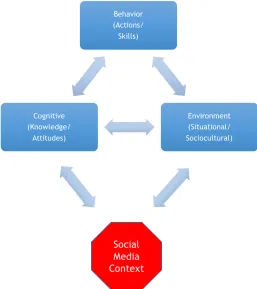
racial content online. The influence of the social media context on moral behaviors online among emerging adults with strong moral identities was the central problem being explored in this study.
Purpose of the Study
The purpose of this study was to explore how social justice-oriented emerging adults of different races perceive their experiences on social media, how they talk about their engagement with racial issues online, and how this engagement is related to their moral identity. The goals were: (1) to explore the impact of the social media context on either limiting or encouraging moral behaviors online among emerging adults who consider themselves to have strong moral identities; (2) to use the experiences of these emerging adults on social media to provide educators with tools to guide students in combating racism, particularly in terms of challenging colorblind perspectives; and (3) to present social media as a means of facilitating positive moral identity development as well as promoting racial literacy.
Research Questions
The research questions for this study include: (1) How does moral identity impact social media usage among emerging adults? (2) How are emerging adults engaging in race-related conversations on social media? (3) How do emerging adults conceptualize relationships among social media culture, university culture, and the global community? (4) How can educators help students confront and challenge colorblind perspectives on social media? (5) How can the
experiences of emerging adults help university administrators better understand the racial climate within their university community and how to address racial issues on campus?
Theoretical Frameworks
The primary theoretical framework for this study is the Social Cognitive Model of Moral Identity (Aquino & Reed, 2002; Reed, Aquino, & Levy, 2007; Aquino, Freeman, Reed, Lim, & Felps, 2009), which draws on aspects of moral self-identity theory (Blasi, 1980, 1983, 1984). Both of these theoretical models are outlined in the following sections. Moral identity was selected as the specific construct to examine because it serves to elucidate whether and how emerging adults view themselves as moral people and how this identity impacts their moral behaviors.
Moral Self-Identity Theory. Blasi (1980, 1983) bases his theoretical model of moral identity on the idea that moral identity is directly related to moral action and that this
relationship is “expressed through the concepts of responsibility (in the sense of strict obligation to act according to one’s judgment) and integrity” (as cited in Blasi, 1984, p. 132). Moral identity varies in its level of centrality to individuals’ self-concepts as well as in its content among
perspective is that “in the absence of a strong moral identity, the ability to execute complex moral judgments and present moral arguments is not necessarily a required antecedent of moral behavior” (p. 1424). In other words, the relationship between moral thought and moral behavior decreases if being moral is not central to an individual’s self-definition (Blasi, 2004). Moral identity develops to varying degrees in individuals as their responsibility, or “moral
compulsion,” leads them to strive towards an ideal self through moral action, allowing for a sense of integrity, or “moral self-consistency” (Blasi, 1984, p. 132). Blasi theorized that moral judgments may predict moral behavior more reliably “when filtered through responsibility judgments based on one’s identity and propelled into action via the tendency toward self-consistency” (Hardy & Carlo, 2011, p. 212).
Individuals who exhibit this sense of moral self-consistency are known as moral
exemplars. Studies centered on moral exemplar behavior illustrate the “extensive integration of self and moral goals that adult exemplars experience” (Colby & Damon, 1992). Additionally, these studies show that adolescents who are characterized as moral exemplars have a tendency to use moral terms to describe their self-concept more often than comparison youth (Hart & Fegley, 1995; Reimer, 2003; Reimer, Dewitt Goudelock, & Walker, 2009).
affiliated with “certain beliefs, attitudes, and behaviors…particularly when that identity is highly self-important” (p. 1423). The measure of moral identity developed by Aquino and Reed (2002) has both a private dimension and a public dimension. Specifically, there is symbolization, which is the “degree to which the [moral] traits [e.g., compassion, care, generosity, honesty] are reflected in the respondent’s actions in the world,” and internalization, or the “degree to which the moral traits are central to the self-concept” (p. 1427).
Their studies demonstrated that internalization is “more strongly related to the implicit measure that assesses the strength of association between the moral traits and the self-concept,” while symbolization is “more strongly correlated to those outcomes or measures [with] a self-presentational or public dimension” (Aquino & Reed, 2002, p. 1437). Moral identity can either be activated or suppressed by contextual variables, and it can take on more or less importance over time depending on a person’s experiences and socioemotional maturity (Aquino & Reed, 2002). Additionally, it is possible that particular personality traits may also have an impact on the stability of an individual’s moral identity (Aquino & Reed, 2002).
Research conducted by Aquino et al. (2009) illustrates how situational factors, such as priming, can moderate the effects of moral identity on moral behaviors. Specifically, they tested their proposed social-cognitive framework through a series of four studies, hypothesizing that “if a situational factor increases the current accessibility of moral identity within the working self-concept, then it strengthens the motivation to act morally” (Aquino et al., 2009, p. 123).
accessibility of moral identity decreased due to situational factors (e.g., performance incentives or permission to deceive in order to receive a cash prize), individuals were less motivated to act according to their moral identity, even among those typically high in moral identity (Aquino et al., 2009). The results showed strong support for their proposed social-cognitive framework. The instrument they developed to measure moral identity, the Self-Importance of Moral Identity (SIMI) scale, is “organized around specific traits that have been empirically shown to be associated with what it means to be a moral person,” and they theorized that this trait-based approach for measuring moral identity is “less likely to invoke overlapping identities because it is content specific” (Aquino & Reed, 2002, p. 1425; Reed et al., 2007). Additionally, Aquino and Reed (2002) believe that “moral identity is [one] potential social identity that may be a part of a person’s social self-schema” (p. 1424).
Individuals with a strong moral identity consistently demonstrate concern and respect for the rights and welfare of others (Blasi, 1984; Hart, Atkins, & Ford, 1998), giving them an
2010), an idea that has been cited as a rationale for “the preeminence of racial hierarchy in American race relations” due to the “tokenized status and expendable outcomes of the [racial] out-group” (Stevenson, 2014, p. 55). However, Smith et al. (2014) argue that these binding foundations may sometimes be applied to individuals beyond a person’s immediate in-group, proposing that “people with a strong moral identity are motivated to expand the ambit of their moral concern, even if they also have a commitment to the binding foundations” (p. 1555). Results of the first study they conducted in a series of quantitative studies, using hierarchical regression analysis, supported their prediction that “having a strong moral identity can mitigate the effect of the binding foundations, which otherwise might allow people to justify the use of torture for the sake of protecting their in-group” (Smith et al., 2014, p. 1557).
Critical Race Theory. The secondary theoretical framework for this study is Critical Race Theory (CRT), which focuses on examining race, racism, and power in society in an attempt to transform the relationship among them (Delgado & Stefancic, 2012). CRT tenets include: (1) racism is ordinary or racial realism, meaning that racism is challenging to address because it is often not acknowledged; (2) interest convergence, or the notion that any progress in civil rights tends to coincide with the self-interest of Whites; (3) intersectionality, or the idea that no individual has only a single identity and the intersections of a person’s identities (e.g., race and gender) must be taken into consideration; (4) white privilege, which relies on Whiteness itself being a form of “property” that is meaningful in a society based on White dominance; and (5) critique of liberalism, which unveils aspects of a system in which equal rights are touted, but not properly implemented (Bell, 1980; Crenshaw, 1989; Delgado & Stefancic, 2012;
not care to relinquish their status in society (Harris & Wallace, 2008; Lopez, 2000; Stevenson, 2014).
According to Stevenson (2014), CRT points out the “dangers of accepting the habitus of racial hegemony in which we reject any subgroup as acceptable members of society unless they agree to reject any images or actions of angry revolution,” yet this rejection appears to be part of the reason why the “narrative of Black human expendability” and the accompanying stress that Black individuals experience because of it persists (p. 79). In an educational context, schools, teachers, and administrators simply cannot afford to turn a blind eye to racial identity politics that promote assimilation for the purpose of minimizing White anxiety (Stevenson, 2014).
CRT and moral development. Given that consideration of race is ignored in prominent moral development models (e.g., Kohlberg’s stage model), it is beneficial to use a CRT approach to examine race-related social media posts in conjunction with moral identity since it operates from a perspective of racial realism. Employing a CRT lens can provide insight into conceptions of moral identity from the perspective of, for example, a Black female using social media versus that of a White male using social media, taking intersectionality into account. Several studies (Locke & Tucker, 1988; Locke & Zimmerman, 1987; Tucker & Locke, 1986) have found that “the manipulation of the race of the character (e.g., Black instead of no race specified) in moral dilemma research affected moral development, thereby indicating that moral development may have a racial component not originally hypothesized by Kohlberg and others” (Moreland & Leach, 2001, p. 258). Aside from being theoretically linked by sharing similar components and stages, moral development and racial identity development have also been found to be
empirically linked (see Appendix C).
American undergraduate and graduate students showed a correlation between more developed racial identity attitudes and more developed moral reasoning. Additionally, they were able to confirm their hypothesis that emotionality impacts moral judgments, at least among some African Americans, and that emotion is moderated by racial identity status by identifying a significant negative relationship between less developed racial identity status, i.e., immersion-emersion attitude scores, and moral development, i.e., scores on the Black version of the DIT, or Defining Issues Test (Moreland & Leach, 2001). These results can potentially be explained by the assumption that there is greater stress and anxiety associated with feeling closer to the moral dilemma situation at hand, e.g., being of the same race as the individual depicted in the moral dilemma (Moreland & Leach, 2001; Tucker & Locke, 1986). Hence, strong emotional reactions, such as those associated with a Black participant being in the immersion-emersion status of racial identity development and being presented with a moral dilemma situation involving a Black character rather than a character whose race is not specified may prompt the individual to limit their moral reasoning capabilities (Moreland & Leach, 2001; Rybash, Roodin, & Lonky, 1981). Specifically, the psychological defensiveness that seems to be embedded in the
immersion-emersion status can lead the individual in this developmental phase to become engrossed in understanding Black culture while simultaneously feeling angry toward the
dominant group (i.e. White individuals) and anxious about adopting a new Black identity (Carter, 1995; Moreland & Leach, 2001).
CRT and colorblindness. In addition to offering a new perspective on moral
158), promoting the notion that race should not play a significant role in social, legal, or political realms when it is actually significant in all those realms (Chon, 2000). While, in theory, colorblindness may seem like a great equalizer, Delgado and Stefancic (2012) point out that it does not do much good. What is dangerous about the colorblind perspective and its association with an “assimilationist vision” is the idea that “race should have no real significance, but instead be limited to the formal categories of white and Black, unconnected to any social, economic, or cultural practice” (Gotanda, 1991, p. 59). When it comes to making progress in race relations, however, “[o]nly aggressive, color-conscious efforts…will do much to ameliorate misery” (Delgado & Stefancic, 2012, p. 27, italics added). As Stevenson (2014) points out, “Implicit within the concept of colorblindness – or better yet, racial blindness – is an inability to see racial hierarchy and the variety of behavioral and psychological strategies that accompany it” (p. 54). In fact, due to the “mass socialization of racial hierarchy in American society, no one is immune to the notion that ‘Blackness is inferior’” (Stevenson, 2014, p. 54). Colorblindness and the “Black and Brown inferiority and expendability narrative” can “wreak havoc in classrooms from elementary through college education, but it is invisible – what Bourdieu [1990] calls ‘habitus,’ or that which ‘goes without saying’” (Stevenson, 2014, p. 54). As a potential solution, Stevenson (2014) suggests that schools can draw attention to and encourage debate of this narrative.
(1) whites’ avoidance of direct racial language, (2) the central rhetorical strategies or “semantic moves” used by whites to safely express their racial views, (3) the role of projection, (4) the role of diminutives, and (5) how incursions into forbidden issues produce almost total incoherence among many whites. (p. 41)
In terms of picking up on thematically-induced incoherence, analysts “must excavate the rhetorical maze of confusing, apparently ambivalent answers to straight questions” (Bonilla-Silva, 2002, p. 42). The three stylistic components that are relevant to data analysis in this particular study are thematically-induced incoherence, diminutives, and rhetorical strategies, each of which are elaborated upon with specific examples below.
Examples of the disclaimers that may be used in responses with thematically-induced incoherence include: “I don’t know, but…,” “Yes and no,” or “I mean, I mean, I don’t know, I mean yes, but I don’t know” (Bonilla-Silva, 2002, p. 42). It is important, however, not to “mistake honest ‘I don’t knows’ for rhetorical moves to save face or nervousness for
not prejudiced, but…” or “Some of my best friends are [Black, Asian, etc.]” in order to preface statements that could be seen as racist (Bonilla-Silva, 2002, pp. 46-47). Other rhetorical
strategies may include statements such as “I am not black, so I don’t know” or “Yes and no, but…” when responding to questions about discrimination or trying to downplay racial views by taking both sides on an issue (Bonilla-Silva, 2002, pp. 49-50).
The myth of colorblindness, both online and offline, leads to very real consequences. Daniels (2008) discusses how White liberals often “embrace the belief that any lingering racial differences and racist consequences are rooted in economic class, and therefore are ‘not really’ about racism” (p. 131). This failure, on the part of Whites, to acknowledge race and racism further divides them from racial minorities, who have a completely different perspective on racism and white supremacy (Daniels, 2008). In fact, for most people of color, regardless of their background and circumstances, “living with everyday racism is a shared group experience that is part of the toll society extracted from living in a white-dominated society” (Daniels, 2008, p. 131).
Delgado and Stefancic (2012) offer a critique of liberalism from a CRT perspective, defining liberalism as a political philosophy grounded in the beliefs that “the purpose of government is to maximize liberty” and that the “law should enforce formal equality in treatment” (p. 166). One of the criticisms CRT scholars have of liberalism is that, within the context of the U.S. legal system, “rights are almost always procedural…rather than substantive,” meaning that the system “applauds affording everyone equality of opportunity but resists
always get “cut back when they conflict with the interests of the powerful,” a phenomenon known as interest convergence (Delgado & Stefancic, 2012, pp. 28-29).
Though this study focused primarily on examining colorblindness versus the active acknowledgment of race (i.e., color consciousness) in cyberspace, examples of interest convergence and liberalism (or critique of liberalism), as well as discussions about white privilege and intersectionality can all be seen in race-related posts and interactions among individuals of different races (including participants in this study) on social media. While some emerging adults may be familiar with these CRT concepts, some may not be aware of them at all, and others still may have been taught to regard colorblindness, in particular, in a positive instead of problematic light. Using a CRT framework in conjunction with the Social Cognitive Model of Moral Identity, this study aimed to explore why emerging adults believe what they do with respect to race relations and to identify whether their interactions with individuals of other races online are manifestations of their moral identities.
Significance of the Study
Definition of Terms
While it is critical to know exactly what social media entails in the context of this study, it is equally important to have a working understanding of the concepts of moral identity,
emerging adulthood, colorblind racism (i.e., colorblindness), social justice, and hashtag activism. These key concepts and terms are defined below.
Social media. Social media can be defined as internet-based applications that allow for the creation and exchange of user-generated content in both a participatory and collaborative manner (Kaplan & Haenlein, 2010; Vanwynsberghe & Verdegem, 2013). Social network sites (SNSs), a subset of social media, are “web-based services that allow individuals to (1) construct a public or semi-public profile within a bounded system, (2) articulate a list of other users with whom they share a connection, and (3) view and traverse their list of connections and those made by others within the system” (Boyd & Ellison, 2008, p. 211). There are hundreds of social
The main feature that is consistent across SNSs is their use of visible profiles displaying a list of friends who are also using that particular site (Boyd & Ellison, 2008). These profiles are “unique pages where one can ‘type oneself into being’” (Sundén, 2003, as cited in Boyd & Ellison, 2008, p. 211). Unlike other online communication activities, social networking requires the most internet knowledge (Graham & Smith, 2011). Specifically, social networking involves not only communication, but also “the development of content and interest based groups,” which can lead to “virtual cliques [that] can monopolize information leading to disproportionate
benefits for the in-group” (Graham & Smith, 2011, p. 193). This particular aspect of internet usage has been widely discussed in the literature on SNSs (Graham & Smith, 2011).
Moral identity. Hart et al. (1998) describe moral identity as “a commitment consistent with one’s sense of self to lines of action that promote or protect the welfare of others” (p. 515). Moral identity has also been defined by numerous researchers as a self-regulatory mechanism motivating moral action (Blasi, 1984; Damon & Hart, 1992; Erikson, 1964; Hart et al., 1998) or “a self-conception organized around a set of moral traits” (Aquino & Reed, 2002, p. 1424). Though it is similar to other psychological domains that are characteristic of moral life, moral identity “cannot be reduced to sophisticated moral reasoning, because there are many people capable of the latter whose lives show little evidence of commitment to, or action toward, moral goals” (Hart et al., 1998, p. 515). Neither can moral identity be “reduced to personality traits linked to prosocial behavior such as resilience, agreeableness, conscientiousness, or generativity” because the “relations of these traits to specific lines of action and to the sense of self are indirect and weak” (Hart et al., 1998, p. 515).
such moral actions as donating to charities and altruistic helping (Aquino & Reed, 2002; Hardy, 2006) as well as moral emotions, including feeling guilty after behaving inconsistently with one’s sense of morality (Stets & Carter, 2006). Additionally, moral identity has been linked to concern for out-group members (Aquino & Reed, 2002; Hardy et al., 2010), which is particularly relevant in this study given that emerging adults’ propensity to engage in racial issues and to intervene in instances of cyberbullying are two aspects of their moral behavior that are being explored, both of which may involve out-group members. Lastly, if moral identity is a “consistent predictor” of moral behavior, “it may prove useful in moral education and youth development efforts, leading to deeper and more lasting moral changes in youth [see Youniss & Yates, 1997] than those associated with other approaches” (Hardy & Carlo, 2011, p. 215). These efforts can also be implemented with emerging adults, perhaps as a precursor or follow-up to developing moral education programs for youth and adolescents.
Colorblind racism. Colorblindness has framed race relations in the U.S. for decades preceding the rise of the internet. Overt racism has been replaced, in many cases, with a contemporary, covert form of racism, predicated on the notion of colorblindness, which “operates under the assumption that color is no longer a structuring force in American society and ‘explains contemporary racial inequality as the outcome of nonracial dynamics’” (Bonilla-Silva, 2006, as cited in Kettrey & Laster, 2014, p. 258). According to Delgado and Stefancic (2012), colorblindness can be defined as the “belief that one should treat all persons equally, without regard to their race” (p. 158). Rist (1974) similarly defined the colorblind perspective, nearly forty years before Delgado and Stefancic, as a “point of view [that] sees racial and ethnic group membership as irrelevant to the ways individuals are treated” (as cited in Dovidio & Gaertner, 1986, p. 232). Hence, a recognition of racial and ethnic group membership in making decisions is perceived by those who espouse colorblindness as “illegitimate and likely to either lead to discrimination against the minority group or reverse-discrimination in its favor,” neither of which is seen as desirable (Schofield, 1986, as cited in Dovidio & Gaertner, 1986, p. 232).
Bonilla-Silva and Embrick (2001) discuss the “central frames” of colorblind racism, which “form an interpretive repertoire from which Whites articulate their views on racial matters” in the post-civil rights era (p. 48). These frames include:
(1) abstract liberalism [abstract and decontextualized use of economic (laissez faire) and political (equal opportunity) principles of liberalism to justify the status quo], (2)
Additionally, they argue that these frames, particularly abstract liberalism, cultural rationale, and naturalization of racial matters have also indirectly affected and blurred how Black individuals interpret racial issues (e.g., school and residential segregation or job discrimination) in the U.S. (Bonilla-Silva & Embrick, 2001).
Social justice. As a concept that is often cited across numerous disciplines (e.g.,
education, law, economics, social work, psychology), social justice has a range of referents, but the common elements include a focus on equity and redistribution of resources (Miller et al., 2009). Social justice advocacy involves a commitment to action that will address disparities and ensure the participation of all groups through institutional and societal changes (Miller et al., 2009). Among emerging adults, an interest in becoming involved with social justice advocacy has been found to be predictive of their social justice engagement (Nilsson & Schmidt, 2005; Miller et al., 2009).
political/institutional [e.g., challenging discriminatory policies] domains” (Miller et al., 2009, p. 497).
Hashtag activism. According to Crandall and Cunningham (2016), hashtag activism occurs when activists “draw attention to a specific cause by using a metadata tag, such as #activism” on social network sites (p. 21). However, as they point out, hashtag activism is controversial because it is uncertain whether this type of activism prompts actual social change (Crandall & Cunningham, 2016). Williams (2015) directly addresses this point by stating that hashtags have become an effective method of not only sharing information, but also of
encouraging users of social media to take action. Hashtag activism seems to be especially useful in shining a light on issues that may otherwise get brushed under the rug. For example, hashtags “bring attention to black women’s issues when traditional mainstream media newspaper articles and television stories ignore black women’s concerns as they have for decades” (Williams, 2015, p. 342). In this sense, Twitter can be a powerful tool enabling advocates of particular causes (e.g., anti-violence advocates) to “connect with the public and one another in real time without relying on the traditional news…or the mainstream media’s problematic framing [of these causes]” (Williams, 2015, p. 342).
Assumptions
The central assumption of this study was that participants would answer truthfully in their interview and social media post responses, though the risk that people will want to present
race-related posts on social media. This impact could be in the form of an emotional response, an intellectual response, or a political response. Regardless, it was assumed that this impact would lead emerging adults to either actively engage with or to avoid engaging with racial issues online and that this engagement was in some way related to their moral identity.
Delimitations
CHAPTER 2: REVIEW OF THE LITERATURE
The literature reviewed in this chapter discusses the phenomenon of social media usage in relation to identity development, with a focus on moral identity development. This chapter also includes an overview of race and racism on the internet, an examination of racial attitudes on social media, and possibilities for using social media to teach about race.
Social Media Usage and Identity
Discussing what was emerging technology at the time, Turkle (1995) examines how interactions in cyberspace impact identity development. Referring to a specific type of computer game, Multi-User Domains, or MUDs, she writes, “MUDs put you in virtual spaces in which you are able to navigate, converse, and build…[They are] a new form of community…[in which players] become authors not only of text but of themselves, constructing new selves through social interaction” such that “[you] are who you pretend to be” (Turkle, 1995, pp. 11-12). While this may seem disconcerting, this pretense has become a “normal” part of how we now exist in virtual spaces.
online can have long-lasting consequences that they may not fully understand as they are blogging, posting photos and videos on SNSs (e.g., Facebook, Instagram, YouTube), and
interacting with others in virtual worlds (e.g., Second Life) (James et al., 2010). The actions and behaviors of youth (and adults) online over the next decade will undoubtedly present new paradigms for exploring conceptions of personal and interpersonal identities.
Racial identity, in particular, may be impacted by online spaces in ways we have only begun to understand. While “physical markers such as bodies” are not present online, race does exist on the internet (Chon, 2000, p. 439). Additionally, despite early promises that “race would become an antiquated concept” online and create a space where users could resist and overcome marginalization, recent research indicates that “race is highly relevant on the Internet, where it is actively constructed and performed, as well as evaluated by other users” (Kettrey & Laster, 2014, p. 259). Daniels (2012) addresses the role of the internet in racial group identification: “A growing body of research points to the fact that people seek out racial identity and community online. People use the internet to both form and reaffirm individual racial identity and seek out communities based on race and racial understandings of the world” (pp. 698-699). On the other hand, as Tynes, Giang, Williams, and Thompson (2008) argue, racial discrimination online, particularly on SNSs, is associated with depression and anxiety, regardless of SNS users’ background or perceived level of discrimination and stress.
internet users that could eventually end racism (Kettrey & Laster, 2014). The latter point provides hope that the internet has the potential to play a pivotal role in social justice movements.
Moral Identity Development Through Social Media
According to the research of Kohlberg (1981), and later supported by the work of Turiel (2006), moral decision-making capacities not only evolve over time, but are also impacted by social contexts and experiences. Moral development theories are currently being applied to the use of the internet and social media. However, until now, most of this research on moral
development has focused on moral or ethical decisions made among individuals rather than those made in public spaces online as is the case with interactive media (James et al., 2010). Given this, traditional frameworks of moral development are being revised based on the frequency with which youth use digital media as well as the distinct properties of these media (James et al., 2010). This reframing of moral development in the new digital age will likely have widespread ramifications.
Social network sites like Facebook and Twitter have become an integral part of people’s everyday routines, for better or for worse, and this is especially true for adolescents and
even when they are not anonymous. These days, on social networks, we see fights that escalate for no apparent reason except that there is no physical presence to exert a modulating force” (pp. 235-236).
Moral identity can either be activated or suppressed by situational or contextual variables, and it can take on more or less importance over time depending on a person’s experiences and socioemotional maturity (Aquino & Reed, 2002; Hart et al., 1998). However, for individuals with a strong moral identity, there tends to be a desire to maintain consistency between their perceptions of themselves as moral people (i.e., moral self) and their behaviors (Aquino & Reed, 2002; Blasi, 1984). Can this consistency between moral self and moral actions be maintained in cyberspace?
Suler (2004) points out how anonymity online can create a disinhibition effect, giving individuals the opportunity to separate their online behavior from their offline (real world)
behavior and identity (i.e., dissociative anonymity), allowing them a greater degree of freedom to act out and disclose information about themselves online than they normally would in person. Given this dissociation between online and offline identities, the online self becomes a
surface in and interact with different types of online environments” (Suler, 2004, p. 325). Essentially, this means that each online setting (e.g., social media, email, blog, video) can present a different perspective on an individual’s identity (Suler, 2004).
A study undertaken by Davis, et al. (2010) analyzed the online conversations of 150 parents, teachers, and teens. Results of this study indicated that adults were more consistent in their patterns of moral and ethical thinking than youth, who demonstrated greater concern for personal consequences of their online actions. The three partner organizations involved in this study were Common Sense Media, the GoodPlay Project, and Global Kids; each of the
organizations contributed to the focus dialogues, providing discussion prompts and a forum for online conversation among participating youth and adults. This study illustrates the similarities between developing moral identity in the pre- versus post-social media eras. There is still, as much as ever, a need for adults to model moral and ethical stances for youth, particularly in terms of helping them become responsible digital citizens. Additionally, having adults and youth participate in authentic dialogue is an essential component in helping students develop critical thinking skills, whether it occurs in person or in an online context (Davis et al., 2010).
The findings presented by Davis et al. (2010) are in line with stage theories of moral development, and in fact, the authors reference Kohlberg’s (1981, 1984) stage model, which specifies that there is a steady progression in a person’s moral reasoning abilities, which become increasingly complex from childhood to adulthood. This study demonstrates how youth grapple with and discuss ethical dilemmas in all facets of their lives and across a wide variety of
identity development. Parents can also play a role in scaffolding these interactions and helping their children navigate the ethics of online life.
Beals and Bers (2009) discuss the unique considerations of designing virtual
communities for youth through a developmental lens. The six important aspects they emphasize in designing and researching these virtual worlds include: “(1) purpose, (2) communication, (3) participation, (4) play, (5) artifacts, and (6) rules” (Beals & Bers, 2009, p. 51). A focus on understanding rules, in particular, reflects a child’s moral development in that young children view rules as created and enforced by adults whereas older children learn that rules may be flexible and can even be changed given a consensus among individuals (Beals & Bers, 2009). Adolescents demonstrate cognitive capacity for higher level reasoning, taking multiple perspectives into account when making decisions related to rules (Beals & Bers, 2009). Consequently, virtual worlds should incorporate rules or general guidelines, not only to keep young participants safe, but also to support their moral development as they gradually become adult community members (Beals & Bers, 2009). The primary goal in designing virtual worlds should be providing resources for individuals to create projects that are meaningful to them (Beals & Bers, 2009).
The example of Zora, a virtual city built and inhabited by adolescents, provides a
youth with a safe space to experiment with some of the skills and attitudes needed to become good citizens. Through these virtual communities, students can learn about political life and
experience the challenges of democratic participation. Bers’ (2008) commentary about virtual communities connects directly with Kohlberg’s (1984) notion of the just community, composed of members trusted to define constructs of morality and resolve disputes among themselves in order to contribute to the growth of moral development. The just community is constructivist in nature with all institutions, rules, and laws originating from dialogue and cooperation among its members (Kohlberg, 1984).
James et al. (2010) explore youth knowledge of digital ethics. They argue that there are five key issues at stake in digital pursuits: (1) identity, (2) privacy, (3) ownership and authorship, (4) credibility, and (5) participation. Using evidence from qualitative research (through the GoodPlay Project at Harvard University) and emerging scholarship on new technologies, the authors present ways in which youth are redefining these concepts while engaging with digital media. James et al. (2010) also address how the GoodPlay Project, in conjunction with Project New Media Literacies, is developing prototypes of interventions to promote ethical thinking and conduct among youth. The authors discuss both the promises and perils of online activity for youth, specifically in relation to their moral identity development. They present moral identity development in online spaces in terms of schemas, or working models, youth already have about ethical considerations and ways in which these schemas are being added to or altered in
significant ways.
affect known others; (2) a capacity for empathy; and (3) adherence to principles such as fairness, justice, and mutual respect in relation to known others” (Flores & James, 2012, p. 838). They define ethical thinking as a combination of the following elements: “(1) community thinking, or awareness of potential effects of online actions for larger entities; (2) reflection on one’s roles and responsibilities in online and offline communities; and (3) complex perspective-taking, or considering multiple stakeholders implicated in online actions” (Flores & James, 2012, p. 838).
contexts experienced lapses in other contexts, suggesting that “youth deploy their ethical thinking situationally” (Flores & James, 2012, p. 847).
Another important finding was that youth may not reflect on their online behavior or on the implications of this behavior (Flores & James, 2012). Hence, there may be a disconnect between moral or ethical thinking and behavior online (Colby & Damon, 1992), a preference for self-focused thinking, or both (Flores & James, 2012). They conclude that the “inconsistent use of ethical thinking suggests that certain online contexts may engender greater ‘moral sensitivity’ (Bebeau et al., 1999) while others may coincide with greater ‘disinhibition’ (Suler, 2004)” (Flores & James, 2012, p. 847). In terms of future research, Flores and James (2012) suggest that, in order to understand what fosters or impedes moral and ethical behavior online, it is essential to explore how youth act and interact with one another across online contexts.
Effects of antisocial media on moral development. Plaisier and Konijn (2013) conducted a study examining how peer rejection might drive internet users, particularly adolescents and emerging adults, to be drawn to antisocial media content by relying on
The results of their study indicate that “higher levels of state anger in peer-rejected adolescents induced more tolerable moral judgments of antisocial media content, subsequently instigating a preference for antisocial media content” (Plaisier & Konijn, 2013, p. 1165). In contrast, among the young adults in the study, there were no apparent relationships between peer rejection and preference for antisocial media content (Plaisier & Konijn, 2013). To explain these results, they attribute adolescent use of media containing antisocial behavior to the
underdevelopment of their emotion regulation strategies in that adolescents might think that it will help them in dealing with rejection-based feelings of anger and frustration, as a sort of catharsis (Plaisier & Konijn, 2013). However, they believe that further research must be
conducted in order to study exactly how certain emotion regulation strategies may affect media use (Plaisier & Konijn, 2013).
In their longitudinal examination of the effectiveness of persuasive storytelling by hate groups online, Lee and Leets (2002) found that messages that were high-narrative and implicit were more persuasive than low-narrative, explicit messages among adolescents immediately after being exposed to them. However, the effects of these types of messages decreased over time, while those that were low-narrative and explicit lasted or even increased over time (Lee & Leets, 2002). They also found that receptivity, or openness to the message being conveyed, interacted with message factors to mediate persuasion (Lee & Leets, 2002). This finding “brings to light the need to be wary of traditional hate tactics” and illustrates how neutral adolescents, those who are neither predisposed to accepting the message at face value nor inclined to
discuss both explicit and implicit strategies used by individuals and hate groups to promulgate their racist messages online, ways in which racism has come to underlie certain forms of cyberbullying, and methods educators can use to help students resist such racist messages. Race and Racism on the Internet
What has racism looked like in the past? What does it look like now? In the post-civil rights era of the 1970s and 1980s in the U.S., new forms of covert racism emerged, taking the place of overt racism, which had become deplorable and was publicly denounced. Dovidio and Gaertner (1986) describe the generally egalitarian, yet ambivalent views of many White
Americans on race relations as aversive racism. As opposed to the “more traditional” form of racism, aversive racists “sympathize with the victims of past injustice[,] support public policies that, in principle, promote racial equality…identify more generally with a liberal political agenda[,] regard themselves as nonprejudiced…but, almost unavoidably, possess negative feelings and beliefs about blacks” (Dovidio & Gaertner, 1986, p. 62).
In terms of how race has been portrayed online, Bleeker (1995) criticizes SimCity, a simulation game, for its “systematic denial of racial conflict as a factor in urban life,” associating riots with “high heat, high crime, and high unemployment” without any mention of race,
concluding that “SimCity riots allude to race in a ‘coded’ form that makes race safe” (as cited in Turkle, 1995, p. 73). Additionally, through the “disaggregation of race…the SimCity player is able to construct a ‘benign’ narrative justification for riots, yet ‘the specter’ of race remains, [but] because it is unacknowledged, it is not open to criticism or analysis” (Bleeker, 1995, as cited in Turkle, 1995, p. 73). This example illustrates how race was often ignored and overlooked when the internet first emerged in the 1990s.
(2012) believes warrants a critical examination of Whiteness on the internet. In an article on cyberspace and race, renowned media scholar Henry Jenkins (2002) states:
Like many white liberals, I had viewed the absence of explicit racial markers in
cyberspace with some optimism – seeing the emerging ‘virtual communities’ as perhaps our best hope of ever achieving a truly color-blind society. But many of the forum’s minority participants…didn’t experience cyberspace as a place where nobody cared about race. (p. 89)
This dynamic has led to the “burden of noticing race” being placed on minority participants or minority researchers (Daniels, 2012, p. 707).
Overall, academic research on race and racism online illustrates how old forms of racism have made their way into cyberspace along with newer forms that are essentially disguised racist propaganda and are being broadcast in these new social settings, often anonymously (Cleland & Cashmore, 2013; Daniels, 2012; Durrheim, Greener, & Whitehead, 2015; Millward, 2008; Sallaz, 2010). Even in the earliest stages of the internet, this was the case. Daniels (2008) draws attention to this phenomenon in his examination of race, civil rights, and hate speech in the digital era:
At the same time MCI was airing its infamous commercial [click to view] proclaiming “there is no race” on the Internet, some were already practiced at adapting white supremacy to the new online environment, creating Web sites that showcase hate speech along with more sophisticated Web sites that intentionally disguise their hateful purpose. (p. 129)
supremacists” and (2) cloaked websites that “intentionally seek to deceive the casual Web user” (Daniels, 2008, p. 129). The long history of structural and systemic white supremacy in the U.S. has, unfortunately, prompted racist speech to exist and to reach an even broader audience online (Daniels, 2008). Hate speech online has consequences in real life because it allows for a new venue to harass people of color and women (Daniels, 2008). This can be seen both through the actual content posted on websites as well as through comments offered by anyone who chooses to enter the conversation, so to speak.
The internet is also home to hateful cloaked websites. The techniques used by cloaked website developers include “carefully chosen domain names, deceptive graphic user interface (GUI)[,] and language that is less strident than what appears in overt hate speech online” (Daniels, 2008, p. 138). The existence of cloaked websites, moreso than overt websites, illustrates what modern-day racism looks like and how it has morphed to adapt to societal
changes. One example of a cloaked website is www.martinlutherking.org, which was created and is maintained by white supremacist, Don Black. Daniels (2008) discusses the dangers of cloaked websites, with a focus on Don Black’s website about Martin Luther King:
Once at these cloaked sites, it is possible that unsuspecting Web users will find this disorienting. In a series of experiments and interviews, when asked to search for information on Martin Luther King, I discovered that even high-achieving and Internet-savvy adolescents had difficulty deciphering whether this cloaked Web site was a trustworthy source of information about Dr. King. (Daniels, 2008, p. 140)
It looks good to me. I mean this is just about how people tried to undermine him (referring to a quote on the first page). And, this (referring to the links to the right of the page) just look like his writings, but I can’t tell if these are his writings or writings about him. Oh, and this looks good (clicking on the link, “King’s Dissertation”). I like this because it’s got primary sources. (p. 140)
This example demonstrates just how misleading cloaked websites can be to the casual observer. More recently, Russian cyber interference during the U.S. presidential election in 2016, particularly their attempts at racial interference on social media through fake news stories (Ohlin, 2017) can be seen as an example of cloaked posts (rather than cloaked websites) on prominent SNSs. With the intention of prompting conflict among American citizens, Russian agents circulated inflammatory posts about race, religion, gun rights, and gay/transgender issues on Facebook that reached 126 million users, while simultaneously posting over 131,000
messages on Twitter and uploading over 1,000 videos on YouTube (Isaac & Shane, 2017; Isaac & Wakabayashi, 2017). This has been a wake-up call for the social media giants, now grappling with how their services can be used in a vindictive manner (Isaac & Wakabayashi, 2017).
Racial Attitudes and Social Media Usage
According to Tynes and Markoe (2010), it is important to determine the role of
colorblind racial attitudes in college students’ responses to online racial discrimination given the pervasiveness of these attitudes. Examining associations between college students’ reactions to racial theme party images on SNSs and colorblind racial attitudes, they discovered there were discrepancies between how students would respond using their “Facebook face,” in a
nonconfrontational way that avoided addressing the larger social implications of the photos, and their private reactions to the photos, in which they often acknowledged that the photos were “either stereotypical, racist, or inappropriate” (Tynes & Markoe, 2010, p. 7). Their study highlights how addressing colorblindness may be one effective method of targeting and decreasing racial discrimination online (Tynes & Markoe, 2010). The results of this study also suggest that “the color-blind ideal commonly socialized and valued among European Americans may actually be detrimental to race relations on college campuses” (Tynes & Markoe, 2010, p. 10). Given that research has shown that negative racial attitudes may influence behavior when interacting with individuals of other races (McConnell & Leibold, 2001), educators can play a role in helping students recognize and unlearn colorblindness instead of encouraging it (Pollock, 2009).
In a related study, Freis and Gurung (2013) argue that the uniqueness of online bullying allows for more diverse interventions and strategies. Their work is useful in terms of
controversial topic, rather than direct forms, such as telling the bully to stop (Freis & Gurung, 2013). These findings align with those of Tynes and Markoe (2010) in that the majority of students used indirect intervention in their responses online, even though they directly conveyed their disgust and shock offline.
In another study conducted by Steinfeldt et al. (2010) examining racism directed towards American Indians in online forums, they found that participants of these forums commented very openly in the anonymity of this particular space, receiving the “benefits of privacy experienced in backstage [i.e., private] settings without the negative social consequences such attitudes would receive in physical front-stage [i.e., public] settings” (p. 369). Furthermore, knowing that
American Indians were also active members of this online forum did not seem to deter racist comments (Steinfeldt et al., 2010). The results of this study corroborated previous findings indicating that Native-themed mascots and logos can have a detrimental effect on Native Americans’ psychological well-being, and four core ideas, in particular, stood out: surprise, power and privilege, trivialization, and denigration. Steinfeldt et al. (2010) conclude:
Although some of the online forum comments do utilize the words honor and respect in text, the results of this study indicate that the sentiment underlying and surrounding these comments does not reflect a genuine sense of honor or respect. Instead, the online forum comments convey a sense of entitlement, privilege, power, and even subjugation and oppression…Majority culture participants are defining the reality of American Indians by choosing to honor them on their terms, not on the terms of American Indians. (p. 370)


![Figure 7. Social media post #7. Reprinted from Twitter, by Vandalena & S. Bailey, 2016, Retrieved from https://twitter.com/iamSB3/status/790965563908558848 [Original post deleted]](https://thumb-us.123doks.com/thumbv2/123dok_us/1591794.1196263/145.612.72.178.530.675/social-reprinted-twitter-vandalena-retrieved-twitter-original-deleted.webp)