762 | P a g e
ENVIRONMENT AUDIT IN ELECTRONICS
INDUSTRY
NOIDA: A CASE STUDY
Ajay Kumar
1, Jyoti Singh
2, Ankita Singh
3 1M. Tech Student,
2,3Assistant Professor
Department of Civil Engineering, School of Engineering& Technology, Noida International
University, Greater Noida, U.P., India
ABSTRACT
Electronics and electrical equipments play an important part of each and everybody life. If we look around us
whole world is becoming digital and digital systems run on electronics and electrical equipments. All the
electronics equipments include certain toxic materials and substances which are hazardous in nature they cause
pollution while manufacturing, usage and even after their end of life cycle. There for it become very important
to maintain the national and international rules and regulations Like ROHS, REACH etc for which it become
necessary to do environmental audit which should be specific to the industry type because conventional and
generalized auditing technique does not include all the specific objectives and parameters like ROHS, LCA &
EOL etc. This study on environmental audit was done in one of the Electronics giant facility based in Greater
Noida, U.P., INDIA. The purpose of this audit is to find out some of the best and good practices which are
aiding the environment & energy conservation and finding the gaps in the environmental management system
while considering the parameters of auditing in electronics industry for example considering ROHS, REACH,
EOL, LCA, E-Waste disposal, Energy Consumption etc. The audit consists of site visit, document verification
and interview.
I. INTRODUCTION
763 | P a g e
The tests carried out includes: questioning; studying documentation; policies; procedures; work instructions; manuals and other materials that form a part of management systems; and the observation of scenes, processes and events. Evidence which supports the tests carried out is also assembled. When questions are answered verbally, the answers must be supported by evidence in the form of references to work instructions, procedures, manuals, sampling and monitoring results. This evidence forms what is described as an “audit trail” and consists of copies or documents, photographs, references to sections of procedures and manuals, and notes on conversations and discussions. It should be possible to “follow an audit trail” afterwards and track how the findings and recommendations from an audit were arrived at.
II. WHY ENVIRONMENTAL AUDIT?
It is important to establish the purpose of the audit; this will help in deciding when to audit and what approach to use. An environmental audit can provide valuable information to help a company to meet the agreed standards of environmental performance (which should be defined in company policy) and stay ahead of the requirements placed on them by law.
The possible functions and benefits of an environmental audit are:
2.1 Management
2.1. 1 Demonstrate a visible commitment to improving an organization’s environmental performance.
2.1. 2 Use as a basis for the development of environmental management policies or efforts to improve existing plans.
2.1. 3 Identify environmental risks, impacts and review of management controls and systems and associated liabilities, liabilities and risks from past and present activities of the site or surroundings and implementation of recommendations.
2.1. 4 Review process and plant operating procedures or activity's current environmental standards of operation and company environmental management procedures, including emergency response planning, monitoring and reporting systems and planning for future changes in Processes or Regulations.
2.1. 5 Increasing actions undertaken or needing to be undertaken by an organization or activity to meet environmental goals such as sustainable development, Responsible Care, recycling and efficient use of resources.
2.2 Financial
2.2. 1 Prevention of financial losses: through remediation or the closure of an organization or activity; government restrictions or negative publicity caused by bad management or monitoring of the environment.
2.2. 2 Fair assessment of financial implications of environmental issues, liabilities and impact of new regulations.
764 | P a g e
2.3 Legal
2.3. 1 To measure and improve an organization’s or activity's compliance with environmental legislation and regulations such as operating permits, air emission standards, effluent standards, waste management standards, transport regulations, etc, thus avoiding legal sanctions against an organization or activity or its management under prevailing laws and regulations.
2.3. 2 Provision of evidence of the implementation of environmental management in court if requested.
2.4 Training
2.4. 1
To facilitate the sharing of best environmental practices and increase in the awareness of the management and staff of an organization regarding environmental policies and responsibilities.2.4. 2
Assessment of training, knowledge and awareness of employees.2.5 Reporting
2.5. 1
Provision of an environmental audit report for use by an organization, or activity in dealings with environmental groups, government and the mass media.2.5. 2
Provision of information required by insurance companies, financial institutions, shareholders and other stakeholders.III. MAJOR AREAS OF ENVIRONMENTAL AUDIT
3.1 Regulatory Compliance
Environmental compliance audits are intended to determine an organization’s compliance status with current regulations, legislation, bylaws and permits. Audits can be complex and tend to include federal, provincial/state and local regulations.
3.2 Management Systems
Management system audits including ISO 14001 asa are voluntary management systems that assist organizations manage risk, meet customer and societal demands and satisfy legislative requirements.
3.3 Drinking Water Quality
The Safe Drinking Water Act requires Owner and Operating Authorities of municipal residential drinking water systems to have an accredited Operating Authority.
3.4 Waste
765 | P a g e
3.5 Energy
An energy audit consists of a building evaluation, survey and analysis of energy flows. An energy audit or assessment will illustrate where building improvements can save energy and water consumption, reduce greenhouse gases and save money through more efficient energy use.
3.6 Waste Electronics
Audit of Reuse/Refurbished organizations against the Waste Electrical and Electronic Equipment Reuse and Refurbishment Standard and against province-specific compliance requirements.
3.7 Green products
This includes the ROHS and REACH compliance. Amount of hazardous chemicals and elements used in manufacturing the end product.
3.8 Best Practices
This includes the good things which organization is doing for conservation of environment and energy.
3.9 Extended Responsibility
Responsibility of the organization for safe disposal of the end of life product so that it can be disposed in the environment friendly manner and not causing pollution.
IV. ENVIRONMENTAL AUDIT CHECK SHEET
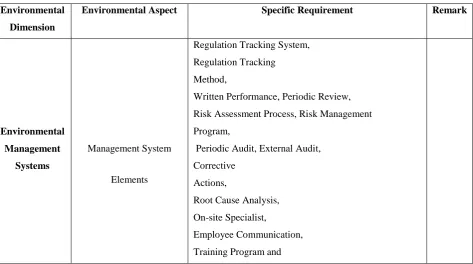
Table 1: Environment audit check sheet for electronics industry
Environmental Dimension
Environmental Aspect Specific Requirement Remark
Environmental Management
Systems
Management System Elements
Regulation Tracking System, Regulation Tracking
Method,
Written Performance, Periodic Review, Risk Assessment Process, Risk Management Program,
Periodic Audit, External Audit, Corrective
Actions,
Root Cause Analysis, On-site Specialist,
766 | P a g e
Measurement,
Performance Communication,
Method of Performance Communication
Legal
Compliance
Environmental Permits
Program and Procedures, Applicable Law Compliance, Government Inspection Frequency, Permits Violations,
Any legal notice and its CAPA
Hazardous Substances
Hazardous Material in Manufacturing Operations, Training,
Reduction Plan for Hazardous Materials, Hazardous Waste,
Reduction Plan for Hazardous Waste Wastewater and Solid
Waste
Type of Wastewater,
Wastewater Management Plan, Solid Waste Management Plan,
Wastewater and Solid Waste Reduction Program
Airborne Emissions
Airborne Emissions, Airborne Emission Management Program, Airborne Emissions Reduction Program, Green House Gas (GHG) Reduction Program, Mobile Source Emissions Program
Cleaner
Production Pollution Prevention
Systematically Pollution Reduction Program, Systematically Resource Reduction Program, Power Consumption Reduction of Product, Environmental Impacts Assessment Program, Awards in Pollution Prevention
Product Content
Materials List, ROHS Compliance,
Material Management Program, Materials Phase Out Program, Material Integrated
Operation, Rejected or Banned, Recycled Materials
Program, Information Disclosure Program, Work with Suppliers,
767 | P a g e
Extended
Responsibility Buy back policy
Buy back policy status,
Previous results of buy back products year wise
V. GOOD / BEST PRACTICES
5.1
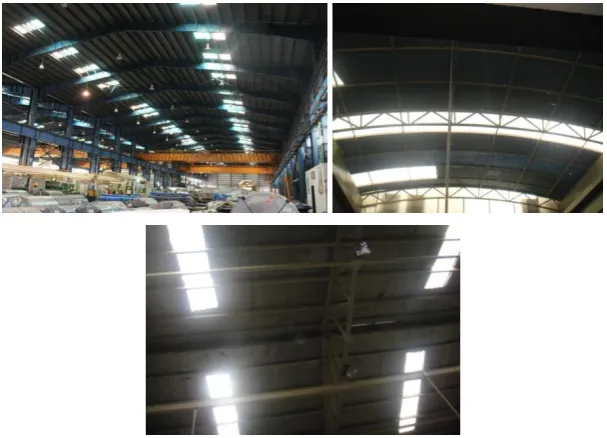
Use of Eco Ventilators for adequate air change in sheds. There by reducing the power requirement.Figure 5.1: Eco Ventilator
5.2 Use of Polycarbonate sheets for sheds in factory buildings for natural lighting
Figure 5.2: Polycarbonate sheets
768 | P a g e
Figure 5.3: Light Pipe
5.4 One of the buildings of the factory runes on solar power.
Figure 5.4: Solar Power system
5.5 Increasing the bus shuttle for farer locations (current 30 Numbers Plan 38 Numbers) 5.6 Pool car concept department wise to reduce pollution.
5.7 Nearby colony for out station and Korean employees walking distance. 5.8 Spreading awareness in school children's by CSR activity.
5.9 Video Training on environment and energy saving for Factory Employees.
5.10 Reward and recognition by Factory Head to energy manager and Team of the month. 5.11 Development of nearby factory environment by planting and adopting saplings. 5.12Waste Management
5. 12. 1 Minimizing waste at the source by lean manufacturing process.
5. 12. 2 Waste reduction by the concept of recycling trolley.(Not using cardboard)
5. 12. 3 Waste reduction by innovative idea generation.(1 idea b every team every month compulsory) 5. 12. 4 Segregation of waste at the source.
5. 12. 5 Waste handling training to all employees and waste handlers. 5. 12. 6 Dedicated storage for different type of waste.
769 | P a g e
VI.
AUDIT FINDINGS & RECOMMENDATIONS
6.1 Out Door Units of Air condition were installed inside plant and the internal temperature is rising because hot air is generated in the air conditioned area in B Building. (Wastage of natural resources)Recommendation- Outdoor unit of AC should be installed outside the building.
Figure 6.1: Audit observation 1
6.2 Hazardous waste disposal is present but micro level segregation of the different waste is not being done properly as empty 250 ml Bottle of a toxic chemical (Lock Pep & blocker )was found in the plastic waste area. Recommendation- Training should be given to all scrap handlers, shop floor employees and all housekeeping staff should be given about types and segregation of waste.
Figure 6.2: Audit observation 2
6.3 Air leakage was observed at 2 locations person was not using air gun for cleaning with compressed air and air was continuously getting leak from the air hose pipe.
770 | P a g e
Recommendation- All these type of sources to be identified and air leakages should be provided and continuous monitoring of the same.
6.4 Noise level at few places like in compressor motor line was very high more than 90db. Ear Plug has been given to the workers but they are also not using them properly.
Recommendation- Acoustic enclosures should be provided for such machinery and proper PPES usage training should be given to the staff.
6.5 The Local ventilation system outdoor duct of the Liquor pasting stage is not outside the factory roof the Liquor fumes are not getting out side they are circulating inside the B building area.
Recommendation- All such areas should be identified and the exhaust of the ventilation system should be outside the production area.
6.6 During the audit of the canteen it was observed that the food was being wasted in a very large quantity by some of the employees.
Save food campaign should be started in the canteen during lunch hours and save food displays should be incased in the dining area for increasing awareness about saving food in the employees.
6.7 During random questioning with the canteen staff it was noticed that they were not aware about the dead rodent disposal procedure i.e. they were throwing them in the organic waste bins.
Recommending – Dead rodents and insects should be buried inside the soil. So that harmful bacteria and viruses doesn’t spread.
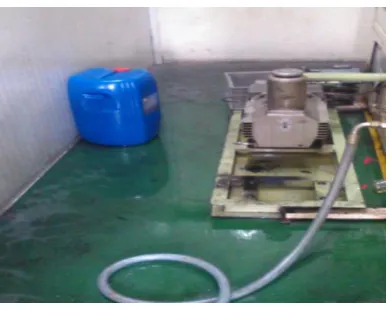
6.8 Oil leakage observed in oil purifier machine in C Building Compressor line building. (Chances of land and water pollution and)
Recommendation- All such areas should be identified inside the plant and the oil leakage to stop by continuous preventive maintenance and leakage to be contained inside a containment tray and it should be cleaned with the help of saw dust and it should be disposed under hazardous waste.
771 | P a g e
6.9 Daily scrap Quantity generation is not listed In the Group impact and risk assessment sheet for some locations In MWO line.
Recommendation- All the waste generated in the line should be listed in Group impact and risk assessment sheet it will help the organization to find out the significant aspect and risks so that organization can take management programs accordingly.
6.10 In HSD storage yard there is no trench for containing the leakage during unloading from the tanker. Recommendation- There should be trench and pit in the unloading area of the HSD yard which will help to contain the Diesel leakage if occurs while unloading and helps preventing soil pollution and fire
Figure 6.5: Audit observation 5
REFERENCES
Books:
[1] Harrison L. Lee, Environmental,health and safety auditing
[2] Shrivastava A. K., Environment auditing.
[3] Harrison L. Lee, Environmental, health and safety auditing
Web links:
[4] https://en.wikipedia.org/wiki/Environmental_audit.
[5] http://www.snh.org.uk/publications/on-line/advisorynotes/45/45.htm.
[6] http://www.environmentalauditors.com.au/.