Available online: https://edupediapublications.org/journals/index.php/IJR/ P a g e | 81
Using Stochastic Computing To Implement Logical Bit Arithmetic Operations
and Design of an Architecture for Synthesizing Polynomial Functions
GATTU ASA PRASANTHI 1, CH.SRI GIRI 2
1PG Student, Dept. of ECE, GODAVARI INSTITUTE OF ENGINEERING AND TECHNOLOGY,
Rajahmundry, East Godavari, India.
2Asst. PROFESSOR. Dept. of ECE, GODAVARI INSTITUTE OF ENGINEERING AND
TECHNOLOGY, Rajahmundry, East Godavari, India.
ABSTRACT:
Stochastic computing is a random
probability distribution; it performs on low
cost, low power and low error tolerance.
Most of the digital systems operate on
binary representation of data i.e., binary
radix. In this binary radix representation
higher order bits weighted more than lower
order bits. In proposed approach we
implement logical bit arithmetic operations
using stochastic logic for better performance
and the precision length of bit stream
increases for better precision and increase in
computation time. Compared to
conventional binary radix representation
stochastic logic is easy to implement and
they occupies less area ,power reduction and
hardware cost is low, Complex operations
can be performed in simple stochastic logic.
INTRODUCTION:
Now a day, modern computing is
constructing with the requirements like
small size, low power consumption and high
reliability. So in this paper we proposed a
stochastic computing arithmetic operation.
Stochastic computing operates on low area;
low power and high latency. Stochastic
computing paradigm is a low cost method
alternative to conventional binary
representation. The computation performed
on data represents in probability distribution
usually randomized bit streams. Stochastic
computing can be applied in the fields like
image processing-(edge detection, image
thresholding, mean filtering…etc.,), neuron
Available online: https://edupediapublications.org/journals/index.php/IJR/ P a g e | 82 decoding), Nano technology and signal
processing small fluctuations of errors
tolerated but large errors are catastrophic.
Soft errors caused by ionizing radiation
when increasing a semiconductor is a main
thing in circuits operate in harsh
environments. Randomness is a main
concern in stochastic computation.
Randomness available in broad casting areas
like communication and cryptography can
perform with low complexity. Good pseudo
randomness simulation obtains in random
physics, quantum physics and biology.
We propose a new technique for
computation is stochastic logic. Stochastic
logic designs transform definite inputs and
outputs Boolean integers and fractional
integers are same. Synthesizing the circuits
can be perform on logic to produce
probability values input and ouput. The
major approach is stochastic computing is
applicable for randomized algorithms. The
proposed approach we provide better error
tolerance, low area and high power of design
to implement8-bit arithmetic operations
using stochastic logic computation. To
implement this architecture introduce a new
8 bit accurate stochastic circuits addition,
multiplication, subtraction and division
arithmetic operations performed. Stochastic
computing requires increase in the precision
requires an exponentional increase in bit
stream length and corresponding exponential
increase in computation time to change the
numerical precision of stochastic
computation from 4 to 8 bits requires
increasing bit-stream length from 2^4 =16
bits to 2^8 = 256 bits.
Related work:
Development of SC is started in 1956's by von
Neumann; they defined fundamental concepts of
probabilistic logic design. Modular redundancy
technique is majorly used for fault tolerance.
Memory based subsystems and communication
purpose error correcting codes are used for both on
chip and off chip. Probabilistic methods are
appearing in system design and circuit level
synthesizing. The main aim to applying probability
is characterizing the unceratinity.For better
performance of error tolerance through software
mechanisms statistical timing analysis used. Error
tolerance is mainly considered in application field.
The proposed approach is mainly for less power
consumption in hardware design. It is also applied
Available online: https://edupediapublications.org/journals/index.php/IJR/ P a g e | 83 simulations and they are tolerated errors. Presented
a specific architectural design for data path
computations, the main contribution is design a
stochastic architecture is to detect the fault errors
in previous approach. The new logic synthesis
methodology the computation is performed in
statistical probability distributions. Randomness
process performed in serial or parallel bit streams
in bit level. Accurate results depend on the
statistics probabilities not their bit level. In the real
valued based applications computation perform in
analog character but they are implemented in
digital components. This is for hardware based
methods for error tolerance and memory based
subsystems (error correcting codes).the proposed
methodology is synthesizing the arbitrary
polynomial functions implemented through
Stochastic operation and also arbitrary continuous
non polynomial expressions can be obtain through
stochastic logic. Complex operations performed
through probabilistic methods of stochastic
operation.
Preliminaries:
Stochastic logic:
Stochastic operations performed at logic
level in randomized bit streams in two ways
either serial or parallel. Serial bit streams
signals are performed in probabilistic in time
and parallel bit streams they are performed
in space. The bit streams carrying digital
values zeros and ones and they are proceed
to binary logic gates AND, OR. The signal
is obtain through statistical distribution
through logical values. Computation in
Boolean domain represent probabilistic in
real domain. Randomized bit streams the
stream 'N' bits containing N1 ones and N-N1
zeros and stochastic number denoted as
N1/N treated as probability. The main
advantage of a stochastic computation is
highly tolerated fault errors.
Existing method:
Conventional binary representation the
logical multiplication and
addition/subtraction performed in Boolean
domain. In such cases the single bit flips the
error result is high. For example
x1=(0.110)2,x2=(0.100)2 are inputs and
output isx3=(0.100)2 .the same process
x2=(0.011)2 single bit flip the resulted
Available online: https://edupediapublications.org/journals/index.php/IJR/ P a g e | 84 Fig.1: conventional binary implementation
Fig.2: conventional binary implementation
when one single bit flips error
Proposed method:
Stochastic logical computation process the
logical synthesizing arithmetic operations
are obtain in probabilistic domain. The
arithmetic operations are simple logical
multiplication, addition. stochastic
computing there are two representations
available, they are unipolar representation a
real-valued number x (0 ≤ x ≤ 1) is
represented by stream in which each bit has
probability x of being one and probability 1−
x of being zero. In the “bipolar”
representation, a real-valued number y (−1 ≤
y ≤ 1) is represented by a stream in which
each bit has probability (y + 1)/2.The main
advantage of using Stochastic bit streams is
the lack of a place value as compared to the
conventional binary MSB and LSB.the
environment gets corrupted by bit flips and
suppose that the significant bit gets flipped
with binary radix encoding. Here, the
relative error will be 2^m-1/2^m =1/2.
However, in stochastic encoding, the data is
represented as the fractional weight on a bit
stream of length 2^m. Thus the single bit
flip changes the result only by ½^m.
Conventional binary radix is a positional
encoding and maximally compressed.
Stochastic is a uniform encoding and
uncompressed.
Multiplication:
Stochastic multiplication can be
implemented with less hardware compared
to conventional representation.
Multiplication process need only one AND
gate. Assuming that x1, x2 two input
independent bit streams, the output bit
stream x3 is
X3=p (x3=1) = p (x1=1 and x2=1)
Available online: https://edupediapublications.org/journals/index.php/IJR/ P a g e | 85 =x1.x2
Consider two uncorrelated, independent
inputs x1=10110111, x2=00111001
Input probabilities of bit stream length m=8,
the resolution is 1/8.
Probabilistic representation= number of
one’s / total stream bit stream length.
P(x1) =6/8, p(x2) =4/8 then
P(x3) =p(x1 and x2) =3/8=00110001
Stochastic multiplication obtains only in
unipolar representation and inputs are
uncorrelated or indepented bit streams.
Resulted output x3=x1.x2. In case the inputs
are correlated bit streams then the resulted
output is same .stochastic multiplication of
two correlated inputs x1=10110111,
x2=10110111then x3=101101111 so they
didn’t applicable to multiplication process.
Multiplication is complex in binary
positional representation and easy in
stochastic computation. Prior approach
imposes a computational complex in
arithmetic for each operation essence
operands decoded and weighting higher
order bits high and less in lower order bits.
The proposed approach is uniform and no
re-encoding are required to operate the
value
FIG.3:STOCAHSTIC MULTIPLICATION
USING AND gate
Stochastic representation in single bit flip
result the accurate value 3/8≈2/8 .stochastic
representation bit flip result will be accurate
error result. In case of conventional
representation x1= (0.110)2, x2= (0.100)2
the resulted output x3=(0.100)2,when single
bit flips x1=(0.110)2 and x2=(0.010)2
output is x3=(0.010)2 resulted output is not
exact or accurate value. The output fault
error is high.
Fig.4: simulation results of stochastic
Available online: https://edupediapublications.org/journals/index.php/IJR/ P a g e | 86
Scaled addition:
General addition is not feasible to add two
probability values directly, the result value
greater than one, cannot be represented
probability value. So the proposed
approaches perform scaled addition.
Stochastic operation of scaled adder
operating on real valued numbers. Consider
two inputs multiplexer the output value
based on third selecting input value.
Assuming two x1, x2 and S are independent
stochastic bit streams the output bit stream
x3 is
X3=p(x3=1)
=p(s=1 and x1=1) + p(s=0 and x2=1)
=p(s=1) p(x1=1) + p(s=0) p(x2=1)
=s.x1+ (1-s).x2
Stochastic addition performed independent
inputs.x1=01000000, x2=10110110,
s=00100001 output x3=10010110.
P(x3) =p(s=1) p(x1=1) +p(s=0) p(x2=1)
=p (2/8) p (1/8) +p (2/8) p (5/8)
P(x3) =p (4/8)
Stochastic representation of multiplexer
scaled addition performs scaled factor s for
x1 and (1-s) for x2.
The conventional representation of MUX
implemented is x3=(x1^ s) w(x2 ^-s).
Consider two independent bit streams
x1=(0.001)2 ,x2=(0.101)2, selecting input
s=(0.010)2 output is x3=(0.100)2.
Fig.5: simulation results of stochastic
addition .
Example p(x1) =01000000=1/8, p(x2)
=10110111=6/8, p (s) =00100001=2/8, the
resulted output p(x3) =10010110=4/8.
Stochastic scaled addition using MUX
,when single bit flip error result the accurate
or exact value When conventional
representation single bit flips error is x1=
(0.001)2, x2= (0.110)2, s=(0.010)2 then x3=
Available online: https://edupediapublications.org/journals/index.php/IJR/ P a g e | 87 FIG.6: SCALED ADDITION USING MUX
Scaled subtraction:
Scaled subtraction in stochastic logic
implementation using MUX and not gate,
subtraction can be obtained in bipolar format
because negative value representation can be
done in bipolar format. Unipolar format
negative representation bit streams cannot
be done. The scaled subtraction inputs are
bipolar format and selective line input will
be unipolar format. Scaled subtraction is
similar to scaled addition only one input
stream NOT gate will be connect to
MUX.based on this logic subtraction
performs as
P(x3) =p(x1 =1) p(s=1) —p(x2=0) p(s=0)
=x1.s-(1-s).x2
Assuming p(x1) =0100110=4/8, p(x2)
=10110111=6/8, p(s) =00100001=2/8, the
output p(x3) =010010001=3/8
Fig.7:SCALED SUBTRACTION USING
MUX
Fig.8: simulation results for stochastic
subtraction
Consider p(x1) =01001101=4/8, p(x2)
=10110111=6/8, p(s) =00100011=3/8, the
single bit flips error p(x3)
=01001001=3/8.single bit flips accurate
result.
Stochastic division:
In this paper proposes a new division
technique is CORDIV (correlated division)
Available online: https://edupediapublications.org/journals/index.php/IJR/ P a g e | 88 cost is low in CORDIV divider other than
conventional dividers.CORDIV operate on
fallowing two keys 1.The division
probability px1/x2 defines the x1,x2
division probability px1,x2/px1
2. Correlated inputs x1, x2 efficiently
transform this division operation px1/px2.
This process is achieving better accuracy.x1,
x2 are maximally correlated bit streams if
px1<px2 then px1x2=px1
It reduces toPx1/x2=px1/px2
Correlated division process only one random
number generator is used so the area and
cost is low.
If correlated division condition Z=x1/x2.the
probability representation is Pz=px1/px2.the
selective line l=1 MUX is controlled by x2,
when x2=1.same way x2=0 the output result
stored in D-flip-flop previous bit. This
probability is PDFF=px1/px2.the output
MUX is pz=px2.px1/px2+
(1-px2).pDFF=px1/px2. When l >1padding
memory can be realized in several ways. It
can simply be an l bit lfsr that stores l
consecutive zeros in z.D-flip flop is
feedback in MUX and x2 is 0 MUX select
the line from D-flip flop.z padded memory
is continuously stored consecutive 0s in
shift register. To avoid such repetition, the
divider must have large l bit padding
memory when x2 have many consecutive
zeros. Large Padding memory adds
significantly l increase. In some cases for
short stochastic numbers l is not usually
preferable .l clock cycles needed to warm
up to fill the effective bits in padding
memory.
Assuming correlated inputs x1=1001 0100
0000 0000=3/16, x2=1001 1100 0001
0000=5/16, the output
pz=px1/x2=3/5=10/16=1111 0111 1110
0000.
Fig.9: STOCHASTIC DIVIDER
Available online: https://edupediapublications.org/journals/index.php/IJR/ P a g e | 89 The advantage of division circuit is
conditional probability of x1, x2 and
quotient x1x2 and the probability of x2.
Fig.10: simulation results for division
circuit
Synthesizing functions:
Consider the function y=x1x2S+x3(1-S)
implementing these functions using
stochastic arithmetic logic circuits.
Fig.11: stochastic implementation function
y=x1x2s + (1-s) x3.
Consider SNG inputs x1=2/8, x2=4/8,
x3=5/8 and selective line s=3/8 and output
y=5/8. Stochastic circuit function is
implemented by using stochastic
AND,MUX.
Fig.12: conventional binary representation
Conventional binary representation using
function y=x1x2S + (1-s) x3 is implemented
by addition, subtraction and multiplication
circuits. Compare to conventional
representation stochastic is to implement is
area occupation is less.
Available online: https://edupediapublications.org/journals/index.php/IJR/ P a g e | 90 Stochastic computation performs in
synthesizing polynomials by using adder,
mux operations. The proposed method is for
implementing arbitrary polynomial
functions. Synthesizing polynomial
coefficients must be less than 0 or greater
than 1.The polynomial function maps from
the unit interval to values in the unit
interval. Large and low coefficients are
implemented by stochastic logic. The first
step is implement synthesizing polynomial
is transforming a power-form polynomial
into Bernstein polynomial. Its degree n is of
the form
Where b i,n is Bernstein polynomial c
oefficient
Converting power form polynomial of
degree n, in to Bernstein
polynomial of degree n
the conversion from a i,n polynomial into b
i,n polynomial the closed form is
Fig.13: Stochastic Architecture for
synthesizing polynomials
The stochastic consist of adder block and
multiplexer. And inputs of the adder sets as
t0,t1,...tn ,the data inputs of MUX is
z0,z1,....zn.The output of the adder is
selective line input to the MUX. The input
bit streams are independent and P (Xi=1) =
xi ɛ (0,1)for 1 ≤ i≤ n and P (Zi=1) =Zi €
(0,1) for 0 ≤ i ≤ n.
For example: g(t)=3/4-t+3/4t^2 maps the
unit interval itself. It can be converted
polynomial of degree 2
Available online: https://edupediapublications.org/journals/index.php/IJR/ P a g e | 91 Fig.14: A generalized MUX implementing
the polynomial function
RESULTS:
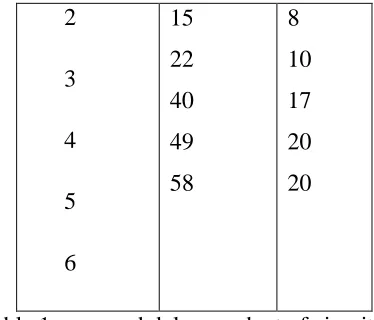
Stochastic implementation of area A(n) and
D(n) delay product circuits compute the
Bernstein polynomial degree n=2,3,4, and
5.then
A( n)D(n)2^M,
Where 2^M accounts for length of the bits
tream.
Degree n of
Bernstein
polynomials
Area Delay
product
2
3
4
5
6
15
22
40
49
58
8
10
17
20
20
Table 1: area and delay product of circuit
compute Bernstein polynomials of degree
2,3,4,5 and 6
Table2: shows the area delay product for
conventional and stochastic implementation for
polynomials of degree n= 3, 4 and 5 resolutions
2^-M. M=7, 8, 9, 10,the last column shows the
Available online: https://edupediapublications.org/journals/index.php/IJR/ P a g e | 92 area and delay product of stochastic is always
less than that of conventional implementation.
Fig: average output error rate of stocahstic and
conventional implementations different error
ratios.
Conclusion:
The computation that we are advocating in
this paper has a pseudo analog character,
reminiscent of computations performed by
physical systems such as electronics on
continuously variable signals such as
voltage. In our case, the variable signal is
the probability of obtaining a one in a
stochastic yet digital bit stream. Indeed, our
system is built from ordinary, cheap digital
electronics such as CMOS. Digital
constructs in CMOS operate on physical
signals
such as voltage, of course. However, they
are designed with the premise that these
signals can always be unequivocally
interpreted as zero or as one. This is
certainly counterintuitive: why impose an
analog view on digital values? As we have
outlined in this paper, it might often be
advantageous to do so, both from the
standpoint of the hardware resources
required as well as the error tolerance of the
computation .Many of the functions that we
seek to implement for computational
systems such as signal processing are
arithmetic functions, consisting of
operations like addition and multiplication,
subtraction and division. Complex functions,
such as exponentials and trigonometric
functions, are generally Computed through
polynomial approximations, so through
multiplications and additions. Proposed
approach first to choose the problem of
synthesizing arbitrary polynomial functions
through logical computation on stochastic
bit streams. The synthesis results for our
stochastic implementations of a variety of
Available online: https://edupediapublications.org/journals/index.php/IJR/ P a g e | 93 product is comparable to that of
conventional implementations with adders
and multipliers. Since stochastic bit streams
are uniform, with no bit privileged above
any other, the computation is highly error
tolerant. As higher and higher rates of bit
flips occur, the accuracy degrades
gracefully. Indeed, computation on
stochastic bit streams could offer tunable
precision: as the length of the stochastic bit
stream increases, the precision of the value
represented by it also increases. Thus,
without hardware redesign, we have the
flexibility to tradeoff precision and
computation time. In contrast, with a
conventional binary radix implementation,
when a higher precision is required, the
underlying Hardware has to be redesigned.
Note that we have been evaluating our
stochastic implementations under the
conservative assumption that the clock rate
will be the same as that of a conventional
implementation. However, with much
simpler hardware— for instance a single
AND gate performing a complex task like
multiplication — we could potentially
implement computation with much higher
clock rates, particularly if it is pipelined
References:
1. Nepal, K., Bahar, R. I., Mundy, J.,
Patterson, W. R., and Zaslavsky, A. 2005.
Designing logic circuits for
probabilistic computation in the presence of
noise. In Proceedings of the Design
Automation Conference.
485—490.
2. oppelbaum, W. J., Afuso, C., and Esch, J.
W. 1967. Stochastic computing elements
and systems. In Proceedings
of the AFIPS Fall Joint Computer
Conference. 635—644.
3. M. Mitzenmacher and E. Upfal,
Probability and Computing : Randomized
Algorithms and Probabilistic Analysis.
Cambridge University Press, 2005
4. B. Gaines, “Stochastic computing
systems,” in Advances in Information
Systems Science. Plenum, 1969, vol. 2, ch.
2, pp. 37—172.
5. S. Narayanan, J. Sartori, R. Kumar, and
Available online: https://edupediapublications.org/journals/index.php/IJR/ P a g e | 94 in Design, Automation and Test in
Europe,2010, pp. 335—338..
6. Naderi, A. et al., “Delayed stochastic
decoding of LDPC codes,”IEEE Trans.
Signal Proc., vol. 59, pp. 5617-5626, 2011
7. P. Li and D. Lilja, “Using stochastic
computing to implement digital image
processing algorithms,” in Proc. Int. Conf.
Comput. Design,
2011, pp. 154—161.
8. A. Alaghi and J. Hayes, “Exploiting
correlation in stochastic circuit design,” in
Proc. IEEE 31st Int. Conf. Comput. Design,
2013, pp. 39—46
9. K. Kim, J. Lee, and K. Choi, “An
energy-efficient random number generator for
stochastic circuits,” in Proc. 21st Asia South
Pacific Design Autom. Conf. (ASP-DAC),
Jan. 2016, pp. 256—261.
10. pages 261-267,1994. S.W. Golomb,
Shift Register Sequences, Holden-Day, San
Francisco, 1967.
11.J. Tomberg and K. Kaski, “Feasibility of
Synchronous Pulse-Density Modulation