Gesture Control Robotic Vehicle
D. Venkat Rahul[1] , G. Udayabhaskar[2] , N. Sai Raghava[3] , Y. Midhun Kumar[4] Project Guide: Mrs. K. Ranirudrama, Assoc. Professor
Lakireddy Balireddy College Of Engineering
Abstract:
Robots plays a major role in all human activities like house maintenance, aerospace, factories, lifting of heavy equipment, etc.. It will also help to do the risky jobs which may not be able to done by humans such as detecting, mining etc., In the case of detecting, the explosives plays main role. Earlier, in the bomb detection there may be chance of human loss in the process. Gesture[1] is a most
natural, expressive way of
communication between Human and Computer in real system[1]. We naturally use various gestures to express our own intension in everyday life. We formulated the relation between hand gestures and Accelerometer and designed a new way of communicating robot with hand gestures in different modes. Based on hand gestures the output is generated by the Arduino software. It is secure to use this system in Z category security and bomb squad security. In this project, a robotic vehicle which consists of sensors for detection purpose and accelerometer for gesture controlling and with the Arduino UNO. The Arduino is the main controlling element of the robotic vehicle. Embed the program into the Arduino kit for the required action. After dumping, run the program in the IDE Arduino software for
gestures. The main objective of the project is to implement the robotic vehicle
for metal detecting, bomb identifying, obstacle avoiding using simple gestures and reduction of human activities in dangerous environment of employing this robot for 100-200m range.
Keywords: Robots, Accelerometer,
Arduino.
I.Introduction
Nowadays, robotics was becoming one of the most advanced in the field of
technology. The applications of
robotics mainly involve in automobiles, medical, construction, defense and also used as a fire fighting robot to help the people from the fire accident. But, controlling the robot with a remote or a switch is quite complicated. So, a new project is developed that is, an accelerometer interfaced gesture control robot. The main goal of this project is to control the movement of the robot with hand gesture using accelerometer.
devices but can also be exploited to extend their functionality.
An important aspect of a successful robotic system is the Human-Machine interaction. In the early years the only way to communicate with a robot was to program which required extensive hard work. With the development in science and robotics, gesture based recognition came into life. Gestures[3] originate from any bodily motion or state but commonly originate from the hand. Gesture recognition can be considered as a way for computer to understand human body language. This has minimized the need for text interfaces and GUIs (Graphical User Interface). Gesture recognition technologies[3] are much younger in the world of today. At this time there is much active research in the field and little in the
way of publicly available
implementations. Several approaches have been developed for sensing gestures and controlling robots. Glove based technique is a well-known means of recognizing hand gestures. It utilizes a sensor attached to a glove that directly measures hand movements. A Gesture Controlled robot is a kind of robot which can be controlled by hand gestures and not the old fashioned way by using buttons. The user just needs to wear a small transmitting device on his hand which includes a sensor which is an accelerometer in our case. Movement of the hand in a specific direction will transmit a command to the robot which will then move in a specific direction. The
transmitting device includes a
Comparator IC for assigning proper levels
to the input voltages from the
accelerometer and an Encoder IC which is used to encode the four bit data and then it will be transmitted by an RF Transmitter module. At the receiving end an RF Receiver module will receive the encoded data and decode it by using a decoder IC. This data is then processed by a microcontroller and passed onto a motor driver to rotate the motors in a special configuration to make the robot move in the same direction as that of the hand.
II.METHODOLOGY
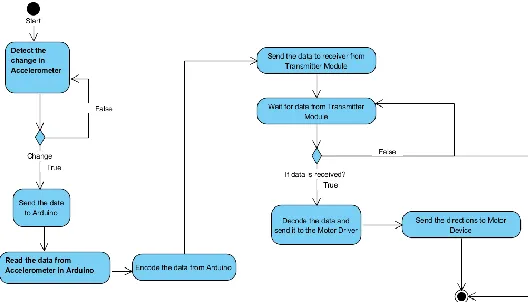
In this project, it was having two methods used for two sections. Whereas, firstly we consider the transmitter section and then receiver section.
Figure 1:Transmitter and Receiver Section
Transmitter section:
In this transmitter section, considering a wireless remote which was respective of the car is used.
consists of RF module along with 4 tap buttons.
As per the project, developing this wireless remote car to gesture
control using a adxl335
Accelerometer.
In order to connect the RF module with accelerometer it was not possible. For that using 4-module relay as a channel between the accelerometer and RF module.
Accelerometer read the force of hand for respective gestures using 3-dimensioal co-ordinates (X, Y, Z).
Figure 2:Accelerometer ADXL335
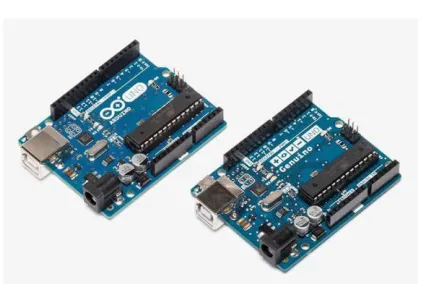
After calculating the respective gesture coordinates, they have to dump into the Arduino using IDE Arduino software.
Figure 3:Arduino
If the gesture is forward then it had to satisfy the respective coordinates. After that it recognizes as respective gesture and it sends the signal to RF module to respective tap button using channel of 4-module relay.
Figure 4:4-Module Relay Circuit
Using this method, the
transmitter sends the signal to receiver end.
Receiver Section:
and servo motor for movement of wheels.
Figure 5:DC motor
From the transmitter, receiver receives the signal as respective gesture and according to that it runs the wheels.
In the car we use motor driver for back wheels and servo motor for front wheels.
Mainly it needs a good antenna for long range communication.
In the metal detector, it had a buzzer which buzzes an alarm if any metal was detected.
In order acquire the use of metal detector, range of communication might be short.
At the front end of car, inserting a metal detector for detecting metal if any in the path used by car.
III.EXISTING SYSTEM
In the current system, remote control car is operated using respective remote. Using this
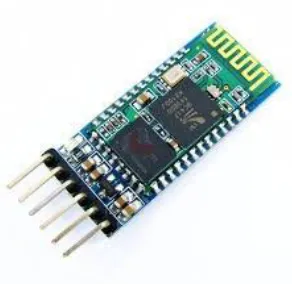
Remote might not be helpful for handicapped people. In existing system there will be a Bluetooth module which will cover a very small area. The connectivity of Bluetooth is also very poor in terms of accuracy.
Figure 6:Bluetooth Module
Whereas for gesture control there will be only with wired connections and which
includes complex methods like
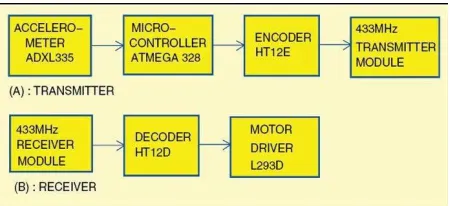
Figure 7:Block diagram for existing system
IV.PROPOSED SYSTEM
The proposed system is to hack a remote controlled car and use it directly along with the accelerometer for the gesture control. This particular model is a bit difficult to be made and
is low expensive. This system only consists of the car, remote, accelerometer and Arduino.
The accelerometer is attached to the hand of a person who is the operator, which in turn is
connected to the Arduino. The
movements of the hand accordingly will appear on the screen of the laptop indicating the direction of the movement. This movement in transferred
to the car’s remote which in turn activates the car to move in that particular direction. However, in this model there might be some flaws since we are using a pre-built remote for a car. But if we overcome these flaws, this model can be used in automobiles and is very much
helpful for the handicapped people to drive vehicles.
Block diagram for Proposed System 1
Along with the gesture control, implementing metal detector for detecting metal objects is helpful for security purposes in fields of bomb detecting areas.
Installing this metal detector module in the front end of the car will be used to
identify the metal and gives buzzer sound.
CODING
The Algorithm for the model is given below
Algorithm Gesture Control:
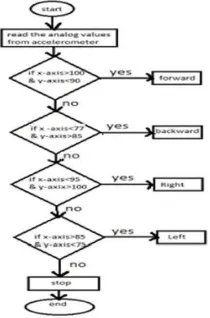
Figure 9:Algorithm for Gesture control model
1. Get reading of accelerometer all three axes values.
2. Categorize those values by analyzing them in every gesture to be implemented. 3. Get reading from accelerometer. 4. If gesture==left, call Left
5. If gesture==right, call Right 6. If gesture==down, call Forward
7. If gesture==up, call Backward 8. If gesture==still, call Stop 9. Go to step 3
Algorithm Left:
1. Put all pins to low 2. Put left pin to high 3. return
Algorithm Right:
1. Put all pins to low 2. Put Right pin to high 3. return
Algorithm Forward:
1. Put all pins to low 2. Put forward pin to high 3. return
Algorithm Backward:
1. Put all pins to low
2. Put Backward pin to high 3. return
Algorithm Stop: 1. Put all pins to low 2. Return
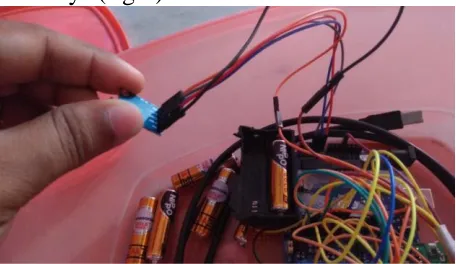
Figure 10:Right Gesture
The figure shown above represents the car turning towards right and the lights are indicated when the hand is tilted towards right. That is, since the gesture is right, the movement is
sideways (right).
Figure 11:Foward Gesture
The figure shown above represents the car moving when the hand is tilted downwards.
That is, since the gesture is down, the movement is forward.
Figure 12:Backward Gesture
The figure shown above represents the car moving when the hand is tilted backwards.
That is, since the gesture is down, the movement is backward.
Figure 13:Left Gesture
The figure shown above represents the car turning towards left and the lights are indicated when the hand is tilted towards left. That is, since the gesture is left, the movement is sideways (left).
DIRECTION ACCELEROMETER
Forward +y Backward -y Right +x Left -x Stop Rest
CONCLUSION
We achieved our objective without any hurdles i.e. the control of a robot using gestures.
The robot is showing proper responses whenever we move our hand. Different Hand
gestures to make the robot move in specific directions are explained and can be changed
according to user needs.
FUTURE WORK
The on-board batteries occupy a lot of space and are also quite heavy. We can either use some alternate power source for the batteries or replace the current DC Motors with ones which require less power. Secondly, as we are using RF for wireless transmission, the range
is quite limited; nearly 50-80m. This problem can be solved by utilizing a GSM module for wireless transmission. The GSM infrastructure is installed almost all over the world. GSM will not only provide wireless connectivity but also quite a large range. Thirdly, an on-board camera can be installed for monitoring the robot from faraway places. All we need is a wireless camera which will broadcast and a receiver module which will provide live streaming.
REFERENCES
[1] Chan Wah NG, Surendra Ranganath, Real-time Gesture Recognition System and Application Image And Vision Computing (20): 993-1007,2002.
[2] Sergios Theodoridis, Konstantinos
Koutroumbas, Pattern Recognition,
esevier Publication, Second Edition,2003. [3] Seyed Eghbal Ghobadi, Omar Edmond Loepprich, Farid Ahmadov Jens Bernshausen,Real Time Hand Based Robot Control Using Multimodal Images, Iaengm International Journal Of Computer Science, 35:4, IJCS_35_4_08, nov2008.
[4] Aswath S, Chinmaya Krishna Tilak, Amal Suresh and Ganesha Udupa, “Human Gesture Recognition for Real-Time Control of Humanoid Robot”, International Journal ofAdvances in Mechanical and Automobile Engineering (IJAMAE), Vol- 1, Issue 1, PP.96-100, (2014).
[5] Shruthi B. N, Shivraj, Sumathi S, “Hand Gesture Based Direction Control
of Robocar using Arduino
Microcontroller”, International Journal of
Recent Technology and
Engineering(IJRTE), Volume-3, Issue-3, PP.-32-35, July2014.
[6] Vicky Somkuwar, Roshan Gabhane,
Sandeep kakde, “Design and
Implementation of
Gesture Controlled Robot using Flex sensor and Accelerometer”.
[7] Gaurav Gautam, Abhijeet Ashish, Anil Kumar, Avdesh, “Wirelessly Hand Glove Operated Robot”, International Journal of Advanced Research in
Engineering (IJARECE), Volume-3,
Issue-11, PP.-1546-1547, November
2014.
[8] Aditya Purkayastha, Akhil Devi Prasad, Arunav Bora, Akshay kumar Gupta,Pankaj singh, “Hand Gestures Controlled Robotic Arm”, Journal of International Academic Research for Multidisciplinary, Vol-2, Issue-4, PP.-234-240, May 2014.
[9] Love Aggarwal, Varnika Gaur, Puneet Verma, “Design and Implementation of Wireless Gesture Controlled Robotic Arm with Vision”, International Journal of Computer Application, Vol-79, No.-13, PP.-39-43, October2013.
[10] Harish Kumar Kaura, Vipul Honrao, Sayali Patil, Pravish Shetty, “Gesture
Controlled Robot using Image
Processing”, International Journal of
Advanced Research in Artificial