FRAME ALIGNMENT AND INSERTION ALGORITHM FOR VIDEO STREAM OVER MOBILE NETWORK
YOANDA ALIM SYAHBANA
A thesis submitted in fulfillment of the requirements for the award of the degree of
Master of Science (Computer Science)
Faculty of Computing Universiti Teknologi Malaysia
iii
iv
ACKNOWLEDGEMENT
All praise unto Allah for everything I have and for experience that I feel through this research.
I would like to thank the following persons who accompanied me during the time I was working for this degree. First and the foremost, I wish to express my sincere appreciation to my thesis supervisor, Assoc. Prof. Dr. Kamalrulnizam Abu Bakar, for encouragement, guidance, critics and advice till the end of glorious successful work.
In preparing this thesis, many people have contributed either directly or indirectly to this research. They have contributed towards my understanding and thoughts. My sincere appreciation extends to En. Herman, Edi Saputra, Oon Erixno, M. Gary Shaffer, Farah Ramadhani and others who have provided assistance at various occasions. Their views and tips are useful indeed. Unfortunately, it is not possible to list all of them in this limited space.
I am grateful to all my family members, especially my father „Alimsyahbana‟, my mother „Yunita Sudarmi‟, my sisters „Neni Syahyuti‟ and „Vina Tri Syahyuti‟ for their prayers and moral support. Finally, I would like to add
v
ABSTRACT
vi
ABSTRAK
vii
TABLE OF CONTENTS
CHAPTER TITLE PAGE
DECLARATION II
DEDICATION III
ACKNOWLEDGEMENT IV
ABSTRACT V
ABSTRAK VI
TABLE OF CONTENTS VII
LIST OF TABLES X
LIST OF FIGURES XI
LIST OF ABBREVIATIONS XIII
1 INTRODUCTION 1
1.1 Overview 1
1.2 Background of the Problem 2
1.3 Statement of the Problem 4
1.4 Aim of the Research 5
1.5 Objectives 5
1.6 Scope and Key Assumptions 6
1.7 Research Contributions 6
1.8 Organization of the Thesis 7
2 LITERATURE REVIEW 8
2.1 Introduction 8
viii
2.2.2 Contribution of Audio and Video Part 13
2.3 Video Quality in Some Perspectives 16
2.4 Approaches to Evaluate Video Quality 18
2.4.1 Subjective Video Quality Assessment 19 2.4.2 Objective Video Quality Measurement 20 2.5 Peak Signal-to-Noise Ratio (PSNR) Method 21
2.5.1 Overview of PSNR Method 21
2.5.2 PSNR Issue in Video Stream over Mobile Network 24 2.5.3 Existing Solution for the Issue 25
2.6 Summary 28
3 RESEARCH METHODOLOGY 29
3.1 Introduction 29
3.2 Research Framework 29
3.3 Solution Concept 31
3.4 Overview of Proposed Algorithm 31
3.5 Design of Experiment and Analysis 33
3.5.1 Preparation of Video Test Bed 33
3.5.2 Experiment of the Proposed Algorithm 36
3.5.3 Result Evaluation 37
3.6 Experiment Tools 38
3.7 Summary 39
4 FRAME ALIGNMENT ALGORITHM 41
4.1 Introduction 41
4.2 Design of the Frame Alignment Algorithm 41 4.3 Experiment on Frame Alignment Algorithm 47
4.3.1 Experimental Setup 47
4.3.2 Experiment Process 49
4.4 Result Analysis 57
4.5 Summary 62
5 FRAME INSERTION ALGORITHM 63
ix
5.2 Design of Frame Insertion Algorithm 63
5.3 Experiment on Frame Insertion Algorithm 68
5.3.1 Experimental Setup 68
5.3.2 Experiment Process 69
5.3.3 Benchmarking Experiment 72
5.4 Result Analysis 73
5.5 Summary 78
6 DISCUSSION 79
6.1 Introduction 79
6.2 Result Evaluation 79
6.3 Summary 83
7 CONCLUSION 84
7.1 Introduction 84
7.2 Achievement 84
7.2.1 Advantage of APSNR 85
7.2.2 Limitation of APSNR 86
7.3 Future Works 87
REFERENCES 88
PUBLICATIONS 94
x
LIST OF TABLES
TABLE NO. TITLE PAGE
2.1 Video content characteristic 13
2.2 Mean Opinion Score 19
2.3 PSNR interpretation in terms of quality 23
2.4 Summary of previous works that relates with frame loss issue 27
3.1 Original video configuration 34
3.2 Final video test bed 35
4.1 Sample of PSNR calculation result on searching window 55 4.2 Total number of frame losses in video test bed 61
5.1 Summary of frame loss position 73
5.2 Experiment result of PSNR on frame insertion algorithm 75 5.3 Measurement result from conventional PSNR 76
5.4 Measurement result from MPSNR 78
6.1 SVQA result from video test bed 80
A.1 Assessors information 95
xi
LIST OF FIGURES
FIGURE NO. TITLE PAGE
1.1 Summary of research contributions 7
2.1 Structure of literature review 9
2.2 Main layout of container 15
2.3 Illustration of I, P, and B frames in video 18
2.4 PSNR application 24
2.5 Illustration of current PSNR 25
3.1 Research methodology 30
3.2 Overall diagrams of proposed algorithms 32
3.3 Captured scene from master video ANSI T1.801.01 vtc1nw 34 3.4 Sample of (a) original video scene, (b) streamed video scene 35 4.1 Illustration of frame alignment algorithm 42
4.2 Proposed frame alignment algorithm 43
4.3 Representation original and streamed video frames 44
4.4 Issue in fixed window size 45
4.5 Window size in the frame alignment algorithm 46 4.6 Experiment process for frame alignment algorithm 48 4.7 Illustration of intentionally deleted frame in copy of original video 49
4.8 FFmpeg software 50
4.9 Sample of original video frame 51
4.10 Sample of streamed video frame 51
4.11 Sample of distorted frame in streamed video 52
4.12 Illustration for window size 52
xii
4.16 Frame loss position from preliminary experiment 58 4.17 Experiment result of frame alignment algorithm 60 4.18 Sample of segregated frame losses in video index number 3 62 5.1 Illustration of frame insertion algorithm 64
5.2 Illustration of unpaired O-frame 65
5.3 Proposed frame insertion algorithm 66
5.4 Case 1 and Case 2 of frame insertion algorithm 66
5.5 Case 3 of frame insertion algorithm 67
5.6 Experiment process for frame insertion algorithm 69 5.7 Illustration of Case 2 in frame insertion algorithm 70 5.8 Illustration of Case 3 in frame insertion algorithm 71 5.9 Illustration of measurement by conventional PSNR 72
6.1 Summary of experiment result 81
xiii
LIST OF ABREVIATIONS
4CIF - 4 Common Intermediate Format
AAC - Advanced Audio Coding
ACR - Absolute Category Rating
ANSI - American National Standard Institute APSNR - Aligned Peak Signal to Noise Ratio
AVI - Audio Video Interleave
CIF - Common Intermediate Format
CQI - Channel Quality Indicator
DCR - Degradation Category Rating
DNA - Deoxyribonucleic Acid
EURANE - Enhanced UMTS Radio Access Network Extension
FR - Full Reference
FRUC - Frame Rate Up Conversion
HSDPA - High-Speed Downlink Packet Access
HVS - Human Visual System
IPTV - Internet Protocol Television
ITS - Institute for Telecommunication Sciences ITU - International Telecommunication Union
MOS - Mean Opinion Score
MPEG - Moving Picture Expert Group MPSNR - Modified Peak Signal to Noise Ratio
MSE - Mean Square Error
NR - No Reference
NR-B - No Reference Bit
xiv
NTIA - National Telecommunication and Information Administration
PC - Pair Comparison
PMCC - Pearson Product Moment Correlation Coefficient PSNR - Peak Signal to Noise Ratio
QCIF - Quadrature Common Intermediate Format
RGB - Red Green Blue
RNA - Ribonucleic Acid
RR - Reduced Reference
TCP - Transmission Control Protocol
TDuCSMA - Time-Division Unbalanced Carrier Sense Multiple Access
UDP - User Datagram Protocol
VoD - Video on Demand
VQEG - Video Quality Expert Group
CHAPTER 1
INTRODUCTION
1.1 Overview
Video stream service over mobile network has become trend and lifestyle in advanced society. The service has become part of daily activities, either to serve an entertainment or to support communication. Service customers are delighted with variety of video based service such as Video on Demand (VoD), IP television (IPTV), video call, and video teleconference. This promising demand of the service engenders competitive atmosphere among the service providers to attract new customers and to maintain their existing customers. As almost in many services, the condition is highly correlated with customer satisfaction that needs to be managed
In video stream service, service quality that determines the customer satisfaction is mostly influenced by quality of video that received in customer‟s mobile device (Winkler and Mohandas, 2008). It is known as quality of streamed video. High quality of streamed video ensures satisfaction of the customer. On the other hand, low quality of streamed video degrades customer satisfaction and may cause the customer to switch to other service provider. Based on this proposition, knowing how well quality of the streamed video is essential. In line with this, the role of video quality measurement is also important.
2
1.2 Background of the Problem
Objective approach is one of popular approach to measure the video quality. For measurement purpose, objective approach uses objective parameter and evolves into wide variety of methods. Winkler and Mohandas (2008) have classified these methods into three categories based on objective parameter that is used to measure the quality. The first category is data-based metric that uses video data such as video signal, video pixel, and bit error to measure the video quality. The second category, picture-based metric, uses inherent visual information such as color perception, contrast sensitivity, and pattern masking to determine the quality. The last category uses header information and encoded bit stream of video packet to define the quality.
The popularity of objective approach is also supported by its advantage over the alternative approach, the subjective approach. Unlike SVQA that conducted in form of quality survey, objective approach uses simple approach with minimum involvement of human resource. It also saves measurement time. Result of objective approach also can be obtained faster than the SVQA that requires additional statistical calculations to process the survey result. Some objective approach also enable in-service and real time measurement that cannot be done by SVQA. These advantages make the objective approach a promising method that can be further developed for wide variety of video service.
3
Focused on FR category that has highest accuracy among other two categories, Peak Signal to Noise Ratio (PSNR) is one of widely used method (Chih-Heng et al., 2006; Wolf and Pinson, 2009). For example, PSNR is used to measure quality of image that has been processed by digital image watermarking (Divecha and Jani, 2013). For image quality measurement, PSNR also has been improved by considering human visual system as proposed by Jinjian et al. (2013).
In video, early application of PSNR measures quality of analog video that is seen as blur in the video (Ojansivu et al., 2003). In digital video, PSNR uses video frame and pixel condition as the objective parameter. It compares every frame in distorted video against every frame in reference video and measures the quality degradation between the two.
PSNR method has been applied in many areas. Supported by its simplicity, PSNR method works well for evaluating video quality in encoding/decoding process such as work by Yong and Kai-Kuang (2003) and Siyuan and Lin (2010). PSNR is also used for benchmarking purpose that evaluates performance of newly proposed objective approach such as used by Fei et al. (2007) and Hosik et al. (2010). Different research by Korhonen and Reiter (2009) also uses PSNR to analyze impact of bit error on video quality.
Inaccuracy of conventional PSNR is arisen when conventional PSNR is used to evaluate quality of video that streamed over the mobile network. The PSNR does not consider packet loss issue that inherence in mobile network. Packet loss makes quality degradation on video frame and many occurrences of packet loss may lead to frame loss in the streamed video. In case of frame loss, the conventional PSNR blindly compares noncorresponding frames between frame in original video and frame in streamed video. In consequence, the measurement result from the conventional PSNR does not represent the quality of the streamed video.
4
the issue. These researches more focus on predicting how the viewer perceives the video quality as an effect of frame losses occurrence.
One of previous research that has tried to consider the frame loss issue is proposed by Chan et al. (2010), namely Modified-PSNR (MPSNR). Chan et al. (2010) has designed alignment process before PSNR measurement. The idea is to search corresponding frame by comparing PSNR value from every pair of original and streamed video frame. However, the searching process is only limited to five window pairs. The proposed MPSNR cannot search the corresponding frame if there are more than five sequential frame losses.
1.3 Statement of the Problem
Video stream in mobile network has unique characteristic. Firstly, the video is streamed over limited network capacity. Besides that, it uses UDP protocol to satisfy delay constraint in the streaming (ITU-T Recommendation J.144, 2004). UDP, unlike TCP, has unreliable transmission (Chan et al., 2010). The video packet tends to experience variation of delay (jitter). As consequence, the video packet is susceptible to data bit error and even worse, the video packet can be lost during the streaming process. For the data bit error, it introduces quality degradation on video frame or mentioned as frame in the following discussion. On the other hand, the packet loss can lead to frame loss in the streamed video.
5
i. How to find corresponding frame pair between frame in streamed video and frame in original video?
ii. How to consider unpaired original frame that still need to be considered in measurement process?
1.4 Aim of the Research
The aim of this research is to develop frame alignment algorithm to improve conventional PSNR accuracy. Besides that, it is also aimed to develop frame insertion algorithm to consider unpaired frame in the original video. Both of the algorithms are applied on the proposed Aligned-PSNR (APSNR) method.
1.5 Objectives
The specific objectives of this research are:
i. To develop frame alignment algorithm in order to find corresponding frame between every frame in streamed video to frame in original video.
ii. To develop frame insertion algorithm to enhance accuracy of the proposed APSNR.
6
1.6 Scope and Key Assumptions
This research is limited to the following:
i. The frame alignment algorithm and insertion algorithm do not consider audio part in streamed video.
ii. Both proposed algorithms will be implemented in out-of service condition. Therefore, the experiment can access both original and streamed video.
iii. As the proposed APSNR method is categorized into data-based metric, influence of packet error rate does not considered in the measurement. In addition, consideration of packet error rate increases complexity of the algorithm that contrasts with simplicity of the PSNR method.
1.7 Research Contributions
7
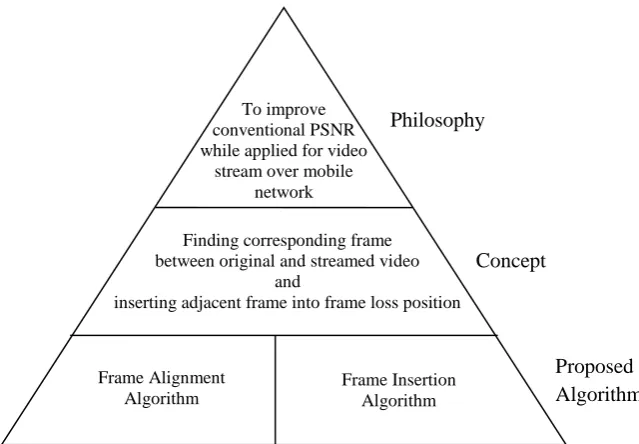
Figure 1.1 Summary of research contributions
1.8 Organization of the Thesis
This thesis is organized into six chapters. Chapter 1 provides introduction of the research. Chapter 2 reviews some literatures that become background information and reference to formulate this research. It involves review of literature on quality composition in video, some perspectives in determining the video quality, approaches to measure the quality, and PSNR method as foundation of the proposed algorithm. Chapter 3 outlines research methodology that used in this research. Chapter 4 focuses on experiment process and result for frame alignment algorithm. Following this, Chapter 5 deals with frame insertion algorithm. It focuses on the conducted experiment and evaluation of the result. Chapter 6 discusses performance of the proposed APSNR. Finally, Chapter 7 concludes the thesis with achievements and future works.
To improve conventional PSNR while applied for video
stream over mobile network
Finding corresponding frame between original and streamed video
and
inserting adjacent frame into frame loss position
Frame Alignment Algorithm
Frame Insertion Algorithm
Philosophy
Concept
88
REFERENCES
Agboma, F., and Liotta, A. (2006). User centric assessment of mobile contents delivery. Proceding of 4th International Conferences on Advances in Mobile Computing and Multimedia. 4-6 December. Yogyakarta, Indonesia.
Ahmad, I., Xiaohui, W., Yu, S., and Ya-Qin, Z. (2005). Video transcoding: An Overview of Various Techniques and Research Issues. IEEE Transactions on Multimedia, 7(5), 793-804.
Blakowski, G., and Steinmetz, R. (1996). A Media Synchronization Survey: Reference Model, Specification, and Case Studies. IEEE Journal on Selected Areas in Communications, 14(1), 5-35.
Braun, T., Diaz, M., and Staub, T. (2008). End-to-End Quality of Service Over Heterogeneous Networks: Springer-Verlag.
Brouwer, F., de Bruin, I., Silva, J. C., Souto, N., Cercas, F., and Correia, A. (2004). Usage of link-level performance indicators for HSDPA network-level simulations in E-UMTS. Eighth International Symposium on Spread Spectrum Techniques and Applications. 30 August-2 September. 844-848.
Chai, E., Shin, K. G., Lee, S.-J., Lee, J., and Etkin, R. (2013). Defeating heterogeneity in wireless multicast networks. Proceedings the INFOCOM. 14-19 April. Turin, Italy: IEEE, 560-564.
Chan, A., Zeng, K., Mohapatra, P., Lee, S. J., and Banerjee, S. (2010). Metrics for evaluating video streaming quality in lossy IEEE 802.11 wireless networks. Proceedings IEEE the INFOCOM. 15-19 March. San Diego, USA: IEEE.
1-9.
89
Chih-Heng, K., Cheng-Han, L., Ce-Kuen, S., and Wen-Shyang, H. (2006). A novel realistic simulation tool for video transmission over wireless network. International Conference on Sensor Networks, Ubiquitous, and Trustworthy
Computing. 5-7 June. Taichung, taiwan: IEEE.
Choi, H., Yoo, J., Nam, J., Sim, D., and Bajic, I. V. (2013). Pixel-wise Unified Rate-quantization Model for Multi-level Rate Control. IEEE Journal of Selected Topics in Signal Processing, PP(99), 1-1.
Divecha, N., and Jani, N. N. (2013). Implementation and performance analysis of DCT-DWT-SVD based watermarking algorithms for color images. International Conference on Intelligent Systems and Signal Processing
(ISSP). 1-2 March. Gujarat, India: IEEE. 204-208.
Engelke, U., Barkowsky, M., Le Callet, P., and Zepernick, H. J. (2010). Modelling saliency awareness for objective video quality assessment. Second International Workshop on Quality of Multimedia Experience (QoMEX).
21-23 June. Trondheim, Norway: IEEE. 212-217. Fechner, G. (1966). Elements of psychophysics. Vol. I.
Fei, Y., LianFen, H., and Yan, Y. (2007). An Improved PSNR Algorithm for Objective Video Quality Evaluation. Chinese Control Conference (CCC). 26 July-31 June. China: IEEE. 376-380.
Gross, J., Klaue, J., Karl, H., and Wolisz, A. (2004). Cross-layer Optimization of OFDM Transmission Systems for MPEG-4 Video Streaming. Computer Communications, 27(11), 1044-1055.
Hands, D. S. (2004). A basic multimedia quality model. IEEE Transactions on Multimedia, 6(6), 806-816.
HoangVan, X., Ascenso, J., and Pereira, F. (2013). Improved Matching Criterion for Frame Rate Upconversion with Trilateral Filtering. Electronics Letters, 49(2), 106-107.
Henderson, H. (2009). Encyclopedia of Computer Science and Technology. (2nd. ed.) New York: Facts on File.
Hosik, S., Hana, Y., De Neve, W., Cheon Seog, K., and Yong-Man, R. (2010). Full-Reference Video Quality Metric for Fully Scalable and Mobile SVC Content. IEEE Transactions on Broadcasting, 56(3), 269-280.
90
ITU-T (2000). Recommendation P.910 - Subjective Video Quality Assessment Methods for Multimedia Applications.
ITU-T (2004). Recommendation J.144 - Objective Perceptual Video Quality Measurement Techniques for Digital Cable Television in the Presence Of A
Full Reference.
ITU-T (2010). Recommendation J.340 - Reference Algorithm for Computing Peak Signal to Noise Ratio of a Processed Video Sequence with Compensation for
Constant Spatial Shifts, Constant Temporal Shift, and Constant Luminance
Gain and Offset.
Jinjian, W., Weisi, L., Guangming, S., and Anmin, L. (2013). Perceptual Quality Metric with Internal Generative Mechanism. IEEE Transactions on Image Processing, 22(1), 43-54.
Junghyun, H., Yo-Han, K., Jangkeun, J., and Jitae, S. (2010). Video quality estimation for packet loss based on No-Reference method. The 12th International Conference on Advanced Communication Technology
(ICACT). 7-10 February. Gangwon-Do, Korea. 418-421.
Klaue, J., Rathke, B., and Wolisz, A. (2003). Evalvid–A framework for video transmission and quality evaluation. Computer Performance Evaluation. Modelling Techniques and Tools, 255-272.
Korhonen, J., and Reiter, U. (2009). Analysis on the perceptual impact of bit errors in practical video streaming applications. IEEE International Conference on Internet Multimedia Services Architecture and Applications (IMSAA). 9-10
December. Bangalore, India. 1-6.
Liang, H. M., Ke, C. H., Shieh, C. K., Hwang, W. S., and Chilamkurti, N. K. (2006). Performance evaluation of 802.11e EDCF in infrastructure mode with real audio/video traffic. International conference on Networking and Services ( ICNS). 16-19 July. Silicon Valley, USA. 92-92.
Marziliano, P., Dufaux, F., Winkler, S., and Ebrahimi, T. (2002). A No-Reference perceptual blur metric. International Conference on Image Processing. 22-25 September. Rochester, USA: IEEE.
91
McDonagh, P., Pande, A., Murphy, L., and Mohapatra, P. (2013). Toward Deployable Methods for Assessment of Quality for Scalable IPTV Services. IEEE Transactions on Broadcasting, 59(2), 223-237.
Mount, D. W. (2001). Bioinformatics: sequence and genome analysis: Cold Spring Harbor Laboratory Press.
Nishikawa, K., Munadi, K., and Kiya, H. (2008). No-Reference PSNR Estimation for Quality Monitoring of Motion JPEG2000 Video over Lossy Packet Networks. IEEE Transactions on Multimedia, 10(4), 637-645.
Ojansivu, V., Silven, O., and Huotari, R. (2003). A technique for digital video quality evaluation. International Conference on Image Processing. 14-17 September. Barcelona, Spain.
Piamrat, K., Viho, C., Bonnin, J. M., and Ksentini, A. (2009). Quality of experience measurements for video streaming over wireless networks. Sixth International Conference on Information Technology: New Generations.
1184-1189.
Pinson, M. H., and Wolf, S. (2004). A New Standardized Method for Objectively Measuring Video Quality. IEEE Transactions on Broadcasting, 50(3), 312-322.
Reiter, U., and Korhonen, J. (2009). Comparing apples and oranges: Subjective quality assessment of streamed video with different types of distortion. International Workshop on Quality of Multimedia Experience (QoMEx
2009). 29-31 July. San Dieg, USA. 127-132.
Sadiq, A. T., and Salih, W. M. (2013). Uncompressed video quality metric based on watermarking technique. 1st International Conference on Communications, Signal Processing, and their Applications (ICCSPA). 12-14 February.
Sharjah, UAE. 1-6.
Siyuan, X., and Lin, C. (2010). Distortion analysis of wyner-ziv distributed video coding. Global Telecommunications Conference (GLOBECOM 2010). IEEE, 6-10 December. Miami, Florida: IEEE. 1-5.
Sugimoto, O., Naito, S., Sakazawa, S., and Koike, A. (2009). Objective perceptual video quality measurement method based on hybrid no reference framework. 16th IEEE International Conference on Image Processing (ICIP). 7-10
92
Tao, L., Yao, W., Boyce, J. M., Wu, Z., and Hua, Y. (2007). Subjective quality evaluation of decoded video in the presence of packet losses. IEEE International Conference on Acoustics, Speech and Signal Processing, 2007.
ICASSP 2007. 15-20 April. Honolulu, USA: IEEE. 1125-1128.
Vesco, A., Masala, E., and Scopigno, R. (2013). Efficient support for video communications in wireless home networks. International Conference on Computing, Networking and Communications (ICNC). 28-31 January. San
Diego, USA: IEEE. 599-604.
Vranjes, M., Rimac-Drlje, S., and Grgic, K. (2008). Locally averaged PSNR as a simple objective Video Quality Metric. 50th International Symposium the ELMAR. 10-12 September. Zadar, Croatia: IEEE. 17-20.
Wiethölter, S., Hoene, C., and Wolisz, A. (2004). Perceptual quality of internet telephony over IEEE 802.11 e supporting enhanced DCF and contention free bursting. Telecommunication Networks Group. Berlin, September 27th. Winkler, S., and Mohandas, P. (2008). The Evolution of Video Quality
Measurement: from PSNR to Hybrid Metrics. IEEE Transactions on Broadcasting, 54(3), 660-668.
Wolf, S. (1997). Measuring the End-to-end Performance of Digital Video Systems. IEEE Transactions on Broadcasting, 43(3), 320-328.
Wolf, S., and Pinson, M. (2009). Reference algorithm for computing Peak Signal to Noise Ratio (PSNR) of a video sequence with a constant delay. ITU-T Contribution COM9-C6-E. ITU.
Yamada, T., Miyamoto, Y., and Serizawa, M. (2007). No-reference video quality estimation based on error-concealment effectiveness. Packet Video 2007. 12-13 November. Lausanne, Switzerland: IEEE, 288-293.
Yong, Z., and Kai-Kuang, M. (2003). Error Concealment for Video Transmission with Dual Multiscale Markov Random Field Modeling. IEEE Transactions on Image Processing, 12(2), 236-242.
Yongkai, H., El-Hajjar, M., Butt, M. F. U., and Hanzo, L. (2013). Inter-layer-decoding aided self-concatenated coded scalable video transmission. Wireless Communications and Networking Conference (WCNC). 7-10 April.
93
94
PUBLICATIONS
Syahbana, Y. A., Herman, Rahman, A. A., Bakar, K. A. (2011). Aligned-PSNR (APSNR) for Objective Video Quality Measurement (VQM) in Video Stream over Wireless and Mobile Network. World Congress on Information and Communication Technologies, 11-14 Dec. Mumbai, India.