Application of Swine Lagoon Effluent as a Potential Source of Antibiotic Resistant Genes in
Surface Water. (Under the direction of Dr. Alexandria Graves).
The use of antibiotics in animals is suspected to be a major route for transfer of antibiotic
resistance genes (ARGs) to human pathogens, although different antibiotics are used in
animals than in humans. North Carolina has the second largest swine production industry in
the USA which is concentrated in a small geographical area in the southeastern area of the
state. This may increase the risk of antibiotic resistant bacteria reaching nearby surface
waters. The goals of this study were 1) to identify and quantify ARGs in Escherichia coli
isolates from swine feces, lagoon effluent, cattle, wildlife and ground and surface waters 2)
to develop a data base for antibiotic resistance patterns for E. coli isolated from these
sources 3) to evaluate the possible use of this database in tracking movement of fecal
bacteria from confined swine operations to a nearby stream 4) to determine the relationship
between antibiotic resistance genes found in E. coli strains from manure and water with the
actual phenotypic expression of the resistance to their corresponding antibiotics.
Escherichia coli isolates were recovered from manure and water samples by basic
Antibiotic Resistance and Water Quality: Land Application of Swine Lagoon Effluent as a Potential Source of Antibiotic Resistant Genes in Surface Water
by
Lloyd Chipiliro Siyani Liwimbi
A thesis submitted to the Graduate Faculty of North Carolina State University
in partial fulfillment of the requirements for the Degree of
Master of Science
Soil Science
Raleigh, North Carolina
2009
APPROVED BY:
____________________ ____________________ Dr. Daniel W Israel Dr. Eric van Heugten
BIOGRAPHY
ACKNOWLEDGEMENTS
I would like to express the deepest gratitude to my adviser Dr. Alexandria Graves for her effort for mentoring me as a researcher. She facilitated my participation in many scientific conferences to present my work that resulted into fruitful discussions with other researchers. I would also like to thank her for all her support with the research protocols some of them which were new to me. I would also like to thank my co-advisers, Dr. Daniel W. Israel and Dr. Eric van Heugten without whom my thesis and presentations would be just an abstract idea. I would like to thank Dr. Jeff Thompson for his advice in statistical analysis for my research data. Brad Robinson, research specialist in our lab, for the technical and physical support in the course of this project as we went through the woods of six run’s creek together. I also acknowledge Joie Lubbers, Daniel Vaal, and Charles Cahoon for the technical assistance during the entire period of the project.
I would like to thank the management of Water Resource Research Institute of the University of North Carolina for supporting this project financially and the entire Soil Science Department at NCSU, faculty, staff, and students for their accommodative spirit and understanding during my study. It would not have been easier to study away from home, family and friends without them all.
Lastly, I would like to thank my wife, Jayne and my family members, especially my brother George who inspired me and not forgetting my late parents Desiderio and Evarista for the hard working spirit they instilled in me which helped me to get to this
TABLE OF CONTENTS
LIST OF TABLES... vii
LIST OF FIGURES... ix
CHAPTER 1 LITERATURE REVIEW... 1
Introduction... 1
Problems associated with antibiotic resistance... 2
Impacts of antibiotic resistance on human health... 2
Impacts of antibiotic resistance on animal health and food safety...……….…... 3
Antibiotics and the environment………... 5
Antibiotic resistance and lagoon systems in agriculture………... 6
The development of antibiotic resistance…..………... 6
The transfer of antibiotic resistant genes among bacteria………... 7
Efficiency of anaerobic fermentation process for treatment of animal wastes…... 8
The transport of microbes through soil and water……….………... 9
Prevalence of antibiotic resistant genes in the environmental pools... 10
Association of antibiotic resistant genes and phenotypic expression of antibiotic resistance... 12
Literature cited... 14
CHAPTER 2 A SURVEY OF ANTIBIOTIC RESISTANCE GENES IN ESCHERICHIA COLI RECOVERED FROM SWINE FECES, SWINE LAGOON LIQUID, AND SOIL FROM SPRAY FIELDS... 22
Abstract... 22
Introduction... 23
Materials and methods... 26
Results... 29
Discussion... 32
Conclusions... 37
CHAPTER 3
MICROBIAL SOURCE TRACKING IN A RURAL WATERSHED DOMINATED
BY SWINE... 53
Abstract... 53
Introduction... 54
Materials and methods... 56
Results... 61
Discussion... 64
Conclusions... 67
Literature cited... 69
CHAPTER 4 ANTIBIOTIC RESISTANCE GENES FOR DETECTION OF FECAL POLLUTION IN SURFACE AND GROUND WATERS... 84
Abstract... 84
Introduction... 85
Materials and methods... 87
Results... 91
Discussion... 94
Conclusions... 97
Literature cited... 98
APPENDICES... 114
Appendix A. Monthly water levels in wells for sampling ground water... 115
Appendix B. Rainfall data for the site during the study period... 116
Appendix C. E.coli counts in soil collected from the application field... 117
Appendix D. Most probable number and Plate counts of E.coli from water samples by IDEEX and Membrane Filtration methods... 127
Appendix E. Values for Statistical analysis of the paired comparisons for swine feces, lagoon effluent and soil sources………... 128
Appendix F. Values for Statistical analysis of the paired comparisons of genes effluent isolates per season... 129
Appendix G. Values for Statistical analysis of the paired comparisons of genes in soil isolates………... 130
Appendix H. Platecounts of E.coli from fecal samples from the known sources... 131
LIST OF TABLES
CHAPTER 2
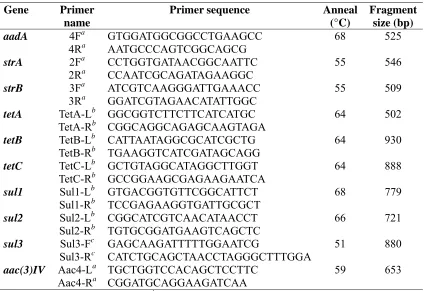
Table 2.1. Primer sequences used to detect antibiotic resistant genes in E.coli.... 44 Table 2.2. Numbers of E.coli in swine feces and lagoon effluent samples
collected from swine houses and an anaerobic lagoon over a
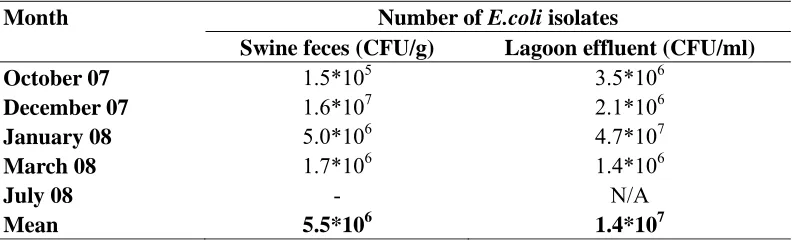
sampling period of six months………... 45 Table 2.3. Number of E.coli in soil samples collected from the application field
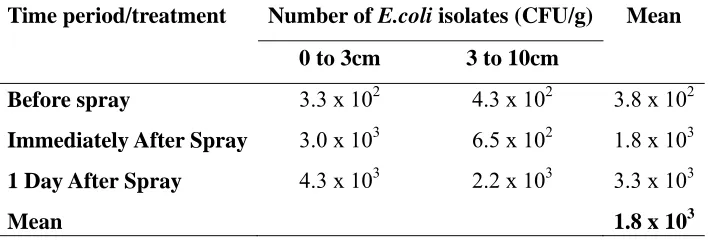
at different time periods/ treatments………... 46 Table 2.4. The prevalence of multiple resistant genes in E.coli isolated from
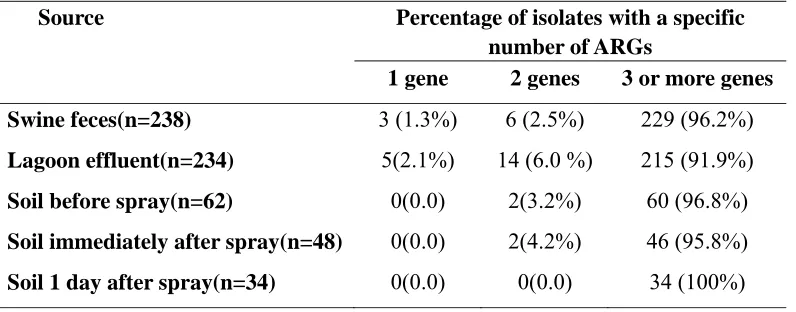
swine feces, lagoon effluent and soil samples from the application
field………... 47 Table 2.5. Comparison of total numbers and types of antibiotic resistant genes
in E.coli isolated from swine feces, lagoon effluent and soil samples from the application field………... 48 Table 2.6. Total percentage of antibiotic resistant genes in E.coli isolates from
the soil collected before, immediately after and 1 day after spraying
the field with lagoon effluent………... 49 Table 2.7. Comparison of the effect of seasonal changes on the distribution of
antibiotic resistant genes in E.coli populations from lagoon
effluent... 50 Table 2.8. The relationship between phenotypic expression of antibiotic
resistance and presence of antibiotic resistant genes in E.coli isolates from swine feces, lagoon effluent and soil from application
field…... 51 CHAPTER 3
Table 3.1. Types of antibiotics and concentrations used in antibiotic resistant
analysis of E.coli isolates………... 72 Table 3.2. Protocol for preparation of stock solutions for the different types of
antibiotics………... 73
Table 3.3. Number of E.coli isolates recovered from ground and surface water
samples………... 74
Table 3.4. Prevalence phenotypic antibiotic resistance of E.coli isolates to
antibiotic concentrations.………... 75 Table 3.5.
Number of E. coli isolates analyzed by antibiotic resistance analysis and discriminant analysis………... 76 Table 3.6.
Nine-category database of E.coli isolates with no duplicate antibiotic resistant patterns using discriminant analysis for classification into
source categories.………. 77
discriminant analysis for classification into source categories... 78 Table 3.8. Percentage contributions of the sources of E.coli isolates in the soil
before a spray event, immediately after spray and 1 day after a spray event…..……... 79 Table 3.9.
Percentage contributions of the sources of E.coli isolates in ground
water at different locations………... 80 Table 3.10. Percentage contributions of the sources of E.coli isolates in surface
water at different locations ………... 81 Table 3.11. Percentage contributions of the sources of E.coli isolates in ground
water at different seasons of the year.………....………... 82 Table 3.12. Percentage contributions of the sources of E.coli isolates in surface
water at different seasons of the year ………... 83 CHAPTER 4
Table 4.1. A list of PCR primer sequences (5’ to 3’) of antibiotic resistant genes for a single PCR………..…... 102 Table 4.2. The comparison of the number and types of antibiotic resistant genes
in E.coli isolated from the possible sources of fecal pollution within the watershed………... 103 Table 4.3. The comparison of the number and types of antibiotic resistant genes
in E.coli isolated from ground and surface water samples... 104 Table 4.4. The number of E. coli isolates analyzed by polymerase chain reaction
and discriminant analysis... 105 Table 4.5.
Six-category database of E.coli isolates with no duplicate antibiotic resistant gene patterns using discriminant analysis for classification
into source categories………... 106 Table 4.6.
Six-category database of E.coli isolates with no duplicate antibiotic resistant gene patterns and isolates with association of >40% using
discriminant analysis for classification into source categories... 107 Table 4.7. Two-category database of E.coli isolates with no duplicate antibiotic
resistant gene patterns and isolates with association of >40% using
discriminant analysis for classification into source categories …... 108 Table 4.8. Percentage contributions of the sources of E.coli isolates in the soil... 109 Table 4.9. Percentage contributions of the sources of E.coli isolates in ground
water at different locations ………... 110 Table 4.10. Percentage contributions of the sources of E.coli isolates in surface
water at different locations ………... 111 Table 4.11. Percentage contributions of the sources of E.coli isolates in ground
water at different seasons of the year ……….. 112 Table 4.12. Percentage contributions of the sources of E.coli isolates in surface
LIST OF FIGURES
CHAPTER 1
Figure 1.1. Map of North Carolina showing the concentration of swine facilities in south eastern part of the state ……… 21 CHAPTER 2
Figure 2.1. Map of the study site, Six Runs Creek in eastern Sampson County,
LITERATURE REVIEW
INTRODUCTION
Antibiotic resistance is a worldwide problem and well known in both human and veterinary medicine (Maynard et al, 2003; Teuber, 2001). The National Antimicrobial Resistance Monitoring System (NARMS) was established in 1996, as a branch of United States Centers for Disease Control and Prevention (CDC) to monitor the development of antibiotic resistance. The program focuses on the surveillance of antibiotic resistance in indicator bacteria and zoonotic agents which are the normal intestinal flora of animals (e.g., Escherichia coli and Enterococcus spp.). The problem with antibiotic resistance may be aggravated by antibiotic use in the agricultural industry. Antibiotic use in the agricultural industry is widespread among livestock producers such as those responsible for cattle and swine production (Khachatourians, 1998). As with other livestock
(Chee-Sanford et al, 2009). Additionally, there is also the concern of lagoon waste seeping into groundwater beneath the pits. The fate of antibiotic residues, as well as, the survival and mobility of antibiotic resistant bacteria in soil leads to concern about livestock waste entering the environment. Livestock waste entering the environment may result in possible exposure of humans and animals to antibiotic residues and antibiotic resistant bacteria.
Problems associated with antibiotic resistance Impacts of antibiotic resistance on human health
There are several implications related to antibiotic resistance on human health. According to CDC (1998) antibiotic resistant bacteria cause 2 million deaths each year particularly among individuals with compromised immune systems, including children and the elderly. Antibiotic resistant infections result in longer hospital stay and require the use of more expensive drugs to treat infections (McGowan, 2001). This suggests that in addition to human health impacts, there are also economic impacts due to loss of income from missing days of work and extra costs associated with more appropriate drugs (McGowan, 2001). Many enteric pathogens of swine including bacteria such as
Salmonella, Yersinia, and Campylobacter are also infectious to humans through contact with farm workers and the food chain. Among these bacteria, the prevalence of resistance varies widely, from 0% to 90%, depending on the antimicrobial tested, animal species, and country of origin (McEwen, 2006).
Salmonella and Escherichia coli are economically important pathogens of livestock that result in high morbidity and mortality rates. These pathogens are responsible for an estimated 1.4 million cases of food borne illness, resulting in 600 deaths each year in
35 cases by surveillance in the Netherlands, in 2006. These cases were geographically associated with pig farming.
The threat of diseases caused by antibiotic resistant microorganisms is complicated further because antimicrobial drugs used for human therapy often have significant structural similarities to those used for animals. For instance, resistance to apramycin, a veterinary medicine, might induce resistance to gentamycin, a structurally similar compound that is specifically used in humans (Mathew et al., 2003). The concern about antibiotic resistance has escalated in recent years because the rate at which antimicrobial medicines are being developed is much slower than the rate at which the current antimicrobials are being rendered ineffective. This leads to concern that deaths due to bacterial infections will once again become a real threat to substantial numbers of children, the elderly and immunocompromised persons (Gilchrist et al., 2007).
Impacts of antibiotic resistance on animal health and food safety
Antibiotic resistance is most clearly a problem when it leads to therapeutic failure or the need to use more costly, toxic, or expensive drugs. It can also be a problem when it increases the frequency, duration, or severity of infection. According to Bischoff et al (2004), there are two principal concerns associated with an increase in antimicrobial resistance among enteric bacteria (includes, Escherichia, Klebsiella, Enterobacter, Serratia, Citrobacter, Proteus, Pseudomonas & Salmonella). One concern is that fewer tools will be available for the livestock producers to manage diseases due to antibiotic resistant pathogens. A second concern involves the potential transmission of antibiotic resistant bacteria to humans via the food chain. The healthy risks associated with animal
with300 mg of tetracycline died, and had diarrhea during 54% of the days of observation. Consumers are becoming more selective on agricultural and meat products due to knowledge that antibiotic resistance bacteria are transmitted through the food chain. Normanno et al., (2007) conducted a 3-year survey on the occurrence of S. aureus in meat and dairy products between 2003 and 2005, out of 1634 samples analyzed, 209 (12.8%) were contaminated with S. aureus and 68.8% of the strains expressed resistance to at least one of antibiotics tested. Mayrhofer et al., 2006 evaluated antimicrobial resistance in
Escherichia coli isolated from retail meat of various animal species in Austria, where they recovered resistant isolates mostly in pork (76%) followed by poultry (63%) and beef (40%). During a one-year survey in Italy by Pesavento et al. (2005), 42 strains of S. aureus were isolated from 176 samples of raw meat (poultry, pork and beef). They challenged strains with twelve antimicrobials to check for antibiotic resistance and found that the strains were resistant to three or more antibiotics indicating the prevalence of multi-antibiotic resistance in the microorganisms. In a survey of antimicrobial resistance and virulence of E.coli in foods mostly sold at the market in Vietnam, E coli was present in 180 samples of raw meat, poultry and shellfish (Van et al., 2008). Out of the ninety-nine E. coli isolates recovered from all the sources, 84% of the isolates were resistant to one or more of the 15 antimicrobial agents used in the investigation (Van et al., 2008). In response to concerns about human resistance to antibiotics, some meat retailers have altered their meat-purchasing policies. In June 2003, McDonald’s Corporation announced that it would prefer to buy meat from suppliers that use fewer medically important antibiotics for growth promotion (Osterberg and Wallinga,2004). In December 2003,
market value. Such improvements in labeling could be an integral part of an overall quality assurance program that would drive the producer to reduce antibiotic use. Ultimately, the lack of appropriate drugs, to control diseases, leads to economic loss for the producer due to death of farm animals, loss of productivity as well as loss of revenue due to public perception of the role the livestock industry in its contribution to antibiotic resistance. On the other hand, the welfare of the animals may be compromised when antibiotic use is reduced.
Antibiotics and the environment
Veterinary drugs are introduced into the environment through a number of ways like direct applications as in aquaculture, excretions of treated animals through application of manure and/or slurry to agricultural fields and through disposal of wastes during the production processes. Recent studies indicate that residual concentrations of some antibiotics also result in the development of antibiotic resistance in bacteria from small wild animals in proximity of swine farms exposed to these antibiotics through contact with animal feed through access into barns and feed storage areas than those in natural areas (Kozak, 2009). The increased level of resistance suggests that levels of antibiotics as low as those present in the environment may cause biological effect hence a risk for the selection of resistant bacteria (Kleiner et al. 2007).
There have been reports of the presence of drugs and their metabolites in the environment. For instance, low levels (<1 μg/L) of antibiotic residues have been observed in surface water samples collected from sites considered susceptible to contamination both in Germany and the US (Hirsch et al. 1999). The fate of antibiotics in the environment
chlortetracycline, tilmicosin and lincomycin (Zilles et al., 2005). Although under the Clean Water Act, the federal government is mandated to regulate water quality associated with animal agriculture, the EPA admits that compliance to current Clean Water Act regulations has not been satisfactory and suggests that the regulations themselves need revision (Osterberg et al., 2004). The new rules concerning the largest CAFOs imposed by the EPA in early 2003 required these CAFOs to acquire permits for future water discharges. The quantity of pollutants discharged from the production area must be accompanied by an equivalent or greater reduction in the quantity of pollutants released to other media and/or land application areas for all manure, litter, and process wastewater at on-site and off-site locations. The final rule indicates that fecal coliforms do not exceed MPN of 400 per 100 mL at any time (USEPA, 2003). Non compliance to this rule attracts a penalty to the polluter. However, these rules do not address concerns over antibiotic residues since there are no set limits for residual antimicrobials levels present in the discharged effluent.
Antibiotic resistance and lagoon systems in agriculture The development of antibiotic resistance
Antibiotic use in the swine industry is common due to their efficiency in reducing disease pressure and increasing swine production efficiency. These chemicals treat animal diseases (therapeutic) when used at high levels and prevent diseases when used at intermediate levels. Antibiotics are also used at low sub therapeutic levels in feeds to
improve growth rate and feed utilization efficiency, reduce mortality and morbidity, and improve performance in reproduction (Cromwell, 2002). However, the long-term use of a
selection for antibiotic resistance may occur in the normal microflora of swine, the lagoon and/or the soil environment. The most common mechanisms of resistance are those that enhance the production of enzymes that degrade the antibiotic (Wilke et al., 2005). Bacteria may also alter their cell surface and effectively reduce the affinity of a drug for its target site or develop antibiotic efflux mechanisms, which rapidly pump the antibiotic out of the cell before it has a chance to interfere with cellular processes (McAllister et al., 2001). Bacteria also produce specific enzymes which attach additional chemical structures to the antibiotic, hence rendering it inactive (e.g., O-phosphorylation of the antibiotic erythromycin) (Wilke et al., 2005).
The transfer of antibiotic resistant genes among bacteria
Propagation of resistant non pathogenic bacteria increases the reservoir of resistance traits in the overall bacterial population resulting in an increase in the probability of gene transfer to pathogens. Drug resistance genes may be spread from a bacterium to another via plasmids, bacteriophages, naked DNA or transposons (Levy and Marshall, 2004). Transposons may be simple or complex (contain integrons). These integrons have a site that integrates expression of different antibiotic resistance genes and other gene cassettes in proximity from a single promoter. Originally integrons were found among Gram-negative bacteria, but now they are also found in Gram-positive commensal flora (Levy 2004). Transformation is the uptake of free and naked DNA present in the environment (Ochman et.al, 2000). The lagoon environment makes it conducive to gene transfer for this type of gene transfer to occur after microbial die off. New genetic material may also be introduced into a bacterium by a bacteriophage via transduction.
The efficiency of anaerobic fermentation process for treatment of animal wastes
The fate of antibiotics in the environment depends on their physico-chemical characteristics, soil and water properties. Tetracyclines, tend to strongly adhere to soil particles while sulfonamides are rapidly transported to surface waters. However, accumulation of these antibiotics in the environment depends on the rate of degradation in the different types of media (Zilles et al. 2005). Fresh manure may contain up to 100 million fecal coliform bacteria per gram, as well as other microorganisms that can
contaminate soil and water in high concentrations (Cochran et al, 2000). Adsorption of
The transport of microbes through soil and water
Lagoon effluent is an important soil fertility replenishment component in the mixed crop-livestock farming systems and has traditionally been used as an important source of nutrients, especially nitrogen (N), phosphorus (P) and potassium (K) as they improve crop yields considerably (Mafongoya, 2006). However lagoon effluent has the potential to introduce large amounts of microorganisms on the soil surface. Although soil can mitigate bacterial movement or leaching, some bacteria applied on to soil or released within the soil may still be transported through and travel in the vadose zone to groundwater (Guber et al., 2005). The application of animal wastes to saturated soils may cause contaminants to move into surface waters due to runoff and leaching through permeable soils to vulnerable aquifers. However, this may happen even at recommended application rates. Furthermore, concentrated livestock feeding operations located in areas prone to flooding with a shallow water table increases the potential for environmental contamination (Burkholder, 2007). When animal waste is applied to agricultural lands followed by surface runoff, over irrigation or rainfall, leaching may occur resulting in contamination of water resources by fecal bacteria (Entry et al., 2000). The rate at which bacteria can travel in soil depends on type and texture of soil, hydraulic conductivity, and degree of saturation and length of time. However, the rate may vary from a few meters to 830 m (Guber et al., 2005). According to McMurry et al. (1998), 1 cm h-1 of irrigation or rainfall water can transport bacteria in poultry manure to a depth of 32.5 cm in silt loam soil. They also reported that preferential flow can occur in well structured soils under unsaturated condition.
a useful indicator of fecal contamination in groundwater (Foppen and Schijven, 2005). Bacterial movement through soils is facilitated by flow of soil solution and mostly determined by effects of advection and dispersion. Escherichia coli are somewhat attached to manure at slow flow velocities than at higher flow velocity (Guber et al., 2005). The retention of bacteria on soil particles is caused by interception, sorption, and sedimentation (Guangming et al., 2005). The transport of microorganisms may be limited by the pore size and the size of the microorganism, however, a certain percentage of heterogeneous grain size distribution of pore diameters can interfere with bacteria transport ie ≥10% in sand (Pekdeger and Matthess, 1983). Sedimentation may also indirectly affect microbial transport; bacteria attach themselves actively and irreversibly on the surfaces of solid particles. According to Pekdeger and Matthess (1983), the adsorption of viruses and bacteria is quite fast (i.e. within 2h and 24h, respectively) however, their desorption rates are unknown. The amount of organic matter in the soil has more influence on the adsorption of microorganisms to soil particles. Guber et al. (2005) reported that E.coli attachment to soil decreased with increased manure content probably due to increased competition for attachment sites. The survival time of bacteria and viruses in ground water varies with species and environment. Microorganisms are impacted by the effect of physical, biological and chemical conditions in the environment. However biological factors such as bacteriaophages and protolytic bacteria are the most important for survival of pathogenic bacteria and viruses (Pekdeger and Matthess, 1983).
Prevalence of antibiotic resistant genes in the environmental pools
Swine production in North Carolina is concentrated in a small geographical area. The
In 1998, the Centers for Disease Control and Prevention (CDC) investigated pathogen levels in ground and surface waters near large-scale hog operations in the state of Iowa and found that pathogen levels were highest in samples collected from anaerobic lagoons, 87% out of 23 samples, tested positive for Enterococcus, 78% for E. coli, and 9% for Salmonella. In addition, many of the pathogen isolates demonstrated antibiotic resistance (CDC, 2000). In a recent study by microbiologists from the University of Illinois, samples from soil and groundwater under two hog farms were analyzed in the state of Illinois. The results from this study indicated that bacteria in the soil and groundwater of these farms had tetracycline resistant genes related to bacteria from pigs’ guts that were present in lagoon. The result showed that people at both sites were drinking the affected groundwater. This study concluded that the presence of these genes may contribute to antibiotic resistance and the problem may be widespread (Ananthaswamy, 2001). A study was carried out North Carolina to quantify the magnitude of antibiotic-resistant E. coli transport from swine farms into groundwater. Two swine farms and two control crop farms with known groundwater flow paths were evaluated for
E. coli. The results of this study demonstrate that antibiotic-resistant E. coli strains are present in groundwater of swine farms with a typical lagoon and land application system for waste management (Anderson, 2006). Some monitoring studies recently have indicated the possibility of pollutionin groundwater through seepage from waste lagoons (Krapac et al., 1998). However, this may occur if the lagoons are not properly lined. Krapac and coworkers found indicators likeenterococci of fecal origin at high levels in Illinois groundwatersamples obtained up to 100 m downstream of swine waste lagoons.
These indicators were present over a period of years indicating the occurrence long-term impacts and environmental movementof contaminants (Krapac et al., 1998; Krapac et al., 2000).
were observed in the wells located down-gradient ofthe lagoon. Comparative analysis showedthat the affected groundwater had gene sequences closely related to those in the lagoon by 99.8%, however thesegenes were not present in background libraries. New clones and unique native resistance gene populations were alsopresent in the groundwater. Meaning that antibiotic resistance genesin groundwater are affected by swine manure, but they were related to the native gene population. According to Guerra et al. (2003), Lanz et al. (2003) and Boerlin et al. (2005), resistances to tetracycline, sulfonamides and streptomycin or spectinomycin are the most common among E. coli. Several studies have recently attempted to assess the dissemination of the resistance genes for the above named major antibiotics in E. coli populations of animal origin (Bischoff et al., 2005, Bryan et al., 2004). Much more research remains to be done to draw valid comparisons between E. coli isolates from different animal populations. For example, ongoing research conducted in Dr. Graves’ laboratory showed that molecular fingerprints and the phenotypic antibiotic resistance fingerprints of swine and cattle differ significantly (paper in preparation). Such differences may be attributed to difference in antibiotic use, the clonal nature of some E. coli, as well as sampling bias.
Association of antibiotic resistance genes and phenotypic expression of antibiotic
resistance
The fate of antibiotics in the environmentand their link to the emergence of resistant genotypes found in the environment has received limited research attention. Evaluation of the impact of antibiotic use on populations of bacteria in natural waters has been the main focus of recent studies (Goni-Urriza et al., 2000). Antibiotic resistance analysis has
LITERATURE CITED
Aminov, R., I., N. Garrigues-Jeanjean and R. I. Mackie, 2001. Molecular ecology of tetracycline resistance: Development and validation of primers for detection of tetracycline resistance genes encoding ribosomal protection proteins. Appl. Environ. Microbiol. 67:22-32.
Ananthaswamy, A., 200. Spreading problem: Superbug genes are getting into soil and water-will humans be next? Applied & Environmental Microbiology. 67: 1494-1502
Van, T.T.H., J. Chin, T. Chapman, L. T.Tran and P.J. Coloe, 2008. Safety of raw meat and shellfish in Vietnam: An analysis of Escherichia coli isolations for antibiotic resistance and virulence genes. International Journal of Food Microbiology. 124 (3) 217-223
Osterberg, D., and D. Wallinga, 2004. Addressing externalities from swine production to reduce public health and environmental impacts. Am. J. Public Health. 94(10) 1703–1708.
Anderson, M.E, M.D Sobsey, 2006. Detection and occurrence of antimicrobial resistant E.coli in groundwater on or near swine farms in eastern North Carolina. Water Sci Technol. 54 (3) 211-218.
Bischoff, K. M., T. R.Callaway, T. S. Edrington, T. L. Crippen, and D. J. Nisbet, 2004. Antimicrobial use in food animals and the search for potential alternatives. Encyclopedia of Animal Science. New York, NY: Marcel Dekker, Inc. p. 45-47.
Bischoff, K. M., D. G. White, M. E. Hume, T. L. Poole, and D. J. Nisbet, 2005. The chloramphenicol resistance gene cmlA is disseminated on transferable plasmids that confer multiple-drug resistance in swine Escherichia coli. FEMS Microbiol. Lett. 243:285-291.
Boerlin, P, R. Travis, C. L. Gyles, R. Reid-Smith, N. Janecko, H. Lim, V. Nicholson, S. A. McEwen, R. Friendship, and M. Archambault, 2005. Antimicrobial
resistance and virulence genes of Escherichia coli isolates from swine in Ontario. 71 (11) 6753-6761.
Bryan, A., N. Shapir, and M. J. Sadowsky, 2004. Frequency and distribution of
Burkholder, J., B.Libra, P. Weyer, S. Heathcote, D. Kolpin, P. S. Thorne, M. Wichman, 2007. Impacts of waste from concentrated animal feeding operations on water quality. Environ Health Perspect. 115:308–312.
Carson, A. C., B. L. Shear, M. R. Ellersieck, and A. Asfaw, 2001. Identification of fecal Escherichia coli from humans and animals by ribotyping. Appl. Environ. Microbiol. 67:1503-1507
Cassella, G. H., 2006. Emergent antibiotic resistance: health risks and economic impact. FEMS Immunology & Medical Microbiology. 18 (4) 271 – 274
Centers for Disease Control and Prevention (CDC), 1998. Report to the State of Iowa Department of Public Health on the Investigation of the Chemical and Microbial Constituents of Ground and Surface Water Proximal to Large-Scale Swine Operations by E.R. Campagnolo and C.S. Rubin, National Center for
Environmental Health, Center for Disease Control and Prevention, Atlanta, GA.
Chee-Sanford, J. C., R. I. Mackie, S. Koike, I. G. Krapac, Yu-Feng Lin, A.C.Yannarell, S. Maxwell and R.I. Aminov, 2009. Fate and transport of antibiotic residues and antibiotic resistance genes following land application of manure waste. J Environ Qual. 38:1086-1108
Chee-Sanford, J. C., R. I. Aminov, I. J. Krapac, N. Garrigues-Jeanjean, and R. I. Mackie, 2001. Occurrence and diversity of tetracycline resistance genes in lagoons and groundwater underlying two swine production facilities. Applied and
Environmental Microbiology. 67:1494-1502.
Cochran, K., 2000. Dollars and Sense-an economic analysis of alternative hog waste management technologies. Environmental Defense, Washington D.C.
Cromwell, G., 2002. Why and how antibiotics are used in swine production. Animal Biotechnology. 13 (1) 7- 21
Donoho, A. L., 1984. Biochemical studies on the fate of monensin in animals and in the environment. J. Anim. Sci. 58:1528-1539.
Entry, A., R.K. Hubbard, J.E. Theis, and J.J. Fuhrman, 2000. The influence of vegetation in riparian filter strips on coliform bacteria: Survival in soils. Journal of
Environmental Quality. 29: 1215–1224.
Feinman, S. E., and J. C. Matheson, 1978. Draft environmental impact statement: subtherapeutic antibacterial agents in animal feeds. Food and Drug
Administration Department of Health, Education and Welfare Report, p. 372. Food and Drug Administration, Washington, D.C.
Flanagan, D. A., L. G. Gregory, J. P. Carter, A. Karakas-Sen, D. J. Richardson, and S. Spiro, 1999. Detection of genes for periplasmic nitrate reductase in nitrate respiring bacteria and in community DNA. FEMS Microbiol Lett. 177:263-270.
Foppen, J. W. A and J. F. Schijven, 2006. Evaluation of data from the literature on the transport and survival of Escherichial coli and thermotolerant coliforms in the aquifers under saturated conditions. Water research. 40: 401-426.
Gavalchin, J., and S. E. Katz, 1994. The persistence of fecal-borne antibiotics in soil. J. Assoc. Off. Anal. Chem. Int. 77:481-485.
Gilchrist, M. J, C. Greko, D. B. Wallinga, G. W. Beran, D. G. Riley, P. S. Thorne, 2007. The potential role of concentrated animal feeding operations in infectious disease epidemics and antibiotic resistance. Environ Health Perspect. 115(2) 313–316.
Goni-Urriza, M., M. Capdepuy, C. Arpin, N. Raymond, P. Caumette, and C. Quentin, 2000. Impact of an urban effluent on antibiotic resistance of riverine
Enterobacteriaceae and Aeromonas spp. Appl. Environ. Microbiol. 66:125-132. Graves, A. K., C. Hagedorn, A. Teetor, M. Mahal, A. M. Booth, R. B. Reneau, Jr.,
2002. Antibiotic resistance profiles to determine sources of fecal contamination in a rural Virginia watershed. J. Environ. Qual. 31:1300-1308.
Guangming J., M. J. Noonan, G. D. Buchan and N. Smith, 2005. Transport and deposition of Bacillus subtilis through an intact soil column. Australian Journal of Soil Research. 43(6) 695–703.
Guber A.K, D. R Shelton and Y. A. Pachepsky, 2005. Transport and retention of manure-borne coliforms in soil. Vadose zone journal. 4: 828-837.
Guerra, B., E. Junker, A. Schroeter, B. Malorny, S. Lehman, R. Helmuth, 2003.
Escherichia coli isolates from cattle, swine, and poultry. J. Antimicrob. Chemother. 52:489-492.
Haapapuro, E. R., N. D. Barnard, M. Simon, 1997. Review-animal waste used as livestock feed: dangers to human health. Prev. Med. 26:599-602
Hagedorn, C, S. L. Robinson, J. R. Filtz, S. M. Grubbs, T. A. Angier, R. B. Reneau, 1999. Determining sources of fecal pollution in a rural Virginia watershed with
antibiotic resistance patterns in fecal streptococci. Appl. Environ. Microbiol. 65:5522-5531.
Harwood, V. J, J. Whitlock, V. Withington, 2000. Classification of antibiotic resistance patterns of indicator bacteria by discriminant analysis: Use in predicting the source of fecal contamination in subtropical waters. Appl. Environ. Microbiol. 66:3698-3704.
Hill V. R, M. D Sobsey, 2003. Performance of swine waste lagoons for removing salmonella and enteric microbial indicators. American Society of Agricultural Engineers. 46(3) 781-788
Hirsch R., T. Ternes, K. Haberer, K. L. Kratz, 1999. Occurrence of antibiotics in the aquatic environment. The Science of Total Environment. 225: 109–118.
Jacks T. M, C. J. Welter, G. R. Fitzgerald and B. M. Miller, 1981. Cephamycin C treatment of induced swine salmonellosis. Antimicrob Agents Chemother. 19(4) 562-566
Khachatourians G. G., 1998. Agricultural use of antibiotics and the evolution and transfer of antibiotic-resistant bacteria. Canadian Medical Association journal. 159 (9) 1129-1136.
Kleiner D. K., E. K. Stanley, P. L.M. Ward, 2007. Development of in vitro antimicrobial resistance in bacteria exposed to residual level exposures of antimicrobial drugs, pesticides and veterinary drugs. Chemotherapy. 53: 132–136.
Koike, S., I. G. Krapac, H. D. Oliver, A. C. Yannarell, J. C. Chee-Sanford, R. I. Aminov, and R. I. Mackie, 2007. Monitoring and source tracking of tetracycline resistance genes in lagoons and groundwater adjacent to swine production facilities over a 3-year period. Applied and Environmental Microbiology. 73 (15) 4813-4823.
Kozak, G. K., P. Boerlin, N. Janecko, R. J. Reid-Smith, and C. Jardine, 2009.
mammals in the proximity of swine farms and in natural environments in Ontario, Canada. Applied and Environmental Microbiology. 75 (3)559-566.
Krapac, I. G., W. S. Dey, W. R. Roy, B. G. Jellerichs, and C. Smyth, 2000. Groundwater quality near livestock manure pits, p. 710-718. In 8th International Symposium on Animal, Agricultural and Food Processing Wastes. American Society for Agricultural Engineering, Des Moines, Iowa.
Krapac, I.G., W. S. Dey, C. A. Smyth, W. R. Roy, 1998. Impacts of bacteria, metals, and nutrients on groundwater at two hog confinement facilities, p. 29-50. In
Proceedings of the National Ground Water Association Animal Feeding Operations and Groundwater: Issues, Impacts, and Solutions-A Conference for the Future. National Groundwater Association, St. Louis, Mo.
Kudva, Indira T, Kathryn Blanch, and Carolyn. J. Hovde, 1998. Analysis of Escherichia coli O157:H7 survival in ovine or bovine manure and manure slurry. Applied and Environmental Microbiology. 64 (9) 3166-3174.
Lanz, R, P. Kuhnert, P. Boerlin, 2003. Antimicrobial resistance and resistance gene determinants in clinical Escherichia coli from different animal species in Switzerland. Vet. Microbiol. 91:73-84.
Levy, S. B, 1998. The challenge of antibiotic resistance. Scientific American, 278(3) 46-53.
Levy, S.B. and B. Marshall, 2004. Antibacterial resistance worldwide causes, challenges and responses. Nature Medicine. Supplement 12(10) 122-129
Mafongoya, P. L., A. Bationo, J. Kihara, 2006. Appropriate technologies to replenish soil fertility in southern Africa. Nutrient Cycling in Agroecosystems. 76 (2-3)
137-151.
Mawdsley, J. L., R. D. Bardgett, R. J. Merry, B. F. Pain, M. K. Theodorou, 1995. Pathogens in livestock waste, their potential for movement through soil and environmental pollution. Applied Soil Ecology. 2: 1-15.
Mayrhofer, S., P. Paulsen, F. J. M. Smulders, and F. Hilbert, 2006. Microbial Drug Resistance. 12(4) 278-283.
McAllister, T. A., L. J. Yanke, G. D. Inglis and M. E. Olson, 2001. Is Antibiotic use in dairy cattle causing antibiotic resistance? Advances in Dairy Technology. 13: 229-247.
McEwen, S.A., 2006. Antibiotic use in animal agriculture: What have we learned and where are we going. Animal biotechnology. 17 (2) 239-250.
McGowan, J. E. Jr, 2001. Economic impact of antimicrobial resistance. Emerging Infectious Diseases. Special issue 7(2) 286-292
McMurry, S. W, M. S Coyne and E. Perfect, 1998. Fecal coliform transport through intact soil blocks amended with poultry manure. Journal of Environmental Quality. 27:86-92.
Normanno, G., G. La Salandra, A. Dambrosio, 2007. Occurrence, characterization and antimicrobial resistance of enterotoxigenic Staphylococcus aureus isolated from meat and dairy products. International Journal of Food Microbiology. 115 (3) 290-296.
Ochman, H. J.G. Lawrence, and E.A Groisman, 2000. Lateral gene transfer and the nature of bacterial innovation. Nature. 405: 299-304.
Osterberg, D, D. Wallinga, 2004. Addressing Externalities from Swine Production to Reduce Public Health and Environmental Impacts. American Journal of Public Health. 94(10)1703-1708.
Parveen, S., K. M. Portier, K. Robinson, L. Edminston, and M. L. Tamplin, 1999. Discriminant analysis of ribotype profiles of Escherichia coli for differentiating human and nonhuman sources of fecal pollution. Appl. Environ. Microbiol. 65:3142-3147.
Pekdeger, A. and G. Matthess, 1983. Factors of bacteria and virus transport in ground water. Environmental geology. 5(2) 49-52.
Pesavento, G., B. Ducci, N. Comodo, A. Lo Nostro, 2007. Antimicrobial resistance profile of Staphylococcus aureus isolated from raw meat: A research for methicillin resistant Staphylococcus aureus (MRSA). Food Control. 18 (3) 196-200. Plym-Forshell, L., 1995. Survival of Salmonellas and Ascaris Suum Eggs in a
Teuber, M., 2001. Veterinary use and antibiotic resistance. Curr. Opin. Microbiol. 4:493-499.
United States Environmental Protection Agency (USEPA), 2003. ‘National pollutant discharge elimination system permit regulation and effluent limitation guidelines and standards for concentrated animal feeding operations (CAFOs); final rule’, Federal Register. 68(29) 7176–7274.
Van Loo, I., X. Huijsdens, E. Tiemersma, A. de Neeling, N. van de Sande-Bruinsma, D. Beaujean, A.Voss and J. Kluytmans, 2007. Emergence of methicillin-resistant Staphylococcus aureus of animal origin in humans. Emerg. Infect.
Dis.13:1834–1839.
Wilke, M.S, A. L. Lovering and N. C. J Strynadka, 2005. β-Lactam antibiotic resistance: a current structural perspective. Current Opinion in Microbiology. 8(5) 525-533.
Zilles, J., Shimada T., Jindai A., Robert M., Raskin L., 2005. Presence of
CHAPTER 2
A SURVEY OF ANTIBIOTIC RESISTANCE GENES IN ESCHERICHIA COLI RECOVERED FROM SWINE FECES, SWINE LAGOON LIQUID, AND SOIL
FROM SPRAY FIELDS ABSTRACT
(16.7%) and sul3 (13.3%) were lower in winter than in spring and no Aac(3)IV genes were recovered during summer. Thirty eight percent, 8% and 84% of E.coli isolates from swine feces, lagoon effluent, and soil, respectively, demonstrated the phenotypic expression of antibiotic resistance in the absence of the associated ARG. The results from this study suggest that environmental conditions in the lagoon and soil may have an impact on the survival and expression of resistance by E.coli composed of specific ARGs or that these isolates may have a gene that codes for resistance to a given antibiotic resistant gene not accounted for by these primers.
INTRODUCTION
Antibiotic resistance enables a microorganism to withstand the effects of antimicrobials and is a worldwide problem well known in both human and veterinary medicine (Maynard et al, 2003; Teuber, 2001). The use of antibiotics in livestock may be suspected as one of the routes for the transfer of antibiotic resistant bacteria to humans, even though antibiotics used for animals differ from those in humans (Khachatourians, 1998). About half of all antibiotics used in the United States are for animal production, only 10% of these drugs are given to treat infectious disease; the remaining 90% are given to promote growth, reduce mortality and morbidity, and improve reproductive performance (Khachatourians, 1998; Cromwell, 2002).
The long-term use of a single antibiotic (>10 days) selects for bacteria that are resistant not only to that antibiotic, but to several others within the same family (Levy and Marshall, 2004). According to Levy (1998), when an antibiotic is administered to a population of bacteria, the most susceptible will die while those that survive via mutation
or gene exchange will proliferate, especially if too little of the antibiotic is given to kill the bacteria. The selection for antibiotic resistance may occur in the normal microflora of monogastric animals such as swine or in the lagoons and/or soil environment.
The threat of diseases caused by antibiotic resistant pathogens is enormous because antimicrobial drugs used for human therapy often have significant structural similarities to those used for animals. For example, resistance to apramycin, a veterinary medicine, might foster resistance to gentamycin, a structurally similar compound that is specified for use in humans (Mathew et al., 2003). The increased level of resistance has raised concerns since the rate at which drugs are being developed is much slower than the rate at which the current drugs are being rendered ineffective. Many antibiotics used in animal agriculture are not readily absorbed in the animal gut. Approximately 25% to as much as 75% of antibiotics given to stall-feed animals could be released undigested in feces (Edmund et al., 1971; Feinman and Matheson, 1978) and can persist in soil after land application (Donoho, 1984; Gavalchin and Katz, 1994), typically by spraying lagoon effluent to fields. The annual production of livestock and poultry waste in the United States exceeds 200 million tons (dry weight basis) (Aillery et al., 2006), this waste may potentially introduce into the environment an enormous amount of antibiotic residues and antibiotic-resistant bacteria.
Anaerobic lagoons used for treatment of animal wastes are not designed to control bacteria although they can effectively reduce or destroy many pathogens. According to Hill and Sobsey (2003), standard swine waste lagoons could achieve reductions of enteric microbes of approximately 1 to 2 log10 per lagoon system for Salmonella and for most of the microbial indicators of fecal contamination. However, the efficiency of anaerobic fermentation process depends on the season since the concentrations of Salmonella and enteric microbial indicators tend to increase in swine waste lagoon systems during winter
2002 and Kudva et al. 1998 found that E. coli survived up to 56 and 99 days in manure, respectively.
Microbiologists from University of Illinois discovered that bacteria in the soil and groundwater near swine farms had tetracycline resistant genes. These bacteria were traced to pigs affiliated with the swine farms and the microbiologists speculated that movement of antibiotic resistance genes might contribute to widespread antibiotic resistance in the environment (Ananthaswamy, 2001). Several recent studies have attempted to evaluate the prevalence of the resistance genes for major antibiotics in E. coli populations of from animals (Bischoff et al., 2005, Bryan et al., 2004). The use of techniques such as PCR and molecular gene probe analysishave emerged and allow sensitive detection of specific genes in the environment in the absence of cultivation (Chee-Sanford et al, 2001). The collectionof genes used for such analyses has been extended to specificmetabolic genes (Flanagan et al., 1999) and, recently,to antibiotic resistance genes (Aminov et al., 2001).
The connection between the presence of an antibiotic resistant gene and the phenotypic expression of that gene has not been rigorously investigated. We hypothesize that the presence of a gene does not automatically indicate expression, but that the presence of given antibiotic resistant gene should be correlated with the phenotypic expression of resistance to that antibiotic. The objectives of the study were, 1) to identify antibiotic resistant genes in E. coli isolates from swine feces, swine lagoon effluent and from soils treated with lagoon effluent, 2) to evaluate the effect of season on the recovery of E.coli with ARGs from lagoon effluent and from soil before and after application of lagoon effluent and 3) to determine the relationship between the presence of antibiotic
MATERIALS AND METHODS
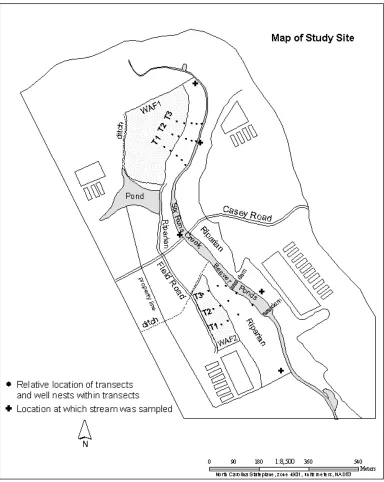
Site Description. The study was conducted on a commercial swine farm in Sampson County, North Carolina with a herd of 4400 hogs (finishing 720-725 hogs per house) and 100 cattle, located in a 275 ha watershed along theupper part of Six Runs Creek. The site has two waste application fields and a stream which flows in a southerly direction. Adjacent to waste application field 1, the stream flowsin a channel, while the segment adjacent to waste application field 2 is impoundedby two beaver dams and forms an elongated pond. The stream flows in a channel belowthe lower beaver dam. The watershed has four swine operations with 23 swine houses (Fig 2.1). Swine feces from the swine houses were washed into the waste lagoon once per week. Water levels were maintained at three quarters full to allow storage of excess rain water and to create anaerobic conditions in the lower portion of the lagoon to maintain compliance with waste management regulations. Lagoon effluent was sprayed on to farmland cropped with bermuda grass managed for hayand grazing pasture for cattle. On average, spray events occurs 3 to 4 times during the warm season, once in late fall and once in early spring. Soil in the waste application field (WAF2) is a Wagram series (loamy, kaolinitic, thermic Arenic Kandiudults) (Fig. 2.1) (Israel et al., 2005).
Sample collection. Sampling of swine feces and lagoon effluent was conducted between October 2007 and March 2008, while soil samples were collected in September 2008. Samples of fresh swine feces (20) were collected from swine houses and lagoon effluent (13) from the swine lagoon. Six soil core samples were collected from the application field (WAF2, Fig 2.1) immediately before application, immediately after
application and one day after the spray event. A total of 1104 E. coli isolates from the 3 sources which included 576 from swine feces, 384 from lagoon effluent and 144 from the soil were obtained from all the samples.
BHI broth (EMD chemicals Inc., Gibbstown, Nj) for 24 h at 37° C to allow E.coli to recover from environmental stress prior to molecular characterization. Another 10 g of soil sample was diluted in 100 ml of sterile deionized water. One ml of each sample was then diluted into 9 ml of sterile water (10-1 dilution) and then serial dilutions of 10-2-10-6 were made. A 100 µl aliquot of the diluted samples was cultured on m-FC agar (Becton Dickinson, sparks, Md.) and incubated at 44.5o C for 24 h to obtain single colonies (Hurst and Crawford, 2002). Single dark blue colonies presumed as fecal coliforms were then transferred using a tooth pick to microwells with colilert broth and cultured for 24 h. Five µl from each microwell was transferred to a vial containing 1 ml of pre-enrichment broth (Becton Dickinson, sparks, Md.), mixed, incubated for 24 h at 37 o C and stored at 4 o C.
Antibiotic resistance analysis. Antibiotic resistance analysis (ARA) was performed to evaluate the expression of antibiotic resistance in E.coli collected from the swine feces, lagoon effluent and soil. Antibiotic resistance patterns of each E.coli isolate was comprised of 9 observations. A 48-prong replicator (Sigma) was used to transfer isolates onto 100 mm diameter tryptic soy agar plates amended with the following concentrations of antibiotics: Erythromycin, 100 µg/l; Neomycin, 15 µg/l; Oxytetracycline, Streptomycin and Tetracycline, 90 µg/l; Rifampicin, 25 µg/l; Cephalothin, 25 µg/l; Apramycin and Trimethoprim, 128 µg/l. Antibiotics stocks were prepared as described in Graves et al. (2002), Hagedorn et al.(1999) and Harwood et al. (2000). The plates were incubated at 37o C for 18 to 20 h. The antibiotic and their concentrations were selected based on previous ARA studies and their common use in human and veterinary medicine
(Mathew et al., 1999). Resistance to an antibiotic was determined by comparing growth of each isolate to the same isolate on the control plate. A one (1) was recorded for a round, mostly filled colony and a zero (0) for no growth. Each isolate was tested against the 9 antibiotics.
amplification of the antibiotic resistance genes were based on previous research (Boerlin et al., 2005; Lanz et al., 2003; Perreten and Boerlin, 2003) (Table 2.1). Isolates resistant to two or more antibiotics were randomly selected from each source and analyzed for presence of antibiotic resistant genes (ARGs) by polymerase chain reaction (PCR). PCR was conducted on a subset of 238 isolates from swine feces, 234 from lagoon effluent, and 144 from soil.
A loopful of bacteria was resuspended in 500 µl sterile water, homogenized and heated at 95 °C for 15 minutes to prepare a lysate. The mixture was cooled to room temperature and centrifuged for 3 minutes at 14000 rpm. A 5 µl volume of supernatant was then transferred to each microwell and used as a template for each 25 µl PCR mixture. Each isolate was evaluated by each of the 10 primer sets (Table 2.1). The PCR mixture was prepared in a reservoir from a 1300 µl aliquot of sybergreen master mix, 600 µl of nuclease free water, and 192 µl of primer mixture. The primer mixture was made from 24 µl (working solution) of forward primer to the same quantity of a corresponding reverse primer to produce a single primer set for a particular antibiotic. An aliquot of 48 µl for the four primer sets were then combined into a primer mixture. Twenty microlitres of the final PCR mix was dispersed into each microwell using a multichannel pipettor. The PCR microwells were capped and placed in a thermocycler for analysis. The following temperature cycles were used to run the PCR : 1 cycle of 4 min at 95 °C; 35 cycles, each consisting of 1 min at 95 °C, 1 cycle at annealing temperature followed by 1 min at 72 °C; and 1 cycle of 7 min at 72 °C. Quantifast SYBR Green PCR Kit (Qiagen, Valencia, CA) was used to detect the amplified product. A
negative control (no E.coli) of 5 µl water was included in all PCR assays.
genes in the isolates. Non parametric savage 1-way Anova (logistic) analysis was used as the data was a binary categorical response (1 or 0 response). This method was chosen because the antibiotic resistant gene in the E.coli isolates is a random characteristic and was not normally distributed.
RESULTS
Numbers of E.coli. Swine feces, lagoon effluent and soil had mean concentrations of E.coli at 5.5*106 CFU/g and 1.4*107 CFU/ml and 1.8*103 CFU/g respectively (Table 2.2 and Table 2.3). The soil mean is an overall mean for samples collected before, immediately after and 1day after spraying. Prior to lagoon effluent application, the soil had a mean concentration of 3.8*102 CFU/g. The mean concentration of E.coli in the soil immediately after application was 1.8*103 CFU/g, whereas the mean concentration of
E.coli the day after application was 3.3*103 CFU/g. (Table 2.3)
Antibiotic resistant genes. All 144 E.coli isolates from the soil had more than one ARG present and ≤2% had only two ARGs. On average, 1% of the soil isolates from the
swine feces (n=238) and 2% of isolates from lagoon effluent (n=234) had only 1 ARG. Three and 6 % of the isolates from swine feces and lagoon effluent had only two ARGs, respectively. Whereas, 96% of isolates from swine feces, 92% isolates from lagoon effluent and 98% of isolates from soil had three or more ARGs (Table 2.4).
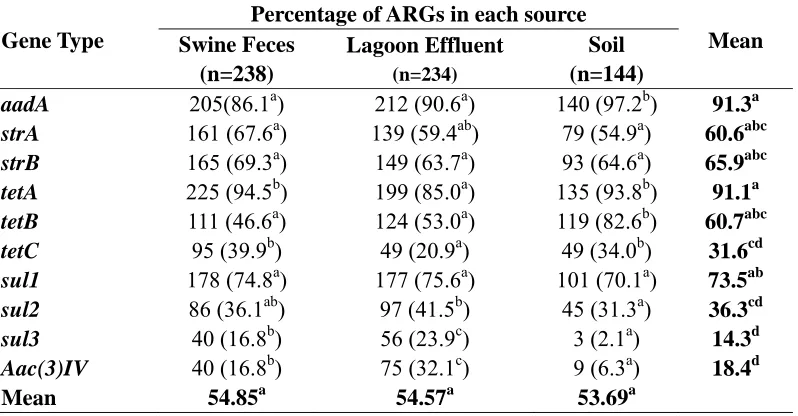
The prevalence of the combined total of all 10 ARGs among the three sources (swine feces, lagoon effluent and soil) of E.coli was assessed. Based on a tukey’s test, there were no significant differences (P < 0.05) in the number of ARGs among any of the sources (Table 2.5). However, significant differences were indicated based on the evaluation of
(tetA and tetB) and sulfonamide (sul1) were most common among these isolates (Table 2.5).
Three paired comparisons including swine feces-lagoon effluent, lagoon effluent-soil and swine feces-soil were performed to assess the impact of treatment/soil conditions on the occurrence of AGRs in these sources. Based on the comparisons of isolates from swine feces and lagoon effluent, genes coding for sul3 (23.9%) and Aac(3)IV (32.1%) were significantly greater in E.coli isolated from lagoon effluent as compared to those from swine feces (16.8%) and (16.8%) respectively. While the genes coding for tetA (85%) and tetC (20.9%) were significantly lower in E.coli recovered from the lagoon effluent than swine feces (94.5%) and (39.9%) respectively. There were no significant differences among the other types of genes (Table 2.5).
The isolates from the soil had significantly greater numbers of genes coding for
aadA,tetA, tetB and tetC (34.0 -97.2%)and significantly lower numbers of sul2, sul3 and Aac(3)IV (2.1-31.3%) as compared to those in the lagoon effluent (20.9-90.6%) and (23.9-41.5%), respectively. However there were no significant differences among the other types of genes between these sources. Furthermore, soil isolates had significantly greater numbers of genes coding for aadA, and tetB (82.6-97.2%)and significantly lower numbers of strA, sul3 and Aac(3)IV (2.1-54.9%) when compared to those in the swine feces, (46.6-86.1%) and (16.8-67.6%), respectively. There were no differences among other types of genes between these sources (Table 2.5).
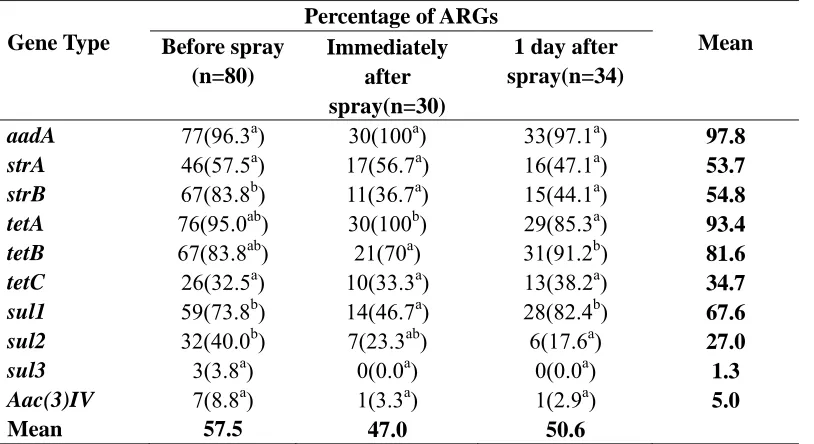
ARGs in soil before and after a spray event. The type of ARGs recovered from soil isolates collected before, immediately after and 1 day after spraying the field with lagoon
respectively and a significantly lower incidence of tetA (85.3%) than immediately after spraying the field (100%) (Table 2.6).
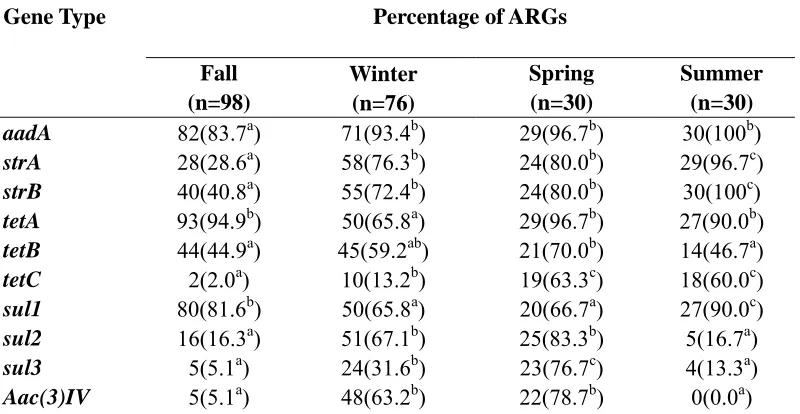
ARGs based on seasons. The effect of season was also evaluated on the presence of ARGs in the lagoon effluent. When the season changed from fall (October) to winter (December and January), all the types of ARGs except tetB were affected. The recovery of the genes aadA, strA, strB, tetC, sul2, sul3 and Aac(3)IV were significantly greater from (2.0 - 82.6%) to (13.2 - 93.4%) in winter while the recovery of tetA was significantly lower from 94.9 to 65.8%. The change from winter to spring (March) only affected tetA, tetC and sul3 with a significantly greater recovery in spring from (13.1 - 67.8%) to (63.3 - 96.7%). The shift from spring into summer (July) indicated a significantly greater recovery of strA, strB and sul1 genes from (66.6 - 80.0%) to (90.0 - 100%), while the recovery of sul2 and sul3 were significantly lower from (31.6 - 83.0%) to (13.3 - 16.7%). No Aac(3)IV genes were recovered during summer (Table 2.7).
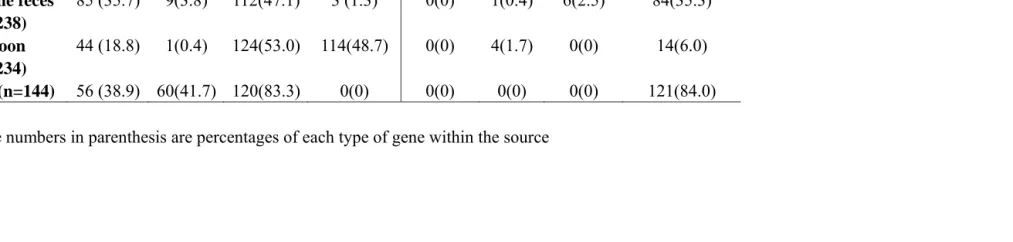
swine feces isolates that had a positive phenotypic expression to streptomycin and possessed the aadA or str genes.
Fifty three percent, 49% and 19% of the 234 lagoon effluent isolates had the sul, Aac(3)IV and aadA or str genes, respectively, but displayed a negative phenotypic response to trimethoprim, apramycin and streptomycin antibiotics. While <1% of the lagoon effluent isolates had the tet gene but displayed a negative phenotypic response to tetracycline. On the contrary, 6% of lagoon effluent isolates displayed a positive phenotypic response to apramycin and 2% to tetracycline antibiotics but did not have the associated Aac(3)IV and tet genes respectively. There was no lagoon effluent isolate which displayed a positive phenotypic response to streptomycin and trimethoprim and possessed aadA or str and sul genes.
Eighty three percent, 42% and 39% of the soil isolates had the sul, tet and aadA or str genes, respectively, but displayed a negative phenotypic response to trimethoprim, tetracycline and streptomycin antibiotics. There was no soil isolate which had the
Aac(3)IV gene, and displayed a negative response to apramycin. Eighty four percent of isolates from soil that displayed a positive phenotypic response to apramycin antibiotic did not have the Aac(3)IV gene. There was no soil isolate which displayed a positive phenotypic response to spectinomycin/streptomycin, tetracycline and trimethoprim without possessing the aadA or str,tet and sul genes (Table 2.8).
DISCUSSION
The average number of E.coli was 3 to 4 log numbers lower in soil (1.8 x 10³ CFU/g) than in swine feces (5.5 x 10⁶ CFU/g) and lagoon effluent (1.4 x 10⁷ CFU/mL). However
swine effluent. Whereas Boes et al. (2005) reported E.coli averages of 3log of soil. The results from the other studies are not different from this study.
As indicated by the prevalence of antibiotic resistant genes among the isolates in the three sources (swine feces, lagoon effluent and soil), genes which code for spectinomycin, streptomycin, tetracycline and sulfonamide (aadA, str, sul and tet) resistance were the most common. Spectinomycin, streptomycin, tetracycline and sulfur drugs are more commonly used in both swine and cattle than the other antibiotics (Chee-Sanford, 2009). The more frequent occurrence of these ARGs in the E.coli isolates from these sources may be an indication that spectinomycin, streptomycin, tetracycline and sulfonamide antibiotics are being used at this farm.
other researchers were similar to our findings while those of Aac(3)IV, were different since the isolates were not reported separately but a mixture of source. Our findings may suggest that E.coli that harbors these particular ARGs may be more resistant to degradation by the fermentation process, hence continues to multiply under these lagoon conditions.
The overall observation that genes coding for tetA and tetC in E.coli were recovered in significantly lower numbers from the lagoon effluent as compared to swine feces may suggest that E.coli that possessed these genes were more sensitive to the fermentation process. Jindal et al. 2006 found <1% of tetA and tetC genes in E.coli from lagoon effluent. Zhang et al. (2009) in their waste water treatment experiment removed 97.7% of
tetA and 98.3% of tetC genes with activated sludge. In a manure study, both tetA and tetC genes were 4.32 log in composted manure and 8.4 log in untreated swine manure (Yu et al., 2005). These findings are similar to this study in that these studies show that these genes are vulnerable to degradation or easily removed under biochemically active environments.
The increase in the number of aadA, tetA, tetB and tetC genes in E.coli recovered from the soil may suggest that the environmental conditions in the soil that promote the survival and replication of E.coli that possessed these genes are favorable. Jindal et al. (2006) found <1% of tetA and tetC genes in E.coli from soil samples collected twice between Dec.-Jan. and April-June. Srinivasan et al. (2008) found aadA 5.4%, 21.4% tetA, 5.4% tetB and tetC 0% genes in E.coli from dairy farm soil samples collected 3 days after a spray event. These findings are different from those obtained in our study in that our site
had two types of manure (lagoon effluent and cattle) entering the soil and samples were collected only once 1 day after a spray event, there might be an effect of sampling period.
Aac(3)IV in summer from spring suggest that E.coli that harbor genes may be sensitive to cool and elevated temperatures. In lagoon effluent, the increase in tetA,tetC and sul3 in spring from winter may be associated with warmer temperatures, high microbial activity and multiplication which may increase gene transfer. In addition to temperature sensitivities, the recovery of various ARGs in E.coli may be a reflection of the initial numbers of antibiotic resistant E.coli that have been shed by the animals. The differences may also be associated with mobile genetic elements.
Sunde and Norström (2005) indicated that the presence of aadA gene cassettes affect the accuracy in classifying E.coli resistance tostreptomycin. This is because distributions of integrons having the aadA cassettes interfere with the determination of an epidemiologicalcut-off value during surveillance because increased levels of aadA. The gene aadA, which codes for resistance to spectinomycin, may also cause low-level resistance to streptomycin. This may be the major source of resistance to streptomycin resistance observed in the soil since strA and strB are present at relatively low levels. The observation that tetracycline resistant genes (tetA and tetB) were at elevated levels and sulfonamide resistant genes (sul2 and sul3) were at lower levels in the soil is in agreement with the findings by other researchers. Byrne-Bailey et al., (2008) found 23 % of sul1, 18 % sul2 and 9 % sul3 in E.coli isolated from manured agricultural soils. Tetracycline tends to strongly adhere to soil particles while sulfonamides are rapidly transported to surface waters (Zilles et al. 2005), as a result the accumulation of tetracycline in the soil may also be inducing resistance in the E.coli isolated from the soil. These results are in agreement with Lanz et al., (2003) and Sengolov et al., (2003) who found high levels of
tetA (87% and 71%) while Marshall et al., (1983) and Levy et al., (1985) found high levels of tetB (76% and 82%) resistant genes in swine feces isolates.
The results from this study suggest that the phenotypic expression to resistance is not always correlated with genetic presence of an ARG. Generally, because of these differences, it may not be appropriate to predict phenotypes by only using occurrence of ARGS. According to Bochner (2003), it is not known how the biology of the cell or the whole organism is affected by catalytic or regulatory activity. It is difficult to define a single phenotype when several genes are present in that organism since these may also affect gene expression; nevertheless it’s still possible to define at least one phenotype for each gene identified. This might be the reason why some isolates expressed resistance in the absence of the gene responsible while others did not express resistance despite the responsible gene being present. Bochner (2003) stated that in order to fully understand the function of a gene, we must be able to predict, relate and define all the phenotypes that may develop from the wild-type and mutants of that gene. Furthermore, a gene that codes for a particular antibiotic may also be linked to genes that code for resistance to other antibiotics. For example, gentamicin is linked to genes coding for resistance to tetracycline, sulfonamide, and penicillin, which may be used in rations of animals although its generally not used in swine (Dunlop, 1998). The researchers at University of Illinois found that the movement of genes across species or into new environment may either dilute or amplify the genes that confer antibiotic resistance (http://www.sciencedaily.com/releases/2007/08/070821153926.htm). There- fore it’s also possible that these changes in the levels of the various genes are due to transfer from one species to another.
CONCLUSIONS