Konvensyen Antarabangsa Jiwa Pendidik 2014, 11-13 Ogos 2014
EVALUATION OF A VIDEO ON ADVANCED
DIFFERENTIAL EQUATIONS (PICARD’S METHOD)
DEVELOPED BASED ON
COGNITIVE LOAD LEARNING THEORY
Nur Khairiyah Kadar1, Juhazren Junaidi2, Norah Md Noor3 1Faculty of Education, Universiti Teknologi Malaysia, Skudai, Johor, Malaysia
2Faculty of Education, Universiti Teknologi Malaysia, Skudai, Johor, Malaysia [email protected]
3Faculty of Education, Universiti Teknologi Malaysia, Skudai, Johor, Malaysia [email protected]
ABSTRACT
Over the years, video has been adopted as one of the most effective learning materials. Ranging from usability to attraction, video has been increasingly used today in line with the current technological developments. The introduction of video websites such as Youtube , Google video, Vimeo and TeacherTube has led to the growth of number in digital video materials as well as ‘tip of your finger’ access to them which can be selected from various quality and content available to both students and educators. This paper discuss on the evaluation of a video for learning Advanced Differential Equations (ADE) course for Picard’s Method subtopic developed based on Cognitive Load Theory. Previous studies indicated that within the human brain, short-term memory limits the number of things or elements that can be remembered and interpreted by an individual. Cognitive load takes place when the number of elements to interpret is above the range allowed by the human brain. The video which was developed based on the elements in Cognitive Load Theory aimed to provide a suitable teaching aid for the process of teaching and learning in the mentioned topic. Ten undergraduate students from Faculty of Education, Universiti Teknologi Malaysia were randomly selected for this study. The respondents were asked to evaluate the video quantitatively using the evaluation forms provided. Data obtained showed that most of the students agreed that the video has a positive impact on learning the topic in terms of cognitive load.
Keywords: Cognitive Load Theory, digital video material, multimedia
1. INTRODUCTION
during this time is increasingly unlimited and very useful to all. Computer use in the classroom allows teach more interesting (Baharuddin et al., 2001).
According to Jamalludin and Zaidatun (2003), the presence of computers and modern technology that are related in the field of educations could help to reduce the burden and limitations that occur in the traditional teaching system. According to the Jamalludin and Zaidatun (2003) again, in the process of teaching and learning based on computer is concerned with the method and strategies of the presentation of the information to make the knowledge more meaningful and beneficial.
This uses of media also has give an impact on the development of education nowadays. According to Jamalludin and Zaidatun (2000), video is the most effective elements used compared to the other media objects.
2. BACKGROUND OF THE STUDY
Use a variety of media in the process of delivering information is also can expressed presentation of the teaching more attractive and able to stimulate the minds of the students not become boring (Jamalludin and Zaidatun, 2003). Interactive video is one of the media that have its own strengths that can be used in teaching and learning, however, the use of this media should be carefully planned (Mat Jizat Abdol, 2005).
At this time, the achievement of students in examinations indicates that students are weak in Mathematics compared to other subject. Previous studies have also shown that students cannot acquire the skills and understanding the concepts of the topic that they learnt such as negative numbers, fractions, algebra and so on. This will give some negative effects to the students such as they do not like the Mathematics subject and afraid to learn mathematics (Wong, 1999).
The indicator shows that, the achievement in mathematics is very poor. According to the Trends in International Mathematics and Science Study (TIMSS 2007), that conducted by the Lynch School of Education, Boston College, Chestnut Hill, Massachusetts, USA, that was followed by Malaysia, the average score in Mathematics achievement of students from Malaysia was declined significantly.
Other than that, the problems faced by students in the process of learning are the way of delivery the topic in Mathematics. In class, the information that delivers by teacher is very important. The miss concept also can happen during the teaching and learning process. The teachers’ attitudes toward their students also is one of the problem that faced by students (Macnab and Cummine, 1986).
Mastery of the poor content and cannot choose a suitable best approach to deliver a concepts to the students can be resulted in defects in the process of teaching and learning. Conceptual knowledge of Mathematics for a teaching is very important and this is a critical aspect before they are being able to guide students to become a master in a topic (Swafford, et al., 1997).
Therefore, some action must be taken in order to eliminate this problem. Changes in teaching methods as recommend by the Malaysia Examination Board that the teachers should use other teaching methods to attract interest of students in order to learn mathematics. For example, use appropriate materials from internet, find more method in to deliver the contents effectively to enable the students understand the concepts and master the basic skills of the subject, using a teaching aids to clarify a concept, using suitable learning theory and teaching strategies for example using an interactive computer literacy (Malaysia Examination Board, 2002). So with this, learning using videos should be an alternative in study Mathematics in school or university.
There are several ways to develop a video in order to create memorable, motivating and inclusive learning experiences. However, watching a video also can be a passive learning. So in order to make it not passive experiences, we can use suitable teaching methods to turn it into a springboard for student’s interaction and action. A simple video about teaching and learning, it allows information to be presented at students own pace with instant playback, pause, stop, rewind and so on. It will help students to control what they want.
For this reason, this study was conducted with the aim to develop a video that is expected to help students to understand the topic is taught more effectively. With this video, students can use it as an additional learning aid to help them understand the topic very well. In addition, it also aims to get students’ perception about the suitability if this video is used in learning and teaching.
To increase the student’s competency in this, process of research and development is needed to be improved in order to provide good teaching session for future generations. With this advent of video-based learning based on Cognitive Load Theory, hopefully the students can manipulate and get new environment learning the subject Mathematics especially in subject Advanced Differential Equations (ADE) in the subtopic of Picard’s method. It also might help lecturers to use this video as teaching aids in their lecture. Limitations of the specified project also are stated to limit the curriculum that develops.
3. THE APPLICATION OF COGNITIVE LOAD THEORY
Cognitive Load Theory (CLT) is one of the theories under the cognitivism. CLTis used in cognitive psychology to illustrate the load related to the executive control of working memory. The theories claim that during the complex learning activities, the amount of interactions and information that must be processed can either be under-load or overload the amount of working memory one possesses. Before meaningful learning can continue, all elements must be processed (Paas et. al., 2004).
Cognitive load refers to the total number of mental activities that require the attention of short-term memory at the same time (Cooper, 1998). Short-term memory plays an important role in the learning process. Number of elements that need to be assessed by short-term memory is the biggest contribution of cognitive load (Craig et al., 2006).
Sweller have built this theory by using a schema or some combination of several elements as the basis for individual’s knowledge.
This theory is suitable for use in the design of materials directed learning such as module, video and others. This theory has been widely applied to develop a learning materials and based on this theory, if the cognitive load that appears in the learning process can be minimized, so the learning process will be more effective (Sweller et al., 1998). CLT states that a material is easier to learn compared to other many materials (Craig et. al., 2006).
4. DEVELOPMENT OF VIDEO ON ADVANCED DIFFERENTIAL
EQUATION (PICARD’S METHOD)
Researcher are targeting users as university students who take the subject Advanced Differential Equations (ADE) in particular. There are many students final year especially from Faculty of Education have to retake this subject. Based on the problems, researchers study the topics involved and provides a solution to the target group.
In addition, analysis of teaching strategies was also determined in this phase. Researchers list and understand the characteristics of each instructional strategy that are available and appropriate. The choice of the elements of the strategy is easy to construct and understand for researcher and users.
So in this phase, the developer will collect and arrange the information. Learning strategies used in this video are based on the cognitive theory that is Cognitive Load Theory.
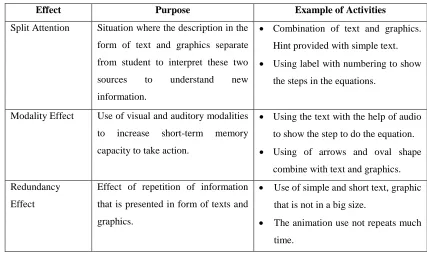
Table 1: Learning Strategy Approach in CLT
Effect Purpose Example of Activities
Split Attention Situation where the description in the
form of text and graphics separate
from student to interpret these two
sources to understand new
information.
Combination of text and graphics.
Hint provided with simple text.
Using label with numbering to show
the steps in the equations.
Modality Effect Use of visual and auditory modalities
to increase short-term memory
capacity to take action.
Using the text with the help of audio
to show the step to do the equation.
Using of arrows and oval shape
combine with text and graphics.
Redundancy
Effect
Effect of repetition of information
that is presented in form of texts and
graphics.
Use of simple and short text, graphic
that is not in a big size.
The animation use not repeats much
In the design phase, it lists the content of the course that is subject matter analysis, steps of instruction and also type of media mode. This phase is carried out after the analysis phase. This phase is concerned with the design and the approach used. Below is the some example of the design phase that developer done in a storyboard.
The video that are developed are more focus on the education video with the title “Solving IVP by using Picard’s Methods”. This video contains screen captured video from Microsoft PowerPoint by using software called Camtasia Studio. The duration of the video is about ±8 minutes with the size of video is 1280 x 718. To get a high quality of video, the video that was developed are using MP4 type of video. So the sound and video are more clear and high quality. This video can be watching by using video media player such as Gom Player, RealPlayer, Quick Time Player, VLC Media Player and others. So, this give advantages to the users to watch the video everywhere and anytime they want.
Description of the display will be accompanied by a diagram to ease of reference. The discussion in this section will be facilitating the user for more understanding the concept apply and the privileges of this video.
Video consists of sections Induction Set, Introduction, Note, Example & Solution, Exercise, Conclusion
4.1 Split Attention effect
So, for this video developer has chosen to put ‘Hint’ in the example that is shown. The hint contains short term that can be remembered by user easily. For example in the Figure 4.9, the Split Attention Effect is applying in this video. Combination of text and graphics are used to avoid the repeated of information. Label are given such as “Get from the question” to make users easy to understand and can get what is the main point easily. Other than that, the hint given are using short term word such as “List the stating value” to guide users to follow the steps given. It is related to the Cognitive Load Theory where an individual memory only can interpret small number of element. Sequences of steps are numbered and labeled in the figure to facilitate, so the users do not have to commute between the texts and diagrams. Sequences were numbered and labeled with a circle and the necessary information must be as well placed next to the steps. For example in Figure 4.10, its show the full sequences of the part of Solution for example given in this video.
4.2 Modality Effect
4.3 Redundancy Effect
Repeatedly occurring examples of redundancy situations could be found in maps, pie-charts and others. For example, traditional instructional manuals for a software application usually required learners to simultaneously pay attention to the explanations and instructions given. In this situation, the learners are placed into a split attention situation that may bring them into a high level of extraneous cognitive load.
One way to overcome this problem is eliminating the essentially redundant hardware and placing graphical representations of the computer screen. In this video, to reduce the redundancy effect, animation in the video are not repeated more than one time. Other than that, in this video developer do not use more text. It will make users loss their focus to watching this video. For example in Figure 4.12, less text is used to make users focus on the video. All text that is used is the simple one and the graphic used also not in a big size and not mix with the text in the middle. So with this, no redundant occur and user can easily understand the notes one by one without the problems for other thing.
5. METHODOLOGY
Evaluation is the process of getting user feedback in terms of content, methods delivery and design used in the video. This process is important for repair mistake and overcome weaknesses in the developed of video.
Questionnaire (25 items) that will be used in this evaluation (refer to Appendix B), consists of three sections. All items in Section A, B and C is constructing by developer. Items distribution for this questionnaire is shown as below:
In the questionnaire, it has 3 sections that are Section A, B and C. For Section A, developer needs some basic information about the respondents. The question asks such as gender, experience and others. From this, the developer can know a little bit about the background of the respondents.
Other than that, for Section B, developer will ask about the video according to the learning theory used that is Cognitive Load Theory (CLT). In CLT, the respondents are ask question about the learning theory apply. It will ask does this learning theory will help students or not.
Lastly, for Section C, students will be asking the other question about the learning using video. From this we can get the perfection of the student.
According Sakaran (2003), the type and form of questions in the questionnaire will determine the quality of the questionnaire. As the developers wanted to see how the strength of the applied learning video can help students increase their interest and their performance in Mathematics topics Picard's method. The methods used can be assessed using a Likert Scale.
6. FINDINGS OF THE STUDY
The number of total respondent that participated in this research is 10 persons (Refer to the Figure 4.13). As we can see, the majority involve in this research are female compared to male. This happen because the questionnaire are given randomly to the students of 4SPT to evaluate the video.
Figure 4.14 shows the percentage of 10 respondents who like to watch video. The results show that 100% of them love to watch video. Most of the respondents said that the most type of video that they watch are entertainments video, current issues video and others. According to the survey that has done, almost of the respondent said that they have been using the video one of the method for learning. Refer to the Figure 4.15, it shows that all of respondents (100%) said that they have an experience in using video as a method for learning. Many of them said that, the type of video that they used for learning such as video for tutorial, video for learning and others.
6.2 Section B: Implementation of Theory
According to the analysis that has been done, most of the respondents said that the element in the Cognitive Load Theory (CLT) that was applied in the video was successfully helping them in order to understand the content of the video. For example, most of the respondents about 70% was agree and 30% strongly agree with a statement that the use of arrow help them to find the important key point in the video that have develop.
Other than that, another 60% of respondents agree and 40% strongly agree with the statement that the sequences provided in the video are labeled and numbered help them to learn the content in the video. But in developing this video, there are some elements that are less favored by the users. Approximately 30% of the respondents stated are not sure of the fact that this video is boring or not. This may be due to the effect of background music or sound in this video the poor. While approximately 70% of the respondents also stated that developed this video is not boring. This may be related to the use of animation, images, and multimedia elements used in this video meet their needs.
6.3 Section C: Perception
Using video in learning has their own advantages and disadvantages. It is depend on the strategy learning use and the content in the video itself. According to the Table 4.2, as we can see it showed the result of the analysis that has been made on the evaluation of the video that have been developed. As we can see, about 80% of respondents say that they agree and 10% of respondents strongly agreed with the statement that this video can help them in learning the topic shown in the video. Using video as a method of learning gave them some advantage in order to learn everywhere, anytime and easy to handle. With the help of video they can easily understand the topic because the steps provided in the video are shown one by one. So respondents can stop or paused the video wherever they want and can continue to learn anytime.
not like using video in learning. It showed that about less than 20% of the respondents not using video as the teaching method in learning. This is because some of these respondents might not the type of person that using video as a method of learning.
7. DISCUSSION
Developer starts the development of video by analysis phase where the entire problem involves in these situations are identified and then chose Cognitive Load Theory as a learning theory that will be implementing in this video. Lastly, after the process of development take place, the process of evaluation was made to get the user feedback about this video.
To ensure that the development of this video meets the requirements of the users then, evaluation has been carried out. This process is intended that all problems were aired in the early planning can be overcome. Respondents were 10 final year students of the Faculty of Education, UTM from the course Bachelor of Science and Computer with Education (Mathematics), (SPT) that has taken subject Advanced Differential Equations (ADE).
In the questionnaire, developer has divide the question into three main parts that are respondent’s demography (Section A), implementation of the theory (Section B) and perception of the respondent according to the video (Section C). Questions for each section are about 10 to 12 questions. This brings the total numbers of questions are about 24 questions. Items analysis method is implemented based on Likert scale.
CLT suggests that the best learning take places with the conditions that are equivalent to the individual cognitive design. According to Sweller et al., (1988), one of study that conduct by George Miller showed that short-term memory are limit the number of elements that can be interpreted by the individual or learner. So, from this developer have tried to develop one video that use CLT that contains elements to reduce Split Attention Effect, Modality Effect and Redundant Effect for users.
As shown in Table 4.1, the results showed that some elements in a CLT that have been applied in the video gave some advantages to the users. We can see in item number 2, about 70% of respondents agree and strongly agree with the statement that state the combination of graphics and text in the video that are develop help them to understand the content in the topic more easy and fast. In a CLT, this aspect is related to the Split Attention Effect. When graphics and text is combining together, it can reduce the cognitive load that happens to the users. It is similar to the textual segments that are used in the comics and cartoons for children. This will reduced the split attention and make the children easily to understand the comics.
Other than that, developer tries to put some hint in the learning video. From this, about 70% of respondents agree and said that the hint that are given in the video make them easy to understand the content of the topic. The sequences of steps that are numbered and labeled also give advantages to them in order to learn more easily. Split attention state that it is a condition in which descriptions in the form of text that is separate from graphics and students need to interpret these resources to understand new information.
respondents agree with the statement. In the video, developer has used some arrow and oval shape in a red color to appoint the important steps in the topic to show the step of calculation. This is related to the CLT, to reduce the modality effect. The use of visual and auditory modalities that will be increase the short-term memory capacity for taking action. The red arrow in the video will blink when audio said Picard’s Method. Using the text with the help of audio to show the step to does the equation can help users more focus to this video.
In order to reduce the redundancy effect in this video, developer have take an action there was no repetition for the animation in this video. When there is redundant occur in the video, it will disturb the process of learning. Besides that, the directions that have been made for this video are simple and clear. So, it help user to understand the video easily. The graphics use in this video also has a suitable in size and related to the topic taught. So with this some of the elements in the CLT can be reduce.
Result from the observation of the data analysis that have been done, it can be conclude that for overall, the Cognitive Load Theory that have be use in this video successfully have be implemented and the respondents felt that learning by using this theory is able to reduce the burden that is in their minds. The use of multimedia elements also helps them in understanding the content of the topic. They are also able to focus on learning by using this video. But in developing this video, there are some elements that are less liked by the users. Approximately 30% of the respondents stated are not sure of the fact that this video is boring or not. This may be due to the effect of background music or sound in this video that is not suitable for them. It is also might be some of this respondents is might not the type of person that are using video as an aids of learning.
As a conclusion, the application of Cognitive Load Theory in this video a little bit help students learn about topics that are in the video. Some elements that are placed in the video like Hint, graphics, text and others can give some extent help in reducing the cognitive load occurring. However, there are some elements that should be considered by developers in developing learning videos like this. Elements, such as background music, audio and animation should be given attention to produce a video that is not boring for the students.
Video can be an exceptionally effective resource that can be use in the classroom for many reasons. It is not only for learning but for teaching also. Video can reach people with a wide variety of learning styles. It is important to remember when using video that the medium needs to be manipulated to meet specific instructional needs. It is not serve the purpose of something to use to fill time but rather as a very valuable asset to make the information personal and interesting for the learner. In this research, developer wants to find out the perception of the users about the effectiveness and interest of the user toward the learning video that have been developed.
From Table 4.2, we can see that about 90% of the respondent agrees with the statement in the item number 13 that state that using the learning video it helps respondents to learn the topic that contains in the video. The video contains a lot of information about the topic, Picard’s Method. Developer showed two examples that contain steps by steps calculation in order to make user understand the topic easily.
As an individual’s, our mind are not really good to interpret more data. If more data are being interpret by our brain, cognitive load will take place. This is why our brain cannot remember it too long. With this video also, respondent agree with the statement that this video can increase their efficiency while studying. The note and steps that are given in this video are in a short term and easy to understand.
Lecturer or teacher who uses instructional video in the class said that their students retain more information, understand the concepts more rapidly and are more enthusiastic about what they are learning. With video as one component in a thoughtful lesson plan such as Mathematics, students often make new connections between curriculum topics and discover new things between these topics and the world outside the classroom. So, about 90% of respondents said that the statement in item number 20 that said this learning video help them in learning. This video make them not boring because of the element multimedia that have been insert in the video such as animation, graphics, sound and others.
But there are some elements in this video that are not likes by the respondents. In item number 9, about 50% of respondents did not like the audio or music that been used in this video. It is might be because the music that have been used in this video are not suitable with them and the quality of the background voice used in this video are not really good to them. Besides that, by using this video also make some respondents not boring in their learning.
However, not all respondents indicated interest in the use of video in learning. Data analysis showed less than 20% of respondents said that the development of this video cannot help them and not be able to increase their efficiency in learning the topics being taught. This may be due to several factors such as these respondents might be not a type of person that using video as a method of learning.
According to Apple Report of Education (1989 in Yusup Hashim, 1997, page 241), it stated that in the achievement of the students in education by using multimedia technology are more efficient than traditional teaching. This can be shown by using the analysis that have been done in this research that the respondents are more interact to study by using the video that have been develop and they said using video make their learning become more enjoyable and not boring. So, this can show that the video that develop have a positive side to the respondents.
7.1 Strength of the video
Results from the evaluation, there is one question that have been asked to the respondents about the advantages of using video in learning. The following are the examples of the answer that have been given by respondents:
i. Tidak bosan dan dapat menarik perhatian.
ii. Dapat menambah minat pelajar untuk belajar dan boleh dijadikan rujukan pada bila-bila masa.
iii. Membolehkan pelajar belajar mengikut keperluan dan tahap masing-masing dimana pelajar ada kuasa untuk mengawal video tersebut.
iv. Video lebih interaktif.
vi. Jalan kira yang ditunjukkan nampak jelas dan teratur.
It is showed that, the video that are develop have their own advantages. The video use can attract the students’ attention to study and make them not feeling boring to study. Other than that, this video also can be using by students everywhere and anytime they want. The steps that are shown in the video can help students to learn one by one about the topic that have been teach. This can make the learning more efficient and easy to remember by students. This is similar to a few researches that have been conducted by (Funkhouser, 1993; Henderson and Landersman, 1992: Al Ghamdi, 1987) found that:
- Students who use computers in Mathematics have a more positive attitude toward himself as a mathematician and capable of solving more complex problems.
- Computer software that is used helps students to understand the mathematical concepts and principles more easily and effectively.
- Achievement of students in the final examination showed a significant increase.
7.2 Weaknesses of the video
There are some disadvantages in this video that have been comment by the respondents. Some of the comments of the disadvantages of the video that are given by the respondents are as follow:-
i. Tukar muzik ataupun tidak perlu diletakkan muzik. ii. Audio yang digunakan agak membosankan.
iii. Perlu menggunakan audio/muzik yang lebih menarik.
iv. Pergerakan masuk sesuatu isi agak lambat dan ada yang terlalu cepat.
The use of the background’s sound in this video is not really good. Other than that, some respondents also comment that the movement in and out of the content in this video is really slow and some are really fast. So user can not catch up the content to understand it. Animations that have been use in this video also just a simple one. It is because developer just only uses the Microsoft PowerPoint to make the slide.
8. CONCLUSION
Thus, a developer must plan and gather all the important information and materials involved in advance to ensure that a smooth work can be done. Developers hope that the development of this video can provide some benefits to all the users. However, this video cannot replace the real role of the teacher or lectures and it can only be used as alternative materials that will facilitate the teaching and learning process.
REFERENCES
Abhaya Asthana (2012). Multimedia in Education - Introduction, The Elements of, Educational Requirements, Classroom Architecture and Resources, Concerns. USA: NET Industries.
Al Ghamdi Y.A.S. (1987). The effectiveness of using microcomputer in learning algebraic precedence conventions. Doctoral Dissertation, Florida State University.
Baharuddin Aris, Rio Sumarni Sharifuddin & Manimegalai Subramaniam (2001). Reka Bentuk Perisian Multimedia. Edisi Pertama. Skudai, Johor : Muapaka Jaya Percitakan Sdn. Bhd.
Burns, R. (1995). The adult learner at work. Sydney:Business and Professional Publishing.
Brown, J.W., Lewis, B.R. & Harcleroad, F.F. (1985). AV Instruction: Technology, Media and Methods, 6th. Ed. New York: MacGraw-Hill Book Company.
Carol Herron, Mahew Morris, Teresa Secules, & Lisa Curtis (1995). A Comparison Study of the Effects Video-Based versus Text-Based Instruction in the Foreign Languge Classroom. The French Review. USA.
Cooper, G. (1998). Research into Cognitive Load Theory and Instructional Design at UNSW. Australia: University Of New South Wales.
Craig Errey, Paul Ginns, & Claudia Pitts, (2006). Cognitive load theory and user interface design: Making software easy to learn and use. The Performance Technologies Group.
David Reiss (2007). Video-based Multimedia Designs: A Research Study Testing Learning Effectiveness. Canadian Journal of Learning and Technology. Fall.
Dick, W. (1989). Planning Effective Instruction. New Jessey, Prentice Hall.
Ee Ah Meng (1999). Siri Diploma Perguruan, Pendidikan di Malaysia 1, Falsafah Pendidikan, Guru dan Sekolah. 2nd . ed. Shah Alam. Penerbitan Fajar Bakti Sdn. Bhd.
Erickson, D.K. (1999). A problem-based approach to mathematics instruction. Mathematics Teacher.
Good, T. and Brophy, J. (1990). Educational psychology: A realistic approach. (4th ed.). White Plains, NY: Longman
Handman G. P. (2002). Video Collection Development in Multi-type Libraries. London. Greenwood Press.
Henderson, R.W. & Landesman, E.M. (1992). The integrative videodisk system in the zone of proximal development: Academic motivation and learning out comes in pre-calculus. Journal of Educational Computing Research, 21(3): 33-34.
Hofstetter F.T. (2001). Multimedia literacy. Pennsylvania State University: Irwin/McGraw-Hill
Illeris, Knud (2004). The three dimensions of learning. Malabar, Fla: Krieger Pub.
Jamalludin Harun and Zaidatun Tasir (2000). Pengenalan Kepada Multimedia. Edisi Pertama. Kuala Lumpur: Venton Publishing.
Jamalludin Harun, Baharuddin Aris & Zaidatun Tasir (2001). Siri Modul Pembelajaran-Teknologi Multimedia. Skudai, Johor: Universiti Pembelajaran-Teknologi Malaysia.
Jamalludin Harun and Zaidatun Tasir (2003). Asal multimedia dan aplikasinya dalam pendidikan. PTS Publication, Bentong.
John V.C. and Louis M. (1996). An Interactive Guide to Multimedia. Indiana: Que Education & Training.
Macnab, D. S. & Cummine, J. A. (1986). Teaching Mathematics. Oxford: Basil Blackwell Ltd.
Macknight, F. (1981). Review and Analysis of Present Video Use in EFL teaching. MA Thesis, University of Wales, Cardiff.
Mok Soon Sang, (1996), Pendidikan Di Malaysia. Kumpulan Budiman Sdn Bhd, Kuala Lumpur.
Norhaziana Ajib (2006). Penghasilan VCD Pembelajaran Untuk Subjek BTA4223 (Teknologi Konkrit) BAgi Topik Konkrit Ringan di KUiTTHO. KUiTTHO: Tesis Projek Sarjana Muda.
Ormrod, Jeanne (2012). Human learning (6th ed.). Boston: Pearson.
Paas, F., Renkel, A., & Sweller, J. (2004). Cognitive Load Theory: Instructional Implications of the Interaction between Information Structures and Cognitive Architecture. Instructional Science.
Rozinah Jamaludin (2005). Multimedia dalam Pendidikan. Kuala Lumpur. Prin-Ad Sdn. Bhd.
Sakaranm U. (2003). Research Methods for Bussiness : A Skill Building Approach. 4th
Edition. US : John Wiley & Sons.
Schuman, L. (1996). Perspectives on instruction. [On-line]. Available: http://edweb.sdsu.edu/courses/edtec540/Perspectives/Perspectives.html
Swafford, J. O., Jones, G. A. & Thornton, C. A. (1997). Increased Knowledge in Geometry and Instructional Practice. Journal for Research in Mathematics Education.
Sweller, J. (1988). Cognitive load during problem-solving: Effects on learning. Cognitive Science.
Sweller, J., Van Merrienboer, J. J. G., & Paas, F. G. W. C. (1998). Cognitive architecture and instructional design. Educational Psychology Review.
Sweller, J. (2002). Visualisation and Instructional Design. Australia: University Of New South Wales.
Sweller, J., (1999). Instructional Design in Technical Areas. Camberwell, Victoria, Australia: Australian Council for Educational Research.
Wong, G. H. (1999). Pembinaan Perisian Pembelajaran Berbantukan Komputer Mata Pelajaran Matematik Bertajuk Nombor Negatif (Operasi Darab dan Bahagi). Universiti Teknologi Malaysia, Projek Sarjana. Not Published.
Yusup Hashim (1997). Media Pengajaran Untuk Pendidikan Dan Latihan. Kuala Lumpur: Fajar Bakti.