ABSTRACT
MEREDITH, JAY RUSSELL. Increasing Network Resilience to Persistent OSPFv2 Attacks through Automated Network Recovery. (Under the direction of Dr. Rudra Dutta and Dr. Douglas Reeves.)
Networked systems are under constant attack and, inevitably, will be compromised. Therefore, it is critical that routing protocols be moreresilient, in order torecoverfrom malicious actors. The cost of not preparing for recovery, both financial and in terms of data loss, far outweigh any cost
incurred preparing for recovery.
In this dissertation we explore the importance of recovery as a key component of making
net-works more resilient against malicious actors. We first discuss the need for added resilience to
OSPFv2 networks by reviewing the five primary accepted recovery techniques (Restore, Rollforward, Reinitialize, Reconfigure, and Replace) and then experimentally evaluate the success of each
tech-nique against modern persistent OSPFv2 attacks. Next, we further synthesize recovery and resilience
to form the Virtual Router Resiliency Cluster (VRRC), a system designed to seamlessly integrate with any existing OSPFv2 network, making the network resilient to allknownlink-state attacks against OSPFv2 in addition to providing a rudimentary network recovery mechanism.
Having laid the foundation for network recovery, we present two new approaches for triggering auto-recovery: through fingerprinting routers and using time as a means of authenticating LSA
updates. Routers can “fingerprint” each other after the network is initially brought up in a trusted
environment. If the fingerprint of a router changes, it may indicate that a malicious actor is spoofing or that the router is compromised. Detecting this change can then be used to trigger a recovery
mechanism. Our second approach demonstrates how the LSA Synchronized Time Controller (LSTC)
makes the network more resilient to attacks against OSPFv2. Routers can agree, in advance and out of band, on a very specific sequence of intervals at which they will generate LSAs, and treat any
LSA that is generated at any other time as attacks - therefore simply ignoring them and if necessary
© Copyright 2019 by Jay Russell Meredith
Increasing Network Resilience to Persistent OSPFv2 Attacks through Automated Network Recovery
by
Jay Russell Meredith
A dissertation submitted to the Graduate Faculty of North Carolina State University
in partial fulfillment of the requirements for the Degree of
Doctor of Philosophy
Computer Science
Raleigh, North Carolina
2019
APPROVED BY:
Dr. Laurie Williams Dr. Alex Kapravelos
Dr. Rudra Dutta
Co-chair of Advisory Committee
DEDICATION
TABLE OF CONTENTS
LIST OF TABLES . . . vii
LIST OF FIGURES. . . .viii
Chapter 1 Introduction. . . 1
1.1 Resilience . . . 2
1.2 Thesis Statement . . . 5
1.3 Contributions . . . 5
1.4 Dissertation Outline . . . 7
Chapter 2 Background . . . 9
2.1 TCP/IP and the Routing Infrastructure . . . 9
2.2 OSPFv2 . . . 10
2.2.1 OSPFv2 Operations . . . 10
2.2.2 Strengths/Weaknesses . . . 11
2.3 Routing Attacks . . . 11
2.4 Specific Attacks Against OSPFv2 . . . 14
2.4.1 OSPFv2 Vulnerabilities . . . 15
2.4.2 Table Overflow Attack . . . 15
2.4.3 LSID . . . 15
2.4.4 Max-Age . . . 15
2.4.5 Max-Seq Number . . . 16
2.4.6 Seq++ . . . 16
2.4.7 Remote False Adjacency . . . 16
2.4.8 Disguised LSA v.1 . . . 17
2.4.9 Disguised LSA v.2 . . . 17
2.4.10 Partition Attack . . . 17
2.4.11 Loki . . . 18
2.5 Brief Summary of Proposed Countermeasures . . . 18
Chapter 3 Related Work . . . 20
3.1 Revised Network Resilience Architecture . . . 20
3.2 Review of Resilience Architectures . . . 21
3.2.1 Cyber Resilience Engineering Framework (CREF) . . . 21
3.2.2 Resili-Net . . . 22
3.2.3 D2R2+D R . . . 23
3.2.4 Building Secure, Resilient Architectures for Cyber Mission Assurance . . . 24
3.3 Revised Resilience Architecture . . . 26
3.3.1 Anticipate . . . 26
3.3.2 Prevent . . . 26
3.3.3 Detect . . . 26
3.3.4 Recover . . . 27
3.4 Recovery Terminology and Characteristics . . . 27
3.4.1 Degree of Automation . . . 27
3.4.2 Response Time . . . 28
3.4.3 Distributed . . . 28
3.4.4 Level of Operation/Deployment . . . 28
3.4.5 Attack-Adaptive . . . 29
3.4.6 IDS Reliance . . . 29
3.4.7 Response Selection . . . 29
3.4.8 Recovery Technique . . . 30
3.5 Review of Network Recovery Techniques . . . 30
3.5.1 Manual Recovery . . . 33
3.5.2 Damage Control and Assessment (DC&A) . . . 33
3.5.3 Cooperative Security Manager (CSM) . . . 34
3.5.4 Event Monitoring Enabling Responses to Anomalous Live Disturbances (EMER-ALD) . . . 34
3.5.5 Lee’s IRS . . . 34
3.5.6 Adaptive Agent-based Intrusion Response System (AAIRS) . . . 35
3.5.7 Cooperative Intrusion Traceback and Response Architecture (CITRA) . . . 35
3.5.8 Network IRS . . . 35
3.5.9 Specification-based IRS . . . 36
3.5.10 Phoenix . . . 36
3.5.11 Distributed Backup for Local Area Networks (DIBS) . . . 36
3.5.12 Adaptive Intrusion Tolerant System (ADEPTS) . . . 37
3.5.13 Distributed Intrusion Prevention System (DIPS) . . . 37
3.5.14 Jahnke . . . 37
3.5.15 Fast Proactive Recovery from Concurrent Failures (FPRCF) . . . 38
3.5.16 The Fault/intrusiOn REmoVal through Evolution and Recovery (FOREVER) . . 38
3.5.17 Response Recovery Engine (RRE) . . . 38
3.5.18 Spontaneous Recovery in Dynamical Networks (SRDN) . . . 38
3.5.19 Autonomous Reconstitution of Compromised Cyber-systems (ARCC) . . . 39
3.5.20 Recovery of Infrastructure Networks After Localized Attacks (RINALA) . . . 39
3.6 Analysis of Recovery Techniques to Date . . . 40
3.7 Discussion . . . 41
3.8 Summary . . . 41
Chapter 4 Automatically Recovering a Network from Persistent OSPFv2 Attacks . . . 43
4.1 Introduction . . . 44
4.2 Background and Prior Work . . . 45
4.2.1 Existing Recovery Studies . . . 45
4.3 Fundamental Recovery Mechanisms . . . 46
4.3.1 Restore . . . 47
4.3.2 Rollforward . . . 47
4.3.3 Reinitialize . . . 48
4.3.4 Reconfigure . . . 48
4.3.6 Recovery Techniques and the Literature . . . 49
4.4 Experimental Evaluation . . . 49
4.4.1 Lab Setup . . . 49
4.4.2 Launching the Attack . . . 50
4.4.3 Effectiveness of each Recovery Technique . . . 51
4.4.4 Quantitative Analysis for Reconfigure and Replace . . . 54
4.4.5 Quantitative Analysis for Reconfigure and Replace against a DoS Attack . . . . 57
4.5 Discussion and Limitations . . . 59
4.6 Summary . . . 61
Chapter 5 Increasing Network Resilience to Persistent OSPFv2 Attacks . . . 63
5.1 Introduction . . . 64
5.2 Background . . . 65
5.2.1 Remote False Adjacency . . . 65
5.2.2 Disguised LSA v.1 . . . 65
5.2.3 Disguised LSA v.2 . . . 66
5.2.4 Partition Attack . . . 67
5.3 Methods . . . 68
5.3.1 The Virtual Routing Resilience Cluster (VRRC) . . . 68
5.3.2 Information used for Detection . . . 70
5.3.3 Detection . . . 71
5.3.4 Recover and Adapt . . . 72
5.4 Experimental Evaluation . . . 73
5.4.1 Lab Setup . . . 73
5.4.2 Results . . . 75
5.4.3 Network Statistics and Performance Measurements . . . 77
5.5 Discussion and Limitations . . . 79
5.6 Summary . . . 79
Chapter 6 Fingerprinting OSPFv2 Routers . . . 80
6.1 Introduction . . . 81
6.2 Methods . . . 81
6.3 Experimental Evaluation . . . 82
6.4 Results . . . 84
6.4.1 Timing Analysis . . . 84
6.4.2 Hello Analysis . . . 84
6.4.3 LSA Analysis . . . 84
6.4.4 Heuristic Construction . . . 85
6.4.5 Performance Results . . . 86
6.5 Limitations and Future Work . . . 87
6.6 Summary . . . 87
Chapter 7 Combating OSPFv2 Attacks Using Time Synchronization . . . 89
7.1 Introduction . . . 89
7.3 Timing as Secure Channel . . . 91
7.3.1 Detailed Methodology and Test Environment . . . 92
7.3.2 Using Time Triggered LSA Updates to Prevent Spoofed LSAs . . . 94
7.4 Experimental Evaluation . . . 95
7.4.1 Lab Setup . . . 95
7.4.2 Random Time Interval Generator . . . 96
7.4.3 Preventing Spoofed LSAs . . . 97
7.4.4 Optimization & Cost . . . 98
7.5 Discussion and Limitations . . . 98
7.6 Summary . . . 99
Chapter 8 Conclusions . . . .100
BIBLIOGRAPHY . . . .102
APPENDICES . . . .108
Appendix A Network Attacks: Diagrams and Weekly Summary . . . 109
A.1 Diagrams of Attacks Against OSPF . . . 109
Appendix B Network Attack Generator . . . 118
B.1 Attack Generator . . . 118
LIST OF TABLES
Table 2.1 OSPFv2 Attacks . . . 19
Table 3.1 Current List of all intrusion response techniques that incorporate recovery . . . 31
Table 3.2 Current List of other intrusion response techniques that are not reliant on the IDS . . . 32
Table 3.3 Intrusion Response Milestones . . . 40
Table 4.1 Previous security systems utilizing these recovery techniques . . . 47
Table 4.2 Recovery Overhead and Time . . . 55
Table 4.3 Recovery Overhead and Time During DoS Attack . . . 58
Table 5.1 OSPFv2 Attacks . . . 68
Table 5.2 Overall Packetloss . . . 78
Table 7.1 Triggered LSA Updates . . . 97
LIST OF FIGURES
Figure 1.1 Overview of the five subsystems that make up a resilient architecture . . . 3
Figure 3.1 Diagram of Resilience Architecture designed by Sterbenz et al[Ste10]. . . 22
Figure 3.2 Diagram of Resilience Architecture designed by Smith et al.[Smi11]. . . 24
Figure 3.3 Diagram of Resilience Architecture designed by Goldman et al.[Gol]. . . 25
Figure 4.1 Lab Topology . . . 51
Figure 4.2 Restore demonstrated no recovery . . . 52
Figure 4.3 Rollforward demonstrated no recovery . . . 52
Figure 4.4 Reinitialize demonstrated no recovery . . . 53
Figure 4.5 Reconfigure recovered network in 115s . . . 53
Figure 4.6 Replace recovered network in 35s . . . 54
Figure 4.7 USNET 24Node Topology . . . 56
Figure 4.8 Reconfigure recovered USNET in 122s . . . 56
Figure 4.9 Replace recovered USNET in 42s . . . 57
Figure 4.10 DoS Attack: Reconfigure recovered network in 115s . . . 58
Figure 4.11 DoS Attack: Replace recovered network in 35s . . . 59
Figure 4.12 Reconfigure DoS recoverey USNET in 122s . . . 60
Figure 4.13 Replace DoS recoverey USNET in 42s . . . 60
Figure 5.1 Reference Topology . . . 66
Figure 5.2 VRRC Architecture . . . 70
Figure 5.3 Development Network . . . 74
Figure 5.4 No Virtual Routers, No program running . . . 76
Figure 5.5 Virtual Routers, without program running . . . 76
Figure 5.6 Virtual Routers, with program running . . . 77
Figure 6.1 NSF-NET-Original . . . 83
Figure 6.2 NSF-NET Link Changes . . . 83
Figure 6.3 Software Analysis Heuristic Results . . . 86
Figure 7.1 Random Time Interval Generator . . . 93
Figure 7.2 Lab Topology . . . 94
Figure 7.3 Optimization . . . 99
Figure A.1 Diagram of LSID Attack. . . 110
Figure A.2 Diagram of MaxAge Attack . . . 111
Figure A.3 Diagram of Max-Seq Number Attack. . . 112
Figure A.4 Diagram of Sequence++Attack. . . 113
Figure A.5 Diagram of Remote False Adjacency Attack. . . 114
Figure A.6 Diagram of Disguised LSA v.1. . . 115
Figure A.7 Diagram of Disguised LSA v.2. . . 116
CHAPTER
1
INTRODUCTION
Implementing network recovery is an extremely old, yet under explored part of security research.
The vast majority of security research to date has been on preventing the exploitation of security vulnerabilities and detecting these exploitation attempts. Much less attention has been given to the
back end of security, which is repairing the damage done by an attack while adapting to prevent
further attacks in order to continue operations[Loc08; Zon14; Mer18].
The primary focus of research into routers and routing protocols has been on ensuring fault
tolerance, congestion control, load balancing, etc in an effort to make routing protocols as resilient
as possible to physical failures (e.g. cut lines, power outages, etc). As a result, modern networks are extremely fault-tolerant, capable of withstanding even catastrophic failures all the while maintaining
connectivity. The far-reaching, every-increasing level of connectivity and robustness provided by
networks and networked devices has significantly improved the productivity within academia, government, and industry due to the seamless integration of data and operations.
While the distributed operation of routing is robust to traditional Byzantine failures[Per88], it is still vulnerable to deliberate attack. Malicious attacks against the Routing infrastructure do not behave like traditional failures. They intentionally cause routers to fail at a highly accelerated rate,
or to propagate incorrect or inconsistent information throughout the network.
The reliance of networks and the devices they support (e.g. laptops, tablets, smartphones, IoT,
etc) has significantly increased the vulnerability of organizations, governments, and economies
array of connectivity that the Internet provides that a new threat has emerged. Not from natural
disasters or severed connections, but from malicious actors (script-kiddies, hactivist groups, rogue nations, etc) who are capable of constantly adapting and devising ever more elaborate means of
compromising data and circumventing network defenses.
When the routing infrastructure itself is compromised, routers have only basic (outdated) meth-ods of dealing with these situations (e.g. OSPF MD5 Authentication) for confirming that new links
entering the routing table are indeed legitimate. Even if authentication is enabled, at most there is
only a single pre-shared key. These deficiencies in the routing infrastructure can result in various at-tacks such as: black holing, MiTM atat-tacks, route poisoning, partitioning, etc. Additionally, subverted
control of routing facilitates other types of attacks, such as denial of service, eavesdropping, and
man-in-the-middle. As such, to ensure continued operations, it is necessary that network recovery be a key component in all future cyber resilience architectures, especially for the OSPFv2 routing
infrastructure.
The routing infrastructure we believe is a high value target, as almost all communication relies on its correct functioning. There are two levels of routing infrastructure: exterior protocols (e.g,
Border Gateway Protocol (BGP)), which connects roughly 55,000 autonomous systems into the
Internet backbone, and interior protocols (e.g. Intermediate System to Intermediate System (IS-IS) and Open Shortest Path First (OSPFv2)), which are used by carriers and enterprises to route traffic in
their own network. In this dissertation we have chosen Open Shortest Path First version 2 (OSPFv2) as the protocol of interest due to the wide-spread adoption and implementation making OSPFv2
global industry standards.
OSPF works in the following way. Routers flood information about their connections throughout the enterprise network. All routers in the network use this information to form a consistent picture
of these connections, and to choose the shortest path from any point to any point. This consistent
picture, or link state database, depends on receiving timely, accurate, and consistent information from all the other routers. The protocol refreshes this information frequently, so routing recovers
quickly from ordinary failures such as router and link loss.
1.1
Resilience
In this thesis, we consider system to be resilient if (under normal operating conditions and attacks),
it is capable of:
• maintaining some level of functionality, even when environment changes (e.g. an attack starts)
• improving functionality to full or near-full, when same environment continues (no attack)
A resilient network must be capable of not only predicting attacks, incorporating well-known
technique, but also take the necessary steps to endure an attack when compromised, while re-turning to normal operating capabilities. Then automatically update, so as not to succumb to the
same vulnerabilities. This multi-layer approach of having multiple systems capable of working in
conjunction as well as independently of one another will make the network infrastructure vastly more resilient to malicious actors.
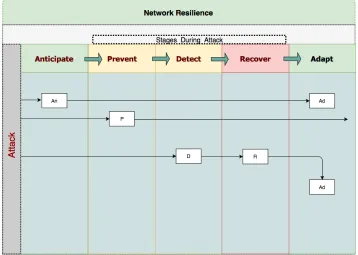
Figure 1.1Overview of the five subsystems that make up a resilient architecture A brief summary of each of the five resilience techniques are as follows:
• Anticipate: Ability to utilize data in such a way as to forecast the next attack.
• Prevent: Measures taken to actively look for vulnerabilities within ones one system to secure
weaknesses before they are exploited.
• Detect: Typically a reactive measure, systems designed to look for abnormalities or signatures
of known attacks.
• Recover: Designed to function in a post attack environment with the intent of returning
• Adapt: Update system defenses so they will no longer be vulnerable to same type of attack or
exploit.
The primary means of network security, to date, has relied on basic intrusion prevention and intrusion detection. Intrusion prevention is both an active and passive phase in security. In
preven-tion, the overall goal is to actively take steps to prevent an attack. For example, by hiring white hats
to actively determine weaknesses in an organizations network or adding network flow encryption to prevent a man-in-the-middle attack. The detection phase of security can also be both active and
passive. Detection scans network traffic looking for both attack signatures and suspicious activity.
The detection phase is where firewalls and Intrusion Detection Systems (IDS) are located.
Intrusion Response Systems (IRS) are part of the IDS. Modern IRS’ are designed to choose the
appropriate responsive action to an attack based on the alerts received from the Intrusion Detection System (IDS) and from there take evasive/corrective actions to ensure safety[Sta07]. In other words, while not all responses to the detection of an attack may be to recover, the choice to ‘recover’ is
always a ‘response’.
Recovery is designed to function in a post attack environment with the intent of returning cyber resources to a robust state. Recovery has been placed at various stages within the security process.
In most cases recovery is considered to be an independent technique, while in other cases, it is
considered to be an accessory of the IRS. Therefore, it is important to reiterate that the IRS is not the same thing as recovery. Intrusion response is predicated on the ability to detect one’s adversary,
while recovery is what is necessary in the aftermath of a successful attack. Adapt is the final system
utilized in a resilient architecture. During the adaptive stage, the networked systems are designed to adapt to the effects of an attack to keep an attack from being effective. In the best case scenario, a
network will be able to adaptbeforethe attack occurs, while in the worst case, a network will have to adapt as a result of recovery in the aftermath of an attack.
Each subsystem within the resilient architecture is design to work cooperatively and
indepen-dently of one another. The architecture depicted in Figure 1.1 acts as a visual aid for the following
examples: If a OSPFv2 network incorporating a resilient architecture with the above five subsystems is able to anticipate an attack, then the system will be able to immediately adapt in order to keep
the attack from exploiting or infiltrating the infrastructure (An –>Ad). Another example could be a scenario where the attack was not anticipated or prevented. In this scenario, once the attack was
detected, a recovery system would be triggered to restore the network to a functioning state in which
the attack no longer exists, while simultaneously adapting so as to no longer be vulnerable to the same attack (D –>R –>Ad).
The purpose of this dissertation is to motivate the need for making the OSPFv2 routing
1.2
Thesis Statement
As previously mentioned, while the routing infrastructure is extremely resilient towards natural
failures, this ceases to be true when malicious intent is the source of failure. Security researchers
must look beyond the conventional status quo of traditional ‘detection’ and ‘prevention’ techniques to address this problem. Therefore in order to maintain the level of connectivity that people have
come to expect, a new means of recovering from these malicious attacks must be developed. The
thesis statement of this work is the following:
OSPFv2 can be made more resilient to persistent OSPFv2 attacks through the introduction of LSA inspection, Layer 2 data, OSPFv2 router implementation, and LSA timing.
In this dissertation, the primary focus of our investigation is on making OSPFv2 more resilient
to malicious actors by evaluating the success of various techniques we have developed to prevent, detect, and recover.
While there are other Layer 3 routing protocols such as the Routing Information Protocol (RIPv2 and the Cisco proprietary Enhanced Interior Gateway Routing Protocol (EIGRP), they remain outside
the focus of our research. We also do not attempt to address network attacks other than those that
specifically target OSPFv2.
1.3
Contributions
In this dissertation, we make the following contributions:
• We analyze the effectiveness of the five accepted recovery techniques (Restore, Rollforward, Reini-tialize, Reconfigure, and Replace) against persist OSPFv2 attacks.The routing infrastructure of the Internet is a high-value target for malicious actors. The OSPFv2 protocol is one of the most widely used protocols for Autonomous System (AS) internal routing, and has been the
subject of attacks targeted at partitioning the network. Because of the widespread existing
penetration of OSPF, research in defending against such attacks has focused toward prevention and detection techniques working in tandem with OSPFv2 routers, rather than attempted
modification of the protocol itself. However, comparatively few studies have attempted to
address the topic of a network capable ofrecovery, which signifies a system that can be proof to an attack without the necessity for any specific attack to be explicitly detected, localized, or
countered. We first examine these existing recovery techniques and come up with the
against an isolated network formed of typical commercial network elements, while allowing
each such recovery mechanism to defend the network. Our experiments show that three of the five basic mechanisms can no longer defend against Partitioning or DDoS attacks when
attacks are persistent, and provides relevant performance results for the other two. Our results
also point the way to further improving these mechanisms for even more sophisticated attacks, in the future[Mer18].
• We analyze the effectiveness of the Virtual Router Resiliency Cluster (VRRC) in detecting and recovering the OSPFv2 routing infrastructure from persistent OSPFv2 attacks.The VRRC was designed to add resilience to the OSPFv2 routing infrastructure by providing an upgradeable platform on which multiple recovery ‘modules’ (characteristics) can be implemented. In its
current form the VRRC employs three base techniques. For convenience the techniques are
labeled as Deep LSA Inspection (DLSAI), Multi-Layer Authentication (MLA), and Forced Rout-ing Updates (FRU). DLSAI utilizes real-time, deep LSA samplRout-ing, through an ever-increasRout-ing
set of filters to narrow down the possible sources of the attack. Concurrently, MLA checks
against data gathered from Link Layer Discovery Protocol and Cisco Discovery Protocol (with Simple Network Management Protocol used for devices multiple hops away) allowing the
network to remain dynamic while comparing Layer 2 data against information gathered from
deep-LSA sampling. Finally, the initial recovery module, FRU is designed to purge the routing tables in the event a compromised link is detected. While simultaneously randomly electing
a new Designated Router and Backup Designated Router. This chapter explores the initial
success of these three techniques in an effort to build a next-generation IRS[Mer19].
• We establish that implementation differences observed at the packet level between physical OSPFv2 routers can be used to differentiate between routers.The widespread adoption of OSPFv2 as the interior gateway routing protocol of choice within enterprise and some service
provider networks could make the protocol an attractive target for bad actors. While OSPFv2 is an open standards based protocol, the specification is non-exhaustive leaving some design
decisions to the implementer. Bad actors may target OSPFv2 deployments by masquerading
as routers, performing router-in-the-middle or other similar techniques. The ability to detect when one router is falsely claiming to be another router through the analysis of the routers
fingerprint would be a powerful tool in the network operators arsenal. To date there has been
little research on fingerprinting OSPFv2. We analyze multiple packet captures taken from both physical and virtual instances of Cisco and Juniper routers to confirm the presence of
differ-ences in OSPFv2 implementations and to characterize these differdiffer-ences. From this analysis we
describe heuristics for predicting the OSPFv2 router based on identified characteristics and develop a software utility to conduct this analysis on packet captures. Ultimately we hope this
security posture by making it more difficult for bad actors to launch attacks against OSPFv2
networks.
• We analyze the effect of the LSA Synchronized Time Controller (LSTC) in preventing spoofed LSA Updates.Routing protocols are essential for correct network function and therefore make attractive targets for attackers. The OSPFv2 protocol is one of the most widely used
protocols for Autonomous Systems (AS) internal routing. OSPF has long been the subject of attacks designed to eavesdrop, partition, black-hole, or man-in-the-middle the network.
Our proposed solution adds the LSA Synchronized Time Controller (LSTC) to the network
infrastructure. The LSTC makes use of a deterministically pseudorandom number generator designed to calculate time intervals for LSA Updates, thus randomizing the LSA update times
on all routers and increasing the difficulty in gleaning the necessary information to launch a
targeted network attack. We show that the LSTC makes the network more resilient against all known persistent OSPF attacks and that the concepts are feasible to implement without
resorting to the complexity of key management, and without modifying the routing protocol.
1.4
Dissertation Outline
The goal of this dissertation is to investigate practical solutions for triggering auto-recovery to
ultimately make the OSPFv2 routing protocol more resilient.
In Chapter 2, we present a summary of TCP/IP, OSPFv2, and routing. We further go into detail by presenting the vulnerabilities of OSPFv2 against specific attacks.
Following the background, we discuss the related work in Chapter 3 by presenting a summary that focuses on the terminology and related work in the field of recovery.
Chapter 4 explores the current recovery techniques: Restore, Rollforward, Reinitialize,
Recon-figure, and Replace. Once these recovery techniques are reviewed, their success in being able to recover from a modern persistent OSPFv2 attacks is evaluated.
In Chapter 5 we further provide a synthesis between a resilient architecture by incorporating
a rudimentary recovery mechanism that is triggered by a three-tier detection method to form the Virtual Router Redundancy Cluster.
Chapter 6 addresses resilience from the perspective of detection. By identifying the differences
in OSPFv2 router configurations parameters that are observable within packet captures, we take the first steps in demonstrating that it is possible to detect with malicious actors have spoofed legitimate
routers.
Chapter 7 continues to build upon our previous research by providing even more information for a auto-recovery system regarding when to initialize recovery. This is done in two parts: First, we
instances, overriding their periodic nature, without extensive modification. Secondly, we
demon-strate that with such a synchronized pseudorandom LSA distribution, we can nullify attacks against OSPFv2 that depend on sending spoofed LSAs.
Finally, Chapter 8 provides direction for future research into recovery. We reiterate the need for
CHAPTER
2
BACKGROUND
The purpose of this chapter is to provide the reader with a summary of the operations of the OSPFv2
routing protocol and all the known attacks against OSPFv2. In Section 2.2 we begin by providing the reader with a detailed description of the workings of OSPFv2. Section 2.3 reviews how the attacks
are able to exploit OSPFv2 and other routing protocols. Then in Section 2.4 we review in detail the
attacks specific to OSPFv2.
2.1
TCP
/
IP and the Routing Infrastructure
The TCP/IP Routing Infrastructure is the foundation for modern routing protocols (e.g. BGP is TCP based and OSPFv2 is IP based). The TCP/IP routing infrastructure is a four-layer model consisting of the: Application, Transport, Internet, Link layers. The scope of this research focuses on the TCP/IP Internet layer, or more commonly known as the network layer in the OSI model. Each layer of the TCP/IP model has several protocols that provide a specific functionality[RM88].
The network layer is responsible for routing, addressing, and subnetting this is the layer routers
operate in. For routers to effectively and reliably send data over the network they rely on routing protocols, OSPFv2, IS-IS, and RIP to name a few. The job of the network layer is to forward packets
2.2
OSPFv2
Open Shortest Path First (OSPFv2) is an “Open standard” classless Interior Gateway Protocol (IGP)
that uses the shortest path first “Dijkstra’s algorithm” to calculate the shortest path to each
desti-nation. OSPFv2 incorporates atwo-layerhierarchy whose primary elements are theareaand the autonomous system(AS). Theareais a grouping of contiguous networks (logical subdivisions of the AS), while the AS consists of a collection of networks sharing a common routing strategy. The AS
can be logically subdivided into multiple areas under a common administrator[Moy98a].
2.2.1 OSPFv2 Operations
OSPFv2 is also a link state routing protocol. A link state routing protocol is best summarized by
describing thelinkas an interface on router and thestate“State of the Link” as both the description of that interface (e.g. interface IP address, subnet mask, type of network to which it is connected, routers
that are connected to network) and its relationship to neighboring routers. OSPFv2 establishes
these neighboring relationships through the exchange of ‘hello’ packets. OSPFv2 then propagates these Link State Advertisements (LSAs) rather than exchanging routing table updates. During the
update process, the LSAs are flooded to all OSPFv2 routers in thearea(they do not have to be directly connected). The OSPFv2 database is pieced together from LSAs generated by the OSPFv2 routers. Routers periodically send out their LSA updates (by default every 30min or immediately if
the routing state changes) to advertise their current state. It is the collection of all the link-states
that form the link state database.
The LSA process for updating a routers database when multiple instances of the same LSA are
received, as stated in[Jef05]that, “to determine which LSA is the most recent, perform the following calculation:
1. Compare the sequence number. The LSA with the highest sequence number is more recent
2. If the sequence numbers are equal, then compare the checksums. The LSA with the highest
unsigned checksum is the more recent.
3. If the checksums are equal, then compare the age. If only one of the LSAs has an age of MaxAge
(3600 seconds), it is considered the more recent. Else:
4. If the ages of the LSAs differ by more than 15min (Known as the MaxAgeDiff ), the LSA with the lower age is more recent
2.2.2 Strengths/Weaknesses
OSPFv2 has several components (flooding, fight-back, link authentication, and hierarchical rout-ing) that make it a very robust and resilient routing protocol against traditional network failures.
Unfortunately, flooding, fight-back, etc is not sufficient when it comes to a malicious attacks[Jon] [Wu99] [Moy98a].
• Flooding: OSPFv2’s flooding algorithm is very reliable. The flooding mechanism is the means
by which OSPFv2 propagates its LSA throughout the local network to ensure that all routers in the same area have the same topological database.
• Fight-Back: When a router running OSPFv2 receives an instance of its own LSA, more recent
than the last one it originated, it will advertise a newer instance of the LSA. The router will
either flush or update the false LSA, thus ensuring consistency with all the links
• Link Authentication: If enabled, OSPFv2 is capable of authenticating every packet sent across the network using a secret shared key. However, this key must be manually configured on
every router, so it is often the case that all routers in the AS use the same key if authentication
is even enabled at all
• Hierarchical Routing: Hierarchical routing was designed to deal with scalability, reduction in routing table size, reduction in routing resources, etc.
2.3
Routing Attacks
Routing protocols by their very design are resilient, capable of adapting to and recovering from
‘natural’ (disasters, cut wires, power failure, etc) and traditional Byzantine faults (accidental mis-configurations and faulty equipment). However, the traditional robust and resilient nature of these
routing protocols was never designed to endure concentrated and persistent targeted attacks (e.g. attacks that exploit the implementation weaknesses of these routing protocols). The rest of this
section is designed to further motivate the need for a recovery system by addressing all possible
“Damages” that will result from a routing attack, as accepted by the Network Working Group and the IETF.
Threat Action/Source: realization of an attack (when a system comes under attack). The Threat Actions/Source1against routing protocols may be broken down into two categories[RFC 4949, 4593] [Shi07][Bab06]:
• Outsider Attacks: These attacks may come from anywhereoutsidethe local network and have ability to send IP traffic to a router, possibly observe the routers’ replies, and potentially control
the path for a legitimate peer’s traffic (outsiders are not considered legitimate participants in
routing protocol).
• Byzantine: These are considered legitimate participants in the routing protocol and as a result are capable of subverting the router (these can also be the result of misconfigured or
faulty routers). R. Perlman states that the problem with Byzantine failure is that, “a node
with a Byzantine failure may corrupt messages, forge messages, delay messages, or send conflicting messages to different nodes”[Per88]. As a result a compromised router (just as with a misconfigured or faulty router) is capable of transmitting bogus information, because the ‘compromised’ router is considered a ‘legitimate’ peer/neighbor.
Threat Consequence: the resulting actions of an attack, as defined in RFC 2828 and 4949 [Shi00][Shi07]. The Threat Consequences against routing protocols are broken down into four general categories:
• Disclosure: attacker successfully accesses routing information
• Deception: legitimate router receives a forged routing message
• Disruption: legitimate router operations are interrupted or prevented
• Usurpation: attacker gain control over service/function of legitimate router
Now that we have classified the source and subsequent consequences of an attack against the
routing protocols, we will list the damage that might result from an attack. The damage is classified as the Threat Consequence Scope. The Threat Consequence Scope (TCS) can be either damage
Damage List 1.
• Network congestion: More data traffic is forwarded through some portion of the network than would otherwise need to carry the traffic.
• Partitioning: Some portion of the network believes that it is partitioned from the rest of the network when it is not.
• Black hole: Large amounts of traffic are unnecessarily re-directed to be forwarded through one router and that router drops many/most/all packets.
• Churn: The forwarding in the network changes (unnecessarily) at a rapid pace, resulting in large variations in data delivery patterns (adversely affecting congestion control techniques).
• Instability: The protocol becomes unstable so that convergence on a global forwarding state is not achieved.
• Clog: A router receives an excessive number of routing protocol messages, causing it to exhaust some resource (e.g., memory, CPU, battery).
• Overcontrol: The routing protocol messages themselves become a significant portion of the traffic the network carries.
• Looping: Data traffic is forwarded along a route that loops, so that the data is never delivered (resulting in network congestion)."
These examples of attacks against OSPFv2, IS-IS, and BGP2demonstrate how traditional methods fail to prevent, detect, or recover from an attack launched by an intelligent adversary.
• Outsiders: Firewalls and IDS can be compromised or circumvented
• Byzantine Robustness: Will also break down in the case of an intelligent adversary[Ram13] [Pau07]
The three attacks chosen to demonstrate how traditional methods fail are the Partition, Replay, and Route Injection attacks. For convenience, we systematically break each attack down into its
respective category based on: Threat Source, Threat Consequence, and Threat Consequence Scope.
1. OSPFv2:
(a) Source: The partition attack[CN15]
i. Consequence: The Partition attack would result in both Deception and Usurpation
and could be committed by an Outsider or Byzantine.
A. Consequence Scope: Partitioning, looping
2. IS-IS:
(a) Source: The Replay Attack[HK12]
i. Consequence: The Replay attack would result in Disruption of legitimate routing
operations
A. Consequence Scope: Churn, Instability
3. BGP:
(a) Source: Route Message Insertion/Deletion[Bab06][Mur06]
i. Consequence: Message Insertion/Deletion would result in Deception and Disrup-tion to routing operaDisrup-tions
A. Consequence Scope: Starvation, Black hole
The current deployment of OSPFv2 and IS-IS were standardized well over a decade ago and are
the primary ‘interior’ routing protocols in use today, and will continue to be for some time (this is primarily due to the fact that implementing a new routing protocol takes decades to standardize).
While the slow-adoption of upgrading and updating routing protocols is advantageous for
attackers, this same weakness can also be made advantageous for developing a recovery system. The Threat Consequence Scope clearly defines/identifies all possible ways for the routing protocols to be exploited/corrupted as they exist in their current release. This is bolstered even further by the knowledge that routing attacks in the late 1990’s, resulted in the same damage as the routing attacks from 2016. The only difference is the Threat Action. The Threat Consequences and the Threat
Consequences Scope remain the same[Bab06][Mur06][Moy98a] [Cal90][Shi07][Sri16].
2.4
Specific Attacks Against OSPFv2
OSPFv2 is vulnerable to a myriad of generic attacks such as: eavesdropping, message replay, message
inserting, message deletion, message modification, Man-in-the-Middle, and Denial-of-Service. The following attacks fall into two categories, non-persistent and persistent, which describe whether or
not the attack is able to avoid the fight-back mechanism. While we provide the reader with a fairly
comprehensive review of the attacks against OSPFv2, the four primary attacks that are the focus of this research are: Remote False Adjacency, the Disguised LSA v.1 (D-LSA v.1), Disguised LSA v.2
2.4.1 OSPFv2 Vulnerabilities
[Jon]provides a comprehensive analysis of OSPFv2 vulnerabilities. One such example is falsifying ‘HELLO’ messages, resulting in a ‘forced’ DR election, while another is using ‘HELLO’ messages to
flood the victim router (essentially a DoS attack). However, the most novel of these findings were attacks capable of subverting/disabling the fight-back mechanism of OSPFv2. Periodic Injection and Phantom Routers are two examples of attacks capable of subverting the OSPFv2 fight-back. As stated
in RFC 2328, OSPFv2 will update no faster than “once every 5MinLSInterval.” Therefore, if an attack floods at a rate higher than once everyMinLSInternal, the attacker will be able to directly affect the routing domain. All of this can occur because the malicious LSA is considered newer than the
legitimate LSA (*see LSA calculation check above). In the case of the phantom router, information
injected in the routing domain, from false (phantom) routers, will not trigger a fight back. These false-routers will remain in the link state database until the MaxAge expires (1hr default), however
these false links do not propagate though out the network.
2.4.2 Table Overflow Attack
[Wan97]was one of the first to address potential LSA attacks. One such example,The Table Overflow Attack, is designed to impersonate the router that resides on the border of the AS, while simul-taneously advertising links to destinations outside the AS. Additionally, it is the only LSA that is propagated throughout the entire AS (save the stub areas). The consequences of this attack result in
the attacker being able to eavesdrop or black-hole traffic. One of the reasons for the success of this
attack is because OSPFv2 lacks the ability to authenticate the roles that external routers assume.
2.4.3 LSID
[Jou00]Also describes the LSID attack (Figure A.1). Here the attacker intercepts the LSA and then sends back a modified version. This modified LSA is set to have the Link State ID !=to the Router ID, the index pointer to database equal to null. The pointer is then used to access the ls_age, which will
create a segmentation fault. Jou et al. details several more attacks (Seq++, MaxAge, MaxSeq# Attack) against OSPFv2, however, all four attacks listed will trigger the fight-back mechanism in OSPFv2. Additionally, these attacks are considered ‘non-persistent’ and will result in the attacker having to
re-launch their attack.
2.4.4 Max-Age
The Max-Age attack is designed to set the age field of an LSA to ‘MaxAge’ thus causing the valid LSA
to be flushed from all the routers reached by the flooding mechanism. The owner of the LSA will fight
this vulnerability could cause unnecessary flooding and refreshing of the Link State Database, hence
making the routing information inconsistent. Routers that do not have a copy of the LSA in their Link State Databases will not contribute to the flushing of it, this can help the owner of the LSA in
its fight back[Jou00] [Jon].
2.4.5 Max-Seq Number
The Max-Seq Number is generally considered to be more of an implementation, rather than a protocol vulnerability. Nonetheless it is listed in this memo for historical reasons and because at
least one recent implementation of OSPFv2 was still affected by it. This bug concerns LSA sequence
number roll-over. When an LSA sequence number reaches its maximum value (0x7FFFFFFF) it is not flushed by flooding it with its age set to MaxAge; instead, the erroneous implementation will
simply reissue the LSA with a rolled-over sequence number (0x80000000). Any new LSA instance will always be considered outdated when compared to previous sequence number (which is set
to max-value). Thus, an attacker could utilize this bug to subvert the fight back mechanism and
install a bogus LSA on all routers for a MaxAge-long interval without any effective fight back from the owner of the LSA[Jou00] [Jon].
2.4.6 Seq++
The Seq++attack is the result of an attacker incrementally modifying the link-state. Once the attacker receives an LSA instance, the attacker then modifies the link state metric and increase the LSA sequence number by 1 (i.e. Seq++). The attacker also needs to re-compute both the LSA and OSPFv2 checksums before the tampered LSA instance is re-injected into the system. This
attacking LSA, because it has a higher sequence number, will be considered “newer” by other routers. Eventually it will be propagated to the victim router of which the original LSA belongs to. The victim
router, according to the OSPFv2 specifications, will “fight back” with a new LSA carrying correct link status information and an even fresher sequence number. The effect of this attack an unstable
network topology if the attacker keeps generating “Seq++” LSA instances. “For example, all routers at one point will think the link cost is big (e.g. 100) but then the fight-back LSA instance from the originator will tell them the cost metric is much smaller (e.g. 2)”[Jou00] [Jon].
2.4.7 Remote False Adjacency
The Remote False Adjacency (RFA) attack (also known as the Periodic Injection Attack presented by [Jon]) (Figure A.5) is when the attacker impersonates a phantom router located on the local network of the victim. The victim router then advertises on behalf of the local network, an LSA containing a
the victim into establishing adjacencies to a phantom route on the victims local network, essentially
black-holing the router[Nak12].
2.4.8 Disguised LSA v.1
The D-LSA v.1 attack (Figure A.6) takes advantage of the exploit in how OSPFv2 calculates LSA. According to OSPFv2, LSA are “considered Identical if they have the same Seq. #, Checksum, and
Age.” The D-LSA v.1 attack exploits this by advertising a disguised LSA that matches a recently generated LSA, that has yet to be installed by all routers in the AS. The goal being to send a disguised
LSA and a valid LSA, so the disguised LSA arrives at victim immediately before the valid instance,
resulting in the disguised LSA being installed in the routing table; the result of which is route poisoning. However there are several drawbacks such as: not all AS are poisoned, attacker required
to send two false LSAs, and no effect on routing table[Nak12].
2.4.9 Disguised LSA v.2
The D-LSA v.2 attack (Figure A.7) is a variant of the original D-LSA v.1 attack and does not suffer from the three drawbacks of the original attack. After the attack, both the false and the legitimate
LSA reside in the LSA database of all routers. However, when a router calculates what links should reside in its database, it only uses the Link State ID field, as opposed to all three fields (LS Type,
Advertising Router, and LS-ID). Nakibly et al. observed that due to the ambiguity in the wording
regarding how OSPFv2 forms their LSA databases, it was possible for both LSA to reside in the database simultaneously. As such, the way the router chooses the appropriate LSA to install into
its database must be “implementation/vendor” dependent. The consequences of this attack are valid LSAs replaced with false LSAs, routing tables of all routers poisoned (save the victim), and the routing table of the victim is erased[Nak14].
2.4.10 Partition Attack
That Partition Attack (Figure A.8) is the latest in attacks against OSPFv2. The new attack is designed to partition the network into two parts. This is accomplished by having the compromised router
send out different LSAs, on different ports, with the same header information in an attempt to have
each part create a different routing map. However, one of the greatest strengths of this attack is that it works even if the LSAs are digitally signed. The author states that, “Judicious use of “self-LSA”
falsification attacks can overload remote links and routers that are far from the attacker, while
leaving no obvious data plane traces that may lead to the attacker.” The Partition Attack can result in forwarding loops, lengthened routing paths, and disconnected routers. Additionally, is slightly
2.4.11 Loki
Loki is a primarily layer-3 network attack system written in python and C and built around a GTK-based GUI, a back-end networking API, and a series of vulnerability-exploiting ‘modules’ constructed
using the networking API. One of the modules Loki contains is centered on the OSPFv2 protocol.
This OSPFv2 attack module implements both OSPFv2 route injection and OSPFv2 authentication cracking attacks. The route injection attack works by establishing a ‘full’ OSPFv2 neighbor
relation-ship with a real, authenticated router. By following the full neighbor establishment process while
posing as a new, physical router, an attacker can gain a trusted position on a target network. This position in the network allows the attacker to both access the router’s full OSPF table (giving them a
detailed map of the entire network), and also to add himself or another machine to the routing table,
resulting in a Man-In-The-Middle attack. Additionally, an attacker could add non-existent routes to the table, potentially black-holing traffic destined for other locations on the network[Ren10].
Many attacks (such as ospf-ash.pl and several Scapy scripts) which came about as a result of the wide availability of networking frameworks which were collected and re-implemented in the “All
your packets” toolkit; the direct precursor to Loki, in 2009. Most attacks present in Loki existed prior
to its development, and they were combined with other attacks or extended beyond their original functionality. For example, MD5 cracking tools were combined with an OSPFv2 route injection
attack to allow for route injection even in an MD5-authenticated OSPFv2 network[Ren10].
2.5
Brief Summary of Proposed Countermeasures
Several studies have been conducted on resilient networks,[Smi11]however most of this research does not address malicious threats. Additionally, most solutions involve either making significant
changes to the network infrastructure or to the protocols themselves. In the case of attacks against OSPFv2, specifically exploits against LSA, several solutions were proposed:[WW98]suggests the use of a secure wrapper with different levels of checking gates for input and output between the secure wrapper and the protected router. The secure wrapper examines all data, using a security
policy database to determine the status of these checking gates[Wu99]. introduces a scalable IDS incorporates a ‘detection’ module that performs statistical and protocol-based intrusion analysis and allows the user to remotely modify the ‘prevention’ and ‘detection’ modules based on the
detection information.[Nak12]discusses two potential measures that could be taken to prevent the remote false adjacency and disguised LSA. The remote false adjacency could be thwarted if the AS ensures that different links use independent secret keys, however this technique would be
impractical because the key management and implementation would have to be done manually. In
this technique would also be impractical for deployment in real-world applications because it would
ultimately result in increased routing table sizes.
Table 2.1is included to provide the reader with a summary of the aforementioned attacks. For convince, the categories are:
• Persistent: is the attack natively persistent.
• Patched: Has the attack been patched by the vendors3
• Encryption: Would enabling OSPFv2 MD5 encryption prevent attack from ’untrusted’ routers 4
• Proposed Technique: reference to proposed solutions
Table 2.1OSPFv2 Attacks
Attack Persistent Patched Encryption Proposed Technique
MaxAge No Yes1 Yes [Jou00]
Seq++ No Yes1 Yes [Jou00]
MaxSeqNum Can be Yes1 Yes [Jou00]
Remote False Adjacency Yes Yes-[JSA16] Yes [Nak12]
D-LSA v.1 Yes No Yes [Nak12]
D-LSA v.2 Yes Yes-[CSA13] [JSA13] Yes [Nak14]
Partition Attack Yes No No [CN15]
This chapter is designed to provide the reader with an overview and a brief background of the
primary routing protocol (OSPFv2) and its attacks that referenced throughout this dissertation. In
the next chapter, we discuss the current state of network recovery.
3Verified in lab through testing against recent copies of Junos and IOS
CHAPTER
3
RELATED WORK
In this chapter, we provide a brief overview of several resilience architectures before providing a
detailed literature review of security systems that have incorporated some form of recovery. Section 3.2 provides the reader with a review of several proposed resilience architectures, all depicting
recovery as a key component. Next in Section 3.4 we provide a list of terminology. Section 3.5 is
designed to provide the reader with a comprehensive summary of all related work that pertains to recovery. The rest of the chapter goes on to discuss and finally conclude the related work.
3.1
Revised Network Resilience Architecture
There is a tremendous need for recovery, especially a means of automating the process that triggers
recovery, in the event traditional methods do not detect the attack. Designing such a recovery
system has been an ongoing problem for researchers spanning several decades. While a number of innovative defensive[Per88]and response[Zon14]techniques have been proposed, they still conform to traditional cyber “resilience” models (e.g. CMU-Computer Emergency Response Team
(CERT), Alliance for Telecommunications Industry Solutions, Alliance for Telecommunications Industry Solutions (ATIS), and the Advanced Networked Systems Architecture (ANSA)[Ell97] [Zol94] [Zha93].
with the ideology of adversarial success. This change in mindset from the traditional, ‘prevention
and detection’ status quo, has resulted in new resilience architectures being designed to not only incorporate the traditional fields of security, but also have the capability of minimizing damage,
enduring (fighting-through) the attack, and ultimately recovering from any damage done[Kha] [Ste10] [Gol11]. The first section of this chapter reviews several different next-generation resilience ar-chitectures. Next, section 3.2.4 briefly compares these resilience architectures and their approaches
for incorporating recovery. Finally, section 3.3 proposes our resilience architecture which combines
the very best of the reviewed resilience techniques into a multi-layer resilience architecture with recovery as one of the key components.
3.2
Review of Resilience Architectures
3.2.1 Cyber Resilience Engineering Framework (CREF)
Khan et al. define resilience as “the ability of a system to resist against (or minimize) the potential
damage in order to maintain system state within an accepted operational level in response to any external threat or attack.” Using this as the basis for what a resilient system should be, Khan et al.
developed CREF. CREF is designed to increase the resilience of a network incrementally by refining
the system after faults have occurred. In doing so, it must also measure the resiliency with respect to various attacks and properties. CREF is a generic framework used to measure cyber resilience
at a multitude of levels and perspectives. The framework accomplishes this through the use of
construction, which assumes that initially any system is vulnerable and not resilient. Using algebraic Petri nets and temporal descriptions to build a model, counter examples can be found and are used
to refine the model.
The measurement of resiliency relies on many metrics, and the authors categorized them into three groups: pro-active, resistive, and reactive. A network can be pro-actively resilient if attacks
do no damage to the network. Resistive resilience refers to the ability of a network to resist an
ongoing attack. When damage has already been done to the network, reactive resilience determines whether the network can return to a functional state in the aftermath; CREF’s framework intends to
encompass all of these metrics(Figure 3.1. CREF has several important concepts that are used as inputs to produce a resilience axis for the network. These concepts are: network model/program, attacks/properties, and resilience metrics. Network model/program refers to the representation of any logical or physical network system. Attacks/properties refers to the broad characterization of resilience of a network. Resilience metrics were previously defined. In order to maintain a generic
framework, CREF allows any resilience metrics to be input, not just specific ones. CREF then
construction. They measure the resilience of their simulated network using CREF, and the attack
they use for the network is a denial of service attack. In the most basic version of the network, the firewall rule policy allows default access for any packet. Since this is easily exploited by attackers
attempting to overload the firewall, this system is not resilient to attacks. Once CREF has used model
checking for the measurement of resilience, the denial of service attack is modeled to a temporal description. When model checking the property and learning that it is not satisfied, the firewall can
be redefined to redirect bad packets. This model checking of a property and redefining the firewall is
done until the property is satisfied and the network is measured as resilient. While their case study was only an initial version of a framework, it provides a solid foundation for resiliency of a network
at multiple levels[Kha].
Figure 3.1Diagram of Resilience Architecture designed by Sterbenz et al[Ste10].
3.2.2 Resili-Net
Sterbenz et al. define resilience as the “ability of the network to provide and maintain an acceptable
level of service in the face of various faults and challenges to normal operation.” There are a number
of different disciplines that serve as a basis of network resilience, most of which have been developed independently over time leading to no consistent scheme and terminology. Sternbenz et al propose
an organization of the disciplines grouping them into “challenge tolerance” or “trustworthiness.”
disruption tolerance, and traffic tolerance. The trustworthiness disciplines help to describe the
properties of resilient systems, which include dependability, security, and performance.
The resilient and survivable networking initiative (ResiliNet) is an initiative that comes out
of the University of Kansas which aims to understand and progress the state of resilience and
survivability of computer networks. The ResiliNet framework was heavily influenced by previous frameworks designed by ANSA, T1A1.2 working group of Alliance for Telecommunications Industry
Solutions (ATIS), CMU-CERT Coordination center, and the Survivable Mobile Wireless Networking
(SUMON-WIN) project.
The base of the ResiliNets strategy includes four basic principles: faults are inevitable and it is not
possible to construct a fault free system, an understanding of a normal operation is necessary, it is
necessary to expect and prepare for adverse events and conditions, and in order for a network to be resilient a response to an adverse event and condition is required. ResiliNets’ strategy for resilience
consists of two phases. The first phase is a passive core with a cycle of 4 steps that are performed
in real time. These 4 steps are: defend against challenges and threats to normal operations, detect when an adverse event or condition has occurred, remediate the effects of the adverse event or
condition, and recover to original and normal operations. The second phase consists of diagnosing
the fault that was the cause of the error and refine the actions from phase 1 to increase the resilience of the network (Figure 3.2).
By taking into account the four principles and the two phase strategy, Sterbenz et al constructed a list of resilience principles that could help design resilient networks and systems. The principles
are clustered into 4 major categories: prerequisites, tradeoffs, enablers, and behavior[Ste10]. While the scope of this proposal is ‘recovery’, it is important to note that incorporating ‘recovery’ as a key component in cyber resilience architecture has been proposed in several well-known
next-generation cyber resilience architectures. In the next section, we will compare these resilience
architectures and specifically discuss how and why ‘Recovery’ plays such an important role in resilience.
3.2.3 D2R2+D R
Smith et al. define resilience as the ability of a network to defend against and maintain an acceptable level of service in the presence of such challenges (e.g. malicious attacks, software/hardware faults, human mistakes, and natural disasters). The resiliency architecture of D2R2+D R (Defend, Detect, Remediate, Recover, and Diagnose and Refine), builds upon the work of Sterbenz et al. Defend,
Detect, Remediate, Recover, and Diagnose and Refine. A real-time control loop was used to improve the design of the network based on past operations. The authors implement network resilience using
Figure 3.2Diagram of Resilience Architecture designed by Smith et al.[Smi11].
the input to a system under control in order to steer the system and its output towards a desired
reference value”. Essentially the control loop formed the backbone of the approach as it defines necessary components for resilience. They included a resilience target described by the resilience
metrics, and defense measures are used to proactively maintain the network in the face of failure.
Results of challenge analysis components, which detect and characterize failures in the network, are fed to a resilience estimator that determines whether the target has been met. Then from there the
resilience manager controls mechanisms that can preserve, recover, or gracefully degrade parts of the network. Thus the resilience manager controls the recovery aspect of the approach (Figure 3.3). The remediation of the network is accomplished by the resilience manager that uses alerts from
the detection component. The manager selects an adaptation strategy based on the information contained within the alerts. An adaptation strategy could be new path computations, topological
configurations, channel allocations, or forwarding structures. Thus the mechanisms are deployed
by pushing new configurations onto nodes of the network. The manager also assesses the success of its implemented strategies and uses the results to adapt[Smi11].
3.2.4 Building Secure, Resilient Architectures for Cyber Mission Assurance
Goldman et al. defines resilience according to the University of Kansas’s ResiliNets Project as, “the
ability to provide and maintain an acceptable level of service in the face of faults and challenges to normal operation.” The focus is on achieving resilience against specific patterns of cyber attacks
in mission-critical computing environments. The architectures described are designed to be a balanced combination of proactive mechanisms, detection capabilities, and adaptive responses.
Figure 3.3Diagram of Resilience Architecture designed by Goldman et al.[Gol]
resilient to what degree and against what threats. This allows for deciding proactive approaches using the existing mechanisms and procedures while also identifying gaps and determining trade
offs of alternative courses of action. The usage of risk analyses and dependency modeling helps to
identify the best locations for additional safeguards or the best locations to defend from attacks. The risk management approach provides information for selecting the best response.
Virtualizing the infrastructure allows adaptive responses to be faster and more cost-effective.
Virtualization allows for techniques such as replication, scaling, and isolation. It also allows a cost-effective approach to diversity, which then allows for higher degree of resilience. The agility of virtual
machines allows for many of the approaches presented to be even more effective. A master image of
how to configure servers can be virtualized to provide a quick way to recover systems that have been corrupted or are under attack. Using replication, reconstitution, or addition of additional virtual
machines allows for resilience of the network during a denial of service attack. However in using
virtualization, steps must be taken to ensure that new vulnerabilities are not created as a result of using virtual machines and a hypervisor.
The remaining resilience techniques can be used in combination to create a resilient network.
Diversity, redundancy, randomness and unpredictability are all proactive mechanisms. Verifying the integrity of essential hardware and software functions of a virtual machine is essential in
reconsti-tuting the network successfully. For example, a known, good image can be pushed onto the virtual
machine instead of replicating a running virtual machine or replacing it with a backup (this can also be used as a proactive measure). Goldman et al. refers to periodically refreshing to a known good
image as “non-persistence”. A variety of adaptive responses can be used to start the recovery process. Using the information from the damage assessment capability, the system can choose the best
course of action, like shutting down a part of the network to restart it instead of letting it degrade to
a suboptimal operating state. The security policies can be made stricter during recovery to adapt to the attacks, or the compromised capability can be reconfigured to a more trusted minimized state
3.3
Revised Resilience Architecture
Resilience has been defined in literature many ways, Haimes et al. summarize a few definitions for
resilience as:“Resilience is the result of a system 1). preventing adverse consequences, 2). minimizing
adverse consequences, and 3). recovering quickly from adverse consequences or the ability of the system to withstand a major disruption within acceptable degradation parameters and to recover
within an acceptable time and composite costs and risks[Hai09].” However, among experts within the field of resilience, generally accepted definition is: the ability to provide and maintain an acceptable level of service when facing attacks and challenges to normal operation[Tri09]or the ability of a system to resist/minimize potential damage in order to maintain system state (fight-through) within an accepted operational level in response to any external threat or attack[Kha].
We believe a resilient network must be capable of not only predicting (anticipating) attacks,
incorporating well-known technique (prevention and detection), but also take the necessary steps
to endure an attack when compromised, while returning to normal (recover) operating capabilities. Then automatically update (adapt), so as not to succumb to the same vulnerabilities. This multi-layer
approach of having multiple systems capable of working in conjunction as well as independently of one another will make the network infrastructure vastly more resilient to intelligent adversaries.
3.3.1 Anticipate
Ability to utilize data in such a way (from both traditional and non-traditional areas) to forecast the
next attack.
3.3.2 Prevent
Measures taken to actively look for vulnerabilities within ones one system (e.g. penetration testing) to
secure weaknesses before they are exploited (proactive use of resources to secure system). Intrusion prevention is an active and passive stage in security research where the overall goal is to actively
take steps to prevent an attack. (e.g. hiring white hats to actively determine weaknesses in your
organizations network or adding network flow encryption to prevent a man-in-the-middle attack).
3.3.3 Detect
Typically a reactive measure, systems designed to look for abnormalities, behavior, in network or
signatures of known attacks. The detection phase of security research is predominately passive. The majority of detection techniques are designed to scan network traffic/packets in an effort to identify attack ‘signatures’ or suspicious (anomalous) activity. The detection phase is where Firewalls
(pfSense, Cisco ASA, Juniper SRX), Intrusion Detection Systems (IDS) (e.g. Snort, Suricata, Bro, etc)
![Figure 3.1 Diagram of Resilience Architecture designed by Sterbenz et al [Ste10].](https://thumb-us.123doks.com/thumbv2/123dok_us/1510512.1184999/33.612.171.463.264.472/figure-diagram-resilience-architecture-designed-sterbenz-et-ste.webp)
![Figure 3.2 Diagram of Resilience Architecture designed by Smith et al. [Smi11].](https://thumb-us.123doks.com/thumbv2/123dok_us/1510512.1184999/35.612.227.403.75.251/figure-diagram-resilience-architecture-designed-smith-et-smi.webp)
![Figure 3.3 Diagram of Resilience Architecture designed by Goldman et al. [Gol]](https://thumb-us.123doks.com/thumbv2/123dok_us/1510512.1184999/36.612.156.471.72.203/figure-diagram-resilience-architecture-designed-goldman-et-gol.webp)