A Novel Approach for Efficient Reversible Texture
Synthesis using Stegnography and LSB
Ms.Rohini Tukaram Misal, Prof. Kailash Tambe
Department of Computer Engineering, Zeal College of Engineering and Research, Pune, India
ABSTRACT: We propose a novel technique for steganography us- ing a reversible texture synthesis and LSB. In a texture synthesis process re-arrange a smaller texture image which synthesizes a new texture image with a similar local presentation and arbitrary size. We contrive the texture synthesis process into steganography to hide secret messages. In comparison to using an existing cover image to hide messages, our algorithm hides the source texture image and embeds secret messages through the process of texture synthesis and LSB. This helps us to extract secret messages and the source texture from a stego synthetic texture. By using this method we have the following advantages First, our approach offers the embedding capacity that is proportional to the size of the stego texture image. Second, a steganalytic algorithm is not likely to break down our steganographic approach. and the last one reversible capability inherited from our approach provides functionality which allows recovery of the source texture.
KEYWORDS: Cover Image, Data Embedding, LSB, Optimal Value Transfer, Reversible Data Hiding, Stego Imageand Texture Synthesis.
I. INTRODUCTION
In few years ago there will be number of advances have been made in the field of computerized media, and much concern has developed with respect to steganography for computerized media. Steganography is a system for data hiding strategies.It implants messages into a host medium keeping in mind the end aim to cover secrete messages so as not to excite doubt by a meddler. A normal steganographic technique incorpo- rates secretive correspondences between two gatherings whose presence is unclear to a conceivable attacker and whose achievement based on upon identifying the presence of this correspondence. When all is said in done, the host medium applied as a part of steganography include significant advanced media, for example, computerized pictures, content, sound, video, 3D models etc. Countless steganographic calculations have been researched with the expanding reputation and utilization of advanced images. Most image steganographic calculations receive a current image as a spread medium. The cost of installing secrete messages into this spread image is the image bending experienced in the stego image.This helps two disadvantages. To begin with, since the distance of the spread picture is settled, the more secrete messages which are inserted take into account more images twisting. Hence, aagreement must be come to between the inserting limit and the image quality which brings about the constrained limit gave in any particular spread image. Review that image steganalysis is methodologies used to distinguish secrete messages covered up in the stego image. A stego image includes some twisting, and paying little respect to how minute it is, this will meddle with the regular elements of the spread image. This helps the second disadvantage on the grounds that it is still reasonable that animage steganalytic calculation can crush the image steganography and in this way uncover a secrete message is being passed on in a stego image. In reversible texture synthesis there is two method one is Pixel based Algorithm generate the synthesize image pixel by pixel and use spatial neighborhood pixel comparison to choose the most similar pixel in sample texture as the output texture. Patch based In this algorithm paste patches from source texture instead of pixel to synthesize texture.
II. REVIEW OF LITERATURE
appearance and subjective size.. Since every yield pixel is dictated by the as of now integrated pixels, any wrongly blended pixels amid the procedure impact whatever remains of the result bringing about proliferation of blunders. [2]The work of consolidating detail coding with pixel-based texture synthesis. Secret messages to be hidden are encoded into hued spotted examples and they are straightforwardly painted on a blank image. A pixel-based algorithm coats whatever is left of the pixels utilizing the pixel-based texture synthesis strategy, in this manner disguising the presence of spotted examples. [4]Glue patches from a source composition rather than a pixel to synthesize textures. This procedure of Cohen et al. also, Xu et al. enhances the picture nature of pixel-based engineered surfaces in light of the fact that composition structures inside the patches are kept up. Then again, since patches are stuck with a little covered district amid the manufactured procedure, one necessities to try to guarantee that the patches concur with their neighbors.
[6] Presented the patch-based sampling methodology and utilized the feathering methodology for the covered ranges of nearby patches.
[7] Present a patch sewing methodology called ”image quilting”. For each new patch to be blended and sewed, the calculation first inquiries the source composition and picks one applicant fix that fulfills the pre-characterized blunder resistance regarding neighbors along the covered district. Next, a dynamic programming strategy is adopted to uncover the minimum error path way through the covered region.
[3]In this paper, we present an efficient algorithm for realistic texture synthesis. The algorithm is easy to use and requires only a sample texture as input. It generates textures with perceived quality equal to or better than those produced by previous techniques, but runs two orders of magnitude faster. This permits us to apply texture synthesis to problems where it has traditionally been considered impractical. In particular, we have applied it to constrained synthesis for image editing and temporal texture generation.
[9]In this paper investigates the employment of native prediction in distinction enlargement reversible watermarking. For every pixel, a least square predictor is computed on a block focused on the pixel and also the corresponding prediction error is distended. An equivalent predictor is recovered at detection with none further data. The projected native pre- diction is general and it applies in spite of the predictor order or the prediction context. For the actual cases of least square predictors with identical context because the median edge detector, gradient-adjusted predictor or the easy paral- lelogram neighborhood, the native prediction-based reversible watermarking clearly outperforms the progressive schemes supported the classical counterparts. Experimental results area unit provided.
III. SYSTEM ARCHITECTURE
A. Existing system
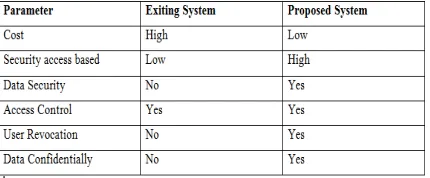
In contrast to using an existing cover image to hide messages, our algorithm conceals the source texture image and embeds secret messages through the process of texture synthesis. A typical stegano graphic application includes covert communications between two parties those existence is unknown to a possible attacker and whose success depends on detecting the existence of this communication Most image stegano graphic algorithms adopt an existing image as a cover medium. The expense of embedding secret messages into this cover image is the image distortion encountered in the stego image. No significant visual difference exists between the two stego synthetic textures and the pure synthetic texture.
B. Proposed System
This paper provides a secure data embedding efficiency because the size of the cover image is depends upon the secret message .It can store big Image .This algorithm is used to get the secratemessage. The image distortion is vey low. By using this system we can overcome the problem of Image disttortion verifying of LSB location is not required for embedding data the data embedding performed based on RGB range of an image.
4. Verification and validation 5. Extracting secret message
This are the above listed content are used to hide data and secured our secrete data. We can store big images and the embedding data required the smaller space.
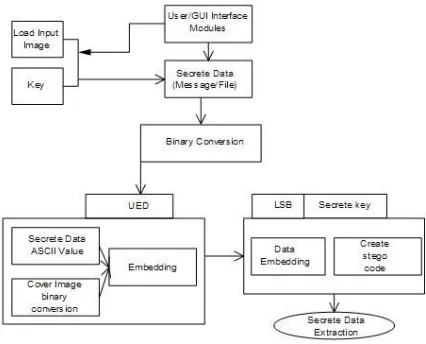
Fig. 1. Fig.1. Proposed System Architecture
Explanation-By using GUI format message and image is loaded after that the message and image binary conversion will be performed. Unique embedding design is used to embed the message into cover image. After coverting the binary value and RGB value then it embedded. Then the secret key used to get the value of bits.. Through this method and by using embedding data with random LSB security is more improve. And finally secrete massage is get to the end user
1. Loading message and Image:
User can login page by providing an authenticated username and password. The provided username and password should be valid and verify then only we can enter into login page. Then we perform the choosing path mechanism. The choosing of image path is user specified. Its user responsibility who selects their image from any location. Then choosing of image did by the user for embedding purpose. The selected image then placed on a square like type sheet. Then put the secret message which we desire to embed on that cover image. By using GUI the secret message and image had been embedded
2. Conversion Mechanism
between 11111111 and 11111110 in the value for blue intensity is likely to be unrecognized by the human eye. If we consider just the blue there will be 28 different values of blue.
3. Better value transformation:
The embedding of bits done at the end of the images RGB converted bit .the indicator performs a major role in a appending Mechanism. The end off bits like 00 no bit should be appear .if the ending of bit is either 01 or 10 means 3 bits will appear or else if 11 will be the ending of RGB bit then add 4 bits. All these technique should be done at the end of the images RGB binary converted bits. The Optimal transfer matrix for illustrating the modification of cover values in reversible data hiding. Then, an procedure is proposed to calculate the optimal value transfer matrix, which will be used to realize reversible data hiding with good performance. Matrix Embedding by using Matrix Extending method and produces a stego object with least distortion under the tree based parity check model.
Embedding Mechanism:
The source matrix embedding, when the number of random columns (K) increases, the solution space of is exponentially expanded, and thus we have more chances to find a solution with smaller Hamming weight. That is why the embedding efficiency can be high when increases, but the computational complexity of searching for this solution exponentially grows. In this section, we propose a novel approach, by which we can also exponentially expand the solution size, but only cost linearly increasing time to search the solution space. The key prospective of the proposed method is to append some referential columns in the matrix.
4. Verification and validation:
Color Filtering:The Stego image gives detail about the intensity of red, green, and blue (RGB) wavelength regions in the digital image. Sheinberg illumination to highlight different textures on this is a very accurate color filter used to selectively pass light of a small range of colors while reflecting other colors.
Weight Estimation:computation of the infarction by using distortion weighted imaging (DWI) and quantitative measures of distortion. Its a process to estimate the distortion tensor from a sequence of distortion-images. To check whether the image has been created by adding different types odd distortion of source image.
5. Extraction of secret message:
This will embedding and extraction, a location finding method determines a sequence of locations that point to elements in the cover object. This embedding algorithm modifies the elements in these locations to hide message and the Reversible steganalytic algorithm can recover the message by inspecting the sequence of locations. The steganalytic algorithm using reversible texture synthesis Method is used to extract the source texture from source image .this will also extracts the secret message.
Application
1. Stenography can be used anytime and anywhere you want to hide the data.
2. Attacker and terrorists can also use steganography to keep their communications secret and to coordinate attacks.
3. All of this sounds good nefarious, and in fact the obvious uses of steganographic are for things like espionage.
4. But there are a number of peaceful applications in it.
5. The easiest and oldest are used in map making, where cartographers sometimes add a tiny fictional street to their maps, allowing them to prosecute copycats.
6. A similar technique is to add fictional names to mailing lists as a check against unauthorized resellers.
Advantages of Proposed System
1. Our proposed algorithm can provide various numbers of embedding capacities, produce a visually plausible texture images, and recover the source texture.
image after the hidden data have been extracted.
3. We illustrate our proposed method in this section. we will define some basic terminology to be used in our algorithm firstly. The basic unit used for our steganographic texture synthesis is referred to as a patch.
4. We believe our proposed method offers substantial benefits and provides an opportunity to extend steganographic applications.
C. Mathematical Module
1. Given a source texture with the size of
Sw Sh
we can derive the number of source patches
SP n
if a kernel block has the size of
Kw Kh
In our paper, we assume the size of the source texture is a factor of the size of the kernel block to ease the complexity.
S(w) S(h)
CP n = (1)
K(w) K(h)
2. Our steganographic texture synthesis algorithm needs to generate candidate patches when synthesizing synthetic texture.The concept of a candidate patch is trivial: We employ a window
P w P h
and then travel the source texture
Sw Sh
by shifting a pixel each time following the scan-line order. Let
CP = {cpi|i = 0, 1, , CP n − 1}
represent the set of the candidate patches where
CP n = ||CP ||
denotes the number of elements in
CP
CP n = ||CP || = (Sw− Pw+ 1) ∗(Sh− Ph+ 1) (2) 3. TPn denotes the number of patches in the stego synthetic texture.
Software Resources specification
In our system we are using Windows7/8/10 operating system, Application Server Apache Tomcat 7.0. We are using Jdk 1.7 language platform, Database MySql 5.0, IDE Eclipse Luna
IV. SYSTEM ANALYSIS
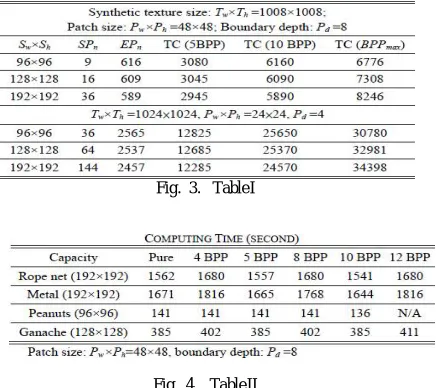
Table I this represents the total embedding capacity our algorithm can provide when different resolutions of the synthetic texture are produced by concealing various BPPs. It is interesting to point out that given a fixed number of BPP, the larger the resolutions of the source texture SwSh (9696 vs. 192192). Table II this will shows the computing times. The range of the computing time is 6.8% to 8.7% more than that needed for pure texture synthesis. Table I and II are taken from Kuo-Chen Wu and Chung-Ming Wang introduced paper Stegnography Using Reversible Texture Synthesis.
Implementation modules
Proposed System divided into two modules: Admin and User.Module user can upload file i.e. Texture, then generate key, Patches extraction, Embed message in the file, Generate the patches, Generate the stego image, Transfer file, Decrypt stego image.
Performance Measure:
Our proposed method algorithm can provide various numbers of embedding capacities, produce a visually plausible texture images, and recover the source texture. We present the pure synthetic texture which does not convey any secret message. No significant visual difference exists between the two stego synthetic textures and the pure synthetic texture. In addition, no significant visual difference can be perceived when comparing two stego synthetic textures.
Efficiency calculation:
This system works efficiently by working on image and can produce a large stego synthetic texture concealing secret messages. Our technique is novel and provides reversibility to retrieve the original texture from the stego synthetic textures, making possible a second round of texture synthesis if needed. Our proposed scheme offers substantial benefits and provides an opportunity to extend steganographic applications.
Outcomes and success definition of work:
Our approach offers the embedding capacity that is pro- portional to the size of the stego texture image. A steganalytic algorithm is not likely to defeat our stegano graphic approach. The reversible capability inherited from our scheme provides functionality which allows recovery of the source texture.
Fig. 3. Table I
V. CONCLUSION
This paper proposes a reversible steganographic algorithm using texture synthesis and LSB. Given an original source tex- ture, our approach can produce a large stego synthetic texture concealing secret messages. To the best of our knowledge, we are the firstthat can exquisitely contrive the steganography into a conventional patch-based texture synthesis and LSB. Our technique is novel and provides reversibility to retrieve the original sourcetexture from the stego synthetic textures, making possible asecond round of texture synthesis if needed. With the two techniques we have introduced, our algorithm can produce visually plausible stego synthetic textures even if the secret messages consisting of bit 0 or 1 have an uneven appearance of probabilities. The presented algorithm is secure and robust against an RS steganalysis attack.
ACKNOWLEDGMENT
We express our deepest gratitude to the college ”Zeal College Of Engineering And Research,Pune” authorities for technical guidance under ”Prof. Kailash Tambe”. Lastly we wish to thank the researchers and reviewers for their contri- butions because of which we could complete this work.
REFERENCES
[1] A. A. Efros and T. K. Leung, Texture synthesis by non-parametric sampling, in Proc. of the Seventh IEEE International Conference on Computer Vision, 1999, pp. 1033-1038.
[2] L.-Y. Wei and M. Levoy, Fast texture synthesis using tree-structured vector quantization, in Proc. of the 27th Annual Conference on Computer Graphics and Interactive Techniques, 2000, pp. 479-488.
[3] S. M. Masud Karim, M. S. Rahman and M. I. Hossain, ”A new approach for LSB based image steganography using secret key,” Computer and Information Technology (ICCIT), 2011 14th International Conference on, Dhaka, 2011, pp. 286-291.
[4] Shan-Chun Liu and Wen-Hsiang Line-Based Cubism-Like ImageA New Type of Art Image and its Application to Lossless Data Hiding IEEE Transaction on Information forensics and security vol. 7, No. 5, October 2012.
[5] Shailender Gupta, Ankur Goyal, Bharat Bhushan, Information Hiding Using Least Significant Bit Steganography and Cryptography. I.J.Modern Education and Computer Science, 2012, 6, 27-34.
[6] Y. Guo, G. Zhao, Z. Zhou, and M. Pietikinen, Video texture synthesis with multi-frame LBP-TOP and diffeomorphic growth model, IEEE Trans. Image Mechanism., vol. 22, no. 10, pp. 3879-3891, 2013.
[7] Yimo Guo, Guoying Zhao, Senior, Ziheng Zhou, Video Texture Synthesis with Multi-frame LBP-TOP and Diffeomorphic Growth Model IEEE Transaction on image Mechanisming, vol. 22, No. 10, October 2013.
[8] Xiaolong Li, Bin Li, Bin Yang, and Tieyong Zeng, General Framework to Histogram-Shifting-Based Reversible Data Hiding IEEE Transaction on Information forensics and security VOL. 22, No 6, June 2013.
[9] Ioan-Catalin Dragoi, Member, Dinu Coltuc, Senior Member, Local- Prediction-Based Difference Expansion Reversible Watermarking IEEE Transaction on Information forensics vol. 23, no. 4, April 2014.