Degree Program in Educational
Administration in Private Higher
Education Institutions in Thailand
Kachakoch Kanpinit
B.A. (Economics), Chiang Mai University, Thailand
M.B.A., Dhurakijpundit University, Thailand
A dissertation submitted in partial fulfilment of the requirements for the Degree of Doctor of Education, School of Education,
Faculty of Arts, Education and Human Development, Victoria University, Melbourne, Australia.
Declaration
I, Kachakoch Kanpinit, declare that the Doctorate of Education thesis entitled
Composite Indicators for Educational Quality Management for a Masters Degree Program in Educational Administration in Private Higher Education Institutions in Thailand is no more than 60,000 words in length, exclusive of tables, figures, appendices, references and footnotes. This thesis contains no material that has been submitted previously, in whole or in part, for the award of any other academic degree or diploma. Except where otherwise indicated, this thesis is my own work.
Monday, 28 July 2008
Acknowledgements
I wish to express my sincere thanks and gratitude to Dr. Ian M. Ling, my supervisor, whose continuing encouragement, advice and guidance cannot be fully expressed in words. The success of this study work is possible because of his kind assistance and contribution.
Special thanks is due to Professor Dr. Pote Sapianchai, my co-supervisor, Associate Professor Dr. Chirdsak Kowasint, Associate Professor Dr. Chote Petchun, Associate Professor Dr. Kunawuth Konchalard, and Dr. Jareonvit Sompongtham for all of their time, patience and effort to advice and recommendations contributed greatly to the success of my study.
Also, I would like to acknowledge all of the lecturers of the Victoria University of Technology and Burapha University for their devotion to teaching and guidance.
Appreciation is due to Dr. Chotiras Chavanich, the President of Eastern Asia University, Thailand for supporting my study. There are many people in Eastern Asia University who helped me secure participants for this research whom I also would to thank for their contributions: Mrs. Supakhunya Chavanich, Vice President for Planning and Development; Assistant Professor Budsayamas Sindhuprama, Vice President for Academic Affairs; Assistant Professor Khamarintr Phinitphuvadol, Vice President for Research Affairs; and Dr. Prin Luksitanond; Vice President for International Affairs & D.B.A. Director.
Dr. Preecha Kampiraprakorn, Director, Philosophy Program in Educational Administration, Sripathum University; Dr. Prasop Sankamkrue, Dean of Faculty of Education, Bangkokthonburi College; Associate Professor Dr. Weerawat Utairat, Dean of Graduate School and Ed.D Director, Eastern Asia University; Dr. Sommai Chanruang, Assistant President, Siam University; and Dr. Chamroenrat Cheauchan, Director, Educational Quality Assurance Bureau, Vongchavalitkul University for their in the series of semi-structured interviews that followed the Delphi survey.
Indebtedness and gratitude are also expressed to Associate Professor Dr. Chalong Tubsree, Dr. Suriyan Nonthasak, and Ms. Rattanasiri Kemraj International Graduate Studies Programs, Burapha University for their support and encouragement.
Many other friends and associates in Thailand and Australia alike have assisted and encouraged me in many ways; my indebtedness to them is hereby expressed.
I especially would like to thank my parent, Sri-wan and Kum-moon Kanpinit; my younger sisters, Metta Amarttayakul and Varabhorn Kanpinit, and the rest of my family for their constant comfort and support.
Table of Contents
Declaration ...ii
Acknowledgements ... iii
Table of Contents ...v
List of Tables ... viii
List of Figures...x
Abstract ...xi
Chapter 1 Introduction to the Study ...1
Introduction ...1
Quality Assurance and Quality Management ...1
The Globalisation of Higher Education ...3
Higher Education in Thailand...5
Recent reforms ...5
Graduate Education...6
Statement of the Problem...8
Objective of the Study ...9
Research Questions...10
Contribution to Knowledge...10
Statement of Significance ...11
Definitions of Terms ...11
Limitations of the Study...15
The Conceptual Framework...16
Summary ...20
Organisation of the thesis...21
Chapter 2 Review of the Literature...23
Introduction ...23
Proactive Evaluation ...24
Educational Management...29
Quality management ...37
Quality imperatives...41
Quality assurance ...44
The Malcolm Baldrige National Quality Program...52
Definition of Indicators...55
Types of Indicators ...60
Considerations to make when constructing indicators...62
The theoretical definition and development of indicators ...65
A framework for defining education system indicators...67
Chapter 3 Methodology of the Study ...74
Introduction ...74
Three Phases of Methodology of the Study...76
Phase 1: Research Review ...76
Phase 2: Delphi Survey...78
Phase 3: Second Survey and Semi-structured Interviews...85
Summary ...87
Review of the literature...88
Chapter 4 Analysis of Data and Report on the Findings: Delphi Survey ...90
Introduction ...90
Research Review...91
Composite indicators and their variables...91
Keys for the Development of an Effective Program...96
The First Delphi Expert Panel Personal Data ...97
Personal data ...98
The Composite Indicators and their Variables...99
Statistical treatment of data...100
Best practice and composite indicators...105
Summary ...122
Chapter 5 Analysis of Data and Report on the Findings: Third Phase...124
Introduction ...124
Personal data ...125
Ranking the Composite Indicators...127
Statistical treatment of data...127
Rank ordering of Composite Indicators...128
Best practice and composite indicators...130
Ranking the Composite Indicators...134
Semi-structured interviews ...152
Summary ...164
Chapter 6 Findings and Recommendations...166
Introduction ...166
The Delphi Survey ...166
The Single-Round Survey...168
Best Practice and Composite Indicators ...170
Proactive Evaluation, best practice and composite indicators and their variables ...180
Validity and Appropriateness ...181
Meeting the Baldrige Criteria ...182
Proactive Evaluation and the MEd Ed Admin Program ...184
Chapter 7 Conclusion ...187
Introduction ...187
Three Phases of the Study...188
Phase 1: Research Review ...188
Phase 2: Delphi Survey...190
Phase 3: Second Survey and Semi-structured Interviews...190
Best practice and composite indicators...191
Evaluation Questionnaire for Quality Assurance ...191
Level of quality criteria...192
Interpreting quality assurance scores ...192
The Value of Proactive Evaluation ...197
Educational Quality Management: Program issues ...198
Characteristics of the Sub-system...201
Recommendations for Future Study ...202
Conclusion ...204
Bibliography ...206
List of Tables
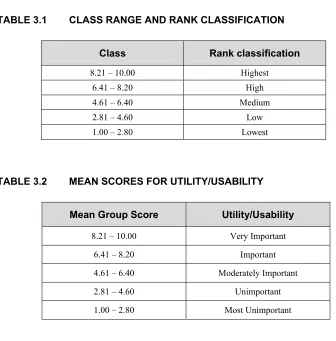
Table 3.1 Class range and rank classification...84
Table 3.2 Mean scores for utility/usability ...84
Table 3.3 Mean scores for utility and Usability categories ...87
Table 4.1 Gender...98
Table 4.2 Age...98
Table 4.3 Finalearned degree...98
Table 4.4 Academic Position...99
Table 4.5 Years of working experience...99
Table 4.6 Workplaces ...99
Table 4.7 Delphi Survey Round 3: Utility Aspect...101
Table 4.8 Frequency tables: Utility examples ...103
Table 4.9.1 Computation of composite indicator scores ...103
Table 4.9.2 Computation of weighted scores of variables...104
Table 4.10 Composite indicators: Utility and Usability aspects...106
Table 4.11 Visionary leadership composite indicator ...106
Table 4.12 Composite indicator: Learning-centred education...110
Table 4.13 Composite indicator: Organisational and personal learning ...116
Table 4.14 Composite indicator: Valuing faculty, staff and partners...118
Table 5.1 Gender...125
Table 5.2 Age...126
Table 5.3 Finalearned degree...126
Table 5.4 Academic Position...126
Table 5.5 Years in working experience...126
Table 5.6 Workplaces ...127
Table 5.7 Aggregate scores: Utility and usability ...128
Table 5.8 Ranking of composite indicators: Utility ...129
Table 5.10 Second expert panel – Best practice and composite
indicators and their variables: Utility...131
Table 5.11 Second expert panel – Best practice and composite indicators and their variables: Usability ...134
Table 5.12 Valuing faculty, staff & partners: Desirable utility aspects ...136
Table 5.13 Visionary leadership: Desirable utility aspects ...138
Table 5.14 Learning-centred education: Desirable utility aspects...141
Table 5.15 Organisational and personal learning: Desirable utility aspects ...147
Table 5.16 Learning-centred education: Desirable usability aspects ...150
Table 5.17 Visionary Leadership: Desirable usability aspect...152
Table 5.18 Content analysis: Participant A...153
Table 5.19 Content analysis: Participant B...154
Table 5.20 Content analysis: Participant C...155
Table 5.21 Content analysis: Participant D...156
Table 5.22 Content analysis: Participant E...157
Table 5.23 Content analysis: Participant F ...157
Table 5.24 The single-round survey: the six participants questionnaire results for utility aspect...159
Table 5.25 The single-round survey: the six participants questionnaire results for usability aspect ...162
List of Figures
Figure 1.1 Methods of Study ...19
Figure 2.1 A Conceptual View of the Management Process ...31
Figure 2.2 Basic Systems Model...35
Figure 2.3 Basic Systems Model...36
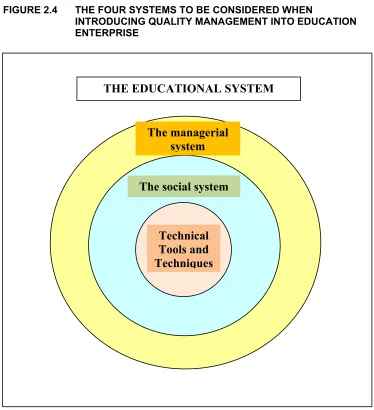
Figure 2.4 The four systems to be considered when introducing quality management into education enterprise...38
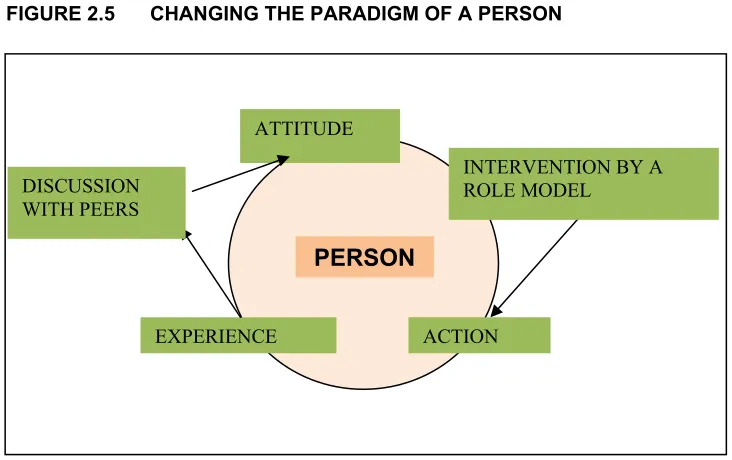
Figure 2.5 Changing the paradigm of a person...39
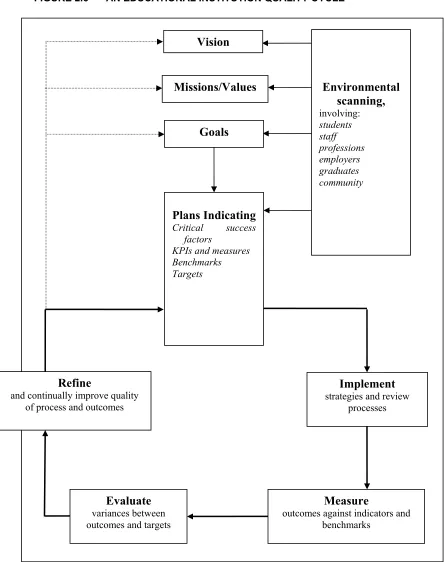
Figure 2.6 An educational institution quality cycle...42
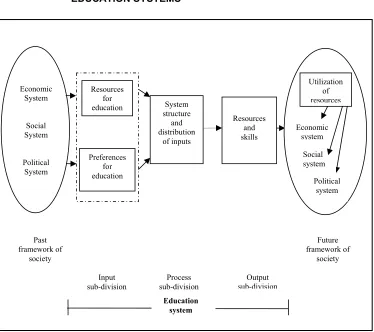
Figure 2.7 A framework for the development of indicators of education systems...68
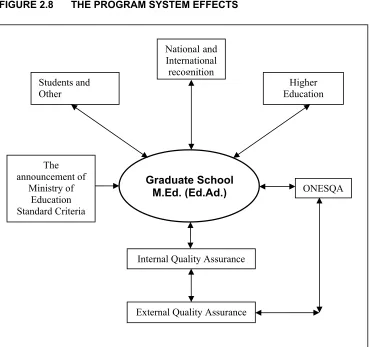
Figure 2.8 The Program System Effects...72
Figure 3.1 Formula for calculating class interval...83
Figure 3.2 Phases and Steps ...88
Figure 4.1 Data Editor screen, Microsoft SPSS v.11...102
Figure 4.2 The Statistical results for further analysis...102
Figure 6.1 Best practice and composite indicators and their Variables ...177
Figure 7.1 Evaluation Questionnaire: Quality assurance...193
Figure 7.2 Evaluation Questionnaire: Quality assurance...196
ABSTRACT
This study investigates the key requirements for the development of a Masters Degree Program in Educational Administration in private higher education institutions in Thailand. The key requirements are concerned with the essential indicators of educational quality management for an effective program. The quality indicators recognise current best practice for educational effectiveness and quality management. The population sample consists of academics holding executive or administrative positions in Masters Degree Programs in Educational Administrations or related fields in state and private universities in Thailand.
The research involves a Proactive Form of Evaluation, in which a set of benchmarks appropriate to the practical needs of program designers in educational administration was developed. A mixed methods approach, using both quantitative and qualitative methodology, was applied. The quantitative research involved a three-round modified Delphi survey of nineteen Thai experts in the field of educational administration, all of whom were purposively selected. The Delphi survey identified four best practice and composite indicators and their variables: visionary leadership; learning-centred education; organisation and personal learning; and valuing faculty, staff, and partners. A second survey, based on the findings of the initial Delphi survey, verified the key variables amongst the composite indicators. The qualitative research components involved a research review of best practice in the use of composite indicators and their variables, and semi-structured interviews.
CHAPTER 1
Introduction to the Study
Introduction
This introductory chapter provides the contextual background for this dissertation by exploring the concepts of quality assurance and quality management, both of which are important in order to monitor performance and to ensure continued enrolment in courses of educational administration. The processes associated with the Proactive Form of Evaluation of Owen, with Rogers (1999) and Owen (2006) are presented in order to provide the key approaches for assembling evidence for the establishment of these benchmarks for Masters Degree Programs in Educational Administration at private higher education institutions in Thailand.
Quality Assurance and Quality Management
There is widespread recognition that quality is of critical importance in achieving the current vision of higher education (Monash University 2003, 2). Quality is at the top of most agendas and improving quality is the most important task facing any institution (Sallis, 2002, 1). Quality assurance, focusing particularly on quality learning, has been a prominent focus in the UK over the past ten years (see, for example, Doherty, 1994; Nightingale & O’Neil, 1994; Farrugia, 1996; Liston, 1999).
(ONEC, 1999a) which serves as the master blueprint for education in the country and which is expected to lead to significant educational reform. Internal and external quality assurances have been clearly stated under Section 47. Under Section 49, all higher education institutions were to be externally assessed at least once by the year 2005. In addition, in order to ensure quality in education, the country has taken another step by encouraging all educational institutions to develop their quality assurance mechanisms to be externally assessed in a second cycle starting from 2006.
A Master Degree Program of Educational Administration is consistent with Section 53 of the Act which states that teachers, administrators of educational institutions, educational administrators and other educational personnel of both the state and private sectors shall have professional licences as provided by the law (ONEC, 1999a, 22). This policy direction has resulted in a rapid expansion in licensing programs in both public and private higher education institutions in Thailand to service the unprecedented demand for preparation and licensing. Such programs face critical questions concerned with quality, and this is the case for both new and existing programs.
To ensure the contributions expected of them, programs should be developed that are of the highest quality. Two quality aspects are important: delivery of a quality program that will be to the stakeholders’ satisfaction – thus ensuring survival and growth; and providing quality academic units, each of which will have their own quality assurance mechanism to fulfil the requirements of related quality standards.
structures. The management process will need to follow the sequence from politics, to policy, to strategy, to tactics, to operations. The best operations – that is, the most efficient and effective organisations – will be found within organisations that manage to link these elements very carefully (Gray, 1997, 5).
Quality assurance and quality management are thus important both to monitor performance and to ensure continued enrolment in courses of educational administration. Before quality assurance and productivity elements can be established, the researcher was advised to undertake a review of the best practices in order to establish composite indicators that will act as quality assurance benchmarks. The assembly of evidence for the establishment of these benchmarks will be undertaken via a Proactive Form of Evaluation (Owen, with Rogers, 1999; Owen, 2006).
The Globalisation of Higher Education
Ballantine (1983, 241), in The Sociology of Education, suggests that the term ‘higher education’ is a catch-all term for programs offering some academic degree after high school. He points out that higher education has the following: unique features of atmosphere; the professional manner of the faculty; the organisation of the system. It varies depending on sponsorship, student composition, types of programs, and degrees offered. According to the types of programs offered, one institution is able to be distinguished from another. Many institutions develop certain specialty areas or professional schools for which they become well known.
The 1998 World Conference on Higher Education in Paris, conducted by UNESCO, states that higher education needs to understand the forces of globalisation that are affecting employment internationally, nationally and regionally. Besides, higher education acts as the provider of human resources to industry and occupational markets, in terms of competencies and skills required. As expressed in the Association of the Southeast Asian Institutions of Higher Learning Conference in Bangkok (2001, July 20), higher education is considered as being an essential factor for the nation’s development towards modernisation.
A globalised economy demands standardised products and services including education, technical infrastructure, and sophisticated communication systems. Education and the ability to learn have been recognised as essential attributes to success, even survival, in the globalised world. People learn about the education on offer elsewhere, and want it. In particular, there are growing demands for programs that enhance employment opportunities. Education has clearly been implicated in the needs for socio-cultural, economic development, for building the future; it has become an international business.
A higher education institution should be innovative and experimental for it is essential that it is able to respond to the enormous changes taking place, as well as being able to make its qualifications readable and recognisable by other institutions – both nationally and internationally. Additionally, in order to be able to compete more effectively in the global market place, the creation of general systems for benchmarking, especially international benchmarking and quality assurance should work around such developments (Edwards, 2002, 26).
with globalisation, is trade liberalisation in different service sectors conditioned by the World Trade Organisation. This has resulted in a higher level of competitiveness in the social sector, including education.
As a consequence, higher education should be aware of the importance of quality assurance in the operation and delivery of its academic programs. The major beneficiaries of a well-run quality assurance system in higher education are the students and graduates who will have experienced many opportunities to provide comment and feedback on their experiences. Employers and other stakeholders will also have been consulted and included in this process. Academic staff should have gained adequate feedback to positively influence their teaching and learning activities and supervisory skills, as well as the course structure and content of academic programs. The quality and performance of the institutions and their programs will have been proved by these quality assurance measures (Holmes, Foreword, in Zuber-Skerritt & Ryan, 1994).
Higher Education in Thailand
Two issues are considered under this section: recent reforms in higher education, and the development of graduate education.
Recent reforms
ensure quality assurance and recognition of degrees. An optimal form should thus be sought to accommodate education in order to fulfil these requirements appropriately. Additionally, the quality assurance implementation in the second cycle from 2006 to 2010 sees more challenging indicators, not only in the academic but also in the ethical and moral aspects (Sujatanond, 2002, 68).
Graduate Education
Graduate education in Thailand is the most rapidly growing segment of the higher education market not only because of the rapid growth of its economy over the past decade, where there has been a large demand in the job market, as well as the next generation that needs to be better educated; especially, this demands that academics accept the role of being responsible for the academic and management decisions made in universities.
many questions of higher education administrators, including concern for quality issues. Academics who have advocated such issues in Thailand include Sirichana (1994, 3-4), Suwannavera (1996, 12-15), Viriyavejchakul (1997b, 36-47), Charoenwongsak (1997, 127-129), Areekul (2000, 195), Sinlalat (2000, 10-13) and Veerawatananont (2000, 1-2).
Thai higher education institutions face a crisis of faith and belief caused by the demands of educational standards and quality; these institutions must now be concerned, for example, with research quality, infrastructure to improve research environment, with the quality of masters’ graduates, curriculum development, recruitment, retention, funding, publication, and resource allocation. Veesakul (2003) has recently undertaken a study of the situation in Thai higher education institutions. He points out that Thai institutions are facing serious problems regarding the quality of instructors and the quality of graduates. These problems arise from the following:
• an over-expansion in the number of faculties/departments;
• institutions organising study-time in the evenings of both work- days and week-ends in newly established campuses throughout Thailand;
• the introduction of many special purpose programs.
The prime mission of these institutions has been to find ways of attracting more students and to keep them studying, thus creating a regular income flow. While the budgets of institutions have been used to build buildings or to provide minimum resources, no serious efforts have been made to assure and improve educational quality, to promote professional development, and to bring about an increase in research and development activities.
graduate education to be addressed and examined so that the society’s expectations might be fulfilled: research quality, infrastructure to improve research, educational environment, quality of graduates, curriculum development, student recruitment, retention, funding, publications, and resource development.
There have been many attempts to raise the quality of education. This has, in particular, involved enforcing all existing and new programs of study offered by public and private higher education institutions to revise their academic management processes and standards according to the announcement of the Ministry Standard Criteria. All graduate programs will now be scrutinised by the announcement of the Ministry of Education Standard Criteria of Graduate Programs of 2005 (Bureau of Standards and Evaluation, 2005). A second step has been the introduction of an external quality evaluation involving a review of documentary evidence and data, as well as visiting higher education institutions and undertaking an evaluation process in order to ensure that there has been an improvement of educational quality and standards.
Statement of the Problem
To ensure program survival and growth, and in order to carry out the reform along the lines stipulated by National Education Act and Announcement of the Ministry of Education Standard Criteria of Graduate Programs of 2005, private graduate schools of Educational Administration will need to be in readiness for the internal and external assessment of their programs. Programs and policies will need to be developed to ensure that the quality of the graduates will be at a level that satisfactorily meets the needs of individuals, workplaces and communities. At an administrative level, monitoring systems will need to be introduced that will provide a feedback mechanism for graduate departments concerning their performance, as well assisting in countering any shortcomings.
Quality assurance and quality management are important both to monitor performance and to ensure continued enrolment in courses of educational administration. Before quality assurance and productivity elements can be established, it is necessary to undertake a review of the best practices in order to establish composite indicators and best practices that will act as quality assurance benchmarks. The assembly of evidence for the establishment of these benchmarks will be undertaken via a Proactive Form of Evaluation (Owen, with Rogers, 1999; Owen, 2006).
Objective of the Study
Research Questions
The three research questions in this study are as follows:
1. What are key requirements for the development of an effective Masters Degree Program in Educational Administration that will ensure best practice?
2. What are the essential indicators of educational quality management for an effective Masters Degree Program in Educational Administration?
3. What is recognised as the best practice for educational quality management for Masters Degree Programs in Educational Administration in private higher education institutions in Thailand?
Contribution to Knowledge
Statement of Significance
Evaluation is essential; evaluation evidence can contribute to judge the effectiveness, the value of education organisations, and the means to improve them (Wilson, 1994, 77). Program Evaluation, using the Proactive Form (Owen, with Rogers, 1999; Owen, 2006; Owen, 2006) – via a review of best practice and undertaking a Delphi survey – gives an opportunity to establish best practice and to provide essential indicators for Masters Degree Programs in Educational Administration at private higher education institutions in Thailand. The Graduate School of Educational Administration in Eastern Asia University, my institution, will be able to apply the findings for monitoring performance, determining benchmarks, continuous improving by appropriate feedback and implementation mechanisms, constructing reward mechanisms and policies, aligning management to higher education quality initiatives and program/policy.
Definitions of Terms
For the purpose of this study, Composite Indicators for Educational Quality Management for a Masters Degree Program of Educational Administration in Private Higher Education Institutions in Thailand, key terms are defined as follows:
Composite indicators
Indicators combine a number of educational variables, which the final composite is interpreted as a ‘kind of average’ of all variables entering into the combination.
Education
creating a learning environment and learning society and the availability of resources and factors conducive to continuous lifelong learning.
Educational institution administrators
Professional personnel who are responsible for leading and managing the educational institution.
Quality management
The complete process set up to ensure that the quality process actually happens.
Excellence of performance of organisation
Organisational performance that are results in delivery of ever-improving value to students and stakeholders, contribution to education quality; improving of overall organisational effectiveness and capabilities; organisational and personal learning.
Educational quality management
The management of the educational system for the Masters of Education Program in Educational Administration that seeks to satisfy both internal and external strategic constituencies in line with sets of explicit and implicit expectations.
Composite indicators for educational quality management
Composite indicators are tools to assess and reflect a process of change and development in the management of the educational system for the Masters of Education Program in Educational Administration satisfying both internal and external strategic constituencies in line with sets of explicit and implicit expectations.
Input variables
Process variables
These are variables used in the structure which transform inputs into outputs.
Output variables
Educational output variables are variables constructed to support educational quality management.
Stakeholders
The term ‘stakeholders’ refers to all groups that are, or that might be affected by an organisation’s actions and success. Examples of key stakeholders include parents, parent organisations, faculty, staff, governing boards, alumni, employers, other schools, funding entities, suppliers, and partners, local and professional communities.
Faculty
Faculty is the set of academic teachers with major responsibilities for teaching and research.
Resources for education
Resources contribute to the teaching and learning process, e.g. libraries, textbooks in Thai and other foreign languages, and all the production and refinement of textbooks, reference books, professional books, publications, materials, and other technologies.
Management process
This is the practise of management, established in stated policies and procedures and guidelines, that educational administrators employ.
Teaching and learning process
Assessment process
This is the process of information collection undertaken by faculty in order to make decisions about a students’ learning, performance, competency and achievement.
Educational standards
These standards are the specifications of educational characteristics, quality desired and standards required of all educational institutions. They serve as the means for equivalency for purposes of enhancement and monitoring, checking, evaluation and quality assurance in the field of education.
Quality system
The quality system includes the whole system of quality management which consists of three sub-systems of quality assurance, quality control and quality development.
Quality assurance
Quality assurance is a system concerned with providing evidence for interested people both within and outside an institution that the institution has in place procedures for ensuring that there is a commitment to improving quality.
Internal quality assurance
This involves the assessing and monitoring of the educational quality and standards of the institutions from within. Such assessing and monitoring is carried out by personnel of the institutions concerned or by parent bodies with jurisdiction over these institutions.
External quality assurance
carried out by persons or external organisations. Such measures ensure the quality desired and further development of quality and standards of these institutions.
Utility
The term ‘utility’ is referred in terms of ‘practicality’. Usability
‘Usability’ is referred in terms of ‘efficacy’ - something that could indeed be practical.
Limitations of the Study
The limitations that affected the study are listed below:
• Indicators of educational management quality for the Masters Degree Program in Educational Administration in Thailand, based on the Proactive Form of Evaluation of Owen, with Rogers (1999) and Owen (2006) were restricted to the establishment of benchmarks by means of a Delphi survey, and matching these benchmarks to practical needs of program designers in educational administration.
• The use of semi-structured interviews was restricted in order to gain insight and understanding of the specific concepts being tested in order to explore and maximize the opportunity to acquire information pertinent to the particular problem under consideration. While the process may be generalised, the product is quite specific.
limited to three distinctive sub-divisions: input, process, and output.
The theoretical framework used to develop composite indicators of educational management quality for the Masters Degree Program in Educational Administration was based on Johnstone’s (1981) framework for the development of indicators of educational systems. These indicators are derived from theory, rather than practice. Education Criteria for Performance Excellence of the Baldrige National Quality Program were employed to select and add the variables in order to construct composite indicators and their variables using the Proactive Evaluation methodology of Owen, with Rogers (1999) and Owen (2006).
The study was concerned mainly with a survey of opinions by rating written items to construct composite indicators of educational management quality for the Masters Degree Program in Educational Administration.
1. The questionnaire items were formulated in English and translated into Thai.
2. The study was limited neither by time nor finance.
3. The participants in this study were those with interest in and knowledge about the topic, and motivation to complete the questionnaire.
The Conceptual Framework
methods within program management. Indicators can also be used to make statements about the institution’s effectiveness and/or the impacts of programs. Well-constructed indicators provide the summary information which allows parties concerned to evaluate the program for which they are responsible (Owen, with Rogers, 1999, 253-254).
After consideration of several alternatives, a Delphi survey was selected as a principal research technique; this was undertaken for three reasons. First, by using the Delphi technique, individual panellists were able to focus on rating, revising, and commenting on the criteria presented without the distractions normally associated with more traditional face-to-face meetings. Second, it allowed the researcher to describe the participants’ responses using descriptive statistics. Third, a Delphi survey enabled the study to be conducted efficiently and effectively – it achieved its purpose within a reasonable time frame at a moderate cost and with minimal inconvenience to the participants.
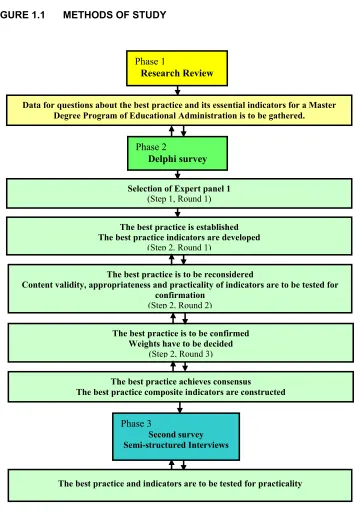
to select, weigh and combine variables to develop indicators as well as to establish the best practice according to the Proactive Form of evaluation and the related approach of Owen, with Rogers (1999) and Owen (2006), both indicators and best practice elements were established by means of a Delphi study as summarised in the conceptual framework of the study shown in Figure 1.1. The methodology associated with this framework is developed fully in Chapter 3.
FIGURE 1.1 METHODS OF STUDY
Quality assurance can be defined as the systematic management of procedures in order to monitor performance and ensure the achievement of quality outputs and quality improvements. Quality assurance serves a number of purposes. Apart from protecting stakeholders’ interests and facilitating international recognition of the standards of awards, it is an important
The best practice is to be reconsidered
Content validity, appropriateness and practicality of indicators are to be tested for confirmation
(Step 2, Round 2)
Data for questions about the best practice and its essential indicators for a Master Degree Program of Educational Administration is to be gathered.
Phase 2
Delphi survey
The best practice is established The best practice indicators are developed
(Step 2, Round 1) Selection of Expert panel 1
(Step 1, Round 1)
The best practice is to be confirmed Weights have to be decided
(Step 2, Round 3)
The best practice achieves consensus
The best practice composite indicators are constructed
Phase 3
Second survey Semi-structured Interviews
The best practice and indicators are to be tested for practicality
Phase 1
element for public accountability purposes, particularly to satisfy taxpayers that these is value for money in the government subsidies that are supporting education activities, and that these activities are of an appropriate standard. It is also concerned with the importance of providing quality assurance as a benchmark to ensure that universities are fulfilling their responsibility for being the institutions delivering quality education.
Development of best practice and of composite indicators for educational management quality in Thai higher education institutions via a Proactive Form of Evaluation (Owen, with Rogers, 1999; Owen, 2006) using a mixed methodology design, is pivotal in both internal and external quality evaluation at institutional and faculty/department levels. It is expected that the findings of this research will be of benefit for policy formulation, planning, controlling, as well as improving, the quality of graduate education management.
Summary
Organisation of the thesis
The thesis is organised into seven chapters, as follows.
Chapter 1 defines quality assurance and quality management; provides a brief overview of graduate education, and of quality concerns in courses of educational administration in Thailand. The statement of the problem is introduced to emphasize the importance of the study, and the research questions are stated. Finally, a conceptual framework for the study is presented.
Chapter 2 introduces principles and concepts, together with approaches, from related literature that are applicable to considerations of quality; quality management, quality assurance, and the standard criteria of a Masters Degree program in Thailand. It provides a conceptual research framework and outlines approaches in order to establish best practice and composite indicators for an effective Masters Degree program in Educational Administration in private higher education institutions in Thailand.
Chapter 3 introduces the main research methodology that is based on the Proactive Form of Evaluation and the review of the best practice approaches of Owen, with Rogers (1999) and Owen (2006). It also describes how a Delphi survey was used to establish best practice and to provide essential indicators for Masters Degree Programs in Educational Administration at private higher education institutions in Thailand was undertaken, together with a description of the mix of qualitative and quantitative data collection methods that were employed in this research.
Chapter 4 summarises the responses to the three Delphi questionnaires: results of these questionnaires are presented and analysed. This is followed by a treatment of the data and a report of the findings.
Chapter 6 summarises the findings: key requirements; essential indicators; and recognised best practice for educational quality management for a Masters Degree program in private higher education institutions in Thailand. An analysis and discussion of six semi-structured interviews is undertaken; recommendations are presented to provide a fabric for the future.
CHAPTER 2
Review of the Literature
Introduction
It is clear that modern higher education programs must meet multiple goals and navigate multiple agendas. Program leaders have to think of defining their program purposes and ways of operating, especially paying attention to the expectations of stakeholders such as students, employers, national and international societal, and the external evaluation organisations. It is true that many stakeholder groups tend, essentially, to have a view of quality – especially quality of service – and so it is the responsibility of innovative programs to lead the discussion of quality in the context of their new operating environments.
At present, there are seventeen private universities and colleges in Thailand that operate Masters Degree programs in Educational Administration. Evaluation for both new and existing programs – by undertaking a Delphi survey and a review of best practice approach within the Proactive Form of Program Evaluation (see Owen, with Rogers,1999; Owen, 2006) – can help establish composite indicators and define ‘best practice’ for Masters Degree Programs in Educational Administration. Both of these elements are especially important in private higher education institutions in Thailand: to routinely monitor performance; to ensure that quality enrolments continue in courses of educational administration.
Proactive Evaluation
Evaluation is essential, especially in enhancing effectiveness and improved decision making. Wilson (1994, 77) points out that evaluation refers to the process of designing and implementing approaches for collecting and interpreting evidence on the quality of educational institutions, programs and the mechanism which sustain them. Evaluation evidence contributes to judging the effectiveness and value of educational organisations and the means to improve them. Patton (1997, 4) suggests that
… the challenges using evaluation in appropriate and meaningful ways represents just such a crisis in program arrangements. The issue of how evaluations can be conducted in ways that lead to use has emerged at the interface between science and action, between knowing and doing. It raises fundamental questions about human rationality, decision making, and knowledge applied to creation of a better world.
Therefore, evaluators have to clearly understand their responsibilities, and be concerned that, for an evaluation plan, a well-presented and well-managed process and a deliberate implementation strategy is applied.
leverage and help decision-makers, the ‘why’ question is the most important as the answers can develop and turn effective evaluation plans into well-focused fieldwork and dissemination. Owen, with Rogers (1999, 40) have identified five Forms of Program Evaluation, each of which is determined by the timing of the program (Owen, with Rogers, 54): Proactive (before); Clarificative, Interactive and Monitoring (during); and Impact (after). Each Form can be moulded into all stages of the organisation or a program cycle according to the state of the program. Owen, with Rogers (1999) and Owen (2006) identify a range of Approaches within the Forms of Evaluation that evaluators, clients, and other stakeholders may select as the basis for an evaluation.
A Proactive Form of Evaluation (Owen, with Rogers, 1999; Owen, 2006) is applied in this study to provide information in order to assist decisions about a projected program – a Masters Degree program for Educational Administration in Thailand – as the purpose of the evaluation is to provide advice to aid in the program’s formulation (Owen, with Rogers, 1999; Owen, 2006, 171).
Caldwell & Spinks make three useful assumptions which guide all evaluation activities (Caldwell & Spinks, quoted in C. Marsh, 1994, 33). These are:
• The policy statements and programs are used to judge whether or not a program has achieved its objectives.
• The details of programs are used to judge how achievement levels were intended to occur, and if not, why not.
• The details can pinpoint which resources are being used and whether redistribution of certain resources should occur.
essential four standards of evaluation, those are: utility: the utility standards are intended to ensure that an evaluation will serve the practical information needs of intended users; feasibility: the feasibility standards are intended to ensure that an evaluation will be realistic, prudent, diplomatic and frugal;
propriety: the propriety standards are intended to ensure that evaluation will be conducted legally, ethically, and with due regard for the welfare of those involved in the evaluation, as well as, those affected by its results; accuracy: the accuracy standards are intended to ensure that an evaluation will reveal and convey technically adequate information about the features the determine worth or merit of the program being evaluated.
The evaluator has a responsibility to act in accordance with the profession’s adopted principles of conducting systematic, data-based inquiries; performing competently; ensuring the honesty and integrity of the entire evaluation process; respecting the people involved in and affected by the evaluation; and being sensitive to the diversity of interests and values that may be related to the general and public welfare (AEA Task Force 1995, 20, quoted in Patton, 1997, 21).
Owen, with Rogers (1999, 1) point out that evaluation is essential, especially for people who have responsibility for the development and delivery of policies and programs, in order that they might plan more carefully, reflect more critically, and be able to justify their reasons for selected courses of action.
Proactive Evaluation, as the first of these forms, takes place before a program is designed or when an existing program is in need of a major review or is to be replaced by a new one. It assists program planners to make decisions about the type of program needed; its major purpose is to provide input to decisions about how best to develop a program in advance of the planning stage. Proactive Evaluation places the evaluator as an adviser, providing evidence about what is known about policy development, what format of program is needed or how an organisation may be changed to make it more effective, for example, advice for making key decisions which affect the future or even survival of an organisation.
Within all of the Forms of Evaluation there are appropriate Approaches ‘taken from a social science of management perspective’ (Owen, 2006, 40). There are three approaches which are consistent with Proactive Evaluation, as follows:
1. Needs assessment or needs analysis; 2. Research Review; and
3. Review of best practice, and the creation of benchmarks.
A Proactive Form of Evaluation, as described by Owen, with Rogers (1999, 41-42) was applied in this study because evaluation within this form assists educational decision-makers in deciding how best to develop a new program. Proactive Evaluation is able to place an evaluator as an adviser, providing evidence about what is known about policy development, what format of program will be needed or how an institution will be changed to make it more effective. A review of best practice within this form places emphasis on selecting and studying exemplary practice relevant to the problem that needs to be addressed.
which was initiated when the Edison Welding Institute (EWI) had employed an evaluator team to undertake a Delphi study of immediate and future education needs of welding staff. The findings provided EWI with base data for establishing both immediate and future education and training needs and also the characteristics of employer needs and timing to be assessed.
Stringer & Owen (1986, in Owen, with Rogers 1999, 185-8) applied a best practice review approach as part of a Proactive Evaluation in the study ‘Is the Music Curriculum in Dire Straits?’ This study revealed that Proactive Evaluation can support radical changes in an existing program that is seen to be out of date or not serving the perceived needs. An evaluation study was commissioned to investigate the accuracy of the perceptions and to provide guidelines for a revision of music curriculum policy.
The review in this study involved a computer-based literature search for worldwide publications in the area, an analysis of national documentation, and interviews with music curriculum personnel in the Ministry and in selected schools.
The five Evaluation Forms of Owen, with Rogers (1999) and Owen (2006) provide a framework for answering the ‘why’ question in evaluation. They can be moulded into all stages of the program cycle which signifies that the concerns of evaluation change as a program is designed and developed. It is important that Proactive Evaluation be responsive to the concerns of potential developer. Proactive Evaluation is used before a program is designed, or a program existed but there is a need for a major review. It is in the former application that Proactive Evaluation can be applied to the case of Masters Degree programs for Educational Administration in Thailand.
Educational Management
The concept of ‘educational management’ is helpful in ensuring that the managerial infrastructure, at least, is appropriate to its tasks and the demands of other elements in managing the program business, although it is almost certain that there will have to be a reappraisal of it in the imminent future for programs. Program leaders have to think and act to improve program systems in order to provide superior stakeholder value.
Bennett (1994, 1) suggests that management in education is primarily concerned with the management of change. National and local policies throughout the world require educational establishments from nursery schools through to universities to take on board new legislative requirements and obligations, and come to terms with new ways of thinking about the delivery of education services. In addition, Bennett points out that, when faced with a plethora of changing demands, educational administrators need to balance the demands of implementing changes and providing a bulwark against too much change so as to create a stable working environment for their colleagues and those they teach.
Educational institutions should protect their freedom to be innovative and experimental for that is essential to respond to the enormous changes taking place, as well as making their qualifications readable and recognizable by other institutions, both nationally and internationally. Benchmarking assists in this process. In order to be able to compete more effectively in the global market place, higher educational institutions should be grouped as strategic networks with clear criteria for recognizing each other’s degrees. The creation of general systems for benchmarking, especially national and international benchmarking and quality assurance, should work around such developments, although it will be very difficult and slow process (Edwards, 2002, 26).
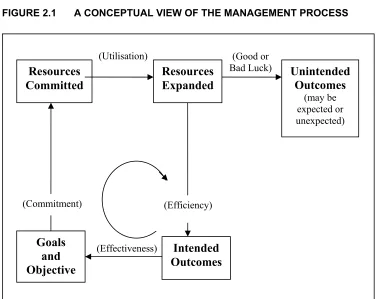
Ewell & Jones (1994, 24-25) provide a conceptual view, derived from Romney et al. (1978), of the management process that guides development of the kinds of information needed to inform higher education management decisions. This is shown in Figure 2.1.
FIGURE 2.1 A CONCEPTUAL VIEW OF THE MANAGEMENT PROCESS
After Romney et al. (1978)
Lunenburg & Ornstein (2004, 5) clarify the meaning of ‘management’ by suggesting that there are two different management perspectives; those are: scientific management and administrative management. Scientific management focuses on the management of work and worker, while administrative management addresses issues concerning how the overall organisation should structured.
Lunenburg & Ornstein (2004, 32) provide a useful concept in understanding organisations: they claim that an organisation is ‘a system which can be defined as a set of interrelated elements and that functions is a unit for a specific purpose’. They state that a systems approach is a way of viewing educational institutions as learning organisations. Their view is underpinned by that of Peter Senge in his best-selling book, The Fifth Discipline. In this book, Senge (1990) suggests that an organisation must be studied as a whole by taking into consideration the interrelationships among
(Good or Bad Luck)
(Effectiveness) (Utilisation) Resources
Committed
Resources Expanded
Unintended Outcomes
(may be expected or unexpected)
(Commitment)
Goals and Objective
its parts and its relationship with the external environment. Senge (1990, 3) defines learningorganisations as
organisations where people continually expand their capability to create the results they truly desire, where new and expansive patterns of thinking are nurtured, where collective aspiration is set free and where people are continually learning how to learn together.
A learning organisation, Senge suggests, is a strategic commitment to capture and share learning in the organisation for the benefits of individual, teams, and the organisation. It does this through alignment and the collective capacity to sense and interpret a changing environment; to put new knowledge through continuous learning and change; to embed this knowledge in systems and practices, and to transform this knowledge into outputs.
Lunenburg & Ornstein (2004, 35) list seven action imperatives which can be interpreted in terms of what must change to help educational institutions become of learning organisations; those are:
1. Create Continuous Learning Opportunities; 2. Promote Inquiry and Dialogue;
3. Encourage Collaboration and Team Learning; 4. Create Systems to Capture and Share Learning; 5. Empower People toward a Collection Vision; 6. Connect the Organisation to the Environment; and 7. Provide Strategic Leadership for Learning.
matter from a learner’s perspective. They should ‘think systemically’ to discern the variation in develop multiple perspectives to the subject matter being taught. They should be synergistically involved in a ‘team learning’ activity studying the effectiveness of the total student experience. The team should develop a ‘collective consciousness which comprises of what is common and what is complimentary’. Srikanthan concludes this develops a ‘shared vision’ within the team; the team operates by bringing the ‘differences and complementarities into the open’ which clarify the ‘mental models’ held by individual members, derived from their professional and personal background. It ‘enriches their collective consciousness.
Argyris & Schön (1996), in their Preface to Organisational Learning II, suggest that organisations need to adapt to changing environments, draw lessons from past success and failures, detect and correct the errors of the past, anticipate and respond to impending threats, conduct experiments, engage in continuing innovation, and build and realize images of a desirable future. They also point out that there is a virtual consensus that we are all subject to ‘learning imperatives’ in the academic as well as the practical world: organisational learning has become an idea that has good currency. Additionally, they provide useful suggestions about the questions that should be asked with regard to the use of organisational learning:
1. What is an organisation that it may learn?
2. In what ways, if at all, are real-world organisations capable of learning?
3. Among the kinds of learning of which organisations are, or might become capable, which ones are desirable?
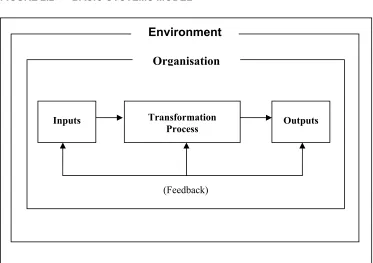
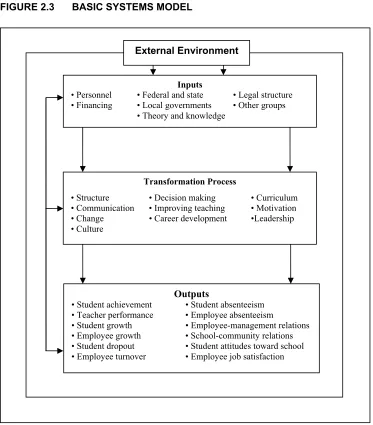
Lunenburg & Ornstein (2004, 36-39) provide a useful model in order to analyse the operation of an educational institution and the role of administrators within that operation from an open systems framework which they group into three broad categories of inputs, transformation process, and outputs. They see these frameworks as aids in the analysis of educational institution operations and, more specifically, in the institution’s system and operational management. They contribute greatly to the quick and accurate diagnosis of problems, and can focus the administrator’s efforts on the key areas to introduce change in the systems. Figure 2.2 illustrates the interrelations among the dimensions of the operation management system. These dimensions are discussed below.
1. Inputs. The educational institutions might provide inputs with personnel, financing, and theory and knowledge. In addition, many countries, states, and local governments enact laws that regulate its operations. Other groups make demands on the institution: students, for example, want relevant and useful curriculum content to prepare them for the world of work, higher education and lifelong learning; teachers want higher salaries, better working conditions, fringe benefits, and job security; administrators and board members want a high return on their investment, that is, quality education within an operational budget. The community expects the institutions to provide quality education to all the clients; special interest groups have a variety of agendas. The task of the administrator is to integrate these diverse goals into a viable plan of action.
FIGURE 2.2 BASIC SYSTEMS MODEL
After Lunenburg & Ornstein (2004)
institution and its system of operational management. Some components of the system of operational management include the technical competence of administrators, including their decision-making and communication skills, their plans of operation, and their ability to cope with change. Activities performed by administrators within the institution’s structure will affect the institution’s outputs.
3. Outputs. The administrator should secure and use outputs from the external environment and transform them through administrative activities, as follows: providing a structure, developing a culture, motivating, leading, decision making, communicating, implementing change, developing curriculum, administering personnel and financing.
Inputs Transformation
Process Outputs
(Feedback) Organisation
FIGURE 2.3 BASIC SYSTEMS MODEL
After Lunenburg & Ornstein (2004)
The external environment reacts to these outputs and provides feedback to the system. Feedback is crucial to the success of an educational institution’s operation. Negative feedback, for example, can be used to correct deficiencies in the administrator’s operational plan of action which, in turn, will have an effect on the institutional outputs (see Figure 2.3).
In accordance with this basic systems model, program leaders should make careful plans and think seriously about their responsibilities to the following tasks: being well prepared, working towards improving their
Inputs
• Personnel • Federal and state • Legal structure • Financing • Local governments • Other groups
• Theory and knowledge
Transformation Process
• Structure • Decision making • Curriculum • Communication • Improving teaching • Motivation • Change • Career development •Leadership • Culture
Outputs
• Student achievement • Student absenteeism • Teacher performance • Employee absenteeism
• Student growth • Employee-management relations • Employee growth • School-community relations • Student dropout • Student attitudes toward school • Employee turnover • Employee job satisfaction
performance, understanding the tasks of educational management, and functioning effectively within the cultural and social environment. Employing the Proactive Form of Evaluation of Owen, with Rogers (1999, 171) enables policy and program development to be informed by the best and most appropriate evidence about the problem to be addressed. The evaluator’s task is therefore to harness and provide knowledge for those who will be involved in program planning. The decisions about providing available resources should be based on the intuition of program planners, and long-used practices or personal preferences, and not be unduly influenced by political pressures.
Quality management
A program should be of high quality in all its endeavours. The program that is delivered must be of the right quality and be to the stakeholders’ satisfaction. Quality and quality management have to be defined in terms of a specification or a mission statement. Appropriate mechanisms and procedures need to be in place to meet, consistently, these pre-defined standards.
Tribus (1993, 2) views quality management as ‘a way to organize the efforts of people’: its objective is to harmonise their efforts in such a way that not only do people approach their assigned tasks with enthusiasm, but they also participate in the improvement of how the work gets done. He suggests that quality management introduces a significant change in the relationship between those who manage and those who actually do the work.
FIGURE 2.4 THE FOUR SYSTEMS TO BE CONSIDERED WHEN
INTRODUCING QUALITY MANAGEMENT INTO EDUCATION ENTERPRISE
After Tribus (1993)
applied. Quality management has thus evolved a number of special tools and techniques which are of great value in the improvement of systems. These, he suggests, are described in many excellent books on quality management; few have been translated into experiences in education. He points out, however, that the work place is within a social system; a teacher cannot introduce a new approach in a classroom if the other teachers object. The approaches to the development of wisdom and character, therefore, must necessarily involve the entire faculty – it is not possible to consider the set of tools and techniques without considering the social system in which the processes are embedded. Moreover, he claims that the social system is embedded in a
Technical Tools and Techniques
THE EDUCATIONAL SYSTEM
The social system The managerial
managerial system. The managerial system, with its practices, protocols, permissions, privileges, and politics determines the nature of the social system. Thus, all three of these systems are ‘boxed in’ by the education of the people who inhabit them. He also suggests that any approach to the introduction of quality management must begin with education for the staff. In addition, the leader of the change process need to devise a strategy, and four important components should also be considered which are:
1. Development of a general awareness of why it is necessary to change.
2. Establishment of goals and objectives for the change.
3. Understanding, broadly shared, of what the change entails in all three of the systems of Figure 2.4.
4. A sensible set of first steps.
Tribus points out that those who would lead the change process should understand some of the dynamics involved in changing people’s paradigms. Figure 2.5 indicates how people are locked into a reinforcing circle unless intervention occurs and an opportunity is afforded for reflection.
FIGURE 2.5 CHANGING THE PARADIGM OF A PERSON
After Tribus, 1993
ATTITUDE
ACTION EXPERIENCE
INTERVENTION BY A ROLE MODEL
DISCUSSION WITH PEERS
Tribus (1993, 20) suggests that, instead of the Deming-Shewhart circle of ‘Plan-Do-Study-Act’, they are caught in a vicious circle of ‘Act upon Attitude’, ‘Gain Experience’, ‘Reinforce the Attitude’. It requires intervention to break the cycle.
Freed et al. (1997, 1-2) describe the quality principles as a management approach for making higher education more effective, in addition to creating an improved place to obtain a degree and a more enjoyable workplace. These principles are as follows: vision, mission, and outcomes driven; systems dependent; leadership; creating a quality culture; systematic individual development; decisions based on fact; delegation of decision making; collaboration; planning for change; and leadership: supporting a quality culture. They suggest that leadership be listed twice because leadership is a critical principle.
In addition, Liston (1999, 52) points out that the following principles provide a framework for a quality management system to foster improvement:
1. The chief executive officer (president or vice-chancellor) and executive managers are responsible for leading in the advancement of quality through monitoring and reviews to identify best practice using agreed key performance indicators
(KPIs).
2. Commitment to quality is necessary for all elements of the education institution.
3. Everyone is responsive for continuous quality improvement in the workplace.
4. Quality management principles are incorporated into operational unit (faculty, school, department) plans.
Liston also provides characteristics of effective quality management, as follows:
1. planning, innovation, and strategies to implement change; 2. use of benchmarks, standards and KPIs for monitoring change; 3. evaluation of best practice for continuous improvement; 4. efficiency and cost-effectiveness;
5. relational management information systems and reporting mechanisms;
6. dissemination of information and ongoing communication.
Liston (1999, 52-54) suggests that by reviewing their own mission and goals in the light of the institution’s vision, mission, values, goals, and objectives (e.g., for teaching and learning, research, international and community interactions), personnel in each operational unit, school and department might share in setting a standard against which achievements are to be judged. Improvement can be gauged through regular review using agreed criteria. The processes of review may be five-or six-yearly for entirely programs to inform long-term planning, or annual reviews against short-targets. They form part of a typical quality cycle as illustrated in Figure 2.6 as follows:
Quality imperatives
Sallis (2002, 3-4), with a view to improving institutional quality, identifies four quality imperatives that emerged in response to his research question: ‘Why should an educational establishment want to be involved in quality assurance activities?’.
FIGURE 2.6 AN EDUCATIONAL INSTITUTION QUALITY CYCLE
After Liston (1999)
Environmental scanning, involving: students staff professions employers graduates community Vision
Missions/Values
Goals
Plans Indicating Critical success
factors
KPIs and measures Benchmarks Targets
Implement strategies and review
processes Refine
and continually improve quality of process and outcomes
Evaluate variances between outcomes and targets
Measure
education; thus, it is the duty of educational professionals and leaders to have an overriding concern to provide the very best possible educational opportunities.
Second, there is the professional imperative. Professionalism implies a commitment to the needs of students and an obligation to meet their needs by employing the most appropriate pedagogic practices. Educators have a professional duty to improve the quality of education and this places a considerable burden on instructors and leaders to ensure that both classroom practice and the management of the institution are operating to the highest possible standards.
Third, there is the competitive imperative. Falling enrolments can lead to staff redundancies and ultimately the viability of the institution can be under threat. Educationalists can meet the challenge of competition by working to improve the quality of their service and of curriculum delivery mechanisms. Competition requires strategies that clearly differentiate institutions from their competitors. Focusing on the needs of the customer is at the heart of quality; it is one of the most effective means of facing competition and surviving.
In addition, Sallis (2002, 17) provides three important quality ideas: quality control, quality assurance and total quality. Quality control is the oldest quality concept. It refers to the detection and elimination of components or final products that are not up to standard. It is an after-the-event process concerned with detecting and rejecting defective items. As a method of ensuring quality it may involve a considerable amount of waste, scrap and reworking. Quality controllers or inspectors usually carry out quality control. Inspection and testing are the most common methods of quality control, and are widely used in education to determine whether standards are being met.
The varying goals of stakeholders have stressed the need for participation; quality should be everyone’s responsibility external and internal throughout the program. The vesting of responsibility for quality in terms of individual responsibility and devolution should fit with the idea of ‘professionalism’ and the associate valuing of autonomy and self-direction. ‘Quality’ is ‘fitness for standards that are accepted’; therefore, a program must have a well-defined mission with a delivery of goals and objectives. Each unit then will have the responsibility of developing its own quality assurance mechanism in order to fulfil the requirements of a program’s quality standard.