• No results found

The Relativistic String in the Caltech-II Model of Hadronization and Electron-Positron Annihilation

N/A
N/A
Protected

Academic year: 2020

Share "The Relativistic String in the Caltech-II Model of Hadronization and Electron-Positron Annihilation"

Copied!
166
0
0

Loading.... (view fulltext now)

Full text

(1)
(2)
(3)
(4)
(5)
(6)
(7)
(8)
(9)
(10)
(11)
(12)
(13)
(14)
(15)
(16)
(17)
(18)
(19)
(20)
(21)
(22)
(23)
(24)
(25)
(26)
(27)
(28)
(29)
(30)
(31)
(32)
(33)
(34)
(35)
(36)
(37)
(38)
(39)
(40)
(41)
(42)
(43)
(44)
(45)
(46)
(47)
(48)
(49)
(50)
(51)
(52)
(53)
(54)
(55)
(56)
(57)
(58)
(59)
(60)
(61)
(62)
(63)
(64)
(65)
(66)
(67)
(68)
(69)
(70)
(71)
(72)
(73)
(74)
(75)
(76)
(77)
(78)
(79)
(80)
(81)
(82)
(83)
(84)
(85)
(86)
(87)
(88)
(89)
(90)
(91)
(92)
(93)
(94)
(95)
(96)
(97)
(98)
(99)
(100)
(101)
(102)
(103)
(104)
(105)
(106)
(107)
(108)
(109)
(110)
(111)
(112)
(113)
(114)
(115)
(116)
(117)
(118)
(119)
(120)
(121)
(122)
(123)
(124)
(125)
(126)
(127)
(128)
(129)
(130)
(131)
(132)
(133)
(134)
(135)
(136)
(137)
(138)
(139)
(140)
(141)
(142)
(143)
(144)
(145)
(146)
(147)
(148)
(149)
(150)
(151)
(152)
(153)
(154)
(155)
(156)
(157)
(158)
(159)
(160)
(161)
(162)
(163)
(164)
(165)
(166)

Figure

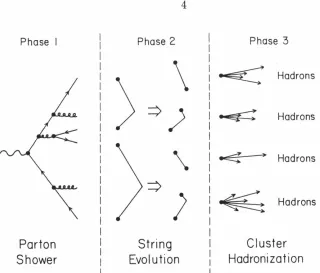
Figure 1.1 Factorization of event evolution in Caltech-II.
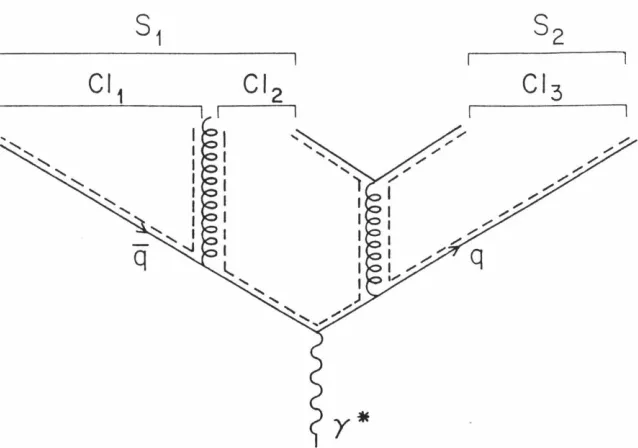
Figure 2.2 on Color How (dashed lines) allows formation of colorless objects by mapping partons onto strings sl' s2, or by dividing the color charge gluons between adjacent clusters C/1, C/2, C/3
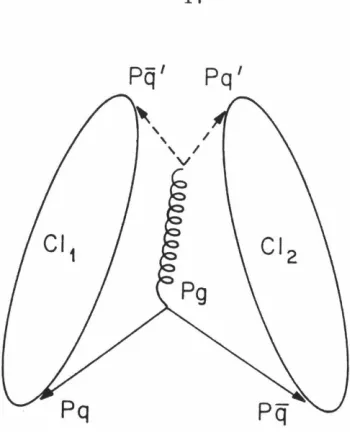
Figure 2.3 antiquark Gluon of momentum p9 is artificially split into a quark-pair (dashed lines) to form two clusters
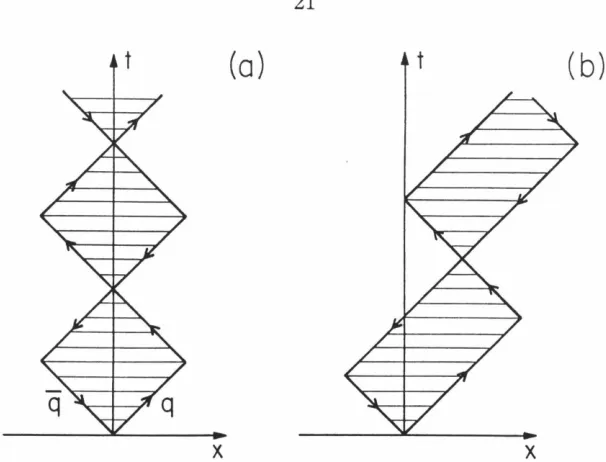
Figure 2.6 (a) Space-time motion of qq system of massless quarks in CM frame. (b) Same system viewed from a frame boosted along -x axis
+7

References

Related documents