Bolt, Shelley Marie. The Effects of Feeding Corn Silage that was Exposed to Air for Five Days With or Without Yeast Cell Walls on Production Parameters in Early Lactation Holstein Cows. (Under the direction of Dr. B.A. Hopkins and L.W. Whitlow).
Proper silage management is important in reducing excessive spoilage due to air
exposure. The objective of this study was to compare the effects on production of feeding
silage that was exposed to air for five days and Yeast Cell Walls (YCW) to Holstein cows. Forty-eight early lactation cows were randomly assigned at calving to one of four
treatment diets within parity. Diets included: Diet 1 corn silage blended into a TMR
(CON), 2) CON with added Yeast Cell Walls (CON+YCW), 3) silage that was exposed to air for five days blended into a TMR (EXP), 4) EXP with added Yeast Cell Walls (EXP +YCW). Cows were started on trial at 21 days in milk (DIM). Cows received the same silage type for the duration of the experiment, but switched YCW treatment at the
experimental midpoint (45 d). CON corn silage was stored in a covered trench silo for the
length of the study. EXP silage was taken from the same trench silo and piled under a
covered shelter for 5 days before being blended into the TMR based on prior DM change.
Blood and rumen fluid samples were collected on days 30, 44, 75, and 89 of the
experiment and analyzed for parameters important for health and production. There were
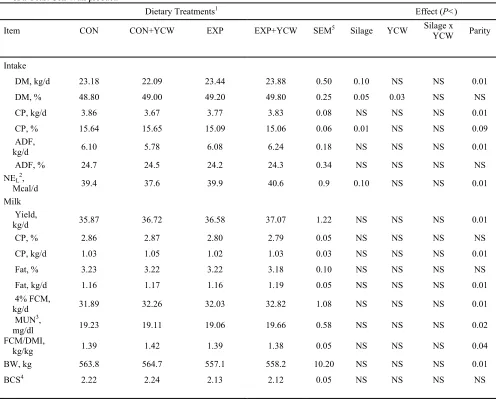
no significant differences in %CP, %ADF, and Mcal/kg NEL for treatment diets. Milk
yield (35.87, 36.72, 36.58 and 37.07 kg/d), DMI (23.18, 22.09, 23.44, and 23.88 kg DM),
2.80, and 2.79%), and protein yield (1.03, 1.05, 1.02, and 1.03 kg) were not significantly
different among CON, CON+YCW, EXP, andEXP+YCW, respectively (P > 0.10).
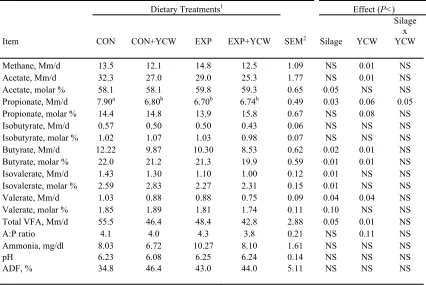
Acetate: propionate ratio was not significantly different among treatments CON,
CON+YCW, EXP, EXP+YCW, respectively (2.4, 2.3, 2.4, and 2.3; P > 0.10).
Concentrations of blood urea nitrogen (BUN) (19.8, 20.2, 21.0, and 22.8 mg/dl), rumen ammonia (10.7, 10.9, 9.9, and 9.8 mg/dl), as well as rumen pH (6.9, 6.8, 6.9, and 6.8)
were not significantly different among treatments CON, CON+YCW, EXP, and EXP
+YCW, respectively (P > 0.10). DMI and dietary % CP was significantly lower in the
EXP silage (P < 0.10). Concentrations of BUN (19.9 vs 21.5 mg/dl; P < 0.01) were
significantly different for CON and EXP silage, respectively. The addition of YCW
significantly lowered acetate concentration (59.03 vs 57.56 mol/100 mol; P < 0.10).
Dual-Flow continuous culture fermentors were used to conduct an in vitro experiment.
Ruminal fluid was obtained from a non-lactating Holstein cow and transferred into four
fermentors which were fed the four treatment diets from the in vivo experiment. The in
vitro experiment was repeated twice and lasted four five days. Control silage suppressed
acetate production while increased the production of propionate and butyrate. Addition of
YCW to the CON and EXP treatment diets suppressed methane, acetate, butyrate and
total VFA production while increased the concentration of propionate.
THE EFFECTS OF FEEDING CORN SILAGE THAT WAS EXPOSED TO AIR FOR FIVE DAYS WITH OR WITHOUT YEAST CELL WALLS ON PRODUCTION PARAMETERS IN EARLY LACTATION HOLSTEIN COWS
By
Shelley Bolt
A thesis submitted to the Graduate Faculty of North Carolina State University
in partial fulfillment of the requirements for the Degree of Master of Science
DEPARTMENT OF ANIMAL SCIENCE NUTRITION PROGRAM
Raleigh
2002
APPROVED BY:
___________________________ ___________________________ Dr. Brinton Hopkins Dr. Lon Whitlow
Co-Chair of Advisory Committee Co-Chair of Advisory Committee
Biography
Shelley Bolt was born in Virginia Beach, Virginia on October 14, 1978 to Mr. and
Mrs. Kent N. Bolt. She graduated from West Forsyth High School in Winston-Salem,
North Carolina. She then began her studies at North Carolina State University in Raleigh,
North Carolina in the fall of 1996. Shelley received a B.S. degree in Zoology with a
minor in Animal Science in May of 2000. She entered the North Carolina State
University animal science program in the fall of 2000 in pursuit of a M.S. degree in
nutrition under the direction of Dr. Brinton Hopkins and Dr. Lon Whitlow.
Shelley will pursue a Master of Public Health with a concentration in nutrition at
Acknowledgements
I would like to express my sincere gratitude to my major professors, Dr. Hopkins
and Dr. Whitlow for their time, guidance, and friendship. I would also like to thank Dr.
Vivek Fellner for supporting me, for helping with my project, use of his laboratory
equipment, and for serving on my committee.
A very special thank you goes to Sarah McLeod for her friendship, patience,
moral support and outstanding technical assistance. I would also like to thank Ellen
Leonard, Lucie Smith, Vicki Fout, Amy Conrad, Missy Lloyd and Marcia Corns for
laboratory assistance. Thanks also to Katina Snipes, Mebane Galloway, Carla McKinney
and Marian Correll for helping me get through the everyday trials of completing my
degree at N.C. State.
Thanks to Raymond Coltrain, Correll Hall, Randy Smith, Kelly Snider, Donald
Myers, Rachel Anderson and the whole staff of the dairy at the Piedmont Research
Station for their hardwork and enthusiasm they showed during this study. A special
thanks to my buddies Correll and Randy for making me laugh, listening to my stories and
hiding my car keys.
I especially want to thank Shannon Davidson for holding my hand throughout this
whole process and for her extensive guidance through Excel and SAS. To Stephanie Hill,
thanks for helping sample every other Tuesday and for the laughs we had in the car
driving to Salisbury. To Duarte Diaz, thanks for keeping me calm when things had run
Yocum, Brent Frederick, and Stephanie Hill for their friendship, humor, and listening to
me complain.
Finally, I want to thank my family and friends, especially my parents and my
Table of Contents
LIST OF TABLES ... vii
ABBREVIATIONS………. viii
LITERATURE REVIEW ... 1
INTRODUCTION... 1
PHASES OF FERMENTATION... 3
EFFECT OF AIR ON SILAGE QUALITY... 4
COVERING THE SILO TO PREVENT AEROBIC DETERIORATION... 7
ANIMAL AND HEALTH RISKS... 13
SUPPLEMENTATION WITH VIABLE YEAST CULTURE... 13
Effect of yeast supplementation on rumen ammonia ... 14
Effect of yeast supplementation on VFAs and rumen fermentation... 16
Effect of yeast supplementation on rumen pH ... 17
Effect of yeast supplementation on rumen microbial populations... 18
Effect of yeast supplementation on digestibilty... 19
Effect of yeast supplementation on intake, growth, and milk production... 20
MANNANOLIGOSACCHARIDES... 23
SUMMARY... 26
THE EFFECTS OF FEEDING CORN SILAGE THAT WAS EXPOSED TO AIR FOR FIVE DAYS WITH OR WITHOUT YEAST CELL WALLS ON
PRODUCTION PARAMETERS IN EARLY LACTATION HOLSTEIN COWS . 32
ABSTRACT... 33
INTRODUCTION... 35
MATERIALS AND METHODS... 37
RESULTS AND DISCUSSION... 42
CONCLUSIONS... 48
ACKNOWLEDGEMENTS... 50
List of Tables
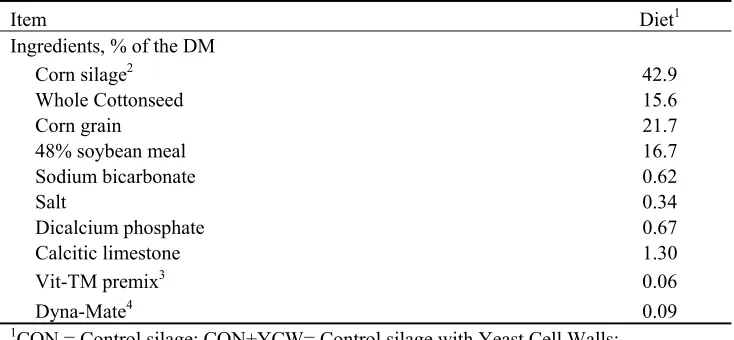
Table 1. Ingredient and nutrient composition of dietary treatments………57
Table 2. Least squares means for daily intake, milk yield, milk composition, body
weight and body condition score as affected by silage by YCW, silage,YCW and
parity………58
Table 3. Least squares means for blood urea nitrogen, ruminal ammonia and
ruminal VFA as affected by silage by YCW, silage, YCW, and parity..……..………..59
Table 4. Least squares means for continuous culture methane, ammonia,
pH, and VFA as affected by silage by YCW, silage, and YCW………..…….…..60
Table 5. Least squares means for silage characteristics pH, water soluble
Abbreviations
ADF acid detergent fiber
BAB butyric acid producing bacteria
BUN blood urea nitrogen
BW body weight
CP crude protein
DHIA dairy herd improvement association
DIM days in milk
DMI dry matter intake
FCM fat corrected milk
LAB lactic acid producing bacteria
MUN milk urea nitrogen
N nitrogen
NEL net energy of lactation
NPN non-protein nitrogen
TMR total mixed ration
VFA volatile fatty acids
WSC water soluble carbohydrates
Literature Review
Introduction
Proper silage management is important to maximize nutrients, production, and
income on commercial dairy farms. Silage is an important part of lactating cow diets
especially in the Southeastern United States, and often makes up 60% of the total feed.
In North Carolina, 90% of forage fed to ruminants year-round is silage. Silage has
advantages over hay making, such as reduced dependence on weather, increased
flexibility of conserving the crop at optimum quality, and the ability to mechanize from
harvest to feeding.
A major concern with silage is spoilage due to air exposure. Often, the top layers
of a horizontal silo will become exposed to air and consequently the silage can suffer a
dramatic loss in nutrient density. It is recommended that covering the silo, in addition to
adding preservatives, can help reduce the loss of nutrients. If the silage on top or on the
face of the silo is exposed to air, it is recommended to discard any spoilage to ensure
diets formulated with this silage are accurate in nutrient composition. Feeding spoiled
silage to livestock can severely impact the health and productivity of a dairy herd.
Producers feeding spoiled silage are more likely to encounter mycotoxins that can result
in a decrease in milk production or intake. Therefore, it is recommended to discard the
spoilage, and more importantly manage the silo to prevent spoilage.
Yeast cultures have been studied for their beneficial effects on rumen
(YCW) include mannanoligosaccharides that constitute the cell wall portion of the yeast Saccharomyces cerevisiae, and have been implicated to improve ruminal fermentation
(Erasmus et al., 1992; Enjalbert et al., 1999), nitrogen metabolism (Erasmus et al., 1992;
Wohlt et al., 1998), fiber digestibility (Dann et al., 2000; Weidmeier et al., 1987), dry
matter intake (DMI), and milk production (Shaver and Garrett, 1995; Piva et al., 1993). However, these benefits have not been seen in all experiments.
This experiment was designed to use early lactation dairy cows, fed diets based on
either a control silage that was well preserved and fed fresh daily or a silage that was
exposed to air for 5 days; both with or without the addition of YCW top dressed on the
final TMR. The experiment was designed to be a modified split-plot design where cows
remained on the same type of silage (control or exposed) while the YCW was either
added or removed from the experimental diet. Milk production, intake, digestibility, and
rumen parameters were monitored to determine the effects of silage and YCW on early
lactation dairy cattle.
This literature review is divided into the following sections:
1. Phases of silage fermentation
2. Effect of air on silage quality
3. Covering the silo to prevent aerobic deterioration
4. Animal and health risks of feeding spoiled silage
5. Supplementation with viable yeast culture
b. VFA production and rumen fermentation
c. pH
d. Microbial populations
e. Digestibility
f. Intake, growth, and milk production
6. Mannanoligosaccharides
Phases of fermentation
In phase 1 of silage fermentation, the plant material is put into the silo. The plant
cells continue to respire and consume oxygen while carbon dioxide and heat are
produced. The temperature of the silage increases. Phase 1 lasts about 1 to 2days. In
phase 2 of fermentation, acetic acid is produced. The pH drops from 6.0 to about 4.2.
This occurs between days 2 to 3. Phase 3 of fermentation is characterized by lactic acid
formation and the decline of acetic acid production (day 3). During phase 4 of
fermentation, lactic acid formation continues for about two more weeks. Temperatures
gradually decline. Bacterial fermentation stops as the pH lowers to about 4.0. Phase 4
lasts from day 4 to about day 20. Finally, in phase 5, the silage remains constant (>20
Effect of air on silage quality
Aerobic stability of silage is especially important in dairy production in the
Southeast because large dairies may contract for and take delivery of silage for short term
(less than two weeks) feeding. The silage may be stored in a pile unprotected, and the hot
weather can encourage rapid aerobic deterioration of the silage (Pitt et al., 1991). In
properly fermenting silos, the lactic acid producing bacteria (LAB) transform water soluble carbohydrates (WSC) into organic acids during the ensiling process. As a result, the pH is lowered and the silage is preserved. When the LAB reach at least 105 cfu/g of fresh matter, silage is considered to be well-preserved (Cai et al, 1999). In silage that has
been exposed to air, LAB do not produce enough lactic acid to sufficiently reduce the pH
to a level that inhibits the butyric acid producing bacteria (BAB) (clostridia). The
resulting silage is of poor quality. Aerobic deterioration is characterized by an increase in
temperature and pH caused by the aerobic metabolism of WSC and organic acids by
yeasts, molds, and bacteria. During aerobic exposure of corn silage, silage temperature
and pH increase while WSC concentrations decrease. This may occur due to the
microbial metabolism of lactate and sugars. The decreased WSC may be a result of
metabolism by bacteria and the yeast Saccharomyces, and the pH is increased most likely
due to the yeast Candida metabolizing lactate (Sanderson, 1992). Ruxton et al. (1975)
noted that silages made from forage rich in WSC or silages with large amounts of WSC
because of inhibited fermentation, were more susceptible to aerobic deterioration.
suggested that the mechanism involved in aerobic deterioration was more complex and
depended on many chemical, physical, and microbiological interactions.
Respiration of plant material and microorganisms results in considerable
generation of heat and loss of digestibility, particularly of the protein fraction. During
exposure to air, a secondary fermentation (butyric or clostridial) can occur in silage
following the primary fermentation (lactic acid). This secondary fermentation is a
deterioration characterized by the production of butyric acid from lactic acid and sugars,
and the breakdown of proteins and amino acids to amines, amides, and ammonia. The
excess presence of these products is characteristic of poor quality silage. Deterioration is
accompanied by a loss of residual sugars and the production of ammonia. The
measurement of ammonia production can be an indicator of the extent of deterioration
because protein breakdown is a consistent result of aerobic spoilage.
When silage is exposed to air, it is prone to deterioration because air promotes
the proliferation of aerobic microorganisms that cause the majority of losses in spoiled
silage. Current estimates of their detrimental effects on silage loss are most likely
underestimated. It is estimated that DM losses may exceed the storage losses of several
months (McGechan, 1990). Therefore, aerobic deterioration is a serious problem, and
many researchers have begun to discover means to minimize these losses (Weinberg and
Ashbell, 1994). Poor quality silage (high pH, high butyric acid and ammonia, low lactic
and acetic acid) is stable in air due to high levels of butyric acid, fatty acids, and
more stable in air because the BAB will produce enough butyric acid to prevent the
growth of yeasts which are inhibited by the acid (Gordon, 1966).
Yeasts, fungi, and bacteria have been implicated in causing spoilage of silage.
The main organism believed to be responsible for the vulnerability of silage to air is yeast
(Woolford et al., 1990). When exposed to air, silages can spoil rapidly due to the growth
of yeasts and molds (Kung et al., 2000).The silage’s population of yeast will dictate
spoilage rate when air is present. According to Daniel et al. (1970), silage with a yeast
population exceeding 105 cfu /g DM is particularly prone to be lower in quality. The yeasts implicated in aerobic silage deterioration are of two groups: the acid-utilizers and
the sugar-utilizers. High DM silages are particularly vulnerable to yeast growth, early
increases in temperature, and other characteristics of deterioration. Fungi have also been
implicated in the deterioration of silage, including fungi that are thermophilic and thus
thrive during the initial heating phase of silage fermentation. The growth of fungi is much
slower than yeasts, and fungi do not grow well at a low pH, therefore, the extent to which
they influence spoilage is unknown (Woolford et al., 1990). Bacteria may have a
secondary role in promoting the spoilage of silage (Woolford et al., 1990). Weise (1963)
indicated that their role is terminal in the process of deterioration due to the presence of
bacilli in later microflora when the pH has already risen. However, pH may not be
uniform throughout silage. There may be pockets in the silage where a high pH promotes
the growth of bacteria and thus enables them to initiate spoilage (Woolford et al., 1990).
Covering the Silo to Prevent Aerobic Deterioration
Air poses detrimental effects on silage including a decrease in conservation
efficiency, a loss in nutritive value, and an increased risk of health hazards to animals and
handlers. Air deteriorates silage during filling of the silo as well as during storage and
feedout. In inadequately sealed silos, where the crop is exposed to air, there is growth of
silage microorganisms that utilize a large variety of substrates either in the original crop
or produced as fermentation by-products (Woolford et al., 1990). If a silo is not properly
sealed, air can also spoil silage during the fermentation process. While silage spoilage
organisms can proliferate with exposure to minute quantities of oxygen in the silo, there
are recommended management practices that can minimize the effects of air on silage.
These include avoiding fungal infected forage, minimizing wilting periods to prevent the
buildup of aerobic organisms, rapidly filling and packing the silo, application of
additives, and adequately packing and sealing the silo. Also, only enough silage needed
for feeding should be removed at one time and the use of specialized equipment such as
block cutters to properly manage the feeding face which will minimize the exposure of
silage to air (Woolford et al., 1990). Silos that are sized to match the needs of the herd
and which results in removal of at least six inches daily from the feeding face is
recommended to reduce air exposure and deterioration.
Forage in silos is subject to seasonal weather conditions. In addition, silage in
horizontal (trench or bunker) silos is affected by other interactions involving the forage’s
to air during filling, the rate of removal, and length of storage, all of which impact the
amount of loss that will occur (Bolsen et al., 1993).
Forage is often ensiled without proper coverage of the exposed surfaces. As a
result, a substantial spoilage layer may develop on the top of the silo even before feed is
removed. Often, on small farms, the amount of spoilage is not thought to be enough to
warrant the time and cost of sealing the silage with polyethylene. Dry matter loss in
uncovered silos is inevitable (Muck, 1999). McLaughlin et al. (1978) observed DM
losses of up to 60% for the top layer of an unsealed bunker silo. Bolsen et al. (1993)
evaluated the effects of sealing on small and pilot-scale bunker silos. There was a rapid
and profuse spoilage in the upper 33 cm of the silo and increased spoilage in lower depths
of the silo. At 90 d post-filling, there was significant DM loss in the uncovered vs.
covered silos.
When the silo is not sealed, or when the seal is not effective, air and moisture seep
into the silo affecting both the ensiling process and the quality of the silage. Weighted
polyethylene sheeting is the most commonly used seal in horizontal silos. Bolsen et al.
(1993) found that alfalfa silage that was uncovered deteriorated completely at 25cm and 0
to 33cm in farm and pilot-scale silos. They also found a large loss in DM and OM in
unsealed silos. At a silage depth of 75 cm, the DM (%) was 25.5 vs. 35.9 for unsealed
and sealed silage respectively. The pH of the top 25cm was 9.58 vs. 4.88 for unsealed vs.
sealed silage respectively (Bolsen et al., 1993).
Bolsen et al. (1993) showed temperature differences between sealed and unsealed
persistently higher temperatures (10 to 20 degrees higher) than sealed silage regardless of
the depth at which it was measured. Woolford et al. (1990) suggested that during this
secondary fermentation, oxygen had entered the silage allowing for more favorable
conditions for microbial activity. This is in agreement with McDonald et al. (1991) who
suggested that the large temperature increase in the top cm of the silage was a result of
increased microbial activity and resulting in nutrient loss.
There have been studies conducted to examine the influence of sealing the silo
immediately vs. sealing after a delay. Bolsen et al. (1993) showed that sealing after a
delay of 7 d greatly improved silage fermentation characteristics when compared to
unsealed silage. However, sealing the silo after a delay resulted in silage that was inferior
in quality to silage that was sealed immediately after being filled. Organic Matter (% of
ensiled) in the top 25cm was 77.1 vs. 66.9 in silos that were filled immediately and filled
after a delay respectively. The pH for silage in silos filled immediately was 4.46
compared to an elevated pH of 4.71 in silage when covering was delayed. Lactic acid (%
of the silage DM) was 1.31 vs. 0.83 in silos covered immediately and covered after 7 d,
respectively. Finally, temperatures were elevated for silos that were delayed in being
covered (32 vs. 29 degrees Celsius). Miller et al. (1962) found that a delay in coverage
caused an immediate increase in microbial activity due to oxygen availability and
increased buffering capacity that resulted in an increased need for fermentation acids to
produce stable silage. However, in an experiment by Bolsen et al. (1993) ensiled forage
sorghum showed no differences in silage quality for silage sealed immediately vs. silage
(1974) who found no differences in DM content, water-soluble carbohydrates, and ADF
between sorghum silages sealed immediately vs. after a delay. Therefore, perhaps forage
type will dictate whether or not delayed sealing is fully effective or if silage quality is lost
during the unsealed time period. Although the DM and OM was lower for silage when
there was a delay in covering, there is a benefit in sealing the silo to prevent further losses
in nutrients. After sealing, deterioration slowed significantly in farm and pilot-scale silos
(Bolsen et al., 1993).
Oelberg et al. (1983) conducted a study to compare the effects of covering silos
with or without black plastic. They found that covered silos had lower silage
temperatures than uncovered silos (Oelberg et al., 1983). They also showed that DM
recovery was higher for covered silos compared to uncovered silos (96.2 vs. 68.0 %,
respectively). The covered silos had higher DM recovery indicating superior fermentation
as can be seen by a low pH (4.9). The uncovered silo had significantly less DM recovery
indicating less fermentation and represented by a high pH (6.8). As would be expected,
covering the silo reduced the silage pH more at the top of the silo than at the bottom
where air is more limiting. Lactic acid was higher for the covered than the uncovered silo
(3.18 vs. 1.68) (Oelberg et al., 1983). McGuffey and Owens concluded that covering
alfalfa silage with plastic lowered ensiling temperatures, pH, lactate, and nonprotein
nitrogen (1979). The effects of covering the silage were also observed by Oelberg et al.
(1983), to reduced non protein nitrogen (NPN), acid detergent insoluble nitrogen
energy in covered silage. Covered silage also may have more protein available for rumen
microbial protein synthesis (McDonald et al., 1973). Heifers fed covered silage consumed
more DM than heifers consuming uncovered silage (Oelberg et al., 1983). In summary,
Oelberg et al. (1983) found that covering a silo with black plastic was as or more
effective than propionic acid-treated silage or uncovered silage stored in bunker silos.
In an experiment by Hoffman and Ocker (1997), 18 mid-lactation cows were fed
fresh control corn (FC) or unstable control corn (UC). The FC was removed from the silo
each day before being fed to the herd. The UC was removed from the silo and piled on a
concrete floor at the beginning of each experimental period (14 d). The researchers found
milk yield to be significantly different (P < 0.01). There was no effect on DMI. The
authors concluded that aerobic instability of high moisture corn reduced milk yield
(Hoffman and Ocker, 1997).
The amount of DM lost during ensiling is a primary indicator for spoilage losses.
The most obvious loss is from seepage. Excess water and sap from the forage is squeezed
out due to the weight of the silage mass. Water is also the by-product of fermentation,
respiration, and oxidation of silage, but it should not contribute significantly to seepage
losses. However, in unsealed bunker silos leaching from precipitation can increase
seepage losses dramatically (Gordon et al., 1961). Losses of about 50 % have been
observed in unsealed or poorly sealed bunker silos. Before the advent of polyethylene
covering, sealing the silo required so much time and labor that it was only used in cases
of emergency or very large silos. Plastic sheeting, if properly applied, has changed the
still produce low quality silage. Brown and Kerr (1965) observed a 12 % loss in covered
silos and a 70 % loss in uncovered trenches.
Sealing the silo effectively can be attained by weighting down the plastic
sheeting. Plastic without continuous weighting is of little value because air leaking
through a small puncture can affect the entire surface of the silo.
In a study by McGuffey and Owens (1979), covering the silo reduced silage
temperature at various positions within the silo during a 5 week storage period. They
found that total nitrogen (TN) was greater in covered bunker silos while NPN nitrogen
and ammonia nitrogen was highest in silage from uncovered bunkers. A live animal
experiment found that sheep had greater DM, OM, and nitrogen digestibilities when fed
silage from a covered bunker silo. Growth and intake of both heifers and bulls favored
silage from covered bunkers (McGuffey and Owens, 1979). An explanation of the
increased growth could be attributed to an increase in DM as is suggested by Cowan et al.
(1956) who found greater DM recovery of silage removed from covered areas than from
uncovered areas of the same trench silo. Also, the covered silage that supported more
growth had less ammonia-N, thus provided more true protein and amino acids for
absorption (McGuffey and Owens, 1979).
Average weekly temperatures of silage in covered bunkers ranged from 29.9 ºC to
31.7 ºC, but were increased in uncovered bunkers (32.0 ºC to 42.8 ºC). Therefore, it was
concluded that covering the silo reduced temperature of silage. Silage pH remained
constant in covered bunkers during the storage time. However, silage from uncovered
produced in covered (2.96) and uncovered (3.11) bunkers (McGuffey and Owens, 1979).
Total Nitrogen (%DM) was greater for silage from covered (2.77) than from uncovered
bunkers (2.61). Non-Protein Nitrogen and ammonia-N was greater for silage from
uncovered bunkers. Acid Detergent Insoluble Nitrogen (%DM) was greater in silage from
uncovered bunker silos (McGuffey and Owens, 1979). Silage from this bunker also had a
higher temperature which is expected due to the positive relationship between these
variables. The data suggest that the large amount of heat damaged protein formed is a
problem in uncovered silos.
Animal and health risks
Some microorganisms found in spoiled silage may be harmful to livestock (Cai et
al., 1999). Although it is not well documented, producers have experienced drastic drops
in milk production when cows are fed spoiled and “hot” silage. In a study by Hoffman
and Ocker (1997), feeding spoiled high moisture corn caused a 3.2 kg drop in milk
production during a 14-d period. Also, moldy silage poses a health threat to animals and
humans who handle the feed especially when stored in a closed space such as a silo.
There is an increased risk of respiratory infection associated with the handling and
feeding of spoiled silage (May et al., 1986). There is also an increased risk of
mycotoxicosis from mycotoxins produced by molds in the silage.
Supplementation with viable yeast culture
For many years, ruminant nutritionists have been interested in manipulating the
growth factors (i.e., organic acids, B vitamins, and amino acids) that are required for
rumen bacteria (Calloway and Martin, 1997). Live yeast supplements release essential
enzymes, vitamins, and amino acids during digestion which may have a beneficial effect
on rumen efficiency. These benefits may arise as a result of the metabolites or their
interactions with rumen microbes. Yeast cultures are known to be best utilized by animals
that are under stress. During times of stress, animals have higher nutrient requirements
(Arambel and Kent, 1990). Phillips and von Tungelin (1985) fed yeast culture to
post-stressed steers and heifers and found that DM intake and ADG significantly increased
compared with controls. Dairy cows in early lactation do not consume enough feed to
meet their energy requirements to support high milk production which puts them into
negative energy balance. The state of negative energy balance puts a large amount of
stress on cows (Arambel and Kent, 1990). Therefore, a yeast supplement has been
hypothesized to improve production in early lactation dairy cattle.Several factors affect
the response of cows to yeast supplementation including stage of lactation, type of forage
that is fed, feeding a TMR or not, and the forage to concentrate ratio (Piva et al., 1993).
Effect of yeast supplementation on rumen ammonia
Yeast supplementation has significantly decreased rumen ammonia (Enjalbert et
al., 1999). Yoon et al. (1997) found this same phenomenon in continuous in vitro
fermentors. The decrease in rumen ammonia is thought to be due to a lower degradation
of protein in the rumen (Enjalbert et al., 1999). However, other authors have found that
tract is responsible for the decrease in ammonia. The improved microbial activity of
incorporating ammonia into microbial protein has been suggested as the mechanism for
lowering rumen ammonia (Erasmus et al., 1992).
Ammonia concentrations were less variable in cows consuming yeast (Harrison et
al., 1988). Yeast has been hypothesized to stimulate the uptake of nitrogen sources such
as ammonia and protein (Wohlt et al., 1998). There have been few studies on the effect of
yeast on the flow of N to the lower tract. Karr et al. (1991) found that there were lower
flows of microbial N to the lower tract in sheep that were fed a yeast supplement.
However, Erasmus et al. (1992) showed that rate of passage of microbial N tended to
increase for lactating dairy cattle, and the amino acid pattern was altered in the lower
tract. It was found that the yeast supplement caused an increase flow of lysine and
methionine- the main limiting amino acids in lactating dairy cattle rations- to the
duodenum. The author suggested that the changes in the amino acid profile were due to
changes in the rumen microbe population (Erasmus et al, 1992). The increase in the
amino acids lysine and methionine may contribute to the increase in milk production that
has been seen in some studies. Putnam et al. (1997) found no increase of individual
amino acids to the duodenum conflicting with the findings of Erasmus et al. (1992). The
authors also found no evidence that yeast supplementation increased microbial protein
synthesis or its flow to the duodenum. They did show that slightly more dietary protein
escaped rumen degradation that caused higher non-microbial NAN in the duodenum
Effect of yeast supplementation on VFAs and rumen fermentation
Yeast supplementation has been noted to increase VFA concentration, including
increasing propionate ratios, and decrease methane production in the rumen (Enjalbert et
al., 1999; Piva et al., 1993). Enjalbert et al. (1999) found that yeast supplementation
increased the molar percentage of propionate, and decreased the A:P ratio. The changes
in the remaining VFAs (isobutyrate, valerate, and isovalerate) have been conflicting.
Carro et al. (1992) found decreased proportions of isobutyrate and isovalerate, whereas
Harrison et al. (1988) found decreased iosvalerate and increased valerate. These
discrepancies may be due more to the experimental diet than yeast supplementation.
Kung et al. (1997) found addition of yeast to continuous culture fermentors showed no
effect on VFAs. Piva et al. (1993) found rumen VFAs were not significantly different
although acetate and A:P ratio tended to be higher in cows consuming yeast supplements
Piva et al. (1993) explained this by suggesting the increase in cellulolytic bacteria as a
result of yeast providing growth factors for their proliferation. Other authors have seen a
decrease in A:P ratio (Harrison et al., 1988) which they explained by differences in
methodology including time of sampling, feeding pattern, ration, or DMI (Piva et al.,
1993).Harrison et al. (1988) found that cows supplemented with yeast had lower molar
proportions of acetate while higher molar proportions of propionate than cows who did
not receive yeast. This resulted in a lower A:P ratio for the cows consuming a yeast
supplement. Yeast also caused an increase in branched chain acids (isobutyrate,
isovalerate, and valerate); however, this was mainly due to an increase in valerate. The
1988). The authors stated that this conflicts with other studies although acknowledges the
difficulty in comparing results when diets and intakes are different. The pattern of
reduction in isoacids may also be due to the decrease in pH (Harrison et al., 1988).
Harrison et al. (1988) suggested that the main effect of yeast on lactating dairy cattle is to
stabilize in the rumen. They came to this conclusion because cows receiving a yeast
supplement showed less variation samples of rumen fluid. Analysis of in vitro gas and
VFA production showed lower standard errors in animals fed a yeast supplement. They
concluded that feeding a yeast supplement causes more stable fermentation in the rumens
of cattle (Harrison et al., 1988). However, the authors noted that some of the control feed
also had naturally occurring yeast in it, and therefore experimental results may not be
clearly determined. These cells were viable and could have resulted in less difference
between treatments than previously thought. However, they still concluded that the
differences in rumen fermentation and microbial populations existed between the control
and yeast supplemented dairy cattle (Harrison et al., 1988).
Effect of yeast supplementation on rumen pH
Kung et al. (1997) found addition of yeast to continuous culture fermentors
showed no effect on pH. These results are consistent with the findings of Carro et al.
(1992) who showed no effect on fermenter pH, although it has been suggested that this
effect may be due to the high buffering capacity of the fermentors masking a change in
Piva et al. (1993) showed that yeast supplements increase rumen pH. Although,
Harrison et al. (1988) observed ruminal pH to be lower in cows consuming a yeast
supplement. Yeast is hypothesized to provide growth factors such as malate to rumen
bacteria that metabolize lactate, and in turn cause improved ruminal pH (Kung et al.,
1997).
Effect of yeast supplementation on rumen microbial populations
Yeast supplementation has been hypothesized to alter the rumen microbial
population. Putnam et al. (1997) found an increase in the distribution of rods, cones, and
spirochetes with little or no change in bacterial concentrations and a 10 to 20% increase
in the numbers of protozoa in the rumen digesta with yeast supplementation. Enjalbert et
al. (1999) found increased numbers of cellulolytic bacteria which have been hypothesized
to aid in fiber digestion.
Acetate formation is due to the fermentation of structural carbohydrates by
cellulolytic bacteria. Propionate formation is mainly due to fermentation of non-structural
carbohydrates by amylolytic bacteria. Yeast has been shown to increase or decrease
populations of total viable bacteria, cellulolytic bacteria, and amylolytic bacteria
(Newbold et al., 1996; Erasmus et al., 1992). Authors have shown that yeast supplements
have increased cellulolytic bacteria (Piva et al., 1993).However, Yoon and Stern (1996)
found that the addition of a yeast supplement increased numbers of proteolytic bacteria.
In the majority of trials, an increase in cellulolytic bacteria and no change in amylolytic
However, yeast supplementation could reduce amylolytic bacteria and the effect could be
mediated by increased protozoa counts (Carro et al., 1992) since protozoa are known to
store starch (Enjalbert et al., 1999).
Effect of yeast supplementation on digestibility
Yeast cultures can increase the nutritive value of poor quality forages and
high grain diets by increasing the digestibility of the feed. Wiedmeier et al. (1987)
observed that DM, CP, and hemicellulose digestibility increased in non-lactating heifers
that consumed a yeast culture supplement. This may be due to a shift in cellulolytic
bacteria in the rumen (Arambel and Kent, 1990). There have been some other positive
effects of yeast supplementation on digestibility. Wohlt et al. (1998) found digestibilities
of CP and ADF were increased by supplementing dairy cows with 10 or 20 g/d of active
yeast). Williams et al. (1991) observed steers had a better degradation of hay after the
addition of a yeast supplement.
There have been several studies that have shown that yeast has no significant
effect on digestibility. In a study performed by Arambel and Kent (1990) there was no
difference in CP, NDF, or ADF digestibility. The authors hypothesized that they may
have used an amount of yeast that was too small to show treatment effects (Arambel and
Kent, 1990). Also, Enjalbert et al. (1999) observed no significant differences in the
degradation of DM, NDF or ADF from in situ experiments. Carro et al. (1992) found no
significant differences in ruminal degradation or total tract digestibility of DM or fiber.
supplement was added (Harrison et al., 1988). Addition of yeast to the diets of lactating
cows did not affect the apparent digestibilities of DM, NDF, ADF, hemicellulose, or
starch. This was surprising because Harrison et al. (1988) observed higher numbers of
cellulolytic bacteria in the rumen. The authors stated that one possible explanation was
that although yeast stimulated the number of bacteria it somehow decreased their activity
(Harrison et al., 1988). Jung and Varel (1987) noted that increases in the number of
cellulolytic bacteria did not correspond to increases in digestion of cellulose, cell wall, or
hemicellulose. In vitro data has also shown a decrease in cellulose disappearance in
rumen fluid from cows receiving yeast supplement. Total VFAs produced were also
lower (Harrison et al., 1988).
Effect of yeast supplementation on intake, growth, and milk production
Yeast supplementation has been hypothesized to increase DMI, growth, and milk
production in heifers and lactating dairy cattle. Feeding strategies that help stimulate
DMI in early lactation cows are beneficial to high-producing dairy cattle. Supplemental
yeast may be most beneficial to dairy cattle if it is fed before parturition and through peak
lactation. Yeast may help counteract the decrease in DMI as parturition approaches
(Dann et al., 2000).
Dann et al. (2000) found that DMI increased by 2.1 kg/d during the last week of
gestation for cows fed a yeast supplement. Cows fed yeast for the last 21 d of gestation
showed a tendency to increase DMI. Cows consuming the yeast also maintained greater
by Wohlt et al. (1991). Again, the increase in DMI caused by yeast supplementation
suggests that yeast supplementation is best supplemented during times of increased stress.
Dann et al. (2000) best demonstrated this point when they showed that there was an
increase in DMI for cows fed yeast for the first 42 DIM, but no significant increase in
DMI for cows fed yeast into 140 DIM. Therefore, yeast is most efficacious during early
lactation (Dann et al., 2000). During the stressful time of early lactation, there may not be
enough soluble growth factors for rumen microbes. Callaway and Martin (1997)
suggested that supplemental yeast provide the needed growth factors. Dann et al. (2000)
hypothesized that yeast cells may increase fiber digestion, which could increase the rate
of passage through the rumen and therefore improve DMI. Putnam et al. (1997) found
that addition of yeast caused an increase in DMI (+0.9 kg/d). They did not, however, find
any differences in rumen digestibility of OM, ADF, NDF, CP, or NSC. Therefore, they
concluded that DMI was increased due to some other unknown mechanism (Putnam et
al., 1997).While, Kung et al. (1997) found there were no significant differences in DMI
in research animals, these results conflict with the research of Harris et al. (1992) who
found DMI was decreased with the supplementation of yeast, and Erasmus et al. (1992)
who found DMI increased.
Milk production and DMI have been seen to improve with the addition of a yeast
supplement. It has been suggested that a yeast supplement is beneficial to corn silage
based rations fed to cows in early-lactation (Wohlt et al., 1998). Dry Matter intake and
milk production improved in commercial dairy herds (Shaver and Garrett, 1995).
improvements are thought to be due to ruminal fermentation changes and improved
digestion. In a large study, where 46 Virginia dairy herds were fed a yeast supplement, 31
herds reported increased milk yield while 15 reported decreased milk production
(McGilliard and Stallings, 1998). The milk production for primiparous cows was higher
than for multiparous cows (+0.73 vs. +0.56 kg/d) (McGilliard and Stallings, 1998). This
may be due to the yeast reducing the stress on primiparous cows which is thought to be
greater than for multiparous cows. In a study conducted by Piva et al. (1993),
supplemental dietary yeast increased milk production (26.2 vs. 25.4 kg/d) and FCM (23.6
vs. 21.6 kg/d) in midlactation cows. Putnam et al. (1997) also found an increase in milk
production though it was attributed to the slight increase in DMI rather than to an
increased flow of amino acids to the duodenum. There needs to be more research in order
to understand the interactions between yeast supplementation and diet in order to
discover whether yeast influences the amino acid profile and the efficiency of amino acid
utilization by lactating cows (Putnam et al., 1997). Dann et al. (2000) found that cows fed
yeast reached peak milk yield earlier than cows fed control diets (43 vs. 57 DIM).
However, this may be a result of the increased DMI during the first 42 DIM (Dann et al.,
2000). Dann et al. (2000) found that cows fed yeast did not have significant differences in
prepartum or postpartum BCS. Although cows who did not receive the yeast supplement
had significantly lower BW during the first 42 DIM than did control cows. Whether this
is a yeast effect or a DMI effect is not clear (Dann et al., 2000). Yeast supplements have
improved DMI, milk production, milk composition, and BW gain in dairy cattle (Besong
to be from increased numbers of cellulolytic bacteria, improved fiber degradation in the
rumen, and/or changes in VFA patterns (Kung et al., 1997).
Several studies have shown that yeast has no effect or depressed milk production.
Arambel and Kent (1990) found that daily milk yields and FCM were not significantly
improved with the addition of a yeast supplement. Also, the percentage of milk fat,
protein, lactose, and solids not fat (SNF) were not significantly different between
treatments. BW was unaffected by yeast supplementation (Arambel and Kent, 1990). The
addition of yeast had no effect on milk production, composition or FCM of midlactation
cows (Kung et al., 1997). However, when the authors fed the supplement to early
lactation cows, yeast tended to increase milk production and FCM more than cows fed
the control diet (Kung et al., 1997). This may indicate that yeast supplementation is best
when used in early lactation when stress is highest. The authors suggested that milk
production was increased due to increased amino acid flow to the lower tract when cows
were fed a yeast supplement (Kung et al., 1997; McGilliard and Stallings, 1998).
Mannanoligosaccharides
There may be a benefit to adding an oligosaccharide to the diets of animals. In
human nutrition, oligosaccharides have been shown to enhance the non-pathogenic
microbes in the intestine. In animal research, they are known to adhere to pathogenic
bacteria and therefore reduce disease (Spring, 1998). Oligosaccharides have also been
There are various oligosaccharide products available on the market that are made
from isomerization of disaccharides, enzymatic hydrolysis of starch and other
polysaccharides, or direct extraction from the cell wall of microbes such as yeast.
Oligosaccharides are classified by the type of backbone to which they adhere:
mannanoligosaccharides, which are from yeast cell walls, and fructooligosaccharides,
synthesized by transfructosylation of sucrose, or hydrolysis of inulin (Iji et al., 2001). The
results seen in animal trials probably vary with products and the process in which they
were manufactured (Iji et al., 2001).
Yeast cell wall surrounds the yeast cell and helps give the cell its shape and
protects the cell membrane which functions for the diffusion and transport of nutrients
into, and products out of, the cell. The cell wall accounts for up to 20% of the cell’s
weight and is composed of glucan, mannan, and small amounts of chitin, protein and
lipids (Fleet, 1991). Structural proteins are bound to the polysaccharides. Unsaturated
fatty acids are likely part of the cell membrane, which remains adhered to the cell wall.
Isolated mannanoligosaccharides have been used in swine and poultry diets to aid
performance and health, especially in animals that are under large amounts of stress due
to high production demands (Spring, 1998). The mode of action for mannans is not fully
understood; however, dietary mannan is able to prevent attachment of bacterial pathogens
with Type I fimbria to the gut wall and has been shown to reduce cecal colonization of
salmonella in poultry (Spring, 1998). The pathogens move through the intestine and are
excreted into the feces. However, the host still may be able to mount an immunological
possess its antigenic properties (Parks et al., 2000) This is important because it has the
ability to help intensely-reared animals in resisting disease and therefore reduce reliance
on antibiotics.
Mannanoligosaccharides serve to prevent attachment of gram-negative pathogens,
thereby preventing attachment to enterocytes and enteric infection. They are also used in
the grain industry to adsorb mycotoxins (Ingledew, 1999).
Yeast cell walls may be a solution to the growing trend to prevent the feeding of
antibiotics to livestock while still maintaining optimum growth results. Antibiotics have
come under scrutiny by researchers, consumers, and government agencies because of
their potential to aid in the development of antibiotic-resistant bacteria. The agricultural
industry uses antibiotics as growth promotants in livestock and poultry operations (Parks
et al., 2000). Antibiotics suppress microbial growth in the gut, thereby reducing
immunological stress. Also, by eliminating the pathogen, antibiotics likely reduce the
microbial by-products and toxins that impart negative effects on the energy needs of the
animal. Zimber and Visek (1972) reported that microbial products such as ammonia and
lactic acid can increase enterocyte division and alter mucosal barriers. The animal in turn
must use energy to sustain this high rate of turnover. This energy is then used for
maintenance rather than animal growth and production (Parks et al., 2000).
Although mannanoligosaccharides are the cell walls of the yeast Sacchromyces
cerevisiae, there still may be a beneficial response in the rumen. It is possible that MOS
Summary
Research has shown that protecting silage from deterioration is an important part
of quality farm management. Silage exposed to air exhibits many losses in quality
including dry matter recovery and nutrient density. Silage management practices to
reduce air exposure can effectively reduce silage deterioration.
Mannanoligosaccharides are a major component of cell walls of viable yeast
which may influence rumen fermentation, nitrogen metabolism, dry matter digestibility,
and most importantly, milk production in lactating dairy cattle. Although there has been
seen some benefit to including MOS or viable yeast culture in livestock diets, results are
conflicting and may be influenced by the type of diet that is fed. More research is needed
in order to appropriate recommendations of supplementation.
In conclusion, proper silage management is an important component of overall
dairy management to maximize milk production, protect the health of animals and
employees, and to enhance profits. The inclusion of a yeast derived product, MOS, may
aid in increasing production or health of livestock.
Literature Cited
Arambel, M.J. and B.A. Kent. 1990. Effect of yeast culture on nutrient digestibility and milk yield response in early- to midlactation dairy cows. J. Dairy Sci. 73:1560-1563.
Bolsen, K.K., J.T. Dickerson, B.E. Brent, R.N. Sonon, Jr., B.S. Dalke, C. Lin and J.E. Boyer, Jr. 1993. Rate and extent of top spoilage losses in horizontal silos. J. Dairy Sci. 76:2940-2962.
Brown, W.O. and J.A.M Kerr. 1965. Losses in the conservation of heavily-wilted herbage sealed in polythene film in lined trench silos. J. Brit. Grassland Soc. 20:227.
Cai, Y., S. Ohmomo, M. Ogawa and S. Kumai. 1997. Effect of NaCl-tolerant lactic acid bacteria and NaCl on the fermentation characteristics and aerobic stability of silage. J Appl. Microbiol. 83:307-313.
Cai, Y., Y. Benno, M. Ogawa and S. Kumai. 1999. Effect of applying lactic acid bacteria isolated from forage crops on fermentation characteristics and aerobic
deterioration of silage. J. Dairy Sci. 82:520-526.
Callaway, E.S. and S.A. Martin. 1997. Effects of a Saccaromyces cerevisiae culture on ruminal bacteria that utilize lactate and digest cellulose. J. Dairy Sci. 80:2035-2044.
Carro, M.D., P. Lebzein, and K. Rohr. 1992. Influence of yeast culture on the in vitro fermentation (Rusitec) of diets containing variable portions of concentrates. Anim. Feed Sci. Technol. 37:209.
Cowan, R.L., E. Keck, Jr. and R.W. Swift. 1956. Observations on dry matter losses from a covered and uncovered trench silo. Pennsylvania state Agr. Exp. Sta. Prog. Rep. 150.
Daniel, P., H. Honig, F. Weise, and E. Zimmer. 1970. Wirkung von Propionsaure bei der Grunfuttersilierung. Wirrtschaftseigene Futter. 16:239-252.
Dann, H.M., J.K. Drackley, G.C. McCoy, M.F. Hutjens and J.E. Garrett. 2000. Effects of yeast culture (Saccharomyces cervisiae) on prepartum intake and postpartum intake and milk production of Jersey cows. J. Dairy Sci. 83:123-127.
Dawson, K.A., K.E. Newman, and J.A. Boling. 1990. Effects of microbial supplements containing yeast and lactobacilli on roughage-fed ruminal microbial activities. J. Anim. Sci. 68:3392.
Erasmus, L. J., P.M. Botha and A. Kistner. 1992. Effect of yeast culture supplement on production, rumen fermentation, and duodenal nitrogen in dairy cows. J. Dairy Sci. 75:3056-3065.
Fleet, G.H. 1991. Cell walls. In: The yeasts Vol 4. Cell organelles. A.H. Rose and J.S. Harrison, eds. Academic Press, London.
Gordon C.H., J.C. Derbyshire, W.C. Jacobson, E.A. Kane and C.G. Melin. 1961.
Comparisons of unsealed and plastic sealed silages for preservation efficiency and feeding value. J. Dairy Sci. 44:1113.
Gordon, C.H. 1966. Storage losses in silage as affected by moisture content and structure. J. Dairy Sci. 50:397-403.
Harris, B., D.E. Dorminey, Jr., W.A. Smith, H.H. Van Horn, and C.J. Wilcox. 1992. Effects of feather meal at two protein concentrations and yeast culture on production parameters in lactating dairy cows. J. Dairy Sci. 75:3524.
Harrison, G.A., R.W. Hemken, K.A. Dawson, R.J. Harmon, and K.B. Barker. 1988. Influence of addition of yeast culture supplement to diets of lactating cows on ruminal fermentation and microbial populations. J. Dairy Sci. 71:2967.
Henderson, A. and P. McDonald. 1974. The effect of delayed sealing on fermentation and losses during ensilage. J. Food Sci. Agric. 26:653.
Hoffman, P.C. and S.M. Ocker. 1997. Quantification of milk yield losses associated with feeding aerobically unstable high moisture corn. J. Dairy Sci. 80 (Suppl. 1): 234 (Abstr.)
Iji, P.A., A.A. Saki, and D.R. Tivey. 2001. Intestinal structure and function of broiler chickens on diets supplemented with a mannan oligosaccharide. J. Sci. Food Agric. 81:1186-1192.
Ingledew, W.M. 1999. Yeast- could you base a business on this bug? Page 27-47 in Biotechnology in the Feed Industry. T.P. Lyons and K.A. Jacques, eds. Alltech Tech. Publ., Saskatchewan, Saskatoon, Canada.
Jung, H.G. and V.H. Varel. 1987. Adaptation of the rumen microflora to different forage fiber types. J. Anim. Sci. 65(Suppl. 1):451. (Abstr.)
Kung, L. Jr., E.M. Kreck, R.S. Tung, A.O. Hession, A.C. Sheperd, M.A. Cohen, H.E. Swain and J.A.Z. Leedle. 1997. Effects of a live yeast culture and enzymes on in vitro ruminal fermentation and milk production in dairy cows. J. Dairy Sci. 80:2045-2051.
Kung, Jr., L., J.R. Robinson, N.K. Ranjit, J.H. Chen, C.M. Golt and J.D. Pesek. 2000. Microbial populations, fermentation end-products, and aerobic stability of corn silage treated with ammonia or a propionic acid-based preservative. J. Dairy Sci. 83:1479-1486.
May, J.J., G.H.K. Stallones, D. Darrow, and D.S. Pratt. 1986. Organic dust toxicity (pulmonary mycotoxicosis) associated with silo unloading. Thorax. 41:919-923.
McDonald, P., A.R. Henderson and I. Ralton. 1973. Energy changes during ensilage. J. Sci. Fd. Agr. 24:827.
McDonald, P., N. Henderson, and S. Heron. 1991. The biochemistry of silage. 2nd ed.
Chalcombe Publ., Marlow, Berkshire, Great Britain.
McGechan, M.B. 1990. A review of losses arising during conservation of grass forage. Part 2. Storage losses. J. Agric. Eng. Res. 45:1-30.
McGilliard, M.L., and C.C. Stallings. 1998. Increase in milk yield of commercial dairy herds fed a microbial and enzyme supplement. J. Dairy Sci. 81:1353-1357.
McGuffey and Owens. 1979. Effect of covering and dry matter at ensiling on preservation of alfalfa in bunker silos. J. Anim. Sci. 49:298-305.
McLaughlin, N.B., D.B. Wilson and D.M. Bowden. 1978. Effect of a plastic cover on dry matter loss from a horizontal silo. Canadian Agric. Eng. 20(1):1-4.
Miller, W.J., C.M. Clifton and N.W. Cameron. 1962. Nutrient losses and silage quality as affected by rate of filling and soybran flakes. J. Dairy Sci. 45:403.
Muck, R.E. Influence of air on the preservation and aerobic spoilage of silages. 1999. Am. Soc. Agric. Eng. 42(3):573-581.
Oelberg, T.J., A.K. Clark, R.K. McGuffey and D.J. Schingoethe. 1983. Evaluation of covering, dry matter, and preservation at ensiling of alfalfa in bunker silos. J. Dairy Sci. 66:1057-1068.
Okyama, Y., S. Sasaki, and S. Hara. 1975. Factors influencing aerobic deterioration of silages and changes in chemical composition after opening silos. J. Sci. Food Agric. 26:1137.
Parks, C.W., J.L. Grimes, P.R. Ferket, and A.S. Fairchild. 2000. The case for
mannanoligosaccharides in poultry diets. An alternative to growth promotant antibiotics? Page 45-59 in Biotechnology in the Feed Industry. T.P. Lyons, ed. Alltech Tech. Publ., Raleigh, NC.
Phillips, W.A. and D.L. von Tungelin. 1985. The effect of yeast culture on the post stress performance of feeder calves. Nutr. Rep. Int. 32:287.
Pitt, R.E., R.E. Muck, and N.B. Pickering. 1991. A model of aerobic fungal growth in silage. 2. Aerobic stability. Grass Forage Sci. 46:301.
Piva, G., S. Belladonna, G. Fusconi, and F. Sicbaldi. 1993. Effects of yeast on dairy cow performance, ruminal fermentation, and milk manufacturing properties. J. Dairy Sci. 76:2717-2722.
Putnam, D.E., C.G. Schwab, M.T. Socha, N.L. Whitehouse, N.A. Kierstead, and B.D. Garthwaite. 1997. Effect of yeast culture in the diets of early lactation dairy cows on ruminal fermentation and passage of nitrogen fractions and amino acids to the small intestine. J. Dairy Sci. 80:374-384.
Ruxton, I., B.I. Clark, and P. McDonald. 1975. A review of the effects of oxygen on ensilage. J. Br. Grassl. Soc. 30:23.
Sanderson, M.A. Aerobic stability and in vitro digestibility of microbially inoculated corn and sorghum silages. J. Anim. Sci. 71:505-514.
Schwartz, D.L., L.D. Muller, G.W. Rogers, and G.A. Varga. 1994. Effect of yeast cultures on performance of lactating dairy cows: a field study. J. Dairy Sci. 77:3073-3080.
Shaver, R.D. and J.E. Garrett. 1995. Lactational responses to dietary yeast culture on commercial dairies. J. Anim. Sci. 73(Suppl 1):54(Abstr.)
T.P. Lyons and K.A. Jacques, eds. Nottingham University Press, Nottingham, UK.
Weidmeier, R.D., M.J. Arambel, and J.L. Walters. 1987. Effect of yeast culture and Aspergillus oryzae fermentation extract on ruminal characteristics and nutrient digestibility. J Dairy Sci. 70:2063.
Weinberg, Z.G. and G. Ashbell. 1994. Changes in gas composition in corn silages in bunker silos during storage and feedout. Can. Agr. Eng. 36:155-158.
Weise, F. 1963. Beitrage zur Grundlagenforschung in den Garfutterbereitung. II Das bakerioloische bild einer grassilage. Landbauforschung Volkenrode. 13: 111-116.
Williams, P.E.V., C.A.G Tait, G.M. Innes and C.J. Newbold. 1991. Effects of inclusion of yeast culture (Saccharomyces cervisiae plus growth medium) in the diet of dairy cows on milk yield and forage degradation and fermentation patterns in the rumen of steers. J. Anim. Sci. 69:3016-3026.
Wohlt, J.E., A.D. Finklestein, and C.H. Chung. 1991. Yeast culture to improve intake, nutrient digestibility, and performance by dairy cattle during early lactation. J. Dairy Sci. 74:1395-1400.
Wohlt, J.E., T.T. Corcione and P.K. Zajac. 1998. Effect of yeast on feed intake and performance of cows fed diets based on corn silage during early lactation. J. Dairy Sci. 81:1345-1352.
Woolford, M.K. 1990. The detrimental effects of air on silage. J. Appl. Bact. 68:101.
Yoon, I.K., J.E. Garrett, and D.J. Cox. 1997. Effect of yeast culture supplementation to alfalfa-grass hay diet on microbial fermentation in continuous culture of rumen contents. J. Anim. Sci. 75(Suppl. 1):98(Abstr.)
Yoon, I.K., and M.D. Stern. 1996. Effects of Saccharomyces cervisiae and Aspergillus oryzae cultures on rumen fermentation in dairy cows. J. Dairy Sci. 79:411-417.
RUNNING HEAD: FORAGE QUALITY IN LACTATING DAIRY CATTLE DIETS
The Effects of Feeding Corn Silage that was Exposed to air for Five Days With or Without Yeast Cell Walls on Production Parameters in Early Lactation Holstein Cows
S. Bolt*, D.E. Diaz*, S. Davidson*, S.R. Hill*, C. Brownie±, V. Fellner* and B.A. Hopkins,* L.W. Whitlow*1 *Department of Animal Science and ±Department of Statistics, North Carolina State University, Raleigh NC 27695
1Corresponding Author:
L. W. Whitlow
North Carolina State University Box 7621
Raleigh, NC 27695-7621
TEL: (919) 515-7592 FAX: (919) 515-2152
Abstract
Bolt, Shelley Marie. The Effects of Feeding Corn Silage that was Exposed to Air for Five Days With or Without Yeast Cell Walls on Production Parameters in Early Lactation Holstein Cows. (Under the direction of Dr. B.A. Hopkins and L.W. Whitlow).
Proper silage management is important in reducing excessive spoilage due to air
exposure. The objective of this study was to compare the effects on production of feeding
silage that was exposed to air for five days and Yeast Cell Walls (YCW) to Holstein cows. Forty-eight early lactation cows were randomly assigned at calving to one of four
treatment diets within parity. Diets included: Diet 1 corn silage blended into a TMR
(CON), 2) CON with added Yeast Cell Walls (CON+YCW), 3) silage that was exposed to air for five days blended into a TMR (EXP), 4) EXP with added Yeast Cell Walls (EXP +YCW). Cows were started on trial at 21 days in milk (DIM). Cows received the same silage type for the duration of the experiment, but switched YCW treatment at the
experimental midpoint (45 d). CON corn silage was stored in a covered trench silo for the
length of the study. EXP silage was taken from the same trench silo and piled under a
covered shelter for 5 days before being blended into the TMR based on prior DM change.
Blood and rumen fluid samples were collected on days 30, 44, 75, and 89 of the
experiment and analyzed for parameters important for health and production. There were
no significant differences in %CP, %ADF, and Mcal/kg NEL for treatment diets. Milk
% fat (3.23, 3.22, 3.22, and 3.18%), fat yield (1.16, 1.17, 1.16, 1.19 kg), %CP (2.86, 2.87,
2.80, and 2.79%), and protein yield (1.03, 1.05, 1.02, and 1.03 kg) were not significantly
different among CON, CON+YCW, EXP, andEXP+YCW, respectively (P > 0.10).
Acetate: propionate ratio was not significantly different among treatments CON,
CON+YCW, EXP, EXP+YCW, respectively (2.4, 2.3, 2.4, and 2.3; P > 0.10).
Concentrations of blood urea nitrogen (BUN) (19.8, 20.2, 21.0, and 22.8 mg/dl), rumen ammonia (10.7, 10.9, 9.9, and 9.8 mg/dl), as well as rumen pH (6.9, 6.8, 6.9, and 6.8)
were not significantly different among treatments CON, CON+YCW, EXP, and EXP
+YCW, respectively (P > 0.10). DMI and dietary % CP was significantly lower in the
EXP silage (P < 0.10). Concentrations of BUN (19.9 vs 21.5 mg/dl; P < 0.01) were
significantly different for CON and EXP silage, respectively. The addition of YCW
significantly lowered acetate concentration (59.03 vs 57.56 mol/100 mol; P < 0.10).
Dual-Flow continuous culture fermentors were used to conduct an in vitro experiment.
Ruminal fluid was obtained from a non-lactating Holstein cow and transferred into four
fermentors which were fed the four treatment diets from the in vivo experiment. The in
vitro experiment was repeated twice and lasted four five days. Control silage
suppressed acetate production while increased the production of propionate and
butyrate. Addition of YCW to the CON and EXP treatment diets suppressed methane,
acetate, butyrate and total VFA production while increased the concentration of
propionate.
Abbreviation key: YCW = yeast cell walls; CON = control silage; CON+YCW = control silage with the addition of yeast cell walls; SP = spoiled silage; SP+YCW = spoiled silage with the addition of yeast cell walls; BUN = blood urea nitrogen.
Introduction
Proper silage management is important to insure the feeding of high quality
silage which will help optimize production and income on commercial dairy farms.
Corn silage is an important part of lactating cow diets in many regions of the United
States, and often makes up 60% of the total feed in areas such as North Carolina that
depends on corn silage as the major dairy forage. In NC, 90% of forage fed to
ruminants year-round is silage. Silage has advantages over hay making, such as reduced
dependence on weather, increased flexibility of conserving the crop at optimum quality,
and the ability to mechanize from harvest to feeding.
Exposure to air is a major contributor to silage spoilage. Often, the top layers of
a horizontal silo will become exposed to air and consequently the silage will suffer a
dramatic loss in nutrient density. Covering the silo in addition to adding preservatives
can help reduce the loss of nutrients. If the silage on top or on the feeding face of the
silo is exposed to air, it is beneficial to discard any spoilage to ensure that diets
formulated with this silage are accurate in nutrient composition and free of spoilage
by-products. Feeding spoiled silage to livestock can severely impact the health and
feeding of spoiled silage can expose cows to spoilage organisms, biogenic amines, or
other by-products which may result in a decrease in milk production or intake.
Therefore, it is recommended to discard the spoilage, and more importantly manage the
silo to prevent spoilage. Other ways to preserve silage quality include feeding at least
six inches off the feeding face daily. Some producers will bring in silage from other
sources other than their own farm. The producer will generally get enough silage to
feed the herd for one to two weeks. The result of this is usually a distinct pattern of
increasing and decreasing milk production as fresh silage is fed and as the imported
silage ages.
Yeast cultures have been studied for their beneficial effects on rumen
fermentation and the possibility of antibiotic-like growth promotion.
Mannanoligosaccharides are a major component of the cell wall portion of yeast and
have been suggested to improve ruminal fermentation (Erasmus et al., 1992; Enjalbert
et al., 1999), nitrogen metabolism (Erasmus et al., 1992; Wohlt et al., 1998), fiber
digestibility (Dann et al., 2000; Weidmeier et al., 1987), dry matter intake (DMI), and milk production (Shaver and Garrett, 1995; Piva et al., 1993). However, these benefits
have not been seen in all experiments.
The rationale behind this experiment is that feeding silage that was allowed to
spoil for five days may have deleterious organisms in it that may negatively influence
production in early-lactation Holstein cows. Therefore, since YCW has been indicated
pathogens in the exposed silage should have minimal effects on the production of the
cows.
This experiment was designed to use early lactation dairy cows, fed diets
consisting of either a fresh control silage or silage that was allowed to spoil for 5 days;
with or without the addition of a product containing a mannanoligosaccharide top
dressed on a TMR. The experiment was designed to be a modified split-plot design
where cows remained on the same type of silage (control or exposed) while the
mannanoligosaccharide product was either added or not added to the experimental diet.
Milk production, intake, digestibility, and rumen parameters were measured in vivo as
well as in vitro rumen parameters in dual-flow continuous culture fermentors to
determine the effects of silage and the mannanoligosaccharide product on early
lactation dairy cattle.
Materials and Methods Diets and cow management
Forty-eight Holstein cows from the Piedmont Research Station in Salisbury, NC
were randomly assigned at calving to one of four treatment groups within either