ABSTRACT
PATEL, SAMEERKUMAR VASANTLAL. The Effect of Processing Conditions and Composition on Starch Microcellular Foam Properties. (Under the direction of Richard A. Venditti and Joel J. Pawlak).
Starch microcellular foams (SMCF) contain pores in the micron size range and have high specific surface area and may be useful for applications such as opacifying pigments or as adsorbent materials. The objective of this research was to determine how the processing conditions and use of a sizing and crosslinking agent would affect the foam structure and properties.
Refrigerated cooked starch solutions were subjected to different solvent exchange processes involving the exchange of water for ethanol to produce SMCF materials. Exchange of water for ethanol precipitates the starch and subsequent drying from the low surface tension ethanol preserves pores on drying producing low density and high opacity microcellular foams. It was determined that the microcellular foam density passed through a minimum with respect to the solvent exchange times.
The Effect of Processing Conditions and Composition on Starch Microcellular Foam Properties
by
Sameerkumar Vasantlal Patel
A thesis submitted to the Graduate Faculty of North Carolina State University
in partial fulfillment of the requirements for the degree of
Master of Science
Wood and Paper Science
Raleigh, North Carolina 2009
APPROVED BY:
________________________ _________________________
Dr. Joel J. Pawlak Dr. Martin Hubbe
Committee Co-Chair Committee Member
Dedication
I would like to dedicate this thesis to my wife and my family. Their love, encouragement and
Biography
Sameer Patel grew up in Gujarat, India. He received his Bachelor’s and Master’s Degrees in
Industrial Chemistry from Sardar Patel University, V. V. Nagar, Gujarat, India in 2000. After
graduation he worked as a quality control chemist at SwamYog Chem for two years then he
worked as a senior research fellow at ICAR (Indian Council of Agriculture Research), and as
a research fellow at Department of Materials Science (Sardar Patel University). In 2005,
Sameer immigrated to USA with family. In 2007, Sameer entered graduate school at North
Carolina State University in the Wood and Paper Science Department. His research has
Acknowledgments
I would like to thank those who have helped make this journey through graduate school
possible.
I would especially like to thank my advisers Dr. Richard Venditti, and committee member
Dr. Martin Hubbe for their supervision, encouragement and comments.
I would also like to express my gratitude to Dr. S. S. H. Rizvi and Dr. Ali Ayoub (Cornell
University) for providing extruded starch samples. I would also like to thank you Kristin
Hyden and Linda McMurray for their help for experimental setup.
Lastly, I thank my wife and family for their unconditional love and support; I could not have
Table of Contents
List of Figures …...….………... vii
List of Tables ……….……… xii
List of Publications ………..……….. xiii
Chapter 1 Introduction ……….. 1
Objective ……… 1
Uses of Starch in Paper and Other Industries ……… 1
Chemistry of Starch ……… 2
General Properties of Unmodified Starches ………... 6
Modification of Starches ……… 12
Starch Microcellular Foam ………. 16
References ……….. 23
Chapter 2 Starch Microcellular Foam by Solvent Exchange and Super Critical Fluid Extrusion ………... 25
Abstract ……….. 25
Introduction ……… 26
Materials and Methods ………... 29
Results and Discussion ………... 36
Conclusions ……… 58
References ……….. 59
Chapter 3 Starch Microcellular Foams from Starch Blended with AKD and/or Kymene by Solvent Exchange Process ……… 63
Abstract ……….. 63
Introduction ……… 64
Materials and Methods ………... 69
Results and Discussion ………... 77
Conclusions ……… 107
References ……….. 109
Chapter 4 Conclusions, Future Work, and Practical Implications ..……….. 114
Appendices ……… 116
Appendix 2-A: Viscosity of Corn Starch ………... 117
Appendix 2-B: Pore Size and Cell Wall Thickness Distribution ..………. 118
Appendix 2-C: Thermogram of SMCF Samples ..……….. 122
Appendix 2-D: Water Contact Angle by DCA and Correlation ..……….. 125
Appendix 2-E: Correlation of Water Swelling and Mass Loss .………. 127
Appendix 3-A: Water Swelling and Mass Loss ………. 128
Appendix 3-B: Water Contact Angle by DCA and Correlation ...……….. 130
Appendix 3-C: SEM Images of SMCF ……….. 133
Appendix 3-D: Pore Size and Cell Wall Thickness Distribution ………... 136
List of Figures Chapter 1: Introduction
Figure 1-1: Amylopectin molecule (A) and the chemical structure of
molecular segment (B). (Maurer, H. W., 2001) ….……….. 2 Figure 1-2: Macromolecular conformation of cellulose and amylose.
(Maurer, H. W., 2001) ………...….. 3
Figure 1-3: Characteristics shapes of commercially available starch
granules. (Maurer, H. W., 2001) ………...……... 4 Figure 1-4: Granules of Tapioca starch (top left), Potato starch (top right),
Corn starch (bottom left), and Wheat starch (bottom right) with 600X magnification. (Maurer, H. W., 2001) ………... 6 Figure 1-5: Corn starch under polarized light with 600X magnification.
(Adapted from Starch and Starch Products in Surface Sizing
and Paper Coating, ISBN 1-930657-56-0) ……….. 7 Figure 1-6: Effect of temperature on the swelling of corn starch in excess
water. (Maurer, H. W., 2001) ………...………... 8
Figure 1-7: Typical Brabender traces from commercial starches (5% starch by weight). (Maurer, H. W., 2001) ……….. 10 Figure 1-8: Retrogradation and stabilization of amylose. (Maurer, H. W.,
2001) ………..……….. 11
Figure 1-9: SEM of beaded polystyrene (a,d) puffed wheat (b,e) and freeze-dried foam made from 8% wheat starch aquagel (c,f).
(Glenn et al., 1995) ……….. 19
Figure 1-10: SEM images of uncooked starch (left) and SMCF by slow solvent exchange of molded starch cooked at 95˚C (center) at 500× magnification. Extruded starch with 0.5 % EPI,
1% SC-CO2, 1600 psi (average cell size: 129 µm) (right) …….. 21
Chapter 2: Starch Microcellular Foam by Solvent Exchange and Super Critical Fluid Extrusion
Figure 2-1: SEM images of uncooked starch (left) and SMCF by slow solvent exchange of molded starch cooked at 95˚C (center) at 500× magnification. Extruded starch with 0.5 % EPI, 1%
SC- CO2, 1600 psi (average cell size: 129 µm) (right) ……... 36
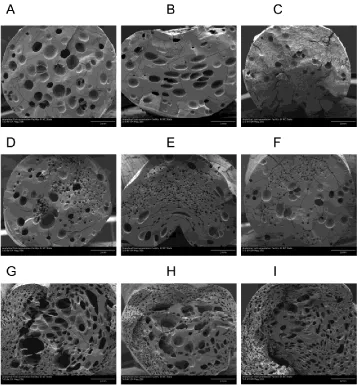
Figure 2-2: SEM images of extruded starch – air dry(A), fast
exchange(B), and slow exchange(C).Extruded starch cross-linked with EPI – air dry (D), fast exchange (E), and slow exchange (F). Extruded starch cross-linked with EPI with
Figure 2-3: SEM images of extruded starch – air dry (A), fast exchange (B), and slow exchange (C). Extruded starch cross-linked with EPI – air dry (D), fast exchange (E), and slow exchange (F). Extruded starch cross-linked with EPI with CO2 – air dry
(G), fast exchange (H), and slow exchange (I). Starch cooked at 95˚C – air dry (J), fast exchange (K), and slow exchange (L). Starch cooked at 95˚C for 20 minute – air dry (M), fast exchange (N), and slow exchange (O) respectively on 5
micrometer length scale ….………... 41
Figure 2-4(a): Extruded starch – air dry (A), fast exchange (B), and slow exchange (C). Extruded starch cross-linked with EPI – air dry (D), fast exchange (E), and slow exchange (F). Extruded starch cross-linked with EPI with CO2 – air dry (G), fast
exchange (H), and slow exchange (I) respectively ...………… 44 Figure 2-4(b): Starch cooked at 90˚C – air dry (J), fast exchange (K), and
slow exchange (L). Starch cooked at 95˚C – air dry (M), fast exchange (N), and slow exchange (O). Starch cooked at 95˚C for 20 minute – air dry (P), Fast exchange (Q), and
slow exchange (R) respectively ….………... 45 Figure 2-5: Percent brightness of starch materials. Note that in general
solvent exchange samples exhibited higher brightness ……… 46 Figure 2-6: Correlation between brightness and density of starch
materials. Note the near linear relation between brightness
and density of starch materials ..………... 47
Figure 2-7: Model of the foam structure .……… 48
Figure 2-8: Correlation between density and brightness from Kubelka-Munk theory. Note that the existence of relationship for a given pore cell size, when the density is varied by changing the cell wall thickness. Solid lines are best-fit straight lines of
the simulation results ….………... 49
Figure 2-9: Water swelling (g of water/g of sample) of starch samples in contact with water after 24 hrs. Note in general increase in water swelling of starch materials with solvent exchange
processes ………... 51 Figure 2-10: Percent mass loss of starch samples after in contact with
water for 24 hours. Note that there was no significance difference in mass loss of extruded samples for solvent exchange processes, however, aquagel samples showed
decrease in mass loss with solvent exchange processes …..…. 52 Figure 2-11: Water swelling (g of water/g of sample) of starch samples by
forced immersion in water after 24 hrs. Note in general increase in water swelling of starch materials with solvent
Figure 2-12: Percent mass loss of starch samples by forced immersion in
water for 24 hours ………. 54
Figure 2-13: Percent moisture content of starch samples. Note in general
the increase in moisture content with solvent exchange ……... 55
Chapter 3 Starch Microcellular Foams from Starch Blended with AKD and/or Kymene by Solvent Exchange Process
Figure 3-1: Chemical structure of AKD and expected chemical reaction
with carbohydrate polymers. (El-Tahlawy et al., 2008) ..……. 68 Figure 3-2: Chemical structure of, Polyaminoamide-epichlorohydrin
(PAE), Kymene. (Fischer et al., 1996) …...………... 68 Figure 3-3: SMCFs prepared with fast exchange with 1.5, 3, 6, 12, 24,
and 48 hours exchange time intervals ..………. 78 Figure 3-4: SMCFs prepared with fast and slow exchanges with 6, 12, 24,
and 48 hour exchange time intervals .………... 80 Figure 3-5: Density of SMCFs prepared with fast and slow exchanges
with different exchange time intervals ..……… 81 Figure 3-6: SEM images of SMCF materials with fast exchange with 1.5
hour time interval (a), 6 hour time interval (b), and 24 hour time interval (c); and slow exchanges with 6 hour time
interval (d), and 24 hour time interval (e) ..………... 83 Figure 3-7: SMCFs prepared from starch blended with different level of
AKD, first raw uncured SMCFs where as second raw cured.... 86 Figure 3-8: Density of SMCFs prepared from starch blended with
different amount of AKD with and without curing ..………… 86 Figure 3-9: Percent brightness of starch blended with AKD SMCFs. Note
that increased amounts of AKD lowered the brightness
generally ……… 88
Figure 3-10: Water swelling (g of water/g of sample) of starch blended with AKD samples in contact with water after 24 hrs of immersion. Note in general decrease in water swelling of
starch materials with increase of AKD concentration ……….. 90 Figure 3-11: Percent mass loss of starch blended with AKD samples after
in contact with water for 24 hours ……… 90 Figure 3-12: Water swelling (g of water/g of sample) of starch blended
with AKD samples after 24 hrs of forced immersion. Note in general decrease in water swelling of starch materials with
increase of AKD concentration ………. 91
Figure 3-13: Percent mass loss of starch blended with AKD samples after
Figure 3-14: Water contact angle for starch blended with different amount
of AKD over the period of 4 minutes ………... 94 Figure 3-15: Water contact angle for starch blended with different amount
of AKD over the period of 4 minutes ………... 94 Figure 3-16: Contact angle between the water droplet and SMCFs prepared
with different composition of AKD at zero minute contact
time ………... 95
Figure 3-17: SMCFs prepared from starch, starch blended with 1% AKD and/or 1% Kymene by a fast exchange process with solvent
exchange times of 12 hours ………... 96
Figure 3-18: SEM images of starch – uncured (a), starch blended with 1% AKD – uncured (b), and starch blended with 1% Kymene – uncured (c), starch – cured (d), starch blended with 1% AKD – cured (e), and starch blended with 1% Kymene – cured (f). Samples were prepared by fast exchange process with 12
hour solvent exchange times ………. 97
Figure 3-19: Density of SMCFs prepared from starch, and starch blended
with 1% AKD and/ or 1% Kymene with and without curing ... 98 Figure 3-20: Water swelling (g of water/g of sample) of starch blended
with 1% AKD and/or 1% Kymene samples after in contact with water for 24 hrs. Note in general decrease in water swelling of starch materials with increase of AKD and
Kymene concentrations ………. 100 Figure 3-21: Percent mass loss of starch blended with 1% AKD and/or 1%
Kymene samples after in contact with water for 24 hours. Note that there was difference in mass loss of cured and
uncured samples ……… 100 Figure 3-22: Water swelling (g of water/g of sample) of starch blended
with 1% AKD and/or 1% Kymene samples by forced
immersion of samples for 24 hrs. Note in general decrease in water swelling of starch materials with increase of AKD and
Kymene concentrations ………. 101 Figure 3-23: Percent mass loss of starch blended with 1% AKD and/or 1%
Kymene samples by forced immersion in water for 24 hours. Note that there was difference in mass loss of cured and
uncured samples ……… 102 Figure 3-24: Thermogram (at a heating rate of 10˚C/min) of starch cured
and uncured SMCFs ………... 103 Figure 3-25: Thermogram (at a heating rate of 10˚C/min) of starch blended
with 1% AKD cured and uncured SMCFs ……… 103 Figure 3-26: Thermogram (at a heating rate of 10˚C/min) of starch blended
Figure 3-27: Thermogram (at a heating rate of 10˚C/min) of starch blended with 1% AKD and 1% Kymene cured and uncured SMCFs … 104 Figure 3-28: Water contact angle for starch and starch blended with 1%
AKD, cured and uncured, samples over the period of 4
minutes ……….. 106 Figure 3-29: Water contact angle for starch blended with 1% AKD and 1%
Kymene cured and uncured samples over the period of 4
List of Tables
Chapter 2 Starch Microcellular Foam by Solvent Exchange and Super Critical Fluid Extrusion
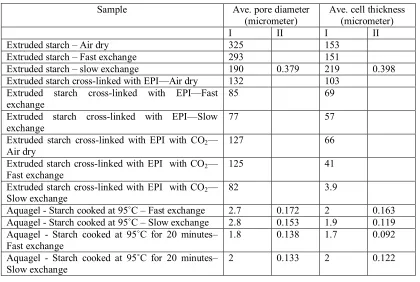
Table 2-1: Average pore diameter and cell wall thickness. Note, in some cases there is a bi-modal distribution of pores and thus the
averages of both sizes of pores (labeled I and II) are listed ….. 38 Table 2-2: Density and Calculated Pore Volume Fraction of Starch
Samples ………. 43
Table 2-3: Contact angle of water on starch materials ………... 57
Chapter 3 Starch Microcellular Foams from Starch Blended with AKD and/or Kymene by Solvent Exchange Process
Table 3-1: Density of SMCFs prepared with different exchange time
intervals ………. 79
Table 3-2: Average pore diameter and cell wall thickness three
dimensional web-like materials of slow and fast exchanged
samples with different time intervals ……… 85 Table 3-3: Density of SMCFs prepared from starch-AKD blend with
24 hour exchange time intervals ………... 87 Table 3-4: Average pore diameter and cell wall thickness of cured and
uncured SMCFs prepared from starch, starch blended with
1% AKD, and starch blended with 1% Kymene ………... 98 Table 3-5: Density of SMCFs prepared from starch blended with 1%
AKD and/or 1% Kymene with 12 hour exchange
time interval ……….. 99 Table 3-6: Moisture content (%) of starch and starch blended with 1%
List of Publications
(1) Patel, S., Venditti, R. A., Pawlak, J. J., Ayoub, A., and Rizvi, S. S. H., (2009). Development of cross-linked starch microcellular foam by solvent exchange and reactive supercritical fluid extrusion. Journal of Applied Polymer Science, 111, 2917-2929.
Chapter 1 Introduction
Objective
The objective of this research was to produce high brightness and low solubility Starch
Microcellular Foam (SMCF) particles for paint, coating and paper pigment applications and
to determine how the processing conditions and blending/cross-linking would affect the foam
structure, physical, optical and moisture related properties of SMCF materials.
Uses of Starch in Paper and Other Industries
Starch is the third most commonly used material by weight in papermaking following
cellulose fiber and mineral pigments, which makes the paper industry one of the important
customer of the starch industry. Most starch used in paper industry in US derived from corn.
Although corn starch is most commonly used in paper industry, potato starch is acquiring
utilization, especially as a furnish additive, in the wet end of the paper machine. Current
utilization of industrial corn starch for the production of paper and paperboard has reached
3.3 billion pounds annually, 70% of that is a chemically modified form of starch.
Additionally, 1.2 billion pounds is used in adhesive for corrugated and laminated paper
products. Starch is used for different purposes through papermaking process such as furnish
preparation prior to web formation, surface sizing, coating, effluent treatment, and
conversion of paperboard to packaging grades. Moreover, there are many other areas for the
biodegradable plastics, and as a disposable packaging material in packaging industry instead
of Styrofoam.
Chemistry of Starch
Starch is a high molecular weight polymer of anhydroglucose unit (C6H10O5) linked by
α-D-glucosidic bonds, found in plant tubers and seed endosperm. Typically, starch consists
primarily of two types of molecules, amylopectin and amylose. Amylopectin is the major
component of most starches. It consists of very large number of short chain polymers that are
bound together at their reducing end by a α-1, 6 linkage, which makes this very large
branched polysaccharide, Figure 1-1.
Figure 1-1: Amylopectin molecule (A) and the chemical structure of molecular segment (B). (Maurer, H. W., 2001)
Amylose is a linear chain of glucose, Figure 1-2. The stereo chemical arrangement of –
the linkages as alpha or beta anomeric configurations. Amylose consists of α-1,4 linked
anhydroglucose units, while in cellulose the same units are linked by β-1,4 linkages, Figure
1-2. This linkage provides an unusual chain conformation and molecular properties for
amylose that are remarkably different from cellulose.
Figure 1-2: Macromolecular conformation of cellulose and amylose. (Maurer, H. W., 2001)
The α-1,4 linkages result in flexible molecules with natural extended helical twist that can
reorganize into a collapsed helix (retrogradation); on the other hand, the β-1,4 linked
cellulose has rigid and flat molecule structure that accounts for the strength of cellulose fibers
and the structure of plants, Figure 1-2. The β-linkage in cellulose provides tight packing
of the polymer chains, which favors intermolecular hydrogen bonding and crystallinity
between adjacent chains. The α-linkage imparts a helical conformation to the glucopyranosyl
chain, which prohibits extensive interchain association by hydrogen bonding, and allows
In carbohydrate polymers, hydroxyl orientation and hydrogen bonding between –OH groups,
or between –OH groups and ring –O- atoms, affects solubility, conformation, and stability.
Intramolecular hydrogen bonding in amylose, for example between O2 and O3 of subsequent
anhydroglucose units, gives stability to helical complexes.
Types of Starch
Starch is available in small granules for commercial use. Granules are generated in the host
plant. The size, density and shape of granules depend upon the source from which they are
obtained, Figure 1-3. Normally, low moisture content tissues such as rice and wheat give
small, dense, polygon-shaped granules, while high moisture content tissues such as potato
and corn give large, less dense, oval-shaped granules, Figure 1-3. Moreover, moisture
content of starch products depends upon the relative humidity of the atmosphere in which
they are stored, and the amount of fatty substances bound as inclusion complexes with
amylose.
Generally, starches are distinguished from each other by the percentage of amylose and
amylopectin contained in individual starch, for example, if starch contains higher percentage
of amylose than amylopectin, it would be known as high amylose starch. On the other hand,
starch also named from its source, for example, if starch is derived from potato, it would
known as potato starch, Figure 1-4. Certain plants are known as waxy, because of the waxy
appearance of the seed endosperm. Waxy starch has a much lower or almost negligible
content of the amylose. Other types of starches have higher amylose content. The
composition of amylose and amylopectin depend on the plant and the geographical locations.
For example, some potato starch contains phosphate ester group. Typically one phosphate
ester group may be found per 300 glucose units in its amylopectin, which makes the starch
anionic in nature. Recently, genetic modification of starch crops has led to the development
of starches with improved and targeted functionality. Although chemical composition of the
starch component is very simple, the qualitative analysis of their structure is not.
Analysis of Starch
Starch forms inclusion compounds with iodine. Most starches stain to a deep blue with an
excess of iodine. The color shifts toward violet or pink when the starch is degraded. The
coloration is due to the presence of amylose, since amylopectin stains violet to brown. The
reaction can be used for qualitative indication of starch in paper. Quantitative analysis
General Properties of Unmodified Starches
The large fraction of almost all starches, amylopectin, is mainly responsible for granule
structure and crystallinity. Most starches have both amylopectin and amylose, and both
crystallize into joint structures, which are responsible for mixed crystal formation (Zaslow et
al., 1967). Starch granules are semi- crystalline in nature due to this certain regions are highly
crystalline and other regions amorphous (French et al., 1984), Figure 1-5. Moreover, both
major components of starches, amylose and amylopectin, are bonded each other by hydrogen
bonding. The semi-crystalline nature of starch granules is responsible for insolubility in cold
water. Crystallinity is determined by X-ray diffraction. Cornstarch has 40% crystallinity,
while other starches, waxy maize, high-amylose corn, rice, potato and tapioca have 40%,
22%, 38%, 28%, and 38 % crystallinity respectively.
Starch granules are insoluble in cold water as they have organized, hydrogen bonded,
crystalline structure, which can easily observed birefringence pattern by microscope, Figure
1-5. Crystalline regions in starch granules are mainly due to tight packing of chains and
interchain hydrogen bonding, while amorphous regions mainly due to branch points, chain
folding, and regions where molecules are not in order(French et al., 1984).
As water is an integral part of the starch granules, it can be adsorbed and desorbed according
to relative humidity of the environment. The location of water in starch granules and its
affect on structure have been studied through nuclear magnetic resonance spectroscopy
(Richardson et al., 1987).
Figure 1-5: Corn starch under polarized light with 600X magnification. (Maurer, H. W., 2001)
Orientation of fibrils within starch granules is observed by electron microscopy. By looking
are not continuous or regular that believed to be due to alternating crystalline and amorphous
regions. Crystalline regions of starch granules dissolved or destroyed when heated in water to
about 72˚C and higher, and starch molecules become free to hydrate and expand (Leach et
al., 1967), Figure 1-6.
Figure 1-6: Effect of temperature on the swelling of corn starch in excess water. (Maurer, H. W., 2001)
This is irreversible breakdown of the granular structure and granule starts to swell, which is
also known as first step of starch gelatinization. This can be observed by Differential
Scanning Calorimetry (DSC) thermogram. Loss of birefringence is widely used to determine
gelatinization temperature as it indicates molecular orientation of starch granules. On
overheating, more hydrogen bonds of granules will break and the starch granules disrupt and
disintegrate until a stage of partial or complete dispersion of individual starch molecules
regions ruptured, and starch molecules become available to hydrate and expand. The
viscosity of solution will increase rapidly as the swollen granules take up space and increase
their mutual contact. Initially, about 72˚C, there is little increase in viscosity as breakage of
crystalline regions just started, but at about 85-95˚C it increases greatly due to the high level
deterioration of crystalline regions and swelling of individual molecules at the maximum
extent. Cornstarch is difficult to gelatinize than potato starch due to structural and
composition differences. Moreover, cornstarch contains fatty acids, which can complex with
amylose, to destroy these complexes higher temperature about 115-125˚C is required.
Dispersion of Starch
To disperse or ―cook‖ starch, it is essential to induce enough energy to rupture hydrogen
bonding and induce molecule of water. When solution of starch is heated, initially, the
granules swell slightly and then reversible swelling observed until a critical temperature
reached. This temperature is known as pasting or gelatinization temperature. At this
temperature the granule structure melts and large swelling occurs, which causes a great
increase in viscosity. Beyond this point, with increase of temperature the viscosity decrease
due to the breakage of swollen granules. The decrease in viscosity is continuous with
increase in temperature, extended cooking time and shearing of paste, until starch molecules
fully dispersed. Different starches have a different pasting or gelling temperature range and
properties of cooked starch pastes vary greatly due to their complex colloidal nature.
Viscosity of starch solution is greatly influenced by the type of starch, genetic variations, and
environment in which it grown i.e. soil quality and weather during the growing season. These
swelling and rupture processes can be observed by observing viscosity with heating, Figure
1-7. Cooking of starch involves hydrogen bonding between –OH of starch and ―shell‖ of
water during hydration. Entropy forces a confirmation that gives the interior of amylose
helixes hydrophobic. Removal of water from hydrated starch by competing forces, such as
the presence of aluminum ions, facilitates a return to hydrogen bonding between amylose
molecules, thus causing starch retrogradation.
The viscosity of cooked starch dispersion might be gradually decreased due to precipitation
of amylose when held for an extended time in the crystalline temperature range (71-82˚C),
Figure 1-7. On the other hand, the viscosity of solution might increase due to gel formation
when cooled below 60˚C as amylose loses water of hydration, Figure 1-8. At temperature
around 60˚C amylose is precipitated out from the solution and forms insoluble aggregates
that make a few interlocking molecules to microcrystalline regions. This phenomenon is
known as a starch retrogradation and it occurs with decreasing paste temperature and with
aging of starch paste.
Figure 1-8: Retrogradation and stabilization of amylose. (Maurer, H. W., 2001)
By measuring viscosity of starch solution with a range of temperature various properties of
gelatinizing temperature; viscosity reduction with time, temperature and shearing rate; the
rate and extend of viscosity buildup on cooling, the stability of viscosity at a specified
temperature, and effect of water quality and additives on paste of viscosity. Stability of
viscosity is obtained by chemical substitution on the starch molecules.
Modification of Starches
Unmodified starch gelatinized into high-viscosity dispersion that cannot be process easily
especially on paper coating equipment. Chemical reactions to reduce the viscosity by
reducing molecular size and/or by de-polymerization processes; reactions that introduced
chemical groups on starch backbone are known as derivatization processes. A variety of
starch derivatives are made, known as modified starch, each of them is used for specific
purpose in paper industries or in other industries for certain quality requirements. Starch
dispersion and viscosity depends on cooking temperature, time, and agitation. Higher
temperature, longer cooking time, and application of shear lead to produce better paste.
Generally, the viscosity of cooked starch will increase with cooling and will continue to
increase with aging; this increase can be minimized by controlled agitation of paste over
time. An unstable product will increase in viscosity to a greater extent, and its viscosity
increase will be irreversible. The substituted groups present on modified starch are effective
in improving both the dispersion and the stability of starch pastes. The higher degree of
substitution of hydroxyethyl and cationic starch both cook into comparatively clear solutions
Modification of starch can be performed by a variety of techniques. Hydroxyalkylated starch,
cyanoethylated starch, cationic starch ethers, anionic starch, starch esters, starch graft,
hydrophobic starches, and many more modifications can be produced by derivatization.
Starch grafts combine the properties of natural and synthetic polymers. For example,
bio-degradability of starch graft polymer (starch-vinyl acetate graft) can be attributed to starch
and mechanical properties to synthetic polymer, vinyl acetate. Various attempts have been
made to produce a hydrophobic starch that would able to give combined properties like
surface sizing and adhesion. These involve grafting of hydrophobic moieties onto a
hydrophilic starch backbone. They can be prepared by esterification with octenyl substituted
succinic acid anhydride (Järnström et al., 2000).
Several classes of starch derivatives can be prepared but most common are ethers and esters
of starch generally used in paper coating and surface sizing of paper. Specific derivatives of
starch include hydroxyethyl starches, cynoethyl starches, acetate esters, polyurethanes,
cationic starches, anionic starches, and many more.
Hydroxyalkylated Starch
Hydroxyethyl starch can be prepared by reacting starch with ethylene oxide in the presence
of alkaline metal hydroxides. Hydroxypropyl can also be produced in same way (van
Warners et al., 1986). Sometimes, neutral salts are added to the reaction to inhibit swelling
and to prevent the starch from being dissolved by the alkalinity of the reaction. The changes
Although, higher degree of substitution gives lower a gelatinization temperature and greater
stability of the dispersion, it would give non uniform wetting, which results in lumping. The
advantage of hydroxyethylation starch for paper coating is that it has better coating capacity,
better contact of binder with pigment, more uniform and stable viscosity and very good water
retention as compared to unmodified starch (Lammers et al., 2001).
Cyanoethylated Starch
Cyanoethylated derivatives can be prepared by reaction between starch and acrylonitrile in
the presence of alkaline catalysts. The reaction must be carried out at a slow rate to get a
uniform product and ease of dispersion in water. Although, cyanoethylated starches have
been proposed for use in paper coating as a binder, they have not been utilized to any great
extent, most likely due to the environmental concerns.
Cationic Starch Ethers
Cationic starch ethers derivatives can be prepared by substituting reagents, which add
cationic groups to starch molecules by forming ether linkages (Hewing et al., 1992). The
reaction follows nucleophilic substitution in presence of alkali catalyst. Precautions should be
required to minimize swelling of the starch granules in suspension. The temperature of
reaction should be maintained below the swelling temperature and neutral salt can be used to
minimize or prevent swelling during the reaction. Variety of viscosity grades of cationic
starches can be prepared by subsequent de-polymerization to meet required viscosity for
derivatives, which are commonly used at the wet end of the paper machine and for surface
sizing. These derivatives are inherently cationic, do not require protonation, and can be
applied without regard to paper sizing. These starches gelatinize at temperature below than
the parent starches.
Anionic Starch
Anionic starches can be prepared by reaction of starch with phosphoric acid, with alkali
metal phosphate. It can also be prepared by derivatization with carboxymethyl groups
(Roushdi et al., 1982).
Starch Esters
Starch esters can be prepared by reaction of starch with acetic anhydride (Khalil et al., 1992).
This derivative is also used as coating binders. The introduction of acetyl groups on starch
backbones improves the dispersion of starch during cooking and increase the stability of the
subsequent pastes. As starch esters are de-esterified under alkaline or acidic condition, it
would not be used greatly in paper industries. Although, starch esters have limited use in
paper industries, they are widely used in pharmaceutical industry as a binder.
Starch Grafts
Grafted starch can be prepared in granular and in colloidal dispersion forms, granular
products are mainly used as a water holding agents in sanitary and horticultural applications
(Honig et al., 1992). The product is a mixture of starch-copolymer, homo-copolymer, and
un-reacted starch, un-un-reacted starch should be removed from the product before utilization.
Starch grafts have combination of properties of a natural polymer and synthetic polymers.
Presently, several research are going on to make plastics from starch by grafting different
natural or synthetic monomers on starch backbone. Urethane copolymer can be grafted on
starch; this graft polymer has high degree of hydrophobicity and good mechanical properties
as compared to native or other modified starches (Barikani et al., 2007).
Hydrophobic Starches
Hydrophobic starches can be prepared by binding hydrophobic moieties on to starch
backbone. Several attempts have been made to make a hydrophobic starch that would give
combined properties like sizing and adhesion. They can prepared by esterification with
octenyl substituted succinic acid anhydride (Tomasik et al., 1995), by maleination,
phthalation. Hydrophobicity can be induced to starch by grafting synthetic monomer,
copolymers, and oligomers to starch backbone.
Starch Microcellular Foam
Starch has gained attention of scientist due to its well known structure and biodegradability.
Several researchers have conducted investigations into creating novel materials from starch.
Other than derivatization, there is an interest in making new class of foam called
properties for applications like pigments, absorbents, packaging materials, and disposable
plastics (Colvin et al., 1995).
Macro and micro cellular foams can be defined by cell size (Williams et al., 1989).
Macrocellular foam is prepared from organic polymers and have large (100 to 1000 µm)
closed cell with cell wall thickness ranging from 10 to 100 µm (Williams et al., 1989). The
foam structure can be classified as closed cell or open cell depending up on the cell
arrangement in the matrix. Microcellular foams have cell diameter under 10 µm and have
physical and mechanical properties, which are unique and of commercial interest (Williams
et al., 1989; Baldwin et al., 1969; LeMay et al., 1990).
Preparation of Foams Macrocellular Foams
To produce polymeric macrocellular foam, the most commonly used system consists of
simultaneously generating a gas and nucleating gas filled bubble in a liquid polymer phase.
The gas bubbles expand and are stabilized as polymer gets solidify to make the resultant
foam (Saunders et al., 1991). Polyurethane foams are made in the same way. In another
technique, a gas can be passed throughout a polymer melt by mechanical agitation or by
blowing agents. Blowing agents commonly used in the extrusion procession. The compressed
gas such as CO2 or N2 and low boiling point liquids passed through the extruder and these
blowing agents also is available in the market that can produce gas when mixed or heated
with the polymer and produce gas within the polymer matrix (Benning et al., 1969).
Starch based foams are often created during baking using leavening agents. Leavening agents
create large numbers of thin walled cells by generating gases within the mixtures; these gases
may be generated by fermentation or by the reaction with the chemical additives (Van Dam,
H et al., 1994; Handleman et al., 1961). Starch based macrocellular foam can be made by
extrusion which involves mixing, heating and conveying the starch through a heated barrel
using single or twin screw configuration. This is the efficient way to make snack foods, ready
to eat cereals, and some non food products.
Moisture content and extrusion temperature are the most important parameters to control
starch expansion. The starting material has moisture content ranging from 10-25% and barrel
temperature of 170-230˚C (Rizvi et al., 1995). The moisture inside the extruder barrel
becomes superheated under the conditions of high heat and pressure and when starch melts
exits the barrel through the die, the pressure drops to the atmospheric pressure coverts
superheated moistures to vapor and cause melt to expand into the foam (Hoseney et al.,
1983). Starch macrocellular foam can be made by puffing starch at 170˚C; at this temperature
the water inside the popcorn kernel becomes superheated and pressure reaches 135 psi. Due
to high temperature and pressure the kernel ruptures, the superheated water within the kernel
Microcelluar Foams
Microcellular foam have been prepared from starch by different techniques such as freeze
drying, solvent exchange, super critical fluid extrusion with/without N2 or CO2 as a blowing
agent during the extrusion, replicating removable pore former, and polymerization of inverse
monomer emulsions (Glenn et al., 1995), Figure 1-9.
The freeze drying technique consists of three steps, freezing, primary, and secondary drying.
The freezing is an important step and it involves freezing an aqueous system; the water will
form ice crystals and separates out from the solute.
Figure 1-9: SEM of beaded polystyrene (a,d) puffed wheat (b,e) and freeze-dried foam made from 8% wheat starch aquagel (c,f). (Glenn et al., 1995).
The final pore morphology is formed as ice crystals are sublimated, a conversion of solid
state to vapor state, during the primary drying step. The foam structure is therefore directly
result, a larger degree of super-cooling and higher freezing rate produce a smaller average
pore size and a more homogenous pore structure. Starch microcellular foam can be prepared
by preparing rigid aquagel of starch by cooling certain weight percent cooked starch solution
poured in the specific mold, which can be freeze dried to produce low density starch foam by
removing water phase by freeze drying from the starch matrix leaving void spaces inside the
matrix (Glenn et al., 1995), Figure 1-9. Freeze drying involves phase change of water crystals
from solid to vapor (skipping of liquid phase) and required a special instrument to handle
entire process.
In the solvent exchange technique, water phase of a rigid aquagel is removed by a miscible
liquid that is a non-solvent for starch possessing lower surface tension. The non-solvent
precipitates the starch when replacing the water, forming micro-pores. Microcellular foams
can be made from rigid wheat and corn starch aquagels by equilibrating the aquagels in
ethanol before air-drying (Glenn et al., 1995). Since the surface tension created at the
air/ethanol interface was only one third that of air/water, the gels did not collapse. High
amylose corn starch aquagels possessed less compressive strength than the unmodified wheat
and corn starch aquagels and collapse when exchanged in ethanol then air dried, Figure 1-10.
Mesoporous carbons were prepared from starch microcellular foam without the need of
tamplating agent (Budarin et al., 2006). This materials have wide range of applications such
as use in chromatography analysis, catalyst and electro conductivity with potential
Several researchers have attempted to produce microcellular foam by a newly developed
low-temperature and low-shear extrusion technology, called supercritical fluid extrusion
involves reactive extrusion of starch based matrices and injection of supercritical CO2
(SC-CO2) as a blowing agent to produce microcellular extrudate (Rizvi et al., 2005). This SCFX
process has been applied to make starch to make microcellular foam and the effect of process
variation and formation of foam cell size, cell density, and mechanical properties have been
studied. The super critical fluid extrusion technique is very important due to the ease of
processing and suitability to use in industrial application. However, pores in this process are
quite large and a well defined microcellular foam structure production method using
extrusion has not been determined. In the Super Critical Fluid Extrusion (SCFX) technique,
starch microcellular foam can be prepared by passing starch solution to the extruder
with/without CO2 /N2. It involves mixing, heating and conveying starch suspension through a
heating barrel using a single or twin screw configuration (Ayoub et al., 2008). The pore size
distribution was determined to be in the range of 50-250 µm with average of 129 µm.
Figure 1-10. SEM images of uncooked starch (left) and SMCF by slow solvent exchange of molded starch cooked at 95˚C (center) at 500× magnification. Extruded starch with 0.5 %
In the replicating removable pore former technique, the microcellular foam is prepared by
allowing monomer solutions to get polymerized around the small solid particles. The solid
particles are then removed by dissolution, pyrolization or by other techniques leaving void
matrix throughout the polymer matrix (LeMay et al., 1990). The other method,
polymerization of inverse monomer emulsions, involves polymerizing monomers that are
References
Ayoub, A., and Rizvi, S. S. H., (2008). Properties of Supercritical Fluid Extrusion-Based Crosslinked Starch Extrudates. Journal of Applied Polymer Science, 10, 3663-3671.
Barikani, M., and Mohamaadi, M., (2007). Synthesis and characterization of starch-modified polyurethane. Carbohydrate Polymers, 68, 773-780.
Benning, C. J., Akin, R. B., Mark, H. F., Scavuzzo, J. J., Stivala, S. S., Zukor, L. J., (1969). Plastic Foams. Wiley and Sons, 1, 117-334.
Budarin, V., Clark, J. H., Hardy, J. J. E., Luque, R., Milkowski, K., Tavener, S. J., Wilson, A. J., (2006). Starbons: New starch derived mesoporous carbonaceous materials with tunable properties. Angew. Chem. Int. Ed, 45, 3782-3786.
Colvin, R. (2000). Machine suppliers cater to growing market for wood profiles. Modern Plastics, 26-27.
French, D., (1984). Organization of starch granules‖ in starch chemistry and Technology, 2nd
edn. (R.L. Whistler, J.N. BeMiller, and E.P. Panschall Eds.). Academic Press, New York and London, Chap.7.
Glenn, G.M., & Irving, D.W., (1995). Starch-Based Microcellular Foams. Carbohydrate, 72(2), 155-161.
Humphreys, W. J., Spurlock, B. O., and Johnson, J. (1974). Critical point drying of ethanol-infiltrated, cryofractured biological specimens for electron microscopy. Scanning Electron Microscopy, 275-282.
Heibeish, A. (1996). Synthesis, characterization and properties of polyacrylamide-starch composites. Starch/Stärke, 48(5), 175-185.
Hellwing, G. (1992). Production of cationic starch ethers using an improved dry process. Starch/Stärke, 44(2), 69-81.
Honig, D. H., and Carr, M. E., (1992). Preparation and characterization of copolymers of modified starches and polyacrylonitrile. Starch/Stärke, 44(7), 268-283.
Lammer, G., (1993). Continuous production of hydroxypropyl starch in a static mixer reactor. Starch/Stärke, 45(7), 227-241.
Leach, H. W., (1967). Gelatinization of Starch. Starch Chemistry and Technology (R.L. Whistler and E.P. Paschall, Eds.). Academic Press, New York and London, 1, Chap.12.
LeMay, J. D., Pekala, R. W., Alviso, C. T., (1990). Organic aerogels: microstructural dependence of mechanical properties in compression. Material Research Society Bulletin, 194, 19-45.
Maurer, H. W., (2001). Starch and Starch Products in Surface Sizing and Paper Coating. Tappi Press.
Pekala, R. W.; Alviso, C. T.; Hulsey, S. S.; Kong, F. M., (1992). Starch foams by extrusion. Cellular Polymers, 38, 129-135.
Richardson, S.J., (1987). Mobility of water in corn starch suspensions determined by nuclear magnetic resonance. Starch/Stärke,39(3), 79-91.
Rizvi, S. S. H., and Mulvaney, S., (1995). Supercritical Fluid Extrusion Process and Apparatus. United States Patent 5 417 992
Roushdi, M., (1982). Preparation of mixed derivatives of carboxymethyl starch and determination of substitution degree by a new calorimetric method. Starch/Stärke, 34(12), 410-423.
Saunders, J. H., (1995). Handbook of Polymeric Foams and Foam Technology, Oxford University Press, New York, NY, 1-25.
Tomasik, P., (1995). Facile route to anionic starches: succinylation, maleination, and phthalation of corn starch on extrusion. Starch/Stärke, 47(3), 96-112.
Van Dam, H. W., (1986). Chemistry and Physics of Baking; Blanshard, J. M. V.; Frazier, P. J.; Galliard, T., Eds.; Royal Society of Chemistry Burlington House: London, UK. 117-130.
Van Warner, A., (1994). Kinetics of the hyroxyethylation of starch in alkaline salt containing aqueous slurries. Ind. Eng. Chem. Res, 33, 981-1001.
Xu, Y., & Hann, M.A., (2005). Physical, Mechanical, and Morphological Characteristics. Journal of Polymers and the Environment , 13(3), 221-230.
Chapter 2
Starch Microcellular Foam by Solvent Exchange and Super Critical Fluid Extrusion
Abstract
Starch microcellular foams (SMCF) are prepared by pore preserving drying or formation
processes and contain pores in the micron size range. SMCF have high specific surface area
and are useful for applications such as opacifying pigments or as adsorbent materials. The
objective of this research was to determine how the processing conditions and use of a
crosslinking agent would affect the foam structure and properties. SMCF (crosslinked and
uncrosslinked) were prepared from molded aquagels and carbon dioxide extrusion processes
separately and then solvent exchanged. Extruded samples contained macroscopic pores
whereas samples from aquagels contained a much finer micro pore structure. Aquagel based
SMCF samples had lower density and higher brightness than extruded samples. The starch
foams with micro pore structure had low density and high brightness. The solvent exchange
process was the most important variable in generating a microcellular structure. Micro
pores and not macro pores contributed to increased brightness of these materials. The
brightness and density of the foams were found to be linearly related. Cross-linking with
epichlorohydrin imparted significant water resistance to the extruded samples as evidenced in
lower water swelling and higher contact angles. Equilibrium moisture content was correlated
Introduction
Starch is an important agriculture product that in the United States is derived primarily from
corn, potatoes, and wheat (Ellis et al., 1999). In the raw state, starch is in the form of dense
granules that range in size from 2 microns in wheat to over 100 microns in potato starch
(Vasanthan et al., 1996). Granular starch is utilized in many food and non-food products and
is often chemically modified to further expand its uses (Fang et al., 2002 & Jobling, S.,
2004). The low cost and availability of starch in the market attracts researchers to develop
new functional starch derivatives for industrial applications (Ellis et al., 1999). Starch
granules are generally composed primarily of two glucose polymers: amylose (linear) and
amylopectin (branched), with the largest portion being amylopectin (70-85%). However,
starch granules from certain plant varieties are almost entirely amylopectin (98%) while
others may contain 45% to 80% amylose (Kobayashi et al., 1985). Amylose is a polymer of
(1-4)-linked α-D-glycopyranosyl units with a molecular weight that varies depending on the
source of the starch but is generally much smaller than that of amylopectin. Amylopectin has
short branches on about 4 % of the D-glycosyl residues.
Starch may be dissolved in water. When heat is applied to water and starch granule slurry,
the granules initially swell. The amylose material in particular extends from the starch
granules and forms a gel in the water phase (Jacobs et al., 1998 & Hoover et al., 1994).
Eventually, the initial starch granules completely dissolve in the water. If the water is
removed in a normal drying process, large capillary forces act on the starch and collapse the
Starch microcellular foams (SMCF) are generally described as a starch based porous matrix
containing pores ranging from 2 μm to sub-micrometer size (Glenn et al., 1995 & 2001).
Glenn and Stern (U.S. Pat. 5,958,589) have prepared SMCF from rigid starch aquagels by
exchanging the water with liquids possessing lower surface tension. The SMCF can be
formed by equilibrating the aquagels of wheat and corn starch with ethanol. Subsequently,
the ethanol/starch mixtures are air dried to remove the ethanol. Since the surface tension of
the air/ethanol interface is one third that of air/water, weaker capillary forces exist when
drying from ethanol relative to drying from water. The result is that the foam structure is
preserved (Tiefengacher, K., 1993; Glenn et al., 2002; El-Tahlawy et al., 2007).
Recently at Cornell University a new, low-temperature, and low-shear extrusion technology,
called supercritical fluid extrusion (SCFX), has been developed. The technology involves
reactive extrusion of starch-based matrices and injection of supercritical carbon dioxide
(SC-CO2) as a blowing agent to continuously produce microcellular extrudates (Rizvi et al.,
1995). SC-CO2, is an environmentally sound replacement for toxic solvents generally used in
the manufacture of plastics foams. The effects of process variables and formulation on native
starch foam expansion, cell size, cell density and mechanical properties have been studied
and reported (Alavi et al., 2003 & 2005). However, native starch foam is readily soluble in
water, preventing its use in aqueous environments. Crosslinking by reactive extrusion and
subsequent expansion by SC-CO2 offers a novel approach to making expanded biodegradable
A number of researchers (Albertsson et al., 1995; Alexander, R., 1996; Doane, W., 1992;
Yoon et al., 2006) have explored the possibility of using dispersed and crosslinked starch
granules as organic filler. These researchers demonstrated that paper with starch fillers had
better strength properties relative to paper with traditional inorganic fillers. This was
presumably due to the ability of the starch to hydrogen bond with cellulosic fibers, whereas
the inorganic filler could not participate in hydrogen bonding (Varjos et al., 2004; Krogerus,
B., 1999; Yoon et al., 2006). However, the starch fillers had inferior optical properties when
compared to inorganic fillers. Recently, high brightness (93 %) and surface area starch
microcellular foam particles were prepared by solvent exchange with ethanol from dissolved
corn starch crosslinked with glutaraldehyde (El-Tahlawy et al., 2007 & 2008; Bolivar et al.,
2007) The crosslinking was found to provide some structural integrity of the foam during
exposure to pressure and/or moisture (Nabeshima et al., 2001).
The current research was undertaken to explore the production of starch microcellular foam
using a combination of two technologies: (1) supercritical fluid extrusion (SCFX) and (2)
solvent exchange. The first technology involves the extrusion of a starch/water mixture and
the injection of supercritical carbon dioxide (SC-CO2) as a blowing agent to generate a foam.
The resulting extrudates were immersed in ethanol/water solutions of varying concentration
and subjected to two different protocols to successively displace the water with ethanol. For
comparison, aquagel samples of starch were prepared and SMCF was generated from the
aquagel using a solvent exchange technique. The brightness, particle size, void diameter, and
This research is unique in that there has been no prior research using the combination of
SCFX and a post-extrusion solvent exchange process to form foams, the combination of
which produces new, interesting structures. Also, this is the first report in which a direct
comparison of SCFX, SCFX followed by solvent exchange, and aquagel solvent exchanged
materials is reported.
Materials and Methods
Corn starch used for aquagels was supplied by Cargill, USA (Cargill Gel 03420), consisting
approximately of 25 % amylose and 75 % amylopectin. Anhydrous ethanol Fisher product Number A405P-4) was used for solvent exchanges. Epichlorohydrin (EPI) was purchased from Sigma (45327S).
Starch cooking procedure for aquagel samples
A cooked starch solution was prepared by adding 24 g of corn starch to 276 g of deionized
water in a three necked round bottom flask under continuous stirring (IKA-Werk, RW 16
Basic S1) with a crescent shaped paddle, at speed setting of 10 with three different levels of
cooking condition. The first two conditions involved heating the starch slurries to 90˚C, and
95˚C over a period of about 20 minutes. The third cooking condition consisted of heating the
starch to 95˚C over a period of about 20 minutes and then maintaining the temperature at
95˚C for an additional 20 minutes. When solution of starch is heated, initially, the granules
swell slightly and then reversible swelling observed until a critical temperature reached. At
increase in viscosity, Appendix 2-A. The cooked starch solution was allowed to cool to
room temperature over a period of 1 hr in shallow metal tray. Aquagels of cooked starch
solutions were prepared by refrigerating the trays containing the gelatinized starch overnight
at 5˚C. This aquagel was used to make SMCF by the solvent exchange technique.
Supercritical fluid extrusion of crosslinked starch: processing conditions and formulation
A Wenger TX-52 (Wenger Manufacturing, Sabetha, KS) corotating twin-screw extruder with
a barrel diameter of 52 mm, and length to diameter ratio (L/D) of 27 was used for extruding
starch/water mixtures. The extruder was configured to operate at a screw speed of 120 rpm
and feed rate of 35 kg/hour. The moisture content of the feed starch/water mixture was
maintained at 35 % w/w. The temperatures of the extrudates at the die (diameter =4.2 mm)
was controlled to 70˚C to prevent evaporation of epichlorohydrin and moisture in the feed by
circulating water at 35˚C to 60˚C through the jacketed extruder barrel. The average specific
mechanical energy was 65 kJ/kg. A pilot scale supercritical fluid system was used for
injection SC-CO2 at a constant flow rate (7.6×10⁻⁵ kg/s) into the starch/water mixture through
four valves located around the extruder barrel at a short distance from the nozzle exit.
SC-CO2 injection pressure was automatically maintained higher than pressure inside the barrel
for a continuous SC-CO2 flow into the starch/water mixture, at the desired rate (0 and 1%
SC-CO2) and pressure (1100 and 1600 psi). Samples produced at Cornell University were
stored in sealed plastic bags and shipped overnight in dry ice (T= 0˚C) to NCSU. The
crosslinked with EPI, and extruded starch crosslinked with EPI with CO2 samples
respectively. Samples were then subjected to solvent exchange processes as described above.
Corn starch was supplied by Cargill, USA and sodium hydroxide (1%) was used as control
formulation. One level of 0.5% on dry basis of the cross-linking reagent epichlorohydrin
(EPI) was added. In-barrel moisture content of the starch melt was maintained at about 45%
on wet basis by injection of water in the extruder barrel.
SMCF preparation process
SMCF was produced by a solvent exchange technique. In this process, the higher surface
tension solvent (water) is replaced with a lower surface tension solvent (ethanol), which
produces SMCF from the aquagel of starch when dried. SMCF was produced by a slow
exchange (solvent exchange was carried out at every 48 hr with 40, 70, 90, 100, 100, and
100% ethanol) and a fast exchange (solvent exchange was carried out at every 48 hr with
100, 100, and 100% ethanol) technique. During each exchange, the previous solvent was
decanted from the SMCF and then replaced with fresh solvent. Each solvent exchange was
carried out using an amount of solvent equal to approximately three times the weight of the
sample. Once the solvent exchanges were completed, the samples were allowed to air dry in
Characterization of SMCF
Scanning Electron Microscopy Analysis
Morphological characterization of starch microcellular foam was performed on images
captured by a scanning electron microscope (SEM), Hitachi s3200-N. The samples were
coated with gold-palladium of 10 nm thickness to make the samples conductive at 200
milliTorr vacuum with Denton Vacuum Desk II instrument. The digital images obtained
from the SEM were characterized using image analysis software. Random areas of the
samples were taken and all of the pores (more than 30 pores were measured for each sample)
in the area were measured (Revolution Software, 4pi Analysis, Inc.).
Thermogravimetric Analysis
SMCF conditioned at 23˚C and 50% relative humidity was subjected to TGA, (TGA Q500,
TA Instruments) at a heating 10˚C/min under nitrogen purge 40/60 ml/min of nitrogen in
balance and sample flow. Mass loss at 100˚C is assumed to be moisture. Initial moisture
content of extruded starch samples was measured by drying in a conventional oven at 105˚C
until a constant mass was reached.
Brightness Measurement
SMCF was crushed with mortar and pestle and the particles passing through a 20 mesh
screen (850 micron opening) were collected and formed into a tablet. A Carver press
(hydraulic unit model 3912, Carver Inc, Wabash IN) was used to make a 0.5 g tablet,
applied for one minute to make the tablet. The tablet brightness was measured with a
Brightimeter Model S-5 (Technidyne Inc, New Albany IN). For each sample tablet the
brightness was measured twice on both sides and the average reported. The brightness is a
measure of the sample reflectivity at 457 nm wavelength of light.
Density Measurement
Since all samples had irregular shapes the densities of the samples were measured by
weighing the sample alone and then weighing the sample immersed in uniform plastic beads
(average diameter of 0.25cm) in a graduated cylinder with a known total volume. The
packing density of the beads was known from a plot of the volume of beads (cm3) versus mass of beads (grams), which resulted in a straight line relationship between mass and
volume (Volume = 0.711 x Mass, R2= 0.99) . The slope is the inverse of the packing density of the beads, which was found to be 1.406 g/cc. The density of a sample was then determined
by the following equation:
Volume of sample plus beads (cc) = Mass of bead (g) Density of bead (g/cc)+
Mass of sample (g)
Density of sample (g/cc) Eq … (1)
For each sample, the measurement was taken six times (repacking the sample in beads each
time) and the average and standard deviation reported. Foams are three dimensional cellular
solids and have single important characterizing parameter for foams is relative density of
foams (relative density = density of foam/density of cell wall material). And porosity of foam
Water swelling and Mass loss measurement
Water swelling and mass loss of the SMCF was measured. In a sealed glass beaker, a known
sample mass was placed into 25 ml of de-ionized water for 24 hrs at 23˚C. After 24 hrs, the
sample was filtered through pre-weighed wet qualitative Whatman filter paper (Product
number 1004070) under conventional house vacuum for 60 seconds. The weight of the wet
filter paper and sample was determined. The wet filter paper with sample was placed into an
oven at 105 ˚C for 1 hr and then weighed again. The water swelling and mass loss of the
SMCF was calculated as:
Water swelling of SMCF g of water absorbed /g of sample =d − b × a − a − x
x Eq … … … . . (2)
Where:
a = Dry mass of filter paper (OD mass of filter paper)
b = Water retention value of filter paper (g/g)
c = Initial mass of sample
d = Wet mass of filter paper with sample
e = Dry mass of filter paper with sample (OD mass of filter paper with sample)
x = Mass of starch retained = e – a
% Mass loss = c − x
c × 100% Eq…… … … . .3 paper
filter dried oven of Weight
paper filter dried oven of Weight paper
filter wet of
Weight
The water contact was done in two modes, one in which the foam was allowed to float or
sink (in contact with water) and a second mode in which the foam was forced to be
immerged completely under the water surface (forced immersion) for all samples. Results of
samples in contact and with forced immersion are reported in this chapter.
Contact Angle Measurement
Contact angle measurements were performed with a NRL Contact Angle Goniometer by
Rame Hart Inc. (model 100-00). A drop of deionized water (mass of approximately 35
milligram) was place on the surface of the starch rod or molded starch sample. The contact
angle on two sides of the drop was measured immediately and the average reported. The
contact angle was then monitored every minute for four minutes. Two tests (drops) were
conducted on each sample.
The contact angle measurements also were performed with Dynamic Contact Angle
measurement (Phoenix 300) instrument on selected samples. A drop of deionized water was
placed on the surface of the sample and images of water droplet were taken at every 10
seconds up to 4 minutes contact time. The contact angle between the surface of sample and
water droplet was measured with ImageJ software. Images of the selected samples and results
are reported in Appendix 2-D.
Results and Discussion SMCF morphology
The main purpose of this study was to investigate methods to create a low density SMCF
with micropores less than 10 micrometer in diameter. These materials typically have
excellent light scattering properties. The SMCFs were produced by taking aquagels or
extruded (never-dried) samples of the starch and exchanging the water with ethanol. SEM
images of the uncooked starch and an example of the SMCF produced from an aquagel
clearly show the increased porosity of the solvent exchanged materials, Figure 2-1. Also
included is an image of CO2 extruded starch material (not solvent exchanged) for
comparison. SMCFs were produced by solvent exchange of extruded starch, extruded starch
cross-linked with EPI, and starch cross-linked with EPI extruded in presence of CO2. The
extruded samples were solvent exchanged by a slow and a fast solvent exchange procedure,
Figure 2-2.