_____________________________________________________________________________________________________ *Corresponding author: E-mail: [email protected];
(Past name: British Journal of Pharmaceutical Research, Past ISSN: 2231-2919, NLM ID: 101631759)
Investigating the Work Environment Conditions and
Its Effect on the Moral Sensitivity of Nurses Working
in Health-Education Centers of Rasht
Samaneh Usef Shoeibi
1, Fariba Asgari Bezayeh
2*, Mitra Sedghi Sabet
3,
Atefeh Ghanbari Khanghah
3and Ehsan Kazemnezhad Leyli
31School of Nursing and Midwifery, Guilan University of Medical Sciences, Rasht, Iran.
2
Medical Education, Faculty Member of Guilan University of Medical Sciences, Rasht, Iran. 3
Social Determinants of Health Research Center (SDHRC), Guilan University of Medical Sciences, Rasht, Iran.
Authors’ contributions
This work was carried out in collaboration among all authors. Author SUS designed the study, wrote the protocol and wrote the first draft of the manuscript. Author FAB designed the study and wrote the protocol. Author EKL performed the statistical analysis. Author AGK and MSS managed the literature searches. All authors read and approved the final manuscript.
Article Information
DOI: 10.9734/JPRI/2019/v28i130193 Editor(s): (1) Dr. Jongwha Chang, University of Texas, College of Pharmacy, USA. Reviewers: (1) Cesar T. Medula, Saint Mary’s University, Philippines. (2)R. Shenbagavalli, India. Complete Peer review History:http://www.sdiarticle3.com/review-history/49296
Received 17 March 2019 Accepted 29 May 2019 Published 20 June 2019
ABSTRACT
Introduction: The scope of nursing care is abundant in cases requiring moral decisions, and awareness of the underlying reasons for choosing a decision is an inseparable part of the daily work of nurses. On the other hand, work environment is also an important part of the organization environment which can affects both employees and their productivity.
Objectives: The purpose of this study was to determine the relationship between moral sensitivity and work environment conditions on nurses working in health-education centers of city of Rasht.
Methods: In this analytical cross-sectional study, 354 nurses were selected and investigated through stratified random sampling from seven health-education centers from Rasht in 2015. Data were collected using a questionnaire consisting of three sections; the first section included personal-social information, the second part included the lutzen's sensitivity questionnaire, and the third part included the severinsen work environment questionnaire. Descriptive statistics and
descriptive statistics such as linear regression, Chi-square and Fisher's exact test were used to analyze the data.
Results: The results of this study showed that nurses, in terms of moral sensitivity, were in a moderate position and their point views on the work environment conditions were in an inappropriate situation. Also, the work environment conditions including communication with the boss and colleagues, stress and work engagement had the highest relationship with moral sensitivity.
Conclusion: Considering that most of the individuals had an unfavorable work environment conditions were had a moderate moral sensitivity, more attention of managers to the relevant factors is necessary.
Keywords: Work environment; moral sensitivity; nurses; Rasht.
1. INTRODUCTION
One of the most important scope of sustainable health development in human societies is the health part, which has a direct relationship with human health and responsible for maintaining and restoring health for human community. Meanwhile, nurses as the largest providers of health care services account for almost 70% of the health and treatment team [1]. They are morally responsible for their behaviors. Fazljo et al. concluded the high level of moral distress, nowadays, as the nursing job burnout and its subsequent quitting as one of the nursing community problems and the health care system in many countries. On the other hand, any reduction on the number of nurses or their performance, affects the quality of patient care and ultimately affects the care of other medical professionals and also the patient’s outcome [2]. Since clinical care faces many challenges, and nurses, with regard to continuous attendance at the patient's bedside, affect the patient's satisfaction with health care, moral decision making plays an important role in increasing the quality of nursing care [3]. The scope of nursing care is abundant in cases requiring moral decisions, and awareness of the underlying reasons for choosing a decision is an inseparable part of the daily work of nurses [4]. The ability to make moral decisions in nursing is important in a point that nurses have the most human communication with the patient in terms of time and depth [5]. According to previous studies, about 11% of nurses every day and 36% of them once every few days face moral challenges and issues but do not take action against them, and finding the suitable moral solution is one of the issues that many nurses face in their work environment [6]. According to Zirak, quoted from Millet, investigating on 24 nurses concluded that 50 percent of nurses sought to change their job due to their inability to
deal with moral dilemmas [7]. It is noted that the
psychological process describes a moral
behavior in four stages; these four stages include
moral sensitivity, moral reasoning, moral
commitment, and moral action [8]. Moral sensitivity creates the basis for morality in nursing, so nurses can take effective and ethical care of their issues. However, current evidence suggests that nurses' moral sensitivity often
plays an important role in professional
responsibilities and moral decision making [9]. Moral sensitivity is referred to the ability to identify a medical ethical challenge, which is, in fact, the first step in moral decision making and act for professional behaviors [10,11]. Moral sensitivity is defined as a feature that enables a person to identify moral conflicts and the sensory
and intellectual perception of vulnerable
individuals and awareness of the moral consequences of making decisions about others [3]. However, the development of moral sensitivity creates a basic response and attitude for nurses in order to provide effective and ethical care for their patients. On the other hand, caregivers are required to be aware and interpret the linguistic and non-linguistic signs of clients to recognize their needs. Several factors affect the moral sensitivity, of which, age, gender, culture, religion, experience and parenting, marital status, work experience, education, and the history of learning ethics education are the main factors [12,13]. Moral sensitivity aspects include respect for patient independence, awareness of how to
communicate with patients, professional
nursery [15]. The work environment is one of the main factors in productivity and excellence of organizations output which has been in center of attention. The work environment is in fact an environment with all the social indicators of psychiatry that the work should be done. The better the work environment in terms of indicators is, the better work is done. The health of employees, including the staff of health centers and hospitals, especially nurses, is of particular importance because their physical and mental health have a direct impact on the health of patients [16,17]. Gutteridge and Guppy showed that 85% of the stress in nurses was due
to heavy workload, 55% due to poor
communication with supervisor and 43% due to the lack of appropriate and suitable relationship with colleagues. Khodayarian, according to Dallender and his colleagues, states that proper
communication between supervisors and
employees have played an important role in employee health, which effectively reduced job stress. He also mentioned that an investigation on staff’s stress in the work environment of health care institutions in 17 countries showed that nurses in most of these countries experienced high levels of stress [15]. In hospitals, nurses are the largest working group living in a complex environment, which their working environment need to be considered because it can lead to job burnout due to
stressful working conditions. Therefore,
assessing the work environment, analysis and interpretation of findings and providing an opportunity for feedback is a major step towards achieving a desirable work environment that can reduce the abovementioned outcomes.
Considering the importance of the moral sensitivity in decision making, which in our notion it seems that no research has yet been conducted to investigate the conditions of the work environment and its impact on the moral sensitivity of nurses, the research vacancy in this field is clearly obvious. Of course, it should be noted that ethics is a major concern in all organizations, in particular in the health and medical organizations which are intended to take care of human. It seems that identification of environmental factors such as work environment conditions is necessary for the moral sensitivity of nurses who have a clinical experience. We have examined the relationship between moral sensitivity and nursing work environment, in addition to assessing moral sensitivity and its relationship with socio- individual status of nurses, their respect for patient’s autonomy,
relationship with patients, professional
knowledge, moral conflicts, moral decision-making, moral training course, marital status, honesty and benevolence, in order to achieve new findings in this field and provide suggestions for future use of health and services promotion for health and medical system administrators.
2. METHODS AND MATERIALS
This research is an analytical cross-sectional study in which the relationship between moral sensitivity and working environment conditions has been investigated. The studied population were nurses working in all health-education centers of city of Rasht in 2015. Research samples of the study were 354 nurses, with 95% confidence and 90% strength test (according to Abdu study) from nurses working in all the health-education centers of Guilan University of medical science of city of Rasht. The studied variables were ethical sensitivity and work environment conditions due to their close connection and their complex interaction for resulting a suitable and desirable outcome. Sample method was randomized stratified sampling of each class based on the proportion of nurses in each section. The inclusion criteria were as follows: the research samples were satisfied for participation in the study, graduation from bachelor or master degrees in nursing and have at least 6 months of human resource project, permanent and contract employment status, and working in one of the hospital departments, also, interested individuals should be clinic and have a direct full-time connection with the patients. Participants who are not willing to cooperate in completing the questionnaire, and in cases where moral sensitivity and work environment conditions questionnaire were not complete by research units were excluded.
0 through 100, if the total score of each sample were between 0-50, 50-75 and 75-100 they indicated a low, average and high moral sensitivity, respectively.
The working environment questionnaire included 39 questions in relation to superior and colleagues, coordination, stress, physical and mental problems. The dimensions of this
questionnaire included as follows:
communication with the boss and colleagues, stress, work engagement, perceived anxiety and physical and mental problems. Given that the score range is 0 through 132, according to the difference from highest score, the results categorized and interpreted into three stages including inappropriate (33.3% of the maximum acceptable score, or 44 score and lower), appropriate (33.3% to 66.6% of the maximum acceptable score, or 88 score and higher) and relatively appropriate (above 66.6% of the maximum acceptable score).
Measuring these variables enable us to investigate the desired objectives and establish a reasonable connection between them as well as to precisely address the main issue of
nursing profession with a high level of confident.
Based on the Likert scale of the standard 5-option spectrum, with the score range for each question vary from 1 to 5 so that the answer
"strongly disagree”, “relatively disagree”,
“neutral”, “somewhat agree” and “strongly agree” designated as 1, 2, 3, 4 and 5 score, respectively (18) In this study, the content validity index determination method was used to assess the reliability of information gathering tools. So the questionnaire was provided for 10 faculty members of Rasht's Shahid Beheshti Nursing Faculty. After reviewing the comments and applying necessary changes, to determine the minimum value of the content validity ratio based on the Lawsche table, terms that their ratio were higher than 0.62 were maintained, which in the moral sensitivity questionnaire lead to the maintaining of all terms, but three terms did not
accepted for the work environment
questionnaire, and three terms were also added after the correction and revising. So that, the questionnaires were reached 36 terms.
In this research, internal consistency assessment was used to determine the reliability of the tools. Questionnaires were prepared for 20 nurses working in the general wards of the two selected
health-education hospitals. The assessment of reliability of the moral sensitivity resulted in the Cronbach's alpha coefficient with 0.851%, a
name used for tau-equivalent as a (lowerbound)
estimate of the reliability of a psychometric test which indicates the high internal stability between the questions and the fields of this tool. In addition, for the reliability of the moral sensitivity tool, the test re test method was used on 20 samples with a week interval, with a reliability of a total of 99.5%, which demonstrates high reliability. Also, for the reliability of the environment tool, test re test method was used on 20 samples with a week interval, with a reliability of a total of 98.3%, which demonstrated a high reliability.
Before initiating and collecting the data, while giving explanations about the questionnaire and how to respond to it, the study units were told that participation in the study is optional and they are allowed to attend or withdraw from the study. After obtaining informed written consent from the participants and after obtaining the Ethics Committee code, the questionnaires were distributed by the researcher among the nurses working in the departments. All 354 cases completed the questionnaire. For data analysis, the collected data was entered into the computer after assigning a code to them, and then the variables were analyzed using SPSS v.16 computer software by descriptive statistics including frequency estimation, percentage, average calculation, standard deviation, score distribution and mean as well as inferential statistics including linear regression, Chi-square, Pearson and Fischer exact test. The results reported as P-values with 0.05 as being statistical significant.
3. RESULTS
Of 354 investigated cases, all participants
answered the questions, however three
The average score of moral sensitivity in the studied units was 66.57 ± 7.88 of 100 scores, which indicates a moderate moral sensitivity. The findings indicated that moral deciding get the highest score (3.23 ± 0.67) and honesty and benevolence get the lowest score (2.14 ± 0.66) in the context of moral sensitivity in the use of moral concepts (which none of the aspects was significant with socio-individual variables). Moral sensitivity in the female as well as in the married, and those with ages 30 to 40 years old got the highest score. The researcher believes that perhaps factors such as the level of satisfaction by spouse and marital life in married individuals, greater number of women participants than men, the positive impact of moral training course on insight and decision-making power, and the impact of experience factor and repeated exposures to moral dilemmas on age variable affect the results of the study. In general, in the context of moral sensitivity, 72% of the participants were in the moderate position and 28% were in inappropriate condition.
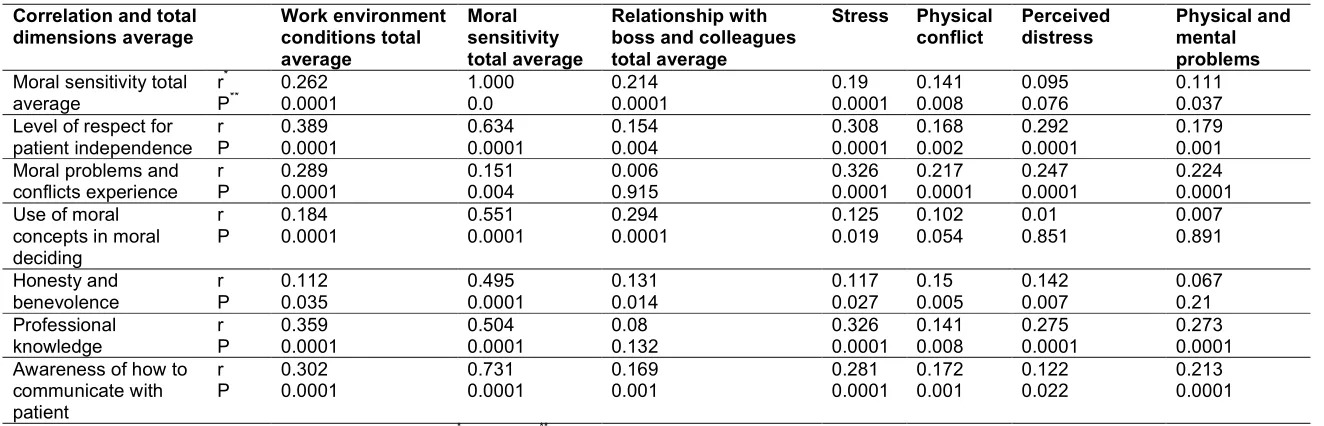
Regarding the work environment conditions in terms of socio-individual characteristics from the viewpoint of nurses among the individual social variables, the marital status (P = 0.12) and the moral training course variation (P = 0.026) in the nurses' point of view on the work environment conditions, had a significant correlation. The results of this study showed that in terms of work environment conditions, the highest average score obtained in the relationship with boss and colleagues and the lowest average score obtained in the work engagement aspect. In the context of the relationship between the average score of the work environment conditions and the score of moral sensitivity in general and regarding each fields, the total score of the fields of moral sensitivity had a significant correlation with the total score of the work condition (P = 0.0001), the aspect of communication with the boss and colleagues (P = 0.0001), stress (P = 0.0001), work engagement (P = 0.00) and physical and mental problems (P = 0. 037). Also, the overall score of work environment conditions had a significant correlation with all aspects of moral sensitivity (independence and autonomy aspect, conflict, rules, honesty and benevolence, professional knowledge and the way of communication). The results were obtained based on the use of Pearson correlation coefficient.
Overall, the results of this study showed that the total score of moral sensitivity fields have a
significant correlation with total score of work
environment conditions and aspects of
communication with boss and colleagues (P = 0.21), stress (P = 0.19), work engagement (P = 0.14), and physical and mental problems (P = 0.11) and in all wards of the health and education centers the relationship between the work environment conditions with the moral sensitivity has been proved (Table 2 and Table 3).
4. DISCUSSION
The findings of this study demonstrated that majority of participants were in moderate condition and the minority were in inappropriate condition. In the studies, there were no statistically significant between the distribution of the moral sensitivity frequency with any of the individual and social variables. It should be noted that the results of this study indicated the high moral sensitivity score in female as well as the married individuals, and participants with the age range of 30 to 40 years old. Since moral sensitivity is one of the criteria for professional qualifications for nurses, nursing educational organizations should also regard this goal in their planning because nursing is a moral activity and each decision made by a nurse has a moral aspect which not only applicable in live and death situations but affects every day life events. The power to perceive or understand moral issues is one of the prerequisites for the moral performance of nurses. Therefore, nurses need to develop morality for effective use of morals, reasoning skills, moral sensitivity, perceive and analysis [5]. However, the results obtained in the study entitled "comparison of the sensitivity of nursing students and nurses in Kerman University of Medical Sciences in the year 89" by Abbaszadeh et al. showed that in the case of age, moral sensitivity and its components there was no correlation with Pearson correlation in students, but the test for nurses showed that there is an inverse correlation between age and experience with problems and moral conflict and direct correlation with professional knowledge [14]. Although, in Borhani et al. study entitled "comparison of the moral reasoning ability of nurses and university nursing students of Kerman University of Medical Sciences facing with moral dilemmas." stated that nurses with more than one year of work experience, had less moral ability to argue that was not in concordance with the results of this study [6]. However, Mokhtari Lake et al., according to Anke, argued that nursing staff who had fewer
opportunities and fewer professional autonomy had more moral distress which was similar to the results of this study which indicate that they may face moral dilemma with nursing duties and may result in unwilling outcomes [19].
Score distribution of the work environment conditions of nurses in Rasht's health-education centers showed that the highest score obtained in the relationship with boss and colleagues (11%) and the work engagement aspect did not have any score. Regarding the general situation of the working environment, 52.3% of the individuals were in inappropriate condition. However, there is a contradiction in the study investigated the relationship between work environment conditions and the moral sensitivity of nurses in faculty members at the University of Alexandria. In the mentioned study in the studied unit’s viewpoint on the work environment conditions, the highest score was attributed to the physical and psychological problems and the lowest score obtained for work engagement [18] [19]. In researcher’s notion, the reasons for the difference in results can be attributed to the cultural differences as well as the differences in the studied population and the work environment and the type of communication. What seems to
be important is the fact that the atmosphere of each society and environment is influenced by factors which are specific to the environment, and a temporal comparison is possible, and it seem reasonable that the two environments were similar in each way, which was inconsistency with the results due to the lack of access to the similar study. Also, cultural differences may contribute to the uneven results.
The viewpoints of nurses in Rasht health centers about the work environment conditions and its dimensions showed that the average score of the working environment from nurses’ point of view was 132, which indicates an inappropriate nurses' point of view about the work environment conditions, also the relationship with the boss and the colleagues dimension obtained the highest score and the lowest obtained by work engagement. The results of this study are in concordance with the results of the study at the University of Alexandria [18]. In the study of Begat Iingrid, high association between physical and mental with moral conflicts dimensions has been identified [20]. The reasons for the difference in results can be pointed out by the dominant culture of the society that affects the working environment.
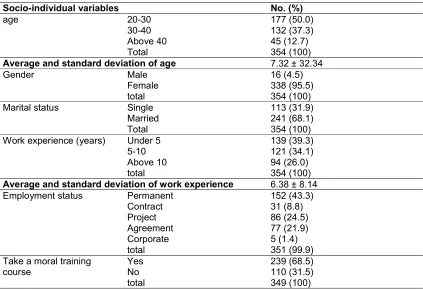
Table 1. The frequency distribution of socio-individual demographic variables
Socio-individual variables No. (%)
age 20-30 177 (50.0)
30-40 132 (37.3)
Above 40 45 (12.7)
Total 354 (100)
Average and standard deviation of age 7.32 ± 32.34
Gender Male 16 (4.5)
Female 338 (95.5)
total 354 (100)
Marital status Single 113 (31.9)
Married 241 (68.1)
Total 354 (100)
Work experience (years) Under 5 139 (39.3)
5-10 121 (34.1)
Above 10 94 (26.0)
total 354 (100)
Average and standard deviation of work experience 6.38 ± 8.14
Employment status Permanent 152 (43.3)
Contract 31 (8.8)
Project 86 (24.5)
Agreement 77 (21.9)
Corporate 5 (1.4)
total 351 (99.9)
Take a moral training course
Yes 239 (68.5)
No 110 (31.5)
7
Table 2. Relationship between the score of work environment conditions out of nurse’s viewpoints with the moral sensitivity score in general and in terms of dimensions (non-adaptive model) in nurses
Correlation and total dimensions average
Work environment conditions total average
Moral sensitivity total average
Relationship with boss and colleagues total average
Stress Physical conflict
Perceived distress
Physical and mental problems
Moral sensitivity total average
r* 0.262 1.000 0.214 0.19 0.141 0.095 0.111
P** 0.0001 0.0 0.0001 0.0001 0.008 0.076 0.037
Level of respect for patient independence
r 0.389 0.634 0.154 0.308 0.168 0.292 0.179
P 0.0001 0.0001 0.004 0.0001 0.002 0.0001 0.001
Moral problems and conflicts experience
r 0.289 0.151 0.006 0.326 0.217 0.247 0.224
P 0.0001 0.004 0.915 0.0001 0.0001 0.0001 0.0001
Use of moral concepts in moral deciding
r 0.184 0.551 0.294 0.125 0.102 0.01 0.007
P 0.0001 0.0001 0.0001 0.019 0.054 0.851 0.891
Honesty and benevolence
r 0.112 0.495 0.131 0.117 0.15 0.142 0.067
P 0.035 0.0001 0.014 0.027 0.005 0.007 0.21
Professional knowledge
r 0.359 0.504 0.08 0.326 0.141 0.275 0.273
P 0.0001 0.0001 0.132 0.0001 0.008 0.0001 0.0001
Awareness of how to communicate with patient
r 0.302 0.731 0.169 0.281 0.172 0.122 0.213
P 0.0001 0.0001 0.001 0.0001 0.001 0.022 0.0001
*
8
Table 3. Relationship between moral sensitivity and work environment conditions from nurse’s point of view in terms of dimensions by adjusting the effects of socio-individual variables (matched model) in nurses
Model Non-standard coefficient Standardized coefficient
Significant level
95% confidential interval regression coefficient
Linear indices
Regression coefficient
Standard error
Beta
Tolerance variance inflation Bottom limit Upper limit
Final model
Total 2.347 0.138 0.0001 2.077 2.618
Relationship with colleagues
0.118 0.030 0.205 0.0001 0.058 0.178 0.951 1.051
Stress 0.050 0.024 0.113 0.037 0.003 0.097 0.900 1.111
Work engagement
The findings of this study showed that there are a relationship between the working environment conditions and the adjustment of socio-individual variables effects, the marital status and the course of moral training. In the final model, of variables entered in the multiple analysis, scores in the field of communication with colleagues and stress as well as work engagement have been one of the most important factors related to moral sensitivity from nurses' point of view, so that by increasing one score above the mean score of the relationship with colleagues, the average total score of moral sensitivity increased by 12%, also, increasing one score on the average score by 0.05%, the total score Ethical affiliation will be increased and by increasing the score on the average score of the work engagement, on an average, the total moral sensitivity decreased by 0.9%, so that by improving the working environment in the fields of communication with colleagues, stress and reducing it in the field of work engagement, moral sensitivity can be increased (Table 3). The study of Izadi et al. indicated that there was no significant relation-ship between the moral sensitivity of nursing decision and marital status, which was not consistent with the findings of this study [21]. In the study of Baluchi et al. there was no meaning-ful relation between marital status with moral sensitivity. While, there was a significant relation-ship between the external and internal religious orientation, so that in assessing the average internal religious orientation in married and single individuals, it was found that married individuals had more internal religious orientation than single individuals, while he quoted from Ganji et al. that there was no statistically significant relationship between religious beliefs and marital status which was not consistent with the result of the mentioned study. He mentioned that the level of satisfaction by spouse and marital life as disturbing factors had influenced the results of the study [22]. Researcher also agrees with this possibility according to the results of the present study. According to the results of this study, by decreased work engagement and increased association with boss and colleagues and stress, moral sensitivity and moral performances will increase. It is justifiable that proper relationship with colleagues and stress control are important affecting factors on moral sensitivity because the need for a moral decision is the existence of mental and emotional tranquility to properly assess the situations and carry out the suitable act which directly affects the satisfaction of patients with nursing services and robust their improvement regarding their diseases.
5. CONCLUSION
According to the results of this research, it can be claimed that the challenges of moral sensitivity and working environment conditions are considered as effective factors in all hospital departments of Guilan University of Medical Sciences. Since the effect of this concept on the performance of nurses is well documented it is worth noting for nursing managers to use the results of this research and further researches to identify and adopt strategies to increase moral sensitivity and improve the working environment.
The results of this research can be applied to pharmaceutical sciences including assessing moral dilemma which pharmacists face in communication with patients and other health professionals. Also, one of the important consequences of applying these results to health community is to reduce the rate of unprescribed drug usage by patients with the fact that nurses and other health professionals with high moral sensitivity do not sell or give unprescribed medicines and drugs.
The present study only responded to some of the questions about moral sensitivity and working environment in a small section of the clinical nursing community, which suggested that this research and its complementary researches should be conducted in a broader range of clinical groups as well as students in this field. Taking into account the differences in the level of communication and the level of stress and physical and mental conflicts, it is suggested that this study should be conducted between the first and last year students by comparative sampling between the general and special sections. Considering that the information of this study
were gathered using self-reporting and
CONSENT AND ETHICAL APPROVAL
After obtaining informed written consent from the participants and after obtaining the Ethics Committee code, the questionnaires were distributed by the researcher among the nurses working in the departments.
ACKNOWLEDGMENTS
This study extracted from a thesis approved by Guilan University of Medical Sciences, Rasht, Iran.
COMPETING INTERESTS
Authors have declared that no competing interests exist.
REFERENCES
1. Toloei M, Faghihzadeh S, Sadooghi Asl A.
The nurses’ motivating factors in relation to patient training. Hayat. 2006;12(2):43-51.
2. Fazljoo E, Borhani F, Abbaszadeh A,
Zarban F. Researcher, Department of Nursing Ethics, Medical Law and Ethics
Research Center, Shahid Beheshti
University. The relationship between
nurses' perceptions of moral distress and the ethical climate in Shahid Sadoughi University of Medical Sciences of Yazd Medical Law and Ethics Research Center, Shahid Beheshti UniversityIranian Journal of Medical Ethics and History of Medicine. 2014;7(2):80-90.
3. Borhani F, Abbas Zadeh A, Sabzevari S.
The effect of training and follow-up workshop on ethical sensitivity nurses. Medical Ethics. 2012;6(21):11-24.
4. Baker TL, Hunt TG, Andrews MC.
Promoting ethical behavior and
organizational citizenship behaviors: The influence of corporate ethical values.
Journal of Business Research.
2006;59(7):849-57.
5. Borhani F, Abaszadeh A, Mohsenpour M.
Explaining the meaning of moral sensitivity in nursing students: A qualitative study. Medical Ethics. 2012;6(22):93-115.
6. Borhani F, Abaszadeh A, Kohan M,
Fazaiel M. Comparison of moral reasoning nurses and nursing students of Kerman University of Medical Sciences in dealing with ethical dilemmas. Iranian Journal of
Medical Ethics and History of Medicine. 2010;3(4):71-81.
7. Zirak M, Hasankhani H, Parizad N. The
ethical reasoning ability of nurses and nursing students: A literature review. Iranian Journal of Medical Ethics and History of Medicine. 2015;7(6):15-28.
8. Akabayashi A, Slingsby BT, Kai I,
Nishimura T, Yamagishi A. The
development of a brief and objective method for evaluating moral sensitivity and reasoning in medical students. BMC Medical Ethics. 2004;5(1):1.
9. Assadi N. Effects of workplace mental
health doctors and nurses in emergency and non-emergency. Journal of Mental Health. 2010;12(47):19-612.
10. Abolfathzadeh N, Nejat S, Asghari F.
Development of an indigenous question-naire to assess the moral sensitivity of Iranian medical students. Iranian Journal of Medical Ethics and History of Medicine. 2014;7(3):13-25.
11. Baker TL, Hunt TG, Andrews MC.
Promoting ethical behavior and organiza-tional citizenship behaviors: The influence of corporate ethical values. Journal of Business Research. 2006;59(7):849-57.
12. Sadrollahi A, Khalili Z. A survey of
professional moral sensitivity and
associated factors among the nurses in west Golestan province of Iran. Iranian Journal of Medical Ethics and History of Medicine. 2015;8(3):50-61.
13. mehralizade S, Rezaii H, Heshmatifar S,
Pazoki R. An evaluation of medical students' clinical course at Semnan University of medical sciences during the academic years (2001 to 2010) Semnan University of Medical Sciences. Journal of North Khorasan University of Medical Sciences. 2014;5(4):314-20.
14. Abbas Zadeh A, Borhani F, Nematolahi L.
Comparison of moral sensitivity nurses and nursing students Kerman University of Medical Sciences in year 2010. Medical Ethics. 2010;4(12).
15. Khodayarian MVZ, Dignity Seyedinzade A.
Indicators of work environment of nurses: A qualitative study. Jornal of Nursing and Midwifery Hamedan. 1387;16(1):46-56.
16. Assadi N. Effects of workplace mental
17. Gallagher A, Tschudin V. Educating for ethical leadership. Nurse Education Today. 2010;30(3):224-7.
18. Abduo HA, Baddar FM. The relationship
between work environment and moral sensitivity among faculty assistances at faculty of nursing, Alexandria university, Egypt.world Applied Sciences Journal 2010;11(11):1375-1387 .
19. Tabari R, Jalali K, Asgari F. Survey of
moral distress and its related factor in staff nurses working in emergency department of hospital affiliated to Guilan University of Medical Sciences Shahid Beheshti College of Nursing and Midwifery; 2015.
20. Begat I, Ellefsen B, Severinsson E.
Nurses’ satisfaction with their work
environment and the outcomes of clinical
nursing supervision on nurses’
experiences of well‐being–a Norwegian
study. Journal of Nursing Management. 2005;13(3):221-30.
21. Izadi A, Imani E, Khademi Z, Asadinoghabi
F, Hajizade N, Naghizadeh F. The
correlation of moral sensitivity of
critical care nurses with their caring behavior. Iranian Journal of Medical
Ethics and History of Medicine.
2013;6(2):43-56.
22. Balochi T, Tolideii H, Fathi A, Hoseini
M, Gohari S. Relationship between
religious orientation and moral sensitivity in the decision making process among nurses. Iranian Journal of Medical Ethics and History of Medicine. 2014;7(3):48-57.
© 2019 Shoeibi et al.; This is an Open Access article distributed under the terms of the Creative Commons Attribution License (http://creativecommons.org/licenses/by/4.0), which permits unrestricted use, distribution, and reproduction in any medium, provided the original work is properly cited.
Peer-review history: