R E V I E W
Open Access
Does a low FODMAPs diet reduce
symptoms of functional abdominal pain
disorders? A systematic review in adult and
paediatric population, on behalf of Italian
Society of Pediatrics
Rossella Turco
1, Silvia Salvatore
2, Erasmo Miele
1, Claudio Romano
3, Gian Luigi Marseglia
4and Annamaria Staiano
1*Abstract
Background:Despite the rising of the Functional Gastrointestinal Disorders (FGIDs)’incidence in the last years, the etio-pathogenesis of FGIDs remains unclear. The diet seems to play an important role in these disorders. Indeed, at least two thirds of adult patients with Irritable Bowel Syndrome (IBS) and of children with FGIDs perceive their GI symptoms to be food-related. In particular, in the last years, more interest has been focused in the low Fermentable Oligosaccharides, Disaccharides, Monosaccharides, and Polyol (FODMAPs) diet.
Aims:To provide a systematic review on the efficacy of a low FODMAPs diet in reducing symptoms associated with functional abdominal pain disorders.
Methods:Cochrane Library, MEDLINE (via Pubmed), and EMBASE databases from inception to June 2017 were searched. We included randomized controlled trials (RCTs), prospective and retrospective studies, systematic reviews and meta-analyses, reporting the efficacy of the FODMAPs diet intervention in FGIDs patients.
Results:Nineteen studies were eligible. A FODMAPs-restricted diet is beneficial in 12/13 intervention trials. The low FODMAPs diet improves overall GI symptoms, especially abdominal pain and bloating. In children, only one study reported positive results of a low FODMAPs diet. No effect was found for the lactose free diet whilst fructose-restricted diet was effective in 3/4 studies. The duration of the intervention was very different among the studies, ranging from 2 days to 16 months, and from 3 and 9 weeks for the RCTs. The majority of the trials presented differences in symptoms scoring scales, diet, food diaries, and food frequencies questionnaire.
Conclusions:The FODMAPs-restricted diet may be an effective dietary intervention for reducing IBS symptoms in adults. In children, there are promising data, although only one randomized double-blind study exists and further data are needed to better clarify the role of FODMAPs and fructose-restricted diet in IBS. The current evidence does not support the use of a lactose-restricted diet in children with FGIDs.
Keywords:Diet, FODMAPs, IBS, FGIDs, Paediatric, Abdominal pain
* Correspondence:[email protected]
1Department of Translational Medical Science, Section of Pediatrics,
University of Naples“Federico II”, Via S. Pansini 5, 80131 Naples, Italy Full list of author information is available at the end of the article
More and more adults and children complain of abdom-inal pain, whose origin is in the 95% of functional nature. Abdominal pain is associated to different functional gastrointestinal disorders (FGIDs), among which the irrit-able bowel syndrome (IBS) is the most common, being re-ported in 10–25% of adult population [1] and in 0–45% of paediatric population [2]. Despite the rising incidence of FGIDs in the last years, no biomarker or gold standard test is able to prove the diagnosis. The Rome IV criteria for FGIDs, recently updated [3, 4], are currently used in clinical practice to help paediatricians and physicians to identify these disorders. To date, the etio-pathogenesis of FGIDs, and in particular of the IBS, remains unclear al-though different mechanisms have been proposed. These include increased pain sensitivity or visceral hypersensitiv-ity [5,6], abnormal gut motility [7], small intestinal bacter-ial overgrowth [8], low-grade intestinal inflammation [9], psychosocial factors [10] and dysregulated gut–brain axis [11,12]. Diet and nutrition seem to matter: indeed nutri-ents can interfere with GI motility, sensitivity, barrier function, and gut microbiota [13] bringing to an atypical modulatory mechanism in the gut. Moreover, it has been reported that at least two thirds of adult patients with IBS [14–16], as well as two thirds of children with functional GI disorders [17], perceive their GI symp-toms to be food-related, making dietary management an important tool in the treatment of IBS. In the past years restriction diets were based on the exclusion of a single carbohydrate, such as the lactose or the fructose, in the suspicion of food intolerance. Nevertheless, in the last years, more interest has been focused on the low FODMAPs diet, which comprehensively lowers the intake of several fermentable carbohydrates. The acro-nym stands for fermentable oligosaccharides, disaccha-rides, monosacchadisaccha-rides, and polyol (FODMAPs) diet and includes foods with fructose in excess of glucose (pears and apples), oligosaccharides including fructans (wheat and onion), galacto-oligosaccharides (legumes) and sugar polyols such as sorbitol and mannitol (stone fruits and artificial sweeteners), and lactose [10]. The ways through which FODMAPs can lead to GI symp-toms are different, including abnormal luminal disten-sion, changes in the gut microbiota, in GI endocrine cells, in immune function, and/or in the intestinal bar-rier [18–21]. Recently Chumpitazi et al. demonstrated that in paediatric IBS, a low FODMAPs diet decreases abdominal pain frequency [22]. Furthermore, other studies showed promising effect of the low FODMAP diet in reducing functional GI symptoms [23,24]. How-ever, the evidence of its effectiveness, especially in paediatric age, is limited. The aim of our study was to provide a systematic review of the literature on the effi-cacy of a low FODMAPs diet in FGIDs.
Search strategy
This review was performed according to a predesigned protocol recommended for systematic review [24]. We con-ducted a computerized literature search of the Cochrane Library, MEDLINE (via Pubmed), and EMBASE databases from inception to June 2017, with the following search terms: “FODMAP”, “FODMAPs”/ “fermentable oligosac-charides, disaccharides and monosaccharides and polyols”,
“fermentable, poorly absorbed, short chain carbohydrates”,
“lactose free-diet” and “functional gastrointestinal disor-ders”, “functional abdominal pain”, “recurrent abdominal pain”, “irritable bowel syndrome”. We did not apply geo-graphical restrictions while we considered only papers writ-ten in English language. In addition, the reference lists of all identified articles were examined to identify studies not captured by electronic searches. The electronic search and the eligibility of the studies were assessed independently by 2 of the authors (CR, EM). Differences were discussed, and consensus reached.
Selection criteria
For inclusion, studies had to involve subjects with IBS and/or FGIDs and had to investigate the efficacy of a FODMAP-restricted diet intervention. No age limits were adopted. Due to the expected paucity of studies, besides all randomized controlled trials (RCTs), we in-cluded prospective and retrospective studies, systematic reviews and meta-analyses, reporting the efficacy of the FODMAPs diet intervention in FGIDs patients. Exclu-sion criteria were language other than English.
Data extraction and quality assessment
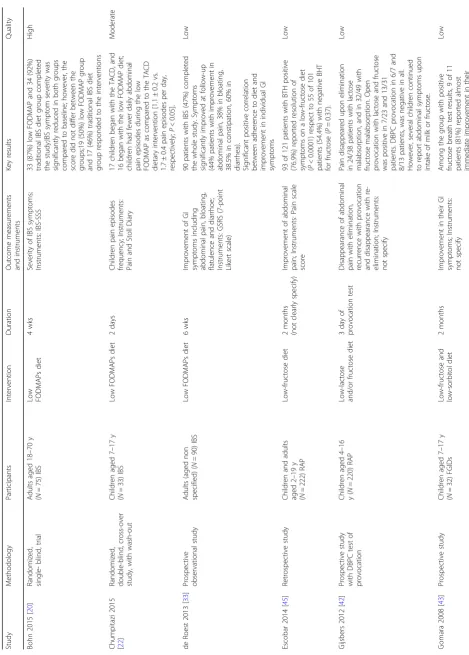
Two investigators (SS and RT) independently extracted, summarized and completed a data extraction form for all the eligible studies. Data from each eligible study were ex-tracted without modification of original data onto custom-made data collection containing items on general informa-tion, baseline characteristics of participants, study setting, interventions, and outcomes (Table1). Disagreements were resolved by consensus with a third reviewer (AS).
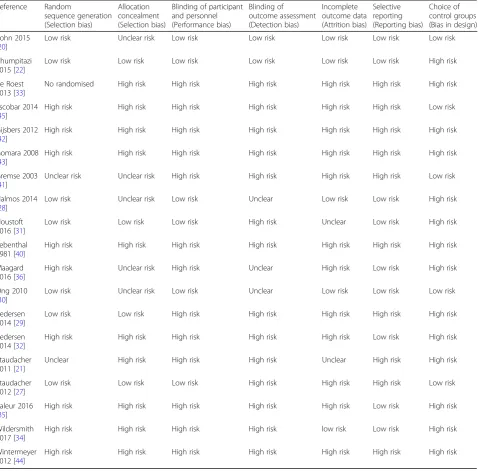
The same authors (RT, SS), independently, assessed the risk of bias of the included studies via the Cochrane risk of bias tool [25,26] for the follow domains: random sequence generation (selection bias), allocation concealment (selec-tion bias), blinding of participants and personnel (perform-ance bias), blinding of outcome assessment (detection bias), incomplete outcome data (attrition bias) and selective reporting (reporting bias) (Table2). As“other bias” we in-cluded the lack of a control group (bias in design). For each outcome, review authors’ judgments were categorized as
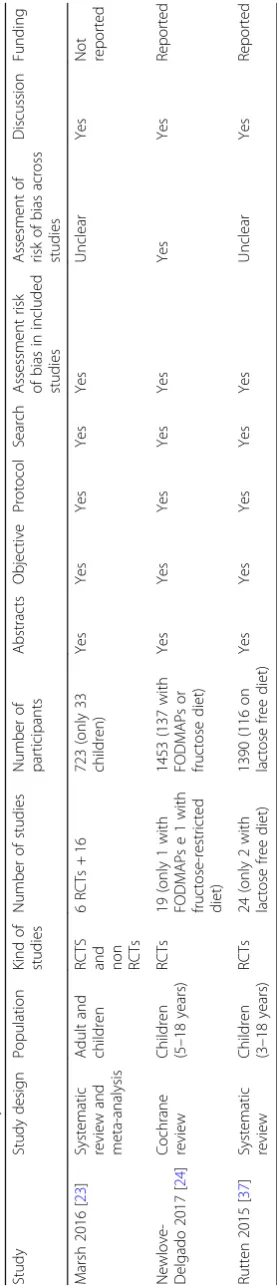
The quality of systematic reviews and meta-analyses were evaluated by the PRISMA recommendation (Table3).
Results
Nineteen full-text studies [20–22, 27–36, 40–45] and 3 systematic reviews and meta-analyses [23, 24, 37] were included in the final analysis according to the selected criteria. Among the studies, 7 concern paediatric age.
Paediatric studies
Two Cochrane Reviews [23, 24] evaluating the effect of FODMAPs diet in paediatric age analysed the randomized
double-blind, crossover trial by Chumpitazi et al. [22]. This study included 33 IBS children coming from Texas (all fulfilling the IBS Rome III criteria: 24 with IBS-Constipation, 3 with IBS-unsubtyped, 3 with IBS-Mixed and 3 with IBS-Diarrhoea), 67% of which were female with a mean age of 11.5 ±3.0 years. After one-week baseline period, children were randomized to receive either a low FODMAPs diet containing 0.15 g/kg/day (maximum 9 g/ day) of FODMAPs or a typical American childhood diet (TACD) contained 0.7 g/kg/day (maximum 50 g/day) of FODMAPs. The intervention lasted for 48 h, followed by a 5-day washout period before crossing over to the other
Table 2For each domain risk of bias is rated as high, unclear or low
Reference Random
sequence generation (Selection bias)
Allocation concealment (Selection bias)
Blinding of participant and personnel (Performance bias)
Blinding of outcome assessment (Detection bias)
Incomplete outcome data (Attrition bias)
Selective reporting (Reporting bias)
Choice of control groups (Bias in design)
Bohn 2015 [20]
Low risk Unclear risk Low risk Low risk Low risk Low risk Low risk
Chumpitazi 2015 [22]
Low risk Low risk Low risk Low risk Low risk Low risk High risk
de Roest 2013 [33]
No randomised High risk High risk High risk High risk High risk High risk
Escobar 2014 [45]
High risk High risk High risk High risk High risk High risk Low risk
Gijsbers 2012 [42]
High risk High risk High risk High risk High risk High risk High risk
Gomara 2008 [43]
High risk High risk High risk High risk High risk High risk High risk
Gremse 2003 [41]
Unclear risk Unclear risk High risk High risk High risk High risk Low risk
Halmos 2014 [28]
Low risk Unclear risk Low risk Unclear Low risk Low risk High risk
Houstoft 2016 [31]
Low risk Low risk Low risk High risk Unclear Low risk High risk
Lebenthal 1981 [40]
High risk High risk High risk High risk High risk High risk High risk
Maagard 2016 [36]
High risk Unclear risk High risk Unclear High risk Low risk High risk
Ong 2010 [30]
Low risk Unclear risk Low risk Unclear Low risk Low risk Low risk
Pedersen 2014 [29]
Low risk Low risk High risk High risk High risk High risk High risk
Pedersen 2014 [32]
High risk High risk High risk High risk High risk Low risk High risk
Staudacher 2011 [21]
Unclear High risk High risk High risk Unclear High risk High risk
Staudacher 2012 [27]
Low risk Low risk Low risk High risk High risk High risk Low risk
Valeur 2016 [35]
High risk High risk High risk High risk High risk Low risk High risk
Wildersmith 2017 [34]
High risk High risk High risk High risk low risk Low risk High risk
Wintermeyer 2012 [44]
Table
3
Evaluation
of
systemaic
reviews
and
Coc
hrane
review
Study
Stud
y
design
Population
Kind
of
st
udies
Numb
er
of
studies
Numb
er
of
particip
ants
Abstra
cts
Objec
tive
Prot
ocol
Search
Assessm
ent
risk
of
bia
s
in
included
studies
Assesme
nt
of
risk
of
bias
acr
oss
studies
Discussion
Fu
nding
Marsh
2016
[
23
]
Syste
matic
review
an
d
meta
-analysis
Adult
and
children
RCTS an
d
non RCTs
6
RCTs
+
16
723
(onl
y
33
children)
Yes
Yes
Ye
s
Yes
Yes
Unclea
r
Yes
Not rep
orted
Newl
ove-Delgad
o
2017
[
24
]
Coc
hrane
review
Children (5–
18
years
)
RCTs
19
(only
1
with
FODMAP
s
e
1
with
fructose-restricted diet)
1453
(137
with
FODMAP
s
or
fructose
diet
)
Yes
Yes
Ye
s
Yes
Yes
Yes
Yes
Re
ported
Rutten
2015
[
37
]
Syste
matic
review
Children (3–
18
years
)
RCTs
24
(only
2
with
lactose
free
diet)
1390
(116
on
lactose
free
diet)
Yes
Yes
Ye
s
Yes
Yes
Unclea
r
Yes
Re
diet for other 48 h. The frequency and the characteristics of abdominal pain and of the other GI symptoms were evaluated through a Pain and Stool Diary. Stool samples were also collected to assess the microbiome composition and metabolic capacity. The results showed fewer episodes of abdominal pain among children on low FODMAPs diet respect to children on TACD [1.1 ± 0.2 vs. 1.7 ± 0.4 pain episodes per day, respectively; P< 0.05]. When authors compared the data following diet respect to baseline, they observed fewer daily abdominal pain episodes during the low FODAMPs diet (p< 0.01) but more episodes during the TACD (p> 0.01). Authors found that responders (chil-dren who had significant improvement on the low FOD-MAPs diet only) at baseline were enriched in taxa with known greater saccharolytic metabolic capacity (e.g. Bac-teroides, Ruminococcaceae, Faecalibacterium prausnitzii) and three Kyoto Encyclopedia of Genes and Genomes orthologues, of which two relate to carbohydrate metabol-ism. Deep analysis of microbiota composition and struc-ture revealed no change in α-diversity (number of operational taxonomic units (OTU), ie, number of spe-cies) in children after a one-week low FODMAPs diet.
Adult studies
Marsh et al. [23] included 21 adult studies assessing the effect of the FODMAPs diet on functional gastrointes-tinal symptoms. In a RCT, Staudacher et al. [27] com-pared the effects of a 4 weeks fermentable carbohydrate restriction diet to a habitual diet on luminal microbiota, SCFA, and GI symptoms. The study subjects included 41 patients with IBS, defined using Rome III criteria, aged 18–65 years old. At baseline, no significant differ-ences were found between the low FODMAPs diet (7/ 19, 37%) and the habitual diet group (9/22, 58%; P= 0. 79) in response to the global symptom question. How-ever, at follow-up, more patients in the low FODMAPs diet group reported adequate symptom control com-pared with the habitual diet group, when analysing the intention-to-treat (13/19, 68% vs. 5/22, 23%; P= 0.005) and per protocol (13/16, 81% vs. 5/19, 26%; P= 0.002) data. About the incidence and severity of symptoms, at baseline, there wasn’t a significantly difference between groups, except for nausea, which was less frequent and less severe in the low FODMAPs diet group. However, at follow-up, there was a lower incidence of bloating, ab-dominal pain, and overall symptoms and a lower mean daily severity scores in the low FODMAPs diet group. Diarrhoea severity scores were similar in both groups at follow up. Stool frequency and consistency were similar at baseline, but at follow-up, after adjusting data for baseline, lower stool frequency and a greater proportion of stools with normal consistency were observed in low FODMAPs diet group rather than in the habitual diet group. The total luminal bacteria at follow-up did not
differ between groups; however, there were lower con-centrations (P< 0.001) and proportions (P < 0.001) of Bifidobacteria in the intervention group compared with controls, when adjusted for baseline.
In 2014 Halmos et al. [28] performed a randomised, controlled, single blind cross-over study on 38 Austra-lian subjects. Subjects included 30 IBS patients defined according to Rome III criteria, of whom 10 with IBS-D, 13 with IBS-C, 5 with IBS-M and 2 with IBS-U (70% fe-male, mean age of 41 years) and 8 healthy adults. Partici-pants were randomised to receive either a high or low FODMAPs diet for 21 days. Before trying the next diet, subjects’symptoms were needed to return to the same level as during the baseline period. Stool samples were also collected for 5 days at the end of each diet period to evaluate the faecal consistency, frequency and weight. IBS subjects showed lower gastrointestinal symptom scores while on low FODMAPs diet (22.8 mm on the VAS) rather than on Australian diet (44.9 mm on the VAS;p< 0.01). The improvement in GI symptoms scores was observed in 70% of IBS patients. On the contrary the healthy subjects did not present significantly differ-ences in GI symptoms scores during the two diets. Re-garding stool characteristics, the only significant differences were a lower King’s Stool Chart score and re-duced stool frequency on the low FODMAPs diet com-pared with the typical Australian diet in IBS-D subtype.
significant reduction in the mean IBS-SSS from baseline to week 6 was observed regarding the IBS-D subtype in the 3 diet groups (p< 0.01), as well as for the IBS-A sub-type in the LFD (p= 0.01) and LGG group (p= 0.04) but not in the ND group (p= 0.12). Instead no significant re-duction of IBS-SSS was found in patients with IBS-C type in any diet group.
More recently, Bohn et al. [20] analysed data deriving from a randomized, multicentre single-blind trial, on the comparison between a low FODMAPs diet and a traditional diet in Swedish subjects. Seventy-five IBS patients according to Rome III criteria were randomly assigned to one of the two diets for 4 weeks. The patients on low FODMAPs diet were instructed to which foods to avoid or to ingest while patients on traditional diet were instructed especially on how and when to eat rather than on what to eat.
The IBS Symptom Severity Scale and a 4-day food diary before and at the end of the intervention were recorded. Data showed that the severity of IBS symptom was signifi-cantly reduced in both groups compared to baseline (p < .0001) without a significant difference between the groups (p= 0.62).; however, 19 IBS patients (50%) on low FODMAPs diet and 17 (46%) IBS patients on traditional diet responded to the interventions, without any signifi-cantly difference between the groups. Regarding the food diary, at baseline both groups had similar intake of nutri-ents, and a clear change in dietary intake during the 4 weeks study period was observed in both groups.
Another randomized single blind cross-over study [30] evaluated the effect of a FODMAP-restricted diet in rela-tion to the producrela-tion of hydrogen and methane and to the possible induction of functional GI symptoms. The au-thors investigated 15 healthy subjects and 15 subjects with IBS according to Rome III criteria (87% female, median age 41 years) in Australia. Among the 15 IBS subjects, 4 had IBS-D, 7 had IBS C, 2 had IBS-M and 2 had un-typed IBS (IBS-U). After a 7-days baseline period, subjects re-ceived either a FODMAP-restricted diet (9 g/day) or a high FODMAPs diet (50 g/day) for 2 days each with a 7 days wash-out period between diets. Gastrointestinal symptoms were evaluated and breath samples were col-lected on day 2 of each diet. In IBS subjects, all symptoms were significantly worse while on high FODMAPs diet (abdominal pain (P= 0.006), bloating (P= 0.002), passage of gas (P = 0.002), nausea (P= 0.01), heart burn (P= 0.025) and lethargy (P= 0.012)), while in healthy subjects was re-corded only a significant reduction of the passage of gas (P= 0.007). No differences were observed for the other symptoms in healthy individuals while on the different di-ets. Higher levels of breath hydrogen were produced with the high FODMAPs diet respect to the low FODMAPs diet for both groups (P< 0.0001). IBS subjects produced higher levels of hydrogen during each dietary period than the healthy subjects (P< 0.05).
blind placebo controlled cross over trial [31] also evalu-ated the improvement of the IBS symptoms on low FODMAPs diet. Both studies utilized validated question-naires to study the outcome, the IBS Global improve-ment scale [21] and the IBS-SSS questionnaire [31] and advices about a FODMAPs diet. IBS patients of both study recorded an improvement of their symptoms.
The other studies were“prospective but uncontrolled” [32–35] or retrospective [37], Table1.
Low lactose, sorbitol fructose diet
Rutten et al. [37] included a Cochrane Review [38] evalu-ating 2 trials about a lactose-free diet in children with re-current abdominal pain [39, 40]. Lebenthal et al. [40] analysed 38 out of 69 enrolled children with abnormal lac-tase activity receiving 6 weeks of lactose containing or lactose-free infant formula. Children were divided in two groups, one of lactose malabsorbers (n= 21) and the other of lactose absorbers (n= 17), according to the lactose tol-erance. Increased symptoms were described in 48% of the lactose malabsorbers and 24% of the lactose absorbers after lactose intake; however,P values were not reported. Forty of the 69 children continued with a 12-month lac-tose free diet. Improvement of abdominal pain after 12 months was similar in both groups (40% vs 38%).
In 2003, Gremse et al. [41] performed a randomized, double-blind, cross-over study assessing whether the in-gestion of lactose was associated with GI symptoms in 30 children, between 3 and 17 years old, affected by re-current abdominal pain and lactose maldigestion. Au-thors found that the symptom scores for abdominal pain, bloating, flatulence, and diarrhoea were similar for subjects with either > 10-ppm or > 20- ppm increase in breath hydrogen testing after lactose. As a matter of fact the mean abdominal pain score during ingestion of lactose-containing versus lactose-free milk was 8.5 ± 3.0 versus 8.5 + 2.2 for subjects with an increase in breath hydrogen concentration of > 20 ppm and 8.2 + 2.3 versus 5.9 ± 1.7 for those with a 10- to 20-ppm increase. One prospective study on the effect of low lactose and/or fructose diet [42], two on the effect of a low fructose and sorbitol diet [43, 44] and one retrospective study [45] on the effect of a low-fructose diet exist in paediat-ric age (Table1).
Discussion
in supporting the benefit of the fructose-restricted diet in paediatric age.
Dietary intervention is considered as an important non-pharmacological treatment of FGID, especially in the IBS. Recent guidelines consider the diet and the lifestyle advice as the first-line approach in the dietary management of IBS in adults [46]. However, patients with IBS often self-initiate dietary interventions without any specific advice, leading to an increased risk of nutritional inadequacy. This happen be-cause many patients consider their symptoms to be meals-related. In the past, the most common diets for IBS patients focused on restriction of fibres, caffeine, alcohol, and fat [47], but in the last 10 years the low FODMAPs diet was considered as a newcomer to dietary management of IBS and an amount quantity of evidence about the mechanisms and the clinical efficacy of this new diet spread. Dietary car-bohydrates can be classified into sugars, oligo-saccharides and polysaccharides, based on their degree of polymerisa-tion. FODMAPs are a discrete group of carbohydrates de-scribed as ‘fermentable’ owing to their availability for fermentation in the colon, which is either due to the ab-sence, or reduced concentration, of suitable hydrolase en-zymes for digestion (for example, lactase deficiency), or in the case of monosaccharides because of incomplete absorp-tion in the small intestine. These poorly absorbed short-chain carbohydrates include: fructose and lactose, fructans, galacto-oligosaccharides, and polyols or sugar alcohols. Des-pite their health effects such as increasing stool bulk, enhan-cing calcium absorption, modulating immune function, and selective stimulation of some microbial, FODMAPs can trig-ger specific gastrointestinal symptoms in patients with IBS. The presence and the degree of abdominal symptoms vary on the degree of malabsorption experienced by each individ-ual. Short-chain fermentable carbohydrates might exacer-bate IBS symptoms through various mechanisms, such as increased small intestinal water volume, colonic gas produc-tion and intestinal motility. FODMAPs are indeed poorly absorbed in the small intestine leading to gas production and increase of intestinal osmolarity due to their rapid fer-mentation and osmotic action. A study about ileostomates has shown that FODMAPs diet increased the fermentable load and volume of liquid delivered to the proximal colon [48]. Short-chain fermentable carbohydrates are also rapidly fermented by the colonic microbiota, resulting in luminal distension and pain in those with visceral hypersensitivity. Moreover, fermentable carbohydrates seem to have an effect on motility as shown by a scintigraphy study demonstrating that fructose–sorbitol ingestion reduced oro-cecal transit time by just over 3 h in healthy people [49].
The present systematic review shows that adherence to a low FODMAPs diet results in improvement of overall functional GI symptoms. As a matter of fact, a significant beneficial effect of a low FODMAPs diet on clinical symp-toms was reported by all the studies analysed except for
the recent randomized single-blinded trial by Bohn et al. [20] whose studied subjects responded to the intervention regardless of the type of diet (low FOODMAP vs trad-itional diet). In particular, abdominal pain and bloating, considered as the most troublesome and frequent symp-toms in IBS, were highly relieved after FODMAPs diet. Therefore, it is likely that a low FODMAPs diet may be beneficial for the majority of patients suffering by IBS. Moreover it has been demonstrated that most patients with IBS found the diet easy to adhere [33,34] with im-provement of symptoms and quality of life seen in those with the best adherence [50]. A low FODMAPs diet re-sulted also in an improvement of stool frequency and consistency, except in the study by Staudacher et al. [21], where no differences were found comparing a low FOD-MAPs diet with a standard diet. In the paper by Pederson et al., the authors showed that the effect of the low FOD-MAPs diet is dependent upon the IBS subtype, being most effective in patients with the IBS diarrhoeal type [29]. Data regarding the low FODMAPs diet in paediatric age are still missing even if this kind of diet is considered an emerging approach in the dietary management of IBS chil-dren [51]. The paper by Chumpitazi et al. [22] appears to be the first looking at the efficacy of this diet in IBS chil-dren, showing a decreasing of abdominal pain frequency in children following a low FODMAPs diet respect to chil-dren following a typical American childhood diet. The au-thors also showed that both baseline gut microbiome composition and microbial metabolic capacity could influ-ence the FODMAPs diet efficacy determining the rate of responders and non-responders. Indeed, at baseline re-sponders showed bacteria with greater saccharolytic cap-acity (such as genera Bacteroides, Clostridiales and family Erysipilotrichaceae) than those who did not respond to the diet. Different studies have investigated the effect of the low FODMAPs diet on the gut microbiota [22,27,52, 53]. Staudacher et al. [27] demonstrated that a low FOD-MAP diet significantly reduces luminal bifidobacteria after 4 weeks in adult patients and suggest the use of prebiotic or probiotic when the low FODMAP diet is followed in the long term. Recently, Holmos [54] et al. showed lower absolute Bifidobacteria concentration, F. prausnitzii and Clostridium cluster IV accompanied by a substantially lower total bacterial load of 47% during the low FOD-MAPs diet compared with habitual diet. However, the role of microbiota in the low FODMAPs diet is far to be clari-fied due to methodological problems, influence of con-founding factors and large differences between studies.
major basis for chronic gut symptoms in a proportion of patients with FGID. Gijsbers et al. [42] did not demonstrate an intolerance to lactose or fructose in a cohort of 220 chil-dren with recurrent abdominal pain (RAP) and observed that despite negative double-blinded placebo-controlled provocation, some children still complained abdominal symptoms when using milk or fructose-containing food. Lactose free diet did not ameliorate symptoms in a cohort of children with RAP [40], while in a randomized double-blind cross over study on 30 children with RAP a signifi-cant increase of severity of abdominal pain was recorded during lactose ingestion period respect to the lactose-free period [41]. Data in adult studies are also conflicting, keep-ing unresolved the dilemma whether the lactose malabsorp-tion is part of the IBS symptoms or the two condimalabsorp-tions may simply coexist in some patients. Regarding the fructose free diet, observational studies analysed in the present system-atic review reported symptom improvement when children with fructose malabsorption and RAP [44, 45] or FGID [43] were on a fructose-free diet. These results even if promising derived from un-controlled non-randomized studies. Interestingly, very recently, a randomized placebo-controlled cross-over trial [55] of 23 children with IBS showed that pain frequency and bloating were significantly higher during the fructan intervention as compared with the placebo (maltodextrin) intervention. However, more studies are needed to clarify the role of the lactose and fruc-tose restricted diet in the management of IBS children.
The present systematic review is not without limitations. The lack of standardization among studies certainly repre-sents the main problem. Indeed, differences in diet, food diaries, food frequencies questionnaire, duration of the intervention and scoring scale were encountered. The dur-ation of the intervention was very different among studies, ranging from 2 days to 16 months, and from 3 and 9 weeks for the RCTs. Considering that IBS is usually a chronic, sometimes life-long condition with periods of remission and exacerbation, a short duration of the intervention may not be able to catch long-term effect and the real effi-cacy of the diet intervention. Recently, indeed, a minimum length of 6 months has been recommended to establish long-term efficacy of an intervention [56]. In addition, even if the common primary outcome measure was changes in GI symptoms, the majority of the studies used different scoring scales with few studies using validated questionnaires [20, 29, 31, 32, 34, 36]. Standardization in the use of a unique validated questionnaire to investi-gate the symptoms’ relief is highly desirable in future studies. Finally, the quality of evidence has to be con-sidered low. Indeed, among all the analysed studies, only 4 were RCTs, and only one was double-blind. Other two double blind randomized studied were not controlled. As a matter of fact, all the studies pre-sented a high risk of bias.
This systematic review shows that restriction of FOD-MAPs may be an effective dietary intervention for redu-cing IBS symptoms in adults. In children, even if data are very promising, just one randomized double-blind study exists and further studies are needed to better clarify the role of FODMAPs. The current evidence does not support the use of a lactose restricted diet in chil-dren with IBS, while further studies are needed to estab-lish the role of the fructose restricted diet in the IBS symptoms’relief in children.
Abbreviations
FGIDs:Functional gastrointestinal disorders; FODMAPs: Fermentable oligosaccharides, disaccharides, monosaccharides, and polyol; IBS: Irritable bowel syndrome
Availability of data and materials
Data sharing not applicable to this article as no datasets were generated or analyzed during the current study.
Authors’contributions
RT contributed to conception and design of the systematic review, interpretation of data, drafting the article and final approval of the version to be published; SS contributed to interpretation of data, drafting the article and final approval of the version to be published; EM contributed to collection of papers, to interpretation of data, drafting the article and final approval of the version to be published; CR contributed to collection of papers, interpretation of data, drafting the article and final approval of the version to be published; GM contributed to interpretation of data, drafting the article and final approval of the version to be published; AS contributed to conception and design of the systematic review, interpretation of data, drafting the article and final approval of the version to be published.
Ethics approval and consent to participate Not applicable.
Competing interests
There is no conflict of interest related to this paper; E. Miele has participated as a clinical investigator, and/or advisory board member, and/or consultant, and/or speaker for Abbvie, Angelini, Ferring, Humana, Milte, Takeda; S. Salvatore has participated as consultant and/or speaker for Deca, IMS-Health, Danone, Nestlé, Menarini; A. Staiano has participated as a clinical investigator, and/or advisory board member, and/or consultant, and/or speaker for D.M.G, Valeas, Angelini, Miltè, Danone, Nestlé, Sucampo, Menarini.
Publisher’s Note
Springer Nature remains neutral with regard to jurisdictional claims in published maps and institutional affiliations.
Author details
1Department of Translational Medical Science, Section of Pediatrics,
University of Naples“Federico II”, Via S. Pansini 5, 80131 Naples, Italy.
2Department of Medicine and Surgery, Section of Pediatrics, University of
Insubria, Varese, Italy.3Endoscopy and Gastroenterology Unit, Department of Pediatrics, University of Messina, Messina, Italy.4Department of Science
Clinical-Surgery Diagnostic and Paediatric of University of Pavia, Pavia, Italy.
Received: 13 February 2018 Accepted: 8 May 2018
References
1. Canavan C, West J, Card T. The epidemiology of irritable bowel syndrome. Clin Epidemiol. 2014;6:71–80.
3. Palsson OS, Whitehead WE, van Tilburg MAL, et al. Development and validation of the Rome IV diagnostic questionnaire for adults. Gastroenterology. 2016;150:1481–91.
4. Hyams JS, Di Lorenzo C, Saps M. Childhood functional gastrointestinal disorders: child/ adolescent. Gastroenterology. 2016;150:1456–68. 5. Bueno L, Fioramonti J. Visceral perception: inflammatory and
non-inflammatory mediators. Gut. 2002;51:i19–23.
6. Accarino AM, Azpiroz F, Malagelada JR. Selective dysfunction of mechanosensitive intestinal afferents in irritable bowel syndrome. Gastroenterology. 1995;108:636–43.
7. Kellow JE, Eckersley GM, Jones M. Enteric and central contributions to intestinal dysmotility in irritable bowel syndrome. Dig Dis Sci. 1992;37:168–74. 8. Lin HC. Small intestinal bacterial overgrowth: a frame work for
understanding irritable bowel syndrome. JAMA. 2004;292:852–8. 9. Barbara G, De Giorgio R, Stanghellini V, Cremon C, Corinaldesi R. A role for
inflammation in irritable bowel syndrome? Gut. 2002;51:i41–4. 10. Drossman DA, McKee DC, Sandler RS, et al. Psychosocial factors in the
irritable bowel syndrome. A multivariate study of patients and non patients with irritable bowel syndrome. Gastroenterology. 1988;95:701–8. 11. Tougas G. The autonomic nervous system in functional bowel disorders.
Can J Gastroenterol. 1999;13:15a–7a.
12. Mayer EA, Tillisch K. The brain-gut axis in abdominal pain syndromes. Annu Rev Med. 2011;62:381–96.
13. Oświęcimska J, Szymlak A, Roczniak W, Girczys-Połedniok K, KwiecieńJ. New insights into the pathogenesis and treatment of irritable bowel syndrome. Adv Med Sci. 2017;62:17–30.
14. Cuomo R, Andreozzi P, Zito FP, Passananti V, De Carlo G, Sarnelli G. Irritable bowel syndrome and food interaction. World J Gastroenterol. 2014;20:8837–45.
15. Simrén M, Månsson A, Langkilde AM, Svedlund J, Abrahamsson H, Bengtsson U, Björnsson ES. Food-related gastrointestinal symptoms in the irritable bowel syndrome. Digestion. 2001;63:108–15.
16. Böhn L, Störsrud S, Törnblom H, Bengtsson U, Simrén M. Self-reported food-related gastrointestinal symptoms in IBS are common and associated with more severe symptoms and reduced quality of life. Am J Gastroenterol. 2013;108:634–41.
17. Carlson MJ, Moore CE, Tsai CM, et al. Child and parent perceived food-induced gastrointestinal symptoms and quality of life in children with functional gastrointestinal disorders. J Acad Nutr Diet. 2014;114:403–13. 18. Murray K, Wilkinson-Smith V, Hoad C, et al. Differential effects of FODMAPs
(fermentable oligo-, di-, mono-saccharides and polyols) on small and large intestinal contents in healthy subjects shown by MRI. Am J Gastroenterol. 2014;109:110–9.
19. El-Salhy M, Gundersen D. Diet in irritable bowel syndrome. Nutr J. 2015;14:36. 20. Bohn L, Storsrud S, Liljebo T, et al. Diet low in FODMAPs reduces symptoms
of irritable bowel syndrome as well as traditional dietary advice: a randomized controlled trial. Gastroenterology. 2015;149:1399–407. 21. Staudacher HM, Whelan K, Irving PM, Lomer MC. Comparison of symptom
response following advice for a diet low in fermentable carbohydrates (FODMAPs) versus standard dietary advice in patients with irritable bowel syndrome. J Hum Nutr Diet. 2011;24:487–95.
22. Chumpitazi BP, Cope JL, Hollister EB, Tsai CM, McMeans AR, Luna RA, Versalovic J, Shulman RJ. Randomised clinical trial: gut microbiome biomarkers are associated with clinical response to a low FODMAP diet in children with irritable bowel syndrome. Aliment Pharmacol Ther. 2015;42:418–27. 23. Marsh A, Eslick EM, Eslick GD. Does a diet low in FODMAPs reduce symptoms
associated with functional gastrointestinal disorders? A comprehensive systematic review and meta-analysis. Eur J Nutr. 2016;55:897–906. 24. Newlove-Delgado TV, Martin AE, Abbott RA, Bethel A, Thompson-Coon J,
Whear R, Logan S. Dietary interventions for recurrent abdominal pain in childhood. Cochrane Database Syst Rev. 2017;3:CD010972.
25. Higgins JPT, Green S. Cochrane handbook for systematic reviews of interventions, version 5.1.0 (update march 2011). The Cochrane Collaboration. 2011; Available at: www.cochrane-handbook.org. Accessed: 15 Feb 2014 26. Higgins JPT, Altman DG, Gøtzsche PC, et al. Cochrane Bias methods group;
Cochrane statistical methods group. The Cochrane Collaboration’s tool for assessing risk of bias in randomised trials. BMJ. 2011;343:d5928. 27. Staudacher HM, Lomer MC, Anderson JL, Barrett JS, Muir JG, Irving PM,
Whelan K. Fermentable carbohydrate restriction reduces luminal bifidobacteria and gastrointestinal symptoms in patients with irritable bowel syndrome. J Nutr. 2012;142:1510–8.
28. Halmos EP, Power VA, Shepherd SJ, Gibson PR, Muir JG. A diet low in FODMAPs reduces symptoms of irritable bowel syndrome. Gastroenterology. 2014;146:67–75.
29. Pedersen N, Andersen NN, Végh Z, Jensen, Ankersen DV, Felding M, Simonsen MH, Burisch J, Munkholm P. Ehealth: low FODMAP diet vs lactobacillus rhamnosus GG in irritable bowel syndrome. World J Gastroenterol. 2014;20:16215–26.
30. Ong DK, Mitchell SB, Barrett JS, Shepherd SJ, Irving PM, Biesiekierski JR, Smith S, Gibson PR, Muir JG. Manipulation of dietary short chain carbohydrates alters the pattern of gas production and genesis of symptoms in irritable bowel syndrome. J Gastroenterol Hepatol. 2010;25:1366–73.
31. Hustoft TN, Hausken T, Ystad SO, Valeur J, Brokstad K, Hatlebakk JGLied GA. Effects of varying dietary content of fermentable short-chain carbohydrates on symptoms, fecal microenvironment, and cytokine profiles in patients with irritable bowel syndrome. Neurogastroenterol Motil. 2017;29(4).https://
doi.org/10.1111/nmo.12969.
32. Pedersen N, Vegh Z, Burisch J, Jensen L, Ankersen DV, Felding M, Andersen NN, Munkholm P. Ehealth monitoring in irritable bowel syndrome patients treated with low fermentable oligo-, di-, mono-saccharides and polyols diet. World J Gastroenterol. 2014;20:6680–4.
33. de Roest RH, Dobbs BR, Chapman BA, Batman B, O'Brien LA, Leeper JA, Hebblethwaite CR, Gearry RB. The low FODMAP diet improves gastrointestinal symptoms in patients with irritable bowel syndrome: a prospective study. Int J Clin Pract. 2013;67:895–903.
34. Wilder-Smith CH, Olesen SS, Materna A, Drewes AM. Predictors of response to a low-FODMAP diet in patients with functional gastrointestinal disorders and lactose or fructose intolerance aliment. Pharmacol Ther. 2017;45:1094–106.
35. Valeur J, Røseth AG, Knudsen T, Malmstrøm GH, Fiennes JT, Midtvedt T, Berstad A. Fecal fermentation in irritable bowel syndrome: influence of dietary restriction of fermentable oligosaccharides, disaccharides, monosaccharides and polyols. Digestion. 2016;94:50–6.
36. Maagaard, Ankersen, Végh, Burisch, Jensen, Pedersen, Munkholm. Follow-up of patients with functional bowel symptoms treated with a low FODMAP diet. World J Gastroenterol. 2016;22:4009–19.
37. Rutten JM, Korterink JJ, Venmans LM, Benninga MA, Tabbers MM. Nonpharmacologic treatment of functional abdominal pain disorders: a systematic review. Pediatrics. 2015;135:522–35.
38. Huertas-Ceballos A, Logan S, Bennett C, Macarthur C. Dietary interventions for recurrent abdominal pain (RAP) and irritable bowel syndrome (IBS) in childhood. Cochrane Database Syst Rev. 2008;23:CD003019.
39. Dearlove J, Dearlove B, Pearl K, Primavesi R. Dietary lactose and the child with abdominal pain. Br Med J. 1983;286:1936.
40. Lebenthal E, Rossi TM, Nord KS, Branski D. Recurrent abdominal pain and lactose absorption in children. Pediatrics. 1981;67:828–32.
41. Gremse DA, Greer AS, Vacik J, DiPalma JA. Abdominal pain associated with lactose ingestion in children with lactose intolerance. Clin Pediatr. 2003;42:341–5.
42. Gijsbers CF, Kneepkens CM, Büller HA. Lactose and fructose malabsorption in children with recurrent abdominal pain: results of double-blinded testing. Acta Paediatr. 2012;10:e411–5.
43. Gomara RE, Halata MS, Newman LJ, et al. Fructose intolerance in children presenting with abdominal pain. J Pediatr Gastroenterol Nutr. 2008;47:303–8. 44. Wintermeyer P, Baur M, Pilic D, Schmidt-Choudhury A, Zilbauer M, Wirth S. Fructose malabsorption in children with recurrent abdominal pain: positive effects of dietary treatment. Klin Padiatr. 2012;224:17–21.
45. Escobar MA Jr, Lustig D, Pflugeisen BM, Amoroso PJ, Sherif D, Saeed R, Shamdeen S, Tuider J, Abdullah B. Fructose intolerance/malabsorption and recurrent abdominal pain in children. J Pediatr Gastroenterol Nutr. 2014;58:498–501.
46. McKenzie YA, Bowyer RK, Leach H, Gulia P, Horobin J, O'Sullivan NA, Pettitt C, Reeves LB, Seamark L, Williams M, Thompson J, Lomer MC. British dietetic association systematic review and evidence-based practice guidelines for the dietary management of irritable bowel syndrome in adults (2016 update). J Hum Nutr Diet. 2016;29:549–75.
47. Böhn L, Störsrud S, Simrén M. Nutrient intake in patients with irritable bowel syndrome compared with general population. Neurograstroenterol Motil. 2013;25:23.
fructose-sorbitol mixture on small intestinal transit in healthy volunteers. Dig Dis Sci. 2006;51:147–53.
50. Ostgaard H, Hausken T, Gundersen D, El-Salhy M. Diet and effects of diet management on quality of life and symptoms in patients with irritable bowel syndrome. Mol Med Rep. 2012;5:1382–90.
51. Hyams J, Di Lorenzo C, Saps M, Shulman R, Staiano A, van Tilburg M. Functional disorders: children and adolescents. Gastroenterology. 2016;150:1456–68. 52. Staudacher HM, Lomer M, Louis P, et al. The low FODMAP diet reduces
symptoms in irritable bowel syndrome compare with the placebo diet and the microbiota alterations may be prevented by probiotic co-administration: a 2x2 factorial randomized controlled trial. Gastroenterology. 2016;150:S230. 53. McIntosh K, Reed DE, Schneider T, et al. FODMAPs alter symptoms and the metabolome of patients with IBS: a randomised controlled trial. Gut. 2017; 66:1241–51.
54. Halmos EP, Christophersen CT, Bird AR, et al. Diets that differ in their FODMAP content alter the colonic luminal microenvironment. Gut. 2015;64:93–100.
55. Chumpitazi BP, McMeans AR, Vaughan A, Ali A, Orlando S, Elsaadi A, Shulman RJ. Fructans exacerbate symptoms in a subset of children with irritable bowel syndrome. Gastroenterol Hepatol. 2018;16:219–25. 56. Irvine EJ, Tack J, Crowell DM, et al. Design of treatment trials for functional