Vol
u
me 2, Issue 2
, 2013
THE SEED PROJECT: ENFORCING CITIZEN-CENTRED SOCIAL
DIALOGUE IN EUROPEAN MUNICIPALITIES
Haris Neophytou, Neofytos Gerosavva, Yiannis Konnaris1
(Interfusion Services Ltd, Limassol, Cyprus)
Abstract: This paper describes the initial results of the Speeding Every European Digital project SEED (www.seed-project.eu), a thirty-month pilot type-B EU co-funded project running under objective 4.1. “Towards a cloud of public services” of the CIP-ICT-PSP programme in seven member states (Bulgaria, Cyprus, Croatia, Czech Republic, Latvia, Romania and Spain.
Keywords: e-Participation, inclusive e-Governance, social media, social dialogue
1. Introduction
Conceptually the aim of SEED is to expand, through a cloud computing approach and a very cheap network of Interactive Public Service Advertising (i-PSA) nodes, the positive results of European Inclusive e-Governance initiatives to boost citizen-centred e-Government Services, to reuseas much as possible the European, National, Regional and Local stocks of Public Sector Information (PSI) and to leverage saving costs of e-Government and e-Governance deployments. SEED reuses PSI making mash-ups of e-Government contents for raising awareness of citizens about e-Government services available across all Europe, in effect transforming PSI in i-PSA messages2.The rest of the paper is organized as follows: Section two outlines the current situation in Europe and the SEED value proposition, while section three describes the facts in SEED partner Member States. Section four presents the applicability of SEED. Section five presents the benefits of SEED for Public Administrations. Finally, section six concludes the paper.
2. The current situation in Europe and the SEED value proposition
Governments are being asked to do more with less. This seemingly elusive goal of efficiency, effectiveness and added value has become an inevitable reality for public administrations across Europe. The economic and financial challenges
1
Haris Neophytou is the Research Director or InterFusion Services; Neofytos Gerosavva is the Programme Manager of InterFusion Services; Yiannis Konnaris is the Head of the SocioHumanities and Political Studies Department of InterFusion Services.
2 SEEDDescription of Work.CIP-ICT-PSP.2011.4.1 Project Reference #297192. 2011.
Vol
u
me 2, Issue
2
, 2013
over the past few years have affected the private and public sectors alike. The public sector is facing radical and on-going changes and is being shaped by macroeconomic, social and environmental, and global business trends that are affecting governments and companies around the world. These trends are determining new policies and also transforming the way in which governments and agencies are led and managed. The economic uncertainty in the present times of austerity as well as the lack of stability at governmental level in some countries results in frequent reorganizations and replacements. These negative factors can greatly affect the service market introduction, more precisely if they are combined or/and assisted by situations such as:
1) High centralization and direct economic dependence from the Central Government (this is a commonality in most European countries).
2) High bureaucracy and dependence (lack of autonomy in decision making and implementation, and delays in procedures).
3) Low interest of National, Regional and Local Public Administrations to provide new e-Government services as well as promote similar services that may exist.
4)
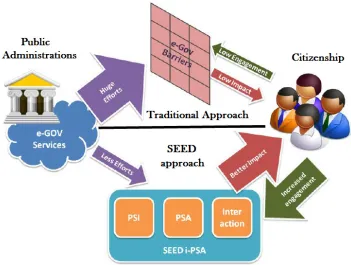
Figure 1 - SEED strategy to overcome e-Government barriers
Vol
u
me 2, Issue 2
, 2013
Figure 1 depicts the strategy that SEED follows in order to overcome the barriers that slow down the deployment of e-Government services in Europe. With less effort (mainly by reusing previous efforts already spent) it aims to achieve a larger impact on citizens and, in turn, to increase the engagement of citizens and Public Administrations in a constructive social dialogue. At the same time, the adoption of SEED i-PSA strategies even allows to empower the impact achieved and multiply the efficiency of those e-Government deployment efforts, generating savings to the Public Administration.
3. Facts in SEED partner Member States
Focusing specifically on the negative exogenous facts that can be identified individually per member state/SEED partner, for example, in countries like Cyprus and Romania, we realise that the level of sophistication of digital Government services between some beneficiaries and the EU average is very uneven, whereas in Bulgaria e-Government development is still in its initial stage and the take-up of services is relatively low, with low socio-economic groups still at risk of e-exclusion.
Vol
u
me 2, Issue
2
, 2013
businesses is welcomed. So, any positive experiences of public-private partnerships could be very useful and should be supported.
In Latvia many of the developed electronic services are not designed as user-centric.Even with SEED contributing to disseminating and making citizens aware of them, they lack the attractiveness necessary to be used by citizens.
Other negative factors that are common in all seven SEED participating member-states (Bulgaria, Cyprus, Croatia, Czech Republic, Latvia, Romania and Spain), include services that are not easy enough to be used in order to be accepted by a majority of citizens and especially by socially disadvantaged groups; citizens’ ignorance of existing services; unclear goals and guidelines in e-services; unclear long-term strategies in the development of Public Administrationelectronic services; broadband problems like uncovered areas or low speeds; technological scepticism, civil servants reluctance to change; self-training required by civil servants.
Nonetheless, there are also positive aspects that allow us to be optimistic about the deployment and the future of SEED. There are several pros for the SEED service deployment in the partner-countries that are mentioned in the remainder of this section.Most important is the backing of the European Commission to the amendment of Directive 2003/98/EC3 (on the reuse of public sector information, also known as the PSI Directive), that was formally approved on 10April 2013. Once into force, the Directive will boost the data market in Europe by making all the generally accessible public sector information available for reuse.
Developers, programmers, creative citizens and businesses will be able to get and reuse public sector data at zero or very low cost in most cases. They will also have access to more exciting and inspirational content since materials in national museums, libraries and archives now fall under the scope of the Directive. The reuse of public sector information is and will be, at least for a few years, a hot topic generating huge interest in all member-states.
In many European countries the provision of e-Government at a centralized level is promoted by governments, whereas at a local/regional level, this is done by the local authorities, whichin most cases are independent and autonomous organizations (such as municipalities and communes).Almost all municipalities and a large number of community councils maintain their own website and promote the electronic communication with citizens who can lodge complaints, report problems and recommendations electronically. Nevertheless, in many countries “face-to-face”communication is the traditional and still most common way to interact with public authorities. The means used for this interaction include phone calls and personal visits to the local authorities, and are limited to the time call centres and offices are open to the public. From their portals only one-way communication is supported and citizens can only retrieve limited information, and thereforethey are rarely used.
3European Commission.Commission welcomes Member States' endorsement of EU Open
Vol
u
me 2, Issue 2
, 2013
In Spain, a lot of “disaggregated” products can be found (such as digital certificates, digital signatures, content management systems), but an integral solution combining them is not offered. Thus, we can say that the PSI-PSA/e-Government market is still a highly fragmented one. All the partners report that several of the Regional Authorities are highly committed to deploying e-Government services that need to be filled with an adequate content to be of any use, and they are prepared to develop their own systems if no suitable commercial system is available. There are quickly changing socio-economic conditions creating demand for flexible services in public administration (something that still remains an exception). Moreover promotion and raising awareness of e-Government services is still an underdeveloped issue, which makes SEED an innovative approach.
The reduction of costs (per citizen) and administrative burden can be a big advantage in reaching citizens by reusing public spaces and facilities. Governments need to adapt and continuously evolve to create value. They need to stay relevant by being responsive to rapidly changing conditions and citizens’ expectations. Citizens are demanding more visibility on the allocation of public resources and challenging governments to be more efficient and equitable through accountability and transparency. Throughout this process, governments must stay coherent, which may prove to be the biggest challenge of all. SEED can be an ally to help achieve the objectives that current Public Administrations are forced to reach.
4. SEED application framework
Vol
u
me 2, Issue
2
, 2013
public stakeholders both. SEED’s future goes interlaced with the future of government that lies across networks that include government, business, NGOs and civil society at multiple scales and levels, from global institutions to large cities and small commune councils. In this fragmented market, SEED has a role to play and plenty of opportunities ahead. Locating the most effective nexus for particular activities and understanding how governance works in this new complex ecosystem are at the core of SEED priorities for the future of government. Governments need to adapt and continuously evolve to create value. They need to stay relevant by being responsive to rapidly changing conditions and citizens’ expectations. Citizens are demanding more visibility on the allocation of public resources and challenging governments to be more efficient and equitable through accountability and transparency. Throughout this process, governments must stay coherent, which may prove to be the biggest challenge of all. SEED can be an ally to help achieve the objectives that current Public Administrations are forced to reach. Summarizing, we could say that despite the currently unfavourable economic restrictions and the financial instability that can result in limited business interest for new services, this could be an opportunity n for SEED. With SEED (a solution based on the cloud) Public Administrations have an easy and affordable tool to increase the citizens’awareness of digital services availability, uncovering their potential and possibly, as a consequence, contributing to an increase in their use by citizens. SEED’s flexible and sensitive strategies towards the needs of public administrations can be offered to them as “very fast, very cheap and with little upfront investment” – which should result in being a very competitive alternative in a time of crisis.Public administrations across Europe are engaging in transformation processes, aiming at achieving a more efficient, effective, friendly, and citizen- and business-centric delivery of public services. This approach, also known as “Transformational Government”4, has become a driving force for innovation and reduction of the administrative burden in European public administration, taking advantage of the possibilities that the most recent technological developments have opened. The opportunities presented are enormous, but so are also the challenges to address in the implementation of such transformation processes.
SEED is but one answer to approaching administrations and citizens, effectively envisioning to act as a bridge between traditional social dialogue and modernized social dialogue. SEED enables the deployment of new channels of service delivery, making transactions with public administration more convenient for citizens, and contributes to making possible the redesign of services around the needs of citizens instead of around the needs of administrations. SEED e-Government solutions allow local, state and national governments to improve the quality and effectiveness of their communication with citizens, as well as between various government agencies and other governments. SEED gives to any public
4Shareef, Mahmud Akhter. et al. Transformational Government through eGov Practice:
Vol
u
me 2, Issue 2
, 2013
authority a flexible tool for blending priorities with available human and financial resources.
5. Benefits for Public Administrations
The main aim of SEED is to properly tackle the issue of raising the awareness of European citizens about useful e-Government contents and services previously invested by European Public Sectors, mainly by mixing cross-border services at European, national, regional and local levels. The results achieved so far whereSEED pilots were launched in seven member-states demonstrate, firstly, the multicultural acceptance of the idea and, secondly, the feasibility of supporting such a citizen-centred social dialogue empowered by previous municipal investments in e-Government services and in public digital nodes like internet-enabled TVs, info-kiosks and digital signage5.
It is therefore planned that the main benefit for public administrations would not be a direct income, but a set of combined socio-economic gains, not all of which can be monetized. However, speaking about benefits in a long-term perspective, it is necessary to stress the significance of more efficient e-services for better economic situation in the region and for overall cost savings. The use of SEED can bring benefits to the community such as:
1) Improvement of the communication between civil servants and citizens (multiple ICT channels available);
2) Cost-savings on staff costs due to more efficient services;
3) Higher awareness among citizens of the activities and initiatives organized by local councils;
4) Upgrade of the quality of the public services and the existing infrastructure;
5) Enhancement of decentralization and organizational flexibility;
6) Deeper impact among the population as a whole and especially among the typically excluded groups such as the elderly and people with disabilities; offer of inclusive services targeting citizens with disabilities; 7) Provision of deeper customization depending on the needs and special
circumstances of every customer;
8) Reuse of content (PSI), thus avoiding new investments;
9) “Giving a voice” to citizens. Enabling higher e-Participation especially in the evaluation of public services;
10) Their residents who will be informed with absolutely no charge for a wide range of topics and moreover- they will have the opportunity to express their opinions and suggestions and even criticisms, giving valuable feedback to the municipality in their effort to make SEED an essential tool towards the provision of quality and effective e-Government services;
5Neophytou, Haris, and NeofytosGerosavva.SEED Deliverable D5.3.1 Business Plans
Vol
u
me 2, Issue
2
, 2013
11) Improvement of the communication between civil servants and citizens (more channels available);
12) Cost-savings on personnel costs due to more efficient services;
13) Achieve higher awareness of the activities and initiatives organized by the local council;
14) Upgrade the quality of the public services and the existing infrastructure; 15) Achieve greater decentralization and organizational flexibility;
16) Provide a deeper customization depending on the needs and the special case of every customer.
Table 1 summarizes both the tangible and intangible benefits of SEED for Public Administrations.
Table 1 Tangible and intangible benefits of SEED for PAs
PUBLIC ADMINISTRATION
Municipality Civil Servants Economic Citizenship Political
A technological platform to promote inclusive e-services such as: employment, citizenship participation, e-government, multimedia, etc. Tools for ensuring better management services
Savings due to a cloud computing model of service provision Easier access to public services (friendlier interface, design for all, multi-channel capabilities) = DIGITAL INCLUSION The administration will be
recognized as an active booster of e-Inclusion policies in order to transfer the message to other municipalities
Lowcosts of implementation
Saving efforts due to the interoperable capacities of SEED. Reuse of information Reuse of previous investments (Kiosks, PCs, TVs) More services available with a citizen-centric perspective
Due to the fact that all services have an innovative aspect the administration can act as an innovation vehicle towards the transfer of knowledge to the other PAs Less effort
Vol
u
me 2, Issue 2
, 2013
A platform with multi-channel capabilities and multilingual features together with accessibility features Improving proximity between civil servants and citizens (more channels available) Moving towards “green” organizations (digital instead of paper) Higher awareness of the activities and initiatives organized by the PA The administration will increase the use of their previous IT projects through the interoperable web-services built in SEED and moreover can proceed to joined solutions Reusing previous investments in hardware (kiosks, public PCs, etc). Better reports about the use of public services and a way to justify job tasks. Reuse of content (data)avoiding new investments Promotion of e-Participation. “Giving voice” to citizens. Higher participation in the evaluation of public services.
Being a more efficient organization overall
6. Conclusions
Amidst the current European debt crisis and the public sector budget cuts6, the SEED project aims to provide a completely novel approach to traditional politics, which is meant to change the way public administrations communicate with citizens and promote social dialogue in a smarter, ICT-empowered, more efficient and economical way. Simultaneously, SEED – basedon a continuous and sincere democratic debate – will help public administrations to re-establish a new citizen-base. Citizens will be informed on a wide range of topics and, moreover, they will have the opportunity to freely express their opinions, suggestions and even criticisms, giving valuable feedback to the administration. Therefore, SEED will be an essential tool towards raising citizen awareness about existing e-Government services.
WORKS CITED
SEEDDescription of Work.CIP-ICT-PSP.2011.4.1 Project Reference #297192. 2011. Print.
European Commission.Commission welcomes Member States’ endorsement of EU Open Data rules.Brussels: European Commission. 10 April 2013. Web.25 November 2013.
6 Blundell-Wignall, Adrian, and Patrick Slovik.“A Market Perspective on the European
Vol
u
me 2, Issue
2
, 2013
Shareef, Mahmud Akhter. et al.Transformational Government through eGov Practice: Socioeconomic, Cultural, and Technological Issues.Bingley: Emerald Group Publishing Limited, 2013. Print.
Neophytou, Haris, and NeofytosGerosavva.SEED Deliverable D5.3.1 Business Plans Production.CIP-ICT-PSP.2011.4.1 Project Reference #297192.2013. Print.