verifying the correctness of performing
low-invasive esthetic medical procedures
Koprowski
et al.
R E S E A R C H
Open Access
Image analysis and processing methods in
verifying the correctness of performing
low-invasive esthetic medical procedures
Robert Koprowski
1*, Slawomir Wilczy
ń
ski
2, Arkadiusz Samojedny
2, Zygmunt Wróbel
1and Anna Deda
3* Correspondence: [email protected] 1Department of Biomedical
Computer Systems, Faculty of Computer Science and Materials Science, University of Silesia, ul. Będzińska 39, 41-200, Sosnowiec, Poland
Full list of author information is available at the end of the article
Abstract
Background:Efficacy and safety of various treatments using fractional laser or radiofrequency depend, to a large extent, on precise movement of equipment head across the patient’s skin. In addition, they both depend on uniform distribution of emitted pulses throughout the treated skin area. The pulses should be closely adjacent but they should not overlap. Pulse overlapping results in amplification of irradiation dose and carries the danger of unwanted effects.
Methods:Images obtained in infrared mode (Flir SC5200 thermovision camera equipped with photon detector) were entered into Matlab environment. Thermal changes in the skin were forced by CO2RE laser. Proposed image analysis and
processing methods enable automatic recognition of CO2RE laser sites of action,
making possible to assess the correctness of performed cosmetic procedures. Results:80 images were acquired and analyzed. Regions of interest (ROI) for the entire treatment field were determined automatically. In accordance with the proposed algorithm, laser-irradiatedLiareas (ROI) were determined for the treatment area. On this basis, error values were calculated and expressed as percentage of area not covered by any irradiation dose (δo) and as percentage area which received double dose (δz). The respective values for the analyzed images wereδo=17.87 ±10.5% andδz=1.97±1.5%, respectively.
Conclusions:The presented method of verifying the correctness of performing low-invasive esthetic medical (cosmetic) procedures has proved itself numerous times in practice. Advantages of the method include: automatic determination of coverage error valuesδoandδz,non-invasive, sterile and remote-controlled
thermovisual mode of measurements, and possibility of assessing dynamics of patient’s skin temperature changes.
Keywords:Image processing, Esthetic medical procedures, Laser, Fully automatic
Background
Esthetic medicine market is among the most dynamically developing sectors of indus-try across the world. Especially popular prove treatments that are low-invasive. According to the American Society of Plastic Surgeons, in the USA alone 13.8 million of low-invasive procedures were performed in 2011, at the estimated value of ca. USD 12.2 billion. Considering trends in population demographics in both developed and de-veloping countries, the tendency of low-invasive esthetic medical procedures to grow
in popularity will likely become more dynamic. Owing to the new developments in the medical equipment market it has now become possible to obtain satisfactory results of esthetic medicine procedures, together with a relatively low treatment invasiveness which also means shorter recovery time. Such minimum invasiveness, modest intensity of adverse side effects, coupled with satisfactory effects of treatment is possible, how-ever, only after optimizing procedure parameters.
Action of fractional lasers causes focal ablation of epidermis, whereas radiofrequency-based procedures result in local overheating of both epidermis and corium. At tissue level these agents cause remodeling of collagen fibers and stimulate epidermal regener-ation [1-7].
Energy of laser radiation or radiofrequency energy is delivered to patient’s skin in the form of pulses which affect a definite tissue area. Efficacy and safety of treatment using a fractional laser or radiofrequency depend, to a great extent, on precise movement of the therapeutic equipment head across the patient’s skin [8]. In addition, they both de-pend on uniform distribution of emitted pulses throughout the treated skin area. The pulses should be closely adjacent but they should not overlap [8,9]. Pulse overlapping results in dose amplification and carries the danger of undesired effects [7] and [10].
Known methods for monitoring the efficiency and safety of laser esthetic procedures include optoacoustic [11,12] and optodynamic methods [13]. They are based on using high-sensitivity cameras (detectors) that allow imaging fluorescence phenomena in real time, as well as measuring fluorescence intensity while performing concomitant spec-tral analysis. Use of these methods has its limitations due to, for example, speed of image acquisition or impossibility of treating the patient in a totally uninvasive manner with increased positioning distances.
In the presented study we aimed to verify the correctness of performing laser-mediated esthetical medical procedures. This was achieved based on automatic calculation of the degree of coverage of the treated area by CO2RE laser-sent pulses. The study was performed using the proposed method of analyzing images obtained in infrared mode.
Materials
or air conditioning, solar irradiation, radiators, etc.) and securing time necessary to acclimatize a patient in such room (typically half an hour). This is an essential require-ment for the majority of thermovisual measurememts.
After minimizing errors due to these causes we carried out measurements according to the methodology presented below.
Method
Infrared images generated by a thermal scanning camera (Flir SC5200) equipped with photon detector were entered into Matlab environment. The camera has indium antimo-nide (InSb) detector, with 3–5μm spectral range, 320×256 pixel resolution and 30×30μm pixel pitch. Thermal changes in patient’s skin were induced by CO2RE laser (CO2type– 10600 nm wave-length, pulsed laser beam emission mode, 4.5 J/cm2energy density, 1– 150 mJ impulse energy, 16.7 kHz impulse frequency, 20–3000 μs impulse duration, 10 mm2maximum scanned area, 120μm or 150μm dot size) [6,14-16].
Application of individual irradiation doses and, thus, induction of thermal changes, was performed manually, by sequentially applying the equipment head to patient’s face. The irradiation procedure was performed by an expert physician who attempted to cover as much as feasible of the whole analyzed area [15]. Synchronization of laser trig-gering and image acquisition had been programmed. Synchronization error due to op-erating system delay, data transmission timing and number of stills per second did not exceed 0.1 second. The thermal scanning equipment was positioned during the proced-ure at ca. 30 cm from patient’s face.
Preprocessing
Input image L(m,n) (where m denotes rows and n denotes columns) at 320×256 pixels, following an increase in resolution toM×N=480×640 pixels, was filtered using a median filter with h mask dimensions Mh×Nh=3×3. Increase of image resolution was achieved
using the nearest neighbor method, avoiding thus new pixel values [17-19]. The generated image LMED was subjected to processing aimed at detecting regions of interest (ROI).
Automatic ROI detection denotes a phase in the image analysis and processing, during which assignment of skin area receiving irradiation dose takes place. This method should work correctly in analyzing temperature changes in areas subjected to therapeutic proced-ure. Due to close relationship between forcing of temperature change and time of skin temperature reaction onset, this process was followed in more detail.
few seconds, however, skin temperature remains elevated by 2.5°C with respect to temperature before treatment. Before the procedure temperature of the involved skin area was 33°C. In all examined patients this state of elevated temperature lasted for no less than 20 minutes. Areas of equipment head application are still visible within that time. They are square areasLi, in agreement with array shape. Based on these experiments it was
con-cluded that for several minutes after procedure conclusion this shape is identical with the area subjected to forcing. The analysis should thus be performed no later than a few mi-nutes after the treatment and no sooner than 10 seconds following the last irradiation dose. By fulfilling these criteria one minimizes a dynamic error linked to human thermo-regulation process. Here, it is linked with changes of human skin response to forcing and, more precisely, with duration of CO2RE laser treatment in successive spots (Figure 4).
By taking into account these limitations, detection of ROI in the treatment area is un-usually simple, due to well visible temperature changes in thermovisual images. Auto-matic detection of these regions (Li) uses morphological operations with the structural
element SE. Morphological opening operation LO causes globalization of image
fea-tures, in this case ROI.
LO¼ maxSEðminSEðLMEDÞÞ ð1Þ
It is characterized by highest temperature within the image. Accordingly, the image LU can be binarized by using a constant threshold pr that takes into account patient’s
skin temperature before the procedure:
LBðm;nÞ ¼LUðm;nÞ>pr ð2Þ
where:
LUðm;nÞ ¼jLOðm;nÞ−LMEDðm;nÞj ð3Þ
Binarization (LB) may result also in other smaller areas. Removal of smaller,
errone-ously indicated areas was achieved by labeling procedure (marking of clusters). The Figure 1Pictorial scheme of applying the forcing procedure and placement of thermovision
camera with respect to patient’s body (left) and corresponding thermovisual image (right).The
Figure 2Patient’s skin temperature changes as function of time elapsed.Point forcing was applied (at
t=0) in the form of a CO2RE laser pulse. Subsequent data points represent average values from the forcing
area (2×2 pixels). Figure shows speed of human skin reaction upon pulse forcing–a single microbeam. Laser irradiation creates cone shaped laser channels–the so-called microscopic ablation zones (MAZ). MAZs are lined by a thin layer of coagulated tissue, together constituting the microscopic treatment zones (MTZ). The reaction on laser radiation - MTZ dimensions - differs at various distancesrfrom forcing axis center.
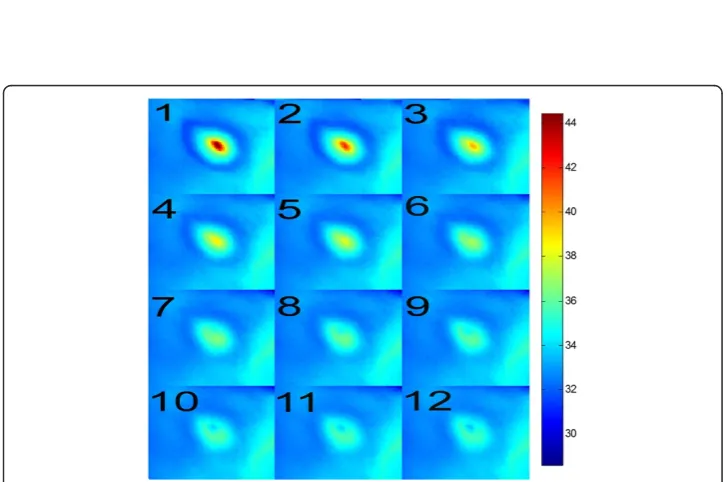
Figure 3Sequence of thermovisual images showing temperature changes at 1-sec intervals,
reflecting reaction to forcing (CO2RE laser pulse) in the 2x2 pixel area at the center of the image.
Time measured from initiated forcing ranged from 1 to 12 seconds. During ablative fractional resurfacing treatment, microscopic pieces of skin are vaporized, and a thermal deposit occurs in the dermis. The efficacy and safety of laser treatment is related to the density of superficial microtissue elimination and the thermal deposit left in the dermis. The CO2(CO2RE) laser has a high absorption coefficient for tissue water
largest cluster (area) was then chosen. In all of the acquired thermovisual images this area was indicated correctly. This area (ROI) and LRimage created on its basis were
the subject of subsequent analysis.
Algorithm
The block structure of the created algorithm is shown in Figure 5. Input imageLR
com-prising the measured area was analyzed using Canny edge analysis. As a result, edges of the square areas (LC) of forcing were obtained. Assuming a uniform application of
CO2RE laser head to the patient’s body by expert equipment operator, Liareas do not
undergo rotation. Accordingly, the next stage of analysis involved detection of angle at which all square areasLiare found on patient’s body (Figures 6 and 7). To do this, edge
imagesLCwere subjected to operations of Radon transformLV(Figure 8):
LVðn0;αÞ ¼∑m0LCðround nð 0cosð Þ−α m0sinð Þα Þ;round nð 0sinð Þ−α m0cosð ÞαÞÞ ð4Þ
where:
n0 m0
¼ −cosð Þα sinð Þα sinð Þα cosð Þα
n
m ð5Þ
As a result, position of all areas Li rotated on patient’s skin by angle was equalized.
Radon transform can be replaced with Hough transform. At this stage, reconstruction of particular square areas is not essential except for determining one parameter angle α*. The dimensions and location ofLiarea is known; onlyα* angle is unknown. In extreme
cases, it is sufficient to determine the maximum from the sum of values for particular rows of the revolving image ofLcedge. Position ofLiareas is detected onLOimage
gener-ated in this way. Detection of Li areas was carried out using watershed segmentation
Figure 5Flow chart of the two-stage algorithm automatically recognizing ROI andLiareas.At the first stage skin area affected by the treatment procedure is segmented (ROI). At the second stage, individual
Liareas are segmented and their position is approximated by a square area. In consequence, percentage values of areas non-covered by laser treatment and areas with overlapping irradiation dose can be calculated.
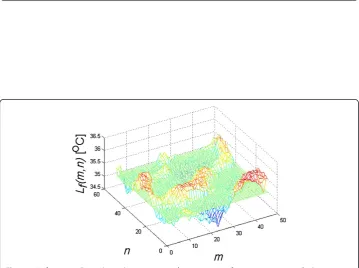
Figure 6Lffragment (input image) temperature changes at 60 s from treatment conclusion.Apex values represent temperatures higher than those before treatment, while valleys show lower temperatures, respectively. In order to avoid pulse stacking, it is important to know the structure of the beam of a typical CO2laser. Since the distribution of fluences within the laser beam is Gaussian, or bell-shaped, there is a
method. Segmentation is implemented on an image subjected to elimination of constant temperature component. Here, binarization with a set threshold did not yield satisfactory results. Figure 9 showsδo error value changes as a function of binarization thresholdpr
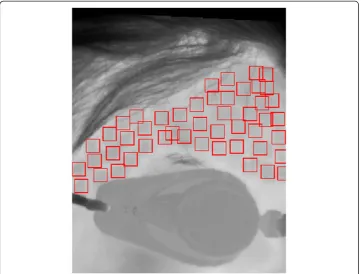
chosen [20]. As seen from the graph, the percentage value of irradiation-free areas is al-most linearly dependent on binarization threshold [20-23]. It is not thus possible to state unequivocally which among the chosen binarization thresholds is correct. Following initial segmentation, each area has an assigned center of gravity and is approximated by a rect-angular area. Some examples of the results obtained are shown in Figure 10. The process thus consists of separately recognizing each Li area [24], [25]. As authors’goal was to
evaluate the correctness of the examined procedures, only percentage values of surface areas not receiving treatment and areas with overlapping treatment were calculated. For gap areas lying in betweenLiareas percentage values ofδoerror were calculated as a total
number of pixels in LR areas subjected to forcing, with respect to the total number of
pixels in uncovered areas (Figure 11):
δO¼∑m∑nLRðm;nÞ−∑∑i∑m∑nLiðm;nÞ−∑m∑nLZðm;nÞ m∑nLRðm;nÞ ⋅
100% ð6Þ
where Lzis a matrix containing “1” in places whereLiareas superimpose and ”0”in the
remaining places.
δzerror was defined as a percentage value of overlapping areas with respect to the
wholeLRarea (Figure 11):
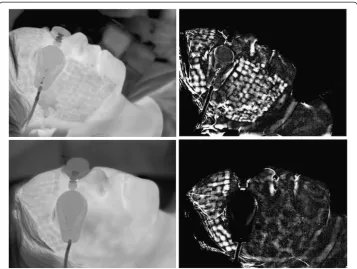
Figure 7Intermediate results obtained using the algorithm that automatically recognizes ROI and
skin areas subjected to laser intervention.Right column shows input imagesLwhile left column shows
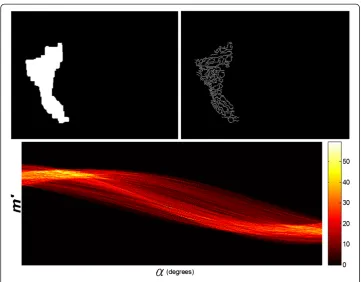
Figure 8Final results obtained using the algorithm automatically analyzing unevenness of
subsequent irradiations during procedure performance.Shown are:LRimage with marked ROI (upper
left),Lcimage with edges determined by Canny method (upper right) and the result of Radon transformLV (n’,α) obtained forLcimage (center below).
δZ¼∑∑m∑nLZðm;nÞ m∑nLZðm;nÞ⋅
100% ð7Þ
Interpretation of errorsδoandδzdefined in this way is straightforward. It defines
cor-rectness of the performed procedure (forcing). Increased value ofδomeans that the
op-erator did not drive the laser head uniformly, leaving untreated areas. This is not harmful to the patient but requires additional corrective treatment. On the other hand, increased values of δzerror indicate harm, as patient receives in these areas a double
dose of irradiation.
Practical use of this algorithm is demonstrated in the next section.
Results
ROI for the whole treatment region were determined automatically for all of the 80 an-alyzed images. Next, in accordance with the algorithm given, values of δoandδzerrors
were calculated. The obtained results are shown in Figure 12. For low values of δothe
graph confirms the correlation between values ofδoand δzerrors. This means that the
operator attempting to fill out the whole treated area causes overlapping of irradiation doses. Mean and standard deviation of the mean for individual errors is δo=17.87±
10.5% andδz=1.97±1.5%. The error committed by an expert operator pertains primarily
Figure 10The result of applying the algorithm.It automatically recognizes areas subjected to forcing and marks them in red. This makes possible to calculate errors due to the presence of irradiation-overlapping, as well as irradiation-free areas. The evaluation of these areas is critical from a clinical point of view; stacking or overlapping of pulses, and/or excessive number of laser passes all may result in excessive tissue damage. Repeated CO2laser passes will dehydrate and coagulate dermis, which subsequently limits
to omission of small areas (large value ofδoerror). Errors resulting from overlapping of
adjacentLiareas are small, with single-digit percentage values.
Determination ofδoandδzerrors is affected also by other elements specific for the
algo-rithm itself or/and for procedure methodology. These elements include: 1) error due to camera placement with respect to patient’s skin, 2) error due to non-perpendicular place-ment of laser head with respect to patient’s skin during the procedure of applying
Figure 11Image showing irradiation-free and irradiation-overlapping areas.These images form the basis for calculatingδoandδzerror values. The sum of pixel values seen in the images is calculated with respect to the total sum of pixels in the whole analyzed ROI. Imaging free and irradiation-overlapping areas allows to recognize early the critical areas and treat them promptly to avoid permanent sequelae. Although there are individual differences with respect to propensity to side effects, most adverse reactions seen after laser resurfacing appear to be a result of improper treatment technique.
Figure 12Changes inδoandδzerror values for successive cases analyzed.It can be seen that substantially more errors are due to incomplete laser treatment area coverage than to
irradiation dose, 3) local disturbances in skin thermoregulation, 4) presence of perspir-ation, 5) interference such as, e. g., patient’s hair falling accidentally onto forehead during the procedure.
In practice, the last two elements predominate: one is caused by skin reaction to temperature and the other by improperly secured hair.
The obtained results as well asδoandδzerror values are affected by personal habits of
the operator (technician). It has been noticed that these error values strongly depend on in-dividual habits of the technician and, only to a lesser degree, on the shape of facial area subjected to treatment. Differences inδoandδzerror values for two technicians may vary
in a broad range. Due to this reason an automated system of laser triggering has been pro-posed. The system is based on tracking in visible light the skin areas subjected to treatment (a CCD camera is placed in the laser head). Treated skin areas are memorized using visible light. Following manual relocation (in any direction) of the laser head by a fixed distance, the laser is automatically triggered. Such a system allows minimizing values ofδoandδz
er-rors. In addition, these errors stay independent of the individual habits of an operator. The system is patent-protected [26] and shall be described in detail in future papers.
Comparison of results with other methods
Contemporary generation of lasers do not offer yet a qualitative analysis of procedures performed using them. It is assumed that an expert laser operator performs the cosmetic procedure correctly, without causing overlapping of irradiation doses. Various practical methods allowing laser beam control and visible image analysis have been reported to date, especially in patent claim literature [27]. Also known have been descriptions of visualization methods using visible light and accomplished by various types of cameras placed, e. g., in laser head [28]. None of these solutions offers, however, analysis of the cor-rectness of procedures performed with laser equipment. Neither temperature fields nor their degree of homogeneity have been assessed. In only a few reports temperature fields and their distribution within the skin were analyzed e. g. [29-31]. In the model proposed by Frahm et al. [29], model simulations of superficial temperature correlated with the measured skin surface temperature (ρ>0.90,p<0.001). Reported were studies comparing three Infrared Thermal Detection Systems. In this case correlations between ITDS and oral temperatures were similar for OptoTherm (ρ=0.43) and FLIR (ρ=0.42), but signifi-cantly lower for Wahl (ρ=0.14,p<0.001). Among numerous references pertaining to appli-cation of thermovision in medicine only a few e. g. [30-38] have dealt with quantitative (not qualitative) measurements. As an example, Bagavathiappan et al. [33] reported a temperature difference of 0.7–1°C as statistically significant. Based on this one can con-clude that thermovisual analysis of human skin does require taking into account numer-ous factors which interfere with measurement. In the case of the algorithm presented herein only a minute skin fragment is analyzed. An expert laser operator has full control over this fragment, and is capable of minimizing the effect of additional factors to a negli-gible level.
Conclusions
automatic determination of δo and δzerror values, 2) non-invasive sterile and
remote-controlled thermovisual measurements, 3) possibility of learning how to assess procedure correctness through training, 4) assessment of dynamics of patient’s skin temperature changes, and 5) assessment of correct choice of irradiation dose, treatment length and in-dividual equipment setting.
The described method has been currently used in esthetic medical procedures performed at the Silesian Medical College in Katowice, Poland.
Competing interests
The authors declare that they have no competing interests.
Authors' contributions
RK and SW suggested the algorithm for image analysis and processing, implemented it and analyzed 80 images. ZW, AD and AS evaluated the obtained results. All authors have read and approved the final manuscript.
Acknowledgements
No outside funding was received for this study.
Author details
1Department of Biomedical Computer Systems, Faculty of Computer Science and Materials Science, University of
Silesia, ul.Będzińska 39, 41-200, Sosnowiec, Poland.2Department of Cosmetology, Katowice School of Economics, ul. Harcerzy-Wrzesnia 3, 40-659, Katowice, Poland.3Woman’s corner, ul. Moniuszki 59, 41-400, Mysłowice, Poland.
Received: 5 April 2013 Accepted: 5 June 2013 Published: 9 June 2013
References
1. Adrian RM:Pulsed carbon dioxide and long pulse 10–ms erbium-YAG laser resurfacing: a comparative clinical and histological study.J Cutan Laser Ther1999,1:197–202.
2. Fitzpatrick RE, Rostan EF, Marchell N:Collagen tightening by carbon dioxide versus erbium:YAG laser.Lasers Surg Med2000,27:395–403.
3. Horton S, Alster TS:Preoperative and postoperative considerations for carbon dioxide laser resurfacing.Cutis
1999,64:399–406.
4. Ross EV, Sajben FP, Hsia J, Barnette D, Miller CH, McKinlay JR:Non ablative skin remodeling: selective dermal heating with mid-infrared laser and contact cooling combination.Lasers Surg Med2000,26:186–195. 5. Koch RJ:Radiofrequency non-ablative tissue tightening.Facial Plast Surg Clin North Am2004,12(3):339–346. 6. Abraham MT, Ross EV:Current concepts in nonablative radiofrequency rejuvenation of the lower face and
neck.Facial Plast Surg2005,21(1):65–73.
7. Carroll L, Humphreys TR:Laser tissue interactions.Clin Dermatol2006,24:2–7.
8. Manuskiatti W, Triwongwaranat D, Varothai S, Eimpunth S, Wanitphakdeedecha R:Efficacy and safety of carbon-dioxide ablative fractional resurfacing device for treatment of atrophic acne scars in.J Am Acad Dermatol
2009,63(2):274–283.
9. Steiner R:New laser technology and future applications.Med Laser Appl2006,21:131–140.
10. Alexiades-Armenakas MR, Dover JS, Arndt KA:The spectrum of laser skin resurfacing: Nonablative, fractional and ablative resurfacing.J Am Acad Dermatol2008,58(5):719–737.
11. Buehler A, Kacprowicz M, Taruttis A, Ntziachristos V:Real-time handheld multispectral optoacoustic imaging.
Opt Lett2013,38(9):1404–1406.
12. Ntziachristos V:Clinical translation of optical and optoacoustic imaging.Philos Trans A Math Phys Eng Sci2011,
369(1955):4666–4678.
13. CencičB, Grad L, Možina J, Jezeršek M:Optodynamic monitoring of laser tattoo removal.J Biomed Opt2012,
17(4):047003.
14. Foster KR, Zhang H, Osepchuk JM:Thermal response of tissues to millimeter waves: implications for setting exposure guidelines.Health Phys2010,99(6):806–810.
15. Foster KR:Thermographic detection of breast cancer.IEEE Eng Med Biol Mag1998,17(6):10.
16. Foster KR, Morrissey JJ:Thermal aspects of exposure to radiofrequency energy: Report of a workshop.Int J Hyperthermia2011,27(4):307–319.
17. Korzyńska A, Hoppe A, Strojny W, Wertheim D:Investigation of a combined texture and contour method for segmentation of light microscopy cell images.InProceedings of The Second IASTED International Conference on Biomedical Engineering; 2004:234–239.
18. Gonzalez RC, Woods RE:Digital Image Processing Using Matlab.InPrentice Hall: Printed in United States of America; 2008.
19. Koprowski R, Wojaczynska-Stanek K, Wrobel Z:Automatic segmentation of characteristic areas of the human head on thermographic images.Machine Graphics and Vision2007,16(3–4):251–274.
20. Otsu N:A threshold selection method from gray-level histograms.IEEE Trans Sys Man Cyber1979,9(1):62–66. 21. Porwik P, Wróbel K, Doroz R:The Polish Coins Denomination Counting by Using Oriented Circular Hough
Transform.Advances in Intelligent and Soft Computing2009,57:569–576.
23. Wróbel K, Doroz R:The new method of signature recognition based on least squares contour alignment.In
International Conference On Biometrics And Kansei Engineering; 2009:80–83.
24. Sonka M, Michael Fitzpatrick J:Medical Image Processing and Analysis.InHandbook of Medical Imaging.
Belligham: SPIE; 2000.
25. Koprowski R, Wróbel Z:Image Processing in Optical Coherence Tomography Using Matlab.Katowice, Poland: University of Silesia; 2011. http://www.ncbi.nlm.nih.gov/books/NBK97169/.
26. Koprowski R, Wróbel Z, Wilczyński S:A system to help performing low-invasive aesthetic medical procedures. InUrząd Patentowy Rzeczypospolitej Polskiej; 2012. Patent number P-398896 (submission date 20.04.2012). 27. Wynne JJ, Gomory SH, Felsensteln JM:Laser dermablator and dermablation.InUnited States Patent; 2000. Patent
Number 6,165,170, Date of Patent Dec. 26, 2000.
28. Altshuler GB, O’Shea L, Lazanicka OM:Dermatological treatment with visualization.InUnited States Patent; 2007. Patent Number 7,220,254 B2, Date of Patent May. 22, 2007.
29. Frahm KS, Andersen OK, Arendt-Nielsen L, Mørch CD:Spatial temperature distribution in human hairy and glabrous skin after infrared CO2laser radiation.Biomed Eng Online2010,9:69.
30. Vogel A, Dlugos C, Nuffer R, Birngruber R:Optical properties of human sclera, and their consequences for transscleral laser applications.Lasers Surg Med1991,11(4):331–340.
31. Yeo C, Son T, Park J, Lee YH, Kwon K, Nelson JS, Jung B:Development of compression-controlled low-level laser probe system: towards clinical application.Lasers Med Sci2010,25(5):699–704.
32. Nguyen AV, Cohen NJ, Lipman H, Brown CM, Molinari NA, Jackson WL, Kirking H, Szymanowski P, Wilson TW, Salhi BA, Roberts RR, Stryker DW, Fishbein DB:Comparison of 3 Infrared Thermal Detection Systems and Self-Report for Mass Fever Screening.Emerg Infect Dis2010,16(11):1710–1717.
33. Bagavathiappan S, Saravanan T, Philip J, Jayakumar T, Raj B, Karunanithi R, Panicker TMR, Korath MP, Jagadeesan K:
Infrared thermal imaging for detection of peripheral vascular disorders.J Med Phys2009,34(1):43–47. 34. Herry CL, Frize M:Quantitative assessment of pain-related thermal dysfunction through clinical digital infrared
thermal imaging.Biomed Eng Online2004,3:19.
35. Bichinho GL, Gariba MA, Sanches IJ, Gamba HR, Cruz FPF, Nohama PN:A Computer Tool for the Fusion and Visualization of Thermal and Magnetic Resonance Images.J Digit Imaging2009,22(5):527–534.
36. Jones BF:A reappraisal of the use of infrared thermal image analysis in medicine.IEEE Trans Med Imag1998,
17(6):1019–1027.
37. Jones BF, Plassmann P:Digital infrared thermal imaging of human skin.IEEE Eng Med Biol Mag2002,21(6):41–48. 38. Brioschi ML, Macedo JF, Macedo RAC:Skin thermometry: new concepts.J Vasc Br2003,2(2):151–160.
doi:10.1186/1475-925X-12-51
Cite this article as:Koprowskiet al.:Image analysis and processing methods in verifying the correctness of performing low-invasive esthetic medical procedures.BioMedical Engineering OnLine201312:51.
Submit your next manuscript to BioMed Central and take full advantage of:
• Convenient online submission
• Thorough peer review
• No space constraints or color figure charges
• Immediate publication on acceptance
• Inclusion in PubMed, CAS, Scopus and Google Scholar
• Research which is freely available for redistribution