WEB COPY '''
MANAGEMENT
OF
FARM IRRIGATION
SYSTEMS
Edited by
Glenn J. Hoffman
Terry A. Howell
Kenneth H. Solomon
An ASAE Monograph published by
The American Society of Agricultural Engineers 2950 Niles Road
St. Joseph, MI 49085-9659
Pamela DeVore-Hansen, Editor Technical Publications
chapter
23
SOIL MANAGEMENT
23.1 Introduction 873
23.2 Inadequate Infiltration 874 23.3 Excessive Infiltration 878 23.4 Infiltration Variability 881 23.5 Inadequate Water Storage 884
23.6 Aeration 885
23.7 Soil Crusts 887
23.8 Soil Temperature 889
23.9 Erosion 890
23.10 Research Needs 893
23
SOIL MANAGEMENT
T. J. Trout (USDA-ARS, Soil and Water Management Research, Kimberly, ID)
R. E. Sojka (USDA-ARS, Soil and Water Management Research, Kimberly, ID)
L. I. Okafor (Abubaker Tafawa Balewa University, Bauchi, Nigeria)
23.1 INTRODUCTION
The soil meets several requirements for the growth of agricultural crops. It provides an environment in which seeds can germinate. It is the medium into which roots grow both to anchor the plant and to gain access to water and nutrients. It stores water and nutrients and accommodates their movement to plant roots. It accommodates movement of oxygen to plant roots and carbon dioxide from roots. To perform these functions without limiting yield, the soil must be able to absorb and store adequate plant-available water, allow adequate air movement to the roots, and not restrict seed germination, seedling emergence, and root growth.
Sustainable agriculture requires not only competitive yields but also competitive production costs and conservation of limited resources. Thus, cOnstraints to production include not only conditions which decrease production, but also those which increase costs or deplete resources. Water is often a limited resource in irrigated agriculture. The systems, energy, and labor required for irrigation are substantial production costs. Soils which absorb water rapidly or slowly, or store only limited quantities often increase the costs or decrease the efficiency of irrigation. Soil is also a limited resource. Soils which erode easily impact the selection and management of irrigation systems. Thus, soil management is aimed not only at providing the best possible environment for crop production but also to minimize production costs and resource depletion.
874 MANAGEMENT OF FARM IRRIGATION SYSTEMS
23.2 INADEQUATE INFILTRATION
The soil must absorb adequate water during irrigation to meet crop water requirements between irrigations. Water absorption depends on the soil, the irrigation system and the system's management. Soils which absorb water slowly constrain the irrigation process by requiring low application rates to avoid water wastage (redistribution and runoff) and long application times or short irrigation intervals to maintain adequate soil moisture.
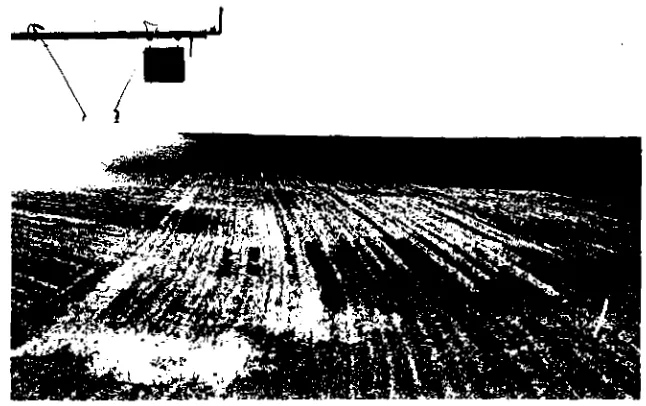
Low infiltration is most commonly a constraint with sprinkler irrigation. When sprinkler application rates exceed infiltration rates, water ponds and redistributes on the soil surface (Figure 23.1) which results in reduced application uniformity, runoff losses, and soil erosion. Reducing application rates to avoid these problems usually increases sprinkler system costs because the supply rate required to meet crop water use must be applied across a larger wetted area.
Adequate surface irrigation of soils with low infiltration capacity is usually possible. Low infiltration allows rapid advance of surface flows and uniform infiltration opportunity times. However, long application time can occasionally create aeration problems (see Section 23.6) and frequent irrigation increases labor costs of non-mechanized systems. With level basin irrigation, the long ponding time can damage some crops in some climates (Donovan and Meek, 1983). Very low infiltration rates can even cause drip applied irrigation water to pond on the surface and redistribute or increase evaporation losses (Burt and Ruehr, 1979). Low infiltration has been identified as a major problem
SOIL MANAGEMENT 875
for crop production in California (Singer and Oster, 1984).
23.2.1 Causes
Low soil infiltration capacity (infiltrability) is generally the result of low soil permeability caused by a lack of continuous secondary pores and the presence of sufficient fine soil particles to limit primary pore sizes. Secondary or macropores are created by processes such as soil shrinking (cracking), frost heaving, soil organism activity (earthworm and insect burrowing), root growth and decay, and mechanical forces applied to the soil such as tillage. Soil with a large quantity of macropores is said to have good structure. Macropores are destroyed by mechanical forces such as tillage and equipment wheel compaction, hydraulic forces such as water drop impact and the shear force of overland flow, chemical forces between charged particles, and gravity forces on weakened soil particle bonds. Water movement on the soil surface and through the profile and mechanical disturbance can redistribute and reorient fine particles filling secondary and large primary pores and resulting in layers with very small pores.
The strength or stability of the soil aggregates determines how easily the structure breaks down. Structural stability varies from soil-to-soil (related primarily to texture, mineralogy, adsorbed ions, and organic matter content) and with water content and the elapsed time since the soil particle bonds were last broken (Kemper et al., 1987; Bullock et al., 1988; Lehrsch et at, 1990). Consequently, the soil, the applied force, time, and soil water content all affect soil structural changes.
Low permeability soil layers which limit infiltration can occur at different depths in the profile (Singer and Oster, 1984). They are usually dense and may be cemented and result from either natural soil forming processes or farming activities. Cemented subsoil layers are common in arid-climate soils. Compaction from tillage or harvesting operations create dense layers below tillage depth (Voorhees et al., 1986). Water drop impact or overland water flow can create surface seals.
The permeability of soil layers depends on their texture, density, mineralogy, chemistry, and how they formed. Clay-sized particles are often platy and, if adequate in quantity to fill voids between larger particles (>30%) and deposited in a horizontal orientation, they can cause very low permeability. Adsorbed ions strongly affect the structure of some clay minerals. The prevalence of monovalent ions such as sodium causes dispersion when the soil is wetted. Management of sodium and other salt ion levels in the soil is discussed in Chapter 18.
23.2.2 Management Strategies
876 MANAGEMENT OF FARM IRRIGATION SYSTEMS
altering the practice that created the problem. Remedial action is often required to improve existing conditions.
Reduce or control tillage and equipment traffic to decrease the formation of dense tillage pans and compaction of the tillage layer. This includes minimizing the number and weight of equipment passes and managing the location and timing of passes.
Till deeply to rupture tillage pans or other impermeable sub-surface layers. Duration of the benefit depends on the soil and type of pan and subsequent tillage practices. Rupturing naturally occurring cemented layers or intermixing stratified fine- and coarse-textured layers can provide long-term benefits (Musick et al., 1981; Kaddah, 1976). Tillage pans can reform quickly unless practices which formed them are changed.
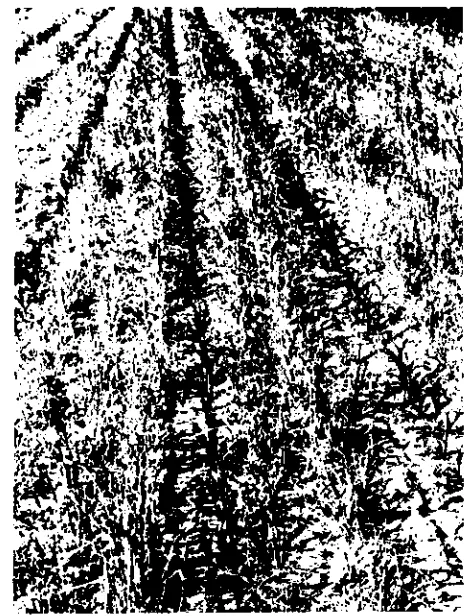
Reduce sprinkler water drop energy which destroys surface structure and seals the soil surface by decreasing drop size and fall height (i.e., by using spray heads on drop tubes) (Thompson and James, 1985; Kohl at al., 1985). Protect soil surface aggregates from water drop impact and the shear forces of overland flow with live plants or residues from previous crops left on the surface (Figure 23.2). Shallow incorporated residue provides flow paths for infiltrating water and food for burrowing earthworms at the surface (Ehlers, 1975). Reduce tillage to leave existing pores, such as burrows and decayed root channels, intact. Reduced tillage, especially if accompanied by reduced traffic and increased surface residues, usually results in increased infiltration (Eisenhauer et al., 1982). Tillage of the soil surface breaks up surface seals although seals may reform quickly on bare surfaces.
Reduce the susceptibility of soil to structural disintegration by improving its stability through increasing the organic matter content or decreasing the proportion of monovalent ions (primarily sodium) in the soil. Chemical soil stabilizers such as polyacrylamide are effective, but not currently economical for most field-crop use. Allow more time before tillage operations after soil thawing and between tillage operations and irrigation to allow reformation of soil particle bonds, increasing their resistance to applied forces. Dry soil resists the compactive forces of tillage equipment more effectively than wet soils. However, when wetted quickly, such as often occurs with surface irrigation, dry soil aggregates tend to disintegrate more than moist aggregates.
Numerous "elixirs" have been marketed for increasing soil infiltration. Although often touted as cure-alls, the products are generally effective only for specific problems. The only products which have proven beneficial and economical for agricultural applications are those which reduce dispersion of clays by adding calcium or making existing calcium more available or surfactant agents which improve wetting of hydrophobic soils.
If the soil infiltration rate cannot be increased adequately, irrigation practices must be adapted to the low rate. Reduce sprinkler application rates with spray booms or long throw (high pressure) nozzles on travelling sprinkler systems or convert from center pivots to lateral move or stationary systems. Apply smaller application depths with increased irrigation frequency to take full
SOIL MANAGEMENT 877
Figure 23.2. Surface residue from the previous wheat crop protects the soil surface from sprinkler drop impact and reduces surface seal formation and erosion.
microrelief with reservoir tillage (Garvin et al., 1986) to hold ponded water until it can infiltrate (Figure 23.3). Begin the cropping season with a full profile to reduce irrigation needs during crop growth. Drip irrigation, with its low application rates, usually applies water efficiently to soils of low infiltrability.
878 MANAGEMENT OF FARM IRRIGATION SYSTEMS
Figure 233. Reservoir tillage in beans preventing ponded water from a sprinkler application from redistributing and running off.
23.3 EXCESSIVE INFILTRATION
High infiltration increases the costs and/or decreases the water use efficiency of surface irrigation. With surface irrigation, the soil surface acts both as the conveyance channel to distribute water across the field and the medium which absorbs the water. If the time required to infiltrate the required depth of water is short, distributing the water evenly across the field is difficult. Excess water is applied to the head or inflow end before the flow has advanced across the entire field.
23.3.1 Causes
SOIL MANAGEMENT 879
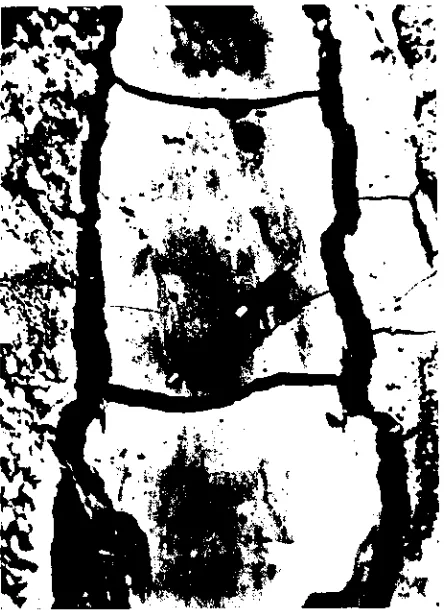
Figure 23.9 . Large cracks in a furrow bed which results in very high initial infiltration.
23.3.2 Management Strategies
Reducing the infiltration rate of coarse-textured soils is difficult. Irrigating with water high in fine-textured sediments over several years can alter the texture of the surface soil sufficient to reduce its permeability. Compaction (Khalid and Smith, /978) and flow interruption long enough to infiltrate all surface water (surge irrigation) (Stringham, 1988) have decreased infiltration rates of sandy soils. On soils with high sustained infiltration, use high surface irrigation application (inflow) rates per unit field area or reduce the field length to reduce the time required to spread the water across the field and thus improve water distribution uniformity. However, soil erosion limits acceptable inflow rates and costs of field operations increase as field size decreases.
880 MANAGEMENT OF FARM IRRIGATION SYSTEMS
Figure 23.5. A narrow-tire single front wheel tractor used for compaction and smoothing of irrigation furrows to reduce infiltration
depth and disturbance of tillage to reduce the creation of inter-aggregate macropores and thereby reduce the initial infiltration during the first irrigation.
Apply frequent irrigations to cracking clay soils to maintain high soil water levels. Since shrinking soils crack as they dry and crack volume is the main determinant of surface irrigation water application depth, irrigating before soils dry and large cracks form allow small uniform applications.
If the initial infiltration is large relative to the final or sustained infiltration rate, increasing application rate or decreasing field length to reduce application time will not significantly improve irrigation efficiency. Thus, uniform, small surface irrigation applications are generally not possible on cracked soils and often difficult or impossible on stable soils following conventional tillage.
Delay irrigation of freshly tilled or cracked soils until the soil water deficit exceeds the minimum application amount. This permits the application of large but uniform and efficient applications. However, the required deficit may be sufficient to decrease crop yields. Delaying the first irrigation following tillage is especially difficult because tillage often reduces the water content at seed depth below that required to germinate seeds and support seedling growth. Less intensive tillage conserves soil water in the upper root zone and often allows delay of the first irrigation.
SOIL MANAGEMENT 881
rates increase. Thus, conversion from surface to sprinkler or drip systems will often be required to achieve desired water application efficiencies with high infiltration soil.
23.4 INFILTRATION VARIABILITY
Soil infiltration varies both with location and time. The coefficient of variation of infiltration throughout a field at any given time is in the range of 20 to 50% (Bautista and Wallender, 1985; Viera at al., 1981; Trout and Mackey, 1988). A field's average infiltration rate may vary by more than 50% through an irrigation season and also varies from season to season (Shafique and Skogerboe, 1983; Ley and Clyma, 1981; King et al., 1984; Linderman and Stegman, 1971).
Surface irrigation water absorption is proportional to the soil infiltration rate. The rate water spreads across a field also varies with infiltration. Thus, infiltration variability strongly influences the performance, and thus management, of surface irrigation (Jaynes and Clemmens, 1986; Rayej and Wallender, 1987, and Letey et al., 1984). For example, furrow inflow rates must be high enough to insure coverage of field areas with high infiltration rates, and irrigation times must be long enough to insure adequate application to areas with low infiltration rates. Both increased application rates and times cause excess application and water loss directly attributable to spatial infiltration variability (Trout, 1990).
Unpredictable temporal variability requires surface irrigators to monitor their irrigations and adjust inflows and set times to maintain acceptable performance. This discourages the use of labor-saving automatic surface irrigation systems. Predictable temporal variability, such as higher infiltration after tillage, requires flexibility in the irrigation system (i.e., the ability to apply a range of flow rates) to maintain acceptable performance. Flexibility increases system cost.
23.4.1 Causes
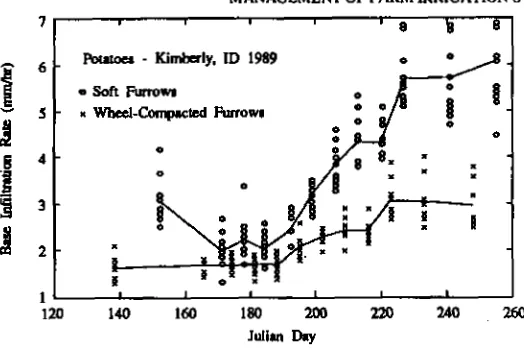
Spatial infiltration variability results from non-uniform soil texture and structure, topography, tillage, and wheel traffic. Non-uniform traffic during harvesting operations, turn-around areas during tillage, and uneven wheel passes in furrows compact soil unevenly and result in variable infiltration (Trout and Kemper, 1983; Trout and Mackey, 1988; Kemper et al., 1982). Figure 23.6 illustrates the effect of wheel packing on furrow infiltration. Erosive irrigation practices can cause spatial infiltration variability by redistributing soil particles and reshaping infiltration surfaces (i.e., down-cutting furrows on steep slopes and depositing sediment on flat slopes). Often, the specific causes of spatial variability remain unidentified.
Temporal infiltration variation results from soil structural changes caused by frost action, tillage, consolidation from welting and drying, surface sealing due to water drop impact and overland flow, soil animal and microorganism activity, and changes in soil ionic composition; and changes at the soil surface
882 MANAGEMENT OF FARM IRRIGATION SYSTEMS 7
140 180 200 220
Italian Day
Figure 23.6. Variability of furrow infiltration rate with time and space. Each symbol represents the steady-state infiltration rate of a 160-m-long furrow measured by Inflow-outflow. The lines represent the average for 10 wheel-packed and 10 alternate soft (untracked) furrows. The infiltration rate increases with time due to increasing roughness (vegetation) in the furrow. The average coefficient of variation for each irrigation Is 13%. but would have been 27% had both compacted and soft furrows been irrigated together,
infiltration changes due to soil consolidation after the first irrigation and due to decreased flow velocity (and, thus, increased wetted area) as plant vegetation extended into the furrow.
23.4.2 Management Strategies
Inherent soil variability is difficult to ameliorate. The soil mass is too large to economically alter soil textural or mineralogical properties. Differential application of residue and other organic matter or tillage operations can be used to counteract identifiable, large-scale spatial variability. Practices which control erosion (see Section 23.9) slow the increase in textural variability. Subdividing fields into management sub-units based on infiltration improves irrigation performance but tends to be economically inefficient for many field operations. Manage tillage and harvesting equipment traffic to reduce uneven soil compaction. Avoid multiple-pass turn-around areas on fields. Evenly traffic all irrigated furrows (or alternate furrows if one crop row is between each furrow pair). Even furrow packing requires attention to tractor and equipment wheel configurations and/or extra passes through the field. Control furrow erosion with surface residue placement to improve infiltration uniformity on non-uniform slopes (Brown, 1985) (Figure 23.7). If the subsurface texture or structure is non-uniform, wheel compaction of furrows and surge irrigation may reduce spatial infiltration variability by consolidating the soil surface to control infiltration at the surface (Purkey and Wallender, 1989).
SOIL MANAGEMENT 883
Figure 23.7. Straw scattered in a furrow on a steep section to prevent downcusfing, shown in right furrow, which often reduces infiltration.
plant parts extending into the furrow flow and the accompanying increased infiltration.
A surface irrigator's primary means of dealing with both spatial and temporal infiltration variability is to monitor the irrigation and manually adjust application rates and set times to obtain acceptable performance. Labor costs limit monitoring intensity and the benefits depend on the irrigator's ability to recognize and respond correctly to non-uniformity. For example, an irrigator's typical response to uneven furrow advance is to adjust the inflow rate to produce more uniform advance on all furrows. This produces even field coverage and runoff, but uniform furrow-to-furrow application also requires varying the irrigation times inversely with infiltration rates. The irrigator generally does not vary irrigation times both because of the additional labor and management required and because he does not recognize this less-visible problem.
Feedback control systems for surface irrigation are being developed which automatically adjust the irrigation application rates and times based on automatically sensed advance rates or tailwater runoff (Spurgeon and Duke, 1988; Reddell and Latimer, 1987). These tend to be complicated and expensive because sensor locations and control points are spread out across the field. Their effective use is also constrained by inflexible water supply rates and schedules. Feedback control deals more effectively with temporal than with spatial variability.
834 MANAGEMENT OF FARM IRRIGATION SYSTEMS
infiltration rate, water distribution is independent of the soil infiltration rate.
23.5 INADEQUATE WATER STORAGE
A soil's ability to store crop-available water determines the maximum amount of water that can be efficiently applied and the allowable interval between irrigations. The frequent, light applications required on soils with low water holding capacity increase labor costs of non-mechanized irrigation systems and decrease the water distribution uniformity of surface systems.
Crop-available water is that which is held by the soil against gravity and can be extracted by the plant. These two limits are often defined as field capacity at 30 kPa suction and the wilting point at 1500 kPa suction . Available water holding capacity for most agricultural soils varies from 60 to 200 mm of water per meter depth of soil. Crops can readily use 40 to 60% of this water, depending on the crop. Available water volume also depends upon the volume of soil penetrated by the plant roots.
23.5.1 Causes
A soil's capacity to store water for plant use varies primarily with texture (USDA-SCS, 1964). Coarse-textured soils with few small pores and small specific surface hold Iess water than intermediate- and fine-textured soils. Some clay soils with uniformly small pores also release little water for plant use.
Anything which restricts rooting volume, such as a hard subsurface layer, also limits effective storage. Restrictive layers can be either cemented or uncemented natural horizons or can result from cultural practices. Compacted soil layers formed by equipment traffic often persist below tillage depth and restrict rooting in some soils (Voorhees et al., 1986).
23.5.2 Management Strategies
Since water storage capacity is primarily texture dependent, no economic practices are available to increase it. However, restricted root zones can be alleviated with proper management practices.
Restrict traffic to traffic zones, use lighter-weight tillage, harvesting, and transport equipment and avoid traffic when the soil is moist to slow the creation of compacted layers. Root restricting layers can be disrupted mechanically by deep tillage. The longevity of the benefits of mechanical disruption depend on the soil texture and morphology and antecedent tillage practices (Musick et al.,
1981; Kaddab, 1976, and Busscher et a/., 1986). Both vigorous deep-rooted crops (O'Toole and Bland, 1987) and earthworms can create rooting channels in hard layers which persist over several seasons. High water content reduces the penetration resistance of restricting layers and facilitates root and earthworm penetration. However, layers which restrict root penetration often also restrict water movement, so keeping the layer wet without reducing aeration of the root zone requires careful management.
SOIL MANAGEMENT 885
plant-available water holding capacity for the soil and crop divided by the average daily crop water use (see Chapter 7). Since frequent irrigation requires high labor inputs, economic considerations usually favor automated or mechanized irrigation systems. Since water holding capacity is small, the system must also be able to apply small irrigations efficiently. On coarse-textured soils, this usually requires sprinkler or drip irrigation.
23.6 AERATION
In many soils about half the bulk volume is occupied by voids. The oxygen in these voids supplies the respiratory requirements of plant roots and aerobic soil microorganisms and maintains the soil in a chemically oxidative state. A well-drained soil will typically drain down to near 50% saturation (voids half filled with water) within a couple of days after irrigation. However, if a low-permeability layer below the soil surface restricts downward water movement, a high percentage of the void space above that layer can remain filled with water for several days. Water tables (water under positive pressure) can form on deeper low permeability layers both from lateral movement of seepage from up-slope water sources such as canals, reservoirs or over-irrigated fields or from over irrigation of overlying areas. High soil water content extends several centimeters above a water table due to capillary rise. Soil aeration problems can also occur in slowly-permeable soils requiring long irrigations to recharge the profile or in humid or subhumid regions when irrigation is followed by rainfall (Meek and Stolzy, 1978).
Lack of dissolved oxygen in the profile leads to physiological responses which result in decreased crop yields across a wide range of plant species. These responses result from: 1) the shift in chemical species in the soil to ions of lower valence states which are either less available or even toxic to plants; 2) the accumulation of plant-active compounds such as abscisic acid or the hormonal gas ethylene in the plant; and 3) the cessation of active potassium uptake by roots (Glinski and Stepniewski, 1985, and Hook and Crawford, 1978). These processes result in wilting, leaf epinasty, stomatal closure, and halting of photosynthesis (Sojka and Stolzy, 1980; Hunt et al., 1981; and Sojka,
1985). The effects often persist after relief from anaerobic conditions and impact harvest and storage quality (Karlen et al., 1983).
An episode of inadequate soil aeration can shift the balance of competing higher plant species, favoring weeds more tolerant to waterlogged environments. Similarly, soil microflora and microfauna are affected, frequently favoring certain plant pathogens and parasitic nematodes which thrive in wetter soils. Bacterial and fungal root diseases are also generally favored in wetter soil environments often at the same time that symbiotic or beneficial microorganisms are impaired (Stolzy and Sojka, 1984).
23.6.1 Principles
886, MANAGEMENT OF FARM IRRIGATION SYSTEMS
films to aerate objects with hydrated surfaces such as roots, microorganisms, or soil aggregates.
As plant transpiration and other processes continue in wet soil, particularly at water contents above field capacity, the relative concentrations of 02, CO2, and trace gases, and the nature of the trace gases, vary greatly. Soil-oxygen decreases from nearly 21% (the ambient concentration) to nearly 0% in wet soil (Russell and Appleyard, 1915; Boynton and Reuther, 1938). However, even in completely inundated soil, the oxygen dissolved in soil water can supply plant roots for 24 to 48 h. Consequently, damage due to oxygen deficiency seldom occurs until the high water content condition persists for at least 1-2 days.
Once oxygen deficiency commences, the severity of the damage depends on the plant species, soil and ambient temperatures, light intensity, and mineral nutrient status of the plants and soil (Letey et al., 1961; Luxmoore et al., 1972; Sojka and Stolzy, 1988). Although some oxygen diffuses from aerial plant parts to roots in all plants (Luxmoore and Stolzy, 1969), the amount of internal plant aeration varies widely with species and somewhat with root growth rate.
Respiration approximately doubles with each 10° C rise in temperature. Luxmoore and Stolzy (1972) showed that the concomitant increases in liquid and gaseous diffusion coefficients of oxygen with increased temperature are much smaller, and that the amount of oxygen dissolved in water actually decreases. Therefore, low oxygen diffusion rates usually results in more severe damage when temperatures are elevated.
High light intensities which usually accompany higher temperatures promote higher respiration and rapid growth. The greater respiration increases oxygen demand, but the rapid root growth results in higher root porosity which promotes internal plant aeration (Luxmoore et al., 1972). Consequently, the net effect of high respiration and growth is not known.
Soil nutritional status can influence damage due to oxygen deficiency (Sojka and Stolzy, 1988). Plants that enter an anaerobic flooding episode with high tissue levels of nutrients such as potassium (Drew and Sisworo, 1977,
1979; Trought and Drew, 1980) can be expected to better tolerate the episode.
23.6.2 Management Strategies
To prevent damage from inadequate soil aeration, manage irrigations to avoid soil saturation or at least limit the duration of anaerobic conditions to less than two days. On low-permeability soils, minimize ponding times with small, frequent irrigations. On soils with a low permeability subsoil layer, do not apply water in excess of the available water holding capacity of the soil profile above the restrictive layer. In humid or subhumid areas, leave some reserve storage capacity to accommodate rainfall.
SOIL MANAGEMENT 887
(See Section 23.1). For high value crops, oxygen stress can be avoided or delayed by using oxygen enriched fertilizers such as urea peroxide or calcium peroxide (Bryce et al., 1982; Magunda at al., 1984). Where some oxygen stress may be unavoidable regardless of the level of management applied, select crop species and cultivars that are more tolerant to flooding and that resist the diseases prevalent in wet soils.
23.7 SOIL CRUSTS
A soil surface crust is a dense, hard layer at the soil surface. Crusts are created when water-drop impact or overland flow breaks down the surface structure and rearranges particles into a denser, more amorphous mass which becomes hard as the layer dries due to strong interparticle attractions and chemical cementing. Crusts, because of their strength and low porosity, impede seedling emergence and impact the exchange of water, air, and heat between soil and the atmosphere. The effect of crusts on infiltration was discussed in Section 23.1. If the crust remains wet, the decreased air-filled porosity can reduce oxygen exchange between the soil and atmosphere (Miller and Gifford, 1974) leading to aeration problems discussed in the previous section. The thermal conductivity of crusted soil is higher than for structured soils promoting more rapid fluctuations in soil temperature with ambient and soil surface temperature changes (see Section 23.8).
The most significant impact of crusts is to impede seedling emergence and thus slow or reduce crop stand establishment. The severity of the impedance depends on the crust thickness and strength and the plant species. Plants with small seeds exert less emergence pressure and thus are more affected by surface crusts. Monocotyledonous species generally emerge more easily than dicotyledonous species of comparable seed size.
The severity of the damage caused by delayed emergence depends on the soil water content and temperature and the plant species. Small seeds have fewer metabolic reserves available to maintain viability until the crust is broken or the diverted hypocotyl finds a path to the surface. High soil temperature accelerates respiration and can either deplete plant reserves more rapidly or cause direct heat related damage to some seedlings. The high thermal conductivity of crusted soil, especially if combined with lower heat capacity if the crusted soil becomes dry, will elevate daytime temperatures in crusts. Wet crusts may limit the availability of oxygen to respiring seedlings and/or promote seedling diseases such as "damping off-.
23,7.1 Causes
888 MANAGEMENT OF FARM IRRIGATION SYSTEMS
increase soil bulk densities by 15% (Cohron, 1971).
New bonds form in the consolidated surface layer both by the increasing soil-water tension between the particles as the soil dries and by chemical cementation (Bullock et al., 1988; Kemper and Rosenau, 1986). Due to the closer packing of the particles, crust strength generally exceeds the strength of the original soil. The strength of these bonds determines the strength of the crust. Crusting is more prevalent in soils low in organic matter and high in silt, but can occur over a wide range of soil types.
23.7.2 Management Strategies
If a soil is prone to develop strong crusts, avoid water application to the seedbed between planting and emergence. A seedbed near field capacity at planting will promote rapid seedling emergence without the need to apply a post-plant pre-emergent irrigation. Pre-plant irrigation can provide the needed moisture, but is generally inefficient due to evaporation from the soil surface between irrigation and planting and leaves the moist soil susceptible to compaction during the planting operation. Reduced tillage which disturbs the seedbed less and !eaves more residues at the surface to slow soil drying will usually leave more moisture in the seedbed for germination than conventional tillage. Reduced tillage can thus reduce the need for pre-emergent irrigation.
If post-plant irrigation is necessary to provide moisture for germination, minimize sprinkler application amount, intensity and kinetic energy by reducing sprinkler height and droplet size (Bubenzer and Jones, 1971; Kohl et al., 1985). This will reduce soil breakdown and crust formation. Fun-ow irrigation which does not flood the surface of the seedbed can add needed moisture without causing crust formation above the seed. However, high infiltration rates common with freshly-tilled soil (Section 23.2) make it impossible to uniformly apply the light irrigation often required for germination.
Maintain a suitable surface mulch to shield the soil surface from the destructive impact energy of water droplets and shear forces of overland flow. Crop residues or plastic sheeting can be applied as surface mulches. Conservation crop tillage /eaves residue at the surface. Any process that increases the stability of the soil aggregates, such as increasing soil organic matter, reduces crust formation. Synthetic soil stabilizing chemicals such as polyacrylamide improve aggregate stability but are only economical on high-value crops.
Avoid use of irrigation water that increases soil dispersion during pre-emergent irrigations. This includes water high in sodium, and, if the soil is high in sodium, water without sufficient divalent cations. Dissolved or soil-applied calcium salts, such as from gypsum, reduces the dispersing effect of sodium.
SOIL MANAGEMENT 889
23.8 SOIL TEMPERATURE
Each plant species functions and grows most efficiently within a limited soil temperature range. Soil temperature at germination is especially critical for many crops. Optimal germination temperatures are typically higher for tropical crops such as corn and sorghum than for temperate-climate crops such as cereals, beets or potatoes (Russell, 1973). The quality of root crops may be impaired at either soil temperature extreme. Cool soil temperatures reduce root respiration and photosynthesis. Water and nutrient absorption are also decreased at low soil temperatures (Russell, 1973).
23.8.1 Principles
Soil temperature fluctuates in regular seasonal and diurnal patterns governed by the ambient air temperature and radiation budget. Crop cover, surface mulch, surface color, and soil water content determine how closely soil temperature tracks ambient temperature fluctuations. Dark surface colors increase the absorption of long wave radiation. Crop cover and mulches insulate the surface from ambient temperature fluctuations and often determine surface color. A transpiring crop canopy will lower temperatures under the canopy. The temperature of wet soil fluctuates less than dry soil because it has a greatly increased heat capacity. Bare wet soil tends to be cooler than dry soil because the moisture provides evaporative cooling at the surface.
Irrigation impacts soil temperature both because it increases soil water content and due to the temperature of the applied water. Sprinkler-applied water and rainfall is cooled as it passes through the air and is generally near the wet bulb temperature when it enters the soil. Sprinkler water also cools ambient temperatures during the application. Surface applied water is usually cooler than the soil surface. Wet surfaces cool by evaporation. Therefore, irrigation usually lowers soil temperature.
The cooling effect of irrigation water on the soil and, in the case of sprinkler irrigation, on the crop canopy can be positive or negative depending on crop species, stage of growth, and prevailing air and soil temperature. In temperate climates, cooling the seedbed in the spring generally slows seed development and increases the time that germinating seeds and tender seedlings are exposed to damping off disease. In hot climates, elevated soil temperature may exceed the optimal range for germination of particular species, in which case irrigation can aid germination by lowering soil temperature to more desirable levels.
23.8.2 Management Strategies
890 MANAGEMENT OP FARM IRRIGATION SYSTEMS
large irrigations after planting until low soil temperature is no longer detrimental. Although surface or drip-applied water will often cool the soil less than sprinkler-applied water, small surface applications are seldom possible on freshly tilled soil.
Apply frequent sprinkler irrigation to reduce high soil temperatures for temperature-sensitive root crops. After canopy cover, high soil temperatures are seldom a problem in adequately watered crops so temperature-moderating practices are not required.
23.9 EROSION
An estimated 20% of the irrigated land in the U.S. is being degraded by water erosion (Koluvek and Tanji, In press). Soil erosion by water is a major problem on the moderate-to-steeply sloped silt-loam soils in the Pacific Northwest where sediment losses as high as 140 Mg/ha/yr have been measured from furrow-irrigated row crops (Koluvek and Tanji, In press) (Figure 23.8). High furrow erosion rates have also been measured in Wyoming (Fomstrom and Borelli, 1984).
Wind erosion of irrigated lands is also a problem in some areas. Although wind erosion is not directly caused by the irrigation process, irrigation allows land in semi-arid areas to be profitably cultivated. Cultivation greatly increases
a soil's susceptibility to wind erosion. Little data are available on the extent of wind erosion damage to irrigated land.
Soil erosion depletes the soil resource. Crop yield potentials have been significantly reduced in southern Idaho as a result of 80 years of irrigation on
4 :44
' • ,A=
SOIL MANAGEMENT 891
highly erosive land (Carter, In press). Eroded sediments also degrade channels, reservoirs, and roadsides and pollute streams. Non-point source pollution resulting from erosion is estimated to cause off-site damages valued at $6 billion per year (Clark et al., In press).
23.9.1 Principles
Soil erodes when a moving fluid (water or air) detaches and transports soil particles. The hydraulic force of the moving fluid, the soil strength or aggregate stability and the effective particle sizes affect erosion. Trout and Neibling (in press) describe the water erosion processes in irrigation.
With overland water flow such as in furrow irrigation, the shear of the flow against the soil provides the detachment force. This shear, or tractive force, is proportional to the channel hydraulic radius and slope. Furrow erosion varies approximately with the slope squared and the flow rate to the 1.3 power (Kemper et al., 1985). Because of infiltration, furrow flow rates and thus erosion decrease with distance along the furrow. Much of the sediment eroded in the head-reach is deposited further along the furrow as the flow rate and sediment carrying capacity decreases. Erosion is seldom a problem with border or basin irrigation because slopes and flow velocities are usually small.
With sprinkler irrigation, water drop energy detaches particles, some of which are transported to rills and gullies by shallow inter ill flow. Erosion and transport in these channels follow the same basic principles as furrow erosion. Sprinkler irrigation causes erosion only if the application rate exceeds the soil infiltration rate resulting in ponding and surface flow. Sprinkler runoff occurs most commonly near the outer end of center pivots where application rates are high (Figure 23.1). A critical difference between concentrated runoff flow from sprinklers and furrows is that with sprinklers, like rainfall, flow rate, and thus erosivity, increase down slope within the wetted area because the collection area increases.
When the wind friction velocity exceeds the threshold for a given soil, wind erosion occurs. Soil moves by creep, saltation, and suspension. Much of the particle detachment is due to abrasion by saltating particles so the wind erosion process is highly self-perpetuating (Hagen, 1984). Growing crop canopies and surface residues shelter the soil surface from wind and are the primary deterrents to wind erosion. If residues are not available, tillage-induced roughness can greatly reduce wind erosion if the ridges and/or clods are stable (Fryrear, 1984).
A soil's susceptibility to both water and wind erosion depends upon (1) the strength or stability of the soil aggregates; (2) the amount and size of loose soil particles and aggregates left by previous mechanical disturbances such as tillage and wind erosion deposition; and (3) the protection from the erosive forces provided by growing plants and surface or incorporated residues. The factors affecting soil aggregate stability are listed in Section 23.2.1. Kemper and Rosenau (1986) describe methods of measuring aggregate stability as relates to credibility by water (wet sieving) and wind (dry rotary sieving).
892 MANAGEMENT OF FARM IRRIGATION SYSTEMS
understood. Consequently, soil erosion prediction models still include important empirical components which relate measurable soil properties to erodibility. Process-based erosion models are presently being developed by the USDA as part of the Water Erosion Prediction Project (WEPP) (Foster, 1987) and Wind Erosion Prediction System (WEPS) (Hagen, 1988).
23.9.2 Management Strategies
Furrow erosion increases with furrow slope and flow rate. Irrigate across the predominate land slope to decrease furrow slope. Reduce required flow rates by setting inflows uniformly, cutting back inflows when advance is complete, and reducing furrow length and/or infiltration rate (Section 233). Residue and plant foliage in the furrow absorb part of the shear force and reduce the erosivity of the stream. Place straw in highly erodible furrow sections (Miller et al., 1987; Brown, 1985) (Figure 23.7). Reduce tillage to leave more residue at the surface (Dickey et al., 1984; Carter and Berg, 1989). Narrow row spacing configurations may reduce furrow erosion by providing more intrusion of plant foliage in the flowing water and greater root density near the furrow perimeter.
A large percentage of the total furrow erosion for a season occurs during the first irrigation following tillage (Fornstrom and Borelli, 1984). Minimize tillage intensity so that fewer loose soil particles are available for transport. Delay irrigation as long as possible after tillage or soil thawing to allow time for the soil aggregates to strengthen. Increase soil organic matter content to increase aggregate strength.
Sprinkler erosion requires water runoff. Reduce the sprinkler application rate or increase the soil infiltration capacity (see Section 23.2.2) to reduce or eliminate runoff. Reduce sprinkler water drop kinetic energy (Section 23.2.2) to reduce surface aggregate breakdown which supplies particles both to seal the soil surface and to be carried away with runoff. If application rates exceeding infiltration cannot be avoided, apply tillage practices which increase surface storage, such as basin or reservoir tillage (Figure 23.3), to prevent, or at least delay, overland flow (Lyle and Bordovsky, 1983; Garvin et al., 1986). If runoff cannot be avoided, reduce tillage and increase surface residue to decrease erosion (Figure 23.2).
Wind erosion of irrigated land can be controlled by cover crops. Plan cropping to maintain cover during the most erosive seasons. The potential for wind erosion is decreased by leaving crop residues at the surface or maintaining a roughly-tilled surface. Irrigation before tillage to increase soil water content can increase the roughness of poorly-structured soils. Moist surface soil resists wind erosion. If an irrigation system can apply quick, light irrigations, wetting the soil surface during windy conditions is a potential short-term management option.
SOIL MANAGEMENT 893
apply to disturbing virgin highly-erodible land. Cost-share programs (i.e., the Conservation Reserve Program of the 1985 Food Security Act) encourage returning highly-erodible land to permanent vegetative cover conditions. Conservation plans must be developed for alI cultivated highly-erodible lands in order to receive Federal Farm Bill subsidies. The USDA-Soil Conservation Service provides technical assistance for conservation planning and the ASCS provides cost-sharing for some conservation practices.
23.10 RESEARCH NEEDS
1. Develop practical methods to manage (predictably increase or decrease) infiltration rates of different soils.
2. Determine the physical/chemical reasons for the formation of surface and subsurface soil layers with very low permeability.
3. Develop management procedures to reduce infiltration during the initial irrigation of the season to allow uniform surface irrigation.
4. Determine causes of high infiltration variability and means to decrease variability.
5. Develop surface irrigation management systems which automatically adapt to variable infiltration.
6. Quantify factors which influence the formation and strength of crusts and restrictive layers.
7. Quantify the soil and environmental factors which affect soil aggregate stability and erodibility.
8. Construct a process-based model capable of predicting furrow and sprinkler erosion.
9. Determine the effects of reduced (conservation) tillage practices on infiltration, compaction, crusting, soil temperature, erosion, and crop production.
23.11 SUMMARY
Several soil characteristics affect the selection, management, and water use efficiency of irrigation. These include infiltration, water storage, drainage, and credibility. Soil management practices can sometimes alter the undesirable characteristic to relieve the constraint. Often, irrigation systems can be selected and managed to avoid these constraints or at least reduce their effects, allowing economic and sustainable agricultural production. Management practices which alleviate one constraint may create others, so the effects of practices on all functions the soil provides for sustainable, economic crop production must be considered.
References
Bautista, E. and W.E. Wallender. 1985. Spatial variability of infiltration in furrows. Transactions
of the ASAE 28(6): 1846-1851. 1855.
Boynton. D. and W. Reuther. 1938. A way of sampling soil gases in dense subsoils and some of its advantage and limitations. Soil Sci. Soc. Am. Proc. 3: 37-42.
894 MANAGEMENT OF FARM IRRIGATION SYSTEMS
Bryce, J.H., D.D. Focht and L.H. Stohy. 1982. Sail aeration and plant growth response to urea peroxide fertilization. Soil Sci. 134: 111-116.
Bubenzer, G.D. and B.A. Jones, Jr., 1971. Drop size and impact velocity effects on the detachment of soils under simulated rainfall. Transactions of the ASAE 14(4): 625-628.
Bullock, M.S.. W.D. Kemper and S.D. Nelson. 1988. Soil cohesion as affected by freezing, water content, time and tillage. Soil Sci. Soc. Am. J. 52(3): 770-776.
Bun, C.M. and T. Ruehr. 1979. Water penetration problems with drip irrigation. ASAE Paper No. 79-2572. St. Joseph. Ml: ASAE.
Busscher, W.J.. tt.E. Sojka and C.W. Doty. 1986. Residual effects of tillage in Coastal Plain soils.
Soil Sci. 141: 144-148.
Carter, D.L. 1990. Effects of erosion on soil productivity. J. Irrig. Drain. Engr, ASCE 116 (In press).
Caner. D.L. and R.D. Berg. 1989. Crop sequences and conservation tillage cropping to control irrigation furrow erosion and increase fanner income. J. of Soil and Water Conserv. 45 (In press).
Clark, E.H. R, 3.A. Haverkarnp and W. Chapman. 1985. Eroding Soils, The Of farm Impacts. Washington, DC: The Conservation Foundation.
Cohron. G.T. 1971. Forces causing soil compaction. In Compaction of Agricultural Soils, eds. K.K. Barnes et al., 106-122. St. Joseph, MI: ASAE.
Dickey, E.C., D.E. Eisenhauer and PJ. Jasa. 1984. Tillage influences on erosion during furrow irrigation. Transactions of the ASAE 27(5): 1468-1474.
Donovan, T.]. and B.D. Meek. 1983. Alfalfa response to irrigation treatment and environment.
Agronomy J. 75(3): 461-464.
Drew, M.C. and E.I. Sisworo. 1977. Early effects of flooding on nitrogen deficiency and leaf chiorosis in barley. New Phytol. 79: 567-571.
Drew. M.C. and EJ. Sisworo. 1979. The development of waterlogging damage to young barley plants by application of nitrate and a synthetic cyclokinin, and comparison between the effects of waterlogging, nitrogen deficiency and root excision. New Phytol. 82: 315-329.
Ehlers, W. 1975. Observations on earthworm channels and infiltration on tilled and unfilled loess soil. Soil Science 119(3): 242-249.
Eisenhauer, D.E., E.C. Dickey. P.E. Fischbach and K.D. Frank. 1982. Influence of reduced tillage on furrow irrigation infiltration. ASAE Paper No. 82-2587. St. Joseph, MI: ASAE.
Fomstrom. K.J. and J. Borelli. 1984. Design and management procedures for minimizing erosion from furrow irrigated cropland. ASAE Paper No. 84-2595. St. Joseph. MI: ASAE.
Fornstrom, KJ., LA. Michel, J. Borelli and G.D. Jackson. 1985. Furrow firming for control of irrigation advance rates. Transactions of the ASAE 28(2): 519-531.
Foster, G.R. 1987. User requirements: water erosion prediction project (WEPP). USDA-ARS National soil erosion research laboratory, Purdue, Univ., W. Lafayette, IN.
Fryrear, 13,W. 1984. Soil ridges-clods and wind erosion. Transactions of the ASAE 27(2): 445-448.
Garvin, P.C., J.R. Busch and D.C. Kincaid. 1986. Reservoir tillage for reducing runoff and increasing production under sprinkler irrigation. ASAE Paper No. 86-2093. St. Joseph, MI: ASAE.
Glinski, J. and W. Stepniewski. 1985. Soil Aeration and Its Role for Plants. Boca Raton, FL: CRC Press, Inc.
Hagen, L.J. 1984. Soil aggregate abrasion by impacting sand and soil particles. Transactions of
the ASAE 27(3): 805-808, 816.
Hagen. L.J. 1988. Wind erosion prediction system: An overview. ASAE Paper No. 88-2554. St. Joseph. MI: ASAE.
Hook, D.D. and R.M.M. Crawford. 1978. Plant Life in Anaerobic Environments. Ann Arbor, MI: Ann Arbor Science.
Hunt. R.B. Campbell. R.E. Sojka and I.E. Parsons. 1981. Flooding-induced soil and plant ethylene accumulation and water status response of field-grown tobacco. Plant and Soils 59: 427-439.
Izuno, F.T.. T.H. Podmore and H.R. Duke. 1985. Infiltration under surge irrigation. Transactions
of the ASAE 28(2): 517-521.
Jaynes, D.B. and AJ. Clemmens. 1986. Accounting for spatially variable infiltration in border
irrigation models. Water Resources Research 22(8): 1257-1262.
SOIL MANAGEMENT 895
Karlen, D.L., R.E. Sojka and M.L. Robbins. 1983. Influence of excess soil-water and N rates on leaf diffusive resistance and storage quality of tomato fruit_ Comm. in Soil Sci. Plant Anal. 14: 699-708.
Kemper, W.D., B.J. Rutting and J.A. Bandurant. 1982. Furrow intake rates and water management. Transactions of the ASAE 25(2): 333-339. 343.
Kemper, W.D., R.C. Rosenau and A.R. Dexter. 1987. Cohesion development in disrupted soils as affected by clay and organic matter content and temperature. Soil Sci. Soc. Am. J. 51(4): 860-867.
Kemper, W.D. and R.C. Rosenau. 1986. Aggregate stability and size distribution. In Methods of
Soil Analysis, Part 1, ed. A. Mute, 425-442. American Society of Agronomy.
Kemper. W.D.. T.J. Trout, M.I. Brown and R.C. Rosenau, 1985. Furrow erosion and water and soil management. Transactions of the ASAE 28(5): 1564-1572.
Khalid, M. and J.L. Smith. 1978. Control of furrow infiltration by compaction. Transactions of
the ASAE 21(4): 654-657.
King, LG., B,L, McNeal, F.A. Zion and S.C. Matulich. /984, On farm improvements to reduce sediment and nutrients in irrigation return flow. EPA Project Report #EPA-60012-84-044, PB84-155217 available from NTIS.
Kohl, R.A., D.W. DeBoer and P.D. Evenson. 1985. Kinetic energy of low pressure spray sprinklers. Transactions of the ASAE 18(5): 1526-1529.
Koluvek, P.K. and K.K. Tanji. 1990. Water erosion from irrigation - An overview. J. lrrig, Drain.
Engr., ASCE 116 (In press).
Lehrsch, G.A., R.E. Sojka, D.L. Carter and P.M. Jolley. 1990, Effects of freezing on aggregate stability of soils differing in texture, mineralogy, and organic matter content. Proceedings of the
symposium on frozen soil Impacts on agriculture, range, and forest lands. US Army Corp of
Engineers. Cold Regions Research and Engineering Laboratory, Hanover, NH
Letey, I.. L.H. Stolzy, O.B. Blank and O.R. Lunt, 1961. Effect of temperature on oxygen-diffusion rates and subsequent shoot growth, root growth, and mineral content of two plant species. Soil
Sri. 92: 314-321.
Letey, J., H.J. Vaux and E. Feinennan. 1984. Optimum crop water application as affected by uniformity of water application. Agron. J. 76(3): 435-441.
Ley, T.W. and W. Clyma. 1981. Furrow irrigation practices in northern Colorado. Transactions of
the ASAE 24(3): 610-616, 623,
Linderman, C.L. and E.C. Stegman. 1971. Seasonal variation of hydraulic parameters and their influence upon surface irrigation application efficiency. Transactions of the ASAE 15(5): 914-918.
Luxmoore, R.I. and L.H. Stolzy. 1969. Root porosity and growth response of rice and maize to oxygen supply. Agron. J. 61: 202-204.
Luxmoore, R.I., R.E. Sojka and L.H. Stolzy. 1972. Root porosity and growth responses of wheat to aeration and light intensity. Soil Sci. 113: 354-357.
Luxmoore, R.I. and L. H. Stolzy. 1972. Oxygen diffusion in the soil-plant system. V. Oxygen concentration and temperature effects on oxygen relations predicted from maize roots, Agron. J. 64:720-725.
Lyle, W.M. and 1.P. Bordovsky. 1983. LEPA irrigation system evaluation. Transactions of the
ASAE 26(3):776-781.
Magunda, M.K., F. Callebaut, M. DeBoat,and D. Gabriets. 1984. Role of calcium peroxide as a soil conditioner and oxygen fertilizer. Trop. Agric. (Trinidad) 61: 250-252.
Meek, B.D. and L.H. Stolzy. 1978. Short term flooding. In Plant Life in Anaerobic Environments. eds. D.D. Hook and R.M.M. Crawford, 351-373. Ann Arbor, Ml: Ann Arbor Science. Miller, D.E. and R.O. Gifford. 1974. Modification of soil crusts for plant growth. In Soil Crusts.
eds. J.W . Cary and D.D. Evans, 7-16, Univ. Ariz. Tech. Bull. No. 214.
Miller, D.E., J.S. Aarstad and R.O. Evans. 1987. Control of furrow erosion through the use of crop residues and surge flow irrigation. Soil Sci. Soc. Am. J. 51: 421-425.
Musick, J.T., D.A. Dusek and A.D. Schneider, 1981. Deep tillage of Pullman clay loam - A long term evaluation. Transactions of the ASAE 24(6): 1515-1519.
Musick. J.T., F.B. Pringle and P.H. Johnson. 1985. Furrow compaction for controlling excessive irrigation water intake. Transactions of the ASAE 28(2): 502-506.
O'Toole, I.C. and W.L. Bland. 1987. Genotypic variations in crop plant root systems. In Advances
in Agronomy, V. 41. ed. N.C. Brady. New York: Academic Press.
Purkey, D.R. and W.W. Wallender. 1989. Surge flow infiltration variability. Transactions of the
•896 MANAGEMENT OF FARM IRRIGATION SYSTEMS
Rayej, M. and W.W. Wallender. 1987. Furrow model with specified space intervals. J. of
Irrigation and Drainage Engr. ASCE 113(4): 536-548.
Reddell, D.L. and E.A. Latimer. 1987. Field evaluation for an advance-rate-feedback irrigation system. Proceedings of the irrig. and drainage specialty conference, ASCE, 317-324. Russell. E.W. 1973. Soil Conditions and Plant Growth, 10th ed. London: Longman Group Ltd. Russell, E.J. and A. Appleyard. 1915, The atmosphere of the soil, its composition and the causes of
variation. J. Agric. Sci. 7: 1-48.
Shafique, M.S. and G.V. Skogerboe. 1983. Impact of seasonal infiltration function variation on furrow irrigation performance. In Advances in infiltration. Proceedings of a national conference on advances in infiltration. 292-301. SL Joseph, MI: ASAE.
Singer, M.J. and J.D. Oster. 1984. Water penetration problems in California soils. Land, Air, and Water Resources Paper No. 10011, Dept. of Land, Air, and Water Resources. Univ. of California. Davis.
Sojka, R.E. and L.H. Stolzy. 1980. Soil-oxygen effects on stomata! response. Soil Sci. 130: 350-358.
Sojka. R.E. 1985. Soil oxygen effects on two determinate soybean isolines. Soil Sci. 14th 333-343, Sojka, R.E. and L.H. Stolzy. 1988. Mineral nutrition of oxygen stressed crops and its relationship
to some physiological responses. In Ecology and Management of Wetlands. Vol 1. Ecology of
Wetlands, eds. D.D. Hook et al„ 429-440. Kent, UK: Croom Helm Ltd.
Spurgeon, W.E. and H.R. Duke. 1988. Furrow irrigation performance using real-time control.
Proceedings of the irrig. and drainage specialty conference. ASCE, 133-140.
Stolzy, L.H. and R.E. Sojka. 1984. Effect of flooding on plant diseases. In Flooding and Plant
Growth, ed. T.T. Kozlowski, 222-264. New York: Academic Press.
Stringham, G.E, 1988. Surge flow irrigation. HMI report of the Western Regional Research Project W-163. Utah State University Experiment Station Research Bulletin #515. Logan. Utah.
Tesiezlaf, R.. R.L. Elliot! and J.E. Canon. 1987. Furrow infiltration under surge flow irrigation.
Transactions of the ASAE 30(1): 193-197.
Thompson, A.L. and LG. James. 1985. Water droplet impact and its effect on infiltration.
Transactions of the ASAE 28(5): 1506-1510, 1520.
Trought, M.C.T. and M.C. Drew. 1980. The development of waterlogging damage in wheat seedlings (Tricicwn aestivum L.) II. Accumulation and redistribution of nutrients by the shoot.
Plant Soil. 56: 187-199.
Trout, Ti. and W.D. Kemper. 1983. Factors which affect furrow intake rates. p. 302-312. In: Advances in infiltration. Proceedings of a national conference on advances in infiltration. St. Joseph, MI: ASAE.
Trout, T,J. and B.E. Mackey. 1988. Fun-ow inflow and infiltration variability. Transactions of the
ASAE 31(2): 531-537.
Trout. T.J. and W.H, Neibling. 1990. Erosion and sedimentation processes in irrigation. J. lrrig.
and Drain. Engr. ASCE 116 (In press).
Trout. Ti. 1990. Furrow inflow and infiltration variability impacts on irrigation performance.
Transactions of the ASAE 33 (In press).
USDA-Soil Conservation Service. 1964. Soil-plant-water relationships. SCS National Engr.
Handbook, 10-14. Washington DC: U.S. GPO.
Van Schilfgaarde, J.. ed. 1974, Drainage for Agriculture. Madison, WI: Amer. Soc. of Agron. Viera, S.R., D.R. Nielsen and I.W. Biggar. 1981. Spatial variability of field measured infiltration
rate. Soil Sci. Soc. Am. J. 45: 1040-1048.