DEMOGRAPHIC RESEARCH
A peer-reviewed, open-access journal of population sciences
DEMOGRAPHIC RESEARCH
VOLUME 35, ARTICLE 37, PAGES 1101–1134
PUBLISHED 14 OCTOBER 2016
http://www.demographic-research.org/Volumes/Vol35/37/ DOI: 10.4054/DemRes.2016.35.37
Research Article
The diversity in longitudinal partnership
trajectories during the transition to adulthood:
How is it related to individual characteristics
and regional living conditions?
Barbara E. Fulda
c
2016 Barbara E. Fulda.
1 Introduction 1102
2 Theory and empirical evidence 1103
3 Data and methods 1106
4 Results 1109
4.1 Descriptive analysis 1109
4.2 Cluster analysis and multinomial logistic regression 1117 4.2.1 Descriptive evidence on the four clusters 1118 4.2.2 Multinomial logistic regression and regression tree 1121 4.2.3 Accounting for the turbulence of partnership trajectories between the ages of 15 and 40 1125
5 Summary and discussion 1127
6 Acknowledgements 1130
References 1131
The diversity in longitudinal partnership trajectories during the
transition to adulthood: How is it related to individual characteristics
and regional living conditions?
Barbara E. Fulda1
Abstract
BACKGROUND
Previous research has concentrated on the quantum and timing of partnership statuses during the transition to adulthood, but it has however remained unclear how partnership trajectories unfold and how trajectories interdepend. It is furthermore unknown how in-dividual characteristics and regional living conditions relate to the type of partnership trajectory an individual experiences.
OBJECTIVE
By studying longitudinal partnership trajectories in a sequence analysis, this article ex-amines the types of partnership trajectories that are observable between the ages of 15 and 40. It furthermore asks how individual characteristics and regional living conditions relate to the sequencing, timing, and quantum of partnership transitions. It finally shows how the turbulence in partnership trajectories relates to these factors.
METHODS AND DATA
I analyze the 1971–1973 birth cohort in the German Family Panel (pairfam).
RESULTS
Partnership trajectories split up into four patterns. Educational level, gender, and ethnic background significantly influence the probability of experiencing one of these partner-ship trajectories. Urban residents experience greater diversity in partnerpartner-ship statuses and are single for longer periods than rural residents. Twenty-six years after Germany’s uni-fication, socialization in eastern or western Germany still matters: Eastern Germans are more likely than western Germans to remain in a cohabitation until they are 40.
CONTRIBUTION
This article presents novel evidence on the typical partnership trajectories of a recent cohort. It shows that partnership histories are closely linked to membership in a social
group and socialization in an institutional setting. Only some social groups are prone to experiencing turbulent partnership histories.
1. Introduction
Partnership histories often differ depending on individual socioeconomic status and level of education. Hullen (2001) shows that women with higher educational aspirations in Germany marry more infrequently and/or at a later point in time. However, as Diekmann (1996) illustrates, individuals who did not complete their school training are more often single than other parts of the German population. He also shows that individuals with a lower level of education – e.g., who have only completed elementary school – are less of-ten single than other educational groups (ibid.). Most findings on partnership trajectories during the transition to adulthood are still based on cross-sectional individual or aggre-gate data instead of longitudinal partnership histories. Most studies focus on the study of one transition, i.e., the transition to cohabitation or marriage. Recent knowledge on partnership formation is also missing, as most empirical information relies on evidence regarding older birth cohorts from the 1950s and 1960s.
By studying the longitudinal partnership formation trajectories of a recent birth co-hort, born between 1971 and 1973, I go beyond the limitations of most published studies and holistically examine how pathways to adulthood unfold. This article also enlarges our knowledge on how partnership histories are related to individual characteristics and regional living conditions. Finally, I show how the frequency of changes in partnership status, and thus the turbulence of individual partnership histories, differs between social groups and according to place of residence.
I conduct my analysis on the basis of the German Family Panel Study (pairfam), a multi-disciplinary, longitudinal, multi-actor study launched in 2008 with a nationwide random sample of more than 12,000 persons from three birth cohorts (Brüderl et al. 2015). Pairfam contains formerly unknown information on longitudinal individual partnership histories in Germany, which I extract.
I show that longitudinal partnership histories fall into four types. A standard trajec-tory can therefore not be observed, nor is there a high pluralization of partnership tra-jectories contrary to what most of the literature proposes (Van De Kaa 1987). Individual characteristics, living in an urban or rural context or in eastern or western Germany in-fluence partnership trajectories significantly. Individuals furthermore experience a higher number of changes in partnership status between the ages of 15 and 40 depending on the social group to which they belong and whether they live in cities.
Based on my findings, I conclude that only some groups have been prone to experi-encing a higher pluralization of the life course since the 1950s and 1960s. The diversity in life courses is thus still dependent on individuals’ placement within the social structure and their life circumstances. I thus show that the pluralization of different forms of living cannot be observed independently of individual characteristics or the social/institutional context in which individuals reside.
2. Theory and empirical evidence
same individual characteristics (e.g., economic prospects or family background) (ibid.). Women’s probability of cohabiting was also found to be lower than men’s in an analysis of the French Generations and Gender Survey (Mortelmans et al. 2015).
Choosing a Living Apart Together partnership (LAT) – that is, being in an intimate relationship with a partner who lives somewhere else - over a cohabitation also depends on individual characteristics: Mortelmans et al. (2015) find that LAT relationships in France are more common among the more highly educated. Furthermore, more men than women in France between the ages of 15 and 40 are in a LAT relationship (Régnier-Loilier, Beau-jouan, and Villeneuve-Gokalp 2009). Liefbroer, Poortman, and Seltzer (2015) analyze data on ten western and eastern European countries from the Generations and Gender Survey. They provide evidence that LAT relationships are more common among people enrolled in higher education, people with liberal attitudes and highly educated people.
Given the fact that the rise in cohabitation rates and the number of LAT partnerships takes place in a social context in which individuals are less willing to fulfill socially valued roles, while personal choice and individual development have become more important (Cherlin 2004), the question arises of why people still decide to get married. Becker (1991) assumes that marriage as a partnership status is advantageous, because it fosters specialization between couples. Women are assumed to be more productive at home than men, while men gain higher wages on the labor market. Marriage provides the perfect framework for the specialization of both partners in their respective roles. Both partners increase their utility by exchanging women’s home work for men’s labor-market work in the context of marriage. However, Cherlin (2004) notes that the specialization model does not provide an explanation for why cohabitation rates are rising or why some couples prefer to cohabit instead of getting married. He argues that marriage and cohabitation differ in that the former partnership status offers a secure context for investments. Due to public commitment to a long-term, possibly lifelong relationship, the risk is lower that one or both partners will ignore common agreements. Being married thus creates a more secure environment for joint long-term investments such as homes and automobiles (ibid.).
Different ethnic groups can also be assumed to differ with regard to the timing and quantum of marriage. Milewski (2011) shows that family-formation processes among immigrants from Turkey and their descendants tend to more closely resemble those of Turkey than those of their Western European host countries. She finds that individuals with Turkish background marry earlier and have a higher number of children than native Germans.
children (ibid.). There are also regional differences within Germany regarding prefer-ences for getting married or cohabiting. Klärner (2015) presents evidence that a very high acceptance of long-term or permanent cohabitation persists in eastern Germany. He argues that the widespread liberal attitudes towards marriage in the region reflect the laws and socio-structural factors of the eighteenth century, “when Prussian civil law supported lone mothers” (ibid.: 261). Later, legislation in the German Democratic Republic (GDR) sustained this tradition (ibid.). The high acceptance of cohabitation is also a result of the fact that more women work full-time in eastern than in western Germany. As women are able to provide for themselves marriage loses its security function (ibid.). Kiernan’s (2001) research supports these findings, as she shows that western Germans proceed from cohabitation to marriage in a much shorter time and at a higher rate than eastern Germans. Snyder and Brown (2004) examine the geographical differences in family formation behaviors such as first cohabitation and first marriage. Women residing in urban centers and suburban areas in the United States are less likely to cohabit or marry than women in rural areas. The authors conclude that rural women hold more traditional views regarding family-formation behavior. Traditional norms in rural areas thus make cohabitation a less common first union than marriage.
Salmela-Aro et al. (2011) find that the most turbulent phase with respect to status change in a sample of Finnish university students appears to be around the age of 25. It is unclear, however, whether or how the turbulence in status changes is related to individual characteristics and residency in specific institutional and social settings.
however, no clear expectations regarding the types of partnership trajectories individuals experience during the transition to adulthood or how individual characteristics relate to experiencing a specific type of partnership trajectory. Robette (2010) and Widmer and Ritschard (2009) provide contradictory evidence in their studies on gender differences in the de-standardization of life courses. It has furthermore rarely been studied how the turbulence of partnership histories and individual characteristics are interlinked (Widmer and Ritschard 2009). In the following, I will thus provide first evidence on types of part-nership trajectories and how individual characteristics and place of residence relate to partnership trajectories and diversity in partnership status between the ages of 15 and 40.
3. Data and methods
Every life course is characterized by a sequence and combination of transitions. Studying a large number of life courses makes it possible to discover similar behavior at specific ages and similar transition sequences that are often grounded in cultural preferences and ethical prescriptions. In this article, I employ sequence analysis to observe the timing, quantum, and sequencing of events, i.e., changes in partnership status in individual lives. Timing designates the specific age at which a particular transition occurs. Individual sequences can also differ in relation to quantum (how many events occur) and sequencing (the order in which events occur) within a given time frame.
Conducting a sequence analysis has several advantages, one of these being that part-nership formation histories rather than individual partpart-nership status at specific points in time are examined. I thus know the former and present status an individual has happened to occupy. I can therefore examine interdependencies between past partnership histories and present partnership statuses. Using a sequence analysis approach also makes it pos-sible to compare and cluster individuals according to similarities in individual life course histories. As I am not constraining the data to a pre-existing categorization, I am able to discover formerly unknown social differences in social pathways.
To study longitudinal partnership trajectories, I use the pairfam dataset, waves 1 to 6, and concentrate on the oldest cohort, born between 1971 and 1973, as this cohort has the longest completed union histories. I examine the following five statuses: being single (S), being in a relationship but not cohabiting (LAT), cohabiting (C), being married and non-cohabiting (LATM), and being married and cohabiting (MC).2 As individual char-acteristics and place of residence can be assumed to have an influence on the turbulence of partnership histories – that is, on the variation in and duration of partnership status – I complement my study of ideal-typical partnership formation histories by calculating the turbulence of partnership trajectories (Elzinga and Liefbroer 2007). I am thus able to
2Four hundred and twenty-three individuals were married, but did not cohabit with their marriage partners,
explain partnership instability resulting from changes in partnership status such as mov-ing in together, but also separation and divorce. I furthermore show how turbulence in partnership histories relates to individual characteristics and place of residence. My se-quential representation of partnership trajectories between the ages of 15 and 40 covers 300 months. This means that I provide complete information on individual partnership status in each of these months.
I made the following decisions in the data-preparation stage. In the event of over-lapping partnerships, as some partnerships in the dataset overlap by one to eight months, I cut off the partnership episodes with the previous partner. I exclude individuals whose partner died, as I am interested in partnership status changes resulting from individual decision-making. I further exclude partnerships for which the beginning or end date is missing and relationships of negative length, thus where the relationship start date is later than the end date. I furthermore concentrate on partnerships without breaks. As I am interested in turbulence in partnership histories resulting from promiscuity rather than in breaks within one relationship, my findings on turbulence in relationships would be bi-ased if I included this special group. Unstable partnerships should therefore be studied separately in future analyses.
I analyze the sequence dataset with the package TraMineR in the software R (Gabad-inho et al. 2011). I proceed in the following three steps: First, life course trajectories are presented as a string of characters. Each element in the chain is the status at a specific date. In my case, I am studying monthly partnership status. Second, I compute a matrix of dissimilarities between pairs of sequences. To this end, I apply the optimal matching algorithm to calculate a matrix of distances between all pairs of sequences (Abbott and Tsay 2000). The insertion cost is set to 1. Optimal matching (OM) is chosen because this sequence dissimilarity measure provides a flexible alternative compared to, e.g., the two extreme cases of the Levenshtein II and the Hamming distance. While the Hamming dis-tance applies only to pairs of sequences of the same length and is very sensitive to timing mismatches (Studer and Ritschard 2016), OM makes it possible to compare sequences that are partly similar but shifted (Scherer and Bruederl 2006). However, the Levenshtein distance is sensitive to spell durations and sequencing, as it can be represented as the count of the elements in each sequence that is not involved in the longest common subse-quence (ibid.). OM is thus a very flexible dissimilarity measure that can cope with many situations (Studer and Ritschard 2016).
Third, I analyze the matrix and construct typologies in a cluster analysis, i.e., a dual-data reduction scheme, using Ward’s algorithm.3 I thereby aim to construct a limited
3“There are several other methods which can be applied to calculate clusters. Firstly, through the single-linkage
number of sequence typologies. I have chosen the final cluster solution of four clusters based on a visual inspection of the dendrogram and clarity of interpretation.
Fourth, after identifying the four clusters, I conduct a multinomial logistic regres-sion, in which the propensity to belong to a specific cluster is a function of a set of covariates. To identify the most significant discriminant covariates and their interactions, I also use the regression tree method (Studer et al. 2011).
This analysis is complemented, fifth, by regressing the turbulence of longitudinal partnership histories on individual characteristics and regional living conditions in a lin-ear regression. The turbulence of sequences implies an increasing number of transitions, and/or an increasing number of distinct states, and/or increasing variation in the tim-ing/duration of events (Elzinga and Liefbroer 2007: 232). It takes into account the dura-tion and sequencing of events in a sequence, while the entropy index only accounts for the prevalence of distinct states in a sequence (ibid.).4 To illustrate differences between the measures of turbulence and entropy, I also regress the entropy of longitudinal partnership histories on individual characteristics and regional living conditions.
The multinomial logistic and linear regressions are performed by gender (female vs. male), educational attainment by age 40 (basic, secondary, and tertiary educational level), ethnic background (Turkish background, ethnic German immigrant [‘Spätaussiedler’], and native German), and regional living environment in the first wave (urban or rural, eastern or western Germany). I thus analyze the partnership trajectories of 2,473 women and 2,015 men: 4,488 individuals in total.
method), the distance between two clusters is thirdly obtained by taking the average distance between all pairs of subjects in the two clusters. The Ward’s method does not compute distances between clusters. Rather, it forms clusters by maximizing within-clusters homogeneity. In other words, the Ward’s method tries to minimize the total within-group or within-cluster sums of squares” (Sobotka and Adigüzel 2003: 10). I apply Ward’s (1963) agglomerative hierarchical clustering because it tends to generate clusters of fairly similar sizes.
4Entropy measures within-sequence diversity in an individual partnership trajectory and is thus a
4. Results
4.1 Descriptive analysis
I begin by presenting the quantum and timing of partnership status according to individual socioeconomic characteristics, such as gender, and regional living conditions, such as urban living, in wave 1. Please note that the state distribution plots in Figures 1, 3, 5, 6, 9, and 10 do not show individual sequences or follow-ups. They instead provide aggregated views of successive slices in each of the 300 months. They are therefore useful as a way to gauge the quantum and timing of partnership status at specific dates in individuals’ lives in a specific society.
Figure 1: Distribution of partnership status by gender
1 Male (44.3%)
Freq. (n=1681)
m1 m37 m73 m121 m169 m217 m265
0.0
0.2
0.4
0.6
0.8
1.0
2 Female (55.7%)
Freq. (n=2111)
m1 m37 m73 m121 m169 m217 m265
0.0
0.2
0.4
0.6
0.8
1.0
Cohabitation
LATandMarried LATMarriedCohabiting Single
Figure 2: Mean time in partnership status by gender
Source: Pairfam waves 1–6, own research.
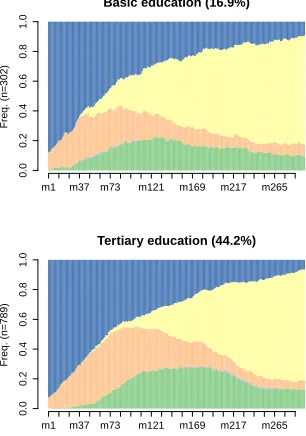
Figure 3: Distribution of partnership status by educational level
Basic education (16.9%)
Freq. (n=302)
m1 m37 m73 m121 m169 m217 m265
0.0
0.2
0.4
0.6
0.8
1.0
Secondary education (38.9%)
Freq. (n=696)
m1 m37 m73 m121 m169 m217 m265
0.0
0.2
0.4
0.6
0.8
1.0
Tertiary education (44.2%)
Freq. (n=789)
m1 m37 m73 m121 m169 m217 m265
0.0
0.2
0.4
0.6
0.8
1.0
Cohabitation LATandMarried LAT
MarriedCohabiting Single
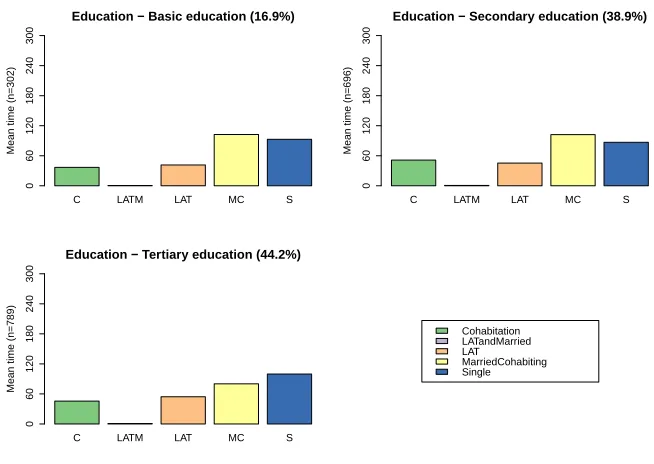
Figure 4: Mean time spent in partnership status between the ages of 15 and 40 by educational level
C LATM LAT MC S
Education − Basic education (16.9%)
Mean time (n=302)
0
60
120
180
240
300
C LATM LAT MC S
Education − Secondary education (38.9%)
Mean time (n=696)
0
60
120
180
240
300
C LATM LAT MC S
Education − Tertiary education (44.2%)
Mean time (n=789)
0
60
120
180
240
300
Cohabitation LATandMarried LAT
MarriedCohabiting Single
Source: Pairfam waves 1–6, own research.
I also differentiate between individuals who have achieved basic, secondary, or ter-tiary education by the age of 40. When comparing these educational groups, I observe that a higher proportion of individuals who have achieved tertiary educational level by the age of 40 live in an unmarried partnership or cohabitation compared to individuals who have achieved a basic educational level by the same age. Furthermore, the majority of in-dividuals with basic education marry earlier than inin-dividuals with tertiary education (see Figure 3). I continue by taking a closer look at the mean time these educational groups spend in the respective partnership statuses between the ages of 15 and 40. The higher the individual educational level at age 40, the smaller the mean time spent in a marriage (see Figure 4). This can be explained by the fact that more highly educated individuals marry later than individuals with a lower level of education (see Figure 3). Individuals who achieved tertiary education at age 40 spend the highest amount of time being single between the ages of 15 and 40, compared to individuals who achieved basic or secondary education at age 40.
Germans cohabit and enter LAT partnerships, than do individuals of the two other ethnic groups (see Figure 5). Of course, the two ethnic minorities differ as well in their part-nership trajectories. Fewer individuals with a Turkish background than ethnic German immigrants cohabit or enter a LAT partnership. Furthermore, the status of being mar-ried but not (yet) cohabiting is almost exclusively occupied by individuals with a Turkish background. I call this status a ‘LAT marriage.’
Figure 5: Distribution of partnership status by ethnic background
Native German, no migration background (88.9%)
Freq. (n=2703)
m1 m37 m73 m121 m169 m217 m265
0.0
0.2
0.4
0.6
0.8
1.0
Ethnic−German Immigrant (Aussiedler) (5.1%)
Freq. (n=155)
m1 m37 m73 m121 m169 m217 m265
0.0
0.2
0.4
0.6
0.8
1.0
Turkish Background (6%)
Freq. (n=184)
m1 m37 m73 m121 m169 m217 m265
0.0
0.2
0.4
0.6
0.8
1.0
Cohabitation LATandMarried LAT
MarriedCohabiting Single
Source: Pairfam waves 1–6, own research.
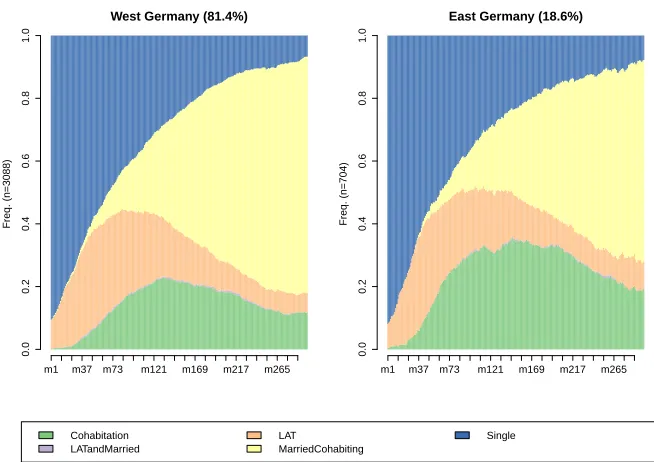
marry at a similar age as western Germans (see Figure 6). Finally, I observe that the per-centage of singles at age 40 in eastern and western Germany differ tremendously (32.17% in western vs. 22.98% in eastern Germany).
Figure 6: Distribution of partnership status among eastern and western Germans between the ages of 15 and 40
West Germany (81.4%)
Freq. (n=3088)
m1 m37 m73 m121 m169 m217 m265
0.0
0.2
0.4
0.6
0.8
1.0
East Germany (18.6%)
Freq. (n=704)
m1 m37 m73 m121 m169 m217 m265
0.0
0.2
0.4
0.6
0.8
1.0
Cohabitation LATandMarried
LAT
MarriedCohabiting
Single
Figure 7: Mean time spent in partnership status between the ages of 15 and 40 by region (eastern and western Germany)
C LATM LAT MC S
East−West − West Germany (81.4%)
Mean time (n=3088)
0
60
120
180
240
300
C LATM LAT MC S
East−West − East Germany (18.6%)
Mean time (n=704)
0
60
120
180
240
300
Cohabitation LATandMarried
LAT
MarriedCohabiting
Single
Source: Pairfam waves 1–6, own research.
Figure 8: Mean time of urban vs. rural residents spent in partnership status between the ages of 15 and 40
C LATM LAT MC S
Urban Rural − Rural (28.1%)
Mean time (n=1065)
0
60
120
180
240
300
C LATM LAT MC S
Urban Rural − Urban (71.9%)
Mean time (n=2727)
0
60
120
180
240
300
Cohabitation
LATandMarried LATMarriedCohabiting Single
Figure 9: Distribution of partnership status of urban and rural residents between the ages of 15 and 40
Rural (28.1%)
Freq. (n=1065)
m1 m37 m73 m121 m169 m217 m265
0.0
0.2
0.4
0.6
0.8
1.0
Urban (71.9%)
Freq. (n=2727)
m1 m37 m73 m121 m169 m217 m265
0.0
0.2
0.4
0.6
0.8
1.0
Cohabitation
LATandMarried LATMarriedCohabiting Single
Source: Pairfam waves 1–6, own research.
4.2 Cluster analysis and multinomial logistic regression
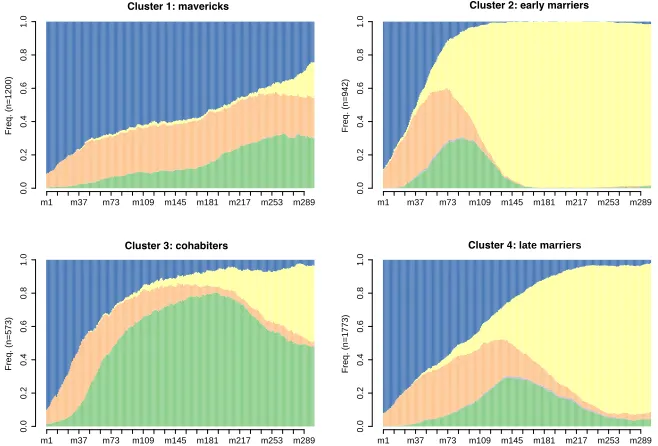
Having provided descriptive evidence on the quantum and timing of individual sequences, I now present the sequencing of events, that is, the order in which events occur in indi-viduals’ lives. To this end, I first group similar life course trajectories into clusters, each representing a typology of a partnership trajectory. I choose a four-cluster solution based on the dendrogram and clarity of interpretation. 26.74 % of the whole sample belong to Cluster 1, 21 % to Cluster 2, 13 % to Cluster 3, and 40 % to Cluster 4.5 A standard life course is not observable in this cohort. Instead, depending on their individual char-acteristics and regional living conditions, individuals split up into four different kinds of trajectories.
4.2.1 Descriptive evidence on the four clusters
Beginning with Cluster 1, the ‘mavericks’ cluster, most members in this group experience long periods in which they are single (see Figure 10). Most individuals in this cluster stay single until month 260 (age 36). Fewer members of the ‘mavericks’ cluster are married at the age of 40 than members of the ‘early marriers’ cluster (Cluster 2), in which nearly everyone is married. A higher number of members of Cluster 1 is cohabiting or in a LAT partnership at age 40 than in Clusters 2 (‘early marriers’) and 4 (‘late marriers’), however. In the second cluster, the ‘early marriers’ cluster, most members are married at age 27 (month 145) and from age 30 (month 181) on nearly the whole cluster is married. Most members of this group switch from a LAT partnership or a cohabitation into a marriage at a comparatively early age.
The third cluster is called the ‘cohabiters’ cluster, as most members in this cluster choose to cohabit instead of getting married until they are 40. Most individuals in this cluster have been in a relationship since the age of 21, but remain in a permanent co-habitation or LAT partnership until they are 40. I also observe that most members in the ‘cohabiters’ cluster cohabit by age 21 (month 73) (see Figure 10).
Figure 10: Distribution of partnership statuses in clusters 1–4
Cluster 1: mavericks
Freq. (n=1200)
m1 m37 m73 m109 m145 m181 m217 m253 m289
0.0
0.2
0.4
0.6
0.8
1.0
Cluster 2: early marriers
Freq. (n=942)
m1 m37 m73 m109 m145 m181 m217 m253 m289
0.0
0.2
0.4
0.6
0.8
1.0
Cluster 3: cohabiters
Freq. (n=573)
m1 m37 m73 m109 m145 m181 m217 m253 m289
0.0
0.2
0.4
0.6
0.8
1.0
Cluster 4: late marriers
Freq. (n=1773)
m1 m37 m73 m109 m145 m181 m217 m253 m289
0.0
0.2
0.4
0.6
0.8
1.0
Figure 11: Representative sequences in each of the four clusters
Cluster
1
3 representative(s) (n=1200)
m1 m25 m61 m97 m133 m169 m205 m241 m277 Cr iter ion=density , co v er age=26.6% 0 150 300 450 599 B A (A)
Discrepancy (mean dist. to center)
(B)
Mean dist. to representativ
e seq.
Cluster
2
2 representative(s) (n=942)
m1 m25 m61 m97 m133 m169 m205 m241 m277 Cr iter ion=density , co v er age=32.2% 0 150 300 450 599 B A (A)
Discrepancy (mean dist. to center)
(B)
Mean dist. to representativ
e seq.
Cluster
3
6 representative(s) (n=573)
m1 m25 m61 m97 m133 m169 m205 m241 m277 Cr iter ion=density , co v er age=25.5% 0 150 300 450 599 B A (A)
Discrepancy (mean dist. to center)
(B)
Mean dist. to representativ
e seq.
Cluster
4
5 representative(s) (n=1773)
m1 m25 m61 m97 m133 m169 m205 m241 m277 Cr iter ion=density , co v er age=25.6% 0 150 300 450 599 B A (A)
Discrepancy (mean dist. to center)
(B)
Mean dist. to representativ
e seq. Cohabitation LA T andMarr ied LA T Marr iedCohabiting Single missing
We learn from Figure 11 that 26.6 % of the ‘mavericks’ cluster are represented by three representative sequences (see Plot 1). The representative sequences in each plot are plotted bottom-up according to their representativeness score. In the representative sequence with the highest representativeness score in the first plot an individual stays sin-gle until about age 35 (month 241). He/she then starts a LAT relationship followed by a short phase of cohabitation. In Plot 2, two representative sequences portray 32.2 % of the ‘early marriers’ cluster. The representative sequence with the highest representativeness score on the bottom of this plot shows that an individual stays single roughly until the age of 18, briefly enters a LAT relationship and then gets married at a comparatively young age (about age 20, month 61). In Cluster 3 (‘cohabiters’) 25.5 % of the sequences are represented by six representative sequences. The representative sequence with the high-est representative score at the bottom of the plot shows an individual who stays single until about the age of 17 (month 25). He/she then enters a LAT relationship until the age of 20, when he/she starts cohabiting. Finally, 25.6 % of the ‘late marriers’ cluster are represented by five representative sequences. Here, the representative sequence with the highest representativeness score at the bottom shows that individuals are single until about the age of 23, then cohabit briefly and get married.
4.2.2 Multinomial logistic regression and regression tree
Which characteristics make individuals prone to pursuing one of these specific partner-ship formation trajectories? I observe that more men (15%) than women (12%) belong to the ‘mavericks’ cluster, while more women (15%) than men (6%) belong to the ‘early marriers’ cluster. The percentages of men and women belonging to both other clusters are similar. Going beyond descriptive statistics, I conduct a multinomial logistic regression and thus calculate the probability of pursuing a specific social pathway, i.e., belonging to one of the four clusters, depending on individual socioeconomic characteristics or type of living environment. I regress gender, education, ethnic background, urban or rural living, and growing up in eastern or western Germany on cluster membership in the ‘mavericks’ vs. the remaining three clusters.6
Table 1 shows the probability of pursuing a specific social pathway according to several individual and regional characteristics. First, I discover that women have a signif-icantly higher probability than men of belonging to the ‘early marriers’ than the ‘maver-icks’ cluster. Their likelihood of belonging to the ‘cohabiters’ vs. the ‘maver‘maver-icks’ cluster is also significantly higher than men’s.
Educational background does not significantly increase or lower the probability of pursuing the ‘early marriers’ or ‘late marriers’ trajectory. This could be due to individual
6Due to missing values in the education, ethnic background, urban, and eastern vs. western variables, the
characteristics such as gender and ethnicity explaining part of an individual’s educational career. However, having achieved a secondary instead of a basic educational level by the age of 40 significantly increases the probability of belonging to the ‘cohabiters’ cluster relative to the ‘mavericks’ cluster.
Ethnic background matters significantly for the course of longitudinal partnership histories: The probability of pursuing a pathway similar to that of individuals in the ‘early marriers’ cluster is significantly higher for individuals with a Turkish background or ethnic German immigrants (‘Spätaussiedler’) than for native Germans.
Living in an urban instead of a rural environment has a significant negative effect on the likelihood of pursuing the ‘early marriers’ trajectory instead of the ‘mavericks’ trajec-tory. Finally, residency in eastern instead of western Germany significantly increases the probability of belonging to the ‘cohabiters’ rather than the ‘mavericks’ cluster. The latter findings could be related to the fact that the majority of eastern Germans cohabit and do not get married until age 40.
Table 1: Multinomial logistic regression: individual characteristics on cluster membership (pairfam waves 1–6), log odds, n=1,481, standard errors in parentheses
Dependent variable: Ma v ericks vs. Ma v ericks vs. Ma v ericks vs. early marriers cohabiters late marriers Female (ref. male) 1.045 ∗∗∗ 0.777 ∗∗∗ − 0.002 (0.166) (0.190) (0.133) Education (ISCED) (ref. basic education) Secondary education 0.430 0.766 ∗ 0.328 (0.314) (0.452) (0.294) T ertiary education − 0.129 0.472 0.412 (0.318) (0.454) (0.291) Ethnicity (ref. nati v e German) Ethnic German immigrant (‘Spätaussiedler’) 1.715 ∗∗∗ 0.652 − 0.039 (0.443) (0.600) (0.499) T urkish background 2.531 ∗∗∗ − 0.276 0.680 (0.510) (1.112) (0.541) Urban (ref. rural li ving) − 0.389 ∗∗ − 0.170 − 0.163 (0.174) (0.205) (0.152) Eastern German y (ref. western German y) 0.165 0.825 ∗∗∗ − 0.284 (0.198) (0.207) (0.174) Constant − 0.887 ∗∗∗ − 1.916 ∗∗∗ 0.188 (0.344) (0.480) (0.308) Residual de viance 3687.714
Figure 12: Regression tree
[ West Germany ] n: 1199 s2: 129
Split: isced R2:0.00284
Legend
• Cohabitation
• LATandMarried • LAT 1::1 MarriedCohabiting
• Single
• missing
Root
n: 4488 s2: 140
Split: ethnic R2:0.0147
Global quality Pseudo F: 27.344 *** Pseudo R2: 0.03532 *** Levene: 30.767 ***
German native
n: 4149 s2: 139 Ethnic minorities n: 339 s2: 113
Split: sex R2:0.0139
[ 1 Male]
n: 1854 s2: 133
Split: east R2:0.00676 [ East Germany ] with NA
n: 655 s2: 138
[ 2 Female] n: 2295 s2: 141
Split: east R2:0.00624
[ West Germany ] n: 1560 s2: 137
Split: isced R2:0.0035
[East Germany]withNA n: 735 s2: 147
Basic/Secondary education
n: 891 s2: 128 •Basic/n: 413 s2: 144 Secondary education [Tertiaryn: 1147 s2: 134 education]withNA
Source: Pairfam waves 1–6, own research.
The least important predictor is educational background. The partnership histories of in-dividuals with a secondary educational level by the age of 40 differ significantly from the partnership histories of individuals with a tertiary educational level. Please note that living in an urban or rural environment is not a significant discriminator between cases.
4.2.3 Accounting for the turbulence of partnership trajectories between the ages of 15 and 40
Another feature of individual social pathways is the turbulence of partnership trajectories. How is the diversity of states individuals experience throughout their life course related to sex, ethnic background, educational level, living in an urban or rural context, or growing up in eastern or western Germany? I calculate the turbulence and regress gender, ethnic background, educational level, urban living, and living in eastern or western Germany on turbulence. Gender is not significantly related to the turbulence in partnership statuses between the ages of 15 and 40. Ethnicity, in contrast, matters significantly for the diversity in partnership status (see Table 2). Ethnic German immigrants and individuals with a Turkish background experience a lower diversity of states than native Germans in the same period. This difference is related to the fact that both ethnic German immigrants and individuals with a Turkish migration background marry (early), while most native Germans experience several LAT partnerships or cohabitations during their transition to adulthood. Education is significantly related to the diversity in partnership statuses as well. The higher the diversity in partnership history during the transition to adulthood, the higher the individual’s educational level.7 In regard to regional characteristics, living in an urban area is positively related to highly turbulent partnership histories. However, living in eastern or western Germany is not significantly related to the diversity of partnership statuses between the ages of 15 and 40.
7In Table A1 in the appendix, I present the results of the linear regression model with entropy as the dependent
Table 2: Linear regression model: determinants of turbulence of partnership trajectories between the ages of 15 and 40 (pairfam waves 1–6)
Dependent variable:
Turbulence
Female (ref. male) −0.227
(0.161)
Ethnicity (ref. native German)
Ethnic German immigrant (‘Spätaussiedler’) −1.708∗∗∗ (0.448)
Turkish background −2.901∗∗∗
(0.447)
Education (ISCED) (ref. basic education)
Secondary education 0.518
(0.344)
Tertiary education 0.935∗∗∗
(0.346)
Urban living (ref. rural living) 0.453∗∗
(0.179)
Eastern Germany (ref. western Germany) −0.188
(0.201)
Constant 7.390∗∗∗
(0.368)
Observations 1,481
R2 0.056
Adjusted R2 0.051
Residual std. error 3.039 (df = 1473)
F statistic 12.446∗∗∗(df = 7; 1473)
5. Summary and discussion
Previous research has mostly analyzed cross-sectional individual or aggregate data to study how individual characteristics and regional living conditions relate to individual partnership trajectories. As a result, it has remained unnoticed that whole partnership trajectories can be quite diverse depending on individuals’ characteristics and living con-ditions. To shed light on partnership formation in a recent cohort, I studied the individual longitudinal partnership trajectories between the ages of 15 and 40 of the 1971–1973 cohort in the pairfam dataset through a sequence analysis. I examined how individual partnership trajectories relate to individual characteristics and place of residence. I con-tinued by studying turbulence in partnership histories and how it depends on sex, ethnic background, educational level, living in an urban or rural context, or growing up in east-ern or westeast-ern Germany.
I presented results on the quantum, timing, and sequencing of events and showed that partnership trajectories differ according to individual characteristics. Women enter partnerships, cohabit, or get married at a younger age than do men. The mean time they spend in partnerships until the age of 40 is thus higher. Individual partnership trajectories also differ by educational level. The higher the educational level, the later individuals marry or move in together with their partners. Ethnicity matters as well for individual decision-making: While more native Germans cohabit or are in a LAT-partnership, a comparatively higher number of ethnic German immigrants or individuals with a Turkish background marry at a younger age. There is also a partnership status that is unique to individuals with a Turkish background: Some members marry before moving in together. I call this status a LAT marriage. Cultural norms of family and personal life thus differ tremendously between ethnic groups and still affect individual decision-making.
I continued by studying the differences in partnership trajectories between individ-uals living in western or eastern Germany and in urban or rural surroundings. While a higher number of individuals in western Germany are married at the age of 40, a higher number of eastern Germans are cohabiting or in a LAT partnership at this age. This find-ing might be related to differences in the perception of cohabitation in eastern and western Germany. In western Germany, cohabitation is regarded as a form of self-fulfillment in early life, while marriage serves as security and is socially expected when having children (Perelli-Harris et al. 2014). In eastern Germany, however, marriage and cohabitation are seen as equivalent (ibid.). Urban and rural residents in Germany do not differ tremen-dously with regard to the kinds of partnership statuses they happen to occupy between the ages of 15 and 40. They do differ, however, in the mean time spent in the respec-tive partnership statuses: Urban residents spend more time as singles and rural residents spend more time in a marriage before the age of 40.
individuals in the four groups experience a LAT relationship or cohabited before they married. Many European societies are hypothesized to be going through a transition in the way in which men and women become couples or partners (Kiernan 2001). The tran-sition consists of four different stages, with cohabitation becoming socially acceptable as an alternative to marriage in the third stage and cohabitation and marriage becoming indistinguishable in the fourth stage. In the light of this theory and my findings, Ger-many can be classified as being in the third stage. Cohabitation seems to have become so socially acceptable that members of all four groups engage in cohabitation during their lives. Schneider’s (2008) study of the 1995–2005 marriage cohorts is consistent with this finding: It shows that the majority of couples in this cohort move in together before they marry.
My analysis does not provide evidence that more men than women cohabit, but most women enter a LAT relationship or cohabit at an earlier age than men. Men do therefore not have a higher likelihood of cohabiting or entering a LAT partnership than women. My first hypotheses (Hypotheses 1 a and 1b) therefore remain unconfirmed. The mean time women spend in a marriage is higher as they marry earlier. This finding highlights the advantages of applying holistic approaches such as sequence analysis, which makes it possible to differentiate between the quantum and timing of events.
Furthermore, individuals in the group of more highly educated individuals have a higher likelihood of experiencing a LAT partnership or cohabitation than individuals with a lower education (Hypothesis 2). My second hypothesis is thus confirmed. With increas-ing age, the likelihood of marryincreas-ing increases as well, as I expected (Hypothesis 3). The timing and quantum of marriage are significantly influenced by individual characteristics and the institutional settings they grew up in, however. I find significant differences in the propensity to marry at an early age between the different ethnic groups: A higher number of individuals with Turkish background than native Germans in my sample marry at an early age (at around age 21) and they have a significantly higher probability of marrying early. Hypothesis 4 is thus confirmed. I also show that socialization in specific insti-tutional settings matters: Relative to being married, more individuals in eastern than in western Germany are cohabiting at the age of 40 (Hypothesis 5). They are as well more likely to cohabit instead of being married at the age of 40. Also, the likelihood that one is single or in a LAT relationship is higher among eastern than western Germans. Urban residents are also significantly more likely than rural residents to remain single until the age of 40 and they are also less likely to get married until this age. Hypothesis 6 is thus partly confirmed.
Apart from the influence of individual characteristics and place of residence on part-nership history patterns, I also examined how these characteristics relate to the turbulence in partnership histories. I showed that the diversity of longitudinal partnership histories is significantly related to differences in individual characteristics and regional living con-ditions. Highly educated individuals have significantly more turbulent partnership histo-ries than individuals with a basic educational level. Ethnic background has a significant impact on the turbulence of partnership histories as well: Ethnic minorities experience significantly lower turbulence in partnership histories than do native Germans. Urban residents experience a higher diversity of partnership statuses, while rural residents spend more time in a marriage or cohabitation between the ages of 15 and 40. Summing up, social groups follow different social pathways, and longitudinal partnership histories vary depending on an individual’s living environment. Social pathways depend on the place-ment of individuals within the social structure or the social setting they live in.
Contrary to statements in the literature on the deinstitutionalization of marriage (Cherlin 2004), a quarter of my sample still chooses to marry early, at about age 21. Cohabitation already forms part of the majority of individual life courses in my sample proving that it has been accepted as a normal phase in individual lives. By discovering four distinct social pathways, I show that a high level of destandardization in Western industrialized societies can not be observed. At the same time, neither can a standard trajectory be observed.
My findings also inform previous research and theories on the Second Demographic Transition. My findings highlight the variety of behavioral patterns underlying the as-sumption of a uniform development. Besides regional cultural differences in the unfold-ing of the Second Demographic Transition, as proposed by, e.g., Sobotka (2008), there are also differences by membership in social groups or place of residence.
My results do not provide evidence on the degree of individualization over time. A drawback of limiting my sample to a single cohort is that my analysis does not provide information about how life course trajectories have developed across cohorts. A natural extension of my work would therefore be to analyze changes in trajectories over time (and space). This will be possible when more time has elapsed and thus more information is available on the life course histories of the 1981–1983 and 1991–1993 birth cohorts in the pairfam dataset.
6. Acknowledgements
References
Abbott, A. and Tsay, A. (2000). Sequence analysis and optimal matching methods in sociology: Review and prospect. Sociological Methods & Research 29(1): 3–33.
doi:10.1177/0049124100029001001.
Becker, G.S. (1991). A treatise on the family: Enlarged edition. Cambridge: Harvard University Press.
Brüderl, J., Hank, K., Huinink, J., Nauck, B., Neyer, F.J., Walper, S., Alt, P., Buhr, P., Castiglioni, L., Finn, C., Hajek, K., Herzig, M., Lenke, B.H.M.R., Müller, B., Peter, T., Salzburger, V., Schmiedeberg, C., Schubach, E., Schütze, P., Schumann, N., Thönnissen, C., and Wilhelm, B. (2015). The German Family Panel (pairfam), Data
file Version 6.0.0. Cologne: GESIS Data Archive. doi:10.4232/pairfam.5678.6.0.0.
Cherlin, A.J. (2004). The deinstitutionalization of American marriage. Journal of
Mar-riage and Family66(4): 848–861. doi:10.1111/j.0022-2445.2004.00058.x.
Diekmann, A. (1996). Zeitpunkt der Erstheirat und Streuung des Heiratsalters: Wandel von Heiratsmustern in der Kohortenfolge. In: Behrens, J. and Voges, W. (eds.).
Kritis-che Übergänge: Statuspassagen und sozialpolitisKritis-che Institutionalisierung.Frankfurt
am Main: Campus: 154–168.
Dorbritz, J. (2008). Germany: Family diversity with low actual and desired fertility.
Demographic Research19(17): 557–598.doi:10.4054/DemRes.2008.19.17.
Elder, G.H.J., Kirkpatrick Johnson, M., and Crosnoe, R. (2003). The emergence and development of life course theory. In: Mortimer, J.T. and Shanahan, M.J. (eds.).
Handbook of the life course. New York: Kluwer Academic/Plenum Publishers: 3–19.
doi:10.1007/b100507.
Elzinga, C.H. and Liefbroer, A.C. (2007). De-standardization of family-life trajectories of young adults: A cross-national comparison using sequence analysis.European Journal
of Population23(3–4): 225–250. doi:10.1007/s10680-007-9133-7.
Gabadinho, A., Ritschard, G., Müller, N., and Studer, M. (2011). Analyzing and visual-izing state sequences in R with TraMineR.Journal of Statistical Software40(4): 1–37.
doi:10.18637/jss.v040.i04.
Hullen, G. (2001). Transition to adulthood in Germany. In: Corijn, M. and Klijzing, E. (eds.).Transitions to adulthood in Europe. Dordrecht: Springer Netherlands: 153–172.
doi:10.1007/978-94-015-9717-3_7.
Iacovou, M. (2002). Regional differences in the transition to adulthood. The
Annals of the American Academy of Political and Social Science 580(1): 40–69.
Kiernan, K. (2001). The rise of cohabitation and childbearing outside marriage in Western Europe. International Journal of Law, Policy and the Family 15: 1–21.
doi:10.1093/lawfam/15.1.1.
Klärner, A. (2015). The low importance of marriage in eastern Germany: Social norms and the role of peoples’ perceptions of the past. Demographic Research33(9): 239– 272.doi:10.4054/DemRes.2015.33.9.
Liefbroer, A.C., Poortman, A.R., and Seltzer, J. (2015). Why do intimate partners live apart? Evidence on LAT relationships across Europe. Demographic Research32(8): 251–286.doi:10.4054/DemRes.2015.32.8.
Manning, W.D. and Smock, P.J. (1995). Why marry? Race and the transition to marriage among cohabitors. Demography32(4): 509–520. doi:10.2307/2061671.
Milewski, N. (2011). Transition to a first birth among Turkish second-generation mi-grants in Western Europe. Advances in Life Course Research 16(4): 178–189.
doi:10.1016/j.alcr.2011.09.002.
Mortelmans, D., Pasteels, I., Régnier-Loilier, A., Vignoli, D., and Mazzuco, S. (2015). Similar incidence, different nature? Characteristics of LAT rela-tionships in France and Italy. In: Analysis of determinants and prevalence
of LAT. European Union: 54–77, vol. 25.
www.familiesandsocieties.eu/wp-content/uploads/2015/01/WP25MortelmansEtAl.pdf#page=79.
Perelli-Harris, B., Mynarska, M., Klaerner, A., and Vignoli, D. (2014). To-wards a new understanding of cohabitation: Insights from focus group re-search across Europe and Australia. Demographic Research 31(34): 1043–1078.
doi:10.4054/DemRes.2014.31.34.
Régnier-Loilier, A., Beaujouan, É., and Villeneuve-Gokalp, C. (2009). Neither single, nor in a couple: A study of living apart together in France. Demographic Research
21(4): 75–108.doi:10.4054/DemRes.2009.21.4.
Robette, N. (2010). The diversity of pathways to adulthood in France: Evidence from a holistic approach. Advances in Life Course Research 15(2–3): 89–96.
doi:10.1016/j.alcr.2010.04.002.
Salmela-Aro, K., Kiuru, N., Nurmi, J.E., and Eerola, M. (2011). Mapping pathways to adulthood among Finnish university students: Sequences, patterns, variations in family- and work-related roles. Advances in Life Course Research 16(1): 25–41.
doi:10.1016/j.alcr.2011.01.003.
Schneider, N.F. (2008). Beziehungserfahrungen und Partnerschaftsverläufe vor der Heirat.Zeitschrift für Familienforschung20(2): 131–156.
Snyder, A.R. and Brown, S.L. (2004). Residential differences in family forma-tion: The significance of cohabitation. Rural Sociological Society69(2): 235–260.
doi:10.1526/003601104323087598.
Sobotka, T. (2008). Overview chapter 6: The diverse faces of the second demographic transition in Europe. Demographic Research 19(8): 171–224.
doi:10.4054/DemRes.2008.19.8.
Sobotka, T. and Adigüzel, F. (2003). Religiosity and spatial demographic differences in the Netherlands.SOM Research Report, University of Groningen02F65: 1–23.
Studer, M. and Ritschard, G. (2016). What matters in differences between life trajecto-ries: A comparative review of sequence dissimilarity measures. Journal of the Royal
Statistical Society Series A179(2): 481–511.doi:10.1111/rssa.12125.
Studer, M., Ritschard, G., Gabadinho, A., and Mu, N.S. (2011). Discrepancy analysis of state sequences. Sociological Methods & Research 40(3): 471–510.
doi:10.1177/0049124111415372.
Van De Kaa, D.J. (1987). Europe’s second demographic transition. Population Bulletin
42(1): 1–59.
Ward, J.H. (1963). Hierarchical grouping to optimize an objective func-tion. Journal of the American Statistical Association 38(301): 236–244.
doi:10.1080/01621459.1963.10500845.
Widmer, E.D. and Ritschard, G. (2009). The de-standardization of the life course: Are men and women equal? Advances in Life Course Research14(1–2): 28–39.
doi:10.1016/j.alcr.2009.04.001.
Xie, Y., Raymo, J.M., Goyette, K., and Thornton, A. (2003). Economic poten-tial and entry into marriage and cohabitation. Demography 40(2): 351–367.
Appendix
Table A1: Linear regression model: determinants on entropy of partnership trajectories between the ages of 15 and 40 (pairfam waves 1–6)
Dependent variable:
Entropies
Female −0.005
(ref. male) (0.009)
Ethnicity (ref. native German)
Ethnic German immigrant (‘Spätaussiedler’) −0.098∗∗∗ (0.026)
Turkish background −0.154∗∗∗
(0.026)
Education (ISCED) (ref. basic education)
Secondary education 0.043∗∗
(0.020)
Tertiary education 0.063∗∗∗
(0.020)
Urban living (ref. rural living) 0.018∗
(0.010)
Eastern Germany (ref. western Germany) −0.003
(0.012)
Constant 0.545∗∗∗
(0.022)
Observations 1,481
R2 0.048
Adjusted R2 0.044
Residual std. error 0.178 (df = 1473)
F statistic 10.661∗∗∗(df = 7; 1473)