ISSN 1689-9024
E
DITORIALB
OARDDr. hab. Maciej Bernatt (University of Warsaw, CARS Scientific Secretary) – Editor-in-Chief Prof. Agata Jurkowska-Gomuïka (University of IT and Management in Rzeszów)
– Deputy Editor-in-Chief, Section Editor (Substantive Antitrust Law) Prof. Anna Piszcz (University of Biaïystok) – Deputy Editor-in-Chief,
Section Editor (Public Antitrust Enforcement)
Prof. Vlatka Butorac Malnar (University of Rijeka) – Section Editor (Private Antitrust Enforcement)
Prof. Katalin J. Cseres (University of Amsterdam) – Section Editor (Competition and Consumers)
Ewelina D. Sage, Ph.D. (OXON) (University of Warsaw, CARS International Coordinator) – Section Editor (Competition and Regulation)
Prof. Amedeo Arena (University of Naples ‘Federico II’) – Section Editor (European Union) Dr Laura Zoboli (University of Warsaw) – Section Editor (Digital Markets)
Magdalena Kieïkiewicz – Editorial Support
S
CIENTIFICB
OARDProf. Anna Fornalczyk, Chairwoman – COMPER Fornalczyk & Wspólnicy Prof. Stanisïaw PiÈtek, Vice-Chairman – University of Warsaw, Faculty of Management
Prof. Eleanor Fox – New York University, School of Law
Prof. Katarina Kolesna – Comenius University in Bratislava, Faculty of Law Prof. Janusz Lewandowski – Warsaw University of Technology
Dr Marek Martyniszyn – Queen's University Belfast
Prof. Johannes Masing – University of Freiburg; judge at the Federal Constitutional Court in Karlsruhe
Prof. Alojzy Z. Nowak – Dean of the Faculty of Management of the University of Warsaw Prof. Gheorghe Oprescu – Polytechnic University of Bucharest, Romania
Prof. Jasminka PecotiÊ Kaufman – University of Zagreb, Faculty of Economics and Business, Department of Law
Prof. Jürgen Säcker – Free University of Berlin, Institute for German and European Business, Competition and Regulation Law
Prof. Tadeusz Skoczny – University of Warsaw, CARS director Prof. Stanisïaw Sotysiñski – Soïtysiñski, Kawecki, SzlÚzak LPP Prof. Andrzej SopoÊko, University of Warsaw, Faculty of Management;
former President of the Competition and Consumer Protection Office Prof. Rimantas Stanikunas – Vilnius University, Faculty of Economics; former Chairman of the Competition Council of the Republic of Lithuania
Prof. Lubos Tichy – Charles University, Prague, Faculty of Law Prof. Tihamér Tóth – Pázmány Catholic University in Budapest
Prof. Spencer Waller, Loyola University Chicago Prof. Richard Whish – University of London, Kings College
Prof. Marek Wierzbowski – University of Warsaw, Faculty of Law and Administration; attorney-in-law
Prof. Anna Zieliñska-GïÚbocka – University of Gdañsk, Faculty of Economics; Member of the Monetary Policy Council
E
DITORIALO
FFICECentre for Antitrust and Regulatory Studies (CARS) University of Warsaw, Faculty of Management
PL – 02-678 Warszawa, 1/3 Szturmowa St. Tel. + 48 22 55 34b126; Fax. + 48 22 55 34b001
e-mail: [email protected]
Y
EARBOOK
of
A
NTITRUST
and
R
EGULATORY
S
TUDIES
Volume Editors:
MACIEJ BERNATT
AGATA JURKOWSKA-GOMUŁKA
Centre for Antitrust and Regulatory Studies
University of Warsaw, Faculty of Management
One hundred and ninth Publication of the Publishing Programme
Copyright by Wydawnictwo Naukowe Wydziału Zarządzania Uniwersytetu Warszawskiego, Warszawa 2019
Language editor: Ewelina D. Sage (English); Laura Zoboli (French)
Editorial check: Dr Claudia Massa
Statistic editor: Prof. Jerzy Wierzbiński
Cover: Dariusz Kondefer
ISSN 1689-9024
The original (reference) version of the journal is printed.
PUBLISHER
University of Warsaw Faculty of Management Press PL – 02-678 Warsaw, 1/3 Szturmowa St.
Tel. (+48-22) 55-34-164
e-mail: [email protected] www.wz.uw.edu.pl
LAYOUT
ELIPSA Publishing House
PL – 00-189 Warszawa, 15/198 Inflancka St. Tel. (+48-22) 635-03-01
YEARBOOK OF ANTITRUST AND REGULATORY STUDIES
VOL. 2019, 12(19)
Contents
Editorial foreword ... 5
ARTICLES
KRYSTYNA KOWALIK-BAŃCZYK, Intensity of Judicial Review of Fines in
EU Competition Law ... 9 ANDRZEJ NAŁĘCZ, ‘A More Human Approach’. Human Rights,
Obligations of the State and Network Neutrality in Europe ... 29 ARTUR SALBERT, Compatibility of Polish Law with EU Law Concerning
the Use of Electronic Communications Means for Direct Marketing Purposes ... 53 OLEKSANDR KHLOPENKO, International Anti-Money Laundering
Regulations Through the Prism of Financial Inclusion and
Competition ... 75 ELIAS ZIGAH, Energy Security of West Africa: the Case of Natural Gas ... 91
CASE COMMENTS AND LEGISLATION REVIEWS
JUDIT FIRNIKSZ, BORBÁLA DÖMÖTÖRFY, Information Exchange Going
Digital – Challenges to Hungarian Competition Law Enforcement ... 111 LAURA SKOPOWSKA, Addressing Anticompetitive Data Aggregation:
a Comment to Bundeskartellamt Decision B6-22/16 ... 139 NORA MEMETI, Evolving Dynamics in Competition Law: A GCC
Y
EARBOOK OFA
NTITRUST ANDR
EGULATORYS
TUDIES4 CONTENTS
DRAGAN GAJIN, Competition Law in Western Balkans: Developments
in 2018 ... 199
BOOKS REVIEWS
Mateusz Błachucki, Ponadnarodowe sieci organów administracji
publicznej oraz ich wpływ na krajowy porządek prawny (na przykładzie ponadnarodowych sieci organów ochrony konkurencji)
[Transgovernmental networks and their impact on domestic legal order (case study of competition authorities networks)], Warsaw 2019.
Presented by RAJMUND MOLSKI... 215
Helene Andersson, Dawn Raids under Challenge. Due Process Aspects of the European Commission’s Dawn Raid Practices, Hart Publishing, 2018.
Presented by MARTA MICHAŁEK-GERVAIS ... 224
Alexandr Svetlicinii, Competition Law in Moldova, Kluwer Law International, 2018.
Presented by MARCO BOTTA ... 229
CONFERENCE REPORTS
The Competition Law and Policy Roundtable Series –
Ex-post Economic Evaluation of Competition Policy Enforcement, University of Zagreb-Faculty of Economics and Business,
12 February 2019.
Reported by JASMINKA PECOTIĆ KAUFMAN, VLADIMIR ARČABIĆ,
MARKO DRUŽIĆ, VELIBOR MAČKIĆ... 231
Judicial Deference in Competition Law, University of Warsaw, 11 October 2018.
Reported by LAURA ZOBOLI ... 236
The European Electronic Communications Code – implementation in Polish law, Faculty of Management of the University of Warsaw, 24 June 2019.
Reported by ANDRZEJ NAŁĘCZ ... 243
Editorial foreword
It is our great pleasure to present to you the newest issue of the Yearbook of Antitrust and Regulatory Studies. We are proud that the YARS continues to attract original contributions discussing the developments in Central Europe and beyond.
The issue covers diverse topics of direct relevance for competition law, competition economics and sector-specific regulation. As usually, they concern both substantive and procedural issues. However, one needs to observe that 2019 brought controversial developments on the institutional side. Starting on 1 January 2020, Poland’s competition authority (UOKiK) will be responsible for combating payment gridlocks. It will be entitled to establish proceedings and impose fines on firms that failed to pay their contractors on time. While the problems with liquidity of Polish SMEs may indeed exist, it is difficult to see any coherence between the UOKiK’s core mission and its new powers. Rather, this is an example of amalgamation of competition authority’s mandate, which is counter-productive to its principal role to protect competition and consumers in the public interest. Taking into account the significant scope of the new tasks, and the related increase in budget, there is a risk that the UOKiK’s new competences will further weaken its prominence as an independent antitrust enforcer. On a more positive note, it is interesting to observe how the preliminary references sent by courts from Central Europe continue to shape EU competition law. Its most recent example is the Hungarian Kuria’s preliminary reference in Budapest Bank, C-228/18, concerning the character of interchange fee agreements and the distinction between agreements prohibited by object/by effect.
Y
EARBOOK OFA
NTITRUST ANDR
EGULATORYS
TUDIES6 EDITORIAL FOREWORD
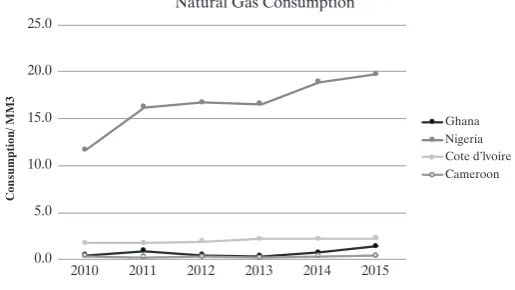
of Internet access services should be safeguarded when determining the rules of network neutrality in Europe. The article is based on the concept of state positive obligations in the human rights field, developed in the case-law of the European Court of Human Rights. Its analysis leads the author to an important conclusion: the state has a positive obligation to prevent private Internet Service Providers from engaging in practices that violate the freedom of expression of the end-users of their services. Artur Salbert analyses the compatibility of Polish rules regulating the use of electronic communications for direct marketing purposes with EU law. The author reaches the conclusion that Polish law, by providing for the opt-in rule as far as the use of electronic mail for direct marketing purposes of products or services similar to ones previously sold or provided, is contrary to EU regulations, which are based on the opt-out rule. Oleksandr Khlopenko addressees, primarily on the basis of Ukrainian experience, the methods of the implementation of anti-money laundering regulations. The author discusses their long-term effects in developing economies, and, in particular, the restrictive effects they produce for financial inclusion in developing economies. The EU competition rules serve as a point of reference for the author’s analysis. Elias Zigah presents, from an interdisciplinary perspective, the challenges faced by West African countries as far as energy security is concerned. The principal challenge is that most of the countries studied do not have a diversified source of natural gas supply. In addition, gas storage facilities are insufficient to safeguard the continuous supply of natural gas. Therefore, disruptions in domestic gas production are likely to adversely affect the natural gas supply security.
EDITORIAL FOREWORD 7
developments, the author argues for a creation of regional competition law system and provides recommendations on how to accomplish this endeavour. Dragan Gajin describes the developments in the field of competition law in Western Balkans (Serbia, Montenegro, Bosnia and Herzegovina, and North Macedonia). The author’s analysis suggests that the countries of the region are more focused on merger review than on antitrust enforcement.
The issue concludes with three book reviews and three conference reports. We would like to thank all who contributed to this issue of YARS. Our special gratitude goes to all peer-reviewers as well as to Claudia Massa, Ewelina D. Sage and Laura Zoboli.
Enjoy reading!
Melbourne and Warsaw, 16 November 2019
Maciej Bernatt
Agata Jurkowska-Gomułka
A R T I
C L E S
Intensity of Judicial Review of Fines in EU Competition Law
by
Krystyna Kowalik-Ba
ń
czyk
*CONTENTS
I. Introduction
II. Scope of unlimited jurisdiction
III. Intensity of control in case of unlimited jurisdiction IV. Functioning of control in case of unlimited jurisdiction V. Conclusions
Abstract
This article examines the scope of the activism of the General Court while exercising its so called unlimited jurisdiction in antitrust matters. It addresses three main questions: what is the exact scope of unlimited jurisdiction; what should the intensity of control in case of unlimited jurisdiction; and how does the functioning of control in case of unlimited jurisdiction looks in practice (how to readapt or recalculate the amount of fine and, if the court is prone to do this, how to replace the reasoning of the European Commission).
Resumé
Cet article examine l’étendue des activités du Tribunal de l’Union européenne dans le cadre de sa pleine juridiction en matière de droit de la concurrence. Il s’agit d’aborder trois questions principales: quel est la portée exacte de la pleine juridiction exercée par le Tribunal? Quelle devrait être l’intensité de son contrôle exercé dans le cadre de cette pleine juridiction? Et de quelle manière ce
* Krystyna Kowalik-Bańczyk is an Associate Professor at the Institute of Law Studies, Polish
Y
EARBOOK OFA
NTITRUST ANDR
EGULATORYS
TUDIES10 KRYSTYNA KOWALIK-BAŃCZYK
contrôle fonctionne-t-il en pratique (comment réadapter ou recalculer le montant de l’amende et, le cas échéant, remplacer le raisonnement de la Commission européenne)?
Key words: unlimited jurisdiction; scope of judicial control; antitrust sanctions; ne ultra petita; measures of public order.
JEL: K21; K42
I. Introduction
Jurisdiction of the General Court of the European Union covers different domains and has a variable character. Considering the statistics1, the General Court is first and foremost an administrative court of the European Union, controlling, under Article 263 of the Treaty on the Functioning of the European Union (TFEU)2, the legality of acts issued by the institutions, organs and other bodies of the European Union. The usual scope of control consists in a legality control, where the General Court analyses the pleas raised by the parties as to the legality of the measure in question3. There are however,
1 Cf the numbers of cases indicated in the Annual Report of 2018 as brought for the General
Court is 1009, out of which 44 concern competition, 79 concern state aids, 349 are direct actions in intellectual property matters and 311 are direct actions of all other kinds. Other types of actions are not falling into the category of administrative jurisdiction.
2 Treaty on the Functioning of the European Union, OJ C 202, 07.06.2016.
3 CJ judgment of 11 September 2014, Case C-67/13 P Groupement des cartes bancaires (CB)
v European Commission, ECLI:EU:C:2014:2204, paras. 44–46: ‘ 44. (…) it is apparent from the EU case-law that, when an action is brought before it under Article 263 TFEU for the annulment of a decision applying Article 81(1) EC, the General Court must generally undertake, on the basis of the evidence adduced by the applicant in support of the pleas in law put forward, a full review of whether or not the conditions for applying that provision are met(see, to that effect, CJEU judgments: of 11 July 1985, Case 42/84 Remia and Others
v Commission, ECLI:EU:C:1985:327, para. 34; of 8 December 2011, Case C-386/10 P Chalkor
v Commission (ECLI:EU:C:2011:815), paras 54 and 62; and of 6 December 2012, Case C-199/11
Otis and Others, ECLI:EU:C:2012:684, para. 59). The General Court must also establish that the Commission has stated reasons for its decision (see, to that effect, judgments in Case C-386/10 P Chalkor v Commission, para. 61 and the case-law cited, and Case C-199/11 Otis and Others, para. 60). Para 45: “In carrying out such a review, the General Court cannot use the margin of assessment which the Commission enjoys by virtue of the role assigned to it in relation to competition policy by the EU and FEU Treaties, as a basis for dispensing with an in-depth review of the law and of the facts (see, to that effect, judgments in C-386/10 P
INTENSITY OF JUDICIAL REVIEW OF FINES IN EU COMPETITION LAW 11
in this administrative jurisdiction, some cases of extended scope of control. Those specific cases cover: first, the control of decisions issued by the Board of Appeal of the Office of the Intellectual Property of the European Union (EUIPO), where the Court exercises a kind of ‘broader’ control4, and, second, the control of penalties imposed by the institutions of the European Union, where the General Court has the so-called unlimited jurisdiction (Article 261 TFEU). According to some (Giacobbo-Peyronnel and Perillo, 2017), the third type of cases of an extended jurisdiction has emerged as a result of the jurisprudence of the Court of Justice, namely the jurisprudence on civil service, where no legal basis exists for this broader jurisdiction but the Court pronounces itself on the pecuniary obligations5.
The notion of unlimited jurisdiction has not been defined in the treaties. Its origin gets back to French administrative law where the ‘recours de pleine juridiction’ is opposed to the narrower control of legality of administrative decisions6.
Without unlimited jurisdiction being defined, it still appears in the Treaty on the Functioning of the European Union. The notion of unlimited jurisdiction is used in Article 261 TFEU, which provides: ‘Regulations adopted jointly by the European Parliament and the Council, and by the Council, pursuant to the provisions of the Treaties, may give the Court of Justice of the European Union unlimited jurisdiction with regard to the penalties provided for in such
apparent from the preceding paragraph, that the General Court must refrain from reviewing the Commission’s legal classification of information of an economic nature. Although the General Court must not substitute its own economic assessment for that of the Commission, which is institutionally responsible for making those assessments (see, to that effect, in particular, judgments: of 10 July 2008, Case C-413/06 P Bertelsmann and Sony Corporation of America
v Impala (ECLI:EU:C:2008:392), para. 145, and of 24 January 2013, Case C-73/11 P Frucona Košice v Commission, ECLI:EU:C:2013:32, para. 89 and the case-law cited), it is apparent from now well-settled case-law that not only must the EU judicature establish, among other things, whether the evidence relied on is factually accurate, reliable and consistent but also whether that evidence contains all the relevant information which must be taken into account in order to assess a complex situation and whether it is capable of substantiating the conclusions drawn from it (see, to that effect, in particular, judgments in C-386/10 P Chalkor v Commission, para. 54 and the case-law cited, and Case C-199/11 Otis and Others, para. 59).’
4 Cf Art. 72, para. 3 of Regulation (EU) 2017/1001 and Art. 61, para 3 of Regulation (CE)
6/2002. But the scope of this review is interpreted in a very narrow way by the CJEU: judgment of 5 July 2011, Case C-263/09 P, Edwin/OHMI, ECLI:EU:C:2011:452, paras. 71 and 72 or judgment of 1 February 2018, Case T-265/17 ExpressVPN/EUIPO (EXPRESSVPN), ECLI:EU:C:2018:79.
5 ECJ judgement of 16 December 1960, Case 44/59 Fiddelaar v European Commission,
Rec. 1077, 1093, ECLI:EU:C:1960:47; ECJ judgment of 5 June 1980, Case 24/79 Oberthűr v European Commission, ECLI:EU:C:1981:207, paras 13 to 15.
Y
EARBOOK OFA
NTITRUST ANDR
EGULATORYS
TUDIES12 KRYSTYNA KOWALIK-BAŃCZYK
regulations’7. When based on Article 261 TFEU, unlimited jurisdiction is exercised on the basis of the following provisions of EU Regulations:
• Article 5 of Regulation 2532/988 concerning the powers of the European Central Bank to impose sanctions
• Article 31 of Regulation 1/20039 on the implementation of the rules on competition
• Article 16 of Regulation 139/200410 on the control of concentrations between undertakings
• Article 84 of Regulation 2018/113911 on common rules in the field of civil aviation and establishing a European Aviation Safety Agency • Article 15 of Regulation 80/200912 on a Code of Conduct for computerised
reservation systems.
The most prominent case of unlimited jurisdiction is provided in antitrust law (Bernardeau and Christienne, Brussels 2013; Vesterdorf, 2009; Arabardijev, 2012, p. 383–402; Jaeger, 2011; Bosco, 2014)13. There the judicial review comprises two very distinct aspects: review of legality and review of the amount of the fines imposed by the Commission. The implications for the General Court are very different, in terms mainly of its possible activism. It still remains an open question if the General Court is to be very active to use its unlimited jurisdiction. In particular, it is not clear if it is to use it towards the sanction only or towards the whole mental process leading to the imposition of a sanction – in
7 Similar provision is contained in Art. 144 of Euroatom Treaty, Treaty establishing the
European Atomic Energy Community, OJ C 203, 07.06.2016.
8 Council Regulation (EC) No 2532/98 of 23 November 1998 concerning the powers of the
European Central Bank to impose sanctions, OJ L 318, 27.11.1998, p. 4–7.
9 Council Regulation (EC) No 1/2003 of 16 December 2002 on the implementation of the
rules on competition laid down in Articles 81 and 82 of the Treaty (Text with EEA relevance), OJ L 1, 04.01.2003, p. 1–25.
10 Council Regulation (EC) No 139/2004 of 20 January 2004 on the control of concentrations
between undertakings (the EC Merger Regulation) (Text with EEA relevance), OJ L 24, 29.01.2004, p. 1–22.
11 Regulation (EU) 2018/1139 of the European Parliament and of the Council of 4 July 2018
on common rules in the field of civil aviation and establishing a European Union Aviation Safety Agency, and amending Regulations (EC) No 2111/2005, (EC) No 1008/2008, (EU) No 996/2010, (EU) No 376/2014 and Directives 2014/30/EU and 2014/53/EU of the European Parliament and of the Council, and repealing Regulations (EC) No 552/2004 and (EC) No 216/2008 of the European Parliament and of the Council and Council Regulation (EEC) No 3922/91 (Text with EEA relevance.), OJ L 212, 22.08.2018, p. 1–122.
12 Regulation (EC) No 80/2009 of the European Parliament and of the Council of
14 January 2009 on a Code of Conduct for computerized reservation systems and repealing Council Regulation (EEC) No 2299/89 (Text with EEA relevance), OJ L 35, 04.02.2009, p. 47–55
13 It might be explained by the level of fines imposed. In 2017 Google was imposed
INTENSITY OF JUDICIAL REVIEW OF FINES IN EU COMPETITION LAW 13
the second scenario would it not be held to be ‘over-active’ and trespass the limits of its action imposed by the will of the parties? In principle, unlimited jurisdiction implies a transfer of powers, because the General Court replaces the Commission in its reasoning. It can ‘step in the shoes’ of the Commission in many different respects. The General Court can rely on new evidence and rely on facts post-dating the decision14. Despite those precisions, confirmed by the jurisprudence as to the scope of the activism of the General Court while exercising its unlimited jurisdiction, there are at least three questions that still raise doubts and will be addressed by this text: 1) what is the exact scope of unlimited jurisdiction; 2) what is the intensity of control in case of unlimited jurisdiction; and 3) what is the functioning of control in case of unlimited jurisdiction (how to readapt or recalculate the amount of fine and, is the court prone to do this, replacing the reasoning of the European Commission).
14 This is in contrast with the jurisprudence existing in other domains than antitrust. For
instance, for trade mark litigation: judgment of 13 March 2007, C-29/05 P OHMI v Kaul, ECLI:EU:C:2007:162, paras. 53 to 54: ‘53. It follows, in particular, from that provision that the Court of First Instance may annul or alter a decision against which an action has been brought only if, at the time the decision was adopted, it was vitiated by one of those grounds for annulment or alteration. The Court of First Instance may not annul or alter that decision on grounds which come into existence subsequent to its adoption (Case C-416/04 P Sunrider
Y
EARBOOK OFA
NTITRUST ANDR
EGULATORYS
TUDIES14 KRYSTYNA KOWALIK-BAŃCZYK
Before dwelling on those three questions, one has to contrast the scope of this control with the requirements of the European Court of Human Rights on due process and access to court. In cases where penalties are imposed, there is a necessity to compare the notion of unlimited jurisdiction (existing in EU law) with the notion of full jurisdiction, used by the ECtHR. In the jurisprudence of the ECtHR, in order to guarantee full access to justice in cases where penalties are imposed by administrative bodies different than the courts15, there is a requirement that such decisions should be subject to review by a court having ‘full jurisdiction’16. In this context, it is not enough that the court in question has jurisdiction to judge the merits of the case17. Control limited to checking the margin of appreciation is not corresponding to this requirement either18. Full jurisdiction means that the court should be able to adjudicate fully both on questions of facts and of law. If it cannot assess the circumstances of the imposition of the sanction in question, or to assess its proportionality, there is no full jurisdiction in place19.
This initial position of the ECtHR seemed not very favorable for the level of control exercised by the General Court. It has however been nuanced because of the administrative character of the matter in question20. The ECtHR admits that administrative courts have limited jurisdiction as to the assessment of facts stated by the administrative organs. If an administrative decision is issued by an administrative organ in ‘quasi-judicial’ proceedings, with guarantees stemming from Article 6 ECHR, then a limited jurisdiction of the court should be accepted21, unless the matter in question is in fact a criminal matter22. The court exercising full jurisdiction has, according to the ECtHR, the right to change all statements, both as to the facts and to the law, upon which the administrative organ adjudicated, if they are covered by the pleas of the parties. In the Menarini case (Bombois, 2011)23, the ECtHR has indirectly confirmed
15 In EU law there is no problem with the fact that it is the Commission and not the Court
that is imposing a sanction, cf judgment of 18 July 2013, Case C-501/11 P Schindler Holding Ltd and Others v European Commission, ECLI:EU:C:2013:522.
16 Schmautzer v Austria, app no 15523/89, para 36; Kyprianou v Cyprus, paras. 43–46. 17 Le Compte, Van Leuven and De Meyere, app no 6878/75; 7238/75, para. 51; Zumtobel
v Austria, app no 12235/86, para. 29; Umlauft v Austria, app no 15527/89, para. 37; Van Kück v Germany, app no 35968/97, para. 48; Beneficia Cappella Paolini v San Marino, app no 40786/98, paras. 28–29.
18 Obermeier v Austria, app no 11761/85, para. 70.
19 Le Compte, Van Leuven and De Meyere, app no 6878/75, 7238/75, para. 51; Silevester’s
Horeca Service v Belgium, app no 47650/99, para. 28.
20 Potocka v Poland, app no 33776/96, paras. 52–59.
21 Bryan v UK, app no 19178/91, paras. 45–47; Potocka v Poland, app no 33776/96, para. 53;
Menarini Diagnostics S.R.L. v Italy, app no 43509/08, para. 59.
22 Schmautzer v Austria, app no 15523/89, para. 36.
INTENSITY OF JUDICIAL REVIEW OF FINES IN EU COMPETITION LAW 15
that the level of control exercised by the General Court as to the penalties imposed by the European Commission is in line with the requirements of Article 6 ECHR.
II. Scope of unlimited jurisdiction
Unlimited jurisdiction is, by definition, limited as to its scope, as it only concerns the imposition of financial sanctions that, with some reservations, might be compared to penal sanctions24. However, there are at least two further reasons to consider that the notion of unlimited jurisdiction is, in fact, quite limited.
The first reason concerns the lack of autonomy of unlimited jurisdiction. Usually applicants claim to control the legality of decisions25 and, at the same time, ask for the exercise of unlimited jurisdiction as to the sanctions imposed by such decisions. This raises the question whether Article 261 constitutes a separate legal basis for judicial control or if it can be used autonomously. According to CJEU, there is a link between Article 263 (control of legality) and Article 261, and this second provision is only additional, extending the jurisdiction of EU judges. According to case-law, there is no autonomous, separate legal basis to introduce a direct action under Article 261 TFEU (Barbier de la Serre, 2015, p. 76–77)26. If there is no autonomous action to invite the Court to adjudicate upon sanctions under Article 261 TFEU, the control is always linked with the legality control, exercised towards a decision that has been put in question under Article 263 TFEU. Unlimited jurisdiction can only be exercised if there is a proceeding under Article 263 TFEU. Still, once the proceeding is open under Article 263 TFEU, unlimited jurisdiction can be exercised by the Court even if no illegality is stated27 (Clausen, 2018,
24 Cf judgment of 10 April 2014, Cases C-231/11 P to C-233/11 P Commission v Siemens
Osterreich, ECLI:EU:C:2014:256, para. 75, where it is stated that the competence of the Court under unlimited jurisdiction covers only the questions of sanctions.
25 The usual judicial control of decisions issued by the institutions, bodies and offices of
the UE (mainly: the European Commission) looks like the classic control of administrative decisions exercised by administrative courts. According to Art. 263 TFEU, there are four reasons for annulling an act: 1) lack of competence, 2) infringement of an essential procedural requirement, 3) infringement of the Treaties or of any rule of law relating to their application, or 4) misuse of powers.
26 Order of 9 November 2004, Case T-252/03 FNICGV v European Commission,
ECLI:EU:T:2004:326,para. 22.
27 Cf judgment of 15 October 2002, Case C-238/99 P Limburgse Vinyl Maatschappij
Y
EARBOOK OFA
NTITRUST ANDR
EGULATORYS
TUDIES16 KRYSTYNA KOWALIK-BAŃCZYK
Bruylant, p. 343, 344–345 ; Wahl, 2015,p. 727–740;Expert and Poullet, 2017, p. 545–592). This possibility of using Article 261 even if the decision on the merits seems legal has been confirmed by EU Courts28.
When claims based on Article 261 are introduced together with the pleading on the legality of the measure in question, this raises the question of the scope of jurisdiction of the General Court on the pleas raised and the level of sanctions29. The General Court can, under Article 261 TFEU, control every infringement leading to a sanction and every sanction itself30. It can: annul the sanction as such31, it can even increase the sanction despite the plea32, or it can follow the suggestions of the Commission to increase the sanction33. According to some judgments, the control exercised by the Court under Article 261 TFEU can cover the infringement of the law, equity and the statement of facts. But in principle, the exercised control should be used mainly to verify if the principle of proportionality has not been infringed34.
The second reason for stating that unlimited jurisdiction has its limitations is linked with the scope of the control exercised by the Court in the context of double legal basis for introducing the action in front of the General Court. If the control of Article 261 is always accompanied by the control of legality under 263, there might be a doubt if unlimited jurisdiction only covers the setting of the fine or the whole decision. In addition to the doubts of this control, in some areas, such as competition law or commercial policy, EU institutions
C-534/07 P Prym et Prym Consumer v European Commission, ECLI:EU:C:2009:505, para. 89.
28 Judgment of 8 February 2007, Case C-3/06 P, GroupeDanone v European Commission,
ECLI:EU:C:2007:88, paras. 53–54, 60–61; jugdment of 8 July 2008, Case T-53/03 BPB v European Commission (Plasterboard), ECLI:EU:T:2008:254, paras. 478–483; judgment of 8 July 2008, Case T-54/03, Lafarge v European Commission (Plasterboard),ECLI:EU:T:2008:255, para. 775; judgement of 6 May 2009, Case T-122/04 Outokumpu and Luvata v European Commission (Copper Industrial Tubes), ECLI:EU:T:2009:141, para. 66; jugment of 6 May 2009, Case T-127/04, KME Germany v European Commission,ECLI:EU:T:2009:142,para. 121; judgment of 19 May 2010,Case T-21/05 Chalkor v European Commission,ECLI:EU:T:2010:205, para. 113.
29 Judgment of 8 October 2008, Case T-69/04, Schunk v European Commission,
ECLI:EU:T:2008:415, para. 246.
30 Judgment of 3 March 2011, Cases T-117/07 and T-121/07 Areva v European Commission,
ECR 2011 II-00633, para. 227.
31 Judgment of 8 February 2007, Case C-3/06 P GroupeDanone v European Commission,
ECLI:EU:C:2007:88, para. 61; judgment of 30 September 2009, Case T-161/05 Hoechst GmbH v European Commission, ECLI:EU:T:2009:366, para. 101.
32 Judgment of 8 February 2007, Case C-3/06 P GroupeDanone v European Commission,
ECLI:EU:C:2007:88, paras. 61–62; judgment of 14 May 1998, Case T-348/94 Enso Espanola, ECLI:EU:T:1998:102.
INTENSITY OF JUDICIAL REVIEW OF FINES IN EU COMPETITION LAW 17
enjoy a broad discretion by reason of the complexity of the economic, political and legal situations which they have to examine35. In those cases, judicial review (of legality) must sometimes be limited to verifying whether relevant procedural rules have been complied with, whether the facts on which the contested choice is based have been accurately stated, and whether there has been manifest error36 in the appraisal of those facts or misuse of powers37. However, even in cases where the organ issuing a decision in question has a large margin of discretion with regard to complex economic matters, the General Court is not to refrain from reviewing the interpretation of information of an economic nature. The EU judicature must, among other things, not only establish whether the evidence put forward is factually accurate, reliable and consistent, b ut must also determine whether that evidence contains all the relevant data that must be taken into consideration in appraising a complex situation, and whether it is capable of substantiating the conclusions drawn from it38.
In order to define the scope of judicial control under Article 261 TFEU, one has to determine whether the control should cover the elements of the sanction only, or the totality of elements exposed in the decision in question. Should it be this first scenario, eventual elements of the sanction could be those that influence the level of the sanction: gravity, duration, mitigating as well as all possible aggravating circumstances. In the case of the second scenario, the elements of the decision – the legal qualification or assessment of the infringement in question should also be controlled.
Constructing Article 263 TFEU, the Court of Justice stated, in C-295/12 P
Telefónica et Telefónica de España v. Commission39that: ‘53. (…) it is establishe d case-law that the review of legality provided for in Article 263 TFEU involves review by the European Union judicature, in respect of both the law and the facts, of the arguments relied on by applicants against the contested decision, which means that it has the power to assess the evidence, annul
35 Judgment of 11 February 2010, Case C-373/08 Hoesch Metals and Alloys, ECLI:EU:C:2010:68,
para. 61.
36 This notion of itself raises much critique: according to Craig, 2012: ‘the repeated
articulation of manifest error conceals more than it reveals’, which could be interpreted in a way that sometimes there is human will to control something and sometimes not. In a similar vein, according to Castillo de la Torre and Fournier, 2017 (p. 301): ‘manifest is whatever the judges consider to be manifest’.
37 Judgment of 11 February 2010, Case C-373/08 Hoesch Metals and Alloys, ECLI:EU:C:2010:68,
para. 62.
38 CaseC-199/11 Otis and Others v European Commission,para. 59; judgment of 15 February
2005, Case C-341/05 Commission v Tetra Laval, ECLI:EU:C:2005:88, para. 39; judgment of 19 May 2010,Case T-21/05 Chalkor v European Commission,ECLI:EU:T:2010:205, para. 54.
Y
EARBOOK OFA
NTITRUST ANDR
EGULATORYS
TUDIES18 KRYSTYNA KOWALIK-BAŃCZYK
the decision [and – but I will keep it aside for now] – to alter the amount
of the fine40’.
In two relatively recent cases: C-389/10 P KME Germany v Commission
and C-603/13 P Galp Energia España (Martinez-Lage, 2016, p. 608–610; Nikolic, 2012, p. 583–588), the Court of Justice made it clear that unlimited jurisdiction only covers the setting of the fine and not the whole assessment of the circumstances leading to the decision in question. The opinion of the Court of Justice expressed in KME and Galp Energa41 seems to clearly state that
only the sanction as such should be considered. In the case T-455/14 of 18 July 2018 Pirelli &C v European Commission, the General Court stated that it can not only change the level of the fine but also diversify the ways of payment and the whole discussion on the imposition of the fine42.
Even if only the sanction is to be covered by unlimited jurisdiction, several issues remain unclear as to the scope of the exercised control. How and if should the Court consider the level of the sanction, its gravity, its duration, as well as its mitigating and aggravating circumstances? Should it take into consideration the fact that we face one or a series of infringements? Should it always be linked with the annulment of the decision in question? In Prym, the Court expressed an opinion that unlimited jurisdiction allows the Court to vary the measure without even annulling the decision – by taking into account all of the factual circumstances. In cases like Arkema France or Telefonica,the Commission was not active to question such factual circumstances, so the Court of Justice stated that it is not for the Court to fill this gap. The Court might be replacing the Commission in its reasoning as for the construction of the sanction, but it cannot replace its actions or omissions. Therefore, unlimited jurisdiction cannot be perceived as a case of a complete transfer of powers from the European Commission to the General Court. On the other hand, there is no prohibition of reformationis in peius, that we will address broader below. However, this lack of formal prohibition should not be an indication that any increase in the fine should be possible. If unlimited jurisdiction is to be perceived in light of its objectives, which include the protective function of this jurisdiction (Clausen, 2018, p. 351), a too broad interpretation of the notion of unlimited jurisdiction might introduce an element of insecurity to the parties of the proceeding taking place in front of the General Court.
40 Cf judgment of 18 July 2013, Case C-501/11 P Schindler Holding Ltd and Others v European
Commission, ECLI:EU:C:2013:522, para. 38.
41 Judgment of 16 January 2016, Case C-603/13 P Galp Energia Espana v European
Commission, ECLI:EU:C:2016:38, para. 76; judgment of 6 May 2009, Case T-127/04 KME Germany v European Commission,ECLI:EU:T:2009:142, para. 120.
42 Judgment of 18 July 2018, Case T-455/14 Pirelli &C v European Commission,
INTENSITY OF JUDICIAL REVIEW OF FINES IN EU COMPETITION LAW 19
III. Intensity of control in case of unlimited jurisdiction
The issue of the scope of unlimited jurisdiction can also be analysed from the perspective of the question ‘how far can the Court go’. Thus, the first issue that needs to be clarified is whether the exercise of unlimited jurisdiction can occur only within the plea or can it be exercised by the Court ex officio. This second possibility – that the Court raises the issues of unlimited jurisdiction ex officio – should be admissible only if we consider that it forms an element of the public order43. This is a very delicate question, followed by other doubts: is the question of proportionality of the fine a question of public order44? Should there be a special justification for the gravity of the sanction in this respect or otherwise would the Court be free to impose its vision on the parties, regardless of their opinions? It seems that as the very notion of unlimited jurisdiction is an exception to judicial deference, the additional referral to measures of public policy (or order) should be avoided (Clausen, 2018, p. 382). If we exclude the possibility of using unlimited jurisdiction ex officio, that would limit the court to only follow the critique expressed in this respect in the particular pleas, in a given case. So the only ‘initialising factor’ would be a plea, and the court can only act if it is asked, unless we admit that there might be a public order argument, in favour of broader competences for the court. Some authors are of the opinion that any control of fines could not be a control led ex officio (Clausen, 2018, p. 375)45.They draw this conclusion from the recent judgments of the Court of Justice46, where it was stated: ‘Ensuite, il résulte d’une jurisprudence constante de la Cour que la procédure suivie devant les juridictions de l’Union est contradictoire. À l’exception des moyens d’ordre public, que le juge est tenu de soulever d’office, telle l’absence de motivation de la décision attaquée, c’est à la partie requérante qu’il appartient de soulever des moyens contre cette dernière et d’apporter des éléments de
43 Some authors argue that it seems confirmed by the following judgments: judgment of
8 December 2011, C-386/10 P Chalkor v European Commission, paras. 64 and 70; judgment of 8 December 2011, C-389/10 P KME Germany v European Commission, para. 131; judgment of 6 May 2009, Case T-127/04 KME Germany v European Commission,ECLI:EU:T:2009:142, para. 104. Cf Clausen, 2018, p. 336.
44 Cf conclusions of Advocate General Bot of 22 November 2012, Case C-89/11 E.ON
Energie v European Commission,para. 115.
45 This author considers that the jurisprudence on this issue has fallen into desuetude. 46 Judgment of 16 February 2017, Case C-90/15 P Hansen & Rosenthal et H&R Wax Company
Y
EARBOOK OFA
NTITRUST ANDR
EGULATORYS
TUDIES20 KRYSTYNA KOWALIK-BAŃCZYK
preuve à l’appui de ces moyens’47. The only exception to this position could be, according to the same author, a situation where the Court states an illegality and raises it ex officio as a public policy measure (Clausen, 2018, p. 375). Still, those ‘public policy measures’ seem to be a ‘ghost’ or an ‘empty shell’ without any content, because they have never been invoked in a concrete case in the jurisprudence of the General Court (Clausen, 2018, p. 379)48. The only possible measure of public order seems a possible obligation to align (but only in a positive way) the fines of mother and daughter companies. On the other hand, the assessment of a fine by the Court is not excluded in case of the legality of the decision. The jurisprudence has admitted such examples, where the pleas based on illegality were rejected, and the fine was still subject to reassessment of the Court49. It is, however, subject to the free choice of the Court whether to exercise this control, and in this sense, it is different from the ex officio application of public policy measures (which are obligatory in nature, once the Court states the existence of such a measure) (Clausen, 2018, p. 399). In any case, the use of unlimited jurisdiction in favor of one of the parties should not constitute a problem (Barbier de la Serre, 2007, p. 85; Clausen, 2018, Bruylant, p. 403–404)50. It is rather the possibility to increase the sanction that causes some concerns as to the principle ne ultra petita. In particular, the Court should not change the fine imposed on third parties to
47 Judgment of 24 October 2013, Case C-510/11 P Kone e.a. v European Commission,
ECLI:EU:C:2013:696, para. 30.
48 F. Clausen, Les moyens d’ordre public devant la Cour de justice de l’Union européenne,
Bruxelles 2018, Bruylant, p. 379. This author gives an example of the Tomkins jurisprudence
– judgment of 22 January 2013, Case C-286/11 P Commission v Tomkins, ECLI:EU:C:2013:29, paras. 43–45, 49–50, where the Court of Justice stated that the General Court can, even ex officio, benefit the mother company with a reduction of the fine imposed on it if its daughter company has profited of such a reduction. Cf also: judgment of 17 September 2015, Case C-597/13 P Total v European Commission, ECLI:EU:C:2015:613, para. 41; judgment of 27 April 2017, Case C-516/15 P Akzo Nobel v European Commission,ECLI:EU:C:2017:314, para. 62.
49 For instance, the Court was stating that the level of fine is ‘appropriate’, ‘adequate’:
judgment of 14 February 1972, Case 48/69 ICI v Commission, ECLI:EU:C:1972:70, para. 147; judgment of 14 July 1972, Case 49/69 BASF,ECLI:EU:C:1972:71, para. 38; judgment of 14 July 1972,Case 51/69 Bayer AG v European Commission,ECLI:EU:C:1972:72, para. 42; judgment of 14 July 1972, Case 52/69 Geigy v European Commission,ECLI:EU:C:1972:73, para. 53; or for the General Court: judgment of 17 December 2003, Case T-219/99 British Airways v European Commission, ECLI:EU:T:2003:343, para. 316. Cf Clausen, 2018, p. 397.
50 Jugdment of 10 December 1957, Case 8/56 ALMA v Haute Autorité,ECLI:EU:C:1957:12;
INTENSITY OF JUDICIAL REVIEW OF FINES IN EU COMPETITION LAW 21
the litigation in front of it51, if the fine is to be increased52. There is, however, a number of examples where the Court was using its unlimited jurisdiction only after having been asked to do this by a separate plea53.
This contrasts strongly with different jurisprudence where the possibility to increase the sanction, even on the own motion of the Court, was admitted (Clausen, 2018, p. 407)54. In this respect, it seems that the principle of interdiction of reformation in peius is not fully operational. Despite the fact that the objective of unlimited jurisdiction is, inter alia, the effective judicial protection of undertakings concerned, it has to be balanced with the objective of EU antitrust law that covers also the protection of consumers (Clausen, 2018, p. 408)55. If, for instance, nobody noticed that the fine imposed does not stay within the limits set in Article 23(2) second and third subparagraphs of Regulation no 1/2003, should this type of error be considered as a question of illegality. It seems that probably it should, with all the consequences for unlimited jurisdiction like, for instance, whether it is a question of control of proportionality. Probably, proportionality control would be instigated by the Court on its own motion, because it seems that proportionality is not a question of public order. In latest jurisprudence, the importance of the principle of contradictoire is particularly visible, and this implies that the Court should not use its unlimited jurisdiction ex officio56.
51 Judgment of 10 April 2014, Cases C-231/11 P to C-233/11 P Commission v Siemens
Ősterreich, ECLI:EU:C:2014:256, paras. 126–130. In this case, the Court, having changed the fine imposed solidarily on three companies, of which only two instigated the proceeding, has acted ultra petita (Clausen, 2018, p. 405).
52 The opposite situation – reduction of the fine in favor of a third party to the proceeding,
seems admissible in the jurisprudence: judgment of 9 September 2015, Case T-82/13 Panasonic and MT Picture Display v European Commission, ECLI:EU:T:2015:612, para. 1 of sentence; judgment of 24 June 2015, Cases C-293/13 P and C-294/13 P Fresh Del Monte Produce v European Commission, ECLI:EU:C:2015:416, para. 202.
53 Judgment of 16 January 2016, Case C-603/13 P Galp Energia Espana v European
Commission, ECLI:EU:C:2016:38 para. 71; order of 7 July 2016, Case C-523/15 P Wesfälische Drahindustrie v European Commission, ECLI:EU:C:2016:541, para. 30; judgment of 15 December 2016, Case T-762/14 Philips and Philips France v European Commission, ECLI:EU:T:2016:738, para. 319.
54 Judgment of 8 February 2007, Case C-3/06 P Group Danone v European Commission,
ECLI:EU:C:2007:88, paras. 61–62; Case C-389/10 P KME Germany v European Commission, para. 130; judgment of 10 July 2014, Case C-295/12 P Telefonica et Telefonica de España, ECLI:EU:C:2014:2062,para. 198; judgment of 18 December 2014, Case C-434/13 P Commission v Parker Hannifin Manufacturing et Parker-Hannifin, ECLI:EU:C:2014:2456, para. 74; Case C-603/13 P Galp Energia Espana v European Commission, ECLI:EU:C:2016:38, para. 88.
55 Jugdment of 30 May 2013, Case C-70/12 P Quinn Barlo v European Commission,
ECLI:EU:C:2013:351, para. 52;.
56 C-434/13 P Commission v Parker Hannifin Manufacturing and Parker-Hannifin,
Y
EARBOOK OFA
NTITRUST ANDR
EGULATORYS
TUDIES22 KRYSTYNA KOWALIK-BAŃCZYK
The other important issue is a question of what should initialise the control. Should this type of unlimited control towards a sanction only be used in cases where there is an error as to the legality of the decision in question that leads to an annulment? Is any error (including a minor error, not leading to an annulment) to be taken into account? Or perhaps nothing in terms of error is necessary, but the only issue that counts is the judge’s (or court’s) opinion57. In other words, it has to be examined, if the court needs a special justification to exercise this type of control. It seems that all the above scenarios might initiate the exercise of unlimited jurisdiction, but it is not necessarily the case. For instance, in the judgment Orange Polska, mitigating circumstances were not taken into account in order to reduce the fine, thus leaving the parties with the impression that the Court had not used its possibilities stemming from unlimited jurisdiction.
The other question is the scope of reforming powers as far as increase or decrease of the fine is concerned58.
If the Court considers decreasing the fine, should it indicate the reasons for it? Could it be only based on an error stated by that Court or might if also stem from an equality argument59 or a proportionality argument60. If the Court decides to increase the fine, it is confirmed by the jurisprudence that the General Court might vary the measure in question61. It can alter the amount of the fine62, both ex officio63 and following the suggestions of the Commission64. In the Galp Energia case, the Court of Justice found that the General Court exceeded the boundaries of its unlimited jurisdiction by taking into account
Boch Austria v European Commission, ECLI:EU:C:2017:54, para. 83; judgment of 26 September 2018, Case C-99/17 P Infineon Technologies AG v European Commission, ECLI:EU:C:2018:773, para. 194.
57 In judgment of 3 September 2009, Case C-534/07 P Prym et Prym Consumer v European
Commission, ECLI:EU:C:2009:505 – the Court of Justice stated that unlimited jurisdiction allows the General Court to vary the contested measure, even without annulling it, by taking into account all of the factual circumstances, so as to amend, for example, the amount of the fine (para. 86). The judge can in fact determine the amount of the fine – it is not dependant of prior finding of illegality and may take into account elements which were not considered in the decision.
58 Case C-99/17 P Infineon Technologies AG v European Commission, para. 193; Case
C-386/10 P Chalkor v European Commission, para. 63; C-626/13 P Villeroy & Boch Austria v European Commission, para. 81.
59 Order of 7 July 2016, Case C-523/15 P Westfällische Drahtindustrie, ECLI:EU:C:2016:541. 60 Judgment of 17 December 2015, Case T-486/11 Orange Polska, ECLI:EU:T:2015:1002. 61 C-534/07 P Prym et Prym Consumer v European Commission.
62 Case C-295/12 P Telefonica et Telefonica de España.
63 Case T-348/94 Enso Espanola; C-3/06 P GroupeDanone v European Commission. 64 Case T-69/04 Schunk GmbH and Schunk Kohlenstoff-Technik GmbH v European
INTENSITY OF JUDICIAL REVIEW OF FINES IN EU COMPETITION LAW 23
a plea raised on its own motion and by taking into account a statement of the director of sales of bitumen of Galp, which was not in the Commission’s file but was produced later, only during the judicial procedure (Martinez-Lage, 2016, p. 609). The fact that the General Court found that the appellants could have been held liable under Article 101 TFEU for being aware of the participation of the other members of the cartel in the compensation mechanism, and were able to foresee their participation in the monitoring system (elements that were not established by the Commission in its investigation), and because of this adjusted the fine – were held by the Court of Justice as inadmissible. There is no need of prior finding of illegality – as the Court can also increase the fine. There is no doubt that such an increase can occur if it is an object of one of the pleas (one of the parties raises this problem)65. When a court is asked to reconsider the level of the fine (usually in order to reduce it)66, it examines the possibility of increasing the fine and the factors that might lead to it67 – the court, basing itself on Article 31 can increase the fine. This necessarily leads to the question if this, on its own, does not constitute an infringement of the prohibition of reformationis in peius. According to the Court of Justice, the fine can be increased, without infringing this principle68. The Court admits also that there is a general power of the Courts to change the level of fines69. However, this might happen if an important procedural guarantee had been fulfilled, namely, only if the parties have exercised their right to be heard, if there has been a plea concerning the level of fines70. There is no doubt that the fine can be increased if the Commission suggests it71. However, the Court is not able to fill all the possible gaps that have occurred during the proceedings in front of the Commission, as there is not transfer of competences in this field. There is also no doubt that the Court might benefit, even ex officio, one of the parties to the infringement (if reducing the fine for a daughter company, it also can reduce it for the mother company) by
65 Judgment of 29 March 2004, Cases T-236/01, T-239/01, T-244/01 to T-246/01, T-251/01
and T-252/01 Tokai Carbon v European Commission, ECLI:EU:T:2004:118, paras. 33, 95, 98, 112, 272, 286.
66 Judgment of 25 October 2005, Case T-38/02 Groupe Danone v Commission,
ECLI:EU:T:2005:367; Case C-3/06 P Group Danone v European Commission; judgment of 12 December 2007, Cases T-101/05, T-111/05 BASF v Commission, ECLI:EU:T:2007:380, para. 214.
67 Judgment of 8 July 2004, Cases T-67/00, T-68/00, T-71/00, T-78/00 JFE Engineering
v European Commission, ECLI:EU:T:2004:221,paras. 578; judgment of 24 September 2009, Cases C-125/07 P, C-133/07P, C-135/07 P C-137/07 P Erste Group Bank v European Commission, ECLI:EU:C:2009:576, paras. 329–332.
68 Case C-534/07 Prym et Prym Consumer v European Commission. 69 Case C-295/12 P Telefonica et Telefonica de España.
Y
EARBOOK OFA
NTITRUST ANDR
EGULATORYS
TUDIES24 KRYSTYNA KOWALIK-BAŃCZYK
reducing its fine72. But the opposite solution might raise issues of trespassing
the principle of ne ultra petita73.
The Court usually and quite understandably takes a very ‘cautious approach’ to amending a fine using as the basis only the argument of its unlimited jurisdiction. When the Court is very restrictive in this area, it is in a sense not using the powers conferred on it. This cautionary approach is completely understandable taking into account all the existing jurisprudence that does not encourage the Court to step out of the limits of the plea. Still, it leaves an impression that the Court is not using all its powers given by unlimited jurisdiction.
IV. Functioning of control in case of unlimited jurisdiction
The last issue that remains to be discussed is how to actually apply unlimited jurisdiction, namely how to readapt or recalculate the amount of fine, and is the Court actually prone and willing to do those operations? The imposition of the sanction (fine) lies at the heart of the Commission’s appreciation of what it does as far as sanctions are concerned. There is no doubt that the Commission has a margin of discretion when imposing the fine74. The Commission decides
on the level of fines and on the methodology to impose them. Usually, the General Court does not question the method or the general level of fines75.
When fixing the fine, regard should be both to the gravity and to the duration of the infringement76 – this implies taking into account many factors that are
controlled by the Court77, however no fully exhaustive list of factors to be
taken into consideration exists78.
72 Judgment of 22 January 2013, Case C-286/11 P Commission v Tomkins, ECLI:EU:C:2013:29. 73 Judgment of 10 April 2014, Case C-231/11 P Siemens Ősterreich.
74 Judgment of 28 June 2005, C-189/02 P Dansk Rørindustrie, ECLI:EU:C:2005:408;
judgment of 5 December 2013, Case C-447/11 P Caffaro, ECLI:EU:C:2013:797, para. 101.
75 Judgment of 15 July 2015, Case T-389/10 SLM, ECLI:EU:T:2015:513.
76 Case C-434/13 P Commission v Parker Hannifin Manufacturing et Parker-Hannifin,
ECLI:EU:C:2014:2456, para. 75; Case C-626/13 P Villeroy & Boch Austria v European Commission, para. 82; Case C-99/17 P Infineon Technologies AG v European Commission, para. 195; judgment of 11 July 2013, Case C-444/11 P Team Relocations e.a. v European Commission, ECLI:EU:C:2013:464, para. 10.
77 Jugment of 6 May 2009, Case T-127/04 KME Germany v European Commission,
ECLI:EU:T:2009:142, paras. 94, 96–97. Of course, there might be an error as to the facts (f.i. value of sales).
78 Case C-99/17 P Infineon Technologies AG v European Commission, para. 198; Case
INTENSITY OF JUDICIAL REVIEW OF FINES IN EU COMPETITION LAW 25
For years it has been common practice for the Court to simply check the application of the Commission Guidelines on the method of setting fines (hereinafter: Fining Guidelines) and not to proceed to any further analysis79. Usually the Court does not question the level of the fine or the method of imposing it80. There is usually little guidance in the legislation on the level of fines. Sometimes the Court does consider if the Commission should have analysed attenuating circumstances81. In the Intel case, there was an analysis of the possibility to apply the Fining Guidelines retroactively82. There is hardly any analysis of the purpose of the fine – be it deterrence, punishment, offence that is not profitable. In the Microsoft case, the potential dissuasive effect of the sanction has been analysed, but in a rather marginal manner.
The General Court is rarely also controlling the proportionality and appropriateness of fines. This does not exclude the possibility for the General Court to state such disproportionality83. In the case C-99/17 P, Infineon
Technologies, the Court of Justice stated that it is not necessary to reduce the fine for each attenuating circumstance occurring in the case, but a general analysis leading to the assessment of the proportionality of the fine in question
79 Guidelines on the method of setting fines imposed pursuant to Article 23(2)(a) of
Regulation No 1/2003, OJ C 210, 01.09.2006 (hereinafter: Fining Guidelines); Judgment of 15 July 2015, Case T-389/10 SLM, ECLI:EU:T:2015:513.
80 Judgment of 15 July 2015, Case T-389/10 Siderurgica Latina Martin SpA (SLM) and Ori
Martin SA v European Commission, ECLI:EU:T:2015:513.
81 Case C-447/11 P Caffaro, para. 104: ‘C’est, dès lors, à bon droit que le Tribunal a jugé,
au point 175 de l’arrêt attaqué, que, eu égard au niveau important de la réduction du montant de l’amende appliquée, dans le cadre de l’appréciation des circonstances atténuantes dans la décision litigieuse, au titre du rôle passif et mineur de Caffaro dans l’infraction, l’argumentation de cette société tirée de l’existence d’autres circonstances atténuantes, non admises par la Commission, même à la supposer fondée, n’était pas susceptible de conduire à admettre le caractère inadéquat d’une réduction, accordée par la Commission au titre de cette appréciation’. [There is no official English translation: It is, therefore, approriate that the Court has, in the point 175 of the judgment under appeal, judged that, taking into consideration the important level of the reduction of the fine applied, taking into account the attenuating circumstances indicated in the contested decision, the passive and minor role played by Caffaro in the infringement, arguments of this company as to the existence of other attenuating circumstances, not taken into account by the Commission, if they were to be found founded, it was not possible to admit the inadequate character of the reduction granted by the Commission in terms of this appreciation].
82 Retroactive application of theFining Guidelines is possible in accordance with Art. 7 and
49 of the Charter – judgment of 12 June 2015, Case T-286/09 Intel v European Commission, ECLI:EU:T:2014:547, paras. 1596–1598, confirmed on those points by judgment of 6 September 2017, Case C-413/14 P Intel Corp. v European Commission, ECLI:EU:C:2017:632.
83 Judgment of 15 July 2015, Case T-418/10 Voestalpine v European Commission,
Y
EARBOOK OFA
NTITRUST ANDR
EGULATORYS
TUDIES26 KRYSTYNA KOWALIK-BAŃCZYK
should always be done84. In this case also, the Court of Justice stated that the General Court has to, in order to fulfill its powers of unlimited jurisdiction, take into account a plea raised by the applicant as to the proportionality of the fine85. However, in this very case it admitted that this control of proportionality might be done with regard to the Fining Guidelines of the Commission only86. In the case Kone, the question of the self-limitation of the Commission by its own Fining Guidelines, as to its margin of discretion, was broadly discussed87. If unlimited jurisdiction is exercise to recalculate the fine, it seems that the General Court, as in any other circumstances when it takes a decision, should state the grounds for both using unlimited jurisdiction and for explaining the way it was used. As to the ‘pre-visibility’ of the sanction, the Commission is free to change its practice according to the Court, as long as it explains it88. When exercising unlimited jurisdiction, the Court cannot impose a new sanction. It has no power to impose a fine – just a review on fines imposed by the Commission’s decision. The Court has also a duty to motivate its decision to change the fine. It is clear that the Commission’s Fining Guidelines are not binding on the Court, however it seems that the Court is in principle almost always simply following them. The Court seems reluctant to reduce fines – except for the situation where the Commission has committed an error: 1) not proving the infringement to the full extend found by the decision, 2) not taking into account certain elements in the setting of the fine, 3) some defect in the reasoning of the Commission’s decision, which is not sufficient to justify a complete annulment. Usually, if the Court finds no error, it does not amend the fine. It is rare that the fine is found excessive and thus – reduced89. An increase of the fine is even rarer, barely non-existent. The main reasons for this is that it would normally be considered as adjudicating ultra petita and against adversarial proceedings. Nevertheless, if the Court states the case of
84 Case C-99/17 P Infineon Technologies AG v European Commission, para. 212. 85 Case C-99/17 P Infineon Technologies AG v European Commission, para. 206.
86 Case C-99/17 P Infineon Technologies AG v European Commission, para. 210, cf also:
judgment of 26 January 2017, Case C-604/13 P Aloys F. Dornbracht v European Commission, ECLI:EU:C:2017:45, para. 75; judgment of 16 June 2011, Case T-211/08 Putters International, ECLI:EU:T:2011:289.
87 But it was stated that the possible misapplication of the Fining Guidelines is not a question
of public order – cf judgment of 24 October 2013, Case C-510/11 P Kone e.a. v European Commission, ECLIEU:C:2013:696, paras. 70–72.
88 Judgment of 7 June 1983, Cases 100-103/80 Pioneer, ECLI:EU:C:1983:158; judgment of
28 June 2005, Case C-189/02 P Dansk Rørindustrie, ECLI:EU:C:2005:408.
89 Judgment of 13 December 2006, Cases T-217/03 and T-245/03 Fédération nationale de