The effects of corn silage particles size and fat supplement on feed intake,
digestibility, ruminal function, chewing activity, and performance in
mid-lactating Holstein dairy cows
M. M. Sharifi Hosseini
1*, N. Torbati Nejad
2,
A.
Teimouri Yansari
3, S. Hasani
4,
T. Goorchi
2and R. Tahmasbi
11Department of Animal Science, Faculty of Agriculture, Shahid Bahonar University of Kerman, Kerman, Iran. 2Department of Animal & Poultry Nutrition, Faculty of Animal Science, Gorgan University of Agricultural Science &
Natural Resources, Gorgan, Iran.
3Department of Animal Science, Faculty of Animal Science and Fisheries, Sari Agricultural Sciences and Natural
Resources University, Sari, Iran.
4Department of Genetic & animal and poultry breeding, Faculty of Animal Science, Gorgan University of Agricultural
Science & Natural Resources, Gorgan, Iran.
*Corresponding author, E-mail address: [email protected]
Abstract An experiment was carried out to determine the effect of corn silage particle size and fat supplements on performance, solid passage rate through the digestive tract, and chewing behavior in dairy cows. The forages were coarse or fine corn silage with geometric means of 8.8±2.7 and 5.6±2.8 mm, and alfalfa with geometrics means of 7.0±3.3 mm, and fat supplements were neutral fat (palm) and soy-oil. Diets were: 1) coarse corn silage and four percent neutral fat supplement, 2) coarse corn silage and four percent soy-oil supplement, 3) fine corn silage and four percent neutral fat supple-ment, and 4) fine corn silage and four percent soy-oil supplement. The forage to concentrate ratio was 43:57 percent in all diets. A 2×2 factorial balanced change-over design experiment with two repli-cates was used. Physically effective factor (pef) was affected by corn silage particles size and was higher in coarse corn silage diets, but diets Xgm was not affected by silage particles size. Intake of dry
matter (DM), organic matter (OM), crude protein (CP), ether extract (EE), neutral detergent fiber (NDF), acid detergent fiber (ADF), and non-fibrouscarbohydrates (NFC) was not affected by corn silage particles size, fat supplement, and their interactions. However, physically effective NDF (peNDF) intake was significantly higher (P<0.0107) in coarse corn silage diets. Digestibility of DM, OM, EE, NDF, and ADF was significantly higher in fine corn silage diets but not affected by fat sup-plements. Duration of chewing activity was longer in coarse corn silage diets (P<0.05). Rumination activities per kg of DM, OM and NDF were longer in coarse corn silage diets. Ruminal solid reten-tion time was longer in coarse corn silage and soy-oil diets (P<0.05). Fat yield, total milk solids, and 3.5% fat- corrected milk yield (3.5%FCM) were the highest in the fine corn silage and neutral fat diets. Protein and 3.5% fat-corrected milk efficiencies were higher in diets containing neutral fat sup-plement. Inert fat supplement can increase energy density of the diets, thus resulting in improved cow performance.
Keywords: fat-corrected milk, non-fibrous carbohydrate, physically effective NDF, soy-oil, total milk solids
Received: 04 Nov. 2018, accepted: 08 Dec. 2018, published online: 08 Dec. 2018
Introduction
The peNDF is an NDF portion of the diet that stimu-lates chewing activity and establishes the biphasic strat-ification of ruminal contents (Mertens, 2005). The peNDF is critical for proper ruminal fermentation and animal production. However, interactions of peNDF with
dietaryingredients such as protein,supplementedfatand
NFC, especially relate to the animal response has not been investigated (Teimouri Yansari et al., 2004; Dewhurst et al., 2006) Researchers indicated that finer particles size of alfalfa hay (Teimouri Yansari et al., 2004; Teimouri Yansari and Pirmohammadi, 2009) and corn
22
2003) caused reductions in both rumination time and milk fat in lactating dairy cows.
Inclusion of fats in the diet during the transition pe-riod of early lactation cows has improved the reproduc-tive performance and improved energy balance (Von Soosten et al., 2012), reduced the incidence of metabol-ic diseases, and allowed energy density to be main-tained in diets without increasing the use of rapidly fermentable carbohydrates (Rodney et al., 2015). How-ever, fat supplementation is often accompanied by a decline in dry matter intake (DMI), Fat supplementation in excess of 5% has been implicated in negative effects through its inhibitory effects on ruminal NDF digesti-bility (Jenkins et al., 1998), acetic and butyric acids concentrations and consequently reduction in milk fat and protein contents in dairy cows (Bauman and lock, 2006; Jenkins et al., 1998). All these modifications gen-erally occur simultaneously, and depend on the amount and the nature of fat and basal diet, the amount of solu-ble Ca in the rumen, the animal species (Smith et al., 1993), fatty acid profile, supplementation methods, the amount of roughage, and interactions between fat source and feed ingredients (Ueda et al., 2003). The extent of lipolysis of unprotected oils has been estimat-ed to be in the range of 0.85–0.95 (Dewhurst et al., 2006). Reduction in fiber digestibility by dietary fat is due to coating of the fibrous particles that prevents the microorganism attachment, modification in the cellulo-lytic microbial population, change in microbial cell permeability and reduction in the availability of essen-tial minerals (Ca and Mg) for the microbial activity due to the formation of mineral complexes with the fatty acids (Devendra and Lewis, 1974). Therefore, maxi-mum feeding levels of inert fat sources must be fol-lowed to minimize problems with ruminal fermentation.
Associative effects of fat may increase the ruminal mean retention time of NDF and shift the site of its di-gestion from the rumen to the intestine, possibly due to reducing NDF digestibility (Bauman and Griinari, 2001; NRC, 2001). The understanding of the way in which rumen pool size, rates of ruminal digestion and passage of NDF respond to changes in different levels of peNDF and fat supplements is central to understand-ing the mechanism by which rumen degradability of NDF changes in the rumen (Lewis et al., 1999).
Fat concentration and/or composition and forage particle size influence milk fat synthesis. The response of lactating dairy cows to rendered fats has not been consistent (Smith et al., 1993), but the reduction in milk and milk fat percentage was higher when rendered ani-mal fats were fed with corn silage based diets compared
with alfalfa-based diets (Jenkins et al., 1998). In diets
containing corn silage, rumen pH was reduced due to fermentation of the silage starches. As a results, corn silage reduced biohydrogenation or its path changes in the rumen. Trans fatty acids that enter the intestines are absorbed, which can reduce DMI and fat synthesis in the udder (Jenkins et al., 1998; Lock and Bauman, 2007).
The aims of this experiment were to determine the effects of inert fat and soy-bean oil supplements in diets containing coarse and fine corn silage particles size on feed intake, digestibility, chewing activity, gastrointes-tinal passage rate, and milk yield and milk composition in mid-lactating Holstein cows.
Material and methods
Animals and diets
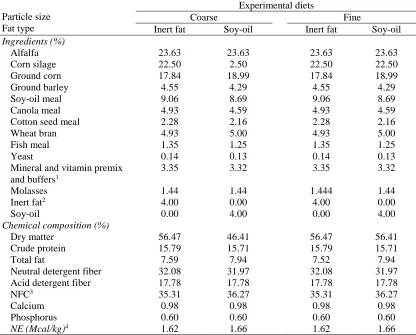
Eight multiparous lactating Holstein cows averaging 110.0 ± 11.5 days in milk (DIM), and weighing 580.0 ±41.1 kg, were used in this experiment. Cows were cared for according to the guidelines of the Iranian Council of Animal Care (1995). The study was carried out on the Gudosha Dairy Farm, in the city of Bahnamir in Mazandaran province in Iran during fall and winter (2010 and 2011). Four experimental diets were fed in a 2×2 factorial arrangement of treatments in a cyclic change-over design consisting four 22-day periods (ad-aptation, 14d; sample collection, 7 d; and measurement of chewing activity, 1 d). Forage to concentrate rations was 43:57 percent in all diets and consisting of two lev-els of corn silage particles size with geometric means of 8.79 ± 2.72 and 5.57 ± 2.82 mm, as coarse and fine par-ticles size, respectively, and two fat supplements (4% of soy-oil or palm fat). Diets were balanced by using Aminocow software, and were: 1) coarse corn silage diet with 4% palm fat, 2) Coarse corn silage diet with 4-% soy-oil, 3) fine corn silage diet with 4 4-% palm fat, and 4) fine corn silage diet with 4% percent soy-oil supplement (Table 1). Cows were housed in tie stalls
and fed ad libitum three times daily at 1330, 2230 h and
0630 with TMR, Water was freely available and TMR diets were fed allowing for at least 10% (as-fed basis) refusal.
Corn silage, particle length, and
effectiveness of fiber
Corn silage used in the present study was obtained from a local commercial farm. Feed particle size distribution was determined by dry sieving in four replicates using three sets of a Penn State particle separator (Kononoff et al., 2003). The NDF content of the retained material
23
Table 1. Ingredients and chemical compositions of four total mixed rations containing two particle size of corn silage and two types of fat supplementation
Particle size Fat type
Experimental diets
Coarse Fine
Inert fat Soy-oil Inert fat Soy-oil
Ingredients (%)
Alfalfa 23.63 23.63 23.63 23.63
Corn silage 22.50 2.50 22.50 22.50
Ground corn 17.84 18.99 17.84 18.99
Ground barley 4.55 4.29 4.55 4.29
Soy-oil meal 9.06 8.69 9.06 8.69
Canola meal 4.93 4.59 4.93 4.59
Cotton seed meal 2.28 2.16 2.28 2.16
Wheat bran 4.93 5.00 4.93 5.00
Fish meal 1.35 1.25 1.35 1.25
Yeast 0.14 0.13 0.14 0.13
Mineral and vitamin premix and buffers1
3.35 3.32 3.35 3.32
Molasses 1.44 1.44 1.444 1.44
Inert fat2 4.00 0.00 4.00 0.00
Soy-oil 0.00 4.00 0.00 4.00
Chemical composition (%)
Dry matter 56.47 46.41 56.47 56.41
Crude protein 15.79 15.71 15.79 15.71
Total fat 7.59 7.94 7.52 7.94
Neutral detergent fiber 32.08 31.97 32.08 31.97 Acid detergent fiber 17.78 17.78 17.78 17.78
NFC3 35.31 36.27 35.31 36.27
Calcium 0.98 0.98 0.98 0.98
Phosphorus 0.60 0.60 0.60 0.60
NE (Mcal/kg)4 1.62 1.66 1.62 1.66
1Contained 40% NaCl, 25% Dynamite, 10% K, 7% Mg, 12%S, 1,000 mg Fe/kg, 2% ZnSO
4.H2O, 2% MnSO4.4H2O,
0.01% CoSO4.6H2O, 0.009% Na2SeO3, 0.012% ethylenediamine dihydroiodide, 0.8% CuSO4.5H2O, 680,000 IU/kg of
Vitamin A, 160,000 IU/kg of Vitamin D, and 2,000 IU/kg of Vitamin E.
2RP10 inert fat powder (Malaysia) that consisted of 85 and 2% palmetic and stearic acid, respectively. 3NFC (% of dry matter) =100-(Ash (%)- CP (%) –EE(%) – NDF(%)) (NRC, 2001).
4Net energy for lactation, calculated using the Amino cow® Software based on NRC (2001).
measured (Van Soest et al, 1991). Dietary pef of the
TMRs was determined based on the proportion of DM retained on three 19-, 8-, and 1.18-mm sieves (Konon-off et al., 2003). The peNDF was calculated by multi-plying the NDF content of each portion on each sieve by the pef. The geometric mean (Xgm) of particle size (mm) and the standard deviation of the geometric mean (SDgm) were calculated (Table 2) according to ASAE
S424.1 (2002).
Body Weight, intake, and apparent total-tract
nutrient digestibility
Body Weight was measured weekly and at the end of each period. The DMI of the cows was measured daily. Daily samples of TMRs, residuals, and total feces were collected daily for 7 d of each period at 00630, 01330
and 2230 h,weighed,and 7 days samples were compos-
ited and subsampled. The samples were dried at 55°C
for 48 h and ground using a Wiley mill (1-mm screen), analyzed for DM, Kjeldahl N, ether extract, OM, ash at 605°C for 3 h (AOAC, 2002), ADF, and NDF (Van Soest et al., 1991; with α-amylase, heat-stable, Product Number A 3306 Sigma-Aldrich added for concentrates during NDF extraction; without sodium sulfite). The NDF was expressed without residual ash. Non-fibrous carbohydrates were calculated by using the following equation: [100- (% CP + % NDF + % ash + % EE)] (NRC, 2001). Using the chemical components of TMRs and feces, the feed intake, and digestibility of nutrients were calculated. Intake of peNDF (kg/d and % of DMI) was calculated for each treatment (Kononoff et al., 2003).
Rumen fermentation and kinetics
24
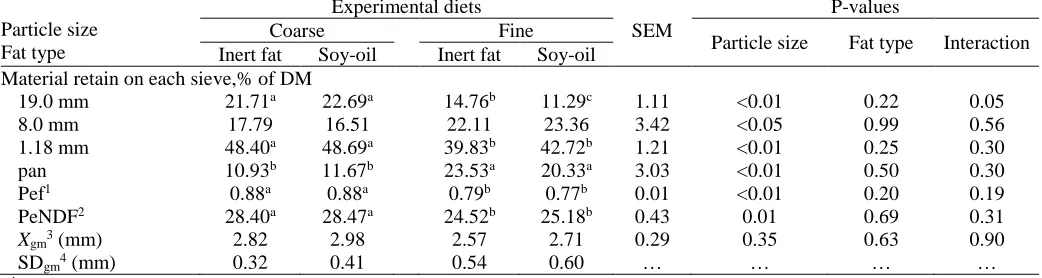
Table 2. Particle size distributions (material retain on each sieve,% of DM), physically, and geometric mean of four total mixed rations containing two particle size of corn silage and two types of fat supplementation
Particle size Fat type
Experimental diets
SEM
P-values
Coarse Fine
Particle size Fat type Interaction Inert fat Soy-oil Inert fat Soy-oil
Material retain on each sieve,% of DM
19.0 mm 21.71a 22.69a 14.76b 11.29c 1.11 <0.01 0.22 0.05
8.0 mm 17.79 16.51 22.11 23.36 3.42 <0.05 0.99 0.56 1.18 mm 48.40a 48.69a 39.83b 42.72b 1.21 <0.01 0.25 0.30
pan 10.93b 11.67b 23.53a 20.33a 3.03 <0.01 0.50 0.30
Pef1 0.88a 0.88a 0.79b 0.77b 0.01 <0.01 0.20 0.19
PeNDF2 28.40a 28.47a 24.52b 25.18b 0.43 0.01 0.69 0.31
Xgm3 (mm) 2.82 2.98 2.57 2.71 0.29 0.35 0.63 0.90
SDgm4 (mm) 0.32 0.41 0.54 0.60 … … … …
a, b, c Means within a row with common subscript do not differ (P> 0.05).
1pef: physically effective factor, determined as the proportion of DM retained on three sieves of Penn State particle separator (Kononoff, 2002). 2The peNDF was calculated by multiplying NDF content of each portion on each sieve on each pef.
3Geometric mean particle that was calculated using ASAE (S424.1, 2002).
4Standard deviation of the geometric means of particles, using ASAE (S424.1, 2002).
SEM: Standard error of the mean.
NDF of wheat straw as the single-dose marker for solid passage rate measurement. The Cr-mordanted fiber was prepared by mordanting ground wheat straw through a 5-mm screen using a Wiley mill (Uden et al., 1980). Each cow was orally fed with a mixture of 2 kg of con-centrates and 250 g of the marker before morning feed-ing on the 15th d of each period. Fecal grab samples
were collected at 0, 6, 10, 12, 14, 18, 22, 26, 30, 36, 42, 48, 54, 60, 72, 84, 96, 120, and 144 h after dosing from the rectum to determine the passage rate, ruminal, and total mean retention time, and time delay (transit time) of the marker. Samples were dry-ashed, and fecal Cr concentrations was determined by direct current plasma emission spectroscopy (AOAC, 2002). Fecal Cr excre-tion curves were fitted to the double compartment mod-el, as represented by the following two exponential con-stants and a time delay (Grovum and William, 1973):
Y = Ae -k
1 (t-TT) - Ae -k2(t-TT), k1 = k2 for t≥ T
Y = 0 for t = TT
in which Y = marker concentration (ppm); A = scale
parameter; k1 = ruminal passage rate (%/h); k2 = lower
digestive tract passage rate (%/h); t = sampling time post dosing (h); and TT = transit time or time delay of marker. The total mean retention time was calculated as the sum of ruminal mean retention time (1/k1), and for
the lower digestive tract, mean retention time (1/k2)
plus the transit time. Parameters were estimated by NLIN regression using the PROC NLIN (iterative
Mar-quardt method) of the SAS® (2005). The estimated
pa-rameters were analyzed according to a previously de-scribed experimental design.
Eating, ruminating and chewing times
Eating and ruminating activities were monitored visual-ly over a 24-h period at d 22 of each treatment period. Eating and ruminating activities were recorded at 5-min intervals and each activity was assumed to persist for the entire interval. A period of rumination was defined as at least 5 min of ruminating activity, followed by at least 5 min without ruminating activity. Total time spent on chewing was calculated as the total time spent eating and ruminating (Teimouri Yansari et al., 2004).
Milk production
Milk production was recorded daily. On d 18 to 23 of each period, milk samples were collected at each morn-ing and evenmorn-ing milkmorn-ing. Approximately 100 mL of each milk sample were composited and analyzed for total solid, total protein, fat, and lactose (AOAC, 2005). The 3.5% FCM )Britt et al., 2003) and 3.5% FPCM, )Leiva et al., 2000) were calculated as follows:
3.5% FCM = (16.23 × milk fat kg) + (0.432 × milk kg) 3.5%FPMC= (12.82 × milk fat, kg) + (7.13 × milk pro-tein, kg) + (0.323 × milk, kg)
Statistical analysis
The data on particles size were analyzed as a complete-ly randomized design for the effects of the diets using the REML variance component and PROC MIXED of
SAS® (2005). Mean separation was performed using the
PDIFF procedure and significance was declared at
25 were calculated using ASAE S424.1 (ASAE, 2002).
Using PROC MIXED of SAS® (2005), the experimental
data were analyzed as a 2 × 2 factorial experiment in a change-over design using the following model:
Yijkl = µ + αi + ẞj + Sk+ Cowk (j) + ɤm + α×ẞj i + eijklm
in which Yijkl is the dependent variable; µ is overall
mean; αi isfixed effect of particle size (i =1 and 2); ẞj is
fixed effectof supplementals fat (j =1 and 2); Sk, is the
effect of squares (k =1 and 2); Cowk(j) is the random
effect of cow within square; ɤm is the effect of periods;
α×ẞj i is the fixed effect of interaction between particle
size and supplemental fat and eijklm is the residual error.
Means were separated using the Tukey's multiple range tests at P<0.05.
Results and discussions
Particle size distributions and physical
effectiveness of diets
Theparticle sizeofcornsilage significantly changed the
pef, and peNDF content of the TMR diets (Table 2). Dry matter on three sieves, pef, and peNDF were signif-icantly higher in coarse diets than fine diets. The Xgm was similar in all diets (Table 2) but dry matter remain-ing on the pan was higher in fine corn silage diets (P<0.01). In addition, fat supplementation and interac-tion of particle size and fat types had no significant ef-fect on particle size distribution, and consequently on the pef, and peNDF content of the diets. Kononoff et al. (2003) and Zebeli et al. (2010) suggested the use of Penn State Particle Separator (PSPS( to express the par-ticle size distribution and to calculate the content of peNDF in the diets of dairy cows. Kononoff and Hein-richs (2003) and Yang and Beauchemin (2004) found that peNDF measured using the PSPS was a poor pre-dictor of chewing time and (or) ruminal pH for cows fed corn silage- and alfalfa silage-based diets. However, Mertens (1997) and Zebeli et al. (2006) proposed that dietary peNDF should be maintained at or above 21% and 23% to ensure a ruminal pH greater than 6.0 and
6.1, respectively. In this experiment, themean peNDF
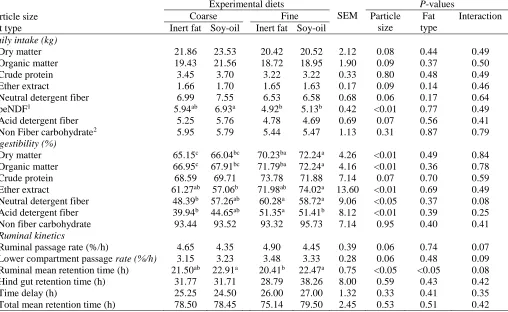
Table 3. Daily intake of dry and organic matter, nutrients, their digestibility, and ruminal kinetic of four total mixed rations con-taining two particles size of corn silage and two types of fat supplementation
Particle size Fat type
Experimental diets
SEM
P-values
Coarse Fine Particle
size
Fat type
Interaction Inert fat Soy-oil Inert fat Soy-oil
Daily intake (kg)
Dry matter 21.86 23.53 20.42 20.52 2.12 0.08 0.44 0.49 Organic matter 19.43 21.56 18.72 18.95 1.90 0.09 0.37 0.50 Crude protein 3.45 3.70 3.22 3.22 0.33 0.80 0.48 0.49 Ether extract 1.66 1.70 1.65 1.63 0.17 0.09 0.14 0.46 Neutral detergent fiber 6.99 7.55 6.53 6.58 0.68 0.06 0.17 0.64 peNDF1 5.94ab 6.93a 4.92b 5.13b 0.42 <0.01 0.77 0.49
Acid detergent fiber 5.25 5.76 4.78 4.69 0.69 0.07 0.56 0.41 Non Fiber carbohydrate2 5.95 5.79 5.44 5.47 1.13 0.31 0.87 0.79
Digestibility (%)
Dry matter 65.15c 66.04bc 70.23ba 72.24a 4.26 <0.01 0.49 0.84
Organic matter 66.95c 67.91bc 71.79ba 72.24a 4.16 <0.01 0.36 0.78
Crude protein 68.59 69.71 73.78 71.88 7.14 0.07 0.70 0.59 Ether extract 61.27ab 57.06b 71.98ab 74.02a 13.60 <0.01 0.69 0.49
Neutral detergent fiber 48.39b 57.26ab 60.28a 58.72a 9.06 <0.05 0.37 0.08
Acid detergent fiber 39.94b 44.65ab 51.35a 51.41b 8.12 <0.01 0.39 0.25
Non fiber carbohydrate 93.44 93.52 93.32 95.73 7.14 0.95 0.40 0.41
Ruminal kinetics
Ruminal passage rate (%/h) 4.65 4.35 4.90 4.45 0.39 0.06 0.74 0.07 Lower compartment passage rate (%/h) 3.15 3.23 3.48 3.33 0.28 0.06 0.48 0.09 Ruminal mean retention time (h) 21.50ab 22.91a 20.41b 22.47a 0.75 <0.05 <0.05 0.08
Hind gut retention time (h) 31.77 31.71 28.79 38.26 8.00 0.59 0.43 0.42 Time delay (h) 25.25 24.50 26.00 27.00 1.32 0.33 0.41 0.35 Total mean retention time (h) 78.50 78.45 75.14 79.50 2.45 0.53 0.51 0.42
a, b, c Means within a row with common subscript do not differ (P> 0.05).
1peNDF: physical effective NDF calculated as ration NDF multiplied by cumulative proportion of particles retained on 3 sieves of Penn State
Particle Separator (Kononoff et al., 2003).
26
values of coarse and fine silages were around 28.4 and 24.8, respectively, and indication of optimal conditions in the rumen.
Intakes and nutrient digestibility
Corn silage particle size, type of fat supplements and interaction of silage particles size and fat supplements had no significant effect on intake of DM and other nu-trients, except for peNDF intake (P< 0.01; Table 3). Onetti et al. (2003) reported that reducing the particle size of corn silage from 32 to 19 mm increased the dry matter and NDF intakes and positively affected the an-imal performance. The response of cow to decreases in particle size depends on the proportion of concentrates in diets and interactions between nutrients. Zebeli et al. (2006) reported that reducing dietary hay particle size from 28.7 to 9.2 mm increased DMI in sheep by 13% only at a low-concentrate level (13% in DM), but when
a high-concentrate diet (∼40% in DM) was fed no
dif-ferences were observed in sheep. In this experiment, diets contained 54% concentrate (Table 1), therefore, reducing of forage particle size had no effect on the in-take of DM and other nutrients. Inin-take of peNDF was higher in coarse corn silage diets (P<0.01) that is due to the higher peNDF content of coarse corn silage diets in comparison to other diets. There was a significant nega-tive correlation between peNDF and NDF intake in ex-periments in which reduction in particle size signifi-cantly increased the dry matter intake (Teimouri Yansa-ri et al., 2004).
As a general principle, dietary supplemental fat re-duces the feed intake in ruminants (NRC, 2001, Onetti and Grummer, 2004). Onetti and Grummer (2004) re-ported that 3.1 to 3.8 percent supplemented animal fat and calcium salt of fatty acid decreased DMI about 0.90 to 0.97 kg per day in cows. Grant and Weinder (1992) found that while the addition of 11.6% whole raw soy-oils in alfalfa silage decreased daily DMI by approxi-mately 7.1%, but the reduction in DMI was greater for fine silage than for coarse silage diets. Jenkins et al. (1998) found that consumption of 5% saturated animal fat had no significant effect on DMI in fine and coarse alfalfa silage diets because inert fat has limited effect on biohydrogenation, and the rumen fermentation (Garns-worthy, 2002). In this experiment, the NDF content of diets was about 32% in DM, which may have prevented the negative effect of fat supplements on the intake (Grant and Weinder, 1992).
Digestibility of DM and OM (except crude protein) was significantly higher in fine corn silage diets
(P<0.01, Table 3). Crude protein digestibility wasnot
affected by silage particles size, type of supplemental fat and their interaction. Digestibility of NDF, ADF, and EE was higher in fine corn silage diets (P<0.05). Lewis et al. (1999) and Pantoja et al. (1994) found re-ducing forage particles size increased the surface area for microbial attachment, ruminal microbial digestion, and fermentation, and increased volatile fatty acid pro-duction. Beauchemin et al. (1994) and Yang and Beauchemin (2006) found that reducing dietary forage particle size increased ruminal degradability of protein and OM and decreased escapable protein because the reduction of the particle size increases the surface area for microbial attachment and digestion (Miron et al., 2001).
Fat supplements did not impact on the nutrients di-gestibility although fiber digestion and ruminal fermen-tation are often negatively associated with the feeding of dietary fat. Feeding fat supplementations reduced DMI and ruminal NDF digestibility, and reduction in-creases as unsaturated fat level inin-creases (Lewis et al., 1999). Ruminal digestibility of DM and NDF of alfalfa hay was reduced by over 20% when soy-oil was added to the diet (Palmquist and Jenkins 1980). However, the undesirable effect of fat may be compensated at the lower compartment of the digestive tract. However, Lewis et al. (1999) reported that tallow fed at 5% of dietary DM disrupted ruminal fermentation, but had no negative effects on total tract nutrient digestion. The negative effects of particles size on digestibility of nu-trients in corn silage diets with soy-oil and inert fat supplements were the result of the coating of the fibrous particles that prevents attachment of microorganisms to the food particles (Devendra and Lewis, 1974).
Rumen particulate passage rate and retention time
Ruminal mean retention time was affected by fat sup-plement types and silage particles size (Table 3) and was higher in soy-oil and coarse silage diets (P<0.05). But Ruminal particulate passage rates, lower compart-ment passage rate, hindgut retention time, time delay and total mean retention time were not affected by si-lage particles size and fat supplement types. We ex-pected that ruminal particulates passage rate would in-crease in fine silage particles size, but it seems that coating of fine particles with fat and oil was decreased ruminal digestion and declined particles size reduction process in the rumen, and ultimately increased ruminal mean retention time as equal as coarse particles size diets. The ruminal digesta outflow is the principal factor that limits feed consumption in ruminants. To improve
27 be increased by increasing the rate of digestion, the rate
of passage, or both (Bhatti et al., 2008).
Tafaj et al. (2007) found that mean ruminal passage rates was 5 to 7 %/h (average 6 %/h) when cows fed diets with large particles. In one experiment, mean solid rumen passage rate was 4.06 percent per hour (Khalile Argomandi and Teimouri Yansari, 2011) and slower than our experiment because in this experiment, the main forage in the diets was alfalfa and its rumen pas-sage rate is slower than corn silage; and unlike corn silage alfalfa hay needs water absorption (Teimouri Yansari et al., 2004).
Chewing activity
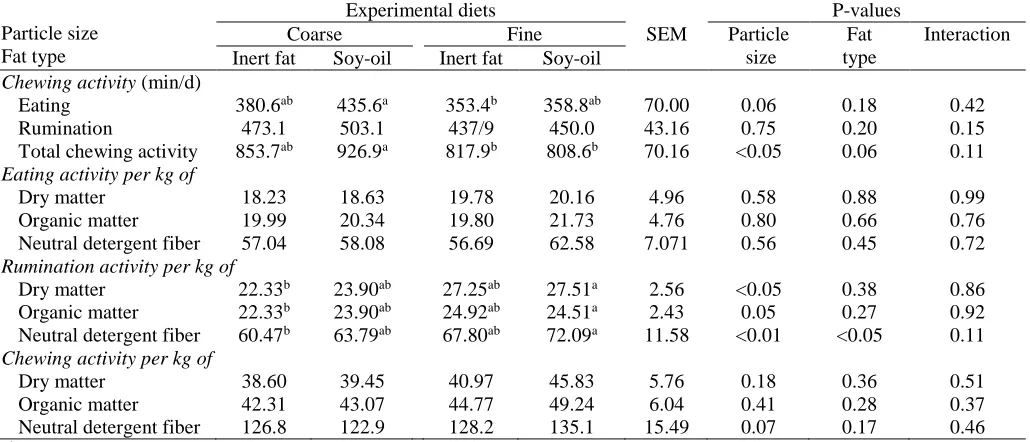
Eating time (minutes per day) tended to be longer for coarse silage diets (P<0.06), due to higher peNDF level (Table 2). According to Kononoff and Heinrichs (2003), eating time was not affected by corn silage par-ticle sizes, because there were no differences in DMI between fine and coarse corn silage diets.
Corn silage particles size and fat types had no signif-icant effect on rumination time (minutes per day). Gen-erally, NDF intake was increased by reducing peNDF in diets. There is a positive relationship between NDF in-take and chewing activity (Teimouri Yansari et al., 2004), but in this experiment, DM intake was not af-fected by silage particle size and fat types. Intake of peNDF was affected by silage particle sizes (P<0.01) and was higher in coarse corn silage diets (P<0.05) due to the higher peNDF level in coarse silage diets (Table 2).
Rumination time per kg DM, OM and NDF was longer for fine corn silage diets (Table 5), It is likely that on these diets, rumen pH was reduced and rumina-tion was higher to compensate the reducrumina-tion in pH (Aschenbach et al., 2010). Under normal conditions, 80% of diet particles that are crushed and broken are attributed to chewing and the rest to microbial activity. If secretion of saliva is reduced during eating fine corn silage (eating time per kg of DM, OM and NDF were not affected by corn silage particle size), it would be compensated by more rumination to increase the rumi-nal pH (Zebeli et al., 2006). Rumination per kg NDF was affected by the fat type and was higher in soy-oil supplemented diets because ruminal mean retention time was higher for inert fat supplemented diets (Table 3).
Chewing activity (minutes per day) was longer for coarse corn silage diets (Table 4). Chewing is the sum of eating and rumination activities, and eating activity tended to be higher for coarse corn silage diets
(P<0.06). Chewing activity per kg of NDF tended to be
higher for fine corn silage diets (P<0.07), due to greater rumination time per kg of NDF in these diets (P<0.01). According to Kononoff and Heinrichs (2003), chewing activity per kg of NDF was longer for the diets contain-ing coarse corn silage, because of more NDF was con-sumed on coarse corn silage diets.
Milk production, composition, and efficiency
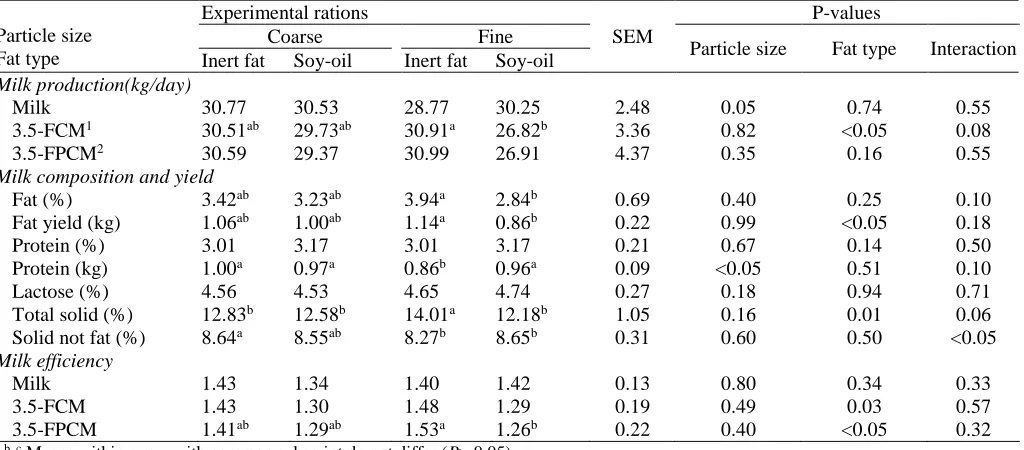
Whole milk production was not affected by corn silage
particle size and type of fat supplements (Table 5).
Table 4. Chewing activity of cows fed on four total mixed rations containing two particles size of corn silage and two types of fat supplementation
Particle size Fat type
Experimental diets
SEM
P-values
Coarse Fine Particle
size
Fat type
Interaction Inert fat Soy-oil Inert fat Soy-oil
Chewing activity (min/d)
Eating 380.6ab 435.6a 353.4b 358.8ab 70.00 0.06 0.18 0.42
Rumination 473.1 503.1 437/9 450.0 43.16 0.75 0.20 0.15 Total chewing activity 853.7ab 926.9a 817.9b 808.6b 70.16 <0.05 0.06 0.11
Eating activity per kg of
Dry matter 18.23 18.63 19.78 20.16 4.96 0.58 0.88 0.99 Organic matter 19.99 20.34 19.80 21.73 4.76 0.80 0.66 0.76 Neutral detergent fiber 57.04 58.08 56.69 62.58 7.071 0.56 0.45 0.72
Rumination activity per kg of
Dry matter 22.33b 23.90ab 27.25ab 27.51a 2.56 <0.05 0.38 0.86
Organic matter 22.33b 23.90ab 24.92ab 24.51a 2.43 0.05 0.27 0.92
Neutral detergent fiber 60.47b 63.79ab 67.80ab 72.09a 11.58 <0.01 <0.05 0.11
Chewing activity per kg of
Dry matter 38.60 39.45 40.97 45.83 5.76 0.18 0.36 0.51 Organic matter 42.31 43.07 44.77 49.24 6.04 0.41 0.28 0.37 Neutral detergent fiber 126.8 122.9 128.2 135.1 15.49 0.07 0.17 0.46
28
Table 5. Milk production, compositions, and efficiencyof cows that fed four total mixed rations containing two particles size of corn silage and two types of fat supplementation
Particle size Fat type
Experimental rations P-values
Coarse Fine SEM
Particle size Fat type Interaction Inert fat Soy-oil Inert fat Soy-oil
Milk production(kg/day)
Milk 30.77 30.53 28.77 30.25 2.48 0.05 0.74 0.55 3.5-FCM1 30.51ab 29.73ab 30.91a 26.82b 3.36 0.82 <0.05 0.08
3.5-FPCM2 30.59 29.37 30.99 26.91 4.37 0.35 0.16 0.55
Milk composition and yield
Fat (%) 3.42ab 3.23ab 3.94a 2.84b 0.69 0.40 0.25 0.10
Fat yield (kg) 1.06ab 1.00ab 1.14a 0.86b 0.22 0.99 <0.05 0.18
Protein (%) 3.01 3.17 3.01 3.17 0.21 0.67 0.14 0.50 Protein (kg) 1.00a 0.97a 0.86b 0.96a 0.09 <0.05 0.51 0.10
Lactose (%) 4.56 4.53 4.65 4.74 0.27 0.18 0.94 0.71 Total solid (%) 12.83b 12.58b 14.01a 12.18b 1.05 0.16 0.01 0.06
Solid not fat (%) 8.64a 8.55ab 8.27b 8.65b 0.31 0.60 0.50 <0.05
Milk efficiency
Milk 1.43 1.34 1.40 1.42 0.13 0.80 0.34 0.33
3.5-FCM 1.43 1.30 1.48 1.29 0.19 0.49 0.03 0.57
3.5-FPCM 1.41ab 1.29ab 1.53a 1.26b 0.22 0.40 <0.05 0.32 a, b, c Means within a row with common subscript do not differ (P> 0.05).
13.5% FCM= (16.23 × milk fat kg) + (0.432 × milk kg) (Britt et al., 2003).
23.5%FPMC= (12.82 × milk fat, kg) + (7.13 × milk protein, kg) + (0.323 × milk, kg) (Leiva et al., 2000).
SEM: Standard error of the mean.
However, 3.5% FCM yield was higher due to inert fat supplement diets (P<0.01), because of fat production (% and kg) was significantly higher on these diets. Cha-lupa and Ferguson (1986) reported milk yield increase of 3 to 8 percent (1 to 2.5 kg) per 0.45 kg added fats. Fats and fatty acids have negatively affect the ruminal digestion, especially fiber digestion and enhancement of rumen passage rate, resulting in a reduction in feed effi-ciency, as a result of toxic effects on the cellulolytic bacterial community caused by the medium chain and unsaturated fatty acids (Onetti et al., 2001). The inert fat supplement containing 85% palmitic acid had no nega-tive effect on rumen fermentation, and passed through the rumen, absorbed in the intestine and transferred to milk with high efficiency. Firkins and Eastridge (1994) and Warntjes et al. (2008) found that milk production was increased by adding palm fat supplement while milk fat decreased. Jenkins (2011) reported that unsatu-rated fatty acids could have a dual effect on ruminal biohydrogenation in that they modify the microbial population and increase the amount of substrate that must be biohydrogenated. Supplementation of the diets with soy-oil that is high in linoleic acid increased the risk of milk fat depression via the rumen unsaturated fatty acid load (Jenkins, 2011). Milk fat (yield and per-centage) was higher in fine corn silage diets that sup-plemented with the inert fat. Supplements that are high in saturated fat(palmitic and stearic) do not increase the
risk of milk fat depression; however, supplementation of calcium salts of fatty acids can reduce milk fat (Har-vatine and Allen, 2006; Lundy et al., 2004). In the cur-rent experiment, milk fat yield and percent were higher in inert fat supplemented diets than soy oil supplement diets. Pantoja et al. (1994) showed that FCM was de-creased by increasing unsaturated fat supplements (milk fat decreased), due to decreased fiber digestion and ace-tate and butyrate production (Garnsworthy, 2002).
Milk fat yield and percentage were lower on fine corn silage diets supplemented with soy-oil than the other diets. Protein yield was lower on fine corn silage diets containing inert fat (P<0.05). Milk lactose per-centage was not affected by silage particle size and type of fat supplement similar to other reports (Onetti et al., 2001, 2003; Teimouri Yansari et al., 2004; Zebeli et al., 2006). Total milk solid content was higher on diets supplemented with inert fat (P<0.05), due to higher milk fat yield and percentageon these diets. Milk effi-ciency of 3.5 FCM and 3.5% and fat- and protein-corrected milk (3.5% FPCM) were greater for inert fat than the soy-oil supplemented diets (P<0.5). Reduction in milk fat and protein may be due to decreased salivary secretion on fine corn silage diets (Sharifi et al., 2012), decreased ruminal pH, modification of biohydrogena-tion pathways and producbiohydrogena-tion of intermediate fatty ac-ids (trans 10 cis 12 18:2) that have inhibitory effect on
29 Bauman, 2007; Lock et al., 2007; Overton et al., 2007).
Supplemental fats can greatly disrupt fermentation in the rumen, causing reduced digestibility of non-lipid energy sources. Ruminal digestion of structural carbo-hydrates can be reduced, and this reduction in digestion is accompanied by reduced production of methane, hy-drogen, and VFA, including lower acetate to propionate ratio (Jenkins, 2011; Lock and Bauman, 2007). With supplemental fat, the proportion of energy supply from dietary starch, propionate and glucose production de-creased (Cabrita et al., 2007; Garnsworthy, 2002), glu-coneogenesis from amino acid increased, and amino acid availability for milk protein synthesis decreased (Garnsworthy, 2002; Grant and Weinder, 1992; Jenkins and Jenny, 1992). However, Bouattour et al., (2008) and Whitlock et al. (2003) found that milk solid was increased by adding soy-oil to dairy goats and cattle diets. In this experiment, DMI was not affected by the type of fat supplement; therefore, the increased effi-ciency was due to increases in 3.5% FCM on inert fat
supplemented diets (P<0.05). Grant and Weinder
(1992) found that DMI was decreased by adding 11.6% raw soy-oil to fine and coarse alfalfa silage diets, but 4% FCM production was not different between the two diets due to increased milk fat production. However, 4% FCM efficiency was higher on fine alfalfa silage diets containing fat supplement. Jenkins et al. (1998) examined the effect of two levels of animal fat (0 and 4 % of DM) and particles size of alfalfa silage and found that milk production efficiency increased by adding four percent fat supplement.
Conclusions
Digestibility of DM, OM, NDF and ADF was higher on fine corn silage than on coarse silage diets. The 3.5%-FCM and 3.5%-FPCM production were higher in palm fat supplemented cows. This showed that the palm fat had no negative effects on ruminal microbial func-tion. Therefore, palm fat by increasing the NEL content of the diet, could be a good supplement to enhance the corrected milk fat production and efficiency. Negative effects of soy-oil were greater on 3.5%-FCM and milk efficiency in diet containing fine corn silage. This indi-cates the importance of high peNDF diets when unsatu-rated fats are added to the dairy diets.
References
American Society of Agricultural Engineers (ASAE). 2002. Method of determining and expressing particle size of chopped forage (ASAE. S424.1). 70th ed. American Society
Agricultural Engineering, St. Joseph, MI.
AOAC. 2002. Official Methods of Analysis. Vol. 1. 17th ed. Association of Official Analytical Chemists, Arlington, Virginia, USA.
Aschenbach, J.R., Penner, G.B., Stumpff, F., Gäbel G., 2010. Role of fermentation acid absorption in the regulation of ruminal pH. Journal of Animal Science 89, 1092-1107. Bauman, D.E., Griinari, J.M., 2001. Regulation and
nutri-tional manipulation of milk fat: low-fat milk syndrome.
Livestock Production Science 70, 15–29.
Bauman, D.E., Lock, A.L., 2006. Concepts in Lipid Diges-tion and Metabolism in Dairy Cows. Advanced Dairy Nu-trition. Cornell University.
Beauchemin, K.A., Farr, B.I., Rode, L.M., Schaalje, G.B., 1994. Effects of alfalfa chop length and supplementary long hay on chewing and milk production of dairy cows Journal of Dairy Science 77, 1326 – 1339.
Bhatti, S.A., Bowman, J.G.P., Firkins, J.L., Grove, A.V., Hunt, C.W., 2008. Effect of intake level and alfalfa substi-tution for grass hay on ruminal kinetics of fiber digestion and particle passage in beef cattle. Journal of Animal Sci-ence 86, 134-145.
Bouattour, M.A., Casals, R., Albanell, E., Such, X., Caja, G., 2008. Feeding soy-oil to dairy goats increases conjugated linoleic acid in milk. Journal of Dairy Science 91, 2399-2407.
Britt, J.S., Thomas, R.C., Speer, N.C., Hall, M.B., 2003. Effi-ciency of converting nutrient dry matter to milk in Holstein herds. Journal of Dairy Science 86, 3796-3801.
Cabrita, A.R.J., Bessa, R.J.B., Alves, S.P., Dewhurst, R.J., Fonseca, A.J.M., 2007. Effects of dietary protein and starch on intake, milk production, and milk fatty acid profiles of dairy cows fed corn silage-based diets. Journal of Dairy Science 90, 1429-1439.
Chalupa, W., B. Vecchiarelli, A. E. Elser, D. S. Kronfeld, D. Sklan, and D.L. Palmquist., 1986. Ruminal fermentation in vivo as influenced by long-chain fatty acids. Journal of Dairy Science 69, 1293– 1301.
Devendra, C., Lewis, D., 1974. The interaction between die-tary lipids and fiber in the sheep. Animal Production 19, 67-76.
Dewhurst, R.J., Shingfield, K.J., Lee, M.R.F., Scollan, N.D., 2006. Increasing the concentrations of beneficial polyun-saturated fatty acids in milk produced by dairy cows in high-forage systems. Animal Feed Science and Technology
131, 168-206.
30
Garnsworthy, P.C., 2002. Fats in dairy cow diets. In: Wise-man, J., Garnsworthy, P.C., (Editors). Recent Develop-ments in Ruminant Nutrition 4, Nottingham University Press. Pp, 399-415.
Grant, R.J., Weinder, S.J., 1992. Effect of fat from whole soy-oils on performance of dairy cows fed rations differing in fiber level and particle size. Journal of Dairy Science 75, 2742-2751.
Grovum, W.L., Williams, V.J., 1973. Rate of passage of di-gesta in sheep. 4. Passage of markers through the alimen-tary tract and the biological relevance of rate-constants de-rived from changes in concentration of markers in feces.
British Journal of Nutrition 30, 231-242.
Harvatine, K., Allen, M.S., 2006, Fat supplements affect frac-tional rates of ruminal fatty acid and passage in dairy cows.
Journal of Nutrition 136, 677-685.
Iranian Council of Animal Care., 1995. Guide to the Care and use of Experimental Animals 1. Isfahan, Iran: Isfahan Uni-versity of Technology.
Jenkins, T.C., 2011. Managing the rumen environment to control milk fat depression. In Proceedings of the Penn State Dairy Nutrition Workshop, Grantville, PA. Pp 31-37. Jenkins, T.C., Jenny, B.F., 1992. Nutrient digestion and lacta-tion performance of dairy cows fed combinalacta-tions of prilled fat and canola oil. Journal of Dairy Science 75, 796-803. Jenkins, T.C., Bertrand, J.A., Bridges, W.C., 1998.
Interac-tion of tallow and hay particle size on yield and composi-tion of milk from lactating Holstein cows. Journal of Dairy Science 81, 1396-1402.
Khalile Argomandi, M., Teimouri Yansari, A., 2011. Effects alfalfa particle size and soy-oil supplementation on feed in-take, digestibility, chewing behevior and performance of lactating dairy cows in early lactation. Iranian Journal of Animal Science Research 3, 138-149 (in Farsi).
Kononoff, P.J., Heinrichs, A.J., 2003. The effect of corn si-lage particle size and cottonseed hulls on cows in early lac-tation. Journal of Dairy Science 86, 2438-2451.
Kononoff, P.J., Heinrichs, A.J., Buckmaster, D.A., 2003. Modification of the Penn State forage and total mixed ra-tion particle separator and the effects of moisture content on its measurements. Journal of Dairy Science 86, 1858-1863. Leiva, E., Hall, M.B., Van Horn, H.H., 2000. Performance of dairy cattle fed citrus pulp or corn products as sources of neutral detergent-soluble carbohydrates. Journal of Dairy Science 83, 2866-2875.
Lewis, W.D., Bertrand, J.A., Jenkins, T.C., 1999. Interaction of tallow and hay particle size on ruminal parameters.
Journal of Dairy Science 82, 1532-1537.
Lock, A.L., Bauman, D.E., 2007. Milk fat depression: What do we know and what can do about it? Pen State dairy cat-tle nutrition workshop. November 13th. PP 21-32.
Lock, A., Tyburczy, C., Dwyer, D.A., Harvatine, K.J., Des-taillats, F., Mouloungui, Z., Candy, L., Bauman, D.E., 2007. Trans-10 octadecenoic acid does not reduce milk synthesis in dairy cows. Journal of Nutrition 137, 71-76. Lundy, F.P., Block, E., Bridges, W.C., Jr., Bertrand J.A.,
Jenkins, T.C., 2004. Ruminal biohydrogenation in Holstein cows fed soy-oil fatty acids as amides or calcium salts. Journal of Dairy Science 87, 1038-1046.
Mertens, D.R., 1997. Creating a system for meeting the fiber requirements of dairy cows. Journal of Dairy Science 80, 1463–1481.
Mertens, D. R., 2005. Particle size, fragmentation index, and effective fiber: Tools for evaluating the physical attributes of corn silage. In Proceeding, Four-State Dairy Nutrition, and Management Conference. Dubuque, IA, Iowa State University. PP 211–220.
Miron, J., Ben-Ghedalia, D., Morrison, M., 2001. Invited Review: Adhesion mechanisms of rumen cellulolytic bacte-ria. Journal of Dairy Science 84, 1294–1309.
NRC., 2001. Nutrient Requirements of Dairy Cattle, 7th
re-vised Ed. National Academic Science, Washington, DC, USA.
Onetti, S.G., Grummer, R.R., 2004. Response of lactating cows to three supplemental fats as affected by forage in the diet and stage of lactation: a meta–analysis of literature. An-imal Feed Science and Technology 115, 65-82.
Onetti, S.G., Shaver, R.D., Bertics, S.J., Grummer, R.R., 2003. Influence of corn silage particle length on perfor-mance of lactating dairy cows fed supplemental tallow.
Journal of Dairy Science 86, 2949-2957.
Onetti, S.G., Shaver, R.D., McGuire, M.A., Grummer, R.R., 2001. Effect of type and level of fat on rumen fermentation and performance of dairy cows fed corn silage-based diets.
Journal of Dairy Science 84, 2751-2759.
Overton, T.R., Bauman, D.E., Lock, A.L., 2007. Trouble-shooting milk fat challenges on commercial dairy farms. Proceedings, Penn State dairy cattle nutrition workshop, Grantville, PA. Pp: 19-27.
Palmquist, D.L., Jenkins, T.C., 1980. Fat in lactation rations: Review. Journal of Dairy Science 63, 1–14.
Pantoja, J., Firkins, J.L., Eastridge, M.L., Hull, L., 1994. Ef-fects of fat saturation and source of fiber on site of nutrient digestion and milk production by lactating dairy cows.
Journal of Dairy Science 77, 2341-2356.
Rodney, R.M., Celi, P., Scott, W., Breinhild, K., Lean, I.J., 2015. Effects of dietary fat on fertility of dairy cattle: A meta-analysis and meta-regression. Journal of Dairy Sci-ence 98, 5601–5620.
31
Sharifi, m., Torbati Nejad, N., Teimouri Yansari, A., Hasani, S., Ghorchi, T., 2012. Effect of corn silage particle size and level of soy-oil on ruminal mat composition, distribution, and consistency in Zel sheep. African Journal of Biotech-nology 11, 15580-15589.
Smith, W.A., Harris, B., Van Horn, H.H., wilcox c.j., 1993. Effects of forage type on production of dairy cows supple-mented with whole cottonseed, tallow, and yeast. Journal of Dairy Science 76, 205-215.
Tafaj, M., Zebeli, Q., Baes, C. h., Steingass, H., Drochner, W., 2007. A meta-analysis examining effects of particle size of total mixed rations on intake, rumen digestion and milk production in high-yielding dairy cows in early lacta-tion. Animal Feed Science and Technology 138, 137-161. Teimouri Yansari, A., Pirmohammadi, R., 2009. Effect of
particle size of alfalfa hay and reconstitution with water on intake, digestion and milk production in Holstein dairy cows. Animal 3, 218-227.
Teimouri Yansari, A., Valizadeh, R., Naserian, A., Christen-sen, D.A., 2004. Effects of alfalfa particle size and specific activity on chewing activity, digestibility, and performance of Holstein dairy cows. Journal of Dairy Science 87, 3912-3924.
Uden, P., Colucci, P.E., Van Soest, P.J., 1980. Investigation of chromium, cerium, and cobalt as markers in digesta. Rate of passage studies. Journal of the Science of Food and Agriculture 31, 625-632.
Ueda, K., Ferlay, A., Chabrot, J., Loor, J.J., Chilliard, Y., Doreau, M., 2003. Effect of linseed oil supplementation on ruminal digestion in dairy cows fed diets with different for-age: concentrate ratios. Journal of Dairy Science 86, 3999-4007.
Van Soest, P.J., Robertson, J.B., Lewis, B.A., 1991. Methods for dietary fiber, neutral detergent fiber, and nonstarch pol-ysaccharides in relation to animal nutrition. Journal of Dairy Science 743583-3597.
Von Soosten, D., Meyer, U., Piechotta, M., Flachowsky, G., Dänicke, S., 2012. Effect of conjugated linoleic acid sup-plementation on body composition, body fat mobilization, protein accretion, and energy utilization in early lactation dairy cows. Journal of Dairy Science 95 1222–1239. Warntjes J.L., Robinson, P.H., Galo, E., DePeters, E.J.,
Howes, D., 2008. Effects of feeding supplemental palmitic acid (C16:0) on performance and milk fatty acid profile of lactating dairy cows under summer heat. Animal Feed Sci-ence and Technology 140, 241–257.
Whitlock, L.A., Schingoethe, D.J., Hippen, A.R., Kalscheur, K.F., AbuGhazaleh, A.A., 2003. Milk production and com-position from cows fed high oil or conventional corn at two forage concentrations. Journal of Dairy Science 86, 2428-2437.
Yang, W.Z., Beauchemin, K.A., 2004. Grain processing, for-age-to-concentrate ratio, and forage length effects on rumi-nal nitrogen degradation and flows of amino acids to the duodenum. Journal of Dairy Science 87, 2578-2590. Yang, W.Z., Beauchemin, K.A., 2006. Increasing the
physi-cally effective fiber content of dairy cow diets may lower efficiency of feed use. Journal of Dairy Science 89, 2694-2704.
Zebeli, Q., Mansmann, D., Steingass, H., Ametaj, B.N., 2010. Balancing diets for physically effective fibre and ruminally degradable starch: A key to lower the risk of sub-acute ru-men acidosis and improve productivity of dairy cattle. Live-stock Science 127, 1-10.
Zebeli, Q, Tafaj, M., Steingass, H., Metzeler, B., Drochner, W., 2006. Effects of physically effective fiber on digestive processes and milk fat content in early lactation dairy cows fed total mixed rations. Journal of Dairy Science 89, 651-668.
32
ثات
ی
ر
س ترذ تارذ هزادنا ود
ی
ول
یی
برچ لمکم عون و
ی
کاروخ فرصم رب
،
شراوگ
ذپ
ی
ر
ی
،
لوباتم
ی
ت
اه
ی
هبمکش
ا
ی
،
لاعف
ی
ت
وج
ی
،ند
و
درکلمع
اهواگ
ی
ش
ی
هدر
ه
و
نتشل
رد
هنایم
ش
ی
هدر
ی
م
.
م
رش .
ی
ف
ی
سح
ین
ی
1 *،
ن
تبرت .
ی
داژن
2،
ا
.
تی
روم
ی
ی
رسنا
ی
3،
س
.
نسح
ی
4،
چروق .ت
ی
2یبسامهط .ر و
1 1 شخب مولع ماد ی ، هدکشناد زرواشک ی ، هاگشناد هش ی د رنهاب نامرک ا ی نار . 2 هورگ ذغت ی ه ط و ماد ی ،رو هدکشناد مولع ماد ی ، هاگشناد مولع زرواشک ی و عبانم بط ی ع ی ،ناگرگ ناگرگ ا ی نار . 3 ذغت هورگ ی ه ط و ماد ی ،رو ماد مولع هدکشناد یش و ی ،تلا زرواشک مولع هاگشناد ی
بط عبانم و ی ع ی راس ی ، راس ی ا ی نار . 4 تنژ هورگ ی ک ط و ماد حلاصا و ی
،رو ماد مولع هدکشناد ی
، زرواشک مولع هاگشناد ی
بط عبانم و ی ع ی ناگرگ ، ،ناگرگ ا ی نار . * :کینورتکلا تسپ ،لوئسم هدنسیون
[email protected] یکچ هد امزآ ی ش ی عت روظنم هب یی ن رثا هزادنا تارذ ترذ س ی ول یی و لمکم اه ی برچ ی ررب راورگ رپ ی ر ی ، ررن روربع زا هاگتسد ، راوگ راتفر فرصم کاروخ و درکلمع اهواگ ی ش ی ،هدر ماجنا دش . م ری گنا ی ن رسدنه ی هزادرنا تارذ ترذ رس ی ول یی تشرد و ر ی ز و ی هجنو کشخ هب ترت ی ب 7 / 2 ± 8 / 8 ، 8 / 2 ± 6 / 5 و 3 / 3 ± 01 / 7 می ل ی رتم دوب و لمکم اه ی برچ ی مارپ و نرغور وس یا دندوب . ج ی هر اه ترابع زادندوب : 1 ) ج ی هر ترذ س ی ول یی تشرد و راهچ دصرد لمکم برچ ی ، ماپ 2 ) ج ی هر ترذ س ی ول یی تشرد و راهچ دصرد نغور وس یا 3 ) ج ی هر ترذ س ی ول یی ر ی ز و راهچ دصرد لمکم برچ ی ماپ و 4 ) ج ی هر ترذ س ی ول یی ر ی ز و راهچ دصرد نغور وس یا . رد مامت ج ی هر اه هرتناسنک هب هفولع تبسن 43 هب 57 .دوب دصرد هداد اه رشخرچ ررط بماق رد ی
لداعتم لیروتکاف شنیچ و رارکت ود اب
ارب ی زجت ی ه هداد اه ی امزآ ی ش یواکاو دش دن . لماع رثوم ف ی ز ی رک ی ترحت ثارت ی ر هزادرنا تارذ ترذ س ی ول یی رارق تفرگ و رد ج ی هر اه ی ترذ س ی ول یی تشرد ب ی رتش ،دوب اما می گنا ی ن رسدنه ی ج ری هر اره ترحت ثارت ی ر هزادنا تارذ ترذ س ی ول یی رارق تفرگن . فرصم هدام ،کشخ هدام مآ ی ، ماخ یبرچ ، ما ری فا لولحمارن رد ورش ی هدن ی رثنخ ی و سا ی د ی و هوبرک ی تارد اه ی غ ی ر ما ی فا ی تحت ثات ی ر هزادنا تارذ ترذ س ی ول یی و عون لمکم برچ ی رارق ن دنتفرگ . ارما فررصم ما ی فا رثوم ف ی ز ی ک ی رد ج ی هر اه ی اراد ی ترذ س ی ول یی ب تشرد ی رتش .دوب راوگ پ ی ر ی مآ و کشخ هدام ی ، ماخ یبرچ ، ما ی فا
وش رد لولحمان ی هدن ی ثنخ ی سا و ی د ی رد ج ی هر اه ی راد ی ترذ س ی ول یی ر ی ز ب ی رتش ،دوب ثات تحت اما ی
ر برچ لمکم عون ی راررق .تفرگن ماعف ی ت وج ی ند رد ج ی هر اراد ی ترذ س ی ول یی تشرد ب ی رتش دوب . ماعف ی ت راوخشن هب ازا ی ره ک ی ول هدام ،کشخ هدارم مآ ی و ما ی فا لولحمان رد وش ی هدن ثنخ ی رد ج ی هر اه ی س ترذ ی ول یی ب تشرد ی رتش .دوب رن فقوت داورم درماج رد هبمکرش رد ج ی هر اه ی س ترذ ی ول یی ب تشرد ی رتش .دوب موت ی د برچ ی ، لک داوم دماج ش ی ر و ش ی ر حصت ی ح هدش ارب ی ربرچ ی رد ج ری هر ترذ س ی ول یی ر ی ز و لمکم برچ ی ماپ زا د ی رگ ج ی هر اه ب ی رتش دوب . هدزاب ش ی ر حصت ی ح هدش ارب ی 5 / 3 دصرد برچ ی و ارب ی توررپ ی ن رد ج ی هر اه ی اراد ی لمکم برچ ی ماپ ب ی رتش دوب . لمکم برچ ی ماپ تظلغ ژرنا ی هریج اه ار ازفا ی ش د یاهواگ درکلمع ا م ،دا