REVIEW ARTICLE
Towards common ground in measuring
acceptance of evolution and knowledge
about evolution across Europe: a systematic
review of the state of research
Paul Kuschmierz
1*, Andra Meneganzin
2, Rianne Pinxten
3,4, Telmo Pievani
2, Dragana Cvetković
5,
Evangelia Mavrikaki
6, Dittmar Graf
1and Anna Beniermann
7Abstract
Background: Relatively little information is available regarding the level of acceptance of evolution and knowledge about evolution in different educational settings in Europe. The aim of the present study is to fill this gap and provide a comprehensive overview of the current state of research regarding evolutionary knowledge and acceptance of students and teachers across Europe, based on a systematic literature review.
Results: We identified 56 papers for the period 2010–2020, presenting results for 29 European countries. Both knowledge and acceptance of evolution were assessed in 17 studies. Out of 13 instruments most commonly used in the literature, five have been used in the European context so far: ACORNS, CINS, I-SEA, KEE and MATE. Thirty-one other instruments were identified of which 16 were used in studies on knowledge and 15 in studies on acceptance. The extent of knowledge was hard to compare even within groups of the same education level due to the application of different instruments and assessment of different key concepts. Our results illustrate the persistence of misconcep-tions through all education levels. Comparing acceptance among different education levels and countries revealed a high diversity. However, a lack of evolution in curricula tended to be associated with rejection of evolution in some countries. European studies that investigated both acceptance of evolution and knowledge about evolution varied highly concerning the existence and strength of the relationship between these factors. However, some trends are visible, such as an increase of strength of the relationship the higher the education level.
Conclusions: The present review highlights the lack of a standardized assessment of evolutionary knowledge and
acceptance of evolution across Europe and, therefore, of reasonably comparable data. Moreover, the review revealed that only about one-third of all studies on acceptance and/or knowledge about evolution provided evidence for local validity and reliability. We suggest the use of assessment categories for both knowledge and acceptance instruments to allow for interpretation and comparison of sum scores among different sample groups. This, along with prospec-tive comparaprospec-tive research based on similar samples, paves the way for future research aimed at overcoming current biases and inconsistencies in results.
© The Author(s) 2020. This article is licensed under a Creative Commons Attribution 4.0 International License, which permits use, sharing, adaptation, distribution and reproduction in any medium or format, as long as you give appropriate credit to the original author(s) and the source, provide a link to the Creative Commons licence, and indicate if changes were made. The images or other third party material in this article are included in the article’s Creative Commons licence, unless indicated otherwise in a credit line to the material. If material is not included in the article’s Creative Commons licence and your intended use is not permitted by statutory regulation or exceeds the permitted use, you will need to obtain permission directly from the copyright holder. To view a copy of this licence, visit http://creat iveco mmons .org/licen ses/by/4.0/. The Creative Commons Public Domain Dedication waiver (http://creat iveco mmons .org/publi cdoma in/ zero/1.0/) applies to the data made available in this article, unless otherwise stated in a credit line to the data.
Open Access
*Correspondence: [email protected] 1 Institute for Didactics of Biology, Justus Liebig University Giessen, Karl-Glöckner-Straße 21C, 35394 Giessen, Germany
Background and aim of the paper
Evolution is the backbone of modern biological stud-ies as it provides the unifying framework within which all biologists, from a diversity of branches and subdis-ciplines, ask questions about the living world. A basic understanding of central evolutionary concepts is thus considered essential for biological education and scien-tific literacy. The Council of Europe (COE) and different scientific organizations within Europe have underlined the importance of promoting the teaching of evolution in school curricula as a fundamental scientific theory and have opposed teaching creationism on an equal footing, as claiming scientific respectability (e.g., COE, Resolu-tion 1580 2007; Ecsite 2008; German National Academy of Sciences Leopoldina 2017). Only in the light of evolu-tionary knowledge, advances in medical research and the risks involved in biodiversity decline and climate change can truly be comprehended. However, numerous studies provided evidence of the difficulties students (e.g., Fiedler et al. 2018; Göransson et al. 2020; Torkar and Šorgo 2020) and even teachers (e.g., Athanasiou et al. 2016; Tekkaya et al. 2012; Yates and Marek 2013) have in understanding evolution. In the past decades, scientists and educators have explored understanding of evolution across a vari-ety of educational levels and publics, in order to identify possible causal explanations and barriers that make evo-lution so difficult to understand (Ha et al. 2012; Reiss and Harms 2019; Yates and Marek 2014). The general poor understanding has been attributed to a wide variety of cognitive, epistemological, religious and emotional fac-tors (Alters and Nelson 2002).
Misconceptions about evolution
A fundamental problem in evolution education is that many students hold remarkably high levels of miscon-ceptions about basic evolutionary principles like natural selection, adaptation, speciation or phylogeny (Harms and Reiss 2019a). A misconception is a commonly held idea that is inconsistent with scientific understanding and that is very resistant to instruction, usually develop-ing in early childhood as part of a very intuitive but naïve understanding of the structure of the world but which persists into adulthood, being held both by novices and experts (see Gregory 2009 for a review). These include in particular anthropomorphic misconceptions (both internal, i.e., attributing intentional, adaptive change to organisms, and external, i.e., conceiving natural selec-tion as an intenselec-tional or conscious agent; Gregory 2009),
Lamarckian misconceptions (in its precise meaning: e.g., evolutionary changes can happen due to use and disuse of organs; individuals can pass acquired traits down to their offspring; Kampourakis and Zogza 2007) and “common sense” teleological ideas (e.g., evolution is goal-directed and traits evolve in order to serve specific purposes). However, as many authors have made clear, teleological thinking comprises a wide variety of forms and not all of them are scientifically unacceptable, nor provide an obstacle for evolution didactics (González Galli and Mei-nardi 2011; Hammann and Nehm 2020; Kampourakis et al. 2012a, b; Kampourakis 2020).
Evolution in the European school context
A major cause of these misconceptions could be that evolution—or some major aspects of it as human evo-lution for example—is given little importance in some European countries’ school syllabi/curricula (German National Academy of Sciences Leopoldina 2017; Pinxten et al. 2020; Quessada and Clément 2011; Reiss 2018) or is presented in an inappropriate way (Sanders and Makotsa 2016). However, although such reviews rate European curricula often as insufficient and/or inappropriate in terms of evolutionary contents, huge differences between countries are visible: For example, in Turkey, which is ranking in the lowest positions regarding the acceptance of evolution (Miller et al. 2006), Evolution was reasonably taught in schools in the early years of the Republic of Tur-key (Peker et al. 2010). However, in 1985 creationism was included in the biology curriculum, overshadowing the teaching of evolution (Peker et al. 2010) until finally, in 2017, evolution was removed from high school textbooks (Genç 2018). In Greece, which is another low ranking country regarding acceptance of evolution (Miller et al. 2006), “the public educational system is very successful in totally exiling evolution education from all its ‘territory’ without any profound prosecution or any other similar action, for many years” (Athanasiou and Papadopoulou 2015, p. 844). It is done by positioning the chapter on evolution last in biology textbooks (therefore teachers usually lack time to teach it (Prinou et al. 2005)) or by omitting it from the high school curriculum and the uni-versity entrance exams (a situation that tends to change in recent years). Until recently, in Flanders, the Dutch speaking region of Belgium, the teaching of evolution was also largely restricted to the last weeks of the final year of general secondary education, as a separate and last chap-ter in the textbooks (De Schutchap-ter et al. 2005; D’Haeninck
Keywords: ACORNS, Acceptance of evolution, CINS, Europe, Evolution education, Evolutionary knowledge, I-SEA,
et al. 2009). In contrast, in the Netherlands, where pub-lic acceptance of evolution is rather high according to Miller et al. (2006), evolution and natural selection are already explicitly addressed in the fourth year of general secondary education and in a more integrated manner throughout the biology curriculum of upper secondary education (Geraedt and Boersma 2006; Smith and Siegel 2004). Likewise, in France, where public acceptance of evolution is high (Miller et al. 2006), evolution is present and central in the science syllabi through all school years “starting by an initiation at the Primary School, a devel‑ opment in Lower Secondary School and a large deepen‑ ing in the scientific section of High Schools” (Quessada and Clément 2018, p. 213). In England, where public accept-ance of evolution is also high (Miller et al. 2006), evolu-tion is embedded in the secondary school curricula but also a contested topic (Reiss 2018). Students in Scotland are taught about evolution from the third year of second-ary education on (Downie et al. 2018). The Scottish gen-eral science curriculum covers the topics biodiversity and interdependence of living organisms before dealing with natural selection (Downie et al. 2018). In Germany (high acceptance of evolution; Miller et al. 2006), Switzerland (moderate ranking country regarding acceptance of evo-lution; Miller et al. 2006), Austria (rather low ranking compared to other European countries regarding accept-ance of evolution; Miller et al. 2006), and Luxembourg (rather high acceptance of evolution; Miller et al. 2006), primary education does not address evolution (Eder et al. 2018). The situation at the secondary level is complex due to many different curricula in the German federal states and the cantons of Switzerland and different school types for lower and higher secondary education. However, Evo-lution is taught in all four countries once in lower and upper secondary education each. Therefore, Eder et al. (2018) stated that students who leave school in those four countries after higher secondary education should have at least basic knowledge about evolution.
Curricula and textbook analyses are hard to accomplish but could reveal gaps in evolution education. A compre-hensive analysis and assessment of European curricula based on a standardized framework (Understanding Evo-lution. 2020) is currently in preparation (EuroScitizen COST Action (CA17127)1). The “BIOHEAD-Citizen
pro-ject” (Biology, health and environmental education for better citizenship) was one of the first attempts to analyze countries’ curricula and included 13 European and six non-European countries (Carvalho et al. 2007). Although they did not search for the coverage of evolution but only for “human evolution” in school curricula and textbooks,
they provided some very useful results such as that “the social context strongly influences the way evolution is (or is not) taught, particularly human evolution” (Carvalho et al. 2007, p. 305).
Evolution education research in Europe
To date, the majority of evolution education research has been carried out in the USA, which may be mainly explained by the particular public resistance to evolution, as the regular publication polls demonstrate (Brenan 2019). However, empirical evidence shows that popula-tion polls (e.g., Brenan 2019) more likely measure differ-ences in religious faith than in acceptance of evolution (Beniermann 2019; McCain and Kampourakis 2018).
The situation in Europe is much more diverse, as the more fragmented education research communities, dif-ferent educational systems and languages make it chal-lenging to gather comparable data for different European countries. Comparable data sets of European countries are very rare (but see e.g., Clément 2015a; Pinxten et al. 2020; Šorgo et al. 2014). Furthermore, a diverse science education research community may more often use national measuring instruments. In contrast to the USA, instruments usually have to be translated in order to conduct cross-country comparisons in Europe, which is a possible source of data bias. On the other hand, Euro-pean countries differ significantly concerning public acceptance of evolution, national anti-evolution move-ments, evolutionary concepts in school curricula and biology teacher education programs, teachers’ attitudes towards teaching evolution (Deniz and Borgerding 2018), teachers’ acceptance of evolution (Clément 2015a) as well as the available study results about students’ knowledge about different evolutionary concepts (Harms and Reiss 2019b). As a result, the various cultural backgrounds as well as different school systems within Europe can serve as a foundation for interesting research questions and hypotheses.
Relationships between knowledge, acceptance and religious faith
At present, relatively little information is available with respect to the level of acceptance and understanding in Europe, where religious beliefs generally are assumed to interfere less with attitudes towards evolution (Miller et al. 2006). But even in European samples, the relation-ship between attitudes towards evolution and religious faith was shown to be generally negative and mostly strong (e.g., Beniermann 2019; Graf and Soran 2010). However, religious diversity increased within the last decades, especially in Europe (differentiation within reli-gions, migration, raising interest in alternative new age spirituality; Pollack et al. 2012; Stolz et al. 2014).
The relationship between attitudes towards evolution and knowledge about evolution, in particular, is another central issue for science education research (Dunk et al. 2019). To date there is no clear consensus in the evolu-tion educaevolu-tion community about the nature and the extent of this relationship (e.g., Barnes et al. 2019; Dunk et al. 2019; Glaze and Goldston 2015). The application of different measuring instruments (e.g., Barnes et al. 2019; Mead et al. 2019; Smith et al. 2016) as well as the differ-ent use of terms concerning the key constructs (Konne-mann et al. 2012; Smith and Siegel 2016) may be the main reasons for inconsistent results in this research area. This is a crucial issue for science education, since studies on attitudes and knowledge about evolution as well as their relationship lead to conclusions regarding the teaching of evolution (e.g., for Turkey Annaç and Bahçekapili 2012).
Measuring issues
However, to be able to investigate this relationship and to compare surveys with diverging results, the utilized measuring instruments should measure equivalent con-structs. Besides this aspect of content validity, com-parative investigations require appropriate evidence for validation in the local context of the single studies (AERA 2014). Since Nehm and Schonfeld (2008) raised the issue of measuring knowledge about natural selection and the subsequent debate (Anderson et al. 2010; Nehm and Schonfeld 2010), the discourse concerning measurement issues in evolution education accelerated and has been addressed continuously within the last years (e.g., Ander-son et al. 2010; Barnes et al. 2019; Beniermann 2019; McCain and Kampourakis 2018; Mead et al. 2019; Novick and Catley 2012; Smith et al. 2016). In the introduction to a special issue devoted to the topic of evolution assess-ment, Nehm and Mead (2019) have recently underlined the importance of drawing greater attention to research on the measurement and assessment of knowledge, atti-tudes and skills that are central to evolution education, thus calling for further research efforts in this area. In fact, multiple challenges arise in this context.
First, the partly missing definitions of key constructs like attitudes, acceptance, knowledge and understand‑ ing lead to different operationalizations (Ha et al. 2012;
Konnemann et al. 2012; McCain and Kampourakis
2018). In the following, we will use the term knowledge instead of the often-used term understanding when refer-ring to measurefer-ring instruments that focus on content knowledge. This is in accordance with Smith and Siegel (2016), who pointed out that a “student gains knowl‑ edge (via instruction, self-study, etc.) upon which she can build understanding” (Smith and Siegel 2016, p. 486). The term acceptance, hereafter, describes a positive atti‑ tude towards evolution, while a negative attitude is called
rejection. Second, Barnes et al. (2019) showed how dif-ferent evolution acceptance instruments can sometimes lead to diverging results regarding the level of accept-ance when applied to the same population. This indi-cates a potential bias in research results and the related conclusions in evolution education studies using dif-ferent instruments to assess acceptance of evolution. Third, it was shown that acceptance is higher for micro-evolution than for human micro-evolution (Barnes et al. 2019) as well as for evolution in general than evolution of the human mind (Beniermann 2019). Hence, the differences between these have to be considered when measur-ing evolution acceptance (Rughinis 2011; Kampourakis and Strasser 2015). Fourth, knowledge about evolution may be seen as a multidimensional construct and there-fore results depend on the evolutionary concept that is assessed (Kuschmierz et al. 2020). In addition, given the unique and complex nature of context in evolution-ary thinking and reasoning, evolution assessment tasks intended to measure knowledge and/or alternative con-ceptions may be characterized by heightened sensitivity to context effects. Nehm and Ha (2011) indeed showed that the specific scenarios/contexts in which students are asked to reason, evoke different types, magnitudes, and arrangements of key concepts of natural selection and alternative conceptions. However, the vast major-ity of evolution education studies have failed to carefully consider or control for context effects of items in assess-ment tasks (Son and Goldstone 2009, but see Nehm et al. 2012). Fifth, Mead et al. (2019) pointed out the impor-tance of measurement standards for instruments meas-uring evolutionary knowledge and acceptance. They reviewed 13 different evolution education assessment instruments with respect to the evidence supporting their validity and reliability. Mead et al. (2019) revealed validity and reliability issues for some often-used instru-ments. Additionally, most instruments were validated for only one specific population. These findings indicate that it is difficult to compare the results gathered with differ-ent instrumdiffer-ents. Another crucial point is that many stud-ies only used parts of published instruments or modified versions, which may affect how well an instrument meas-ures the intended construct (Mead et al. 2019).
the relationship between acceptance and knowledge remain.
Objective
In recently published papers, authors emphasize the cru-cial importance of ongoing work to investigate the rela-tionship between evolution acceptance and knowledge (e.g., Barnes et al. 2019; Dunk et al. 2019; Mead et al. 2019), since the assessment of these variables is a crucial issue for science education research (Dunk et al. 2019). The aim of the present article is to contribute to this ongoing challenge by providing an overview of the cur-rent state of research regarding evolutionary knowledge and attitudes of students and teachers across Europe, as these groups are of particular relevance in the context of science education. In contrast to the existing global over-views (e.g., Deniz and Borgerding 2018; Harms and Reiss 2019b), the present work aims at filling the gap in the European context, that has not been covered by any over-view so far. Thus, we focus exclusively on European stud-ies and the comparability of their research findings based on an analysis of the used measuring instruments, sur-veyed target groups within the field of education and pro-vided evidence for local validity and reliability. The study results on evolutionary acceptance and/or knowledge about evolution conducted in European countries as well as the instruments used and evidence for local validity and reliability are presented on the basis of a systematic literature review. Comparisons across different European countries, target groups and instruments are evaluated. However, having the methodological shortcomings in mind, validity issues are subsequently discussed based on the literature review on evidence for local validity.
Methods
Process of literature review
To investigate how frequently commonly used instru-ments for measuring evolutionary knowledge and acceptance are applied across Europe, a citation search in Google Scholar was performed from February to March 2020. The citation search was conducted for all 13 instruments identified by Mead et al. (2019) as the most commonly used (see Additional file 1). Starting with the original publications of the instruments, all papers that were listed as “cited by” and written in English or in one of the authors’ spoken languages (Croatian, Dutch, Ger-man, Greek, Italian, Macedonian, Serbian, and Slove-nian) have been reviewed. Focusing on the current state of research, only results of the period 2010–2020 have been examined.
The surveyed European sample, the used research instrument, all relevant results regarding knowledge and acceptance of evolution as well as the correlation between
these variables and correlations between acceptance and religiosity as a possible predictor were extracted. Addi-tionally, we reported sources of evidence for validity and reliability that were provided in the identified papers. In doing so, we focused on the presentation of established measures of reliability (e.g., Cronbach’s α) and internal structure as a measure of validity (e.g., Principal Compo-nent Analysis [PCA]) as well as other sources of reliability or validity in cases where the respective authors directly refer to the concepts of reliability and/or validity (e.g., expert review for content validity). We also took under consideration if the original instrument, a modified ver-sion or even only single questions were used and whether the original instrument was translated before implemen-tation or not. In the case of pre-post intervention stud-ies, we only took pre-test results into account. We did not include studies that focused on qualitative research (e.g., interviews). Moreover, we only included studies in which evolutionary knowledge and/or acceptance were not only control or predictor variables without results being presented in detail (e.g., mean score). A total of N = 27 papers was identified using five of the 13 commonly used instruments (ACORNS, CINS, I-SEA, KEE, MATE, see Additional file 1).
To additionally cover all results concerning knowledge and acceptance of evolution by students and teachers in Europe gathered with other instruments, we performed a supplementary keyword search in Google Scholar, simi-lar to the keyword search Mead et al. (2019) conducted, in April and May 2020. This search was conducted with the key words “student understanding of evolution”, “stu-dent knowledge of evolution”, and “stu“stu-dent acceptance of evolution”, as well as “teacher understanding of evo-lution”, “teacher knowledge of evoevo-lution”, and “teacher acceptance of evolution” in Croatian, Dutch, English, German, Greek, Italian, Macedonian, Serbian, and Slo-venian. A total of N = 26 additional papers, using 31 measuring instruments to assess attitudes and knowledge about evolution, different from those discussed in Mead et al. (2019), were identified. Three of these 31 other instruments were also used in multiple papers: The “Evo-lution Content Knowledge Test” (ECKT; Johnson 1985;
modified by Rutledge and Warden 2000), the “Open
Response Instrument” (ORI; Nehm and Reilly 2007and the “Knowledge About Evolution” instrument (KAEVO; Beniermann 2019; Kuschmierz et al. 2020). They were therefore added to the list of widespread instruments (see Additional file 1).
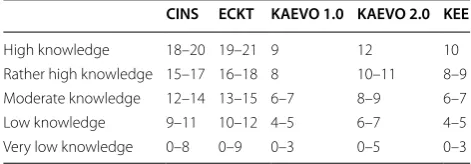
Score categories
similar sample groups gathered with different instru-ments (e.g., in different countries). Rutledge and Sad-ler (2007) defined categories of levels of acceptance for the MATE, making it easier to compare different data sets. Kuschmierz et al. (2020) also defined catego-ries for the KAEVO 2.0. Since no categorization for the other widespread instruments was found, we recom-mend categories for these instruments that were used in Europe since 2010. Based on the MATE and KAEVO categories, we calculated five categories for each instru-ment (see Tables 1 and 2). We do not suggest categories for the ATEEK, CANS, ECT, EvoDevoCI, GeDI, MUM, EALS, and GAENE, as these instruments were not used in Europe so far.
With respect to the evolutionary knowledge instru-ments, these newly created categories for the CINS are in accordance with the suggestion of Anderson et al. (2010) that “[…] anyone who scores 16/20 or higher on CINS understands natural selection quite well”, since 16 in our scale is the mid score of the category “rather high”. Addi-tionally, these categories are in line with the suggestions of several authors who used the CINS in European coun-tries (e.g., Annaç and Bahçekapili 2012; Buchan 2019; see Additional file 2).
For the ECKT, Rutledge and Warden (2000) reported a moderate level of knowledge about evolution,
corresponding to a mean of 14.89. This is in line with our newly created categories (Table 1). Moreover, the newly created categories are consistent with suggestions of the authors who used the ECKT in Europe (e.g., Deniz and Sahin 2016; Stanisavljevic et al. 2013; see Additional file 2). Furthermore, the categories for the KAEVO 1.0 and the KEE are not in conflict with the original publi-cations of the instruments (KAEVO: Beniermann 2019; KEE: Moore and Cotner 2009).
For the I-SEA, we did not find any suggestions for categories in the original publication, which is why we suggested categories based on the MATE. If our newly developed categories for acceptance and knowledge scores which we applied in the results section differed from the initial interpretation in the original publications (see Additional file 2 for initial interpretations), we men-tioned this in a footnote.
As the ORI and the ACORNS are open-response instruments, we did not suggest assessment categories for these two instruments. However, Nehm and Reilly (2007) suggested the “Natural Selection Performance Quotient” (NSPQ) to quantify student knowledge and misconceptions.
Results on evolutionary knowledge and evolution acceptance are presented separately. Subsequently, all results on the relationship between evolutionary knowl-edge and acceptance are presented and compared only if a similar target group was surveyed and the same instru-ment was used in both studies. We did this aware of the shortcomings deriving from huge differences in terms of the provided evidence for reliability and local validity.
Education levels in Europe
Even though the type of education granting admission to the profession of teachers differs considerably between the European countries (Evagorou et al. 2015), we use the term “pre-service teachers” for all students that will become school teachers and accordingly enrolled in a teacher education program in their respective country. However, all studies focusing on pre-service teachers in the current review are referring to undergraduates.
The definition of school levels and the respective grades are also very diverse both between and even within Euro-pean countries. We decided to define different school levels following the “International Standard Classification of Education (ISCED)” (European Commission 2019, see Table 3). All school levels mentioned in this paper refer to Table 3.
Results
In total, 38 papers on knowledge about evolution and 35 papers on acceptance of evolution were identified for the period 2010–2020. Seventeen of these papers dealt Table 1 Assessment categories for sum score categories
of the evolutionary knowledge instruments
Categories for the KAEVO 2.0 are based on the categories of Kuschmierz et al. (2020). Suggestions for all instruments based on the categories suggested for the KAEVO 2.0 (Kuschmierz et al. 2020) and the MATE (Rutledge and Sadler 2007)
CINS ECKT KAEVO 1.0 KAEVO 2.0 KEE
High knowledge 18–20 19–21 9 12 10
Rather high knowledge 15–17 16–18 8 10–11 8–9
Moderate knowledge 12–14 13–15 6–7 8–9 6–7
Low knowledge 9–11 10–12 4–5 6–7 4–5
Very low knowledge 0–8 0–9 0–3 0–5 0–3
Table 2 Assessment categories for sum scores
of the evolution acceptance instruments
Suggestions for I-SEA based on the categories suggested for the MATE (Rutledge and Sadler 2007)
I-SEA* MATE (Rutledge
and Sadler
2007)
Very high acceptance 106–120 89–100
High acceptance 91–105 77–88
Moderate acceptance 76–90 65–76
Low acceptance 61–75 53–64
with both knowledge and acceptance of evolution. The 56 identified papers include research results for 29 Euro-pean countries (Austria, Belgium, Croatia, Cyprus, Czech Republic, Denmark, France, Georgia, Germany, Greece, Estonia, Finland, Hungary, Italy, Lithuania, Malta, the
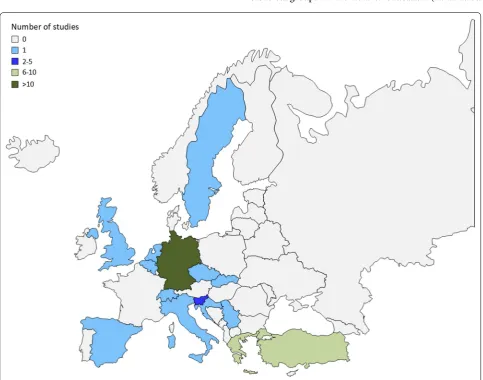
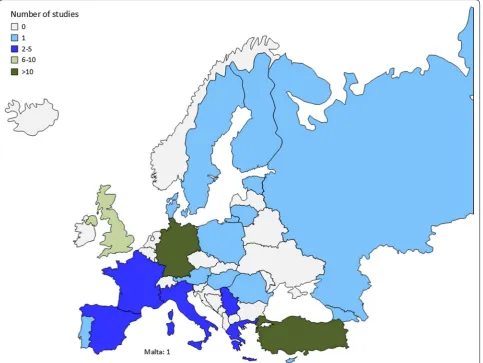
Netherlands, Poland, Portugal, Romania, Russia, Ser-bia, Slovakia, Slovenia, Spain, Sweden, Switzerland, Tur-key, and the United Kingdom). However, the studies are unequally distributed across Europe for both knowledge about evolution (see Fig. 1) and acceptance of evolution (see Fig. 2). Many studies have been conducted in few countries, while in the majority of countries only two or less studies have been published.
Only six of these publications are cross-country com-parisons (Clément 2015a; Göransson et al. 2020; Graf and Soran 2010; Kralj et al. 2018; Pinxten et al. 2020; Šorgo et al. 2014). Eight studies compared several dif-ferent subgroups in the field of education (Athanasiou
and Mavrikaki 2014; Beniermann 2019; Eder et al. 2011; Kampourakis et al. 2012a, 2012b; Konnemann et al. 2016; Köse 2010; Kuschmierz et al. 2020; Lazaridis et al. 2011) and 17 studies assessed both knowledge and acceptance (Akyol et al. 2010, 2012; Annaç and Bahçekapili 2012;
Table 3 School levels based on the ISCED levels
(European Commission/EACEA/Eurydice. The Structure
of the European Education Systems 2019)
School
levels Early childhood education (ISCED 0)
Primary education (ISCED 1)
Secondary education Lower
secondary education (ISCED 2)
Upper secondary education (ISCED 3)
Grades / 1–6 7–9 10–13
Age in years
on average 0–6 6–12 12–15 15–19
Athanasiou et al. 2012, 2016; Beniermann 2019; Buchan 2019; Deniz and Sahin 2016; Fenner 2013; Gefaell et al. 2020; Graf and Soran 2010; Großschedl et al. 2018; Lam-mert 2012; Nehm et al. 2013; Kampourakis et al. 2012a, b; Stanisavljevic et al. 2013; Tekkaya et al. 2012). Eight of the 13 instruments, which were identified as the most commonly used instruments by Mead et al. (2019), apparently have not been used in the European context to date (see Additional file 1). We also analyzed if evi-dence for local validity or reliability has been provided (see Additional files 3, 4, and 5). In 14 of the 38 papers on knowledge about evolution, evidence for local valid-ity and reliabilvalid-ity has been provided. In two papers, only validity and in six papers only reliability was addressed. In 14 papers, no evidence for local validity and/or reli-ability was provided. Eleven of the 35 papers on accept-ance of evolution provided evidence for local validity and reliability, four only for local validity and twelve only for reliability. In ten papers, no evidence for neither local
validity nor reliability was provided. Based on this litera-ture review, additional information, such as, for instance, used instrument(s), sample group(s) and origin(s) of the sample(s), on the identified studies is presented in Addi-tional files 3, 4, and 5.
Knowledge about evolution
CINS
these studies, the level of knowledge among university students in Europe is very diverse, ranging from very low in Greece (biology non-majors who have not attended biology classes, M = 2.90; Athanasiou and Mavrikaki 2014) and Turkey (psychology students, M = 5.98; Annaç and Bahçekapili 2012), low in Greece (biology non-majors who have attended biology classes, M = 9.60; Athanasiou and Mavrikaki 2014) and Turkey (pre-service science teachers, M = 9.91; Tekkayaet al. 2011), moderate in Belgium (Veterinary and Biomedical Sciences univer-sity freshmen, MFlemish= 12.2, MDutch= 14.3; Pinxten et al. 2020), Germany (primary and lower secondary educa-tion pre-service biology teachers, Mprimary= 11.75, Mlower
secondary= 12.84; Großschedl et al. 2018; pre-service
biol-ogy teachers, M = 13.60; Nehm et al. 2013), and Greece (first- to third-year biology majors, M = 11.6; Athana-siou and Mavrikaki 2014), to rather high in Germany (upper secondary education pre-service biology teach-ers, M = 14.74; Großschedl et al. 2018), and Greece (last year biology majors, M = 15.1; Athanasiou and Mavrikaki 2014; M = 15.07; Lazaridis et al. 2011).
However, on average, the cut-off score of Anderson et al. (2010) for a quite well knowledge about natural selection (a score of at least 16 based on the CINS), was only reported in Greece for biology in-service teachers (M = 16.602; Venetis and Mavrikaki 2017).
Comparisons between university student groups revealed that knowledge about evolution increased signif-icantly with the biology education level in biology majors (M1st – 3rd year= 11.6, Mpostgraduate in biology education= 14.2, and
M4th year= 15.1), compared to biology non-majors with
and without biology classes (Mno biology= 2.9 and Mbiol‑ ogy= 9.6) in Greece (Athanasiou and Mavrikaki 2014),
biology majors compared to early childhood education and primary education pre-service teachers (Mbiology majors (all years)= 13.4, Mearly childhood= 9.7; Lazaridis et al. 2011)
and different groups of pre-service teachers in Germany (Mprimary= 11.75, and Mupper secondary= 14.74; Großschedl et al. 2018). Pinxten et al. (2020) compared CINS scores between Veterinary Sciences and Biomedical Sciences university freshmen in Belgium, having completed high level biology secondary education either in Flanders, Bel-gium or the Netherlands and reported that Dutch stu-dents obtained a significantly higher score (MDutch= 14.4,
MFlanders= 12.5).
In two studies on in-service teachers in two European countries (Greece and the United Kingdom), a moderate level of knowledge about natural selection was reported for secondary education in-service science teachers, and
a rather high level of knowledge about natural selection for the biology teachers among them, in Greece (Mto‑ tal= 14.33, Mbiologists= 16.60; Venetis 2017). In the United
Kingdom, primary and lower secondary education in-service teachers also showed a moderate level of knowl-edge about natural selection (M = 12.84; Buchan 2019).
A variety of misconceptions has been observed for university students in Greece (Athanasiou and Mavri-kaki 2014), Flanders, Belgium (Pinxten et al. 2020), and Turkey (Tekkaya et al. 2011). Novice university students held more teleological misconceptions than advanced university students in Greece (Athanasiou and Mavri-kaki 2014). Teleological misconceptions have also been found in primary and lower secondary education in-ser-vice teachers in the United Kingdom (Buchan 2019) who moreover also showed anthropomorphic and Lamarck-ian (soft inheritance) misconceptions. Pinxten et al. (2020) reported that the relative frequency of misconcep-tions elicited by the CINS was almost identical in Flemish and Dutch Veterinary and Biomedical Sciences univer-sity freshmen, with ‘intention/need related to speciation’ being the most common misconception in both samples.
The concept of biotic potential was very difficult to understand for university students in Greece (Athana-siou and Mavrikaki 2014; Lazaridis et al. 2011) and sen-ior pre-service science teachers in Turkey (Tekkaya et al. 2011). By contrast, Flemish (68.5%) and Dutch (74.4%) Veterinary and Biomedical Sciences university freshmen appeared to have a good understanding of this concept (Pinxten et al. 2020). Change in a population, and ori-gin of species were often misunderstood among novice university students in Greece (Athanasiou and Mavri-kaki 2014), Veterinary Sciences and Biomedical Sciences university freshmen in Belgium (Pinxten et al. 2020), senior pre-service science teachers in Turkey (Tekkaya et al. 2011), and for primary and lower secondary educa-tion in-service teachers in the United Kingdom (Buchan 2019). According to Lazaridis et al. (2011), many biology majors, who actually scored high on the CINS, were not constant in their answers for the same concept.
ECKT
Seven studies (four on pre-, three on in-service teach-ers) in three European countries (Greece, Serbia, Tur-key) used the ECKT (score: 0–2; Rutledge and Warden 2000) or modified versions of this multiple-choice instru-ment that covers the evolutionary concepts of natural selection, extinction processes, homologous structures, coevolution, analogous structures, convergent evolu-tion, intermediate forms, adaptive radiaevolu-tion, speciaevolu-tion, evolutionary rates, the fossil record, biogeography, envi-ronmental change, genetic variability, and reproductive success. Studies revealed that the level of knowledge 2 Means were calculated for the current review based on the presented data in
about evolution among science and biology pre-service teachers is very low in both Greece (Mbiology= 7.63;
Atha-nasiou et al. 2012) and Turkey (Mscience= 7.99; Akyol et al. 2010; Mscience= 8.00; Akyol et al. 2012; Mbiology= 8.62;
Deniz and Sahin 2016). In Turkey, a modified version of the ECKT was used. Akyol et al. (2010) used the modi-fied version by Deniz et al. (2008), while Deniz and Sahin (2016) did not specify the modifications.
In-service teachers’ evolution knowledge based on the ECKT ranges from very low (early childhood education) to low (secondary education biology) in Serbia (Mearly childhood= 7.14, Msecondary (biology) = 11.693; Stanisavljevic
et al. 2013) and very low (early childhood) to moderate (lower secondary education geology) in Greece4 (M
early childhood= 8.09 – Mlower secondary (geology)= 14.4; Athanasiou
et al. 2016), and low (primary and lower secondary edu-cation) in Turkey (M = 10.385; Tekkaya et al. 2012). In
all three countries, a modified version of the ECKT was used. Athanasiou et al. (2016) modified (details not men-tioned) the instrument without excluding any of the 21 items. Tekkaya et al. (2012) used the version modified by Deniz et al. (2008), but included only 19 items. Stan-isavljevic et al. (2013) used only 13 items of the original version and changed eight of these items into true/false statements.
KAEVO
Three studies in two European countries (Germany and Slovenia) used the multiple-choice instrument KAEVO that includes the evolutionary concepts: natural selection, biological fitness, speciation, variation, heredity, muta-tions, phylogenetics, deep time, and human evolution. Based on results of two of these studies (Beniermann 2019; Kuschmierz et al. 2020), secondary school students showed a very low (Mgrade 7= 1.88, Mgrade 9-11= 2.96; score:
0–9; Beniermann 2019; Mgrade 10-12= 3.39; score 0–12;
Kuschmierz et al. 2020) level of knowledge about evolu-tion in Germany.
Early childhood- and primary education pre-service teachers showed a very low level of evolutionary knowl-edge in Slovenia (M = 3.026; score 0–12; Torkar and
Šorgo 2020). Students of different university programs showed low knowledge about evolution (M = 5.27; score:
0–9; Beniermann 2019), while biology and non-biology students showed very low knowledge about evolution (Mbiology= 4.85, Mnon-biology= 4.31; score: 0–12;
Kuschmi-erz et al. 2020). Despite the fact that biology and non-biology students reached similar levels of knowledge about evolution, the two groups differed significantly from each other (Kuschmierz et al. 2020). Torkar and Šorgo (2020) used eight of twelve items of the KAEVO 2.0, Beniermann (2019) all nine items of KAEVO 1.0.
Beniermann (2019) additionally surveyed German biol-ogy teachers in practical training after graduation (in the following added to the group of in-service teachers) who showed moderate knowledge about evolution (M = 6.92; Beniermann 2019). In both German studies with the KAEVO, knowledge about evolution was compared between different educational groups and increased with age and educational level (Beniermann 2019; Kuschmierz et al. 2020).
Teleological thinking was the most frequently found misconception in the adaptation items for both the Slo-venian sample and German samples. Additionally, in all samples biological fitness was difficult to understand, while a majority of all samples answered an item on heredity of phenotype changes to the direct offspring correctly. In-service biology teachers showed predomi-nantly teleological and anthropomorphic misconcep-tions, while Lamarckian misconceptions were rather prominent among school students (Beniermann 2019).
KEE
One study on third-year university students in Spain used the multiple-choice instrument KEE (score: 0–10; Moore and Cotner 2009) that covers the following evolutionary concepts: natural selection, biological fitness, evolution-ary change, variation. The study revealed low knowledge about evolution for chemistry, history, and English phi-lology students (Mchemistry= 5.2, Mhistory= 4.8, Menglish philol‑ ogy= 4.4; Gefaell et al. 2020) and moderate knowledge for
biology students (M = 6.5; Gefaell et al. 2020).
ORI
Three surveys in two European countries (Germany and Sweden) implemented the ORI (Nehm and Reilly 2007), an open response format instrument on natural selection. Results revealed that university students in Germany and Sweden used randomness and probability (Görans-son et al. 2020; Harms and Fiedler 2019) as well as time aspects (Göransson et al. 2020) rarely and inconsist-ently to explain evolutionary processes. Also, students used evolutionary key concepts to explain evolutionary changes moderately (Harms and Fiedler 2019). A com-parison between biology majors and pre-service biol-ogy teachers found remarkable deficits in both using 3 Means were calculated for the current review based on the presented data in
Stanisavljevic et al. (2013).
4 Different interpretation of Athanasiou et al. (2016): low knowledge about
evolution for biology and geology teachers; very low for all other groups of teachers.
5 Mean was calculated for the current review based on the presented data
in Tekkaya et al. (2012).
6 Mean was calculated for the current review based on the presented data
randomness and probability in evolutionary contexts and evolutionary knowledge in general for pre-service biol-ogy teachers (Fiedler et al. 2017). Examples of evolution-ary adaptation that include the loss of traits seemed to be more challenging for students than examples that include the gain of traits (Göransson et al. 2020).
ACORNS
Two studies (Großschedl et al. 2018; Nehm et al. 2013) in Germany used another open response instrument, the ACORNS (Nehm et al. 2012) on natural selection and non-adaptive change. Großschedl et al. (2018) showed that German secondary education pre-service teachers used significantly more often evolutionary key concepts and significantly less often scientifically inaccurate con-cepts than primary education pre-service teachers when explaining scenarios in an evolutionary context. Accord-ing to the authors, the gain of traits was easier to explain in animals than in plants, while for trait loss explanation was easier in plants than in animals (Großschedl et al. 2018). Nehm et al. (2013) compared pre-service biology teachers in Germany, USA, Korea, and Indonesia and found that evolutionary reasoning was similar across the different cultural contexts. Evolution in animals was sig-nificantly easier to explain than in plants. In agreement with the previously presented results from Göransson et al. (2020), examples of evolutionary adaptation that include the gain of traits seemed to be easier for students than examples that include the loss of traits (Nehm et al. 2013).
Other instruments
In addition to these repeatedly-used instruments, 16 studies with 16 other instruments on knowledge about evolution have been conducted since 2010 in nine Euro-pean countries (Croatia, Czech Republic, Germany, Greece, Italy, Slovakia, Slovenia, Switzerland, Turkey). Details of the respective instruments and main results of these studies are summed up in Additional file 4.
Acceptance of evolution
I‑SEA
The I-SEA (score 24–120; Nadelson and Southerland 2012), a 24-item 5-point rating scale, includes three sub-scales on microevolution, macroevolution, and human evolution. The I-SEA was used only once in Europe (the United Kingdom; Betti et al. 2020). Based on the results, most first-year life sciences undergraduate stu-dents in the United Kingdom showed high acceptance of evolution, with lower acceptance for human as well as macro- than micro-evolution (Mtotal= 93.12, Mmicroevolu‑ tion= 96.48, Mmacroevolution= 92.88, Mhuman evolution= 92.40;
score: 24–120; Betti et al. 2020). In this sample, religiosity
was significantly negatively correlated to evolution acceptance, with the lowest acceptance scores for Mus-lim students, followed by Christians and students of other religions, and highest scores for students with no religion. Biomedical and health students showed signifi-cantly lower evolution acceptance than general biology, anthropology or zoology students (Betti et al. 2020).
MATE
The 5-point rating scale MATE includes 20 items on the processes of evolution, the available evidence of evo-lutionary change, the ability of evoevo-lutionary theory to explain phenomena, the evolution of humans, the age of the Earth, the independent validity of science as a way of knowing, and the current status of evolutionary the-ory within the scientific community (score 20–100; Rut-ledge and Warden 1999; Rutledge and Sadler 2007). The MATE was used in 20 studies and six European coun-tries (Germany, Greece, Serbia, Spain, Turkey, the United Kingdom) making it the most-often used instrument for measuring evolution acceptance in Europe since 2010. Modified versions with various different numbers of items were used in the United Kingdom (13 items: Mead et al. 2018), Germany (16 items: Lammert et al. 2012), and Turkey (all items on a 4-point rating scale: Deniz and Sahin 2016; 15 items: Irez and Bakanay 2011; 10 items: Yüce and Önel 2015; 18 items: Tekkaya et al. 2012).
Secondary education students showed moderate acceptance of evolution in Germany (M = 71.9; Konne-mann et al. 2016; M = 71.137; Lammert 2012) and high
acceptance of evolution in the United Kingdom (no mean value, Mead et al. 2018). Strong believers showed low evolution acceptance in Germany, the influence of the denomination on acceptance was significant, with low-est acceptance scores for Muslims and highlow-est scores for students without a denomination (Lammert 2012). Konnemann et al. (2016) reported that in Germany espe-cially Christian Free Churchers (70.6%), but also Muslims (30.2%) showed low acceptance of evolution, positive atti-tudes toward the Biblical accounts of creation and a high degree of creationist belief, while unaffiliated showed the highest acceptance of evolution.
Pre-service biology teachers showed low8 (M = 61.069;
Deniz and Sahin 2016; Mbiology= 59.8110; Irez and
Baka-nay 2011) to moderate acceptance (M = 65.52; Deniz
7 Sum score was calculated for the current review based on the presented data
in Lammert (2012).
8 Different interpretation of Deniz and Sahin (2016): moderate acceptance. 9 Sum score was calculated for the current review based on the presented
data in Deniz and Sahin (2016).
10 Sum score was calculated for the current review based on the presented
et al. 2011) in Turkey, moderate acceptance in Greece
(M =70.95; Athanasiou and Papadopoulou 2012;
M = 74.45; Athanasiou et al. 2012), and high evolution acceptance in Germany (M = 84.21; Großschedl et al. 2014; Mprimary= 80.55, Mlower secondary= 83.52, Mupper second‑ ary= 86.63; Großschedl et al. 2018; M = 82.90; Nehm et al. 2013). A significant negative correlation for evolution acceptance and religiosity was reported for pre-service biology teachers in Greece (Athanasiou et al. 2012) and Turkey (Deniz et al. 2011; Deniz and Sahin 2016).
Considering pre-service teachers of different fields, these showed low acceptance of evolution11 in Turkey
(M = 57.4012; Bilen and Ercan 2016). Moderate
accept-ance of evolution was reported for pre-service science teachers in Turkey (M = 66.4013; Akyol et al. 2010). Low
acceptance, with even lower acceptance for pre-service science teachers who had previously attended a course on science and nature of science than for students who had not, was reported in Turkey (Mattended= 55.38, Mnot
attended= 61.20; Yüce and Önel 201514). University
stu-dents in Germany showed high acceptance of evolu-tion for both a treatment and a control group in an interventional study (Mtreatment= 81.20, Mcontrol= 87.00;
Konnemann et al. 2018). In accordance to that, Span-ish third-year university students from different degree programs also showed high acceptance of evolution (M = 87.20; Gefaell et al. 2020).
In-service teachers’ evolution acceptance reached from moderate for primary and secondary education teachers in Turkey (M = 69.6015; Tekkaya et al. 2012) and
teach-ers of early childhood education, primary school and secondary science education in Serbia (M = 76.18; Stan-isavljevic et al. 2013) to high acceptance for primary and lower secondary education teachers in the United King-dom (M = 85.88; Buchan 2019) and very high for lower secondary geology teachers in Greece (M = 89.80; Atha-nasiou et al. 2016). The range of evolution acceptance among teachers in different fields reached from high to very high in Greece (Mearly childhood= 78.33, Mlower second‑
ary (geology)= 89.80; Athanasiou et al. 2016; Katakos and
Athanasiou 2020), and from moderate to high in Serbia
(Mkindergarten= 69.68, Msecondary (biology)= 84.56;
Stanisavlje-vic et al. 2013).
A significant negative correlation for evolution accept-ance and religiosity was reported for in-service teachers teaching biology in Greece (Athanasiou et al. 2016).
Other instruments
In addition to these repeatedly-used instruments, 15 studies with 15 other instruments on acceptance of evo-lution have been conducted since 2010 in 21 European countries (Austria, Cyprus, Denmark, Estonia, Finland, France, Georgia, Germany, Hungary, Italy, Lithuania, Malta, Poland, Portugal, Romania, Russia, Serbia, Spain, Sweden, Turkey, the United Kingdom). Details of the respective instruments and main results of these studies are summed up in Additional file 5.
Correlation between knowledge and acceptance of evolution
We identified 17 studies that reported the relationship between knowledge and acceptance of evolution in six European countries (Germany, Greece, Serbia, Spain, Turkey, the United Kingdom). German secondary edu-cation students showed a weak positive correlation between knowledge and acceptance of evolution (grade 9–11, Beniermann 2019; grade 9–10, Lammert 2012). Beniermann (2019) also found a weak positive correla-tion between knowledge and acceptance of evolucorrela-tion for university students. Likewise, pre-service teachers showed a weak positive correlation between knowledge and acceptance of evolution in Germany (Graf and Soran 2010; Großschedl et al. 2014), Turkey (Akyol et al. 2012), and Greece (Athanasiou et al. 2012). Additional studies in Germany (Großschedl et al. 2018; Nehm et al. 2013) and Turkey (Deniz and Sahin 2016) revealed a moderate posi-tive correlation for pre-service teachers. Also, a moder-ate positive correlation for in-service teachers was found in Germany (Beniermann 201916), Serbia (Stanisavljevic
et al. 2013) and the United Kingdom (Buchan 2019). By contrast, some studies did not find significant corre-lations between knowledge and acceptance of evolution. This was the case for primary and lower secondary edu-cation students in Germany (grade 7, Beniermann 2019; grade 5–6, Fenner 2013), psychology students (Annaç and Bahçekapili 2012) and pre-service teachers in Tur-key (Akyol et al. 2010; Graf and Soran 2010), third-year university students of different fields in Spain (Gefaell et al. 2020) and in-service teachers in Greece (Athanasiou et al. 2016) and Turkey (Tekkaya et al. 2012).
15 Sum score was calculated for the current review based on the presented
data in Tekkaya et al. (2012). 16 Trainee biology teachers. 11 Different interpretation of Bilen and Ercan (2016): undecided position
about evolution.
12 Sum score was calculated for the current review based on the presented
data in Bilen and Ercan (2016).
13 Sum score was calculated for the current review based on the presented
data in Akyol et al. (2010).
14 Sum scores were calculated for the current review based on the
Discussion
The diversity of the instruments used to assess accept-ance of evolution and knowledge about evolution in Europe makes the comparison within and between countries and educational groups rather complicated or even questionable regarding its validity. Another crucial point in this regard is the often lacking evidence for local validity and reliability that was discovered in the present review (see Additional files 3, 4, and 5). Moreover, only five of the 13 most commonly used instruments (Mead et al. 2019) were found to have been applied to European samples (ACORNS, CINS, I-SEA, KEE, MATE): this may be partly explained by the fact that some instruments have been only recently developed and published (as is the case for CANS and GAENE). This, along with a gen-erally low number of studies per country across Europe (both as regards knowledge and acceptance of evolution, see Fig. 1 and 2) indicate that much more research is still needed i) to expand and diversify samples, ii) to unify already available ones and compare among them and iii) to apply standards to provide appropriate sources of evi-dence for reliability and validity. This way it will be pos-sible to get a clearer picture of the European educational context and to make sound and reliable inferences on how different instructional settings impact learning.
Having these methodological limitations in mind (see paragraph on validity issues for a deepened discussion), our results show that the current state of research regard-ing knowledge and acceptance of evolution of students and teachers in Europe is diverse. However, there are in particular some major points of concern that emerge from our results. As we detail below, pre-service teach-ers show low to moderate levels of knowledge about evolution in some samples of several European coun-tries (Turkey, Germany, Greece, Slovenia, Czech Repub-lic, Slovakia). In some surveyed samples (Greece and Turkey), undecided attitudes or even rejection of lution are recorded. As regards knowledge about evo-lution of primary education in-service teachers, scores range unsatisfyingly from very low to moderate. Teach-ers, and in particular biology teachTeach-ers, play a key role in correcting misleading notions and conceptual schemas of evolution from the early stages of education, adjust-ing instruction to respond to their students’ inquiries and needs. The persistence of various misconceptions through all educational stages that we found in our study must be interrogated by future research also in light of these critical aspects, along with a more detailed under-standing of the educational offer about evolution across various curricula.
Knowledge about evolution
School students
The level of knowledge about evolution in European school students has not been much explored yet. The present review resulted in ten publications in six Euro-pean countries on the assessment of early childhood, primary and secondary education students’ knowledge about evolution (Croatia and Slovenia: Kralj et al. 2018; Germany: Beniermann 2019; Fenner 2013; Jördens et al. 2016; Kuschmierz et al. 2020; Lammert 2012; Greece: Kampourakis et al. 2012a, b; Italy: Kampourakis et al. 2012a, b; Switzerland: Queloz et al. 2017), gathered with eight different instruments (KAEVO and self-developed). In summary, the data on knowledge about evolution in European school students is limited and not unified. The current state of research reveals mixed levels of knowl-edge about evolution for secondary education students, from very low (Beniermann 2019; Kuschmierz et al. 2020), moderate (Fenner 2013; Lammert 2012) to high (Rufo et al. 2013). Furthermore, a variety of misconcep-tions, predominantly teleological and Lamarckian, for primary (e.g., Kampourakis et al. 2012a, b) and second-ary education students of various grades (e.g., Benier-mann 2019; Fenner 2013; Fischer 2014; Jördens et al. 2016; Lammert 2012; Queloz et al. 2017) is apparent. The persistence of such misconceptions might indicate that European school curricula may not fully succeed in cop-ing with naïve conceptual frameworks (that are known to develop at an early age). Also, the knowledge displayed by pre-service and in-service teachers plays a significant role in this regard. Critical aspects have emerged in this sense (see sections below).
University students
Overall, eight studies on university students (exclud-ing pre-service teachers) in seven countries (Flanders, Belgium: 1; Germany: 3; Greece: 2; the Netherlands: 1; Spain: 1; Sweden: 1; Turkey: 1) were discovered, gathered with four different instruments (CINS, KAEVO, KEE, and ORI). Knowledge about evolution of university stu-dents seems to be an issue (low to moderate knowledge about evolution or frequently occurring misconceptions) in several countries: Turkey (Annaç and Bahçekapili 2012), Germany (Beniermann 2019; Fiedler et al. 2017; Göransson et al. 2020; Harms and Fiedler 2019; Kuschmi-erz et al. 2020), Greece (Athanasiou and Mavrikaki 2014), Spain (Gefaell et al. 2020), and Sweden (Göransson et al. 2020).
mathematics students, Kuschmierz et al. 2020; Turkey: psychology majors, Annaç and Bahçekapili 2012) and low (Germany: different study programs, Beniermann 2019; Spain: chemistry, history, and English philology students, Gefaell et al. 2020) in university students from different non-biology related study programs. Biology-related university freshmen showed low knowledge about evolution (Belgium: Pinxten et al. 2020). Biology majors showed very low (Germany: Kuschmierz et al. 2020), moderate (first- to third-year and postgraduate biology majors, Greece: Athanasiou and Mavrikaki 2014; Spain: Gefaell et al. 2020) to rather high knowledge about evo-lution (fourth-year biology majors, Greece: Athanasiou and Mavrikaki 2014; Lazaridis et al. 2011). The finding of Nehm and Ha (2011) for university students in the USA that examples of evolutionary adaptation including the loss of traits are more challenging than examples that include the gain of traits, was also confirmed for German university students (Göransson et al. 2020).
Misconceptions, predominantly teleological miscon-ceptions, were also present among university students of different fields of study (Athanasiou and Mavrikaki 2014; Beniermann 2019; Kuschmierz et al. 2020; Pinxten et al. 2020). Also, some evolutionary concepts, as for exam-ple ‘biotic potential’ (Athanasiou and Mavrikaki 2014; Lazaridis et al. 2011), change in a population, and ori-gin of species (Athanasiou and Mavrikaki 2014; Pinxten et al. 2020) seemed to be difficult to understand across multiple samples. Summed up, it can be stated that the knowledge about evolution increased with biology edu-cation level across different European university student samples.
Pre‑service teachers
Pre-service teachers, especially future biology teachers, play a special role in terms of knowledge about evolution and are the most assessed group of university students in this regard, with numerous studies in Turkey (Akyol et al. 2010, 2012; Deniz and Sahin 2016; Graf and Soran 2010; Keskin and Köse 2015; Tekkayaet al. 2011) and Germany (Fiedler et al. 2017; Graf and Soran 2010; Großschedl et al. 2018; Nehm et al. 2013). Pre-service teachers showed low to moderate knowledge in Turkey and low to rather high knowledge in Germany. In other countries, the database is very thin or no publications were found. Overall, 15 studies on pre-service teachers were discov-ered in six countries (Czech Republic: 1; Germany: 6; Greece: 2; Slovakia: 1; Slovenia: 2; Turkey: 7), gathered with ten different instruments (CINS, ECKT, KAEVO, ORI, ACORNS, and self-developed).
With this in mind, the results for pre-service teachers show partly alarmingly low levels of knowledge about evolution. Knowledge about evolution of pre-service
teachers seems to be an issue (low to moderate knowl-edge about evolution or frequently occurring miscon-ceptions) in several countries: Turkey (Akyol et al. 2010, 2012; Deniz and Sahin 2016; Graf and Soran 2010; Kes-kin and Köse 2015; Šorgo et al. 2014; Tekkaya et al. 2011), Germany (Beniermann 2019; Fiedler et al. 2017; Graf and Soran 2010), Greece (Athanasiou et al. 2012; Athanasiou and Mavrikaki 2014) Slovenia (Šorgo et al. 2014; Torkar and Šorgo 2020); Czech Republic (Šorgo et al. 2014); and Slovakia (Šorgo et al. 2014). Pre-service teachers of dif-ferent fields showed very low knowledge about evolution in two studies (Greece: Athanasiou and Mavrikaki 2014; Slovenia: Torkar and Šorgo 2020), low knowledge in two studies (Germany and Turkey: Graf and Soran 2010; Greece: Athanasiou and Mavrikaki 2014), and moder-ate knowledge in one study (Nehm et al. 2013). Studies that focused on pre-service science or pre-service biol-ogy teachers revealed a variety of knowledge about evo-lution, from unexpectedly very low (Greece: Athanasiou et al. 2012; Turkey: Akyol et al. 2010; Akyol et al. 2012; Deniz and Sahin 2016), low (Turkey: Tekkaya et al. 2011), to moderate (Germany: Nehm et al. 2013; primary and lower secondary education, Großschedl et al. 2018), and rather high knowledge about evolution (Germany: upper secondary education, Großschedl et al. 2018). Results from open response instruments confirmed that the con-text effects in evolution assessment found in European university students (Göransson et al. 2020), were also present in pre-service teachers. The examples of evolu-tionary adaptation in animals apparently were easier to explain than examples in plants (Großschedl et al. 2018; Nehm et al. 2013). The same effect was found for exam-ples including the gain of traits in contrast to the loss of traits (Großschedl et al. 2018; Nehm et al. 2013). These results indicate that the ratio of gain/loss and animal/ plants items in an instrument will control measure-ment outcome to a large degree, which should be taken into account in future standardized assessments across Europe (see also Nehm et al. 2012).
Misconceptions, predominantly teleological miscon-ceptions, were also present among pre-service teachers (Germany: Graf and Soran 2010; Greece: Athanasiou and Mavrikaki 2014; Turkey: Keskin and Köse 2015; Tekkaya et al. 2011; Slovenia: Torkar and Šorgo 2020). In contrast to other university students, knowledge about evolution did not consistently increase with biology education level across different European pre-service teacher samples.
In‑service teachers
Athanasiou et al. 2016; Serbia: Stanisavljevic et al. 2013), low (Greece: Athanasiou et al. 2016; Prinou et al. 2011; Stasinakis and Athanasiou 2016; Serbia: Stanisavlje-vic et al. 2013; Turkey: Tekkaya et al. 2012) or moder-ate (Greece: Athanasiou et al. 2016; United Kingdom: Buchan et al. 2019) knowledge about evolution was reported for different groups of in-service teachers in several countries.
The level of knowledge about evolution among in-ser-vice teachers differed according to the type of school edu-cation. While very low knowledge about evolution was stated for early childhood education (Greece: Athanasiou et al. 2016; Serbia: Stanisavljevic et al. 2013), primary education teachers showed very low (Serbia: Stanisav-ljevic et al. 2013), low (Greece: Athanasiou et al. 2016; Turkey: Tekkaya et al. 2012), and moderate knowledge about evolution (the United Kingdom: Buchan 2019). Very low (physics, Serbia: Stanisavljevic et al. 2013), low (biology, chemistry, Serbia: Stanisavljevic et al. 2013; Turkey: Tekkaya et al. 2012), moderate (Greece: Athana-siou et al. 2016; the United Kingdom: Buchan 2019) and rather high (Greece: Venetis K, Mavrikaki E. Oi gnoseis ton ekpaideytikon thetikon epistimon shetika me tous exeliktikous mixanismous ton zontanon organismon. Sto A. Polyzos, L. Anthis (epim.), Praktika Ergasion 4th Pan-elliniou Synedriou “Biologia stin Ekpaideysi” [Knowledge of secondary education science teachers regarding the evolutionary mechanisms of living organisms. In: Polyzos A, Anthis L, editors. Proceedings of the 4th Panhellenic Conference “Biology in Education”]. Piraeus: Panhellenic Association of Bioscientists 2017) to high (Greece: only biologists, Venetis et al. 2017) knowledge about evolu-tion was also presented for secondary educaevolu-tion teach-ers. Even in-service teachers showed mainly teleological misconceptions (United Kingdom: Buchan 2019; Greece: Prinou et al. 2011), and also anthropomorphic and Lamarckian misconceptions (United Kingdom: Buchan 2019). This illustrates the persistence of misconcep-tions through all education levels that is likely to affect the quality of evolution instruction offered to the various groups of students.
Cross‑country studies
Five publications include samples from two or more European countries, four of them compare two countries in terms of knowledge about evolution (Croatia and Slo-venia: Kralj et al. 2018; Germany and Turkey: Graf and Soran 2010; Belgium and the Netherlands: Pinxten et al. 2020) or with a focus on misconceptions (Germany and Sweden: Göransson et al. 2020; Belgium and the Neth-erlands: Pinxten et al. 2020). One study compares four countries regarding knowledge about evolution (Czech
Republic, Slovakia, Slovenia, and Turkey: Šorgo et al. 2014).
Altogether, results of 15 different European countries on evolutionary knowledge were documented in the current review. In only three of these countries three or more publications are discovered (Germany: 11, Greece: 7, Turkey: 9; see Fig. 1). This implies that there is only few or even no information available concerning knowledge about evolution in most European countries. Thus, evo-lution education research in Europe should fill this gap in the future by conducting cross-country studies on a com-parable target group by use of the same instrument and providing evidence for local validity.
Acceptance of evolution
School students
Our review resulted in ten studies focusing on accept-ance of evolution of school students that were discovered in six countries (Austria: 1, France: 1; Germany: 5, Italy: 1, Turkey: 1, the United Kingdom: 1), gathered with eight different instruments (MATE and self-developed).
Evolution acceptance in school students is rather high in three European countries (Germany: Beniermann 2019; Fenner 2013; Konnemann et al. 2016; the United Kingdom: Mead et al. 2018; Italy: Rufo et al. 2013). In three countries, studies reported moderate acceptance (Germany: Konnemann et al. 2016; Lammert 2012), mixed attitudes towards evolution (Austria: Eder et al. 2011) or even rejection (Turkey: Köse 2010) for this sam-pling group. The conflicting results for Germany support an issue, which has also been found in previous studies (e.g., Barnes et al. 2019; Mead et al. 2019; Smith et al. 2016): besides other reasons, the application of different measuring instruments can lead to inconsistent results. Konnemann et al. (2016) used a self-developed instru-ment as well as the MATE, reporting moderate accept-ance of evolution for the MATE and at the same time positive attitudes towards evolution for a great major-ity of the students (87.6%) based on the self-developed instrument. In both studies that revealed moderate acceptance (Konnemann et al. 2016; Lammert 2012), the MATE was used. Beniermann (2019) and Fenner (2013), who reported rather high acceptance, used self-devel-oped measurement instruments.