Doctoral Thesis
University of Trento
School of Social Sciences
Doctoral Programme in Local Development and Global
Dynamics
Thesis Title
THE ROLE OF SUSTAINABILITY IN DEVELOPMENT ANALYSIS: A
CASE STUDY OF LAOS
A THESIS PRESENTED TO THE
DOCTORAL PROGRAMME IN LOCAL DEVELOPMENT AND GLOBAL DYNAMICS IN PARTIAL FULFILLMENT OF THE REQUIREMENTS
FOR THE DEGREE OF DOCTOR OF PHILOSOPHY
Hatthachan Phimphanthavong
i
SUPERVISOR
Supervisor:
Prof. Giuseppe Folloni
Università degli Studi di Trento
DOCTORAL COMMITTEE
Prof. Giancarlo Rovati
Università Cattolica Del Sacro Cuore di Milano, Departmento di Sociologia
Prof. Gianluigi Gorla
Università degli Studi della Val’Aosta Dipartmento di Scienze Economiche e Politiche
Prof. Pier Luigi Novi Inverardi Università degli Studi di Trento
Dipartmento di Economia e Management
Prof. Bruno Dallago
Università degli Studi di Trento
ii
ABSTRACT
The main purpose of this thesis is to identify the role of sustainable development in Laos,
based on the integration of three factors, economic growth, social development, and the
environmental dimension. Annual time series data are used for the period 1980-2010. In order to
generate the most appropriate regression, relevant theoretical and empirical studies are reviewed.
This thesis contributes to the on-going research issue about key determinants influencing
sustainable development in developing countries.
Firstly, this study uses the first different of logarithm form to identify the determinants of
economic growth, the impacts of growth on poverty and environmental conditions in Laos.
However, using the multiple regressions, serious problems of multicollinearity were encountered
and those results became less reliable. Principal components analysis (PCA) is a technique to
handle the problem of multicollinearity and produce stable and meaningful estimates for
regression coefficients.
This thesis concludes that there are several variables, both internal and external factors,
which have influenced the current economic growth of Laos. Particularly the internal factors
(domestic investment, government expenditure, and industry) show their strong correlation with
economic growth, while the external factor (participation in ASEAN) also plays an important
role in economic growth. On the other hand, the other external factors (FDI, AID and OPEN)
show a weaker link to domestic growth of Laos. In the long run, to ensure the effectiveness of
external factors on domestic growth, this research suggests exploiting more effectively the
opportunities provided by foreign direct investment, through the openness of the system to
iii
The impacts of economic growth on poverty and environmental conditions are then
considered, questioning whether economic growth leads to the reduction of poverty and whether
it produces a pressure on environmental conditions. This study found that those determinants not
only have been dominant in economic growth, but they do indeed correlate with a reduction in
the level of poverty. On the other hand, the increase in economic activities leads to increased
environmental damage.
This research supports continuing the adjustment of domestic activity investment,
government expenditure, improving trade openness system, foreign direct investment, aid
allocation, ASEAN, and so on. These factors can help the country to grow and poverty to
diminish but we have also to pay attention to their impacts on the environment. Sustainable
development would achieve its goal only if these internal and external factors contribute to
economic growth, where this growth is distributed across the entire population, together with
environmental protection conditions.
In order to attain the goal of sustainable development, strong environmental and natural
resource protection policies are suggested. To maintain a high rate of economic growth, this
study suggests considering the natural resources and the areas with the greatest potential to be
utilized for growth; such as tourism sustainability, human resource improvement and trade policy
improvement. To improve social development, reduce the development gap and eradicate
extreme poverty, it is suggested that community participation development, gender promotion,
and investment in social services be increased especially in rural areas.
iv
Acknowledgements
First of all, I would like to express my deepest thanks to the Erasmus Mundus
Programme, under Bridging the Gap projects, not only for the scholarship but all the other
supports provided me with this opportunity to do my PhD in the field of Local Development and
Global Dynamics, Graduate School in Social Science at University of Trento. Then, my sincere
thanks go to all the staff and professors at this university for providing high quality
accommodation which has helped enhance my new experience and knowledge horizon.
I am very grateful to my supervisor Prof. Giuseppe Folloni for his guidance,
encouragement, and helpful suggestions that supported me while completing this research paper.
I am also thankful to Prof. Pier Luigi Novi Inverardi, Prof. Federico Boffa, and Prof. Mario
Maggioni, my thesis examiners, for their supportive comments on the draft of my thesis.
My thanks also go to the Government of Laos, especially to the staff of the Poverty
Reduction Fund Project (PRF), for supporting and providing helpful data and information
employed in this research work. I also wish to express my sincere and grateful appreciation to all
my friends and family for their love and support.
Finally, I offer my thanks to my friends and peers who helped with their support and by
providing helpful comments and suggestions for my work and special thanks to my parents for
their commitment and support to my studies, and for their sound advice.
Last but not least, I would like to thank my family for their encouragement on my
academic journey. I also wish to send my thanks to all staff and my classmates, all PhD
candidates in Social Science, and all friends in San Bartolameo for their share during my study
here. Those people made my journey more enjoyable and memorable and encouragement when I
v
Certification of authorship of Dissertation Work
THE ROLE OF SUSTAINABILITY IN DEVELOPMENT ANALYSIS: A
CASE STUDY OF THE LAO PDR
Submitted to (Advisor’s Name): Prof. Giuseppe Folloni
Student’s Name: Hatthachan Phimphanthavong
Date of Submission: 14 April 2014
Purpose and Title of Submission: The final version of dissertation
Certification of Authorship:
I hereby certify that I am the author of this document and that any assistance I
received in its preparation is fully acknowledged and disclosed in the document.
I have also cited all sources from which I obtained data, ideas, or words that are
copied directly or paraphrased in the document. Sources are properly credited
according to accepted standards for professional publications. I also certify that
this paper was prepared by me for this purpose.
vi
Table of Contents
ABSTRACT ... II
CERTIFICATION OF AUTHORSHIP OF DISSERTATION WORK ... V
CHAPTER 1: INTRODUCTION ... 1
1.1. SUSTAINABLE DEVELOPMENT BACKGROUND ... 1
1.2. THE PROBLEMS ... 2
1.3.THE PURPOSES ... 3
1.4.INNOVATIVE ASPECTS... 4
1.5.STRUCTURE OF THE THESIS ... 6
CHAPTER 2: STATE OF THE ART ... 7
2.1.THEORETICAL FRAMEWORK ... 7
2.2.CONCEPTUAL FRAMEWORK ... 9
DIAGRAM 1:CONCEPTUAL FRAMEWORK OF ANALYSIS... 10
CHAPTER 3: ECONOMIC CONTEXT OF LAOS ... 13
3.1.OVERVIEW OF COUNTRY ... 13
3.2.THE ROLE OF ASEAN IN LAOS ... 15
3.3.ECONOMIC PERFORMANCE ... 16
3.3.1. GDP shares by sector ... 17
3.3.2. GDP growth, trade openness, and foreign aid ... 19
3.3.3. Foreign direct investment inflow ... 25
3.4.POVERTY AND INCOME DISTRIBUTION ... 29
3.4.1. Poverty incidence and definition ... 29
3.4.2. Income distribution ... 31
3.5.ENVIRONMENTAL CONDITIONS IN LAOS ... 36
3.6.OPPORTUNITIES AND CHALLENGES OF LAOS ... 40
3.6.1. Opportunities of growth ... 40
3.6.2. Key challenges ... 42
CHAPTER 4: THE PROPOSED APPROACH ... 44
4.1.INTRODUCTION ... 44
4.1.1. Economic growth in Laos ... 44
4.1.2. Economic growth and poverty reduction ... 45
4.1.3. Economic growth and environmental conditions ... 48
4.2.LITERATURE REVIEW ... 50
4.2.1. The determinants of economic growth ... 50
vii
4.2.3. The impacts of economic growth on environmental conditions ... 64
4.3.RESEARCH METHODOLOGY ... 69
4.4.THE STATISTICAL APPROACH ... 75
4.5.PRINCIPAL COMPONENTS ANALYSIS ... 77
4.5.1. Principal components analysis method ... 77
4.5.2. Results and discussion of using PCA ... 79
4.5.2.1. Results and discussion of GDPP model 1... 80
4.5.2.2. Results and discussion of GDPP model 2... 85
4.5.2.3. Results and discussion of POV model 3 ... 89
4.5.2.4. Results and discussion of ED model 4 ... 96
CHAPTER 5: THE INTEGRATION OF KEY FACTORS ... 100
5.1.ROAD MAP OF SUSTAINABLE DEVELOPMENT ... 100
Diagram 2: Road map for sustainable development in Laos ... 101
5.2.THE INTEGRATION BETWEEN ECONOMIC GROWTH AND SOCIAL DEVELOPMENT ... 102
5.3.THE INTEGRATION BETWEEN ECONOMIC GROWTH AND ENVIRONMENTAL CONDITIONS ... 104
5.4.THE INTEGRATION OF SOCIAL AND ENVIRONMENTAL FACTORS ... 105
5.5. SUSTAINABLE DEVELOPMENT DISCUSSION ... 106
CHAPTER 6: CONCLUSIONS AND POLICY IMPLICATIONS ... 112
6.1.CONCLUSIONS ... 112
6.2.POLICY IMPLICATIONS ... 117
REFERENCES ... 122
APPENDIX 1:POVERTY ERADICATION-STRATEGY APPROACH ... 136
APPENDIX 2:SOURCES AND DEFINITION OF ALL VARIABLES ... 137
APPENDIX 3:DATA USE FOR CPA ... 141
APPENDIX 4:CORRELATIONS MATRIX OF PREDICTORS AND INVERSE ... 142
APPENDIX 5:SAMPLE OF LLITERATURE SURVEY OF PREVIOUS EMPIRICAL STUDIES ... 143
APPENDIX 6:THE GEOGRAPHY AND POTENTIAL RESOURCES OF LAOS ... 156
APPENDIX 7:EXECUTIVE SUMMARY OF PRF’S IMPLEMENTATION ... 158
viii
List of figures
Figure 1: GDP shares by sector (1984 -2011) ... 18
Figure 2: Trade openness degree (1980-2010) ... 21
Figure 3: GDP growth and foreign aid per GDP in percentage (1980-2010) ... 22
Figure 4: Total FDI inflows in million US$ (1988-2010) ... 26
Figure 5: The proportion of poverty incidence (Headcount ratio, 1980-2010) ... 30
Figure 6: The Gini index of Laos (1990-2010) ... 32
Figure 7: Life expectancy (years), literacy rate, and HDI (1980-2012) ... 33
Figure 8: Carbon dioxide emissions in metric tons per capita (1980-2010) ... 38
List of Tables (optional)
Table 1: Economic structure of Cambodia, Laos and Vietnam in 2011 (% of GDP)... 19Table 2 : Income per capita and economic growth for CLV in 2012 ... 25
Table 3: FDI, net inflows in Cambodia, Laos, and Vietnam (1993-2011) ... 28
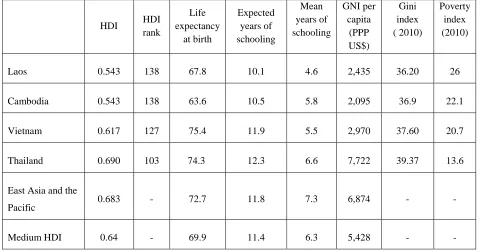
Table 4: Laos's HDI for 2012 relative to selected countries and regions ... 34
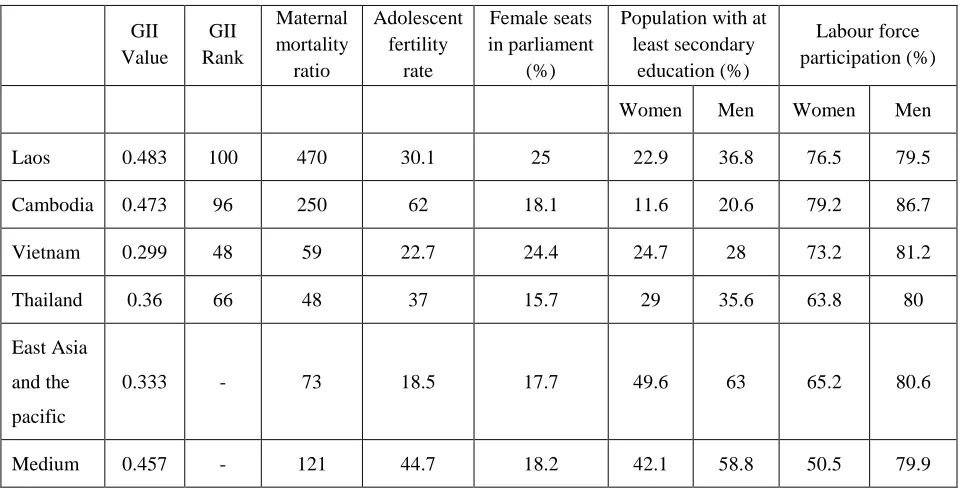
Table 5: Laos’s GII for 2012 relative to selected countries and groups ... 35
Table 6: CO2 emissions of Cambodia, Laos and Vietnam (metric tons per capita) ... 39
Table 7: Variable and definition ... 70
Table 8: Descriptive statistics of variables ... 71
Table 9: Correlation Matrix between explanatory variables ... 76
Table 10: VIF values for the different variables ... 76
Table 11: Variables in logarithm form for PCA ... 79
Table 12: PCA models with 2 components retained ... 79
Table 13: Mean and standard deviation of the basic variables ... 80
Table 14: Correlations Matrix of Predictors for model 1 ... 81
Table 15: Eigenvalues and Eigenvectors for model 1 ... 81
Table 16: Summary the dependent and independent variables for model 1 ... 82
Table 17: Result of model 1 ... 83
Table 18: Mean and standard deviation of the basic variables model 2 ... 85
ix
Table 20: Eigenvalues and Eigenvectors model 2 ... 86
Table 21: Summary the dependent and independent variables for model 2 ... 87
Table 22: Result of model 2 ... 87
Table 23: Mean standard deviation of the basic variables of model 3... 90
Table 24: Correlation matrix for model 3 ... 90
Table 25: Eigenvalue and Eigenvectors for model 3 ... 91
Table 26: Summary the dependent and independent variables for model 3 ... 92
Table 27: Result and discussion for model 3 ... 92
Table 28: Summary for the dependent and independent variables for model 4 ... 96
Table 29: Result of model 4 ... 96
Table 30: The determinants of sustainable development ... 109
Table 31: Data use for PCA ... 141
x
Abbreviations
ADB Asian Development Bank
AEC ASEAN Economic Community
AFTA ASEAN Free Trade Areas
ASEAN Association South-East Asian Nations
CIA Central Intelligence Agency
CLV Cambodia, Laos, and Vietnam (Indochina countries)
CPI Committee for Planning and Investment
DI Domestic Investment
FAO Food and Agriculture Organization
FDI Foreign Direct Investment
FTA Free Trade Areas
GATT General Agreement on Tariffs and Trade
GDP Gross Domestic Product
GNP Gross National Product
GOL Government of Laos
HDI Human Development Index
IDA International Development Association
IGA Income Generation Activities
IMF International Monetary Fund
Lao PDR Lao People Democratic Republic
LDCs Least Developed Countries
LECS Lao Expenditure and Consumption Survey
MDGs Millennium Development Goals
NZODA New Zealand Official Development Assistance
NEMs New Economic Mechanisms
NSC National Statistics Centre
ODA Official Development Agency
OLS Ordinary Least Squares
PCA Principal Components Analysis
PEI Poverty and Environmental Institution
PM Prime Minister
PRF Poverty Reduction Fund Project
PWT Penn World Table
SIDA Swedish International Development Authority
USD United States Dollar
UN United Nation
UNCTAD United Nations Conference on Trade and Development
UNDP United Nations Development Programme
VIF Variance Inflation Factor
1
CHAPTER 1: INTRODUCTION
1.1. Sustainable Development Background
The concept of sustainable development, which is proposed to reconcile economic,
social, and ecological dynamics, was initiated during 1980s. Today, the economic development
through sustainable concept has become an important issue to ensure the effectiveness of long
term perspective. It is discussed among the leaders of many counties. The development concept
has gone through various phases according to development research literature in numerous
countries. The concept of Sustainable development has become a global issue and this concept is
the source of strongly diverging interpretations in the field of economic analysis.
Sustainable development (SD) is development that “meets the needs of the present
without compromising the ability of future generations to meet their own needs” (Brundtland
Commission, 1987). The definition also includes two facets: one is about the concept of 'needs',
in particular the essential needs of the world's poor, to which overriding priority should be given;
the second one is the idea of limitations imposed by the state of technology and social
organization on the environment's ability to meet present and future needs.
Initially, SD was emphasized only the environmental issues; however, the reality of
development, this concept should also encompass the social development perspectives and other
key indicators such as natural, cultural and economic issues. At the 1992 ‘Rio Earth symposium’
in Brazil, sustainable development issue was the main topic of discussion. Rio Earth Summit in
Brazil was attended by 152 world leaders from around the world. The symposium’s main focus
was to highlight the importance of sustainability, included in agenda 21, a plan of action, and a
2
In addition, SD is a politically and scientifically contested concept and it is needed to
identify clearly about the major indicators influencing the SD purpose. This is partly due to its
definition, which contains ambiguous, normative and subjective elements. In addition,
sustainable development is a complex concept describing developments at different time-scales,
geographical scales and across domains (Munasinghe, 2001). The concept of sustainable
development has become a global issue. Therefore, in order to achieve the goal we need the
cooperation of relevant organization, particularly from government to frame the most appropriate
strategy to achieve its goals.
1.2.The problems
Once poor countries are on a sustained growth path, they will be able to address a wide
range of needs, including environmental protection and the eradication of poverty (Korten, 2005).
In Laos, although the country has performed persistent sustained economic growth since the
introduction of open door policy in 1986, particularly after holding a full membership of ASEAN
in 1997, it is questionable whether economic growth is of benefit to the reduction of either
poverty or social inequality, or whether the economic growth produces negative impacts on
environmental condition. The interaction of these determinants is considered to be a primary
concept of sustainable development, which remains a major challenge for current and future
development of Laos.
Poverty eradication has become the objective of the government’s economic and social
policy in many developing countries (Bruce, 2006; Robert and Dasguta, 2007; Rupasingha and
Stefan, 2007). In Laos, although the Government has reported that the average proportion of
poverty has decreased significantly, this issue remains very important, particularly, in rural areas.
3
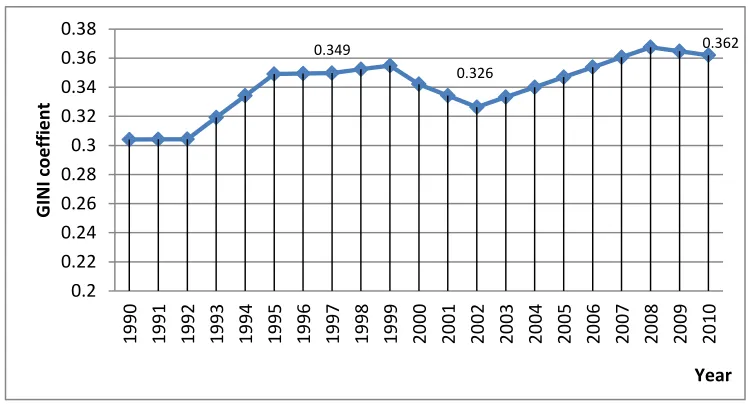
index increased from 30.4 percent in 1990 to 36.2 percent in 2010; hence, it is questionable
whether economic growth is distributed throughout the population or not, and an increase in the
level of inequality is assumed to reduce the level of sustainable development. Moreover, an
increase in the amount of industrial and manufacturing factories increases in the volume of
pollution and produces negative impacts on environmental systems. Therefore, the
environmental issue has become an important topic among the policy makers in Laos.
Three major issues will be discussed in this research. The first one is to identify the
determinants influencing economic growth, the second one is to examine the impacts of
economic growth on poverty and income distribution, and the last one is to investigate the
impacts of economic growth on environmental conditions. These three issues are identified in
order to find reasonable evidences to provide some suggestions for sustainable development for
current and long run development for Laos.
1.3. The purposes
The strong commitment of the Government of Laos is to achieve the Millennium
Development Goals (MDGs), while exiting the ranks of the Least Developed Countries (LDCs)
by the year 2020. With this specific target to achieve, a high rate of economic growth is
considered as a necessary condition for economic development but it is not a panacea for
socio-economic development. One has also to consider the impact of socio-economic growth with respect to
other factors such as the impact of growth on social development, particularly, poverty and
income distribution which remains a challenge for economic development of Laos. The other
one is the impact of economic growth on the environmental factors such as deforestation and
4
resources, including woods, and mineral resources, while the hydro power electricity causes a
serious impact on natural resources system such flora and fauna.
Economic growth is considered as a key factor to achieve the national development goal
of Laos; however, if the government’s policies are focused only on economic growth as to reach
a minimum income to graduate from LDCs1, without considering their impacts on the other
aspects, such as social, cultural, and natural sustainability, this could mean that the envisaged
development mechanisms and processes would prove inadequate for country’s long term
development perspective. For this reason, to achieve successfully the goals of the various
economic development plans, the government needs to consider both the development potential
to increase the wealth of people in the country and also to preserve the sustainability of
development that would ensure lasting benefits for the country’s future generations.
1.4. Innovative aspects
In brief, through the achievement of sustainable and equitable development, it is very
important that the country’s socio-economic development policies, strategies and investment are
sustainable. Consequently, analyzing the sustainability of development undertaking should
almost by definition become the main criteria to achieve the national development goal. This
thesis attempts to determine the importance of sustainable development and aims to present some
indicators and tools that would be used to facilitate a transition towards sustainability. It is
assumed that sustainable development is a function of three factors, economic growth, social
development and environmental conditions.
1
A country is classified as a Least Developed Country if it meets three criteria:
Poverty changeable criterion: three-year average GNI per capita of less than US$992 which must exceed $1,190 to leave the list as of 2012,
Human resource weakness (based on indicators of nutrition, health, education and adult literacy) and Economic vulnerability (based on instability of agricultural production, instability of exports of goods and
5
Firstly, it is to identify the key determinants which dominate in economic growth, in
particular, after becoming a member of ASEAN in 1997. Then it is opened to question whether
economic growth is of benefit to the reduction poverty or income inequality, and also its impacts
on environmental conditions. Secondly, this paper identifies the impacts of economic growth on
poverty and income distribution, which is the priority of economic development goal. Lastly, this
paper analyzes the impact of economic growth on environment; carbon dioxide emissions per
capita are used to be a proxy for environmental degradation. The results are then combined with
certain principles of sustainability, to develop a roadmap for sustainable development in Laos.
The sustained economic growth is a promising prospect for the country to disembark from list of
LDCs in terms of income per capita; however, it may have a negative impact on the natural
resource of the country. The thesis investigates the following questions:
1. Does trade openness foster economic growth in Laos? Or there are other factors (such as
foreign aid, foreign direct investment, domestic investment, government expenditure, etc.)
dominate in economic growth?
2. Does economic growth influence social development (poverty and income inequality)?
3. Does the economic growth have a negative impact on environmental conditions? Is there any
correlation between the economic growth and environmental conditions?
The expected outcomes of this thesis are to identify the key factors dominate in economic
growth, based on the concept and theory of economic growth and its influence on social and
environmental aspects. We expect that the employment of many relevant indicators will offer a
clear explanation, and also will identify a very good strategy contributing to a sustainable
6
1. To classify the condition of the socio-economic development of Laos as to achieve the
maximum benefit from sustainable development;
2. The impacts of each component on a sustainable development path, elaborating criteria and
indicators that allow for project preparation, implementation and evaluation,
3. To provide some recommendations for policy makers in order to achieve the national
development and its long term development goal.
This thesis contributes to the on-going research issue about key determinants influenced in
sustainable development in developing countries.
1.5. Structure of the thesis
This thesis consists of six chapters including the introductory one. Chapter 2 presents the
theory and the analysis framework. Chapter 3 introduces the basic economic conditions in Laos;
including the aspects of social development and environmental issues. Chapter 4 details the
proposed methodological approach and econometric models, the data that will be used, and
discusses results from empirical studies. Chapter 5 discusses about sustainable development
through the integration of the three factors (Economic growth, poverty, and environment), to
consider the possibility to achieve the goal of sustainable development. Last chapter concludes
7
CHAPTER 2: STATE OF THE ART
2.1. Theoretical framework
Sustainable development (SD) refers to a mode of human development whereby
resources use aims to meet human needs while ensuring the sustainability of natural systems and
the environmental conditions (Smith et al., 1998). The concept of SD is related to different issues
of socio-economic development, which aims to determine the needs for societies to be sustained.
The term SD is largely used; the Brundtland Commission introduced the idea that the next
generation should access to have the same degree well-being opportunities as the current
generation. In other words, sustainable development is described as “non-decline” in time of
human welfare, which can be estimated, based on the type of analysis, through the level of
human utility, earnings, and consumption (United Nations, 1987).
In general, SD is about achieving and maintaining economic growth that relates to other
factors of socio-economic development. It aims to meet the maximum expectation of human
needs and improve the living conditions, in parallel with financial resources that make
environmental conservation possible (United Nations, 2000). The vision of sustainable
development encompasses a broad meaning and numerous assumptions in different countries.
Economists, researchers, governments, and agencies (including the World Bank, the IMF, and
the WTO) in these last decades characterized the strategy for sustainable development, taking
into account living conditions of people and environmental aspects (David, 1996).
According to the work of Disano (2001), the underlying theme of SD is the integration of
economic, social, and environmental issues in decision and policy making at all levels of
development dimensions. This helps the understanding of the various dimensions of sustainable
8
achieving sustainable development goals. The integration implies the involvement of virtually all
traditional sectors of economic and government activity, such as economic planning, agriculture,
health, energy, water, natural resources, industry, education, and the environment.
Several studies show that the wealthy benefit from growth and the remainder of the
population is affected by the costs of resource depletion, social stress, environmental
degradation, and other problems (Bo Gao, 2001; Greiner, 2010; Limskul et al., 2013). Referring
to the World Commission on Environment and Development (2011), sustainable development
contains two key concepts: (1) the concept of ‘needs’, in particular the essential needs of the
world’s poor, to which overriding priority should be given; and (2) the idea of limitations
imposed by the state of technology and social organization on the environment’s ability to meet
the present and future needs.
Sustainable development involves more than economic growth; it requires a change in the
content of growth, to make it less material and energy-intensive and more equitable in its impact.
These changes are required in all countries as part of a package of measures to maintain the stock
of ecological capital, to improve the distribution of income, and to reduce the degree of
vulnerability to economic crises (United Nations, 2000).
David (1996) states that SD is about achieving the economic growth needed to meet
human needs, improve living standards, and provide the financial resources that make
environmental protection possible. There are two major aims of SD, including a sustainable
economy that equitably meets human needs without extracting resource inputs or expelling waste
in excess of the environment’s renewing capacity and sustainable human institutions that assure
9
The most critical task facing humanity today is the creation of a shared vision of a
sustainable and desirable society; one of the most important issues is to contribute permanent
prosperity within the biophysical limitations of the world in a way that is fair and equitable to all
of humanity, from this generation to future generations (Herman, 1992; Costanza, 2003).
Environmental sustainability is the maintenance of the factors and practices that contribute to the
quality of the environment on a long-term basis. The measurement of this factor emphasizes the
overall viability and health of living systems in their different and comprehensive dimensions
(Costanza, 2000).
2.2. Conceptual framework
This paper is built upon the following three main factors of analysis, which includes
economic growth, social development, and environmental protection. The key concept of
sustainable development requires balanced and integrated analysis from the three main
perspectives (Diagram1) of economic growth, social development and environmental conditions.
This conceptual framework is used to examine the interaction of those key factors, which
aims to provide a good definition for sustainability and its impacts in Laos. Considering the
perspective of economic growth, this factor aims towards improving the living condition of the
population, from basic needs provision through increases in the consumption of goods and
10
Diagram 1: Conceptual Framework of analysis
The key concept of this thesis is to identify the key determinants nominate in economic
growth, followed by examining the impacts of economic growth on poverty and income
distribution, and the impacts of growth on environmental conditions. The integration of these
factors is a key concept of this research (chapter 5).
GDP is used to be a standard measure of economic growth, while environmental issue, it
emphasizes on protection of environmental and ecological system, mainly based on the changing
of air pollution, the Carbone dioxide emissions ( ) is used to be a proxy for environmental
conditions. Poverty and income inequality are used as a proxy for social dimensions in Laos,
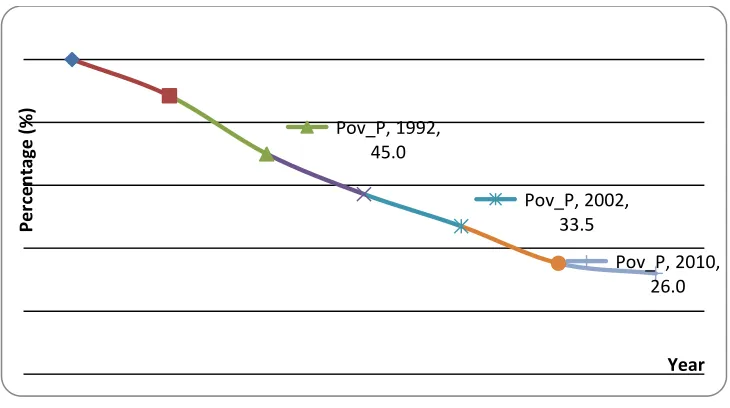
despite persistent economic growth for more than a decade (since 2000), the proportion of
poverty decreased from 45 per cent in 1992 to 26 per cent in 2010, which is considered to be a
high level, and the poverty issue remains widespread in rural areas (Bertelsmann Stiftung, SUSTAINABILTY
Economic growth
Environmental protection Social
Development The interaction of these
domains is very important to ensure the outcome of sustainability in development, it is required a good policy and regulation
Considering the determinants influence
economic growth. Variables: GDP
growth, GDP per capita (GDPP), trade, foreign aid, investment, government expenditure, etc.
Sustainability of Social development and living condition improvement
Variables: Poverty (POV) and income inequality.
Environmental Sustainability: Based on the protection of the integrity and resilience of ecological system and protection pollution.
11
2012)2, while the income inequality level increased from 30.43 per cent to 36.74 per cent in 1992
and 2008, respectively (WDI3, 2013).
It is questionable whether economic growth increases inequality in society. Therefore, an
analysis of the impacts of economic growth on poverty and income distribution is included in
this thesis. Economic growth is good for sustainable development only when it is distributed to
social improvement through poverty reduction and minimization of the level of income
inequality.
The impacts of economic growth on social aspects relates to job creation, skill
enhancement, local economic impacts, and social investment. Several studies express that
economic growth and social development are highly interdependent. One good example is the
study by Stinivasan (1997), which states that the opinions regarding both economic growth and
basic need development are interwoven. He suggests that great emphasis on basic needs would,
at least in the short run, harm economic growth, which in turn would damage future
improvement in the basic needs programme.
By definition, social development refers to the adjustment of the social order within a
society. It may also refer to the notion of social progress. A change in economic performance
leads to a change in social development. One of the most important factors for assessing
sustainable social development is social equity, which is one of the principal values underlying
sustainable development, with people and their quality of life being recognized as a central issue.
In brief, equality involves the degree of fairness and inclusiveness by which resources are
distributed, opportunities afforded, and decisions made (Disano, 2001).
2Information from: http://www.bti-project.org/countryreports/aso/lao/
3 The World Development Indicators (WDI) is the primary World Bank collection of development indicators,
12
To identify the impacts of economic growth on environmental conditions, it has also
become an important issue to measure the degree of sustainable development of a country. A
high rate of economic growth is considered to be a key factor of economic development for
many countries, including Laos. However, there are many challenges involved in resuming
economic growth and strengthening the country’s share in the global economy, while reducing
social inequality and protecting the environment.
In brief, this conceptual framework aims to highlight that to achieve the final outcome of
this research. To realize the final aim of sustainable development in Laos, it is necessary for the
socio-economic development of the country to be well-adjusted among economic growth, social
development, and environmental protection, which are three main issues discussed in this thesis.
In addition, the socio-economic development must be harmoniously distributed between sectors,
regional development, and urban and rural development, in order to utilize human and maintain
natural resources fully and efficiently (GOL, 2003).
13
CHAPTER 3: ECONOMIC CONTEXT OF LAOS
3.1. Overview of country
Laos is one of the world's few remaining communist states and it is one of East Asia's
poorest countries. This is a small landlocked country located in the centre of South-East Asia,
which occupies an area of 236,800 square kilometres of the northwest portion of the Indochinese
peninsula. This country is surrounded by China, Vietnam, Cambodia, Thailand, and Myanmar. It
is a mountainous country, especially in the north, where peaks rise above 2,800 metres and dense
forests cover the northern and eastern areas. Laos became independent in 1975, and the country
chose a socialist system under that the centrally planned system, where the government decided
what to produce, how to produce it, and who received the final product.
In the early 1980s, this system did not satisfy the goal; however, as economic
performance was unable to reach the expected goals, the population became poorer and the
economic system weakened. These issues confirmed that the centrally planned system alone was
not the most appropriate for Laos, leading to economic reform. Basically, the centrally planned
system is opposite to a market economy, in which individuals own property that they are free to
trade and gain from and where prices for goods are decided in a free market system where
demand dictates what is made.
In 1986, a reform named the new economic mechanisms (NEMs4) opened the door to new
economic policies, aimed at transforming the nation from a closed and centrally planned
economy to a market-oriented one. The two basic political goals including: 1) Open market
4 “Drastic changes from the socialist revolution to the market economy in Laos”
14
policy and 2) Introduction of market economic principles. Some divestment5 of the state
enterprise and development of legal institutional framework for private economic and
commercial activities were involved in the transition of the reforms. Following the introduction
of NEMs, the government of Laos announced the development of the private sector, leading to
deregulated price and production controls, and granted managerial and financial autonomy to
state-owned enterprises. Under the NEMs, there have been discussions on market integration, for
example:
Price liberalisation – complete liberalisation except for some key utility prices;
Agricultural reform – liberalisation of agricultural prices, including the abolition of the state
monopoly into the price market;
Public enterprise reform – increased autonomy for public enterprises and the privatisation of
selected public enterprises;
Trade reform – liberalisation of trade through a simplification of tariff codes and elimination
of most quantitative restrictions;
Exchange rate reform – created a single official exchange rate that was nearer to the market
exchange rate, and did it earlier than Vietnam or the other socialist countries. The existing
seven exchange rates were unified into single official rate, and
Foreign investment policy reform – attracting foreign direct investment and cooperation. The
Foreign Investment Law was enacted in 1988 to encourage foreign investment, and
promote capital inflow and external economic activity.
These reforms were necessary for the regional and economic cooperation of Laos,
following ASEAN’s regulations and preparing for WTO membership. Further, they created a
less complicated environment for export and import activities and persuaded Laos to become an
active participant in the world market. However, to achieve higher benefits, the reforms also
aimed to achieve stronger integration with the international economy (Hodgson, 1998 and Xue,
2005). Laos has achieved remarkable economic growth, privatization of former state-owned
5 Divestment is the reduction of some kind of asset for financial, ethical, or political objectives or sale of an existing
15
enterprises, and macroeconomic stability. In addition, it has witnessed a significant rise in public
and private investment and improvement of economic activities both regional and global
economic cooperation and development (World Bank, 2010).
The introduction of NEMs leads to increase in the international cooperation and attractive
foreign direct investment (FDI). Laos has successfully developed amicable relations with
regional states, being a members of many international organization, particularly, the country
joined the Association of Southeast Asian Nations (ASEAN); this made necessary for Laos to
respect in its economic progress both regional and global procedure (Phimphanthavong, 2012).
3.2. The role of ASEAN in Laos
Laos was recognized to be an ASEAN member on July 23rd, 1997. It could be assumed
that entering in ASEAN has been a significant occasion for Laos, which could promote this
country to set up both economic and political cooperation with member countries rather than its
previous socialist states. This is a good opportunity for Laos to access new markets with both
regional and international cooperation. The high rate of economic growth may be influenced by
the good economic performance of Laos within the ASEAN member countries, through trade
cooperation, investment, and economic policy improvement; thus, this determinant (ASEAN) is
included in this analysis.
ASEAN does not only increase the cooperation and relation within member countries, but
it also expands its cooperation with other regions in order to facilitate wider cooperation among
different nations outside its regions; thereby, the ASEAN’s committees were established in order
to create dialogue with its partner countries to handle its external relations (Khamphan, 2007).
This organization derived three main objectives:
16
2) To secure the political and economic constancy of the region and exert an influence on
competition; and
3) To enhance the economic, social, and cultural expansion of the region through cooperative
programmes.
In order to obtain greater achievement from membership of ASEAN, it is necessary for
the commitments of both trade liberalization and cooperation policies to involve education
development, in particular emphasizing more development of human resources and building of
capacity. The Government of Laos has itself attempted to accelerate the economic development
in order to eradicate poverty and increase the living conditions of the population. Furthermore,
the cooperation among ASEAN member countries is assumed to gain more positive advantages
in terms of human development, economic growth, and trade cooperation.
3.3. Economic performance
Laos has emerged into international trade with very deprived social and economic growth
conditions in 1986. Since then, Laos has pursued significant economic and institutional reforms
aimed to improve the living condition of the population through the implementation of a
market-oriented economy and. In 1997, beyond ASEAN, member countries differ in their levels of
development, political systems, investment environments and economic structures; therefore,
narrowing social disparities and economic development gaps between countries are key
challenges facing ASEAN (Southeast Asian Economic Outlook 2013)6. Many member countries
of ASEAN have more potential both human resource and know how technology. However, it is
important for Laos to access a good atmosphere to boost both regional and global affaires to
ensure the economic progress of Laos.
17
In order to encourage and maintain high economic growth, several policies were adapted
since beginning of year 2004 and in late of the same year, Laos aimed at Normal Trade Relations
status with the US, allowing Laos-based producers to benefit from lower tariffs on exports. This
means that Laos has a good opportunity to take the steps to join the World Trade Organization
(WTO). This would assume that the introduction of trade policy reforms and joining ASEAN
would improve the business environment in Laos.
3.3.1. GDP shares by sector
Laos has achieved long-term economic growth since the introduction NEMs; however,
the economic growth of this country is still highly dependent on natural resources. Although both
industrial and service sectors have experienced a high rate of growth in recent years, while the
agricultural share of the GDP has become smaller, agriculture still accounts for the largest share
of the GDP; it accounted for more than 50 per cent of the GDP in 2000. This indicates that the
agricultural sector exerted a strong, positive, and significant influence on economic growth in
Laos during the early stage, whereas over the extended period, the industrial sector and the
service sector tend to be more dominant in the growth.
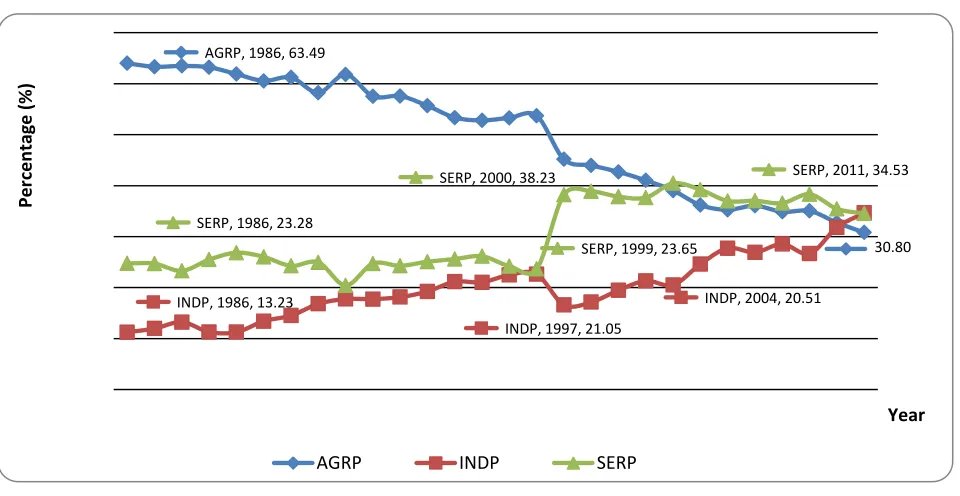
Considering the share on GDP of agriculture and industry, the figure (1) shows a minor
decrease during 1999 and 2000, which was due to the fiscal deficits and monetary expansion
leading to rapid inflation and exchange rate depreciation; in mid-1999, the Government took
decisive steps to reduce its fiscal deficit and contain monetary expansion in order to restore
macroeconomic stability, which decreased the industrial and agricultural development(Arnold et
al., 2003). After a certain period, value added of these two factors increased, while the annual
18
Between 1999 and 2000, the share on GDP of services increased enormously because it
was the first in which international tourism and the first world heritage city in Laos were
announced, by increasing the promotion and advertisement in different medias for domestic,
regional, and international tourists. These special occasions led to an increase in the number of
tourists and income in the service sector. Improvements in the service system (transportation,
communication and telecommunication, information network, tourism promotion, and public
administration) led to increased income from the service sector and an increasing GDP share.
Figure 1: GDP shares by sector (1984 -2011)
Source: World Indicator Database or WDI (2013)
Where: AGRP is the percentage of agricultural value-added; INDP is the percentage of
industrial value-added; and SERP is the percentage of service value-added on GDP.
Figure 1 shows that the share of agriculture with respect to other economic activities has
declined substantially from more than 63.49 percent in 1986 to 30.80 percent in 2011, while the
share of industry and services in the GDP has remarkable increased from 13.23 percent in 1986 AGRP, 1986, 63.49
30.80
INDP, 1986, 13.23
INDP, 1997, 21.05
INDP, 2004, 20.51 SERP, 1986, 23.28
SERP, 1999, 23.65
SERP, 2000, 38.23 SERP, 2011, 34.53
Per
ce
n
tage
(%
)
Year
19
to 33.64 percent in 2011 and from 23.28 percent in 1986 to 34.53 percent in 2011, respectively.
Before joining the ASEAN (1984-1997), the average growth rate of IND, SER, and AGR was
10.85 percent, 5.02 percent, and 4.62 percent, respectively. After joining ASEAN (1998-2011),
the average growth rate of IND and SER increased to 12.38 percent and 6.87 percent, while
AGR smaller increased, only 3.74 percent. Therefore, the average growth rate of IND was higher
than that of SER and AGR, especially after 2004, when the Government of Laos took another
step in amending the business and investment policy.
In comparison with neighboring countries at the share on GDP, Cambodia, Laos, and
Vietnam (CLV) share some similarities in term of economic structure, where agriculture remain
key factor contributing to 27.6 percent of the GDP and employing about 60 percent of the total
labour forces. It is recognized that Vietnam is more economically advanced than Cambodia and
Laos, but it’s struggling towards realizing its ambition to become an industrialized and
modernized nation by 2020.
Table 1: Economic structure of Cambodia, Laos and Vietnam in 2011 (% of GDP)
Cambodia Laos Vietnam
Agriculture 30% 30.80% 22%
Industry 30% 34.67% 43.3%
Service 40% 34.53% 37.7%
Source: CIA Facebook and WDI (2012)
3.3.2. GDP growth, trade openness, and foreign aid
Trade openness is considered to be one of the factors encouraging the economic growth of
Laos; in particular, since becoming a full membership of ASEAN, the Government of Laos has
20
percent per annum on average and aims to emerge from the LDCs status by 2020. The trade
policy promotion has been improved, especially the extension of exports, which is considered to
have played a critical role in economic growth during these two decades (1990-2010). Numerous
export products have become more diversified and embodied more value added since 1990; the
majority of those products are wood products, garments, coffee, electricity, timber, and mining
products (gold and copper).
Laos has achieved a good performance for its economic development and growth. It is
assumed that the introduction of NEMs produced a significant increase in public and private
investment, which contributed to an average economic growth rate of over 5 per cent from 1990
to 1999, more than 6 per cent from 2000 to 2005, and more than 7 per cent from 2006 to 2011.
Some factors are assumed to dominate the economic growth, such as the open-door policy and
international cooperation, which is related to the degree of trade openness. An increase of one
unit of this determinant is associated with an increase in the level of GDP.
It seems that international trade has contributed significantly to the economic growth of the
country; an increase in trade is expected to increase the overall economic growth, thereby
producing the resources required for environmental conservation because economic efficiency
means better use of natural resources (David, 1996). After the introduction of the NEMs in 1986
and joining ASEAN in 1997, the Government of Laos liberalized its trade in order to integrate
into the regional and world economy.
To enhance trade liberalization and the integration of the country with the regional and
global economy, and in the context of ASEAN and dialogue partners, together with the other
ASEAN member countries, Laos is actively participating in FTA7 negotiations with China, the
21
Republic of Korea, Japan, India, and the EU. It has also applied for WTO membership since
1998 as part of an economic strategy to increase export revenues and attract foreign investment.
Figure 2: Trade openness degree (1980-2010)
Source: Penn World Table 7.1 (released on November 30, 2012)
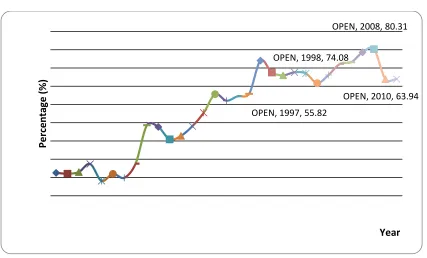
Figure 2 shows that the degree of trade openness (OPEN= (Import + Export)/GDP) increased
remarkably from 1986 to 2010. For example, it rose from about 10 per cent in 1986 to over 50
per cent during 1997 and 2000; in particular, it reached 74.08 per cent in 1998, which was one
year after becoming a member of ASEAN, and showed a minor decrease after the ASEAN
financial crisis. After a certain period, the openness degree reached its peak point of 80.31 per
cent in 2008, the preparation year for the first occasion of the SEA Game8 organized in Laos in
2009, leading to an increase in the cooperation and trade volume with other ASEAN countries as
well as other regions.
8 The Southeast Asian Games (also known as the SEA Games), is a biennial multi-sport event involving participants
from the current 11 countries of Southeast Asia.
OPEN, 1997, 55.82 OPEN, 1998, 74.08
OPEN, 2008, 80.31
OPEN, 2010, 63.94
Perc
en
ta
ge
(
%)
22
The impact of foreign aid on the economic growth process of developing countries has
been a topic of intense debate. The impact of foreign aid on economic growth is supported by
several studies, such as Gomanee et al. (2003), Dalgaard et al. (2004), and Karras (2006).
However, there are two major contrasting views in this debate. One argues that aid has a positive
effect on economic growth, with an even greater impact in countries with sound economic and
trade policies. The other contends that foreign aid causes corruption, encourages rent-seeking
behaviour, and erodes bureaucratic institutions (Dollar and Burnside, 2000; Anup Shah, 2012).
In general, foreign aid is classified into two types such as grants aid and loan aid. Both
grant and loan aid can be divided into two categories (Appendix 2), including (1) Bilateral aid
administered by agencies of each donor government, such the New Zealand Official
Development Assistance (NZODA), and Swedish International Development Authority (SIDA);
and (2) Multilateral aid funded by contributions from developed country governments and
administered by international institution, for example: World Bank, ADB, UN, FAO, UNCTAD,
etc. In addition, foreign aid plays a significant role in stimulating economic growth by
transferring capital (money), ideas, and technology from donors to the recipient countries.
Figure 3: GDP growth and foreign aid per GDP in percentage (1980-2010)
GDPG, 1988, -2.01
GDPG, 1998, 3.97 GDPG, 1999, 7.31
GDPG, 2010, 8.53 AID (%) of GDP,
1996, 24.12
AID (%) of GDP, 2008, 16.79
AID (%) of GDP, 2010, 12.01
Perc
e
n
ta
ge
(
%)
23
Source: Laos: Economic Indicators and WDI (2012)
The adoption of new market oriented economic policies was the turning point of the donor
policies towards Laos in the late 1980s. In addition, in order to achieve the economic
development goal by 2020, the Government of Laos sought more international assistance from
many countries and organizations. Figure (3) shows that Laos received a great deal of support
from international organizations and agencies in terms of foreign aid. In 1986, it amounted to
only 5.57 per cent of the GDP, while in 1989, 1997, and 2010 the figures were 16.08 per cent,
22.41 per cent, and 12.01 per cent of the total GDP, respectively. It amounted to 15 per cent of
the GDP, on average, between 1997 and 2010. During the 1990s, the remaining sectors are
considered as having received aid for promoting economic growth, directly targeting the poor,
and the social safety net of 74.12 per cent, 15.68 per cent, and 10.20 per cent, respectively
(UNDP, 2001).
Foreign aid constitutes the major part of Laos’s public investment programme (PIP),
through which the Government plans and invests capital investment. It allocates about 60-80 per
cent to the PIP and it mainly distributes it to finance public capital outlays, such as infrastructure
construction, including roads, bridges, irrigation, electricity networks, and other factors related to
education and health care improvement. In addition, many aid agencies have engaged in
humanitarian, social, and environmental aspects, such as food security, poverty eradication, and
natural resource protection (GOL, 2006).
The annual average of Laos’s economic growth was about 6 per cent from 1980 to 2010,
with a minimum of -2.01 per cent in 1988 and a maximum of 14.19 per cent in 1989. The
24
experienced recessions which exports of hydroelectricity were substantially lowered9, and also so
the border-war between Laos and Thailand (1987-1988). It notices that the virtual end of the
command economy fueled the 1989 industrial boom after the first investment law was issued and
dominated in high rate of growth in following years. Principal activities in the industrial sector
include manufacturing, construction, mining, processing agricultural and forestry goods, and
producing hydroelectricity.
The decrease of economic growth of Laos in 1998, it was because of the impact of the
Asian financial crisis in 1997, and then Laos achieved high rate of growth again in 1999 , which
was the first year in which international tourism and the first world heritage city
(Luanphrabang10) in Laos were announced. Following years, Laos could maintain a high rate of
economic growth over 5 per cent, particularly, during 2005-2010, Laos sustained a high rate of
economic growth of 7-8 per cent (Laos: Economy Indicators,11 2012). This high rate of economic
growth is because of the economic policy improvement and international cooperation with
ASEAN and other regions; for example, Laos gained normal trade relations status with the US in
2004 and was admitted to the WTO in 2012. In addition, the Government simplified investment
procedures and expanded bank credits for farmers and small entrepreneurs, which encouraged
the economic growth prospects of Laos.
In comparison the economic growth with CLV (2012), these countries gained
independence from colonialism in the early 1950s, and had gone through prolonged war, regime
changes, instability and political upheavals, which caused them to remain far behind the other
Southeast Asian countries in terms of economic development, industrialization and
modernization (Chheang et al, 2012). During 1990s and 2000s, these countries have experienced
9Source: http://countrystudies.us/laos/76.htm
10 http://www.azuretours.com/laos_luangphrabang.htm
25
relatively good economic performance with annual GDP growth about 7 to 8 percent. Economic
growth rates of CLV remain promising. In 2012, Laos had the highest growth in ASEAN with
8.4 percent, followed by Cambodia with 6.2 percent, and Vietnam with 5.8 percent. In terms of
per capita income, CLV’s remain low, as compared with other countries in the region, while
Vietnam was US$ 1100, followed by Laos with US$ 1010 and Cambodia was only US$ 760.
Table 2 : Income per capita and economic growth for CLV in 2012
Source: International Monetary Fund and World Bank Doing Business Report 2012
3.3.3. Foreign direct investment inflow
A key factor which is expected to have a positive impact in economic growth is FDI. This
factor is assumed to produce a significant role on economic growth through providing the job
opportunity to the host country, which is related with the increase in national income (Johnson,
2005). We can consider in two sides: From the domestic one, the program is considered to boost
domestic production and develop domestic market, while on the international side, it aims to
extend international trade and to avoid the external trade deficit by improving the quality of
export goods, and improving foreign investment security.
To reach its economic development goal by 2020, FDI is needed and it is expected to
play an important role on economic growth, because FDI is assumed to contribute in job
creation, economic growth, capital inflow, and wealth in the host country (Sun, 2002). After
economic reform, the government has paid more attention on improving its business
environment to attract more investor-friendly. Its laws and regulations have been revised a few
Countries Cambodia Laos Vietnam
GDP growth rate 6.2% 8.4% 5.8%
26
times, such as the Enterprise Law, the Law on Commercial Banks, and the Law on Foreign
Investment Promotion.
The introduction of NEMs, particularly during the planned economy period (1986-1988),
investment from socialist countries flowed into Laos. However, data on the FDI during that
period were not available. In order to promote FDI in Laos, the first investment law was made in
1988; the first revision of the law was conducted in 1994, the second revision in 2004, and the
third revision in 2009.
Figure 4: Total FDI inflows in million US$ (1988-2010)
Source: World Bank Indicators12 (2012)
Figure 4 shows the movement of the FDI inflow into Laos from 1988 to 2010. From 1989 to
1996, it shows that the FDI increased slightly in 1992 to its maximum point in 1996, after the
Laos Government revised its investment promotion law in 1994 and also gained full membership
of ASEAN, which would increase the number of regional and foreign investors. However, the
12 http://www.tradingeconomics.com/laos/foreign-direct-investment-net-bop-us-dollar-wb-data.html
2.00
FDI_M, 1996, 159.80
FDI_M, 2007, 323.52
27
Asian financial crisis in mid-1997 caused a substantial decrease in FDI inflows to Laos in the
following years until 2002. Then, the Government took another step in amending the FDI
promotion law in 2004, leading to an increase in the amount of FDI inflows; in particular, it
increased from 2005 to the maximum point again in 2007.
The minor decrease in FDI inflows in 2008 was due to the impacts of the world economic
crisis, and then in 2009, it increased again when the condition of the world economy was
improving. In addition, the Government of Laos took another step in improving the FDI
promotion law in 2009, which merged the law on domestic and foreign investors, by promoting
investment in all economic sectors, both domestic and foreign, by formulating policies to create
a favourable investment climate, including providing clear guidelines for all investors. The
Government promoted investment in all sectors, except for areas and business operations that are
considered harmful to national security, the natural environment, at present and in the long term,
public health, and national culture (ASEAN, 2009).
For the whole capital inflow of FDI, most ratio of such inflow has gone to be invested
mainly in mining and hydropower. For the regional investors have been expressed interest
investing in agriculture, processing, and other manufacturing. In agriculture and
agro-processing, land-leases have been signed recently for producing pulp from eucalyptus, rubber,
sugar and palm oil. Of the 43 countries which invested in Laos from 1988 to 2010, the majority
are ASEAN members. There are some East Asia and some European countries; Thai, Chinese,
and Vietnamese investors are among the biggest foreign investors in Laos.
When looking at FDI activity in the Indochina sub-region (Cambodia, Laos, and Vietnam
or CLV), where FDI inflows are considered as one method of boosting economic development
28
business liberalization measures. As part of the economic transition process that the three
countries have undergone since the late 1980s. Since foreign private capital was generally not
permitted into these countries in the years preceding their ‘opening up’, the governments of the
three countries have been on a steep learning curve; learning how to attract, retain, sustain,
manage, harness, monitor and then attract more FDI inflows (Nick, 2002).
Table 3: FDI, net inflows in Cambodia, Laos, and Vietnam (1993-2011)
FDI, net inflows (million US$) FDI, net inflows (% of GDP)
Cambodia Laos Vietnam Cambodia Laos Vietnam
1993 54.1 29.9 926.3 2.14 2.25 7.03
1994 68.9 59.2 1944.5 2.47 3.84 11.94
1995 150.8 95.1 1780.4 4.38 5.39 8.59
1996 293.6 159.8 2395.0 8.37 8.53 9.71
1997 203.7 86.3 2220.0 5.92 4.94 8.27
1998 242.8 45.3 1671.0 7.78 3.54 6.14
1999 232.2 51.6 1412.0 6.60 3.55 4.92
2000 148.5 33.9 1298.0 4.06 1.96 3.86
2001 149.4 23.9 1300.0 3.75 1.35 3.68
2002 145.1 4.5 1400.0 3.39 0.25 3.69
2003 84.0 19.5 1450.0 1.80 0.96 3.39
2004 131.4 16.9 1610.0 2.46 0.71 3.26
2005 379.2 27.7 1954.0 6.03 1.01 3.39
2006 483.2 187.3 2400.0 6.64 5.42 3.62
2007 867.3 323.5 6700.0 10.04 7.66 8.65
2008 815.2 227.8 9579.0 7.87 4.18 9.66
2009 539.1 318.6 7600.0 5.18 5.46 7.17
2010 782.6 278.8 8000.0 6.96 3.88 6.90
2011 901.7 300.7 7430.0 7.03 3.64 5.48
2012 1557.1 294.4 8368.0 11.09 3.13 5.37
Average 411 129 3572 5.70 3.58 6.24
Source: World Development Indicator 2012
The above table (3) indicates that the flow of FDI has been stable with some certain
increasing trend over the years due to political stability, relatively low labor cost, investment
promotion policy, institutional environment, global and regional economic integration and
29
than eight times the amount of FDI that flows into Laos and Cambodia and more than 25 times
that flows in Laos, and also the average net inflow as percent of GDP of Vietnam (6.24 percent),
which was higher than of Cambodia and Laos which was 5.70 and 3.58 percent, respectively.
Due to the face that Laos is small land-locked country with small market, and few numbers of
population and labour force compared with Vietnam as well as Cambodia. It reflects the
attractiveness and economic centrality of Vietnam in CLV, where there is abundant natural
resource and cheap labour cost compared with Laos and Cambodia.
3.4. Poverty and income distribution
3.4.1. Poverty incidence and definition
Poverty can be defined in many different ways depends on the characteristics of each
country. By basic definition, poverty is described as a lack of essential human needs, such as
food, clothing, and shelter needed for proper living. The basic human needs, including food, safe
drinking water, sanitation facilities, health, shelter, education, and information. Based on these
components, when people are unable to get sufficient food to eat, unable to go to school or any
access to health care, then those people can be considered to be in poverty, regardless of their
income.
Poverty has frequently been discussed in terms of income and the poverty line, measured
by the percentage of the population living below PPP13 US$1.25 per day and multidimensional
deprivation. In Laos, poverty is defined as the lack of basic requirements for daily livelihood,
such as the lack of food (less than 2,100 kilocalories per person per day), clothing, and
permanent shelter, the inability to afford necessary medical treatment, the inability to afford
one’s own education and the education of other members of the family, and the lack of easy
30
access to primary education. To deal with this situation, the Government of Laos has issued
different strategies and methods for poverty era