Volume 8
Issue 1 Winter 2020 Article 11
January 2020
Developing Tailored Program Proposals for Occupational Therapy
Developing Tailored Program Proposals for Occupational Therapy
in Primary Care
in Primary Care
Katie Smith
Samaritan Health Services - USA, [email protected]
Mackenzie Day
Sherry Muir
University of Arkansas - USA, [email protected]
Sue Dahl-Popolizio
Arizona State University - USA, [email protected]
Follow this and additional works at: https://scholarworks.wmich.edu/ojot
Part of the Occupational Therapy Commons
Recommended Citation Recommended Citation
Smith, K., Day, M., Muir, S., & Dahl-Popolizio, S. (2020). Developing Tailored Program Proposals for Occupational Therapy in Primary Care. The Open Journal of Occupational Therapy, 8(1), 1-13.
https://doi.org/10.15453/2168-6408.1630
This document has been accepted for inclusion in The Open Journal of Occupational Therapy by the editors. Free, open access is provided by ScholarWorks at WMU. For more information, please contact
Comments
The authors report that they have no conflicts of interest to disclose.
Keywords Keywords
needs assessment, program development, template, interprofessional team
Credentials Display
Katie Smith, OTD, MHA, OTR/L; Mackenzie Day, OTD, MHA, OTR/L; Sherry Muir, PhD, OTR/L; Sue Dahl-Popolizio, DBH, OTR/L, CHT
Copyright transfer agreements are not obtained by The Open Journal of Occupational Therapy (OJOT). Reprint permission for this Opinions in the Profession should be obtained from the corresponding author(s). Click here to view our open access statement regarding user rights and distribution of this Opinions in the Profession.
DOI: 10.15453/2168-6408.1630
Over the past several decades, the health care system in the United States has struggled with high costs and fragmented care. In 2010, the Affordable Care Act was passed in an effort to provide more Americans with insurance coverage and to improve the delivery of primary care (PC). The term primary careis an umbrella term that includes many different practice types, such as family practice, internal medicine, pediatrics, and more. In their 2010 study, Margolius and Bodenheimer recommended
diversification of the PC team to include other health professionals and a redistribution of responsibility of patient care to those team members, with the physicians focusing on patients who require a “high level of expertise” (p. 780). Many occupational therapists saw this as an opportunity for occupational therapy (OT) to enter into this practice area (Metzler, Hartmann, & Lowenthal, 2012; Muir, 2012). In the position paper “The Role of Occupational Therapy in Primary Care,” the American Occupational Therapy Association (AOTA, 2014) stated that the distinct value of OT on the interprofessional PC team is the occupational therapist’s ability to address the habits and routines that contribute to the risk of developing, or the difficulty in managing, chronic illnesses, and the habits and routines that affect an individual’s health and wellness. Occupational therapists are gaining increasing recognition and demonstrating skill as effective members of interprofessional PC teams in international contexts (Dahl-Popolizio, Doyle, & Wade, 2018; Lindström & Bernhardsson, 2018).
However, OT has not made significant progress expanding into the PC practice setting in the United States, and statistics to track the number of occupational therapists in the United States currently working in PC settings have not been produced (Trembath, Dahl-Popolizio, VanWinkle, & Milligan, 2019). Recent articles on OT in PC have offered resources to overcome some barriers, such as initiating a relationship with providers, educating providers regarding how occupational therapists can help their patients and their practices, modifying service provision in this setting, identifying funding sources, and providing other general strategies to foster change (Dahl-Popolizio, Muir, Davis, Wade, & Voysey, 2017; Sutherland, Moore, & Serlin, 2018; Valasek & Halle, 2018). The continued lack of understanding of how OT can contribute to the interprofessional team, and the resulting underuse of occupational therapists, is recognized throughout the literature on this topic (Dahl-Popolizio, Manson, Muir, & Rogers, 2016; Donnelly, Brenchley, Crawford, & Letts, 2013; Donnelly, Brenchley, Crawford, & Letts, 2014; Goldberg & Dugan, 2013; Mackenzie & Clemson, 2014).
Personal experience has led the authors to recognize that the difficulty of making strong program proposals for inclusion has contributed to OT’s continued struggle with expansion into the PC setting. To support inclusion, occupational therapists must present compelling, tailored proposals to decision makers at individual PC practices that outline the distinct value and role of OT for this specific PC team. The purpose of this article is to provide a template for occupational therapists to develop a complete program proposal for a target PC practice. The proposal should explain to the PC team how the addition of OT to their practice will improve patient outcomes; be a financially sustainable option that will help to meet organizational goals; and improve the overall function, efficiency, and effectiveness of the practice team. After a brief description of OT in PC, this template provides strategies to (a) conduct a needs assessment to identify the specific needs of the PC site and available resources, (b) complete a basic return on investment (ROI) analysis to offer a sustainable financial plan, (c) and address common logistical barriers that must be considered in PC OT program proposals.
Primary Care Occupational Therapy Scope of Practice
The scope of OT is broad, and PC occupational therapists are generalists. Overall, PC OT services are brief “quick shot” interventions (Muir, Henderson-Kalb, Eichler, Serfas, & Jennison, 2014,
p. CE3). Occupational therapists in PC must have strong interpersonal skills and adaptability to be a good fit on the interprofessional team. The focus of the PC OT interventions support the overall goals of the PC team, which may include a variety of providers in addition to the primary care provider (PCP), such as counselors, social workers, nurses, pharmacists, psychologists, or physical therapists.
Occupational therapists in PC focus on symptom reduction and help patients successfully change their daily habits and routines to prevent or manage chronic conditions, promote health, and increase independent self-management of medical conditions and of general health (Dahl-Popolizio, Rogers, Muir, Carroll, & Manson, 2017). Occupational therapists can address acute musculoskeletal injuries, developmental delays, and mental health needs in the PC setting (AOTA, 2018b; Flick & Zachary, 2018; Murphy, Janevic, Lee, & Williams, 2018; Read, Roush, & Downing, 2018; Siegel, Jones, & Poole, 2018). The most common presenting conditions seen in one primary care clinic, and the aspects of the condition that OT is equipped to address, have been explored by Trembath, Dahl-Popolizio, VanWinkle, and Milligan (2019). As OT interventions address the functional deficits secondary to a diagnosis, the range of diagnoses that occupational therapists can address in a PC setting are too numerous to be specifically listed. Any diagnosis that has a lifestyle component or impairs function or activities of daily living (ADLs) may prompt an appropriate referral to a PC OT.
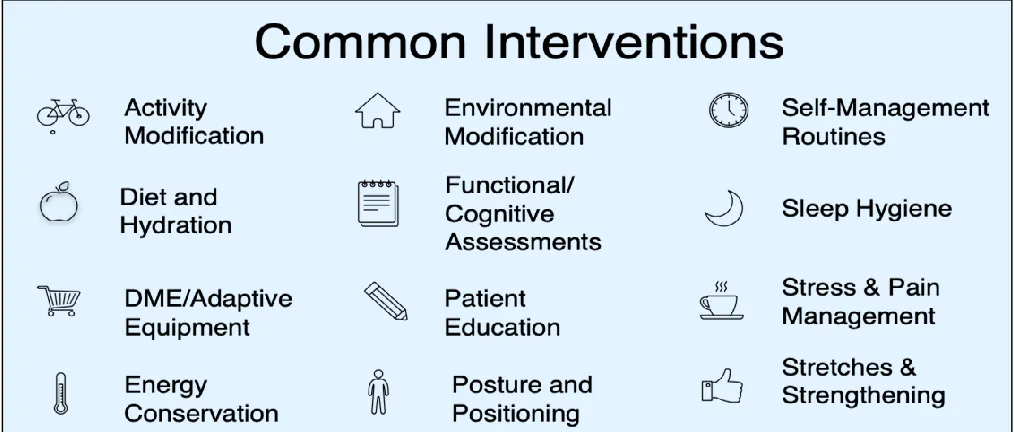
The authors found they frequently used the intervention strategies listed in Figure 1 with a wide array of patients in PC clinics. When determining whether a potential PC site can benefit from adding OT to their interprofessional team, consider how the OT interventions listed below can be applied to meet the specific needs of a clinic and its patient population. Understanding and articulating the general role of OT in PC is a good first step toward creating a PC OT program proposal. However, the true value is in tailoring the broad OT skill set and practice scope to meet the unique needs of the population seen at the selected clinic.
Figure 1. Common primary care occupational therapy interventions.
Needs Assessment
A needs assessment is a process that describes a target population, identifies perceived needs, and analyzes available resources and limitations (Braveman, 2016). The role of OT is broad; conducting
2 https://scholarworks.wmich.edu/ojot/vol8/iss1/11
a needs assessment to identify and focus on the unique needs of a specific site helps clarify the distinct contribution of OT for that specific site. The goal of the needs assessment is to gather enough
information to tailor the program proposal and identify the key stakeholders and decision-makers with whom to share the proposal when it is complete. A thorough needs assessment must consider: personal resources, interests, and strengths of an occupational therapist; the organizational structure and
philosophy of the site; and provider and patient needs. Personal Inventory
Identify personal strengths, skills, preferences, and relationships in the community that are relevant to developing a PC OT position. This setting requires a therapist who is assertive and confident in his or her skills and yet works well interprofessionally, accepts feedback, and adapts to the needs of the setting and patient population. Therapists in PC will be working at the top of their licenses, which is the goal for all providers in PC. This means the providers are using their full skill set and their most advanced skills. They are doing tasks that cannot be done by lower level providers, which is important in PC to achieve optimal patient care and for cost effective use of personnel. For an occupational therapist, this means using his or her training and skills in behavioral health and medical conditions across the lifespan and across the full OT scope of practice (Donnelly et al., 2014; Muir, 2012). These are attainable skills that can be developed and honed in preparation to enter this area of practice.
A clinic with a patient population of interest, such as diabetes, human immunodeficiency virus, geriatrics, general family practice, or any other population can be identified by reviewing regional statistics for health trends and demographics. Of equal importance, existing relationships with PC clinicians, administrators, or other stakeholders can be leveraged to gain support for the proposal. Existing relationships can make a significant difference in whether a clinic will be open to allowing the occupational therapist access to the practice information needed to complete the needs assessment. Organizational Structure and Philosophy
Structure. Once target population(s) and clinics are identified, learn about the organizational structure of the PC practice, including the roles of key stakeholders and decision-makers. While some PC clinics are provider owned and stand-alone, others are affiliated with a larger structure or
organization. Consider if the clinic must meet certain parameters to maintain its status in its
organization, such as a Patient Centered Medical Home (PCMH), a Federally Qualified Health Center (FQHC), or as part of an Accountable Care Organization (ACO). These and other such qualifications create opportunities and restrictions that may influence the proposal for new OT services (Miller, 2018).
Philosophy. Educate yourself regarding the mission, values, and philosophical goals of the clinic or organization. This allows you to identify the broad purpose of the clinical services provided and general aims that the clinic is expected to meet. Consider the other services that the clinic offers and identify gaps or discrepancies between the clinic’s goals and the services that they currently deliver. It is essential to avoid duplication of services. If part of the OT scope is already addressed by another
provider, consider focusing on the unique aspects of OT’s scope, or be prepared to articulate how OT addresses the same need differently. Not every PC practice will benefit from OT services, be equipped to accommodate the addition of an occupational therapist, or be able to afford OT services. For example, a PC practice may lack the physical space to accommodate another practitioner, may be in a period of financial strain and seeking to limit services rather than grow them, or may believe that their patients’ behavioral health needs can be addressed by a counselor whose services are more affordable. Therefore, it is important to focus efforts on a practice where there is a higher likelihood of success.
Provider Needs
PCPs know their patient panel, have a clear idea about what needs are not being met, and what the help that they need. Communicating with and shadowing PCPs offers an opportunity to observe the providers’ needs and reveals the PCPs’ knowledge of the OT role and their interest in OT integration. Developing and distributing a survey to PCPs can reveal quantitative data on these preferences and perceptions and indicate opportunities for PCP education, if needed. The occupational therapist should be prepared to offer education on the OT scope of practice relevant to PC and allow for provider feedback on what they perceive as being helpful. The authors found that PCPs often need additional support for patients with multiple chronic conditions and poor self-management skills. The PCPs felt that they lacked sufficient time to work with patients who make frequent PCP appointments. PCPs were not confident deciding when or how to recommend or train patients regarding adaptive equipment and durable medical equipment. They also lacked understanding regarding their behavioral health options for pain management as an alternative to prescribing pain medication.
Patient Needs
Determining patient needs requires multiple methods of gathering information. Ascertaining patient panel demographics reveals the age range, primary languages spoken, socioeconomic status, ethnicity, and overall patient volume of the clinic. Identifying the main reasons that patients at a particular clinic seek PCP appointments offers valuable insights into patient needs and health care use patterns. This information can be gathered through the electronic health record (EHR) via the clinic’s informatics team and by examining the diagnostic (ICD-10) codes for each documented visit. Consider how these diagnoses affect daily occupations and how OT services can help, and investigate the
literature for evidence-based interventions appropriate for PC. Further information can be gleaned when shadowing a PCP by observing and tracking patient needs that may not be reflected in the reported reason for visits. All of the information gathered from these strategies informs potential OT services, including anticipated referral volume, and enables a rough estimation of the OT services indicated. Needs Assessment Summary and Program Proposal Target
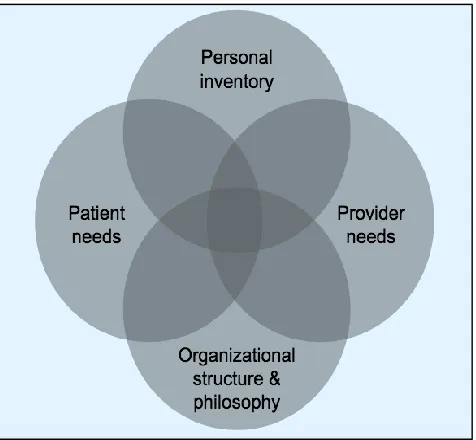
Integrate the information on personal interests and resources, organizational structure and philosophy, provider needs, and patient needs. The overlap among these four areas (see Figure 2) shows where and how the occupational therapist can make the most effective contribution to a particular clinic. The needs assessment process helps to narrow the broad scope of what PC OT can be and identifies the distinct target for a specific program proposal. A clearly defined and tailored focus facilitates
comprehension among stakeholders, including PCPs and administrators. Once the needs assessment is complete and the target for the proposal is identified, funding for the specific proposed program must be considered.
Financial Analysis
A plan for funding is critical for the proposal for PC OT services to be seriously considered. To be financially sustainable, the proposed programming should have a positive return on the cost invested in employing the PC occupational therapist. In other words, the occupational therapist should be
prepared to demonstrate to the PC practice that, if hired, the occupational therapist can generate enough revenue to cover his or her salary and other employment costs while bringing in revenue for the
organization.
4 https://scholarworks.wmich.edu/ojot/vol8/iss1/11
Figure 2. Overlapping areas of needs assessment and target of proposal.
Return on Investment
“Return on investment (ROI) is a way to measure profitability and benefit resulting from an investment. In this case, an organization’s ‘investment’ in occupational therapy produces desired outcomes (‘returns’), thus demonstrating the value of the profession in primary care” (Halle, Mroz, Fogelberg, & Leland, 2018, p. 3). In other words, the ROI indicates how much gain in dollar amount, or revenue, the organization can expect for every dollar spent in employing the PC occupational therapist. An ROI of 0 indicates a dollar is earned for every dollar spent, with no additional cost or gain. There are multiple ways to calculate ROI. A simple formula is shown below (Corso, Hunter, Dahl, Kallenberg, & Manson, 2016).
Gain from Program – Cost of Program = ROI Cost of Program
Gain From Program
To calculate potential gains from employing an occupational therapist, first determine what funding mechanisms are used in the PC clinic. These funding mechanisms may include but are not limited to: fee for service, incentives for meeting quality metrics or pay for performance, per member per month payments, or grant funding. Indirect gains are harder to calculate but are also worth
considering. These indirect benefits of PC OT may include improved patient outcomes, improved PCP satisfaction, additional revenue from increased PCP availability to treat higher acuity patients, and cost savings from reducing emergency department visits or hospitalizations. The following instructions for completing an ROI show how to calculate program gains from fee for service, as this is the most common funding mechanism.
Fee for service. Fee for service is the traditional model of funding wherein providers send a bill for services rendered to the patient or their insurance company and those services are reimbursed at a predetermined rate. Occupational therapists who are credentialed to provide services in a PC clinic can bill for their services using Current Procedural Terminology (CPT) codes. More details on the
credentialing process are presented later in this paper.
Projected codes. To evaluate potential revenue from this funding mechanism, start by estimating the CPT codes the occupational therapist will use in a typical day in the PC clinic. Use data from your needs assessment to anticipate the diagnoses and conditions that will be referred to you. This will help determine the CPT codes that you would be likely to use. As these are estimated projections, the information cannot be right, it must simply be reasonable and supported by your needs assessment. AOTA has published a list of CPT codes that occupational therapist frequently use, which can facilitate estimation (AOTA, 2018a).
Anticipated patient volume.When estimating the potential volume of patient visits, consider the services the occupational therapist will likely provide, as well as productivity expectations of the clinic. In PC contexts, where the emphasis is on symptom reduction and self-management, patients are often seen for shorter sessions and for a briefer duration per referral reason than in a typical outpatient rehabilitation setting. Therefore, fewer treatment sessions per referral reason may be appropriate. Evaluation times may vary based on level of severity and patient need, and this variation should be reflected in your estimates. Productivity expectations differ for each site, but consider how much time per day could reasonably be spent in direct patient care at the specific PC site, and reflect that in your estimated day. Table 1 below estimates a typical day that includes eight patient visits, with 30-min treatment sessions and 60-min evaluations. In the example in Table 1, a full-time position is projected wherein the occupational therapist is working 40 hr per week and 49 weeks per year (three weeks off for vacation and illness). Each site will have different needs and expectations. In a fast paced PC office, the occupational therapist may see more than eight patients and have shorter appointments. Services may also only be needed on a part-time basis. For your tailored proposal, be sure to project a reasonable work schedule.
Reimbursement for codes. After determining the CPT codes for a typical day, determine reimbursement rates for a typical day’s worth of codes. To estimate this, contact the PC clinic’s most commonly billed insurance companies to determine their reimbursement rates and take an average. As an alternative, you can use Medicare reimbursement rates (Centers for Medicare & Medicaid Services, 2019). Medicare typically reimburses lower than other payers, so the revenue estimation will likely be a conservative one. Table 1 below reveals revenue at Medicare reimbursement rates for a projected day for a licensed occupational therapist in a PC setting. This is multiplied by the number of days the
occupational therapist is expected to work in a year to give the estimated annual fee for service revenue.
Table 1
A Model of a Projected Day for PC Occupational Therapist, Complete with CPT Codes and Current Medicare Reimbursement Rates, Resulting in Anticipated Daily and Annual Revenue from Fee for Service.
CPT Code
# of Patients
Min spent with
Patient Min/Day/Code
Medicare
Reimbursement Rates Revenue/Day
97110 (ex) 1 30 30 $31.35/15 min $62.70
97535 (ADL) 2 30 60 $34.96/15 min $139.84
97530 (act) 3 30 90 $40.72/15 min $244.32
97165 (eval) 2 60 180 $92.98/code $185.96
6 https://scholarworks.wmich.edu/ojot/vol8/iss1/11
Revenue per day (8 patients): $632.82
Revenue per year: $155,040.90
Note. Adapted from “Interprofessional primary care: The value of occupational therapy,” by S. Dahl-Popolizio, O. Rogers, S. Muir, J. K. Carroll, and L. Manson, 2017, The Open Journal of Occupational Therapy, 5(3), p. 1-10.
Cost of Program
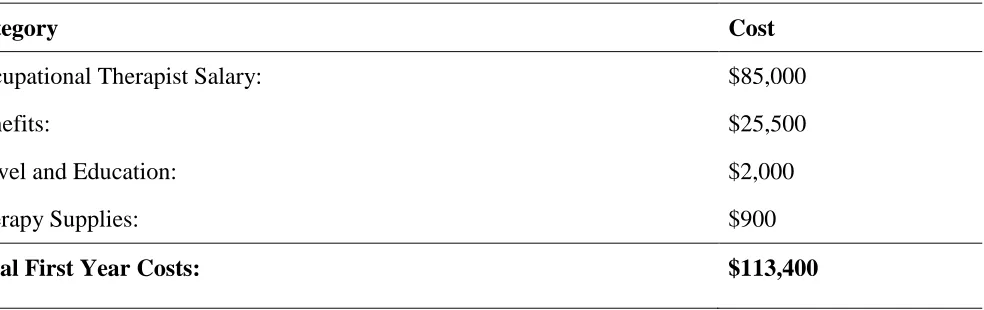
Expenses for OT services include the occupational therapist’s salary, benefits, and therapy supplies. Licensing and continuing education costs may be included if the facility offers that benefit. Salaries vary by region, years of experience, relevant skills, and hours worked per week. In 2018, the national average salary for an occupational therapist was $84,270 (Bureau of Labor Statistics, 2019) and benefits are typically calculated at 30% of the base salary. It is important to recognize the various avenues of value that OT can bring in terms of revenue, patient outcomes, provider satisfaction, and cost-savings, and to request the salary that reflects that value. Table 2 presents an estimate of costs, resulting in a projected first-year fixed cost for a PC occupational therapist. Expenses may be higher the first year, as therapy supplies are all initially obtained, but will be lower in subsequent years.
Table 2
Example Annual Costs of Primary Care Occupational Therapy Program
Category Cost
Occupational Therapist Salary: $85,000
Benefits: $25,500
Travel and Education: $2,000
Therapy Supplies: $900
Total First Year Costs: $113,400
Calculate ROI
To calculate the ROI, enter the projected revenue per year from Table 1 and the projected first-year costs from Table 2 into the ROI formula, as seen below.
Gain from Program – Cost of Program = ROI Cost of Program
$155,040.90 – $113,400 = 0.36 $113,400
ROI = $0.36
An ROI of $0.36 means that for every $1 spent on the PC OT program, the clinic covers that cost and makes an additional $0.36 profit. This indicates that the proposed OT program would be financially sustainable, can be expected to cover all costs related to establishing and sustaining the position, and would contribute financially to the PC clinic and the organization as a whole. This sample calculation
considers revenue from fee-for-service alone at Medicare reimbursement rates, which are likely to be lower than the rates the clinic would receive from many of their payers. Therefore, it shows that even at a conservative estimation, PC OT services are financially sustainable and profitable.
Graphic display. Graphics depicting financial information quickly and easily communicate financial benefits of the program to stakeholders. The graph in Figure 3 displays the 1-year ROI of .36 in contrast to an ROI of 0. The ROI of 0 represents the break-even point where reimbursement covers all expenses but generates no additional profit. Any program with an ROI of less than 0, represented by the red shaded area, would cost more in expenses than it would be generating in revenue, and the program would be creating a financial loss. The blue shaded area between the ROI lines in the graph represents the profit that this article’s proposed OT program could bring in to the PC clinic. The black dotted lines represent the gains and cost projected for the proposed PC OT program at the 1-year point.
Figure 3. Graphic display of financial analysis.
Added Value and Indirect Gains
While the above calculation considers gains from fee for service alone, OT services may generate funding from additional sources or garner other indirect benefits for the clinic. These indirect benefits are not always quantifiable, but they are worth sharing with stakeholders as part of the overall pitch.
Quality metrics.This is an additional potential funding source, wherein clinics are given funding based on patient outcomes and overall improvement activity in clinic efficiency and
8 https://scholarworks.wmich.edu/ojot/vol8/iss1/11
effectiveness, as demonstrated by meeting certain benchmarks, which are established by third-party payers and related organizations. If a PC clinic is partially funded though meeting quality metrics, an occupational therapist can contribute to meeting the metrics, and therefore secure more revenue for the site. This demonstrates an added value of integrating OT services. Determine which quality metrics the clinic is tracking, their performance trends in meeting those metrics, and how to help contribute. Quality metrics and the method of meeting the metrics can be complex. To better understand how to apply quality metrics in your proposal, review resources such as the Furniss (2018) webinar or Halle, Mroz, Fogelberg, and Leland (2018), which give a detailed overview on this topic.
Indirect gains. A clinic may experience additional benefits from employing a PC occupational therapist that are harder to quantify in a financial proposal. Use data from your needs assessment to identify the areas where OT services will address clinic needs, and include those indirect gains when relaying the costs and benefits of integrating OT services into the PC clinic. Patient health and health management skills will improve because of skilled OT services, which is an overall goal for the clinic or health care organization as a whole; this makes the concept of hiring an occupational therapist more appealing. As a result of improved health outcomes, such as reduced blood pressure or weight loss for example, patients may require fewer emergency department visits or hospitalizations, which will reduce costs overall. The integrated occupational therapist is also qualified to address the needs of patients with behavioral health concerns and chronic conditions that underlie most PC visits (Pyatak et al., 2018; Yacoubian & Atkins, 2018). This approach allows the PCP to be available to address more acute and medically complex patient needs, which can generate more revenue for the clinic (Bodenheimer & Smith, 2013; Dahl-Popolizio et al., 2017; Muir, 2012). Moreover, by contributing distinct skill in
addressing the needs of these patients, PCP burnout, which has been an increasingly recognized problem in PC, can be mitigated, which will increase team efficiency and workplace satisfaction at the PC clinic (Bodenheimer & Sinsky, 2014).
Funding Summary
Incorporating financial information into a program proposal for PC OT services requires calculating your ROI as demonstrated above to ensure that OT services bring financial value to the organization. It is important to emphasize that the ROI for the inclusion of OT may be modest but that the added distinct value of OT will have positive influence on treatment outcomes. Finally, while other value-adds, such as contribution to quality metrics and indirect gains, are challenging to calculate, include them as needed to communicate the full value of primary care OT. The most important thing to remember when developing a proposal is that it has not happened yet, so there is no right calculation, there is only reasonable and unreasonable. If the calculations are reasonable, you have a much stronger chance of having your proposal accepted.
Logistical Barriers
Identifying an appropriate PC clinic, proposing PC OT services based on a tailored needs
assessment, and presenting a financial analysis are the most critical components of a compelling PC OT program proposal. There are some additional logistical details that may need to be addressed to ensure a smooth transition from proposal to practice. These operational details are unique to each clinic, but there are often general commonalities and similarly common means of overcoming the challenges.
Referrals and Scheduling
In the PC clinic, PCPs refer patients to OT, and those patients are placed on the occupational therapist’s schedule. A referral is not always required by state practice act but it may be necessary for
reimbursement. Since referral to OT services must be placed through the electronic health record (EHR), consider reaching out to the organization’s informatics team to assess if there is a precedent that could be used as a template for an EHR referral pathway for OT. Referrals may include a personal introduction to the occupational therapist at the end of a patient’s PCP visit. This is called a “warm hand-off” and is part of the evidence-based integrated behavioral health model (Hunter, Goodie, Oordt, & Dobmeyer, 2009). Patient populations meeting established parameters on which the PCP and the occupational therapist agree can have automatic or standing OT orders and would not need a specific referral. Often, the PCP’s medical assistants put the referral in the EHR and the front office staff then schedules an appointment. Consider including communications regarding a plan for referral and scheduling with these team members in the OT program proposal.
Documentation
Leverage the capacities of the EHR to facilitate documentation, reimbursement, and tracking outcomes. If there are no documentation templates specifically for OT, work with the informatics team to create tailored templates to improve efficiency and compliance with reimbursement standards. Be sure to document clearly and succinctly how the services provided are medically necessary by demonstrating a level of assistance needed, and that the intervention meets the definition of the CPT code used, if billing fee for service.
Tracking patient outcomes is vital to supporting the role of OT in PC. Include a plan for tracking outcomes in the complete OT program proposal. Include pre and post intervention assessment scores in the documentation. Identify how to use the EHR to ensure OT services count toward meeting metrics, if applicable.
Credentialing
Credentialing is a time consuming process that involves a detailed review of the provider’s education and training, licensure, and past employment. It is a necessary process that enables practices to bill for the services rendered by providers at the clinic, including the occupational therapist. Build a relationship with the PC clinic manager, who will facilitate the process on your behalf. Acknowledge this in your proposal and anticipate that you will need to participate in this process to ensure quick and efficient completion.
Space
Space is limited in busy practices. The occupational therapist may need to share space with other providers or use an exam room for OT sessions. Communicate with the PC clinic manager and determine what is realistic and reasonable and present this as part of the proposal.
Including solutions for some of these logistical barriers in the program proposal demonstrates consideration for the everyday operations of the PC clinic and helps create a plan that could more easily assimilate into the daily workings of the clinic. What initially appears to be a barrier may be overcome by increasing your awareness of the team members who can serve as resources, understanding their roles, and building relationships with them.
Conclusion
PC OT can play an important role in the changing landscape of health care. To make this vision a reality, occupational therapists must deeply understand their profession and how it can specifically meet the PC clinics’ organizational goals and patient population needs. Equally as important, the occupational therapist must be able to articulate how the provision of integrated OT services will benefit patients, practitioners, and the financial bottom line of the practice. Proposing to integrate into an already
10 https://scholarworks.wmich.edu/ojot/vol8/iss1/11
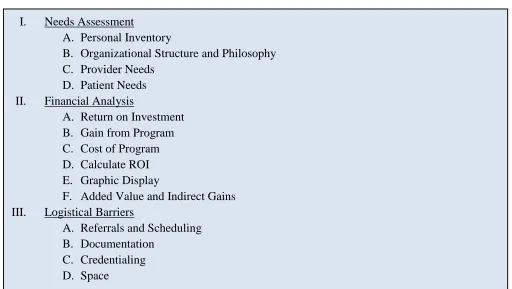
established team can be a delicate process, and social awareness must be paired with polite persistence throughout the process. This article, and the outlined summary in Figure 4, can empower and serve as a template for occupational therapists seeking to create new PC OT positions.
I. Needs Assessment
A. Personal Inventory
B. Organizational Structure and Philosophy C. Provider Needs
D. Patient Needs II. Financial Analysis
A. Return on Investment B. Gain from Program C. Cost of Program D. Calculate ROI E. Graphic Display
F. Added Value and Indirect Gains III. Logistical Barriers
A. Referrals and Scheduling B. Documentation
C. Credentialing D. Space
Figure 4. Program proposal template.
References
American Occupational Therapy Association. (2014). The role of occupational therapy in primary care.
American Journal of Occupational Therapy,
68(Suppl. 3), S25-S33.
https://doi.org/10.5014/ajot.2014.686s06 American Occupational Therapy Association. (2018a).
Frequently used 2018 CPT® codes for occupational therapy. Retrieved from
https://www.aota.org/Advocacy-Policy/Federal- Reg-Affairs/News/2018/Frequently-Used-2018-CPT-Codes-for-Occupational-Therapy.aspx American Occupational Therapy Association. (2018b).
Critically appraised topic: Evidence for the effectiveness of multidisciplinary interventions among persons with fibromyalgia.Retrieved from
https://www.aota.org/Practice/Rehabilitation- Disability/Evidence-Based/CAT-Arthritis-Fibro-multi.aspx
Bodenheimer, T. S., & Sinsky, C. (2014). From triple to quadruple aim: Care of the patient requires care of the provider. The Annals of Family Medicine,
12(6), 573-576.
http://dx.doi.org/10.1370/afm.1713
Bodenheimer, T. S., & Smith, M. D. (2013). Primary care: Proposed solutions to the physician shortage without training more physicians.
Health Affairs, 32(11), 1881-1886. http://dx.org/10.1377/hlthaff.2013.0234 Braveman, B. H. (2016). Leading & managing
occupational therapy services: An evidence-based approach (2nd ed., p. 381). Philadelphia, PA: F.A. Davis Company.
Bureau of Labor Statistics. (2019). Occupational outlook handbook. Retrieved from
https://www.bls.gov/ooh/healthcare/occupational -therapists.htm
Centers for Medicare & Medicaid Services [CMS]. (2019). Physician fee schedule search [Data set].
Retrieved from
https://www.cms.gov/apps/physician-fee-schedule/overview.aspx
Corso, K. A., Hunter, C. L., Dahl, O., Kallenberg, G. A., & Manson, L. (2016). Integrating behavioral health into the medical home: A rapid implementation guide. Phoenix, MD: Greenbranch Publishing.
Dahl-Popolizio, S., Doyle, S., & Wade, S. (2018): The role of primary health care in achieving global
healthcare goals: Highlighting the potential contribution of occupational therapy. World Federation of Occupational Therapists Bulletin,
74(1), 8-16.
https://doi.org/10.1080/14473828.2018.1433770 Dahl-Popolizio, S., Manson, L., Muir, S., & Rogers, O.
(2016). Enhancing the value of integrated primary care: The role of occupational therapy.
Families, Systems, & Health, 34(3), 270-280. http://dx.doi.org/10.1037/fsh0000208
Dahl-Popolizio, S.,Muir, S. L., Davis, K., Wade, S. & Voysey, R. (2017). Occupational therapy in primary care: Determining receptiveness of occupational therapists and primary care providers. The Open Journal of Occupational Therapy, 5(3). http://doi.org/10.15453/2168-6408.1372
Dahl-Popolizio, S., Rogers, O., Muir, S. L., Carroll, J. K., & Manson, L. (2017). Interprofessional primary care: The value of occupational therapy. The Open Journal of Occupational Therapy, 5(3). http://doi.org/10.15453/2168-6408.1363 Donnelly, C., Brenchley, C., Crawford, C., & Letts, L.
(2013). The integration of occupational therapy into primary care: A multiple case study design.
BMC Family Practice, 14(1), 60.
http://dx.doi.org/10.1186/1471-2296-14-60 Donnelly, C. A., Brenchley, C. L., Crawford, C. N., &
Letts, L. J. (2014). The emerging role of occupational therapy in primary care. Canadian Journal of Occupational Therapy, 81(1), 51-61. http://dx.doi.org/10.1177/0008417414520683 Flick, J., & Zachary, A. H. (2018, April). Occupational
therapy in a pediatric primary care setting. Presentation at AOTA National Conference, Salt Lake City, UT.
Furniss, J. (2018). The quality payment program: Are you ready to succeed in 2019? [Webinar]. In AOTA Member Appreciation 2018. Retrieved from https://goto.webcasts.com/starthere.jsp?ei=12142 35&tp_key=923a0370da
Goldberg, D. G., & Dugan, D. P. (2013). Review of new models of primary care delivery. Washington, DC: AOTA. Retrieved from
https://www.aota.org/~/media/Corporate/Files/Se
cure/Advocacy/Health-Care-Reform/commissioned-report.PDF
Halle, A. D., Mroz, T. M., Fogelberg, D. J., & Leland, N. E. (2018). Occupational therapy and primary care: Updates and trends. American Journal of Occupational Therapy, 72(3), 7203090010p1-7203090010p6.
https://doi.org/10.5014/ajot.2018.723001 Hunter, C. L., Goodie, J. L., Oordt, M. S., & Dobmeyer,
A. C. (2009). Integrated behavioral health in primary care: Step-by-step guidance for assessment and intervention. Washington, DC: American Psychological Association.
Lindström, A.-C., & Bernhardsson, S. (2018). Evidence-based practice in primary care occupational therapy: A cross-sectional survey in Sweden.
Occupational Therapy International,1-9.
https://doi.org/10.1155/2018/5376764 Mackenzie, L., & Clemson, L. (2014). Can chronic
disease management plans including
occupational therapy and physiotherapy services contribute to reducing falls risk in older people?
Australian Family Physician, 43(4), 211-215. Retrieved from
https://www.racgp.org.au/afp/2014/april/reducin g-falls-risk-in-older-people/
Margolius, D., & Bodenheimer, T. (2010). Transforming primary care: From past practice to the practice of the future. Health Affairs, 29(5), 779-784. http://dx.doi.org/10.1377/hlthaff.2010.0045 Metzler, C. A., Hartmann, K. D., & Lowenthal, L. A.
(2012). Defining primary care: Envisioning the roles of occupational therapy. American Journal of Occupational Therapy, 66, 266-270.
http://dx.doi.org/10.5014/ajot.2010.663001 Miller, C. (2018). Accountable care organizations and
occupational therapy. American Journal of Occupational Therapy, 72(5), 7205090010. https://doi.org/10.5014/ajot.2018.725003 Muir, S. (2012). Occupational therapy in primary health
care: We should be there. American Journal of Occupational Therapy, 66(5), 506-510. http://dx.doi.org/10.5014/ajot.2012.665001 Muir, S., Henderson-Kalb, J., Eichler, J., Serfas, K., &
Jennison, C. (2014, August). Occupational therapy in primary care: An emerging area of practice. OT Practice, 19(15), CE1-CE8. Murphy, S. L., Janevic, M. R., Lee, P., & Williams, D. A.
(2018). Occupational therapist–delivered cognitive–behavioral therapy for knee osteoarthritis: A randomized pilot study.
American Journal of Occupational Therapy,
72(5), 7205205040p1.
https://doi.org/10.5014/ajot.2018.027870 Pyatak, E. A., Carandang, K., Vigen, C. L. P., Blanchard,
J., Diaz, J., Concha-Chavez, A., . . . Peters, A. L. (2018). Occupational therapy intervention improves glycemic control and quality of life among young adults with diabetes: The Resilient, Empowered, Active Living With Diabetes (REAL Diabetes) randomized controlled trial. Diabetes Care, 41(4), 696-704. https://doi.org/10.2337/dc17-1634
Read, H., Roush, S., & Downing, D. (2018). Early intervention in mental health for adolescents and young adults: A systematic review. American Journal of Occupational Therapy, 72(5), 7205190040p1.
https://doi.org/10.5014/ajot.2018.033118 Siegel, P., Jones, B. L., & Poole, J. L. (2018).
Occupational therapy interventions for adults with fibromyalgia. American Journal of
12 https://scholarworks.wmich.edu/ojot/vol8/iss1/11
Occupational Therapy, 72(5), 7205395010p1. https://doi.org/10.5014/ajot.2018.725002 Sutherland, M. H. C., Moore, K., & Serlin, D. (2018,
August). Steps to getting occupational therapy into primary care. OT Practice, 23(15), 10-12.
Trembath, F., Dahl-Popolizio, S., VanWinkle, M., & Milligan, L. (2019). Retrospective analysis: Most common diagnoses seen in a primary care clinic and corresponding occupational therapy
interventions. The Open Journal of Occupational Therapy, 7(2). https://doi.org/10.15453/2168-6408.1539
Valasek, S., & Halle, A. (2018, August). Practicing in an established primary care setting: Practical tips and considerations. OT Practice, 23(5), 8-13. Yacoubian, T., & Atkins, M. (2018, April). Chronic
conditions, stress management, and use of biofeedback. OT Practice, 23(7), 21-23. Retrieved from
https://www.aota.org/Publications- News/otp/Archive/2018/Chronic-Conditions-Stress-Management-Biofeedback.aspx