Robert Dudkowiak
1, A–D, Katarzyna Neubauer
2, A–F, Elżbieta Poniewierka
1, A, E–FHepcidin and Its Role in Inflammatory Bowel Disease
Hepcydyna i jej rola w nieswoistych zapaleniach jelit
1 Division of Dietetics, Department of Gastroenterology and Hepatology, Wroclaw Medical University, Wrocław,
Poland
2 Department of Gastroenterology and Hepatology, Wroclaw Medical University, Wrocław, Poland
A – research concept and design; B – collection and/or assembly of data; C – data analysis and interpretation; D – writing the article; E – critical revision of the article; F – final approval of article; G – other
Abstract
Anemia is one of the most common extraintestinal symptoms of inflammatory bowel disease (IBD). The pathophys-iology of anemia in IBD is complex. It may be developed in the course of inflammation, intestinal bleeding or dis-orders of iron absorption. Hepcidin, discovered in the year 2000, is an endogenous peptide responsible for iron homeostasis. Recent data suggests that hepcidin is a major mediator of anemia and plays a central role in iron homeostasis and metabolism. This paper presents information about hepcidin structure and function, mecha-nisms of the regulation of the synthesis and current data about the role of this hormone in IBD-related anemia. Assessment of hepcidin levels in patients with IBD may become a key element in the treatment of anemia in the near future (Adv Clin Exp Med 2013, 22, 4, 585–591).
Key words: hepcidin, inflammatory bowel disease, anemia.
Streszczenie
Niedokrwistość to jeden z najczęstszych pozajelitowych objawów nieswoistych zapaleń jelit (n.z.j.). Patomechanizm niedokrwistości w n.z.j. jest złożony i może być związany ze stanem zapalnym, krwawieniem do światła przewodu pokarmowego lub zaburzeniami wchłaniania żelaza. Hepcydyna, odkryta w 2000 r., jest endogennym peptydem odpowiedzialnym za homeostazę żelaza. Obecnie uważa się, że hepcydyna jest głównym mediatorem niedokrwis- tości i odgrywa kluczową rolę w metabolizmie żelaza w ustroju. W artykule autorzy przedstawiają informacje o strukturze i funkcji hepcydyny, mechanizmach regulujących jej syntezę oraz bieżące doniesienia na temat roli tego hormonu w rozwoju niedokrwistości w n.z.j. Ocena stężenia hepcydyny u pacjentów z n.z.j. może stać się w najbliższej przyszłości kluczowym elementem w podejmowaniu decyzji terapeutycznych i leczeniu niedokrwis-tości (Adv Clin Exp Med 2013, 22, 4, 585–591).
Słowa kluczowe: hepcydyna, nieswoiste zapalenia jelit, niedokrwistość.
Adv Clin Exp Med 2013, 22, 4, 585–591 ISSN 1899–5276
REvIEWS
© Copyright by Wroclaw Medical University
Inflammatory bowel disease (IBD) are chronic diseases of the digestive tract, with unknown etiol-ogy encompassing Crohn’s disease (CD) and ulcer-ative colitis (UC). Typical clinical manifestations of IBD involve gastrointestinal symptoms, e.g. di-arrhea, bloody stools, abdominal pain and a course with periods of flares and remissions. Additionally, a significant part of IBD patients suffers from ex-traintestinal manifestations (EM) affecting differ-ent systems and organs. Some of them are relat-ed to the disease activity, e.g. erythema nodosum and peripheral arthritis. The special meaning of
the systemic complications like malnutrition and anemia, whose development is influenced by the frequency and time of duration of flares, must be emphasized [1, 2].
disease which cannot be avoided [4]. Recently, di-agnosis and treatment of anemia is in the focus of interest. It was shown, that therapy of anemia pos-itively influences the quality of life, social well-be-ing and cognitive function of IBD patients [5, 6].
Anemia in IBD has a complex background. It combines features of iron deficiency anemia (IDA) and anemia of chronic diseases (ACD). Recently published studies suggest that a protein named hepcidin may play a key role in the regula-tion of iron metabolism.
Hepcidin
Hepcidin was described independently by two research groups (Krause in 2000 and Park in 2001) [7, 8] which identified this substance in urine as an antimicrobial protein belonging to the defen-sins [9]. Initially it was named LEAP-1 (liver-ex-pressed antimicrobial protein-1). However, due to the place of synthesis in the liver (“hep-”) and an-timicrobial features (“-cide”) the name was finally changed to hepcidin.
Hepcidin is a protein hormone responsible for the regulation of the homeostasis of iron in the bod-ies of humans and other mammals. The hepcidin gene (HAMP) is located on chromosome 19 and encodes a preprohormone built of 84 amino acids which, under the action of convertases and proteas-es, is converted to a hormone containing 25 amino acids and 8 cysteine residues, exported outside of the cell and finally detected in serum and urine. Be-side hepcidin, it is also possible to detect its 60-ami-noacid prohormone in the urine and serum.
The main source of the synthesis of hepcidin is the liver. Additionally, expression of the HAMP gene was found (although smaller) in macro-phages, adipocytes, renal tubular cells, the muco-sa of the stomach, small and large intestine, mus-cles, heart and lungs. [9, 10]. Hepcidin circulates in the serum in free form or in combination with β-2 microglobulin and is eliminated mainly with the urine. There are also smaller, 20- and 22-ami-noacide peptides detected in urine, which are most probably the products of degradation and do not play any significant role in the body [9].
Until recently, the concentration of hepcidin and its precursor was evaluated in serum as well as in urine. However, it must be highlighted that the concentration of the hormones in urine largely de-pends on kidney function. Additionally, it was re-cently shown that the local synthesis of hepcidin in the kidneys is also possible [10].
Currently there are three methods of assess-ment of the concentration of hepcidin: mass spec-trometry (MS), radioimmunological assay (RIA)
and immunoenzymatic (ELISA). However, further studies to standardize the evaluation of hepcidin concentration and to describe the normal range of values, which can be used in clinical practice, are needed [10–12].
Mechanism of the Action
of Hepcidin
Hepcidin is responsible for controlling the amount of circulating iron, protecting its loss in the cells by mechanism of the connection with fer-roportin [10, 13]. Hepcidin is a direct inhibitor of the protein responsible for the transport of iron beside the cells which store it. Reactions which fol-low the connection of hepcidin to ferroportin lead to the internalization and degradation of this pro-tein in lysosomes. With the removal of ferroportin from the cellular membrane, hepcidin inhibits cel-lular export of iron which in consequence leads to a reduction in the plasma pool of this element. The mechanism described has a special meaning in the cells of the small intestine where it leads to the re-tention of iron in enterocytes and its removal from the body with the exfoliating intestinal epithelium. A similar situation appears in macrophages, which are the main source of iron for erythropoiesis, and as a consequence of ferroportin internalization, become a trap for iron, recovered in the mecha-nism of phagocytosis from erythrocytes.
Hepcidin decides about the amount of ferro-portin, a transporter for iron on the cell membrane of enterocytes, hepatocytes, phagocytic cells in the liver and spleen, and the placenta. Additionally, the availability of ferroportin in the cellular mem-brane in the above-mentioned cells is also regu-lated in the mechanism independent from hepci-din and related to iron regulatory proteins(IRP). When the amount of iron in cells is low, the ex-pression of ferroportin decreases, which leads to the limitation of iron export [14].
Hepcidin influences the development of ane-mia not only with the mechanism of the elimina-tion of ferroportin but also due to the direct inhib-iting of the proliferation of the erythropoiesis cells and their survival time [15].
Hepcidin Synthesis
Regulation
The consequence of increasing the pool of iron in the body is to stimulate the production of hepci-din in the liver, which results inter alia in the inhi-bition of the intestinal absorption of this element. In the pathways responsible for the transmission of signals to stimulate HAMP gene expression, many proteins such as the HFE protein (high Fe), trans-ferrin receptor (TfR1, TfR2), bone morphogenetic protein (BMP), hemojuvelin (HJv) and transfer-rin are involved.
Bone morphogenetic protein 6 (BMP6) plays a special role in regulation of the synthesis of hep-cidin, dependent on the iron content in both the extracellular and intracellular form. After binding of this protein to a specific receptor on the surface of hepatocytes, it triggers a cascade of signals fol-lowing which hepcidin gene transcription is stim-ulated. [18]. This pathway is modulated by a mem-brane protein called hemojuvelin (HJv), which enhances signal transmission from the BMP. The hemojuvelin expression within the cell membrane of hepatocytes and skeletal muscle is controlled by the serine protease, matriptase-2.
This enzyme, by cleaving to HJv, which is a cofactor for BMP-6, contributes to a decrease in the production of hepcidin. A mutation in the gene TMPRSS6, encoding protein matriptase-2, is the cause of iron-refractory iron deficiency ane-mia (IRIDA). Disorders in the synthesis of mat-riptase-2 cause increased expression of membrane HJv, which leads to excessive stimulation of hepci-din synthesis, resulting in a microcytic anemia with normal concentrations of iron in the body [19].
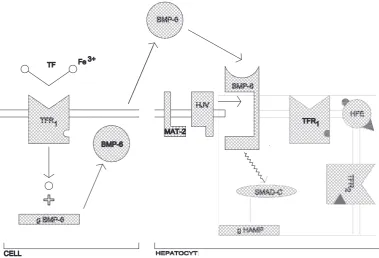
The regulation of the production of hepcidin, depending on the iron content in the body, is al-so affected by the previously-mentioned receptors TfR1 and TfR2, and HFE protein [20]. These re-ceptors differ in location (TfR1 – most cells, TfR2 – mainly hepatocytes) and the degree of affinity for the transferrin-iron complex and HFE. Elevated concentrations of iron in the body trigger a series of complex reactions associated with these teins, as a result of which, there is increased pro-duction of hepcidin in the liver. The mechanisms regulating the synthesis of hepcidin are shown in Figure 1.
Disorders in the production of hepcidin, re-sulting from mutations in genes involved in its synthesis, are a cause of hemochromatosis [21]. Both mutations in the HAMP gene, which is di-rectly responsible for the synthesis of hepcidin, and the mutation of genes encoding proteins HFE, HJv and TfR2 lead to the occurrence of congenital hemochromatosis.
Hypoxia is a factor contributing to the inhibi-tion of the producinhibi-tion of hepcidin in the liver [17]. Hypoxia inducible factor 1 (HIF-1) is important in
this mechanism, because its activity is dependent on the oxygen pressure in the body. In the case of hypoxia, increased HIF-1 activity releases a cascade of reactions that stimulate erythropoiesis and lead-ing ultimately to the suppression of hepcidin pro-duction [22]. Erythropoietin, by binding to a spe-cific receptor in the cell membrane of hepatocytes, also inhibits the expression of hepcidin. In addi-tion, growth differentiation factor 15 (GDF15), se-creted by erythroblasts in the final stage of eryth-ropoiesis, suppresses hepcidin synthesis.
infection, and thus inflammation, to increase hep-cidin production is the result of a study in which the authors have observed the effect of the injec-tion of lipopolysaccharide (LPS) derived from the cell membrane of Gram-negative bacteria [27].
Hepcidin in Inflammatory
Bowel Disease
The role which hepcidin may play in inflam-matory bowel disease and IBD-related anemia has not been fully elucidated. Semrin et al. found out
that the level of hepcidin in urine in CD was signif-icantly higher in patients with active CD [28]. Lev-el of hepcidin in urine positivLev-ely corrLev-elated with a higher level of C-reactive protein (CRP) and in-terleukine-6 (IL-6) in patients with malabsorption of oral iron agents. Additionally, a higher level of prohepcidin in patients with active CD was ob-served. The level of the prohormone measured in serum correlated with Crohn’s Disease Activity In-dex (CDAI), CRP and ferritin [26]. The concen-tration of prohepcidin was higher in patients with ACD as compared to patients with IDA, however Fig. 1. Regulation of hepcidin expression. Synthesis of hepcidin is regulated by systemic iron availability. Iron trans-ported in a complex with transferrin is binding to a transferrin receptor on a cell surface (TFR1). This leads to iron
internalization and stimulates expression of bone morphogenetic protein 6 gen (g BMP-6), the consequence of which is the synthesis of bone morphogenetic protein (BMP-6). Signal pathways associated with BMP-6 are modulated by hemojuvelin (HJv). On the surface of hepatocytes, HJv functions as a coreceptor for enhancing the signal transmis-sion pathways for BMP. Matriptase-2 (MAT-2) located in the hepatocyte membrane can split HJv, which can lead to a decrease in hepcidin-production. Binding of BMP-6 to a specific receptor on the surface of liver cells (BMP-R) trig-gers a cascade of reactions involving signal proteins finally forming the SMAD complex (SMAD-C). SMAD-C translo-cates to the nucleus where it stimulates expression of the hepcidin gene (g HAMP). The HFE protein is present on the surface of hepatocytes and also has an impact on the synthesis of hepcidin. HFE is able to bind to various domains of the receptors for transferrin (TFR1, TFR2)
the difference was not statistically significant. In another study, the authors showed that the lev-el of hepcidin was lower in IBD patients (51 with UC and 10 with CD) than in healthy volunteers (n = 25) [29]. The level of hepcidin measured with RIA was lower when compared to healthy individ-uals, both in patients without anemia and patients with IDA. Moreover, a positive correlation be-tween hepcidin level and IL-6 was demonstrated.
Recently, Oustamanolakis et al. showed that the serum level of hepcidin as well as prohepcidin mea-sured with ELISA was significantly higher in IBD pa-tients (49 with UC and 51 with CD) than in healthy individuals [30]. The mean level of hepcidin was sig-nificantly higher in IBD patients than in the control group. However, the level of prohepcidin was signif-icantly lower in IBD patients as compared to healthy volunteers. Additionally, a negative correlation was
shown of the level of hepcidin with hemoglobin but a positive correlation was seen with the level of pro-hormone. The level of hepcidin also correlated with CRP, ferritin and, in UC patients, with the index of activity of disease (SCCAI). There was no positive correlation of the studied hormones and CDAI. Such a relation, however weak, was shown in another study regarding UC patients and level of prohepci-din [31]. In the above-mentioned study, there was no statistically significant difference between the level of prohepcidin in the group of 102 IBD patients (72 UC and 30 CD) as compared to healthy volunteers.
The problem of hepcidin and prohepcidin in IBD was also studied in the child population [32]. In a study conducted on the group of 15 children with IBD, it was observed that the level of pro-hepcidin (measured using the ELISA method) was significantly higher than in healthy volunteers.
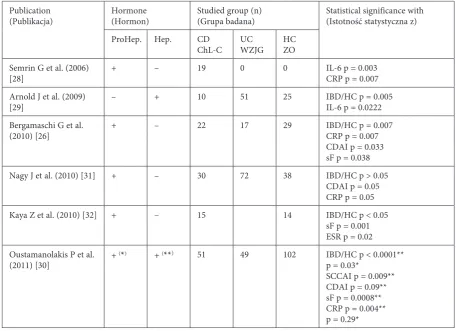
Table 1. Parameters of patients with IBD and controls compared with hepcidin/prohepcidin
Tabela 1. Parametry pacjentów z IBD i grupy kontrolnej porównane z hepcydyną/prohepcydyną Publication
(Publikacja) Hormone(Hormon) Studied group (n)(Grupa badana) Statistical significance with(Istotność statystyczna z) ProHep. Hep. CD
ChL-C UCWZJG HCZO Semrin G et al. (2006)
[28] + – 19 0 0 IL-6 p = 0.003CRP p = 0.007 Arnold J et al. (2009)
[29] – + 10 51 25 IBD/HC p = 0.005IL-6 p = 0.0222 Bergamaschi G et al.
(2010) [26] + – 22 17 29 IBD/HC p = 0.007CRP p = 0.007 CDAI p = 0.033 sF p = 0.038 Nagy J et al. (2010) [31] + – 30 72 38 IBD/HC p > 0.05
CDAI p = 0.05 CRP p = 0.05 Kaya Z et al. (2010) [32] + – 15 14 IBD/HC p < 0.05
sF p = 0.001 ESR p = 0.02 Oustamanolakis P et al.
(2011) [30] +
(*) + (**) 51 49 102 IBD/HC p < 0.0001**
p = 0.03*
SCCAI p = 0.009** CDAI p = 0.09** sF p = 0.0008** CRP p = 0.004** p = 0.29*
ProHep. – prohepcidin, Hep. – hepcidin, CD – Crohn’s disease, UC – ulcerative colitis, HC – healthy controls, IL-6 – inter-leukin-6, CRP – C-reactive protein, IBD – inflammatory bowel disease, CDAI – Crohn’s disease activity index, sF – serum ferritin, ESR – erythrocyte sedimentation rate, SCCAI – Simple Clinical Colitis Activity Index.
Additionally, the level of prohepcidin positively correlated with ferritin and erythrocyte sedimen-tation rate. These correlations are summarized in Table 1.
Animal studies also have an important role in the elucidation of the role which hepcidin may play in IBD [33, 34]. In a recently published study, the role of protein BMP-6 in the production of hepcidin was stressed[34]. In mice with colitis, an increase of the serum iron level and depression of the inflammatory process after administration of the substances inhibiting the action of BMP-6 was observed. Blocking of the main trace activat-ing the expression of gene HAMP positively influ-ences not only the amount of iron in the body but can also positively correlate with a decreasing of the inflammatory process. However, these findings require further study.
The authors concluded thathepcidin is a key hormone determining the availability of iron in the body. Elucidation of the mechanisms regulating the synthesis of hepcidin and its action on the cell level is an important step in the better understanding of iron metabolism.This hormone may play a role in diagnostic strategy in IBD patients with anemia but also in hemochromatosis development and iron deficiency anemia resistant to iron treatment. As an acute phase protein can participate in the lower availability of iron in the body and in the develop-ment of active inflammation in the mucosa.
Further studies are needed to establish the place of hepcidin assessment in IBD in clinical practice. It is possible that, in the future, a decrease of the level of hepcidin will be the preferred man-agement aiming to improve intestinal iron absorp-tion and its releasefrom macrophages.
References
[1] Vagianos K, Bector S, McConnell J, Bernstein CN: Nutrition Assessment of Patients With Inflammatory Bowel Disease. JPEN J Parenter Enteral Nutr 2007, 31, 311–319.
[2] Semrin G, Fishman DS, Bousvaros A, Zholudev A, Saunders AC, Correia CE, Nemeth E, Grand RJ, Weinstein DA: Impaired intestinal iron absorption in Crohn’s disease correlates with disease activity and markers of inflammation. Inflamm Bowel Dis 2006, 12, 1101–1106.
[3] Wilson A, Reyes E, Ofman J: Prevalence and outcomes of anemia in inflammatory bowel disease: a systematic review of the literature. Am J Med 2004, 116, 44S–49S.
[4] Gasche C: Anemia in IBD: the overlooked villain. Inflamm Bowel Dis 2000, 6, 142–150.
[5] Wells CW, Lewis S, Barton JR, Corbett S: Effects of changes in hemoglobin level on quality of life and cognitive function in inflammatory bowel disease patients. Inflamm Bowel Dis 2006, 12, 123–130.
[6] Radwan P, Radwan-Kwiatek K, Skrzydło-Radomańska B, Rydzewska G: Niedokrwistość w nieswoistych zapale-niach jelit – etiopatogeneza, rozpoznawanie i leczenie. Prz Gastroenterol 2010, 6, 315–320.
[7] Krause A, Neitz S, Magert HJ Schulz A, Forssmann WG, Schulz-Knappe P, Adermann K: LEAP-1, a novel highly disulfide-bonded peptide, exhibits antimicrobial activity. FEBS Lett 2000, 480, 147–150.
[8] Park CH, Valore EV, Waring AJ, Ganz T: Hepcidin, a urinary antimicrobial peptide synthesized in the liver. J Biol Chem 2001, 276, 7806–7810.
[9] Atanasiu V, Manolescu B, Stoian I: Hepcidin – central regulator of iron metabolism. Eur J Haematol 2007, 78, 1–10.
[10] Nemeth E: Targeting the hepcidin-ferroportin axis in the diagnosis and treatment of anemias. Adv Hematol 2010, 2010, 750643. Epub 2009 Dec 24.
[11] Kroot JJ, Kemna EH, Bansal SS, Busbridge M, Campostrini N, Girelli D, Hider RC, Koliaraki V, Mamalaki A, Olbina G, Tomosugi N, Tselepis C, Ward DG, Ganz T, Hendriks JC, Swinkels DW: Results of the first inter-national round robin for the quantification of urinary and plasma hepcidin assays: need for standardization. Haematologica 2009, 94, 1748–1752.
[12] Kemna EH, Tjalsma H, Podust VN, Swinkels DW: Mass spectrometry-based hepcidin measurements in serum and urine: analytical aspects and clinical implications. Clin Chem 2007, 53, 620–628.
[13] Nemeth E, Tuttle MS, Powelson J, Vaughn MB, Donovan A, Ward DM, Ganz T, Kaplan J: Hepcidin regulates cellular iron efflux by binding to ferroportin and inducing its internalization. Science 2004, 306, 2090–2093. [14] Ganz T: Iron homeostasis: fitting the puzzle pieces together. Cell Metab 2008, 7, 288–290.
[15] Dallalio G, Law E, Means RTJr: Hepcidin inhibits in vivo erythroid colony formation at reduced erythropoietin concentrations. Blood 2006, 107, 2702–2704.
[16] Ganz T: Hepcidin, a key regulator of iron metabolism and mediator of anemia of inflammation. Blood 2003, 102, 783–788.
[17] Nicolas G, Chauvet C, Viatte L, Danan JL, Bigard X, Devaux I, Beaumont C, Kahn A, Vaulont S: The gene encoding the iron regulatory peptide hepcidin is regulated by anemia, hypoxia, and inflammation. J Clin Invest 2002, 110, 1037–1044.
[19] An P, Wu Q, Wang H, Guan Y, Mu M, Liao Y, Zhou D, Song P, Wang C, Meng L, Man Q, Li L, Zhang J, Wang F: TMPRSS6, but not TF, TFR2 or BMP2 variants are associated with increased risk of iron-deficiency anemia. Hum Mol Genet 2012, 21, 2124–2131.
[20] Gao J, Chen J, Kramer M, Tsukamoto H, Zhang AS, Enns CA: Interaction of the hereditary hemochromatosis protein HFE with transferrin receptor 2 is required for transferrin-induced hepcidin expression. Cell Metab 2009, 9, 217–227.
[21] Ashrafian H: Hepcidin: the missing link between hemochromatosis and infections. Infect Immun 2003, 71, 6693–6700.
[22] Peyssonnaux C, Zinkernagel AS, Schuepbach RA, Rankin E, Vaulont S, Haase VH, Nizet V, Johnson RS: Regulation of iron homeostasis by the hypoxia-inducible transcription factors (HIFs). J Clin Invest 2007, 117, 1926–1932.
[23] Weiss G, Goodnough LT: Anemia of chronic disease. N Engl J Med 2005, 352, 1011–1023.
[24] Nemeth E, Rivera S, Gabayan V, Keller C, Taudorf S, Pedersen BK, Ganz T: IL-6 mediates hypoferremia of inflammation by inducing the synthesis of the iron regulatory hormone hepcidin. J Clin Invest 2004, 113, 1271–1276.
[25] Pastorelli L, Testa C, Rigolini R, Giubbilini R, Spina L, Tontini G, Munizio N, De Salvo C, Rampoldi B, Costa E, Vecchi M: Anti TNF therapy improves stored body iron serum markers in inflammatory bowel disease patients. Gastroenterology 2011, 140, Suppl. 1, S278.
[26] Bergamaschi G, Di Sabatino A, Albertini R, Ardizzone S, Biancheri P, Bonetti E, Cassinotti A, Cazzola P, Markopoulos K, Massari A, Rosti V, Porro GB, Corazza GR: Prevalence and pathogenesis of anemia in inflam-matory bowel disease. Influence of anti-tumor necrosis factor-alpha treatment. Haematologica 2010, 95, 199–205. [27] Kemna E, Pickkers P, Nemeth E, van der Hoeven H, Swinkels D: Time-course analysis of hepcidin, serum iron,
and plasma cytokine levels in humans injected with LPS. Blood 2005, 106, 1864–1866.
[28] Semrin G, Fishman DS, Bousvaros A, Zholudev A, Saunders AC, Correia CE, Nemeth E, Grand RJ, Wein-stein DA: Impaired intestinal iron absorption in Crohn’s disease correlates with disease activity and markers of inflammation. Inflamm Bowel Dis 2006, 12, 1101–1106.
[29] Arnold J, Sangwaiya A, Bhatkal B, Geoghegan F, Busbridge M: Hepcidin and inflammatory bowel disease: dual role in host defence and iron homoeostasis. Eur J Gastroenterol Hepatol 2009, 21, 425–429.
[30] Oustamanolakis P, Koutroubakis IE, Messaritakis I, Malliaraki N, Sfiridaki A, Kouroumalis EA: Serum hepcidin and prohepcidin concentrations in inflammatory bowel disease. Eur J Gastroenterol Hepatol 2011, 23, 262–268.
[31] Nagy J, Lakner L, Poór VS, Pandur E, Mózsik G, Miseta A, Sipos K: Serum prohepcidin levels in chronic inflam-matory bowel diseases. J Crohns Colitis 2010, 4, 649–653.
[32] Kaya Z, Yildiz E, Gursel T, Albayrak M, Kocak U, Karadeniz C, Dalgiç B: Serum Prohepcidin levels in children with solid tumors, inflammatory bowel disease and iron deficiency anaemia. J Trop Pediatr 2010, 57, 120–125. [33] Sasu BJ, Cooke KS, Arvedson TL, Plewa C, Ellison AR, Sheng J, Winters A, Juan T, Li H, Begley CG, Molineux G:
Antihepcidin antibody treatment modulates iron metabolism and is effective in a mouse model of inflammation-induced anemia. Blood 2010, 115, 3616–3624.
[34] Wang L, Trebicka E, Fu Y, Ellenbogen S, Hong CC, Babitt JL, Lin HY, Cherayil BJ: The bone morphogenetic pro-tein-hepcidin axis as a therapeutic target in inflammatory bowel disease. Inflamm Bowel Dis 2012, 18, 112–119.
Address for correspondence:
Robert Dudkowiak Division of Dietetics
Department of Gastroenterology and Hepatology Wroclaw Medical University
Borowska 213 50-556 Wrocław Tel.: +48 71 733 21 20
E-mail: [email protected]
Conflict of interest: None declared