DEMOGRAPHIC RESEARCH
VOLUME 31, ARTICLE 29, PAGES 889
−
912
PUBLISHED 16 OCTOBER 2014
http://www.demographic-research.org/Volumes/Vol31/29/ DOI: 10.4054/DemRes.2014.31.29
Research Article
Stillbirth incidence in Spain: A comparison of
native and recent immigrant mothers
Vicente Fuster
Pilar Zuluaga
Jorge Román-Busto
©2014 Vicente Fuster, Pilar Zuluaga & Jorge Román-Busto.
This open-access work is published under the terms of the Creative Commons Attribution NonCommercial License 2.0 Germany, which permits use, reproduction & distribution in any medium for non-commercial purposes, provided the original author(s) and source are given credit.
1 Introduction 890
2 Data and method 893
3 Results 896
3.1 Regression analysis 898
3.2 Maternal origin 900
4 Discussion 901
5 Acknowledgements 905
Stillbirth incidence in Spain: A comparison of native and recent
immigrant mothers
Vicente Fuster1
Pilar Zuluaga2
Jorge Román-Busto3
Abstract
BACKGROUND
This analysis focuses on determining differences in the risk of stillbirth in Spain by comparing native and foreign mothers with regard to bio-demographic factors.
METHODS
The study is based on micro-data, one record per delivery for 2,869,329 births occurring from 2007 to 2012.
RESULTS
For a total of 2,287,819 single deliveries the average stillbirth rate for Spanish mothers (S) was 2.51 per 1000; for non-Spanish mothers (NS) it was 3.99 per 1000. Two multivariate Poisson regression models were applied to obtain adjusted stillbirth risk ratios (RR), one for S and another for NS mothers. For both groups the following variables were included in the model: Caesarean, mother’s age, birth weight, duration of gestation, and maternal education. Parity, however, was incorporated only for Spanish mothers, while for the non-Spanish the relationship status and the father’s nationality were included. The increase in RR is similar for certain variables, such as in cases where no Caesarean was performed (S: 3.356; NS: 3.439); while for other variables differences are observed with regard to maternal origin, for example weight at birth <1500g in relation to 2500g (S: 4.154; NS: 21.367).
1
Complutense University of Madrid, Department of Zoology and Physical Anthropology, Faculty of Biology, Madrid, Spain. E-Mail: mailto:[email protected].
2 Complutense University of Madrid, Department of Statistics and Operations Research, Faculty of Medicine,
Madrid, Spain.
3
CONCLUSIONS
Immigration, together with differential reproductive maternal characteristics, had an influence on RR. Maternal education, as an indicator of socioeconomic conditions, is one of the most important socio-cultural variables in this respect. Certain reproductive and socio-cultural maternal variables affected RR differently in Spanish and foreign women, suggesting the benefit of implementing policies to achieve a decrease in the risk of stillbirths in the NS group.
1. Introduction
Pregnancy complications in developed countries are few and outcomes are generally favourable for both mothers and infants (Kramer 2003). Stillbirths,however, currently account for more than 50% of all perinatal deaths (Cnattingius and Stephansson 2002).
In the past the World Health Organization linked the viability of the foetus to a gestational age of more than 28 completed weeks of pregnancy. The criterion currently recommended is weight at the time of removal or expulsion of the foetus, although the minimum number of grams is subject to debate (INE, 2013). In the United States and Great Britain the thresholds for length of gestation are 20 and 24 weeks, respectively (Opara and Zaidi 2007). Ekéus et al. (2011) considered stillbirth as death occurring at 28 completed weeks of pregnancy. In Spain registration of foetal deaths is required only in cases where the gestation is greater than 180 days. This threshold is comparable to the Italian ISTAT definition (Astolfi et al. 2004).
Huang et al. (2008) suggested that, in the absence of pre-existing medical disorders, it is difficult to establish a range of limit points within a continuous variable, such as age. Advanced maternal age appears as an independent risk factor for certain adverse outcomes in pregnancy, although age may be combined with many other factors, such as parity, pre-existing diabetes mellitus, and/or hypertension (Jolly et al. 2000).
Stillbirths are complex and multifactorial in nature. Although maternal age is important, they can also be influenced by parity, weight at birth, and duration of gestation (Luke and Brown 2007). Weight and prematurity are recognized as the most important causes of stillbirth (Mohsin et al. 2006).
For single and multiple deliveries a reduction of late foetal mortality from 3.9 to 3.3 per 1000 was reported in Spain from 1996 to 2005 (Luque 2008), but mothers 45 or older still accounted for 70% of stillbirths.
pregnancies among adolescents have been associated with a range of socioeconomic and biological disadvantages (MacDorman et al. 2007), including incomplete lower level education, limited job opportunities, and parental marital disruption (Cowden and Funkhouser 2001). The incidence of stillbirths among teenage mothers is high because they are more vulnerable to nicotine and alcohol addictions, often lack pre-natal care, and have premature and low birth-weight deliveries.
Birth weight declined in Spain from 1980 but has risen slightly in recent years, coinciding with the increase in the percentage of births by foreign mothers (Fuster et al. 2013). Considering the regional heterogeneity that exists in Spain, Fuster et al. (2014) studied geographic differences in low birth weight with regard to biological, demographic, and socioeconomic factors, among them the mother’s professional qualification. They reported considerable inter-provincial variation, which was partly attributable to the unequal reproductive pattern of immigrant mothers. The level of the mother’s education is also regarded as a reliable indicator of economic factors that may influence the occurrence of stillbirths (Ulizzi and Zonta 2002).
Socioeconomic and cultural changes, such as a significant rise in the number of women who delay childbirth, have recently occurred in many countries and are affecting reproduction. In Europe between 1980 and 2004 the average age of mothers at first birth increased by about 3 years, and in the case of Spain it reached 4.3 years (Billari et al. 2006). This delay is related to the second demographic transition (Lesthaeghe 2010), which is due to women’s greater interest in pursuing a professional career.
Since the 1980s assisted reproduction techniques have also contributed to reproductive ageing, since older women, mainly primiparous, tend to be well represented in the groups that use these techniques. Statistics show that the perinatal outcome of pregnancies after such treatments is substantially less successful in comparison with those following natural conception (Ombelet et al. 2006). In Spain delayed childbearing has increased the proportion of births for primiparous women over 35 and the frequency of multiple deliveries, due to the use of assisted reproductive technology (Fuster et al. 2008).
(MacDorman et al. 2007), and particularly in Missouri (Sharma et al. 2006), indicate that mothers who experienced stillbirth were more likely to be Black American. Rates were similar for Hispanic and non-Hispanic Whites, and although the stillbirth rate declined from 1990 to 2003 the racial disparity in rates increased (Willinger et al. 2009). In other findings, immigration on its own can be considered a risk factor for pregnancies, due to socio-economic disadvantages and reduced access to obstetric monitoring (Forna et al. 2003), resulting in perinatal mortality (Essén et al. 2000). The working conditions of immigrants have been found to be less favourable than those of the native population. Compared with high-level white-collar workers in Sweden, those of a lower social level had an increased risk of stillbirth. This risk also increased in Sweden with maternal age (Stephansson et al. 2001).
Unfavourable working conditions result in low socioeconomic status, which in turn results in lower levels of education. Both factors are conducive to an increased risk of stillbirth (Ronsmans et al. 2008). Differences among groups defined by level of education may be related to the use of health care facilities and differences in diet (Olsen and Madsen 1999). Poor nutrition often results in maternal excess weight and obesity, with pregnancy complications being more common among overweight and obese women (Cnattingius and Stephansson 2002). In general, stillbirth rates rise with increasing cases of drug abuse (Aliyu et al. 2007) and such abuse is more prevalent among less educated women (Olsen and Madsen 1999; Morgen et al. 2008), those from lower social classes being more likely to continue these unhealthy habits during pregnancy (Stephansson et al. 2001). The effect of nicotine on birth outcomes consists of shorter gestation periods, lower birth-weight, and intrauterine growth restriction (Högberg and Cnattingius 2007). Although in developed countries a more efficient prevention of pre-natal and neonatal mortality should produce a larger proportion of live premature deliveries (Barros et al. 2005), immigrant women compared to natives show a lower tendency to indulge in habits that negatively affect the newborn, such as the use of tobacco, alcohol, or other drugs (Forna et al. 2003). The time elapsed since migration is a variable that is also thought to influence risk outcomes, through different degrees of social integration that are then linked to the availability of medical services in the receiving country (Acevedo-García et al. 2007; García-Subirats et al. 2011). However, in Spain this time effect may have been marginal because health care under the Spanish Public Health Service was universal during the period analysed, and access to medical services during pregnancy was thus not limited by the mother’s immigrant status.
stillbirth depending on the origin, age, and level of studies of the mother, and on other variables such as parity, gender of the foetus, weight at delivery, and weeks of gestation.
2. Data and method
The present study is based on information provided by the Spanish National Institute of Statistics (INE) consisting of micro-data with one record per delivery. Only single deliveries were included in the present analysis to avoid the bias attributable to the negative relationship between multiparity and perinatal mortality.
Stillbirth occurrence was determined from the late foetal deaths defined by the INE as death of a potentially viable foetus prior to the complete expulsion or extraction from the mother.
The stillbirth rate was calculated as the number of late foetal deaths per 1000 deliveries (both live births and foetal deaths). A total of 2,869,329 births occurred in Spain from 2007 to 2012. For this period the parents’ level of schooling is reported, in addition to their profession. Because registration is required only for deliveries that take place after 26 weeks of gestation, underreporting of shorter pregnancies may exist. Accordingly, only births of 26 weeks or more were selected.
Re-codification of variables
The present study divides maternal age into 4 categories: 19, 20-29, 30-39, and 40. Weight at birth was recorded as very low (<1,500 grams), low (1,500-2,499 grams), and normal (≥2,500 grams). Duration of gestation was labelled as early preterm (<32 weeks), preterm (32-36 weeks), and at term (≥37 weeks). For parity, births were classified according to previous births (0 and 1 or more).
In order to select an indicator of socioeconomic conditions from the INE database, in this paper the achieved level of studies was chosen instead of the declared job qualification. The latter may be quite different from the actual work being performed, especially in the case of immigrants. Information on the maternal level of studies was missing in 95,708 deliveries. For the remaining cases, the 10 original categories for the level of studies registered by the INE (1= illiterate - 10 = Phd) were reduced to three:
1. < 5years: Illiterate and having attended school for less than 5 years. 2. Primary-Elementary: Primary and Elementary School.
The same codification was applied to the father’s level of studies.
A variable was created (“In couple”) to include both married mothers and women engaged in a stable relationship when they delivered.
Regarding the mother’s origin, two groups were initially defined: Spanish and non-Spanish. To avoid classifying as “Spanish” those immigrants who had obtained the nationality after a certain time of residence, each individual was assigned to one of the two groups taking into account only the country of birth instead of nationality. Additional analysis was conducted for non-Spanish mothers born in countries contributing more than 20,000 deliveries.
Information was not always available for some variables, such as level of education; thus statistical inference was used.
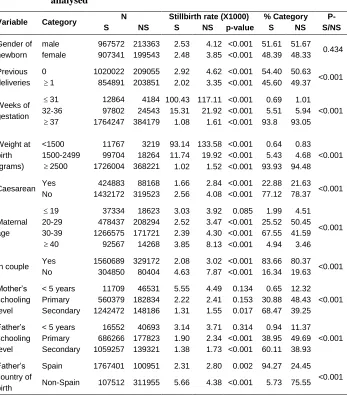
Table 1: Descriptive statistics for the variables and categories of values analysed
Variable Category N Stillbirth rate (X1000) % Category P-
S/NS
S NS S NS p-value S NS
Gender of newborn
male 967572 213363 2.53 4.12 <0.001 51.61 51.67
0.434
female 907341 199543 2.48 3.85 <0.001 48.39 48.33
Previous deliveries
0 1020022 209055 2.92 4.62 <0.001 54.40 50.63
<0.001
1 854891 203851 2.02 3.35 <0.001 45.60 49.37
Weeks of gestation
31 12864 4184 100.43 117.11 <0.001 0.69 1.01
<0.001
32-36 97802 24543 15.31 21.92 <0.001 5.51 5.94
37 1764247 384179 1.08 1.61 <0.001 93.8 93.05
Weight at birth (grams)
<1500 11767 3219 93.14 133.58 <0.001 0.64 0.83
<0.001
1500-2499 99704 18264 11.74 19.92 <0.001 5.43 4.68
2500 1726004 368221 1.02 1.52 <0.001 93.93 94.48
Caesarean Yes 424883 88168 1.66 2.84 <0.001 22.88 21.63 <0.001
No 1432172 319523 2.56 4.08 <0.001 77.12 78.37
Maternal age
19 37334 18623 3.03 3.92 0.085 1.99 4.51
<0.001
20-29 478437 208294 2.52 3.47 <0.001 25.52 50.45
30-39 1266575 171721 2.39 4.30 <0.001 67.55 41.59
40 92567 14268 3.85 8.13 <0.001 4.94 3.46
In couple Yes 1560689 329172 2.08 3.02 <0.001 83.66 80.37 <0.001
No 304850 80404 4.63 7.87 <0.001 16.34 19.63
Mother’s schooling level
< 5 years 11709 46531 5.55 4.49 0.134 0.65 12.32
<0.001
Primary 560379 182834 2.22 2.41 0.153 30.88 48.43
Secondary 1242472 148186 1.31 1.55 0.017 68.47 39.25
Father’s schooling level
< 5 years 16552 40693 3.14 3.71 0.314 0.94 11.37
<0.001
Primary 686266 177823 1.90 2.34 <0.001 38.95 49.69
Secondary 1059257 139321 1.38 1.73 <0.001 60.11 38.93
Father’s country of birth
Spain 1767401 100951 2.31 2.80 0.002 94.27 24.45
<0.001
Non-Spain 107512 311955 5.66 4.38 <0.001 5.73 75.55
3. Results
From a total of 2,287,819 single deliveries that met the requirements for analysis, 412,906 (18.05%) corresponded to non-Spanish mothers. The number of stillbirths for foreign mothers was 1,649, with a stillbirth rate (3.99 per 1000) that surpassed the national average (2.77 per 1000), while the Spanish rate was below average (2.51 per 1000). The differences in rates between the two groups were found to be significant (p<0.001).
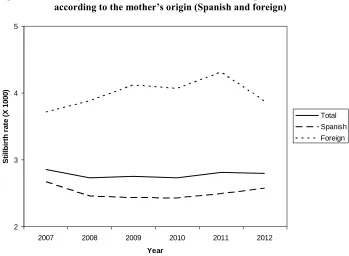
Figure 1 displays the yearly change in the stillbirth rate from 2007 to 2012. This figure shows that mothers born abroad made a greater contribution to the average rate than Spanish mothers, which reached its peak in 2011. For the country as a whole, rates remained rather stable.
Figure 1: Yearly variation of stillbirth rates (X1000) in Spain overall, and according to the mother’s origin (Spanish and foreign)
Stillbirth rates for Spanish and foreign mothers, relative to a set of variables and to the categories of values considered for each group, can be found in the central columns of Table 1. Some differences regarding maternal and paternal origin are of interest: all
2 3 4 5
2007 2008 2009 2010 2011 2012
Year
Sti
ll
b
ir
th
r
a
te
(X
1
0
0
0
)
Total
Spanish
stillbirth rates in this table are higher in the foreign group. The only exceptions are when the Spanish mother’s level of education is below primary-elementary, and when the father’s country of birth is non-Spanish.
The results of Table 1 indicate that male stillbirth rates surpass female rates. Both rates are higher for the foreign group than for the Spanish group. Stillbirths are more frequent among primiparous women than for those who have had previous deliveries, the increase being similar for Spanish and foreign mothers. Stillbirth rates are high when the gestation period is short, a phenomenon more apparent in non-Spanish mothers (<32 weeks) than in Spanish. Regardless of the mother’s country of birth, stillbirths are associated with low weight at birth, but for each category of weight the rates among the non-Spanish group surpass those of the Spanish. In the case of Caesarean deliveries a lower incidence of stillbirths is observed, mostly among the Spanish mothers. With regard to maternal age, rates increase with age for those over 30 in the non-Spanish group, and over 40 for the Spanish. Delivery by mothers in couples is related to lower stillbirth rates, a situation more frequent among the Spanish mothers. Women who have attended school for less than 5 years show a high stillbirth rate, but this is even more apparent for the Spanish group. This is one of the few categories where the rates are higher for Spanish than for foreign mothers. However, differences are statistically significant only for secondary or further education. With respect to the father’s level of education, risk of stillbirth is higher for the non-Spanish than for the Spanish group. In both groups when the father has <5 years of schooling the rates are higher, and a slightly greater stillbirth rate was found for non-Spanish fathers than for Spanish fathers with secondary-university education. Except for the category <5 years, the differences are significant. When the father’s country of birth is non-Spanish, this relates unfavourably to stillbirth.
Part of the differences observed in stillbirth rates between Spanish and non-Spanish mothers could be explained by the different distribution of deliveries in each category with regard to maternal origin (Table 1, right). With the exception of the gender of the newborn, when considering maternal origin, differences in the distribution of all variables are statistically significant (p-values <0.001).
(80.37%). With respect to educational level, there are fewer births (0.65%) from Spanish mothers with low schooling (the category in which the stillbirth risk is higher) than in the non-Spanish (12.32%) group. The same occurs for level of studies 2 (primary and elementary): 38.95% in the Spanish group in comparison to 49.69% in the foreign group. With regard to the father’s schooling, those with the lowest level of studies represent only 0.94% (Spanish mothers) while for foreign mothers the value increases to 11.37%. For the primary and elementary level of studies the corresponding figures are 38.95% and 49.69%. Homogamy with regard to parental origin is found: most immigrant mothers are in a couple with non-Spanish fathers (75.55%), while 94.27% of Spanish mothers have a Spanish male partner.
3.1 Regression analysis
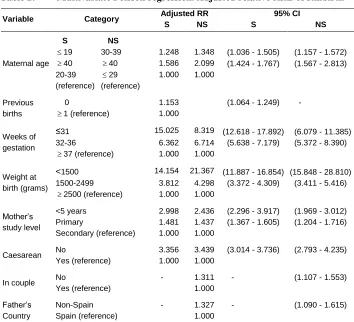
Univariate models (findings not shown) were applied separately for Spanish and non-Spanish mothers for the whole set of variables and their categories, with the results found to be significant (p <0.001). However, in the particular case of maternal age, for the Spanish mothers the comparison of categories 20-29 and 30-39 was not significantly different (p = 0.129), while for the foreign group the same occurred for the categories <19 and 20-29 (p = 0.317). Because of this, maternal ages were re-categorised as shown in the final multivariate Poisson regression models appearing in Table 2. This Table displays the values of the exponential coefficients (relative risks) given by the models and their confidence intervals, for Spanish (S) and foreign mothers (NS) for the variables that are significant in the multivariate models.
when the birth weight is <1500 grams (Spanish:
14.154
; non-Spanish:21.367
). Concerning the mother’s education level, which is significant for any maternal origin, the relative risk of mothers with less than 5 years of schooling is, in relation to secondary and university studies (category 3), higher for the Spanish mothers (2.998
) than for the non-Spanish (2.436
).Table 2: Multivariate Poisson regression. Adjusted relative risks of stillbirth
Variable Category Adjusted RR 95% CI
S NS S NS
Maternal age
S NS
19 30-39 1.248 1.348 (1.036 - 1.505) (1.157 - 1.572)
40 40 1.586 2.099 (1.424 - 1.767) (1.567 - 2.813)
20-39 (reference)
29
(reference)
1.000 1.000
Previous births
0 1.153 (1.064 - 1.249) -
1 (reference) 1.000
Weeks of gestation
≤31 15.025 8.319 (12.618 - 17.892) (6.079 - 11.385)
32-36 6.362 6.714 (5.638 - 7.179) (5.372 - 8.390)
37 (reference) 1.000 1.000
Weight at birth (grams)
<1500 14.154 21.367 (11.887 - 16.854) (15.848 - 28.810)
1500-2499 3.812 4.298 (3.372 - 4.309) (3.411 - 5.416)
2500 (reference) 1.000 1.000
Mother’s study level
<5 years 2.998 2.436 (2.296 - 3.917) (1.969 - 3.012)
Primary 1.481 1.437 (1.367 - 1.605) (1.204 - 1.716)
Secondary (reference) 1.000 1.000
Caesarean No 3.356 3.439 (3.014 - 3.736) (2.793 - 4.235)
Yes (reference) 1.000 1.000
In couple No - 1.311 - (1.107 - 1.553)
Yes (reference) 1.000
Father’s Country
Non-Spain - 1.327 - (1.090 - 1.615)
Spain (reference) 1.000
3.2 Maternal origin
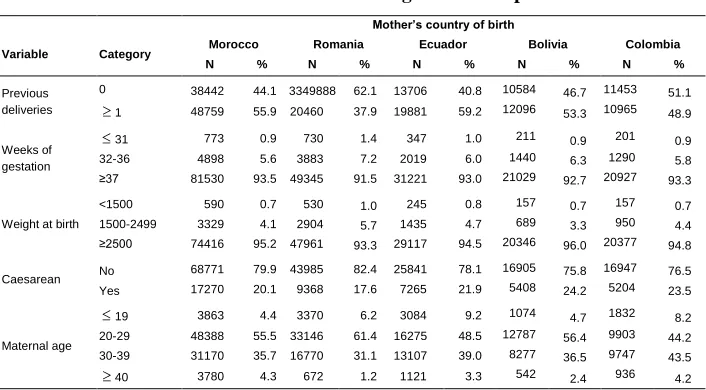
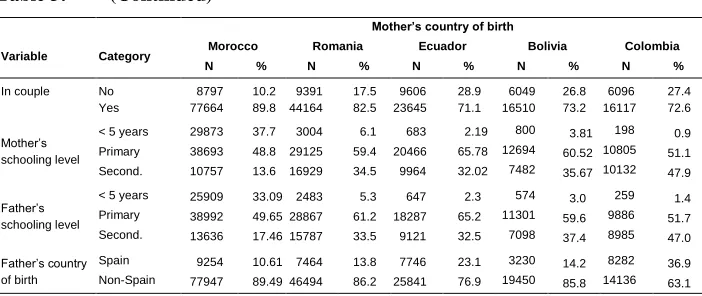
To explore possible heterogeneity in the non-Spanish immigrant category, a study was made of those countries of origin with over 20,000 deliveries in the years under study: Morocco (87,201), Romania (53,958), Ecuador (33,587), Bolivia (22,680), and Colombia (22,418). For these countries the differences in the respective average stillbirth rates (5.87, 3.15, 3.48, 3.09, and 2.41 per 1000 deliveries) are significant (P <0.001). The distribution of the categories of values for independent variables according to the mother’s country (Table 3) is statistically significant (all p-values <0.001). This Table shows that, in comparison to the other countries, women born in Romania have more children at younger ages (<30 years), accounting for 67.68%, the percentage of primiparous mothers is higher, and the proportions of shorter gestations and low birth weights are elevated. However, the incidence of stillbirths is surpassed by Morocco and Ecuador. 1.25% of Romanian mothers are over the age of 40, a value that is lower than in the other countries. In the Romanian group the highest percentages of primiparous mothers respond to a low mean age at first birth in comparison to the Moroccan and Ecuadorian nationalities. The distribution of weeks of gestation is similar in the five groups, which indicates that this is not conditioned by the cultural characteristics of the mothers.
Table 3: Percentage of newborns in each category for the different variables in the five selected countries of origin for non-Spanish mothers
Mother’s country of birth
Variable Category Morocco Romania Ecuador Bolivia Colombia N % N % N % N % N %
Previous deliveries
0 38442 44.1 3349888 62.1 13706 40.8 10584 46.7 11453 51.1 1 48759 55.9 20460 37.9 19881 59.2 12096 53.3 10965 48.9
Weeks of gestation
31 773 0.9 730 1.4 347 1.0 211 0.9 201 0.9
32-36 4898 5.6 3883 7.2 2019 6.0 1440 6.3 1290 5.8 ≥37 81530 93.5 49345 91.5 31221 93.0 21029 92.7 20927 93.3
Weight at birth
<1500 590 0.7 530 1.0 245 0.8 157 0.7 157 0.7
1500-2499 3329 4.1 2904 5.7 1435 4.7 689 3.3 950 4.4 ≥2500 74416 95.2 47961 93.3 29117 94.5 20346 96.0 20377 94.8
Caesarean No 68771 79.9 43985 82.4 25841 78.1
16905 75.8 16947 76.5
Yes 17270 20.1 9368 17.6 7265 21.9 5408 24.2 5204 23.5
Maternal age
19 3863 4.4 3370 6.2 3084 9.2 1074 4.7 1832 8.2 20-29 48388 55.5 33146 61.4 16275 48.5 12787 56.4 9903 44.2
Table 3: (Continued)
Mother’s country of birth
Variable Category Morocco Romania Ecuador Bolivia Colombia N % N % N % N % N %
In couple No 8797 10.2 9391 17.5 9606 28.9 6049 26.8 6096 27.4 Yes 77664 89.8 44164 82.5 23645 71.1 16510 73.2 16117 72.6
Mother’s schooling level
< 5 years 29873 37.7 3004 6.1 683 2.19 800 3.81 198 0.9
Primary 38693 48.8 29125 59.4 20466 65.78 12694 60.52 10805 51.1
Second. 10757 13.6 16929 34.5 9964 32.02 7482 35.67 10132 47.9
Father’s schooling level
< 5 years 25909 33.09 2483 5.3 647 2.3 574 3.0 259 1.4
Primary 38992 49.65 28867 61.2 18287 65.2 11301 59.6 9886 51.7
Second. 13636 17.46 15787 33.5 9121 32.5 7098 37.4 8985 47.0
Father’s country of birth
Spain 9254 10.61 7464 13.8 7746 23.1 3230 14.2 8282 36.9
Non-Spain 77947 89.49 46494 86.2 25841 76.9 19450 85.8 14136 63.1
N (total deliveries), % (percentage of N), Primary (primary + elementary), Second. (secondary + University). All P-values for inter-country distribution comparisons for each variable are significant (P <0.001).
4. Discussion
After a review of the literature on perinatal health outcomes among migrants in western industrialized countries, Gissler et al. (2009) reported that stillbirth risk among babies born to migrants is not consistently higher than those born to natives. In the present study, however, the stillbirth rate for non-Spanish mothers is greater than for Spanish (3.99 and 2.51 per 1000, respectively), and both groups approached the 3-4 x 1000 range reported for some European and North American countries (Woods 2008).
Differences between Spanish and non-Spanish mothers shown in Table 1 relate to maternal age, the duration of gestation, birth weight, gender, parity, and parental level of studies. Most of these factors have values that would seem to predict a higher stillbirth rate for the non-Spanish. Thus, the percentage of births corresponding to mothers over 30 years of age in the Spanish group, which is 72.49%, surpasses that of the non-Spanish (45.05%). Until recently two-thirds of stillbirths were categorised as unexplained, but now many of them are related to previous intrauterine growth retardation associated with placental pathology (Gardosi et al. 2013).
such as that of Luque et al. (2012), merging them into a single group (non-Spanish) has permitted us to learn about the influence of each variable on specific categories of values. For example, higher stillbirth risk associated with short gestation periods (<32 weeks) was more evident for non-Spanish mothers than for Spanish (15.025 for Spanish; 8.316 for the non-Spanish). A possible explanation for this is the statistically different (p <0.001) mean birth weight for children of less than 32 weeks: those born to Spanish mothers weighed 1617.94 grams but for the non-Spanish mothers the average was 1669.18 grams.
Regardless of the mother’s country of birth, low weight at birth is a causal factor of stillbirth (Table 2), but for each category of weight the rates among the non-Spanish surpass those of the Spanish group. The relative risks of categories when compared to the reference group (2500 grams) are quite different when weight is <1500 grams (Spanish: 14.154; non-Spanish: 21.317). This result is the opposite of that indicated for weeks of gestation, where the risk was higher for the Spanish mothers. A possible explanation of this fact is that the duration of gestation in children of less than 1500 grams differs statistically (p <0.001) by maternal origin (Spanish: 31.37 weeks; non-Spanish: 30.87). However, in the case of the Ecuadorian mothers the stillbirth rate is low and close to that of the Spanish group, a result comparable to that reported for the United States and known as the Hispanic or Latino Epidemiologic Paradox (Hummer et al. 2007), consisting of fewer pregnancy complications in foreign-born women than those born in the United States.
Foetal gender differences in stillbirth rates are unfavourable for males, mostly in the non-Spanish category. Slight differences for male/female stillborns have been reported for all factors related to survival, such as mother’s age, education, birth order, and length of gestation. It has been suggested that the comparatively large number of male stillbirths may be related to side effects caused by the greater average size of males (Smith 2000).
Obstetric complications are more frequent at first delivery and primiparous mothers are also at a higher risk of delivering low birth weight infants and intrauterine-growth-restricted infants (Cowden and Funkhouser 2001). In the present analysis, a greater stillbirth risk was found for women who had no previous deliveries than for those who had previously had children.
The trend of delayed childbearing in developed countries has become predominant mostly among women choosing to complete an advanced education, which in many cases means a voluntary postponing of pregnancies for personal or professional reasons (Billari et al. 2006). Late childbearing also causes a greater demand for reproductive treatments that significantly increase the risk of stillbirths (Wisborg et al. 2010). Teenage mothers are more numerous among the non-Spanish and are usually unmarried. Mohsin et al. (2006) indicated that adolescent pregnancies are often unwanted; adolescents are frequently late in seeking prenatal care and are more likely to have low birth weight and preterm babies, which are both causally related to stillbirths. The observed differences in the stillbirth rate among women of other groups of non-Spanish mothers - Moroccan, Romanian, Ecuadorian, Bolivian and Colombian - may respond, when delivering in Spain, to replication of the reproductive patterns existing in their respective countries of origin, mostly affecting age at first birth and type of mating (Colantonio et al. 2014).
The non-Spanish mothers constitute an ethnically heterogeneous group. Although the biological characteristics of an ethnic group may influence birth weight and stillbirths, the INE database provides information exclusively on the country of birth, which in many cases in no way reveals ethnicity. For example, an immigrant from Ecuador may be an autochthonous Amerindian or of Caucasoid origin; a Romanian may belong to the European Caucasoid stock or, in the case of the gypsies from Romania, have a remote origin in India. Moroccans, Romanians, Ecuadorians, Bolivians, and Colombians show significant variation in their respective stillbirth rates as well as in other variables (Table 3). Young Romanian maternal ages and first parities are comparatively more frequent than in the Spanish group, while the proportion of prematurity and low birth weight is slightly higher, which could raise stillbirth risks. Because of the of lack of records indicating the parental ethnic group or estimations of the fraction of deliveries attended under the public health system, the contribution of Romanian gypsies to the deliveries assigned to Romania as the maternal country of origin remains unknown. In the Romanian group the highest percentages of primiparous women respond to a low mean age at birth (27.15 years) in comparison to Moroccan, Bolivian, Colombian, and Ecuadorian women. The distribution of weeks of gestation is very similar in the five groups, which indicates that range of gestation is not conditioned by the cultural characteristics of the mothers.
(Racape et al. 2010). Contrarily, according to Luque-Fernández et al. (2013), mothers residing in Spanish regions with high unemployment have a greater chance of delivering a stillborn baby. A meta-analysis by Villadsen et al. (2010) on Turkish immigrants residing in nine European countries suggested that preventable society-specific determinants are important for early-life mortality in Turkish migrants in Europe, and that an active integration policy is consistent with a favourable neonatal mortality outcome in continental Europe, but not with patterns in Scandinavia and the UK.
In Spain, regardless of the mother’s immigrant condition, access to medical services during pregnancy is not limited by the Spanish Public Health Service, and this open service may have softened the negative effects of adverse socioeconomic conditions. The mother’s level of schooling, as an indicator of unfavourable socioeconomic conditions, appears as one of the most important socio-cultural variables. The relationship between achieved level of studies and stillbirths varies depending on maternal age. This is significant, considering the increased proportion of older primiparous mothers in Spain who, despite social and medical advances, deliver a higher number of premature and low weight babies, thus increasing stillbirth risk. Spanish women with limited schooling (less than 5 years) show a higher risk of stillbirth than the non-Spanish. This finding is possibly related to the fact that in Spain women with less than 5 years of schooling come from very low socioeconomic segments of the population.
The present analysis is limited by the fact that no information was available with regard to smoking habits. Indirect knowledge may be derived from studies based on hospital data, such as that of Sánchez Bayle et al. (2008) who reported more Spanish women smoking before and during pregnancy than immigrant mothers. Also Delgado Peña et al. (2012) observed that 23% of Spanish women smoke during pregnancy in comparison to 11% of foreign women. Nicotine-addicted mothers tended to be younger and of lower educational level than non-smokers. These results coincide with those of Villalbí et al. (2007). According to these authors, fewer women with higher educational levels and from families with non-manual jobs smoked, as was also the case with immigrants, those planning their pregnancy, and women whose partners did not smoke. Another limitation of the present study is the fact that the INE database does not provide information on the time of residence in the country of immigration, which is considered a factor that can reduce the differences in risk of stillbirth between native and foreign mothers (Acevedo-García et al. 2007).
process in Spain, in association with differential cultural and reproductive maternal characteristics, affects the risk of stillbirth, influenced by the existing relationship between stillbirths and the mother’s age as well as other maternal variables. This conclusion is supported by multivariate Poisson regressions, the results of which, while being mostly similar for Spanish and non-Spanish mothers, reveal several differentials related to stillbirth risk. Variables that have a confirmed influence on stillbirth risk, such as weight at birth, duration of gestation, mother’s age, limited schooling, etc., express that influence differently in the Spanish and non-Spanish groups, despite both having similar access to the public health system.
5. Acknowledgements
References
Acevedo-García, D., Soobader, M.J., and Berkman, L.F. (2007). Low birth weight among US Hispanic/Latino subgroups: the effect of maternal foreign-born status and education, Social Science & Medicine 65(12): 2503–2516. doi:10.1016/ j.socscimed.2007.06.033.
Aliyu, M.H., Salihu, H.M., Wilson, R.E., and Kirby, R.S. (2007). Prenatal smoking and risk of intrapartum stillbirth. Archives of Environmental and Occupational
Health 62(2): 87–92. doi:10.3200/AEOH.62.2.87-92.
Astolfi, P., De Pasquale, A., and Zonta, L.A. (2004). Late paternity and stillbirth risk.
Human Reproduction 19(11): 2497–2501. doi:10.1093/humrep/deh449.
Barros, F.C., Victora, C.G., Barros, A.J.D., Santos, I.I., Albernaz, E., Matijasevich, A., Domingues, M.R., Sclowitz, I.K.T., Hallal, P.C., Silveira, M.F., and Vaughan, J.P. (2005). The challenge of reducing neonatal mortality in middle–income countries: findings from three Brazilian birth cohorts in 1982, 1993, and 2004.
Lancet 365(9462):847–854. doi:10.1016/S0140-6736(05)71042-4.
Billari, F.C, Liefbroer, A.C., and Philipov, D. (2006). The postponement of childbearing in Europe: Driving forces and implications. Vienna Yearbook
Population Research: 1–17.
Cnattingius, S. and Stephansson, O. (2002). The epidemiology of stillbirth. Seminars in
Perinatology 26(1): 25–30. doi:10.1053/sper.2002.29841.
Colantonio, S., Roman–Busto, J,. Fuster, V., and Zuluaga, P. (2014). Contribution of immigration to adolescent fertility in Spain considering the reproductive pattern in the country of origin. Biodemography and Social Biology 60(1): 87–100.
doi:10.1080/19485565.2014.899455.
Cowden, A.J. and Funkhouser, E. (2001). Adolescent pregnancy, infant mortality, and source of payment for birth: Alabama residential live births, 1991–1994. Journal
of Adolescent Health 29(1): 37–45. doi:10.1016/S1054-139X(01)0021-–8.
Delgado Peña, Y.P., Rodríguez Martínez, G., Samper Villagrasa, M.P., Caballero Pérez, V., Cuadrón Andrés, L., Álvarez Sauras, M.L., Moreno Aznar, L.A., and Olivares López, J.L. (2012). Características socioculturales, obstétricas y antropométricas de los recién nacidos hijos de madre fumadora Anales de
Ekéus, C., Cnattingius, S., Essén, B., and Hjern, A. (2011). Stillbirth among foreign-born women in Sweden. European Journal of Public Health 21(6): 788–792.
doi:10.1093/eurpub/ckq200.
Essén, B., Hanson, B.S., Ostergren, P.O., Lindquist, P.G, and Gudmundsson, S. (2000). Increased perinatal mortality among sub-Saharan immigrants in a city-population in Sweden. Acta Obstetricia et Gynecologica Scandinavica 79(9): 737–743.
Forna, F., Jamieson, D.J., Sanders, D., and Lindsay, M.K. (2003). Pregnancy outcomes in foreign-born and US-born women. International Journal of Gynecololy &
Obstetrics 83(3): 257–265. doi:10.1016/S0020-7292(03)00307-2.
Fuster, V., Zuluaga, P., Colantonio, S., and De Blas, C. (2008). Factors associated with recent increase of multiple births in Spain. Twin Research and Human Genetics
11(1): 70–76. doi:10.1375/twin.11.1.70.
Fuster, V., Zuluaga, P., Colantonio, S.E., and Román–Busto, J. (2013). Factors determining the variation in birth weight in Spain (1980–2010). Annals of
Human Biology 40(3): 266–275. doi:10.3109/03014460.2013.765034.
Fuster, V., Zuluaga, P., Colantonio, S.E., and Román–Busto, J. (2014). Regional differences in low birth weight in Spain: Biological, demographic and socioeconomic variables. Journal of Biosocial Science: 1–15 doi:10.1017/S002 1932014000030.
García–Subirats, I., Pérez, G., Rodríguez–Sanz, M., Salvador, S., and Jane, M. (2011). Recent immigration and adverse pregnancy outcomes in an urban setting in Spain. Maternal and Child Health Journal 15(5):561–569. doi:10.1007/s10995-010-0614-7.
Gardosi, J., Giddings, S., Clifford, S., Wood, L., and Francis, A. (2013). Association between reduced stillbirth rates in England and regional uptake of accreditation training in customised fetal growth assessment. BMJ Open 3(12): e003942.
doi:10.1136/bmjopen-2013-003942.
Gissler, M., Alexander, S., MacFarlane, A., Small, R., Stray-Pedersen, B., Zeitlin, J., Zimbeck, M., and Gagnon, A. (2009). Stillbirths and infant deaths among migrants in industrialized countries. Acta Obstetricia et Gynecologica
Scandinavica 88(2): 134–148. doi:10.1080/00016340802603805.
Högberg L. and Cnattingius, S. (2007). The influence of maternal smoking habits on the risk of subsequent stillbirth: is there a causal relation?. BJOG 114(6): 699–704.
Hosmer, D.W. and Lemeshow, S. (2000). Applied Logistic Regression. New York: John Wiley & Sons, Inc. doi:10.1002/0471722146.
Huang, L., Sauve, R., Birkett, N., Fergusson, D., and van Walraven, C. (2008). Maternal age and risk of stillbirth: A systematic review. Canadian Medical
Association Journal 178(2): 165–172. doi:10.1503/cmaj.070150.
Hummer, R.A., Powers, D.A., Pullum, S.G., Gossman, G.L., and Frisbie, W.P. (2007). Paradox found (again): Infant mortality among the Mexican origin populations in the United States. Demography 44(3): 441–457. doi:10.1353/dem.2007.0028. INE (2013). Spanish National Institute of Statistics. Basic demographic indicators.
Methodology. www.ine.es
Jolly, M., Sebire, N., Harris, J., Robinson, S., and Regan, L. (2000). The risks associated with pregnancy in women aged 35 years or older. Human
Reproduction 15(11): 2433–2437. doi:10.1093/humrep/15.11.2433.
Kramer, M.S. (2003). The epidemiology of adverse pregnancy outcomes: An overview.
Journal of Nutrition 133(5): 1592S–1596S.
Lesthaeghe, R. (2010). The unfolding story of the second demographic transition.
Population and Development Review 36(2): 211–251. doi:10.1111/j.1728-4457.
2010.00328.x.
Luke, B. and Brown, M.B. (2007). Elevated risks of pregnancy complications and adverse outcomes with increasing maternal age. Human Reproduction 22(5): 1264–1272. doi:10.1093/humrep/del522.
Luque, M.A. (2008). Evolución del riesgo de mortalidad fetal tardía, prematuridad y bajo peso al nacer, asociado a la edad materna avanzada, en España (1996– 2005). Gaceta Sanitaria 22(5): 396–403. doi:10.1157/13126919.
Luque–Fernández, M.A., Lone, N.I., Gutiérrez-Garitano, I., and Bueno-Cavanillas, A. (2012). Stillbirth risk by maternal socio-economic status and country of origin: a population-based observational study in Spain, 2007–08. European Journal of
Public Health 22(4): 524–529. doi:10.1093/eurpub/ckr074.
Luque–Fernandez, M.A., Franco, M., Gelaye, B., Schomaker, M., Gutierrez Garitano, I., D’Este, C., and Williams, M.A. (2013). Unemployment and stillbirth risk among foreign-born and Spanish pregnant women in Spain, 2007–2010: a multilevel analysis study. European Journal of Epidemiology 28(12): 991–999.
MacDorman, M.F., Hoyert, D.L., Martin, J.A., Munson, M.L., and Hamilton, B.E. (2007). Fetal and perinatal mortality, United States, 2003. National vital statistics reports 55(6): 1–20.
Mohsin, M., Bauman, A.E., and Jalaludin, B. (2006). The influence of antenatal and maternal factors on stillbirths and neonatal deaths in New South Wales, Australia. Journal of Biosocial Science 38(5): 643–657. doi:10.1017/ S002193200502701X.
Morgen, C.S., Bjørk, C,. Andersen, P.K, Mortensen, L.H., and Nybo Andersen, A.M. (2008). Socioeconomic position and the risk of preterm birth – a study within the Danish national birth cohort. International Journal of Epidemiology 37(5): 1109–1120. doi:10.1093/ije/dyn112.
Olsen, O. and Madsen, M. (1999). Effects of maternal education on infant mortality and stillbirths in Denmark. Scandinavian Journal of Public Health 27(2): 128–136.
doi:10.1177/14034948990270021301.
Ombelet, W., Martens, G., De Sutter, P., Gerris, J., Bosmans, E., Ruyssink, G., Defoort, P., Molenberghs, G., and Gyselaers, W. (2006). Perinatal outcome of 12021 singleton and 3108 twin births after non-IVF-assisted reproduction: a cohort study. Human Reproduction 21(4): 1025–1032. doi:10.1093/humrep/dei419. Opara, E.I. and Zaidi, J. (2007). The interpretation and clinical application of the Word
“parity”. A survey. BJOG: An International Journal of Obstetrics &
Gynaecology 114(10):1295–1297. doi:10.1111/j.1471-0528.2007.01435.x.
Racape, J., De Spiegelaere, M., Alexander, S., Dramaix, M., Buekens, P., and Haelterman, E. (2010). High perinatal mortality rate among immigrants in Brussels. European Journal of Public Health 20(5): 536–542. doi:10.1093/ eurpub/ckq060.
Reeske, A., Kutschmann, M., Razum, O., and Spallek, J. (2011). Stillbirth differences according to regions of origin: an analysis of the German perinatal data base, 2004–2007. BMC Pregnancy and Childbirth 11(1) 63–72. doi:10.1186/1471-2393-11-63.
Ronsmans, C., Chowdhury, M.E., Alam, N., Koblinsky, M., and El Arifeen, S. (2008). Trends in stillbirths, early and late neonatal mortality in rural Bangladesh: The role of public health interventions. Paediatric and Perinatal Epidemiology
Sánchez Bayle, M., Cano Fernández, C., García García, M.C., Yep Chullen, G., and Pérez Suárez, E. (2008). Inmigración, lactancia materna y hábito tabáquico.
Anales de Pediatría 68(5):462–265. doi:10.1157/13120043.
Sharma, P.P., Salihu, H.M., Oyelese, Y., Ananth, C.V., and Kirby, R.S. (2006). Is race a determinant of stillbirth recurrence?. Obstetrics & Gynecology 107(2, Part 1): 391–397. doi:10.1097/01.AOG.0000196501.32272.44.
Smith, G.C.S. (2000). Sex, birth weight, and the risk of stillbirth in Scotland, 1980– 1996. American Journal of Epidemiology 151(6): 614–619. doi:10.1093/oxford journals.aje.a010249.
Stephansson, O., Dickman, P.W., Johansson, A.L.V., and Cnattingius, S. (2001). The influence of socioeconomic status on stillbirth risk in Sweden. International
Journal of Epidemiology 30(6):1296–1301. doi:10.1093/ije/30.6.1296.
Ulizzi, L. and Zonta, L.A. (2002). Sex differential patterns in perinatal deaths in Italy.
Human Biology 74(6): 879–888. doi:10.1353/hub.2003.0012.
Varea, C, Bernis, C. and González González, A. (2012). Maternal characteristics and temporal trends in birth outcomes: Comparison between Spanish and migrant mothers. International Journal of Population Research 2012:8. doi:10.1155/ 2012/412680.
Villadsen, S.F., Mortensen, L.H., and Andersen, A.M.N. (2009). Ethnic disparity in stillbirth and infant mortality in Denmark 1981–2003. Journal of Epidemiology
& Community Health 63(2):106–112. doi:10.1136/jech.2008.078741.
Villadsen, S.F., Sievers, E., Andersen, A.M.N, Arntzen, A., Audard-Mariller, M., Martens, G., Ascher, H., and Hjern, A. (2010). Cross–country variation in stillbirth and neonatal mortality in offspring of Turkish migrants in northern Europe. European Journal of Public Health 20(5): 530–535. doi:10.1093/ eurpub/ckq004.
Villalbí, J.R., Salvador, J., Cano-Serral, G., Rodríguez–Sanz, M.C., and Borrell, C. (2007). Maternal smoking, social class and outcomes of pregnancy. Paediatric
Perinatal Epidemiology 21(5): 441–447. doi:10.1111/j.1365-3016.2007.008
45.x.
Willinger, M., Ko, C.W., and Reddy, U.M. (2009). Racial disparities in stillbirth risk across gestation in the United Sates. American Journal of Obstetrics &
Wisborg, K., Ingerslev, H.J., and Henriksen, T.B. (2010). IVF and stillbirth: a prospective follow–up study. Human Reproduction 25(5): 1312–1316.
doi:10.1093/humrep/deq023.