Energy-efficient Retrofit of Social Housing in the UK:
Lessons Learned from a Community Energy Saving Programme (CESP) in Nottingham
ABSTRACT
One of the long-term challenges outlined within the UK Government’s Energy White Paper (2011) is to cut both greenhouse gas (GHG) emissions and energy bills by improving household energy efficiency. As such, several energy-related initiatives have, in recent years, been promoted including the Community Energy Saving Programme. In this study, we explore how patterns of user consumption as influenced by occupant awareness and behaviour, can both positively and negatively influence policy initiative delivery. In so doing, we present the results from an extensive pre- and post-retrofit home energy use and performance survey of 150 properties located in Nottingham’s Aspley ward, home of one of England’s pilot CESP schemes. Our results show that whilst this specific initiative significantly improved home conditions and reduced energy consumption, it failed to achieve the predicted £300 annual savings on household energy bills. This was found to be largely attributed to occupants’ ingrained habits towards household energy use, higher comfort level preferences, (lack of) energy consumption awareness, and insufficient information provided to help residents better manage their home energy use following the retrofit. By exploring some of the core lessons learned from the survey, this research seeks to inform and improve the uptake and delivery of future retrofit initiatives.
KEY WORDS
Home performance; Retrofit; Energy consumption; Community Energy Saving Programme (CESP); Behaviour
1. INTRODUCTION
Improving UK household energy efficiency is currently seen as a key vehicle through which both energy demand can be reduced and greenhouse gas (GHG) emissions curtailed [1, 2]. However, energy policies that seek to decarbonise both new-build and existing domestic stock may not be solely sufficient for achieving carbon emissions reduction targets. This is exacerbated by a slowing in the construction of affordable new-build social housing [3], an uncertain national economy [4] and a volatile construction sector [5]. To this end, retrofitting or renovating existing domestic stock has been identified as a major priority by the UK Government where its vision is to upgrade seven million homes by 2020 [6], a view shared by many countries internationally [1]. As such, to help meet this target, numerous strategies and programmes have been introduced over the last two decades in the UK. Primary among these programmes was the Heat and Energy Saving Strategy (HESS), introduced in 2009, an umbrella programme aiming to save energy and decarbonise heating that incorporated several initiatives such as the Carbon Emissions Reduction Target (CERT), Community Energy Saving Programme (CESP) and Feed in Tariffs (FiTs). In tandem, increasingly stringent energy and carbon-related compliance standards and associated calculation methodologies for domestic energy consumption have been invoked; these are enshrined within the Building Regulations and their associated Approved Documents (England and Wales) [7], Building Standards Technical Handbook (Scotland) [8] and Building Regulations Technical Booklets (Northern Ireland) [9]. Whilst several policy instruments have achieved partial success in reducing domestic energy consumption, they have not fully acknowledged the behavioural, economic and technical elements that are purportedly needed to increase the effectiveness of any policy scheme [10-12]. Given that policy formulation and decision making with respect to environmental issues tends to be complicated [11,13,14], where physical, psychological, economic, ethical and political
dimensions need to be considered, substantial research needs to be undertaken in this area in order to maximise the efficacy of any policy initiative implemented.
The study presented here sought to assess the effectiveness of one of the UK’s pilot CESP initiatives delivered in the City of Nottingham’s Aspley ward between 2009 and 2012, known as the Aspley Super Warm Zone (ASWZ) scheme1. In so doing, quantitative and qualitative data were obtained, combined and analysed to
explore the associations between domestic energy-related improvements, subsequent building energy performance, and occupants’ energy consumption behaviour. Designed and executed in two survey phases, the first phase sought to understand residents’ attitudes and behaviour and how these related to home energy use and performance prior to extensive energy-related upgrades to their dwellings. The outcomes of this phase can be found in Elsharkawy and Rutherford [15]. The second survey phase examined the possible impacts of the energy upgrade on home performance, energy use and occupants’ energy consumption behaviour and how this was manifested by changes to users’ energy consumption behaviour as influenced by their level of environmental awareness or information received, during and after the works were completed. The focus of this paper is to present a comparative analysis between the ‘before-and-after’ survey phases, ultimately concluding with lessons learned from this scheme that may support effective uptake and delivery of future retrofit schemes.
2. RESEARCH BACKGROUND
2.1 Retrofit initiatives in the UK domestic sector
Most countries in Europe are facing the challenge of improving the energy efficiency of existing building stock [17]. Catalysed by the 2003 European Directive on Energy Performance of Buildings (EPBD), many ambitious energy policies have been initiated in the UK by various political parties over subsequent years. Driven by three core objectives –namely to mitigate climate change, ensure energy security and eliminate fuel poverty2 [18] – energy policy as it is enacted by improving household energy efficiency can help meet these
objectives. That is, not only can it reduce greenhouse gas (GHG) emissions and increase energy security by reducing energy demand, promoting the diversification of energy sources and utilising them more appropriately; it also has the potential to reduce overall energy bills and, by proxy, address the increasing number of households who struggle with fuel poverty [20-22].
The CESP scheme, one of the HESS programme schemes, and the focus of this research, entailed the installation of a package of energy-saving measures to ‘hard-to-heat’ homes in low-income areas using an
1 Located in Nottingham’s Aspley Estate, the ASWZ was a £2.8 million pilot CESP project funded by Scottish and Southern Electric and Nottingham City Council implemented 2009-2012. Targeting around 1,500 social and private tenancy homes in three lower super-output areas (LSOAs), the social housing phase renovated homes with internal wall insulation, modern kitchens and bathrooms and replaced G-rated boilers fitted in
accordance with the Decent Homes Standard [15, 16].
2 Households are defined as being in fuel poverty if they spend 10% or more of their income on fuel bills to maintain the recommended minimum temperatures of 21ºC in the living room and 18ºC in all other occupied rooms. Fuel poverty is driven by three key factors: energy efficiency of the home; energy costs; and household income [19].
2
area-based approach [23]. Improving on its predecessor CERT scheme, it promoted more challenging, difficult-to-install and innovative measures in existing homes [24]. Six core energy-related measures were applied to homes meeting the eligibility criteria. These included solid wall insulation (SWI), loft insulation, the replacement of G-rated (<70% efficient) central heating boilers, installation of heating controls, draught proofing and double glazing. To facilitate scheme uptake and implementation, these were delivered through partnerships between local authorities, energy companies, housing associations, and community groups which had proven engagement with their communities. The programme was set out by the then Department of Energy and Climate Change (DECC) now Department of Business, Energy and Industrial Strategy (DBEIS), with the Office of Gas and Electricity Markets (OFGEM) responsible for its administration and progress reporting [24,25].
A total of 293,922 measures were installed to 154,364 dwellings by the end of the CESP scheme in 2013 (Figure 1), with an average of two measures installed per property across 11 regions in Great Britain [25]. An in-depth analysis of the scheme showed that the greatest carbon savings arose from insulation measures including external wall insulation, loft insulation, glazing, internal wall insulation, cavity wall insulation, flat roof insulation and draught proofing (59.5 %). Heating measures including heating controls with a new heating system, replacement boiler, and fuel switching accounted for a further 36.7 % of savings [25]. With a projected target reduction of 19.25 Mt CO2 by the end of the CESP programme (31 December 2012), the scheme
achieved 84.7% of this overall target; a shortfall of 2.94 Mt CO2 [25]. Nevertheless, there have been wider
[image:3.595.124.494.530.723.2]benefits acknowledged from the CESP scheme particularly where the aesthetic improvements to homes resulted in community pride and direct local economic benefits [24]. This included improved levels of local employment and training, the use of local trades and other businesses, and indirect benefits to local shops in the CESP areas. It has also been noted that the area-based approach led to cost-effective delivery of the measures [25].
Figure 1 Number of measures installed in all CESP schemes [25]
It has been recognised, however, that there are market failures and barriers with respect to the uptake of some energy efficiency schemes partly due to policies changing with successive governments. Indeed, the UK Government has recently terminated several domestic sector energy policies including the not-for-profit Green Deal Finance Company as well as the Zero Carbon Homes plan [26 as cited in 27]. This is in addition to a series of cuts and changes to other energy efficiency and renewable energy programmes. On the other hand, some initiatives have been extended including the Energy Company Obligation (ECO) scheme aimed at tackling fuel poverty and reducing carbon emissions [28]. Furthermore, in as much as policy instruments that set standards for limiting energy loss as well as mitigating against overheating risks have succeeded in informing building codes, standards and technical memoranda, patterns of consumption and user behaviour have proven to limit some of the benefits expected from those programmes. Many researchers argue that some energy policy strategies tend to overlook various barriers that lead to irregular patterns of success [10, 29-33], such as the often overlooked but crucial determinants of domestic energy consumption and occupants’ behaviour.
2.2 Domestic energy consumption
Defined as the energy consumed by a household unit inside their dwelling [34], domestic energy consumption (DEC) is the energy used by building occupants through domestic activities including space and water heating, lighting, cooking and appliance use. Determined by two core factors – namely, the energy demand to satisfy the requirements of the household and the energy efficiency of the appliance/technology that is used to meet these needs [30] – a multidisciplinary approach requiring knowledge from the engineering, economic, psychology and sociology domains is needed to fully understand energy consumption [34]. It can be assumed that DEC, much like other environmentally-related human activities and choices, is determined by multiple variables, and that the influences are both numerous and interdependent acting in combinations rather than additively [35]. Moreover, the numerous drivers behind energy consumption act on different time scales, with some, such as the demand for heating and cooling, capable of changing in minutes, hours, days, and whole seasons, while others, such as building regulations affecting building construction therefore having legacy effects that last for decades. Therefore, to be effective, policy ought to strategically consider these various disciplines in different contexts, as affirmed in the UK Government’s DECC evaluation of the CESP initiative [24]. Whilst Government initiatives such as the CESP scheme promote investment behaviour [36] – that is investing in energy efficiency measures such as increasing building insulation, replacing inefficient glazing and so on – they must also promote curtailment behaviour, such as reducing energy use through behavioural changes and lifestyle adjustment (lowering thermostat set-points, and turning off unwanted lights, among others) to be maximally effective.
It has been argued that DEC is also significantly determined by factors external to individuals such energy infrastructure and social norms, as well as internal factors, such as household income and energy-use behaviour [37]. Considering household income as an example, this has a significant impact on a household's energy demands and ability to invest in energy-efficient home technologies [33, 35]. It should be noted that with reduced energy demand, as might arise when energy efficiency measures are implemented into a home
(e.g., through insulating the building envelope) or via financial incentives made available by governments and energy companies to encourage households to invest in energy efficiency schemes (e.g., the Renewable Heat Incentive and Feed-in-Tariff schemes), savings may be reflected in greater disposable household income. This, in turn, has the potential to increase overall energy use and CO2 emissions through more prevalent use of
household appliances [38] or higher indoor comfort expectations associated with higher heating demands, thus potentially promoting the ‘rebound effect’ phenomenon3 [39-41]. To some extent this may be mitigated
by the rising price of energy, which has increased by approximately 73% in cash terms and 19% in real terms over the past 20 years [42]; this affected by public policies relating to energy taxation and utility company regulation, the competitiveness of energy industries and advances in energy production and distribution technologies [43,44]. Another important factor that has the potential to drive DEC which is not fully recognised in policy instruments is the ageing population (i.e. individuals over 65 years old), which is set to double from 10 million in 2010 to 19 million by 2050 in the UK [45]. With this comes a demand for higher indoor air temperatures [46] due to age-dependent changes in thermoregulation [47] exacerbated by longer periods of time spent at home [38]. With higher comfort set-point temperatures needed and the daily heating period extended, this impacts significantly on both space heating demands and appliance use, although with evidence of climate change, the overall effect may vary.
It is possible therefore that retrofit initiatives that seek to reduce energy consumption in the domestic sector may go unheeded if they are inconsistent with particular social and physical contexts where, for example, financial costs, embedded habits and behaviour and physical infrastructure are considered some of the most difficult challenges to effective scheme delivery. Given that the case study presented here is situated in one of the deprived wards in Nottingham, and comprises a significant number of inefficient solid wall houses, assessing the effectiveness of the Aspley Super Warm Zone (ASWZ) retrofit scheme requires a clear understanding of consumer behaviour, motivations and advice received across a representative sample within the ASWZ-eligible households. The study presented here therefore investigates potential correlations between the delivery of the CESP retrofit scheme in Aspley, improvements in building energy performance, and likely changes in users’ energy consumption behaviour. In so doing, it discusses the benefits of the scheme as well as the issues perceived to be most pertinent by the end users before and after implementation, concluding with lessons learned that may inform future retrofit programmes.
3. RESEARCH METHODOLOGY
3.1 The case study of Aspley, Nottingham
3 ‘Rebound effect’ is an umbrella term for a variety of mechanisms that reduce the potential energy savings from improved energy efficiency which may lead to increased energy demand over the long term. In the context of housing, home-owners may be able to afford heating their home to a higher standard, and may also use the cost savings from energy-efficiency improvements to purchase other goods and services that require energy in their provision, such as flights, electrical appliances, and so on [39].
5
With 2,963 of Nottingham’s 26,176 socially rented (local authority) dwellings, the Aspley ward is located approximately three miles north west of Nottingham city centre and comprises a mix of semi-detached and terraced houses radiating from a series of central cores [48]. Originally built from solid uninsulated brick walls, uninsulated pitched roofs and heated by a solid fuel fire, these 1930s dwellings typically comprise a kitchen and living room on the ground floor and three bedrooms and a bathroom on the first floor. Although improvements including loft insulation, double glazing and gas-fuelled central heating had been installed to many properties before the CESP scheme, the dwellings themselves can typically be characterised by excessive heat loss, and high air permeability resulting in average annual gas and electricity bills of £1440. With almost 70% of households earning less than £12,000 per year, unemployment rates significantly above both regional and national averages at 11.2%, significant numbers claiming state benefits, and only 56.9% of those employed in full-time work, a significant proportion of Aspley residents are considered to live in fuel poverty and purportedly spend a considerable amount of their time indoors [49]. Having proven eligible for the UK Government’s CESP scheme and funded by Scottish and Southern Electric and Nottingham City Council, the £2.8 million ASWZ project targeted around 1,500 social homes in three lower super-output areas (LSOAs) within the Aspley ward [15, 16, 49].
3.2 Research Design
With the aim to explore the effectiveness of and residents’ attitudes prior to and post retrofit, a mixed-method research design was employed in the study where both quantitative and qualitative data were collected and analysed by means of a ‘before-and-after’ questionnaire-based survey [50,51]. The first phase of the survey (i.e. Phase A; before retrofitting) was designed for tenants of homes identified to be energy-inefficient and thus eligible for the ASWZ scheme. The second phase of the survey (i.e. Phase B; after retrofitting) was designed for tenants whose properties had been upgraded and who had lived with these upgrades for more than a year. As such, the Phase A sample group was used as the control group and the experimental variable was the ASWZ energy upgrade work undertaken on the Phase B sample group.
To ensure that each household had an equal opportunity of being selected for the study in relation to their proportion within the total population, stratified sampling was used to select households from the Nottingham City Homes (NCH) index of Aspley households eligible for the ASWZ scheme [52]. However, as it was not possible to retain the same sample of respondents due to the phasing of the construction works and the associated time implications for conducting such longitudinal surveys, the respondents (and hence samples) of Phase A and Phase B questionnaires were not the same. To compensate for this, both samples were matched in that both groups lived within the Aspley ward, occupied similar-sized, solid-walled and energy-inefficient social housing units, had the same landlord (Nottingham City Homes), and had comparable socio-demographic characteristics. A total of 72 out of 224 households approached for Phase A responded and 78 out of 360 for Phase B. With a total of 150 responses, this represents 10% of around 1,500 properties completed under the CESP scheme in Aspley, Nottingham.
The survey design was developed based on four relevant studies performed in the UK concerning users’ behaviour in energy-efficient homes; the 21st Century Living Project [53], Users’ Behaviour [54], Revisiting
Easthall [55], and Arbed 1 Scheme in Wales [56]. Notably, the Revisiting Easthall study placed a strong emphasis on users’ behaviour (particularly in relation to heating controls) without considering the importance of the assessment of energy advice. On the other hand, the Users’ Behaviour study combined the energy advice assessment component with the emphasis on actual household behaviour in the UK social housing context. The present survey design introduced a new aspect of gauging the effect of the upgrade of home energy-efficiency standards on tenants’ energy use behaviour. In addition, it explored the effect of community commitment as a potential driver towards further lowering of energy consumption in the social housing sector in the UK. Working in partnership with Nottingham City Homes (NCH) and Nottingham Energy Partnership (NEP), the researchers developed and finalised the questionnaire forms through an extensive consultation process with the project stakeholders.
[image:7.595.69.517.477.766.2]As illustrated in Table 1, the questionnaires included background information about the respondents and their households, a set of questions about environmental attitudes and behaviour, and questions about behaviour related to core functional areas: domestic heating and lighting, use of appliances, etc. A set of questions was based on the extent of energy advice and information provided to households by the local council or energy supplier for more energy-efficient practices at home. A further set of questions inquired about the tenants’ experience during and after the energy upgrade work was completed. The Phase B questionnaire focused on comparing between tenants’ previous experience with the heating systems, home conditions, energy bills, health conditions, and their recent experience following the upgrade. It also included questions that aimed to identify any change between previous and current lifestyles, any altered values, and any environmental actions that may have developed between both phases of the study.
Table 1. Questionnaire sections and questions [15]
Section Question areas
Section 1
General household information • • number and type of rooms, main and secondary heating systems, • type of glazing and doors,
• general improvements made to date, and • priorities for future improvements Section 2
Home energy use and performance • • heating trends, heating controls available and frequency of use, problems experienced (draught, cold, etc), • number and type of electric appliances owned
• average utility bills paid
• whether they received energy advice Section 3
Lifestyle and behaviour • • lifestyle pattern environmental actions • reasons for any actions Section 4 (Phase A)
Respondents’ awareness of ASWZ • • expectations from ASWZ whether respondents would consider signing up for it,
• whether respondents would be ready to contribute towards their home energy upgrade costs
Section 4 (Phase B)
Respondents’ experience with ASWZ • • expectations from ASWZ beforehand what they think they achieved from the scheme
• whether they received energy advice after ASWZ, and if so in what format
• how the scheme could be improved
6HFWLRQ
6RFLRGHPRJUDSKLFLQIRUPDWLRQ
x GHPRJUDSKLFVRIWKHKRXVHKROG
x HGXFDWLRQ
x HPSOR\PHQWDFWLYLW\
x LQFRPH
x KHDOWKVWDWXV
4. RESULTS AND DISCUSSION
Both phases of the survey were conducted between 2011 and 2012; and the data were collected and
analysed to provide significant findings concerning energy consumption behaviour and the means of
communication and information dissemination to most effectively support this. The outcome was an
examination of the likely impacts of the CESP policy on energy bills, housing conditions and energy
consumption behaviour. From the detailed analysis and comparison of both phases (A and B) of survey, several
significant aspects emerged in terms of home energy use and performance, residents’ energy consumption
behaviour, their energy awareness, and experience with the retrofit intervention. The following sub-sections
discuss the results in further detail.
4.1 Home energy use and performance
4.1.1 Problems experienced in homes
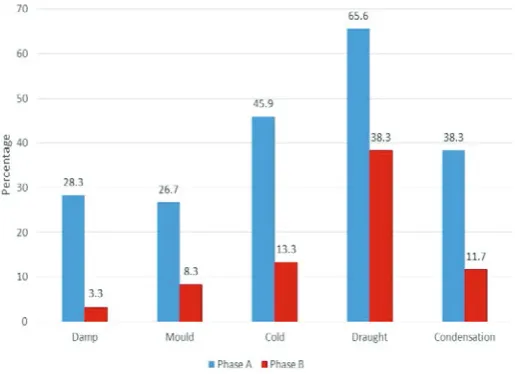
As can be seen from Figure 2, significant improvements to home conditions followed from the retrofit;
these reflected in the associated occupant satisfaction scores. Problems with the cold, condensation, damp
and mould reduced by 71%, 69.5%, 88.3% and 69%, respectively, after the retrofit; however pervasive issues
with draught, which were cited as the most prevalent problem prior to retrofitting, only reduced by 41.6%
therefore maintaining its status as the main source of occupant dissatisfaction. This could be explained partly
[image:8.595.181.439.486.673.2]due to the fact that external door replacement was not one of the CESP and hence ASWZ scheme measures.
Figure 2 Problems experienced in homes in Phases A and B (Percentage)
Whilst the quantitative data gathered showed that only around 35% of front and back doors had been
replaced by the residents themselves, the qualitative data showed that other existing and mostly worn-out
doors were viewed by the occupants as the main source of draughts. This was reinforced by responses to the Phase B question that sought to explore how the scheme could be improved. Here, respondents recurrently stated that they believed the benefits from having internal wall insulation and other measures provided by the ASWZ scheme have been partially negated by heat loss and draughts through the inefficient external doors. As such, they recommended external door replacement was essential to tenants’ satisfaction and core to more effective delivery of future schemes. Moreover, the data indicated that the ASWZ scheme was relatively successful in delivering warmer, healthier homes, with 16% agreeing that their health improved following the upgrade. Indeed, the wider benefits of the scheme were expressed by many respondents; endorsed by one tenant who reported how improvements to her home positively affected her health conditions, saying “my home is now a lot warmer in cold winter months and I have less illnesses due to cold snaps.”
4.1.2 Before-and-after heating trends
When comparing before-and-after improvements, almost 51.6% of respondents reported that they used their heating less than before the retrofit. Such findings have been confirmed nationally in the DECC (2011) evaluation of the CESP where it found that around half of their survey respondents had reduced their heating use once installation measures were completed. Furthermore, almost half of the people surveyed before the scheme reported they had found it too expensive to heat their homes adequately whereas, once the CESP measures were installed, they felt they could afford to do so [24].
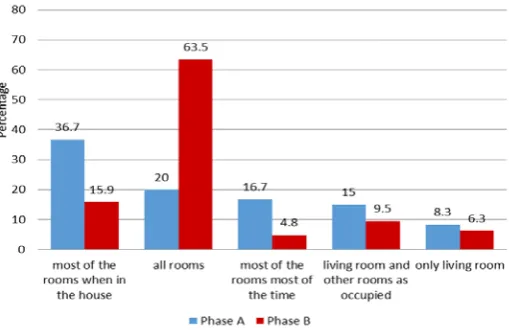
As 43.5% reported no difference to their heating patterns and 4.9% reported that they used their heating more than before improvements were made, the data were analysed further to determine why heating use was so varied. When exploring home heating patterns data, a series of observations were made. Before the renovations took place, it was evident that tenants were tactical about the rooms that they heated; that is, they generally heated those rooms that were essential for their daily lives. After the renovation, however, heating patterns changed significantly where residents were more inclined to heat all rooms all of the time in their household (a change from 20% to 63.5%) and less inclined to heat specific rooms individually (Figure 3). With this desire to heat the whole house, and in particular to achieve a unified state of thermal comfort throughout the dwelling, this partially explains the fact that, for a significant number of residents, the frequency and duration with which the heating was switched on did not change. Indeed a further analysis of the data that explored the relationship between ‘paying less on energy bills’ and ‘having heating on less than before the improvements’ showed that whilst there was a moderately positive relationship between the two variables (r=0.254, p<0.05), residents could heat their whole house after improvements for the same cost as heating only specific rooms before improvement. This ability to improve comfort whilst reducing heating loads was also confirmed in another study of the ASWZ scheme by Nottingham Energy Partnership [16, 57].
Figure 3 Home heating patterns in phases A and B (Percentage)
On the other hand, in a follow-up study that monitored two properties in Aspley (one with all energy upgrade measures, the other with none), it was found that the property with full upgrade measures (including an A-rated boiler, internal wall insulation, loft insulation, and full central heating) used more energy than the other identical property which had not received an upgrade (where it had a G-rated boiler), despite the fact that both properties were occupied by retired couples [58]. Such findings indicate some of the potential human behaviour-related shortcomings of policy interventions where, for example, a lack of energy-related advice or lack of occupant awareness can lead to the ‘rebound effect’ phenomenon. This is exemplified in several studies conducted on residential buildings that were subject to retrofit measures. In one study involving renovated properties in Easthall Glasgow, it was found that only 23% of the surveyed tenants of retrofit homes used their new heating systems effectively, whereas the rest were using them in a manner that suited their lifestyles and comfort [55]. A subsequent study by Druckman and Jackson [40] found that with the increased take-up of central heating, tenants may be more likely to maintain all rooms at one temperature rather than employing heating controls to enforce temperature differentials between occupied and unoccupied rooms. Finally, in a before-and-after study of Danish dwellings by Thomsen et al. [59], the authors found that approximately half the tenants reported they noticed the indoor air temperature in their flats tended to be higher after the retrofit; this also reinforced by another study of retrofit of Dutch housing [12].
These studies therefore indicate that part of the projected energy savings associated with improved energy performance may have transformed into greater thermal comfort preferences, where lower energy costs were possibly compensated for by higher levels of indoor comfort. This is reinforced by a recent study from the USA where it was found that technological advances to building systems were directly responsible for only 42% of energy efficiency savings whereas occupant habits contributed to more than 50% of the energy efficiency potential of a building [60]. As such it is evident that home energy use is a complex issue requiring significant research affirming the link between occupancy pattern as determined by household characteristics, socio-demographic variables, tenants’ lifestyle, perception of comfort and other subjective factors that may significantly influence heating trends [12, 14]. For example, the presence of both elderly individuals and young children potentially causes more intensive use of heating systems to respond to their occupancy patterns,
sensitivity and particular thermoregulatory needs [12, 38]. Notably, Aspley has the highest proportion of households with dependent children of all Nottingham wards; at 45% of households compared with the City average of 27.1% [61] which might explain the prevailing heating patterns reported in the survey.
4.1.3 Gas and electricity bills
Whilst the DECC (2011) review reported that no monitoring was undertaken on the income of CESP recipients, this formed an important feature for the current study as it provided a means to assess whether improvements made would help more households out of the state of fuel poverty [24]. In Phase A of the study, it was found that 69% of respondents’ total annual household income was less than £12,000, whereas 63% of Phase B respondents had a similar income profile. In Phase A, households spent on average £66 on gas and £54 on electricity which, when combined resulted in total monthly energy-related outgoings of £120, trapping many households in fuel poverty [15, 62]. After upgrade works had been completed, average gas and electricity bills dropped to £55 and £48 per month, respectively; this £103 outgoing still placing around 60% of the ASWZ households in fuel poverty. Overall, residents were subject to average annual energy bill savings of £204 per household, short of the £300 savings that were expected from the CESP scheme [23]. The actual savings were therefore in the order of 30% less than projected, which in part could be attributed to a cash-terms increase of 11.1% for electricity and 17.9% for gas and a real-cash-terms increase of 5.44% and 12.01% respectively between 2009 and 2012 when the CESP scheme was in operation [42], and in part due to different heating and home energy usage trends as discussed in the preceding section.
In both phases, positive and strong relations appeared between average monthly gas bills and average monthly electricity bills before (r=0.537, p<0.001) and after (r=0.578, p<0.001) improvements. This implied that the gas and electric bills were directly proportional both before and after the implementation of the scheme measures and may reflect general trends relating to energy consumption in a household that go beyond economic factors, such as changes to fuel prices and technical factors, such as potential snagging issues associated with the retrofit installation [63]. To understand this more fully, and to gauge the wider impact of the CESP scheme, a more in-depth analysis of energy consumption behaviour was undertaken; this is presented in the following section.
4.2 Energy consumption behaviour
Overall, household patterns that directly related to energy use showed relative improvements from Phase A to Phase B of the study, as presented in Figure 4. Some of these, such as recycling home waste, turning off unwanted lights, using energy-saving lamps, unplugging unused equipment, using compost bins and so on could, to some extent, be attributed to media-run information campaigns on lighting and appliance use, recycling and composting. The greatest percentage shifts between Phases A and B came from lowering the temperature of the hot water thermostat (+19.9%), replacing inefficient equipment (+18%), washing clothes at a lower temperature (+10.6%), and reducing the thermostat heating temperature (+8.1%).
A closer inspection of the data, however, revealed more interesting correlations between Phase A and Phase B energy-saving actions, possibly due to the ‘spill-over effect’ which is the tendency of pro-environmental behaviour to spill over and lead to other pro-pro-environmental behaviour [64]. For example, when the independent variable was set to ‘try to use less gas and electricity’, strong positive relations were found between lowering the thermostat heating temperature (r=0.343, p<0.001), the use of energy-saving lamps (r=0.364, p<0.001), washing clothes at lower temperatures (r=0.476, p<0.001) and lowering the hot water thermostat (r=0.361, p<0.001). Additionally, more moderate and positive relations were found between using less gas and electricity, replacing inefficient equipment (r=0.26, p<0.05) and boiling only the water needed in the kettle (r=0.265, p<0.05). When trying to understand why these behaviours arose, 25% of all respondents reported that saving money was the main reason for taking these actions followed by 22% who reported they were saving energy due to environmental concerns, and 20% of the sample stated they took these actions out of habit.
Two conclusions can be drawn from these observations. Firstly, it can be hypothesised that, after the home improvements had been completed, residents may have attempted to save more energy through other everyday actions. Indeed the development and activation of new social norms is an important social psychological motivator that decision makers need to consider [11] and these could have a profound impact on pro-environmental behaviour. These findings corroborate other studies which have drawn similar conclusions. For example, a recent international study of Chinese residential buildings [65] found that general energy conservation awareness and energy-related behaviours were influenced by several factors including traditional energy-saving habits, energy-saving information from social networks, economic concerns, and
Figure 4 Energy use patterns in Phases A and B (Percentage)
comparison of bills with neighbours. Secondly, with money as a primary concern, particularly given the socio-economic status of the Aspley residents polled and the number who were categorised as living in fuel poverty, these data suggest that financial incentives may prove effective in encouraging policy uptake and its successful delivery in such areas. Steg et al. [66] implied that one of the most important policy features that influence policy effectiveness and acceptability is the use of incentives and disincentives. In their research they affirm that people, in principle, are willing to take up pro-environmental behaviour and hence reduce CO2 emissions
provided that this would not be associated with higher financial costs [66]. As such, economic and regulatory factors that seek to motivate environmental actions should be considered as efficient tools to promote pro-environmental behaviour. Thus, a ‘carrot and stick’ approach could be introduced where retrofit programme success depends predominantly on people’s behaviour.
4.3 Residents’ awareness and information
4.3.1 ASWZ Show Home
It was clear from the Phase A survey results that only 30% of respondents were aware of the ASWZ scheme. Of these, only five respondents in total had heard about the scheme through the ASWZ Show Home which was based in a prominent location; in the centre of the Aspley community opposite the primary and nursery school entrance. Built to promote the CESP measures and acting as a live demonstrator, both NCH and NEP found that it was hardly ever visited by tenants of the area, albeit occasionally as a temporary refuge by some of the Aspley tenants during the energy upgrade, despite many attempts to invite eligible tenants to social events at the Show Home to raise awareness of the scheme and encourage scheme uptake. It was evident, therefore, that using a Show Home to market the scheme may not have been the best marketing and demonstrator tool for ASWZ, or that other more effective tactics may have been adopted to attract people’s attention and arouse interest in the scheme.
4.3.2 Motivations for scheme uptake
When exploring the Phase A data it was clear that a strong motivator for those who agreed to sign up for the scheme was that it would improve their home conditions, with 40% confirming this. This was also largely realised when analysing data from Phase B where people who achieved lower energy bills thought they may have also achieved warmer homes (r=0.382, p<0.001). Notably, 82% of Phase B respondents reported that they would recommend the ASWZ scheme to others, implying that, overall, people were satisfied with the outcomes of the scheme. Having experienced the home energy improvements for a year or more, participants were asked what they achieved from the scheme. The majority thought that the most significant outcomes of the scheme were firstly achieving a warmer home, followed by having a modern kitchen and bathroom fitted. Having modern kitchens and bathrooms as a bonus to the energy upgrade work seemed to instigate higher scheme uptake levels; a strategy which may encourage uptake of future policy schemes. Whilst the majority (73%) agreed they had warmer homes and improved internal home conditions, thus confirming one of the key motivators for signing up to the scheme; less than half of the respondents believed they saved on energy bills. This has been confirmed by DECC’s CESP evaluation which stated that “even where respondents did not save
money they felt able to heat their homes to an adequate level, including those who said they had been unable to do so before installation of measures” [24 p.25].
4.3.3 Energy advice received
It was evident from the analysis of Phase A and Phase B data that there was insufficient energy-related advice offered to both potential and actual beneficiaries of the scheme. In Phase A, only 28% of respondents reported that they received energy advice in the form of letters, leaflets and newsletters or door-to-door sales either from their energy suppliers or the contractor. As for Phase B, 24% reported they received some advice on energy during and after the work was completed, mainly through the contractor. This very low percentage from Phase B respondents highlights a significant shortcoming of the ASWZ CESP scheme delivery – namely, an ineffective handover process resulting in a lack of information and energy-saving advice given to residents. This demonstrates the shortfall in compliance with the statutory guidance outlined in Approved Document L1B: Conservation of fuel and power in existing dwellings which clearly states that
“The owner of the dwelling should be provided with sufficient information about the building, the fixed building services and their operating and maintenance requirements so that the dwelling can be operated in such a manner as to use no more fuel and power than is reasonable in the circumstances.” [67, p. 20 Section 7.1]
One key area from the survey that was identified as lacking advice was reflected in a considerable lack of awareness of and knowledge on how the heating systems worked and how heating controls could be used more effectively and efficiently. This was further explored in Nottingham City Council’s Impact Study [58] of its retrofit schemes. Here, it was noted that advice given by the installers to occupants on how to effectively and efficiently use their new heating controls (such as whether to use timer vs. manual controls, how to use the wall thermostat, boiler thermostat and thermostatically controlled radiator valves) was variable. This was also reinforced in the DECC evaluation of the CESP scheme [24] which found that only a few tenants were able to understand the instruction manuals for their new systems, which again highlights the need for more comprehensive but simple guidelines and clear advice concerning how to optimise the overall performance of the new measures installed.
It is evident, therefore, that this link interfacing building technology and occupant-related home energy use is extremely important and has been borne out in several studies. For example, Guerra-Santin’s study [12] on Dutch housing found that a sample of retrofitted housing with thermostatically controlled heating consumed more energy than those without thermostat control, recognising, however, that households that were provided with feedback regarding indoor air temperature were more inclined to set their thermostats at temperatures that were below average [12]. In their study of energy-efficient homes in the USA, Zhao et al. [60] argue that whilst it is expected that technology would influence home energy consumption behaviour, it should be noted that behaviour also has a strong impact on technology and building performance; as such, they found that some occupants were inclined to turn their thermostats higher if the heating systems did not warm their homes quick enough in the winter [60]. These findings should be considered in light of prior research from UK Government energy efficiency programmes. For example, it has been reported that for homes to achieve significant energy savings, the overall temperature of the whole house should be within the
range of 19-20°C [19,38] and that by simply reducing thermostat temperatures by 1°C can result in savings of up to £80 and 350 kg CO2 annually per household [68]. Notably, the NCH survey and in-depth interviews found
that savings on fuel bills were highest when participants associated them with receiving advice on how to use their heating systems efficiently [58].
4.3.4 Energy advice required and preferred formats
In the Phase A survey, it was found that 47% of respondents were keen on receiving energy advice in the future. In Phase B, this rose to 57%, loosely suggesting that for those respondents, their positive experience with their home improvements may have encouraged them to be more receptive to energy advice. From deeper analysis of the qualitative data collected by the questionnaire, it seemed that many respondents had other pressing priorities and may not consider uptake of advice on energy usage. This has been corroborated in a city-wide survey in 2005, where 55% of Aspley residents affirmed that improving safety in communities and combating crime was the top perceived priority, followed by provision of affordable homes, then better schools [61]. Of the 57% who preferred to receive energy advice, only 25% claimed that they would be interested in participating in workshops on improving their energy usage.
Concerning communication of advice, 40% preferred to receive energy advice in written format (e.g. leaflets or booklets), while 13% preferred one-to-one support. From the Mosaic population classification of Aspley ward, it appears that people are most receptive to television advertising followed by posters, telemarketing and red-top newspapers which have varying impacts across the Aspley population [61]. This is particularly important given the socio-demographic diversity of the target audience, where age, gender, income, education level, and work status in addition to overall knowledge and motivation vary considerably. It is evident therefore that a one-size fits all approach might not be suitable; hence a considered and tailored means of communicating energy-related advice should be planned for effective programme outcome.
Tailoring the information required to reduce energy consumption according to the specific requirements and characteristics of target groups has proven worthwhile in several studies [13, 36, 69]. In a study undertaken in the Chinese domestic sector, it was found that by educating occupants with energy-saving knowledge and tips, they managed to improve occupants’ energy-use behaviour by more than 10% on average [69]. Indeed, introducing home energy advice packs in a variety of formats, besides instilling new norms may actually appeal to those who have traditionally resisted or been disinterested in receiving advice and consequently improve energy consumption behaviour. One interesting example of this can be found in a study by Schultz et al. [70] where a sample of households were given information on their energy consumption in relation to that of their neighbourhood. Here, households who were informed that they were responsible for above-average energy consumption in relation to their neighbourhood reduced their overall energy consumption. Conversely, those who were praised for their less-than-average energy consumption continued using less energy. This reinforces one of the outcomes of the 2010 DECC report which stated that, to support consumers in household energy management, web- and telephone-based information services would be provided, informing individuals of the significance of making behavioural changes to reduce energy bills [6].
Such approaches are becoming more prevalent in the UK, particularly with the uptake of smart metering and
energy tracking as promoted by many UK energy suppliers [71].
4.4 Residents’ experience and feedback on ASWZ
The questionnaire concluded with an assessment of respondents’ perceptions of the scheme and how
they believed it could be improved. As with the overall CESP evaluation [24], the majority of respondents
agreed they benefited from the scheme. Respondents however identified some core issues that could have
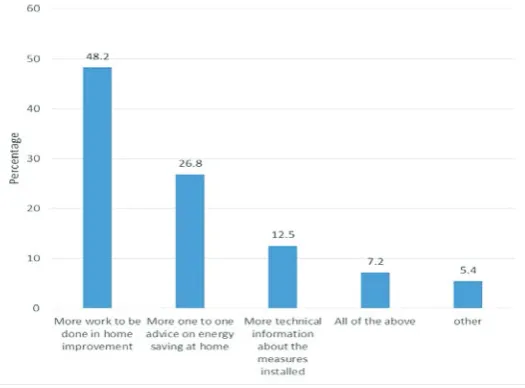
been employed to maximise the benefits from the scheme (Figure 5). Firstly, nearly half of all respondents
(48%) thought that more work was needed in the form of further home improvements such as new efficient
front and back doors to help keep their homes warmer and thus improve comfort. In the open-ended
questions, some respondents suggested they would have welcomed the installation of ‘solar panels’ to help
with their energy bills.
All in all, almost 40% of residents who had their homes retrofitted agreed that more
energy/installation-related information and advice was required. Twenty-seven per cent thought more one-to-one advice on
energy saving was needed, and 13% believed more technical information about the measures taken in their
homes and how to maximise the related benefits was required, as illustrated in Figure 5. It is clear, therefore,
[image:16.595.179.442.399.593.2]that more advice and specific information is crucial to guarantee successful programme delivery.
Figure 5 Future measures needed to maximise the benefits of the ASWZ scheme
Several questions concerning customer care were introduced in the second phase of the survey. NCH was
interested in finding out how people rated the level of work done in their homes and this was also essential for
the researchers to understand people’s experience of the scheme during and after the course of the work.
Forty per cent reported they were partly kept informed of the work before and during the progress of the
work done, while 25% reported they were very well informed. In regards to rating the arrangements made to
minimise the inconvenience during the process, 34% rated it as good, 21% rated it as average and 20% rated it
as very poor – which might reflect the minor proportion of respondents who would not recommend the
scheme. As for the quality of the completed work, 32% rated it as average, 27% rated it as good and 16% rated it as excellent. Notably, 74% agreed the final outcome was worth the disruption, while the rest disagreed and had some negative comments concerning nuisance and cleanliness issues with workmen. Besides, many of the respondents replied that better coordination and scheduling of workmen was crucial in maintaining the speed and the quality of the work done. Notably, the DECC (2011) CESP tenant survey [24] found that 83% of respondents reported they were satisfied with the process of the work while the rest were dissatisfied with the care and courtesy workers showed in their homes and the disruption caused during the installation process.
Relative success of a sister scheme, Arbed 1 in Wales has been acknowledged, where 60% of residents surveyed agreed their homes were considerably warmer following their home improvements and 35% reported their homes were more comfortable [56]. Besides, the scheme resulted in people saving money on energy bills, although not to the extent predicted. This might be due to the rising fuel prices, or due to the lack of awareness of efficient use of the heating systems and controls. Similarly, a survey undertaken on retrofitted homes of Kirklees Warm Zone project in England, an investment of 24 million GBP in England demonstrated that 20% of the total programme costs were recovered on the basis of positive health impacts, 50% of which were due to mental well-being effects [72]. In another study in New Zealand, on low-income housing retrofit programmes, improvements in health accounted for 75% of the total return of investment [72, 73]. This indicates that the level of success of policy initiatives ought to be determined in multiple dimensions.
5. CONCLUSION: LESSONS LEARNED FROM ASWZ SCHEME
The study draws on the results of a before-and-after survey questionnaire administered to the residents of a CESP scheme in Nottingham; the Aspley Super Warm Zone (ASWZ). In order to assess whether the ASWZ had effectively delivered on its aims, a number of key areas relating to the impact of the scheme were examined. The survey analysis focused on comparing between tenants’ experience with their home conditions, heating trends, energy bills, energy-use behaviour, information received and energy awareness before the energy upgrade and following the ASWZ intervention. Following the home energy upgrade, respondents confirmed significant improvements to the indoor environment conditions compared to responses before the retrofit. Notably, issues experienced with cold, condensation, damp and mould reduced more significantly than problems with draught which was still experienced by 38% of the Phase B sample. This suggests that much more could have been done to ensure that the policy surrounding the CESP initiative, which did include draught proofing as one of its six core measures, was delivered more robustly through the whole-house approach with the installation of all required measures per dwelling.
In Phase B, 52% of the sample reported they used their heating less than before, while 44% used it at the same rate. Notably, more than half the people surveyed by DECC before the CESP energy upgrade reported that they found it too expensive to heat their homes adequately, whereas with the CESP measures they were more able to do so [24]. Findings from the current study show that, although the ASWZ scheme may have succeeded in providing people with warmer homes, it did not actually achieve the energy and carbon savings anticipated partially due to the variable energy consumption behaviour of tenants noted in both survey
phases. The survey results demonstrated that the actual savings on energy bills were in the order of 30% less than the projected CESP target of saving at least £300 per household [23]. This implies that with the rapid increase in energy prices combined with variable energy consumption trends in households, a significant part of the savings had not been realised, resulting in the unresolved issue of fuel poverty.
As for changes in energy-use behaviour before and after the home energy upgrade work, most energy use patterns improved after the energy upgrade; albeit not significantly, except for setting hot water thermostats lower and replacing inefficient equipment. The top actions always taken by respondents in both phases were to turn off unwanted lights, boil only water needed in the kettle, use energy- saving lamps, and unplug unused equipment. This was found to mainly reflect concerns about fuel bills which, from the survey analysis, appeared to be the main driver for those actions. This may also imply that if residents are aware to some extent of a few energy-saving actions, then they might be receptive to other more significant ones, such as more efficient use of their heating systems; should they be offered sufficient guidance. There is potential evidence of a ‘spill-over effect’ where several positive (strong) correlations were found between energy-saving actions. On the other hand, occupants usually resist making major cuts in energy use when it involves sacrificing their comfort, but they tend to do so only when they perceive a general emergency or when the household is financially strapped [10]. The rebound effect was also highlighted as an important implication to the success of the ASWZ energy efficiency measures. This rebound effect may be one of the reasons why the expected savings were not achieved by the CESP scheme in Aspley; where tenants might have chosen higher levels of comfort in their homes over making actual savings on energy bills. It has been suggested as a key recommendation from ASWZ scheme [58] that an education/communication programme amongst tenants would be initiated to ensure occupants achieve the full potential of savings from the scheme. Moreover, assessing the effectiveness of policy interventions requires a clear understanding of consumer behaviour and motivations across all income groups so that the most appropriate approaches are developed. Personal choices that people make in their everyday lives such as purchasing appliances and using heating controls more efficiently, among others, have the potential to contribute significantly to the UK’s carbon emissions reduction targets. However, changing unsustainable behaviour requires multidisciplinary conventions that capture all aspects of energy conservation, which could be made possible by driving change in inefficient behavioural patterns and unsustainable lifestyle trends. As such, the aims of retrofit programme delivery should be to adopt a more long-term stance towards encouraging and embedding sustainable energy use.
In both phases of this research only around one quarter of the respondents received advice on energy saving, mostly through their energy suppliers. There was no indication as to whether those who received advice actually acted on the advice or not. However, around half the respondents in both phases agreed they would prefer to receive energy-saving advice. This indicates that many people may be receptive to energy advice, but the means by which advice was offered proved to be another major issue. It is also crucial to investigate why around half the sample preferred not to receive advice on energy saving. The Aspley area is identified as one of the deprived areas in Nottingham, as well as having a very high number of inefficient, solid wall houses that are ‘hard-to-heat’. Thus, the effective delivery of energy advice in the area persistently faces challenges from the
financial, social and cultural restraints. As the majority of the sample in the current study who preferred to receive advice indicated leaflets and booklets would be preferable; innovative, simple and informative communication methods are fundamental and could potentially prove an effective method for maximising the benefits of such schemes.
One of the important conclusions to emerge from the study was that changing occupants’ energy-use behaviour requires both a bottom-up approach which focuses on understanding and addressing individual energy consumption behaviours and attitudes, as well as a top-down perspective which implements the most appropriate policy instruments that target home energy conservation for particular audiences. The lack of communication is very likely to result in the loss of valuable outcomes through uncoordinated efforts and approaches between concerned parties. Also, consistent one-to-one energy advice and support could help households further reduce their energy bills through feedback and advice. Visual prompts are another means of driving sustainable energy consumption. Recent strategies using prompts and nudges have proven effective in promoting pro-environmental behaviour by reminding people with repetitive behaviours that they have the potential and the ability to change their lifestyles to become more environmentally sustainable [11,37, 75 as cited in 74]. Thus, behavioural change could be achieved by engaging people and raising awareness through home-energy audits followed by tailored advice, media campaigns to raise awareness, combined with financial incentives where possible. Introducing incentives for community-wide action with targets for carbon reduction by community groups, housing associations and local authorities has also proven to be effective [24].
From the findings of this two-phased study, it was concluded that 82% of the sample would recommend the scheme to friends and neighbours, which showed that despite the limitations of ASWZ scheme, the majority of people would still commend it due to its benefits. However, it should be noted that policy changes to the way homes are built or retrofitted may only reduce carbon emissions to a certain extent; whereas the greater challenge of addressing behaviour patterns of consumption needs to be addressed if existing homes are to meet the UK carbon emissions reduction target. Although the UK Government has been relatively successful in facilitating schemes and initiatives that incentivised providers as well as consumers to adopt those schemes; in this case the CESP scheme, policies should also strongly encourage and incentivise people to use them efficiently. Overall, the CESP proved to be an innovative programme which applied a number of policy features, with particular focus on deprived areas where the lessons learned have undoubtedly influenced the design of the successor programme, the Energy Companies Obligation scheme (ECO) [25] and will possibly continue to influence other retrofit programmes, both at national and international levels.
6. ACKNOWLEDGEMENTS
The authors would like to acknowledge Nottingham City Homes (NCH) and Nottingham Energy Partnerships (NEP) for their valuable help and assistance in facilitating this research project.
7. REFERENCES
[1]. International Energy Agency. Tracking Clean Energy Progress 2016: Energy Technology Perspectives 2016 Excerpt. France: International Energy Agency.
[2]. Judson, E. & Maller, C. Housing renovations and energy efficiency insights from homeowners' practices. Building Research and Information 42(4) (2014), pp. 501-511.
[3]. Peck, T. The Government has dropped its one million new homes target, report claims (2017). [Online] Available at: http://www.independent.co.uk/news/uk/politics/the-government-has-dropped-its-one-million-new-homes-target-report-claims-a7534321.html [Accessed 12 December 2017].
[4]. Partington, R. As the UK economy sputters, it's all systems go in the eurozone (2017). [Online] Available at: https://www.theguardian.com/business/2017/sep/03/brexit-as-the-uk-economy-sputters-its-all-systems-go-in-the-eurozone [Accessed 05 December 2017].
[5]. Sheffield, H. UK construction shrinks at fastest pace since 2009 after Brexit vote (2016). [Online] Available at: http://www.independent.co.uk/news/business/news/uk-construction-shrinks-at-fastest-pace-since-2009-after-brexit-vote-a7167681.html [Accessed 12 December 2017].
[6]. DECC. Warm Homes, Greener Homes: A strategy for Household Energy Management, London: Department of Energy and Climate Change (2010).
[7]. Department for Communities and Local Government. Approved Documents, (2010). [Online] Available at: https://www.gov.uk/government/collections/approved-documents [Accessed 14 December 2017].
[8]. Scottish Government Building Standards Division. Building Standards technical handbook 2017: Domestic.[Online] Available at: https://beta.gov.scot/publications/building-standards-technical-handbook-2017-domestic/ [Accessed 08 January 2018].
[9]. Department of Finance, UK. Building Regulations Technical Booklets, (2012). [Online] Available at: https://www.finance-ni.gov.uk/articles/building-regulations-technical-booklets [Accessed 14 December 2017].
[10]. Gardner, G.T. & Stern, P.C. Environmental Problems and Human Behaviour. Massachusetts: Allyn and Bacon (1996).
[11]. Cialdini, R.B. Influencing Change: Applying behavioral science research insights to reframe environmental policy and program. In Behavior, Energy and Climate Change. Sacramento (2010).
[12]. Guerra Santin, O. Actual energy consumption in dwellings: The effect of energy performance regulations and occupant behaviour. Delft: IOS Press BV, Delft University of Technology (2010).
[13]. Abrahamse, W., Steg, L., Vlek, C. & Rothengatter, T. The effect of tailored information, goal setting, and tailored feedback on household energy use, energy-related behaviors, and behavioral antecedents. Journal of Environmental Psychology 27(4)(2007), pp.265-76.
[14]. Poortinga, W., Steg, L., Vlek, C. & Wiersma, G. Household preferences for energy-saving measures: A conjoint analysis. Journal of Economic Psychology 24(1)(2003), pp. 49-64.
[15]. Elsharkawy, H. & Rutherford, P. Retrofitting social housing in the UK: Home energy use and performance in a pre-Community Energy Saving Programme (CESP). Energy and Buildings 88 (2015), pp. 25-33. [16]. NEP. Aspley Super Warm Zone (CESP). Nottingham Energy Partnership (2013). [Online] Available at:
http://www.nottenergy.com/projects/domestic/aspley_super_warm_zone_cesp/ [Accessed 5 December 2017].
[17]. SDC. Stock Take: Delivering improvements in existing houses. London: Sustainable Development Commission (2006).
[18]. Swan, W., Wetherill, M. & Abbott, C. A Review of the UK Domestic: Enegy System, SCRI Research Report 5. Salford: Salford Centre for Research & Innovation (SCRI), University of Salford (2010).
[19]. Milne G. & Boardman B. Making cold homes warmer: the effect of energy efficiency improvements in low-income homes. A report to the EAGA Charitable Trust. Energy Policy 28 (6-7) (2000) 411-424 [20]. Department for Business, Energy & Industrial Strategy (DBEIS). Annual Fuel Poverty Statistics Report
2017. [Online] Available at:
https://www.gov.uk/government/uploads/system/uploads/attachment_data/file/639118/Fuel_Poverty_Statis tics_Report_2017_revised_August.pdf [Accessed 14 December 2017].
[21]. DTI. Meeting the Energy Challenge: A White Paper on Energy. Norwich: Department of Trade and Industry, HM Government (2007).
[22]. Anandarajah, G., Ekins, P. & Strachan, N. Pathways to a low carbon economy. In J. Skea & P.W.M. Ekins, eds. Energy 2050: Making the Transition to a Secure, Low Carbon Energy System. London: Earthscan (2011), pp.105-45
[23]. DECC. Impact Assessment of proposals for implementation of the Community Energy Saving Programme (CESP). London: Crown copyright, Department of Energy and Climate Change (2009).
[24]. DECC. Evaluation of the Community Energy Saving Programme: A report on the findings from the process and householder experience research streams. London: Crown copyright Department of Energy and Climate Change (2011).
[25]. Ofgem. Community Energy Saving Programme: Update.
London: Office of Gas and Electricity Markets, May, Issue 6 (2013). [Online] Available at: https://www.ofgem.gov.uk/sites/default/files/docs/2013/05/cesp-update-6_final-300413_0.pdf [Accessed 5 May 2017].
[26]. Sellwood, P. Energy Saving Trust CEO responds to Green Deal cuts (2015). [Online] Available at: http://www.energysavingtrust.org.uk/blog/energy-saving-trust-ceo-responds-green-deal-cuts [Accessed 12 November 2017].
[27]. Gupta, R. & Gregg, M. Do deep low carbon domestic retrofits actually work?. Energy and Buildings 129 (2016) pp. 330-343.
[28]. Department for Business, Energy & Industrial Strategy (DBEIS). National Statistics: Household Energy Efficiency National Statistics, headline release December 2017. [Online] Available at: https://www.gov.uk/government/collections/household-energy-efficiency-national-statistics [Accessed 10 January 2018].
[29]. Guerra-Santin,O. & Itard, L. The effect of energy performance regulations on energy consumption. Energy Efficiency 5(3)(2012) pp. 269-282.
[30]. Eyre, N., Anable, J., Brand, C., Layberry, R. & Strachan, N. The way we live fom now on: Lyfestyle and energy consumption. In: J. Skea, P. Ekins & M. Winskel, eds. Energy 2050: Making the Transition to a Secure Low Carbon Energy System. London: Earthscan (2011) pp.258-294.
[31]. Guerra-Santin, O. Behavioural Patterns and User Profiles related to energy consumption for heating. Energy and Buildings 43(10)(2011), pp. 2662-72
[32]. Stern, P. Changing behavior in households and communities: what have we learned? In: T. Dietz & P. Stern, eds. New Tools for Environmental Protection: Education, Information, and Voluntary Measures. Washington: National Academy Press (2002) pp.201-11.
[33]. Lutzenhiser, L. Social structure, culture and technology: Modelling the driving forces of household energy consumption. In: P. Stern et al., eds. Environmentally Significant Consumption: Research Directions. Washington: National Academy Press (1997) pp.77-91.
[34]. Keirstead, J. Evaluating the applicability of integrated domestic energy consumption frameworks in the UK. Energy Policy 34(2006), pp. 3065-3077.
[35]. Stern, P. C., Dietz, T., Ruttan, V. W., Socolow, R. H. & Sweeney, J. L. Consumption as a Problem for Environmental Science. In: P.C. Stern et al., eds. Environmentally Significant Consumption: Research Directions. Washington: National Academy Press (1997), pp.1-11.
[36]. Han, Q., Nieuwenhijsen, I., de Vries, B., Blokhuis, E. & Schaefer W. Intervention strategy to stimulate energy-saving behavior of local residents. Energy Policy 52 (2013), pp. 706-715.
[37]. Kasperbauer, T.J. The permissibility of nudging for sustainable energy consumption. Energy Policy 111 (2017), pp. 52-57.
[38]. Hamza, N. & Gilroy, R. The challenge to UK energy policy: An ageing population perspective on energy saving measures and consumption. Energy Policy 39 (2) (2011), pp. 782-789.
[39]. Sorrell, S. & Herring, H. Introduction. In: H. Herring & S. Sorrell, eds. Energy Efficiency and Sustainable Consumption The Rebound Effect. London: Palgrave McMillan (2009), pp. 1-21.
[40]. Druckman, A. & Jackson, T. Household energy consumtion in the UK: a highly geographically and socio-economically disaggregated model. Energy Policy 36(8) (2008), pp. 3177-3192.
[41]. Dresner, S. & Ekins, P. Economic Instruments for a Socially Neutral National Home Energy Efficiency Programme. PSI Working Paper. London: Policy Studies Institute (2004).
[42]. DBEIS. Statistical data set Annual Domestic Energy Bills. published (2013) updated (2017) Department for Business, Energy & Industrial Strategy [Online] Available at: https://www.gov.uk/government/statistical-data-sets/annual-domestic-energy-price-statistics [Accessed 04 January 2018].
[43]. Lawrence, R. J. Learning from the Vernacular. In: L. Asquith & M. Vellinga, eds. Vernacular Architecture in the 21st Century. Oxon: Taylor and Francis (2006) pp. 110-127.
[44]. Ekins, P., Skea, J. & Winskel, M. UK Energy Policy and Institutions. In: J. Skea, P. Ekins & M. Winskel, eds. Energy 2050: Making the Transition to a Secure, Low Carbon Energy System. London: Earthscan (2011) pp.41-66.
![Figure 1 Number of measures installed in all CESP schemes [25]](https://thumb-us.123doks.com/thumbv2/123dok_us/405064.1040526/3.595.124.494.530.723/figure-number-measures-installed-cesp-schemes.webp)
![Table 1. Questionnaire sections and questions [15]](https://thumb-us.123doks.com/thumbv2/123dok_us/405064.1040526/7.595.69.517.477.766/table-questionnaire-sections-and-questions.webp)