London School of Economics and Political Science
Just health responsibility
A comparative analysis focussing on the role of individual behaviour in relation
to cancer and weight-control policy in German and US health care systems
Harald Thomas Schmidt
LSE ID: 200727771
A thesis submitted to the Department of Social Policy,
London School of Economics,
for the degree of Doctor of Philosophy
Declaration of Authorship
I certify that the thesis I have presented for examination for the MPhil/PhD degree of the London School of Economics and Political Science is solely my own work other than where I have clearly indicated that it is the work of others (in which case the extent of any work carried out jointly by me and any other person is clearly identified in it).
I consider the work submitted to be a complete thesis fit for examination. I authorise that, if a degree is awarded, a paper and/or electronic copy of my thesis will be deposited in the British Library of Political and Economic Science and that, except as provided for in regulation 32 it will be made available for public reference and inter-library loan. I authorise that by submitting my thesis to the Library, the Library is permitted to digitise it to assist in the long-term preservation and accessibility of my thesis.
I authorise the School to supply a copy of the abstract of my thesis for inclusion in any published list of theses offered for higher degrees in British universities or in any supplement thereto, or for consultation in any central file of abstracts of such theses.
The copyright of this thesis rests with the author. Quotation from it is permitted, provided that full acknowledgement is made. This thesis may not be reproduced without my prior written consent.
I warrant that this authorisation does not, to the best of my belief, infringe the rights of any third party.
Abstract
This thesis seeks to examine the appropriate role of individual behaviour and responsibility in relation to cancer and weight-control policy in German and US health care systems. It contains six main parts.
The first describes and compares the ways in which personal responsibility features in law and policy in both countries. It analyses salient differences in
underlying motivation and characterization and highlights ethical tensions that arise from these provisions and their implementation.
The second part reviews what established normative theories can do to address the issues that have been identified. It argues that these frameworks lack specificity and are ill-suited as a basis for policy in pluralist societies. It provides an analysis of different notions of the concept of personal responsibility, and makes a proposal for an overarching framework, adopting a procedural justice account that draws on work by Norman Daniels, Jim Sabin and Thomas Scanlon.
The third part systematically reviews survey literature on the proper role of personal responsibility and develops an instrument for semi-structured interviews with physicians and population-level surveys in the US and Germany. The
instrument complements this earlier survey work and explores key themes that arose in the analysis of policy documents and the philosophical literature.
Based on this instrument, the fourth part analyses the findings from twenty semi-structured interviews with primary care physicians and oncologists in Berlin, Germany and Philadelphia, USA.
The fifth part presents findings from three population level surveys of 1,000 respondents each. Two surveys with identical instruments were conducted with non-probability samples (census-adjusted proportional quota sampling with regard to income) in Germany and the US, and one, using a subset of questions, was administered to a probability-based sample in the US. Findings are discussed comparatively between countries and in view of the interviews with physicians.
The last part concerns the policy implications of the analysis, and applies the framework proposed in the thesis to the case of colon cancer screening. It seeks to defend an incentive policy that attaches financial advantage to attending counselling on the advantages and disadvantages of colon cancer screening, building also on findings from the surveys, and interviews with physicians. The final chapter highlights a range of general policy implications for the evaluation and
Contents
List of Appendices...5
List of Tables and Boxes...7
List of Figures...9
List of Acronyms...11
Preface and Acknowledgements...12
Chapter 1: Introduction ... 15
1.1 Background ... 15
1.2 Personal responsibility in the US and Germany ... 18
1.3 Research questions ... 20
1.4 The thesis structure ... 21
Chapter 2: Responsibility, ‘carrots’ and ‘sticks’ in health care policy in Germany and the USA ... 25
2.1 Introduction ... 25
2.2 On ‘carrots’ and ‘sticks’: when is an incentive an incentive? ... 26
2.3 Health responsibility in the German statutory health insurance ... 29
2.4 Health responsibility in the US employer-based insurance system ... 40
2.5 Conclusion ... 51
Chapter 3: An ethical framework for evaluating health responsibility policies 55 3.1 Introduction ... 55
3.2 Personal responsibility and behaviour change in the spectrum of coercion and ‘doing nothing’ ... 56
3.3 Personal responsibility: conceptual analysis ... 60
3.4 Personal responsibility as co-responsibility ... 68
3.5 Assessing the reasonableness of health responsibility policies ... 71
3.6 Conclusion ... 87
Chapter 4: Incentivising individual behaviour: review of the survey and interview literature, and development of an instrument for new research ... 89
4.1 Introduction ... 89
4.3 Discussion of findings and development of a new survey instrument ... 111
4.4 Conclusion ... 117
Chapter 5: Health responsibility: physicians’ views ... 118
5.1 Introduction and Aims ... 118
5.2 Methods ... 120
5.3 Findings ... 127
5.4 Discussion ... 156
5.5 Limitations ... 160
5.6 Conclusion ... 161
Chapter 6: Health responsibility: views of the public ... 162
6.1 Introduction and Aims ... 162
6.2 Methods ... 163
6.3 Findings ... 174
6.4 Discussion ... 220
6.5 Limitations ... 237
6.6 Conclusion ... 239
Chapter 7: Policy implications: the case of colon cancer policy ... 241
7.1 Introduction ... 241
7. 2 Colon cancer prevention: denying the right not to think, but preserving the right to refuse treatment ... 242
7.3 Conclusion ... 260
Chapter 8: Conclusion ... 262
8.1 Introduction ... 262
8.2 Summary of findings ... 263
8.3 Policy implications ... 276
8.4 Limitations and next steps ... 285
8.5 Closing ... 290
Appendices Chapter 2
Appendix 2A: Health-related activities incentivised
for insurees of the Betriebskrankenkassen ... 307
Appendix 2B: Health care premiums of covered US workers by plan type, company size and employer/employee contribution ... 308
Appendix 2C: Cost shifting through wellness incentives: BeniComp® Advantage ... 309
Chapter 3 Appendix 3A: Implications of different policy responses to the five groups problem ... 311
Chapter 4 Appendix 4A: Initial draft instrument for survey and semi-structured interviews ... 313
Chapter 5 Appendix 5A: Method of recruiting physicians via professional organisations, snowball sampling, and practice area profiling ... 319
Appendix 5B: Notes on use of NVIVO as computer-assisted qualitative data analysis software ... 321
Appendix 5C: development of code-list ... 322
Appendix 5B: Physician recruitment: email to German primary care physicians (version for oncologist adapted accordingly) ... 323
Appendix 5E: Physician recruitment: email to US oncologists ... 324
Appendix 5F: Physician recruitment: email to US primary care physicians, as edited and circulated by Clinical Care Associates ... 325
Appendix 5G: Physician interview guide (English version) ... 326
Appendix 5F: Physician interview guide (German version) ... 330
Appendix 5I: Initial code list ... 336
Chapter 6
Appendix 6A: Changes in the survey instrument versus the guide used in physician interviews ... 342 Appendix 6B: Overview of the statistical significance
of independent variables ... 344 Appendix 6D: Sample email from Knowledge Network
to survey panel members about new available surveys ... 352 Appendix 6E: Overview of the effects of applying
age-weights to sample Ger. ... 353
Chapter 8
Appendix 8A: A randomized controlled trial to study personalized incentives .. 355
List of Tables and Boxes
Chapter 2
Table 2.1: Mean health care costs among incentive program participants and their matched controls, 2006 (Evaluation of Bonus programmes of the Techniker Krankenkasse)
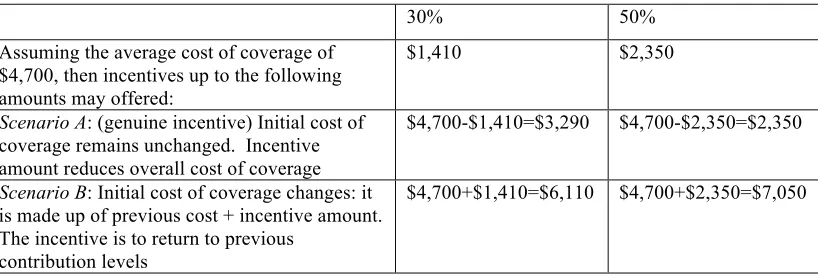
Table 2.3: Wellness incentives and cost-shifting options: impact on cost of coverage as passed on to consumers
Table 2.4: Principal arguments for and against promoting personal responsibility for health in policy
Chapter 3
Table 3.1: Implications of different policy responses to the five groups problem Box 3.1: The intervention ladder (Nuffield Council on Bioethics)
Box 3.2: Seven tests to evaluate the appropriateness of health responsibility policies
Chapter 4
Box 4.1: MeSH terms for literature on empirical work relevant for questions around personal responsibility
Table 4.1: Quantitative findings from literature search on empirical work relevant for questions around personal responsibility
Table 4.2: Health behaviour attitudes/Germany: findings from a representative survey (Diederich/Schreier 2010)
Table 4.3: “Lifestyle” in relation to other factors regarding priority in treatment: findings from the 1998 Eurobarometer survey
Table 4.4: Should some groups of patients have higher or lower priority for treatment than others? Findings on changes in attitudes of participants of group discussions in the UK (Dolan, Cookson, and Ferguson 1999) Table 4.5: Agreement of Norwegian physicians with statements about personal
responsibility (Bringedal and Feiring 2011)
Table 4.6: Attitudes of UK doctors towards refusing treatment (Medical Hospital Doctor Magazine 2008)
Chapter 5
Chapter 6
Table 6.1: Numbers of respondents in samples US1 and Ger entering amounts for three types of incentive structures (overall and those entering amounts >$1) Table 6.2: Differences in the use participation and attainment incentives over time
(in %) US1, Ger
Table 6.3: Differences between demographic groups (in $ and as factors) between “false carrot” (FC) and “stick” (S), US1 and Ger
Table 6.4: Ranking of five scenarios exploring effort, desert and health behaviour in relation to weight control, population-level survey samples and physician interviews
List of Figures
Chapter 2
Fig. 2.1: Companies’ reasons for offering wellness incentive programmes Fig. 2.2: The ‘responsibility-gap’ of unhealthy employees (Steve Burd)
Chapter 4
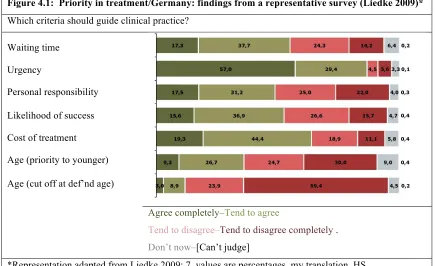
Fig. 4.1: Priority in treatment/Germany: findings from a representative survey (Liedke 2009)
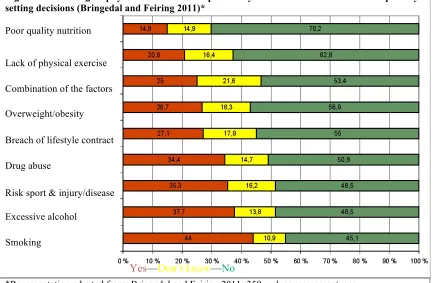
Fig. 4.2: Norwegian physicians’ views on responsibility-related factors of relevance in priority setting decisions (Bringedal and Feiring 2011)
Chapter 6
Fig. 6.1: Income distribution (in %): US and German population & US1 and Ger Fig. 6.2: Health insurance coverage (in %): US population & US1 and US2 Fig. 6.3: Self-assessed health status (in %): US and German population & US1,
US2, Ger
Fig. 6.4: Relationship of income and health in US1, US2 and Ger
Fig. 6.5: BMI distribution (in %): US & German population, US1, US2, Ger Fig. 6.6: Incentive program use over time (in %): US1 and Ger
Fig. 6.7: Incentive use over time (in %), by income, US1 and Ger Fig. 6.8: Attainment incentive use (in %) by health status, US1 and Ger Fig. 6.9: Participation incentive use (in %), by health status, US1 and Ger Fig. 6.10: Incentive use over time (in %), by BMI, US1 and Ger
Fig. 6.11: Percentage of respondents with different health status who rated five scenarios exploring effort, desert and health behaviour as unfair/completely unfair, US1 and Ger
Fig. 6.12: Percentage of respondents with different health status who rated five scenarios exploring effort, desert and health behaviour as fair/completely fair, US1 and Ger
Fig. 6.13: Percentage of respondents with different BMIs who rated five scenarios exploring effort, desert and health behaviour as unfair/completely unfair, US1 and Ger
Fig. 6.15: Levels (in $) for three types of incentive structures, M and Mdn, gross and amounts >1$, US1 and Ger
Fig. 6.16: Incentive levels (in $), 3 types of structures, by age (US1 and Ger) Fig. 6.17: Incentive levels (in $), 3 types of structures, by gender (US1, Ger) Fig. 6.18: Incentive levels (in $), 3 types of structures, by income (US1, Ger) Fig. 6.19: Incentive levels (in $), 3 types of structures, by health status (US1, Ger) Fig. 6.20: Incentive levels (in $), 3 types of structures, by BMI (US1, Ger)
Fig. 6.21: Current use of participation and attainment incentives (in %), by lowest and highest income, health, and BMI groups (in %), US1 and Ger
Acronyms
ACP: American College of Physicians ANOVA: analysis of variance
BKK: Betriebskrankenkassen, Union of German employer-based sickness funds BMA: British Medical Association
BMG: Bundesministerium für Gesundheit, German Ministry of Health BMI: Body Mass Index
CAQDAS: computer-assisted qualitative data analysis software
CCA: Clinical Care Associates (primary care network of the University of Pennsylvania Health System)
CDC: Centers for Disease Control and Prevention
CDU: Christlich Demokratische Union Deutschlands, Christian Democrats CSDH: Commission on Social Determinants of Health (of the WHO) DHHS: US Department of Health and Human Services
DoL: US Department of Labor DoT: US Department of Treasury
FDP: Freie Demokratische Partei, Free Democrats
G-BA: Gemeinsamer Bundesausschuss, Federal Joint Commission
GKV-FinG: Gesetz zur nachhaltigen und sozial ausgewogenen Finanzierung des Gesundheitswesens, Law for the sustainable and equitable financing of health care
GKV-WSG: Gesetz zur Stärkung des Wettbewerbs in der gesetzlichen
Krankenversicherung, Law to strengthen competition among providers of statutory health-insurance
HDHP: High Deductible Health Plan
HIPAA: Health Insurance Portability and Accountability Act HMO: Health Maintenance Organization
IOM: Institute of Medicine MeSH: medical subject headings
NBGH: National Business Group on Health
OECD: Organisation for Economic Co-operation and Development POS: Point Of Service plans
PPO: Preferred Provider Organization QALY: Quality Adjusted Life Year
SGB V: Sozialgesetzbuch V, Book V of the German Social Security Code SPD: Sozialdemokratische Partei Deutschlands, Social Democrats
Preface and Acknowledgements
The topic of personal responsibility for health raises a set of intricate issues in a range of different academic disciplines, including medicine, psychology, public health, health policy, law, political science, sociology, psychology and philosophy. As with most issues that demand an interdisciplinary approach, the analytic and explanatory powers of a single researcher are therefore limited. Here, the focus is on how to make progress with the oftentimes acrimonious debate around personal responsibility for health by examining what contribution philosophy and health policy analysis can make in clarifying the concept, and in assessing the
appropriateness of specific rules or interventions. The philosophical approach is an applied one throughout, as I seek to set out a framework that specifies the areas in which justification is owed. This can help us decide when policies are acceptable and when it is reasonable to reject them, or to demand adjustments.
For better or worse, while I worked on this thesis I had plenty of opportunity to explore both theoretical and practical aspects of personal responsibility for health. Exercising in nearby Barnard Park in London before work I often saw a chubby boy walking to primary school. His breakfast, it seemed, consisted of a big bag of crisps that he dug into on his way through the park: we tended to look past each other casually, absorbed in our respective habits. Later, moving between the UK, the US and Germany, I had failed to keep up with dental check-ups, and narrowly avoided a painful root canal as a consequence. I initially missed the final appointment and was charged a substantial penalty when I came back, wondering, of course, whether this was reasonable or not. Chapter 4 was largely written with one hand, as I had broken the other when I fell off a branch doing pull-ups in New York’s Central Park. As it happened, I was due to give a seminar on personal responsibility two days after the accident, and with my arm in a fresh plaster cast, at least we got to the topic
instantly. The interviews with physicians were done after I had spent a year on a research fellowship in the US. Major health reform was passed then, accompanied by robust and, from a European perspective, oftentimes hard to comprehend, debate. I still remember walking inside a hospital in Berlin to meet with one of the
make me want to hug the patients smoking outside (some of them on intravenous drips), and of course, being German, the insight was not new to me. But in a relevant and new sense it made me appreciate how important universal and affordable access to healthcare is. Equally, it illustrated at a glance the point Thomas Scanlon made when he observed that in many situations where we are inclined to blame others, or wish to hold them accountable, our proper response ought instead to be: ‘there but for the grace of God go I’. Towards the final stage of the thesis, the irony was not lost on me that in one of the most busy periods I was not able to make as much time for exercise as I wished, nor enough time to cook or do other things that are more conducive to my overall wellbeing than generating p-values of survey findings, tracking down yet another insightful paper, or formatting tables. Among other things, what I take away from these experiences is that any framework seeking to address the question of personal responsibility needs to be compatible with the range of different ideas of a good life that people have; with the fact that opportunities of choice differ among people; and that talk about responsibility must be broader that just determining when we should blame and penalise people, as will hopefully become clear in the chapters that follow.
Much of the material included in this thesis has already been published, as is indicated in the first footnote of each chapter, which also lists conferences at which drafts of papers or chapters were presented, and individuals who assisted with technical questions that arose, with testing the instruments, or with discussions of issues that were insufficiently clear to me. Many friends and colleagues also
provided most helpful guidance and advice in developing the initial approach of this thesis. Here I wish to thank again each of them: Johann Ach, Sandra Applebaum, Jorge Ayala, Tom Baldwin, Alan Balch, Ronal Barg, Gene Bishop, Jochen
Ludwig, Kristin Madison, Wendy Mansfield, Georg Marckmann, John McMillan, Claus-Dieter Middel, Stephanie Morain, Mathias Mrotzek, Axel Mühlbacher, Adam Oliver, Jens Niehoff, Sue Nelson, Charles Orellana, Engin Osmanoglou, Elfteria Panagiotou, Birte Pantenburg, Ursula Poch, Veronika Poch, Marianne Promberger, Lutz Rabe, Tim Rhode, Annette Rid, Ian Riner, Markus Rudolphi, Andrew Ryan, Bettina Schöne-Seiffert, Dorothea Schmidt, Lea Schmidt, Uwe Schmidt, Diana Seemann, Stephanie Stock, Julian Strauss, Stefan Subias, Humphrey Taylor, Sarah Thomson, Simon Tönsmeyer, Andrea Troxel, Sridhar Venkatapuram, Andreas Vieth, Albert Weale, Dan Wang, Jürgen Wasem, Julia Weinmann, James Wilson, Jingsan Zhu, and the (anonymous) physicians who generously gave of their time, and frankly shared their views, in the interviews that formed part of this thesis.
Special thanks are due to David Ash, Norman Daniels, Scott Halpern, Julia Kreis, Dan Wikler, Kristin Voigt and Kevin Volpp, all of whom had substantial impact on the way I approached central issues in this thesis and beyond. I am deeply grateful to them. I must also thank the Nuffield Foundation for support in beginning this thesis, as well as the Commonwealth Fund, and the Kolleg-Forschergruppe Normenbegründung in Medizinethik und Biopolitik at the University of Münster, as their fellowships not only enabled me to dedicate more time to it, but also connected me with expert thinkers. The Penn CMU Roybal P30 Center in Behavioral
Economics and Health enabled funding for parts of this research, which would otherwise have been impossible, through the National Institute on Ageing of the US National Institutes of Health. At the LSE I could not have been more lucky or privileged than to be guided by Julian Le Grand, Elias Mossialos, and Alex
Voorhoeve, who provided just the right balance of hands-on and hands-off advice, support and expertise, invaluable, always. Finally, I am grateful, beyond measure, for her support, encouragement and steady companionship, to Joy Wang.
I dedicate this thesis to my family, and especially to my Grandfather, Herbert Holter. He read and wrote and played tennis and skied until his last year of life, dying at the age of 88. He would have been immensely pleased to know that this work is done, at least until there was a Mahler Symphony on the Radio, or Schnitzel mit Kartoffelsalat, or a good glass of Zweigelt.
Chapter 1
1Introduction
[T]he conditions in which people are born, live, and work are the single most important determinant of good health, or ill health; of a long and productive life, or a short and miserable one.
Margaret Chan (1947–), Director-General, World Health Organization
Medicine is a social science, and politics is nothing more than medicine on a grand scale.
Rudolf Virchow (1821–1902), physician, anthropologist and politician
I did it my way.
Frank Sinatra (1915–1998), singer
1.1 Background
The debate around responsibility for health, like many long-standing controversies, has become somewhat polarised. At one end of the spectrum, commentators make what might be called a “get-real” argument (Burd 2009): they point to evidence that suggests, for example, that lifestyle choices about physical exercise and the
consumption of food and alcohol clearly do affect health outcomes and account for up to 40% of the burden of morbidity and premature mortality (Schroeder 2007)2; that chronic diseases are on the rise (Scheller-Kreinsen, Blümel, and Busse 2009), that successful treatment depends considerably on patients’ compliance (Atreja, Bellam, and Levy 2005); or that peoples’ behaviour matters in relation to keeping appointments and other interactions with the health care system (Halpern, Bates, and Beales 2003). Since it can make sense to say that in all these areas people are responsible for their actions, proponents then often assert that people should also be held responsible. This may entail that they suffer a penalty or disadvantage in cases
1 Text in this chapter draws on, and in part reproduces verbatim, material published in the following
previous publications: Schmidt 2009d, 2011b.
2 Drawing on prior work Steven Schroeder suggests for the US context that behavioural causes
where they are judged to behave irresponsibly. Using such sanctions may also serve as an incentive for people to behave in the right way from the outset. In folk
psychological terms such reasoning can fall on fertile ground. For the concept that one is responsible for the good and bad consequences of one’s life, and that facing up to the choices one has made is a central part of what makes a life a good life, is deeply engrained in individual and autonomy centred societies (Jetten and Postmes 2006; McNamee and Miller 2009). Especially in the US, the notion of personal responsibility is integral to the concept of the American Dream, enshrined in the collective musical memory in Frank Sinatra’s (and many of his epigones’) rendition of My Way.
However, at the other end of the spectrum, commentators equally make a “get-real” argument when it comes to health responsibility. Here, it is stressed that the very concept of lifestyle choice can be cynical. The term seems to assume that it is equally easy for all to be healthy, with some simply choosing an unhealthy, as opposed to a healthy, lifestyle. But—leaving aside deeper philosophical debates about free will—there is much reason to doubt that this is the case. It is in this spirit that Margaret Chan cautioned that the environmental conditions in which people live are the single most important factor influencing health, when she presented the final report of the World Health Organization’s (WHO) Commission on Social
Determinants of Health (CSHD, Commission on Social Determinants of Health 2008).
recommendations for medical interventions and hygiene measures, but focused in his final report on the need for extensive social and political reform to improve health sustainably in the longer term.3 For Virchow, the causes of the epidemic were as much due to poverty as to germs, and he argued that the most effective and sustainable way of responding to the outbreak was to improve social conditions.
Virchow’s above-cited dictum that medicine cannot be reduced to a purely physical discipline, and that, conversely, political arrangements have very direct implications for people’s health (Bauer A. 2005), is not only relevant for the living conditions in 19th century Prussia, and for developing countries lacking the ability to
provide for peoples’ basic needs. It is equally apt in relation to health inequalities in contemporary post-industrial developed countries, and the debate around personal responsibility for health.
Accordingly, researchers of social epidemiology and proponents of the social determinants of health view would argue that talking about a person’s responsibility to maintain a healthy weight can be of relatively limited use in the case of a single unemployed teenage mother who grew up and lives in a deprived inner city borough with a high density of cheap fast food outlets, poorly maintained and unsafe parks, no affordable sports facilities, and so on. Holding her responsible for being
overweight, by imposing some disadvantage or financial burden would be seen as a form of unacceptable victim-blaming. For not she, but the circumstances in which she lives, are seen as responsible for her poor weight. In the words of the CSDH report, and in line with Virchow’s observations, instead of focusing on the causes of her poor health, more attention should be paid to the “causes of the causes”
(Organization 2008).
Deciding on the appropriate balance of direct appeals to personal responsibility versus more indirect action at the level of the social determinants of health is of relevance to virtually any country with aspirations to operate effective and fair health and social policy frameworks.
3 These included: full employment, higher wages, the establishment of agricultural co-operatives,
1.2 Personal responsibility in the US and Germany
In this thesis, the empirical part focuses on policy in the US and Germany, which, for several reasons, has the potential to be particularly instructive. First, as will be described in more detail in the following chapter, the concept of personal
responsibility features centrally in Germany’s social health insurance system and is intricately linked to that of solidarity, versions of which also underlie many other European health care systems (Prainsack and Buyx 2011; Houtepen and ter Meulen 2000; Ashcroft, Campbell, and Jones 2000). By contrast, as will equally be
explained in more detail, the US has a far more fragmented system. The majority of insurance coverage is provided in a market-based system by employers. As one consequence of the American credo in the individual pursuit of happiness, there is less of a societal expectation that citizens should consider the impact of their conduct on the wider community. Equally, there is less of an expectation that one is owed, or can rely on, assistance from the community. It can hence be instructive to analyse how two countries with very different background conditions address the question of incentivising individual behaviour in dealing with similar problems of rising levels of chronic conditions.
Second, while the nature of the problem posed by chronic conditions is indeed similar in both countries, it differs in magnitude. Levels of obesity in the US are approaching critical levels, with 34% of Americans being overweight in 2011, and 34% obese (Centers for Disease Control and Prevention 2011). In Germany an equal 34% are overweight, but only around half as many (13%) are obese (Statistisches Bundesamt 2011b). Given that the need to respond to the prevalence of overweight in the US is perhaps the most urgent of all post-industrial countries, and given that obesity is in the views of many a matter of personal responsibility, an analysis of the policies that are viewed as appropriate regarding personal behaviour is particularly timely.
Third, while the difference between the US and the German system is indeed in many ways stark, and the countries can be seen as positioned on opposite ends of a spectrum, in other ways there is also some noteworthy convergence. A major trend in the German (and broader European context) over the past decade or so is a
to promote efficiency—therefore adopting a salient element of the American approach (Le Grand 1999, 2007; Wendt, Rothgang, and Helmert 2005). On the other hand, in a development that without exaggeration can be described as historical, recent US health reform has introduced the individual mandate. In effectively requiring each American to have health insurance, and putting in place structures that make coverage affordable through insurance exchanges and a number of other arrangements, the US have removed what health reform advocates regard as the US’ “moral stain” (Emanuel 2012), and positioned the country closer to
European states. While opponents are challenging the constitutionality of this measure before the Supreme Court at the time of writing, and while a political change in the 2012 Presidential elections would be likely to lead to severe and unpredictable disruptions, the signal emanating from this reform is a significant one and can indeed suggest some convergence between US and European health care systems (Callahan 2008). In this context it can then be instructive to review the ways in which the concept of personal responsibility is conceived of within them, given that it is itself beset by many of the controversies that are raised by the justifications of the different health care systems as a whole.
Lastly, in practical terms a comparison between the US and Germany is attractive because providers in both countries levy income-dependent individual insurance contributions. This method of financing enables financial incentives to have some leverage, as, among other forms, they can be provided as insurance discounts or surcharges, or differences in applicable co-payments. By contrast, a largely tax funded single payer system such as the UK’s National Health Service generally has no such options, and co-payments and other cost-sharing play only a peripheral role. While one could compare, for example, cash incentives that are independent of insurance contributions, such a comparison would only represent one of several possible uses.
Practical, as well as political, cultural and normative grounds then make a comparison between the US and Germany particularly useful for a better
understanding of the extent to which health care systems should adopt policies that incentivise personal responsibility and behaviour change at the level of the
described in the outline of the thesis below, this comparison between the two
countries will be made along four main axes: an analysis of the respective legal and policy framework (including formal reactions by key stakeholders); semi-structured interviews with physicians, and population level surveys; focusing on obesity and colon cancer prevention as conditions with considerable impact on health and health care budgets, yet distinct elements of individual control. The analysis will be guided by an analytic framework that builds on the philosophical literature on responsibility for health and a systematic review of the survey literature.
1.3 Research questions
Overall, the central objective of this thesis is to explore in more detail the zone that lies between the two extreme ends of the continuum between social and individual responsibility for health. I contend that this is appropriate and necessary because the often encountered polarization is misguided and unhelpful for making progress in the debate around responsibility for health. I suggest that to some extent, the current situation is due to confusions about the way we typically use the concept of
responsibility, and I propose a more nuanced approach that permits a debate about personal responsibility beyond the blame-game.
More specifically, I intend to address in a comparative manner the following research questions:
Main research question:
In promoting health and striving towards an efficient delivery of health care, to what extent should German and American health care systems adopt policies that incentivise personal responsibility and behaviour change at the level of the individual?
Sub question 1:
In what way do principal US and German health care policies seek to influence the behaviour of individuals regarding health maintenance and contribution to efficient services, and what are the underlying implicit and explicit values? Sub question 2:
Sub question 3:
In the views of members of the public and physicians in the US and Germany: which aspects of cancer care and obesity policies focussing on individual behaviour and contribution to efficient services are reasonable, and which ones are not?
1.4 The thesis structure
Chapter 2 addresses the first sub-research question and describes the way in which principal US and German health care policies seek to influence the behaviour of individuals with regard to promoting health and contributing to efficient delivery and use of health care. It has been observed that two principal ways of conducting comparative health policy or health systems research would be (1) to analyse the extent to which two (or more) countries achieve specific stated goals (such as
providing health care access to the entire population, or meeting certain thresholds of effectiveness in terms of producing health gains); or (2), to consider health systems as a whole, and compare the relative inherent structural and normative strengths and weaknesses (Busse 2002: 1). Throughout this thesis, the approach is a hybrid version of both.
While later chapters compare attitudes in both countries by reference to a common interview and survey instrument, Chapter 2 begins by providing
background to the respective health systems and, in an inductive manner, seeks to identify the underlying implicit and explicit values supporting the respective appeals to personal responsibility. The chapter also provides an initial conceptual
characterisation of the concept of ‘incentives’ and discusses in the abstract different ways in which incentives can be framed. The relevance of these framing options is then illustrated by a review of actual incentive policies in both countries. The chapter describes shared interests in using incentives as well as differences in approaches between the countries, and also contextualises evolving policy
developments by summarising official position statements of professional medical associations.
policies identified in Chapter 2, and resolves possible conflicts that may emerge between the rationales that have been identified there. The chapter begins by situating the use of incentives in the broader context of public health ethics and the scope and limitation of coercion in relation to health. In the following, I seek to show that the literature on the concept of personal responsibility for health is disjointed, as there is a wide range of different notions that feature in separate contributions. I suggest that none of these is sufficiently nuanced to be of practical use in planning, evaluating, and justifying health responsibility policies in
contemporary pluralistic societies, and instead I synthesise the different strands into a workable concept of health responsibility as co-responsibility. I attempt to show how, drawing on the procedural justice framework of accountability for
reasonableness, developed by Norman Daniels and James Sabin, (Daniels 1999) and Thomas Scanlon’s contractualism (Scanlon 1998), the concept can be
operationalised to provide a framework that specifies seven areas in which people who are interested in identifying mutually acceptable policies regarding personal responsibility ought to provide justification.
Chapter 5 addresses the third sub-research question and describes the conduct of 20 semi-structured half-hour interviews with primary care physicians and
oncologists in Berlin, Germany, and Philadelphia, USA. A refined version of the initial instrument developed in Chapter 4, the 13-item questionnaire concerned, among other things: the relationship of personal behaviour to other factors that can determine health; the adequacy of a prominent analogy made by proponents of higher health care premiums for overweight people, suggesting that they should be seen like risky drivers, who equally face higher car insurance premiums; the question of how high incentives for different formats should be; whether physicians would lie if a patient requests this in order to receive an incentive in relation to weight-control and common cancer prevention; and the acceptability of a new and unique obligation to think about one’s health, that the current German colon cancer policy has
established. The Chapter focuses on describing and discussing the reasons physicians gave in support and against these policies, and closes by contrasting similarities and differences between the American and German respondents, as well as between primary care physicians and oncologists.
Chapter 6 equally responds to the third sub-research question and concerns population-level surveys in Germany and the US, using an adapted version of the instrument that was used for the interviews in Chapter 5. For methodological and cost reasons, one survey each was fielded to non-probability samples of n=1,000 in the US and Germany, and in a separate survey, a subset of five questions was fielded to a probability-based sample of n=1.115 in the US. The findings are grouped under five main questions:
• To what extent do respondents use incentive programmes?
• To what extent do respondents agree with rewards and penalties?
• To what extent do respondents value opportunity of choice, motivation and
effort?
• What levels of incentives are acceptable for particular incentive programmes? • Do incentive programmes interfere with the doctor patient relationship?
respondents and physician views as per Chapter 5; and winners and losers of incentive programmes.
Chapter 7 draws together the discussion from Chapter 2 (policy), 3 (ethics), 5 (physician interviews) and 6 (surveys) by applying the approach set out in Chapter 2 to the specific case of colon cancer prevention, illustrating what work the framework can, and cannot do. Finally, Chapter 8 provides a summary of the findings and new insights that have emerged in response to each of the research questions. The chapter argues that the framework presented in this thesis provides a novel and useful way of structuring the controversial debate around personal responsibility health, enabling more progress in policy and practice than has so far been the case. It then comments on policy implications that are of relevance to both the US and Germany, and emphasises the need to bring behavioural economics more effectively to bear on the Realpolitik of health policy; to carry out effective public and
consumer engagement; and to conduct robust and suitably comprehensive
Chapter 2
1Responsibility, ‘carrots’ and ‘sticks’ in health care policy in
Germany and the USA
2.1 Introduction
The epidemiological and medical evidence regarding the burden of disease that can be attributed to personal behaviour clearly suggest that people’s individual actions play a significant role for health outcomes at the individual and population level, as noted in Chapter 1. Among other things, this raises the question of how to respond in law and policy. Not mincing his words, John H. Knowles, an outspoken critic of the American health care system, and viewed by some as a moderate Republican, left no doubt about his take on the matter when he wrote in an article in Daedalus in 1977 that:
[t]he cost of sloth, gluttony, alcoholic intemperance, reckless driving, sexual frenzy, and smoking is now a national, and not an individual, responsibility. This is justified as individual freedom—but one man’s freedom is another man’s shackle in taxes and insurance premiums. I believe the idea of a ‘right’ to health should be replaced by the idea of an individual moral obligation to preserve one’s own health—a public duty if you will. The individual then has the ‘right’ to expect help with information, accessible services of good quality, and minimal financial barriers.
Knowles does not really fit the standard political left-right pattern, in which the left usually abhors the concept and is in favour of universal health care, and the right favours personal responsibility, but is typically against health care for all: Knowles, by contrast, is interested both in greater emphasis on personal responsibility for health, and in universal health care for all Americans. His view also differs from traditional libertarian positions that would hold that one has the right to conduct one’s life however one wants, but is not owed assistance from others in cases where the resulting harm is the consequence of one’s choices. Knowles’ proposal did not translate directly into US policy. But the question of how to conceptualise the relationship of personal responsibility and risk-pooling—that may cushion some, or
1 Text in this chapter draws on, and in part reproduces verbatim, material published in the following
all of the negative effects of requiring treatment for conditions that may be said to be attributable to personal behaviour—is one any health care system has to answer, whether explicitly or implicitly.
In this chapter I seek to outline the ways in which two health care systems address the issue of personal responsibility for one’s health: the German statutory health insurance system, and the employer-based insurance system in the USA. For both countries I first describe the overall framework that has been established in law and policy regarding the question of personal responsibility. In discussing the perspectives of important stakeholders, I then focus on two specific policies: incentives for cancer checkups in Germany, and wellness incentives for meeting Body Mass Index targets in the USA. This serves to identify the principal rationale behind these schemes and the concerns by those involved in their administration and use. The chapter also serves to prepare the ground for the discussion of ethical issues in the following Chapter 3, and the empirical work in chapters 4–6, which present a more in-depth analysis of attitudes of members of the public and physicians on particularly central aspects raised by personal responsibility polices. Before doing so, I begin with a brief conceptual clarification regarding the framing of health responsibility policies. This clarification is of relevance for the description as well as the evaluation of the policies that will be described later. For framing cannot be assumed to be simply a neutral background condition, but in many ways raises fairness issues by itself.
2.2 On ‘carrots’ and ‘sticks’: when is an incentive an incentive?
Prima facie, the distinction between ‘carrots’ and ‘sticks’ seems
straightforward: one is a reward for behaviour that is judged to be positive, the other a penalty for behaviour that is judged to be negative. The use of incentives to influence individual behaviour has been implemented widely outside of health policy, especially for marketing purposes. For example, many airlines and
supermarkets provide discounts for frequent flyers and shoppers in the hope that this will encourage customers to become more loyal. Levels of incentives are generally calculated in such a way that their cost is offset by customers’ more frequent purchases of goods and services. Programme enrolment is usually equally easy for all customers, and participation is often agreed at the point of purchase, with those not wishing to make use of the offer generally losing out on some benefits, such as reduced prices. On the whole, equal access, and the voluntary nature of the
agreement means that no significant fairness issues are raised. However, problems can arise when this model is applied to the health care context. One of the main reasons is that it is not necessarily equally easy for all groups who are offered incentives to avail themselves of the opportunities. Depending on the size of the benefit, the question can arise whether losing out on a benefit can turn a ‘carrot’ approach into one that begins to have ‘stick’ character.
As the following discussion of real-world policy examples will show in more detail, the distinction between ‘carrots’ and ‘sticks’ is often far less clear than it seems. Much also depends on the way an incentive policy is framed. Conceptually, Dan Wikler set out one of the fundamental mechanism that is at work in
implementing incentives as follows:
Suppose, for example, that the Government wants to induce the obese to lose weight, and that a mandatory national insurance plan is about to go into effect. The Government threatens the obese with higher premiums unless they lose their excess weight. Before the plan is instituted, however, someone objects that the extra charges planned for eager eaters make the plan coercive. No adequate justification is found. Instead of calling off the program, however, some subtle changes are made. The insurance scheme is announced with higher premiums than had been originally planned. No extra charges are imposed on anyone; instead, discounts are offered to all those who avoid
Let’s assume that all those whose weight was in the range regarded as normal sign up for the discount rate, and all, or most of those who are overweight do not. Arguably, all plan members had an incentive to lose weight, and the switch in framing has transformed the policy from a ‘stick’ approach to a ‘carrot’ one—or has it?
I will not resolve this question here, but merely note that an answer is far from trivial. In the following, I will regard as the paradigm case of an incentive a situation where a population that has been offered certain services or goods at a specified price sees no changes in this baseline cost (leaving aside inflation-related adjustments and the like), but is offered a reduction in price, or another financial or in-kind benefit. I will call such cases ‘genuine’ incentives. In using this term, nothing is said about the ethical or other acceptability of the policy, it is intended merely to denote the
mechanism that is at work. Because of the potentially misleading connotations, I will also not use the terms ‘positive’ or ‘negative’ incentives, which are commonly used in the literature (see, for example, Jochelson 2007). While, to some extent, these concepts also need to be seen as technical terms that seek to describe a mechanical aspect,2 the adjectives ‘positive’ and ’negative’ also imply a value judgment and may implicitly bias towards viewing an incentive scheme that works by offering a benefit as a good thing (or at least a better thing than a negative incentive programme). However, for much of the following analysis it is important to be open to the possibility that what might be described as a positive incentive may be bad (for at least some people) in some relevant way and equally, that a policy is not necessarily bad, just because it overtly uses penalties. Unless stated otherwise, I will therefore use a broad understanding of an incentive which encompasses both what is traditionally know as positive and negative incentives. On this view,
knowing that one lives in a place that imposes the death penalty for murder can be as much an incentive not to kill someone as taxes can be incentives not to smoke, and a lump-sum of money may be to exercise regularly. It is now useful to review the characterisation of incentives to promote health and personal responsibility in law and policy.
2 Namely, whether the incentive consists in the option of securing a benefit – in the case of a positive
2.3 Health responsibility in the German statutory health insurance
Germany’s social health insurance system is governed by Book V of the German Social Security Code (SGB V—Sozialgesetzbuch) of 1988, revised most recently in 2007 under the Gesetz zur Stärkung des Wettbewerbs in der gesetzlichen
Krankenversicherung (GKV-WSG—“Law to strengthen competition among providers of statutory health-insurance scheme”) and in 2010 under the Gesetz zur nachhaltigen und sozial ausgewogenen Finanzierung des Gesundheitswesens (GKV-FinG—“Law for the sustainable and equitable financing of health care”). SGB V regulates the provision of statutory health care through the Gesetzliche
Krankenkassen, or sickness funds. The concept of solidarity centrally underpins the statutory insurance scheme in three different ways. First, by pooling contributions and expenditures without individual or gender-specific risk assessments, those who are able to work, especially healthy and young persons, support the less healthy and older ones. Second, due to income-tested contributions, the better off support the less well off. Third, those without families support those with dependents, as family members may be insured through the main insurance contributor. The norms
specified in SGB V are binding for some 200 sickness funds that provide care for approximately 90% of the German population (the remainder being covered by private insurance). People have free choice of fund, and those with a gross annual income of less than €47,700 are obliged to be insured by one of the sickness funds, while higher-income earners may opt out and elect to be insured privately (Busse 2005; Weide 2005).
In terms of financing, until recently, employers and employees split insurance contributions evenly, each paying around 6–8% of the employee’s gross salary. However, reforms enacted in 2010 led to a change in this arrangement. Employers had complained for some time that the high health insurance contributions had a stifling effect on their competitiveness in the European and world market, and the then recently elected industry-friendly coalition of Christian Democrats (CDU) and the Free Democrats (FDP) implemented reforms that capped employers’
core services that all funds need to provide is set out in SGB V. Services are not entirely free for all, and cost sharing is required for, among other things, prescription medicines, doctor visits and hospitalisation (Riesberg and Busse 2003; Gericke, Wismar, and Busse 2004).
2.3.1 Legal framework—health responsibility
Article 1 of SGB V has overarching function and is entitled “Solidarity and personal responsibility”. A characterization of both concepts is provided in the wording of the article itself which reads as follows:
In the spirit of a mutually supportive community [Solidargemeinschaft] the task of the statutory health insurance is to maintain, restore or improve health of the insured. The insured have co-responsibility for their health; through a health-conscious way of living, taking part in appropriately timed preventative measures [and] playing an active role in treatment and rehabilitation, they should contribute to avoiding illness and disability, and to overcoming the respective consequences. The statutory sickness funds are to assist the insured persons through the provision of information, advice and services, and should encourage a health-conscious way of living [my translation, HS3].
The principal characterization of solidarity and personal responsibility is that the community as a collective, and people individually, are “co-producers” of health (Forde and Raine 2008: 1695). The notion of co-responsibility has two important facets in this respect. First, it states that the “mutually supportive community” has a certain degree of responsibility for the health of each individual. In this sense, individuals are entitled to claims against the community for assistance (Dixon and Hermesse 2004: 171; Ashcroft, Campbell, and Jones 2000: 381; Houtepen and ter Meulen 2000: 330). Second, it also implies that the community has certain claims against individuals. Leaving prudential benefits aside, the appeal to staying healthy has the aim of containing overall expenditure and opportunity costs. For all care needs to be financed by the solidaristic community, and the underlying assumption is that cost can be reduced or at least contained if demands on the health care system are limited. Using services unnecessarily may also deprive another person in need of resources or medical attention, exacerbating resource allocation dilemmas. Article 2 SGB V on “necessity, cost-effectiveness, and personal responsibility” is unequivocal in stressing people’s obligations in this respect:
Services … are to be provided by the sickness funds with due respect to cost effectiveness [Wirtschaftlichkeitsgebot] … and insofar as the need for services is not attributable to the personal responsibility of the insured person. […] Sickness funds, service providers and insured persons must seek to ensure the clinical and cost-effectiveness of services, which are only to be used insofar as necessary [emphasis added, my translation, HS].
Article 2 SGB V raises the question of what exactly, in practice, the respective scope and limitation of solidaristic and personal responsibility should be. What forms will personal responsibility take: merely the demand for (co-)payments where the
individual responsible for his own fate can pay? Or will there be a refusal of treatment when the person cannot pay for it by him or herself?
Article 52 SGB V sets out conditions under which statutory sickness funds may limit funding for services, and the health care reforms of 2007 included a noteworthy specification in this respect. In its pre-2007 version, Article 52 SGB V stated that insurers may demand a reasonable contribution to the costs of treatment if a person’s need for health care is the result of engaging in a criminal activity. Solidarity and personal responsibility are interpreted in such a way that whoever harms the solidaristic community has lost the claim to having health care needs met at the community’s exclusive expense.4 In such cases, financing health care can become a matter of personal responsibility. However, this responsibility extends to the costs only: for solidarity still clearly requires the criminal person to be treated by the health care services. The 2007 reforms extended this principle to state that insurers may ask for equivalent contributions where people request treatment for
complications arising from “cosmetic surgery, tattoos … piercings,” or another “non-medically indicated” measure. In its written justification of the bill, the Government argued that “since insured persons who decided to have [tattoos, cosmetic surgery, piercings] voluntarily exposed themselves to health risks, it is not appropriate to cover costs... through the collectively contributed funds” (Bundesregierung 2006: 300-301 [my translation, HS]). In addition to these provisions, there are a number of initiatives that are presented more explicitly as incentives for people to behave responsibly.
4 Additionally, since sickness funds also administer sick-pay, the policy also states that otherwise
The oldest programme is set out in Articles 55 and 56 SGB V and relates to dental check-ups. According to these articles, sickness funds must cover 50% of the costs for required dental replacements, with the other half falling to the insured person. Insurance providers must up their contribution by 20% of their initial payment, if, over a period of 5 years, adults have taken part in annual check-up programmes (and under 18-year-olds in biannual ones). If there are no gaps over the past 10 years this is increased to 30%. However, if an individual has not taken part in such check-ups, he or she has to pay his or her full 50%.
Since 2004, Article 65a SGB V, entitled “Bonus for health-conscious
behaviour” provides that sickness funds may offer incentives (known as ‘bonuses’) to insured persons who participate in quality assured prevention, health-promotion, screening, and check-up programmes. Some of these programmes are specified elsewhere in SGB V, but in practice sickness funds incentivise a wide range of activities. An overview of activities with bonus awards offered by members of the Betriebskrankenkassen (BKK), which insure employees of large employers such as Daimler, Siemens or the postal service, is provided at Appendix 2A. Article 65a SGB V also includes a noteworthy provision on financial aspects of bonuses. While no maximum limit is specified for incentives for particular activities, paragraph 3 states that:
in the medium term, resources for bonus awards must result from cost-savings and efficiencies that result from participation in the bonus programmes. Sickness funds are required to report in regular intervals, at least every three years, to the relevant authorities about any savings that are made. Where no savings are made, bonuses may not be awarded for the respective activities. [my translation, HS]
The reporting requirement extends to cost only, and there is no requirement to
provide information on health improvement, which can, at best, be inferred from data on health care usage.
Insurers differ in the ways in which they provide bonuses. One common type consists in giving reward points of a nominal value for taking part in certain
contributing members (6m including dependents), have included iPods and vouchers for music downloads. Many providers also offer the option of redeeming the
collected points for cash. In case of the Techniker, incentivised activities have a value of between €5 and €30 (with a mean of €10.48).5 A four person family may redeem between 100 and 200€ per year through such schemes, and programmes of other insurers offer bonuses of a similar level (Bödeker, Friedel, and Friedrichs 2008; Stock, Schmidt, Buscher et al. 2010; Friedrichs 2009; Dreier and Linger 2006).
A more recent addition introduced under the 2007 reforms takes a slightly different form and provides incentives for limiting ones use of health care services. Article 53 SGB V on personalised health care plans (Wahltarife) provides that sickness funds may offer significantly reduced contributions (or lower co-payments, where required) to those agreeing to take part in schemes thought to reduce the burden of morbidity and costs for the sickness funds, such as managed care
programmes. Sickness funds may also offer what amounts to ‘no-claim bonuses’: If the insured requires no primary care consultation leading to a prescription, or
hospitalization over a year, reductions of up to 20% of the annual contributions may be granted, capped however at €600 maximum (or €900, where several different bonus plans are combined). Subsequent policy issued in 2011 stipulated that sickness funds intending to offer these programmes must demonstrate in advance through actuarial modelling that bonuses can be financed through efficiencies, in parallel to the above-cited cost-saving requirement pursuant Article 65a SGB V (Meißner 2011).
A further new policy introduced in Article 62 SGB V under the 2007 reforms concerns participation in cancer check-ups and compliance in treatment. This Article and subsequent guidance by the Gemeinsame Bundesausschuss (G-BA, Federal Joint Commission6) states that patients who suffer breast, colon, or cervical cancer will
5 There are 31 measures, see: Techniker Krankenkasse [homepage on the internet]. “TK
Bonusprogramme,” available in English from: http://www.tk-online.de/centaurus/generator/tk-online.de/s07__english/dossiers/01__lexicon/tk__bonus__programme/tk__bonus__programme.html (accessed 20 August 2007)
6 The G-BA is a self-governing body bringing together the payer community (the sickness funds), and
have to pay a maximum of 1% of their gross annual income as co-payments for treatments and medicines, provided they meet two conditions. First, they need to have attended counselling sessions on the advantages and disadvantages of the respective screens at the appropriate age. Second, they must not refuse treatment, should they require it. In case of non-compliance with either provision, the co-payment cap is 2%. Note, however, that both before and after introduction of this policy, the threshold for all other chronically ill was 1%.
In practical terms, all those insured7 through the statutory sickness funds will
be issued a ‘prevention-passport’ that documents their participation in counselling sessions. While people with severe mental diseases are exempt from the regulation, all others must attend counselling no later than two years after the recommended age for the respective disease to be eligible for the lower co-payments. Counselling is to be offered by medical professionals who are also qualified to carry out the respective screens. It is to be based on information brochures already available via the G-BA. Since this policy raises a number of interesting issues for the questions around the reasonable scope and limitations of personal responsibility that are of interest here, it will be discussed in somewhat more detail below in the consideration of the
perspective of key stakeholders, as well as in the subsequent empirical chapters.
2.3.2 Implicit and explicit rationales
The different schemes outlined here have different rationales that may overlap:
• Improving health. In the most benevolent interpretation, programmes are simply intended to improve people’s health, and this notion is certainly emphasised in the written justification provided by the government in introducing the 2007 reforms, alongside the stress on individual’s personal responsibility to contribute to efficient services, as will be discussed in some more detail below (Section 2.3.3).
• Lower expenditure. There is the assumption that healthier people and those
who limit their demand on the health care system over certain periods, will require less health care expenditure overall.
7 Inclusion criteria: women born after 1 April 1987, and men born after 1 April 1962 – the point being
• Competing for healthier customers. In a somewhat more indirect way,
incentive programmes function similarly to schemes such as air miles or store loyalty cards (Müller 2003; Knaack 2008). If programmes are designed in such a way that they appeal in particular to the better off and healthy, incentives can help sickness funds attract and retain ‘good risk’ customers, who are likely to require less care, and contribute disproportionately more, as insurance
contributions are income-dependent. In this way, incentive programmes may help insurers secure a competitive advantage. It is noteworthy that schemes such as the no-claims-bonuses (Article 53 SGB V) were introduced under the 2007 Reforms that signalled the aim of improving competition among sickness funds explicitly in the title.
Ideally, all three goals can be achieved, and the result of participation in bonus programmes is better health, lower health care cost, and improved competition between providers. However, tensions can clearly arise if sickness funds are guided more by one line of thought than by another. For example, Wolfgang Bödeker and colleagues noted that evidence on the initial evaluation of bonus programmes for the BKKs suggested that cash incentives are more effective than in-kind ones in
motivating people to take up incentive schemes, although in-kind schemes provide the highest financial returns (Bödeker, Friedel, and Friedrichs 2008: 218). In
principle, this may tempt insurers to focus on in-kind incentives that are less likely to promote behaviour change, but have more potential to reduce cost.
In a similar vein, the general emphasis on cost savings might turn out to be problematic. As noted, Article 65a SGB V assumes that healthier people are less costly to the health care system than sick ones, and specifies that bonuses may be paid only when savings are achieved.8 Evidence from different evaluations indicated a return-on investment ratio of roughly 3:1 (Bödeker, Friedel, and Friedrichs 2008: 216; see also Baicker, Cutler, and Song 2010: 305; Stock, Schmidt, Büscher et al. 2010: 52). The normative implications of the cost-saving rational will be taken up again in Chapter 3, Section 3.5.1. For now it can be observed that the assumption that bonus programmes will always lead to cost-savings can be problematic. Table
8 It is interesting to note that the initial response from the sickness fund community to the requirement
2.2 shows the findings from an evaluation pursuant Article 65a SGB V of the Techniker Krankenkasse, a large sickness fund insuring approximately 9% of the German population. Overall, the mean difference for the sum of three cost categories (hospital spending, medication spending, and additional benefits) between matched pairs of bonus programme users and non-users over the three-year evaluation period amounted to €177 (£147) savings per insured enrolled in the incentive programme per year. If programme costs were taken into account, overall savings were reduced to €101 (£84). However, a subgroup analysis comparing the costs of participants and non-participants with no health care utilization in the year prior to introduction of the programme found differences in all three areas of spending, with those participating in the incentive programme having significantly higher costs overall (if lower, in both cases, than the mean cost in the complete intervention and control group). One implication of this finding is that it would seem odd to wind up programmes that have been shown to achieve behaviour change, simply because they may not have reduced costs: an unbalanced cost-saving requirement can therefore be problematic.
Table 2.2: Mean health care costs among incentive program participants and their
matched controls, 2006 (Evaluation of Bonus programmes of the Techniker Krankenkasse)
Total study population Subgroup analysis: Participants
without any health care costs in 2003 Incentive Programme Participants (Intervention group) (n=70,429) Incentive Programme Non-Participants (Matched control group) (n=70,429) Incentive Programme Participants (n=4,822) Incentive Programme Non-Participants (n=4,822) Hospital spending (2006 mean)
€469 €613 €576 €226
Medication spending (2006 mean)
€365 €413 €34 €26
Other medical benefits*(2006 mean)
€88 €81 €155 €108
Total** €922 €1,107 €765 €360
*Other medical benefits include massage, physiotherapy, walking aides, etc.
**Note: the amount of €177 (£147) mentioned in the text reflects the difference in the mean of
the individual increase in cost in each cohort between baseline and the end of the study. This sum therefore differs from the aggregate of the three cost categories summarised here. Source: (Stock, Schmidt, Buscher et al. 2010; Schmidt, Stock, and Doran 2012)
2.3.3 Stakeholder views
the chronically ill and force them to undergo screening. In introducing the bill, the government argued in its written justification of the provision, that those who benefit from expensive medical care had “special personal responsibilit[ies]”
(Bundesregierung 2006: 305). Accordingly, the initial proposal envisaged that the lower co-payment threshold of 1% (which, as noted above, is the default threshold for all other chronically ill people) should be available only if women and men underwent the screens for colon, cervical and breast cancer at the recommended age (and subsequently in the appropriate intervals), and took an active part in complying with schemes such as disease management programmes. Otherwise they should face the 2% threshold (i.e.: twice the amount that all other chronically ill faced).
In the final debate on 2 February 2007, Brigitte Bender of the opposition Green party (Die Grünen) argued that this constituted a “a punishment... of severely ill people... in the form of increase in contributions... that is irrational.” (Deutscher Bundestag 2007: 8032). Gregor Gysi of the left (Die Linke) equally described the policy as a “penal fine” that he perceived as undermining the principle of solidarity, and as introducing a questionable principle of responsibility that could also be found in the new policy of requesting contributions to the treatment of people suffering from complications arising from piercings (as described above, regarding Article 52 SGB V, ibid.: 8015). By contrast, Elke Ferner, a member of the then governing Social Democrats (SPD), defended the policy, arguing “I do think that, if chronically ill are not willing to play an active part in treatment, then we do have to set
appropriate incentives” (ibid. 8019), and her colleague Jens Spahn of the CDU, who formed a coalition government with the SPD, equally argued: “the bill says that if people do not come forward to the recommended checkups… they simply don’t get the reduced copay, and stay with the standard. So, it is not true that there is a ‘penal fine’, as you [the opposition] have been calling this provision over the recent weeks and months. It’s only that you don’t get a reduction. [..] Not getting a reduction is not the same as being made worse off [by this policy]” (ibid.: 8036, all translations mine, HS).