The London School of Economics and Political Science
Transparency in Brazil:
Why Has It Failed to Curb Corruption?
Tatiana M. Martinez
A thesis submitted to the Department of Management
of the London School of Economics for the
2
Declaration
I certify that the thesis I have presented for examination for the MPhil/PhD degree of the London School of Economics and Political Science is solely my own work other than where I have clearly indicated that it is the work of others (in which case the extent of any work carried out jointly by me and any other person is clearly identified in it).
The copyright of this thesis rests with the author. Quotation from it is permitted, provided that full acknowledgement is made. This thesis may not be reproduced without my prior written consent. I warrant that this authorisation does not, to the best of my belief, infringe the rights of any third party.
I declare that my thesis consists of 80,743 words.
Statement of use of third party for editorial help
3 To Douglas, Isabella and Sophia:
the greatest sources of love, laughter, and inspiration.
To Ana Maria:
4
ACKNOWLEDGEMENTS
Concluding a PhD is no easy task, and I most certainly would not have reached the end of this journey had it not been for some brilliant people who supported me along the way.
First of all, I would like to thank my supervisor, Prof. Edgar Whitley for taking me on when it all looked a mess. I am certain that I did not make this an easy process for you, so I thank you for all your time, helpful advice, and a great deal of encouragement. It did not go unnoticed.
I am also grateful to other professors at the Department of Management who, throughout the years, took the time to impart precious knowledge with me, namely: Antonio Cordella, Shirin Madon, Carsten Sorensen, Jannis Kallinikos. In addition, I appreciate the help and assistance received from wonderful staff at the Department of Management who I, on numerous occasions, bothered regarding day-to-day matters: Leo Beattie, Imran Iqbal, and Francis White. Leo and Imran in particular, thank you for allowing me to sit in your office to air my grievances so often!
I would like to thank all those in the Brazilian Government who took time from their busy schedules to meet and speak with me. Your contributions were invaluable to this research, and the insights you provided me with formed the basis for the conclusions reached. To the participants at Agency X, though you cannot be named, your contribution and time spent with me was invaluable. I owe you all a deep thank you.
To CAPES (Coordenação de Aperfeiçoamento de Pessoal de Nível Superior), who awarded me with a grant and allowed me to complete this PhD, I am sincerely grateful for supporting this research.
Finally, this journey would not have been possible to conclude had it not been for the most amazing support system I could ask for: my family. I am eternally grateful to my parents, Ray and Ana Maria. To my mother especially, a huge thank you for the countless hours spent over the phone advising me and reading through my chapters.
To my husband, Douglas, your love and support carried me through the end and saw me through completion. I promise to make it up to you over the next few years!
5
“In our excitement about the immense potential of new technologies to promote openness and transparency, we may have lost sight of the deeply political nature of the uses to which these technologies are put”.
6
ABSTRACT
7
TABLE OF CONTENTS
1. INTRODUCTION ... 17
1.1 Motivation and Object of Research ... 17
1.2 e-Government and Transparency ... 18
1.3 Transparency in Brazil ... 21
1.4 Framing the Study ... 23
1.4.1 Thesis Structure ... 23
1.5 Conclusion ... 25
2. LITERATURE REVIEW ... 26
2.1 Introduction ... 26
2.2 Corruption ... 27
2.2.1 Mindful Rationality ... 30
2.2.2 Mindless Rationality ... 33
2.2.3 Summary ... 37
2.3 Anti-Corruption Measures ... 37
2.3.1 Defining Transparency ... 39
2.3.2 e-Government and Transparency ... 42
2.4 Socio-Technical vs Technological Deterministic ... 45
2.5 Conceptualizing Transparency ... 50
2.6 Conclusion ... 55
3. THEORETICAL FRAMEWORK ... 58
3.1 Introduction ... 58
3.2 A Socio-Technical Approach ... 59
3.2.1 Distributed Cognition (DCog) ... 60
3.2.3 Distributed Cognition for Teamwork (DiCoT) ... 68
3.2.4 Discussion ... 72
3.3 Moral Disengagement ... 74
8
3.3.2 Discussion ... 83
3.4 Contribution ... 85
3.5 Conclusion ... 88
4. RESEARCH DESIGN ... 91
4.1 Introduction ... 91
4.2 Epistemology ... 92
4.3 Case Study ... 97
4.3.1 Choice of Methodology ... 98
4.4 Case Selection ... 102
4.4.1 Unit of Analysis: Setting ... 104
4.4.2 Agents ... 105
4.4.2.1 Actors (Participants) ... 106
4.4.2.2 Artefacts ... 107
4.5 Data Collection ... 108
4.5.1 Interviews ... 109
4.5.2 Observation ... 112
4.5.3 Documents ... 112
4.5.4 Questionnaire: Moral Disengagement Measure (Moore et al. 2012) ... 113
4.6 Data Analysis ... 114
4.6.1 DiCoT ... 115
4.6.2 Moral Disengagement ... 117
4.6.3 Inductive Coding ... 118
4.7 Validity and Triangulation ... 120
4.8 Ethics ... 121
4.9 Conclusion ... 122
5. CASE STUDY: CONTEXT ... 123
5.1 Introduction ... 123
5.2 National Context ... 124
5.2.1 Brazilian Political Landscape and Economy ... 125
5.2.2 Tracing the Historical Roots of Corruption in Brazil ... 129
9
5.2.4 Anti-Corruption Legal Framework ... 137
5.2.5 A Culture of Corruption ... 141
5.3 The Organizational Context: The Brazilian Federal Government ... 144
5.3.1 Accountability and Oversight Institutions ... 145
5.4 The Transparency Framework in Brazil ... 149
5.4.1 Sources of Information ... 156
5.5 The Organizational Context: Agency X ... 158
5.5.1 Organizational Change: The Implementation of Technical Systems ... 162
5.5.2. Procurement Process Overview ... 169
5.6 Conclusion ... 172
6. CASE STUDY: ANALYSIS ... 174
6.1 Introduction ... 174
6.2 Distributed Cognition: Decomposition of the Procurement Process ... 177
6.3 DiCoT (Distributed Cognition for Teamwork) Analysis ... 180
6.3.1 Physical Layout Model ... 181
6.3.1.1 Space and Cognition ... 182
6.3.1.2 Situation Awareness and Horizon of Observation ... 182
6.3.1.3 Arrangement of Equipment... 185
6.3.2 Artefact Model ... 185
6.3.2.1 Mediating Artefacts ... 186
6.3.2.2 Creating Scaffolding ... 192
6.3.2.3 Representation Goal-Parity ... 193
6.3.2.4 Coordination of Resources ... 194
6.3.2.5 Additional Principles ... 195
6.3.3 Information Flow Model ... 196
6.3.3.1 Agent-Based View ... 197
6.3.3.2 Information Movement and Transformation ... 201
6.3.3.3 Information Hubs, Buffers, and Behavioral Trigger Factors ... 203
6.3.3.4 Communication Bandwidth and Informal/Formal Communication ... 206
6.3.4 Social Structure Model ... 206
10
6.3.4.2 Hierarchy and High Level Coordination ... 208
6.3.4.3 Division of Labor ... 209
6.3.4.4 Distribution of Knowledge ... 211
6.3.4.5 Sequential Control of Action ... 212
6.3.4.6 Mediating Structure ... 213
6.3.5 Evolutionary Model ... 214
6.4 Moral Disengagement at Agency X ... 215
6.4.1 Wrongdoing and Unethical Decision-Making ... 216
6.4.1.1 Nepotism ... 219
6.4.1.2 Fraudulent Bidding Process ... 220
6.4.1.3 Kickbacks for “Middlemen” ... 221
6.4.1.4 Civil Servants Who Both Offer and Contract Their Own Services ... 222
6.4.1.5 Skipping Stages in the Procurement Process ... 223
6.4.2 Moral Disengagement ... 226
6.4.2.1 Moral Disengagement Measure ... 226
6.4.2.2 Coding for Moral Disengagement ... 229
6.5 Conclusion ... 236
7. DISCUSSION ... 237
7.1 Introduction ... 237
7.2 A Distributed Cognitive System ... 238
7.2.1 Physical Layout Model ... 239
7.2.2 Artefact Model ... 240
7.2.3 Information Flow ... 241
7.2.4 Social Structures ... 242
7.2.5 Evolutionary Model ... 243
7.2.6 Discussion ... 243
7.2.6.1 How are cognitive processes distributed between agents (technical and human) at Agency X? ... 246
7.3 Potential Breakdowns ... 252
7.3.1 Artefact Breakdown ... 257
11
7.3.3 Intentional Human Breakdown ... 260
7.3.4 Checklist Analysis ... 262
7.3.5 Discussion ... 266
7.3.5.1 How do breakdowns impact the cognitive system? ... 266
7.4 Moral Disengagement ... 269
7.4.1 Discussion ... 275
7.4.1.1 How do moral disengagement mechanisms facilitate the breakdown of cognitive systems? ………..276
7.5 Discussion of Findings ... 279
7.5.1 Corruption: Why? ... 279
7.5.2 How Transparent Is It Really? ... 283
7.5.3 A “Disengaged” Distributed Cognitive System ... 285
7.6 Conclusion ... 288
8. CONCLUSION ... 291
8.1 Introduction ... 291
8.2 Overview ... 291
8.3 Overview of Findings ... 296
8.4 Contributions ... 301
8.4.1 Conceptual ... 302
8.4.2 Framework ... 303
8.4.3 Contribution to the Field of e-Government ... 304
8.5 Generalization and Future Research ... 305
8.6 Concluding Remarks ... 307
BIBLIOGRAPHY ... 309
APPENDIX I – Data Corpus ... 332
APPENDIX II – DCog Concepts and Principles Associated with DiCoT ... 333
APPENDIX III – Moral Disengagement Measure ... 336
APPENDIX IV – Manual for Coding Modes of Moral Disengagement ... 338
APPENDIX V – Organogram for The Brazilian Federal Government ... 339
13
LIST OF TABLES
2.1 – Research on Corruption: Determinants ...29
2.2 – Mindful and Mindless Approaches ...30
2.3 – Approaches to Technology Diffusion ...47
2.4 – Studies on Transparency and Corruption ...49
2.5 – Overview of Studies on Transparency by Phase ...54
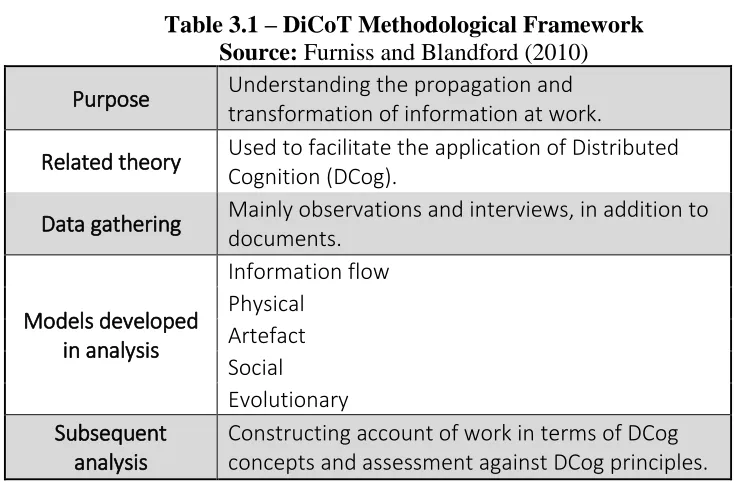
3.1 – DiCoT Methodological Framework ...71
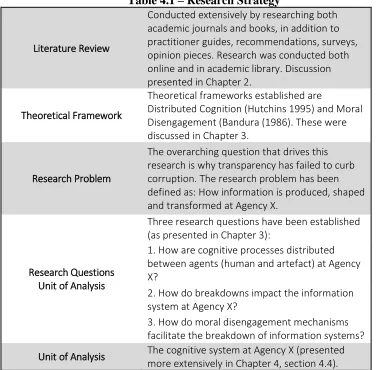
4.1 – Research Strategy ...101
4.2 – List of Artefacts ...108
4.3 – DiCoT Models...116
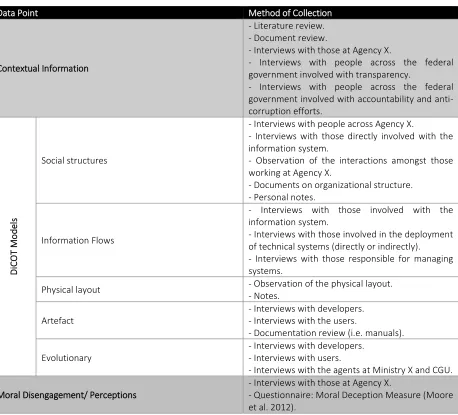
4.4 – Data Points ...119
5.1 – Biggest Sources of Corruption in Government ...133
5.2 – Overview of Main Corruption Scandals in Brazil ...134
5.3 – Examples of Moral Disengagement in the Context of Operation Car-Wash ...143
5.4 – Overview of Operations by the Federal Police Department ...148
5.5 – Number of Cases Accumulated at the Supreme Federal Tribunal ...148
5.6 – Transparency Portal Information Access ...154
5.7 – Number of Civil Servants at Agency X by Hierarchical Level and Gender ...159
6.1 – Summary of Artefacts ...186
6.2 – Summary of Agents Involved in the Cognitive System ...198
6.3 – Communication Channels ...200
6.4 – Summary of Incidences of Corruption at Agency X ...218
6.5 – Overview of Moral Disengagement Mechanisms Observed at Agency X ...230
7.1 – Summary of Findings: DiCoT Models and DCog Principles Applied to Unit of Analysis ...244
7.2 – Summary of Breakdowns ...256
14
LIST OF FIGURES
1.1 – Brazil Corruption Index 1995 – 2017 ...22
2.1 – Papers on Referencing Transparency in Business Journals ...40
2.2– The Transparency Systems Environment ...51
2.3– Transparency as an Information System ...52
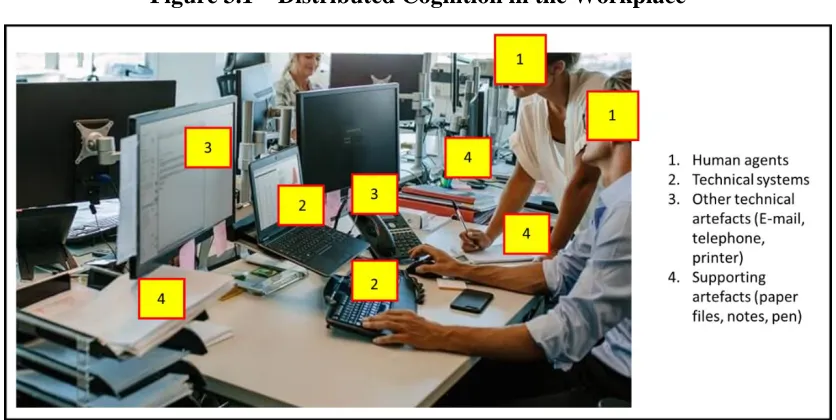
3.1 – Distributed Cognition in the Workplace ...62
3.2 – Representation of Traditional Cognitive vs Distributed Cognitive ...64
3.3 – The Transparency System Under a Distributed Cognitive Perspective ...73
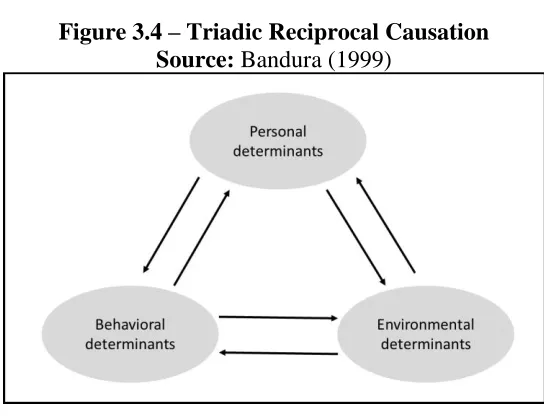
3.4 – Triadic Reciprocal Causation ...77
3.5 – Moral Disengagement Mechanisms ...79
3.6 – Research Questions ...87
4.1 – Overview of Actors at Agency X ...107
5.1 – Inflation Rates (1997 – 2017) ...127
5.2 – GDP Growth Rates (2010 – 2017) ...128
5.3 – Campaign Slogan for Janio Quadros in 1960 ...130
5.4 – Overview of the Brazilian Anti-Corruption Legislation ...141
5.5 – How a Ministry is Structured ...145
5.6 – The Web of Accountability Institutions in Brazil ...149
5.7 – The Brazilian Transparency Framework ...151
5.8 – Evolution of the Transparency Framework in Brazil ...152
5.9 – Evolution of Information Available in the Portal ...153
5.10 – Brazil’s Open Budget Index Ranking Evolution ...153
5.11 – The Transparency Portal’s Data Sources ...156
5.12 – Screenshot of SIAFI Login Page ...158
5.13 – The Chain of Communication from Ministry to End-User ...161
5.14 – Systems Overview: How Information is Processed...166
5.15 – Incidences of Corruption at Agency X ...168
5.16 – Screenshot of Entry on Transparency Portal Depicting Licitation Exception ...170
15
5.18 – Contextual Overview ...173
6.1 – Decomposition of the Procurement Process ...179
6.2 – High Level Input-Output Model ...181
6.3 – Representation of the Physical Layout at Agency X ...183
6.4 – SIAFI Interface ...189
6.5 – Communication Between Artefacts ...192
6.6 – Communication Flows ...199
6.7 – Overview of Information Flow ...202
6.8 – Overview of Information Hubs and Behavioral Triggers ...204
6.9 – Score of 5 or Above per Category ...227
6.10 – Number of Individuals Who Scored 5 or Above In 1 or 3 Constructs ...228
6.11 – Number of Individuals Who Scored 6 or Above In 1 or 3 Constructs ...228
7.1 – Representation of Information Flows at Agency X ...253
16
LIST OF ACRONYMS
CARF - Administrative Council of Tax Appeals
CGU - Comptroller General of the Union
COAF - Control for Financial Activities' Council
CPI - Parliamentary Commission of Inquiries
Dcog - Distributed Cognition
DiCoT - Distributed Cognition for Teamwork
DPF - Federal Police Department
e-SIC - Electronic System for Citizen Information Service
FoIA - Freedom of Information Act
FRL - Fiscal Responsibility Law
GDP - Gross Domestic Product
ICT - Information and Communication Technology
IntSys - Internal System
MD - Moral Disengagement
MPF - Federal Public Prosecutors' Office
NGO - Non-Governmental Organization
PF - Physical File
PO - Purchase Order
RN - Request Number
RoC - Reserve of Cash
SIAFI - Integrated System of Federal Government Financial Administration
SIAPE - Integrated System of Administration of Human Resources
STN - National Treasury Secretary
17
CHAPTER 1
INTRODUCTION
1.1 Motivation and Object of Research
Corruption has been heavily researched in the past decade by scholars from a variety of
fields, such as political science, organizations, sociology, public administration, and information
systems (Heidenheimer et al. 1989; Bardhan 1997; Heeks 1999; Rose-Ackerman 2006; Moore
2008). In this regard, Chang and Chu (2006: 259) state that “political corruption is considered one
of the most destructive yet unresolved problems common to most societies. Importantly, political
corruption represents a direct and brutal betrayal of trust placed in institutions”.
As a result, a number of theories have emerged to explain such a phenomenon, as has
research on how to combat it and e-government has been hailed as an effective tool against it. The
rationale behind such investments has been two-fold: first, e-government is a seen as a mechanism
towards streamlining and automating governmental process thereby reducing opportunities for
corruption. Second, e-government is seen as a tool towards enhancing levels of transparency and,
as a result, making inner government operations more visible and giving citizens the chance to
monitor them.
However, as Calland and Bentley (2013) contend, there is a lack of evidence corroborating
the effectiveness of technology-mediated transparency, as well as a lack of studies that can
effectively demonstrate the links between transparency and corruption. Gaventa and McGee
(2013) further add that most studies seem to rely on normative assumptions; in addition, “the
assumptions underlying the causal chain, from inputs to outcomes and impact, are absent, vague,
18 Therefore, this thesis originated as a result of that query: what exactly are the links between
transparency and corruption? Past research on transparency in Brazil (as part of an MSc degree in
Comparative Politics, concluded in 2012) had led to the conclusion that transparency had not acted
as an effective deterrent against corruption. This apparent gap in the literature, coupled with an
interest in understanding the issue in Brazil thereby formed the basis for how this thesis was
structured.
The aim of this Chapter is to present some of the literature and findings which have
motivated this present piece of research (section 1.2). In addition, it aims to present previous work
produced on transparency in Brazil which has served to motivate the research undertaken in this
thesis (section 1.3). Section 1.4 will then present how this thesis is structured, in addition to the
research questions which have been proposed and the methodology adopted. This Chapter ends
with a few concluding remarks (section 1.5).
1.2 e-Government and Transparency
E-government can be loosely defined as “the use by government of digital technologies
internally and externally, to interact with citizens, firms, other governments, and organizations of
all kinds” (Margetts 2009: 114). According to Brown (2005), it was around the early 2000s when
the term gained traction, in spite of the fact that the use of information technology by governments
can be traced back to at least the 1950s.
Currently, e-government is considered one of the main ways of achieving transparency.
Corroborating this, Avgerou et al. (2006: 2) state that “ICT2 came to be associated not only with
19 efficiency gains but also with reduction of corruption and the strengthening of the institutions of
democracy”. The speed with which governments across the world have adopted ICTs has been
impressive (Gallego-Alvarez et al 2010). Calland and Bentley (2013) note that in 1990, only two
countries had Freedom of Information legislation regulating Open Government initiatives, whilst
currently over eighty do.
Furthermore, scholars observe that the best way of achieving transparency is through the
use of technology, most notably in the form of transparency portals (Wescott 2003; Bertot, Jaeger
and Grimes 2010; McGee and Gaventa 2010; Pina et al. 2010; Holmen 2011). As a result, a
growing number of papers have been published, hailing the benefits of technology as a
democratization tool and introducing a series of terms to express this mindset, such as
e-transparency, e-participation and Open Government.
Fox and Haight (2011: 353) state however that transparency is not “an all-powerful magic
bullet”. To this effect, Kling et al. (2005: 594) affirm that “Technological determinism treats ICTs
as information processing systems whose technical characteristics cause specific social changes
when they are adopted and used. . . Technological determinism cannot adequately account for the
interactions among ICTs; the people who design, implement, and use them; and the social and
organizational contexts in which technologies are embedded”.
Thus, heavily reliant on a technological deterministic view, many e-government studies
seem to overlook the “government” factor, focusing instead on the electronic component. As such,
they overlook the complex environment that a governmental institution is, and the entrenched
structures that have been constructed over time, relying instead on the supposition that investments
will automatically translate into the desired results. In addition, current models overlook the
20 along the same pattern and that any failed attempts are naturally the result of implementation errors
(Bussell 2011). As Rose (2005: 1) contends, “E-governance is necessarily influenced by its
national context”. Therefore, technology itself cannot be regarded as the means of institutional
reform, but rather as a tool (Margetts, 2009).
To counterbalance such deterministic views on transparency, an emerging body of research
which favors a socio-technical view of technology has started to emerge. As Bostrom and Heinen
(1977: 17) explain, under a socio-technical optic, an organization is conceived as a socio-technical
system which is “made up of two jointly independent, but correlative interacting systems – the
social and the technical”. Hence when analyzing the impact of technology deployment, both
organizational and social processes must be considered (Bostrom and Heinen 1977; Kling and
Lamb 2000).
In spite of this emerging body, when it comes to transparency specifically, these are still
minority voices. Moreover, it is important to note that efforts to relate transparency and corruption
have consisted mainly of statistical analyses that, despite demonstrating that a negative correlation
between such concepts does in fact exist, have often resulted in weak findings, failing to explain
variations in results and the reasons for the existence of so many outliers to the model (Wong and
Welch 2004; Gaventa and McGee 2013). Such is the case of Brazil, as concluded in a previous
research effort (Martinez 2012).
21 1.3 Transparency in Brazil
As mentioned in the introductory remarks of this chapter, part of the motivation for this
research rested on the fact that it had been concluded previously that Brazil, despite its many efforts
in transparency, had failed to effectively deter levels of corruption. This section, therefore, aims
to give an overview of what the transparency framework in Brazil consists of and the data that
confirms that corruption is still an issue that is very prevalent.
e-Government deployment in Brazil officially began in 2000 (Barbosa et al. 2007; Matheus
et al. 2011). The rationale for such investments, according to Magalhães et al. (2009), stemmed
from: 1) the idea that this would allow Brazil to join the ranks of developed countries, and 2) an
extensive initiative to reform budgetary legislation and allow for transparency of these processes.
As part of this strategy, Brazil enacted the “Fiscal Responsibility Law” (Complimentary
Law N.101) in 2000, which imposed certain spending limits on all spheres of government. This
legal framework would then be consolidated with additional legislation being enacted in
subsequent years: the Transparency Law in 2009, and the Access to Public Information Law in
2011. Moreover, in 2004, the Brazilian federal government launched its Transparency Portal,
which provides comprehensive information on spending, transfers, social programs, and
personnel.
The information made available on the Transparency Portal is real-time and very detailed.
Furthermore, the information contained in the Portal is subject to auditing twice a year and is
deemed reliable and trustworthy. In this respect, Brazil was considered the 7th most transparent country in the world (Open Budget Index 2017). In spite of this concerted effort, the expected
22 Brazil’s Corruption Perceptions Index (Transparency International 2012) remains at a high
level, and has done so over the years. Comparing its position prior to 2004, when the Transparency
Portal was deployed, and after, it was possible to ascertain that levels of corruption have remained
relatively stable through time (see Figure 1.1). Moreover, data shows that the cost of corruption
has been significant: it is estimated that in the past decade, over US$355 billion were embezzled,
which equates to 2.3% of Brazil’s GDP (FIESP 2010). Corruption investigations in the past few
years (dubbed “Car-Wash” investigations, launched in 2014) have also revealed the extent of
corruption within Brazilian government institutions, which has spread to all levels and spheres.
Also, it is estimated that the probability of a civil servant who engages in corruption being
criminally prosecuted is less than 5% (FIESP 2010).
Figure 1.1 – Brazil Corruption Index 1995 – 2017 Source: Transparency International
Based on findings regarding Brazil, coupled with the need for e-government studies to
adopt a more socio-technical view of technology, the question of how exactly transparency
operates started to emerge. The next section of this Chapter is therefore to demonstrate how this
23 1.4 Framing the Study
As discussed, previous research (Martinez 2012) concluded that efforts in Brazil to curb
corruption through transparency had failed to materialize. In addition, it was also previously
identified that most research conducted in e-government (the platform which allows transparency
to exist) and transparency itself has been of a technological deterministic nature. As a result, this
thesis favored a socio-technical approach. This section will thus review how this thesis is
structured in order to address the research questions that will be proposed.
1.4.1 Thesis Structure
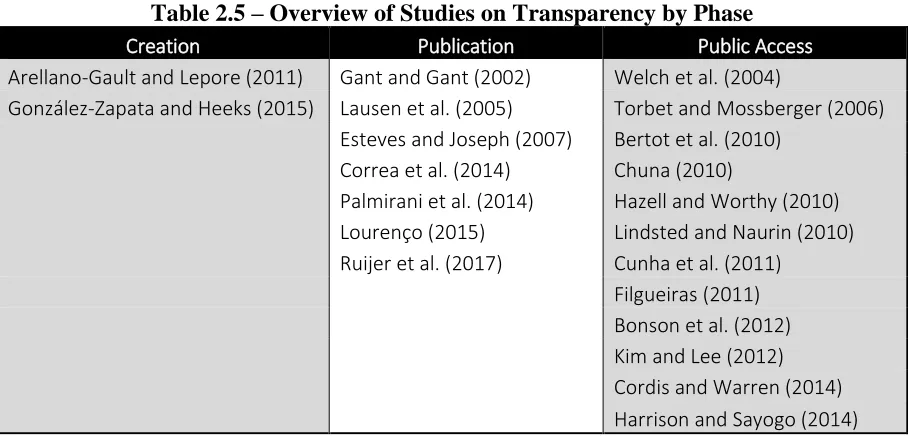
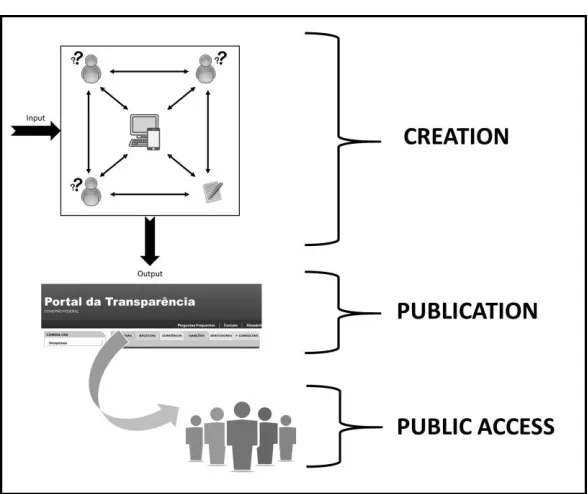
As will be reviewed in Chapter 2, transparency in this study is conceptualized as a flow of
information which comprises three distinct phases: creation of information, publication, and public
access of information. Based on the literature review undertaken, it is possible to determine that
most studies on transparency have concentrated on the publication and public access phases,
overlooking the creation stage, which, as argued, is critical to how effective transparency can be.
As a result, it was concluded that that would be the focus. The intent would be to find out how
information is created and how it is linked to existing corruption levels.
In order to approach such study, Chapter 3 presents two theoretical frameworks which were
adopted: distributed cognition (Hutchins 1995) and moral disengagement (Bandura 1986).
Distributed cognition is considered a socio-technical theory and, as such, takes into account both
technical and social elements in its analysis. Moral disengagement, on the other hand, is rooted in
social cognitive psychology, and is used to study corruption amongst the individuals that integrated
24 adopted, was the “cognitive system”. As a result of the discussion in Chapter 3, three research
questions were defined:
R1: How are cognitive processes distributed between agents (human and artefact) at Agency X?
R2: How do breakdowns impact the cognitive system at Agency X?
R3: How do moral disengagement mechanisms facilitate the breakdown of cognitive systems?
Based on these research questions, the object would be to comprehend how information is
created, in terms of its distribution between human agents and technical artefacts, but also assess
“breakdowns”, i.e. instances in which the information flow was subject to workarounds or
deviations, which impacted the quality and accuracy of the information being produced.
Additionally, the third research question aimed to address the role morally disengaged individuals
(which, as will be reviewed are more prone to unethical decision-making) had in such breakdowns.
Agency X, as will be reviewed more extensively in Chapter 5, is the locus for the unit of
analysis. A government agency within the Brazilian federal government, it was identified there the
presence of ongoing acts of corruption, making it the ideal scenario for studying the creation of
information in an unethical environment.
Chapter 4 presents discussion on the research design which allows for these research
questions to be addressed. As will be discussed, this study adopts a case study approach. It thus
makes use of qualitative data gathering techniques, such as interviews and participant observation.
25 As will be reviewed, government institutions are complex organizations. As such, the unit of
analysis is subject to a number of influencing variables including (but not limited to) the legal
framework under which it operates.
Chapter 6 focuses on presenting the data analysis. As will be reviewed, this study applied
the distributed cognition for teamwork (DiCoT) by Furniss and Blandford (2006) to the data
analysis. DiCoT draws principles from distributed cognition in order to apply it to the analysis of
data in a more structured way. Chapter 6 also presents the analysis through the moral
disengagement theoretical lens. As a result, Chapter 7 is then able to present findings and address
the research questions proposed. Chapter 8 ends with concluding remarks.
1.5 Conclusion
This introductory Chapter served the purpose of presenting the motivation for this piece of
research and situating the reader as to how this thesis is structured. Each of the aspects mentioned
will be more extensively discussed throughout the Chapters.
As a result of this study, some firm conclusions as to how information is created and its
links to corruption will be drawn. In addition, a framework for future studies will be delineated, as
26
CHAPTER 2
LITERATURE REVIEW
2.1 Introduction
Corruption is a theme that has received a great deal of attention, both in academia and by
practitioners and civil society. Likewise, how to combat it has equally received a great deal of
attention. In this regard, transparency has been hailed as an anti-corruption mechanism, especially
with the advent of technology and its potential to amplify it, with a growing number of studies in
several fields (political science, management, information systems etc.) seeking to confirm its
effectiveness as a deterrent (Meijer 2001; Pina et al. 2007; Andersen and Henriksen 2006;
Andersson and Bergman 2009; Shim and Eom 2009; Heald 2012; Carlitz 2013). Part of a wider
and more concerted investment effort in e-government, most research conducted in these fields
does indeed demonstrate a negative correlation between transparency and corruption, indicating
the effectiveness of such a tool. However, there has been little evidence as to why such strategy
works. In addition, as will be reviewed in this Chapter, there are several aspects of transparency
which have been under-researched, largely due to how the concept has been approached.
This Chapter seeks therefore to review the main literature on corruption and e-government
and thus offer the basis for how this thesis has been framed. As such, it is divided as follows:
section 2.2 will review the literature on corruption and two different approaches as to how
individuals rationalize when engaging in corruption. Section 2.3 presents anti-corruption
measures, more specifically the use of e-government and transparency to curb corruption. Section
2.4 aims to then discuss two differing approaches to technology and e-government: a technological
27 way of conceptualizing transparency which aids in comprehending how it functions, and where
gaps in the literature exist. Section 2.6 then ends this Chapter with a few concluding remarks.
2.2 Corruption
The theme of corruption – its causes, effects, and measures to combat it – is an area that
has been heavily researched throughout the course of the past sixty years (Gaskins 2013).
According to Tanzi (1998), corruption is not a new phenomenon and can be dated back to at least
two-thousand years ago; Machiavelli and Rousseau, for example, both wrote about it, with the
former describing it as a gap between collective moral standards and everyday conduct (Warren
2004). The difference now (and has been in recent decades) relates to the attention it now garners
both amongst scholars, as well as amongst the general public. Several arguments can be raised to
justify why corruption now receives more attention than in the past, amongst which, the
availability of information that is now available, an increased role played by non-governmental
organizations such as Transparency International, and the third wave of democratization along
with its ideology of rule of law, freedom of speech and greater accountability (Tanzi 1998; Della
Porta 2004).
The vast and rich amount of studies produced has led to a number of different approaches
and conceptualizations. Warren (2004: 328), for example, states that corruption should be defined
as the reduction of “public agencies of collective action to instruments of private benefits”. Nye
(1967: 38) on the other hand offers a more comprehensive definition, stating that it is “behavior
28 family, private clique) pecuniary or status gains; or violates rules against the exercise of certain
types of private-regarding influence”.
Johnston (2005: 11) offers an additional explanation, whereby corruption is the “abuse of
a trust, generally one involving public power, or private gains which often, but by no means
always, come in the form of money”. Nye’s and Johnston’s definitions point to the difficulty in
coming up with a single workable definition, partly due to the fact that corruption does, in fact,
take many different forms. To this extent, Johnston (1997: 6) goes on to affirm that:
“No issue is more enduring in the corruption debate, and none has so frequently preempted promising discussions, as that of definitions. Despite the fact that most people, most of the time, know corruption when they see it, defining the concept does raise difficult theoretical and empirical questions.”
Certainly, the most used definition can be summed up as the abuse of public power for
private gain (Heidenheimer et al. 1989; Bardhan 1997), though Pillay and Dorasamy (2010) affirm
that this definition is a gross over-simplification of what corruption actually entails.
This lack of a single workable definition is also reflected in the number of different
approaches to studying the concept of corruption. Graaf (2007) and Pinto et al. (2008) suggest that
corruption can be approached at a micro or macro level, either focusing on an individual- or
organizational-level. Others suggest studying it a national or cross-national level, or indeed at
multiple-levels (Azfar et al. 2001; Huberts 2010). The different approaches do not only refer to
the level at which it is studied, but also to the theoretical approach of it. Upon conducting research
on this topic, at least ten different theoretical approaches were identified (Boudon 2003; Pillay and
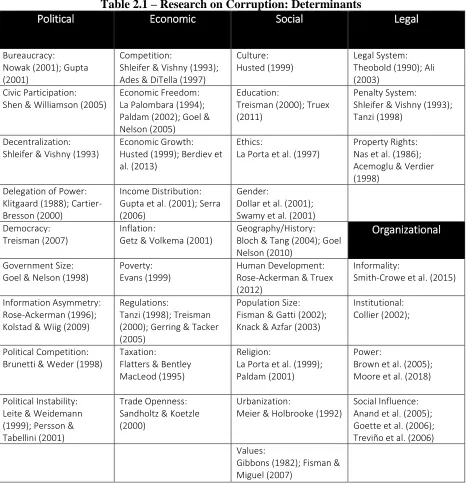
29 approaches, in addition to over forty reasons listed as to the determinants of corruption (see Table
[image:29.612.75.541.166.652.2]2.1).
Table 2.1 – Research on Corruption: Determinants
Political Economic Social Legal
Bureaucracy: Nowak (2001); Gupta (2001)
Competition:
Shleifer & Vishny (1993); Ades & DiTella (1997)
Culture: Husted (1999)
Legal System: Theobold (1990); Ali (2003)
Civic Participation: Shen & Williamson (2005)
Economic Freedom: La Palombara (1994); Paldam (2002); Goel & Nelson (2005)
Education:
Treisman (2000); Truex (2011)
Penalty System:
Shleifer & Vishny (1993); Tanzi (1998)
Decentralization: Shleifer & Vishny (1993)
Economic Growth: Husted (1999); Berdiev et al. (2013)
Ethics:
La Porta et al. (1997)
Property Rights: Nas et al. (1986); Acemoglu & Verdier (1998)
Delegation of Power: Klitgaard (1988); Cartier-Bresson (2000)
Income Distribution: Gupta et al. (2001); Serra (2006)
Gender:
Dollar et al. (2001); Swamy et al. (2001) Democracy:
Treisman (2007)
Inflation:
Getz & Volkema (2001)
Geography/History: Bloch & Tang (2004); Goel Nelson (2010)
Organizational
Government Size: Goel & Nelson (1998)
Poverty: Evans (1999)
Human Development: Rose-Ackerman & Truex (2012)
Informality:
Smith-Crowe et al. (2015)
Information Asymmetry: Rose-Ackerman (1996); Kolstad & Wiig (2009)
Regulations:
Tanzi (1998); Treisman (2000); Gerring & Tacker (2005)
Population Size: Fisman & Gatti (2002); Knack & Azfar (2003)
Institutional: Collier (2002);
Political Competition: Brunetti & Weder (1998)
Taxation:
Flatters & Bentley MacLeod (1995)
Religion:
La Porta et al. (1999); Paldam (2001)
Power:
Brown et al. (2005); Moore et al. (2018)
Political Instability: Leite & Weidemann (1999); Persson & Tabellini (2001)
Trade Openness: Sandholtz & Koetzle (2000)
Urbanization:
Meier & Holbrooke (1992)
Social Influence: Anand et al. (2005); Goette et al. (2006); Treviño et al. (2006) Values:
30 The aim of this Chapter, however, is not to present an exhaustive discussion of every single
theoretical approach to corruption, as this would detract from the focus of this thesis. Instead, as
Palmer (2012) suggests, these can be grouped into two categories, which refer to corrupt
individuals themselves regarding their intent to engage in corruption: mindful rationality, and
mindless (bounded) rationality (Palmer 2012). Both categories serve as an umbrella for theoretical
approaches (see Table 2.2) and have produced a significant number of studies (though the former
has been the predominant approach). In addition, they both offer diametrical views on corruption
and corrupt-intent. These will be reviewed in more detail in the next section.
Table 2.2 – Mindful and Mindless Approaches
Approach Examples of Theories Which Adopt This
Approach Examples of Studies
Mindful and Rational
Rational Choice, Deterrence, Principal-Agency, Ethical Decision
Rasmusen and Ramseyer 1994; Rose-Ackerman 2006; Hastie and Dawes 2001; Holmes 2009; Chen 2011; Voliotis 2011; Shalvi 2016
Mindless and Bounded Rationality
Cognitive Psychology, Culture, Situational Social Influence, Administrative, Institutional
Collier 2002; Anand et al. 2005; Darley 2005; Lorenz et al. 2006; Treviño et al. 2006; Moore 2008; Carson 2014; Moore et al. 2018
2.2.1 Mindful Rationality
Mindful rationality is the most dominant account of corruption (Palmer 2012) and assumes
that individuals are rational beings, engaging in rational decision-making. Downs (1957: 4)
summarizes this type of individual by claiming that “conscious rationality prevails”. This approach
31 outweigh the costs (Rose-Ackerman 2006). In other words, individuals are “rational
utility-maximizers” (Collier 2010: 12) and utilize a cost-benefit framework when deciding whether or not
to engage in corruption (Becker 1962). As Oliveira (2007: 16) explains, “rational individuals
establish a weighing mechanism between choice and value. Rational methodologies lead to the
optimization of the outcomes by emphasizing the process of choosing rather than what is chosen”.
Hence, under this approach, emphasis is given to the rational thought process undertaken by
individuals in order to evaluate the situation and hence make a choice of whether or not to engage
in corruption.
Mindful rationality also posits that individuals act on the basis of self-interest preferences
(Hall and Taylor 1996). By calculating costs and benefits, individuals are also seeking to achieve
their preference, whatever that may be (happiness, power, money etc.). Thus, this approach tends
to regard rational beings as people of a dubious character, or “bad apples”. As Graaf (2007)
explains, “bad apples” are “people with a faulty (moral) character. . . There is a causal chain from
bad character to corrupt acts; the root cause of corruption is found in defective human character
and predisposition toward criminal activity”. In regard to the morality of individuals, Graaf (2007)
explains however that there is little empirical evidence for this claim which is mostly based on
assumption.
Two theories which adopt this approach are deterrence theory and principal-agency theory.
In the case of deterrence theory, Carson (2014: 13) claims it refers to raising levels of penalty and
maximizing chances for detection and prosecution, actions that would result in deterred behavior
due to the increased costs (see also Rose-Ackerman 2006 and Cooter and Ulen 2014). To this
extent, Greve et al. (2010: 60) explain that “Rational-choice modeling assumes self-interested
32 but harmful for transaction partners or third parties”. As such, the solution for curbing corruption
is to increase levels of sanctioning.
Regarding the principal-agency theory, this refers to the relationship between principals
(i.e. citizens) and agents (i.e. bureaucrats). Both enter into a relationship in which the former
delegates power and responsibility to the latter. If, however, there are little chances for the principal
to monitor the activities of the latter, since these are assumed to be rational and maximum
utility-seekers, then there is a high probability that agents will take advantage of principals and seek to
benefit and abuse that relationship. The lack of opportunity for monitoring the activities of the
agent by the principal is due to that agents possessing knowledge that principals do not as a result
of the fact that it was delegated to them by means of power and responsibility. This imbalance is
referred to as “power asymmetry”, hence the only way to curb corruption in this instance is to
reduce the asymmetry by means of increased transparency.
The mindful rationality approach has not, however, been immune to criticism, with some
highlighting what they perceive to be a reductionist quality to it. According to Mercer (2005:
80-81), studies which adopt this approach “explain how one should reason, not how one actually
reasons” nor do they adequately address how people “make decisions to reach an outcome”.
Carson (2014: 19) adds that “despite the theoretical and intuitive elegance of the rational actor
model, the reduction of human decision-making processes to autonomous calculations of
probabilities and outcome appraisals fails to explain why individuals frequently make choices that
do not maximize their total expected utility and thus appear ‘irrational’”.
To this extent, mindless rationality represents a diametrically opposite view. This will be
33 2.2.2 Mindless Rationality
Mindless rationality is diametrically opposed to mindful rationality. Whereas in the former,
individuals are theorized to be rational beings, in the latter, individuals can act in ways that are
irrational, making decisions that can even go against their own best interest. In addition, as opposed
to the mindful rationality approach which has dominated corruption studies, research is still
emerging in this area (Palmer 2012).
Under this approach, individual decision-making is subject to the influence of many
factors, such as motivation, mental capacity, social influence, and cultural context. Moreover, it
encompasses several theoretical approaches, such as cultural, institutional, and cognitive
psychology theories. The fundamental idea that unites this group of theories is its emphasis on the
social context. In other words, these theories emphasize context as an influencing factor of human
behavior. As Palmer (2012: 15) affirms, “the human experience consists largely of exposure to
socially constructed input. . . [people] react automatically to one’s environment, following innate
predispositions, learned social codes, or organizational rules and protocols”. What this means is
that individual behavior is subject to social influence and how that individual construes their
reality.
Cognitive psychology specifically has emerged as a group of theories which adopt this
view of the individual whereby attitudes, personal beliefs, and subjective norms play a decisive
role (Darley 2005). As Oliveira (2007: 13) states, this body of work “has been able to explain at
some extent why people may deviate from rational behaviors. One of these explanations, for
example, is based on the principle that people’s set of beliefs, or culture, might influence and
34 that individuals are subject to conducting faulty analyses of costs and benefits, even to the
detriment of their own personal benefit.
This approach to corruption can be traced to the human agency model in social cognitive
psychology theory by Bandura (1986), which determines that human functioning is the result of a
“three-way, interactive causation”, a model he labels as “triadic codetermination” (Bandura 2016:
6). This means that human functioning is the “product of the interplay of personal influences, the
behavior individuals engage in, and the environmental forces that impinge on them” (ibid). This
three-way interplay takes place in a bi-directional way, with each of the three factors listed actively
reinforcing one another. Thus, individual behavior is both subject to the influence of their
environmental context, and an influencer in their environment around them. Likewise, their
behavior stems from personal determinants, but the result of their behavior will also bear an
influence on them personally. This adds a higher level of complexity as to why individuals would
engage in corrupt behavior, with no straightforward answer.
The theory of reasoned action is another which falls under this category. It posits that
human behavior is the result of motivational influences (Madden et al. 1992). In this regard,
Madden et al. (1992: 3) affirm that beliefs represent “the underlying influence on an individual’s
attitude toward performing the behavior”. Corrupt behavior is therefore subject to psychological
determinants, which are not always the result of rational information processing. The main
difference between the theory of reasoned action and social cognitive psychology is that the latter
does not posit that behavior is solely due to internal cognitive processes. Rather, it states that
individuals are influenced by their social contexts.
Researchers who adopted this approach to organizational studies have established some
35 1. Power. According to them, individuals in a position of power are more likely to engage
in corruption. This is due to a series of different factors, amongst which, the belief that
power grants individuals the right to pursue self-centered goals. Darley (2005) also
suggests that those in a position of power are able to easily influence those who they
hold power over. Unethical leadership has been found to be positively correlated with
corruption levels (Moore et al. 2018).
2. Rationalization. Dupuy and Neset (2018) describe this as the action to rationalize or
justify behaviors that would otherwise be morally reprehensible. Palmer (2012) refers
to this process as reframing, whilst Bandura (1986) expands on this notion and offers a
full range of mechanisms through which individuals “morally disengage”, thus
eliminating any feelings that might otherwise result in self-condemnation. Gino (2016:
83) further explains that “self-serving justifications can be viewed as a form of ‘moral
disengagement’ in which cognitive mechanisms deactivate moral self-regulation”.
3. Informality. Smith-Crowe et al. (2015) contend that informality within an organization
allows for corruption to flourish. In this regard, formal arrangements (i.e. norms and
codes of conduct) serve to constrain behavior. In lieu of such formal arrangements,
corruption tends to grow.
4. Social Influence. Researchers affirm that the degree of interaction between individuals
in a work setting is high. Due to the social relationships formed, this dynamic has the
ability to shape behavior (Cialdini 2001). Individuals within work environments where
levels of corruption are high will therefore present a greater propensity towards
36 and social influence experienced. This proposal is congruent with that posited by
Bandura (1986) in his model of human agency.
For researchers who have adopted this approach, the notion of the “bad apple” should be
contested, since they believe that those who engage in corruption are not necessarily bad people
or of a morally dubious character. On the contrary, studies have shown that morality is flexible in
that you may behave immorally in one aspect of life, but righteously in another (Bandura 1986;
2016). To this extent Gino (2016: 83) adds that “people who value morality often show moral
flexibility, behaving unethically if they are able to convince themselves that their behavior is not
immoral. As this body of research suggests, morality is malleable”. Dimant (2013: 14) adds that
an “individual’s actual behavior is unlikely the result of a sound business calculation, as the risk
is not properly assessed”. Thus, the cognitive processes that compel an individual to engage in
corruption are diverse and subject to a confounding number of factors.
In summary, this view on corrupt individuals posits that individuals are bounded in their
rationality. Moreover, such individuals are viewed as complex, whose decisions may or may not
be rational, and subject to external influences. Oliveira (2007) cites that the main differentiator
between bounded rationality and mindful rationality is that the former focuses on how individuals
make decisions, whereas the latter clarifies how individuals should decide.
As stated previously, most of the research in corruption conducted thus far has adopted the
rational approach which, due to the way it views individuals, has been able to provide a more
parsimonious body of work (Gino 2016). As a result, most of the anti-corruption measures devised
37 2.2.3 Summary
The great interest in the study of corruption has generated plenty of studies on the topic,
originating from a varied range of fields: public administration, political science, law, among
others. This has resulted in several different explanations for why corruption exists (as can be
viewed in Table 2.1) and reflects the diversity of the topic and difficulty in pinpointing one single
solution.
Such diversity is also the result of the many different theoretical approaches that have been
adopted to study corruption. These tend to fall into two categories: those that view the corrupt
individual as rational, and maximum utility-seekers, and those that view the individual as bounded
in their rationality and how they construe their realities, subject to influence from their
environment.
The great interest in corruption has resulted in a range of anti-corruption studies and
solutions, amongst which investments in e-government. This will be reviewed in the next section
of this Chapter.
2.3 Anti-Corruption Measures
In the mid-1990s, a range of international organizations such as the United Nations, the
IMF (International Monetary Fund), and the World Bank began to raise awareness to the issues
resulting from corrupt practices and lobby for measures which had the intent of curbing corruption
(Bukovansky 2006). Several NGOs, such as Transparency International, also played a pivotal role
in advancing the anti-corruption discourse, which has resulted in a range of different policies and
38 Collier (2002: 13) states that the purpose of “anti-corruption programs is to strengthen state
boundaries separating public office from private interests”. In that regard, the recommendations
made have been mostly inspired by the mindful rational view of individuals and the bulk of
anti-corruption policies fall into two categories. The first refers to the manipulation of the incentive
structure. Based on the notion that individuals are maximum utility-seekers, these policies aim to
increase the cost of corruption for those who engage in it and offer benefits or incentives for those
who refrain from it (Hopkin 2002; Dupuy and Neset 2018). Such mechanisms have resulted in
recommendations for enhanced levels of sanctioning and strengthening of legislative frameworks
on the one hand, and financial and business incentives on the other.
The second recommendation refers to reducing the “information asymmetry” and
reengineering the institutional design so as to strengthen oversight and control (Rothstein 2011).
This means making more information available to principals (e.g. civil society) and creating
opportunities for the behavior of agents to be monitored. Such a notion, based on the
principal-agency theory, has resulted in recommendations for organizations and governments to increase
levels of transparency (Arellano-Gault and Lepore 2011). From this perspective, transparency is
considered to be “the ability of the principal to observe how the agent behaves and the
consequences of the agents’ behavior”. Bertot et al. (2010: 264) add that “transparency ultimately
serves to keep government honest”.
Largely facilitated by the Internet and information and communication technologies
(ICTs), the number of governments across the world that have adopted transparency as an
anti-corruption mechanism has grown considerably (Bertot et al. 2010). Norris (2002) notes that in the
early 2000s there were already overfourteen thousand agencies online worldwide. These topics,
39 2.3.1 Defining Transparency
Transparency is an important instrument in democracies and is considered one of the
central elements of a democracy, considered to be a “key way to address both developmental and
democratic deficits” (Gaventa and McGee 2013: 4) and one of the most powerful tools against
corruption (Lindstedt and Naurin 2010). One of the main reasons for this is that a transparent
government is capable of revealing “whether representatives really represent, whether
functionaries actually function, and whether the system of justice is truly just” (Fox and Haight
2011: 354).
The term gained relevance in the 1990s when it became associated with elements of “good
governance” (Schmitter 2004: 990). According to Margetts (2011: 518) promoting transparency
means to “fulfil citizens’ ‘right to know’ about government and policy making”, in addition to
being the “‘key to better governance’ by enhancing certain administrative values, such as integrity,
fairness and efficiency”. Due to its perceived importance in both political and management
sciences, it has become a term that has been widely discussed, with the number of studies on the
topic growing considerably over the years (Fox and Haight 2011; Schmitter 2010; Heald 2012)
(see Figure 2.1), with many different interpretations being attributed to it (Matheus et al. 2012). In
his study, Schnackenberg and Tomlinson (2016) identified more than fifteen different meanings
40 Figure 2.1 – Papers on Referencing Transparency in Business Journals
Source: Schnackenberg and Tomlinson (2016)
Definitions for it have been mostly vague and often confusing as it is commonly mistaken
for accountability, sometimes considered a dimension of the latter, sometimes synonymous with
it, despite the fact that the two are not the same (Stirton and Lodge 2001). Furthermore, due to its
perceived democratic virtues, “transparency is often presented as a public virtue, which it is
discreditable or inadvisable to oppose” (Heald 2012: 31). In this sense, Kim et al. (2005: 649) add
that the concept of transparency “carries with it a powerful array of moral and political
associations, including honesty, guilelessness, and openness”.
Meijer (2009: 258) puts it simply as “lifting the veil of society” and Birkinshaw (2016:
189) posits that it refers to the “conduct of public affairs in the open or otherwise subject to public
scrutiny”. More than simply gaining an insight into the conduct of public institutions, transparency
refers to openness of processes, procedures, rules, regulations, decisions, operations, functioning
and performance; in other words, all information that is necessary for evaluating the institution in
41 Grimmelikhuijsen 2010; Lindstedt and Naurin 2010). Roberts (2009: 957) reflects that
transparency, therefore, serves to “cast light upon what would otherwise remain obscure or
invisible”. Thus, information is vital for the promotion of citizen rights, and an essential part of
good public governance (Margetts 2011).
Heald (2006: 26) explains that “transparency extends beyond openness to embrace
simplicity and comprehensibility” and “requires external receptors capable of processing the
information made available”. Both Birkinshaw (2006) and Heald (2006) allude to the possibility
of a system being open but not necessarily transparent. This, therefore, is an important
consideration for those evaluating the extent to how transparent an institution really is.
Such an array of different definitions for the term have led to a range of different studies,
several of which have adopted different understandings towards the topic. Moreover, the lack of
definition for transparency has often resulted in it being treated as something “elusive” and
over-simplified, resulting in superficial analyses of the issue (Heald 2012). Heald (2012: 30) contends
that “the conceptualization of transparency has to be more sophisticated than current rhetoric
implies”.
In this regard, Schnackenberg and Tomlinson (2016) affirm that though the definitions vary
widely, especially across the different fields of research, there is one consensus, in that
transparency refers to “information”. Angélico (2012) adds that the term relates to the information
flow and also to the quality of information and its use. Hence, transparency, in its broadest sense,
pertains to all the variables that may affect information flow in a polity, such as information that
is regular and accurate, timely and reliable, and which is accessible to all relevant stakeholders
42 section, transparency is also subject to the influence of a range of different factors, such as the
legislative framework, technical constraints, and the people who actually produce the information.
Another important consideration is the form in which transparency is delivered. Scholars
in the field agree that transparency has increased due to technology (Oliver 2004; Meijer 2009). In
that regard, Meijer (2009: 258) affirms that “modern transparency is computer-mediated
transparency”. Hence, transparency has largely been facilitated by e-government investments. This
will be discussed in the next section.
2.3.2 e-Government and Transparency
e-Government can be broadly defined as “the use by government of digital technologies
internally and externally, to interact with citizens, firms, other governments, and organizations of
all kinds” (Margetts 2009: 114), and the speed with which governments have adopted ICTs has
been impressive (Gallego-Alvarez et al 2010). In the early 2000s, there were already overfourteen
thousand agencies online worldwide (Norris 2002). Likewise, in 1990 only two countries had
Freedom of Information (FoIA) pieces of legislation regulating Open Government initiatives,
whilst currently, over eighty do (Calland and Bentley 2013). According to Brown (2005), it was
around the early 2000s when the term gained traction, in spite of the fact that the use of information
technology by governments can be traced back to at least the 1950s.
The rationale behind investments in technology by governments across the world is
two-fold: first, the use of e-government is viewed as a means of making government processes more
efficient, reflecting governance practices adopted by the private sector (Pina et al. 2007; Gaventa
43 corruption since it is believed to restrict discretion by agents. In this regard the experience in Seoul,
Korea, whose local government deployed a platform that allowed for the automation of civil
applications (the Government Online Procedures Enhancement – OPEN), is seen as a success story
(Kim et al. 2009).
The second main driving force refers to the democratization effects e-government is
perceived to have. As mentioned previously, e-government is seen as the platform towards
achieving greater transparency, thus increasing levels of accountability and curbing corruption. In
this regard, studies such as the ones developed by Andersson and Bergman (2009), Kim (2014),
Shrivastava and Bhattacherjee (2014),Srivastava et al. (2016), Bauhr and Grimes (2017), and De
Simone et al. (2017) all provide evidence that a negative correlation between transparency and
corruption does in fact exist, reinforcing the need for investments to be made in e-government
platforms that support such actions.
Justice et al. (2006) affirm however that there is a clear gap between normative theory and
actual practice since they believe many of the models presented in the e-government literature are
vast over-simplifications of what in reality happens. Adopting a deterministic view of technology,
most e-government studies seem to overlook the “government” factor, focusing instead on the
electronic aspect. As such, they overlook the complex environment that is a governmental
institution and its entrenched structures that have been constructed over time, relying instead on
the supposition that investments will automatically translate into the desired results.
In addition, current models overlook specificities of individual national contexts, instead
determining that all processes must occur along the same pattern and that any failed attempts are
naturally the result of implementation errors (Bussell 2011). As Rose (2005: 1) contends, “While
E-44 governance is necessarily influenced by its national context”.Therefore, technology itself cannot
be regarded as the means of institutional reform, but rather as a tool (Margetts 2011).
The result has been, according to Elahi et al. (2011), that approximately 85% of
government initiatives fail, criticizing this rapid adoption of ICTs by governments without proper
and careful analysis. Luna-Reyes et al. (2005) cite a 1998 survey which showed that e-government
failures occurred 90% of the time due to socio-organizational factors. Regarding transparency
efforts specifically, a few dissenting views have emerged contesting the notion that transparency
should result in less corruption (Fox 2007; Hood 2010; Fox and Haight 2011; Frølich 2011;
Arellano-Gault and Lepore 2011; Gaventa and McGee 2013). Bannister and Connolly (2011:1)
note however that these are still “minority voices”,
To counterbalance this deterministic view, studies proposing an alternate view to
technology have emerged, proposing that they are in fact socio-technical systems. In this regard,
Damodaran et al. (2005: 1) affirm that e-government “systems and their associated processes, like
many systems and processes, are inherently ‘sociotechnical’ in nature, i.e. they involve people
interacting with technology to deliver outcomes not achievable by either the technology or the
people working alone. . . There is a substantial body of evidence which suggests that this one-sided
approach to design is one of the main reasons why new systems fail to achieve their expected
benefits”. Heeks (2006: 4) complements this notion by affirming that e-government systems
“combine both the social – that is, people – and the technical. This is the first indication that, when
managing e-government, both social and technical (otherwise known as soft and hard) issues will
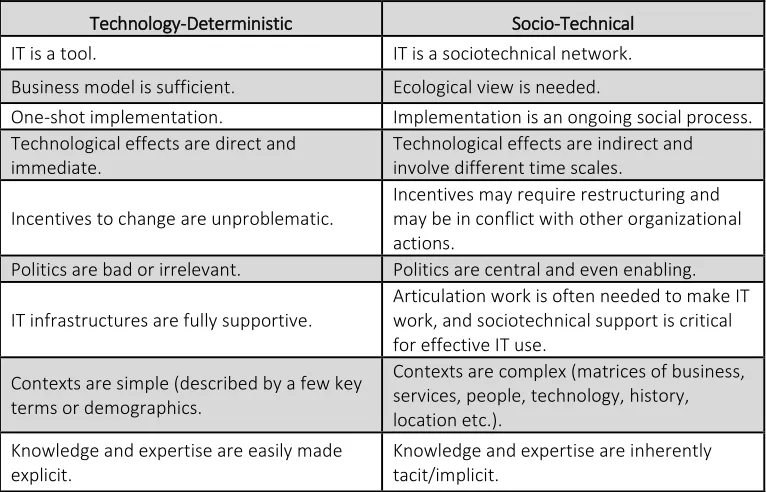
45 Based on what has been discussed thus far, it is clear that two different approaches to the
study of e-government have emerged: a technological deterministic view and a socio-technical
approach. This will be reviewed in the next section.
2.4 Socio-Technical vs Technological Deterministic
As reviewed, most of the research in e-government and transparency has followed a
technological deterministic approach, whereby technology is the driving force behind change.
Bimber (1990: 9) observes that this view was developed due to the fact “that technology is
generally accompanied by unintended consequences, which even willful interveners are unable to
anticipate and control. This phenomenon is interpreted to mean that technology is at least partially
autonomous and that it is responsible for determining certain social outcomes”. Furthermore,
technology-enabled investments are invariably perceived as positive and desirable due to the
proposition that it makes information more readily and easily available (Margetts 2006;
Luna-Reyes et al. 2014), and more structured (Margetts 2006). Technology is also able to handle large
amounts of data, lower the cost of transparency and response time, and allow for less discretion by
public servants, since they are forced to more strictly adhere to moral standards and performance
indicators (Margetts 2006; Meijer 2009; Bannister and Connolly 2011; Luna-Reyes et al. 2014).
As Mackenzie and Wajcman (1999: 5) note however, “the view that technology just
changes, either following science or of its own accord, promotes a passive attitude to technological
change. It focuses our mind on how to adapt to technological change, not how to shape it”. Shane
(2012: 12) further affirms that “if technology were the key to democratic success, then we would