EXPLORING
DECISION-MAKING PROCESSES
SITU, ACTU,
IN-TOTO
An Empirical Study of Decision-making
Processes in Medium Software
Development Projects
Anka Barcus
7/9/2014
2 | P a g e
D
ECLARATION
I certify that the thesis I have presented for examination for the PhD degree of the London School of Economics and Political Science is solely my own work.
The copyright of this thesis rests with the author. Quotation from it is permitted, provided that full acknowledgement is made. This thesis may not be reproduced without my prior written consent.
I warrant that this authorisation does not, to the best of my belief, infringe the rights of
any third party.
I declare that my thesis consists of 71,177 words.
STATEMENT OF USE OF THIRD PARTY FOR EDITORIAL HELP
I can confirm that my thesis was copy edited for conventions of language, spelling and
3 | P a g e
A
BSTRACT
Organisational projects, a multifaceted socio-technical phenomenon that evolve in plural contexts often
characterised by a high degree of interconnectedness, have become ubiquitous in strategy delivery. The
traditional project management literature emphasises the significance of project and organisational
objectives to project success, yet it is not clear how these objectives guide action at project level. Aiming
to fill the gap, this empirical research studied project decision-making in two organisations with strong
rational orientation that communicate strategic direction through objectives hierarchies, and define and
manage projects by objectives.
To study decision-making practices in project praxis, this thesis introduces the concept of a “decision site”
as an area shaped by a triad of mutually constituting practitioners, sociomaterial context and
decision-making practices, as well as the concept of “praxis domains” used to analyse entwinement between
decision-making practices and sociomaterial context. The environment and participants’ perception
was analysed based on semi-structured interviews with practitioners, review of existing organisational
documentation, and daily project meetings were audio recorded through silent observation. Twenty eight
decision episodes were identified and described in their organisational project context. Two process
representations aided analyses of decision episodes, one tracing discursive reference to praxis domains,
and the other diagramming decision-making activities which manage a decision site. Decision-making
practices of “Neguesstimation” and “Querying Praxis Domains” were defined and differentiated by
schemes and degree of entwinement with praxis domains.
The thesis findings do not support the notion of project and corporate objectives as being instrumental in
project decision-making. Instead, one of the observed practices queries praxis domains as proxies for
complex hierarchies of organisational objectives and constructs decision site imbued with local practical
logic. The thesis argues that practical logic could be successfully employed in aligning project level
activities to complex and dynamic organisational context and suggests potential for development of
4 | P a g e
A
CKNOWLEDGEMENTS
Endeavour of this scale would not be possible without inspiration and support of many kind people.
I would like to express my gratitude to my supervisors, Dr Gilberto Montibeller, Dr Kai H. Becker and Dr Alec Morton, for encouraging me to take on this task, their ongoing guidance,
support and patience in seeing me through to its conclusion.
I am grateful to Professor Larry Philips whose insightful feedback on my research proposal opened up a broader view to my research questions.
The contribution of the practitioners participating in the empirical part of the research is invaluable. Not only did they welcome me in their workspace allowing me to record proceedings, but they also opened up a dialogue that enhanced my understanding of their
multi-faceted worlds.
I am especially indebted to Bruce Pinn and Chris Lord who supported the empirical part of this research by generously allowing me access to their teams.
5 | P a g e
T
ABLE OF
C
ONTENTS
CHAPTER 1 INTRODUCTION ... 13
CHAPTER 2 ORGANISATIONAL PROJECTS' DECISION-MAKING CONTEXT ... 24
2.1 INTRODUCTION ... 25
2.2 PROJECT MANAGEMENT AS A DISCIPLINE ... 26
2.3 DEFINING ORGANISATIONAL PROJECTS ... 31
2.3.1 Goal oriented, Time- and Budget- Constrained ... 31
2.3.2 Project Practitioners ... 32
2.3.3 Projects as Organisational Activity ... 33
2.3.4 Working Definition of an Organisational Project ... 35
2.4 PROJECT DECISION-MAKING AS A GOAL-ORIENTED ACTIVITY ... 36
2.5 CONCLUSION TO CHAPTER 2 ... 42
CHAPTER 3 ORGANISATIONAL DECISION-MAKING ... 43
3.1 INTRODUCTION ... 44
3.2 THE ORIGINS:HERBERT SIMON'S THEORY OF ORGANISATIONAL DECISION-MAKING ... 45
3.2.1 Organisational Decisions ... 47
3.2.2 Link between decisions and actions... 48
3.2.3 Decision-making process ... 48
3.2.4 Rationality ... 49
3.2.5 Decision Makers ... 52
3.2.6 Simon's Legacy ... 52
3.3 DEVELOPMENT ... 54
3.3.1 Organisational Decisions ... 55
6 | P a g e
3.3.3 Decision-making Process ... 59
3.3.4 Rationality ... 60
3.3.5 Decision Makers ... 63
3.4 CONCLUSION TO CHAPTER 3 ... 64
CHAPTER 4 RE-CONCEPTUALISING ORGANISATIONAL DECISION-MAKING ... 65
4.1 INTRODUCTION ... 66
4.2 LANGLEY ET AL.(1995) INTRODUCE ISSUE STREAMS ... 66
4.3 TSOUKAS (2010) CONCEPTUALISES ORGANISATIONAL DECISION-MAKING AS TYPES OF PRACTICES ... 69
4.4 CABANTOUS AND GOND (2011) DESCRIBE RATIONAL DECISION-MAKING AS PERFORMATIVE PRAXIS ... 72
4.5 CONCLUSIONS TO CHAPTER 4 ... 75
CHAPTER 5 REORIENTING TOWARDS A PRACTICE-BASED PERSPECTIVE ... 78
5.1 INTRODUCTION ... 79
5.2 THEORIES OF SOCIAL PRACTICES ... 79
5.2.1 The three fundamental concepts of practice-based perspective ... 83
5.2.1.1 Practices ... 83
5.2.1.2 Praxis... 87
5.2.1.3 Practitioners... 87
5.2.2 Organisations in a practice-based perspective ... 89
5.3 THEORETICAL FRAMEWORK FOR EMPIRICAL RESEARCH ... 89
5.3.1 Issue Stream Formation ... 90
5.3.2 Decision Site ... 92
5.4 CONCLUSIONS TO CHAPTER 5 ... 93
CHAPTER 6 RESEARCH PROBLEM, DESIGN AND DATA COLLECTION STRATEGY ... 95
6.1 RESEARCH PROBLEM ... 96
7 | P a g e
6.3 RESEARCH STRATEGY AND DESIGN ... 100
6.3.1 Research Design: Embedded Multiple Case study ... 100
6.3.2 Data Collection Strategy ... 104
6.3.3 Research Limitations ... 107
6.4 CONDUCTING DATA COLLECTION ... 111
6.4.1 Participating Organisation Selection ... 112
6.4.2 Project Selection ... 112
6.4.3 Confidentiality and Permission to audio record ... 113
6.5 DATA ANALYSIS APPROACH ... 113
6.6 CONCLUSION TO CHAPTER 6 ... 115
CHAPTER 7 DATA ANALYSIS ... 117
7.1 INTRODUCTION ... 118
7.2 DATA ANALYSIS APPROACH ... 119
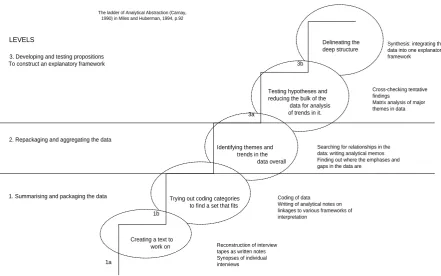
7.3 SUMMARISING AND PACKAGING THE DATA ... 120
7.3.1 Creating a text to work on: Identifying Decision Episodes ... 122
7.3.2 Trying out coding categories: Developing Case Attributes ... 123
7.3.2.1 Describing Decision Content ... 124
7.3.2.2 Describing Decision Process Type ... 125
7.4 REPACKAGING AND AGGREGATING THE DATA... 128
7.4.1 Emergence of "clusters of concerns" ... 129
7.4.2 Definition of Organisational Praxis Domains... 129
7.4.3 The Praxis Domain Interconnectedness ... 131
7.4.4 Praxis Domains Interplay ... 134
7.4.5 Process in a Swim Lane Diagrams ... 134
7.4.6 Process in a Flow Chart Diagram ... 139
8 | P a g e
7.5 DEVELOPING AND TESTING PROPOSITIONS ... 145
7.6 CONCLUSION TO CHAPTER 7 ... 147
CHAPTER 8 RESEARCH FINDINGS ... 149
8.1 INTRODUCTION ... 150
8.2 THE ORGANISATIONAL SOCIOMATERIAL CONTEXT ... 152
8.2.1 General Information about the participating Business Units ... 153
8.2.2 Employment of Strategic Objectives ... 159
8.2.3 Employment of Project Management Tools ... 166
8.2.4 Employment of Specialised Professionals ... 168
8.2.5 Conclusions to Findings about the Organisational Sociomaterial Context ... 169
8.3 PARTICIPANTS’ PERCEPTION OF THE SOCIOMATERIAL CONTEXT ... 170
8.3.1 The Perceived role of Project Managers ... 171
8.3.2 ‘Decisions’, ‘Objectives’ and ‘Strategy’ as part of Practitioners’ Discourse and Praxis 173 8.3.3 Conclusions to Findings about participants’ perceptions ... 184
8.4 DECISION-MAKING EPISODES ... 185
8.4.1 Episodes with events referred to as ’decisions’ ... 186
8.4.1.1 DE3 The Budget Approval ... 187
8.4.1.2 DE7 CIO The Approval of the Release ... 192
8.4.1.3 DE11 The Printing Design Approval ... 195
8.4.1.4 DE1 Vacation absence refill ... 197
8.4.1.5 DE2 Meeting Frequency ... 198
8.4.1.6 DE4 GT Network ID ... 199
8.4.1.7 DE5 GT Release or Pre-Release ... 200
8.4.1.8 DE9 Year-End T3 Issue ... 203
8.4.1.9 DE12 Resource Allocation decision ... 204
8.4.1.10 DE14 Blob or Relational design decision ... 205
9 | P a g e
8.4.1.12 DE17 Server Move – Circuit selection ... 209
8.4.1.13 Summary to Events referred to as ‘decisions’... 211
8.4.2 Episodes with decision-like activities not referred to as ‘decisions’... 212
8.4.2.1 DE6 XML Confirm Design ... 213
8.4.2.2 DE8 The choice between Ad-Hoc and Production Ready design ... 214
8.4.2.3 DE10 Developer’s Sprint Priorities ... 217
8.4.2.4 DE13 HP Developer’s Priorities ... 218
8.4.2.5 DE15 Flipping Components ... 218
8.4.2.6 DE18 Infrastructure Meeting ... 219
8.4.2.7 Summary to Decision-Like Activities ... 223
8.4.3 Episodes that are sprint planning sessions ... 223
8.4.4 Remarks about the frequency of decision-making episodes ... 227
8.5 CONCLUSIONS TO CHAPTER 8 ... 231
CHAPTER 9 DISCUSSION ... 235
9.1 INTRODUCTION ... 236
9.2 PRACTICE OF QUERYING PRAXIS DOMAINS ... 238
9.2.1 Process ... 240
9.2.2 Scheme of Querying Praxis Domains Practice ... 242
9.2.3 How Practice of Querying Praxis Domains Practice Manages Decision Site ... 242
9.2.4 Praxis Domains as Proxies for hierarchies of objectives ... 243
9.3 PRACTICE OF NEGUESSTIMATION ... 244
9.3.1 Process ... 245
9.3.2 Scheme of Neguesstimation Practice ... 246
9.3.3 How Neguesstimation Practice Manages Decision Site ... 247
9.3.4 Complexity Points as Proxies for Task Work Effort ... 249
9.4 DECISION-MAKING PRACTICES AND SOCIOMATERIAL CONTEXT ... 249
10 | P a g e
9.6 THE ABSENCE OF RATIONAL DECISION-MAKING PRACTICES ... 256
9.7 CONCLUSION TO CHAPTER 9 ... 258
CHAPTER 10 CONTRIBUTIONS AND CONCLUSION ... 260
10.1 “THE LOGIC OF PRACTICE” ... 266
10.2 PRACTICES OF ORGANISATIONAL DECISION-MAKING ... 268
10.3 PRAXIS DOMAINS AS PROXIES FOR OBJECTIVES ... 269
10.4 IMPLICATIONS AND FUTURE RESEARCH ... 271
10.5 FINAL REMARKS ... 274
11 | P a g e
T
ABLE OF
F
IGURES
Figure 1 - Changing view of Projects in project Management ... 28
Figure 2 - Interior process dynamics (from Engwall, 2003, p.805)... 34
Figure 3 -Objectives’ Hierarchy and Objectives Network (Adapted from Keeney, 1996, pp. 91) ... 39
Figure 4 – Simple Decision Context (Adapted from Keeney, 1996 p.45) ... 40
Figure 5 - Adapted from Cabantous and Gond (2011) p.6... 74
Figure 6 - Issue Stream (c.f. Langley et al. 1995, p.274) ... 90
Figure 7 - Mutually Shaping Habitus, Context, Problems and issues ... 91
Figure 8 - Decision Site ... 93
Figure 9 - Basic Types Of Design For Case Studies (YIN, 2009, P.46) ... 103
Figure 10 - Decision Episodes (inspired by Yin) ... 104
Figure 11 – The Ladder of Analytical Abstraction (Carney, 1990) In Miles and Huberman, 1994, p.92 ... 120
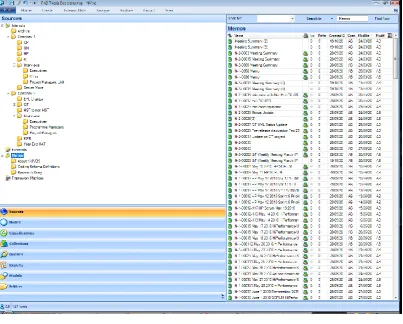
Figure 12 - NVIVO Screen Print ... 121
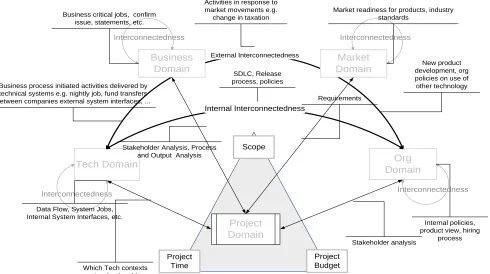
Figure 13 - Domains Interconnectedness... 133
Figure 14 – DE8 Example Swim Lane Diagram ... 138
Figure 15 - Sprint Planning Flowchart ... 140
Figure 16 – Non-sprint Planning sessions generic Flowchart ... 141
Figure 17 - DE7 FLowchart ... 142
Figure 18 – Company 1 Simplified Structure ... 153
Figure 19 - Company 1 Project Portfolio structure ... 154
Figure 20 - Company 2 PMO ORGANISATIONAL Chart ... 155
Figure 21 - Company 2 programme/project and Release schedule Structure ... 155
Figure 22 - Basic Software Development Life Cycle ... 157
Figure 23 - Traditional Waterfall ... 158
Figure 24 - Generic Agile Approach ... 159
Figure 25 - Company 2 Business Goals ... 162
Figure 26 - Company 2 IT Goals ... 163
Figure 27 - Company 2 IT Initiatives Dashboard ... 164
12 | P a g e
Figure 29 - DE11 Swim Lane Diagram ... 196
Figure 30 - DE14 Swim Lane Diagram ... 206
Figure 31 – DE8 Example Swim Lane Diagram ... 216
Figure 32 - Practice of Querying Praxis Domains ... 241
Figure 33 - Neguesstimation Process ... 246
Figure 34 – Neguesstimation... 248
Figure 35 - Spectrum of Organisational Decision-Making Practices ... 255
T
ABLE OF
T
ABLES
Table 1 - Summary of recorded meetings / Company / Project ... 123Table 2 – Summary Table of Decision Content and Decision Process per Decision Episode 128 Table 3 - Flowchart shapes ... 139
Table 4- Mapping Context Domains to Objectives ... 145
Ch
ap
ter
1
:
Int
ro
du
cti
on
13
Chapter 1
I
NTRODUCTION
The development of modern Western management practices is closely related to the engineering foundations of the early period of the industrial revolution. The concepts that proved successful in engineering endeavours, such as the disassembly of mechanical parts that can be standardised and made interchangeable, seeped into ideas about managing people according to which workers were seen as parts of an administrative machine and its processes. Engineering procedures and scientific methods were adapted to manage large manufacturing operations, and the field of management evolved into a new profession, adopting and codifying existing practices, which eventually became a de-facto standard (Shenhav, 2002). As mass production gained in popularity, the scientific approach to management, highlighting the
importance of planning and division of labour, was widely promoted (Morgan, 2006).
Ch
ap
ter
1
:
Int
ro
du
cti
on
14
It is against this intellectual background that modern project management evolved, founded in scientific management approaches (Cicmil, Hodgson, Lindgren, & Packendorff, 2009; Söderlund, 2011b) and drawing on research in management science, organisational behaviour, and practice-oriented management traditions (Kwak & Anbari, 2008a). Over the years, project management has grown into an independent field of management, with thriving international professional associations and a very active research community. The field has matured and diversified greatly since the 1960s, specialising in different areas of application, building a range of methodologies, and establishing numerous professional standards (Bredillet, 2007; Cicmil, 2006). Since the 1990s, projects have become ubiquitous to modern organisation, making organisational project management critical to firms’ competitive advantage (Aubry, Hobbs, & Thuillier, 2007; Maylor, 2001), and for many, a vehicle of strategy implementation (Partington, Pellegrinelli, & Young, 2005; PMI, 2013; Smith-Daniels & Smith-Daniels, 2008; Smyth, 2009; Winter, Smith, Morris, & Cicmil, 2006).
Ch
ap
ter
1
:
Int
ro
du
cti
on
15
As most organisations run concurrent projects whose outcomes are interconnected, the interdependencies between project decisions, project actions, and project outcomes are not trivial (Bourgault, Drouin, & Hamel, 2008; Williams & Samset, 2010). Indeed, empirical research has shown that individual projects “typically do not reflect the organisation’s strategic intent” (Thiry & Deguire, 2007, p. 649). This finding is substantiated by the proliferation of programmes, portfolios1,and project management
offices (PMOs) that attempt to bridge the perceived distance between projects and strategy implementation (Kwak & Anbari, 2009; Smyth, 2009; Sydow, Lindkvist, & DeFillippi, 2004; Thiry & Deguire, 2007).
Despite this pronounced interest in project decision-making (Jamieson & Morris, 2004; Powell & Buede, 2008; Williams & Samset, 2010), belief in importance of clarity of corporate and project objectives (Chapman & Ward, 2003; White & Fortune, 2002) for project success and especially for strategic alignment (Armstrong, 1982; Ives, 2005; Maylor, 2001) it is not clear if and how articulated objectives influence decision-making at the project level. The present thesis aims to address this gap and presents an empirical study that investigates in detail the role corporate and project objectives play in unaided project level decision-making.
For this purpose, it seems advisable to widen the theoretical perspective of this investigation beyond the literature on project management and turn our attention to a
1 “A portfolio refers to a collection of projects or programs and other work that are grouped
together to facilitate effective management of that work to meet strategic business
objectives“, “A program is defined as a group of related projects managed in a coordinated
Ch
ap
ter
1
:
Int
ro
du
cti
on
16
field of research that has already explored the tenuous link between organisational decisions and organisational actions, namely the sub-field of organisation and management theory that is concerned with organisational decision-making. Historically, this field shares the foundation in classical management theory with project management (Hatch & Cunliffe, 2012) and has had a similarly rapid development resulting in an abundance of diverse perspectives.
Research on organisational decision-making started out with Herbert Simon's seminal work that placed the topic of organisational decision-making at the heart of organisation theory. This was soon followed by research developments that challenged core assumptions underlying Simon’s approach, such as instrumental rationality, the linearity of decision-making processes, and the possibility of isolating decisions in organisational settings. As a consequence, a diverse field of research emerged that led to a variety of new, insightful ideas of how to analyse organisational decision-making – ideas that have often been introduced with the explicit aim of challenging the ‘rationalistic’ engineering foundations of management (Langley, Mintzberg, Pitcher, Posada, & Saint-Macary, 1995; Hendry, 2000; Miller & Wilson, 2006; Vidaillet, 2008; Tsoukas, 2010).
Ch
ap
ter
1
:
Int
ro
du
cti
on
17
Miller & Wilson, 2006; Vidaillet, 2008; Tsoukas, 2010). This inconsistency leads to the question of what do project participants actually do with strategic and project objectives and how do they reconcile the apparent contradiction between the prescriptive tools of project management, and experienced reality (Thomas, 2006).
The aim to understand project level activities by engaged practitioners and their relation to the articulated objectives shifts the research focus of the current thesis to practice based research (Flyvbjerg, 2001; Whittington, 2006b; Jarzabkowski & Whittington,
2008; Sandberg & Tsoukas, 2011; Tengblad, 2012; Thomas, 2006; Sydow, 2006; Nicolini,
2013; Feldman & Orlikowski, 2011). Both project management and organisational
Ch
ap
ter
1
:
Int
ro
du
cti
on
18
Given the prominence afforded to project objectives in the project management literature, expected importance of project level decision-making for strategy implementation, and limited understanding of the influence of objectives on project level activities, this research project’s aim was to understand if, and how, objectives take part in project decision-making activities. The empirical study conducted here particularly explores project level activities that manage organisational issues in project-based organisations designed to promote instrumental rationality (Cabantous & Gond,
2011). Specifically, the research endeavoured to establish if the participating
organisations were designed to promote the logic of instrumental rationality and whether project practitioners espoused prescribed project management perspectives in which corporate and project objectives occupy the dominant position (Thomas, 2006). If
indeed, the participating environments are oriented towards instrumental rationality, the research intended to explore if project practitioners utilise corporate and project objectives in project level decision-making and how they incorporate the multitude of interconnected, and possibly conflicting, corporate objectives.
By describing how project teams incorporate corporate and project objectives in their decision-making, we could begin to understand how unaided decision-making is carried out by experts in organisational contexts when issues are framed by explicit objectives. The research results could thus elucidate how project level decisions impact strategy implementation when strategy is communicated in objective hierarchies. Furthermore, exploring how objectives are used in “real-world managerial decision situations” could contribute to understanding barriers to wider implementation (Wallenius et al., 2008) of rational decision-making practices (Cabantous & Gond, 2011), potentially contributing to
Ch
ap
ter
1
:
Int
ro
du
cti
on
19
Wallenius, & Zionts, 2000). Investigating use of objectives in project decision-making could help to understand some of the difficulties in implementing multi-criteria project evaluation frameworks and possibly lead to suggestions for advances of such models (Barclay & Osei-Bryson, 2009; Fincham, 2002; Maylor, Vidgen, & Carver, 2008; Milosevic & Srivannaboon, 2006; A. J. Shenhar, Dvir, Levy, & Maltz, 2001). Such research could help us reduce the gap between ‘abstract prescriptions and concrete practices’ in project management (Thomas, 2006, p. 105).
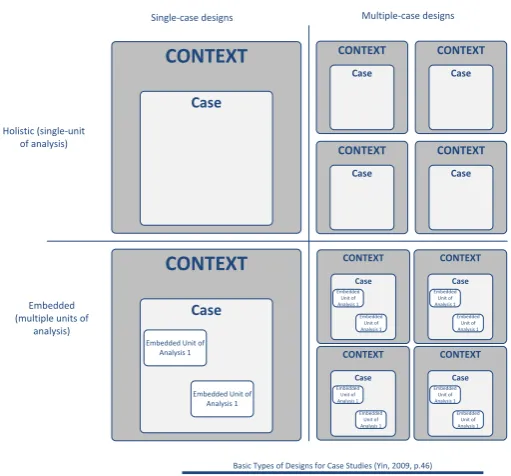
In order to explore project managers' decision-making in their native environment with as little interference as possible, the research was designed to observe projects in-situ, in-actu, and in toto (Langley et al., 1995) using a ''multiple case (embedded) design" methodology (Yin, 2009, p. 46) where the data was collected via the "observer as participant" approach (Robson, 2002, p. 319). The study involved two established software development organisations where nine projects were followed over four months. More than 150 project meetings were recorded in actu, resulting in 90 hours of meeting proceedings data. Interviews with participants and existing project documentation augmented the data set, providing insight into practitioners’ perception of the context and their praxis.
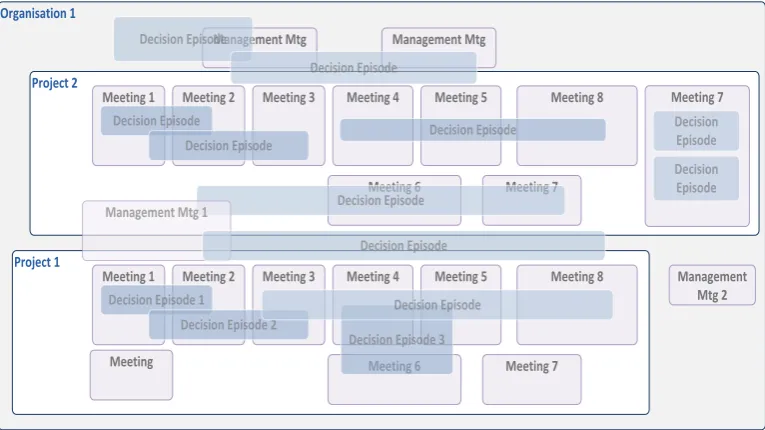
The primary units of analysis in this research were decision episodes, the concept introduced by Hendry & Seidl (2003) and defined as an observable process of
Ch
ap
ter
1
:
Int
ro
du
cti
on
20
estimates were decided upon and the other 18 decision-making episodes were of various types, for a total of 28 episodes.
In summary, this thesis brings together research in the fields of organisational project management, organisational decision-making and practice-based theorising as a basis of an empirical study. The theoretical framework developed for this empirical investigation encompasses contextual and dynamic aspects of organisational projects
(Engwall, 2003), the concept of web of issues as the core of organisational
decision-making (Cohen, March, & Olsen, 1972; Langley et al., 1995) and adopts the practice
perspective of routinised and reflective action in praxis (Tsoukas, 2010). The concept of
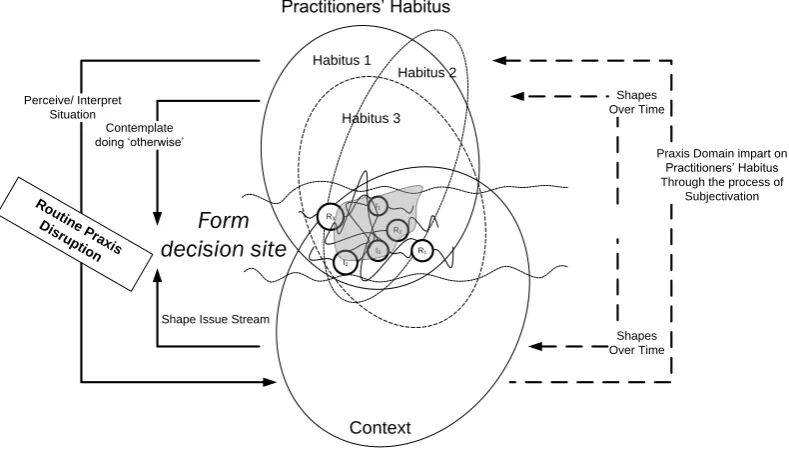
a decision site is introduced, which defines a multi-dimensional area constituted by decision-making practices and horizons of meaning of participating practitioners in current sociomaterial context.
Two visual representations were designed to trace decision-making processes. A flow-chart diagram followed different steps in decision-making activities, and a swim-lane diagram was used to describe the entwinement between project level decisions and their organisational context. By tracing the development of decision processes through changes in focus of participants’ conversation, clusters of organisational concerns emerged. In the present thesis, these clusters of concerns are referred to as praxis domains. Praxis Domains are nexuses of organisational practices that practitioners reflect on when addressing issues (the “operations praxis domain", for example, encompasses all organisational activities that are part of, support or surround, organisational 'operations').
Ch
ap
ter
1
:
Int
ro
du
cti
on
21
idea of instrumental rationality that historically led to the emergence of management theory and project management, the results of the data analysis do not support the notion that project and corporate objectives are influential in project decision-making. Although the encountered project decision environment was designed to promote rational choice, decision-making activities turned out to be, first and foremost, meshes of practices, and where praxis of rational choice was not observed.
Ch
ap
ter
1
:
Int
ro
du
cti
on
22
situation with respect to praxis domains, practitioners bring forth domain-specific practices that enable them to create, modify and evaluate relevant alternatives.
The findings of this thesis suggest that practices of organisational decision-making construct and manage decision sites in different ways. The practice of querying praxis domains constructs a transient decision site formed in the interplay between praxis domains, issues and alternatives, while the practice of neguesstimation starts with a predetermined site and modifies it according to very specific rules, while still engaged in the underlying practice of software development. Contrary to the instrumental rationality of practices of rational choice (Cabantous & Gond, 2011), which focuses on precise dissection and analysis, these practices embrace organisational reality in a more holistic way, and construct decision sites imbued with deep practical knowledge.
Furthermore, the findings suggest that the degree of entwinement between practices required to carry out decision-making practice could be used as a means of differentiation between different practices of organisational decision-making. While the practice of neguesstimation is very closely entwined with the practice of software development, the practice of querying praxis domains requires less specific practical domain knowledge and more awareness of participating praxis domains and their interaction. This leads to a suggestion of a spectrum of organisational decision-making practices organised along the degree of detachment between underlying practices and decision-making practice.
Ch
ap
ter
1
:
Int
ro
du
cti
on
23
Ch
ap
ter
2
:
O
rga
nis
at
io
na
l P
ro
je
cts'
D
ec
is
io
n-ma
kin
g C
ont
ex
t
24
Chapter 2
O
RGANISATIONAL
P
ROJECTS
'
D
ECISION
-
MAKING
C
ONTEXT
"Project organization is a key industrial activity and a key corporate process (Winch, 2000)and management without sound knowledge of projects misses a great deal of what management of contemporary firms is about" (Söderlund, 2004a, p. 185).
This chapter introduces project decision-making context. It first provides a brief overview
of project management research, leading to a working definition of an organisational
project, which is described by project objectives, project team, and project organisational
context. Identifying a gap in research on decision-making in projects, the chapter opens
an inquiry into project-level decision-making with a specific focus on the
Ch
ap
ter
2
:
O
rga
nis
at
io
na
l P
ro
je
cts'
D
ec
is
io
n-ma
kin
g C
ont
ex
t
25
2.1
I
NTRODUCTION
Project management is a dynamic sub-field of management, with a progressive research and professional community (Morris, 2011). Developing at the cross-roads of multiple disciplines, it is not surprising that the field has over the years become fragmented, offering a spectrum of views on what projects are, how best to research them, and how best to manage them in practice (Söderlund, 2011b). This chapter provides a brief introduction to some of the research debates, spanning from the traditional views of projects as functional units, to viewing projects as socio-technical phenomena, and to more recent interpretations of projects in practice perspective. The discussion leads to a working definition of organisational projects used in this research, defining projects as goal-oriented organisational activities, delivered by teams of reflexive practitioners.
Ch
ap
ter
2
:
O
rga
nis
at
io
na
l P
ro
je
cts'
D
ec
is
io
n-ma
kin
g C
ont
ex
t
26
The chapter starts with an overview of the discipline of project management that concludes with a definition of a ‘project’ as it is defined for the purposes of this research. This is followed by an elaboration of decision-making in projects as a goal-oriented activity embedded in organisational context. In turn, this provides the basis for an inquiry into project-level decision-making practices, focusing on the Value Focused Thinking framework and its possible application in unaided project level decision-making. Specifically, the Value Focused Thinking framework (Keeney, 1992) is evaluated for its potentially beneficial way of identifying and structuring objectives relevant to a specific project situation.
2.2 P
ROJECT
M
ANAGEMENT AS A
D
ISCIPLINE
Project Management is a sub-discipline of Management that builds upon multiple theoretical foundations, with a shared focus on a "particular cognitive problem" (Cole 1983: 130)" (Söderlund, 2011b, p. 37). Broadly speaking, there are two main theoretical traditions in project management research, one firmly rooted in applied mathematics and engineering with a functional focus on tools and techniques, while the other has its intellectual foundations in social science, specifically in organisation theory and psychology (Söderlund, 2004a).
Ch
ap
ter
2
:
O
rga
nis
at
io
na
l P
ro
je
cts'
D
ec
is
ion
-ma
kin
g C
ont
ex
t
27
via articles and textbooks. Initially, the research focus was on scheduling and planning techniques, but that soon expanded into the areas of cost control, resources allocation, and resource management (Söderlund, 2011b). True to its foundations, project management research has largely been functionalist and prescriptive (Cicmil & Hodgson, 2006; Cicmil, 2006; Söderlund, 2004b).
Ch
ap
ter
2
:
O
rga
nis
at
io
na
l P
ro
je
cts'
D
ec
is
io
n-ma
kin
g C
ont
ex
t
28
positivist or empiricist traditions, and the proposal to apply critical realism in future research (Smyth & Morris, 2007). Other detailed accounts can be found in Morris (2011), Carayannis, Kwak and Anbari (2005), and Söderlund (2011b).
O
b
je
ct
iv
es
Traditional PM
C
o
n
te
xt
New Approaches in PM
Pre-determined and Stable
Singular projects, Static
context
Ambiguous and Evolving
[image:28.595.142.495.184.415.2]Multiple projects, Plural and
Dynamic contexts
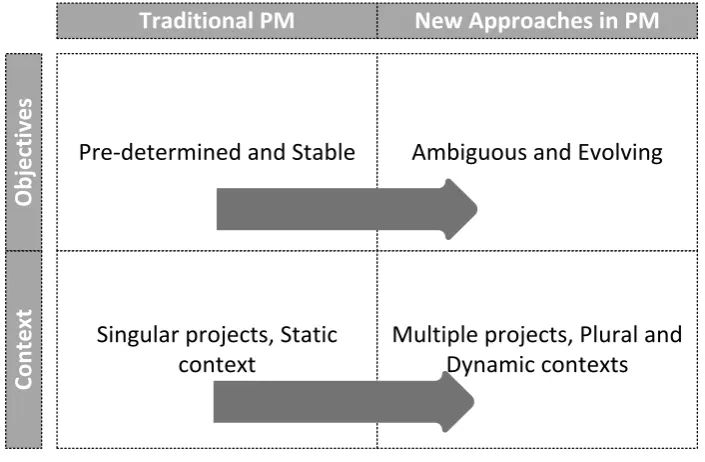
FIGURE 1 - CHANGING VIEW OF PROJECTS IN PROJECT MANAGEMENT2
Research streams in project management differ in their key assumptions about action and rationality, their focal research questions, and their theoretical foundations (Söderlund, 2011b). Not surprisingly, definitions of projects range from the functionalistic view of pre-determined projects with fixed goals and methods, to those acknowledging socio-technical nature and organisationally constituted project phenomena. The development in project research could be traced moving from assumed stable project goals towards recognition of changing and uncertain objectives,
2 This presentation is only an analytical framework, and does not imply where, on
Ch
ap
ter
2
:
O
rga
nis
at
io
na
l P
ro
je
cts'
D
ec
is
io
n-ma
kin
g C
ont
ex
t
29
and from a view of a singular and isolated project to organisationally embedded and interconnected projects (depicted in Figure 1).
The traditional project management paradigm retains functional focus on projects, perceiving projects as unique, usually high-risk undertakings, initiated to reach specified goals within the predefined triple constraints of time, cost, and scope. Within that tradition, projects have been defined as 'tools', 'endeavours', or 'ventures', aimed at 'achieving higher-level ends', or 'dedicated to the specific purpose'. Projects have been described as 'unique', 'novel', 'high risk', 'expensive”, 'large, and 'temporary' characterised by having a 'beginning and an end' (Chapman & Ward, 2003; Packendorff, 1995; PMI, 2013; Williams, 2002). The Project Management Body of Knowledge (PMBOK), published by the US professional project management association, Project Management Institute (PMI), defines a project as a “temporary endeavour undertaken to create unique product, service or a result” (PMI, 2013, p. 5). These definitions emphasise the "central role of objectives" that can be quantified. They also highlight project temporality, uncertainty and uniqueness and commonly refer to "human, material and financial resources" (Chapman & Ward, 2003, p. 3).
Ch
ap
ter
2
:
O
rga
nis
at
io
nal
P
ro
je
cts'
D
ec
is
io
n-ma
kin
g C
ont
ex
t
30
calling for the development of alternative understandings of organisational activities at the project level, and a view of projects as a “temporary organisation, an aggregate of individuals, temporary enacting a common cause” (Cicmil & Hodgson, 2006, p. 117).
Sensitised by critique and development in other management fields and social sciences, researchers in project management started to devote more attention to practice perspectives (Blomquist et al., 2010; Hällgren & Söderholm, 2011). Some of the ensuing studies changed the research focus from models, tools and techniques, and from processes and context, to actual activities of project practitioners in organisationally embedded projects, as exemplified in research by Hällgren and Söderholm (2011) , Blomquist (2010), Maaninen-Olson and Müllern (2009), Besner and Hobbs (2006), and Engwall (2003).
The proponents of practice perspective in project management research argue that analysing projects through a practice lens, may contribute to a better understanding of project management as an organisationally contextual and individually reflexive activity, without contradicting previous findings. It has been suggested that the very nature of projects, especially the temporality of project existence, impacts how practices are shaped, perceived, and carried out, and what structures are relevant (Blomquist et al., 2010). In contrast to process approaches, the project practice perspective focuses on activities within projects themselves and their local meanings, with the aim of understanding the practice with reference to the three key concepts of practice theories: practice, praxis and practitioners (Hällgren & Söderholm, 2011).
Ch
ap
ter
2
:
O
rga
nis
at
io
na
l P
ro
je
cts'
D
ec
is
io
n-ma
kin
g C
ont
ex
t
31
502).
A research turntoward the study of projects-as-practice is manifested in the expanding concept of projects from a singular, instrumental organisational activity, firmly grounded in the positivistic paradigm, to the study of actions in projects that are subject to project participants' perception and multi-dimensional organisational influences (Cicmil & Hodgson, 2006; Engwall, 2003; Smyth & Morris, 2007; Sydow, 2006). This reorientation to the practice perspective has been observed in numerous disciplines, specifically in organisation studies. The key concepts (practice, praxis, and practitioners) will be explained in more detail later in section 5.2.1 [page 83]. The following sections introduce the definition of organisational projects as used in this research.
2.3
D
EFINING
O
RGANISATIONAL
P
ROJECTS
Most project definitions agree that projects are unique endeavours that (1) are goal oriented, time- and budget- constrained, (2) employ a group of people temporary brought together for the project purpose (project team), and (3) are an organisational activity. The following sections explain each in turn.
2.3.1
G
OAL ORIENTED
,
T
IME
-
AND
B
UDGET
-
C
ONSTRAINED
Ch
ap
ter
2
:
O
rga
nis
at
io
na
l P
ro
je
cts'
D
ec
is
io
n-ma
kin
g C
ont
ex
t
32
methods are sometimes labile, and proposed a framework for evaluating projects based on the uncertainty surrounding project goals and project methods. The Goals-and-Methods matrix identifies four types of projects, each requiring a different project management approach (Turner & Cochrane, 1993). The 'golden icons' are often referred to as a 'triple constraint' (Budget, Time and Quality/Scope), and have been the most prominent feature of project management education and professional practice, often used to assess project performance. It has also been acknowledged that some project objectives evolve and may change throughout a project’s duration (Chapman & Ward, 2003; Turner & Cochrane, 1993; Williams & Samset, 2010), which in turn would necessitate continuous evaluation of project goals (Pollack, 2007).
In summary, although projects could be pursuing multiple and dynamically changing objectives, they are always constrained by delivery schedule (time), available resources (budget), and the agreed scope and quality or as they are often referred to, by the project triple constraint. Thus, the first parameter of project definition states that a project has a goal to accomplish and is bounded by a triple constraint, although project goals, methods, and triple constraint could change through the project duration.
2.3.2
P
ROJECT
P
RACTITIONERS
Ch
ap
ter
2
:
O
rga
nis
at
io
na
l P
ro
je
cts'
D
ec
is
io
n-ma
kin
g C
ont
ex
t
33
individuals, not only involved in a project field, but also engaged within the project networks, organisation, and wider society (Sydow, 2006).
In an organisational project environment, project practitioners are subject-matter-experts (SME) from various disciplines, each one coming into the project environment with his/her own sets of practices. Although projects have a certain formal arrangement manifested in a project team-organisation (e.g. roles and responsibilities), activities’ sequence (e.g. project schedule), meeting regularity, etc., project structures are constituted by the project participants, those on the project team, and those surrounding the project. In other words, the project, the project's participants, along with the organisational environment are mutually shaping (Giddens, 1986). This constituting and re-constituting of project reality means that projects, like other organised human activities, are in a constant state of flux (Cooke-Davies, Cicmil, Crawford, & Richardson, 2007), where participating project practitioners are creatively engaged as project co-creators.
In this research, the project team is defined as a group of competent and reflexive practitioners, actively participating in the delivery of the project. They have a shared responsibility for project success, and they make interdependent decisions about how to proceed (Gersick, 1988).
2.3.3
P
ROJECTS AS
O
RGANISATIONAL
A
CTIVITY
Ch
ap
ter
2
:
O
rga
nis
at
io
na
l P
ro
je
cts'
D
ec
is
io
n-ma
kin
g C
ont
ex
t
34
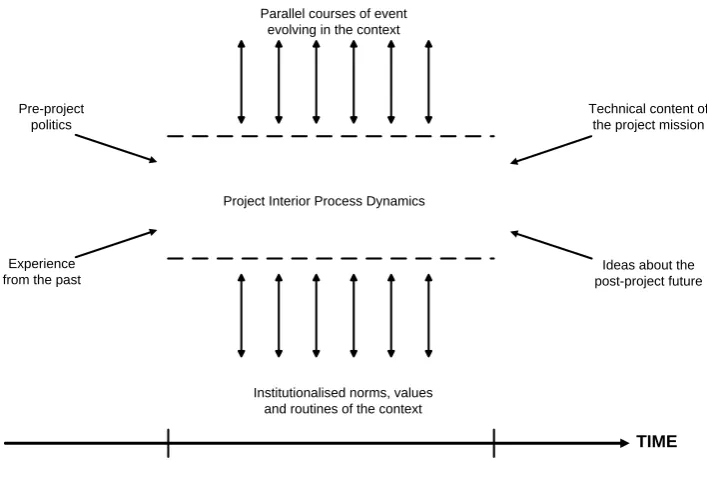
are embedded in the flow of organisational activities, developing and mutually shaping them (Engwall, 2003). Each project is intricately interdependent with the whole of the organisational environment, which includes not only project participants, but also organisational and project history, organisational routines, parallel intra- and inter- organisational activities, and the participants' ideas about future states. All these factors influence the interior process dynamics of a project.
Adapted from M.Engwall /Research Policy 21 (2003) 805 - Contingencies influencing the interior process dynamics of a project.
Project Interior Process Dynamics Parallel courses of event
evolving in the context
Institutionalised norms, values and routines of the context Pre-project
politics
Experience from the past
Technical content of the project mission
Ideas about the post-project future
[image:34.595.141.495.294.536.2]TIME
FIGURE 2 - INTERIOR PROCESS DYNAMICS (FROM ENGWALL, 2003, P.805)
Figure 2 depicts the project dynamics which are embedded in the flow of organisational activities and the existence in time, where an
"individual project only constitutes one of many different projects, activities, ventures, undertakings, problems, issues, decisions, and solutions that gradually pass through the history of its organizational context" (Engwall, 2003, p. 804).
Ch
ap
ter
2
:
O
rga
nis
at
io
na
l P
ro
je
cts'
D
ec
is
io
n-ma
kin
g C
ont
ex
t
35
(other projects, operations, etc.), as well as to the always present influence of cultural norms and routines, while the project evolves during its lifecycle. These influences shape the reality of projects, and form the environment where project activity takes place, leading to perceiving projects as "contextually-embedded open systems, open in time as well as in “space" " (Engwall, 2003, p. 790). Therefore, projects are defined as purposeful organisationally embedded activities, mutually shaping and being shaped by organisational context, and subjected to intra- and inter-organisational influences.
2.3.4
W
ORKING
D
EFINITION OF AN
O
RGANISATIONAL
P
ROJECT
For the purpose of this research, an organisational project is defined as a goal-oriented organisational activity, bound by the triple constraint, delivered by a team of competent and reflexive practitioners, and embedded within an organisational environment. It is in this type of enterprise that I investigated decision-making activities.
Ch
ap
ter
2
:
O
rga
nis
at
io
na
l P
ro
je
cts'
D
ec
is
io
n-ma
kin
g C
ont
ex
t
36
2.4 P
ROJECT
D
ECISION
-
MAKING AS A
G
OAL
-O
RIENTED
A
CTIVITY
“Is there anything more important to the success of a project than making good decisions? (Schuyler, 2001, p. xi).
Although project managers face numerous decisions during project execution that could critically impact project success (McCray, Purvis, & McCray, 2002) it appears that research has not given much attention to decision-making during project delivery (Bourgault et al., 2008; Powell & Buede, 2008; Williams & Samset, 2010). The range of perspectives on project management influences the view of decision-making in projects.
The functionalist, and still dominant view of projects, assumes that project managers are not required to make strategic decisions, however, they would be expected to make project-level decisions, which should be framed by project and organisational objectives (Cicmil et al., 2006). Standard project governance recommends that project decisions, where expected outcomes are within the set triple constraint, be the responsibility of the project manager, and the decisions whose impact exceeds the constraint, are to be escalated to a project steering committee (or equivalent) (PMI, 2013). This view reflects the perception of the linear and rational decision-making process, with relatively distinct phases of the decision-making being guided by project objectives and the triple constraint (Sengupta, Abdel-Hamid, & Van Wassenhove, 2008).
Ch
ap
ter
2
:
O
rga
nis
at
io
na
l P
ro
je
cts'
D
ec
is
io
n-ma
kin
g C
ont
ex
t
37
Ives, 2005; Maylor, 2001) where “Project objectives are second-order derivatives of broader organisational goals” (Bresnen, 2006, p. 76). Indeed, a large body of research on project management focuses on the definition and clarity of project objectives. Atkinson et al. (2006) proposed that the definition of objectives be made a key part of managing projects, specifically emphasising the importance of performance criteria, the clarification of trade-offs, and the formulation of hierarchy of objectives. The authors point to the necessity of making trade-offs in the course of project delivery, and the significance of building a shared understanding of the risks associated with making such trade-offs (Atkinson, Crawford, & Ward, 2006). In addition to using the triple constraint, multi-objective frameworks have been proposed to aid in project evaluation (e.g. (Barclay & Osei-Bryson, 2009; Fincham, 2002; Maylor et al., 2008; Milosevic & Srivannaboon, 2006; A. J. Shenhar et al., 2001) suggesting potential use of multiple objectives in project level decision-making. Some of the frameworks (e.g. Barclay and Osei-Bryson, 2009) have considered a project objective definition using the value focused thinking (VFT) approach as defined by Keeney (1992).
Adequately contextualising a decision in an organisational environment may result in recognition of new decision opportunities, creation of better alternatives, and better alignment with strategic goals (Keeney, 1992). Conversely, omission of a key objective from the decision model can lead to inadequate results of the analysis (Goodwin & Wright, 2004). Furthermore, misinterpreting which role an objective has in the decision context, e.g. interpreting an instrumental objective as strategic, could lead into a difficult-to-resolve decision situation and misalignment of portfolio level decisions with
corporate strategy (Barcus & Montibeller, 2008).
means-Ch
ap
ter
2
:
O
rga
nis
at
io
na
l P
ro
je
cts'
D
ec
is
io
n-ma
kin
g C
ont
ex
t
38
ends relationship and, through this, increase predictability, calculability, control and efficiency” (Thomas, 2006, p. 103) and it appears that project participants could benefit
from tools that help frame decision situations and aid with trade-offs, especially those that could incorporate complex organisational objective hierarchies.
Positioning project decision-making as a goal-focused activity with known project objectives, would invite prescriptive decision-making methods. Specifically, using the Value Focused Thinking (Keeney, 1992) approach to identify and structure objectives already suggested for project evaluation, might aid in project decision-making (Barclay & Osei-Bryson, 2009). Value Focused Thinking (VFT) has been used in organisational settings as a way of assisting in strategic decision-making by a-priori decision analysis (Keeney & McDaniels, 1992; Keeney, 1988, 2001). For example, Merrick et al. (2005) report on analysis of organisational decisions related to safety policy design conducted through development of three fundamental objectives hierarchies connected by means objectives. Winn and Keller used stakeholders’ objectives’ hierarchies for ex-post analyses of a single strategic-change decision situation to demonstrate how, in response to exogenous factors, objectives’ hierarchies changed over time (Winn & Keller, 2001). They also pointed to four limitations of the VFT framework, listing “little guidance on the modelling process”, dependency on the memory of one individual rather than the organisations’, the static nature of resulting models, and the scarcity of models of “actual, complex decisions in organisations to make such decisions comparable” (Winn & Keller, 2001, p. 168).
Ch
ap
ter
2
:
O
rga
nis
at
io
na
l P
ro
je
cts'
D
ec
is
io
n-ma
kin
g C
ont
ex
t
39
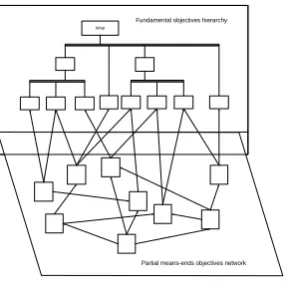
intention or a desire to achieve something, and a “direction of preference” (ibid. p.34) Objectives are further categorised as Strategic, Fundamental, and Means. Strategic objectives (Values) are the ultimate reason for being interested in the decision, and are “influenced by all of the decisions made over time by the organisation or individual facing the decision at hand” (Keeney, 2007, p. 113). Fundamental objectives are closer to the decision being considered and are measurably impacted by particular decision outcomes; and Means objectives are instrumental in achieving fundamental objectives. Means objectives have no intrinsic value, they are only as important as they can further achievement of fundamental or strategic objectives (Keeney, 1992). Defining the relationship within sets of objectives, fundamental or means, results in the development
of the fundamental objectives hierarchy and means objectives network (Keeney, 1992).
What
Fundamental objectives hierarchy
[image:39.595.248.394.405.556.2]Partial means-ends objectives network
FIGURE 3 -OBJECTIVES’ HIERARCHY AND OBJECTIVES NETWORK (ADAPTED FROM KEENEY, 1996, PP. 91)
Ch
ap
ter
2
:
O
rga
nis
at
io
na
l P
ro
je
cts'
D
ec
is
io
n-ma
kin
g C
ont
ex
t
40
hierarchy consist of the operationalised attributes that can be used to evaluate alternatives (Buede & Downey, 1986; Keeney, 1992). Means objectives start with the same high level fundamental objective, and form a means objectivesnetwork (horizontal plane in Figure 3), as they can influence each other, and each could impact, to various degrees, the accomplishment of more than one fundamental objective (Keeney, 1992). The relationship between means and fundamental objectives is represented in Figure 3. Defining how hierarchies of objectives relate to one another, results in the “networks of fundamental objective hierarchies” (Keeney, 1992, p. 89).
The framed decision context can be represented as the following Figure 4, where each plane in the three-dimensional shape, represents one type of objective: plane 1 contains Strategic Objectives, plane 2 contains Fundamental Objectives, and plane 3 contains alternatives. Shaded rectangles A and B, show how selected fundamental objectives assist in selecting a subset of suitable alternatives for the specific decision. The step between planes is a decision in itself (a meta-decision), and selecting the appropriate combination of strategic-fundamental objectives is not trivial.
1
2
Strategic Objectives:
B
Fundamental objectives
3
The Strategic Decision Context
A
Specific Decision Context
Ch
ap
ter
2
:
O
rga
nis
at
io
na
l P
ro
je
cts'
D
ec
is
io
n-ma
kin
g C
ont
ex
t
41
The graphical representation in Figure 4 benefits from its three-dimensionality. It is easy to imagine many other objectives and alternatives in the space enclosed by the largest four-sided cut pyramid. If those other objectives were to be used, they would be identified, or activated (Carlson et al., 2008), and a new plane inserted. Then the relationships between the objectives would be re-evaluated. What becomes transparent is the contextual nature of objectives and their structuring (Corner, Buchanan, & Henig, 2001).
“Whether a criterion is perceived as instrumental or intrinsic depends on the decision context, since what is an end in one context may be a means to a further end in a broader context" (Wenstop & Koppang, 2009, p. 1111).
The relative nature of objectives and their relationships could cause a problem of interpretation in a decision situation. Whose objectives are being used? Are the relationships between objectives adequately defined, and what is adequate? In cases where a decision analyst who facilitates in decision-making is present such questions may still be answered appropriately (Franco & Montibeller, 2010). But where unaided decisions are made in the course of day to day activities, it could be difficult to define the level of granularity required, the relative objectives and their relationships.
“Decision can be locally rational, since it may be appropriate in regard to specific decision components, but globally suboptimal with respect to the larger performance context in which the specific decisions are embedded” (Glazer, Steckel, & Winer, 1992, p. 213).
Ch
ap
ter
2
:
O
rga
nis
at
io
na
l P
ro
je
cts'
D
ec
is
io
n-ma
kin
g C
ont
ex
t
42
Focused Thinking (Keeney, 1992) framework, might be a good approach to aid in framing unaided decisions during project delivery.
2.5 C
ONCLUSION TO
C
HAPTER
2
The field of project management is critical to the modern business environment and is an active research area. Traditional project management considers the link between decisions made in projects, decision outcomes, and the success of the project, linear and unproblematic, espousing assumptions which have been questioned by more recent research.
The generally accepted importance of project objectives to corporate and project success, leads to an expectation that objectives from multiple organisational levels would play a part in project level decision-making. However, there are no reports of use of objectives in unaided decision-making in project delivery. Actually, it is not well understood what role articulated corporate and project objectives have at the project level and how they contribute to overall project and corporate success.
Ch
ap
ter
3
:
O
rga
nis
at
io
na
l Dec
is
io
n-ma
kin
g
43
Chapter 3
O
RGANISATIONAL
D
ECISION
-MAKING
"Most researchers and practitioners would readily agree that projects are particularly sensitive to how decisions are made within organizations" (Bourgault et al., 2008, p. 99).
This next chapter introduces research on organisational decision-making. The chapter
starts with a brief overview of Herbert Simon’s Theory of Organisational Decision-making,
followed by a description of research advances and resulting divergence in the field. The
chapter refers to five theoretical concepts that concentrate the following discussion: (1) the
concept of an organisational decision, (2) the perception of the link between decision and
actions, (3) the interpretation of organisational decision-making processes, (4) the models
Ch
ap
ter
3
:
O
rga
nis
at
io
na
l Dec
is
io
n-ma
kin
g
44
3.1 I
NTRODUCTION
To help contextualise the empirical research on practices of organisational decision-making in organisational projects, this chapter introduces the stream of research on organisational decision-making. It starts with the seminal work of Herbert Simon, who placed organisational decisions at the centre of research on organisations (Simon, 1948). Five theoretical constructs serve as pillars for the ensuing debate, and help distinguish the streams of research that followed Simon's influential work. These are (1) the concept of an organisational decision, (2) the perception of the link between decision and actions, (3) the interpretation of organisational decision-making processes, (4) the models of rationality, and (5) the treatment of decision makers.
These areas, individually or in combination, have been interpreted differently over the years. The very concept of the organisational decision was initially conceived as an unproblematic point of choice, a concept similar to the one in the rational choice theory. Following Simon, this idea has been questioned, and further research has offered diverse interpretations of organisational decisions, ranging from the rational choice, ex-post interpretation of past events, game playing, sense-making, decisions as commitment to action, to almost a negation of the very existence of organisational decisions (Tsoukas, 2010; Miller & Wilson, 2006; Hendry, 2000).
Ch
ap
ter
3
:
O
rga
nis
at
io
na
l Dec
is
io
n-ma
kin
g
45
identifying numerous ways of approaching and proceeding through organisational unaided decisions. Simon's innovative concept of bounded rationality, that emphasised limitations of intendedly rational decision makers, inspired prolific research with multiple foci and offered numerous interpretations of human rationality and the role organisational decision makers carry.
These, and other issues, have been extensively explored with a variety of foci and methods resulting in a dynamic and diverse field of organisational decision-making research offering a multitude of interpretations of organisational decision phenomena. This chapter begins with Simon's perspective and then outlines the ongoing debate in the field of organisational decision-making research with reference to the five points of contention.
3.2
T
HE
O
RIGINS
:
H
ERBERT
S
IMON
'
S
T
HEORY OF
O
RGANISATIONAL
D
ECISION
-
MAKING
Ch
ap
ter
3
:
O
rga
nis
at
io
na
l Dec
is
io
n-ma
kin
g
46
from organisational action (“getting things done”) to choices leading to action (“deciding”) (Simon, 1948, p. 1), thus making the subject of organisational decision-making pivotal to the study of a firm.
Motivated by prevailing economic theories, classical management theories assumed that decision makers are utility maximisers, able to adapt their actions to their goals and the situation at hand (H.A. Simon, 1978). Simon contrasted the assumed 'perfect' rationality of classic economic theories (e.g. Von Neumann & Morgenstern, 1944) with advances in
psychology and sociology3 stating:
“All human behaviour has a large rational component, but only in terms of broader everyday sense of rationality, not the economists’ more specialized sense of maximization” (H.A. Simon, 1978, p. 2).
Questioning the ability of decision makers to fully exercise rationality in their choices, he postulated that decision makers lack the experience and the capability to be perfectly rational, as they do not have complete knowledge or the capacity to anticipate all possible consequences and alternatives, or the skill to choose between them. Though decision makers may wish to be fully rational, they are simply not capable of coping with complex organisational situations. Whereas the previous decision theory considered rationality independent of decision makers, Simon put the mental activities of decision process at the centre of his study, hypothesising that a model of rationality is to be found in that process and not externally (Tsoukiàs, 2008).
3 with reference to Freud 1925 Vilfredo Pareto 1935, Tolman 1932, William James 1925,
Ch
ap
ter
3
:
O
rga
nis
at
io
na
l Dec
is
io
n-ma
kin
g
47
The resulting perspective on organisational decision-making retained the view of decisions as identifiable points of choice where means and ends can be considered separately, but changed the view of decision makers from the "economic" fully rational man, to the "administrative man" of "bounded” rationality (Simon, 1979, pp. 118–119). The following five aspects, which will serve as a conceptual point of departure for what follows, summarize Simon’s original view on organisational decision-making.
3.2.1
O
RGANISATIONAL
D
ECISIONS
In Simon' view, decisions are distinguishable points in time when a choice between alternative courses of action is made. A 'choice' means a selection of a course of action when other courses of action are possible where “[e]ach decision involves the selection of a goal, and a behaviour relevant to it” (Simon, 1948, p. 4). This concept includes “any process of selection”, not only deliberate selection between explicit alternatives, but also those where decision processes may appear ‘unconscious’. For example, a typist reflexively hitting a key while typing a letter, is a ‘choice’ event conceived “in some sense at least, to be rational (i.e. goal-oriented)” (Simon, 1948, p. 3).
Ch
ap
ter
3
:
O
rga
nis
at
io
na
l Dec
is
io
n-ma
kin
g
48
3.2.2
L
INK BETWEEN DECISIONS AND ACTIONS
Within the established view of organisations as purposive and hierarchical systems with undisputed organisational goals, the implicit assumption of Simon's theory was that organisational action is always a result of some previous decision. Even with the acknowledgement that the pursuit of organisational goals may be conscious, deliberate, or unconscious and habitual, the ends of such unconscious pursuits, in Simon’s view, could be derived by the actions taken, implying that all action is goal-driven and based on an evaluation of means over ends (Simon, 1948). In his perspective, organisational decisions always precede organisational actions, decisions are always followed by actions, and a choice point can be reconstructed from the actions taken. Consequently, "organization behaviour is a complex network of decisional processes" (Simon, 1948, p. 305) and organisational strategy is a series of decisions.
3.2.3
D
ECISION
-